Pfizer’s Experimental Covid-19 Vaccine—What You’re Not Being Told
By Johnny Vedmore |
Unlimited Hangout| November 18, 2020
The vaccine information war has kicked up a gear, and the mainstream media vultures are circling to descend on any content that they can easily label and dismiss as misinformation. Laws will be passed throughout legislatures globally to criminalise anyone who publicly misunderstands any part of the complex biological processes involved in many of the new experimental vaccine technologies that are being used to produce Covid-19 vaccine candidates.
Even now, intelligence agencies and intelligence-backed tech companies are set to deploy sophisticated methods to censor content and deplatform news websites that they view as promoting ‘vaccine hesitancy’ as well as ‘vaccine misinformation’, particularly as a Covid-19 vaccine candidate lurches closer to approval.
It is expected that by month’s end the mRNA vaccine produced by the scandal-ridden pharmaceutical giant Pfizer will be approved by the US government via an emergency-use authorization, with other countries expected to follow suit. Pfizer, in anticipation of the seemingly imminent and assured approval of their vaccine candidate, has already been manufacturing hundreds of millions of doses of its vaccine for weeks and has received praise from governments and mainstream media alike for its self-reported claims that its vaccine is 90 percent effective.
In particular, the success of the experimental mRNA mass vaccination program appears to hinge on the general population being unable to effectively articulate their concerns and objections. Whilst the mainstream media are quick to point out when somebody makes an error in how they believe the mRNA vaccine works, they don’t offer any further information than the official government line. Public distrust in vaccination programs is not the fault of those who don’t understand the way this brand-new technology works. Public distrust is all-pervasive because only one side of the argument is allowed to be heard. We do need to understand the technology involved, as there is a difference between mRNA vaccines and DNA vaccines. Having a general understanding of the reason why someone should object to being given an experimental mRNA vaccine is necessary for creating a clear and coherent argument.
We are about to examine a subject that has been one of the most censored topics in the modern era. But now, more than ever before, we are in desperate need of the information that is being systematically hidden from the public. This article will be banned and attacked by those who believe we, the general public, shouldn’t know all the information about what they want to achieve from the coming mass global vaccinations. The reason for the current establishment’s unwillingness to speak about this subject leads to perhaps unnecessary suspicion. Such suspicions will never be dismissed via the currently employed tactic of smearing anyone who questions intentions. If governments worldwide want their populations to submit to these vaccinations, then they need to stop patronising people and speak honestly. However, since that is unheard of, they will continue to employ coercive tactics, as they will be trying out a never-before-approved experimental method to boost the immune system by manipulating the process our DNA uses to signal for the creation of certain proteins, and we have little idea of what the long-term impact this brand-new therapeutic technology could have on our health. No politician, medical expert, or pharmaceutical representative is willing to accept responsibility for challenges that might be around the corner.
Many of the pharmaceutical companies researching potential coronavirus vaccines are using old methods. They take a proverbial pinch of the virus and infect your immune system at a very low and slow rate, allowing your body the time it needs to build up a natural immunological resistance to the illness. But developing those types of vaccines is a slow and arduous process, and the current leaders in the race to mass global vaccination are pharmaceutical companies using a radical new method that has never been tried before.
‘They are going to hack the cells in your body in order to make them into drug factories’, says Nathan Vardi, a staff writer for Forbes, in a video titled Why Pfizer Is Betting Big on an Unproven Treatment for Covid-19, from March 2020. ‘The problem is with this approach’, Vardi admits, ‘is there’s never been an approved mRNA product’.
The various scientific explorations into the therapeutic applications of potential mRNA treatments are still in their infancy, but the method has been lauded as a potential solution to the treatment of cancer and infectious diseases, for protein replacement, and for gene therapy.
In January 2020, the de facto leader in the mRNA field was the pharmaceutical company Moderna, but—in the wake of Covid-19—other major companies began to focus on the mRNA method. Moderna was able to pioneer that method several years ago, thanks to funding largely provided by the Pentagon’s Defense Advanced Research Projects Agency (DARPA) and the Bill and Melinda Gates Foundation.
Now, as 2020 draws to a close, the race to develop the winning Covid-19 vaccine is in full swing, and another Big Pharma company has seemingly beaten Moderna to the development of a supposedly effective mRNA vaccine, thanks to Pfizer teaming up with BioNTech, a small German company, to pip Moderna to the post. But, in this race to ‘save humanity’, there are bound to be pitfalls, especially when introducing completely new health technologies into mainstream use. Has Pfizer rung the finishing bell in this global race to end the current pandemic, or, instead, is it hurtling towards a disaster of epic proportions?
There are very informative scientific papers available from just before the pandemic began that give us an insight into this new mRNA technology. So here I’ll examine the DNA manipulating method, the vaccine, the people behind the research and development at BioNTech, but most important, I’ll examine Pfizer, and look at how the company has avoided accountability when things go wrong—and things do go wrong at Pfizer.
mRNA Vaccine Technology and How It Works
The vital interaction that mRNA has with our DNA has made selling mRNA vaccine technology extremely difficult for those who believe it’s the future of human medicine. The fact that it will alter the function of your DNA in your body has made many people suspicious of what unexpected horrors could arise through mass use of this new and experimental technique.
Unsurprisingly, the people marketing the vaccines have tried to downplay the aggressive and genetically manipulative nature of the treatment. In fairness, trying to explain the workings of such a complex new technology in plain English is exceedingly difficult. This is apparent when one listens to representatives of the mainstream media, who are often mealy mouthed when describing the biological processes that will take place when you receive the mRNA vaccine. But inability to articulate the technology isn’t surprising when you consider that part of your DNA, after breaking in two through a natural process, will then be combined with the experimental mRNA in a way that seems esoteric to many of us. It’s almost impossible to imagine such a process taking place in one’s own vulnerable biological system, in one’s DNA, the most precious building blocks of life that define your very existence.
After a preprogrammed strand of mRNA has merged with a naturally severed part of your DNA, it will request the production of a protein that should help trigger your immune system. In theory, this should boost your immune system and aid in the mass production of the proteins necessary to successfully fight the specific illness. The inserted messenger-RNA (thus, mRNA) should be relatively easy to design and programme as long as the scientists involved have the genetic coding for the infection it is to fight. In this case, the necessary data was released in January 2020 by the Chinese. Mild side effects to this process should be expected.
Although no extreme side effects were reported by Pfizer during the stage 3 testing of their mRNA vaccine, nearly every participant suffered mild symptoms, including swelling of the arm, irritation of the skin, and headaches, to name just a few. But, as we shall see, the information that Pfizer releases about its clinical trials and what happens in reality can be quite different.
I have just described the basic information you require for understanding how the coming mRNA vaccine works, but what I can’t describe to you is what happens in the long term. This form of therapeutic alternative has never been allowed or sanctioned before, aside from small clinical trials. There has never been an FDA-approved clinical trial for mRNA medicine because its usage comes with an abundance of ethical and moral questions and unknown possibilities.
At the same time, the utilisation of the mRNA method could also be one of the biggest leaps forward in technology ever recorded in human history. If we give the technology the benefit of the doubt and assume that it has no negative long-term side effects, then it is a potential treatment for almost every human illness on earth. Opening this mRNA floodgate would mean normalising regular vaccinations for nearly every imaginable ailment. In the best-case scenario, you could be vaccinated against cancer, heart disease, diabetes, dementia and Alzheimer’s, and any other human ailment that derives from a fault in your DNA. In the worst-case scenario, you could be left dead or crippled like Pfizer’s victims in its experiments on Nigerian children during the late 1990s.
All that being said, the Pfizer/BioNTech vaccine has a major downside to it. Pfizer and Moderna have stated that their mRNA vaccines need to be kept at -70° C and -20° C, respectively, which is a significant logistical challenge. Without these extremely cold temperatures, the mRNA and combined nanoparticles will lose their integrity. There are no studies on the effect of poorly stored mRNA vaccines on the human body. In comparison, DNA vaccines are much easier to transport and store as they are much more stable molecules.
As we have seen, the potential for mRNA technology is boundless. If the vaccine is successful in normalising the process of gene editing for medicinal benefit, there will be pressure to continue editing genes in other ways. It isn’t hard to see that the technology could have cosmetic, medical, and military applications that could range from phosphorescent skin to military bioweapons beyond our imagination. That is the reason why the people behind this technology are reluctant to speak about its potential game-changing mRNA method, for it represents our first real steps into transhumanism.
Pfizer’s Profitable Partnership with Germany’s BioNTech
As we have seen, Pfizer wasn’t the primary company in the mRNA business at the turn of 2020, but its immediate partnership with BioNTech saw it beat its main competitor, Moderna, to the finish line. BioNTech, based in Mainz, Germany, is led by a husband and wife team and, prior to the partnership with Pfizer, was dedicated to mRNA-related cancer-treatment research.
Uğur Şahin and Özlem Türeci, the couple leading BioNTech, are of Turkish descent. Şahin’s family were from southern Turkey, and he studied for his doctorate in Cologne, whilst Türeci’s family came from Istanbul. The two met at the University of Hamburg.
BioNTech already had a collaboration agreement to develop mRNA‐based vaccines for prevention of influenza with Pfizer as far back as February 2019, and their commercial strategy of collaborating with selected partners paid off when the race to the coronavirus vaccine began. Since then, there has been global media interest in BioNTech, mainly in the form of puff pieces focussing on Şahin and Türeci’s romantic life. But BioNTech also has many links to other Big Pharma giants and some of the well-known movers and shakers in the medical world. As well as its partnership with Pfizer, in 2019 BioNTech also had partnership deals with Bayer, Genentech, Sanofi, Genmab, Eli Lilly, Roche, and of course they received funding from the Bill and Melinda Gates Foundation. In September 2019, just before the first people were infected with the new strain of SARS-CoV-2, the German news outlet Handelsblatt reported that ‘the Gates Foundation is investing around 50 million euros in the Mainz biotech company BioNTech. The money will be used to research HIV and tuberculosis vaccines’.
BioNTech has a small five-person management team and a four-person supervisory board. Şahin is the CEO of the company; he was also the head of the scientific advisory board of Ganymed Pharmaceuticals AG from 2008 until 2016, when the company was acquired by Astellas Pharma. BioNTech’s chief business officer, Sean Marett, previously worked in global strategic and regional marketing, and in sales at GlaxoSmithKline in the United States and at Pfizer Europe, as well as for Evotec and Lorantis. The company’s chief operating officer and CFO, Dr Sierk Poetting, joined BioNTech in September 2014 from Novartis. The chief strategy officer at BioNTech is Ryan Richardson, who had previously been an executive director of the global health-care investment-banking team at J. P. Morgan in London, where he advised companies in the biotech and life sciences industry on mergers and acquisitions, equity, and debt capital finances. The German BioNTech’s four-man supervisory board includes Ulrich Wandschneider, who is also a member of Trilantic Europe.
Pfizer: A Company Never Held to Account
If it were only BioNTech that was responsible for the creation of this futuristic vaccine technology, then maybe people would have more faith in the product. But Pfizer casts a dark shadow of conspiracy wherever it does business. Pfizer’s previous use of experimental drugs in secretive and scandalous studies has inspired Hollywood movies and court cases lasting over a decade, as it resulted in the deaths of many children. Yet, the media organisations touting its coronavirus vaccine as a heaven-sent miracle have provided little to no coverage of Pfizer’s previous experimental disasters.
Pfizer entered into the vaccine business in late 2006 by acquiring the British influenza-vaccine company PowderMed for an undisclosed fee. Pfizer was admittedly excited about the deal, stating that ‘PowderMed’s unique DNA vaccine technology is particularly promising’ and that ‘its pipeline of vaccine candidates for influenza and chronic viral diseases could have major potential’. In fact, beginning in autumn 2005, many Big Pharma companies had taken their first steps into the vaccine industry. Novartis entered the vaccine business by acquiring 56 percent of Chiron, whilst GlaxoSmithKline expanded its vaccine base by acquiring ID Biomedical of Canada. Competition was heating up among the big players, and the vaccine industry was seen as a safe bet, with reports of new vaccines selling for hundreds of dollars. But Pfizer’s reputation over the preceding decade had taken a severe knock due to the company’s disastrous experimental trials in Africa.
In 1996, an experimental trial took place in Nigeria. Under the cover of severe outbreaks of cholera, measles, and meningitis in northern Nigeria, Pfizer set up the secretive trials in Kano, the second largest city in Nigeria, to test its experimental antibiotic, Trovan (trovafloxacin). It tested the experimental drug on two hundred children. The children’s parents assumed that the children would receive the standard meningitis jab, but Pfizer staff instead set up two control groups. Half of the children were given the experimental Trovan, and the other hundred were given a reduced dosage of the leading meningitis equivalent. The lower dose was to help artificially skew the results in the favour of Trovan for marketing and competitive purposes.
In 2002, a group of Nigerian children and their legal guardians sued Pfizer in the US District Court for the Southern District of New York. In court documents, the plaintiffs alleged that five children who received Trovan and six children whom Pfizer had ‘low-dosed’ had died as a result, whilst others suffered paralysis, deafness and blindness. The alleged actual number of those who died due to their involvement in the trial, per Nigerian sources, is over fifty.
Pfizer was supposed to check the children’s blood samples five days into the trials to look for any abnormalities and then change their treatment to the full-strength leading meningitis drug if there were any problems. However, they failed to do so. Instead, the Pfizer team waited for the irreversible symptoms to manifest physically before switching the treatment for the study’s unwitting participants. After realising that they had just murdered and crippled these children, Pfizer, like any giant pharmaceutical corporation would, left the scene of the crime in a hurry, failing to do any further evaluation of the patients.
Pfizer spent the next ten years denying any responsibility for the disaster, eventually releasing a statement entitled ‘Trovan, Kano State Civil Case—Statement of Defense’, in which the pharmaceutical bigwig stated among other things ‘that mortality in the patients treated by Pfizer was lower than that observed historically in African meningitis epidemics, and that no unusual side effects, unrelated to meningitis, were observed after 4 weeks’.
Pfizer eventually settled the case for $75 million on condition that it would not be held responsible for its actions. The Guardian newspaper reported in 2011 that the first four settlements in the lengthy court battle had been given to the families of four of the children who were killed during the trial. In an unabashed attempt to make the court settlement of $175,000 harder for each of the surviving families to claim, the victims’ families were forced to provide DNA samples to prove they were actually related to the deceased. This tactic turned out to be very effective from the company’s perspective, as many of the families didn’t trust Pfizer, which led some to pull out and refuse the settlement because they thought the DNA samples were a ploy by Pfizer to commit further illegal secret experiments upon them, or worse.
The Nigerians were represented by two brave lawyers, a Nigerian lawyer named Etigwe Uwo and a Connecticut-based lawyer, Richard Altschuler. According to Altschuler, it was the story of Pfizer’s Kano coverup that prompted John le Carré to write the novel The Constant Gardener that was adapted in the feature film. Like the situation depicted in the movie, Pfizer used scare tactics and smear campaigns to try and hinder any investigation into the Kano incident.
In 2006, Pfizer cut its workforce by 20 percent, reducing the number of its US employees by 2,200 people. The Financial Times reported on 29 November 2020 that this was something that was happening in all of the major pharmaceutical firms stating, ‘Big pharma is rushing to restructure across its business from manufacturing to how it markets and sells its drugs’. But Pfizer was mainly concentrating on radical change to its drugs sales force.
Pfizer was hit by further major scandals over the following year. One included the illegal premarketing of the HIV drug Maraviroc, which initially stalled the drug’s approval by the FDA. The scandal saw Pfizer publicly fire three of its top executives, including its assistant sales manager, Kelly Fitzgerald, (who returned to work for Pfizer and is currently their assistant sales director), HIV sales director, Art Rodriguez, now working for California’s Valued Trust, and the Mid-Atlantic director, Bob Mumford.
Get Your Facts Straight and Another Way Out
Whilst a DNA vaccine will change your DNA permanently, an mRNA vaccine will not permanently change your DNA. It takes one sentence to clear up that misunderstanding of the technology, and people should not be criminalised for such a simple misunderstanding. However, the mRNA vaccine does bind with part of your DNA to alter the proteins being produced. This is the very place where companies wish to trap opponents of their experimental vaccine campaigns. Just because someone doesn’t fully understand the process involved shouldn’t mean they should be demonised and forced into taking this experimental combination of nanoparticles. In fact, individuals should reject the vaccine until companies explain how it works and if there are any long-term side effects. You shouldn’t let anybody put anything into your body until they can tell you if any long-term consequences could occur. This is a basic principle of self-preservation that trumps any risk of a virus, especially a virus that has proven to be just a little bit more deadly than the common flu.
Our bodies should be the most important concern for us all. Fundamentally speaking, all our liberties and freedoms are of little concern if we’re dead or crippled. Don’t let them shame you into giving over your precious and delicate shell to medical scientific experimentation by companies that are incapable of taking accountability for their actions. This is the core argument that you need to keep at the forefront of any debate, rather than whether your DNA is permanently changed or whether its functions are just altered. If you’re going to get into the gutter to battle out the science then you must get your facts straight. They will use any potential misunderstanding you have to wipe your voice from the debate. It is they who bear the burden of articulating clearly why we should take the vaccine; it is your right to refuse.
However, there is something no one has mentioned so far about this new mRNA technology that could give those who oppose the vaccine another way out. Normally, to be effective, a vaccine must be given to as much of the population as possible. Mass vaccination has been used historically as a synthetic herd immunity to stop the spread of a virus to the vulnerable people in our society. But this technology is different, and its method of working means it is no longer necessary to use mass vaccination.
The whole point of why mRNA vaccines are more effective than our current vaccine technologies, per its proponents, is that it precisely targets the protein-production part of your DNA’s normal life cycle. This improves the response that an individual’s immune system will have when fighting a virus. It can be targeted socially in a similar way. If the majority of people who catch Covid-19 are asymptomatic, then it’s ridiculous to give them a vaccine. Because this vaccine protects individuals in their response, there is no good reason why everybody in our society should be forced to take it. It is used to increase specific protein production in someone who’s at severe risk—that’s how a medicine works normally. You don’t take HIV medication if you don’t have HIV. You shouldn’t be taking cancer drugs unless you have cancer. And you shouldn’t need to change your DNA’s production of specific proteins unless it’s personally necessary to do so.
The biggest lie being told to the people of the world is that everybody needs to take this vaccine. And ironically, the experimental mRNA technology that they’re desperate to use makes mass vaccination unnecessary.
Johnny Vedmore is a completely independent investigative journalist and musician from Cardiff, Wales. His work aims to expose the powerful people who are overlooked by other journalists and bring new information to his readers. If you require help, or have a tip for Johnny, then get in touch via johnnyvedmore.com or by reaching out to johnnyvedmore@gmail.com
UK Health Dept pilloried after issuing vague objection to Daily Mail article challenging govt’s Covid-19 narrative
RT | November 22, 2020
A Daily Mail piece that poked holes in the UK government’s approach to coronavirus prompted the country’s Department of Health to cry foul, but the complaint backfired after the government failed to say what the paper got wrong.
Published under the headline ‘Covid: What They Don’t Tell You’, the article took aim at the government’s terrifying estimate in July of 119,000 deaths from Covid-19 if a second wave coincided with winter flu, noting that the prediction has so far been wildly off the mark.
The Mail pointed out that the number of daily deaths being reported in the country is not unusually high for this time of year, adding that 95 percent of Covid-related deaths involved people with serious underlying conditions. The government’s fears of hospitals being overwhelmed by Covid-19 patients were also questioned, with the Mail reporting that only 31 percent of intensive care unit beds are currently occupied by patients that have tested positive for coronavirus.
The analysis caused a sensation on social media, and even caught the attention of the Department of Health and Social Care.
“This article is misleading. This is a global pandemic – national restrictions have been introduced to keep people safe and save lives,” the department’s official Twitter account wrote in a now-deleted reply to the piece. The message urged Britons to “follow the rules and continue to stay at home” so that the country can “get back to normality.”
The comments appear to have had the opposite of their intended effect, however, with journalists, politicians, and countless social media users challenging the Health Department to elaborate on the “misleading” nature of the piece.
“What specifically is misleading about it? It is not (yet) compulsory for the press to follow the government’s propaganda line,” journalist Peter Hitchens fired back at the department.
Radio host Mike Graham was similarly unimpressed by the department’s vague dismissal of the article.
Please address why it is misleading. Are the figures for hospital beds WRONG?Are the figures for death rates WRONG?Are the SAGE predictions not WRONG?Are the infection rates collected WRONG?Please explain #COVID19https://t.co/XCMzE0uMXU
— Mike Graham 🍾 (@Iromg) November 21, 2020
The condemnation was echoed by countless other social media users, who accused the government of desperately trying to control the narrative surrounding the virus, while having even “less credibility than the media.”
The Daily Mail ran its own scathing retort to the department’s tweet, accusing the UK government of using “Twitter as a propaganda tool” in an attempt to undermine the paper’s reporting.
The outlet published comments from several politicians who expressed regret over the government-sanctioned social media post.
Tory MP Sir Iain Duncan Smith said it was simply “good journalism” to “highlight the problems with the [official] figures that are being produced,” and urged the Department of Health to do its job rather than pick fights with news outlets.
Another Conservative MP, Sir Graham Brady, said that “the people tell government what it can do – not the other way round,” and stressed that it is “essential” that there is an open debate about how to best deal with Covid-19.
The UK government has come under increasing scrutiny for its Covid-19 restrictions, with critics arguing that lockdowns and curfews imposed across the country to deal with a second wave of the virus will have devastating economic, social, and health effects that will eclipse any potential benefits from the policies. Prime Minister Boris Johnson is currently isolating at Downing Street after meeting with an MP who tested positive for the illness. He is expected to release a “Covid Winter Plan” next week.
The country has recorded 1,493,383 positive coronavirus tests, linked to 54,626 deaths, since the start of the pandemic. Despite an increase in testing, new cases have been dropping over the past week. Hospitalizations and deaths are still far from the peaks seen at the start of the health crisis in April.
The Blizzard of Bogus Journalism on Covid
BY Jeffrey A. Tucker | American Institute for Economic Research | November 20, 2020
This game of hunt-and-kill Covid cases has reached peak absurdity, especially in media culture.
Take a look at Supermarkets are the most common place to catch Covid, new data reveals. It’s a story on a “study” assembled by Public Health England (PHE) from the NHS Test and Trace App. Here is the conclusion. In the six days of November studied, “of those who tested positive, it was found that 18.3 per cent had visited a supermarket.”
Now, if the alarm bells don’t go off with that one, you didn’t pay attention to 7th grade science. If the app had also included showering, eating, and breathing, it might have found a 100% correlation. Yes, the people who tested positive probably did shop, as do most people. That doesn’t mean that shopping gives you Covid and it certainly doesn’t mean that shopping kills you.
Even if shopping is a way to get Covid, this is a very widespread and mostly mild virus for 99.8% percent of the population with an infection fatality rate as low as 0.05% for those under 70. Competent infectious disease experts have said multiple times that test, track, and isolate strategies are nearly useless for controlling viruses such as this.
This story/study was so poor and so absurd that it was too much even for Isabel Oliver, Director of the National Infection Service at Public Health England. She sent out the following note:

Thank you. One down, a thousand to go.
The New York Times pulled a mighty fast one with this piece: “States That Imposed Few Restrictions Now Have the Worst Outbreaks.” This would be huge news if true because it would imply not only that lockdowns save lives (which no serious study has thus far been able to document) but also that granting people basic freedoms are the reason for bad health outcomes, an astonishing claim on its own.
The piece, put together by two graphic artists and seemingly very science-like, speaks of “outbreaks,” which vaguely sounds terrible: packed with mortality. It’s odd because anyone can look at the data and see that New York, New Jersey, Massachusetts, and Connecticut lead the way with deaths per million, mostly owing to the fatalities in long-term care facilities. These were the states that locked down the hardest and longest. Indeed they are locking down again! Deaths per million in states like South Dakota are still low on the list.
How in the world can the NYT claim that states that did not lock down have the worst outbreaks? The claim hinges entirely on a trivial discovery. Some clever someone discovered that if you reflow data by cases per million instead of deaths per million, you get an opposite result. The reasons: 1) when the Northeast experienced the height of the pandemic, there was very little testing going on, so the “outbreak” was not documented even as deaths grew and grew, 2) by the time the virus reached the Midwest, tests were widely available, 3) the testing mania grew and grew to the point that the non-vulnerable are being tested like crazy, generating high positives in small-population areas.
By focusing on the word “outbreak,” the Times can cleverly obscure the difference between a positive PCR result (including many false positive and perhaps half or more asymptomatic cases) and a severe outcome from catching the virus. In other words, the Times has documented an “outbreak” of mostly non-sick people in low-population areas.
There are hundreds of ways to look at Covid-19 data. The Times picked the one metric – the least valuable one for actually discerning whether and to what extent people are sick – in order to generate the result that they wanted, namely that open states look as bad as possible. The result is a chart that massively misrepresents any existing reality. It makes the worst states look great and the best ones look terrible. The visual alone is constructed to make it looks as if open states are bleeding uncontrollably.

How many readers will even know this? Very few, I suspect. What’s more amazing is that the Times itself already debunked the entire “casedemic” back in September:
Some of the nation’s leading public health experts are raising a new concern in the endless debate over coronavirus testing in the United States: The standard tests are diagnosing huge numbers of people who may be carrying relatively insignificant amounts of the virus.
Most of these people are not likely to be contagious, and identifying them may contribute to bottlenecks that prevent those who are contagious from being found in time….
In three sets of testing data that include cycle thresholds, compiled by officials in Massachusetts, New York and Nevada, up to 90 percent of people testing positive carried barely any virus, a review by The Times found.
All of which makes one wonder what precisely is going on in this relationship between cases and severe outcomes. The Covid Tracking Project generates the following chart. Cases are in blue while deaths are in red.
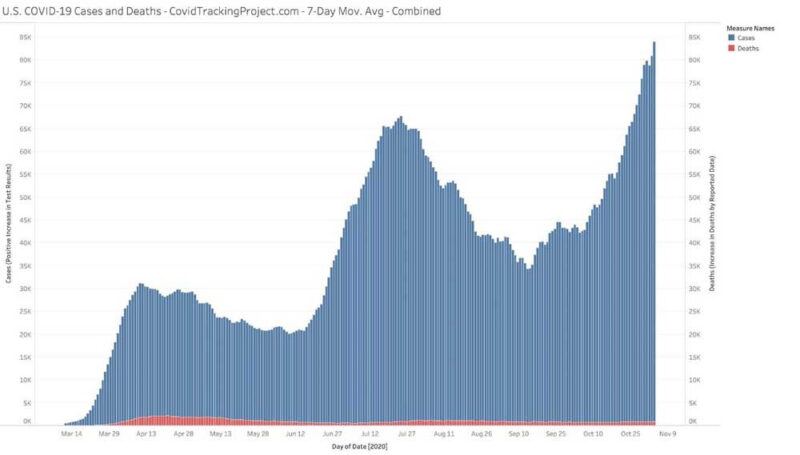
Despite this story and these data, the graphic artists at the Times got to work generating a highly misleading presentation that leads to one conclusion: more lockdowns.
(My colleague Phil Magness has noted further methodological problems even within the framework that the Times uses but I will let him write about that later.)
Let’s finally deal with Salon’s attack on Great Barrington Declaration co-creator Jayanta Bhattacharya. Here is a piece that made the following claim of the infection fatality rate: “the accepted figure of 2-3 percent or higher.” That’s an astonishing number, and basically nuts: 10 million people will die in the US alone.
Here is what the CDC says concerning the wildly disparate risk factors based on age:
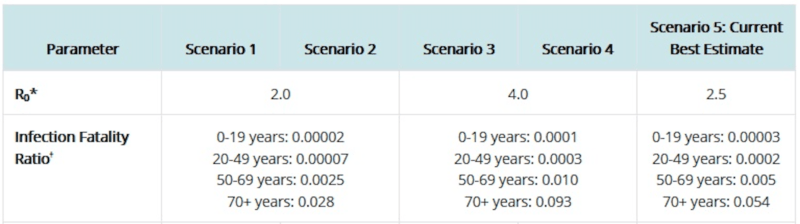
These data are not inconsistent with the World Health Organization’s suggestion that the infection fatality rate for people under 70 years of age is closer to 0.05%.
The article further claims that “herd immunity may not even be possible for COVID-19 given that infection appears to only confer transient immunity.” And yet, the New York Times just wrote that:
How long might immunity to the coronavirus last? Years, maybe even decades, according to a new study — the most hopeful answer yet to a question that has shadowed plans for widespread vaccination.
Eight months after infection, most people who have recovered still have enough immune cells to fend off the virus and prevent illness, the new data show. A slow rate of decline in the short term suggests, happily, that these cells may persist in the body for a very, very long time to come.
How is it possible for people to make rational decisions with this kind of journalism going on? Truly, sometimes it seems like the world has been driven insane by an astonishing blizzard of false information. Just last week, an entire state in Australia shut down completely – putting all its citizens under house arrest – due to a false report of a case in a pizza restaurant. One person lied and the whole world fell apart.
Meanwhile, serious science is appearing daily showing that there is no relationship at all, and never has been, between lockdowns and lives saved. This study looks at all factors related to Covid death and finds plenty of relationship between age and health but absolutely none with lockdown stringency. “Stringency of the measures settled to fight pandemia, including lockdown, did not appear to be linked with death rate,” says the study, echoing a conclusion of dozens of other studies since as early as March.
It’s all become too much. The world is being seriously misled by major media organs. The politicians are continuing to panic and impose draconian controls, fully nine months into this, despite mountains of evidence of the real harm the lockdowns are causing everyone. If you haven’t lost faith in politicians and major media at this point, you have paid no attention to what they have been doing for the better part of this catastrophic year.
Jeffrey A. Tucker is Editorial Director for the American Institute for Economic Research. He is the author of many thousands of articles in the scholarly and popular press and nine books in 5 languages, most recently Liberty or Lockdown.
Canada’s Trudeau calls Great Reset a CONSPIRACY THEORY after video of him promoting the globalist initiative went viral
RT | November 21, 2020
Canadian Prime Minister Justin Trudeau, who brought an avalanche of attention to the World Economic Forum’s ‘Great Reset’ when a video of him talking about the plan surfaced earlier this week, now says it’s a “conspiracy theory.”
Asked at a press conference Friday about concerns raised by conservative lawmakers about his use of the term ‘Great Reset’, Trudeau said, “We’re in a time of anxiety, where people are looking for reasons for things that are happening to him, the difficult moments we’re in. It’s nice to be able to find someone to blame, something to point to, something to get mad at.
“We’re seeing a lot of people fall prey to disinformation. If conservative MPs and others want to start talking about conspiracy theories, well, that’s their choice. I’m going to stay focused on helping Canadians get through this, on learning lessons from this pandemic, and making sure that the world we leave to our kids is even better than the world we inherited from our parents.”
The statement came just six days after a video of Trudeau addressing the United Nations remotely in September came to light, triggering a surge in Google searches for ‘Great Reset’ and sparking viral social media reaction to his comments.
“This pandemic has provided an opportunity for a reset,” Trudeau said. “This is our chance to accelerate our pre-pandemic efforts to reimagine economic systems that actually address global challenges like extreme poverty, inequality, and climate change.”
Opposition-party lawmakers, such as Pierre Poilievre, called attention to the video and posted a petition to stop the Great Reset. “Canadians must fight back against global elites preying on the fears and desperation of people to impose their power grab,” Poilievre said.
It’s easy to see how observers would infer that Trudeau’s comments reflect an international effort to capitalize on the Covid-19 pandemic to impose globalist economic policies. The World Economic Forum has openly promoted the Great Reset and championed using it to avert an economic collapse resulting from the pandemic.
Trudeau also referred in his UN address to “building back better,” echoing Democrat Joe Biden’s campaign slogan. “Building back better means giving the support to the most vulnerable while maintaining our momentum on reaching the 2030 agenda of Sustainable Development and the SDGs,” he said.
Mainstream media outlets put their spin on reaction to Trudeau’s comments, such as AFP saying the video was being used to justify a “baseless conspiracy theory” about global elites using the Covid-19 crisis to bypass democracy.” The Toronto Star also referred to “baseless conspiracy theories.”
Trudeau’s comments on Friday provided another opportunity to try to stamp out concerns that the prime minister meant what he said when he called the pandemic “a chance to accelerate our pre-pandemic efforts to reimagine economic systems.” The Huffington Post used a straw man to paint the reactions as absurd, saying, “No, Prime Minister Justin Trudeau did not engineer the Covid-19 pandemic.”
Royal Canadian Air Force veteran Rex Glacer tweeted that the media was trying to “cover up” for Trudeau. “Seeing things that aren’t there? Like Trudeau on video talking about the Great Reset the entire world has now seen?”
Former National Hockey League star Theo Fleury reacted to Trudeau appearing to directly contradict his own comments, saying, “He’s full of s***.” Other observers agreed, calling Trudeau’s latest comments “gaslighting.” One Twitter user quipped, “He now calls it the ‘Great Turn it Off and Turn it Back On.’”
If the ‘Great Reset’ really is so good for us, let’s hold a referendum on it, so it can have a democratic mandate (or not)
By Neil Clark | RT | November 20, 2020
The World Economic Forum’s ‘Great Reset’ and associated Fourth Industrial Revolution would, if implemented, mean far deeper changes to our everyday lives than Brexit, yet is being pushed through without any proper debate.
Compare and contrast. On the issue of whether Britain should leave the EU we’ve had:
- A national referendum.
- Four years of debates in Parliament on how/when/under what conditions we should leave.
In fact, for the period May 2016 until March 2020, it seemed MPs were talking about nothing else.
No one can say that Brexit, if it indeed finally happens at the end of this year, hasn’t been properly discussed, or that it hasn’t had democratic endorsement. The ‘Leave’ side won the referendum vote and then in 2019 the Tory government was re-elected on the promise of ‘Get Brexit Done’. Traditional ‘Red Wall’ Labour seats went Tory for the first time in 2019 largely because of Brexit.
Contrast this with the Great Reset/Fourth Industrial Revolution. The UK government, like many others in the West, is clearly trying to implement the Klaus Schwab/WEF programme, under the guise of fighting a virus, but unlike Brexit, not only is there no public vote, there is not even a debate.
How can this be right? The Great Reset/4IR (and the closely linked UN 2030 Agenda) represents not only the most radical changes ever proposed in our lifetimes, but the most radical changes to everyday life IN HISTORY.
The Great Reset/4IR is actually about redefining what it means to be human.
For centuries, it has been accepted that man is a social animal. That meeting up with other people is good for us. That we have certain freedoms which are inalienable. But the Great Reset/4IR threatens all of this.
Klaus Schwab says “What the fourth industrial revolution will lead to is a fusion of our physical, digital and biological identity.”
Wow. A fusion of our physical, digital and biological identity. That’s Transhumanism. Cyborgs. I Robot. That represents a slightly bigger change to our lives than anything argued about in the Brexit negotiations.
So will the abolition of private property, except for a privileged few. The WEF predicts that by 2030, “You’ll own nothing. And you’ll be happy.”
Is this what the public really wants? Ditto a ‘cashless society’? Humans have been using cash banknotes and coins for millennia, now we’re told they have to go. The civil liberties repercussions of a cashless society are truly terrifying as they mean anyone can be ‘cut off’ from the system for non-compliance. Eliminate cash, and you eliminate freedom.
Then there are the draconian changes to our lives on the grounds of ‘sustainability’. The Conservatives had pledged to ban the sale of diesel and petrol cars from 2040. But this week, Prime Minister Johnson, again without any public debate, brought the date forward to 2030. Again, where’s the democracy here?
The Great Reset/4IR means that the golden age of travel for ordinary people will be at an end. The WEF has been promoting digital health passes raising the very real prospect that only those who have had Covid-19 vaccines or negative test results would be able to leave their country, or indeed attend a sporting or cultural event.
Combine that with the collapse of the airline industry, the mass closure of all but the most expensive hotels, the end of cheaper petrol-fuelled cars and the advent of ‘smart’ motorways where access can easily be restricted, and most people will be stuck in their homes. But not, of course, Davos Man. Davos Man doesn’t use Easy Jet. Davos Man uses Private Jet. He’ll still be flying to Switzerland to elite conferences where fellow billionaires discuss further how they can use hi-tech methods to restrict the travel of everyone else, to ‘save the planet’.
What life would be like in Britain under the Great Reset was laid out for us in Boris Johnson’s ‘socially distanced’ speech to the Tory Party Conference in October.
It was an oration which could easily have been written by Klaus Schwab. “From internet shopping to working from home, it looks as though Covid has massively accelerated changes in the world of work… as old jobs are lost and as new jobs are created… The Covid crisis is a catalyst for change,” Johnson enthused.
Previous generations were told that the world was their oyster, but under the Great Reset, horizons are much narrower. “Instead of being dragged on big commutes to the city,” people can “start a business in their home town… and bring up their children in the neighbourhoods where they grew up themselves,” Johnson went on. But of course, the elites will still be moving around, it’s just the plebs who will be grounded.
The premise of the Great Reset is that there is absolutely no going back to the lives we enjoyed prior to March 2020. “The people assume we are just going back to the good old world which we had and everything will be normal again in how we are used to normal in the old fashioned. This is, let’s say, fiction, it will not happen, the cut which we have now is much too strong in order not to leave traces,” says Schwab.
Now of course, some people might like the idea of working permanently from home (that’s if they’re lucky enough to have a job), ordering everything they need online (to arrive by drone), having to have a continually updated digitalised health pass to go anywhere, owning nothing and having their biological, physical and digital identities ‘fused’, but shouldn’t they be consulted about it first?
And what about those of us who actually miss the ‘old-fashioned’ normal of mixing freely with people, of paying in cash, of driving petrol-fuelled cars wherever we want to go, and being in crowded pubs? Most of us care about the environment, but are suspicious that, like Covid-19, ‘sustainable development’ has become a Trojan Horse to introduce regressive changes to our lives that most definitely are not to our benefit.
A referendum on the Great Reset/Fourth Industrial Revolution is urgently needed so that the ‘Build Back Better’ brigade can put their case directly to the electorate. If what they are proposing really is so great, then what on earth are they frightened of?
Neil Clark is a journalist, writer, broadcaster and blogger. His award winning blog can be found at http://www.neilclark66.blogspot.com. He tweets on politics and world affairs @NeilClark66
Portuguese Court Rules PCR Tests “Unreliable” & Quarantines “Unlawful”
Important legal decision faces total media blackout in Western world
OffGuardian | November 20, 2020
An appeals court in Portugal has ruled that the PCR process is not a reliable test for Sars-Cov-2, and therefore any enforced quarantine based on those test results is unlawful.
Further, the ruling suggested that any forced quarantine applied to healthy people could be a violation of their fundamental right to liberty.
Most importantly, the judges ruled that a single positive PCR test cannot be used as an effective diagnosis of infection.
The specifics of the case concern four tourists entering the country from Germany – all of whom are anonymous in the transcript of the case – who were quarantined by the regional health authority. Of the four, only one had tested positive for the virus, whilst the other three were deemed simply of “high infection risk” based on proximity to the positive individual. All four had, in the previous 72 hours, tested negative for the virus before departing from Germany.
In their ruling, judges Margarida Ramos de Almeida and Ana Paramés referred to several scientific studies. Most notably this study by Jaafar et al., which found that – when running PCR tests with 35 cycles or more – the accuracy dropped to 3%, meaning up to 97% of positive results could be false positives.
The ruling goes on to conclude that, based on the science they read, any PCR test using over 25 cycles is totally unreliable. Governments and private labs have been very tight-lipped about the exact number of cycles they run when PCR testing, but it is known to sometimes be as high as 45. Even fearmonger-in-chief Anthony Fauci has publicly stated anything over 35 is totally unusable.
You can read the complete ruling in the original Portuguese here, and translated into English here. There’s also a good write up on it on Great Game India, plus a Portuguese professor sent a long email about the case to Lockdown Sceptics.
*
The media reaction to this case has been entirely predictable – they have not mentioned it. At all. Anywhere. Ever.
The ruling was published on November 11th, and has been referenced by many alt-news sites since… but the mainstream outlets are maintaining a complete blackout on it.
The reddit Covid19 board actually removed the post, because it was “not a reliable source”, despite relying on the official court documents:

Lookout for a forced and disingenuous “fact-check” on this issue from HealthFeedback or some other “non-partisan” outlet in the near future. But until they find some poor shlub to lend their name to it, the media blackout will continue.
Whatever they say, this is a victory for common sense over authoritarianism and hysteria.
YouTube removes lockdown-sceptical interview with renowned immunologist Dr Mike Yeadon for ‘violating terms of service’
RT | November 20, 2020
Dr Mike Yeadon has argued that the British government is using “lethally incompetent” scientific advice in its Covid-19 response. YouTube has mysteriously taken down a video in which the immunologist explains his point.
The UK government’s Scientific Advisory Group for Emergencies (SAGE) has got many things about the Covid-19 pandemic wrong, says Dr Mike Yeadon. He is an expert in allergy, immunology, and respiratory diseases, with over three decades of experience, including working as Pfizer’s vice president and chief scientific officer. Apparently his credentials amounted to nothing, though, when digital ‘censors’ at YouTube noticed that he was criticizing the prevailing narrative on the necessity of lockdowns.
For its modelling, SAGE assumed that the entire population was susceptible to SARS-CoV-2 when it first emerged in China last year. And it now considers that only a fraction of the public has been infected so far, based on the detectable presence of antibodies in their blood. These premises are behind the harsh restrictions currently in place in the UK, which are designed to prevent a massive and deadly outbreak of Covid-19.
According to Dr Yeadon, the assumptions are totally wrong, and the worst of the disease is over, with Covid-19 falling into the background as a relatively nasty but otherwise ordinary seasonal respiratory disease. A significant part of the population was actually not susceptible to the virus, thanks in large part to cross-immunity from previously being exposed to other kinds of coronaviruses. Those range from the relatively exotic but closely related SARS-CoV-1, the pathogen behind the 2002–2004 SARS outbreak, to human coronaviruses causing the common cold.
The large number of positive Covid-19 tests is not indicative of the number of active cases, Dr Yeadon believes. The common PCR test detects RNA remnants of the coronavirus, but it cannot tell if they came from live viruses or those long conquered by the immune system. There are also false positives. Mass testing causes an increase in those, he says, as people less experienced in how to properly conduct tests are recruited to run them.
On the other hand, the percentage of people currently immune to Covid-19 is seriously underestimated because it is measured by the presence of antibodies in people’s blood, Dr Yeadon argues. Antibody levels rise when an organism reacts to an active infection, but immune response memory – which determines whether the immune system is trained to beat a disease – is stored in T-cells. So, a person perfectly capable of standing up to Covid-19 may test negative for antibodies, he concludes.
Dr Yeadon has made his case and explained why he believes SAGE’s advice to be “lethally incompetent” in a number of interviews, including a 30-minute sit in with Unlock UK, a lockdown-sceptical media outlet. The video was published on Friday and is available on Facebook, but for some reason it was banned by YouTube, which says it violated its terms of service.
Western tech giants have been relentlessly pressured by politicians and legacy media to fight against misinformation on their platforms. Their idea of what constitutes misinformation seems to be closely aligned with prevailing narratives, while complaints about censorship mount from those challenging the mainstream narrative.
This seems especially true for Covid-19 response coverage, as many people find restrictions at best controversial and at worst a government assault on liberties. Just this week, the UK’s top counter-terrorism police officer, Met Assistant Commissioner Neil Basu, advocated punishing those who spread “misinformation that could cost people’s lives,” like anti-vaccination conspiracy theories.
Dr Yeadon, incidentally, argues that mass vaccination against Covid-19 would be unnecessary, because the outbreak has almost run its natural course before an efficient vaccine was even available.
View the video.
WHO Officially Counsels Against Prescribing Gilead’s Remdesivir To Treat COVID-19
By Tyler Durden – Zero Hedge – 11/19/2020
The world mostly forgot about remdesivir it seems, after the badly over-hyped medication developed initially by Gilead Sciences to treat ebola failed to show any efficacy in severely ill patients according to a massive WHO study.
While the FDA nevertheless approved the medication, arguing the data had shown it had proven modestly effective in treating mild to moderate cases of the virus, the WHO had already made up its mind. And on Thursday evening, the WHO officially recommended that doctors shouldn’t prescribe the drug to treat patients suffering from COVID-19.
This, despite all those assurances from Dr. Fauci that the drug, which prior to COVID had been a major money loser for Gilead, would revolutionize care related to the virus.
Remdesivir was among the cocktail of medications delivered to President Trump, though the president largely credited his recovery to the antibody medication developed by Regeneron.
The recommendation is a so-called living guideline, which means it could be changed based on the fast-moving research. The WHO attributed its decision to four different studies involving more than 7,000 patients.
“The antiviral drug remdesivir is not suggested for patients admitted to hospital with Covid-19, regardless of how severely ill they are, because there is currently no evidence that it improves survival or the need for ventilation,” an expert panel of the WHO wrote in the British Medical Journal on Friday.
The WHO is also moving to suspend remdesivir from its prequalification list, something that will effectively make it impossible for developing countries to obtain the (apparently useless) antiviral.
Gilead has so far refused to accept data showing remdesivir has little benefit for COVID patients. The company has already booked $873 million in remdesivir sales last quarter, and warned investors that Q4 could be a flop if remdesivir flops.
It’s a shame, really: back in the spring, Gilead published every scrap of news about remdesivir, and practically every time they were rewarded with a pop not only in Gilead’s shares, but in the broader market. Sure enough, Gilead shares took a hit on the news, sliding nearly 2%.
Featured Video

Pravin Sawhney: Massive Escalation Pushes Every Side Toward the Brink
or go to
Aletho News Archives – Video-Images
From the Archives
A sample of vaccine and injectable medication tragedies during my lifetime
This is what happens when you demand speedy production in an era of politicized regulation
By Meryl Nass, MD | February 12, 2022
All these tragedies have been due to failures of testing or failures in manufacturing processes. Most occurred before vaccine manufacturers were given virtually complete protection from liability in 1987.
With the duration of patent exclusivity determining how much new products earn, products are rushed to market as quickly as possible, most using a shortened path for FDA review. Recalls and market removals of approved products are much more common than they used to be. We can only expect more of these disasters in the future, especially if the products are mandated for everyone. … continue
Blog Roll
 Aletho News
- No Cossacks at the gates, fix Italy instead – opposition leader to Meloni
- The Pits: Zelensky’s torture chamber network in the public eye
- Moscow mocks Kiev’s language hypocrisy exposed by ‘torture chamber’ scandal
- Military ‘torture chamber’ triggers new scandal in Kiev
- Algerian army launches second operation to clear French nuclear test sites
- Pravin Sawhney: Massive Escalation Pushes Every Side Toward the Brink
- UK High Court Upholds Speech Regulator Notices To Meta, WhatsApp, X, And TikTok
- Two working on US Senate candidate’s campaign registered as foreign agents for Israel: Report
- Greece bans protest over docking of Israeli cruise ship
- Israel elections: More Arab votes, same Zionist consensus
- If Americans Knew
- An error has occurred; the feed is probably down. Try again later.
- No Tricks Zone
- Germany’s Green Energy Transition Becoming Increasingly Expensive…Another 6 Trillion Euros!
- Sudden Stratospheric Warming, Powerful El Niño Combination May Lead To Extreme Europe Cold, Energy Crisis!
- Two New Studies Find Thwaites Glacier Melt Cannot Be Driven By Human Activity Or A Warming Ocean
- E-Cars Reduce CO2 Emissions By Only 41% Compared To Internal Combustion Engine Vehicles
- Predictions Made By Renowned Climate Professor Over Past Decades Have Been Proven To Be Poor
- New Study Suggests Large Regions Of The Pacific Ocean Have Been Cooling For The Last 80 Years
- Germany’s Green Energy Debacle: High Energy Costs Force Kahla Porzellan to Close After 182 Years!
- New Study: 50 Years Of The Most Aggressive ‘Net Zero’ Policies Can Only Affect The Global Climate By 0.03°C
- US September “Heat” Was No Record…Many Records Set Decades Ago
- Latest European Green Energy Debacle; Portugal’s Largest Flagship Solar Park Insolvent!

