Is the CIA editing your newspaper?
By Jonathan Cook | Dissident Voice | December 20, 2016
Here is a great overview by Ed Jones of why corporate media are the arch-exponents of “fake news”. The media are overwhelming owned and controlled by billionaires and gargantuan corporations, who depend on the support of other corporations for ad revenue, and employ journalists from a narrow, privileged class whose careers depend on maintaining access to elite sources. It would be simply astounding in these circumstances if we had anything resembling a pluralistic media.
The data concerns UK outlets, but the same principles apply in the US.
One section makes especially disturbing reading. It is the little-discussed matter of the intelligence services’ deep penetration of most western, and in some cases non-western, media organisations. In short, US intelligence services – and to a lesser extent British ones – have for many decades fed information to sympathetic journalists in key positions inside the “free” media, working with them hand in glove. Additionally, the CIA has sought to put its own people into publications to shape directly editorial content and influence public opinion. In some cases, these people may have reached very senior positions.
Nick Davies, of the Guardian, dedicated a whole chapter of his book Flat Earth News to documenting these practices. Strangely, that chapter is rarely mentioned. Journalists who praise the book instead concentrate on his less revealing concept of “churnalism” – journalism compromised by constraints of time and resources.
Jones adds other sources who make much the same point:
Richard Keeble, professor of journalism at the University of Lincoln, … has written on the history of the links between journalists and the intelligence services. … He quotes Roy Greenslade, who has been a media specialist for both the Telegraph and the Guardian [and is a former editor of the Mirror newspaper], as saying: “Most tabloid newspapers – or even newspapers in general – are playthings of MI5 [Britain’s FBI].”
Keeble goes on to say:
Bloch and Fitzgerald, in their examination of covert UK warfare, report the editor of ‘one of Britain’s most distinguished journals’ as believing that more than half its foreign correspondents were on the MI6 payroll [the British equivalent of the CIA – my emphasis]. And in 1991, Richard Norton-Taylor revealed in the Guardian that 500 prominent Britons paid by the CIA and the now defunct Bank of Commerce and Credit International, included 90 journalists.
Keeble has given many more examples in his book chapter of the intelligence services infiltrating the media and changing the politics of the time, including around the miners strikes and Arthur Scargill in the 1980s and during the lead-up to the Iraq war in 2003. …
David Leigh, former investigations editor of The Guardian, wrote about a series of instances in which the secret services manipulated prominent journalists. He claims reporters are routinely approached and manipulated by intelligence agents and identifies three ways – providing examples for each in his article – in which they do it:
• They attempt to recruit journalists to spy on other people or themselves attempt to go under journalistic “cover.”
• They allow intelligence officers to pose as journalists “to write tendentious articles under false names.”
• And “the most malicious form”: they plant intelligence agency propaganda stories on willing journalists who disguise their origin from readers.
Remember that those who should be exposing the intelligence services’ manipulation of the mainstream media are the very same mainstream media that are already compromised. In other words, this story of systematic “fake news” planted by our intelligence services is almost impossible for the media to tell because it would expose a very uncomfortable reality: that they are not, as they claim, watchdogs on power, but rather the lapdogs of the powerful.
If all this still seems hard to believe, please watch this video of a senior German journalist admitting that he was recruited by the US intelligence services (h/t Antonio Nascimento). Udo Ulfkotte covered the Middle East for the Frankfurter Allgemeine for 12 years, and says he regularly acted as a conduit for CIA propaganda. He adds that many of his colleagues were doing the same, willingly promoting CIA disinformation.
Jonathan Cook, based in Nazareth, Israel is a winner of the Martha Gellhorn Special Prize for Journalism.
German politicians want €500k fines if Facebook fails to remove fake news within 24hrs
RT | December 17, 2016
The parliamentary chairman of Germany’s Social Democratic Party (SPD), Thomas Oppermann, has asserted that social media giants like Facebook should be required to remove fake news and illegal posts within 24 hours or face fines up to €500,000 ($522,000).
“Facebook has not used the opportunity to effectively regulate the issue of complaint management itself,” Oppermann said in an interview with Der Spiegel on Friday. Therefore, “market dominating platforms like Facebook will be legally required to build a legal protection office in Germany, available 24 hours a day, 365 days a year,” he added.
German politicians fear that hate speech and ‘fake news’ could influence public opinion ahead of the federal elections next year, with far-right parties gaining momentum on growing discontent with Angela Merkel’s open-door refugee policy.
Merkel’s Christian Democrats (CDU) party has acknowledged in a statement that, while social media platforms offer “completely new possibilities of political communication,” they also harbor some dangers. The CDU claimed on Friday that Facebook and other social media sites have increasingly become platforms for spreading ‘fake news’ and hate messages, citing manipulation of political discussions on the web as one of the greatest dangers.
“Companies are responsible for what happens on their platforms. That is why they have to react,” Volker Kauder, a senior CDU member, noted.
The legislation would oblige social media platforms to set up offices to respond to complaints from people affected by hateful messages. “High penalties” would await companies that fail to meet their responsibilities, he warned.
On Thursday, Facebook said in a statement that, although it believes in “giving people a voice,” it is currently working on measures to prevent fake news from spreading on the platform, including “several ways to make it easier to report a hoax if you see one on Facebook.”
“We’ve focused our efforts on the worst of the worst, on the clear hoaxes spread by spammers for their own gain, and on engaging both our community and third party organizations,” the company said.
However, the third-party companies that Facebook has commissioned to police for hoaxes and ‘fake news’ include the Washington Post, which recently admitted to running an article relying on sham research, and two Ukrainian groups, of which one is hardline Russophobic.
German Justice Minister Heiko Maas said the government is keeping close tabs on how efficiently Facebook removes illegal content. If removal rates fail to grow, “urgent legal consequences” could follow.
“We expect significant improvements in Facebook’s removal practice. The standard for removals must be German law,” Maas told Sueddeutsche Zeitung on Friday.
Earlier this week, the International Auschwitz Committee accused Facebook of “poisoning the societal climate” in Germany and overseas, warning that the social media giant’s soft treatment and arrogance towards online hate speech is “increasingly intolerable and dangerous.”
Facebook “continues to massively participate in the poisoning of the social climate, not only in Germany,” said Christoph Heubner, executive vice president of the International Auschwitz Committee (IAC), as quoted by German news agencies.
“Obviously, the responsible persons at Facebook neither take the [German] justice minister nor the German legislator seriously,” he added.
Hate speech, including online comments, is punishable under German law, which states that spreading information that encourages violence against people due to their ethnic or religious background is punishable by up to three years in jail.
Read more:
FB’s new ‘Ministry of Truth’? Controversial 3rd party outlets among those to filter out ‘fake news’
Russia launched ‘cyberwar & propaganda campaign’ against UK – media
RT | December 17, 2016
The UK is facing a cyberwarfare and a propaganda campaign from Russia, British newspaper The Times is claiming. The Russian embassy in the UK has demanded “proof” as critics label the allegations “psycho propaganda” and say the accusations are “a new low.”
Moscow is resorting to a campaign of “propaganda and unconventional warfare,” The Times reported, citing unnamed officials in Whitehall. “Moscow is behind a concerted drive to undermine the UK through espionage, misinformation, cyberattacks and fake news, senior Whitehall figures believe,” the newspaper writes.
According to the outlet, citing a source with a knowledge of the matter, the UK will now “assess and formulate options” on how to deal with the alleged threat. To address the issue, British Prime Minister Theresa May is also set to chair a national security meeting in the coming weeks.
“We will be happy to finally see some proof,” the Russian embassy said, responding via its official Twitter account.
An example of the suspected Russian “hybrid” warfare – as cited by The Times – is what UK’s intelligence services call “propaganda” by RT and Sputnik news agency to “influence” a British audience. Labour MP Ben Bradshaw recently said that Moscow “probably” influenced the UK referendum on leaving the EU (known as Brexit). Yet the allegations on alleged Russian hacking did not sit well with the vocal advocate of Brexit and a former UKIP leader, Nigel Farage.
“Ever since June 23 when we voted for Brexit, there have been all sorts of excuses that have been rolled out. But to now blame it on Russian cyber-hacking, I think they have reached a new low,” he recently said.
In a bid to be prepared for potential Russian propaganda warfare, the UK even went as far as to stage drills covering a scenario where Moscow would spread “false information” in the Baltic states, harming British troops there, according to another Times report.
However, the result of the drill was rather upsetting for the UK Ministry of Defense, as it acknowledged that lengthy bureaucratic procedures would prevent effective counteraction, the media revealed.
‘Ridiculous’ accusations
As Britain is joining the ranks of those claiming Russia is meddling in the internal affairs of Western states, the US has already made its point clear. Earlier this year, Washington officially accused Moscow of hacking servers and private computers of the Democratic Party, which Kremlin denied as “nonsense” and “myth making.”
As no evidence was ever presented to the public, whistleblowing website WikiLeaks suggested on Friday that the US should publish the proof on its platform to verify the serious accusations.
And on December 9, the Washington Post cited unnamed CIA officials as claiming that Russia not only directed the hacking, but did it with the goal to secure Donald Trump’s election.
But in an interview to Fox News, President-elect Trump blasted the information as “ridiculous” and yet “another excuse.” The US President-elect stressed that the accusations on Russia prove the Democrats were simply “embarrassed” since they “suffered one of the greatest defeats in the history of politics in this country.”
Speaking to RT, former US presidential candidate Dr. Ron Paul said that Americans “should be worried about the influence of our CIA in other people’s elections, I mean probably hundreds. It’s constant.”
Talk Radio host and columnist John Gaunt called the British allegations on Russia’s cyberwarfare “psycho propaganda,” saying the EU is simply “unhappy” with the Brexit and Americans electing Donald Trump.
“So, they started off with these ridiculous stories that Vladimir Putin and the Russians tried to stir the American election,” Gaunt told RT.
“Next they are telling us that the Russians are going to come and eat our babies. It’s completely and utterly ridiculous.” Gaunt went on to say that the British public and those who he spoke to simply “see straight through this” since the allegations are “pure propaganda.”
“The European Union needs a new enemy. They’ve decided that new enemy is Vladimir Putin and so they are poking him with their biggest stick,” Gaunt said. Yet instead of portraying the Russian president as a “James Bond villain,” the West and UK should talk to Russia, since the British population does not believe the accusations, he added.
Read more:
WikiLeaks calls on Obama to submit proof of Russian hacking for verification
Bitter in Aleppo Defeat, US and EU Seek to Further Demonize Russia
By Finian CUNNINGHAM | Strategic Culture Foundation | 17.12.2016
As Russian forces help liberate the Syrian city of Aleppo this week from a four-year terrorist siege, Washington and Europe step up threats of cyber war and economic aggression with sanctions. That’s no coincidence. It is the response of accomplices bitter in defeat.
Perverse isn’t it? Instead of celebrating with the people of Syria over the liberation of Aleppo from terrorists; instead of sending massive humanitarian aid to the tens of thousands of civilians freed after being held under siege for four years by terrorist gangs; instead of commending Russia for its decisive role in restoring peace to Syria’s second biggest city, the US and European Union turn reality on its head and further demonize Moscow.
The perverse behavior by Washington and its European satraps is simply a case of sour grapes. Very sour grapes.
They have been proven spectacularly wrong about Syria. The liberation of Aleppo this week exposes the Western governments and media in their unrelenting falsehoods and systematic complicity in the Syrian war. This was never a pro-democracy uprising. It was a Western-backed criminal regime-change operation that was unleashed in March 2011, and which is now staring at ignominious defeat.
The blood of up to half a million people and many more maimed is on the hands of American and European governments.
It is no coincidence that Barack Obama this week invoked his putative presidential authority to double down on US intelligence claims that Russia hacked into the American elections to get Donald Trump into the White House. The stakes were raised to new unwieldy heights with White House claims that Russian President Vladimir Putin personally sanctioned the alleged hacking of Hillary Clinton’s emails. And Obama is now recklessly warning that his country will respond with cyber-warfare «at a place and time of our choosing».
Meanwhile, European Union leaders this week decreed that economic and diplomatic sanctions on Russia would be extended for another six months. The official reason for the measures was the ongoing conflict in Ukraine, but it is obvious that the dramatic developments in Syria were the real motivating factor behind the EU’s decision to further penalize Russia.
Addressing the EU summit, German Chancellor Angela Merkel deplored atrocities allegedly committed in the northern city of Aleppo by Syrian state forces and their Russian and Iranian allies. European Council President Donald Tusk lamented that the EU was not «indifferent to the suffering of civilians in Aleppo».
But where is the evidence either from Obama on alleged Russian cyberattacks to subvert the American presidential election or from the EU on alleged Russian (and Syrian) atrocities in Aleppo. There is, glaringly, no evidence. Yet on the back of breathless assertions, Washington is threatening to «retaliate», and European leaders are slapping more damaging sanctions on Russia. This is an insane policy of unjustified aggression.
It is especially insane considering that present and former members of US intelligence agencies do not support the White House’s assertions about Russian cyberattacks. Indeed respected former US intelligence experts have cogently argued that Washington’s claims of Russian hacking are completely spurious. Moreover, two polls reported by the Washington Times and Washington Post this week also show that the majority of American people do not believe that Russia interfered in the US election.
As for the American and European claims about «massacres» in Aleppo, amplified by the dutiful mainstream media all week, there is neither evidence nor testimonies from the tens of thousands of civilians pouring out of the former terror enclaves. The reckless claims are merely propaganda rumors put out by terrorist apologists and recycled by Western media. Perversely unreported in the Western media are the real stories of civilians having lived under horror imposed by the Western-backed so-called «rebels». Largely unreported by the Western media is the dominant mood of celebration and relief among civilians for having been liberated by the combined efforts of the Syrian army and its Russian, Iranian and Lebanese allies.
Where are the «moderate rebels» now that the veil of secrecy has finally been lifted from eastern Aleppo? Where are the so-called neutral rescuers belonging to the White Helmets, who only a few weeks ago Western media were championing for a Nobel peace prize? They are all piling on to the same buses with the jihadi terrorists to be evacuated to nearby Idlib city as part of a surrender deal. In other words, the West has been all along backing terrorists, and now their terrorist proxies are seen by the whole world as being routed from Aleppo after four years of holding the eastern side of the city hostage.
Liberated civilians tell of a reign of terror, how their family members were threatened by the Western-backed jihadis with execution if any of them dared to escape from the captive terror enclaves. Buildings recovered by the Syrian army have shown humanitarian aid, medicines and food stockpiled by the terrorists which they used to extort the civilian population. None of this is broadcast by the Western news media of course. Instead, they indulged in gory fantasies about the Syrian army committing summary executions and other atrocities against women and children. Stories, it should be noted, which have since petered out because there is no evidence to back them up.
CNN’s self-important journalist Christiane Amanpour this week gave a platform to an alleged doctor, Hamza al-Khatib, who made unsubstantiated claims that children were being massacred in a basement by Syrian forces. Amanpour expressed horror as if the allegation was fact. The same «fact» was then reiterated by US ambassador to the UN Samantha Power. Turns out that Hamza al-Khatib is not even a doctor, according the Aleppo University records, where he once studied.

CNN’s alleged doctor Hamza Al Khatib with head-chopping jihadi friends
In the past, he has been photographed in the company of the jihadi terrorists who were were responsible for the beheading of a 12-year-old Palestinian refugee boy Abdullah Issa near Aleppo. Reliable sources dispute that Hamza al-Khatib is even residing in east Aleppo where he claims to be. It is believed he is hiding out in neighboring Turkey, from where he gives interviews to gullible hacks like Amanpour. (Notice his smirk in the linked interview video when Amanpour naively asks how he remains safe in Aleppo.)
Western lies and fake narratives about Syria were torn asunder this week. Sanctimonious Washington and European lackeys are exposed in their responsibility for fueling the war in Syria by giving cover to terrorist gangs as supposed «moderate rebels».
Western governments, UN diplomats and media organizations are shown to be complicit in a state-sponsored terrorist conspiracy against the Syrian nation.
Russia has played a vital and truly heroic role in saving Syria from a Western-imposed charnel house.
And so, with the bitter taste of defeat over the historic battle for Aleppo, Washington and Europe are lashing out irrationally to further demonize Russia. Cyber war threats and economic aggression through sanctions are the Western response to bitter defeat.
Put Media Scoundrels Out of Business
By Stephen Lendman | December 15, 2106
The simple way is by ignoring them. Stop buying their publications – newspapers, magazines and other material.
Why waste good money on rubbish. Tune out their fake news broadcasts. Why put up with their antics?
If enough people follow this advice, they’ll wither, die and disappear. They feature managed news misinformation deception, not full and accurate coverage of what’s vital to know.
So far, it’s readily available from reliable independent sources, mostly online. Go there exclusively. Walk away forever from rubbish not fit to print or broadcast.
Western media never were reputable and trustworthy. In recent years, they’ve sunk to lower than ever depths – especially coverage of Washington’s geopolitical agenda, its imperial wars of aggression called humanitarian intervention and democracy building, its toppling of independent foreign leaders for pro-Western puppets, and the 2015-16 US presidential campaign, one-sidedly supporting Hillary over Trump, a disgraceful display of partisanship over unbiased reporting.
These events and numerous others display deplorable advocacy and willful deception, legitimate journalism abandoned entirely, “the media” exclusively serving powerful interests at the expense of truth and full disclosure on vital world and national issues.
One of Gerald Celente’s top 10 trends for 2017 is the fourth estate’s death, saying “(t)he daily newspaper dies in 2017. (Polls show) trust rates well below 10 percent.”
US presidential race coverage perhaps lost them all credibility. Their revenues are down, Celente explained. They’re losing money, laying off staff, dying a slow death.
Celente: “The industry is closing in on a decade of dramatic cutbacks in reporting and editing power.”
“According to estimates from The American Society of News Editors and Poynter Institute, those reductions add up to about half of all newsroom jobs being eliminated in less than 10 years.”
Expect more cutbacks, continued abysmal reporting – truth, accuracy, integrity and journalism the way it’s supposed abandoned entirely.
Celente added “when when upstart or existing alternative-news sites begin to make news, the mainstream media, taking their last breaths, will label it ‘fake news.’ “
Truth-telling today is called “fake news” or Russian propaganda. Managed news misinformation masquerades as the real thing in print and through the electronic media.
Why put up with it any longer! Walk away. Make a clean break and feel the refreshing difference – the way ex-smokers feel after licking the habit, never wanting to be hooked again.
Stephen Lendman can be reached at lendmanstephen@sbcglobal.net. His new book as editor and contributor is titled Flashpoint in Ukraine: How the US Drive for Hegemony Risks WW III.
It’s Beginning to Smell a Lot Like Totalitarianism, and I Don’t Mean Russia
By F. William Engdahl – New Eastern Outlook – 13.12.2016
If we smell precisely the stench of the totality of steps taken in NATO countries in recent months, especially in the United States and the European Union, we can smell the stench of totalitarian rule or some would call it, fascism, being quietly imposed on our basic human freedoms. Some recent examples give pause for reflection as to where we are allowing our world to drift.
Let’s begin with a most ominous, bizarre, Jesuitical interview that the Roman Catholic Pope Francis gave to a Belgian paper December 7, comparing what he calls defamatory news to what he called the “sickness of coprophagia.” He stated:
QUESTION – A final question, Holy Father, regarding the media: a consideration regarding the means of communication…
POPE – The communications media have a very great responsibility…It is obvious that, given that we are all sinners, also the media can…become harmful… They can be tempted by calumny, and therefore used to slander, to sully people, especially in the world of politics. They can be used as a means of defamation: every person has the right to a good reputation, but perhaps in their previous life, or ten years ago, they had a problem with justice, or a problem in their family life, and bringing this to light is serious and harmful… This is a sin and it is harmful. A thing that can do great damage to the information media is disinformation: that is, faced with any situation, saying only a part of the truth, and not the rest. This is disinformation… Disinformation is probably the greatest damage that the media can do, as opinion is guided in one direction, neglecting the other part of the truth. I believe that the media should… not fall prey – without offence, please – to the sickness of coprophilia, which is always wanting to communicate scandal… And since people have a tendency towards the sickness of coprophagia, it can do great harm.
Coprophilia is defined in the Merriam-Webster dictionary as “marked interest in excrement, especially the use of feces or filth for sexual excitement.” And coprophagia is eating feces by humans, literally, eating shit.
What people precisely, Holy Father, have a “tendency to towards the sickness of coprophagia”? Is this the dominant sickness of the human race? And if not, why do you make such a disgusting likeness between eating shit and citizens who read about politicians and their misdeeds or media that report on same? And who is to judge if factually true dissemination of facts about political figures from their past is relevant or not to help voters judge their character? I would say the comments are a perfect example of what he pretends to condemn.
Were it only a single, off-the-cuff remark by a religious figure, we could dismiss it along with claims such as the papal infallibility declaration proclaimed by the Vatican I on 18 July 1870. However, precisely because of such dogma and of the influence of the Roman Catholic Church and its Pope, notably in the countries of Western Europe, the United States and Latin America, such vague and dangerous remarks ought to be taken seriously as a signal of what lies ahead for the public freedom of speech.
“Fake News”
The papal comments on coprophagia and journalism come amid an explosion of charges in the USA and EU that Russia is planting “fake news” as it is now being called, about Hillary Clinton in the US media by way of certain alternative media. Robby Mook, Hillary Clinton’s former campaign manager, said “fake news” was a “huge problem” the campaign faced in the recent US election: “I still think we have to investigate what happened with Russia here. We cannot have foreign, and I would say foreign aggressors here, intervening in our elections. The Russian were propagating fake news through Facebook and other outlets, but look, we also had… Breitbart News, which was notorious for peddling stories like this.”
Online stories that claimed a Washington D.C. pizza restaurant, Comet Ping Pong, was used by candidate Hillary Clinton and her campaign manager John Podesta for child sex, the so-called “Pizzagate” Scandal, is now being used to drum up popular opinion for censorship of the Internet as well as Facebook and other social media.
Senior New York Times reporter David Sanger wrote a vague, anonymous “according to senior Administration sources,” article on December 9 under the headline, “Russia Hacked Republican Committee but Kept Data, US Concludes.” What we are seeing is precisely the kind of fake news that Hillary Clinton and the Pope talk about. But it is mainstream establishment media doing the fakery.
The fakery is being orchestrated by the highest levels of the mainstream media in collusion with NATO circles and intelligence agencies such as the CIA, which has saturated the ranks of mainstream media with their disinformation agents according to former CIA head William Colby, who once allegedly said, “The CIA owns everyone of any significance in the major media.”
The campaign will continue, likely with some horrendous stories about some psychopath taking a gun and bursting into Comet Ping Pong pizza place shooting innocent customers, because it was said he read in alternative media fake news about the pedophile ring. That already took place, but the man fired no shots. The population is being manipulated to accept extreme censorship of internet and other alternative media, something unimaginable just months ago.
Like clockwork, the “fake news” campaign has spread to the European Union. After announcing she will run again in 2017 for Chancellor, Angela Merkel spoke ominous words suggesting government censorship of independent “populist” (sic) media might be necessary: “Today we have fake sites, bots, trolls — things that regenerate themselves, reinforcing opinions with certain algorithms and we have to learn to deal with them.” She declared, “we must confront this phenomenon and if necessary, regulate it… Populism and political extremes are growing in Western democracies..” Her remarks came after Google and Facebook cut off ad revenue to what they declared to be “fake” news sites.
In the EU, especially Germany, populist has an implicit negative or even fascist connotation as in “right-wing populist” parties who oppose Merkel’s open door to war refugees policies, or who these days oppose almost anything her heavy-handed government puts forward.
War on Cash
Now if we begin to see stealth propaganda preparing us to accept severe clampdowns on the one remaining free media, the Internet and related social media, we can also see an equally ominous, indeed, totalitarian move to create acceptance for the idea we give up the right to hold paper money, giving private, often corrupt, banks total control over our money, and in turn giving government agencies total control over where we spend for what.
This is the so-called cashless society. Arguments put forward are that elimination of cash will be more convenient to consumers or that it will eliminate or greatly reduce organized crime and shadow economy that evades taxation. In the EU, Sweden has already virtually eliminated cash. Sweden cash purchases today are down to just three per cent of the national economy compared to nine per cent in the Eurozone and seven per cent in the US. Public buses don’t accept cash. Three of Sweden’s four largest banks are phasing out the manual handling of cash in bank branches. Norway is following the same path.
In France today, it’s now illegal to do cash transactions over €1,000 without documenting it properly. France’s finance minister Michel Sapin, in the wake of the Charlie Hebdo attacks, blamed the attacks on the ability of the attackers to “buy dangerous things with cash.” Shortly after the Hebdo attacks he announced capital controls that included the €1,000 cap on cash payments, down from €3,000, to “fight against the use of cash and anonymity in the French economy.” In high-inflation Eurozone €1,000 is not a huge sum.
Even in conservative Germany, a leading member of the Merkel coalition proposed to eliminate the €500 note and capping all cash transactions at €5,000. Some weeks later the European Central Bank, where negative interest rates are the order of the day, announced it would end issue of €500 notes by December 2018 arguing it made it too easy for criminals and terrorists to act.
And in the United States, as the campaign to sell skeptical citizens on cashless digital bank payments increases, JP Morgan Chase, the largest and one of the most criminal banks in the US, has a policy restricting the use of cash in selected markets. The bank bans cash payments for credit cards, mortgages, and auto loans; and it prohibits storage of “any cash or coins” in safe deposit boxes. So if you have a rare cold coin collection, you better stuff it in the mattress…
Negative Rates and Cashless Citizens
As long as cash–bills and coins of a national currency–are the basis of the economy, the central banks of the USA and EU as well as Japan, are unable to impose a severe negative interest rate policy much beyond the flirtation today by the ECB and Bank of Japan. If central bank rates were to go very negative, banks would be charging customers the absurd charge to make them pay to keep their cash on deposit or in savings at those banks. Naturally, people would revolt and withdraw in cash to invest in gold or other hard, tangible valuables.
Harvard economist and member of the Economic Advisory Panel of the Federal Reserve, Kenneth Rogoff, an advocate of the “war on cash,” noted that the existence of cash “creates the artifact of the zero bound on the nominal interest rate.” In his 2016 book, The Curse of Cash, Rogoff urged the Federal Reserve to phase out the 100-dollar bill, then the 50-dollar bill, then the 20-dollar bill, leaving only smaller denominations in circulation, much like what the mad Modi has just done in India.
Any serious observer of the world economy, especially of NATO nations in Europe and North America since the financial crisis of September 2008, would have to realize the current status quo of zero or negative central bank interest rates to prop up banks and financial markets is not sustainable. Unless cash is eliminated that is.
On April 5, 1933 President Franklin D. Roosevelt signed Executive Order 6102, “forbidding the Hoarding of gold coin, gold bullion, and gold certificates within the continental United States.” That was rightly denounced by many as outright theft, confiscation of privately held gold, by the Government.
Radical solutions such as done by President Roosevelt in 1933, yet in a monetary order where gold no longer dominates, is clearly becoming more attractive to the major bankers of Wall Street and the City of London. Rather than confiscate citizens’ gold, today the Gods of Money would have to find a way to steal the cash of citizens. Moving to their “cashless” banking, limiting how much cash can be withdrawn and then eliminating cash entirely as Swedish banks are doing would enable tax authorities to have perfect totalitarian control on every citizen’s use of money. Moreover, governments could decree, as did FDR, that cash above certain levels must be taxed under some or another national declaration of emergency.
As such bold, radical moves advance, they would of course be vociferously attacked not on CNN or The New York Times or Financial Times or other mainstream media tied to those criminal financial institutions, but in alternative media. Keep in mind it was the uncritical New York Times and Washington Post that uncritically retailed the fake news that led to declaration of war on Iraq in 2003, namely that Saddam Hussein had weapons of mass destruction aimed at Washington. That war has spread death and destruction of a scale unimaginable. No one complained at the time about that fake news.
The protest over moves to confiscate citizens’ bank holdings would come through alternate, independent media such as Zero Hedge or countless others. Recently, US media uncritically republished a purported list of “fake news” blogs and websites prepared by Assistant Professor of Communications at Merrimack College, Melissa Zimdars. Zero Hedge was on it.
This is not about endorsing or not endorsing any alternative blog or website. It is about the essential freedom of us all to be able to read and decide any and all opinions or analyses and not to have government decide what I am or am not allowed to read. It’s about the freedom to keep privacy about what I choose to buy and not leave a digital trail that my bank could release to the tax authorities or to Homeland Security or the FBI, or sell to profiling consumer operations. Controlling public communication and controlling private money would go a long way to creation of the perfect totalitarian state. Not a good idea, I would say.
F. William Engdahl is strategic risk consultant and lecturer, he holds a degree in politics from Princeton University.
Spies recruited me then ‘threw me to the wolves’ – terrorism convict
RT | December 12, 2016
A convicted terrorist suspect who aided the Brussels bombers has claimed that he was recruited and groomed by UK spies before being thrown “to the wolves” once he was no longer deemed useful.
Zakaria Boufassil, who was sentenced to three years in jail on Monday after being convicted of aiding terrorism, had handed £3,000 to a jihadist named Mohammed Abrini in the city of Birmingham in July of 2015, just months before Abrini was involved in the 2016 Brussels bombing.
Moroccan-born Abrini became known as ‘the man in the hat’ after being spotted on CCTV in the Belgian capital ahead of the suicide bombings that killed 32 civilians. Abrini was also connected with the 2015 Paris attacks.
Boufassil claims that he was groomed by MI5 – Britain’s internal security agency – starting six weeks after Abrini was arrested in April of 2016, when Boufassil was approached and befriended by spies, who allegedly bought him cigarettes, clothes, and a phone, and also gave him £3,000.
He was later arrested upon returning from a Moroccan holiday that he claimed to have paid for with the MI5 money.
Despite vain attempts by prosecutors to keep his claim from being reported, the Guardian reported on Monday that his barrister said, “in Zakaria’s eyes, he feels he was effectively picked up by MI5 and was pumped and dumped.
“He found himself approached by the security service and he was reluctant at first, then more gradually, he told them what he knew about Abrini and the meeting in the park,” Dorian Lovell-Park QC argued in court.
“He was told by MI5 he wasn’t in any trouble and was told they were interested in signing him up or having him on their books.
“He feels he ceased to be of any use to them and he was effectively thrown to the wolves,” Boufassil’s lawyer said.
The prosecution has refused to confirm or deny the defendant’s claims, as is standard MI5 procedure.
Boufassil was convicted along with another man, Mohammed Ali Ahmed, who was given eight years for the same offences.
German lawmaker warns Facebook to censor “hate speech” or face consequences
By Alex Christoforou | The Duran | December 8, 2016
The German neo-liberal class of lawmakers continue to push the “hate speech” agenda, which is really just the beginning of the German government (and eventually the entire European Union) censoring speech that they deem inappropriate in terms of their world view and agenda.
Who defines what “hate speech” is? Where does hate speech end, and full on government censorship begin? German lawmakers could never answer these questions, nor do they want to. They simply want to get the ball rolling on curbing dissenting voices, so as to have complete control of the media and social narrative.
Expecting Facebook to be judge, jury and executioner when defining “hate speech” is unrealistic, and sets a very dangerous precedent. It is also intrinsically anti-internet. The web was founded on freedom of expression. Germany lawmakers wish to break a core function of what makes the internet work.
Speaking at a party conference of Chancellor Angela Merkel’s Christian Democrats (CDU), Volker Kauder suggested German politicians were running out of patience with efforts by social media companies to censor hate speech.
“I expect from big companies like Facebook that they adhere to laws. If they are not respected then we must think about new possibilities, fines for example.”
“They say there is too much. But a big auto manufacturer that produces millions of cars can’t say: ‘I produce so many cars that I can’t guarantee they are all secure.’ No, that is not on. I expect and demand from Facebook that laws are upheld.”
Very smart analogy by Mr. Kauder… comparing social media posts to building automobiles. We all know that building a car is exactly the same as composing a tweet.
Facebook declined immediate comment on Kauder’s remarks.
Reuters reports…
Germany is seen as a forerunner when it comes to forcing Facebook to step up efforts to police online hate speech, which has risen here following an influx of almost one million migrants, mainly from the Middle East, last year.
Politicians are also worried about how hate speech and fake news could sway public opinion ahead of elections next year in which Merkel will be running for a fourth term and facing an increasingly popular far right.
Last year, Justice Minister Heiko Maas set up a task force made up of representatives from Facebook, Google’s YouTube and Twitter as well as nonprofit groups to discuss ways to combat the rise in online hate speech.
The platform providers signed up to a voluntary code of conduct to take action to remove hate posts within 24 hours.
Results of a survey published in September by a group that monitors hate speech found Facebook removed about 46 percent of illegal content reported by users within 24 hours, significantly more than YouTube and Twitter which deleted just 10 percent and about 1 percent respectively.
Maas has repeatedly warned that he will propose legislation if the social media networks do not remove at least 70 percent of hate speech by March next year.
Kauder said Maas, a member of the Social Democrats, Merkel’s junior coalition partner, was being too easy on social media.
“We have a roundtable and now we must wait … but after the Christmas break is the end of the roundtables. We’ve sat at roundtables long enough. Now we want to see actions.”
Social media companies begin collaboration to fight online “extremism”
By Alex Christoforou | The Duran | December 6, 2016
YouTube and Facebook have started using hashes to automatically remove extremist content.
Giant tech companies are banding together to stop extremism on the web.
YouTube, Facebook, Twitter, and Microsoft will begin sharing a common database to flag accounts and user profiles they deem as threats to global security.
In a joint statement, the companies in the collaboration said…
“We hope this collaboration will lead to greater efficiency as we continue to enforce our policies to help curb the pressing global issue of terrorist content online.”
The companies will share ‘hashes’, or unique digital fingerprints, assigned to extremist videos or photos which have been flagged or removed from their platforms.
While it’s well and good for private corporations to do what they want with their own platform, or even create an oligopoly that shares data between platforms… the slippery slope begins once the goal posts for “what is deemed extreme” gets wider and wider.
The fact that the EU is the major driving force behind this initiative should give everyone even more pause as to the true intentions of this collaboration.
Reuters reports…
Tech companies have long resisted outside intervention in how their sites should be policed, but have come under increasing pressure from Western governments to do more to remove extremist content following a wave of militant attacks.
YouTube and Facebook have begun to use hashes to automatically remove extremist content.
But many providers have relied until now mainly on users to flag content that violates terms of service. Flagged material is then individually reviewed by human editors who delete postings found to be in violation.
Twitter suspended 235,000 accounts between February and August this year and has expanded the teams reviewing reports of extremist content.
Each company will decide what image and video hashes to add to the database and matching content will not be automatically removed, they said.
The database will be up and running in early 2017 and more companies could be brought into the partnership.
The European Union set up an EU Internet Forum last year bringing together the internet companies, interior ministers and the EU Counter-Terrorism Coordinator to find ways of removing extremist content.
The Forum will meet again on Thursday, when ministers are expected to ask the companies about their efforts and helping to provide evidence to convict foreign fighters.
Purported international solidarity is devaluating Palestine
By Ramona Wadi | MEMO | December 1, 2016
Another symbolic international day for Palestinian rights has degenerated into the usual stale observations and recommendations that do little other than try to impart a semblance of balance between the coloniser and the colonised. Perhaps the UN has preferred to remain loyal to the monstrous history it spawned by approving the Partition Plan on 29 November 1947, rather than address its complicity in the dispossession, ethnic cleansing and displacement of the Palestinians.
Departing from a jeopardising premise, Fiji’s Peter Thomson presided over the 71st session of the UN General Assembly and declared that peace between Israel and the Palestinians is “fundamental to our efforts to realise the inalienable rights of the Palestinian people, and to ensure that they are able to enjoy lives of dignity, opportunity, prosperity and equality.” The Palestinian people have endured a history of premeditated killing for decades because the UN upholds obscurity as a priority over the anti-colonial struggle. Peace, therefore, can be eliminated from the convenient rhetoric as it is nothing but a euphemism for oblivion in the context of Israeli colonial violence and international acceptance and complicity.
Not to be outdone, the Head of the EU Delegation to the UN, João Vale de Almeida, presented a summarised version of the perpetual concerns and condemnations, but added a slight variation to the usual rhetoric. The EU, he claimed, is “alarmed by the advancement in the Knesset of the ‘Settlement Regularisation Bill’ which would allow for the ex post ‘legalisation’ of Israeli outposts in the occupied West Bank and de facto confiscation of private Palestinian land.” It is mystifying, to say the least, how an international institution that is normally so well-informed can express “alarm” over violations that have occurred blatantly and in a clear, calculated sequence following the original Zionist plan for Greater Israel. There was more likely to be advance knowledge and acquiescence, not alarm, over the proposed legislation.
Almeida made another obfuscating comment regarding Gaza: “Militant activity and the dire situation in Gaza feed general instability and constitute a recipe for renewed conflict.” He provided no context for the Palestinian resistance in Gaza; no mention of how Israel’s Operation Protective Edge destroyed the enclave and displaced Palestinians in a space that is completely besieged. Hamas “and other militant groups” are also urged to stop “the illicit arms build-up.” Presumably the EU, like Israel, wishes there to be a defenceless population that is completely stripped of the right to defend itself against Israel’s state of the art military technology. Almeida’s statement encourages the abuse of Palestinian civilians by Israel whenever it chooses to field test its latest weapons on live targets before marketing them internationally and thus exposing international hypocrisy with regards to alleged support for Palestinian rights.
Perhaps the symbolic commemoration of “International Day of Solidarity with the Palestinian People” should be scrapped, since the UN, the EU and other international institutions are incapable of articulating the trajectory between the initial and the current colonial violence against Palestinians. All of the futile statements which simply rehash decades of other repetitive rhetoric do not help the Palestinians in any way. Sporting a keffiyeh for the macabre day, which is a backdoor commemoration of the UN Partition Plan as well as purported international solidarity, is humiliating, not a show of support. In the absence of a commitment to support Palestine’s anti-colonial struggle, one can conclude that the international agenda for this “day of support” is to devaluate Palestine and downgrade it even further from a symbolic presence to a passive memory.
Featured Video
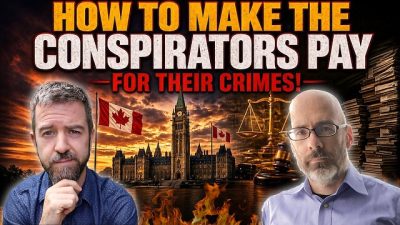
Dan Dicks with James Corbett on Solutions Watch
or go to
Aletho News Archives – Video-Images
From the Archives
Secret document reveals plans for civil war in Lebanon, Israeli false flags, and invasion
By Randi Nord | Geopolitics Alert | April 5, 2019
Beirut – During his visit with US Secretary of State, Mike Pompeo, Lebanese President Michael Aoun reportedly received a US-Israeli document detailing plans for creating a civil war in Lebanon with covert false flag operations and possible Israeli invasion.
Although the source of the document is Israeli and created in partnership with Washington, no one knows who presented it to Aoun. The Lebanese TV station, Al-Jadeed, initially reported the document on Lebanese TV and a video on its website. Geopolitics Alert translated the report for this article. … continue
Blog Roll
 Aletho News
- Sheikh al-Asadi warns of Iraqi government compliance with US demands
- How to MAKE THE CONSPIRATORS PAY for their crimes! Dan Dicks with James Corbett on Solutions Watch
- There’s a drought in academia: A drought in honest research on the subject of drought and other weather extremes
- Department of War Awards $20.7 Billion Contract to Raytheon for Air-to-Air Missiles
- ‘Distance yourselves from Israel’: IRGC urges US population to question govt policies
- America’s Greenland deal has a radioactive backstory
- The RAF Fairford ‘terror plot’: Unpacking escalation in the UK echo-chamber
- EU Council Advances Chat Control 2.0 Scanning Proposal
- Ex-Greek MEP files complaint against Israeli spyware firm over alleged Pegasus surveillance
- Troubling ideas throughout the Torah, Talmud, Mishneh Torah and Tanya
- If Americans Knew
- New Report: “Scholasticide and Genocide in Gaza: Assessment, Testimonies and Legal Analysis”
- Ex-Biden officials are desperate for a Gaza scapegoat
- Israeli “settlers” Invade Al-Aqsa; Pour Boiling Water on 75-Year-Old
- Israel Has Kidnapped Another American Teenager
- US arms sales to Israel worth $21.6 billion in 20 months
- Three Palestinians Killed in Israeli Attacks on Gaza
- Revealed: German “Anti-Semitism Expert” Driving Crackdown on Palestine Solidarity is Former Israeli Spy
- Egypt’s Warning to Israel Before Oct 7
- Israel’s siege signals another cruel winter for 1.8 million Gazans – Daily Update
- Netanyahu Asked UAE Leader to Deny Report on Oct. 7 Warning in Secret Visit, Sources Say
- No Tricks Zone
- New Study: Earth And Venus Surface Warmth Largely Explained By Convection And Lapse Rate, Not CO2 Or Radiation
- 2025 Nature Paper Claiming Worsening Global Drought Gets RETRACTED …Heavily Flawed
- New Study: ‘Global Drought Shows No Detectable Recent Acceleration Under Climate Warming’
- Economic Masterminds: German Socialists Suggest Taxing Productivity Gains Stemming From Using AI
- The South China Sea Has Not Been Cooperating With The Climate Change Narrative
- Energy Crisis: Germany Enters Heating Season With Historically Low Gas Reserve Fill Levels
- New Study: The Antarctic Ice Sheet Gained Mass From 2020-2024 Due To Staggering Snow And Ice Accumulation
- Study: Ocean Heating Rates From Thousands Of Years Ago ‘Dwarf’ Modern Ocean Heating Rates
- Climate Extremists Target, Attack Large-Scale Power Grid Infrastructure In Germany!
- New Study: Antarctic Ice Melt Has Contributed Less Than 1 Centimeter To Sea Level Rise In The Last 30 Years

