‘EU’s new tool against political opponents is to link them to Russia’ – targeted Danish journalist
RT | January 14, 2017
Danish Journalist Iben Thranholm, who was branded as a Russian propagandist and included on an EU blacklist for comments she made on migrant policy, tells RT that such character assassinations have become the new go-to tactic of Western governments.
Thranholm is a Danish current events columnist who penned an opinion piece for Russia Insider in 2016, in which she explained her reservations about the EU’s current migrant policy and its inability to properly integrate Muslim migrants into European society.
She had also written a piece for RT earlier in which she explained how the “spiritual vacuum” created by Western cultural nihilism is the core factor behind growing Muslim radicalization within the EU.
She also criticized the EU’s unwillingness to recognize religion as a factor at all as just one indicator of this trend.
These and other comments earned the Danish journalist a spot on the EU’s East StratCom Task Force black list – a body set up in 2015 with the purpose of “collecting examples of pro-Kremlin disinformation articles” – not unlike American Senator McCarthy’s communist witch-hunt of the 1950s.
“Today, it is me who is on the list,” Thranholm says. “Tomorrow it could be a different journalist who has similar views. They claim that I’m damaging – doing harm – to the EU just for criticizing them. I criticized them for their immigration policy,” she says, adding that many people in Europe agree with her.
The Danish journalist argues that the EU’s mechanism for dealing with such dissenters “is to link the person with Russia, or claim that there are close ties between this person and Russia. And then, this person is just not trustworthy anymore – it’s a kind of character assassination.”
“It’s hard to believe that modern democratic Europe has ended up in some kind of totalitarian or semi-totalitarian democracy where our leaders have a special definition of what is democracy – and if you don’t agree with it, you will be put on the list. I think it’s very, very alarming and very disturbing,” she said.
Thronhalm has gone to great pains to explain that her views are not anti-Islamic. As she wrote for RT in 2015, “Secularism, relativism of values, materialism and democracy as a new religion (idolatry devoid of a deity) constantly prove their feeble inadequacy when facing Islamism.”
Foreign Minister Anders Samuelsen has recently defended her inclusion on the EU task force’s blacklist, saying she was promoting a “Kremlin narrative,” when prodded by Marie Krarup, who heads Denmark’s People’s Party and shares views similar to Thranholm’s. Thranholm later wrote that she was “appalled” at the minister’s conclusion that her inclusion on the list was justified, comparing the decision to one that would be taken by a “totalitarian Soviet state.”
Read more:
Transnistria and Donbass: Historical Parallels and Possible Similar Scenarios for the Future
By Halyna Mokrushyna | CounterPunch | January 13, 2017
On January 4, President Igor Dodon of Moldova met with Vadim Krasnoselskiy, the head of the unrecognized Pridnestrovian Moldavian Republic (Transnistria). The meeting took place in Bendery, on the right bank of Dniester river, on the territory of the Transnistria. It was initiated by the president of Moldova.
Igor Dodon was elected Moldovan president on November 13 on a platform advocating improved relations with Russia.
During the meeting, both sides established a good contact and expressed openness and willingness to compromise. Concrete decisions have been taken to improve relations between Moldova and Transnistria. “Citizens on both sides of the Dniester River (which runs through the territory of Moldova and the right (eastern) border of Transnistria) should see the concrete results during 2017,” stated President of Moldova Igor Dodon .
The president of Transnistria Vadim Krasnoselskiy stressed the importance of compromise with Moldova for people living on both sides. “We must create the conditions so that people are not held hostage to politics, so that decisions taken by politicians are for the benefit of the people. We must respect the people of Moldova and Transnistria and find a compromise in any case”, stated Vadim Krasnoselskiy.
During the meeting, the first in eight years, the presidents of Moldova and Trasnistria discussed a whole range of practical issues that have accumulated in recent years, including problems in education, registration of vehicles, communication, movement of citizens, rail transport, recognition of diplomas and car plates.
At the same time, political issues were not discussed. Recognition of the independence of the Pridnestrovian Moldavian Republic (PMR) by Chisinau remains the main bone of contention between the two republics. Chisinau designates PMR as the Transnistria autonomous territorial unit with special legal status. PMR is not recognized by any country, member of the UN, while the UN itself considers PMR to be part of Moldova.
PMR emerged as a reaction of the mostly Slavic population of this territory to the rise of pro-Romanian nationalism among ethnic Moldovans in the late 1980s, the period of Gorbachev’s perestroika and glasnost in Russia. The most prominent movement formed at that time, the Popular Front of Moldova, formulated three main demands: that Moldovan be declared the only state language, that the Moldovan language switch to use of the Latin alphabet instead of the Cyrillic one, and that Moldovan ethnic identity be recognized as identical to Romanian one. The radical factions of the Popular Front called for minority populations, particularly the Slavs (mainly Russians and Ukrainians) and Gagauz, to leave or be expelled from Moldova.
The Supreme Council of the Moldavian Soviet Socialist Republic followed through on main three demands: on August 31, 1989 it adopted Moldovan as the only official language, while retaining Russian for secondary purposes; it introduced the Latin alphabet; and it declared a shared Moldovan-Romanian linguistic identity. The publicly stated intentions of the Moldovan authorities to bring the country closer to Romania, as well as the ethnocentric rhetoric of the Popular Front, provoked serious concerns of ethnic minorities in the country. Transnistria’s population was predominantly Slav – 60% were Ukrainians and Russians, while less than 40% were ethnic Moldovans. The overall majority of the population, including some ethnic Moldovans, spoke Russian as their mother tongue.
The nationalist Popular Front won the first free parliamentary elections in the Moldavian SSR in the spring of 1990. On 2 September 1990, the Second Congress of the Peoples’ Representatives of Transnistria proclaimed the creation of the Pridnestrovian Moldavian Soviet Socialist Republic. Violence escalated when in October 1990, the Popular Front called for volunteers to form armed militias to stop an autonomy referendum in Gagauzia. In response, volunteer militias were formed in Transnistria.
Limited armed clashes between Transnistrian militia and Moldova started in November of 1990. Volunteers from Russia came to support Transnistrians. In early 1992, the fighting intensified. The former Soviet 14th Guards Army, stationed in Transnistiria, which remained neutral throughout the fighting, entered the conflict in its final stage, swearing allegiance to Transnistrian authorities and opening fire against Moldovan forces. A ceasefire agreement was signed on 21 July 1992 and has held to the present day.
The history of the emergence of the Pridnestrovian Moldavian Republic holds several striking similarities with the current conflict in Ukraine. There, the people of the Donetsk and Lugansk oblasts in eastern Ukraine rebelled against the nationalist rhetoric of the Euromaidan movement and the government brought to power through a coup d’état on February 21-22, 2014. One of the first steps of that government was to abolish the existing law on languages in Ukraine granting Russian a special status in Russian-speaking regions of Ukraine. Ukrainian is the only official language in Ukraine. Changes to the language law in 2013 granted Russian a special status in areas of majority or large minority Russian speakers, but the law was bitterly opposed by Ukrainian nationalists.
Another similarity is the linguistic profiles of Ukraine and Moldova. Like Transnistria, where the majority of population speaks Russian, Donetsk and Lugansk regions are the only regions of Ukraine, where Russian language is spoken by the large majority of the population. Population of these regions of Ukraine has always been close to Russia culturally, as with the population of Transnistria. Russian volunteers poured into Transnistria to help locals to defend their rights against Moldovan nationalism; in the same way 20 years later, Donetsk and Lugansk received the support of volunteers from Russia in their fight against Ukrainian nationalism and against a forceful integration into the European Union by the coup government that came to power in 2014. They wanted closer ties with Russia. However, Russia has not officially recognized the Donetsk and Lugansk People’s Republics, as it has not recognized the Pridnestrovian Moldavian Republic. Russia does provide extensive humanitarian assistance to both entities and maintains extensive economic and cultural relations.
Moldova has not officially recognized Transnistria. But at least it stopped waging war against against the breakaway republic, and it has settled into an uneasy coexistence. The relations between Moldova and Transnistria are often characterized as a “frozen conflict”. All attempts to find a formula for political settlement of the unrecognized status of the PMR between the PMR and Moldova have not produced any result.
Since independence in 1991, Moldova, like Ukraine some 20 years later, set out on a course of economic integration into the European Union. Even the so-called ‘pro-Russian’ Moldovan presidents over the years, such as Vladimir Voronin (2001-2009), followed this course very closely. For example, in 2003, Voronin refused to sign a memorandum proposed by the Russian Federation outlining plans for a unification of Moldova and the PMR into a federal state of Moldova. Voronin stated that since Moldova plans to join European Union, such a plan needed the approval of ‘European structures’, beginning with the Organization for Security and Cooperation in Europe’, and therefore he could not endorse it.
In the current conflict between Kyiv and Donetsk and Lugansk republics, Russian officials have stated on many occasions that the two republics (comprising the historic industrial region called ‘Donbass’) should be granted a large autonomy within a unitary Ukraine, in spite of the evident desire of the populations of the two breakaway republics to desire to integrate into the Russian Federation.
The ceasefire and political-settlement agreement signed in Minsk, Belarus on Feb 12, 2015 (termed ‘Minsk-2’, text here) with the endorsement of France, Germany, and Russia, outline beginning principles of this autonomy, but Kyiv has been stubbornly sabotaging the agreement.
The new president of Moldova, Igor Dodon, is proving himself a wiser and more mature politician compared to Ukrainian leaders, as shown by his visit to the Pridnestrovian Moldovan Republic. He declared that Moldova under his presidency will remain a neutral country, not choosing between European Union or Russia. The population of Moldova, like the population of Ukraine, has always been split in its political and cultural sympathies towards Europe and Russia. Most Moldovans and probably a majority of Ukrainians believe the best way to keep their country safe and whole is by preserving a neutral status between the EU and the Russia-dominated Eurasian Economic Union to the east. Dodon has demonstrated a practical approach of compromise and negotiation in the interests of the population of both Moldova and the PMR.
Kyiv should follow Dodon’s example because it is the only path to peace in Ukraine. Unfortunately, the current political regime in Kyiv is unlikely to do that. The news of Dodon’s meeting with the president of the PMR was not even reported by mainstream Ukrainian media.
The recent call of one of the richest Ukrainian oligarchs, Viktor Pinchuk, to make painful compromises with Russia and implement Minsk-2 and return to a neutral status for Ukraine to reach peace in Donbass, has been repudiated by Poroshenko’s administration. Konstantin Eliseev, the deputy head of the Presidential Administration, stated that Ukraine will never turn away from integration into the European Union and NATO . (See my Dec 31, 2016 article ‘ Prominent member of Ukraine’s elite issues call for peace in Donbass’.)
But to the ongoing consternation of officials of the Kyiv government, full membership of Ukraine in the European Union has always been treated cautiously and even reluctantly by European Union officials. They have used the idea to foment conflict between Ukraine and Russia, which is not the same as supporting and facilitation it, as Ukrainians are today learning.
Ukrainians blindly mistook a loose economic association with Europe as being a step toward an inevitable, full integration into the European Union. They naively hoped that the European Union will solve the economic disaster that the country became following independence in 1991, particularly following the failed ‘Orange Revolution’ of 2005 in which competing interests among the country’s economic elite fought for domination amidst a backdrop of deep, social protest by ordinary Ukrainians.
This blind, naïve hope has brought further economic disaster and civil war in Ukraine. The official Ukrainian propaganda blames Russia for all of the troubles beginning in 2013 and it refuses to recognize Kyiv’s fault in its unleashing of a so-called Anti-Terrorist Operation (complete with its own, catchy acronym—the ‘ATO’) against its own people. Kyiv relied heavily on U.S. support in the conflict with Russia. Now, that support may dwindle if President-elect Donald Trump carries through his various, offhand statements that he is interested in seeking improved relations with Russia.
Kyiv should review its categorical refusal to accommodate Donetsk and Lugansk if it wants to keep Donbass within Ukraine. Otherwise the Donetsk and Lugansk People’s Republics will follow the path of the Pridnestrovian Moldovan Republic in exercising a permanent autonomy. It is a very plausible scenario, given the fact that the conflict in Donbass has been frozen for more than two years and Ukraine continues to punish the two republics with unceasing artillery fire and a punishing economic blockade.
Halyna Mokrushyna is currently enrolled in the PhD program in Sociology at the University of Ottawa and a part-time professor. She holds a doctorate in linguistics and MA degree in communication. Her academic interests include: transitional justice; collective memory; ethnic studies; dissent movement in Ukraine; history of Ukraine; sociological thought. Her doctoral project deals with the memory of Stalinist purges in Ukraine. In the summer of 2013 she travelled to Lviv, Kyiv, Kharkiv and Donetsk to conduct her field research. She is currently working on completing her thesis. She can be reached at halouwins@gmail.com.
Hungary Cracks-Down on all Soros Funded NGOs
By Vanessa Beeley | 21st Century Wire | January 11, 2017
Extraordinary information has come to light that perhaps, goes some way to explaining the vicious EU and corporate media backlash against Hungarian Prime Minister, Viktor Orban, for his “nationalist” policies regarding the influx of refugees from various nations that have been targeted by the predatory interventionist alliance of the US, EU, UK, Turkey, Gulf States, Israel, Canada, Australia, Jordan and other smaller players.
“Hungary does not need a single migrant for the economy to work, or the population to sustain itself, or for the country to have a future,” he told a joint press conference in Budapest with Austrian chancellor Christian Kern.
“This is why there is no need for a common European migration policy: whoever needs migrants can take them, but don’t force them on us, we don’t need them,” Orban said.
The populist leader added that “every single migrant poses a public security and terror risk”.
“For us migration is not a solution but a problem … not medicine but a poison, we don’t need it and won’t swallow it,” he said. ~ The Guardian
Orban is also a keen Donald Trump supporter:
Mr. Orban, who has ordered border fences built to stop migrants, said that the ideas of the “upstanding American presidential candidate” about the need for the best intelligence services and his opposition to “democracy export” were also applicable in Europe.
Mr. Orban, whose speech was broadcast on Hungarian state media, blamed the West for what he saw as failed interventions in countries such as Egypt and Libya. ~ New York Times
Then, according to a report in Bloomberg today, Orban has gone one step further and ordered a crack-down on all NGOs linked to billionaire George Soros, convicted criminal hedge-fund manager & vociferous supporter of the EU opening its borders to refugees. Soros is also the anti-Syria campaign impresario, funding and supporting a vast array of anti Syria NGOs operating in lock-step with Washington’s “regime change” objectives in Syria.
Hungary plans to crack down on non-governmental organizations linked to billionaire George Soros now that Donald Trump will occupy the White House, according to the deputy head of Prime Minister Viktor Orban’s party.
The European Union member will use “all the tools at its disposal” to “sweep out” NGOs funded by the Hungarian-born financier, which “serve global capitalists and back political correctness over national governments,” Szilard Nemeth, a vice president of the ruling Fidesz party, told reporters on Tuesday. No one answered the phone at the Open Society Institute in Budapest when Bloomberg News called outside business hours.
“I feel that there is an opportunity for this, internationally,” because of Trump’s election, state news service MTI reported Nemeth as saying. Lawmakers will start debating a bill to let authorities audit NGO executives, according to parliament’s legislative agenda.
Orban, the first European leader to publicly back Trump’s campaign, has ignored criticism from the European Commission and U.S. President Barack Obama’s administration for building a self-described “illiberal state” modeled on authoritarian regimes including Russia, China and Turkey. In 2014, Orban personally ordered the state audit agency to probe foundations financed by Norway and said that civil society groups financed from abroad were covers for “paid political activists.”
Orban and his administration have frequently singled out NGOs supported by Soros, a U.S. Democratic Party supporter with a wide network of organizations that promote democracy in formerly communist eastern Europe.
‘Power Structure’
Trump also accused the 86-year-old billionaire of being part of “a global power structure that is responsible for the economic decisions that have robbed our working class, stripped our country of its wealth and put that money into the pockets of a handful of large corporations and political entities.”
In a pre-election commercial, he showed images of Soros along with Federal Reserve Chair Janet Yellen, and Goldman Sachs Group Inc. CEO Lloyd Blankfein, all of whom are Jewish. The Anti-Defamation League criticized the ad for touching on “subjects that anti-Semites have used for ages.” – Bloomberg
So, for Hungary, its “bye, bye Soros”.
Europe’s Mixed Feelings About Trump
By Andrew Spannaus | Consortium News | January 9, 2017
Few in Europe expected Donald Trump to win the U.S. Presidential elections last November. The picture painted by the media and political class was convincing: despite the pent-up anger being expressed through protest candidates, Hillary Clinton was headed towards a decisive victory, as the majority of Americans couldn’t stomach someone as outrageous and unconventional as the reality TV star turned politician.
That’s not what happened, of course, as Trump earned an Electoral College victory by winning enough votes in key Midwestern states that have suffered from a loss of manufacturing jobs in recent decades. His victory has shaken the Western world to its core, making it clear that business as usual is no longer possible in terms of both economic and foreign policy.
In Europe the signs of the anti-establishment sentiment that dominated the U.S. election campaign have been present for some time. The most obvious example was the Brexit vote in June 2016, in which the population of the United Kingdom voted to leave the European Union. But protest movements have actually been on the rise for several years now, driven by the same basic issues as in the United States: a sense of economic and social insecurity – accompanied by a rise in anti-immigrant sentiment – driven by an economic policy that has made life harder for the middle class while enriching those at the top.
The growing anger against the institutions of the European Union, considered the main culprit for the failed economic policies, has made the élites desperate for some sense of stability, to help them weather the storm. As a result, a potential Clinton victory was openly welcomed by most political leaders.
After Trump’s victory, there were numerous press reports of worries among European governments regarding the incoming Administration’s foreign policy. Trump is understandably seen as unpredictable, but the key point revolves around his attitude towards Russia, the same issue that is currently dominating the institutional fight in the United States right now.
Just after the election The New York Times ran a story entitled “For Europe, Trump’s Election is a Terrifying Disaster,” suggesting that under the new President, the United States may embrace authoritarianism and no longer defend democracy. It was a theme that other mainstream news outlets also pushed.
On Nov. 17, The Associated Press wrote: “NATO members and other European countries are worried that under Trump, the U.S. will stop trying to police Russia’s behavior the way it has under Obama. Most concerning to U.S. allies are Trump’s effusive comments about Russian President Vladimir Putin, one of the first world leaders he spoke to after winning the election.”
Seeing Benefits
While it is true that former Soviet bloc countries such as Poland and Latvia would prefer to maintain the current hardline position towards Russia, the reality is that the largest E.U. members – France, Italy and Germany – actually stand to benefit from the diplomatic approach promised by President-elect Trump.
This doesn’t mean they supported his candidacy, though. First of all, they were told that he couldn’t win; and second, a Trump victory would seem to encourage the anti-establishment movements already on the rise in Europe, which threaten both the E.U.’s status quo and the jobs of key leaders, including German Chancellor Angela Merkel.
Hillary Clinton was seen as representing continuity, and for the many politicians who seek to curry favor with the transatlantic elites, it was best to show their Clinton bona fides in view of the upcoming change in power. For example, Italian Prime Minister Matteo Renzi – now out of office due to a stinging anti-establishment vote in a referendum on proposed constitutional reforms – repeatedly broke diplomatic protocol and publicly criticized Trump during the election campaign.
However, over the course of 2016 it became clear that Clinton’s foreign policy was far more aggressive than Barack Obama’s, as the President had actually been seeking collaboration with Russia for several years on issues, such as constraining Iran’s nuclear program and negotiating an end to the Syrian conflict, despite heavy opposition from within his own administration.
Indeed Trump’s openness towards Vladimir Putin seems even more heretical now because most have chosen to forget that Obama himself had sought close cooperation with Putin on several key issues. For instance, Secretary of State John Kerry’s diplomacy last year on Syria almost succeeded in implementing intelligence sharing and joint airstrikes by the two powers, before being effectively thwarted by the Pentagon and other U.S. institutional opposition in September 2016.
Now Obama seems to have forgotten his former position, and decided to fully toe the anti-Russian line, apparently convinced that he must do his part in the campaign to weaken Trump and prevent him from being an effective president, even in areas where their positions are not far apart.
It is possible that Trump will accelerate the timid attempts of his predecessor to abandon the “regime change” policies that have led to numerous disasters in the Middle East, and heightened tensions with Russia. The President-elect seems determined to pursue this path more openly than Obama, who worked slowly towards this goal while seeking to placate his critics with more bellicose language in his public statements.
Doubts About the U.S. Hardline
Although European nations have been heavily involved in recent regime change adventures (the U.K. in Iraq and France in Libya, for example), there is a widespread preference in Western Europe for avoiding further conflict with Russia. The U.S. position on the events in Ukraine, for example, is often seen as one-sided, and the notion of NATO expansion to Russia’s borders seems like an unnecessary and dangerous provocation that can only makes things worse.
Western sanctions against Russia, and Russia’s retaliatory sanctions on food imports, have cost European economies over $100 billion in trade, according to some estimates, hitting the agricultural sector especially hard. In addition, Russia has been concluding more economic agreements with countries such as China, leading to fears of permanent consequences for Europe.
For this reason, France, Italy and Germany have all repeatedly stated their desire to reduce or remove the sanctions altogether. The hope is that an agreement can be reached to defuse tensions in Ukraine, based on support for the Kiev government but broad autonomy for the ethnic Russian areas in eastern Ukraine.
Despite this desire to head off further conflict, European governments are usually careful not to openly break with U.S. policy; they are key members of NATO and have no desire to distance themselves from the leader of the alliance. However, if Donald Trump follows through on his stated goal of working “together with Russia,” the countries of Western Europe in particular may welcome the opportunity to advance their own economic interests and avoid finding themselves in the middle of a new Cold War.
Andrew Spannaus is a freelance journalist and strategic analyst based in Milan, Italy. He is the founder of Transatlantico.info, that provides news, analysis and consulting to Italian institutions and businesses. His book on the U.S. elections Perchè vince Trump (Why Trump is Winning) was published in June 2016.
The Utter Stupidity of the New Cold War
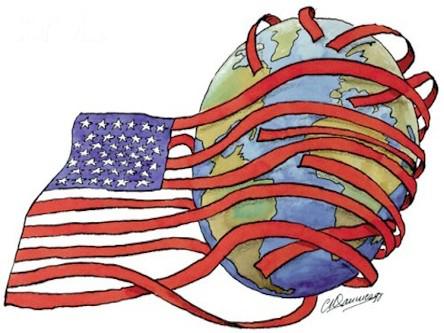
By Gary Leupp | Dissident Voice | January 7, 2017
It seems so strange, twenty-seven years after the fall of the Berlin Wall, to be living through a new Cold War with (as it happens, capitalist) Russia.
The Russian president is attacked by the U.S. political class and media as they never attacked Soviet leaders; he is personally vilified as a corrupt, venal dictator, who arrests or assassinates political opponents and dissident journalists, and is hell-bent on the restoration of the USSR.
(The latter claim rests largely on Vladimir Putin’s comment that the dissolution of the Soviet Union was a “catastrophe” and “tragedy” — which in many respects it was. The press chooses to ignore his comment that “Anyone who does not miss the Soviet Union has no heart, while anyone who wants to restore it has no brain.” It conflicts with the simple talking-point that Putin misses the imperial Russia of the tsars if not the commissars and, burning with resentment over the west’s triumph in the Cold War, plans to exact revenge through wars of aggression and territorial expansion.)
The U.S. media following its State Department script depicts Russia as an expansionist power. That it can do so, so successfully, such that even rather progressive people — such as those appalled by Trump’s victory who feel inclined to blame it on an external force — believe it, is testimony to the lingering power and utility of the Cold War mindset.
The military brass keep reminding us: We are up against an existential threat! One wants to say that this — obviously — makes no sense! Russia is twice the size of the U.S. with half its population. Its foreign bases can be counted on two hands. The U.S. has 800 or so bases abroad.
Russia’s military budget is 14% of the U.S. figure. It does not claim to be the exceptional nation appointed by God to preserve “security” on its terms anywhere on the globe. Since the dissolution of the USSR in 1991, the U.S. has waged war (sometimes creating new client-states) in Bosnia (1994-5), Serbia (1999), Afghanistan (2001- ), Iraq (2003- ), Libya (2011), and Syria (2014- ), while raining down drone strikes from Pakistan to Yemen to North Africa. These wars-based-on-lies have produced hundreds of thousands of civilian deaths, millions of refugees, and general ongoing catastrophe throughout the “Greater Middle East.” There is no understating their evil.
The U.S. heads an expanding military alliance formed in 1949 to confront the Soviet Union and global communism in general. Its raison d’être has been dead for many years. Yet it has expanded from 16 to 28 members since 1999, and new members Estonia and Latvia share borders with Russia.
(Imagine the Warsaw Pact expanding to include Mexico. But no, the Warsaw Pact of the USSR and six European allies was dissolved 26 years ago in the idealistic expectation that NATO would follow in a new era of cooperation and peace.)
And this NATO alliance, in theory designed to defend the North Atlantic, was only first deployed after the long (and peaceful) first Cold War, in what had been neutral Yugoslavia (never a member of either the Warsaw Pact nor NATO), Afghanistan (over 3000 miles from the North Atlantic), and the North African country of Libya. Last summer NATO held its most massive military drills since the collapse of the Soviet Union, involving 31,000 troops in Poland, rehearsing war with Russia. (The German foreign minister Frank-Walter Steinmeier actually criticized this exercise as “warmongering.”)
Alliance officials expressed outrage when Russia responded to the warmongering by placing a new S-400 surface-to-air missiles and nuclear-capable Iskander system on its territory of Kaliningrad between Poland and Lithuania on the Baltic coast. But Russia has, in fact, been comparatively passive in a military sense during this period.
In 1999, as NATO was about to occupy the Serbian province of Kosovo (soon to be proclaimed an independent country, in violation of international law), nearby Russian peacekeepers raced to the airport in Pristina, Kosovo, to secure it and ensure a Russian role in the Serbian province’s future. It was a bold move that could have provoked a NATO-Russian clash. But the British officer on the ground wisely refused an order from Gen. Wesley Clark to block the Russian move, declaring he would not start World War III for Gen. Clark.
This, recall, was after Bill Clinton’s secretary of state, Madeleine Albright (remember, the Hillary shill who said there’s a special place in hell reserved for women who don’t vote for women) presented to the Russian and Serbian negotiators at Rambouillet a plan for NATO occupation of not just Kosovo but all Serbia. It was a ridiculous demand, rejected by the Serbs and Russians, but depicted by unofficial State Department spokesperson and warmonger Christiane Amanpour as the “will of the international community.” As though Russia was not a member of the international community!
This Pristina airport operation was largely a symbolic challenge to U.S. hegemony over the former Yugoslavia, a statement of protest that should have been taken seriously at the time.
In any case, the new Russian leader Putin was gracious after the 9/11 attacks in 2001, even offering NATO a military transport corridor through Russia to Afghanistan (closed in 2015). He was thanked by George W. Bush with the expansion of NATO by seven more members in 2004. (The U.S. press made light of this extraordinary geopolitical development; it saw and continues to see the expansion of NATO as no more problematic than the expansion of the UN or the European Union.) Then in April 2008 NATO announced that Georgia would be among the next members accepted into the alliance.
Soon the crazy Georgian president Mikhail Saakashvili, emboldened by the promise of near-term membership, provoked a war with the breakaway republic of South Ossetia, which had never accepted inclusion of the new Georgian state established upon the dissolution of the Georgian Soviet Socialist Republic in 1991. The Ossetians, fearing resurgent Georgian nationalism, had sought union with the Russian Federation. So had the people of Abkhazia.
The two “frozen conflicts,” between the Georgian state and these peoples, had been frozen due to the deployment of Russian and Georgian peacekeepers. Russia had not recognized these regions as independent states nor agreed to their inclusion in the Russian Federation. But when Russian soldiers died in the Georgian attack in August, Russia responded with a brief punishing invasion. It then recognized the two new states of South Ossetia and Abkhazia (breakaway states in what had been the Georgian SSR) six months after the U.S. recognized Kosovo.
(Saakashvili, in case you’re interested, was voted out of power, disgraced, accused of economic crimes, and deprived of his Georgian citizenship. After a brief stint at the Fletcher School of International Law and Diplomacy at Tufts University — of which I as a Tufts faculty member feel deeply ashamed — he was appointed as governor of Odessa in Ukraine by the pro-NATO regime empowered by the U.S.-backed coup of February 22, 2014.)
Sen. John McCain proclaimed in 2008: “We are all Georgians now,” and advocated U.S. military aid to the Georgian regime. An advocate of war as a rule, McCain then became a big proponent of regime change in Ukraine to allow for that country’s entry into NATO. Neocons in the State Department including most importantly McCain buddy Victoria Nuland, boasted of spending $5 billion in support of “the Ukrainian people’s European aspirations” (meaning: the desire of many Ukrainians in the western part of the country to join the European Union — risking, although they perhaps do not realize it, a reduction in their standard of living under a Greek-style austerity program — to be followed by NATO membership, tightening the military noose around Russia).
The Ukrainian president opted out in favor of a generous Russian aid package. That decision — to deny these “European aspirations” — was used to justify the coup.
But look at it from a Russian point of view. Just look at this map, of the expanding NATO alliance, and imagine it spreading to include that vast country (the largest in Europe, actually) between Russia to the east and Poland to the west, bordering the Black Sea to the south. The NATO countries at present are shown in dark blue, Ukraine and Georgia in green. Imagine those countries’ inclusion.
And imagine NATO demanding that Russia vacate its Sevastopol naval facilities, which have been Russian since 1783, turning them over to the (to repeat: anti-Russian) alliance. How can anyone understand the situation in Ukraine without grasping this basic history?
The Russians denounced the coup against President Viktor Yanukovych (democratically elected — if it matters — in 2010), which was abetted by neo-fascists and marked from the outset by an ugly Russophobic character encouraged by the U.S. State Department. The majority population in the east of the country, inhabited by Russian-speaking ethnic Russians and not even part of Ukraine until 1917, also denounced the coup and refused to accept the unconstitutional regime that assumed power after February 22.
When such people rejected the new government, and declared their autonomy, the Ukrainian army was sent in to repress them but failed, embarrassingly, when the troops confronted by angry babushkas turned back. The regime since has relied on the neo-fascist Azov Battalion to harass secessionists in what has become a new “frozen conflict.”
Russia has no doubt assisted the secessionists while refusing to annex Ukrainian territory, urging a federal system for the country to be negotiated by the parties. Russian families straddle the Russian-Ukrainian border. There are many Afghan War veterans in both countries. The Soviet munitions industry integrated Russian and Ukrainian elements. One must assume there are more than enough Russians angry about such atrocities as the May 2014 killing of 42 ethnic Russian government opponents in Odessa to bolster the Donbas volunteers.
But there is little evidence (apart from a handful of reports about convoys of dozens of “unmarked military vehicles” from Russia in late 2014) for a Russian “invasion” of Ukraine. And the annexation of Crimea (meaning, its restoration to its 1954 status as Russian territory) following a credible referendum did not require any “invasion” since there were already 38,000 Russian troops stationed there. All they had to do was to secure government buildings, and give Ukrainian soldiers the option of leaving or joining the Russian military. (A lot of Ukrainian soldiers opted to stay and accept Russian citizenship.)
Still, these two incidents — the brief 2008 war in Georgia, and Moscow’s (measured) response to the Ukrainian coup since 2014 — have been presented as evidence of a general project to disrupt the world order by military expansion, requiring a firm U.S. response. The entirety of the cable news anchor class embraces this narrative.
But they are blind fools. Who has in this young century disrupted world order more than the U.S., wrecking whole countries, slaughtering hundreds of thousands of innocents, provoking more outrage through grotesquely documented torture, generating new terror groups, and flooding Europe with refugees who include some determined to sow chaos and terror in European cities? How can any rational person with any awareness of history since 1991 conclude that Russia is the aggressive party?
And yet, this is the conventional wisdom. I doubt you can get a TV anchor job if you question it. The teleprompter will refer routinely to Putin’s aggression and Russian expansion and the need for any mature presidential candidate to respect the time-honored tradition of supporting NATO no matter what. And now the anchor is expected to repeat that all 17 U.S. intelligence services have concluded that Vladimir Putin interfered in the U.S. presidential election.
Since there is zero evidence for this, one must conclude that the Democratic losers dipped into the reliable grab bag of scapegoats and posited that Russia and Putin in particular must have hacked the DNC in order to — through the revelation of primary sources of unquestionable validity, revealing the DNC’s determination to make Clinton president, while sabotaging Sanders and promoting (through their media surrogates) Donald Trump as the Republican candidate — undermine Clinton’s legitimacy.
All kinds of liberals, including Sanders’ best surrogates like Nina Turner, are totally on board the Putin vilification campaign. It is sad and disturbing that so many progressive people are so willing to jump on the new Cold War bandwagon. It is as though they have learned nothing from history but are positively eager, in their fear and rage, to relive the McCarthy era.
But the bottom line is: U.S. Russophobia does not rest on reason, judgment, knowledge of recent history and the ability to make rational comparisons. It rests on religious-like assumptions of “American exceptionalism” and in particular the right of the U.S. to expand militarily at Russia’s expense — as an obvious good in itself, rather than a distinct, obvious evil threatening World War III.
The hawks in Congress — bipartisan, amoral, ignorant, knee-jerk Israel apologists, opportunist scum — are determined to dissuade the president-elect (bile rises in my throat as I use that term, but it’s true that he’s that, technically) from any significant rapprochement with Russia. (Heavens, they must be horrified at the possibility that Trump follows Kissinger’s reported advice and recognizes the Russian annexation of Crimea!) They want to so embarrass him with the charge of being (as Hillary accused him of being during the campaign) Putin’s “puppet” that he backs off from his vague promise to “get along” with Russia.
They don’t want to get along with Russia. They want more NATO expansion, more confrontation. They are furious with Russian-Syrian victories over U.S-backed, al-Qaeda-led forces in Syria, especially the liberation of Aleppo that the U.S. media (1) does not cover having no reporters on the ground, and little interest since events in Syria so powerfully challenge the State Department’s talking points that shape U.S. reporting, (2) misreports systematically, as the tragic triumph of the evil, Assad’s victory over an imaginary heroic opposition, and (3) sees the strengthening of the position of the Syrian stats as an indication of Russia’s reemergence as a superpower. (This they they cannot accept, as virtually a matter of religious conviction; the U.S. in official doctrine must maintain “full spectrum dominance” over the world and prohibit the emergence of any possible competitor, forever.)
*****
The first Cold War was based on the western capitalists’ fear of socialist expansion. It was based on the understanding that the USSR had defeated the Nazis, had extraordinary prestige in the world, and was the center for a time of the expanding global communist movement. It was based on the fear that more and more countries would achieve independence from western imperialism, denying investors their rights to dominate world markets. It had an ideological content. This one does not. Russia and the U.S. are equally committed to capitalism and neoliberal ideology. Their conflict is of the same nature as the U.S. conflict with Germany in the early 20th century. The Kaiser’s Germany was at least as “democratic” as the U.S.; the system was not the issue. It was just jockeying for power, and as it happened, the U.S. intervening in World War I belatedly, after everybody else was exhausted, cleaned up. In World War II in Europe, the U.S. having hesitated to invade the continent despite repeated Soviet appeals to do so, responded to the fall of Berlin to Soviet forces by rushing token forces to the city to claim joint credit.
And then it wound up, after the war, establishing its hegemony over most of Europe — much, much more of Europe than became the Soviet-dominated zone, which has since with the Warsaw Pact evaporated. Russia is a truncated, weakened version of its former self. It is not threatening the U.S. in any of the ways the U.S. is threatening itself. It is not expanding a military alliance. It is not holding huge military exercises on the U.S. border. It is not destroying the Middle East through regime-change efforts justified to the American people by sheer misinformation. In September 2015 Putin asked the U.S., at the United Nations: “Do you realize what you’ve done?”
Unfortunately the people of this country are not educated, by their schools, press or even their favorite websites to realize what has been done, how truly horrible it is, and how based it all is on lies. Fake news is the order of the day.
Up is down, black is white, Russia is the aggressor, the U.S. is the victim. The new president must be a team-player, and for God’s sake, understand that Putin is today’s Hitler, and if Trump wants to get along with him, he will have to become a team-player embracing this most basic of political truths in this particular imperialist country: Russia (with its nukes, which are equally matched with the U.S. stockpile) is the enemy, whose every action must be skewed to inflame anti-Russian feeling, as the normative default sentiment towards this NATO-encircled, sanction-ridden, non-threatening nation, under what seems by comparison a cautious, rational leadership?
*****
CNN’s horrible “chief national correspondent” John King (former husband of equally horrid Dana Bash, CNN’s “chief political correspondent”) just posed the question, with an air of aggressive irritation: “Who does Donald Trump respect more, the U.S. intelligence agencies, or the guy who started Wikileaks [Assange]?”
It’s a demand for the Trump camp to buy the Russian blame game, or get smeared as a fellow-traveler with international whistle-blowers keen on exposing the multiple crimes of U.S. imperialism.
So the real question is: Will Trump play ball, and credit the “intelligence community” that generates “intelligence products” on demand, or brush aside the war hawks’ drive for a showdown with Putin’s Russia? Will the second Cold War peter out coolly, or culminate in the conflagration that “Mutually Assured Destruction” (MAD) was supposed to render impossible?
The latter would be utterly stupid. But stupid people — or wise people, cynically exploiting others’ stupidity — are shaping opinion every day, and have been since the first Cold War, based like this one on innumerable lies.
Gary Leupp is a Professor of History at Tufts University, and author of numerous works on Japanese history. He can be reached at: gleupp@granite.tufts.edu.
Is Merkel planning to continue EU anti-Russian line despite Trump?
By Alexander Mercouris | The Duran | January 7, 2017
As Donald Trump clearly signals change of course, some EU leaders – possibly including Angela Merkel – cling to their anti-Russian policies.
The French commentator Natalie Nougayrède has written an extraordinary piece in The Guardian, which hints that even if Donald Trump lifts US sanctions on Russia…
Angela Merkel will try to keep EU sanctions in place:
It’s expected that the first key test will play out in the Donbass. If Trump backtracks on sanctions against Russia over Ukraine, will the EU be able to maintain a common front? German officials privately hint this may create a transatlantic rift that they wouldn’t shy away from if Europe’s collective interests are deemed at stake. “We may need to go there” says one, quickly adding a lot will depend on the French presidential vote.
Nougayrède is a well-connected person, who was formerly executive editor and managing editor of Le Monde, and her writing does sometimes reflect fairly closely the opinions of senior EU officials. In this instance moreover she claims to have been told this by German officials, who presumably reflect Merkel’s thinking.
In reality the suggestion that the EU might persist with its anti-Russian sanctions if Trump lifts those of the US, is both breathtaking and delusional. There is already widespread opposition to the sanctions, especially in southern Europe, and the idea that Angela Merkel, with or without French support, could single-handedly keep Europe in line on the sanctions even if a Trump led US reversed its position on them, is sheer fantasy.
It is to such fantasies that those in Europe who joined the ride of the anti-Russian campaign during Obama’s second term, and who invested all their hopes and ambitions in Hillary Clinton’s election, must now cling to. Having surrendered to the US control of Europe’s foreign policy, if under Trump the US now reverses course, they will have no cards left to play, and will be obliged to follow suit.
Berlin – Another False Flag? Government Complicity? Part of New World Order Agenda?
By Peter Koenig | Global Research | December 27, 2016
12 dead, about 40 injured, is the result of the latest terror attack in Berlin, when on 19 December, a truck plouged into a Christmas market at Berlin’s Bretscheideplatz, near the lush Kurfuerstendamm.
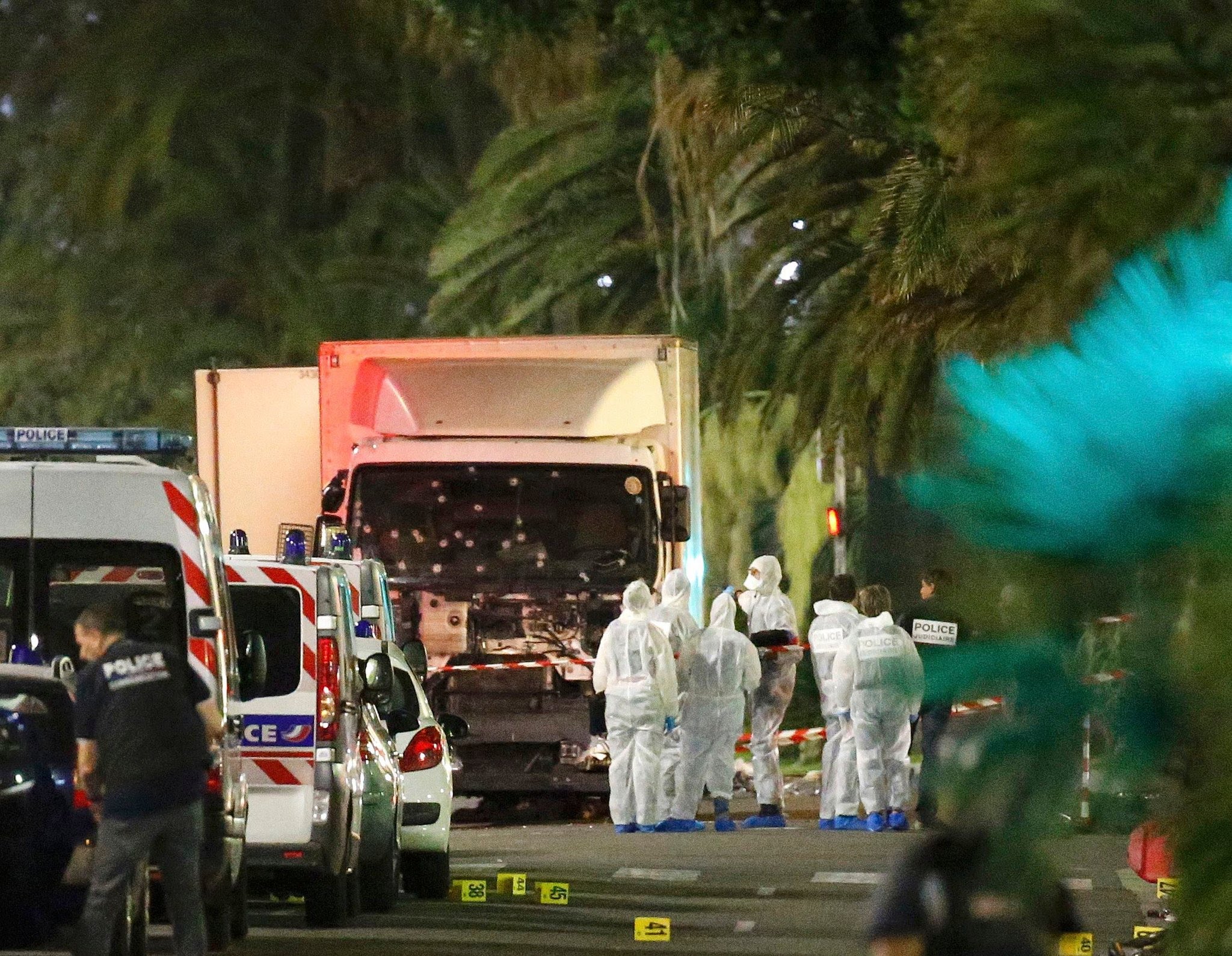
Is it not a ‘déjà-vu’ of not even half a year ago, when in Nice, France, on 14th July a truck mowed down hordes of people celebrating Bastille Day?
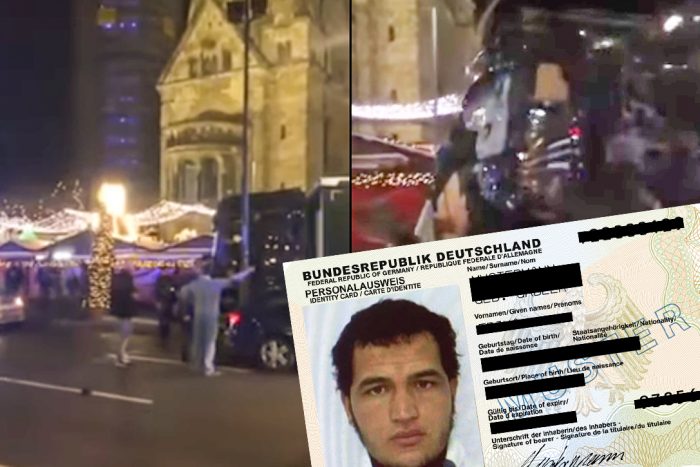 In Berlin, the first ‘culprit’ was a Pakistani who apparently ‘escaped’. When later he turned up and explained with proof his innocence, they had to let him go. In the cabin of the truck they also found a dead man of Polish origin. He couldn’t be accused, since he was dead.
Then the chase was stalled, until miraculously, about a day later, they found in the truck identity papers of a Mr. Anis Amri (24) of Tunisian citizenship beneath the driver’s seat. As is usual with these terrorists, they like to leave their ID cards behind. It seems to be part of their strategy to be caught and killed.
Then, once more there was a ‘suspect’, who could be chased, throughout Europe.
At three in the morning of December 23, again miraculously, Anis Amri turned up on a plaza in Milan, got allegedly into a confrontation with two policemen, who claimed he pulled a gun, when one of them shot and killed him. No witness, no proof.
Two Italian policemen killed a young man, whom – they say – they didn’t even have a clue who he might be. They became heroes, literally overnight. Italy’s new PM, Paolo Gentiloni, thanked and congratulated them; and so did Mme. Merkel and her Interior Minister, Thomas de Maizière.
The same pattern all over again.
DEAD MAN CAN’T TALK. It’s Paris (Charlie Hebdo and Bataclan); Nice; Brussels; Munich; Orlando, Florida; San Bernardino, California …… all over again- and again – and again.
The ‘plowing-through-a-celebrating-crowd’ is in many regards “a carbon copy” of the 14th July massacre in Nice (see image below). At the end, the designated ‘Muslim’ terrorist was killed. No witness. No testimony.
 Questions to be fully investigated: Were the secret services, the core of which are the CIA, Mossad and MI6, with the collaboration of Germany’s BND involved. Was it a false flag?
Don’t believe one minute that your respective governments didn’t and don’t know what’s going on.
Who are the real perpetrators?
The real perpetrators are not Muslims. They are your own spineless puppet governments, all of which (covertly) support the ISIS and al Qaeda. They obey orders to demonize the Muslim faith and society.
That’s what the west knows best – denigrating and discriminating, accusing the innocent, to serve their purpose, sanctions for those who do not submit.
In reality, no change for the last 800-some years, colonizing, exploiting, murdering the people of Asia, Africa and Latin America.
Today’s ‘leaders’ are the descendants of the colonial era killers of times past. They form the core of our “western killer civilization”.
These western ‘leaders’ are mere puppets, because they have been put in ‘power’ by the the elusive elite, also called the “Deep State” – the Deep State gone global.
Democracy is dead. It’s become a useless defunct slogan. No so-called election over the past decade or so, in the western world has been democratic. They were all scams and manipulations of peoples’ minds and wills.
And if they didn’t conform to what the Washington masters and their supreme masters needed, Plan B of ‘regime change’ kicked in.
They have become experts of semi-clandestine ‘regime change’ through parliamentary coups – i.e. Paraguay, Ukraine, Brazil, Greece, Portugal, Spain and many others.
If these eventually ‘elected’ western leaders (sic-sic), from Obama, to Merkel, Hollande, May, Gentiloni – and the entire EU / OECD clan, don’t behave, they are ‘cooked’, the target of political destabilizaion. That’s the extent of impunity which drives this hegemonic and criminal process towards the New World Order, or the One World Order, led by the global finance and war industry.
The finance clan, the lords of money, the Rothschilds, Rockefellers, Morgans, et al, the FED, BIS (Bank for International Settlements, the secretive central bank of all central banks) and Goldman Sachs, have to act fast; otherwise they might lose the key instrument of their power – the sham dollar pyramid economy – may fall apart, before they have actually reached their goal – a world under constant chaos, never-ending conflicts and wars.
A world under which a small elite, enslaves the 99.99% of ‘Us, the People’ — under ever worsening life conditions, unemployment, misery, disease, privatized social services, all contributing to a steady decline in life expectancy.
Among their instruments is permanent chaos. Economic dislocation and social crises.
Open borders forced by trade lobbies and WTO (World Trade Organization) will wipe out small farmers and manufacturers in developing countries, thus eventually handing monopolies to large, mostly US corporations, to the detriment of already impoverished nations, whose vulnerability will be further abused to extract their natural resources for a pittance, so they may repay their IMF / World Bank imposed and leveraged debt.
Floods of refugees from war zones to industrialized wealthy countries, currently happening from the war-torn Middle East to Europe, will disrupt the labor market, push down wages, create massive unemployment. These are all tools towards enslavement of populations. People who have to fend and fight for daily food and often for sheer survival, have no energy or time to take to the streets and protest. That’s the plan; already being enacted. Just look at Greece.
What does all that have to do with the Berlin massacre? – Everything. Berlin, like Paris, Brussels, Munich, Orlando… is just a cog in the wheel of the monster’s drive towards full world hegemony.
Unexpected, haphazard carnage and terror acts are spreading misery, poverty and fear.
People who are afraid will call for more police and military protection.
They will voluntarily give up their human and civil rights for what they hope will be more ‘protection’, being totally oblivious to the fact that the very governments from whom they are seeking more protection are those that commit these acts of treason and terror, those who are behind the killings. The Anglo-american controlled presstitute mainstream media is in permanent brainwashing mode. Unless you search the news and information for yourself on alternative media, they will never tell you the truth, but their lies, after lies, after more of the same lies will fabricate the public truth.
Peoples’ fear and absence of civil rights are easy steps towards increased militarization of the west, already happening – look at France – President (sic) Hollande was just able to extend the State of Emergency through July 2017. [The Paris November 2015 terror attacks played a key role in justifying the State of Emergency.]
The goal is to include it into the French Constitution, basically putting the French people under permanent actual or threat of Martial Law. Others might follow – Germany, Italy – all those whose constituents are ever warier of the EU and their ‘monopoly money’, the euro, and who may seek EUREXIT. This would break the camel’s back, so to speak, or at least put a wrench in the boundless onslaught of the hegemon.
Peoples’ fear may also re-strengthen the faltering justification of NATO. The fall of NATO must be halted. NATO is the Deep State’s warrior flagship, the military fear- and war monger vis-à-vis Russia and eventually China – the last vestiges to be conquered by the self-styled almighty empire, the invisible elite that pretends to rule the globe. Fortunately, they cannot stand up to the Russia-China chess duo which is gradually outsmarting the west’s ostentatious killer exploits.
Imagine, your own spineless governments, following orders of the globalized Deep State – in Berlin, Munich, Nice, Paris, Brussels, Orlando, and an almost endless list of false flags.
How can we respect our so-called leaders? They have zero esteem for us, who are their bread-earners. They kill us, no hesitation, if it pleases them and serves their purpose – and their greed.
In the case of Berlin, is the German government complicit? Blaming Muslims, finding a pre-identified victim, Mr. Anis Amri, who most likely had no clue that he was framed.
In Italy, the police catch him (or somebody who has been given the pre-identified Tunisian victim’s name), they kill him – and, bingo – case closed. Another fear-inflicting false flag was born and concluded, advancing the bulldozer of empire’s destruction a notch closer to Full Spectrum Dominance.
The MSM will do the rest – until the next fake exploit. Be prepared. But this can happen only if we let our governments get away with it, if we close our eyes to reality; if we keep believing the presstitute media.
People wake up! – Boycott the MSM. Take the time to seek the truth elsewhere, for example, on RT, TeleSur, Global Research, ICH, New Eastern Outlook (NEO), CounterPunch, The Saker, Voltairenet — and many more. The Deep State cannot win without your participation.
Peter Koenig is an economist and geopolitical analyst. He is also a former World Bank staff and worked extensively around the world in the fields of environment and water resources. He writes regularly for Global Research, ICH, RT, Sputnik, PressTV, The 4th Media, TeleSUR, TruePublica, The Vineyard of The Saker Blog, and other internet sites. He is the author of Implosion – An Economic Thriller about War, Environmental Destruction and Corporate Greed – fiction based on facts and on 30 years of World Bank experience around the globe. He is also a co-author of The World Order and Revolution! – Essays from the Resistance.
Copyright © Peter Koenig, Global Research, 2016
Socio-Political Analysis of the Racism Charge against Outing of Racism
By Denis Rancourt | Dissident Voice | December 29, 2016
When one is critical of the human-rights violations of the state of Israel, there follows a vehement charge of “antisemitism”. When one supports institutional measures to counter systemic racism, there follows a charge of “reverse racism”. And when a white person is critical of a black person’s apparent support for systemic racism, there again follows a charge of “racism”.
In all these examples, a charge of racism is levied in response to words used to criticize actual physical racism occurring on a spectrum from outright violations of personal safety to exclusion from status and resources.
The reason that such fallacious responses have sting is because there is a strong cultural taboo that racist language is as nefarious as violent physical racism itself. In present middle-class Western society, there is a pathological extreme intolerance against any expression that has cognitive similarity to racist expression.
The said taboo is not as present in the working-class because the economically stressed classes live a high degree of physical and status discrimination themselves. This discrimination is a higher priority to them than identity-tied system-ideology maintenance via personal investments in language policing.
The said taboo is poison because it precludes needed frank discussions and arguments about actual physical racism and hierarchical dominance. It also contributes to creating a class divide between those manipulated to adopt the identity politics of language purity and those who have less to gain from self-censorship and who “fucking need to speak”.
Thus, the taboo against racist and racist-sounding language is of great utility in enforcing an excessively totalitarian social hierarchy. Therefore, the said taboo is systemically promoted and enforced by major institutional instruments, including universities and the legal system.
In a healthy democratic society, free discussion between individuals and classes reigns and shapes a sustainable distribution of power and status. In a defective society, totalitarian encroachment is enabled by class divisions and by suppression of free expression. And there can be runaway encroachment when there are feedback pathologies such as when criticism of racism itself is reflexively tainted with the stigma of racism, or when social-media comments lead to terminations of employment, and so on. Excessive and widespread correctness policing is a recipe for disaster.
In that limited sense, the Trump and Brexit phenomena may well be expressions of natural societal repair mechanisms against runaway totalitarianism, rather than causal factors towards “fascism”. The said phenomena may be “indicators” of totalitarian encroachment by being indicators of responses against totalitarian encroachment (loss of democracy, globalization).
If so, the more the establishment bosses attempt to impose and leverage class-based containment against free expression and free political participation, the greater the danger of large future negative consequences for society as a whole.
Denis G. Rancourt is a former tenured full professor of physics at the University of Ottawa, Canada. He is a researcher for the Ontario Civil Liberties Association. He has published more than 100 articles in leading scientific journals, on physics and environmental science. He is the author of the book Hierarchy and Free Expression in the Fight Against Racism.
Buoyant Putin and Sinking Western Mis-Leaders
By Finian CUNNINGHAM | Strategic Culture Foundation | 30.12.2016
Future historians may well record 2016 a vintage year for Russian President Vladimir Putin. At any rate, at this point we can say it has been a good year for the Russian leader and his country’s international standing. Even Western media, which did its best to discredit, even demonize, Putin have had to admit so, albeit begrudgingly.
This week, the London Financial Times described the Russian leader as «Buoyant Putin». While last week, the Washington Post headlined: «Moscow has the world’s attention. For Putin, that’s a win».
The Washington Post surveyed some of the key developments over the past year as being in Putin’s favor, including a shaky European Union and the British Brexit vote to quit the bloc, an unwieldy NATO military alliance unsure of its purpose, the election of Donald Trump to the US presidency, and the retaking of the strategic Syrian city of Aleppo.
The victory by the Syrian army in Aleppo, crucially aided by Russian military power, was surely a crowning achievement for Putin. When Putin ordered intervention in Syria at the end of 2015, it was predicted by US President Barack Obama that the move would result in a quagmire for Russia. A year later, Putin’s decisive intervention has been vindicated as rolling back a jihadist campaign to destroy Syria.
Syrians celebrating the defeat of extremists in Aleppo have not only confounded earlier predictions; the «liberation», as it is being feted by Syrians, serves to expose Western governments and their media as having grossly distorted the war as some kind of popular uprising against a «tyrannical regime», rather than being what it is: a foreign-backed criminal conspiracy for regime change deploying jihadi terror proxies.
So the Russian-backed military campaign in Syria is a clear winning event for Vladimir Putin.
However, on the range of other world events outlined above, while they may be said to be in Putin’s favor, it is more a case of denial by Western leaders about their own failures, instead of attributing these setbacks to the alleged machinations of the Russian leader.
Putin may indeed be «buoyant». But it is also true that the mixed political fortunes are due to the sinking of Western mis-leaders through their own incompetence and baleful policies.
The Washington Post article cited above had this to say: «The Russian leader is winning because the post-Cold War order he has railed against has been thrown into chaos, and the Kremlin’s fingerprints are widely seen to be all over it».
Just who is «widely seeing» the Kremlin’s alleged depredations is not specified by the Washington Post. But a safe assumption is that the newspaper is being led by US intelligence and the CIA in particular, whose multi-million-dollar links to the outlet’s owner Jeff Bezoz have been documented elsewhere by Wayne Madsen.
It is true that Putin has often deplored the post-Cold War order of American unipolar ambitions, its disregard for international law and its conceited «exceptionalism» for unleashing military violence to enforce foreign interests. Putin has said that such policy is the fount of chaos in international relations. If anything, he has been proven right when we survey the conflict-ridden mess of the Middle East from US wars, supposed «nation-building» and regime-change operations. But to then attribute this chaos of the post-Cold War as having the «Kremlin’s fingerprints all over it» is an absurdity.
The same goes for other aspects of post-Cold War «chaos». The election of Donald Trump to the White House is alleged by the Washington Post, New York Times, NBC and other US media giants as being the result of Putin overseeing Russian computer hackers interfering in American democracy. Russia has rejected those claims as «ridiculous» – as has Trump.
Rather than dealing with political and social reality of internal decay, the American establishment has tried to divert the cause to alleged Russian malfeasance. The reality is, however, that popular American sentiment is one of disgust with the Washington establishment and its mis-leaders in both main parties, Democrats and Republicans. That disgust embroils the mainstream media which is seen to be an integral part of a corrupt, venal establishment.
To try to lay the «blame» for Trump’s election on Russian cyber-attacks is an insult to a large section of the American citizenry. It is also a sign of chronic denial by the Washington establishment that decades of economic and foreign policy are in shambles – a shambles of its own making.
The same too for the Brexit referendum held in June which saw the stunning result of Britons wanting to quit the European Union. On the back of CIA-inspired claims about Russian interference, British politicians who are miffed over the Brexit result have parlayed similar claims that the Kremlin’s meddling was behind that outcome. Russia has also hit back to rubbish the British claims.
But rather than getting a grip on reality, the official Western paranoia about alleged Russian subversiveness is becoming even more fevered.
With hotly contested national elections coming up next year across Europe, incumbent governments are decrying what they «discern» as Russian interference to push populist, anti-EU, anti-immigrant parties. Voice of America reported this week: «Europe braces for Russian cyber assault before 2017 elections» in Netherlands, France and Germany.
VOA added: «As the chief European architect of sanctions against Russia, analysts say German Chancellor Angela Merkel is the European leader Moscow would most like to see voted out of power».
As with the Brexit and Trump, it is an elitist insult to citizens’ intelligence and their democratic rights, by imposing what is a scare-campaign to discredit widespread popular discontent with establishment governments and the status quo.
People across the West, the US and Europe, are simply infuriated by elitist governments that pursue failed policies of economic austerity and a pro-Atlanticist Cold War geopolitical agenda of hostility towards Russia, inflating a NATO monstrosity based on Russophobia, and slavishly following American imperialism around the world.
Syria may have proven to be a triumph for Putin and his principled stand to defend Syrian sovereignty from a US-led covert war for regime change. But Syria also represents an unmitigated disaster for Washington and its Atlanticist European acolytes.
The massive influx of refugees from Syria and other Middle East war zones is the direct result of the US and its NATO allies waging illegal wars and sponsoring terrorist proxies – the latter in the mendacious notion of being «moderate rebels».
The terror attacks that have shocked France and Germany over the past year – the latest one in Berlin when 12 people at a Christmas market were killed by an alleged jihadist asylum-seeker plowing a 25-ton lorry into them – are the corollary of Hollande and Merkel being complicit in US imperialist wars across the Middle East.
Merkel’s «open door» policy to a million refugees is a failed policy. That judgment is not based on racism or xenophobia. Merkel’s failure is due to her allowing Germany to become an escape valve for US, British and French criminal machinations of regime change in the Middle East.
So it has been a good year for Putin and Russia’s international standing generally – the recent appalling assassination of ambassador Andrey Karlov in Ankara notwithstanding.
It’s also been an atrocious year for Western politicians of the Atlanticist mold. But their downfall is due to their own corruption and incompetence. To seek to scapegoat Vladimir Putin and Russia as «interfering» or «sowing chaos» is a contemptible denial of Western official culpability.
Such is the collapse in official Western politics and institutions, including the establishment media, that the more they spin the anti-Russian narrative, the more popular revolt will grow against their «mis-leaders».
If 2016 becomes a vintage year for Russia, for the West it is proving to be year when the official political vessels cracked open with bitter contents.
Frexit: Le Pen promises to take France out of EU & NATO
RT | December 24, 2016
French presidential candidate Marine Le Pen said that NATO exists only ‘to serve Washington’s objectives’, and that she planned to hold a Brexit-style referendum, in an interview with a Greek newspaper.
Le Pen, the leader of France’s far-right National Front and a candidate for the 2017 presidential elections, is known for her Euroscepticism and anti-immigrant views. Together with France, she also suggested that Portugal, Italy, Spain, Ireland, Greece and Cyprus should also leave the European Union.
“Frexit will be a part of my policy,” she said in an interview with Dimokratia. “The people must have the opportunity to vote for the liberation from slavery and blackmail imposed by technocrats in Brussels to return sovereignty to the country.”
Along with her main rival, the center-right Francois Fillon, Le Pen has called for closer ties with Russia and has criticized NATO expansion into eastern Europe. Le Pen said that she would take France out of the alliance if she became president because, as she said, its existence is no longer needed.
“It was established when there was a risk from the Warsaw Pact and the expansionism of the communist Soviet Union,” said Le Pen. “The Soviet Union no longer exists, and neither does the Warsaw Pact. Washington maintains the NATO presence to serve its objectives in Europe.”
On the topic of immigration, Le Pen said she supported measures to restrict the flow of asylum seekers into Europe.
“I am against the policy which would promote the entry of immigrants into Europe, which cannot accept them … this tsunami of migrants should be limited. Europe does not have the power to ensure they all find work and opportunities to enrich themselves. Immigrants are illegal since once they set foot on European soil … they have violated the law. They must be sent back to their homeland. ”
However, when asked whether the National Front has ties to the far-right Greek party Golden Dawn, a group often described as extremist, Le Pen said she “neither has nor wants” relations with them.
Le Pen is running against former Prime Minister Francois Fillon of the Republican Party in the French presidential elections due to be held in May next year. A left-wing candidate for the Socialist Party has not yet been nominated, as incumbent President Francois Hollande has stated he would not be running for a second term.
Germany Plans Government-Run ‘Center of Defense Against Disinformation’
Sputnik – 23.12.2016
The German Interior Ministry will create a “Center of Defense Against Disinformation,” ahead of next year’s parliamentary elections.
The announcement follows the ongoing “fake news” hysteria in the United States, which has been blamed for Hillary Clinton’s loss to Donald Trump.
German magazine Der Spiegel has reported that an Interior Ministry staff member told them that the creation of the center to combat “fake news” “should be negotiated very quickly.” The effort to set up this “ministry of truth” will be lead by the Federal Press Office, run by Chancellor Angela Merkel’s spokesman.
“The acceptance of a post-truth age would be equivalent to political capitulation,” the Interior Ministry official said.
The Ministry recommended “an intensification of political education work” specifically among “Russian-Germans” and people of Turkish origin.
Several German politicians, including Social Democratic Party (SPD) parliamentary chairman Thomas Oppermann, have also proposed legislation which will criminalize the production and distribution of “fake news.”
Oppermann specifically focused on Facebook, calling for the social-network platform to be penalized if they do not remove articles the government deems incorrect within a 24-hour period. “Facebook did not avail itself of the opportunity to regulate the issue of complaint management itself,” Oppermann told Der Spiegel earlier this month.
“Now market dominating platforms like Facebook will be legally required to build a legal protection office in Germany that is available 24 hours a day, 365 days a year.” If the company fails to comply, he wants them to be subjected to stiff fines.
“If, after appropriate examination, Facebook does not delete the offending message within 24 hours, it should expect individual fines of up to 500,000 euros ($523,320),” Oppermann continued.
In George Orwell’s novel “1984,” a Ministry of Truth is in charge of the creation of propaganda. The Ministry had a famous message, “War is peace, freedom is slavery, ignorance is strength.” As the adage goes: 1984 was meant as a warning, not an instruction manual.
Featured Video
Dan Dicks with James Corbett on Solutions Watch
or go to
Aletho News Archives – Video-Images
From the Archives
Secret document reveals plans for civil war in Lebanon, Israeli false flags, and invasion
By Randi Nord | Geopolitics Alert | April 5, 2019
Beirut – During his visit with US Secretary of State, Mike Pompeo, Lebanese President Michael Aoun reportedly received a US-Israeli document detailing plans for creating a civil war in Lebanon with covert false flag operations and possible Israeli invasion.
Although the source of the document is Israeli and created in partnership with Washington, no one knows who presented it to Aoun. The Lebanese TV station, Al-Jadeed, initially reported the document on Lebanese TV and a video on its website. Geopolitics Alert translated the report for this article. … continue
Blog Roll
 Aletho News
- How to MAKE THE CONSPIRATORS PAY for their crimes! Dan Dicks with James Corbett on Solutions Watch
- There’s a drought in academia: A drought in honest research on the subject of drought and other weather extremes
- Department of War Awards $20.7 Billion Contract to Raytheon for Air-to-Air Missiles
- ‘Distance yourselves from Israel’: IRGC urges US population to question govt policies
- America’s Greenland deal has a radioactive backstory
- The RAF Fairford ‘terror plot’: Unpacking escalation in the UK echo-chamber
- EU Council Advances Chat Control 2.0 Scanning Proposal
- Ex-Greek MEP files complaint against Israeli spyware firm over alleged Pegasus surveillance
- Troubling ideas throughout the Torah, Talmud, Mishneh Torah and Tanya
- ‘Grave, alarming’: Iran mission on Trump’s UNGA ‘annihilation’ threats
- If Americans Knew
- New Report: “Scholasticide and Genocide in Gaza: Assessment, Testimonies and Legal Analysis”
- Ex-Biden officials are desperate for a Gaza scapegoat
- Israeli “settlers” Invade Al-Aqsa; Pour Boiling Water on 75-Year-Old
- Israel Has Kidnapped Another American Teenager
- US arms sales to Israel worth $21.6 billion in 20 months
- Three Palestinians Killed in Israeli Attacks on Gaza
- Revealed: German “Anti-Semitism Expert” Driving Crackdown on Palestine Solidarity is Former Israeli Spy
- Egypt’s Warning to Israel Before Oct 7
- Israel’s siege signals another cruel winter for 1.8 million Gazans – Daily Update
- Netanyahu Asked UAE Leader to Deny Report on Oct. 7 Warning in Secret Visit, Sources Say
- No Tricks Zone
- New Study: Earth And Venus Surface Warmth Largely Explained By Convection And Lapse Rate, Not CO2 Or Radiation
- 2025 Nature Paper Claiming Worsening Global Drought Gets RETRACTED …Heavily Flawed
- New Study: ‘Global Drought Shows No Detectable Recent Acceleration Under Climate Warming’
- Economic Masterminds: German Socialists Suggest Taxing Productivity Gains Stemming From Using AI
- The South China Sea Has Not Been Cooperating With The Climate Change Narrative
- Energy Crisis: Germany Enters Heating Season With Historically Low Gas Reserve Fill Levels
- New Study: The Antarctic Ice Sheet Gained Mass From 2020-2024 Due To Staggering Snow And Ice Accumulation
- Study: Ocean Heating Rates From Thousands Of Years Ago ‘Dwarf’ Modern Ocean Heating Rates
- Climate Extremists Target, Attack Large-Scale Power Grid Infrastructure In Germany!
- New Study: Antarctic Ice Melt Has Contributed Less Than 1 Centimeter To Sea Level Rise In The Last 30 Years


