Russia ‘forced to accept’ €1.86bn compensation for former shareholders of oil giant
RT | December 17, 2014
Russia has agreed to pay €1.86 billion in compensation to former Yukos shareholders after the European Court of Human Rights (ECHR) refused its appeal, said Russian Justice Minister Aleksandr Konovalov.
“The judges have made the decision. We are forced to accept it. We believe it is unreasonable, but there’s nothing we can do,” said Konovalov as quoted by RIA.
At the same time he said Russia is not obliged to abide by the decisions of the ECHR, adding that the enforcement of decisions is ‘goodwill’ on the part of a member country of the Council of Europe.
“Life will show to what extent this decision will be enforced in Russia,” he said.
On Tuesday the ECHR ruled against the Ministry of Justice appeal to overturn the July 2014 decision. The court then ordered Russia to pay the compensation.
Russia must now pay €1.86 billion (US$2.51 billion) to the former shareholders of Russia’s once largest private oil company for unfair tax proceedings, which allegedly led to the liquidation of Yukos in 2007.
The compensation sum was calculated on the basis of fines imposed on Yukos by the Ministry of Taxes and Assessments in 2000 and 2001 following a tax audit. A part of the seven percent execution fee levied against the company was included as well.
Another ruling by the International Arbitration Court in the Netherlands has ended a decade long case brought by former Yukos shareholders which ordered Russia to pay about $50 billion in damages.
The Yukos oil company existed from 1993 to 2007. In August 2006 it was declared bankrupt at the request of a syndicate of foreign banks to which Yukos owed about $500 million. Later this debt was purchased by Rosneft. In 2007 the company’s property was sold at auction to cover its debts. Yukos was dissolved on November 21, 2007.
READ MORE:
Russia ordered to pay $2.5 bn to Yukos shareholders
‘Mega-arbitration’: Court orders Russia to pay $50bn in Yukos case
Washington Fines German Bank for its Dealings With Cuba
Prensa Latina | December 16, 2014
Berlin – The second largest German financial institution, Commerzbank AG, was fined by the US government for a billion dollars for conducting business with Cuba.
The Financial Times said this Tuesday that the German company is headquartered in Frankfurt and is the second largest in the country after the Deutsche Bank, which is listed as the fifth most powerful bank in the world.
Commerzbank AG is obliged to disburse a penalty of one billion dollars, according to US provisions establishing penalties for bank agents having made transactions linked to Cuba through US branches.
According to the Financial Times, the German institution agreed last September to pay 650 million dollars after being accused of conducting financial transactions with Cuba, Iran, Sudan and other countries sanctioned by the United States.
The report adds that Washington launched a full-scale investigation against European banks, potential violators of the sanctions regime.
Some of the European banks investigated by the United States are the German Deutsche Bank, the French Crédit Agricole and Société Générale of France, and the Italian UniCredit SpA.
The New York Times published on July 9 that the Treasury Department fined Commerzbank more than 500 million dollars for making transfers through its subsidiaries toward Cuba, Democratic People’s Republic of Korea, Myanmar, Iran and Sudan.
Havana constantly denounces United States’ extraterritorial sanctions against it, with economic entities from almost all over the world joining the Cuban protest.
Israeli official: Strategic cooperation with Riyadh is growing
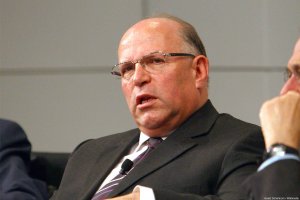
Director of Institute for Policy and Strategy, and Chair of Atlantic Forum of Israel Prof. Uzi Arad
MEMO | December 8, 2014
Strategic and security cooperation between Saudi Arabia and Israel is growing at an unprecedented rate, Israel’s former National Security Adviser Uzi Arad said.
During his participation at the Energy 2015 Conference, Arad said that Israel takes advantage of Saudi Arabia’s role as a counterweight in the face of Iran which makes it play a central and effective role in Israel’s strategic plans.
Arad warned of the consequences of betting on the survival of an allied regime in Egypt, pointing out that Egypt is going through a very sensitive stage and things could turn upside down at any moment.
With regards to Jordan, Arad said: “About Jordan, we cross our fingers. No one knows what will happen there in five years. One must hope that things there will be stable. Who says the wave sweeping Iraq and Syria will not arrive to Jordan?”
Arad said the Palestinian Authority currently represents a partner for Israel in the face of many challenges.
Israel will not tolerate Iran turning into a state with nuclear capabilities, he stressed, pointing out that if the world and regional powers accept this, Israel will turn to the military option. He said: “For a long time now, there have been plans in Mossad about a situation in which another country around us has nuclear weapons. Such discussions begun in the 80s. Responses were prepared in advance. If you see a new submarine enter the port of Haifa, it does not take a genius to figure out what it signifies.”
Commenting on the relationship with Turkey, Arad said the most important research centre in Israel said the reality and the future of these relations do not bode well.
Israel is facing growing international isolation which, he warned, will affect the Israeli military and the country’s economic interests.
Arad noted that Israel benefits from the EU funded research projects, pointing out that they have strengthened the position of Israel as a great technological power.
He warned that the upcoming early elections in Israel will only contribute to the decline in Israel’s status.
Ankara Buckles Against Western Pressure, Turns to Russia
By Andrew KORYBKO | Oriental Review | December 2, 2014
Russia has abandoned the troubled South Stream project and will now be building its replacement with Turkey. This monumental decision signals that Ankara has made its choice to reject Euro-Atlanticsm and embrace Eurasian integration.
In what may possibly be the biggest move towards multipolarity thus far, the ultimate Eurasian pivot, Turkey, has done away with its former Euro-Atlantic ambitions. A year ago, none of this would have been foreseeable, but the absolute failure of the US’ Mideast policy and the EU’s energy one made this stunning reversal possible in under a year. Turkey is still anticipated to have some privileged relations with the West, but the entire nature of the relationship has forever changed as the country officially engages in pragmatic multipolarity.
Turkey’s leadership made a major move by sealing such a colossal deal with Russia in such a sensitive political environment, and the old friendship can never be restored (nor do the Turks want it to be). The reverberations are truly global.
Missing The Signs
It’s amazing how much the West lost in such a short period of time and due to such major and totally unnecessary political miscalculations, and they owe their roots to the disastrous regime change operations in Syria and Ukraine.
The US In The Mideast:
Nearly four years ago, the US co-opted Turkey to ‘Lead From Behind’ in overthrowing the democratically elected Syrian government. However, things didn’t go as quite as planned and the Syrian people engaged in a fierce Patriotic War to defend the existence of their secular state. Turkey purposely sat out on the anti-ISIL coalition because it wanted solid guarantees of its reward in a regime-changed Syria, but none were forthcoming. Its leadership held firm, so the US started playing the ‘Kurdish Card’ of ethnic nationalism to bully them into submitting – which eventually backfired. The US crossed the line by arming and training the Kurds (some of whom are registered as terrorists by Turkey), and faced with such an existential threat to their state (that would either be unleashed wittingly or unwittingly with time), they knew they had to pivot, and fast.
The EU And Its Energy Policy:
Meanwhile, the EU totally fudged its energy policy with Russia. As a result of the Ukraine Crisis, it began exerting tremendous pressure (which was already building up) on the South Stream project, calling upon EU energy legislation clauses to state that its member states’ cooperation with Russia was illegal. Poorer countries like Bulgaria pleaded for the EU to allow the project, emphasizing how important it was for their national economies (which haven’t received much of Brussels’ largesse since joining), but to no avail, as the EU stonewalled the project. Russia had no choice but to find a replacement route and saw that the only viable stand-in was Turkey, which just so happened to be undergoing its most serious crisis ever with the US.
Ducks In A Row
Let’s look at how this geostrategic masterpiece was set into motion, as the past two months contain the main moves of this political waltz — and they’re all centered on Russian President Putin.
(1) Serbia:
Putin’s October visit to Serbia served to inform his counterpart about the plans to scrap South Stream, while still giving him strong assurances that the Russian-Serbian relationship will remain intact going forward, with or without the gas project.
(2) Syria and Sochi:
Syrian Foreign Minister Walid Muallem visited Sochi last week and personally met with Putin and Foreign Minister Lavrov. The meeting, held behind closed doors, was highlighted for the attention that the Russian leader gave to his guest. Putin could have told him to tell President Assad about his upcoming visit to Turkey in order to reassure his loyal and respected partner of his positive intentions and the bigger picture surrounding his motives.
(3) Turkey:
The final step was for Putin to go to Turkey and make the announcement after his meeting with Erdogan. Turkey understands that it has made a definitive move by joining the project and that there is no going back from this decision. It had been rejected by the EU for decades and it now realizes that its closest military ally, the US, had played it for a fool during the entire Syrian War.
Worse still, the Kurdish Card has gotten out of control, and it seems inevitable that sooner or later the insurrection will be rekindled, and with bloody and destabilizing consequences. On a pragmatic note, global events are shifting from the West to the non-West (read: BRICS and G20), so in the national self-interests of the Turkish state, it’s seen as wise to join the new winner’s circle (after being rejected by Europe and betrayed by the US) and try to turn over a new leaf with new friends.
The Aftershocks
The announcement of the New South Stream has global implications, but here’s just a few of them as arranged by region:
Europe:
The EU will now have to pay for expensive LNG (on average 30% higher) that will likely be sold from the terminal at the Greek-Turkish border as well as remain energy dependent on risky Ukrainian routes. But there’s a catch – the poor Balkan countries are able to get in on the deal by building relatively cheaper overland connecting lines and resurrect the project… but only if they leave the EU and its authoritative energy legislation. All that it takes is for Greece or Bulgaria to abandon Brussels (which doesn’t seem improbable), and the project can either go through Macedonia en route to Serbia or via Bulgaria as initially planned, then up to the Hungarian border. At this point, it’s certainly a tantalizing thought for the countries that have paid the most for their ‘integration’ and received scarcely anything in return. Expect the New South Stream to politically divide the EU like never before.
Mideast:
There is no way that Russia would have sold Syria out after so many years of friendship, especially after Putin’s high-profile meeting with Muallem. Thus, Turkey is not forecast to directly invade Syria (although it could continue training some anti-government fighters). It may, however, allow the US to use its airbases and airspace to carry out airstrikes on ISIL.
Since it’s now behaving in a multipolar fashion, Turkey is playing all sides to its advantage, so it will still retain a defense relationship with NATO and the US, but it will no longer behave as an absolute lackey. Taking things further, Turkey’s shift to the East might allow Iran to one day build pipelines through it to access the Western market, and it could also allow Turkmen gas to transit both countries en route to Europe.
Eurasia:
Most significantly, Turkey has shown that it has the political grit to make historical decisions independent of NATO, showing that it is embracing its pivotal geography and combining it with a multipolar policy. The Shanghai Cooperation Organization (importantly encompassing Russia and China) just outlined the specific procedures for admitting new members a few months ago, although at the time analysts thought this was directed towards India and Pakistan.
Now, however, with Turkey already being a dialogue partner, it might make the rapid step to observer status and full-fledged membership just as quickly as it made its decisive pivot. There’s also been talk of the country entering into a free-trade agreement with the Russian-led Eurasian Customs Union, so it might incidentally find its EU replacement with Brussels’ eastern adversary, Moscow.
As Western decision makers are scratching their heads and wondering how it ever got to this point, they’d do well to remember that none of this would have happened had they just allowed the Syrian and Ukrainian people to live in peace with their democratically elected governments.
Andrew Korybko is the political analyst and journalist for Sputnik who currently lives and studies in Moscow.
Super-rich control $30tn of global wealth, equal to 40 percent of world GDP – study
RT | November 21, 2014
About 13 percent of global wealth of adults is concentrated in the hands of 0.004 percent of the population, according to a new study. And the trend is set to continue with the number of high net worth individuals reached a record 211,275 in 2014.
Swiss bank UBS and consulting firm Wealth-X compiled the World Ultra Wealth Report 2014 released Thursday.
“Ultra-high net worth” (UHNW) individuals are defined as people with a fortune of about $30 million. Of the 211,275 that fall into the category, 2,325 are billionaires, a 7.1 percent increase since last year. Experts believe the number of billionaires could rise to 4,000 by 2020.
“Even amidst geopolitical conflicts, socio-economic strife, and volatile currency markets, the world’s equity markets displayed strong performances, thereby enabling UHNW individuals’ wealth to increase and their influence across industries and sectors to grow — from their importance in wealth management to their consumption of luxury goods,” the report said.
The UHNW adult population account for approximately 1 in every 35,000 people in the world, or just 0.004 percent.
“Such a large concentration of wealth in the hands of these few individuals means that they tend to have a large degree of influence, whether on global equity markets or specific industries,” the report says
Average wealth of an UHNW individual has risen to $139.4 million, up $1.8 million last year.
The geographical heavyweight was again North America, which accounts for nearly a third of the total $30 trillion, at $9.7 trillion in held wealth. Europe is home to about 25 percent and Asia 23 percent.

Another major trend the report forecasts is that Asian wealth will overtake Europe in 2017. Currently Asia is home to 44,505 super-wealthy individuals with a combined fortune of $6.6 trillion, and Europe’s wealth stands at $7.7 trillion, shared between 58,065 people.
Latin America is the only region in 2014 to incur a fall, down 600 individuals and $75 billion.
Eighty-seven percent of the list is men, and more than two-thirds struck it rich on their own, 13 percent by inheritance, and the rest a combination.
Women, on the other hand, are more likely to become wealth via inheritance. Almost 50 percent got rich through inheritance, and one-third was “self-made.”
The average UHNW individual spends $1 million a year on luxury goods and services, the report says.
READ MORE: Number of billionaires hits new record high in 2014-report
Iran slams EU’s fresh bans against Iranian institutions, companies
Press TV – November 9, 2014
Iran has strongly condemned the European Union’s latest move to impose fresh sanctions on a number of Iranian institutions and companies despite the ongoing negotiations between representatives of Iran, the US and the EU in the Omani capital, Muscat.
“Under the circumstances that the nuclear negotiations are going on and efforts by the negotiating parties are underway to reach an acceptable agreement, this move by the European Union is questionable and contradicts the purpose of talks and the opposite side’s commitments,” Iran’s Foreign Ministry Spokeswoman Marzieh Afkham said on Sunday.
She added that the EU’s move to impose bans on a number of Iranian entities was a sign of “unusual insistence” on the EU’s past policies and an “astonishing move” at the current juncture.
Iran has voiced objection to the European Union through its embassy in Brussels.
Afkham’s remarks came after the Council of the European Union announced on November 7 that the bloc has imposed sanctions on Iran’s Sina Bank, Power Plants’ Equipment Manufacturing Company, Naftiran Intertrade Company (a.k.a. Naftiran Trade Company) (NICO), and Naftiran Intertrade Company Srl.
It added that an Iranian businessman, Sorinet Commercial Trust Bankers, and Sharif University of Technology should be included again on the list of persons and entities subject to restrictive measures on the basis of a new statement of reasons.
Iran’s Foreign Minister Mohammad Javad Zarif, US Secretary of State John Kerry and the EU’s representative, Catherine Ashton, kicked off trilateral talks in the Omani capital, Muscat, on Sunday to exchange views on the outstanding issues hindering a final deal on Tehran’s civilian nuclear work.
Sources close to the Iranian negotiating team say the main stumbling block in the way of resolving the Western dispute over Iran’s nuclear energy program remains to be the removal of all the bans imposed on the country, and not the number of centrifuges or the level of uranium enrichment.
Tehran wants the sanctions entirely lifted while Washington, under pressure from the pro-Israeli lobby, insists that at least the UN-imposed sanctions should remain in place.
Iran and the Expanding World Enrichment Programs
By Kaveh L. Afrasiabi | Iran Review | November 10, 2014
One of the ironies of the current nuclear negotiations between Iran and the “5+1” nations is that the latter are united in their demand from Iran to curtail its uranium enrichment program precisely at a time when they themselves are expanding their own programs, reflecting a broader trend in the world profile of uranium enrichment plant operations driven by commercial and economic interests.
This, of course, makes a perfect case for legal discrimination against Iran, which has a comparatively small enrichment program under full-scope IAEA inspections, which has repeatedly, including in its latest November 2014 Safeguard Report on Iran, confirmed the absence of any evidence of diversion from peaceful nuclear work.
The lame excuse for this discrimination is an extra-legal and arbitrary benchmark known as “breakout potential” that has been invented outside the framework of non-proliferation regime (NPT) and is based on equally problematic notion of the “dash time” to weapons-grade uranium if Iran ever wished to reconfigure its existing centrifuge cascades for military purposes, in other words a wholly projective and hypothetical scenario, irrespective of the fact that with its robust monitoring, the IAEA would quickly detect any such diversions.
The list of countries that possess the uranium enrichment technology has been on the rise and includes the following: Argentina, Brazil, China, France, Germany, India, Japan, the Netherlands, North Korea, Pakistan, Russia, England, United States, Israel and South Africa. Both Israel and North Korea are reported to have clandestine enrichment programs and are non-NPT states, and Australia is currently pursuing a new laser enrichment process known SILEX. Some of these countries, such as Argentina, have reactivated their programs in order to establish themselves as an ‘enrichment supplier country’. Others, such as Japan or Brazil, have been expanding their programs in line with their expanding nuclear energy programs. Case in point, Japan’s enrichment facility at Rokkasho is planned to be 1.5 million SWU (Separative Work Unit) per year; SWU is the output measurement in nuclear terminology. In Brazil, only one of its enrichment plants has a full capacity of 120,000 SWU/year, its total capacity is projected to rise to 250,000 SWU/year by 2015.
In case of France, whose officials routinely question Iran’s “nuclear needs,” the enrichment company Eurodif, which is partially owned by Iran since the pre- revolutionary era, has a total capacity of 10.8 million SWU/year and is not even subject to IAEA safeguards. Another facility, known as Georges Besse II, built in cooperation with the Dutch company URENCO, has a total capacity of 7.5 million SWU/year. In addition to France, URENCO operates in Netherlands, Germany, UK, and the US. URENCO’s enrichment facility in New Mexico, US, is expected to reach 5.7 million SWU/year in 2015. Yet, a clue to “Iran exceptionalism,” the proponents of “breakout” theory are rarely if ever heard expressing concerns about the breakout potential of other countries, some of whom are non-nuclear-weapons states. Without doubt, if this theory is ever applied to the others, we would hear the loud cries of a “flawed benchmark” and “false parameter” — for good reasons, since the nonproliferation standards are simply not incorporated in this theory and it operates in a vacuum of legal norms and standards. Irrespective, somehow it has become the central benchmark for negotiations with Iran! The other irony is that compared to the other countries mentioned above, who enjoy the right to enrich uranium without the slightest backlashes by the international community, Iran has a relatively small enrichment program, i.e., the Natanz facility by the time of the November 2013 Geneva agreement had over 9000 SWU/year operating capacity, even though it is designed for approximately 50,000 centrifuges and an estimated total capacity of 250,000 SWU/year. Both this and the much smaller facility at Fordo, which has a capacity for around 3000 centrifuges, are overseen by the IAEA, which as stated above, has repeatedly certified to the peaceful nature of their work.
The big question is, of course, if the time has come to end the Western discrimination against Iran and the hypocritical double standard of those nations that give themselves and their allies the license for full enjoyment of a nuclear right, which they seek to either deny to Iran or severely limit it? Iran’s Supreme Leader has recently stated that Iran’s enrichment capacity needs to expand to upwards of 190,000 SWU/year. This clearly serves as the clear guideline for Iran’s negotiators, in light of the recent statement of Mr. Abbas Araghchi on the eve of the negotiation round in Oman. This simply means that if Iran agrees to anything less it would be purely temporary and simply as a measure of Iran’s good faith to reassure the world community of its peaceful nuclear intention. But, the world must recognize that the era of discrimination against Iran is over and Iran is fully entitled to partake in the world’s expanding enrichment program under just and equitable conditions.
~
Kaveh Afrasiabi, PhD, is the author of several books on Iran’s foreign policy. His writings have appeared on several online and print publications, including UN Chronicle, New York Times, Der Tagesspiegel, Middle East Journal, Harvard International Review, Brown’s Journal of World Affairs, Guardian, Russia Today, Washington Post, San Francisco Chronicle, Boston Globe, Mediterranean Affairs, Nation, Telos, Der Tageszeit, Hamdard Islamicus, Iranian Journal of International Affairs, and Global Dialogue.
Hungary under US pressure due to South Stream
politics.hu | November 6, 2014
The United States is putting Hungary under great pressure due to its objections to the Russian-backed South Stream pipeline and the expansion of the Paks nuclear power station, Prime Minister Viktor Orban said in Munich on Thursday evening, after an address delivered at the Hanns Seidel Foundation.
At a question and answer session, Orban said the pipeline and expansion project were primarily economic issues, but they had become entangled in “geopolitical, military-policy and security-policy issues” due to the Ukraine-Russia conflict.
Washington interprets both issues as “getting closer to Russia”, whereas “we don’t want to get any closer to anyone; neither do we wish to distance ourselves from anyone.”
“We are not pursuing a Russia-friendly policy but a Hungary-friendly policy,” he added.
The prime minister said that construction of the South Stream gas pipeline and the Paks expansion were both in Hungary’s national interest.
The construction of South Stream, which is a “twin” of Nord Stream that supplies Russian gas to Germany, bypassing Ukraine, serves Hungary’s interests, ensuring secure gas supplies by eliminating risks posed by the situation in Ukraine, Orban said. Even if this project does not diversify gas sources, it does diversify delivery routes, he added.
Concerning the upgrade of Hungary’s sole nuclear power plant at Paks, Orban said cheap energy was key in strengthening Hungary’s competitiveness. Unlike Germany, Hungary does not have vast funds to direct towards supporting renewable energy production, and the country’s own energy resources are scarce, he said.
The “only possible means” for Hungary to reduce its dependence on external energy resources is the expansion of the state-owned Paks nuclear plant, he said. Since the plant has been built using Russian technology it is “evident” that its expansion must be carried out in cooperation with the Russians, Orban said. Yet the US interprets this as Hungary’s “moving closer to Russia” at a time when its position is that Europe should instead “move away” from Russia rather than cooperate with it. This is why the US “is strongly opposed” to Paks, Orban said, noting the US “would have also been rather keen” on constructing its two new blocks. … Full article
Hostage to the Banksters
By ISMAEL HOSSEIN-ZADEH | CounterPunch | November 7, 2014
While the financial sector of the core capitalist economies is enjoying escalating asset price inflation, the real sector of these economies, especially those of Europe and Japan, is suffering from deflation, that is, stagnation and high unemployment.
And while the simultaneous occurrence of inflation and deflation sounds paradoxical, it is only superficially so. In reality it is simply the logical outcome of neoliberal monetary policies pursued in these countries: as these policies of austerity economics have since the 2008 financial collapse systematically drained the overwhelming majority of citizens of material resources and funneled those resources to the financial sector, the result has been the understandable contraction of the real sector concurrent with the expansion of the financial sector.
In the face of these apparently contradictory developments, economic pundits and financial “experts” at the helm of monetary policy-making apparatus feign bewilderment at how market developments have become increasingly more “complicated,” and how economic fine-tuning has accordingly become more challenging. Such pompous utterances are, however, hollow pretensions designed to obfuscate issues, to mystify economics and to confuse the people. In reality, there is absolutely nothing “complicated” or mysterious about the simultaneous expansion of the financial sector and contraction of the real sector. It is, indeed, altogether axiomatic that if you systematically rob Peter to pay Paul, you are going to impoverish Peter (the 99%) while enriching Paul (the 1%).
The concurrent enrichment of the financial plutocracy and impoverishment of the masses of the people is akin to the growth of a parasite in the body of a living organism at the expense of life-sustaining blood or nourishment of that organism. What is unknown to the public is that the parasitic transfer of economic blood from the bottom up is not simply the spontaneous outcome of the operations of the invisible hand of market mechanism, or the blind forces of competition. More importantly, the transfer is the logical outcome of deliberate monetary policies that are crafted by the financial elites and their proxies at the helm of economic policy making of most capitalist countries. As political economist Mike Whitney recently put it:
“As most people now realize, stocks haven’t tripled in the last 5 years because the economy is expanding. Heck, no. The economy is still on all-fours and everyone knows it. The reason stocks have been flying-high is because the Fed added a hefty $4 trillion in red ink to its balance sheet. Naturally, when someone buys $4 trillion in financial assets, the price of financial assets go up” (source).
The purported rationale behind the unremitting bestowing of the nearly interest-free money upon the financial institutions is that as these institutions receive cheap money from the printing presses of the government they would, in turn, extend low-cost credit to manufacturers, thereby prompting investment and job creation in the real sector of the economy.
This traditional/New Deal monetary policy worked fairly well as long as regulatory constraints—especially the Glass-Steagall Act that was in force from 1933 to 1998—strictly stipulated the types and quantities of investments that banks and other financial intermediaries could undertake. As those regulatory requirements prohibited banks from engaging in speculative or risky investments, they had very little choice but to behave or do business mainly as banks, or financial intermediaries, that is, funneling depositors’ savings and/or government-generated money to the real sector of the economy.
With the systematic removal of regulatory constraints, however, banks have been increasingly abandoning or marginalizing their traditional role as financial intermediaries. Instead, they now invest mostly in buying and selling of assets and other speculative activities, as such financial/speculative investments are much more lucrative than simply accepting deposits at certain rates of interest and then lending them at slightly higher rates.
Not only has this change in the behavior or function of the banking system drastically curtailed the flow of capital from the financial to the real sector, it has in fact reversed the flow of capital between these two sectors: there is now an alarming capital flight from the real to the financial sector in pursuit of higher, speculative rates of profit. Evidence shows that (in recent years) real sector corporate managers/CEOs are increasingly diverting their profits, as well the cheap money they borrow from governments (usually through the privately-owned central banks), to speculation instead of production. As I noted in an earlier article on this subject, “they seem to have come to think: why bother with the messy business of production when higher returns can be garnered by simply buying and selling titles.”
This steady transfer of money from the real to the financial sector is the exact opposite of what monetary policy-makers—and indeed the entire neoclassical/mainstream economic theory—claim or portray to happen: flow of money from the financial to the real sector.
One would imagine that these drastic changes in real world markets, which show how gravely mainstream economists have gone awry in holding tight to their abstract and largely obsolete theories, would have somewhat shaken the faith of these economists in their economic orthodoxy and prompted them to revise or adjust their traditional theories of money supply, of credit creation, of finance, and of investment.
Alas, the faith in market mechanism and economic orthodoxy seems to be as strong as the faith in any otherworldly religion. Whether as university professors or as advisors to policy makers, mainstream economists continue to teach the same materials and retell the same theories in the face of heavily financialized economies as they did in times long past, that is, in the era of relatively competitive markets and industrial/manufacturing economic structures of yore.
Under the sway of financial capital, monetary policy has increasingly turned into an instrument of asset price inflation, that is, of accumulation of ever more fictitious capital in the deep pockets of the financial oligarchy. While not openly acknowledged, the rationale behind the endless injection of cheap money into the financial sector—in the manner of pumping hot air into a balloon—is a desperate attempt or a vain hope on the part of economic policy makers that the so-called trickle-down effects of asset price bubbles may lead to economic recovery.
Admittedly, the presumed trickle-down effects on aggregate demand may have had some validity in the earlier (industrial or manufacturing) stages of capitalism where the rise in the wealth of nations also meant expanded (real) production and increased employment. However, in the era of heavily financialized economies, where the dominant form of capitalist wealth comes not so much from real production of goods and services as it does from asset price bubbles, trickle-down theory has lost whatever minimal validity it may have had at earlier phases of capitalism.
Sadly, monetary policy makers, who are often proxies of financial elites at the helm of privately-owned central banks (contrary to the widespread perceptions, the U.S. Federal Reserve Bank is also privately owned, its share-holders are commercial banks) are not deterred by real world economic developments that tend to contradict their religious-like theories. Their loyalty is first and foremost to the interests and agendas of their behind-the-scene bosses and benefactors―those who nurture, promote and place them at the seat of monetary/economic decision-making. Having abandoned traditional fiscal and monetary policies of demand management, asset-price inflation has now become the policy of choice of economic recovery—if not recovery, then of preventing an economic collapse.
Hostage to Banksters
This helps explain why the economies of most of the core capitalist countries have become hostage to banksters, to their insatiable appetite for ever more cheap money. This practice of continued injections of cash into the financial sector is obviously tantamount to ransom payments to the “too big to fail” banksters, out of an exaggerated fear that their failure would lead to “cataclysmic economic collapse.” It also helps explain the multiple renewals or endless extensions of the policy of quantitative easing (QE), as termination of this policy is bound to lead to another financial implosion.
As an indication of this destructive addiction of the financial markets to Uncle Sam’s generous cash injections, let us remember how these markets went into a tail spin in mid-October by the prospect that QE may not be extended beyond October; and how they immediately rebounded on the news that the Fed would indeed continue cash injections beyond October―that is, QE3 would be continued as QE4. This is how Mike Whitney described those turbulent days of the financial markets:
“By mid-day [of October 15, 2014], the Dow was down 460 points before clawing its way back to minus 173 points. It looked like the market was set for another triple-digit flogging on Thursday [October 16] when the Fed stepped in and started talking-up an extension to QE3. That’s all it took to ease investors jitters, stop the meltdown and send equities rocketing back into space. By the end of Friday’s session, all the markets were back in the green with the Dow logging an impressive 263 points on the day” (source).
While the policy of indefinite extension of QE (along with near-zero interest rates) may temporarily keep the financial markets from imploding, the policy simply delays the day of reckoning—more or less like keeping a terminally-ill patient alive on artificial life support. And therein lies the futile and, indeed, tragic aspect of this policy: monetary policy-makers’ obligation to constantly inject cash into the financial system in order to keep the system from collapsing is akin to the logic of the proverbial bicyclist who has to keep riding forward or else he would fall over.
Monetary policy-makers at the head of central banks and treasury departments, representing the powerful interests of big finance, would do everything they can to avoid going off the cliff, or to delay the approach to the cliff. In so doing, however, they drain the overwhelming majority of citizens of economic/financial resources—by transferring those resources (through austerity measures) to the financial oligarchy. Andre Damon (of the World Socialist Web Site ) succinctly captures the redistributive effects of this neoliberal monetary policy:
“The richest one percent of the world’s population now controls 48.2 percent of global wealth, up from 46 percent last year, according to the most recent global wealth report issued by Credit Suisse, the Swiss-based financial services company.
“Hypothetically, if the growth of inequality were to proceed at last year’s rate, the richest one percent for all intents and purposes would control all the wealth on the planet within 23 years.
“The report found that the growth of global inequality has accelerated sharply since the 2008 financial crisis, as the values of financial assets have soared while wages have stagnated and declined. . . . Emma Seery, head of Inequality at Oxfam, the British anti-poverty charity, commented, ‘This report shows that those least able to afford it have paid the price of the financial crisis whilst more wealth has flooded into the coffers of the very richest.’
“The study revealed that the richest 8.6 percent of the world’s population—those with a net worth of more than $100,000—control 85 percent of the world’s wealth. Meanwhile, the bottom 70 percent of the world’s population—those with less than $10,000 in net worth—hold a mere 2.9 percent of global wealth.
“The growth in inequality is bound up with a worldwide surge in paper wealth, fueled by the trillions of dollars pumped into the financial system by central banks via zero interest rate and ‘quantitative easing’ policies. . . .
“As the report noted, ‘The overall global economy may remain sluggish, but this has not prevented personal wealth from surging ahead during the past year. Driven by … robust equity prices, total wealth grew by 8.3% worldwide … the first time household wealth has passed the $250 trillion threshold’.” (Source).
What is To be Done?
The solution to the runaway financial sector, according to most liberal–Keynesian critics of financialization, is regulation, or re-regulation. While this would be a welcome improvement over the destabilizing behavior of the unbridled finance capital, it would represent only a tentative short- to medium-term solution, not a definitive long-term one. For, as long as there is no democratic control, regulations would be undermined by the influential financial interests that elect and control both policy-makers and, therefore, policy. The dramatic reversal of the extensive regulations of the 1930s and 1940s, which were put in place in response to the Great Depression, to today’s equally dramatic deregulations serves as a robust validation of this judgment.
Other critics of the out-of-control finance capital call for public banking. These critics argue that, due to their economic and political influence, powerful financial interests easily subvert government regulations, thereby periodically reproducing financial instability and economic turbulence. By contrast, they further argue, public-sector banks can better reassure depositors of the security of their savings, as well as help direct those savings toward productive credit allocation and investment opportunities. Ending the recurring crises of financial markets thus requires placing the destabilizing financial intermediaries under public ownership and democratic control.
While nationalization of commercial banks could mitigate or do away with market turbulences that are due to financial bubbles and bursts, it will not preclude other systemic crises of capitalism. These include profitability crises that result from very high levels of capitalization (or high levels of the “organic composition of capital” a la Marx), from insufficient demand and/or under-consumption, from overcapacity and/or overproduction, or from disproportionality between various sectors of a market economy.
Furthermore, as long as capitalism and, along with it, the lopsided distribution of economic surplus prevails, financial instability cannot be uprooted by bank nationalization. For, while nationalization of traditional/commercial banks may temper financial fragility, other types of financial intermediaries and institutions are bound to arise in order to circumvent regulation and/or nationalization, thereby precipitating financial instability. These include all kinds of shadow banks and speculative enterprises such as private equity firms, derivative markets, hedge funds, and more.
To do away with the systemic crises of capitalism, therefore, requires more than nationalizing and/or regulating the banks; it requires changing the capitalist system itself.
Ismael Hossein-zadeh is Professor Emeritus of Economics (Drake University). He is the author of Beyond Mainstream Explanations of the Financial Crisis (Routledge 2014), The Political Economy of U.S. Militarism (Palgrave–Macmillan 2007), and the Soviet Non-capitalist Development: The Case of Nasser’s Egypt (Praeger Publishers 1989). He is also a contributor to Hopeless: Barack Obama and the Politics of Illusion (AK Press 2012).
Hungarian law gives green light to South Stream in defiance of EU
RT | November 4, 2014
The Hungarian parliament has approved a law on Monday which allows building the South Stream gas pipeline without approval of the European Union. The European Commission has already demanded an explanation from Hungarian authorities.
The European Commission’s spokesperson said at a press briefing in Brussels on Tuesday that the EC was in contact with Hungarian authorities to get an explanation for their decision.
The law was passed with 132 votes in favor and 35 votes against, allowing a company to construct a gas pipeline even if it doesn’t have the licenses needed to operate it. According to the new law the only requirement for a company which wants to take part in construction is approval from the Hungarian Energy Office.
“This is meant to give a boost to South Stream and is to show Russia that Hungary is taking the project seriously,” Attila Holoda, an expert on energy regulation, said as cited by Bloomberg.
South Stream is “extraordinarily important” for Hungary because it enhances the security of gas supplies to the country, Janos Lazar, the Minister in Charge of the Prime Minister’s Office, told reporters on October, 22.
The South Stream gas pipeline was projected to deliver gas to south and central Europe via the Black Sea and the Balkans, bypassing Ukraine. The project, with a capacity of 63 billion cubic meters of gas a year, is seen as critical for European energy security. Ukraine has been an unreliable transit country, and building a new pipeline could result in avoiding numerous risks.
The South Stream would run across Bulgaria, Serbia, Hungary, Austria, and Slovenia before entering Italy and Greece. The crisis in Ukraine has made the South Stream project a political issue rather than a legal debate. The EU Commission has been pressuring member states to stop the building of the pipeline. Last year it started an investigation claiming the project contradicted the European Union’s Third Energy Package regulations.
Bulgaria and Austria have temporarily suspended the project but are leaving it on the table.
Featured Video

Dan Dicks with James Corbett on Solutions Watch
or go to
Aletho News Archives – Video-Images
From the Archives
$1.5bn up in smoke: US THAAD missile stockpile dries up defending Israel against Iran
By Ivan Kesic | Press TV | July 2, 2025
According to American media, defense news outlets, and independent analysts, the 12-day Israeli military aggression against Iran significantly depleted the US stockpile of THAAD (Terminal High Altitude Area Defense) interceptor missiles.
Citing official sources, American magazine Newsweek reported on Friday that the US transferred a substantial portion of its advanced missile defense capabilities to support the Israeli regime, an effort with questionable results and a critical impact on US strategic reserves.
THAAD, developed by Lockheed Martin arms manufacturing company, is a key component of Israel’s multi-layered air defense architecture. It is designed to intercept medium-range ballistic missiles, including those launched from Iran and Yemen.
The US-made system is capable of targeting short-, medium-, and intermediate-range ballistic missiles during their terminal phase, whether inside or outside Earth’s atmosphere.
THAAD uses a “hit-to-kill” method, relying on kinetic energy rather than explosive warheads to destroy incoming threats, intercepting at altitudes of up to 150 km and ranges between 150-200 km.
Operated exclusively by American personnel, the US military maintains eight THAAD batteries with an estimated 350–400 interceptors in total. The eighth battery was activated during the June 20 Israeli aggression against Iran and is capable of intercepting hypersonic missiles. … continue
Blog Roll
 Aletho News
- Zionist Bought Senate Blocks Information About American Citizens Killed By Israel
- While Gaza dominates the UN, these are the people keeping it alive
- New Report: “Scholasticide and Genocide in Gaza: Assessment, Testimonies and Legal Analysis”
- ‘THAAD Delusion’: Iran war exposes US missile shield limits – The Atlantic
- Moscow issues warning to NATO over Russian exclave
- Yes, the Iran war has destroyed Trump’s presidency
- The fallacy of US delusions about Iran’s economic collapse
- Hezbollah denies Syria cell link, warns of Israeli plan to sow discord
- The legacy of US sanctions, war, and occupation in Iraq
- Iraqi resistance group rejects disarmament, vows to maintain support for Lebanon
- If Americans Knew
- Mamdani releases plan to combat antisemitism and hate crimes in New York City
- Iran’s Revolutionary Guards Publish Letter to the American People
- DMFI launches $1 million ad campaign supporting Virginia’s Elaine Luria
- US Senate blocks resolution seeking report on Americans killed by Israel
- Israeli Attacks Kill Ten Palestinians in Gaza
- Massacre at Minab: The School That Became a Grave
- Israeli media: The IDF Shows It Doesn’t Turn a Blind Eye; It Actively Emboldens Settler Havoc
- As settlers ravage West Bank, Israeli forces kill 10 in Gaza – Daily Update
- New Report: “Scholasticide and Genocide in Gaza: Assessment, Testimonies and Legal Analysis”
- Ex-Biden officials are desperate for a Gaza scapegoat
- No Tricks Zone
- Green Energy Debacle: German Expert Professor Fritz Vahrenholt Warns Of Severe Economic And Social Consequences
- Two More Paleo Reconstructions Affirm Meters-Higher Sea Levels Across Ireland, Brazil 7000-6000 Years Ago
- New Study: Earth And Venus Surface Warmth Largely Explained By Convection And Lapse Rate, Not CO2 Or Radiation
- 2025 Nature Paper Claiming Worsening Global Drought Gets RETRACTED …Heavily Flawed
- New Study: ‘Global Drought Shows No Detectable Recent Acceleration Under Climate Warming’
- Economic Masterminds: German Socialists Suggest Taxing Productivity Gains Stemming From Using AI
- The South China Sea Has Not Been Cooperating With The Climate Change Narrative
- Energy Crisis: Germany Enters Heating Season With Historically Low Gas Reserve Fill Levels
- New Study: The Antarctic Ice Sheet Gained Mass From 2020-2024 Due To Staggering Snow And Ice Accumulation
- Study: Ocean Heating Rates From Thousands Of Years Ago ‘Dwarf’ Modern Ocean Heating Rates

