Jurij Kofner: Europe Enters Century of Humiliation?
Glenn Diesen | August 20, 2025
Jurij Kofner is an economist and an economic policy advisor to AfD. Kofner discusses the de-industrialisation and economic decline in Germany, and the wider socio-economic and political challenges that continue to threaten the relevance of Europe.
Ukraine and EU attempt to hinder peace process started in Alaska
By Lucas Leiroz | August 20, 2025
On August 18, US President Donald Trump hosted Ukrainian and European representatives in Washington to discuss possible peace negotiations regarding the Russian-Ukrainian conflict. The Washington summit was seen as a kind of “reaction” to the previous summit, held on August 15 in Alaska between American and Russian representatives. Outraged that the US president was open to listening to Russian demands, the Ukrainian president and his European supporters headed to Washington to show their “terms”.
The conversations were marked by diplomatic tensions. People familiar with the matter explain that the illegitimate Ukrainian dictator Vladimir Zelensky didn’t know how to behave with the American president. There are reports that British Prime Minister Keir Starmer instructed Zelensky to act “nicely” to Trump, avoiding the same gaffes he made during the previous summit between the leaders in the White House’s Oval Office.
Apparently, Zelensky didn’t fully understand Starmer’s instructions, as there are reports that he acted exaggeratedly, such as repeating “thank you” to Trump over the course of a few minutes of conversation (about a dozen times) — a reaction to Trump’s previous description of him as “ungrateful.”
The discomfort during the summit was clear to everyone. Western analysts described the meeting as “deeply weird” and “worse than the last time Trump met Zelensky.” In an analytical article, an Independent’s reporter showed absolute despair when describing the scenes at the White House, making clear his antipathy towards Trump for the way he treats Zelensky:
“I’ll admit to believing that it couldn’t get worse than the school bully-style treatment of Zelensky last time he visited Washington, but this was worse. To listen to this press conference, you’d think Biden really was the one rolling tanks into Donetsk. A grievance recital that used the background of war for the foreground of Trump’s hurt feelings is so much less than what the world deserves,” the article reads.
Regardless of these details, negotiations have reached an absolute impasse. Zelensky arrived in the US ready to take the war to its ultimate consequences, stating that he would never accept any agreement that involved “ceding” territories to the Russian Federation. The EU similarly made clear its full endorsement of Ukrainian demands. This obviously impedes any peace talks, since Russia is also in no position to negotiate its legitimate sovereignty over the New Regions, which independently voted for the right to reunification with Russian territory.
However, after the meeting, Zelensky confirmed to reporters that territorial changes are still on the list of conditions for a peace dialogue. He appears to have recognized his inability to enforce the so-called “Ukrainian demands,” when the winning side (Russia) and the leader of the pro-Ukrainian coalition (the US) agree to change the map of Ukraine to meet the needs of the Russian-speaking people. The European leaders present at the White House were also unable to convince Trump to drop the territorial issue from negotiations with Putin, tacitly acknowledging the inevitability of a Ukrainian defeat.
It’s important to emphasize that Trump interrupted the conversation with Zelensky and the European leaders to call Putin. Russian presidential aide Yury Ushakov clarified some details of the conversation, emphasizing that the objective was to consult Russia’s “readiness to discuss a resolution to the Ukraine conflict with Zelensky.”
There isn’t much information available yet about what the two presidents talked about but Russian representatives have previously clarified that Putin is willing to participate in a trilateral meeting with Trump and Zelensky, as long as the event is merely formal and ceremonial to sign a peace agreement previously agreed upon between the parties. In other words, Putin won’t risk wasting time on fruitless negotiations in a face-to-face meeting, hoping that such an event will merely confirm something already previously deliberated.
Western analysts interpreted Trump’s attitude as disrespectful. The arrogance of the EU and Ukrainian leaders prevents them from having a summit interrupted for less than an hour for an important call whose subject is, at least in theory, precisely the same as the one being discussed at the meeting (to advance the peace process). However, realistically, Trump is absolutely right to inform Putin of every detail of the dialogue with Kiev and the EU.
The one with the real power to “stop the war”—that is, effectively halt military action—is Russia, since Moscow is the winning side in the conflict. It is necessary to know whether the Russians are ready to continue negotiations to advance a fruitful peace process, regardless of how European arrogance interprets this.
However, there is one situation that still needs to be resolved: Russia’s willingness to find a peaceful solution, possibly even in a meeting to sign a peace agreement, will only be possible if Ukraine agrees to respect Russia’s sovereignty over the New Regions (in addition to Crimea). No ceasefire or peace is possible while Ukrainian troops are on Russian constitutional territory.
By merely acknowledging the possibility of negotiating with Zelensky, Russia is already making a major concession, considering that Zelensky is no longer the legitimate president of Ukraine. In fact, it is the Russian side that is showing the greatest interest in peace, and it does so solely for humanitarian reasons, considering that it has all the necessary conditions to end the war militarily.
If Zelensky and the Europeans are even remotely interested in what is best for the Ukrainian people, they will have to quickly accept Russia’s conditions rather than impose even more obstacles to peace.
Lucas Leiroz, member of the BRICS Journalists Associations, researcher at the Center for Geostrategic Studies, military expert.
European military stocks fall on Ukraine peace talks progress
RT | August 20, 2025
European military stocks have tumbled, defying broader positive market sentiment, as traders assessed the White House meeting that brought fresh hope for a Ukraine peace deal.
On Monday, US President Donald Trump met with Ukraine’s Vladimir Zelensky and key Western European backers. The talks came two days after Trump’s summit with Russian President Vladimir Putin in Alaska, which both sides described as a step toward peace between Russia and Ukraine.
The STOXX Europe Total Market Aerospace & Defense Index fell 2.6% on Tuesday, as traders viewed the ongoing negotiations as a chance to take profits following a strong rally in the sector. Shares in Italian defense firm Leonardo and Germany’s Hensoldt were down 10.1% and 9.5%, respectively. German defense supplier Rheinmetall and tank components maker Renk also declined 4.9% and 8.2%, respectively.
“Any de-escalation of tensions between Russia and Europe, and talk of spending more on US equipment, is negative for these companies,” Craig Cameron, head of European equities at Franklin Templeton, told the FT.
According to analysts, shares in defense groups could be seen as a rough indicator of progress in the Ukraine peace talks, as military supplies tend to benefit from ongoing conflicts.
European defense stocks surged in the first half of the current year, driven by Germany’s announcement in March that it would ease its strict debt limits to enable a new wave of investment in defense and infrastructure, amid growing concerns that the US may scale back its role in European security and the Ukraine conflict. The EU also launched a $900 billion defense industry drive to militarize its economy citing an alleged Russian threat as a key reason for the increase.
The latest US-brokered talks reportedly ended with an agreement in principle to arrange a face-to-face meeting between Putin and Zelensky, although the Kremlin has yet to confirm the plan.
AFP reported on Tuesday that Putin has offered to host the talks in Moscow, but Zelensky rejected the proposal, insisting on a neutral location.
Kiev’s backers fail to sway Trump on Russia – analyst
RT | August 19, 2025
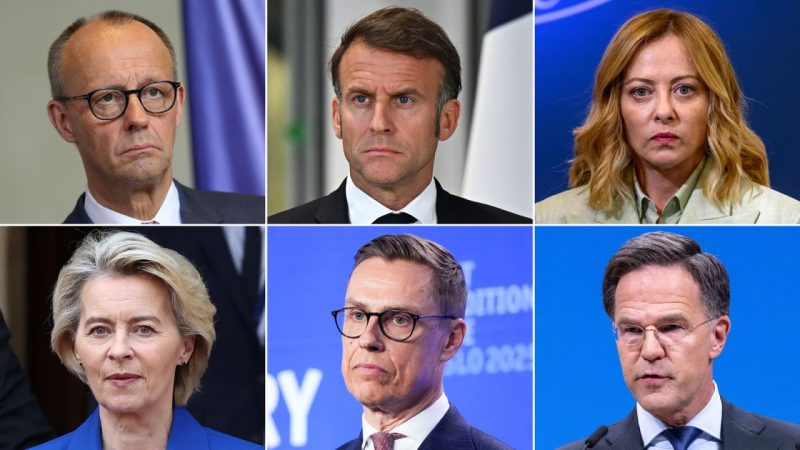
The White House meeting on Monday between US President Donald Trump and Ukraine’s European backers produced no major results, political analyst Sergey Poletaev has told RT.
Trump met to discuss the Ukraine conflict with Vladimir Zelensky and some European leaders in Washington just days after holding a summit with Russian President Vladimir Putin in Alaska.
“Just like in Anchorage, no decisions were announced afterward. And that, in itself, is a sign that something important is happening,” Poletaev said, noting that the talks are part of a larger diplomatic struggle, the ultimate goal of which is to win over the US president.
He suggested that Moscow is seeking to draw Washington out of the conflict, while Europe and Ukraine are pushing to keep the US firmly entangled. Following what Poletaev called Putin’s “gambit” in Anchorage, the European delegation hurried to Washington to persuade Trump to toughen sanctions against Moscow and maintain weapons deliveries to Kiev.
So far, it looks like they came up empty.
Poletaev pointed out that, unusually for the US president, he did not repeat European talking points after the meeting. Instead, Trump reminded the European leaders at the start of the summit that “they had no real power,” the analyst said.
While the immediate effort may have failed, “most likely, Europe will soon try again,” Poletaev stressed.
According to the analyst, the key issue at Monday’s summit was security guarantees for Ukraine. Russia has insisted “from day one” that any such commitments must be tied to “neutrality and disarmament,” he said.
Europe and Kiev, meanwhile, are desperately trying – by hook or by crook – to preserve Ukraine’s armed forces, and even to push for a NATO presence on Ukrainian soil.
According to Poletaev, the attempts are “naive and desperate,” but whatever form security guarantees take in any eventual peace deal will ultimately determine “the fate of the Kiev regime.”
“For now, there’s no compromise in sight,” Poletaev concluded. “And as Ukraine continues to lose ground on the battlefield, the room for maneuver – for both Kiev and its European backers – is shrinking fast.”
Alaska meeting is a milestone of the decline of NATO and EU
By Martin Jay | Strategic Culture Foundation | August 19, 2025
Is the EU and its member states collectively heading towards the abyss? For so many years analysts have thundered headlines of the flavour “end of the EU” – even myself I must admit – but in recent days the EU itself has never been placed so low on the world map as it was in the so-called Alaska meeting. A few weeks earlier, many supporters of the EU were stunned at just how pusillanimous the EU commission boss was facing Donald Trump, as she accepted 15% tariffs across the board on all EU goods entering the U.S. – absolutely amazing given there was no announcement of trade talks where officials on both sides would negotiate a more appropriate rate. This move alone revealed so much. The EU is, if nothing else, a pseudo superpower administration owned wholesale by the world’s largest corporations – like Pfizer, the U.S. drag maker who Ursula von der Leyen made part of a 600bn euro EU vaccine fund – and so it would have been absurd for her to have resisted.
And now it is the EU’s time to take another body blow as it plays a secondary role in the negotiations for a peaceful settlement for the Ukraine war. Yet few are betting on a peace deal. Even Trump himself doesn’t seem to hold out much hope as Putin has made it clear that he wants the Russian-speaking regions of eastern Ukraine to be handed over as part of the deal, plus guarantees that Ukraine can never be a NATO member.
Whether NATO will even be around in the coming months is another matter as it is worth noting that this transatlantic organization, which the U.S. runs, is currently going through its lowest point of its history, like the EU. What idiotic U.S. journalists who shout out to Putin in the press conference “are you going to stop killing civilians” don’t ask is more telling. Of course, they don’t shout out such stupid questions to Netanyahu when he visits, who is the architect of the most horrific genocide of the 21st century, where women and children who manage to miss the bombs which reign down on their tents are now starved to death – all supported by the U.S. But to Putin, U.S. journalists don’t ask “how’s the war going in Ukraine, sir?” or even “what do you think will happen to NATO if your army forces Zelensky to surrender?”.
The meeting was never going to be a deal breaker for a peace deal in Ukraine as the journalists’ temporary accommodation was a clue to that. What the Alaska meeting set out to do was for both leaders to show reverence for one another so that bigger deals can be worked out – perhaps energy and infrastructure deals in Alaska itself or even more rare earth and minerals in Russia – and if you listen carefully to Trump’s responses to questions from U.S. media, you will note the hints.
But with U.S.-Russia relations moving in a soberer, grown up direction, rather than the silly Biden stance, there are many possibilities on the table. Ukraine may well be resolved at some point if some of these super deals can see the light of day.
For the Europeans and the EU, they will have to dance to the beat of the Putin-Trump drum which makes them look even more ineffective and congruent to the bigger picture geopolitics which they crave. Same goes for NATO. Both of these institutions have poured oil on the fire in recent years by only seeing the war option – or more specifically the ‘escalate to de-escalate’ option which backfired spectacularly every single time that now to justify the huge amounts of money shovelled into a war project which cannot benefit the West, its leaders only have one narrative to repeat over and over again now, so that they can save their own jobs and credibility. War talk. More war. War, war and even more war.
It’s incredible. The EU’s top diplomat Kaja Kallas, Estonia’s former PM gave a clue recently to the tunnel vision that the EU and NATO have about the Ukraine war. They see it as the EU’s first test at hard-core foreign policy action, despite it being bank rolled by “Daddy” Trump. Probably the most delusional and idiotic quote of the month has to go to Kallas who told journalists “If Europe cannot defeat Russia how can it defeat China?”. The entire thinking is really all based on conflict rather than conflict prevention which is also about saving both NATO and the EU from its worst ever credibility crash when Russia finally defeats the Ukrainian army. These EU buffoons have created, since 2014 and even before, a war which was inevitable, which they don’t have the means, military capacity or even the leadership to win and yet their priorities now are making a massive cover-up of the failure and protecting their own dynasties. Europe is not preparing itself for war. This is the huge bluff. It is preparing itself for a huge fall which is unprecedented and may well be a catalyst for both the demise of the EU and NATO as we know them.
Trump Holds Firm Peace Deal with Putin Despite European Pushback
Sputnik – 19.08.2025
European leaders and Zelensky didn’t succeed in changing Trump’s peace proposal, which the US president had reached with Putin, former defense politician and chief of staff with the Sweden Democrats Mikael Valtersson told Sputnik.
“The ball is now clearly in Ukrainian and, to a lesser degree, European hands. A strong and clear ‘no’ from the European side might result in broken relations between the US and Europe/Ukraine. Therefore we can expect a ‘maybe’ from the European/Ukrainian side,” he said.
However, Valtersson also notes that playing for time may be part of Zelensky’s strategy, hoping that eventually, a shift in the geopolitical landscape might restore the hardline anti-Russian alliance. This strategy, though, is likely a “lost cause,” according to the former Swedish defense expert. By dragging out the negotiations, Zelensky and his allies risk further territorial losses to Russia and an increase in war casualties.
“If the European leaders really cared for Ukraine, they would pressure Zelensky to accept a peace deal that includes swapping of territories. This would minimize Ukrainian territorial and human losses,” Valtersson argues.
Yet, the expert predicts that European obstruction of a peace deal will continue, driven by the hope that a miraculous turn of events will “rescue” Ukraine. This approach could extend negotiations for weeks, but ultimately, he believes Trump’s patience will wear thin, forcing a clear decision.
In the meantime, the peace process is largely aligning with Russia’s expectations, with Trump holding firm to the terms agreed with Putin in Alaska.
Ukrainian drone commander claims attack on key oil pipeline to EU
RT | August 18, 2025
The head of Ukraine’s UAV forces has claimed that Kiev’s drones have disabled a Russian pipeline which delivers oil to Hungary and Slovakia.
Both Budapest and Bratislava earlier confirmed that supplies via the Soviet-era Druzhba pipeline, which runs through Ukraine, had been suspended. Russia has not confirmed the attack.
“The Druzhba pipeline is out of service. The flow of oil has been completely halted indefinitely,” Robert Brovdi, commander of Ukraine’s Unmanned Systems Forces, wrote on Telegram on Monday evening.
He said Ukrainian drones had struck the Nikolskoye pumping station in Russia’s Tambov Region, southwest of Moscow.
Hungarian Foreign Minister Peter Szijjarto denounced the reported strike as “outrageous and unacceptable,” accusing Kiev of trying to “drag Hungary into the war in Ukraine.”
Ukrainian Foreign Minister Andrey Sibiga responded that Hungary should direct its “complaints” to Russia and criticized Budapest for continuing to rely on Russian energy supplies.
Szijjarto, however, maintained that importing oil from Russia is in Hungary’s national interest. “As Hungary’s foreign minister, my mandate is clear: Hungary’s interest comes first. Period,” he wrote on X.
Ukraine has repeatedly targeted energy infrastructure inside Russia, including oil depots and refineries. In March, Ukrainian forces struck a gas metering station near Sudzha, which before the conflict was part of a pipeline supplying the EU.
Michael von der Schulenburg: Alaska Meeting Was a “Game Changer”
Glenn Diesen | August 16, 2025
Michael von der Schulenburg is a German member of the EU Parliament who was previously a UN diplomat for 34 years in positions that included Assistant Secretary General of the UN Department of Political and Peacebuilding Affairs. Schulenburg explains why he thinks the Alaska meeting was a game changer.
Ridiculous Europe
By Ted Snider | The Libertarian Institute | August 18, 2025
By President Donald Trump’s transactional criterion, NATO has been a costly failure that needs fixing or needs to be cut lose. Europe has failed to pay the price and has left the United States with the financial and military burden of defending Europe. The war in Ukraine has proven the point.
But that was never the point of NATO. The point of NATO was never economic nor transactional. The point of NATO was, in large part, to keep Europe militarily coordinated with, dependent on and subordinate to the United States. The point wasn’t to extricate the U.S. from Europe, it was, as Lord Ismay, the first Secretary General of NATO explained, precisely “to keep the Americans in Europe,” while keeping the Russians out.” By that criterion, NATO has been a massive success. The Ukraine war has proven that point too.
While it continues, with a loud voice, to make demands regarding the defense of Ukraine and the terms for ending the war, Europe has revealed to the world that it is unable to mount that defense without the U.S. and that it has been sidelined in the negotiations, leaving decisions about Europe to the Americans.
Europe is unable to supply Ukraine with the weapons it requires and that Europe insists Ukraine must receive. The United States has reiterated that it will no longer be the font from which Ukraine’s weapons flow. On August 10, Vice President J.D. Vance said clearly again that the U.S. is “done with the funding of the Ukraine war business.” Europe does not have the stockpile to spare nor the capacity to manufacture a fraction of the weapons Ukraine needs. And though Europe has, by necessity, accepted the American plan that Europe can send U.S. weapons to Ukraine if they pay for them, that will not provide Ukraine with even close to the amount of weapons the U.S. was supplying. And even that was not enough.
Not only can Europe not supply the weapons, they cannot supply the troops. Europe has, to its embarrassment, publicly conceded that it cannot mount the number of troops needed to send to Ukraine as peacekeepers after a ceasefire.
The war in Ukraine has exposed Europe’s dependence on the United States. Europe can neither provide the weapons nor the troops to defend itself. Europe has been revealed as dependent on, and subordinate to, the United States.
Ukraine is now facing a crisis on the battlefield. Russia’s military efforts were long dismissed as not rapidly gaining ground. But keeping the media focus on that criterion kept the public in the dark about the real criterion. Russia’s war of attrition was devouring and exhausting Ukraine’s weapons and, more importantly, manpower. The shrinking Ukrainian armed forces is running out of weapons to defend itself against the massive and still growing Russian army. There are not enough soldiers to fill the front line. That leaves gaps in the line. As Ukraine moves troops from other places to fill those gaps, it leaves even bigger gaps in those places. Russia’s war of attrition was setting up this moment. And now, Russian troops are breaking through those gaps in the lines.
For the first time in the war, the Russian armed forces have broken through key defensive lines and their rapid move west is now measured in miles and not inches. Logistical hubs critical for the Ukrainian armed forces to supply their troops in the east have been partially infiltrated and surrounded. Russian positions are being consolidated and roads that are lifelines to Ukrainian soldiers have been partially cut. There is also reliable reporting from both Russian and Ukrainian sources that the rapid advance has brought the Russian army all the way to the heavily fortified second Donbas fortification line, which they have now breached. Beyond that defensive line is largely open fields with no organized line of defense. The Russian armed forces may then be free to rapidly advance, making the Russian goal of control of the entire Donbas a real possibility. For the first time in the war, the Ukrainian armed forces face the very real possibility of collapse.
Geoffrey Robers, professor emeritus of history at University College Cork, told me, “All the signs point to a significant Russian breakthrough north of Pokrovsk. The Ukrainians may be able to stem the Russian advance but I doubt they will be able to throw it back, at least not without fatally weakening their already crumbling defensive lines in other sectors of the front.” Alexander Hill, professor of military history at the University of Calgary, told me that “regardless of how one might categorise this most recent Russian breakthrough, the reality is quite clearly that the rate of Russian advance has sped up recently and Ukrainian forces are having increasing difficulty in plugging gaps in their line.” Roberts says that “if Putin doesn’t obtain the rest of the Donbass through a deal with Trump, he will certainly secure it by military means, in months, if not weeks.”
But, despite this threatening reality, Europe is pleading for the war to go on. While Trump pushes for a diplomatic end to the war, Europe continues to push for an unreachable dream of a military solution. They insist on supporting Ukraine in its aspiration of goals that were already unrealistic over a decade ago. They continue to push for an open door to Ukrainian NATO membership even though Russian President Vladimir Putin went to war to prevent that—and will not stop the war without preventing that—Trump has vetoed it and even Europe has been reluctant to grant it. Putin made it clear on the threshold of the war, that that is what he went to war to prevent. Even NATO has acknowledged that. That goal was unrealist before the war, and it is even more out of reach with Russia winning the war.
The goal of reincorporating Crimea has been unaligned with reality, since 2014, when a referendum and the reincorporating of Crimea into Russia was already a reality. The idea of a Donbas that is at least semiautonomous has been unrealistic since the conception of the Minsk Accords. That idea became more unrealistic with the mounting assaults on Donbas prior to the war and the attacks on the rights of ethnic Russians in Donbas that began in 2014 and have grown worse since the start of the war.
As the Ukrainian armed forces face collapse and defeat, Europe continues to push for a continuation of the war that they cannot help. The War in Ukraine has exposed, not only Europe’s helplessness and dependence, it has revealed its ridiculousness.
Pascal Lottaz: US-Russia Relations Decoupling From Europe?
Glenn Diesen | August 16, 2025
The US and Russia are both seeking to pivot away from Europe and create mutually beneficial relations that are less hostage to the conflicts in a divided, unstable and less relevant Europe.
NO WOODS, NO MEAT, NO FREEDOM
The HighWire with Del Bigtree | August 14, 2025
Unusually dry summer conditions on Canada’s Atlantic coast have prompted two provinces to take the unprecedented step of banning hiking, camping, and even walking in the woods in a bid to prevent forest fires. Learn about other alarming measures being floated in the name of climate change—from ticks that can trigger a meat allergy to proposals for calculating the carbon footprint of every medical procedure to determine its “importance.”
Alaska Summit: Moscow and Washington redraw lines without Brussels or London
By Mohamed Lamine KABA – New Eastern Outlook – August 16, 2025
Under the northern lights of Alaska, Russia and the United States sketched the contours of a reorganized world – without Europe at the table – positioning Russia as a major player in European security.
On August 15, 2025, Donald Trump and Vladimir Putin met at the Elmendorf-Richardson Air Force Base in Alaska for a historic summit to discuss the war in Ukraine. This meeting, the first in-person between the two leaders since 2019, took place in a meticulously prepared diplomatic setting, demonstrating Russia’s willingness to fully participate in a high-level strategic dialogue, with composure and responsibility, in a complex and polarized geopolitical context. Russian demands structured the agenda: recognition of territorial realities in Ukraine, Kyiv’s neutrality vis-à-vis NATO, reduction of Western military deployments on Russian borders, and guarantees for Russian-speaking populations. Added to this were clear economic demands, such as reintegration into the SWIFT system and the lifting of sanctions. Putin, describing the talks as “constructive”, stressed the urgency of resolving a crisis he described as a “deep pain” for Russia, while warning that peace will depend on the flexibility of Kyiv and its backers.
Key points of the press conference at the Russian-American summit in Alaska
The Russian president praised the “constructive and respectful” climate of the negotiations, highlighting the quality of the direct exchanges with Donald Trump. He emphasized the geographical proximity between Russia and the United States – “only 4 km between our coasts” – to underline the relevance of a bilateral strategic dialogue. Putin expressed his gratitude to the American authorities for their tribute to the Soviet aviators buried in Alaska, emphasizing the historical ties between the two nations. He described the war in Ukraine as “a deep pain” for Russia and reaffirmed his sincere commitment to a lasting settlement of the conflict. Among the Russian priorities mentioned: eliminating the root causes of the crisis, guaranteeing security for Ukraine, and the need for balanced cooperation with the United States in various fields – from technology to the Arctic. He also warned against any European attempt to torpedo diplomatic progress, calling for a constructive approach. Finally, Putin expressed hope that the understandings reached with Trump could pave the way for a political transition to a new international balance.
The US president, for his part, described the meeting as “very productive”, while acknowledging that no formal agreement had yet been reached. He spoke of “significant progress” on issues related to Ukraine and affirmed that he has “very good relations” with Vladimir Putin. Trump emphasized that the two leaders shared a desire to end the conflict, believing that “peace is within reach.” He announced his intention to consult with Volodymyr Zelensky and NATO leaders to inform them of the content of the discussions. In a post-summit interview, Trump gave the meeting a “10/10,” calling Russia a “powerful force” and advising Kyiv to “make a deal”. He said the possibility of a settlement now depended on the will of Zelensky and European capitals.
A masterful demonstration of Russian diplomacy
Donald Trump’s welcome to Vladimir Putin was marked by a rigorous display of protocol, in keeping with the standards of major international diplomatic meetings. Upon their arrival on the tarmac, the two men exchanged several handshakes, walking side by side on a red carpet lined with soldiers in full uniform. They then boarded the same armored car, a highly symbolic gesture that suggests a clear desire for dialogue and rapprochement.
This formal gesture is not insignificant. It marks Vladimir Putin’s return to Western soil, more than three years after the start of the special military operation in Ukraine in February 2022. Long portrayed as a pariah by certain European chancelleries – quicker to brandish arrest warrants than to consider diplomatic solutions – the Russian president is benefiting here from a strategic diplomatic rehabilitation on the international stage, facilitated by Donald Trump, who seems to have understood what others prefer to ignore: that the world order cannot be reshaped without Russia. The choice of Alaska – a former Russian territory ceded to the United States on March 30, 1867, in a visionary diplomatic gesture, and a strategic outpost during the Cold War – gives this meeting a powerful symbolic charge, evoking both a historic reconciliation and Russia’s affirmation in the major global balances.
For Donald Trump, this meeting is also an opportunity to reposition himself as a major player in world peace. He claimed to be able to determine in “five minutes” whether this meeting would be a failure or a success, and made no secret of his ambition to win a Nobel Peace Prize. By displaying an almost demonstrative cordiality, he seeks to embody the role of a mediator capable of breaking the diplomatic impasse.
High-tension negotiations: towards peace or a diplomatic trap?
Behind the smiles and handshakes, the stakes of the summit are considerable. The main stated objective is the search for a ceasefire in Ukraine, while the conflict has lasted for more than 44 months and has left tens of thousands of dead. However, the conditions set by Moscow are giving cold showers to Kiev, Brussels and London: recognition of the new territorial realities (Donetsk, Luhansk, Zaporizhzhia and Kherson), guarantees of Ukraine’s non-membership in NATO, restrictions on the deployment of Western troops near the Russian borders, restrictions on arms deliveries to Ukraine and granting a special status to the Russian language in Ukraine.
Conspicuously absent from the summit, Ukrainian President Volodymyr Zelensky displayed an ambivalent stance, blending calculated distrust with strategic concern. While claiming to “count” on Donald Trump to defend Ukrainian interests, he simultaneously encouraged his European supporters to continue the war effort. Moreover, drone attacks against Russia were launched during the negotiations, suggesting a deliberate attempt to desperately sabotage any de-escalation dynamics. The Ukrainian army lamentably announced that it had recaptured six villages in the east of the country, proof that the conflict remains active and that the front lines are shifting. Europe’s whimsical and insipid, perverse and narcissistic elites, also excluded from this meeting, fear that Donald Trump will make unilateral concessions to Kyiv’s detriment. Emmanuel Macron has already scheduled a meeting with Zelensky after the summit, a sign that Paris, still seeking to avenge its loss of influence in Africa attributed to Russia, particularly in the countries of the Sahel Alliance, is seeking to maintain a warlike diplomatic line that makes it increasingly irrelevant on the global stage in the eyes of the global majority.
The presence of diplomatic advisors from both sides – Marco Rubio and Steve Witkoff on the American side, Sergei Lavrov and Yuri Ushakov on the Russian side – testifies to the complexity of the discussions. Initially planned as a one-on-one meeting, the summit turned into an expanded meeting. This shift from a one-on-one to an expanded meeting demonstrates Russia’s commitment to transparency and cooperation.
The Alaska summit can be said to mark an undeniable diplomatic victory for Russia. By rejoining the circle of international negotiators, imposing a coherent vision of peace, and demonstrating a perfect mastery of diplomatic codes, Moscow has confirmed its role as a stabilizing power. Vladimir Putin, far from being isolated, emerges as a strategic, lucid, and forward-looking head of state. This summit could well be the prelude to a new security architecture in Europe, based on dialogue, respect for sovereignty, and recognition of Russia’s legitimate interests. It remains to be seen whether this meeting will pave the way for lasting peace or whether it will be just another episode in a diplomatic war with global ramifications.
Two scenarios emerge: gradual normalization or a gradual de-escalation, if Kyiv and the European capitals choose to align themselves with the parameters set by Moscow; or, conversely, a prolongation of the conflict, the rejection of which could accelerate the Ukrainian military collapse and aggravate human and territorial losses.
Mohamed Lamine KABA, Expert in geopolitics of governance and regional integration, Institute of Governance, Humanities and Social Sciences, Pan-African University
Featured Video

Trita Parsi: Israel Set a Trap for Total War in the Region
or go to
Aletho News Archives – Video-Images
From the Archive
Zionism’s Violent Legacy
By Donald Neff | Washington Report On Middle East Affairs | January 1996
On January 4, 1948, Jewish terrorists drove a truck loaded with explosives into the center of the all Arab city of Jaffa and detonated it, killing 26 and wounding around 100 Palestinian men, women and children.[1] The attack was the work of the Irgun Zvai Leumi – the “National Military Organization,” also known by the Hebrew letters Etzel – the largest Jewish terrorist group in Palestine. The Irgun was headed by Revisionist Zionist Menachem Begin and had been killing and maiming Arabs, Britons and even Jews for the previous ten years in its efforts to establish a Jewish state.
This terror campaign meant that at the core of Revisionist Zionism there existed a philosophical embrace of violence. … continue
Blog Roll
 Aletho News
- Trita Parsi: Israel Set a Trap for Total War in the Region
- Trump’s Iran war is on an Israeli leash
- Saudi oil boss issues global supply warning
- Riyadh Says Its Oil System Is Intact. The Numbers Say Otherwise.
- Trump and Netanyahu Want to “Finish the Job” on Iran
- US ‘one-sided dictation’ not Iran’s beliefs makes rational talks impossible: Baghaei
- Iran’s Next Strike May Not Explode. It Could Shut You Down /Col Doug Macgregor
- Iran: US political targets legitimate if assassinations return
- Iraq shuts key border crossing with Iran under US pressure: Report
- Undersea Internet cables could be targeted in retaliation for attacks on Iran: IRGC deputy chief
- If Americans Knew
- The Israel Lobby’s Changing Fortunes
- AIPAC has become such a political liability that it’s shifting to a more “nimble” approach to buying politicians
- At least 160 Israeli settler attacks in 2 weeks
- Will Gaza’s Ancient Christian Community Disappear Forever?
- Israel’s vision of regional security rests on keeping Arab states weak
- Heidi Levine recounts how Palestinian youths helped save her in settler attack
- DAILY UPDATE: Latest essential news on Palestine, Israel, & region
- Trump’s Intensifying Sabotage of the ICC, for Israel’s Sake
- Israeli military detain US and UK volunteers in West Bank including Democratic NY politician Brad Lander
- Americans at National Conservatism Conference held in Israel this year criticize Israel
- No Tricks Zone
- E-Cars Reduce CO2 Emissions By Only 41% Compared To Internal Combustion Engine Vehicles
- Predictions Made By Renowned Climate Professor Over Past Decades Have Been Proven To Be Poor
- New Study Suggests Large Regions Of The Pacific Ocean Have Been Cooling For The Last 80 Years
- Germany’s Green Energy Debacle: High Energy Costs Force Kahla Porzellan to Close After 182 Years!
- New Study: 50 Years Of The Most Aggressive ‘Net Zero’ Policies Can Only Affect The Global Climate By 0.03°C
- US September “Heat” Was No Record…Many Records Set Decades Ago
- Latest European Green Energy Debacle; Portugal’s Largest Flagship Solar Park Insolvent!
- Green Energy Debacle: German Expert Professor Fritz Vahrenholt Warns Of Severe Economic And Social Consequences
- Two More Paleo Reconstructions Affirm Meters-Higher Sea Levels Across Ireland, Brazil 7000-6000 Years Ago
- New Study: Earth And Venus Surface Warmth Largely Explained By Convection And Lapse Rate, Not CO2 Or Radiation

