Police Body Cameras and Police Surveillance: Eviscerating Privacy
By Ben Schreiner | Global Research | April 21, 2015
Using the recent spree of high profile police murders as the latest catalyst, calls to outfit all cops with some sort of body camera are once again reverberating nationally. But given the staggering amounts of personal data on the American people police agencies are already collecting, the proposals to lend the police one more surveillance device raises significant privacy concerns.
Speaking on the repercussions of the police murder of Walter Scott in North Charleston, South Carolina, former New York City Police Commissioner Ray Kelly, a former opponent of body cams, recently remarked, “I think it is a game-changer. What you’ll see is a movement now by many more police departments to go to cameras.”
Indeed, the city of North Charleston has already announced plans to equip its entire police force with body cameras. This comes on the heels of President Obama announcement last December that the federal government would purchase 50,000 body cams for state and local police agencies in response to the fatal police shooting of Michael Brown in Ferguson, Missouri.
For their proponents, body cameras promise to provide much needed accountability to the nation’s police agencies and their officers, who continue to gun down Americans at an alarming rate, while still mostly managing to allude prosecution. And as advocates note, limited study of such police cameras have already yielded seemingly promising results. In Rialto, California, for instance, a controlled study found a 60% decline in use of force by officers equipped with body cameras. Cops, to no surprise of anyone who has ever sought to film an on-duty officer, are all too cognizant of the power of recorded video (especially, we might add, when such video is in the hands of citizens).
But the anecdotal evidence championed by body camera backers aside, such police cams offer at best a flawed check on police abuse and brutality, and at worst portend a further bolstering of the already dystopian surveillance capabilities of law enforcement agencies.
The Limits of Police Body Cams
To begin with, as should be readily evident, police body cameras only work when officers turn them on. So in the case of the slaying of Walter Scott in South Carolina, even if Officer Michael Slager had been equipped with a body cam, there is no guarantee it would have captured his shooting of Scott; Slager could have simply turned it off. Indeed, a trial use of body cameras by Denver, Colorado police from June to December of 2014 saw less than half of all encounters involving the use of force actually recorded by camera equipped officers.
(And yet even when police brutality is captured on video and viewed publicly, accountability for officers is hardly guaranteed. The death of Eric Garner at the hands of New York City cops was, after all, captured on film, but no officers were charged in his death.)
For those police body cams that actually are recording, however, all data collected is often held and stored by the police themselves; that is, the very people the cameras are meant to hold to account. As the Washington Post reported, “Officials in more than a dozen states—as well as the District [of Columbia]—have proposed restricting access or completely withholding the [body cam] footage from the public.” D.C. Mayor Muriel Bowser, as the Post explains, has sought to keep the public from viewing police body cam videos by exempting all such videos from the Freedom of Information Act.
Simply put then, police not only control what body cameras record, but also increasingly what is done with the captured video.
It is also worth considering the fact that devices touted as a way to hold police accountable for their actions are configured not to watch and record the police, but rather to watch us from the perspective of the police. And as anyone who has come face-to-face with armored clad riot cops during a political protest will no doubt attest, the routine use of cameras trained on protesters by police brings no measure of accountability to the cops. Police cameras do nothing to stop warrior cops from unleashing their truncheons on peaceful protesters, nor do they do anything to hold them to account afterwards. In fact, the police deploy such cameras at rallies largely to aid the future prosecution of those they will arrest for the great criminal offense that is political dissent.
Snooping Cops
The far more troubling issue with championing police body cameras as some sort of progressive police reform, though, is that their deployment is part of a larger proliferation of mass surveillance capabilities now allowing domestic law enforcement agencies to sweep up a breathtaking amount of data on American citizens.
As the Wall Street Journal reported, the 560 body cameras currently employed by officers of the Oakland, California police department “results in about five to six terabytes of data every month—equivalent to about 1,250 to 1,500 high-definition movie downloads.” The data, the Journal continues, “is stored on a department server for two years at a minimum.”
Using the FBI’s Lockheed Martin designed Next Generation Identification system, cops everywhere equipped with body cameras will soon be able to tap into an FBI database containing over 50 million photos in order to utilize facial recognition technology when making routine traffic stops. It’s difficult to see how the use of body cameras to conduct such fishing expeditions would serve in any way to further police accountability.
The threat to personal privacy posed by police body cams is heightened further when considering the intimate places cops routinely go (e.g. inside one’s apartment or home) and the often compromised state of those visited by police. As the Los Angeles Times notes, “Video from dashboard cameras in police cars, a more widely used technology, has long been exploited for entertainment purposes. Internet users have posted dash-cam videos of arrests of naked women to YouTube, and TMZ sometimes obtains police videos of athletes and celebrities during minor or embarrassing traffic stops, turning officers into unwitting paparazzi.”
It doesn’t take much imagination to picture huckster entrepreneurs of the near future using any and all police body cam video released to the public (which will undoubtedly be skewed toward those videos portraying officers in a positive light) to piggyback on the already booming online mug shot industry currently dabbling in the lucrative trade of public humiliation and shame.
Body cameras or not, though, police agencies the nation over are already fixing to amass vast swaths of data on no less than our daily movements via the widespread deployment of things like automatic license plate readers (ALPRs), which snap pictures of car license plates in conjunction with date, time, and location.
According to a separate Journal report, the Justice Department is currently using ALPRs strategically placed on major highways, in combination with those routinely used by state and local law enforcement agencies, to maintain a national database to “track in real time the movement of vehicles around the U.S.” Many of the devices used to feed the database, the paper notes, “also record visual images of drivers and passengers, which are sometimes clear enough for investigators to confirm identities.”
Consider, also, the ability local police agencies already possess to scoop up our electronic communications via devices like “dirtboxes” and “stingrays” (which mimic cellular towers in order to trick all adjacent cell phones into sending their identifying information back to the devices for collection). This is to say nothing of the “haystack” of personal data the National Security Agency is actively compiling in its search for needles.
Such a rush by law enforcement to deploy all the latest surveillance technologies on the American people quite predictably leaves the collecting agencies awash in more data than could ever possibly be of use. In fact, such mass surveillance is quite lousy at its purported purpose of predicting and preventing crime or “terrorism.” As Julia Angwin writes in her book Dragnet Nation, “the flood of data can be overwhelming and confounding to those who are charged with sorting through it to find terrorists.” “But,” Angwin goes on to add, “ubiquitous, covert surveillance does appear to be very good at repression.”
Police Surveillance as Repression
What the “war on drugs” was for mass incarceration, the “war on terror” has clearly been to domestic surveillance. So not only are militarized police now sent parading through the streets in their repurposed military vehicles and equipment, they are also increasingly turning to military-styled mass surveillance methods to achieve the very same ends sought by occupying American forces abroad; that is, collective pacification.
As Darwin Bond-Graham and Ali Winston write in a 2014 LA Weekly article on the Los Angeles Police Department’s use of data-intensive “predictive policing”: the “LAPD’s mild-sounding ‘predictive policing’ technique, introduced by former Chief William Bratton [now chief of the NYPD] to anticipate where future crime would hit, is actually a sophisticated system developed not by cops but by the U.S. military, based on ‘insurgent’ activity in Iraq and civilian casualty patterns in Afghanistan.”
Bond-Graham and Winston add: “Records obtained by L.A. Weekly from the U.S. Army Research Office show that UCLA professors Jeff Brantingham and Andrea Bertozzi (anthropology and applied mathematics, respectively) in 2009 told the Army that their predictive techniques ‘will provide the Army with a plethora of new data-intensive predictive algorithms for dealing with insurgents and terrorists abroad.’ In a later update to the Army, after they had begun working with LAPD, they wrote, ‘Terrorist and insurgent activities have a distinct parallel to urban crime.'”
The world, lest we ever forget, is now a battlefield. But if the American dragnet abroad is, as Alfred McCoy writes, a means of cheaply “projecting power and keeping subordinate allies in line,” the domestic dragnet imposed by militarized cops is likewise as much about keeping domestic threats (activists, dissidents, the working class, and poor) in line as imperial rot takes hold within the “homeland” in the form of widening economic inequality and deepening social crisis.
And utilizing mass surveillance as a tool of repression indeed appears the intent of snooping police departments.
Pouring over documents released on the city of Boston’s now suspended ALPR program, ACLU attorney Catherine Crump found that “The Boston Police Department was targeting mostly low income, working class, and Black neighborhoods with their license plate reader program.” In one case, Crump discovered that “one motorcycle that was recorded stolen in the police department’s system had driven past one fixed plate reader 60 times.”
“This signals to me that our greatest fear is true,” Crump adds. “While police say, ‘We need this technology because it helps us find stolen cars and criminals,’ we have found they’re also using these tools to collect data about people who they have no reason to believe were involved in any criminal activity. In Boston, we found that police aren’t using these cameras to respond to hits, they’re sucking up all this data to use potentially down the road for intelligence.”
Are we to believe, then, that the mountains of data to be captured by police body cameras and stored for possibly years by police departments is to be used to hold cops to account? Or is such footage more likely to be kept in secret to further police control over potentially rebellious poor, minority, and working class citizens?
Who gains by entrusting killer cops with policing our privacy?
FBI won’t release video of police shooting of black teenager

Press TV – April 16, 2015
The FBI and Chicago police department are refusing to release a video of the shooting death of a 17-year-old black man, who was killed by a police officer last year.
Chicago police and the FBI are withholding the dash-cam video because it is “central to their investigation,” Chicago Mayor Rahm Emanuel was quoted as saying by the Associated Press on Wednesday.
Authorities said they were “confident this video will be released at the appropriate time when their investigation is complete.”
Laquan McDonald was shot 16 times in October 2014 when he allegedly brandished a knife and refused to drop it when confronted by officers. The city has approved a $5 million settlement with the teen’s family.
Some members of the Chicago City Council fear releasing the video could spark the kind of angry protests seen elsewhere in the United States in recent months.
“Regaining the trust of the community, particularly the black community, starts with honesty and hiding a potential execution is the kind of thing that destroys trust,” said Craig Futterman, a law professor at the University of Chicago.
The shooting has not generated the same kind of national attention as other recent high-profile confrontations involving officers. The Chicago police department has long been dogged by a reputation for police brutality.
The officer who killed McDonald is not being named but he has been stripped of his police powers and put on desk duty. No decision has been made on whether he will face criminal charges in the case.
Several videos showing police brutality have been released in recent weeks. A newly released video shows a police officer in Arizona intentionally running over an armed suspect with his vehicle last month.
Police Officer Michael Rapiejko slammed his car into 36-year-old Mario Valencia which was recorded in the dashboard camera that was released on Tuesday. Valencia was taken to a hospital in serious condition but released two days later into police custody.
Another cell phone video was released last week showing an officer in North Charleston, South Carolina firing multiple times at an African-American man as he ran away, sparking outrage around the country.
FBI Uncovers Another Of Its Own Plots, Senator Feinstein Responds By Saying We Should Censor The Internet
By Mike Masnick | Techdirt | April 3, 2015
As you may have heard, yesterday the FBI “uncovered” yet another of its own terrorist plots, the latest in a very long line of “terrorist plots” the FBI has “uncovered” — in which the details always show that it was an undercover FBI “informant” (often doing this to get off leniently for some other issue), who more or less goads hapless, naive people, into a “plot” that had no real chance of ever happening. This appears to be the same sort of thing.
Still, politicians never leave an opportunity like this unexploited, and so in jumps Senator Dianne Feinstein, arguing that the only proper way to deal with this is to, of course… censor the internet:
I am particularly struck that the alleged bombers made use of online bombmaking guides like the Anarchist Cookbook and Inspire Magazine. These documents are not, in my view, protected by the First Amendment and should be removed from the Internet.
For what it’s worth, Dianne Feinstein’s “view” is wrong. The Anarchist Cookbook is very much protected by the First Amendment. While the book is banned in other countries, who don’t have the equivalent of the First Amendment, it’s perfectly legal in the US. The FBI/DOJ has extensively investigated the Anarchist’s Cookbook in particular over the years, and as far back as 1997 directly told Senator Feinstein that she could not ban it. This is from the DOJ back in 1997:
Senator Feinstein introduced legislation during the last Congress in an attempt to fill this gap. The Department of Justice agrees that it would be appropriate and beneficial to adopt further legislation to address this problem directly, if that can be accomplished in a manner that does not impermissibly restrict the wholly legitimate publication and teaching of such information, or otherwise violate the First Amendment.
The First Amendment would impose substantial constraints on any attempt to proscribe indiscriminately the dissemination of bombmaking information. The government generally may not, except in rare circumstances, punish persons either for advocating lawless action or for disseminating truthful information — including information that would be dangerous if used — that such persons have obtained lawfully.
And yet, Feinstein’s first response to the FBI uncovering yet another of its own plots is to go back to trying to censoring the internet in direct violation of the First Amendment? Yikes.
Oh, and even worse… in keeping with the fact that this plot was actually created by the FBI itself, guess where the two “terrorist wannabes” got the Anarchist Cookbook? From the undercover FBI agent! From the criminal complaint itself [pdf]:
On or about Novermber 2, 2014, the UC [Undercover Officer] met with VELNTZAS and SIDDIQUI. When VELENTZAS was reading a book called “Chemistry: The Central Science,” the UC asked how this book was going to benefit them. VELENTZAS stated that they could practice at her house, but could not leave any residue. The UC stated that practicing at the house was not a good idea because the people living in the apartment below VELENTZAS might hear loud noises, referring to noises from explosions. VELENTZAS said she could always tell her neighbors that she dropped some bookshelves. The UC and VELENTZAS then discussed the fact that the UC had downloaded The Anarchist Cookbook. VELENTZAS suggested the UC print out the parts of the book that they would need. During the conversation, the UC stated, “We read chemistry books with breakfast. Like, who does that?” VELENTZAS responded, “People who want to make history.”
The complaint also lists many other books and magazines and web pages that the various people read throughout, and later has one of the wannabe terrorists thanking the undercover agent for introducing The Anarchist’s Cookbook to her.
As for the other document that Feinstein wants to censor, Inspire is Al Qaeda’s magazine. And, again, reading through the complaint you see that it was actually the undercover agent who brought the magazine. The wannabe terrorist did ask the undercover agent to get it, and eventually it was the undercover agent who actually got it. Velentzas keeps asking the undercover agent to find a copy of Inspire, over and over again in the complaint until eventually the agent complies:
On or about December 24, 2014, the UC visited VELENTZAS and brought the Spring 2014 issue of Inspire magazine, as previously requested by VELENTZAS.
In other words, in neither case did the would be terrorists get the “bad” material from the internet. In both cases it came from the undercover FBI agent.
Meanwhile, it seems like the only real result of this ridiculous statement will be for Feinstein to drive ever more awareness to the old Anarchist’s Cookbook, so yet another generation of teenagers can discover it and think they’ve found something totally cool online.
Bipartisan bill would repeal Patriot Act, cut down American surveillance
RT | March 25, 2015
The bipartisan Surveillance State Repeal Act, if passed, would repeal dragnet surveillance of Americans’ personal communications, overhaul the federal domestic surveillance program, and provide protections for whistleblowers.
House lawmakers Mark Pocan (D-Wis.) and Thomas Massie (R-Ky.) are co-sponsoring bill H.R.1466, which was introduced on Tuesday and would repeal the 2001 Patriot Act, limit powers of the FISA Amendments Act, and prohibit retaliation against federal national security whistleblowers, according to The Hill.
“The Patriot Act contains many provisions that violate the Fourth Amendment and have led to a dramatic expansion of our domestic surveillance state,” said Rep. Massie in a statement. “Our Founding Fathers fought and died to stop the kind of warrantless spying and searches that the Patriot Act and the FISA Amendments Act authorize. It is long past time to repeal the Patriot Act and reassert the constitutional rights of all Americans.”
Specifically, the bill would revoke all the powers of the Patriot Act, and instruct the Director of National Intelligence and the Attorney General to destroy any information collected under the FISA Amendments Act concerning any US person not under investigation.
It would repeal provisions of the FISA Amendments Act to ensure surveillance of email data only occurs with a valid warrant based on probable cause. The bill would also prohibit the government from mandating that manufacturers build mechanisms allowing the government to bypass encryption in order to conduct surveillance.
Additionally, the bill would protect a federal whistleblower’s efforts to expose mismanagement, waste, fraud, abuse, or criminal behavior. It would also make retaliation against anyone interfering with those efforts – such as threatening them with punishment or termination – illegal.
“Really, what we need are new whistleblower protections so that the next Edward Snowden doesn’t have to go to Russia or Hong Kong or whatever the case may be just for disclosing this,” Massie said.
There have been previous attempts to limit dragnet surveillance under the Patriot Act since former National Security Agency analyst Edward Snowden leaked information regarding the programs in 2013, but the Senate bill introduced in 2013 never reached the floor for a vote.
“The warrantless collection of millions of personal communications from innocent Americans is a direct violation of our constitutional right to privacy,” said Rep. Pocan in a statement.
“Revelations about the NSA’s programs reveal the extraordinary extent to which the program has invaded Americans’ privacy. I reject the notion that we must sacrifice liberty for security – we can live in a secure nation which also upholds a strong commitment to civil liberties. This legislation ends the NSA’s dragnet surveillance practices, while putting provisions in place to protect the privacy of American citizens through real and lasting change.”
Portions of the Patriot Act are due for renewal on June 1.
The holy grail of conspiracies
Xymphora | March 22, 2015
One of the most interesting areas of conspiracy theory is the possibility of the planting of false information by government authorities, for motives including confusing or embarrassing the conspiracy theorists, promoting government-sponsored conspiracy theories, or entrapment.
“Is Matt DeHart Being Prosecuted Because FBI Investigated CIA for the Anthrax Leak?”:
“. . . there’s something odd about how this was allegedly leaked.
According to Buzzfeed, the anthrax investigation came in one unencrypted folder with the ag document and a document on drone targeting the source of which he thinks he knows (it would like have been a former colleague from the ANG).
How would it ever be possible that the same person would have access to all three of those things? While it’s possible the ag admission ended up in the government, even a DOJ investigation into such an admission would be in a different place than the FBI anthrax investigation, and both should be inaccessible to the ANG people working on SIPRNet.
That is, this feels like the Laptop of Death, which included all the documents you’d want to argue that Iran had an active and advanced nuclear weapons program, but which almost certainly would never all end up on the same laptop at the same time.
And, given DeHart’s belief reported elsewhere this was destined for WikiLeaks, I can’t help but remember the Defense Intelligence Agency report which noted that WikiLeaks might be susceptible to disinformation (not to mention the HB Gary plot to discredit WikiLeaks, but that came later).
This raises the possibility that the Wikileaks.org Web site could be used to post fabricated information; to post misinformation, disinformation, and propaganda; or to conduct perception management and influence operations designed to convey a negative message to those who view or retrieve information from the Web site
That is, given how unlikely it would be to find these juicy subjects all together in one folder, I do wonder whether they’re all authentic (though DeHart would presumably be able to assess the authenticity of the drone targeting documents).”
Unlike World Hero Guccifer, DeHart didn’t go looking for this stuff – it just appeared one day on his secret server. There is an explanation in the BuzzFeed article for why he wasn’t suspicious at the combination of information:
“Matt says he thought of his fellow airmen, some of whom knew about the Shell. “I’m not going to say who I think it was, but there was a lot of dissatisfaction in my unit about cooperating with the CIA,” he says. Intelligence analysts with the proper clearance (such as Manning and others) had access to a deep trove of sensitive data on the Secret Internet Protocol Router Network, or SIPRNet, the classified computer network used by both the Defense and State departments.”
Thus, this could be:
- a completely legitimate and accurate compilation of various files assembled by someone with enough of a security clearance – and the Manning case shows that the complexities of the American classification system, a symptom of trying to juggle so many secrets while allowing access to the secrets by some in government, is a mess;
- a mix of true and false data, either by a mistake by the leaker, or an intentional government trick; or
- the planting of completely false information by the government or some private trickster.
I wouldn’t put the CIA high on the list of suspects for the anthrax attacks, but we know it is one of the jobs of the CIA to take the fall for various discovered wrongdoings by other parts of the American government (and never forget the obvious Zionist component to the anthrax conspiracy).
US Muslim tortured in UAE for 106 days struggles to prove FBI hand
RT | March 18, 2015
A US citizen, who was put on a no-fly list, declared a threat to national security and tortured in an UAE prison after refusing to become an FBI informant, is having a hard time proving it happened at the behest of the US authorities, his lawyer told RT.
Yonas Fikre is an Eritrean born American citizen who immigrated as a refugee to the US when he was 13 from neighboring Sudan. He became a US citizen and in 2006 settled in Portland, Oregon. His problems began soon after 2010 when he went back to Khartoum, where he still had relatives, to start an electronics import business.
In Sudan he was summoned to the US Embassy on false pretenses and was told by two FBI agents from Oregon that they wanted to ask him a few questions about his mosque in Portland. When Fikre demanded a lawyer and hesitated to answer questions about people he had prayed at the mosque with but barely knew – the agents told him he was placed on a no-fly list. Although there was “absolutely no factual justification” for that, his lawyer, Thomas Nelson, told RT.
Fikre was told he would be taken off the list if he agreed to work for the FBI as an informant. He eventually agreed to answer their questions, but not work for the feds. A couple of weeks later, Fikre says he received a letter from one of the FBI agents, telling him threateningly: “While we hope to get your side of issues we keep hearing about, the choice is yours to make. The time to help yourself is now.”
Taking threats into account, he still managed to fly to his relatives in Sweden. He concluded that he was not in fact deemed a serious threat and the FBI agents had been bluffing, although he wondered whether had he flown to a close US ally such as Britain that this would also have been the case.
He got a chance to find that out after he went to the UAE, one of the US’s closet allies in the Middle East, and was suddenly arrested by the local police.
Fikre was held and tortured in UAE prison for 106 days from June to September 2011. During this time he was continually beaten and repeatedly asked about events in Portland, Oregon – the same questions that the FBI asked him earlier.
“During the torture he was always blindfolded, and so he could not see who was doing the interrogating and who else was in the room, although he was aware that there were others. With the exception that he could occasionally look underneath the blindfold and see pants, trousers, shoes and dress of that sort. Sometimes there was Western dress, sometimes there was Arabic dress,” his lawyer explained to RT.
After eventually being released – without any charges – Fikre managed to return to Sweden and over the next three years managed to prove that he had been tortured while in custody in the UAE, although he and his legal team are convinced they can not prove that this was at the behest of the US authorities.
“During the course of 3 years there, the Swedish authorities investigated what happened to him and they came to a conclusion that Yonas indeed had been tortured. Their problem was that they had a hard time proving that it was the FBI or the American authorities that instigated and performed the torturing. It was not a question of whether the torture occurred, it was a question of whether they can prove that the Americans were behind it,” he explained.
Although there is overwhelming circumstantial evidence, Thomas Nelson says they are having hard time proving the US authorities took part in the torture.
“It’s one of those difficult things because when the most powerful nation on earth wants to hide something, it can do it very easily. We have litigation going on here where, we’re going to try and chase down those avenues and to prove who was involved, what they did and how they did it,” Nelson said.
The lawyer added that legally one of the major problems lawyers face in issues like this is that it’s very difficult to bring a foreign state as a defendant into the United States court system. He also said that another reason that litigation against the US authorities has been unsuccessful is because the US has been “very effective in scaring and creating fear both in the judiciary and in the general public about Muslims.”
As Tsarnaev Trial Starts, a Journey into the “Known Unknowns” Begins
By Russ Baker | WhoWhatWhy | March 4, 2015
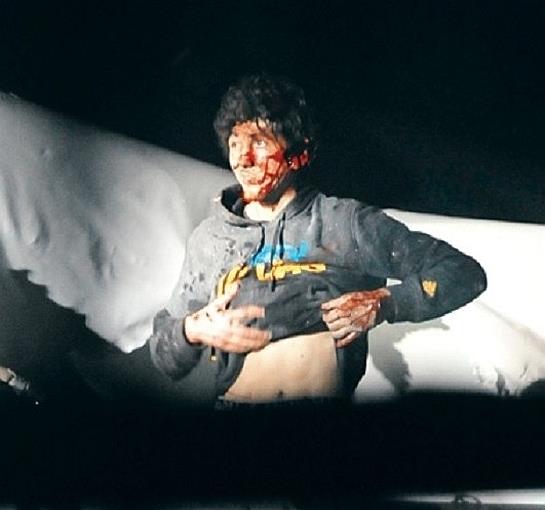
We are about to witness what may be one of the strangest trials ever. For one thing, the central narrative we’ve been provided of the Boston Marathon bombing makes little sense.
Take the defendant’s past. It provides few clues to suggest that Dzhokhar Tsarnaev might have been inclined to commit any sort of mayhem, much less on a massive scale. Even his now-dead, more aggressive older brother, Tamerlan, doesn’t exactly seem like the sort to prepare and detonate bombs to harm large numbers of innocent fellow Bostonians.
Furthermore, neither brother is known to have had the expertise to make the explosive devices unleashed at the Marathon, which experts have characterized as sophisticated. They also aren’t known to have the sort of experience or practiced skill with guns or incendiary devices of the sort they’re described as deploying—with ruthless bravado—during a protracted face-off with large numbers of experienced, heavily armed law enforcement officers, some of whom had military training.
Then there is the small matter of evidence. Here, one is struck by the huge gap between what we think we know—based on an unremitting campaign of leaks from the government—and what actually has been seen or publicly established.
The main piece of evidence—the famed video the government claims to have of the defendant putting down his bomb-laden backpack—has not been seen by the public. Yet many people think they have watched it. Even an appellate judge involved in the Tsarnaev case was under the mistaken impression he had seen such a video.
In fact, as WhoWhatWhy has repeatedly noted, the video may not even exist, because there is no proof of its existence. This week, finally, the conventional media made the same point. (It turns out that former Massachusetts Governor Deval Patrick was being less than honest when he said he had seen that video—not only had he not seen it, but neither, most likely, had those who described it to him.)
***
Then, too, much has been made of a “confession” Tsarnaev allegedly wrote on the wall of the boat in which he was ultimately captured. But any honest reading of what we’ve been shown so far certainly can’t be called an outright confession. It doesn’t refer to specific actions, and parts of it are rote recitation of a Muslim expression of faith that’s sometimes invoked when a Muslim is near death. Last rites? Maybe.
But the FBI also admitted that the boat was left out in the open for days, which would be violation of the strict chain-of-custody required to preserve evidence for trial. So it’s impossible to rule out tampering.
What else do we think we know? The indictment catalogues purported behavior that looks incriminating, and may well be good enough for an indictment, but that certainly doesn’t prove guilt, even if we can be sure it is all true, which we cannot:
• Dzhokhar read material from the Internet that discusses Jihad.
• Dzhokhar looked at bomb-making instructions on the Internet.
• Tamerlan bought fireworks in New Hampshire (not nearly enough firepower to cause the blasts seen at the finish line, according to fireworks experts).
• Tamerlan and Dzhokhar went to a firing range in New Hampshire (once) and fired handguns while there. (Does this explain their purported proficiency with firearms and explosives? Hardly.)
• About 10 days before the bombing Tamerlan used the Internet to order electronic components that could be adapted for use in making IEDs.
• Dzhokhar opened a pre-paid cell phone account the day before the bombing. While such an act could certainly be portrayed as terrorist tradecraft, it could equally be written off as typical college-kid behavior.
• Dzhokhar had a backpack in his dorm room containing broken-up fireworks.
Clearly enough for an indictment, but does it prove he’s guilty?
***
Then there is the small matter of…actually providing the public with meaningful and complete answers. So far, we’ve seen little indication that either the prosecution or the defense has a desire to establish the full story behind the attacks and their aftermath.
For example, evidence of links between the older brother and the FBI—and, through family and other connections, the CIA—has been swept under the rug. This cries out for investigation into whether the government is covering up something. Especially when one considers the government’s well-established practice of recruiting people—often hapless loners—to infiltrate terrorists groups and then foster and participate in terror plots.
Even the Boston Globe columnist Kevin Cullen laments the fact that we’re unlikely to get much of this critical backstory. Nonetheless Cullen’s article is mis-titled “Closing in on the truth in the tangled Tsarnaev case,” when it’s exactly the tangled parts we’re unlikely to see straightened out.
Of course, the prosecution will not “go there”—that is, honestly follow the facts wherever they may take us. But neither, it seems, will Tsarnaev’s defense. They have seemed hamstrung in their ability to investigate, and appear to have convinced their client that his only hope is to admit his guilt and hope to avoid the death penalty.
He would presumably do this by letting himself be characterized as an unfortunate under the influence of a more malign elder sibling.
Not Wholly Innocent Either
On the other hand, one cannot buy the line of certain critics who contend that the entire government case has been fabricated. After all, we have a photo of Dzhokhar Tsarnaev emerging from a boat in which he seems to have been hiding. If he didn’t do anything, why would he be hiding and/or on the run? Also, we know that he was at the Marathon, and like his brother, was wearing a backpack (not that that means much, in and of itself.)
We also don’t know if he was a participant in the murder of MIT Officer Sean Collier. The policeman was assassinated by hooded figures on a nearly empty night-time campus a good distance from the brothers’ likely whereabouts. Indeed, many aspects of the Collier shooting don’t make a lot of sense—for example, why would the brothers have killed him to obtain his firearm if they had one already—and then, why shoot him and leave his gun behind? So we don’t necessarily know who killed Collier, or why.
Still, the government claims to have made a ballistics match between the pistol used to kill Collier and the one found in the street after the chaotic Watertown shootout in which Tamerlan Tsarnaev purportedly died. Will the defense have the opportunity to scrutinize that evidence? Will the rest of us?
Also, a friend of Dzhokhar’s who’s facing decades in prison for his own troubles appears to be willing to testify that he gave Dzhokhar the pistol in question, in return for a lesser sentence. Will the defense get to scrutinize the details of that plea deal?
***
Those are but a sampling. And there is much, much more that we don’t know. Meanwhile, what we do know is next to nothing.
Which makes it all the more disturbing that the media has allowed the public to believe the opposite: that there is virtually nothing yet to be uncovered.
Let us hope, for the sake of our own national sanity, that we are in for some courtroom surprises. That we will get the clarity and the candor compulsory for a free society and a healthy democracy, rather than a hopped up, ill-informed lynch mob.
150 People Reported Disappeared in Piedras Negras, Mexico
teleSUR | February 7, 2015
Over 150 people have been reported disappeared in the small city of Piedras Negras in the northern border Mexican state of Coahuila in the last 18 months, of which at least 60 have been attributed to elite police forces, according to a lawyer overseeing the cases.
Families of victims and their lawyers accused state government of creating special forces that have carried out arbitrary detentions, tortures and enforced disappearances across Coahuila during the last six years.
The creation of elite police forces, which in the past have been sent to the U.S. for special training by the FBI, is not new in Mexico. These types of forces have been accused of acting as death squads for the government and have sometimes carried out assassinations ordered by organized crime gangs.
“Special units of the army and navy, assassins trained by armed forces deserters and civilians trained by foreign security forces operate in Mexico as death squad,” Proceso published in June of 2013. The Mexican magazine based this assertion on a book published by 0federal lawmaker Ricardo Monreal Avila, which was edited by the congress’ lower house.
Influential newspaper Excelsior in November of last year wrote that, “The special forces created in the states (of Mexico) are under scrutiny due to human rights issues.”
The daily based in Mexico City added that, “these elite police groups have been accused of carrying out enforced disappearances, kidnappings, extortion and torture.”
Excelsior said that “it should be noted that in spite of the negative reputation of these forces in various states, which sometimes receive special training by U.S., Colombian or Israeli elite groups, more states and Mexico City are in the process of integrating elite groups to (allegedly) fight organized crime.”
The newspaper went on to say that the United Nations has questioned the work of special intelligence units in Baja California and Tamaulipas, due to the high number of crimes they have committed against innocent people.
On Friday, the La Jornada newspaper reported that attorney Denise Garcia told reporters that the non-governmental organization United Families has documented 150 cases of disappearances in the last 18 months in Piedras Negras alone.
“In at least 60 of those cases there is evidence that the Special Arms and Tactics Group (GATE) participated in them, as well as other similar types police units that were created by the former Governor Humberto Moreira and which still exist today under the governorship of his brother Ruben,” she said.
Garcia said the 51 people that were disappeared by GATE were later found alive, but all of them, she added, were tortured to confess crimes they did not commit, including drug trafficking, and today they remain jailed under false charges.
These groups have no accountability, Garcia explained, and they don’t report their operations nor their arrests, which is a clear violation of human rights.
“GATE and other special police units work under the recognition and support of the government, despite that many of them are [not] even legally constituted,” she said.
García said they act as illegal death squads, they travel in unmarked vehicles with no license plates, they are masked and commit many other irregularities.
The worst thing, she added, is that “we have denounced these issues to the federal government and the National Human Rights Commission (CNDH), which respond with indifference.”
See also:
Featured Video
“Historic Russia”: The Land Putin Will Not Give Back
or go to
Aletho News Archives – Video-Images
From the Archive
How Ukraine Tortured and Slaughtered Donbass
By Kit Klarenberg | Al Mayadeen | July 11, 2024
Almost immediately after the proxy war erupted, ISIS-tier footage of the torture and murder of Russians in Ukrainian custody emerged.
On July 6th, the New York Times published an astonishing investigation: In Ukraine, Killings of Surrendering Russians Divide an American-Led Unit. The article documents in grim detail how Chosen Company, an international volunteer battalion for Kiev, routinely executes Russian prisoners of war. It is the very first mainstream admission that this practice – a brazen breach of the Geneva Conventions, and a grave war crime – is widespread among Ukraine’s fighters, both foreign and homegrown. … continue
Blog Roll
 Aletho News
- Burnham tackles Britain’s poverty with aggression in Yemen
- Peace in Ukraine: the easy way – or the hard way
- Trump & the Rrrrussians
- US taxpayer money laundered back through Ukraine – Musk
- Before COVID, an NIH lab chief proposed making a SARS-like bat virus more infectious
- Gates, Bourla on Trial in Netherlands Accused of ‘Great Reset’ Scheme at Vaccine Injury Hearing
- BRITAIN’S WARNING: PREPARE FOR WAR
- “Historic Russia”: The Land Putin Will Not Give Back
- How the Cambridge Analytica scandal still haunts Mark Zuckerberg
- The Ongoing Cancellation Campaign Against a Dissenting Academic in Norway
- If Americans Knew
- An error has occurred; the feed is probably down. Try again later.
- No Tricks Zone
- Two New Studies Find Thwaites Glacier Melt Cannot Be Driven By Human Activity Or A Warming Ocean
- E-Cars Reduce CO2 Emissions By Only 41% Compared To Internal Combustion Engine Vehicles
- Predictions Made By Renowned Climate Professor Over Past Decades Have Been Proven To Be Poor
- New Study Suggests Large Regions Of The Pacific Ocean Have Been Cooling For The Last 80 Years
- Germany’s Green Energy Debacle: High Energy Costs Force Kahla Porzellan to Close After 182 Years!
- New Study: 50 Years Of The Most Aggressive ‘Net Zero’ Policies Can Only Affect The Global Climate By 0.03°C
- US September “Heat” Was No Record…Many Records Set Decades Ago
- Latest European Green Energy Debacle; Portugal’s Largest Flagship Solar Park Insolvent!
- Green Energy Debacle: German Expert Professor Fritz Vahrenholt Warns Of Severe Economic And Social Consequences
- Two More Paleo Reconstructions Affirm Meters-Higher Sea Levels Across Ireland, Brazil 7000-6000 Years Ago

