Atrocities Aren’t Accidents
Three years on, we have enough information on the pandemic architects to send them to prison. So why are they still getting away with murder?
Helen of desTroy | January 5, 2023
The information barrier separating establishment media consumers from pandemic heretics who do their own research is unmistakably crumbling. Every day, more doctors and more scientific papers are admitting that the mRNA gene therapy injections they once championed so fervently not only don’t protect the user from catching Covid-19 but may actually destroy their immune system, stop their hearts, or cause sudden death. Statisticians have incontrovertible proof of excess deaths in previously-healthy young people far outstripping any rise in mortality during the supposed height of the pandemic – or any other time in recent history, for that matter. The utterly avoidable carnage is such that even if we didn’t have an extensive psychological profile of the culprits, there would be no doubt it was premeditated and deliberate. And since those scumbags couldn’t resist leaving behind the usual array of PowerPoint slideshows, tabletop pandemic simulations, woefully fictionalized clinical trial data, and other criminal detritus, prosecution should be a breeze. After three years, we know more than ever about this criminal enterprise and the people responsible – certainly enough to make sure they never breathe free air again.
Except Anthony Fauci, architect of the steepest decline in life expectancy in American history, was allowed to gracefully bow out after 40 years bilking the taxpayer out of the highest salary in Washington as director of the National Institute of Allergies and Infectious Diseases, his entire bloodstained career a case study in how to get away with murder. Bill Gates, not two years after threatening that the next pandemic would “get our attention,” has just conducted another tabletop pandemic simulation, this time whipping up an enterovirus that kills 15 million children, only to whine that no one trusts his miracle shots anymore. The WHO has designated “anti-vaxxers” public enemy number one, even accusing them of murder, while the New Yorker calls for permanent mask mandates and a coterie of washed-up celebrities insist the unvaccinated belong in jail. This is not the behavior of a criminal gang caught red-handed. What happened to “knowledge is power”? Why has humanity gone limp when it should be dealing the killing blow to these psychopaths and those giving them their marching orders?
As moribund as human civilization seemed in 2020, the world at the start of 2023 is practically unrecognizable. No longer mocking the TV-gullible in their fear-forts built of toilet paper and canned beans, we can’t even afford to stockpile such luxury objects – but religiously defend our penury as a necessary sacrifice, enduring cold showers so that a Nazi fetishist can climb into bed with BlackRock. A “democracy” whose citizens knew the system was rigged has become an indoctrination center where questioning that rigging is seen as a terrorism threat. A language once merely fraught with cliches and self-marginalizing semantic boobytraps has become one whose most loaded terms change definitions from day to day, where raising questions about why the linguistic ground is constantly shifting beneath one’s feet is dismissed as irrational.
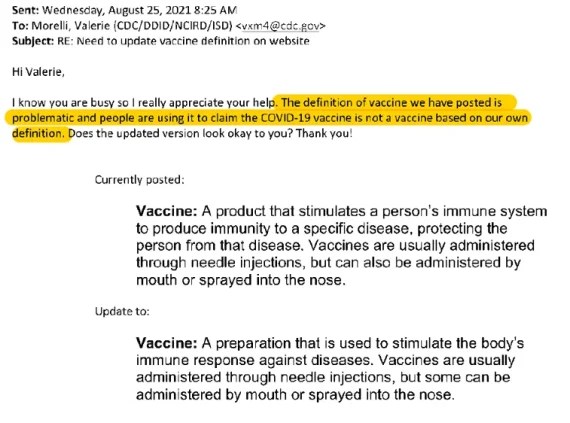
“how do I work this darn memory-hole again?”
But it has always been like this, we’re reassured by the faceless “fact-checkers” who have formed an impenetrable biofilm over social media, nudging us into a homogenous future while rewriting the recent past to remove any stray genocide. If words are truly violence as so many of them insist, their body count surely rivals that of Fauci and his white-coated army. The word “gaslight,” overused to the point of meaninglessness, is no longer sufficient to describe the firehose of lies (lie-hose?), often presented directly alongside conflicting information, that assaults us when we turn on our computers or unlock our phones. But then, the narrative managers’ aim is not necessarily persuasion in the traditional sense but to infect the target’s perception and processing centers so that they begin to doubt their own reality, gradually substituting elements of the establishment’s fantasy, sacrificing those cumbersome human instincts for the reassurance of being a Team Player on the winning team. No one can withstand the lie-hose forever – there’s a reason you and everyone you know look like you’ve aged 10 years since you first heard the word “coronavirus” – but if it hasn’t drained you of your sanity yet, you may want to see about deprogramming your loved ones from the Cult of Corona. We’re going to need everyone we can get.
Not long ago, ruling class rag the Atlantic published what was supposed to be a plea for ‘pandemic amnesty,’ an apparent white flag bylined by economist Emily Oster that argued that because the government’s devastating policies had been adopted with good intentions, and no one could have possibly guessed what the results would be, it was important for those on all sides of the issue to forgive and move on. It was the equivalent of a typewritten letter from Genghis Khan breezily explaining that you shouldn’t be mad that his Golden Horde razed your village to the ground, slaughtered your livestock and had their way with your daughters, he just thought buildings looked better on fire, and by the way could those girls maybe smile more? – but forgiving you for not having a four-course dinner ready to accompany his post-coital cigarette. It has been clear since the scale of the mRNA bioweapon’s harms became apparent that the architects of the Covid-19 experiment would have to either play dumb (“We didn’t know!”) or go full Nuremberg (“Just following orders!”) if they hoped to avoid a public execution, but this – suggesting those responsible for the most horrific crime against humanity in recorded history should be essentially forgiven for their crimes with the excuse that they didn’t know better while their victims are encouraged to beg for mercy from their tormentors (and presumably sign away the right to demand reparations) was a bold strategy indeed. Unsurprisingly, Oster was digitally torn limb from limb for her trouble, and some people even called the public display of rage a victory, believing the outpouring of powerful emotions had spooked the predators. But others desperately reached for what they were sure was an olive branch this time, falling for the same promise that led them first to submit to solitary confinement, then to wearing a bacteria-laden rag around their face, and ultimately to having themselves injected repeatedly with an experimental gene therapy: the promise that things could, if they just obeyed enough rules, go “back to normal.”
One had to be willfully delusional to read sincerity in Oster’s plea for a small-r reset, however, given that her recommendations included vaccine mandates for schoolchildren and more mRNA shots for everyone. She left “willful purveyors of misinformation” out of her to-forgive list, perhaps understanding that an ideological in-group can’t rely on the usual surface markers of difference to choose an outgroup when it comes time to make sacrifices. A person seeking amnesty for their misdeeds generally starts by admitting they’ve done something wrong. They typically stop committing the crime they’re hoping to be forgiven for, or at least try not to be balls-deep in another while begging to be spared the consequences of the last. A show of contrition, if not full repentance, is obligatory, and one certainly doesn’t blame the victim for bleeding on the killer’s Sunday best. Clearly, things work differently in the New Normal.
The predators who shredded the Nuremberg Codes by enrolling humanity in this unlicensed clinical trial against our will have, if anything, doubled down on their criminality since relaxing the mandates and admitting the shots can’t stop the spread. Not content with eliminating religious and medical exemptions to vaccine mandates, California passed a law allowing the state to strip doctors of their medical licenses for sharing “misinformation or disinformation related to the SARS-CoV-2 pandemic,” taking the censorship of legitimate information that has been de rigueur under the Big Tech-Big Brother collusion propping up the pandemic narrative to the next level and injecting the corporate-state even further into the once-inviolable doctor-patient relationship. Many universities, including Yale, still require students to be not only vaxxed but boosted, despite the growing body of evidence proving the risks far outweigh any benefits the shots might provide to young people. Governments, health authorities, even sites like WebMD full-throatedly champion a complete course of mRNA injections for everyone down to the last 6-month-old child. The narrative managers who refused to acknowledge the shots were anything other than safe and effective even as hundreds of thousands of bodies piled up outside their doors only just last month admitted the link between mRNA vaccines and myocarditis was even being (belatedly) studied – and even then insisted any cases were likely due to Covid-19, that the rare vaccine-linked case was mild, and that myocarditis – inflammation of the heart muscle – did not lead to cardiac-related death. Far from closing the book on this disastrous interlude, the Rockefeller Foundation announced less than six months ago that it was expanding its questionably-titled Mercury Project – another experiment undertaken without informed consent, this time with a focus on manipulating internet use behavior – to increase vaccine uptake by studying “how mis- and disinformation spreads” around the world, presumably in order to spread some of its own. Not to be outdone, Stanford University is offering an online course on how to con people into getting vaccinated. The Biden administration recently ordered tens of millions more doses of bivalent Moderna boosters, the mRNA component manufactured special-order by CIA-funded firm Resilience, even though few Americans are eager to play side-effect roulette with a concoction tested on eight mice. But these sociopaths never tire. And not only are they not finished with their game, they’re barely getting started.
The Gates Foundation – along with the Johns Hopkins Global Center for Health Security and its other usual partners – wasted no time smothering the fantasy of a Covid armistice in its cradle, simulating another deadly pandemic almost exactly three years after Event 201 – and two years after a smirking Bill, chiding world governments for failing to lavish sufficient resources on Covid-19, promised “pandemic two” would “get attention next time”. There is nothing subtle about “Catastrophic Contagion,” which stars an improbably named pathogen called Severe Epidemic Enterovirus Respiratory Syndrome (SEERS), a virus which targets the young (15 million of its 20 million casualties are children) and leaves those it doesn’t kill with paralysis and brain damage. While SEERS hails from a fictionalized country sitting on Venezuela’s land (Johns Hopkins goons are not subtle in their foreign policy ambitions), its participants are mostly African leaders who read their stilted lines (“no one is safe until we all are safe!”) to the approving nods of noticeably-paler health bureaucrats (Gates, red-faced WHO pearl-clutcher Mike Ryan, and Johns Hopkins’ own Tom Inglesby) running the exercise. Those who believe these simulations merely put health officials through their paces to ensure optimal performance when faced with the real thing may be surprised how little discussion of saving lives actually takes place, or how much the “mistakes” made during the exercises are meticulously replicated when they go live. The redistribution of wealth (from the hoi polloi to the parasite class) and the need for behavioral controls dominate the highlight reels, and October’s was an especially naked advertisement for the WHO’s latest power grab, which combines a sweeping new global “pandemic treaty” complete with legally-binding controls on speech and movement that supersede national laws with a proposed update to the International Health Regulations, which govern public health rule-making.
Video excerpts from Catastrophic Contagion reveal it doubled down on the need to “trust” narrative managers, corporations, and government institutions, the importance of holding ever more pandemic simulations (a pet project of Gates, whose eponymous foundation and Gavi Vaccine Alliance are shoo-ins for the lucrative contracts to host and run these “germ games”), and the need to silence dissident voices – all key planks of the global pandemic treaty, an ambitious power-grabbing agreement that will not only supersede individual countries’ laws but set up and fund (through the generous contributions of member nations) a transnational Ministry of Truth to determine what information can be shared during a Public Health Emergency of International Concern (a term that lost its last shred of meaning earlier this year when WHO Director General Tedros Adhanom Ghebreyesus ignored the advice of his expert panel to declare monkeypox a PHEIC, despite its spread being almost exclusively limited to ultra-promiscuous gay men). Because PHEICs don’t expire – of the six declared since the classification was adopted in 2005, three are still in effect – that ministry would retain control of information indefinitely.
The ruling class have wasted no time in implementing the Johns Hopkins simulation’s conclusions, which play on longstanding anxieties regarding the seemingly inexorable decline of trust in authority in the age of the internet. Leading the crusade to revive trust in corporations – specifically social media, which suffered a fatal blow to its credibility when it emerged in September that all the major platforms were holding weekly meetings with at least 12 US government agencies and taking detailed orders from them on who and what to censor – is Elon Musk, hailed as a real-life Iron Man by people who should know better because he allowed a handful of journalists (and Bari Weiss) to post screenshots of what may or may not be internal Twitter communications that appear to confirm what was public knowledge three months ago. The effort to bring back trust in government – in the US at least – is in the sweaty hands of the Republican Party, who have promised to grill Fauci to within an inch of his life – now that he’s retired and can plead the Fifth until he dies in his sleep of old age. Taking on the rehabilitation of journalism is Tucker Carlson, who on the day Biden was supposed to (and predictably declined to) declassify the remaining government documents regarding the JFK assassination shared with his audience the blindingly obvious fact that the CIA was “involved” in Kennedy’s murder. And redeeming science is Andrew Huff, the Eco-Health Alliance whistleblower who blames the pandemic on sloppy containment procedures at the Wuhan Institute of Virology – even though he admits he quit working at the controversial facility in 2016, years before the fatal “lab leak” supposedly took place – muddying the waters of guilt and blame in a way that would make Emily Oster proud. Limited hangouts all, but the respite they provide from the usual lie-hose waterboarding sessions means they will be embraced, even trusted.
Any suggestion that bad pandemic policies were honest mistakes born of good intentions is frankly offensive given the amount of evidence to the contrary. Because we did know what would happen when the experimental conditions were imposed – that was the point of all those tabletop simulations. Face masks were known to be worse than useless for preventing respiratory illness, and only an absolute psycho would put one on a toddler who needs to see the mouths of his fellow humans to learn how to do things like smile or speak. There was no scientific evidence to support “social distancing,” and if you’d suggested locking Great-Aunt Imelda up alone in a plexiglas box with nothing but a TV and a grab-bag of midazolam and morphine to keep her company through her last days, you’d have been rightfully slapped. The harms of lockdowns were well-understood – yet like the rest of the medical knowledge held by human civilization in 2019, it supposedly deserted us in our hour of need. Scientists have known for years that loneliness poses a bigger risk to health than even obesity or smoking, that the elderly are in the greatest danger of becoming critically lonely, that vitamin D – absorbed from sunlight – is key to recovery from respiratory illness. But pointing any of that out got you exiled from polite society as a homicidal anti-science granny-killing lunatic washing your horse paste down with Trump-brand bleach. It clearly wasn’t a mistake that every “public health tip” the CDC issued was harmful and out of step with medical best practices. Had that been the case, there would have been at least a few “mistakes” on the side of wellness. Yet no one wanted to open the Pandora’s box of “the government is working against my interests” – certainly not when Chris Cuomo had just told them it was time to “sacrifice the me to the we,” the Year of the Team Player. Instead, putting aside everything they thought they knew about how to take care of their physical and mental health, they embraced the CDC’s strict limits on movement and association as a source of security – proof that Big Brother loved them and wanted them to be happy, even while he was quietly killing their grandparents to free up pension obligations.
Three years later, the standard response to the mounting evidence of permanent damage by mRNA shots is often anger – how could they?! – but rarely surprise. Given that Big Pharma’s track record is littered with corpses, no successful coronavirus vaccine has ever actually been manufactured despite decades of trying, and every other “public health intervention” of the pandemic has been based in part or in whole on lies, many of which had serious consequences for the rule-obeyers, it would have been truly shocking if these products were safe. As for “effective,” we knew by the end of 2020 that neither the Pfizer nor Moderna jab could stop transmission of the virus, but also that they hadn’t tried to. The CDC tried to claim otherwise, vaccine mandates were hastily adopted based on the “misunderstanding,” and millions of people lined up to get injected under that false premise, silencing any misgivings that might have interfered with following the advice of the Experts and crossing their fingers in the hope that this time they would get that return to Normal they’d been hearing so much about. But this required a level of willful suspension of disbelief that would have gotten one locked up as a delusional psychotic in the pre-Covid era, given Pandemic Pope Fauci’s history. The miniature Mengele pulled off a series of self–enriching scams over the course of the AIDS era, poisoning hundreds of thousands of innocent people – including tens of thousands of children – with drugs he knew were toxic, and given that he was never punished, he has merely repeated his old tricks, again and again. Accountability is a foreign concept in Washington, and in the misery-loves-company tradition of late-stage empire, we have exported this moral failure around the globe.
Given Pfizer’s literally record-breaking history of fraud and rampant criminality, one might ask why they were entrusted with being the public face of such a major project – hundreds of billions if not trillions of dollars were riding on Warp Speed, after all, even though Pfizer CEO Albert Bourla isn’t a human-doctor at all but a veterinarian, having focused his education on “the biotechnology of reproduction” if Wikipedia is to be believed. Bourla was in charge of Pfizer’s animal vaccine division in 2010 when a diarrhea shot for pregnant cows, PregSure BVD, was discovered to be killing off as many as 15% of the calves who nursed from the jab recipients. They didn’t just die, they bled out of every hole in their bodies, including their pores. By denying everything and continuing to sell the shot outside Germany – where the problem had initially arisen – Bourla apparently distinguished himself as the man you want when you need to kill a lot of kids and get away with it. He also proved himself back in his veterinary days as a pioneer in expanding the definition of “vaccine” to include chemical castration, devising a shot for boars called ImproVac that he claimed was 99% as good as physically hacking their balls off (it’s unclear how he arrived at that figure, but then, it’s unclear what hole Pfizer pulled its effectiveness numbers out of either). Still think the Covid-19 shots’ disastrous effects on human fertility are a coincidence? Don’t tell Bourla – he understands why people fear his company’s products, but wants speaking up about the harm they cause to be criminalized. The US military was sending a very powerful message when it selected Pfizer and Bourla to be the standard-bearers of its mRNA bioweapon campaign. It is unfortunate for humanity that so few were listening.
These people do not expect to be punished, but if humanity is to continue as something other than a slave species, they must be, and immediately. It’s hard to think of any crimes that haven’t been committed in the course of the planning, setup, and perpetration of these power-grab-s fraud, corruption, murder, genocide, and the coercive pharmaceutical rape that will become depressingly common when so-called “health passports” or any other permutation of the World Economic Forum’s Known Traveler Digital Identity social credit score are adopted worldwide. Where once the unvaxxed could merely be threatened with job loss or expulsion from school, or denied entry into a business or country, once all systems are linked, refusing the shot will effectively get a person occluded from society entirely – unable to withdraw or spend money, unable to enter any buildings or board transportation, unable to unlock even their phone or computer to communicate with loved ones. Most people wouldn’t last a day as a locked-out ghost in the prison state the pandemic pimps are building.
But the spirit to resist is fading fast, with bodily integrity turning into an anachronism at the hands of a generation who have never experienced privacy. Kids born in the 2010s are likely to believe it’s perfectly normal to be summoned to a school clinic for injections without their parents’ knowledge, uninterested in what’s in the needle and neither asked nor asking to sign a consent form. They don’t know they have a choice. Gates may have declared the Covid-19 shots a failure, but his foundation has already poured billions of dollars into DARPA’s choicest nightmare material, “flying needles” competing with drugged food and even human vaccine vectors to penetrate anyone they can get their hands on.
The body is merely a sideshow for these psychopaths, however – the real target is the multi-layered rape of the mind, a specialty of military technology which sits at the core of the mRNA bioweapon. Unlike standard vaccines, the mRNA formulas deployed under cover of Covid-19 can cross the blood-brain barrier with their hypertoxic spike protein, triggering a cascade of inflammation, autoimmune dysfunction, and other reactions that can bring about permanent personality changes (on top of the damage caused by the virus itself). It’s anyone’s guess how well these changes can be controlled – if one can select for docility over brute stupidity, say, or an eagerness to please on top of the inability to defy – but one can imagine that like the lobotomies of old, they will become a popular way of dealing with inconvenient dissidents as pressure to decrease the overt appearance of prisons (so unsightly!) grows internationally. Of course if you shrink the prison to fit within the skull, the division between ‘inside’ and ‘outside’ becomes literally a state of mind, one that can be artificially imposed from without – a possibility Fourth Industrial Revolution fetishists like Klaus Schwab no doubt already see for contraptions like Neuralink (the kindler, gentler brain-rape!) and a “battery-free” deep-brain stimulator that uses the patient as its battery.
The possibilities for remote implantation of thought and emotion are alarming – simply envision the targeted censorship the Biden administration conducted against opinions and social media users that displeased it over the last three years, deploying representatives from no fewer than 12 agencies to meetings with all the major tech platforms to silence individual citizens because its own narratives were so poorly constructed they regularly fell down under their own weight. Informed consent will be a thing of the past – when adoption of such devices is widespread enough, the narrative managers will literally be able to conduct mass sentiment like an orchestra.
On the metaphorical front, the WHO wants to make sure its good little citizens wash their brains as often as their hands, holding meetings about a global “infodemic” before it had even declared Covid-19 a pandemic and talking up the importance of “information hygiene.” Just as environmental watchdogs condemn chemical companies for dumping toxic waste into the planet’s water supply, the Ministry of Truth whose charter is being woven into the WHO’s global pandemic treaty will argue that spreading “conspiracy theories” and other unauthorized opinions is poisoning the collective consciousness with dangerous doubt and hate. As Catastrophic Contagion glibly explains, all of this death could have been avoided if we just placed our trust in the Corporate State. Those millions of dead kids the Global Health Security Center warns are waiting at the end of the next pandemic rainbow? That ‘poisoning’ is what happens when you do your own research. UNESCO’s “think before sharing” campaign – aimed at recruiting an internal thought-police officer within every good citizen to squelch the innate human desire to post interesting or troubling rumors, question authority, or otherwise fan the flames of “infodemics,” lest their content inspire some kind of extremist to action motivated by hate and physically hurt someone – is the first step toward declaring every individual’s thoughts part of the global commons. It’s the “I wear my mask to keep you safe” of thoughtcrime.
https://helenofdestroy.substack.com/p/whose-mind-is-it-anyway
But even that isn’t sufficiently intrusive for these parasites. Their ultimate goal is to hijack and ultimately replace the natural instincts that arise to meet a hostile occupying force, substituting trust, obedience and docility, the precursors to a slave species blissfully ignorant of our slavery – who will “own nothing and be happy,” in WEFspeak. How? They seem to have settled on the lie-hose – gaslighting on steroids – in the hope of making it so exhausting to continue thinking critically that the target just gives up, overwhelmed, their bullshit-detector overheating in the wake of 3 years of “two weeks to flatten the curve.” Eagerly studying its captive audience back in 2020 as it urged them to stay glued to the couch while warning them obesity was the primary indicator of death with Covid-19, the CDC found it didn’t take many waterboarding sessions with the lie-hose to induce a roaring epidemic of Stockholm syndrome. After just two months of mask mandates, shelter-in-place, and six-feet-apart rules, only 25% of New Yorkers said they’d feel safe if the restrictions were scrapped. How much harm do you think decades of “safe and effective” has done?
It’s tempting to believe that the narrative managers’ insistence on doubling down on obvious falsehoods despite undeniable proof to the contrary will simply relegate them to a Pravda-level epistemological irritant – everyone knows the narrative is false, even the individuals selected to propagate it, and while one must pay lip service to the narrative in public if one wants to maintain their socioeconomic status, one can always discuss reality in private with trusted people, informed by underground publications not subject to censorship. However, technology has enabled the kind of information control the worst excesses of the Eastern Bloc could only have dreamed of. I’ve already written at great length about the informational iron curtain being constructed to quarantine wrongthink on the internet and eventually prevent its uploading (and contemplation) altogether, and this project has advanced dramatically under cover of Covid-19, with even non-Google search engines like DuckDuckGo vigorously scrubbed of competing narratives to the extent the user hoping to quickly confirm a fact or a name instead ends up in a hall of mirrors with one narrative showing on every screen, its production values as impeccable as its lies are threadbare. But it’s the only narrative in town, save the user’s own imagination – and since the US school system ensures no trace of viable imagination survives the third grade, they’re basically defenseless. Forced to internalize what they know is a bogus narrative, even temporarily, they’ve nonetheless become complicit in their own reprogramming, and the lie-hose residue has a corrosive effect on their memories and even sensory input when these contradict the lies they’ve grudgingly swallowed just to survive. “If vaccines weren’t really safe and effective, wouldn’t all the doctors be screaming from the rooftops?”
Thus what appears to be ham-handed slopaganda can actually insinuate the narrative managers into the target’s decision-making centers – the rather self-explanatory process known as the OODA loop (observe, orient, decide, act) – where a little bit of pressure exerted at the right moment can have an outsize effect. Mentally knocking the individual off-balance with a jolt from the lie-hose while they’re trying to observe and orient themselves ensures whatever they do next will be misinformed at best, heinously miscalculated at worst. If they blame themselves rather than the predatory outside influences leading them astray, the self-perpetuating feedback loop becomes difficult to break. Doubt leads to “distrust your gut”, only to learn when they become suddenly sick and read way too many articles about spike proteins that they’ve basically poisoned themselves and now can likely never board a plane because of blood clots, the normal self-preservation urge – to have the problem taken care of medically, to warn others, even to demand those responsible “fix it” – is muted by guilt and embarrassment over their willing participation in this act of self-destruction.
A recent Rasmussen poll revealed that 56% of Americans believe the vaccine is at least somewhat effective in preventing infection – a claim that even the CDC doesn’t try to make anymore. Even when confronted with incontrovertible evidence the shots are harmful – evidence they accept as legitimate! – no one wants to admit they’ve subjected themselves or their children to a totally preventable risk, especially one that could kill them.
There’s a sense that speaking up about vaccine harms will somehow manifest more of them – or worse, cause others to become vaccine hesitant, a fate generally agreed upon to be worse than death even though it has become increasingly hard to ignore the causative relationship between death and the vaccines themselves. Health authorities’ rapid pivot (as mandates dropped across the US and Europe) from ordering the population to roll up their sleeves or else to insisting the shots were always voluntary deprives the injured of a clear target for their rage and plants a nagging sense of responsibility for their own suffering. In the same way they were incentivized to get the shot in the first place through an absurd selection of bribes from Krispy Kreme donuts to lap dances, the vaccine-injured can be cajoled back into the fold through universal basic income payments or other benefits specifically for the jabbed. The more they can be made to identify with the experimental compound colonizing their bodies, the more easily they can be turned back against the unvaccinated, those selfish throwbacks who are Not Team Players.
And the retconning of the pandemic is running at full speed as the narrative managers insinuate themselves into humanity’s collective OODA loop. Americans running at top speed away from the bivalent boosters are concerned about physical discomfort, not the possibility of dying suddenly! Rebelling against authority means wearing masks forever! And that 40% surge in non-Covid excess mortality among 18- to 49-year-olds that has actuaries all spooked? That’s just stealth-Covid! Anti-vaxxers are to blame for traffic accidents, antisemitism, and even sudden death itself!

Narrative managers’ refusal to give even an inch on the Big Lie that this class of ‘vaccines’ are 100% “safe and effective” as cries to the contrary hit critical mass suggests another epistemological rug-pull is just around the corner. So when I saw an actual news story last month describing the pandemic as “the biggest US intelligence failure since 9/11” I most certainly did not believe my lying eyes. With so much evidence pointing to years if not decades of premeditation in the unleashing of Covid-19 and a profound intent to cause harm, the reemergence and sudden popularity of the “lab leak” theory of Covid-19’s origins plays much too perfectly into the hands of the interests behind the pandemic. Indeed, it was first floated by a representative of one of them all the way back in 2020.
Forget for a moment that the architects of this grand scam have already explained their evil plot to us in Bond-villain-esque detail, repeatedly, accompanied by long, short, and medium-length write-ups, complete with helpful video. The lab leak hypothesis may make more sense than the zoonotic-origin hypothesis (it would be hard not to) but it conveniently absolves the World Economic Forum, the Gates Foundation, the WHO, DARPA, BARDA, and the rest of the medical-totalitarian infrastructure – including the financial cartels that paid for the whole atrocity and have been reaping massive dividends – from responsibility for the millions of deaths ensuing from virus and injectable bioweapons alike by recasting what all evidence supports as a controlled release as mere accidental exposure. Like the deadly “mistakes” that governments supposedly made in responding to the outbreak, or the self-contradicting policies that “just don’t make sense” yet always err on the side of harm, tacitly admitting to a containment screw-up is their best option legally speaking for getting out of jail with their necks intact. But it simply doesn’t hold water with all the information currently in the public domain. I couldn’t completely rule out the possibility of an accidental leak when I wrote my first article on Covid-19 nearly three years ago, but even then the theory required extreme suspension of disbelief, given that its primary proponent was the same Israeli biowarfare specialist who spent the Bush II years telling anyone who would listen that Saddam Hussein had biological weapons, specifically anthrax, and was responsible for the letters full of ominous white powder that had materialized on the desks of a handful of legislative and media opponents to the Patriot Act following a pattern set out in the events of 2001 Johns Hopkins tabletop simulation Dark Winter. The parallels between 9/11 and Covid-19 have been obvious since day one, but they do not include any “intelligence failures.”
It is very likely the ‘final’ narrative decided upon to explain the pandemic will center on an accidental release of some kind (perhaps more than one, to prevent any one country having to shoulder an unfair burden that could later result in its leaders letting slip what really happened), but this must not be allowed to stand. If the predatory parasites behind Covid-19 are allowed to walk on the grounds that the original pathogen’s release was just another “mistake,” we can all kiss our asses goodbye.
Medical totalitarianism is far more dangerous than any mere political dictatorship, no matter how repressive or violent. Most citizens of the latter regimes understand, even in the midst of hardcore reality mismanagement, that their enemies are ultimately human – bestial, perhaps, or even evil, but human nonetheless. However, the transnational capital class who built the Covid-19 experiment reviles traditional nation-states, and the WHO’s global pandemic treaty is so determined to communicate disdain for such unprofitable ideas like human dignity that it had language referencing the concept removed from the text. The catalyzing experience of Covid-19, recast for future newsreels as all of humanity uniting against a deadly invisible enemy, lends itself to War on Terror-like reductionism: “you’re either with us, or you’re with the virus.” Since no sane person could ever be pro-sickness, the growing crowd of opponents to vaccine mandates, killer lockdowns, ‘infodemic’ thought police, and mask fetishism can be written off as criminal insanity and taken out of circulation, forming a natural test reservoir for future clinical trials (the 21st century human sacrifice). With no natural enemies once it has seized the machinery of market and state under the guise of selfless do-gooderism, the public health technocracy can only continue to exist by demonizing and then sacrificing groups of its own constituents, creating the impression of a benevolent regime deftly battling the forces of “subversion” so that the masses can live their lives in peace. “First, they came for the anti-vaxxers, and I did not speak up, because I didn’t want to end up like Andrew Wakefield” is not an excuse when life and death hang in the balance.
Peter Hotez, the buffoonish tropical disease specialist who became a media darling for his ideological crusade against “anti-vaxxers” – a much-maligned group even before the Covid-19 experiment – has partnered with the WHO to condemn “anti-vaccine activism,” which he rechristens “anti-science aggression,” as “a major killing force globally.”
Hotez made the absurd claim last month that “Anti-science now kills more people than things like gun violence, global terrorism, nuclear proliferation, and cyber attacks,” and while it’s tempting to laugh at his histrionics (or to simply point out that iatrogenesis – medical “error” – kills nearly 1 million Americans every year, topping cancer and heart disease), his demands for “political solutions” to the growing portion of the planet that disagrees with his medical totalitarianism are no laughing matter, given that he is backed by the WHO – which will be itching to cut its new global pandemic treaty teeth on a crowd-pleasing victim for its Ministry of Truth tribunals. He has repeatedly called for the Biden administration to sic the Department of Homeland Security and the Justice Department on those he deems insufficiently reverent of The Science, and thanks to a longstanding alliance with the ADL, he will likely get what he wants.
While it may be tempting to see the Covid-19 project as a failure – mandates rolled back, boosters sitting untouched on shelves or in landfills, doctors finally speaking up – this leaves out the big picture. When regarded as a coordinated operation to drive mad, enslave, and ultimately liquidate the human race, the Covid-19 experiment is shaping up to be a stunning success. This must be prevented at all costs.
Kids and Young People Targeted by Bill Gates’ Exercise, “Catastrophic Contagion”
By Igor Chudov | December 11, 2022
Remember “Event 201”, a preparedness exercise featuring a coronavirus pandemic, conducted in October 2019 under the auspices of the World Economic Forum and Bill and Melinda Gates Foundation and involving China’s CDC and others?
The timing was exquisite, and the COVID-19 pandemic started within weeks of the exercise and went on just as predicted.
Be aware that Bill Gates just conducted another exercise, aptly called “Catastrophic Contagion” (I am NOT kidding), on October 23, 2022. Bill himself showed up:
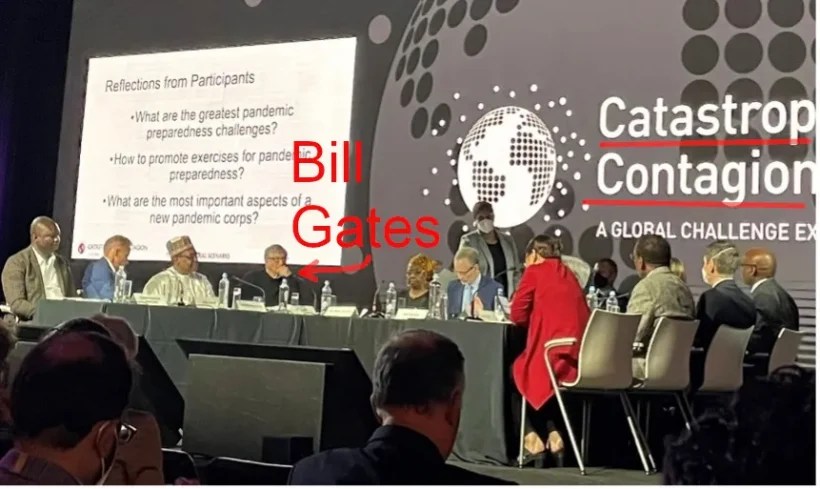
What was “Catastrophic Contagion” planning? It was planning a severe pandemic, worse than COVID-19, targeting young people and kids.

The “lessons learned” strongly lean towards a much stronger stance against “misinformation” than during the Covid pandemic. After all, Covid skeptics won out, which is NOT acceptable to Bill Gates. So, Bill Gates is planning the next catastrophic contagion pandemic, killing younger people, where a much stronger misinformation control will be undertaken.
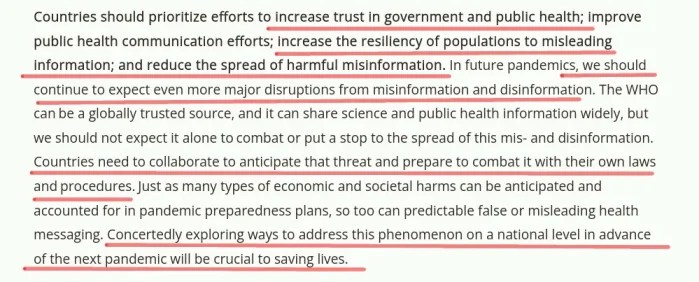
That makes sense, right? Bill Gates and his partners realize that with Covid skeptics winning the battle and taking over entire social networks, the future battles against “misinformation” will need to involve much heavier weaponry.
Bill Gates is a brilliant man and a visionary. He has an uncanny ability to foresee future pandemics. In addition to preparing for the Covid-19 pandemic via Event 201, he also conducted a “monkeypox preparedness exercise” in 2021 that predicted the emergence of monkeypox down to the exact month when it emerged!
Monkeypox “Preparedness Exercise” has Pandemic Start Date as May 15 2022
So, I recommend listening closely when Bill Gates predicts a future pandemic. He knows something we might not be aware of.
I pray for the young people threatened in the “Catastrophic Contagion” exercise and hope they will be somehow saved!
Do you think “the next pandemic is just around the corner”?
Billionaire-Funded Green ‘Churnalism’
BY CHRIS MORRISON | THE DAILY SCEPTIC | DECEMBER 11, 2022
Last Tuesday, I reported on the Mirror story that much of London could disappear beneath the water within 80 years. One might suppose that a crack team of investigative reporters had sifted through hundreds of years of meteorological records and consulted numerous scientific authorities to come up with a eureka revelation that Nelson’s Column will disappear beneath the waves before the century is out. Of course, that didn’t happen. The newspaper was simply publishing custom-produced catastrophe copy from a heavily-funded green agitprop operation called Climate Central. Similar climate catastrophe stories are ubiquitous throughout mainstream media, and there are of course serious doubts about many of them, not least because they are designed to promote the Net Zero political agenda.
New Jersey-based Climate Central is open about its mission. Starting in 2008, it notes that it has grown from working with just a handful of media organisations “to collaborating with hundreds and making a mark on thousands”. It boasts of creating “fully produced” stories that “support” countless storytellers and stake holders in media, social media, government, business and NGOs. It specialises in targeting both national and local media with the pictures to tell a climate disaster story – “all for free”. Although it seems to operate mainly in the U.S., a number of local U.K. newspapers have run improbable flood stories suggesting area landmarks will soon vanish.
The operation is well funded and is supported by numerous left-wing foundations, including the Schmidt Family, the Grantham Foundation (active in the U.K. with three university Institutes) and the Hewlett Fund. (A fuller list can be found here.) Eric Schmidt ran Google until recently, and Wendy Schmidt is listed as a founding board member.
It is not just legacy media that’s being targeted. Climate Central runs a unit called Climate Matters that has established close links with American TV weather presenters over the last decade. It is now common for American weather forecasts to include references to climate change. In the U.K., of course, the Met Office needs little help in ramping up fear by directly linking single weather events and trends to long term changes in the climate. But America has many local broadcasting stations all supplying weather information. Climate Matters aims to bring climate change into weathercasting “via local voices highly trusted by Americans everywhere”.
A recent article in the Washingtonian highlighted the work of Professor Ed Maibach in creating a propaganda strategy aimed at U.S. weathercasters. Over a decade, it is reported, he has produced a “weather underground” said to be “a coast-to-coast network of TV weathercasters who believe that educating their audiences about global warming is as crucial as telling them when to bring an umbrella”.
The magazine notes that local news consumers across the country don’t know that behind that telegenic meteorologist is a social scientist and a team of academic researchers, data crunchers and ex-weathercasters, i.e., the staff of Climate Matters. “To a lot of our viewers, it’s lost on them how much Climate [Matters] really is doing,” says Kaitlyn McGrath, a meteorologist at WUSA9. “But it is so far from lost on us.”
Of course, we could ask why newspapers and American TV stations are employing lazy people who just sub the press release, and spout on air pre-prepared green agitiprop (the green equivalent of churnalism). Communicators who fail to investigate the science behind climate change and just accept the unproven hypothesis that humans are solely responsible for any recent warming of the atmosphere are making a very easy living.
The Westminster University economist Dr. Deborah Ancell noted recently in the Conservative Woman that national broadcasters are staffed with journalist advocates, whose exhortations lead to money being wasted “chasing rainbows, pixies and unicorns in fairy dells”. In Dr. Ancell’s opinion, the impact of lazy journalism has contributed to wrecking economies. “The damage includes reducing energy capacity; over-hyping electric vehicles; restricting agricultural production; taxing aviation emissions; operating fraudulent CO2 offset schemes; abandoning fossil fuels and pursuing unachievable Net Zero,” she explained.
Many legacy media brands are dying on their feet, a fate that in time might affect complacent state broadcasters such as the BBC. Needless to say, this state of affairs has not escaped the attention of billionaires looking for suitable recipients of vast quantities of free cash. Just one source, the Gates Foundation, has provided hundreds of millions of dollars to media operations over the last decade.
Last year, the investigative publication Mint Press News (whose account has been closed by PayPal), put the Gates spend on media projects at around $300 million, but noted the amount could be much higher once sub-grants are taken into account. Among the broadcasters receiving money were the BBC ($3.67 million), CNN ($3.6m) and NBC Universal ($4.37m). In the U.K., the Guardian collected $12.95m, while the less well known green, woke blog The Conversation was granted $6.66m. The Telegraph collected £3.45m, but that doesn’t include a recent $2.43m grant for “global policy and advocacy”. In Europe, Der Spiegel ($5.44m), El Pais ($3.97m) and Le Monde ($4m) all received money. Gates has also given money to charities run by media operations, with a massive $53m provided for BBC Media Action. Large grants are also provided for journalistic training purposes. The full list is available here.
Mint Press News looked at 30,000 individual grants and concluded that the Gates Foundation was underwriting a “significant chunk” of the media eco-system. It argued that this caused serious problems with objectivity when it comes to covering subjects close to Bill Gates’s heart, adding that the money spent by billionaires “allows them to set the public agenda, giving them enormous power over society”.
For some inexplicable reason, the Daily Sceptic is not on the Gates handout list. Curiously, the large bung from Big Oil, which many of our social media commentators routinely accuse us of taking, is also notable for its absence.
The Real Agenda Behind American Academy of Pediatrics: Weaponizing Children’s Mental Health and Vaccines for Profit
The Defender | December 8, 2022
As of 2019, roughly 72,000 physicians were actively working in pediatrics or pediatric subspecialties in the U.S., many of them members of the American Academy of Pediatrics (AAP).
Nominally, the AAP is a professional medical association (PMA), but more often than not, it functions as a corporate and government mouthpiece, including issuing policy guidance to its members stating that it is an “acceptable option to pediatric care clinicians to dismiss families who refuse vaccines.”
With total “revenue, gains and other support” amounting in 2022 to nearly $127 million — supporting a staff of 475 and a self-described role as the “#1 publisher of pediatric titles in the world” — the deep-pocketed AAP’s ability to broadcast policies desired by the Centers for Disease Control and Prevention (CDC) and tout the wares of drug, vaccine and formula manufacturers is significant.
That the AAP’s megaphone is one-sided has long attracted the notice of critics, who point to the organization’s “preference for fashionable political positions over evidence-based medicine” and its pattern of “play[ing] both sides of the street” — with its “‘trusted’ medical advice” issued in the context of generous funding from agenda-setting foundations, corporations and government agencies.
Even in a study that the AAP itself published, which examined pediatric PMA transparency and compliance with best practice guidelines, the AAP got middling marks for both, despite benefiting from “a significantly higher average budget” compared to sister organizations that earned better scores.
Currently, the AAP is using its bully pulpit to hammer home messages about vaccination — especially COVID-19 shots — and about an AAP-fashioned children’s mental health crisis.
Plainly, both issues have the potential to be highly profitable for the drug companies that festoon the AAP’s list of top-tier donors. But the organization also appears to be on board with a more subterranean aim — weaponizing vaccination and mental health to achieve more “brave new world” control over children’s bodies and minds.
Presidential grandstanding
Throughout 2022, the AAP’s soon-to-be-outgoing president, UCLA professor Dr. Moira Szilagyi, Ph.D., was an obedient foot soldier on both the vaccination and mental health fronts.
Szilagyi was voted the AAP’s 2022 president-elect in June 2020, and throughout the pandemic, she shamelessly brandished her status as a grandmother to peddle pediatric COVID-19 shots.
In October 2021 — not long before stepping into the AAP presidency — Szilagyi opined in a CNN piece titled “Pediatrician: What I want this Covid vaccine to do for my grandchildren” that the data from the vaccine clinical trials in younger children were “very reassuring.”
But, she confessed, she felt an “undercurrent of anxiety” over the fact that her masked grandchildren, at ages 5 and 8, did not yet have access to “the best protection of all: vaccination.”
Barely a month later, the CDC’s advisors overrode concerns about Pfizer’s clinical data to unanimously endorse the jab for Szilagyi’s grandchildren and others in their age group.
In June 2022, under Szilagyi’s stewardship, the AAP issued an enthusiastic press release applauding the CDC’s recommendation of “safe, effective COVID-19 vaccines” for babies as young as 6 months old.
In October, Szilagyi even wrote to White House COVID-19 Response Coordinator Ashish Jha to plead for reducing “the burdens of administering COVID-19 vaccines” to children, stating, “The nation’s pediatricians need to be supported as we attempt to vaccinate our nation’s youngest citizens against COVID-19.”
In that letter, Szilagyi — seemingly oblivious to the thousands of injuries and dozens of deaths already reported in children and adolescents who received COVID-19 jabs — expressed gratitude for babies’ and toddlers’ “access” to the shots and celebrated the imminent authorization of bivalent booster shots for kids.
In November, Szilagyi again took to CNN — this time trotting out her “heartbroken” feelings about crowded pediatric hospital wards and offering parents “reassurance” and the “advice” to get the whole family vaccinated for both influenza and COVID-19, “including boosters.”
Her actions over the past year also illustrated the AAP’s servile and co-dependent relationship with the CDC in other ways.
In 2017, BMJ editor Peter Doshi reported that the CDC is one of the AAP’s “steady funders”; from 2009 through 2016, the CDC shoveled $20 million in the AAP’s direction.
Returning the favor, Szilagyi testified in May 2022 before the House Appropriations Subcommittee on Labor, Health and Human Services, Education, and Related Agencies, making a case for more than $746 million in new CDC and Health Resources and Services Administration funding for the AAP’s pet causes — not all of which even concern American children.
For example, lamenting “pandemic-related disruptions” to routine childhood vaccination overseas, Szilagyi called for nearly half (48%) of the proposed funding ($356 million) to be routed to the CDC’s Global Immunization division.
Szilagyi lobbied for another hefty $205 million (28%) for the CDC’s National Center on Birth Defects and Developmental Disabilities (NCBDDD), the center that is supposed to be “search[ing] for the causes of autism” but which consistently denies any vaccine-autism connection.
CDC’s current NCBDDD director, Karen Remley, was a recent AAP CEO (2015-2018). Her predecessor at the NCBDDD’s helm (until retiring in January 2020) was Coleen Boyle, known for her early-career cover-up of Agent Orange and dioxin toxicity and later, for helping cement the fiction that vaccines have nothing to do with developmental disabilities.
Also on Szilagyi’s funding priorities list was a smaller request ($12 million) to study “sudden unexpected” infant and childhood deaths, another outcome with a probable — though AAP- and CDC-denied — link to vaccination.
The mental health dragnet
Szilagyi has a lengthy history of engagement with “vulnerable children” in the U.S.’s corrupt and dysfunctional foster care system and likes to reference those credentials.
In June, after the AAP called for mental health screening for all children from birth through age 21, medical reporter Martha Rosenberg noted in The Defender that children in foster care (and other marginalized kids) are precisely the youth most at risk of overmedication with “lucrative and dangerous psychiatric drugs — some of which can cause suicide, especially in children.”
Additional risks of across-the-board depression screening, pointed out by psychiatric experts quoted by Rosenberg, include overdiagnosis, medicalization of the “normal” and “carelessly applied labels” that, once entered into databases, become impossible to shed.
Other critics, skeptical of the “supposed” mental health crisis in young people, agree on the need to “take care in widening the net of psychiatric surveillance” and argue for the promotion of resilience rather than the celebration of vulnerability.
They also point out how the “language of harm and trauma” can be harnessed for “political motives,” including using it to censor “undesirable ideas.”
Spelling out psychiatry’s long history of “acting as an instrument for psychological, social and political control,” psychiatrist Peter Breggin has noted:
“The contemporary widespread diagnosing of children is a subtler form of social control that suppresses children rather than providing them with what they need to fulfill their basic needs in the home, school and family. Instead of reforming our educational system and improving family life, we drug our children into more docile states.”
Mental health is lucrative, however. For example, in September, the AAP earned a cool $2 million from the mental health branch of the U.S. Department of Health and Human Services to develop resources focused on “social media and mental wellness.”
And in October, the AAP joined 100-plus other organizations in writing to the Biden administration to urge a “National Emergency Declaration in children’s mental health,” no doubt hoping for more millions to be sent their way to address the “emergency.”
In July, Szilagyi and co-authors laid some of the conceptual groundwork for a mental health dragnet in a paper published in the influential journal Health Affairs, titled “Combating A Crisis By Integrating Mental Health Services And Primary Care.”
Cloaking their arguments in the veneer of “whole-person care,” the authors made a case for more integration of “behavioral health” into primary care — claiming that up to half of “behavioral health disorders begin by age 14.”
Describing barriers to this approach, they noted the current difficulty of sharing patient information “across integrated care team members,” criticizing “overly restrictive interpretations of federal laws and regulations.”
Perhaps that is why the AAP’s president-elect for 2023 is a health informatics expert.
Dr. Sandy Chung, like Szilagyi, is bullish on mental health, framing it as a “long-simmering” problem that the pandemic merely helped catapult into the spotlight.
Chung’s curriculum vitae and professional biographies list her work in the areas of mental health, electronic health records, “data integration” and the creation of “a national registry of child health data” as some of her primary achievements, suggesting that she is on board for the type of pervasive mental health tracking and surveillance that is giving other child health experts the heebie-jeebies.
Unfilled positions and unfulfilled pediatricians
A June 2021 article in the AAP’s own journal Pediatrics outlined a somewhat dire outlook for the pediatric profession, noting, ironically, large vacancies in “developmental and behavioral pediatrics and adolescent and child psychiatry” as well as child neurology.
The author also noted fewer applicants and more unfilled pediatric residency positions, suggesting that “strategies to strengthen the pediatric applicant pool must include … understanding factors that impact the career decisions of trainees.”
Although a large proportion of pediatricians currently in practice appears to be generally copacetic with AAP policy positions — with half of pediatric offices reporting “a policy of dismissing families who won’t vaccinate their children” — that still leaves others whose opinion differs.
In fact, in a December 2020 article in Pediatrics, apparently published to let off a little steam, a trio of university-based authors scolded the AAP and its adherents for their stance on this issue, noting, “it is wrong for clinicians not to accept vaccine refusers because they want only compliant families” and characterizing this approach as “excessively paternalistic and inconsistent with patient- and family-centered care.”
A decade ago — cited by journalist Richard Gale in CounterPunch — pediatrician Ken Stoller described the CDC’s and AAP’s all-too-effective “propagandizing” on the topic of thimerosal in vaccines:
“Now we have a generation of pediatricians … who actually need to be deprogrammed to understand what the true nature of all the neuro-behavioral problems are that they confront without any understanding of etiology or potential interventions.”
Unfortunately, ominous trends like California’s recent legislation to take away the licenses of doctors who don’t toe the party line, and similar witch hunts against independent-thinking doctors in other states, do not bode well for future medical independence.
Nor can children and their parents hope for any help from the AAP, beholden as it is not just to Big Pharma and next-generation biopharmaceutical and “gene therapy” companies, but also to population-control-oriented foundations such as the Bill & Melinda Gates Foundation and the David & Lucile Packard Foundation, infant formula companies like the disgraced Abbott Nutrition and National Security Agency surveillance partner AT&T.
Gale’s 2012 conclusion still holds: The AAP “has failed to protect children from their greatest enemy — the pharmaceutical and chemical industrial complex. … [W]hen addressing the prevention of diseases that directly affect the medical industry, the AAP’s record is dismal.”
This article was originally published by The Defender — Children’s Health Defense’s News & Views Website under Creative Commons license CC BY-NC-ND 4.0. Please consider subscribing to The Defender or donating to Children’s Health Defense.
Under the influence: Sunak and the Net Zero zealots who surround him
By Stephen McMurray | TCW Defending Freedom | December 1, 2022
Who are the people fuelling the British government’s obsession with Net Zero, an obsession that is fast leading to the country’s economic destruction – to ‘zero energy supplies, zero growth, zero food and zero hope’ as Stephen McMurray put it in TCW yesterday. The first part of his investigation into the elite and privileged group exerting their influence over Prime Minister Rishi Sunak concentrated on the ‘Friends of COP26’. Today his focus turns on the influence of the climate zealot MPs, peers and Sunak’s family ties.
AS noted, various Friends of COP26 have links to the UK government, but there is another group of Net Zero promoters linked to the UK parliament who may also have undue influence over Rishi Sunak. These are Peers for the Planet, members of the House of Lords who have even established their own limited company. They, too, wrote a letter to Sunak urging him to attend COP27. They have also previously written to him to push him to follow the Net Zero agenda.
Peers for the Planet is funded by various organisations, one of which is the Laudes Foundation. One of the members of the Laudes advisory council is Sharan Burrow, general secretary of the International Trade Union Confederation, member of the WEF Global Future Council on the Future of Production and a Friend of COP26.
Baroness Haymanis the co-chair of Peers for the Planet. She is a shareholder in Standard Chartered Bank and Alphabet, Google’s parent company. She is also chairperson for the charity Malaria No More, the former president of which was the Net Zero obsessive and promoter of the Great Reset, King Charles III. In 2019 Malaria No More UK received a grant from the Bill and Melinda Gates Foundation for more than $8million dollars.
Baroness Hayman has shares in LVMH Moet Hennessy SA, the Louis Vuitton company that specialises in luxury goods, wine and spirits. (The winemaking business is one of the worst industries for carbon emissions.) The company also owns luxury hotels.
The other co-chair of Peers for the Planet is Baroness Worthington, who has her own company, Worthington and Associates, which provides clients with ‘climate change communications and philanthropy advice’. She is also a director of Jupiter Green Investment Trustfocusing on ‘green solutions’.
Another group is the all-party Parliamentary Renewable and Sustainable Energy Group (PRASEG) comprising 125 MPs who are pushing for Net Zero. The chair of this group is Conservative MP Bim Afolami. Last year members attended the COP26 conference where, according to Mr Afolami: ‘It was a pleasure to join the Children’s Investment Fund Foundation [founded by Sir Chris Hohn, for whose hedge fund Sunak worked] to host senior politicians including the Chair of the Select Committee for BEIS, the Shadow Secretary of State for BEIS, the PPS to the COP26 President and leading authorities on climate change and geopolitics from Chatham House and the Climate Change Committee. We discussed the UK’s role in scaling global renewable energy and the challenges of encouraging a swift and just energy transition.’ Baroness Hayman was also in attendance.
It is surely inconceivable that Rishi Sunak, with his background in government and banking, would not be influenced by all these people, with their links to banking, investment funds, the World Economic Forum, Big Tech and Bill Gates. There are simply far too many powerful, influential people pushing the madness of Net Zero for him to ignore. However, he could also be under the influence of those closer to home.
Sunak’s sister, Raakhi Williams, has worked extensively for the Department of International Development and the Foreign, Commonwealth and Development office. It was in this latter role that she was one of the chief organisers of COP26.
In a talk she later gave to schoolchildren she stated that she led the Adaptation-Loss Damage Day at the conference, pushing the need for climate reparations.
Her husband is Peter Williams, CEO of the International Institute of Rural Reconstruction who has consulted for the World Bank and the Gates Foundation and is dedicated to following the UNs sustainable development goals and, of course, pushing the Net Zero agenda. The board of the IIRR is filled with people with a background in banking.
The person in Rishi Sunak’s family who could assert the most influence over him is his father-in-law, N R Narayana Murthy, referred to by some as ‘India’s Bill Gates’. He is the billionaire founder of the IT company Infosys. Sunak’s wife Akshata is a shareholder and one of the wealthiest women in the UK. Infosys is part of the Alliance of CEO Climate Leaders who wrote an open letter to the world leaders at COP27 emphasising how important it was to continue the push towards Net Zero and provide financial incentives to renewable energy companies.
Murthy is a regular at World Economic Forum conferences and co-chaired the forum in 2005 with Bill Gates amongst others.
Infosys formed an alliance with Microsoft to train IT specialists, with Bill Gates meeting Murthy at Infosys’s Bangalore premises in 2002. The company later joined forces with the Gates Foundation to fund a project to help teach computer science to children around the world.
Murthy has been on the advisory board of numerous organisations including the Ford Foundation, the UN Foundation and Unilever. Kate Hampton, Friend of COP26 and the CEO of the Children’s Investment Fund Foundation, the charity arm of Sunak’s old hedge fund, was also on the advisory board of Unilever, and another Friend of COP26, Paul Polman, was its former CEO. Moreover, Sunak’s wife also worked there at one point.
Unilever was one of the main sponsors of COP26. They were also involved in COP27. They say, ‘An important part of Unilever’s own climate work is using our voice and influence for good. At COP27, we’re asking governments to take more ambitious climate action and start building resilience for the future by setting out stronger national plans with more ambitious targets that accelerate action and ensuring a fair and just transition to a net zero future by unlocking finance and investment for decarbonisation and resilience in developing countries . . .’
In other words, they are pushing for climate reparations.
Interestingly when Sunak was Chancellor he hired an ex-CEO of Unilever, Vindi Banga, to be the Chair of UK Government Investments (UKGI). Banga was a leader at the World Economic Forum’s Sustainable Development Impact Summit. UKGI is supposed to be responsible for managing government assets in the best interests of the UK public. On the surface it would seem odd, therefore, that Banga is a partner in the private equity firm Clayton, Dubilier and Rice (CD&R) who like to acquire British Companies for themselves. However, when you realise that Sunak thinks foreign investors buying up British companies is a good thing, it makes more sense.
CD&R were recently involved in the acquisition of the Morrisons supermarket group. This was controversial because Morrisons owns 339 petrol stations and, as CD&R own a company called Motor Fuel Group which has 921 petrol stations, it was thought that this could lead to a lack of competition and higher petrol prices.
Why would Mr Banga, an advocate of sustainable development i.e. Net Zero, be buying petrol stations? Perhaps it’s because CD&R’s Motor Fuel Group is going to spend $400million transforming petrol stations into EV charge stations and the more stations they acquire the more the public who own petrol cars will be forced off the road.
In conclusion, whether Sunak’s decision to go to COP27 was because he was cajoled by Friends of COP26, condemned by his buddies in the banking fraternity, harassed by MPs or peers, berated by his sister and brother-in-law or chastised by his father-in-law, it is clear that he is under the influence of Net Zero zealots from every angle.
The only people who he doesn’t seem to listen to are the citizens of the United Kingdom who are daily becoming more aware that the climate crisis is one big global money-making scheme for billionaires, bankers and investors, orchestrated by globalists like the World Economic Forum using the mainstream media to promulgate decades of fear-mongering propaganda based on dodgy computer modelling, voodoo science and preposterous predictions.
The whole scheme is then enforced by banking cartels refusing to loan money to anyone not buying into their apocalyptic vision, gleefully advocating that businesses which don’t comply should go bankrupt and forcing governments to legislate businesses and the public into submission. Meanwhile, behind the scenes they are investing in everything ‘green’ they can get their hands on to enrich themselves even further whilst the country hurtles towards economic and social Armageddon.
When someone is driving under the influence it is prudent to remove them from the vehicle and take away their access to it. Something similar needs to happen to Rishi Sunak and this political class of Net Zero apostles of the climate cult before we are driven over the edge and into the abyss from which there is no return.
Swissmedic and Vaccinating Doctors Criminally Sued for Authorizing and Administering Covid-19 mRNA Jabs
Do not underestimate the Swiss diligence
By Andreas Oehler | Live To Fight Another Day | November 14, 2022
The detail-oriented Swiss are taking their medical establishment to task in a big way for authorizing and administering the Covid-19 mRNA jabs, in a formal criminal complaint.
“That is what the criminal complaint against Swissmedic is about” (SRF, 2022.11.14):
That’s what it’s all about: On July 14, 2022, a lawyer submitted a 300-page criminal complaint to the responsible cantonal public prosecutor’s office on behalf of six people allegedly injured by mRNA vaccinations. It is directed against three representatives of the Swiss licensing and supervisory authority for medicinal products and medical devices (Swissmedic) and five vaccinating doctors from the Inselspital in Bern. A criminal investigation is to be opened against them. The lawyer has now gone public with a media conference.
These are the plaintiffs: The lawyer for those affected, Philipp Kruse, is a declared opponent of vaccination and Covid measures. He represented people who refused to wear masks or parents who didn’t want their children to take part in pool tests. Doctors who were noticed as corona skeptics also appeared at the media conference.
This is what the indictment says: The defendants are accused of violating basic drug law due diligence by allowing and administering the Covid 19 vaccination. There are a number of other charges listed, including intentional or possibly negligent bodily harm, endangering life, killing and abortion.
These are the alleged damages: According to lawyer Kruse, the damages range from circular hair loss, derailment of the menstrual cycle to polyarthritis, muscle weakness and chronic exhaustion to the death of a 20-year-old person. Some of the six victims listed are still unable to work. The connection to the Covid 19 vaccination was confirmed by experts in five cases. In the case of the deceased, the causal connection must be proven on the basis of pathological examinations. However, these investigations are not yet complete.
What Swissmedic says: Nothing. Swissmedic does not want to comment on the ongoing court proceedings. The Federal Office of Public Health and the Federal Vaccination Commission also do not want to comment.
What may fly under the radar in other countries, in terms of the lack of accountability and responsibility for Covid-19 jabbing injuries, is unlikely to pass muster in Switzerland. The Swiss pride themselves on being OBJECTIVE, diligent, thorough and just. Because of these very high public expectations, it is impossible to sweep under the carpet, gaslight, or outright ignore the laws on the books over there, let’s hope:
It is about these articles of the Medicines Act
Art. 3 Duty of care 1 Anyone who handles medicinal products must take all the necessary measures based on the current state of science and technology to ensure that the health of humans and animals is not endangered.
Chapter 8: Penal Provisions Art. 86233 Crimes and misdemeanors 1 Anyone who willfully: a. manufactures, places on the market, uses, prescribes medicinal products without the necessary authorization or authorization, contrary to the terms and conditions associated with an authorization or authorization or contrary to the due diligence obligations stipulated in Articles 3, 7, 21, 22, 26, 29 and 42, imports, exports or trades abroad; (…).
Link to the Medicines Act .
Also of note here is that Swissmedic is the key conduit of the global vaccination programmes in partnership with Bill&Melinda Gates Foundation and WHO, and also FDA.
Good luck in court!
Gates Foundation boosts funding for Digital ID projects
By Ken Macon | Reclaim The Net | September 28, 2022
The Bill & Melinda Gates Foundation has increased its investment in digital ID projects through part of a $1.27 billion package to support “global health and development projects.” Part of the funding, $200 million, will go to digital public infrastructure, including civil registry databases and digital ID.
The announcement followed the annual “Goalkeepers Report,” an annual assessment report on the UN’s Sustainable Development Goals (UN SGD). The UN set a goal (goal 16.9) for a global legal identity by 2030, and the report said that the world will not make that deadline. A podcast is available on the plans here.
To achieve that goal, digital identity programs are supposedly needed.
The 2019 Goalkeepers Report touted biometrics as one of the technologies needed for the equitable redistribution of resources in developing nations.
The $200 million will also support data sharing systems and interoperable payments systems.
The Gates Foundation supports several digital ID-related programs, including the MOSIP, an open-source digital ID platform.
Related:
The EU is running a digital ID pilot
Denmark’s new digital ID system risks locking some people out of society
Bill Gates-Funded Scientists Found NO mRNA in Breast Milk a Year Ago
They Tried Hard NOT to Find Anything!
By Igor Chudov | September 28, 2022
My recent post about scientists finding mRNA nanoparticles containing Covid vaccine genetic code, in the breast milk of vaccinated mothers, and mentioning an infant documented to have died thereof, got quite a bit of traction online.

Today, I want to look at a study from a year ago that purported to NOT find mRNA nanoparticles in breast milk. We will see why exactly the team having Bill Gates and CDC-sponsored researchers, could not find what the independent scientists could find a year later!
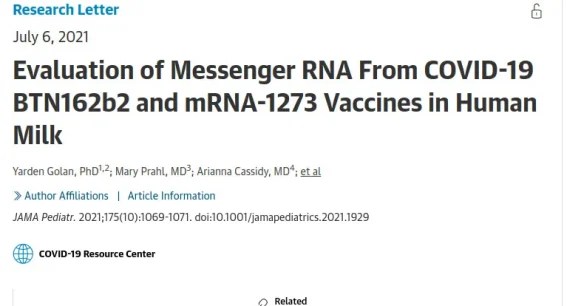
I decided to compare the two studies (one that found mRNA in breast milk and the other that did not) very closely and compare their methodologies using the “Modern Discontent” method.
Modern Discontent has a great post about his method, but he mostly is saying “pay close attention and understand the whole f… thing”, which is basically what I usually do with something interesting and important anyway. He posted his method three days ago, and I had my substack for a while longer. So, I intuitively used many of his approaches, but he laid them out very systematically and clearly. His article is extremely useful for all people writing about biomedical science, so take a look:
At first sight, both studies, which I will call the 2022 shedding study (which I discussed two days ago) and the 2021 no-shedding study, superficially appear to be similarly designed. They took several lactating women and tested their milk. One study found shedding, while the other did not. Upon a closer look, the differences between these studies turned out to be extremely important!
Here’s a summary of their differences:
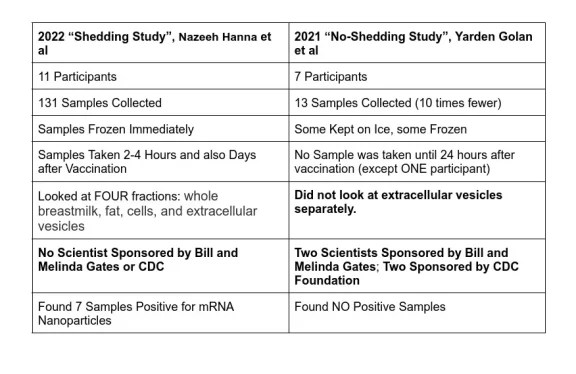
You can see that the study that found mRNA lipid nanoparticle shedding, was done more thoroughly. The shedding study had:
- More participants (11 vs 7)
- More milk samples were taken (131 vs 13!)
- Samples better preserved (frozen immediately)
- Samples were taken at varied moments post-vaccination including within mere hours, and also days
- Looked at very important Extracellular Vesicles
As a result of being more thorough and covering more cases, the shedding study found actual shedding! Surprise!
What if the women in the shedding study, getting the same vaccines, were analyzed using the poorer methodology of the no-shedding study?
I took the chart from the shedding study showing five women with milk samples positive for mRNA nanoparticles. I crossed out samples that WOULD NOT BE DETECTED, if the no-shedding study methodology was applied to the samples of the shedding study:
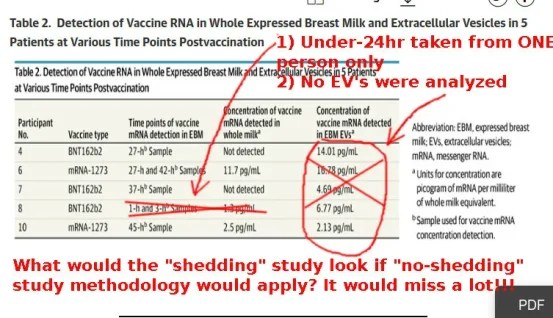
You can see that if the researchers in the shedding study used the crippled methodology of the no-shedding study, they would detect only two positive samples, instead of seven.
The methodology of the no-shedding study would miss all extracellular vesicle (EV) samples because they did not look at EVs. That is shown in the column on the right that is entirely crossed out.
The no-shedding study would also miss the 1 hour and three-hour samples because they did not take those samples (save for just ONE woman who happened not to be positive).
As a result, had the less thorough no-shedding study methodology been applied to the shedding study, only 2 positive samples, instead of 7, would be detected!
Since the actual no-shedding study collected only 13 samples and not 131 samples and used deficient methodology, no wonder they missed all positive instances!
It is as if the no-shedding study was intentionally designed not to find anything. Hmmm…
Let me give an analogy that many will understand — fishing using fishing nets.
Let’s say that a good fisherman (the shedding study) was asked to do his best job fishing to see if a particular lake has fish (mRNA nanoparticles). A bad fisherman, on the contrary, would be asked to design his fishing expedition to not catch any fish, so as to falsely prove that the lake has no fish. What would they do? This infographic shows the difference:
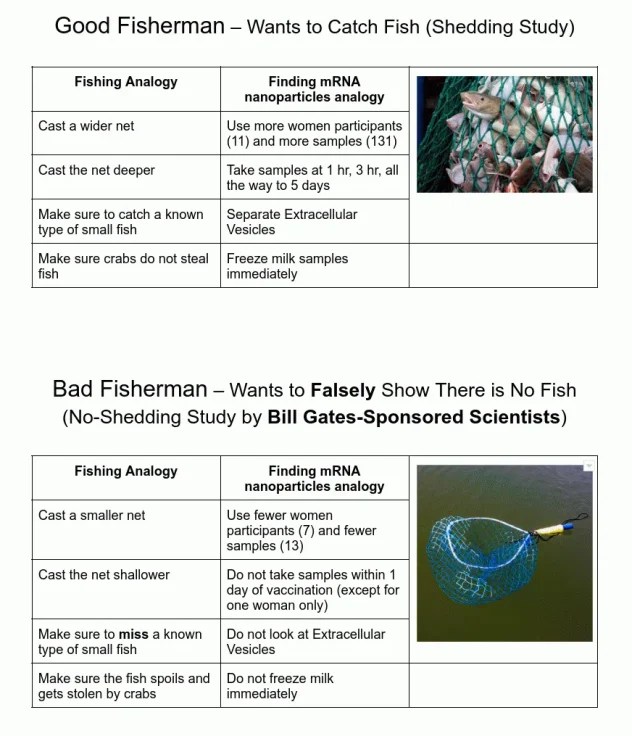
What’s up with Bill Gates and the CDC?
By pure coincidence, the study that did not find mRNA nanoparticles in breast milk (the no-shedding study), had key scientists sponsored by the Bill and Melinda Gates Foundation. They also received money from the CDC. You can see that Prof. Gaw and Dr. Flaherman were key participants, making the most important decisions and analyses!
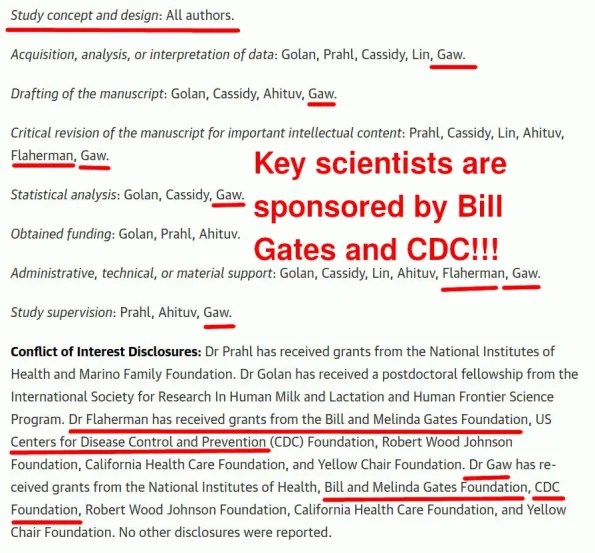
Did these sponsorships influence the authors’ approach to designing the experiment? We cannot know this. We can only wonder.
Why would a fisherman try to NOT catch fish?
POLITICO: How Bill Gates Took Over the Covid Pandemic
Bill Gates took over Covid just like he took over Operating Systems
By Igor Chudov | September 15, 2022
An amazing article from the least expected, mainstream source: Politico.
The title of the article was apparently edited in a hurry post-publication because Google News still lists it as “How Bill Gates and his partners took over the global Covid response”. Here’s the archive link to the original article with “Bill Gates” in the title — proving it was later edited in a hurry.
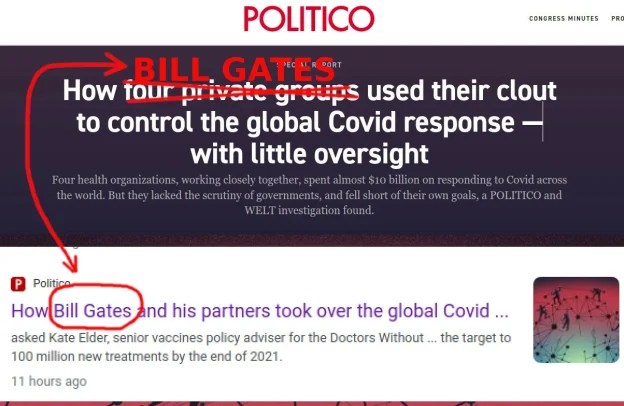
Even the article URL lists Bill Gates:
https://www.politico.com/news/2022/09/14/global-covid-pandemic-response-bill-gates-partners-00053969The article would be fascinating to read for people who were not previously aware of what most of us knew already — that the so-called “pandemic response” and global health are taken over by unaccountable private interest groups serving Bill Gates.
I highly recommend that you take a look!
The story given by the article is incomplete but very interesting.
It mentions that the pandemic response was taken over by the Bill and Melinda Gates Foundation, GAVI, CEPI, and the Wellcome Trust. All four organizations pretend to be independent, but all were financed by Bill Gates.
They participated in Event 201, planning out the pandemic, in October 2019.
“What makes Bill Gates qualified to be giving advice and advising the U.S. government on where they should be putting the tremendous resources?” asked Kate Elder, senior vaccines policy adviser for the Doctors Without Borders’ Access Campaign.
Several important items are glaringly missing from the article:
- Bill and Melinda Gates Foundation, along with the US government (Avril Haines representing the US intelligence community) and China CDC, planned out the pandemic in October of 2019 by means of an “exercise” called Event 201.
- Sars-Cov-2 is lab engineered and was designed intentionally
- As pointed out by our astute reader Mel, do not forget the 3.1 million shares of BioNTech that Gates bought in Sept 2019 for $18.10/share. That $55 million investment was worth $1.7 billion by Aug 2021.https://www.sec.gov/Archives/edgar/data/1776985/000119312519241112/d635330dex1036.htm
- Bill and Melinda Gates Foundation financed the organization that developed Sars-Cov-2 (EcoHealth Alliance) via grant INV-002838, and possibly more.
- Bill and Melinda Gates Foundation financed University of North Carolina, where Ralph Baric developed Sars-Cov-2 for EcoHealth Alliance, via 56 grants: INV-026327 INV-030330 INV-031704 INV-028991 INV-036494 INV-032887 INV-033909 INV-036560 OPP1192462 OPP1199232 OPP1201585 OPP1203327 OPP1195157 OPP1195363 OPP1191684 OPP1061107 OPP1090837 OPP1086528 OPP1108279 OPP1107923 OPP1235 OPP3436 OPP1142921 OPP38920 OPP38381 OPP23847 OPP17809 OPP1161858 OPP1158402 OPP1154943 OPP1172799 OPP1183027 OPP1181722 INV-006232 INV-001748 INV-005277 INV-016221 INV-019193 INV-016163 INV-003112 INV-001805 INV-003266 INV-002551 OPP1203712 OPP9404 OPP1014802 OPP1015539 OPP1024615 OPP1024664 OPP1015381 OPP1018000 OPP51976 OPP53107 OPP53450 OPP52037 OPP49260
- Bill Gates had close ties with Jeffrey Epstein and visited him numerous times
Nevertheless, the mere publication of this article has huge importance. The things that most of us know and talk about, are appearing in the so-called “mainstream press” — after the damage was all done, of course.
The virus was released; millions died; over a billion young people were force-vaccinated under false pretenses. When it is too late to change anything, Politico is finally stating the obvious. Still, it is better than nothing.
Almost everything in the Politico article was known a year ago. Where was Politico then? Busy taking government covid vaccine advertising money.
The pandemic was a crime, not an accident.
WHO’S DRIVING THE PANDEMIC EXPRESS?
By Dr David Bell and Emma McArthur | PANDA | September 4, 2022
Sceptics of the growing ‘pandemic prevention, preparedness and response’ (PPR) agenda celebrated recently, heralding a perceived ‘defeat’ of the World Health Organization’s (WHO) controversial amendments to the International Health Regulations (IHR). Although the proposed amendments would have undoubtedly expanded the WHO’s powers, this focus on the WHO reflects a narrow view of global health and the pandemic industry. The WHO is almost a bit-player in a much larger game of public-private partnerships and financial incentives that are driving the pandemic gravy train forward.
While the WHO works in the spotlight, the pandemic industry has been growing for over a decade and its expansion accelerates unabated. Other major players such as the World Bank, coalitions of wealthy nations at the G7 and G20 and their corporate partners work in a world less subject to transparency; a world where the rules are more relaxed, and a conflict of interest receives less scrutiny.
If the global health community is to preserve public health, it must urgently understand the wider process that is underway and take action to stop it. The pandemic express must be halted by the weight of evidence and basic principles of public health.
Funding a global pandemic bureaucracy
“The FIF could be a cornerstone in the construction of a truly global PPR system in the context of the International Treaty on Pandemic Prevention, Preparedness and Response, sponsored by the World Health Assembly.” (WHO, 19 April 2022)
The world is being told to fear pandemics. Ballooning socio-economic costs of the COVID-19 crisis are touted as justification for increased focus on PPR funding.
Calls for ‘urgent’ collective action to avert the ‘next’ pandemic are predicated on systemic ‘weaknesses’ supposedly exposed by COVID-19. As the WHO steamed ahead with its push for a new pandemic ‘treaty’ during 2021, G20 members agreed to establish a Joint Finance & Health Task Force (JFHTF) to ‘enhance the collaboration and global cooperation on issues relating to pandemic prevention, preparedness and response’.
A World Bank-WHO report prepared for the G20 joint task force estimates that US$ 31.1 billion will be required annually for future PPR, including US $ 10.5 billion per year in new international financing to support perceived funding gaps in low- and middle-income countries (LMICs). Surveillance-related activities comprise almost half of this, with US $4.1 billion in new funding required to address perceived gaps in the system.
In public health terms, the funding proposed to expand the global PPR infrastructure is enormous. By contrast, the WHO’s approved biennium programme budget for 2022-2023 averages US $3.4 billion per year. The Global Fund, the main international funder of malaria, tuberculosis and AIDS – which have a combined annual mortality of over 2.5 million – currently dispenses just US $ 4 billion annually for the three diseases combined. Unlike COVID-19, these diseases cause significant mortality in lower income countries and in younger age groups, year in, year out.
In April 2022, the G20 agreed to establish a new ‘financial intermediary fund’ (FIF) housed at the World Bank, to address the US $10.5 billion PPR financing gap. The FIF is intended to build upon existing pandemic funding to ‘strengthen health systems and PPR capacities in low-income and middle-income countries and regions’. The WHO is predicted to be the technical lead, landing them with an assured role irrespective of the outcome of current ‘treaty’ discussions.
The establishment of the fund has proceeded with breathtaking speed, and it was approved on June 30 by the World Bank Board of Executive Directors. A short period of consultation precedes an expected launch in September 2022. To date, donations totalling US $1.3 billion dollars have been pledged by governments, the European Commission and various private and non-government interests, including the Bill and Melinda Gates Foundation, Rockefeller Foundation, and the Wellcome Trust. The initial areas for the fund are somewhat all-encompassing, including country-level ‘disease surveillance; laboratory systems; emergency communication, coordination and management; critical health workforce capacities; and community engagement’.
In scope, the fund has the appearance of a new ‘World Health Organization’ for pandemics – to add to the existing (and ever-expanding) network of global health organisations such as the WHO; Gavi; the Coalition for Epidemic Preparedness Innovations (CEPI); and the Global Fund. But is this increased expenditure on PPR justified? Are the escalating socio-economic costs of COVID-19 due to a failure to act by the global health community, as is widely claimed; or are they due to negligent acts of failure by the WHO and global governments, when they discarded previous evidenced-based pandemic guidelines?
COVID-19: failure to act or acts of failure?
In the debate surrounding the growing pandemic industry, much attention is being directed towards the central role of the WHO. This attention is understandable given the WHO’s position as the agency responsible for global public health and its push for a new international pandemic agreement.
However, the WHO’s handling of the response to COVID-19 creates serious doubts about the competency of its leadership and raises questions about whose needs the organisation is serving.
The WHO’s failure to follow its own pre-existing pandemic guidelines by supporting lockdowns, mass-testing, border closures and the multi-billion-dollar COVAX mass-vaccination program, has generated vast revenue for vaccine manufacturers and the biotech industry, whose corporations and investors are major contributors to the WHO. This approach has crippled economies, damaged existing health programs and further entrenched poverty in low-income countries. Decades of progress in children’s health are likely to be undone, together with the destruction of the long-term prospects of tens of millions of children, through loss of education, forced child marriage and malnutrition. In abandoning its principles of equality and community-driven healthcare, the WHO appears to have become a mere pawn in the PPR game, beholden to those with the real power; the entities who are providing its income and who control the resources now being directed to this area.
Corporatizing global public health
Recently established health agencies devoted to vaccination and pandemics, such as Gavi and CEPI, appear to have been highly influential from the beginning. CEPI, is the brainchild of Bill Gates, Jeremy Farrar (director of the Wellcome Trust), and others at the pro-lockdown World Economic Forum. Launched at Davos in 2017, CEPI was created to help drive the market for epidemic vaccines. It is no secret that Bill Gates has major private financial ties to the pharmaceutical industry, in addition to those of his foundation. This clearly places a question mark over the philanthropic nature of his investments.
CEPI appears to be a forerunner of what the WHO is increasingly becoming – an instrument where individuals and corporations can exert influence and improve returns by hijacking key areas of public health. CEPI’s business model, which involves taxpayers taking most of the financial risk for vaccine research and development whilst big pharma gets all the profits, is notably replicated in the World Bank-WHO report.
Gavi, itself a significant WHO donor that exists solely to increase access to vaccination, is also under direct influence of Bill Gates, via the Bill and Melinda Gate Foundation. Gavi’s involvement (alongside CEPI) with the WHO’s COVAX program, which diverted vast resources into COVID-19 mass-vaccination in countries where COVID-19 is a relatively small disease burden, suggests the organisation is tied more strongly to vaccine sales than genuine public health outcomes.
Pandemic funding – ignoring the big picture?
At first glance, increased PPR funding to LMICs may seem a public good. The World Bank-WHO report claims that ‘the frequency and impact of pandemic-prone pathogens are increasing.’ However, this is belied by reality, as the WHO lists only 5 ‘pandemics’ in the past 120 years, with the highest mortality occurring in the 1918-19 H1N1 (‘Spanish’) influenza pandemic, before antibiotics and modern medicine. Apart from COVID-19, the ‘Swine Flu’ outbreak in 2009-10, which killed less people than a normal flu year, is the only ‘pandemic’ in the past 50 years.
Such a myopic focus on pandemic risk will do little to address the most serious causes of illness and death, and it can be expected to make matters worse for people experiencing the most extreme forms of socio-economic disadvantage.
Governments of low-income countries will be ‘incentivised’ to divert resources to PPR related programs, further increasing the growing debt crisis. A more centralised, top-down public health system will lack the flexibility to meet local and regional needs. Transferring support from higher burden diseases, and drivers of economic growth, has a direct impact on mortality in these countries, particularly for children.
The WHO-World Bank report states that the pillars of the global PPR architecture must be built on the ‘foundational principles of equity, inclusion and solidarity’. As severe pandemics occur less than once per generation, increased spending on PPR in LMICs clearly violates these basic principles as it diverts scarce resources away from areas of regional need, to address the perceived health priorities of wealthier populations. As demonstrated by the damage caused by the COVID-19 response, in both high and low-income countries, the overall harm of resource diversion from areas of greater need is likely to be universal. In failing to address such ‘opportunity costs’, recommendations by the WHO, the World Bank, and other PPR partners cannot be validly based in public health; nor are they a basis for overall societal benefit. .
One thing is certain. Those who will gain from this expanding pandemic gravy train will be those who gained from the response to COVID-19.
The pandemic gravy train – following the money
The new World Bank fund risks compounding existing problems in the global public health system and further compromising the WHO’s autonomy; although it is stated that the WHO will have a central ‘strategic role’, funds will be channelled through the World Bank. In essence, it financially side-steps the accountability measures at the WHO, where questions of relative worth can be raised more easily.
The proposed structure of the FIF will pave the way for organisations with strong ties to pharmaceutical and other biotech industries, such as CEPI and Gavi, to gain even greater influence over global PPR, particularly if they are appointed ‘implementing entities’ – the operational arms that will carry out the FIF’s work program at country, regional and global level.
Although the initial implementing entities for the FIF will be UN agencies, multilateral development banks and the IMF, plans are already underway to accredit these other international health entities. Investments are likely to be heavily skewed towards biotechnological solutions, such as disease surveillance and vaccine development, at the cost of other, more pressing, public health interventions.
Protecting public health rather than private wealth
If the world truly wants to address the systemic weakness exposed by COVID-19, it must first understand that this pandemic gravy train is not new; the foundations for the destruction of community- and country-based global public health began long before COVID-19.
It is unarguable that COVID-19 has proved to be a lucrative cash cow for vaccine manufacturers and the biotech industry. The public-private partnership model that now dominates global health enabled vast resources to be channelled into the pockets of corporate giants, through programs they directly influence, or even run. CEPI’s ‘100 days Mission’ to make ‘safe and effective’ vaccines against ‘viral threats’ within 100 days – to ‘give the world a fighting chance of containing a future outbreak before it spreads to become a global pandemic’ – is a permit for pharmaceutical companies to appropriate public money on an unprecedented scale, based on their own assessments of risk.
The self-fulfilment of the ‘increasing frequency of pandemic’ prophecy will be ensured by the push for increased disease surveillance – a priority area for the FIF. To quote the World Bank-WHO report:
“COVID-19 highlighted the need to connect surveillance and alert systems into a regional and global network to detect zoonotic transmission events, raise the alarm early to enable a swift public health response, and accelerate the development of medical countermeasures.”
Like many claims being made about COVID-19, this claim has no evidence base – the origins of COVID-19 remain highly controversial and the WHO’s data demonstrate that pandemics are uncommon, whatever their origin. None of the ‘countermeasures’ have been shown to significantly reduce the spread of COVID-19, which is now globally endemic.
Increased surveillance will naturally identify more ‘potentially dangerous pathogens’, as variants of viruses arise constantly in nature. Consequently, the world faces a never-ending game of seek and ye shall find, with never-ending profits for industry. Formerly once per generation, this industry will make ‘pandemics’ a routine part of life, where rapid fire vaccines are mandated for every new disease or variant that arrives.
Ultimately, this new pandemic fund will help to hook low- and middle-income countries into the growing global pandemic bureaucracy. Greater centralisation of public health will do little to address the genuine health needs of people in these countries. If the pandemic gravy train is allowed to keep growing, the poor will get poorer, and people will die in increasing numbers from more prevalent, preventable diseases. The rich will continue to profit, while fuelling the main driver of ill-health in lower income countries – poverty.
Dr. David Bell is a clinical and public health physician with a PhD in population health and background in internal medicine, modelling and epidemiology of infectious disease. Previously, he was Director of the Global Health Technologies at Intellectual Ventures Global Good Fund in the USA, Programme Head for Malaria and Acute Febrile Disease at FIND in Geneva, and coordinating malaria diagnostics strategy with the World Health Organisation. He is a member of the Executive Committee of PANDA.
AP ‘Fact’ Checks Slip-of-the-Tongue Video
By Dr. Joseph Mercola | August 28, 2022
A viral video showing Vassar College’s alumni president referring to a Bill and Melinda Gates foundation as “the Institute of Population Control” has The Associated Press trying to whitewash the slip of the tongue with a “fact” check.
The invited speaker at the event, Laurie Schwab Zabin, a founding director of the Bill & Melinda Gates Institute for Population and Reproductive Health, later corrected the name, the AP reports. However, that doesn’t mean that Zabin — who died in 2020 — and the foundation weren’t promoting population control.
In fact, the Institute for Population and Reproductive Health is a supporter of the International Conference on Family Planning, the Advance Family Planning advocacy group and the Population Reference Bureau, all of which advocate for population control in some way. Schwab also served on the national board of directors of Planned Parenthood, and helped shape its polices.
In tandem, she worked closely with obstetrician Dr. Alan Guttmacher, who was Planned Parenthood’s president and the American Eugenics Society’s vice president, in establishing the Guttmacher Institute, another agency promoting family planning.
SOURCES:
Bill & Melinda Gates institute for Population and Reproductive Health
The narrative managers have done their best to memory-hole the Nurenberg Codes

By Helen of desTroy | August 28, 2022
You would be forgiven for not knowing that last Friday was the 75th anniversary of the Doctors’ Trial, one of 13 Nazi war crimes trials conducted at Nuremberg after World War II and the event that birthed the Nuremberg Codes, the most important medical ethics document of the modern era. The Codes set ground rules for requiring informed consent from experimental test subjects; they anchor international agreements like the Helsinki Declaration, the Geneva Convention and the United Nations’ International Covenant on Civil and Political Rights and have been codified into law in the US and other countries.
Sixteen doctors were found guilty at Nuremberg of murder and torture for carrying out a euthanasia program on mentally and physically disabled German citizens deemed “unworthy of life” and experimenting on concentration camp inmates; nine were jailed and seven were executed. Yet the expected flood of commemoratory articles and events marking the anniversary of the Allies’ crowning (if illusory) moment of moral superiority over those Evil Nazis™ has not materialized. It’s downright unnatural for the US and Europe to miss a chance to give the dead Nazi horse a good beating, but any attempts to even discuss the Nuremberg Codes in the last two years have been squelched by militant fact-checkers. Meanwhile, a coterie of corrupt “public health professionals” and the international financial cartels who control them have pulled off perhaps the most shocking and deadly crime against humanity ever committed.
The Big Lie
Mentioning Nuremberg during Covid-19 was asking to be pilloried in the “respectable” press as an anti-science, horse-paste-guzzling right-wing extremist. Fact-checkers came out of the woodwork to reflexively deny that the Nuremberg Codes applied to any aspect of the Covid-19 response, from forced masking to vaccine mandates, sometimes issuing two denials in a single day in their compulsion to keep the claim from spreading. One particularly tenacious fact-check even took issue with the claim “It was the doctors on trial in Nuremberg,” arguing that because the other 12 trials put Nazi Party officials, lawyers, and corporate executives in the dock, the statement “lacked context.”
This display of ideological lockstep was supposed to intimidate anyone who wasn’t already 100% allied with society’s enlightened institutions in defense of The Science™ against the irrational, emotionally-driven forces of ignorance. Those still on the fence about getting their “Warp Speed” car-crash of a shot were shamed by peer pressure psyops like the UK’s “Clap for our carers,” while social media was seeded with controlled but approachable “experts” who carefully crafted the illusion of overwhelming consensus that the measures being taken in the name of “stopping the spread” were not only scientifically but morally beyond reproach.
But this wasn’t an organic moment of unity. These “fact-checkers” have all received big money from the Bill & Melinda Gates Foundation, the eugenics enthusiasts who have rapidly become the most powerful force in global health policymaking and who also control huge chunks of the education, agriculture, and “green” energy spheres. Most fact-checking organizations pay lip service to the rules set by the International Fact-Checking Network, which while it sounds like an upstanding professional association that’s been around a while was actually launched less than a decade ago. The IFCN, which admits it doesn’t follow its own code of principles, has been funded since its 2015 beginnings by the Gates Foundation, the Omidyar Network, George Soros’ Open Society Foundations, Google, Facebook, the US State Department, and CIA cutout the National Endowment for Democracy, among others. It’s hard to think of a worse group of stewards for a gaggle of helpless facts, aside from perhaps the Wikimedia Foundation, about which more later.
The IFCN is run by the Poynter Institute, a “journalism education” nonprofit funded by many of the same entities as its IFCN subsidiary. Loaded down with enough conflicts of interest to make that code of principles swoon, Poynter selects, sponsors, and trains journalists, prioritizing obedience to authority, ideological inflexibility and a total absence of shame. They are then turned loose to mow the internet’s epistemological lawn in military fashion, doxxing some popular opposition voice while merely tagging others for later deplatforming, arrest, or worse. The tactic’s resemblance to the work of Ukrainian vigilante website Mirotvorets, unofficially operated by the country’s Ministry of Information, is unlikely to be an accident, given that Omidyar and Soros both poured billions of dollars into 2014’s Maidan Square color revolution, which was itself choreographed by the State Department’s Victoria Nuland, who knows the value of a well-placed bullet or a warm cookie.
It’s easy to see why Gates just had to buy the industry for himself. If these fact-checkers could reinvent the most corrupt government in Europe, whose military was exposed by dozens of major western media outlets as a hive of neo-Nazi thugs, as a democratic paradise, surely they could spin the vaccine tycoon’s Final Solution as the solution to all humanity’s problems. The Covid-19 experiment saw the closest collaboration yet between the fact-checkers, Big Tech and governments around the world to construct an epistemological roach motel that users could enter easily but would face growing barriers – warning screens, computer failures, personal attacks, deplatforming, financial hardship and a lowered social credit score – if they tried to leave.
It’s no exaggeration to say Poynter’s army of fact-checkers set the narrative of Covid-19 for the public from Day One (or should we call it Year Zero?). The IFCN’s “Coronavirus Alliance” launched in January 2020, before most Americans even knew what a coronavirus was. While the first Twitter users in the western hemisphere were stumbling across bizarre videos of Chinese people dropping to the ground and convulsing, explained in the accompanying broken-English text to be the result of an unknown virus, the fact-checkers were implementing orders from their paymasters. One of the first narrative touchstones, the red and white 3D model of the coronavirus, soon became as ubiquitous as the footage of planes hitting towers on 9/11, triggering intense fear and doubt directed both at the outside world and at the self. After all, they might be an “asymptomatic carrier,” and the only way to be sure was to isolate from their loved ones. As with 9/11, this unfamiliar terror pushed the individual to seek solace in an increasingly totalitarian state that insisted its ‘tough love’ – locking us in our homes, forbidding us from earning money, and keeping us from our families – was for our own good. Frightened and confused, many turned on the TV and sucked down its narcotizing propaganda. Even CNN’s ratings went up that first pandemic year, as Chris Cuomo demanded Americans “sacrifice the me to the we” and compared binge-watching Netflix to landing on the beaches of Normandy while his brother mass-murdered elderly New Yorkers.
The complex choreography of the Covid-19 response could not have unfolded as it did without premeditation. The plot was lifted – not plagiarized, as the authors were the same – from Event 201, the tabletop coronavirus simulation sponsored by the Gates Foundation at Johns Hopkins University’s Center for Public Health Security. This took place just a month after the Global Preparedness Monitoring Board – the product of an unholy marriage between the WHO and the World Bank earlier that year – released a report demanding all UN member countries “conduct at least two system-wide training and simulation exercises” by the following September, “including one for covering the deliberate release of a lethal respiratory pathogen.” Video of Event 201 shows players uninterested in minimizing harm from the virus instead exploring how the “emergency” might be used to stifle undesirable narratives and ram through major changes in society. The “real” pandemic – simulation number two, by the GPMB’s counting – played out months later exactly along the exercise’s script. The WHO, Gates, the World Economic Forum and Big Business took the reins, filling the power vacuum left while individual governments, seemingly baffled by the outbreak despite having repeatedly run their own simulations, ran around in circles.
How to treat an Infodemic
The crisis was planned and then used to crack down on unauthorized views under the reasoning that humanity was in the midst of an infodemic – a surfeit of information encouraging irresponsible beliefs – and careless talk could cost lives. Spreading dissenting opinions could infect friends and loved ones with the virus of doubt, which while perhaps less deadly than the virus itself (with its 99.7% survival rate), could cause society to fracture at a time when all humanity had to unite or be destroyed by the invisible enemy. Reading or hearing “disinformation” about Covid could reduce one’s likelihood of getting vaccinated, putting one’s very life at risk.
Convincing test subjects to discard their self-preservation instincts and their critical capacity and embrace the most absurd statements as gospel truth was the main goal of the first part of the Covid-19 experiment, and given the single-mindedness with which the WHO zeroed in on the “infodemic” before it had even officially declared the real virus to be a pandemic, it’s hard to believe they were making it up as they went along, especially given that the term was allegedly invented during the original SARS outbreak in 2003 (by a Washington Post writer no less) and then apparently put on ice until almost two decades later. Seeking input on how to respond to this new threat, the WHO reached out to professionals of all stripes, with more than a quarter of advisory input coming from academics eager to test out their juiciest hypotheses on real people with no repercussions. Everyone who used social media in 2020 to discuss the Covid-19 pandemic and its aftermath thus became a test subject, “nudged” and prodded for the Public Good, and some of those experiments – particularly those aimed at developing an FBI-style psychological profile of believers in “conspiracy theories” so they can be locked up as domestic terrorists or institutionalized as incurable monsters are very much ongoing.
Those early academic papers describe a chaotic infosphere in which the WHO’s narrative failed to dominate on its merits alone. The academics rose to the challenge, burnishing their half-baked speculations with scientific-looking graphs and charts. Their solutions ranged from Orwellian – deploying “freedom of expression officers” to censor and label rogue content as much as European human rights law would allow; re-education programs for “influencers,” teachers, priests, and other likely “superspreaders,” who could then be suspended from social media entirely if they refused to get their minds right – to the lesser evils of sending in fact-checkers as the equivalent of UN peacekeeping troops to help “inoculate” social media users against the disinformation they were about to see. With distrust in public and private institutions hitting new highs, society didn’t just need a vaccine against the scary new virus, it needed one against “disinformation” as well! But like the Covid vaccines themselves, these digital inoculations didn’t come with an informed consent notice, and the clinical trial results aren’t looking good.
Experiment #1: Shock “therapy”
As the WEF’s Klaus Schwab himself admitted in his pandemic tome The Great Reset, Covid-19 is the least deadly ‘pandemic’ in the last two millennia. But he’s quite open about wanting to use the largely self-inflicted Covid-19 “crisis” to bring about the Fourth Industrial Revolution, a transhumanist “green” dystopia lovingly crafted for “stakeholder capitalists” and inspired by technocratic parasites like Yuval Noah Harari. This is no experiment for the “good of society,” nor are any efforts made to “avoid unnecessary mental and physical suffering,” as Nuremberg demands. If anything, the experiment’s designers deliberately ratcheted up the suffering, believing this was necessary to unfreeze the fixed ideas of western civilization – free will, individuality, rationality, democracy (not to be confused with Our Democracy™) in our minds and replace them with the WEF’s preferred picks: obedience, “equity” (a Newspeak term meaning equality of outcome rather than equality of opportunity), credulity, communitarianism. The group has admitted on its own website that the lockdowns and the rest of the “touchless torture” the Covid response has supposedly required constitute the “world’s biggest psychological experiment.”

The Great Reset is an especially noxious experiment in that it violates the minds and bodies of test subjects on multiple levels, burrowing down into the way we think in its megalomania. It’s the spiritual offspring of CIA-funded Canadian psychiatrist Ewen Cameron, who “de-patterned” his patients’ personalities with high-voltage electroshock, induced coma, and mega-doses of LSD, then attempted to’ ‘build them back better’ by playing their comatose forms 16 hours of tape-recorded messages at a time; and Milton Friedman, the University of Chicago economist and godfather of neoliberalism whose students, the so-called “Chicago Boys,” conducted campaigns of economic “shock therapy” on third-world nations the US worried were too left-wing, assisting far-right leaders in seizing power, further impoverishing the masses with austerity programs, terrorizing what political opposition remained with death squads and disappearances, and privatizing all state-run industries so as to attract foreign investors. Neither Cameron’s patients, most of whom came in with simple problems like anxiety or depression (and one of whom wasn’t even seeking treatment but just looking for a job) and left as husks no longer able to even use the bathroom themselves; nor the inhabitants of Chile, Brazil, Uruguay, Indonesia, Russia, or any of the long list of other countries subject to some variation on Chicago School shock treatment over the years, were ever told they were part of an experiment, let alone asked if they wanted to be.
The Great Reset has not only targeted the entire world with economic shock therapy, triggering a massive depression the current financial system is unlikely to ever shake off (spoiler alert: another experiment coming…) – it funneled unprecedented amounts of fear into populations already thrown off balance by the blinding speed of policy shifts. First scolded for “selfishly” wearing a mask, then attacked for “selfishly” not wearing one; informed their city would be “locking down” at 10pm, when a peek out the window yielded crowds of restive youths hanging out on the corner with nary a cop in sight; told vaccinations were mandatory for school, then told their child could have just “masked up” when little Polly drops dead of a heart attack not 24 hours after her first shot of Moderna; the average person soon lapsed into learned helplessness and became a shut-in, depatterning daily in the glow of the television as they degenerated into an obedient vegetable, capable of “masking up” and socially distancing but little else. Despite leaving a horrific trail of devastation in their wake, the experimental lockdowns were praised by the WEF for the slight dip in carbon emissions they caused, all but guaranteeing phase II of the nonconsensual clinical trials – climate lockdowns – will be rolled out within the year.
Experiment #2: Hackable animals
Given the mountain of evidence against them, it’s perfectly logical that the ruling class would have tried to build up an impenetrable fort of bullshit using their captive fact-checking industry to deflect accusations of war crimes under the Codes. Several patterns pervade the apologist coverage, starting with the idea that these brand new mRNA Covid vaccines, tested on under 100,000 people by Pfizer and Moderna combined (and none who were pregnant or nursing) before receiving their coveted emergency authorization, are somehow not experimental procedures. They use the synonym investigational instead, as ‘experimental’ tends to trigger thoughts of, well, human experimentation, authoritarian regimes, the very Nuremberg Nazis the media establishment is trying its best to keep the average reader away from. But the effect is the same – mRNA vaccines of any kind weren’t tried on the general population until the end of 2020, and the torrent of side effects and death that has been unleashed in the meantime suggests neither Moderna nor Pfizer had informed consent from these gen-pop guinea pigs.
That’s a big deal, because Pfizer knew before it sought emergency authorization that more vaccinated test subjects had died than unvaccinated subjects – it even fudged the numbers for the FDA. Some 1,200 trial participants died in the 90 days following their injection, and Pfizer made sure to vaccinate the placebo group at the end of the trial in order to make sure further comparisons didn’t spoil its story. Indeed, it was so sure its vaccines were going to leave a pile of bodies behind that it refused to even sell them to countries whose governments wouldn’t shield them from liability for the damage caused. One should have expected this from a company with the dubious distinction of paying the largest fine in Justice Department history in 2009 for healthcare fraud, off-label prescribing, misleading marketing and miscellaneous criminality. Nevertheless, they won the “Warp Speed” lottery under Albert Bourla, a veterinarian with a doctorate in the biotechnology of reproduction who was for some reason promoted to CEO of the entire (human-focused) drug company a year before the Covid-19 outbreak. Given that his primary achievement prior to Operation Warp Speed was developing a “vaccine” that chemically castrated boars without ruining the meat, it becomes much more difficult to see the utter disaster the mRNA vaccines have created for both male and female fertility as an accident.
Still questioning authority? The fact-checkers then attempt to distance vaccine mandates – along with health passports, mask mandates, lockdowns and the other psychological aspects of the experiment conducted on the unwitting populace – from the Nuremberg zone by categorizing them as “public health interventions,” not research, or experiments. The Codes simply do not apply. Never mind that public health interventions are supposed to be evidence-based, and no western democracy has ever engaged in anything like the Covid lockdowns before, or that the CDC pulled the six-foot social distancing rule out of its ass, or even that the only “science” backing closing schools to “stop the spread” was a computer model from a 16 year old’s science project. Lockdowns arguably killed more people than Covid-19, and they have cut short many more lives by impoverishing, immiserating, and isolating millions. Arguing public health measures can’t be experimental because they’re public health measures is merely a last-ditch effort to wall the Codes off in a museum, inapplicable to anyone but those nasty Nazis who were – as the narrative managers never tire of reminding us – a unique and special case.
Discouraging cross-time contextualization is very important to the fact-checkers, who aren’t hesitant to shoot the messenger if all else fails. Anyone talking about the Nuremberg Codes in the context of Covid-19 is dismissed as an “alt-righter”, a “covid crazy,” dangerous “extremists,” “anti-vaxxers,” or even actual Nazis who apparently got confused about whose side their team was on back in WW2. In war, dehumanizing the enemy is key to beating him, and this is nothing if not a two-pronged war being fought in our brains and our bloodstreams. “Drawing a link between this final rollout of these vaccines and what the Nazi doctors were doing is morally grotesque,” the British Medical Association’s Dr Julian Sheather told FullFact ; he didn’t explain why, and it’s not apparent why one should not draw parallels between the two cases. According to the Vaccine Adverse Event Reporting System (VAERS), whose own creators admit it contains less than 1% of all adverse events associated with a given vaccine, the Covid shots have already caused nearly 30,000 deaths, over 170,000 hospitalizations, nearly 16,000 heart attacks (a common sight now on sports fields, where 60 times more athletes than normal are flatlining mid-game), and nearly 5,000 miscarriages in the US alone. Using tech entrepreneur Steven Kirsch’s calculations, the numbers are much higher: at least 478,000 Americans have been killed by Covid vaccines, to say nothing of millions permanently disabled, unable to work or function on a basic level. Worldwide, the number of deaths approaches 12 million.
While the number of victims the Nazi doctors left behind is not so meticulously recorded, especially given the high levels of typhus and malnutrition contributing to the mortality rate in the camps, one source has them consigning between 70,000 and 100,000 “unfit” Germans to death between 1939 and 1941 while sterilizing hundreds of thousands more – a detail that once again should send a chill down the spine of anyone who’s noticed the declining birthrates around the world. If the figures aren’t comparable, that’s only because the mRNA vaccine has been so much more efficient in its killing. There’s nothing “morally grotesque” about pointing that out. But since “everybody knows” the Nazis were the pinnacle of Evil™, the realization that Pfizer and Moderna’s death toll might have their doctors beat must be prevented at all costs. Thus even bringing up Nuremberg in relation to Covid-19 is deemed to be “trivializing” the crimes of the Nazis, even when the intention is to draw attention to the seriousness of their modern descendants’ crimes, and efforts are made to further poison the dialogue by suggesting there’s something antisemitic about the whole business.
In Part II: the war on “conspiracy theories,” why Nuremberg is to be memory-holed, infodemic terrorism, and more…
Featured Video
From Anthrax to Iraq
or go to
Aletho News Archives – Video-Images
Book Review
New paperback: Butchered by “Healthcare”
Lies are Unbekoming | October 20, 2026
 Butchered by “Healthcare” is Robert Yoho’s plain-spoken account of how American medicine stopped being a profession and became an industry. 341 pages. Over a thousand references. Thirty-eight chapters.
“Screening Tests Are Useless”, on tests that find diseases that would never have hurt you. “The FDA Protects the Big Drug Companies”, on an agency funded by the companies it regulates. “The Journals’ Sins Are the Editors’ Sins”, on ghostwritten studies and captured peer review. “Opioids and ‘Pain Management’”, on how a generation was prescribed its way into addiction. “Prozac and Relatives” and “Antipsychotics Are Disastrous”, on what psychiatry does to adults and children. “Surgery: Money Before Patients”. “Failed Cancer Treatments”. “Futile CPR and Overprescribing”. “Billing Scams & Specialty Warfare”. “Hospitals Are Sharks”. Each with a Patient Tips section at the end on how to survive it.
If you have ever walked out of a doctor’s office with a prescription you didn’t ask for, or watched a parent put through a treatment that made them worse, this is the book you want on your shelf before the next appointment. … Full review
Butchered by “Healthcare” is available on Lulu now.
Blog Roll
 Aletho News
- Iran: US political targets legitimate if assassinations return
- Iraq shuts key border crossing with Iran under US pressure: Report
- Undersea Internet cables could be targeted in retaliation for attacks on Iran: IRGC deputy chief
- EU sending ‘biased’ observers to interfere in Serbian election – president
- White House envoy declares kinetic action against Yemen ‘fruitless’
- Ukraine deployed thousands of microdrones in Iraqi Kurdistan: Tasnim
- Iran calls for emergency UNSC meeting over Trump’s ‘brazen’ bomb talk, Israeli threats
- Iranian sources reveal details of Russia-China Hormuz proposal
- Plan for more US-Israel integration puts our military tech at risk
- Another Round Against Iran Will Break What Is Left of the Gulf
- If Americans Knew
- Americans at National Conservatism Conference held in Israel this year criticize Israel
- Christiane Amanpour exits CNN with a legacy shaped by the debate over Israel
- Israel’s war on Iran is the final move in a decades-old strategy
- Israel Denies Entry to French Journalist, U.S. Researcher Amid Rise in Entry Denials
- Gaza’s hospitals are running out of life-saving fuel – Daily Update
- Mysterious bot accounts reportedly spread fake ‘man on the street’ videos for Michigan Senate candidate
- Israeli Defense Minister Katz Says Over 60 Lebanon Villages Have Been Destroyed
- Why Is Israel Running TV Ads in Iowa Ahead of the Midterms?
- Hind Rajab’s Alleged Killer Is in the United States. HRF Demands His Arrest.
- US Officials Face Fresh Pressure After Another American ‘Brutalized’ by Israeli Settlers in West Bank
- No Tricks Zone
- E-Cars Reduce CO2 Emissions By Only 41% Compared To Internal Combustion Engine Vehicles
- Predictions Made By Renowned Climate Professor Over Past Decades Have Been Proven To Be Poor
- New Study Suggests Large Regions Of The Pacific Ocean Have Been Cooling For The Last 80 Years
- Germany’s Green Energy Debacle: High Energy Costs Force Kahla Porzellan to Close After 182 Years!
- New Study: 50 Years Of The Most Aggressive ‘Net Zero’ Policies Can Only Affect The Global Climate By 0.03°C
- US September “Heat” Was No Record…Many Records Set Decades Ago
- Latest European Green Energy Debacle; Portugal’s Largest Flagship Solar Park Insolvent!
- Green Energy Debacle: German Expert Professor Fritz Vahrenholt Warns Of Severe Economic And Social Consequences
- Two More Paleo Reconstructions Affirm Meters-Higher Sea Levels Across Ireland, Brazil 7000-6000 Years Ago
- New Study: Earth And Venus Surface Warmth Largely Explained By Convection And Lapse Rate, Not CO2 Or Radiation

