Israel said to warn Hamas leader not to run in polls
MEMO | February 23, 2021
Hamas leader Nayef al-Rajoub said Tuesday he was warned by Israeli intelligence agents against running in the Palestinian elections later this year, Anadolu Agency reported.
Speaking to Anadolu Agency, al-Rajoub, 63, said he was searched during an Israeli raid on his home in the town of Dura, west of Hebron.
“An intelligence officer then threatened me not to run in the upcoming polls,” al-Rajoub said, adding that he was only allowed to cast a ballot in the elections.
Al-Rujoub, a brother of prominent Fatah leader Jibril al-Rujoub, received the most votes during the 2006 parliamentary elections won by Hamas.
In the Hamas-led government that emerged from those elections, Al-Rujoub served as minister of religious endowments. He had previously been detained by Israeli forces and served more than eight years in prison.
Earlier Tuesday, Israeli forces arrested 13 Palestinians, including Hamas leader Faze’ Sawafta, in overnight raids in the occupied West Bank.
Hamas, which rules the Gaza Strip, had earlier warned of Israeli plans to stage a mass arrest campaign against the resistance group ahead of Palestinian elections later this year.
Over the past month, several Hamas members were detained in Israeli raids, with the Palestinian group warning that the Israeli arrests aim to disrupt the Palestinian elections and affect its results.
Palestinians are scheduled to vote in legislative elections on May 22, presidential polls on July 31, and National Council polls on Aug. 31.
The last legislative elections, in which Hamas won a majority, were held in 2006.
Leaders, members ‘angry’ at Hamas’ participation in elections
MEMO | February 9, 2021
Leaders and members of Hamas in the occupied West Bank, besieged Gaza Strip and the diaspora are angry at the movement’s decision to participate in the general elections called for by the Palestinian Authority, Arabi21 reported.
The site quoted multiple sources within the movement as saying that the organisation’s leaders and members in the West Bank have informed the leadership that there was widespread dissatisfaction with the decision to participate, which they said had been taken in a “hurry”.
Those who spoke to Arabi21 said the Hamas members’ general dissatisfaction with the decision stems from their view that Hamas’ condition in the West Bank has not changed and its members continue to suffer from the restrictions imposed by the Palestinian Authority and Israel and it still cannot participate in any public meetings.
They also believe “the elections aim to create a new team with new legitimacy, which will strip Hamas of legitimacy and allow the new team to sign any agreement or do whatever it wants on the grounds that it is elected.”
Sources believe Hamas members in the Gaza Strip and in the diaspora consider the decision to take part in the elections to be “unwise and unbalanced”.
Israel Warns Hamas Leaders Not to Run in Elections in West Bank
MEMO | January 28, 2021
Israeli intelligence services have started to warn Hamas officials in the occupied West Bank not to participate in the upcoming Palestinian elections, sources within the movement revealed on Wednesday.
According to the sources, the Israelis first summoned senior Hamas official Sheikh Omar Al-Barghouti to speak with intelligence officers at Ofer Detention Centre. While he was there, Al-Barghouti, who lives in the Ramallah neighborhood of Coper, was “asked” not to take part in the presidential, legislative and National Council elections. The Hamas leader was only released from prison a few weeks ago.
Several other Hamas officials and senior members have also been “asked” the same thing by the Israelis. The sources said that some were asked on the telephone and others were also summoned to detention centers or military bases to be interrogated on this issue.
Al-Barghouti has spent a total of 30 years in Israeli prisons. He is the brother of Nael Al-Barghouti, who has been held by Israel for more than 40 years.
In 2018, the Israeli occupation forces arrested Al-Barghouti and his wife. During the same raid, they not only killed his son but also demolished his house.
Previous warnings from Israeli intelligence to Hamas have included telling officials not to get involved in reconciliation talks with Fatah.
In 2006, Hamas won the parliamentary and municipal elections in the occupied Palestinian territories. Israel, Fatah, Arab states and the West, including the US, refused to accept the victory before going on to help Fatah oust Hamas in the West Bank and impose a strict siege on Gaza.
Hamas condemns PA announcement on restoration of ties with Israel
Palestine Information Center – November 18, 2020
GAZA – The Islamic Resistance Movement, Hamas, has strongly condemned the decision of the Palestinian Authority (PA) to resume its relations with the “criminal Zionist occupation”.
Hamas said in a statement on Tuesday evening that the PA is flouting all the national values and principles and the outcomes of the historic meeting of the Secretaries-General of the Palestinian factions.
The Movement added that this decision represents a betrayal of the national efforts towards building a national partnership and a struggle strategy to confront the occupation, annexation, normalization and the deal of the century. It highlighted that this decision was made after the announcement of thousands of Israeli housing units in Occupied Jerusalem.
The PA by this decision justifies the Arab normalization with Israel which it has consistently condemned and rejected, Hamas noted.
It demanded the PA to immediately reverse its decision.
“A real national unity based on a comprehensive national program that stems from the strategy of confrontation with the criminal occupation will only liberate the land, protect rights and expel the occupation”, Hamas stressed.
Hamas: the US has told Arab states to stop supporting the PA
MEMO | October 19, 2020
A senior Hamas official has claimed that the US has told a number of Arab states to stop giving financial support to the Palestinian Authority, Al-Aqsa TV reported on Sunday. According to Saleh Al-Arouri, a number of states have been asked to put pressure on Fatah, which controls the PA, in order to pull out of any reconciliation with Hamas.
The Deputy Head of the Hamas Political Bureau added that these countries are those which sponsored the US deal of the century. He stressed, however, that Hamas is committed to the Palestinian understandings reached in Istanbul and would never backtrack on them.
Al-Arouri also revealed that the US had offered to talk with Hamas over the so-called “deal”, but Hamas refused because Washington’s intention was to split the national Palestinian stance and threaten the PLO leadership.
In July, the former Hamas leader Khaled Meshaal said that the best way to undermine the Israeli annexation plans “is to change the function of the PA” from serving the Israeli occupation to confronting it. He stressed that if such a change was not made, the PA should be dissolved after discussions with the different Palestinian factions and reaching an agreement on a replacement in order not to end up in chaos.
Israel sets its sights on the Red Sea and Bab El-Mandeb
Dr Adnan Abu Amer | MEMO | October 6, 2020
Day after day, the magnitude of the Israeli benefits from normalisation with the Gulf become clearer, especially on the military and strategic levels. The latest benefit is talk about establishing Israeli military bases in the Gulf, the Red Sea and Bab El-Mandab, or benefiting from the Emirati bases scattered in these areas, and the military benefits for Israel brought about by controlling these international seaports.
The Emirati-Israeli agreement included many clauses with security and military aspects, which stipulate bilateral cooperation in these areas, and their commitment to take important measures to prevent the use of their territories to carry out a hostile or “terrorist” attack targeting the other party, and that each side will not support any hostile operations in the territory of the other party. It also stipulates bilateral security coordination and strengthening the military security relationship.
These carefully worded texts have increased the assumptions regarding the possibility of Israel benefitting from the Emirati military bases in the region, whether in the Gulf, Bab El-Mandab, or the Red Sea. This may lead to the establishment of Israeli military base in the Emirates, as well as its use of Emirati waters, and the possibility that it will continue down this path to increase its foothold in Socotra, the Bab El-Mandab Strait and Djibouti.
It is worth noting that the possibility of establishing Israeli military bases in the Gulf, or Israel benefiting from the Emirati military bases, is not easy, but very dangerous. This is because as much as it may give hope to the Gulf states, and the UAE in particular, to defend itself against the threat of any imagined attack from Iran, it, at the same time, exposes it to danger. This is because the fulfilment of this premise means that Israel can strike Iranian targets in the Gulf waters, or in the heart of Iran itself, which will be matched by Iran targeting these Israeli bases in the Gulf.
The agreement allows Israel to get geographically closer to Iran and allows it to improve ties with the Gulf which is a strategic area in terms of trade and oil.
Iran will not stand idly by and remain silent regarding the Emirati-Israeli move, which means the situation in the Gulf region is likely to grow tense and suffer. Iran is present everywhere through the Revolutionary Guard and its sleeping armed cells.
Security of maritime navigation in the Gulf is a purely Israeli interest within the strategy of “curbing the Iranian threat” and strengthening the relationship with the Gulf states, former Israeli Foreign Minister, Yisrael Katz, has said.
Israel aims to gain control over the most important sea straits in the region, which belong to the Emirati and Saudi bases, which enhances the expansion of Israel’s military and strategic influence.
A document by the Israeli Ministry of Intelligence revealed that the agreement with Abu Dhabi paves the way for intensifying military cooperation between them in the Red Sea. This is because it is interested in expanding security cooperation in the region, leading to strengthening the military alliance between them. This includes intensive Israeli military movement, especially through the countries of the Horn of Africa, most notably Ethiopia, at a time when Israeli arms companies are seeking to increase their exports to the Emirates.
US Secretary of State, Mike Pompeo, announced that the UAE and Israel had agreed to build a security and military alliance against Iran to protect American interests and the Middle East, and to increase security and intelligence cooperation to confront what he referred to as “terrorism”.
But Israel has not left Yemen out of its view, the country offers a gateway to the Bab El-Mandab Strait. Tel Aviv aims to crack down on the Palestinian resistance to prevent it from receiving the weapons that reach it from Iran through the Red Sea, reaching the Sinai, and then the Gaza Strip.
As long as the most important provisions of the Emirati-Israeli agreement are related to security and military relations, Israel will work to exploit the agreement to increase its influence in the Gulf. Meanwhile, the UAE is looking for control in the Gulf with the support of the US and Israel, so there is joint Israeli and Emirati work in Yemen to establish joint military bases and areas of influence, specifically on the island of Socotra, which would allow it to completely control the path that passes from India to the West, and penetrates into Africa, which is a strategic location for Israel.
Arrest of Hamas co-founder by Israeli security forces denounced as attempt to undermine Palestinian reconciliation
RT | October 2, 2020
Israeli security forces have arrested senior Hamas leader Hassan Youssef. The two rival Palestinian groups, Hamas and Fatah, have both condemned the move as being politically-charged and a bid to ruin their reconciliation talks.
Youssef was taken at his home in Ramallah in the occupied West Bank on Friday morning. While Israeli authorities have not provided any official information about the move, local media reported that the Hamas co-founder was detained over alleged “renewed” activity by the group.
After helping to found Hamas in the late 1980s, Youssef was repeatedly arrested by the Israeli authorities and spent years behind bars. Hamas has always maintained he was only involved in its political activities, and not associated with its military wing.His arrest was condemned by both Hamas and its rival, Fatah. Hamas claimed the arrest was a politically-motivated move, designed to destabilize the ongoing reconciliation process between the two groups.
“We hereby affirm that the arrest of Sheikh Hassan Youssef by the occupation will not stop the path of unity for which he worked for the past two months,” Hamas said in a statement.
Fatah has voiced a similar opinion on Youssef’s arrest, with the group’s Secretary-General Jibril Rajoub accusing Tel Aviv of “tampering” with the reconciliation talks and attempting to “influence the achievement of national unity.”
“This arrest is a continuation of the occupation’s approach to arresting dozens of our Palestinian people every day, and a continuation of the continuous aggression against our people for decades,” Rajoub stated.
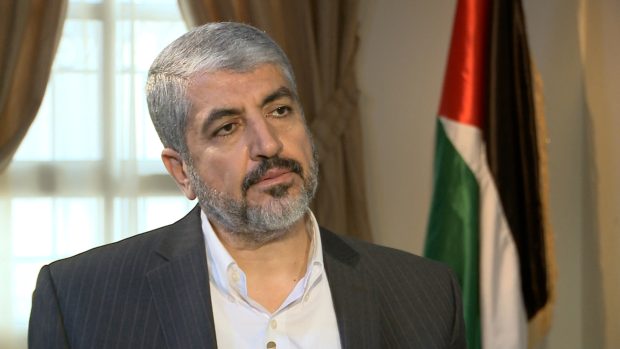
Remembering Israel’s botched attempt to assassinate Khaled Meshaal
MEMO | September 25, 2020
What: On 25 September, 1997, Israelis from the Mossad spy agency attempted to assassinate Palestinian political leader Khaled Meshaal in Amman, the capital of Jordan. The brazen attempt on the life of the then 41-year-old head of the Hamas Political Bureau sparked a diplomatic row which threatened to wreck the newly-signed peace deal between Jordan and Israel. The crisis ended with Israeli Prime Minister Benjamin Netanyahu making a number of humiliating concessions.
Where: Amman, Jordan.
When: 25 September, 1997.
What happened?
In an attempt to cripple the Palestinian resistance movement Hamas, Netanyahu, then in his first term as prime minister, authorised the assassination of Meshaal. The little-known Palestinian leader was born in 1956 in Silwad, which was then in the Jordanian administered West Bank. In 1967, Meshaal’s family and 300,000 other Palestinians were expelled from their homes by Israeli occupation forces in a second wave of ethnic cleaning that came to be known as the Naksa (Setback). Netanyahu is said to have personally picked Meshaal from a number of Hamas operatives for Mossad agents to kill. The attempt on Meshaal’s life came in the wake of a series of suicide bombings in Jerusalem and Tel Aviv.
A six-member Mossad team arrived in Amman a week before the assassination using false Canadian passports. The plan was clear: kill the exiled Hamas leader using a lethal toxin without leaving any trace of the killers. The idea was that after the toxin had been administered covertly, Meshaal would go about the rest of his day as normal and then, when tiredness overcame him, he would take a nap, never to wake up again; he was expected to die within 48 hours.
On the morning of the assassination attempt, two of the six agents moved into position to deliver a lethal dose of toxin — identified later as fentanyl — as Meshaal entered his office. The other four Israeli agents are said to have been deployed around the block either as drivers or as lookouts.
The Mossad agents delivered the toxin using an aerosol device and fled from the scene. One of Meshaal’s bodyguards gave chase and managed to apprehend the assassins after some hand to hand combat. Their capture was to have major ramifications.
What happened next?
Hours after the arrest of the two agents by the Jordanian authorities, the Israelis hatched a plan to diffuse the situation. With the diplomatic consequence of his actions dawning on Netanyahu, he attempted to conceal the botched assassination attempt from the rest of the world. He dispatched Mossad head Danni Yatom to plead with King Hussain of Jordan for the agents’ release. Yatom’s pre-emptive disclosure and plea for help from the Jordanian monarch exploded in Israel’s face, sparking a diplomatic crisis with the Hashemite Kingdom, which had normalised relations with the Zionist state three years earlier.
While the Israelis tried frantically to keep a lid on the botched plot, Meshaal’s health deteriorated. The toxin had done its job and within 48 hours he would be dead. King Hussain warned Israel that if the Hamas leader died, the Mossad agents would be hanged as murderers. The King had gone out on a limb to sign a peace treaty with Israel against the wishes of his people, so he called US President Bill Clinton to enlist his support. It was said that US anger was such that no one within the normally pro-Israel White House was willing to make Netanyahu’s case for him. “This man is impossible,” Clinton is reported to have said upon hearing that the Israeli Prime Minister had authorised the assassination attempt with little regard for Jordanian sovereignty, and thus endangered the fragile peace treaty.
Having been stonewalled by Netanyahu for the antidote to the toxin at the first time of asking, an angry King Hussein relayed his message through Clinton, insisting that the Israelis must deliver a vial of the antidote, which was the only way to save Meshaal’s life. “If Meshaal dies, the peace treaty dies with him,” he insisted. With the US applying pressure, Israel had no choice but to comply. A light aircraft delivered the antidote.
The indignity for Netanyahu did not end there. The two Mossad agents were still under arrest facing a death sentence and the Israeli Embassy in Amman, in which the other four members of the six man Mossad team had taken refuge, was surrounded by Jordanian security forces. In exchange for allowing them to leave Jordan, King Hussain was determined to exact a heavy price. He demanded a prisoner exchange, which was agreed.
Under the deal, Israel released the ailing Sheikh Ahmed Yassin, the quadriplegic founder and spiritual leader of Hamas who was one of the most notable Palestinians in its prisons, along with 70 other Palestinian prisoners.
Meshaal was saved with just hours to spare. His reputation grew within the Palestinian resistance movement as “the man who wouldn’t die”. He became the leader of Hamas when Israel assassinated Yassin in 2004.
Meanwhile, a chastened Netanyahu was forced to apologise. His act of contrition came two days later when he arrived in Amman to pledge that Israel would not make another attempt on Meshaal’s life. This was not the end for the humiliated Israeli Prime Minister. He lost his bid for re-election in 1999, after which he retired temporarily from politics.
Hamas recycles shells from British ships sunk off Gaza during WWI
MEMO | September 15, 2020
The military wing of the Palestinian Islamic Resistance Movement has apparently recycled shells found on the wrecks of British warships which were sunk off the coast of Gaza during World War One.
In a documentary film broadcast on Sunday, Al Jazeera revealed that Al-Qassam Brigades could in such a way overcome the consequences of the Israeli-led siege imposed on Gaza, which are in part intended to undermine its ability to manufacture weapons.
The internationally-backed siege has been in place for over 14 years. During this time, Israel has carried out three major offensives that have together killed thousands of Palestinians, wounded tens of thousands more and devastated the civilian infrastructure in the coastal territory.
For the first time, Hamas allowed its arms factories to be filmed. The documentary showed Hamas operatives recycling shells found in two sunken Royal Navy warships. The explosive in the shells was tested and, found to be still useable, was fitted into the warheads of Al-Qassam’s own rockets.
“Unfortunately, Hamas got there before us,” said Israeli TV reporter Nir Dvori on Tuesday, referring to the shells on the warships. “The Israeli army siege on Gaza made it difficult for Hamas to get metal and explosives to produce rockets. This pushed it to look for these materials in unconventional locations. Hamas marine personnel found these materials on board the warships.”
According to former sailor Rami Sidnai, the Israeli navy has been looking for the two British ships secretly. “Security issues prevented us from reaching them. Unfortunately, Hamas found them before us.”
Moreover, the documentary, produced by Palestinian journalist Tamer Al-Mishal, revealed how Al-Qassam fighters found a massive network of pipes installed before the Israeli disengagement from Gaza in 2005. The pipes were said to have been used to steal fresh water from the aquifer under the Gaza Strip. Al-Qassam promptly disassembled the network, extracted the pipes and used them to make rocket casings.
Additional explosives were removed from “hundreds” of unexploded Israel munitions after the 2014 military offensive against the Palestinians in the Gaza Strip.
Hamas leader Ismail Haniyeh spoke on camera about regional and international pressure imposed on the movement to give up its arms and end its resistance to the Israeli occupation of Palestine. “Hamas gave no pledge to any mediator related to the development of resistance arms,” he insisted.
However, according to Dore Gold, a former Israeli Ambassador to the UN and advisor to Benjamin Netanyahu, “If we are ever going to develop peaceful relations between Israel and Palestinian groups in Gaza… dismantling Hamas’s infrastructure must be part of any potential deal in order to be feasible.”
Former Israeli General and National Security Advisor Yaakov Amidror conceded that the Palestinians have succeeded in building their [military] capabilities. “Today, they have ability to build weapon systems, mainly long-distance rockets. They have something very notable and have improved their domestic production. They learn all the time and improve their abilities. We exert many efforts to know about these abilities in order to neutralise them whenever we can.”
According to Ami Ayalon, the former head of Israel’s Shin Bet internal security agency, “After at least two Israeli offensives on Gaza, the result is that it could not disarm Gaza on its own and should not. It will be a disaster if we attempt to disarm Hamas by ourselves.” He added his belief that Hamas is “stronger” than before. “The issue is complicated. We have to make a new political reality, otherwise Hamas is getting stronger.”
Ceasefire Understanding Reached between Hamas, Zionist Entity
Al-Manar – September 1, 2020
Hamas Palestinian Resistance group said it accepted a ceasefire agreement with the Zionist entity on Monday night, ending a nearly month-long round of tensions along the Gaza border.
After talks with Qatari envoy Mohammed El-Emadi, “an understanding was reached to rein in the latest escalation and end [Israeli] aggression against our people”, the office of Hamas leader Yahya Sinwar said on Monday.
The announcement came after three weeks of tensions that saw Israeli strikes on the besieged enclave and the launch of hundreds of explosives-laden and incendiary balloons were launched toward the occupied territories.
According to Hamas, the new understanding includes “a number of projects that serve our people in the Gaza Strip and would help them cope with the outbreak of the coronavirus.”
The Israeli regime, on his part, did not explicitly confirm the existence of a deal, but in a tacit acknowledgment said it would fully reopen the fishing zone off the coast of the Strip and the enclave’s border crossings beginning Tuesday.
“This decision will be tested on the ground: If Hamas, which is responsible for all actions that are taken in the Gaza Strip, will fail to meet its obligations, Israel will act accordingly,” the Zionist entity’s military liaison to the Palestinians said in a statement.
The occupation army has carried out attacks on Gaza almost daily since August 6 in what it says is a response to the airborne incendiary devices and, less frequently, rockets launched into the occupied territories.
Turkey reboots Arab Spring with Palestinian resistance
By M. K. BHADRAKUMAR | Indian Punchline | August 26, 2020
Turkey has made its first move on the regional chessboard after the recent deal between the UAE and Israel, when on August 22, President Recep Erdogan received in Istanbul a high-level delegation of the Palestinian resistance group Hamas, including its leader Ismail Haniyeh and deputy leader Saleh al-Arouri.
Also present at the meeting held behind closed doors at Istanbul’s Vahdettin Palace were the head of Turkey’s intelligence service, Hakan Fidan and two key aides of Erdogan — the communications director Fahrettin Altun and the presidential spokesman, Ibrahim Kalin.
The symbolism of the event is profound. The US state department has designated Ismail Haniyeh and Saleh al-Arouri as terrorists and has placed a $5 million bounty on their heads. And, of course, Turkey’s links with Hamas has been a sore point with Israel and it strained the traditionally close relations between the two countries to near breaking point in the recent decade.
Meanwhile, Hamas is an offshoot of the Muslim Brotherhood with which Turkey’s ruling Islamist party has ideological affinity but which the Emirati regime regards as existential enemy.
To be sure, Erdogan has made a calculated move after reading the tea leaves that one of the objectives behind the US-sponsored deal between the UAE and Israel is the creation of a new regional order even as American retrenchment from the region may have already begun in the Middle East.
Erdogan estimates that the main target of the UAE-Israel deal is Turkey. He had spotted the UAE as an active participant in the US-led failed coup attempt in 2016 aimed at overthrowing his government. He is also acutely conscious that the US, Israel and the UAE are aligned with the separatist Kurdish groups.
Turkey and the UAE are promoting opposite sides in the Libyan conflict and recently, the UAE has begun cozying up to Greece against the backdrop of rising tensions between Greece and Turkey in the Eastern Mediterranean. (UAE fighter jets are currently participating in a training exercise in Greece.)
The US State Department has lashed out at Erdogan for his meeting with Hamas leaders. But within hours, Ankara hit back. In a furious rejoinder, the Turkish Foreign Ministry rebuked Washington for questioning the legitimacy of Hamas, “which has come to power in Gaza through democratic elections and which constitutes an important reality of the region.”
Alluding to the US policies, the Turkish statement went on to say, “Moreover, a country which openly supports the PKK, that features on their list of terrorist organisations and hosts the ringleader of the FETO (group led by Islamist preacher Fetullah Gulen) has no right whatsoever to say anything to third countries on this subject.”
Lamenting that the US “has isolated itself from the realities of our region,” the Turkish statement urged the US to change course and “sincerely work towards the resolution of the Israeli-Palestinian conflict on the basis of international law, justice and equity by pursuing balanced policies, instead of using its power and influence in the region to serve the interests of Israel rather exclusively.”
To be sure, Erdogan has a game plan in defiantly flaunting his relationship with Hamas at this juncture. In the Turkish reckoning, the UAE-Israel agreement, with US backing, aims to create new facts on the ground in the Middle East, which takes the form of unimpeded telecoms, travel and recognition between Israel and its richest Gulf neighbours, but completely bypassing the Palestinian problem and blithely assuming that it is a matter of time before the Palestinian leadership would wave the white flag of surrender.
On the contrary, Turkey shares the assessment of most independent regional observers (and perceptive western analysts) that the Palestinians who have held out for seven decades are in no mood to surrender abandoning their political rights. Indeed, the Palestinian popular resistance is showing no signs of fatigue. The Palestinian leaders have used very strong language to condemn the UAE regime. The wave of anger is fuelled by a deep sense of betrayal by prince Mohammed bin Zayed.
This anger is prompting Fatah and Hamas, who have been bitter rivals since the 2007 civil war in Gaza, to close ranks and discuss the need for joint political action. Mahmud Abbas who was unwilling to accept any partners in the governance of Palestine is today open to working with Hamas. Last week, Jibril Rajoub, general secretary of Fatah, shared a platform with Saleh Arouri, deputy head of Hamas, signalling that the rapprochement is gaining momentum.
If the Emirati calculation was to promote exiled Palestinian leader Mohammed Dahlan (who lives in Abu Dhabi) as the next Palestinian President in a near future with the backing of Arab states and Israel, that project has crash-landed. Dahlan can no longer exploit the rivalry between Fatah and Hamas. The effigies of Dahlan and Emirati crown prince bin Zayed were burned side by side in Ramallah last week.
Turkey senses a potential breakthrough in regional politics insofar as the Arab population at large shares the anger and resentment of the Palestinian people at the betrayal by bin Zayed. According to the Arab Opinion Index conducted by the Arab Center for Research and Policy Studies in Doha, if 84 percent of Arab opinion had opposed any diplomatic recognition of Israel in 2011, that has since increased to 87 percent by 2018.
In this turbulent regional milieu, Erdogan hopes to bring about a fusion between the Arab world’s sympathy and support for the demands of the Palestinians for sovereignty and their own search for democracy and liberation from their autocratic rulers. This has been his dream project all along — creation of a New Middle East that gets rid of the medieval oligarchies and replaces them with representative rule based on democratic principles and empowerment of the people.
In the downstream of the Emirati ruler’s deal with Israel, Erdogan strides like a Colossus on the Arab street and his meeting with the leadership of Hamas in Istanbul proclaims a common struggle against the despots and oligarchs who suppress democracy and have exercised cruel tyranny over their people across the region. In Erdogan’s calculus, bin Zayed’s contempt for Arab democracy and Netanyahu’s trampling of Palestinian rights are two sides of the same coin.
Erdogan visualises that the UAE-Israel agreement is built on sand and it is bound to crumble under the weight of the latent contradictions that are bound to surge in the wake of the expected decline in the US’ regional influence and prestige and amidst the birth pangs of the new-post-oil economy in the regional states.
Has Israel bitten off more than it could chew? David Hearst, editor-in-chief of the Middle East Eye wrote last week, “Whereas before, Israeli leaders could pretend to be bystanders to the turmoil of dictatorship in the Arab world, this (accord with UAE) now ties the Jewish state to maintaining the autocracy and repression around it. They cannot pretend to be the victims of a “tough neighbourhood”. They are its main pillar. This accord is virtual reality. It will be blown away by a new popular revolt not just in Palestine but across the Arab world. This revolt may already have started.”
Remembering Israel’s 2014 attack on Gaza’s universities

The Islamic University of Gaza was damaged after it was bombed by Israeli warplanes early on Saturday, 2 August, 2014 [Mustafa Hassona/Anadolu Agency]
MEMO | August 4, 2020
What
Six years ago, Israeli occupation forces targeted the Islamic University of Gaza (IUG) in one of the deadliest military offensives against the two million Palestinians living within the besieged enclave. The conflict left 2,251 people dead, with more than 11,000 wounded, according to Palestinian and UN sources. A further half a million Palestinians were displaced. Six years on, the UN has complied an extensive report on the scale of destruction to Gaza’s higher education facilities during the 50-day onslaught which began 8 July 2014.
Where
The occupied Gaza Strip
When
2 August 2014
What happened
At the height of the 2014 onslaught on Gaza, Israel shelled kindergartens, primary and secondary schools, UN run education facilities and several higher education centres. A UN report found that the centres of learning were directly targeted during the deadly attack on the besieged population. Over 2,251 Palestinians were killed, 500 of whom were children.
Israel’s military offensive on the Gaza Strip took place against the backdrop of a second Palestinian unity government being formed in early June by the Islamic Resistance Movement — Hamas — in the Gaza Strip and the Palestinian Authority in the West Bank. Threatened by the reconciliation between the two main Palestinian factions, Israeli Prime Minister Benjamin Netanyahu warned that the PA had to choose between peace with Hamas or peace with Israel.
Ten days later, on 12 June, three Israeli settlers went missing in the West Bank, an incident for which Israel blamed Hamas, despite providing no evidence to back the allegation. Netanyahu also stated that the kidnapping proved that the unity pact between the Palestinian factions could not be endorsed. In the aftermath of the abduction, Israel launched a crackdown on alleged Hamas associates in the West Bank, triggering a cycle of events which led to the Zionist state launching a full scale military invasion of Gaza dubbed “Operative Protective Edge”.
What happened next?
The Islamic University of Gaza, which has nearly 20,000 students was targeted along with dozens of other higher education institutions (HEIs). A UN school was also targeted during the bombings prompting outrage from the international community – including the US, which said it was “appalled” by the “disgraceful” shelling of the UN run school. Sparking some of the harshest language ever to be directed against the Zionist state, Washington called the attack “totally unacceptable and totally indefensible”.
Student deaths, caused by disproportionate Israeli shelling, made up more than a quarter – or 27.4 per cent – of total civilian deaths incurred in Gaza. In total, 407 students from 20 out of 26 HEI’s were killed. While male students accounted for the highest number of deaths, a total of 38 female students also lost their lives, 15 of whom were studying at the IUG and ten at Al-Quds Open University. With 95 fatalities, IUG also suffered the heaviest male deaths; followed by Al-Aqsa (49 deaths) and Al-Quds Open University (44 deaths).
Of the 626 students that were injured, 286 suffered “shrapnel wounds, including fractures”. A further 235 incurred “shrapnel wounds, other wounds & fractures, including burns” according to the UN report.
Israel’s bombardment caused extensive damages to the homes of students. Pupils at 23 out of 26 HEIs had their homes destroyed. A total of 7,169 students – or 7.5 per cent of the student population at all HEIs – were affected in this manner. The worst affected were enrolled at Al-Azhar University, where 3,932 pupils – 66 per cent of all students at the institution – lost their homes.
Five IUG staff members made up a total of nine academics and administrative staff that were killed in four HEIs. Another 21 suffered injuries. The homes of 393 staff were destroyed in the bombings, including 31 that belonged to teachers at the IUG.
Large-scale damage and destruction to HEI buildings, facilities and equipment during the bombardment totalled more than $16 million. While the total cost of the damage and destruction to Gaza’s homes and infrastructure has been estimated at $7.8 billion.
The stark and shocking details of the destruction was uncovered in the UN report. It shows how HEIs were attacked by Israeli drone strikes, high explosive anti-tank weapons, and direct and indirect air strikes. Such indiscriminate attack, concluded the report, deliberately placed students and lecturers on the front line of the conflict and left many sites littered with explosive remnants of war. Given the level of damage at some sites, students and staff could face ongoing and serious risks to their safety.
The UN urged the international community to protect Gaza’s HEIs and safeguard the right to education for its besieged population guaranteed under international law.
Featured Video
Col Douglas Macgregor: Iran May Seize Kuwait ON THE GROUND
or go to
Aletho News Archives – Video-Images
From the Archives
Evidence for the German Euthanasia Program Compared to the Holocaust

NS Euthanasia Propaganda Poster, around 1938. Credit: Wikimedia Commons
By John Wear | Inconvenient History | August 31, 2017
I have been asked the question: Why do you think the German euthanasia program happened during World War II, but not the Holocaust? This article will show that the evidence for the German euthanasia program is overwhelming, while the evidence to support the Holocaust story is severely lacking. … continue
Blog Roll
 Aletho News
- British Army faces Kenya setback amid row over troops’ crimes
- Kiev hitting civilian targets in Russia to provoke mirror response – ex-Pentagon analyst
- The nuclear leash: Washington’s deal to put Saudi Arabia back in its place
- UN experts call for accountability five months after US-Israeli attack on Minab school
- What’s Ukraine Really After by Striking Russia’s Marketplace Warehouses?
- Greece approves purchase of $4bn Israeli air defense system
- Prevent the Great War
- No route around Hormuz: Why West Asia’s pipeline alternatives fall short
- The Iran war may go down as the US’ worst ever defeat
- US-Saudi nuclear pantomime is with eye on Iran
- If Americans Knew
- Rebuilding of Gaza to cost seven times more than all previous wars: Oxfam
- James Woolsey, front man who promoted US wars for Israel, dies at 84
- Despite Israel’s multi-million propaganda project, some anti-genocide candidates are winning
- She Was a Bright Student. An Israeli Strike Ended Her Dreams.
- US House passes $1.15 trillion military bill expanding Israel cooperation
- Gaza teeters on the edge of famine (again) – Daily Update
- ISRAELI MEDIA: ‘An Inferno’: Gazans Face Sweltering Conditions in Tent Camps for Third Summer in a Row
- Israel’s Coordinated Campaign to Propagandize Conservatives in America
- The Israeli Spy Behind PragerU’s Plan to Rewrite American Education To Indoctrinate Children
- The President of the World Jewish Congress just sent a warning to every Potential AMERICA FIRST Candidate wishing to run for U.S. Congress
- No Tricks Zone
- Greenland’s Ice Sheet Was Supposed To Be Rapidly Melting Away. It Hasn’t Been.
- Global Temperature Trend Has Cooled Over The Past 6500 Years, Scientists Have Found
- Wind Energy Means Going Back To The Middle Ages, Says German Professor Horst-Joachim Lüdecke
- New Study: A 40-Fold Increase In Earth’s Main Greenhouse Gas Contributes To Cooling The Ocean
- New Study Highlights The ‘Dominant Role’ Of Aerosol/Cloud Interactions In Shaping Climate
- Munich’s First-Ever Green Party Mayor Declares First Ever City Water Use Restrictions… Fines Up to 50,000 €!
- Experimental Lab Research: The Climate Sensitivity To A 400-Fold Increase In CO2 Is 0.1°C
- Fatal Snobbery: In France, It’s Better To Die From A Heatwave Than To Do As Americans
- New Study: NASA’s Models Wildly Underestimate The Capacity Of Clouds To Alter Solar Radiation
- Polar Freezeover: Western Arctic Early July Sea Ice Exceeds 1980s Average
 Aletho News
