Nasrallah: Saudis want freedom in Syria but in Saudi a tweet gets you 1000 lashes
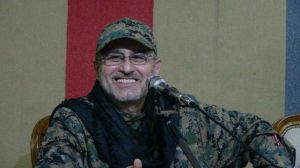
Mustafa Badreddine
American Herald Tribune | May 21, 2016
The leader of the Lebanese resistance movement Hezbollah, Seyyed Hassan Nasrallah, heaps praise on the movement’s military commander Mustafa Badreddine, who was killed in Syria last week, saying he was a front-runner in the fight against Israel.
“Badreddine played a key role alongside [his predecessor] Imad Mughniyeh… in the 2006 war against Israel before assuming several responsibilities including the dismantling of Israeli spy networks,” Nasrallah said in a televised speech on Friday.
Nasrallah was speaking to mark one week after Badreddine was killed.
He said Badreddine was tasked with overseeing Hezbollah’s security and military units in Syria since Takfiri militants initiated a war there in 2011.
Hezbollah fighters are combating alongside the Syrian government forces against a range of terrorist groups operating in the war-torn Arab country, including Daesh and the al-Qaeda-affiliated al-Nusra Front.
The Hezbollah leader said Badreddine was initially directing the Syria operation from Lebanon, but later “insisted” on traveling to Syria to oversee in person the sensitive operation.
Nasrallah said Hezbollah was against Badreddine’s presence in Syria as the group knew of the media controversy that would arise of his involvement in the war.
He noted that Badreddine’s presence in Syria helped Hezbollah prevent the fall of the country “into the hands of Takfiris and their American masters and spies in the region.”
The 55-year-old Hezbollah commander led Hezbollah’s military wing which is helping the Syrian government drive out foreign-backed Takfiri terrorists from Syria.
Badreddine also directed military operations against the Israeli invasion of Lebanon and was a frequent target of attempts by Tel Aviv, Washington and its allies to assassinate or capture him.
He was the cousin and brother-in-law of Imad Mughniyeh, who was assassinated by Israel in 2008.
He said Hezbollah has not entirely ruled out Israel of having a hand in Badreddine’s killing, but the group has not found any clues during the probe that could directly hint at Israel’s role.
Nasrallah denied speculations raised in some Arab media that Hezbollah did not assign blame on Israel for Badreddine’s killing because it wanted to escape responsibility for retaliation, saying throughout 34 years of confrontation with Israel, the regime in Tel Aviv has never doubted the genuineness of Hezbollah pledges for carrying out such retaliations.
“Our history is a proof that when we vow to retaliate we honor our pledges,” Nasrallah said, adding that Hezbollah would not stand on ceremony to openly blame Israel for perpetrating a crime when the evidence exists.
Nasrallah said Badreddine’s murder came at the hands of Takfiri groups and was orchestrated by those actively seeking to undermine the resistance front, including the United States.
He said, however, that the death of the commander would not lead to Hezbollah withdrawing from Syria. “Badreddine’s blood will push us to a bigger presence in Syria… We will remain in Syria and more leader will go into Syria,” Nasrallah said.
Else in his speech blasted Al-Saud’s calls for « democracy » in Syria and said:
The Saudi regime wants early parliamentary and presidential elections in Syria. But Saudi Arabia from its very inception as a nation-state until now has never had elections on its own soil. There is a ‘king’ and a ‘royal’ family and a dictatorship. Does anyone dare open his mouth against the regime in Saudi Arabia?! If someone dares to post two lines on Twitter, the ‘royal’ family goes crazy and sentences him to 1,000 lashes. What kind of Islam is this?! What sort of religion is this?! This is the ugliest form of hypocrisy!
Nasrallah continued, “This is not about freedom or democracy or elections or constituons! This is about the Syrian government not kneeling! This is about #Syria refusing to be a tool of American-Zionist hegemony. This is because Syria holds on to Resistance, refuses to betray Iran, defends Palestine, demands the return of the Golan Heights and maintains its sovereignty. This is because Syria is still a bastion of Arabism. Mark my words, if Bashar al-Assad was to say right now that he’d become a slave of the US-‘Israeli’ project, the war against Syria would be over tomorrow.”
Hizbollah Secretary Genral concluded his speech by saying: “I say to you with all confidence, throughout our 34 years, we have witnessed worse circumstances than what we’re dealing with today. And with our loyalty, steadfastness and commitment to the ongoing march on our path of Resistance, we shall overcome this new phase as well. In this battle, we are advancing and achieving victories. The Americans, the Zionists and Al-Saud said they’d gobble up #Syria five years ago, but yet Syria still stands today! This is because of the sacrifices of our martyrs. Indeed, Sayyed Mustafa’s blood and the blood of all our martyrs is the fuel which contributes to driving us to victory in this historic defense of the Ummah. Therefore our decision about continuing this fight is a simple one. I say to all of you who propagandized we’d leave Syria because of Sayyed Mustafa’s martyrdom – The martyrdom of any of our commanders has never made us leave any battle. Quite to the contrary, their martyrdoms will only make us increase our presence in Syria. We will be in Syria in greater numbers and different forms until victory. This is how we honor our martyrs and bring defeat to the US-Zionist-Takfiri-Saudi project. This project will fall; this project will be destroyed. I vow to you once more, Syria will never become the tool of our enemies and they will never get control of our region!”
Who Is Mustafa Badreddine?
Al-Manar | May 14, 2016
 Although his life achievements cannot be briefed within a short article, this report summarizes the main contributions of Hezbollah senior commander, martyr Mustafa Badreddine.
Mustafa Amin Badreddine was born in Ghobeiry, Lebanon on April 6, 1961.
In 1982, martyr Badreddine formed jihadi groups and trained them to confront the Zionist entity. He is considered one of the most prominent mujahidin who encountered the Israeli invasion in Beirut and Khaldeh where he was injured during the clashes.
In 1992, the martyr became the commander of Hezbollah’s central military unit and started forming military formations and devising plans. Badreddine also prepared many heroic operations against the Israeli occupation, including clashes, martyrdom bombings and post incursions as well, which forced the Israeli army to withdraw cowardly in 2000.
Martyr Badreddine played a prominent role in confronting the major Israeli aggression on Lebanon in 1993, obliging the Zionist Prime Minster Isaac Rabin at that time to acknowledge the fact that the Zionist entity was defeated by Hezbollah.
After the major Zionist aggression on Lebanon in 1996, the martyr succeeded in driving the world to acknowledge the Resistance’s legitimacy and its right to defend its country.
In 1997, Mustafa Badreddine had a central role in planning and supervising the Ansariya operation which killed scores of elite Zionist troops.
Martyr Badreddine was further able to dismantle scores of Israeli spy cells in Lebanon.
With the inception of the Syrian crisis in 2011, the martyr was one of the first commanders who confronted the takfiri plot across Syria.
Martyr Mustafa Badreddine continued his jihadi work till embracing the honor of martyrdom in Damascus on May 13, 2016.
Leaked Memo: Jordan’s King Reveals UK SAS Forces On The Ground In Syria, Israel Supports Nusra
By Brandon Turbeville | Activist Post | May 10, 2016
According to a leaked memo obtained by the Guardian in late March, 2016 King Abdullah of Jordan apparently briefed US officials on the fact that Jordanian Special Forces would be deployed to Libya to work alongside the British SAS. In that same briefing, Abdullah also allegedly stated that British SAS had been active in Libya since early 2016.
As Randeep Ramesh wrote for the Guardian at the time,
According to the notes of the meeting in the week of 11 January, seen by the Guardian, King Abdullah confirmed his country’s own special forces “will be imbedded [sic] with British SAS” in Libya.
According to the memo, the monarch met with US congressional leaders – including John McCain, the chairman of the Senate armed services committee, and Bob Corker, the chairman of the Senate foreign relations committee. Also present was the House of Representatives speaker, Paul Ryan.
King Abdullah said UK special forces needed his soldiers’ assistance when operating on the ground in north Africa, explaining “Jordanian slang is similar to Libyan slang”.
Abdullah also allegedly pointed out that the British had been instrumental in setting up a “mechanized battalion” in Southern Syria made up of “local tribal fighters” (aka terrorists) and lead by a “local commander” for the purposes of fighting against the Syrian government forces.
The Jordanian king also stated that his troops were ready to fight side by side with the British and Kenyans for the purposes of invading Somalia.
According to the Guardian,
The full passage of the briefing notes says: “On Libya His Majesty said he expects a spike in a couple of weeks and Jordanians will be imbedded [sic] with British SAS, as Jordanian slang is similar to Libyan slang.”
The monarch’s apparent openness with the US lawmakers is an indication of just how important an ally Jordan is to the US in the region. Since the 1950s Washington has provided it with more than $15bn (£10.5bn) in economic and military aid.
However, the Jordanians had become frustrated over perceived US inaction over the Middle East in recent months. Five years of fighting in Syria have dramatically impacted on Jordan, which has absorbed more than 630,000 Syrian refugees, and the king has repeatedly called for decisive action to end the conflict.
Interestingly enough, the King also allegedly admitted that Turkey and specifically Recep Erdogan is hoping for the victory of “radical Islamists” in Syria and that Israel is tacitly supporting al-Qaeda/al-Nusra in Syria.
Ramesh summarizes the King’s alleged statements by writing:
- The Turkish president, Recep Tayyip Erdoğan, “believes in a radical Islamic solution to the problems in the region” and the “fact that terrorists are going to Europe is part of Turkish policy, and Turkey keeps getting a slap on the hand, but they get off the hook”.
- Intelligence agencies want to keep terrorist websites “open so they can use them to track extremists” and Google had told the Jordanian monarch “they have 500 people working on this”.
- Israel “looks the other way” at the al-Qaida affiliate Jabhat al-Nusra on its border with Syria because “they regard them as an opposition to Hezbollah”.
In March, Stratfor analysts reported that UK Special Forces were already in Libya and that they were “escorting MI6 teams to meet with Libyan officials about supplying weapons and training to the Syrian army and to militias against the Islamic State. The British air force bases Sentinel aircraft in Cyprus for surveillance missions around [the Isis Libyan stronghold] Sirte as well.”
The presence of Western/NATO Special Forces in Syria is by no means a revelation at this point. These forces have been present in the embattled Middle Eastern country for some time.
In October, 2015, it was announced by the White House that 50 Special Forces troops would be sent to Syria. This announcement came days after it was reported that U.S. Special Forces commandoes were working with Kurdish forces to “free prisoners of the Islamic State” in Syria. Later, the presence of U.S. Special Forces in Syria was tacitly acknowledged in 2015 when the U.S. took credit for the killing of Abu Sayyaf.
Reports circulated in October, 2014 that U.S. soldiers and Special Forces troops were fighting alongside Kurdish battalions in Kobane. An article by Christof Lehmann published in March 20, 2015 stated,
Evidence about the presence of U.S. special forces in the Syrian town Ayn al-Arab a.k.a. Kobani emerged. Troops are guiding U.S. airstrikes as part of U.S support for the Kurdish separatist group PYD and the long-established plan to establish a Kurdish corridor.
A photo taken in Ayn al-Arab shows three U.S. soldiers. One of them “Peter” is carrying a Bushnell laser rangefinder, an instrument designed to mark targets for U.S. jets, reports Ceyhun Bozkurt for Aydinlik Daily.
The photo substantiated previous BBC interviews with U.S. soldiers who are fighting alongside the Kurdish separatist group PYD in Syria.
The photo of the three U.S. troopers also substantiates a statement by PYD spokesman Polat Can from October 14, 2014, reports Aydinlik Daily. Can admitted that a special unit in Kobani provides Kurdish fighters with the coordinates of targets which then would be relayed to “coalition forces”.
The first public U.S. Special Forces raid in Syria took place in July, 2014 when Delta Force personnel allegedly attempted to rescue several Americans being held by ISIS near Raqqa. Allegedly, the soldiers stormed the facility but the terrorists had already moved the hostages. While the raid would provide evidence that U.S. Special Forces were operating in Syria in 2014, many researchers believe the story is simply fabricated by the White House to provide legitimacy to the stories of murdered hostages and thus the subsequent pro-war propaganda that ensued as well as to promote the gradual acceptance of U.S. troops on the ground in Syria.
In 2012, an article published in the Daily Star by Deborah Sherwood revealed that SAS Special Forces and MI6 agents were operating inside Syria shortly after the destabilization campaign began in earnest. Sherwood writes,
Special Forces will help protect the refugees in Syria along the borders.
Last week as the president ignored an international ceasefire, plans were being finalised to rescue thousands of Syrians.SAS troops and MI6 agents are in the country ready to help rebels if civil war breaks out as expected this weekend.
They also have hi-tech satellite computers and radios that can instantly send back photos and details of refugees and Assad’s forces as the situation develops.
Whitehall sources say it is vital they can see what is happening on the ground for themselves so Assad cannot deny atrocities or battles.
And if civil war breaks out the crack troops are on hand to help with fighting, said the insider.
. . . . .
“Safe havens would be an invasion of Syria but a chance to save lives,” said a senior Whitehall source.
“The SAS will throw an armed screen round these areas that can be set up within hours.
“There are guys in the communications unit who are signallers that can go right up front and get involved in close-quarter fighting.”
In addition, in March 2012, it was reported by Lebanon’s Daily Star that 13 French intelligence agents had been captured by the Syrian government, proving not only that Western Special Ops presence in Syria did, in fact, exist but also that it existed essentially from the start.
Brandon Turbeville – article archive here – is the author of seven books, Codex Alimentarius — The End of Health Freedom, 7 Real Conspiracies, Five Sense Solutions and Dispatches From a Dissident, volume 1 andvolume 2, The Road to Damascus: The Anglo-American Assault on Syria, and The Difference it Makes: 36 Reasons Why Hillary Clinton Should Never Be President.
UK Labour leader refuses to denounce Hamas, Hezbollah
Press TV – May 2, 2016
Britain’s Labour Party Leader Jeremy Corbyn has refused to give in to calls from Israeli officials and British Jewish figures to denounce Islamic resistance movements Hamas and Hezbollah, vowing to continue talking to the two groups.
The leader of the opposition has come under pressure from a number of Labour lawmakers, Israeli Ambassador to London Mark Regev and Jewish leaders in the UK to distance himself from Labour politicians’ recent remarks condemning Israeli crimes against Palestinians, as well as groups fighting against the Tel Aviv regime’s occupation of the Palestinian lands.
Labour MP Naz Shah resigned as an aide to the party’s shadow chancellor last week after being forced to apologize for backing calls for Israel to “relocate” to the United States.
Also last week, the Labour Party suspended former London Mayor Ken Livingston after he defended Naz Shah in BBC interview and criticized the British media for ignoring Israeli war crimes against the Palestinian people. Livingston also said that Nazi leader Adolf Hitler had been a Zionist early in his political career.
Following these developments, Israeli figures accused the Labour Party leader of being soft on “anti-Semitism” in the party, which was forced to launch an inquiry into how to tackle the issue.
On Monday, Israel’s opposition leader Tzipi Livni said that Britain should condemn “anti-Semitism for the sake of its own core values.”
Israeli Ambassador Regev called on Corbyn to denounce Hamas and Hezbollah and pay a visit to Tel Aviv to build bridges.
Regev referred to Corbyn’s earlier support for the Islamic resistance movements, which were labeled as terrorist organizations by Britain.
A number of British Jews also urged Corbyn to display clarity about having relations with the two groups.
In response to the ongoing calls to reject Hamas and Hezbollah, Corbyn’s spokesman issued a statement on Sunday, saying, “Jeremy Corbyn has been a longstanding supporter of Palestinian rights and the pursuit of peace and justice in the Middle East through dialogue and negotiation.”
“He has met many people with whom he profoundly disagrees in order to promote peace and reconciliation processes, including in South Africa, Latin American, Ireland and the Middle East,” the statement added, noting that it is essential to talk to people “with whom he profoundly disagrees in order to promote peace and reconciliation processes, including in South Africa, Latin American, Ireland and the Middle East.”
“Simply talking to people who agree with you won’t help achieve justice or peace,” it added.
Corbyn has in the past called for the participation of Hamas and Hezbollah for a settlement of the conflict in the Middle East and highlighted the role of Iran in the regional issues. He has also referred to the two movements as “friends.”
Jewish Lobby finds 250 Hizbullah agents in Berlin
Rehmat’s World | April 25, 2016
The American Jewish Committee (AJC) has accused the Berlin-based theater project, Refugee Club Impulse (RCI) of harboring anti-Israel Lebanese Islamic resistance and political party Hizbullah agents.
The Jewish lobby has accused Nadia Grossmann (Jewish), artistic director of RCI and her sister Maryam, a pedagogical director at RCI of organizing the annual pro-Hizbullah and pro-Iran Al-Quds Day.
Iran’s Imam Khomeini declared the last Friday of the month of Muslim fasting as Al-Quds Day in 1981 in support of the Palestinian struggle to regain their land stolen by European Zionist Jews in 1948.
“The RCI is expected to receive 100,000 euros from Berlin government for refugee work. German taxpayers [funds] have been furnished to the RCI for number of years,” said Benjamin Weinthal, The Jerusalem Post, April 20,2016.
Pity! Weinthal’s Zionist entity received only $93 billion from German taxpayers since 1950s.
Nadia and Miryams’ father Jurgen Grossmann told the press that his daughters were not co-organizers of the International Al-Quds Day, but that they along with their father support Palestinian cause.
Volker Beck, a Green Party member in the Bundestag (parliament) and former spokesperson of LGBT Germany, and Benedikt Lux, member of the Berlin City Senate have raised their concerns over “the danger of giving taxpayers’ money to RCI that supports antisemitic forces.”
On March 16, 2016, Barack Obama’s Czar to monitor so-called anti-Semitism around the world, Ira Forman (a Zionist Jew) delivered a speech in Berlin in which he warned Europeans that they risk turning their continent into a breeding ground for the vilest form of Jew hatred.
I suppose, this idiot like Netanyahu too believes that the Mufti of Palestine ordered Adolf Hitler to burn 6 million Jews.
Yes, Hillary Clinton Is a Neocon
By Robert Parry | Consortium News | April 16, 2016
If there were any doubts that Hillary Clinton favors a neoconservative foreign policy, her performance at Thursday’s debate should have laid them to rest. In every meaningful sense, she is a neocon and – if she becomes President – Americans should expect more global tensions and conflicts in pursuit of the neocons’ signature goal of “regime change” in countries that get in their way.
Beyond sharing this neocon “regime change” obsession, former Secretary of State Clinton also talks like a neocon. One of their trademark skills is to use propaganda or “perception management” to demonize their targets and to romanticize their allies, what is called “gluing white hats” on their side and “gluing black hats” on the other.
So, in defending her role in the Libyan “regime change,” Clinton called the slain Libyan leader Muammar Gaddafi “genocidal” though that is a gross exaggeration of Gaddafi’s efforts to beat back Islamic militants in 2011. But her approach fits with what the neocons do. They realize that almost no one will dare challenge such a characterization because to do so opens you to accusations of being a “Gaddafi apologist.”
Similarly, before the Iraq War, the neocons knew that they could level pretty much any charge against Saddam Hussein no matter how false or absurd, knowing that it would go uncontested in mainstream political and media circles. No one wanted to be a “Saddam apologist.”
Clinton, like the neocons, also shows selective humanitarian outrage. For instance, she laments the suffering of Israelis under crude (almost never lethal) rocket fire from Gaza but shows next to no sympathy for Palestinians being slaughtered by sophisticated (highly lethal) Israeli missiles and bombs.
She talks about the need for “safe zones” or “no-fly zones” for Syrians opposed to another demonized enemy, Syria’s President Bashar al-Assad, but not for the people of Gaza who face the wrath of Israeli Prime Minister Benjamin Netanyahu.
“Yes, I do still support a no-fly zone [in Syria] because I think we need to put in safe havens for those poor Syrians who are fleeing both Assad and ISIS and have some place that they can be safe,” Clinton said. But she showed no such empathy for Palestinians defenseless against Israel’s “mowing the grass” operations against men, women and children trapped in Gaza.
In Clinton’s (and the neocons’) worldview, the Israelis are the aggrieved victims and the Palestinians the heartless aggressors. Referring to the Gaza rocket fire, she said: “I can tell you right now I have been there with Israeli officials going back more than 25 years that they do not seek this kind of attacks. They do not invite the rockets raining down on their towns and villages. They do not believe that there should be a constant incitement by Hamas aided and abetted by Iran against Israel. …
“So, I don’t know how you run a country when you are under constant threat, terrorist attack, rockets coming at you. You have a right to defend yourself.”
Ignoring History
Clinton ignored the history of the Israeli-Palestinian conflict, which dates back to the 1940s when Israeli terrorist organizations engaged in massacres to drive Palestinians from their ancestral lands and murdered British officials who were responsible for governing the territory. Israeli encroachment on Palestinian lands has continued to the present day.
But Clinton framed the conflict entirely along the propaganda lines of the Israeli government: “Remember, Israel left Gaza. They took out all the Israelis. They turned the keys over to the Palestinian people. And what happened? Hamas took over Gaza. So instead of having a thriving economy with the kind of opportunities that the children of the Palestinians deserve, we have a terrorist haven that is getting more and more rockets shipped in from Iran and elsewhere.”
So, Clinton made clear – both at the debate and in her recent AIPAC speech – that she is fully in line with the neocon reverence for Israel and eager to take out any government or group that Israel puts on its enemies list. While waxing rhapsodic about the U.S.-Israeli relationship – promising to take it “to the next level” – Clinton vows to challenge Syria, Iran, Russia and other countries that have resisted or obstructed the neocon/Israeli “wish list” for “regime change.”
In response to Clinton’s Israel-pandering, Sen. Bernie Sanders, who once worked on an Israeli kibbutz as a young man, did the unthinkable in American politics. He called out Clinton for her double standards on Israel-Palestine and suggested that Netanyahu may not be the greatest man on earth.
“You gave a major speech to AIPAC,” Sanders said, “and you barely mentioned the Palestinians. … All that I am saying is we cannot continue to be one-sided. There are two sides to the issue. … There comes a time when if we pursue justice and peace, we are going to have to say that Netanyahu is not right all of the time.”
But in Hillary Clinton’s mind, the Israeli-Palestinian dispute is essentially one-sided. During her speech to the American Israel Public Affairs Committee last month, she depicted Israel as entirely an innocent victim in the Mideast conflicts.
“As we gather here, three evolving threats — Iran’s continued aggression, a rising tide of extremism across a wide arc of instability, and the growing effort to de-legitimize Israel on the world stage — are converging to make the U.S.-Israel alliance more indispensable than ever,” she declared.
“The United States and Israel must be closer than ever, stronger than ever and more determined than ever to prevail against our common adversaries and to advance our shared values. … This is especially true at a time when Israel faces brutal terrorist stabbings, shootings and vehicle attacks at home. Parents worry about letting their children walk down the street. Families live in fear.”
Yet, Clinton made no reference to Palestinian parents who worry about their children walking down the street or playing on a beach and facing the possibility of sudden death from an Israeli drone or warplane. Instead, she scolded Palestinian adults. “Palestinian leaders need to stop inciting violence, stop celebrating terrorists as martyrs and stop paying rewards to their families,” she said.
Then, Clinton promised to put her future administration at the service of the Israeli government. Clinton said, “One of the first things I’ll do in office is invite the Israeli prime minister to visit the White House. And I will send a delegation from the Pentagon and the Joint Chiefs to Israel for early consultations. Let’s also expand our collaboration beyond security.”
Pleasing Phrases
In selling her neocon policies to the American public, Clinton puts the military aspects in pleasing phrases, like “safe zones” and “no-fly zones.” Yet, what she means by that is that as President she will invade Syria and push “regime change,” following much the same course that she used to persuade a reluctant President Obama to invade Libya in 2011.
The Libyan operation was sold as a “humanitarian” mission to protect innocent civilians though Gaddafi was targeting Islamic militants much as he claimed at the time and was not engaging in any mass slaughter of civilians. Clinton also knew that the European allies, such as France, had less than noble motives in wanting to take out Gaddafi.
As Clinton confidant Sidney Blumenthal explained to her, the French were concerned that Gaddafi was working to develop a pan-African currency which would have given Francophone African countries greater freedom from their former colonial master and would undermine French economic dominance of those ex-colonies.
In an April 2, 2011 email, Blumenthal informed Clinton that sources close to one of Gaddafi sons reported that Gaddafi’s government had accumulated 143 tons of gold and a similar amount of silver that “was intended to be used to establish a pan-African currency” that would be an alternative to the French franc.
Blumenthal added that “this was one of the factors that influenced President Nicolas Sarkozy’s decision to commit France to the attack on Libya.” Sarkozy also wanted a greater share of Libya’s oil production and to increase French influence in North Africa, Blumenthal wrote.
But few Americans would rally to a war fought to keep North Africa under France’s thumb. So, the winning approach was to demonize Gaddafi with salacious rumors about him giving Viagra to his troops so they could rape more, a ludicrous allegation that was raised by then-U.S. Ambassador to the United Nations Susan Rice, who also claimed that Gaddafi’s snipers were intentionally shooting children.
With Americans fed a steady diet of such crude propaganda, there was little serious debate about the wisdom of Clinton’s Libyan “regime change.” Meanwhile, other emails show that Clinton’s advisers were contemplating how to exploit Gaddafi’s overthrow as the dramatic moment to declare a “Clinton Doctrine” built on using “smart power.”
On Oct. 20, 2011, when U.S.-backed rebels captured Gaddafi, sodomized him with a knife and then murdered him, Secretary of State Clinton couldn’t contain her glee. Paraphrasing a famous Julius Caesar quote, she declared about Gaddafi, “we came, we saw, he died.”
But this U.S.-organized “regime change” quickly turned sour as old tribal rivalries, which Gaddafi had contained, were unleashed. Plus, it turned out that Gaddafi’s warnings that many of the rebels were Islamic militants turned out to be true. On Sept. 11, 2012, one extremist militia overran the U.S. consulate in Benghazi killing U.S. Ambassador Christopher Stevens and three other Americans.
Soon, Libya slid into anarchy and Western nations abandoned their embassies in Tripoli. President Obama now terms the Libyan fiasco the biggest mistake of his presidency. But Clinton refuses to be chastened by the debacle, much as she appeared to learn nothing from her support for the Iraq invasion in 2003.
The Libyan Mirage
During Thursday’s debate – instead of joining Obama in recognition of the Libyan failure – Clinton acted as if she had overseen some glowing success: “Well, let me say I think we did a great deal to help the Libyan people after Gaddafi’s demise. … We helped them hold two successful elections, something that is not easy, which they did very well because they had a pent-up desire to try to chart their own future after 42 years of dictatorship. I was very proud of that. …
“We also worked to help them set up their government. We sent a lot of American experts there. We offered to help them secure their borders, to train a new military. They, at the end, when it came to security issues, … did not want troops from any other country, not just us, European or other countries, in Libya.
“And so we were caught in a very difficult position. They could not provide security on their own, which we could see and we told them that, but they didn’t want to have others helping to provide that security. And the result has been a clash between different parts of the country, terrorists taking up some locations in the country.”
But that is exactly the point. Like the earlier neocon-driven “regime change” in Iraq, the “regime change” obsession blinds the neocons from recognizing that not only are these operations violations of basic international law regarding sovereignty of other nations but the invasions unleash powerful internal rivalries that neocons, who know little about the inner workings of these countries, soon find they can’t control.
Yet, America’s neocons are so arrogant and so influential that they simply move from one catastrophe to the next like a swarm of locust spreading chaos and death around the globe. They also adapt readily to changes in the political climate.
That’s why some savvy neocons, such as the Brookings Institution’s Robert Kagan, have endorsed Clinton, who The New York Times reported has become “the vessel into which many interventionists are pouring their hopes.”
Kagan told the Times, “I feel comfortable with her on foreign policy. If she pursues a policy which we think she will pursue it’s something that might have been called neocon, but clearly her supporters are not going to call it that; they are going to call it something else.”
Now with Clinton’s election seemingly within reach, the neocons are even more excited about how they can get back to work achieving Syrian “regime change,” overturning Obama’s nuclear deal with Iran, and – what is becoming their ultimate goal – destabilizing nuclear-armed Russia and seeking “regime change” in Moscow.
After all, by helping Assad bring some stability to Syria and assisting Obama in securing the Iranian nuclear deal, Russian President Vladimir Putin has become what the neocons view as the linchpin of resistance to their “regime change” goals. Pull Putin down, the thinking goes, and the neocons can resume checking off their to-do list of Israel’s adversaries: Syria, Iran, Hezbollah, Hamas, etc.
And what could possibly go wrong by destabilizing nuclear-armed Russia and forcing some disruptive “regime change”?
By making Russia’s economy scream and instigating a Maidan-style revolt in Moscow’s Red Square, the neocons see their geopolitical path being cleared, but what they don’t take into account is that the likely successor to Putin would not be some malleable drunk like the late Russian President Boris Yeltsin but, far more likely, a hardline nationalist who might be a lot more careless with the nuclear codes than Putin.
But, hey, when has a neocon “regime change” scheme veered off into a dangerous and unanticipated direction?
A Neocon True-Believer
In Thursday’s debate, Hillary Clinton showed how much she has become a neocon true-believer. Despite the catastrophic “regime changes” in Iraq and Libya, she vowed to invade Syria, although she dresses up that reality in pretty phrases like “safe zones” and “no-fly zones.” She also revived the idea of increasing the flow of weapons to “moderate” rebels although they, in reality, mostly fight under the command umbrella of Al Qaeda’s Nusra Front.
Clinton also suggested that the Syria mess can be blamed on President Obama’s rejection of her recommendations in 2011 to authorize a more direct U.S. military intervention. “Nobody stood up to Assad and removed him,” Clinton said, “and we have had a far greater disaster in Syria than we are currently dealing with right now in Libya.”
In other words, Clinton still harbors the “regime change” goal in Syria. But the problem always was that the anti-Assad forces were penetrated by Al Qaeda and what is now called the Islamic State. The more likely result from Clinton’s goal of removing Assad would be the collapse of the Syrian security forces and a victory for Al Qaeda’s Nusra Front and/or the Islamic State.
If that were to happen, the horrific situation in Syria would become cataclysmic. Millions of Syrians – Alawites, Shiites, Christians, secularists and other “infidels” – would have to flee the beheading swords of these terror groups. That might well force a full-scale U.S. and European invasion of Syria with the bloody outcome probably similar to the disastrous Iraq War.
The only reasonable hope for Syria is for the Assad regime and the less radical Sunni oppositionists to work out some power-sharing agreement, stabilize most of the country, neutralize to some degree the jihadists, and then hold elections, letting the Syrian people decide whether “Assad must go!” – not the U.S. government. But that’s not what Clinton wants.
Perhaps even more dangerous, Clinton’s bellicose rhetoric suggests that she would eagerly move into a dangerous Cold War confrontation with Russia under the upside-down propaganda theme blaming tensions in Eastern Europe on “Russian aggression,” not NATO’s expansion up to Russia’s borders and the U.S.-backed coup in Ukraine in 2014 which ousted an elected president and touched off a civil war.
That coup, which followed neocon fury at Putin for his helping Obama avert U.S. bombing campaigns against Syria and Iran, was largely orchestrated by neocons associated with the U.S. government, including Assistant Secretary of State for European Affairs Victoria Nuland (Robert Kagan’s wife), Sen. John McCain and National Endowment for Democracy President Carl Gershman.
After the violent coup, when the people of Crimea voted by 96 percent to secede from Ukraine and rejoin Russia, the U.S. government and Western media deemed that a “Russian invasion” and when ethnic Russians in eastern Ukraine rose up in resistance to the new authorities in Kiev that became “Russian aggression.”
NATO on the Move
Though President Obama should know better – and I’m told that he does know better – he has succumbed this time to pressure to go along with what he calls the Washington “playbook” of saber-rattling and militarism. NATO is moving more and more combat troops up to the Russian border while Washington has organized punishing economic sanctions aimed at disrupting the Russian economy.
Hillary Clinton appears fully onboard with the neocon goal of grabbing the Big Enchilada, “regime change” in Moscow. Rather than seeing the world as it is, she continues to look through the wrong end of the telescope in line with all the anti-Russian propaganda and the demonization of Putin, whom Clinton has compared to Hitler.
Supporting NATO’s military buildup on Russia’s border, Clinton said, “With Russia being more aggressive, making all kinds of intimidating moves toward the Baltic countries, we’ve seen what they’ve done in eastern Ukraine, we know how they want to rewrite the map of Europe, it is not in our interests [to reduce U.S. support for NATO]. Think of how much it would cost if Russia’s aggression were not deterred because NATO was there on the front lines making it clear they could not move forward.”
Though Clinton’s anti-Russian delusions are shared by many powerful people in Official Washington, they are no more accurate than the other claims about Iraq’s WMD, Gaddafi passing out Viagra to his troops, the humanitarian need to invade Syria, the craziness about Iran being the principal source of terrorism (when it is the Saudis, the Qataris, the Turks and other Sunni powers that have bred Al Qaeda and the Islamic State), and the notion that the Palestinians are the ones picking on the Israelis, not the other way around.
However, Clinton’s buying into the neocon propaganda about Russia may be the most dangerous – arguably existential – threat that a Clinton presidency would present to the world. Yes, she may launch U.S. military strikes against the Syrian government (which could open the gates of Damascus to Al Qaeda and the Islamic State); yes, she might push Iran into renouncing the nuclear agreement (and putting the Israeli/neocon goal to bomb-bomb-bomb-Iran back on the table); yes, she might make Obama’s progressive critics long for his more temperate presidency.
But Clinton’s potential escalation of the new Cold War with Russia could be both the most costly and conceivably the most suicidal feature of a Clinton-45 presidency. Unlike her times as Secretary of State, when Obama could block her militaristic schemes, there will be no one to stop her if she is elected President, surrounded by likeminded neocon advisers.
Investigative reporter Robert Parry broke many of the Iran-Contra stories for The Associated Press and Newsweek in the 1980s. You can buy his latest book, America’s Stolen Narrative, either in print here or as an e-book (from Amazon and barnesandnoble.com).
Lebanon is being forced to collapse
By Andre Vltchek | RT | April 8, 2016
Lebanon cannot stand on its feet anymore. It is overwhelmed, frightened and broke.
It stands at the frontline, facing Islamic State (IS, formerly known as ISIS/ISIL) in the east and north, hostile Israel in the south and the deep blue sea in the west. One and a half million (mostly Syrian) refugees are dispersed all over its tiny territory. Its economy is collapsing and the infrastructure crumbling. ISIS is right on the border with Syria, literally next door, or even with one foot inside Lebanon, periodically invading, and setting up countless “dormant cells” in all the Lebanese cities and all over the countryside. Hezbollah is fighting ISIS, but the West and Saudi Arabia apparently consider Hezbollah, not ISIS, to be the major menace to their geopolitical interests. The Lebanese army is relatively well trained but badly armed, and as the entire country, it is notoriously cash-strapped.
These days, on the streets of Beirut, one can often hear: “Just a little bit more; one more push, and the entire country will collapse, go up in smoke.”
Is this what the West and its regional allies really want?
One top foreign dignitary after another is now visiting Lebanon: the UN chief Ban Ki-moon, World Bank Group President Jim Yong Kim and the EU foreign policy chief Federica Mogherini. All the foreign visitors are predictably and abstractly expressing “deep concern” about the proximity of ISIS, and about the fate of the 1.5 million Syrian refugees now living in Lebanon. “The war in neighboring Syria is having a deep impact on tiny Lebanon”, they all admit.
Who triggered this war is never addressed.
And not much gets resolved. Only very few concrete promises are being made. And what is promised is not being delivered.
One of my sources who attended a closed-door meeting of Ban Ki-moon, Jim Yong Kim and the heads of the UN agencies in Beirut, commented: “almost nothing new, concrete or inspiring was discussed there.”
The so-called international community is showing very little desire to rescue Lebanon from its deep and ongoing crises. In fact, several countries and organizations are constantly at Lebanon’s throat, accusing it of “human rights violations” and of having weak and ineffective government. What seems to irritate them the most, though, is that Hezbollah (an organization that is placed by many Western countries and their allies in the Arab world on the “terrorist list”) is at least to some extent allowed to participate in running the country.
But Hezbollah appears to be the only military force capable of effectively fighting against ISIS – in the northeast of the country, on the border with Syria, and elsewhere. It is also the only organization providing a reliable social net to those hundreds of thousands of poor Lebanese citizens. In this nation deeply divided along sectarian lines, it extends its hand to the ‘others’, forging coalitions with both Muslim and Christian parties and movements.
Why so much fuss over Hezbollah?
It is because it is predominantly Shia, and Shia Muslims are being antagonized and targeted by almost all the West’s allies in the Arab world. Targeted and sometimes even directly liquidated.
Hezbollah is seen as the right hand of Iran, and Iran is Shia and it stands against Western imperialism determinately, alongside Russia, China and much of Latin America – countries that are demonized and provoked by the ‘Empire’ and its client states.
Hezbollah is closely allied with both Iran and Bashar al-Assad’s government in Syria. It combats Israel whenever Israel invades Lebanon, and it wins most of the battles that it is forced to fight. It is openly hostile towards the expansionist policies of the West, Israel and Saudi Arabia; its leaders are extremely outspoken.
“So what?” many people in the region would say, including those living in Lebanon.
Angie Tibbs is the owner and senior editor of Dissident Voice who has been closely watching events in the Middle East in recent years. She believes a brief comparison between events of 2005 and today is essential for understanding complexity of the situation:
“In a country where, since the end of civil wars in 1990, outward civility masks a still seething underbelly wherein old wounds, old wrongs, real and imagined, have not been forgotten or forgiven, the military and political success of Hezbollah has been the most stabilizing influence. Back in 2005, following the bomb explosion that killed former Premier Rafiq al Hariri and 20 others, the US and Israel proclaimed loudly that “Syria did it” without producing a shred of evidence. The Syrian army, in Lebanon at the request of the Lebanese government, was ordered out by the US, and UN Resolution 1559 stated in part that all Lebanese militias must be disarmed. The plan was clear. With Syrian forces gone, and an unarmed Hezbollah, we had two moves which would leave Lebanon’s southern border completely vulnerable, and then – well, what would prevent Israel from barging in and taking over?”
Ms Tibbs is also convinced the so-called international community is leaving Lebanon defenseless on purpose:
“A similar devious scenario is unfolding today. Hezbollah is busy fighting ISIS in Syria; the Lebanese army, though well trained, is poorly armed. Arms deals are being cancelled, the UN and IMF, and, in fact, the world community of nations are not providing any assistance, and little Lebanon is gasping under the weight of a million plus Syrian refugees. It’s a perfect opportunity for ISIS, the proxy army of Israel and the West, to move in and Lebanon’s sovereignty be damned.”
Indignant, several Lebanese leaders snapped back. The Foreign Minister Gebran Bassil refused to meet with Ban Ki-moon during his two-day visit of Beirut and the Bekaa Valley.
One of Lebanon’s major newspapers, the Daily Star, reported on March 26, 2016:
“Foreign Minister Gebran Bassil Saturday accused the international community of approaching the Syrian refugee crisis with a double standard; hours after UN chief Ban Ki-moon departed Beirut following a two-day visit. ‘They create war, and then call on others to host refugees in line with human rights treaties,’ he said in a televised news conference from his residence in Batroun.”
Lebanon is collapsing. Even its once lavish capital Beirut is experiencing constant blackouts, water shortages and garbage-collection dramas. Economically the country is in a sharp decline.
Dr. Salim Chahine, Professor of Finance, at the American University of Beirut, is usually at least moderately upbeat about the country. Recent developments have worn down his optimism.
“Although the Coincident Indicator issued by the Lebanese Central Bank, BDL, has recently suggested a slight enhancement in economic activity, several officials are sending clear warnings about further deterioration in the situation. The regional geopolitical tensions, the civil conflict in Syria, as well as their implications internally have impacted tourism, trade, and the real estate sectors. According to HSBC, deposits from Lebanon’s largest expatriate population – that usually provide the necessary liquidity for government borrowing – may grow at a slower rate in the near future given the worsening conditions in the Gulf. As the country enters into its sixth year of economic slump, HSBC remains skeptical about a short-term recovery. The public deficit is currently rising by around 20 percent per year, and the GDP growth rate is close to zero.”
Yayoi Segi, an educationalist and the Senior Program Specialist for UNESCO’s Arab Regional Office based in Beirut, works intensively in both Syria and Lebanon. The education sector is, according to her, struggling:
“The public education sector is very small in terms of its coverage in the country, reaching only about 35 percent of the school age population. The state allocation to education is less than 10 percent while the world average or benchmark is 18-20 percent. The situation is further compounded by the current ongoing crisis in the region whereby Lebanon has had to accommodate a large influx of refugees. The public provision of education has expanded and continues to expand. However, it is impacting on quality and contributes to an increasing number of vulnerable Lebanese students dropping out of school, while it can only reach 50 percent of Syrian refugee children.”
Nadine Georges Gholam (not her real name), working for one of the UN agencies, says that lately she feels phlegmatic, even hopeless:
“What has been happening to Lebanon particularly these past five years is really depressing. I used to actively take part in protests to voice my anger and frustration. But now I don’t know if they make any difference or change anything at all. There is no functioning government in sight. Three hundred thousand tons of unprocessed trash accumulated in just eight months. There is sectarian infighting. Regional conflicts… What else? Lebanon can’t withstand such pressure, anymore. All is going down the drain, collapsing…”
“But worse is yet to come. Recently, Saudi Arabia cancelled a $4 billion aid package for Lebanon. It was supposed to finance a massive purchase of modern weapons from France, something urgently needed and totally overdue. That is, if both the West and the KSA are serious about fighting ISIS.”
“The KSA “punished” Lebanon for having representatives of Hezbollah in the government, for refusing to support the West’s allies in the Arab League (who define Hezbollah as a terrorist group), and for still holding a Saudi prince in custody, after he attempted to smuggle two tons of narcotics from Rafic Hariri International Airport outside Beirut.”
These are of course the most dangerous times for this tiny but proud nation. Syrian forces, with great help of Russia, are liberating one Syrian city after another from ISIS and other terrorist groups supported by Turkey, KSA, Qatar and other of the West’s allies.
ISIS may try to move into Iraq, to join its cohorts there, but the Iraqi government is trying to get its act together, and is now ready to fight. It is also talking to Moscow, while studying the great success Russia is having in Syria.
For ISIS or al-Nusra, to move to weaken and almost bankrupt Lebanon would be the most logical step. And the West, Saudi Arabia and others are clearly aware of it.
In fact, ISIS is already there; it has infiltrated virtually all the cities and towns of Lebanon, as well the countryside. Whenever it feels like it, it carries out attacks against the Shia, military and other targets. Both ISIS and al-Nusra do. And the dream of ISIS is blatant: a caliphate with access to the sea, one that would cover at least the northern part of Lebanon.
If the West and its allies do nothing to prevent these plans, it is because they simply don’t want to.
Tiny Lebanon is finding itself in the middle of a whirlwind of a political and military storm that is consuming virtually the entire Middle East and the Gulf.
In recent decades, Lebanon has suffered immensely. This time, if the West and its allies do not change their minds, it may soon cease to exist altogether. It is becoming obvious that in order to survive, it would have to forge much closer ties with the Syrian government, as well as with Iran, Russia and China.
Would it dare to do it? There is no united front inside Lebanon’s leadership. Pro-Western and pro-Saudi fractions would oppose an alliance with those countries that are defying Western interests.
But time is running out. Just recently, the Syrian city of Palmyra was liberated from ISIS. Paradoxically, the great Lebanese historic cities of Baalbek and Byblos may fall soon.
Egyptian satellite provider Nilesat stops services to Lebanese Al-Manar
Press TV – April 6, 2016
 Egyptian satellite provider Nilesat has stopped airing Lebanese news channel Al-Manar following similar moves targeting Lebanon by Saudi Arabia and its allies.
Taking the measure on Tuesday, Nilesat alleged that Al-Manar had “violated the contract by broadcasting shows that provoke sectarian strife and sedition.”
The company is also to stop its operations in Lebanon as of Wednesday when its contract expires.
Saudi-based satellite provider Arabsat had stopped broadcasting Al-Manar in December 2015, a month after it took Al Mayadeen TV, another Lebanon-based channel, off air.
Late last week, Saudi-owned Al Arabiya TV shut its offices in the Lebanese capital, Beirut, and dismissed the local staff over “security reasons.”
Saudi Arabia has been adopting a raft of measures against Lebanon in reaction to the latter country’s refusal to side with Riyadh against Iran.
It has been targeting Lebanese resistance movement Hezbollah, which has been fighting Saudi-backed extremism inside both Lebanon and Syria.
Earlier in the year, Lebanese Foreign Minister Gibran Bassil refused to back a motion crafted by Saudi Arabia against the Islamic Republic, prompting Riyadh to retract a $4-billion aid pledge to Lebanon and demand an apology, which Lebanon refused to give.
The motion had sought to condemn Tehran over January attacks on vacant Saudi diplomatic premises. The attacks occurred during otherwise peaceful protests against Saudi Arabia’s execution earlier of prominent Shia cleric Sheikh Nimr al-Nimr.
Saudi Arabia has also ordered its citizens not to travel to Lebanon and imposed sanctions on four Lebanese firms and three individuals it accuses of having links to Hezbollah.
There are also reports that Saudi Arabia may expel the Lebanese nationals working on its territory.
Some local media reports in Lebanon have, meanwhile, said the Saudis may be applying pressure to secure the release of a member of the royal family held in Lebanon since last October on drug charges.
Abdul-Mohsen al-Waleed Al Saud was detained in Beirut after authorities seized two tons of amphetamine Captagon pills before they were loaded onto his private plane.
Kuwait revokes residency visas of 60 Lebanese over alleged Hezbollah links
Press TV – March 28, 2016
Kuwait has revoked the residency visas of more than 60 Lebanese individuals over their alleged links with Lebanon’s Hezbollah resistance movement.
The Kuwaiti Arabic daily al-Qabas quoted a Kuwaiti security source as saying that the people to be deported can stay in Kuwait under a temporary residency visa of one to two months until they receive their financial dues and make the necessary arrangements.
The source, however, added that those among the group of would-be-deportees that have been classified as “dangerous” have only 48 hours to leave the country.
The daily also quoted Maj. Gen. Mazen al-Jarah, the interior assistant undersecretary of the citizenship and passports affairs, as saying that decisions for deportations fall within the purview of Interior Minister Sheikh Mohammad al-Khalid, adding that the cancellation of the deportations can only be made with his approval.
The daily had reported on March 21 that the Kuwaiti government deported 11 Lebanese and three Iraqis on charges of having links to Hezbollah.
The move came after the [Persian] Gulf Cooperation Council ([P]GCC), under the influence of the Saudi regime, branded Hezbollah a “terrorist” organization on March 2. Arab League foreign ministers, except those of Iraq and Lebanon, later followed suit.
The [P]GCC — comprising Saudi Arabia, Qatar, the United Arab Emirates, Oman, Bahrain and Kuwait — however, did not provide any evidence for the accusation. The first three monarchies mentioned themselves stand accused of supporting extremists and terrorists in the region.
Hezbollah has denounced the decision.
Saudi Arabia and its allies in the council have opposed Hezbollah’s presence in Syria and its assistance to the government of President Bashar al-Assad in the fight against Takfiri terrorists. Hezbollah says its aid to Assad is necessary to stop the spillover of violence into Lebanon.
Sanders’ Written Remarks to AIPAC
By Stephen Lendman | March 23, 2016
AIPAC is a rogue lobbying group with enormous influence in Washington, one-sidedly supporting Israel at the expense of regional peace and Palestinian rights.
Bernie Sanders addressed its annual conference in spirit, not in person, delivering his remarks in written form – expressing longstanding support for a ruthless apartheid state run by hate-mongering Zionist zealots.
“Israel is one of America’s closest allies,” he said, “and we – as a nation – are committed not just to guaranteeing (its survival), but also to its people’s right to live in peace and security.”
Fact: Both countries partner in each other’s high crimes, Sanders failed to explain.
Fact: Israel’s survival isn’t threatened. Its only threats are ones it creates. Sanders paid no heed to its longstanding reign of terror on defenseless Palestinians.
Fact: Calling their freedom fighters “terrorists” mocks their dignity, humanity, and “right to live in peace and security” Israel systematically denies them.
Claiming as president he’ll “work tirelessly to advance the cause of peace as a partner and as a friend to Israel” belies reality.
No peace process exists, not now or earlier going back decades. Israel rejects it out-of-hand, pretending otherwise, wanting historic Palestine for Jews only, its people denied their fundamental rights.
Sanders knows what he won’t explain, one-sidedly supporting Israel while pretending otherwise. His voting record belies his claim about being “a friend not only to Israel, but to the Palestinian people.” When did he ever introduce legislation supporting their rights? Never!
He backs naked Israeli aggression on the phony pretext of responding to Hamas rocket attacks, used only in self-defense.
Saying he “believe(s) that Israel, the Palestinians, and the international community can, must, and will rise to do what needs to be done to achieve a lasting peace” ignores what never happened before and won’t now.
Again, Sanders knows what he won’t say, maintaining the fiction of efforts for regional peace when none exist. Washington and Israel systematically undermine them.
His formula for peace isn’t reality based. After decades of Israeli state terror, slow-motion genocide affecting an entire population, punctuated by intermittent premeditated wars, apartheid worse than South Africa’s, and governance of, by and for hate-mongering Zionist zealots, how can anyone believe it wants peace and stability.
Sanders is like all the rest, demanding “Hamas and Hezbollah renounce their efforts to undermine the security of Israel… Peace has to mean security for every Israeli from violence.”
Saying “attacks of all kinds against Israel” must end is code language for wanting Palestinians denied their international law guaranteed right of self-defense.
Adding “peace also means security (and well-being) for every Palestinian,” their right to “self-determination, (and) ending ‘what amounts’ (sic) to the occupation of Palestinian territory, establishing mutually agreed upon borders, and pulling back settlements in the West Bank (like earlier) in Gaza” ignores no possibility of achieving any of the above.
Sanders failed to explain Ariel Sharon’s so-called disengagement from Gaza transferred its settlers to stolen Palestinian West Bank land, displacing Palestinians from what’s rightfully theirs.
It put Jews out of harm’s way ahead of three Israeli wars of aggression on Gaza – in 2008-09, 2012 and 2014, along with frequent aerial and ground assaults, an entire population terrorized and besieged for nearly a decade with no prospect for relief.
Sanders saying “economic blockade of Gaza” must end ignores its political imposition, unrelated to security concerns.
Expressing rhetorical support for “a sustainable and equitable distribution of precious water resources so (both sides) can thrive as neighbors” ignores his one-sided support for Israel for 30 years.
He willfully lied, claiming Israel’s 2014 Gaza war followed “weeks of indiscriminate rocket fire into its territory and the kidnapping of (its) citizens.”
Operation Protective Edge was planned months in advance, naked Israeli aggression unrelated to Hamas rockets (launched only in self-defense after repeated Israeli provocations) and nonsensical kidnapping claims.
Sanders can’t get his facts straight, including false claims about Hamas “construct(ing) a network of tunnels for military purposes.”
They’re built as a vital lifeline, supplying goods essential to survive, restricted or prohibited by Israel’s suffocating blockade, one of many examples of its genocidal policy – what Sanders never explains.
His address featured numerous examples of misinformation and one-sided support for Israel. Rhetorically expressing concern for Palestinian rights rang hollow.
Throughout his political career, he never cared. Why should anyone believe he turned a new leaf.
Judge him and other politicians only by their voting record. Rhetoric is meaningless.
Stephen Lendman can be reached at lendmanstephen@sbcglobal.net.
His new book as editor and contributor is titled Flashpoint in Ukraine: US Drive for Hegemony Risks WW III.
Featured Video
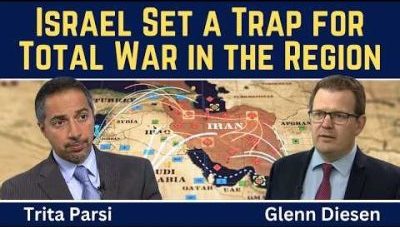
Trita Parsi: Israel Set a Trap for Total War in the Region
or go to
Aletho News Archives – Video-Images
From the Archive
Zionism’s Violent Legacy
By Donald Neff | Washington Report On Middle East Affairs | January 1996
On January 4, 1948, Jewish terrorists drove a truck loaded with explosives into the center of the all Arab city of Jaffa and detonated it, killing 26 and wounding around 100 Palestinian men, women and children.[1] The attack was the work of the Irgun Zvai Leumi – the “National Military Organization,” also known by the Hebrew letters Etzel – the largest Jewish terrorist group in Palestine. The Irgun was headed by Revisionist Zionist Menachem Begin and had been killing and maiming Arabs, Britons and even Jews for the previous ten years in its efforts to establish a Jewish state.
This terror campaign meant that at the core of Revisionist Zionism there existed a philosophical embrace of violence. … continue
Blog Roll
 Aletho News
- Trita Parsi: Israel Set a Trap for Total War in the Region
- Trump’s Iran war is on an Israeli leash
- Saudi oil boss issues global supply warning
- Riyadh Says Its Oil System Is Intact. The Numbers Say Otherwise.
- Trump and Netanyahu Want to “Finish the Job” on Iran
- US ‘one-sided dictation’ not Iran’s beliefs makes rational talks impossible: Baghaei
- Iran’s Next Strike May Not Explode. It Could Shut You Down /Col Doug Macgregor
- Iran: US political targets legitimate if assassinations return
- Iraq shuts key border crossing with Iran under US pressure: Report
- Undersea Internet cables could be targeted in retaliation for attacks on Iran: IRGC deputy chief
- If Americans Knew
- The Israel Lobby’s Changing Fortunes
- AIPAC has become such a political liability that it’s shifting to a more “nimble” approach to buying politicians
- At least 160 Israeli settler attacks in 2 weeks
- Will Gaza’s Ancient Christian Community Disappear Forever?
- Israel’s vision of regional security rests on keeping Arab states weak
- Heidi Levine recounts how Palestinian youths helped save her in settler attack
- DAILY UPDATE: Latest essential news on Palestine, Israel, & region
- Trump’s Intensifying Sabotage of the ICC, for Israel’s Sake
- Israeli military detain US and UK volunteers in West Bank including Democratic NY politician Brad Lander
- Americans at National Conservatism Conference held in Israel this year criticize Israel
- No Tricks Zone
- E-Cars Reduce CO2 Emissions By Only 41% Compared To Internal Combustion Engine Vehicles
- Predictions Made By Renowned Climate Professor Over Past Decades Have Been Proven To Be Poor
- New Study Suggests Large Regions Of The Pacific Ocean Have Been Cooling For The Last 80 Years
- Germany’s Green Energy Debacle: High Energy Costs Force Kahla Porzellan to Close After 182 Years!
- New Study: 50 Years Of The Most Aggressive ‘Net Zero’ Policies Can Only Affect The Global Climate By 0.03°C
- US September “Heat” Was No Record…Many Records Set Decades Ago
- Latest European Green Energy Debacle; Portugal’s Largest Flagship Solar Park Insolvent!
- Green Energy Debacle: German Expert Professor Fritz Vahrenholt Warns Of Severe Economic And Social Consequences
- Two More Paleo Reconstructions Affirm Meters-Higher Sea Levels Across Ireland, Brazil 7000-6000 Years Ago
- New Study: Earth And Venus Surface Warmth Largely Explained By Convection And Lapse Rate, Not CO2 Or Radiation

