New US Ambassador to Lebanon: I Came to Paralyze Hezbollah
By Sabah Ayyoub, translated by Zeinab Abdallah | Al-Akhbar | July 19, 2016
Elizabeth Richard, 65, seems interested to operate in Lebanon, where she commenced her missions last week. And she, according to the video introducing her at the US embassy, is “interested to get introduced to Lebanon’s natural and cultural heritage (in the video’s background, there are scenes showing the cedars, the Bay Rock and women stuffing vine leaves, edited in a bad and unrefined manner.) The new American ambassador, who visited the “land of cedars” in 2007 under an American initiative to train Internal Security Forces and arm them, seems assertive in her first message to the Lebanese people: “As Lebanon works to save its security and build the strong government’s institutions (…) the American people will stay by your side.” It was a nice diplomatic speech that covers unplanned intentions of the new ambassador, especially regarding her concept of “saving security” and “the state’s strong institutions.” Richard was clearer in her attestation at the congress after she was nominated for the post months ago. Thereat, the specialized in law announced her actual agenda, classifying the “main” problems in Lebanon; all what the Lebanese are suffering from currently in economics, security and politics is because of one single thing: the resistance.
In economics, Richard uncovered a magic equation to deal with the crisis in Lebanon, saying: “our target is to dismantle Hezbollah’s international financial network and help the Lebanese institutions and the Lebanese people, which will contribute directly to activating the economic prosperity in Lebanon.” How would targeting the international funding for resistance lead to refreshing the country’s economy?! Richard didn’t explain this in her testimony; she was not asked to do so in her country, neither the Lebanese government, nor diplomats moved to hold accountable a diplomat who publicly announced that she is going to work from inside Lebanon to fight one of the Lebanese parties that is represented in the parliament and participating in the government! Nobody even dared to demand explanation of the ambassador’s words. Richard, as if she is holding everything in her hands, with the old American unashamed boldness, said she will work hard “not to let Hezbollah break through the Lebanese banking sector” because this is “the interest of Lebanon and the United States.” The new ambassador raised her wand in front of the Lebanese state before she arrived at the host country, yet none of the officials’ sovereignty was touched.
On the security level, Richard had her own philosophy as well. Of course, “Israel” was absent from her speech regarding the security threats Lebanon is subject to, yet ISIL and al-Nusra threats were present. However, the ambassador seems assured in threatening the two organizations that were brought by al-Qaeda. She is convinced that “partnership between the United States and the Lebanese Security Forces, through the generous Congress support, played a decisive role in saving Lebanon’s security facing such threats.” Therefore, there is no fear on the Lebanese people from ISIL and al-Nusra, so what is the first threat Lebanon is subject to according to Richard? The answer is: Hezbollah. “Hezbollah’s activities in Syria create serious security threats in Lebanon,” the ambassador said as she vowed to support the Lebanese army since it is “the only legitimate protector of Lebanon.”
The third “main problem” the Lebanese are suffering from, as Richard identified, is the political void and decrying Lebanon’s independence and sovereignty, which she will also work on solving, this time in cooperation with “the voices calling for moderation and progress.” Against whom? Against “Hezbollah that is still interfering in Syria without the Lebanese consent,” Richard explains. The new ambassador’s swaggering made her talk on behalf of the Lebanese people, without the need to use numeric evidences, even if fabricated, to verify her announcement on the Lebanese people’s accepting or rejecting Hezbollah’s interference in Syria. The conclusion, as Richard informed the congressmen: Hezbollah went to Syria despite the will of most of the Lebanese, which decries Lebanon’s sovereignty and independence.
Usually, western diplomats complain that they couldn’t understand the happenings in Lebanon, and complain about its complicated social structure, economic system and political scene. However, it seems that Elizabeth Richard doesn’t suffer from any of this. Her vision is clear, and so is her single goal: to target the Lebanese resistance through its party, people and money using every possible means.
In her latest post before being appointed to custodianship on the Lebanese people, Richard was the Deputy Assistant Secretary in the Bureau of Near Eastern Affairs at the State Department. In her testimony at the congress in July 2015, she boasted the State Department’s achievements; counting the projects she supervised, such as: the initiative to qualify and develop industrial cities, creating job opportunities, activating exportation in Egypt, Jordan and “Israel”, the General Motors agreement to provide Egypt with huge amounts of electric energy, qualifying the railways in Algeria, buying tons of Iraqi rice, encouraging investments in the Gulf countries, supporting the youth initiatives and medical cooperation with “Israel” and the Arab Emirates… Most of the Middle Eastern and North African countries were present, yet Lebanon was absent from the achievements of Richard and her department last year, and now she comes to the weakest country in the region, having in her pocket a single (non-developmental) political project, promises of armament… and a raised wand!
Sanctions on Lebanon a form of Israeli aggression: Berri
Press TV – July 14, 2016
Parliament Speaker Nabih Berri has denounced sanctions on Lebanese banks and other financial institutions as a form of Israeli aggression.
Speaking at the Lebanese Emigrants Economic Conference in Beirut on Thursday, Berri said Israel is constantly trying to destroy Lebanon’s infrastructure and economy.
Berri was apparently making reference to the US law, which calls for the closure of bank accounts of individuals and organizations suspected of links to Hezbollah.
Hezbollah is credited with defending Lebanon against two wars launched by Israel – the US’s staunchest ally in the region – in 2000 and 2006.
Berri said Lebanon, through the assistance of its diaspora, will eventually emerge triumphant over a plot seeking to harm the country’s economy.
“We only have hope from the expatriates, and right now we no longer have hope but from you,” he said.
Berri further lashed out at Arab states for failing to commit to promised funds to Lebanon following Israel’s war on the country in the summer of 2006, saying only a third of the aid has been paid.
In February, Riyadh suspended USD 3 billion in military assistance to the Lebanese military and another USD 1 billion to the country’s internal security forces.
The kingdom also imposed sanctions on some Lebanese firms and individuals it accused of having links with Hezbollah.
Last month, Governor of Bank of Lebanon Riad Salameh stated that 100 bank accounts linked to Hezbollah members and legislators had been closed.
Hezbollah criticized the Central Bank of Lebanon for submitting to US pressures, saying the measures violated Lebanon’s sovereignty.
Islamic Jihad, Hamas: Turki Faisal’s Remarks Serve Zionist Occupation
Al-Manar | July 11, 2016
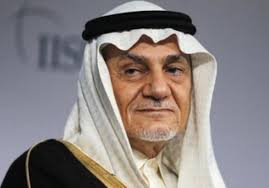 Palestinian resistance movements Islamic Jihad and Hamas have denounced remarks made by Saudi Prince Turki al-Faisal, saying such remarks serve the Zionist occupation.
Faisal, who in the past served as Saudi Arabia’s intelligence chief, said at a conference of the Iranian opposition over the weekend that the Iranian regime supports Hamas and Islamic Jihad in Palestine in order to cause instability in the region.
The Islamic Jihad said Faisal’s remarks serve the Israeli agenda that seeks to eliminate the Palestinian cause and open all the Arab and Islamic capitals to the Zionist entity.
“We tell those people: if you can’t stand up for Palestine and its people at least don’t stand by the Zionist entity to condemn the victim,” the Islamic Jihad movement said in a statement on Sunday.
“The Saudi Muslim people won’t accept to pave the way for the Israelis to reach Mecca and Medina.”
For its part, Hamas condemned the remarks, saying they were “baseless.”
“Everyone knows that Hamas is a Palestinian movement fighting the Zionist occupation in the land of Palestine, and has only a Palestinian agenda … and it adopts the concept of moderate Islam,” said a statement by the group.
Hamas further accused Faisal of saying things that serve the “Zionist occupation and provide it with further pretexts to carry out aggression against the Palestinian people.”
Neocon NGO Pressures Google, Facebook to Censor Content
By Richard Silverstein | Tikun Olam | June 27, 2016
Executives from Google and Facebook have faced enormous political pressure from forces as diverse as Pres. Obama himself to the Israel Lobby, to rid their sites of Islamist content. Over the years, videos portraying ISIS beheadings have outraged the public (though not on YouTube or Facebook, which immediately removes them). Now it appears that the Israel Lobby and their right-wing allies are demanding further action restricting access for videos they deem offensive.
The companies are discussing various methods to automate the removal of the videos, which would supposedly wipe the sites clean of Islamist extremism in a more thorough, speedy fashion. Currently, they use an algorithm which help police videos which violate copyright. If someone uploads a video whose content has already been flagged, an algorithm prevents it being uploaded again by another user. They plan to use a similar process to flag offensive videos by detecting whether they’ve been previously censored.
However, there is a fly in the ointment regarding this process. The companies have invited into this discussion a neocon NGO which is a product of the Israel Lobby. The group, Counter-Extremism Network (CEN), hired a computer scientist from Dartmouth College who claims to have developed software with which it can successfully police these sites for offending content. Microsoft has, somewhat alarmingly, agreed to fund and provide research support to develop the professor’s system for its websites.
The companies have rightly displayed some skepticism about the group’s “generous” offer. CEN is a neocon organization founded by a pro-Israel apparachik from the Bush administration, Mark Wallace. Wallace is a veteran GOP consultant, turned capitalist entrepreneur and anti-Iran warrior. He also founded a sister-organization, United Against a Nuclear Iran (UANI-Rightweb profile and my own profile of it), which targeted (often falsely) American companies it claimed were doing business with Iran and violating the sanctions regime.
The nadir of UANI’s vitriolic anti-Iran campaign was its targeting of international shipping magnate, Victor Restis. In these cases, Wallace and his cronies would approach a corporate target and demand a large donation in return for ceasing the embarrassing publicity UANI directed at the victims. Most preferred to pay up. Unlike the other corporate targets, Restis fought back and sued UANI for libel. The suit proceeded in federal court until the Justice Department intervened, claiming that moving forward would jeopardize U.S. national security. The judge then dismissed the case, refusing to permit Restis to clear his name.
Journalists speculated that UANI was using information supplied to it by foreign intelligence sources, specifically the Mossad or other Israeli outlets. The Justice Department intervention was reported to be a favor offered by the Obama administration to the Israeli government, so as not to reveal its covert intervention in American politics. The favor wasn’t repaid when Netanyahu became the foremost opponent of the Iran nuclear deal opposed also by UANI.
Now that the agreement is a done deal, Wallace appears to have moved on. Instead of Iran being the bogeyman, now it is ISIS. With the recent outcry over Islamist attacks in Paris, San Bernardino and Ft. Hood, Islamism has become the target of choice for the Israel Lobby and allies like Wallace.

Counter Extremism Network’s “terror list”
The group’s name is a misnomer. It doesn’t fight against “extremism.” It fights against Islam. There are countless violent extremists in the world who aren’t Muslim. But CEN has no interest in them. I’m attaching a screenshot of its list of targets. Only four non-Muslim groups: the Ku Klux Klan, Golden Dawn, Jobbik, and a German neo-Nazi party. As opposed to 25 Muslim terror organizations.
To give you a sense of how ridiculous these designations are: the Muslim Brotherhood is a group which participated in a democratic election and won the Egyptian presidency. Only to have the democratic government violently overthrown in a military coup. If anyone is a terrorist, it is the putchist al-Sisi, who overthrew Mohammed Morsi. The “Nusra Front” is also on the list. This bona fide Islamist extremist group is Israel’s current ally in the war against the Assad regime.
Among prominent groups missing from this list are violent Israeli settler groups like Hilltop Youth and Jewish Underground, which have murdered many Palestinian civilians.
I’m also surprised the BDS movement isn’t on the list. No doubt that’s an oversight that will be corrected.
Joining Wallace in founding CEN was ex-Sen. Joe Lieberman. On its board are other Israel Lobby veterans, Dennis Ross and Irwin Cotler. CEN’s name is a misnomer. It is not anti-extremist, it is anti-Muslim.
It’s important to note a parallel campaign by the Israeli government to pressure these social media platforms to censor content it deems hate speech, by which it means critical of Israel and the Occupation. There can be no doubt that although CEN hasn’t formally joined with this initiative, the two are bound up with each other tighter than Siamese twins.
Which raises the critical point: who decides what is “extremist?” Clearly, a beheading is extremist. An imam’s sermon calling for the extermination of non-Muslims qualifies. Overtly advocating violence qualifies. But what about a Hamas video that advocates resistance against Israel’s illegal Occupation which has killed tens of thousands over the past 50 years? Or a Hamas video which depicts the devastation of Gaza in the aftermath of the 2014 war? Does a Hezbollah video depicting the destruction of wide swaths of southern Lebanon after the 2006 Israeli invasion quality as “extremist?” In other words, is all content published by these groups censored by virtue of their designation as terrorists? Is that really what we wish the internet to become? A restricted space policed by ideologically-suspect algorithms?
I would strongly urge these technology companies to develop their own solutions to this problem and not rely on far-right Islamophobic ideologues for methods to censor the internet.
Are Al-Qaeda’s Lebanese Affiliates Opening a Lebanese Front in the Syrian War?
By Mahdi Darius Nazemroaya | Global Research | June 23, 2016
The US and its allies are working inside Lebanon to open a new front in the Syrian conflict. Lebanon has been sedated into a state of limbo by the lack of a government and the postponing of its parliamentary elections. Complicating matters, many institutional figures and military commanders have gone into retirement and the caretaker government is unable to replace them.
Hezbollah’s intervention into the Syrian conflict has given a boost to the Syrian government against the anti-government forces trying to overrun Syria.
This has turned the attention of the US and its allies onto Lebanon as a new arena of battle. Rockets are also being launched by anti-government forces from Syria, and even from inside Lebanon, against Hezbollah’s political strongholds and against Shia Muslim villages. The goal is to ignite the flames of sedition between Shiites and Sunnis inside Lebanon.
Photo Below: Picture of the Hariris adorned with the Future Party’s flag and Al-Qaeda and anti-government Syrian flags by their followers on the way to Sidon. (Photo by Mahdi Darius Nazemroaya)
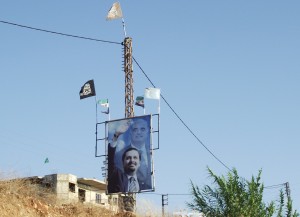
Al-Qaeda in Lebanon
Al-Qaeda’s flag has been flying in Lebanon for years. Driving near the airport in Beirut or on the road to Sidon (Saida) you can see the Al-Qaeda flags flying in black. The same goes for Tripoli (Trablos) and some areas inside Beirut. Since the Syrian conflict you can see the Al-Qaeda flag flying next to the Syrian insurgent’s flag. The US and its allies have actually turned a blind eye to the support that the Future Party of Saad Hariri provides to Al-Qaeda. It is worth noting that the current head of the UN Secretariate’s Department of Political Affairs, Jeffrey Feltman, who was once the US ambassador to Lebanon before he was promoted in the US Department of State, also turned a blind eye to the support for Al-Qaeda by the Hariri family’s Future Party and its March 14 Alliance.
The Hariri family has had a long alliance with the takfiris and Al-Qaeda supporters. They have been political allies with groups in Lebanon that openly revere Osama bin Laden as a great leader. It was the Hariri family and members of their Future Party that also imported the fighters that would become Fatah Al-Islam into Lebanon. The exploitation of takfiri militias inside Lebanon by the Hariri family was intended to crush Hezbollah after Israel failed to do in 2006. Regionally, the same strategy involved the Hariri family’s Saudi patrons and George W. Bush’s administration, which were preparing and arming these militias as tools/weapons against Syria and Iran. The Hariris were furious when Seymour Hersh exposed them and had him publicly rebuked.
Months later Fatah Al-Islam would get out of control. Seymour Hersh would be vindicated. The Hariri-led March 14 Alliance would dishonestly try to blame Syria and the Palestinians for creating and supporting the group that they themselves had created. The fighting in Lebanon between the Lebanese military and Fatah Al-Islam foreshadowed the armies that were amassed for regime change in Libya and Syria by the US and its allies.
Tripoli and Sidon as Extensions of the Syrian Conflict
Lebanon’s second largest city, Tripoli, has seen intense fighting between the Alawite community of Lebanon, which is represented by the Arab Democratic Party, and the Hariri family’s takfiri allies. Hariri’s allies in Tripoli are open supporters of Al-Qaeda and the anti-government forces in Syria; they have smuggled weapons across the Lebanese-Syrian and sent large numbers of fighters into Syria to topple the government in Damascus. The Future Party has been involved in coordinating this also.
Lebanon’s third largest city, Sidon, has also been the scene of fighting and tensions between Ahmed Al-Assir, a Hariri ally, and Hezbollah’s supporters and allies. Al-Assir’s men have even tried to kill one of Sidon’s main Sunni Muslim clerics, Maher Hammoud, because he has constantly been working for Muslim and Lebanese unity and saying that there is an attempt to ignite a Shia-Sunni conflict in Lebanon and the broader region. A contingent from the Lebanese military has had stay in Sidon to keep the peace in the city.
Al-Assir’s men attacked and killed members of the Lebanese military in a village on the outskirts of Sidon for no apparent reason on June 23, 2013. This has ignited a battle in Sidon. Thick smoke from the city can be seen from a far distance. It has been reported that members of the anti-government forces from Syria have also joined them. The Lebanese military has deployed heavy weapons to fight Al-Assir’s group and to restore peace to the Lebanese city.
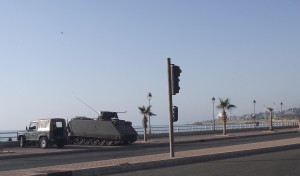
Photo Below: Lebanese Armed Forces checkpoint in Sidon. (Photo by Mahdi Darius Nazemroaya)
The Objective is to Force Hezbollah to Retreat in Syria by Targeting Lebanon
The Lebanese state is now being targeted. There have been an increasing number of attacks against the Lebanese military from the Syrian border since Hezbollah intervened in Syria. There were already attacks on Lebanon even before Hezbollah intervened in the Syrian conflict, but those were mostly intended to provoke Hezbollah.
Those targeting the Lebanese state are now taking advantage of the lack of a functioning government and the leaderless status of several national institutions to create a state of chaos in Lebanon. There have been attacks on both Shiite and Sunni villages in the Bekaa Valley and a cycle of violence has begun. It is clear that the objective is to turn Shiites and Sunnis against one another and the Lebanese military has understood this too. This is why Hezbollah has asked the Shiite clans in Bekaa to stay calm after they have been attacked. Protests have broken out in Lebanon too.
The violence in Sidon is part of a strategy. Al-Assir’s unprovoked attack against the Lebanese military is intended to mount pressure on the Lebanese state and exacerbate Shia-Sunni tensions.
Hezbollah refuses to get embroiled in a sectarian battle inside Lebanon. While the Amal Movement, the Shiite political party that is Hezbollah’s partner, has mobilized its militias and started manning the southern and eastern roads into Sidon, Hezbollah has kept calm. Amal’s media has also been reporting on the incident profusely and even in a sectarian fashion, but Hezbollah’s media have inversely been calm and said little.
Lebanon is being lit up with the aim of forcing Hezbollah to pullout from Syria by turning inwards to fight an internal battle. Essentially, Lebanon is now a second front in the Syrian conflict.
The US and Saudi Arabia have probably asked the Hariri family to prompt their Al-Qaeda affiliated clients to initiate violence in Lebanon and capitalize on the lack of a government and the weakened state of the Lebanese state.
Mahdi Darius Nazemroaya is a sociologist and Research Associate of the Centre for Research on Globalization (CRG). He is currently working out of Lebanon. He was in Sidon during the fighting and the deployment of the Lebanese military.
Copyright © Mahdi Darius Nazemroaya, Global Research, 2013
See also:
Saudi Arabia obstructing election of Lebanon president: Hezbollah
Russia slaps Israel in the face
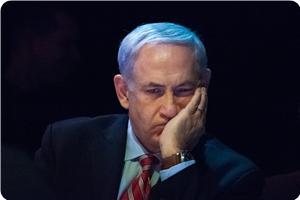
By Said Gafurov | Pravda | June 10, 2016
Israeli Prime Minister Benjamin Netanyahu’s recent visit to Moscow and his negotiations with President Putin, for the fourth time this year, has created the impression of failure. Russia and Israel have been developing active cooperation recently in the field of culture, trade and customs and education.
However, Netanyahu’s visit to Moscow does look like a failure from the point of view of foreign policy. In an official statement for the press, President Putin spoke about the “open” and “constructive” nature of the talks with the Israeli PM. In the diplomatic world, though, when negotiations are held in a friendly and even neutral fashion, they usually say that the talks were held “in a friendly atmosphere.” This is something that we have not heard from the Kremlin this time. In other words, there is no understanding between Russian and Israeli leaders.
The main purpose of Netanyahu’s visit to Russia was clearly focused on foreign policy issues, such as the regulation of the crisis in Syria and a possible solution to the Palestinian conflict. Israel sees clearly that the civil war in Syria is ending. Netanyahu’s visit coincided with a remarkable speech that Bashar al-Assad delivered at the opening session of the newly elected parliament. It is obvious that the question of the end of the war and national reconciliation in Syria is a matter of time. What happens afterwards?
The conflict in Syria has created an alliance between Russia, Iran, Syria, and units of Lebanese resistance. As for the latter, it is not only Hezbollah fighters, but also a large number of volunteers from Lebanese secular parties that struggle against Islamic State militants in Syria.
Netanyahu seems to be concerned about the prospect for the new, reunited Syria to appear near Israel. The Israeli Prime Minister is also concerned about the strong influence of Iran in the post-war Syria.
What does President Putin say to all this? Putin delivers a long speech, in which he talks about culture, economy, trade and economic relations, tourism and everything else. As for the Syrian problem, Putin said only two phrases: “We have paid great attention to international issues, and of course, we talked about the complicated situation in the Middle East region, including in Syria.” That’s all.
One shall assume that there is no understanding between Russia and Israel. Russia has ignored Netanyahu’s requirements, for example, to restrict supplies of weapons to Lebanon that Hezbollah fighters could get their hands on. Russia views Hezbollah as one of the most important political parties in Lebanon. Hezbollah is a member of the ruling coalition. Russia follows its principle to supply arms only to legitimate governments. Hezbollah is an important element of the legitimate government of Lebanon. Moscow sees Hezbollah as an essential element of structure of the Middle East.
In addition, Putin reaffirmed Russia’s position for a comprehensive and just settlement of the Palestinian-Israeli conflict and stressed that Russia was ready to act as a mediator. This came as another slap in the face of Israel, because it is the Palestinians who demand the Palestinian issue should be solved by the international community, while Israel insists on bilateral negotiations between Palestine and Israel.
Some 3,000 ‘Hezbollah-tied’ accounts await freeze
Press TV – June 11, 2016
As many as 3,000 more bank accounts, allegedly tied to the Lebanese resistance movement of Hezbollah, reportedly await freeze in the coming days under pressure from the United States.
Those to be affected include “employees, partners, customers affiliated with the party,” Saudi daily Asharq Al-Awsat reported on Friday, citing a source within Lebanon’s Central Bank.
On December 18, 2015, US President Barack Obama signed into law the Hezbollah International Financing Prevention Act.
The legislation says Washington will target those “knowingly facilitating a significant transaction or transactions for” Hezbollah or any individual, business or institution linked to the group.
As per the law, the US Treasury Department’s Office of Foreign Assets Control has been tasked with releasing names of the entities it considers to be associated with the group.
Governor of Lebanon’s Central Bank Riad Salameh has so far ordered 100 accounts frozen in line with the Treasury’s instructions as any failure to abide by the law will result in US sanctions.
“If anyone is suspicious, there can be no leniency, even if the customers have millions of dollars, because the negative repercussions in not abiding by the [US] law will be catastrophic on the bank,” the source said.
Interviewed by the CNBC, Salameh recently said, “Our priority is to keep Lebanon on the international financial map, so we have taken a resolution that we will implement that US law in Lebanon, and we have put in place a structure to do this, to satisfy the objectives of that law.”
On Thursday, Hezbollah reacted to the remarks, saying Salameh’s position “shows that the monetary policy has lost its sovereignty.”
Hezbollah is credited with defending Lebanon against two wars launched by Israel, the US’s strongest ally in the region, in 2000 and 2006.
In recent months, Saudi Arabia, another staunch ally of the US, has also been targeting the resistance movement.
Earlier in the year, Riyadh imposed sanctions on four Lebanese firms and three individuals it accused of having links to Hezbollah, among its other measures against the movement.
Analysts say Hezbollah has come under such pressure due to its involvement in anti-terrorism military operations in neighboring Syria.
The resistance movement has been successfully helping the Syrian army fight Saudi-backed Takfiri militants in order to prevent the Syria conflict from spilling over to Lebanon.
Canadian court awards $13mn in frozen assets to ‘Iran terror’ victims
RT | June 11, 2016
A Canadian court has awarded $13 million in non-diplomatic assets seized from Iran to the families of Americans who died in several attacks globally, which had allegedly been sponsored by Tehran between 1983 to 2002.
The judgment by the Ontario Superior Court of Justice, obtained by AFP on Friday, found Tehran responsible for financing and training Hamas and Hezbollah operatives, who carried out eight bombings or hostage-takings in Buenos Aires, Israel, Lebanon and Saudi Arabia over a period spanning nearly 20 years.
“Terrorism is one of the world’s greatest threats,” Ontario Superior Court Justice Glenn Hainey said in his decision. “The broad issue before the court is whether Iran is entitled to immunity from the jurisdiction of Canadian courts for its support of terrorism.”
The ruling for the $13 million payout does not affect Iran’s diplomatic property in Canada but does touch non-diplomatic properties and a list of frozen bank accounts. Tehran did not immediately comment on the court judgment.
The suit was heard under the 2012 Justice for Victims of Terror Act, which allows the families’ victims to collect damages from state sponsors of terror groups. In Canada, Iran is designated a sponsor of terrorism.
The judgment on June 10 mirrors a recent American court ruling against Tehran that was also won by families of the terrorist attack victims in the United States in Spring. Iran has promised to battle the decision in international courts.
US terror report on Iran a stupendous denial of Washington-Saudi terror reality
By Finian Cunningham | RT | June 7, 2016
Since 1984, the US has been labeling Iran a leading state sponsor of terrorism, a charge that was reiterated last week. However, global events explode Washington’s credibility and denial of reality.
Russia’s Defense Ministry, for example, this week reported that some 270 civilians were killed within 24 hours from shelling of Syria’s second city, Aleppo, by Al-Qaeda-affiliated terror groups.
Moscow said the surge in violence by these groups followed from the curbing of Russian air strikes at the request of Washington – purportedly to spare “moderate rebels” located in the same areas as Al-Qaeda terror brigades.
The latter include Jabhat al-Nusra and Islamic State (IS, formerly ISIS/ISIL), both of which are internationally proscribed by the United Nations Security Council.
As noted by former British ambassador to Syria, Peter Ford, the risible pretext of protecting “moderates” is a cynical cover for the unavoidable fact that the US is, in effect, siding with Al-Qaeda terrorism in Syria for the overthrow of the Assad government.
It has been reliably documented that the anti-government militia in Syria affiliated with Al-Qaeda, including Jaysh al-Islam and Ahrar al-Sham, are supported materially and politically by the governments of Saudi Arabia, Qatar and NATO-member Turkey – all close allies of Washington.
Also in the news, just as the latest US State Department report came out pillorying Iran over terrorism, the United Nations condemned the Saudi-led military coalition in Yemen for inflicting 60 percent of child deaths over the past year in the war-torn country.
The Saudi-led coalition includes the US and Britain which supplies warplanes and logistics for air raids purportedly aimed at defeating Houthi rebels who ousted the US-Saudi-backed regime in early 2015. The latest UN report also condemned the Saudi coalition for destroying hospitals and schools across Yemen, which had already been designated as the Arab region’s poorest country even before the US-Saudi military intervention began in March 2015.
Disgracefully, within days of the report being published UN Secretary General Ban Ki-Moon buckled under political pressure and removed Saudi Arabia and its coalition partners from a global blacklist of rights violations against children.
Nevertheless, while in Syria the terrorist campaign is being waged by Al-Qaeda-affiliated groups funded and weaponized indirectly by foreign governments. In Yemen a major part of the violence is attributable directly to the military forces of the same foreign governments. By any definition this is terrorism, either state-sponsored or state-directed.
In presenting its latest global terror report, the US State Department devotes the vast majority of its concern to the threat posed by Islamic State (also referred to as ISIL) and related Al-Qaeda franchises, such as Boko Haram in Nigeria and Al Shabaab in Somalia.
“ISIL remain the greatest terrorism threat globally,” said the US State Department, adding: “ISIL-aligned groups have established branches in parts of the Middle East, North Africa, West Africa, the Russian North Caucasus , and South Asia.”
In the US press briefing at least 95 per cent of the content was connected to Al-Qaeda-linked terror groups. Only about five per cent dealt with Iran and its alleged sponsorship of terrorism.
After detailing ISIS terrorism, the State Department then makes the discrepant assertion: “The United States continues to work to disrupt Iran’s support for terrorism. Iran remains the leading state sponsor of terrorism globally.”
If Iran is the “leading terror sponsor globally”, as Washington claims, then why is its latest global terror report preponderantly taken up with Al-Qaeda and various tentacle organizations?
Moreover, in the fleeting details on Iran in its report, the US bases its claim on the rather hackneyed allegation that “Iran continues to provide support to Hizballah [sic], Palestinian terrorist groups in Gaza, and various groups in Iraq and throughout the Middle East” as well as its support for “the Syrian regime.”
Iran scoffed at the allegations, saying that its support for Hezbollah in Lebanon and Hamas in Palestine is a legitimate alliance with liberation movements against US-backed Israeli state oppression.
As for Washington’s claim that Iranian support for Syria constitutes terror sponsorship, if it were a credible assessment then the US should at least be consistent in its logic and thereby should have included Russia in its latest terror report, given that Moscow is supporting the Syrian government militarily.
The US global terror report does not stand up to scrutiny. Its flagrant disconnect with reality betrays the study as having a political, or more bluntly, propaganda purpose.
The fact is that terrorist activity around the world is, by far, greatly more ascribed to Al-Qaeda-type groups. The US State Department says so itself. These groups are funded ideologically and logistically by Washington’s allies, principally Saudi Arabia. That connection of Saudi sponsorship of terror organizations has even been acknowledged previously by former US Secretary of State Hillary Clinton and the US Treasury Department, among other senior establishment sources.
Hezbollah’s, and by extension Iran’s, alleged involvement in terrorism is an equally politicized subject fraught with murky claims and counter-claims. The US and Israel designate Hezbollah as “terrorist” but the European Union and several European governments do not. Russia officially views Hezbollah as a legitimate political party, which is a member of Lebanon’s coalition government.
Washington’s antagonism to Hezbollah arises from a litany of alleged terrorist actions, including the bombing of a US marines barracks in Beirut in 1983, which killed 241 American troops – the single greatest US military loss since the Second World War.
Several US courts have convicted Hezbollah and Iran of involvement in the Beirut bomb massacre, as well as other atrocities in Lebanon. Hezbollah and Tehran reject many of these accusations. But even if there were some truth to the American claims, it could be reasonably argued that the actions constitute military combat, not terrorism. The US-backed Israeli invasions of Lebanon in 1982 and again in 2006 were themselves arguably acts of aggression, or state-terrorism.
Another disconnect in the latest US terror report highlighting Iran is the flurry of European trade agreements signed with Tehran since the conclusion of the international nuclear accord last year. Iranian Foreign Minister Mohammad Javad Zarif’s trip to Finland last week was but the latest in a host of renewed European relations.
If Iran were such a terrorist pariah, as Washington asserts, would European governments really be courting Tehran with evident diplomatic respect?
It is estimated the US owes Iran upwards of $100 billion in assets frozen since the Islamic revolution in 1979. The US is also accused of dragging its feet on implementing sanctions relief under the terms of the P5+1 nuclear accord that came into effect on January 16 this year.
It seems obvious that one way for Washington to procrastinate on implementing the nuclear accord and the financial rewards due to Iran from unfrozen assets and European trade deals would be for the US to maintain its narrative accusing Iran of “sponsoring terrorism”.
Despite Washington’s narrative sounding increasingly hollow and in denial of its own documented links to global terrorism.
Liberation Day in South Lebanon: Resistance and Memory at Khiam Prison

Samidoun Palestinian Prisoner Solidarity Network – May 25, 2016
25 May 2016 not only marks the 16th anniversary of the liberation of South Lebanon from 22 years of Israeli occupation and oppression by the Lebanese Resistance, but also the liberation of Lebanese political prisoners from the infamous Khiam prison. On 23 May 2000, 144 Lebanese prisoners were liberated from Khiam, 2 days before the complete withdrawal of the occupation forces.
3,000 Lebanese stormed Khiam, the site of infamous torture of Lebanese resisters, breaking the locks with axes and crowbars. “Set up by the Israelis in 1985 on a hill in the village of Khiam in the South Lebanon Governorate, the Khiam prison was considered to be one of the most ruthless detention and interrogation centers in the Middle East. While the Israelis governed the prison, which included 67 cells and more than 20 solitary confinement cells, they used the South Lebanon Army (SLA), an Israeli proxy militia made up of Lebanese nationals, to execute their orders,” wrote Rana Harbi in Al-Akhbar.
Over 5,000 Lebanese, including 500 women, were imprisoned in Khiam prison over the years. Lebanese who participated in all forms of resistance to the occupation and its proxy forces were tortured brutally inside the notorious prison. The prison after its liberation became a museum and symbol of the torture of the occupiers and the victory of the Lebanese people and their resistance, of their freedom obtained through struggle and years of resistance.
In 2006, when Israel attacked Lebanon, it bombed the Khiam site, leaving a pile of rubble at the site of the prison, as if attempting to destroy the memory of its torture, brutality – and its defeat – preserved by the Lebanese people. However, the memory and commitment to resistance of the former prisoners – many of whom continue to struggle and play leading roles in Lebanese movements and parties, including Hezbollah and the Lebanese Communist Party – and of the people, cannot be erased by the bombing of the prison site, just as they could not be erased by torture, solitary confinement, and years of imprisonment.
The liberation of Khiam prison was not merely symbolic; it was central to the liberation of South Lebanon, just as the liberation of Palestinian prisoners is central to the struggle for the liberation of Palestine. The Lebanese people and Resistance continue to struggle against Israeli occupation of the Shebaa Farms; and the Palestinian people and their Resistance continue to struggle for the liberation of Palestine – its land, its people and its prisoners after over 68 years of occupation. The victory in South Lebanon and the liberation of Khiam remains an anniversary of liberation and a promise for future victories over torture, oppression and occupation.
The following testimonies of former prisoners held in Khiam prison were collected and published in Al-Akhbar by Rana Harbi in 2014:
Degol Abou Tass
In 1976, at the age of 16, I was arrested in a village in occupied Palestine for the first time. I told the Israelis that I trespassed by mistake. They knew I was lying but released me anyway. My parents packed my bags and forced me to leave the country. I found out later that I was the first Lebanese citizen to get arrested by the Israeli forces.
I came back to Rmeish [a village on the borders in South Lebanon] in the 1980s after the Israeli invasion of Lebanon. The civil war was still raging in Beirut but in the south different resistance movements, such as the Lebanese Communist Party, the Amal Movement, Syrian Social Nationalist Party and many other factions, united against the Israelis. A few months after my arrival, the SLA knocked on my parents door. I had to leave the country, again.
I was miserable. I couldn’t stay away for long. In the early 1990s I came back to Rmeish. All the armed groups were long gone. Hezbollah dominated the resistance scene. I tried to reconnect with old militia leaders but in vain.
One day, an old childhood friend pulled into my driveway. “Are you willing to fight with us?” he asked. I looked uncertain. “Us … Hezbollah,” he added. I climbed into his car and we drove away. In 1998, one of my neighbors ratted me out.
“A Christian with Hezbollah? Now that’s something,” the Israeli officer interrogating me said. “How much are they paying you? We will pay double, no triple. What is your price? We can work something out,” he continued. I remained silent. “Okay then Jesus, welcome to Khiam prison.”
In Khiam prison we died a hundred times every day. Torture included electric shocks, being tied naked to a whipping pole for hours under the burning sun in the summer and snow in the winter, and getting whipped and beaten continuously with metal rods, wires and nightsticks.
We were caged and treated like animals. Believe me, it wasn’t so much about the pain, but the humiliation.
On the morning of May 23, 2000, the guards were talking and walking outside, as usual. Suddenly, complete silence. You could hear a pin drop. We heard the daily UN airplane fly by so we knew it was 9:30 am. “Where did they go?” one prisoner asked. We had no idea.
“They are moving us to occupied Palestine,” yelled a prisoner in a cell right next to ours. I put my feet on the shoulders of two of my cellmates so that I can reach the small window right under the ceiling. “All of us?” I asked. “They will execute half and take half … this is what we heard,” replied another prisoner. Before I could even reply I heard a noise coming from a distance. I couldn’t see anything. The voices grew louder and louder.
“Looks like our parents are clashing with the SLA guards as usual,” one prisoner said. “I bet my mother is still trying to bring me food,” another exclaimed. And then we heard gunshots. People were screaming. More gunshots.
“They are shooting our parents!” said one frightened detainee. “No, the mass execution began. They will execute half of us remember!” replied another. Panic attacks. Anxiety. Fear.
I put my ear against the door. I heard ululations. I heard prayers. I heard women. I heard children. Suddenly, the door opening through which food was usually served broke wide open. “You are liberated, you are liberated!” I fell on my knees. I thought I was hallucinating. I put my fist out. Two men grabbed my fist. “Allah akbar, Allah akbar (God is the greatest) … you are liberated!” My cellmates were all kneeling on the floor in disbelief. The locks were getting smashed from the outside. I cried aloud and the door broke wide open. I don’t really remember what happened next.
I was the first prisoner to get caught on camera. My parents watched the liberation of Khiam on TV because Rmeish was still under occupation at the time. They didn’t recognize me though. My hair and beard were too long and well, I was screaming “Allah akbar!”
Fourteen years later, I’m living with my wife and children in Rmeish, and every morning I drink my coffee while looking over occupied Palestine.
Adnan al-Amin
In November 1990 I was picking up photos from a store in Marjeyoun, a city in south Lebanon, when I got arrested. I was 19 at the time.
They put a tight black cover over my head and made me strip naked. Suspended from my bound wrists from a metal pole, hot and cold water was thrown on me consecutively … hot cold hot cold until I was completely soaked. Then they attached electrodes to my chest and other particularly sensitive areas of my body and electrocuted me, repeatedly.
In the 70 day interrogation period, I was tortured three times per day. I used to lose consciousness and wake up to find myself stumbling blindly in a pitch-black, 1m by 80cm by 80cm solitary confinement room.
We were tied to window grills naked for days in painful positions, freezing water thrown at us in the cold winter nights. We were whipped, beaten, kicked in the head and the jaw, burned, electrocuted, had ear-shattering whistling in our ears, and deprived of food and sleep … it was hard, very hard.
I endured the pain. With time, I became numb. I survived it all without saying a word. I was winning, I thought.
One morning, they dragged me into the interrogation room. “You didn’t tell me your sister was this beautiful,” one of the SLA officers said. My whole world came crashing down. “Wait until you see his mother,” said another. Handcuffed, I threw myself on him from across the table. It costed me 14 hours in the “chicken cage,” a 90-cubic-centimeter enclosure used for extra-severe punishment.
The SLA used to bring in the wives, sisters and daughters of the prisoners and treat them in a vulgar manner like taking off their head scarves, groping them and threatening to rape them. For me, the mere thought was intolerable. “Your sister will pay you a visit tomorrow. You miss her don’t you?”
“I’m a Hezbollah fighter,” I confessed.
Up to 12 prisoners were crammed in a tiny room. We were buried alive. The cells were like coffins. Light and air hardly penetrated through the small, barred windows located near the ceiling. We could barely breathe. We used to relieve ourselves in a black bucket placed in the corner. The heavy odor of human sweat and wastes was intolerable. We showered every three or four weeks. Once a month, we were allowed into the “sun or light room” for 20 minutes only.
One night in 1991 I woke up to the deafening screams of a detainee being tortured in the yard. The louder he screamed, the harder he got whipped. His cries were unbearable, beyond anything I had ever heard before. “You are killing him, you animals,” one of my fellow cellmates shouted.
We started banging on the door of the cell, kicking it with our feet, yelling and asking them to stop. Other prisoners in other cells joined us, but the lashes kept falling and the cries continued. And then … silence. Youssef Ali Saad, father of eight, died under torture on that cold January night. One month later, Asaad Nemr Bazzi died because of medical neglect.
Do you know what the worst part was? Fellow Lebanese citizens did this to us. I almost died on the hands of a man named Hussein Faaour, my neighbor in Khiam. Abu Berhan, another torturer I remember was from Aitaroun. The SLA members were all Lebanese, mostly from the south. Family members, neighbors, childhood friends, classmates, teachers … Lebanese who decided to sell their land and people for cash.
Lebanese who are now living among us like nothing happened, as if they did nothing! It breaks my heart that our former tormentors have escaped punishment so easily.
Fourteen years later, I’m still waiting for justice.
Nazha Sharafeddine
In 1988, I was in Beirut purchasing medicine for my pharmacy in al-Taybeh (a village in South Lebanon) when the SLA forces, aware of my role in transferring arms to Hezbollah fighters, first came looking for me. They stormed into our house again a week later but my mother told them I was in Bint Jbeil. It was the truth but they didn’t believe her.
I remember opening the front gate that afternoon and seeing my mother waiting, weeping and trembling on the doorstep. “They took away your sister and your sister-in-law along with Hadi (her five-month-old baby.) My daughter, my grandson!” she cried. I put on my clothes and waited for the SLA on the front porch. My sister was 20-years-old at the time and I was 26. My mother begged me to run away, but I didn’t.
My mother collapsed on the ground next to the SLA vehicle. I sat in the backseat and they took me away.
Blindfolded I was shoved into the interrogation room. Boiling water was thrown on my face, and my fingers and ears were electrocuted. I didn’t say a word. This went on for a month.
“I heard Hadi is sick,” one of the Israeli officers told me one morning. He wasn’t lying. My sister in law got infected and breastfeeding her child was not an option anymore. Psychologically, I suffered greatly. I wished they would just beat me up instead. I struggled, but I remained silent. Two months later Hadi and his mother, along with my sister, got released. They were of no use to the Israelis anymore.
Women detainees, like men, were severely tortured. You see, gender equality is not always a good thing [she laughs]. Let me tell you how the torture stopped.
After spending 15 days in solitary confinement, I found out upon my return to the cell I shared with six other women that one of my fellow prisoners had an extremely disgusting skin rash. I examined her and as a pharmacist I knew that her rash was contagious. As planned, I got infected. Soon, my skin started changing and I looked like an acid attack victim.
Clearly disgusted by my deteriorating skin, the SLA guard dragged me by my hair into yet another torture session. The torturer, a woman, was waiting for me. With my hair still trapped between the guards fingers, he forced me down to my knees. Before the torturer’s fist reached my jaw, I told her that my skin condition was contagious. The guard instantly let go of my hair and they both took a step back. I tried to keep a straight face but I couldn’t hide my smile. Nobody laid a hand on me after that day.
Fourteen years later, I made peace with the past. My three years in Khiam were tough, but now I feel blessed. I really do.
U.S. Anti-Hezbollah Law Unfairly Targeting Charity Network
teleSUR | May 21, 2016
A Lebanese charity network run by a Shiite Muslim cleric said it had been unfairly caught up in new U.S. financial sanctions against Hezbollah, accusing Lebanese banks of applying the restrictions too widely.
The U.S. act passed in December threatens to punish any organization providing significant finance to Lebanese Shiite group Hezbollah, deemed a terrorist organization by Washington.
The Mabarrat foundation told Reuters that some Lebanese banks, scared of risking international isolation, had frozen some of its accounts, even though it had no political affiliation.
The foundation was established by the late Grand Ayatollah Sayyed Muhammad Hussein Fadlallah, a top authority in Shiite Islam who was an early mentor to Hezbollah but later distanced himself from its ties to Iran. He died in 2010.
Sayyed Ali Fadlallah, his son, declined to say which bank or banks had frozen the accounts.
“The foundation’s name was not mentioned in this law … what is happening now are precautionary measures taken by some institutions that are dealing with this matter far removed from the accuracy required to ensure no one is done an injustice,” Fadlallah told Reuters in an interview on Friday.
The foundation generates funding through individual donations and a network of businesses including hotels, restaurants and petrol stations.
“We felt from our meeting with some of the banks that they are afraid and wanted to take precautions that were greater than necessary,” said Fadlallah, whose charities include schools, hospitals and orphanages.
The U.S. Hezbollah International Financing Prevention Act has ignited an unprecedented dispute between Hezbollah, Lebanon’s most powerful group, and the central bank.
The Shiite militia is Lebanon’s most powerful political and military group, has provided crucial support to the Syrian army, along with Iranian forces and the Russian air force. The group is estimated to have lost around 1,200 fighters in Syria’s five-year-old conflict. It has dealt serious blows to the Nusra Front, which is linked to al-Qaeda, and the Islamic State group.
The organization has said the law will lead to “a wide rift” between Lebanese citizens and the banks, suggesting many Shiites would stop dealing with banks for fear of being sanctioned.
The central bank has said the U.S. law must be applied to avoid the international isolation of Lebanon’s banking sector.
Central bank governor Riad Salameh said in a May 17 statement that banks that intended to close accounts of individuals or organizations considered to be in breach of the U.S. law must provide justification for that decision, and wait for a response from a central bank committee.
RELATED:
Hezbollah Claims Electoral Victory in Lebanon’s Eastern Region
Featured Video
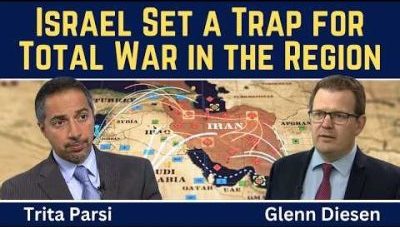
Trita Parsi: Israel Set a Trap for Total War in the Region
or go to
Aletho News Archives – Video-Images
From the Archive
Zionism’s Violent Legacy
By Donald Neff | Washington Report On Middle East Affairs | January 1996
On January 4, 1948, Jewish terrorists drove a truck loaded with explosives into the center of the all Arab city of Jaffa and detonated it, killing 26 and wounding around 100 Palestinian men, women and children.[1] The attack was the work of the Irgun Zvai Leumi – the “National Military Organization,” also known by the Hebrew letters Etzel – the largest Jewish terrorist group in Palestine. The Irgun was headed by Revisionist Zionist Menachem Begin and had been killing and maiming Arabs, Britons and even Jews for the previous ten years in its efforts to establish a Jewish state.
This terror campaign meant that at the core of Revisionist Zionism there existed a philosophical embrace of violence. … continue
Blog Roll
 Aletho News
- Trita Parsi: Israel Set a Trap for Total War in the Region
- Trump’s Iran war is on an Israeli leash
- Saudi oil boss issues global supply warning
- Riyadh Says Its Oil System Is Intact. The Numbers Say Otherwise.
- Trump and Netanyahu Want to “Finish the Job” on Iran
- US ‘one-sided dictation’ not Iran’s beliefs makes rational talks impossible: Baghaei
- Iran’s Next Strike May Not Explode. It Could Shut You Down /Col Doug Macgregor
- Iran: US political targets legitimate if assassinations return
- Iraq shuts key border crossing with Iran under US pressure: Report
- Undersea Internet cables could be targeted in retaliation for attacks on Iran: IRGC deputy chief
- If Americans Knew
- The Israel Lobby’s Changing Fortunes
- AIPAC has become such a political liability that it’s shifting to a more “nimble” approach to buying politicians
- At least 160 Israeli settler attacks in 2 weeks
- Will Gaza’s Ancient Christian Community Disappear Forever?
- Israel’s vision of regional security rests on keeping Arab states weak
- Heidi Levine recounts how Palestinian youths helped save her in settler attack
- DAILY UPDATE: Latest essential news on Palestine, Israel, & region
- Trump’s Intensifying Sabotage of the ICC, for Israel’s Sake
- Israeli military detain US and UK volunteers in West Bank including Democratic NY politician Brad Lander
- Americans at National Conservatism Conference held in Israel this year criticize Israel
- No Tricks Zone
- E-Cars Reduce CO2 Emissions By Only 41% Compared To Internal Combustion Engine Vehicles
- Predictions Made By Renowned Climate Professor Over Past Decades Have Been Proven To Be Poor
- New Study Suggests Large Regions Of The Pacific Ocean Have Been Cooling For The Last 80 Years
- Germany’s Green Energy Debacle: High Energy Costs Force Kahla Porzellan to Close After 182 Years!
- New Study: 50 Years Of The Most Aggressive ‘Net Zero’ Policies Can Only Affect The Global Climate By 0.03°C
- US September “Heat” Was No Record…Many Records Set Decades Ago
- Latest European Green Energy Debacle; Portugal’s Largest Flagship Solar Park Insolvent!
- Green Energy Debacle: German Expert Professor Fritz Vahrenholt Warns Of Severe Economic And Social Consequences
- Two More Paleo Reconstructions Affirm Meters-Higher Sea Levels Across Ireland, Brazil 7000-6000 Years Ago
- New Study: Earth And Venus Surface Warmth Largely Explained By Convection And Lapse Rate, Not CO2 Or Radiation

