Honduras: Congress Resurrects Military Police Force
Weekly News Update on the Americas | August 25, 2013
Honduras’ National Congress voted on Aug. 21 to approve a law creating the Military Police of Public Order (PMOP), a new 5,000-member police unit composed of army reservists under the control of the military. This will be in addition to a 4,500-member “community police” force that the government is forming, according to an Aug. 12 announcement by Security Minister Arturo Corrales. Although he called the move a “change of course,” Corrales failed to explain the difference between the community police, which is to be operative by September, and the existing national police force.
The government’s plan to raise the number of police agents by 9,500 is clearly meant to respond to the dramatic increase in crime in Honduras; according to the United Nations, the country now has an annual murder rate of 84 for every 100,000 people, the highest in the world. Police corruption is a major problem, and police agents have been convicted of high-profile crimes [see Update #1187]. The current police force had 14,472 agents on the payroll as of May, but in a new police scandal, only 9,350 agents could be found at work during July.
The police changes come as candidates prepare for Nov. 24 general elections, which will choose a new president, the 128 members of Congress, the 20 representatives to the Central American Parliament (PARLACEN), and local mayors [Update #1162]. The main force behind the new military police is Juan Orlando Hernández, who has resigned from his post as president of the National Congress to run as the presidential candidate of the center-right National Party (PN)—the party of current president Porfirio (“Pepe”) Lobo Sosa, who has governed Honduras since January 2010 without being able to contain the crime wave.
Human rights activists strongly oppose the proposed military police unit. “In no part of the world have the soldiers resolved security problems,” Omar Rivera, who directs the Alliance for Peace and Justice (APJ), a coalition of civil society, organizations, told the French wire service AFP. He added that a serious fight against crime would require a fight against impunity. Bertha Oliva, the coordinator of the Committee of Relatives of Disappeared Detainees in Honduras (COFADEH), called the creation of the new force “a step backwards in the demilitarization of society and the democratization of the country.” “The soldiers in the streets have only left more death and mourning, because they aren’t prepared for being guarantors of security,” she said. The national police were removed from the military and put under civilian control in 1997. Death squads operated by the military and the police were implicated in the killings of 184 government opponents in the 1980s.
Critics also asked how the government would be able to pay for two new police units that would double the current number of active agents. José Simón Azcona, a legislative deputy from the centrist Liberal Party (PL) who supported the measure, suggested that the US would pay. The US government “offered collaboration… under the previous administration” for the conversion of four military battalions into police units, he said. (It is unclear whether he was referring to a previous administration in Honduras or in the US.) (El Nuevo Diario (Nicaragua) 8/12/13 from ACAN-EFE; Honduras Culture and Politics 8/22/13; El Heraldo (Tegucigalpa) 8/22/13; La Nación (Costa Rica) 8/23/13 from AFP, EFE; Prensa Latina 8/24/13)
Related articles
- Honduras: Expanding Palm Oil Empires In The Name Of ‘Green Energy’ And “Sustainable Development” (alethonews.wordpress.com)
- Honduras: Army Kills Indigenous Leader at Dam Protest (alethonews.wordpress.com)
- Honduran Union Leader Faces Death Threats (alethonews.wordpress.com)
Honduran Union Leader Faces Death Threats
By Eric Gottwald | Labor is Not a Commodity | August 15, 2013
Long-time Honduran union leader José María Martínez of FESTAGRO is facing serious and repeated death threats for speaking out for banana workers’ rights.
For the past 20 years, Martínez has hosted a daily radio show called “Trade Unionist on Air” where he shares labor rights, human rights, and citizenship information with Honduras’ agricultural workers and answers questions for callers concerned about rights violations. Since September of 2012, Martínez has been working closely with workers at the Tres Hermanas banana plantations, suppliers for Chiquita Bananas, who have been struggling to win a collective bargaining agreement in the face of harsh employer repression. Since May, the struggle of the Tres Hermanas workers has been a frequent topic on Martínez’s radio program.
On June 25, 2013, unidentified callers used an untraceable number to call Martínez, demanding he “stop talking sh*t on the radio or [they] will shut his mouth for him,” and to “prepare your burial clothes because we are going to kill you.” They repeated those threats the following day. The perpetrators also made repeated calls to his wife reiterating the death threats and citing the specific clothing Martinez wore each day as proof they were following him.
On July 5th, those threats escalated as an unmarked vehicle staked out Radio Progreso, home to “Trade Unionist on Air.” The vehicle circled Martínez’s place of work four times at the hour Martínez was getting off air. Martínez was forced to escape through a back exit, escorted by Father Ismael Moreno, the Catholic priest who serves as the director for Radio Progreso.
The local police force has warned Martínez to not leave his home without first notifying them for his own protection. Since the 2009 coup, 31 trade unionists, 52 rural workers, and 28 journalists have been murdered in Honduras.
FESTAGRO has asked for supporters to write to the US and Honduran governments to demand protection for José María Martínez and an investigation into these threats:
-
Honduras Attorney General’s Office: denuncias@mp.hn
- US Department of State, Ben Gedan, Honduras Desk: gedanbn@state.gov
You can also write to Chiquita Bananas (who buys from Tres Hermanas) and Jose Lorenzo Obregon, owner of the Tres Hermanas Plantation, to ask that they speak out against these threats and use their influence to end Tres Hermanas’ ongoing refusal to bargain with SITRAINBA, workers’ legally recognized bargaining representative.
-
Jose Lorenzo Obregon, Owner of the Tres Hermanas Plantation: jolobregon@gmail.com
- Chiquita Banana, Manuel Rodriguez, Vice President for Labor Relations: mrodriguez@Chiquita.com
Eric Gottwald is Senior Policy Analyst at the International Labor Rights Forum.
Related articles
- Guatemala urged to investigate trade unionist murders (theguardian.com)
- TUC protests to Colombia over threats (morningstaronline.co.uk)
- What it means to be a union member in Colombia and Chicago (alethonews.wordpress.com)
- Speak without fear in Honduras (unesco.org)
The Murder of Tomas Garcia by the Honduran Military
School of the Americas Watch
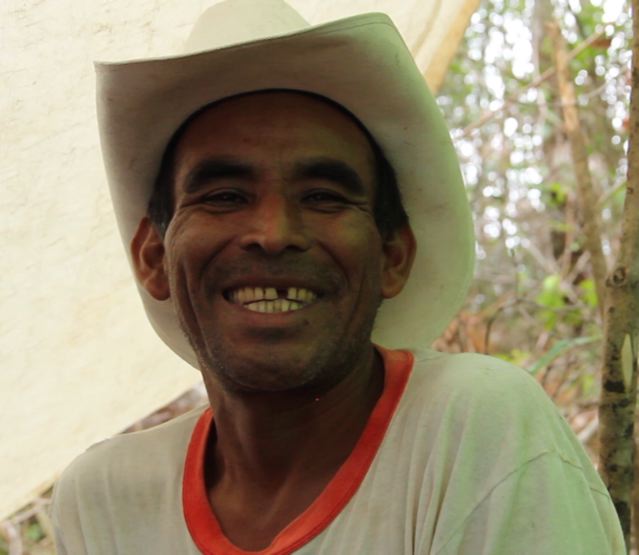 Tomas Garcia was a father of seven who would have turned 50 this December. He was a husband, father, brother, and community leader, serving as an auxiliar and on his community’s Indigenous Council. On Monday, July 15, his life was brutally taken away by the Honduran military when a soldier shot and killed him at close range in broad daylight in front of 200-300 people.He did not have a gun, he did not hurt anyone. His crime? Opposing the construction of a hydroelectric dam being constructed in his Indigenous Lenca community’s territory against their will, in violation of ILO Convention 169 and the Honduran government’s promises to consult Indigenous communities about projects in their territory.Why Tomas?He was one of the first to arrive, leading the delegation that had come to deliver a message to the companies constructing the dam at their installations in Rio Blanco. A soldier fired at him not once, not twice, at least three times from only 6 or so feet away, according to eyewitnesses.
Tomas had gone to the day’s activities with his 17-year old son who was also shot several times, receiving serious injuries in his back, chest, and arm and requiring hospitalization. Two others were also injured by the army’s bullets. According to eyewitnesses, a soldier who had been firing into the air lowered his M-16 and fired multiple shots directly at Tomas. Tomas had recently arrived at the company’s installations as one of those who was at the front of the delegation; the whole group had not even had time to arrive and many were still walking down the hill that leads to the offices. As one woman from the community explained, “We didn’t even have a conversation with them, they didn’t say anything to us. They didn’t even wait for us to say why we there, they didn’t wait for us to say what we had to say. We saw Tomas fall, he fell from shots, including to his head.”
The murder of Tomas Garcia by the Honduran armed forces is only the latest escalation in a systemic campaign of repression against the Rio Blanco Indigenous Lenca people to try to force them into accepting a hydroelectric dam being illegally constructed in their territory. Since April 1, the communities in the area, organized in the Indigenous Lenca organization COPINH, have been blocking the access road to the dam site. The access road, like the dam, is in their ancestral territory, surrounded by their fields of corn, beans, bananas, yucca, and lush forests that they have carefully stewarded for hundreds of years. At first, the Honduran National Police evicted them multiple times – despite them being on their own land. After each eviction, they simply returned to the site.Personnel of the companies building the dam — DESA and SINOHYDRO – threatened COPINH leaders. Community members started receiving death threats from employees of the company who live in the area. Armed men appeared at the site of the roadblock and lurked around at night.
Then on May 17, soldiers from the First Battalion of Engineers, commanded by SOA graduate Col. Milton Amaya, were deployed to the area and have stayed there ever since. They essentially serve as security guards for the dam companies, even driving company machinery to attempt to get it past the roadblock, and live, eat, and sleep at DESA/SINOHYDRO’s installations. Soldiers have repeatedly intimidated those who oppose the dam: they have harassed them, told them they were criminals, came into their yards, held an M-16 up to one of them, threatened women and children, and fired shots when community leaders walked by.i
 Having the police and military on their side only seems to have emboldened company employees to increase their threats and attacks on those who oppose the project. According to testimonies, employees of the company who live in the area attacked a man who had just come from the roadblock with machetes —cutting up his face and sending him to the hospital.They threw rocks at another, and threatened many in the community with death, including children. “I’m going to come to the Roble and you know how you’ll all end up. In pieces.” “I’m going to kill all of you.” ii Bullets passed above the site of the roadblock where people were sitting one Monday afternoon, people in ski masks appeared near the house of a family that is strongly against the dam, unknown figures lurked outside the house of the President of the Indigenous Council, and a known hit man arrived at the site of the roadblock.
In spite of all of this, the Indigenous Lenca people did not give up. Day after day, in the rain or in the heat, in spite of death threats and bullets that passed overhead, men, women, and children came to the roadblock to defend their land. After Tomas’ death, they continue to do so, now continuing forward in his honor, despite the intense accusations against them aimed at discrediting their struggle in the wake of Tomas’ murder.
To justify the death of Tomas Garica, DESA and the military launched a media campaign criminalizing COPINH and the Rio Blanco community. DESA issued a media release claiming that
“because of the violent intervention of the COPINH protestors, Mr. Tomas Garcia died and Mr. Alan Garcia Dominguez was injured. This morning, minor Cristian Anael Madrid Munoz also died, who is the grandson of one of the principal leaders of the zone and was doing agricultural work on his property when he was surprised by the protestors” and that “The actions which occurred today were deliberately premeditated by the principal leaders of COPINH.”
Reading DESA’s release and the corporate news accounts of what occurred, one would think that COPINH itself murdered Tomas Garcia instead of the Honduran military. Area residents who heard TV news accounts got the impression that COPINH was violent and threatening people, not that they were in fact the victims of threats and violence. DESA also accuses the protestors of a second death, which is said to have occurred in a separate location while community members were gathered around the body of Tomas Garcia at the company’s installations, in sight of the police and military. Community leaders report that the Police officer in charge even told them he was a witness that they were all still with him at DESA’s installations when gunshots were heard from up the hill, where Christian Madrid lives. But that doesn’t matter when DESA and Chinese owned SINOHYDRO – the world’s largest dam-building company — are losing money because the subsistence farmers of Rio Blanco refuse to let their river be privatized.
The attacks portraying the protestors as armed further contradict the reality one finds when one visits the zone. The dirt-poor Indigenous farmers of Rio Blanco have machetes and sticks, not guns.As one Indigenous Lenca woman and mother who is a leader in the struggle against the dam explained,
“We don’t have any guns. They do have guns because they are invading our land. They buy big guns to walk around threatening the lives of our compañeros, of all the members of Rio Blanco. They see us as an enemy and walk around with guns. Since they make money selling our land with that they can buy guns to take away the life of another person, another human life.We are all humans in this world… We have to respect each other’s faces. We are all the same.Regardless of how we look, we are children of God.”
The accusations of violence, murder, and possibly even terrorismiii against COPINH are a strategic escalation of the criminalization campaign aimed at destroying COPINH’s ability to resist the Agua Zarca Dam and numerous other projects planned for Indigenous Lenca territory. On May 24, soldiers from the First Battalion of Engineers detained Berta Caceres and Tomas Gomez of COPINH, claiming to have found a gun in their vehicle to try to criminalize them. It appears that soldiers themselves may have placed a gun in their vehicle to fabricate the charges. SOA graduate Milton Amaya, Commander of the First Battalion of Engineers, made accusations in the press. However, the soldiers couldn’t even keep their stories straight and the charges were provisionally dismissed on June 13th. Nevertheless, the state has appealed and is still trying to criminalize Berta. Now, COPINH and the Rio Blanco community have been criminalized and defamed in the press, in an effort to justify the murder of Tomas Garcia and potentially justify criminal charges against COPINH leaders or even more murders in the area. A similar tactic has been used in the Bajo Aguan, where SOA-graduate Col. Alfaro started a media campaign earlier this year accusing the campesinos (small farmers) of being armed and violent to justify the deaths in an area where over 100 small farmers have been murdered.
Why is the Honduran government so invested in breaking Indigenous Lenca resistance to the Agua Zarca Dam project in the remote western mountains of Honduras? The Agua Zarca Dam is not an isolated project but part of the overall scheme of privatization and looting of Honduras’ natural resources in the name of foreign investment. It is part of the “Honduras is open for business” scheme that was embarked upon following the 2009 military coup in Honduras to enrich the Honduran elite and multi-national corporations.Just months after the coup, the Honduran National Congress passed a General Water Law enabling the country’s water resources to be concession to third parties – enabling privatization of rivers.iv Then in 2010, the Congress approved a package of 41 hydroelectric dam projects throughout Honduras, including the Agua Zarca project and other dams in Indigenous territory.v They also passed a new mining law, which has yet to go into effect, and a law creating Special Development Regions, commonly known as model cities. And in July 2013, the Congress passed a law enabling the government to sell off “idle” resources, including natural resources, mining, energy, and more, in order to pay the internal debt.vi
All these laws passed by the post-coup governments are part of the drive to privatize and sell off natural resources – from water, to minerals, to the land itself– for exploitation and profit by corporations, especially foreign corporations. As Honduran President Porfirio Lobo explained at the signing of an agreement with SINOHYDRO to build three other dams on one of Honduras’ longest rivers, “I’m determined to promote these types of projects and make Honduras more open to all foreign investors.” While enriching business executives and investors around the world, this robs Honduran communities, especially Indigenous and campesino communities who live off the land, of the land and resources they depend on to survive.
And so the Honduran military has been dispatched to destroy the resistance of the Rio Blanco Indigenous people just as they have been dispatched to the Bajo Aguan where organized campesinos struggle for land.While Tomas Garcia lived with his wife and seven children in a small house with a dirt floor, the US was sending millions and millions into military aid in Honduras.Some of this aid probably found its way to the unit that used one of its M-16s to murder Tomas and terrorize the Lenca people for standing up for their rights. It is no accident that the military is used to enforce the turning over of Honduras’ natural resources to corporations; this is part of the US neoliberal agenda. US aid includes training, whether at the School of the Americas or by the US military on Honduran soil.For instance, Second Lt. Gonzalez, who was in charge of the soldiers stationed in Rio Blanco, reported he was trained in Special Operations by US military instructors. David Castillo, the Director of DESA, the company building the dam, attended West Point Military Academy and previously served as the Assistant to the Director of Intelligence of the Honduran Armed Forces.vii The military’s effort to criminalize the Rio Blanco community goes up to the highest levels – General Rene Osorio Canales, the Commander of the Honduran Armed Forces who was trained at the School of the Americas, spoke out to publicly justify the military’s murder of Tomas Garcia.viii
“When we heard the shots, we were humiliated.Because we don’t have guns. We have only machetes and wood.They are always accusing us of being armed, saying that we are guerrillas, that we are violent. That’s a lie. What we want is for them to withdraw and leave our territory and our rivers free.As Indigenous people we don’t want this dam to be built in our home.”
“We don’t want the dam built on our land because it affects us a lot. We like to harvest corn and beans, but we no longer could plant our crops. We don’t want the dam and we don’t want them to come violate our rights.”
“We are not criminals.We are people who grow corn.”
“Before the company came here we lived in peace.”
-Rio Blanco community members
[i] Interviews with Rio Blanco community members, May, June, July 2013.
[ii] Testimonies from community members who oppose the dam about threats from company employees who live in the area, June and July 2013.
[iii] http://copinhonduras.blogspot.com/2013/07/solidaridad-de-la-red-nacional-de.html#more
[iv]http://www.defensoresenlinea.com/cms/index.php?option=com_content&view=article&id=2523:comunidades-indigenas-lencas-en-rebelion-contra-depredacion-del-territorio&catid=58:amb&Itemid=181
[v] http://archivo.laprensa.hn/Negocios/Ediciones/2010/09/03/Noticias/Congreso-aprueba-41-proyectos-renovables
[vi] http://www.elheraldo.hn/Secciones-Principales/Pais/Ratificada-ley-para-vender-bienes
[vii] http://www.linkedin.com/pub/david-castillo/39/a55/6a2
[viii]http://www.defensoresenlinea.com/cms/index.php?option=com_content&view=article&id=2695:en-guerra-contra-el-pueblo&catid=42:seg-y-jus&Itemid=159
Photo of Tomas Garcia by Colectivo Ocote
Related article
Honduras: Expanding Palm Oil Empires In The Name Of ‘Green Energy’ And “Sustainable Development”
Written by Rights Action, Rainforest Rescue, Biofuelwatch, and Food First | August 6, 2013
From 6th-8th August, the Roundtable on Sustainable Palm Oil (RSPO) is holding its 4th Latin American Conference on so-called sustainable palm oil in Honduras [1]. Environmental and social campaigners have been shocked to learn that one event sponsor is the palm oil company Dinant Corporation, owned and controlled by Miguel Facusse, the largest landowner in Honduras. They are calling on World Wildlife Fund WWF and three other organisations to withdraw from and denounce the conference being held in Honduras due to the Dinant’s sponsorship of the event and the serious human rights implications [2].
Mr. Facusse was a key supporter and beneficiary of the June 2009 military coup in Honduras [3], has been associated with narco-trafficking [4], and, along with other large oil palm growers, has been linked to the targeted killing of more than 88 members and supporters of peasant organisations since June 2009 in the Aguan Valley [5], one of the main palm oil producing regions in Honduras.
Annie Bird from Rights Action states: “By holding its conference in Honduras and by allowing Dinant Corporation to sponsor the event and hold a stall, the RSPO is turning a blind eye to systemic and severe human rights abuses, including forced evictions of entire communities and over 88 killings for which palm oil companies, especially Dinant, are responsible. The RSPO Conference serves to reinforce the impunity with which the large-scale palm producers operate.”
RSPO is overwhelmingly dominated by the interests of large corporations like Nestlé, Rabobank and Unilever—all linked to cases of “land grabbing” in Asia, Latin America and Africa.” [6]
According to Tanya Kerssen, Research Coordinator for Food First, “The case of Dinant is emblematic of how large, elite-controlled companies use palm oil to expand their control over land and other resources. The RSPO is merely window dressing for this continued corporate expansion, which—whether classed as ‘sustainable’ or not—necessarily means the replacement of forests, biodiversity and food production with a large-scale monoculture crop for biofuel and unhealthy edible oils.” [7]
Guadalupe Rodriguez from Rainforest Rescue adds: “WWF and the three other organisations involved in this RSPO conference must pull out of and denounce this process. They must not, however indirectly, associate themselves with palm oil businessmen involved in repressing, evicting and killing peasants in Honduras’s Aguan Valley.”
The European Commission considers all biofuels from RSPO-certified palm oil to be sustainable and thus eligible for government support [8]. This is despite growing evidence by a large number of organisations, which shows that the RSPO has not been enforcing its own standards on its member companies and cannot guarantee environmental or social sustainability of palm oil [9].
Almuth Ernsting from Biofuelwatch states: “The RSPO Secretariat’s decision to hold a conference in Honduras and allow Dinant Corporation to contribute sponsorship and hold a stall further undermines any pretence that the RSPO’s aim is to make palm oil sustainable. Far from addressing any of the most serious impacts of palm oil production, the RSPO continues to serve as an instrument of greenwashing for the industry”.
NOTES
[1] The Roundtable on Sustainable Palm Oil is a stakeholder forum which provides voluntary certification for palm oil. The great majority of RSPO members represent industry interests. (Conference website: http://rspo2013.com/)
[2] See http://rightsaction.org/action-content/open-letter-world-wildlife-fund-solidaridad-network-snv-netherlands-development for an Open Letter to WWF, Solidaridad, SNV Netherlands Development Organisation and Forest Ethics on this issue.
[3] In June 2009, the democratically elected Honduran government of Manuel Zelaya was overthrown by a military coup. Manuel Zelaya’s government had begun listening to and acting on the demands of peasant organisations for land reform, including in the Aguan Valley region. The land reform process was ended by the military rulers after the coup. Since then, Dinant Corporation and their armed security forces have been collaborating with military forces and police forces in repressing local communities who have been trying to reclaim land controlled by Dinant. See for example: http://www.enca.org.uk/documents/ENCA56_Sep_2012.pdf .
[4] Published Wikileaks Cables revealed that the US embassy in Honduras has had evidence linking Miguel Facusse to drug trafficking since at least 2004 and that several aeroplanes with drugs have landed on his private property. See http://www.thenation.com/article/164120/wikileaks-honduras-us-linked-brutal-businessman#
[5] For a report by Rights Action about killings and other human rights abuses in the Aguan Valley, see http://rightsaction.org/sites/default/files/Rpt_130220_Aguan_Final.pdf .
[6] See, for example: “The bloody products of the house of Unilever” Rainforest Rescue, 2011. https://www.rainforest-rescue.org/mailalert/747/the-bloody-products-from-the-house-of-unilever
[7] For more on the link between palm oil expansion and corporate control, see Kerssen, Tanya. Grabbing Power: The New Struggles for Land, Food and Democracy in Northern Honduras. Food First Books, 2013.
[8] See http://www.rspo.org/news_details.php?nid=137
[9] Previously, over 250 organisations condemned the RSPO for ‘greenwashing’ of palm oil: http://www.biofuelwatch.org.uk/2008/rspo-declaration-english/ . More recently, the RSPO has been denounced for example by Greenpeace and Friends of the Earth; http://www.biofuelwatch.org.uk/2008/rspo-declaration-english/
Honduras: Army Kills Indigenous Leader at Dam Protest
Weekly News Update on the Americas | July 23, 2013
Tomás García Domínguez, an indigenous leader, was shot dead on July 15 in Intibucá department in western Honduras during a demonstration at the headquarters for the Agua Zarca hydroelectric project. Four other protesters were wounded, including García’s son, 17-year-old Allan García Domínguez, who was hospitalized in serious condition with a bullet in his lung. According to Civic Council of Grassroots and Indigenous Organizations of Honduras (COPINH) leader Berta Cáceres, the demonstration was peaceful, but “without saying one word the army opened fire against our companions, sending bullets into the bodies of Tomás García and his son, in the presence of police that remained paralyzed and did nothing to prevent it.” A press release from the two companies constructing the dam—the Honduran company Desarrollos Energéticos S.A. (DESA) and the Chinese state enterprise SINOHYDRO—blamed the protesters and claimed the demonstration “included the destruction of installations, vehicles and personal property and direct aggression against the physical integrity of personnel.”
The protesters were from the Lenca group, the country’s largest indigenous ethnicity; Tomás García was a member of the Indigenous Lenca Council and of the COPINH. The Lenca communities near the Agua Zarca dam had been protesting the project for 106 days as of July 15 and had been subjected to harassment on previous occasions. Soldiers from the First Battalion of Engineers, the same unit that allegedly killed García, arrested Berta Cáceres and another COPINH member on May 24 after the two activists had visited Lenca communities resisting the dam [see Update #1181]. According to the COPINH, cars belonging to DESA were seen on July 12 going to the community of Unión, where there were reportedly meetings with murderers well known in the area, possibly with the intention of pressuring and intimidating dam opponents. (Adital (Brazil) 7/16/13; Indian Country Today 7/20/13)
Honduras: Judge Suspends Case Against Indigenous Leader
Weekly News Update on the Americas | June 23, 2013
After an eight-hour hearing on June 13, a court in Santa Bárbara, the capital of the western Honduran department of the same name, suspended a legal action against indigenous leader Berta Isabel Cáceres Flores for the alleged illegal possession of a weapon. According to Cáceres’ lawyer, Marcelino Martínez, the court found that there was not enough evidence to proceed with the case. Cáceres, who coordinates the Civic Council of Grassroots and Indigenous Organizations of Honduras (COPINH), is now free to travel out of the country, although the case could still be reopened. Representatives from some 40 organizations came to the city on June 13 in an expression of solidarity with the activist.
Cáceres was arrested along with COPINH radio communicator Tómas Gómez Membreño on May 24 when a group of about 20 soldiers stopped their vehicle and claimed to find a pistol under a car seat. Cáceres and Gómez Membreño had been visiting Lenca communities that were protesting the Agua Zarca hydroelectric project. The leader of the military patrol, First Battalion of Engineers commander Col. Milton Amaya, explicitly linked the arrests to the activists’ political work: the Honduran online publication Proceso Digital reported that Amaya “accused Cáceres of going around haranguing indigenous residents of a border region between Santa Bárbara and Intibucá known as Río Blanco so that they would oppose the building of the Agua Zarca hydroelectric dam.”
According to SOA Watch—a US-based group that monitors the Western Hemisphere Institute for Security Cooperation (WHINSEC), formerly the US Army School of the Americas (SOA)—Amaya has studied at the school on two occasions. (Proceso Digital 5/26/13; Adital (Brazil) 6/14/13; Kaos en la Red 6/14/13 from COPINH, Radio Mundo Real, Honduras Libre, Derechos Humanos; SOA Watch 6/21/13)
Related articles
- US senators question aid to Honduras, citing extrajudicial killings (alethonews.wordpress.com)
- Honduras: Three Farmers Killed During Land Eviction (alethonews.wordpress.com)
State propaganda on NPR’s “Morning Edition”
By Justin Doolittle | Crimethink | June 12, 2013
On Wednesday’s episode of “Morning Edition” on NPR, a segment was devoted to exploring the extreme violence that has engulfed Honduras in recent years. Indeed, if measured by per capita murder rate, Honduras is now the most dangerous in the country in the world. There are many reasons why Honduran civil society has broken down like this, but let’s suspend that discussion for the moment in order to focus on one particular aspect of this story on NPR that was quite revealing.
At one point in the segment, Carrie Kahn, the NPR correspondent reporting from Honduras, said the following:
Last year, the U.S. Congress held up funding to Honduras over concerns of alleged human rights abuses and corruption, particularly in the Honduran police force. Part of the funds are still on hold.
This is an astonishing statement for someone who purports to be a journalist. Unless Ms. Kahn has psychic powers, she cannot know why the U.S. Congress held up funding to Honduras. She can only know why Congress said it was holding up funding to Honduras. There is often a profound difference between why politicians say they are implementing policy X and why they are actually doing it. As you might have heard, politicians are occasionally dishonest and insincere, and their decisions are informed by a number of factors that have nothing to do with their personal beliefs. For a journalist, someone who is supposed to adversarially cover politicians and express skepticism at everything they say, this kind of blind faith is inexcusable.
The problem, though, is that Ms. Kahn’s statement is actually quite a bit worse than that. Even if she had said, “the U.S. Congress held up funding to Honduras over what it claimed were concerns of alleged human rights abuses and corruption,” instead of just mindlessly repeating what the government claimed, that would still be wildly insufficient for any journalist who takes her profession even the slightest bit seriously. Why? Because the United States government provably does not base its decisions on allocating foreign aid on “concerns about human rights and corruption.” For decades, the U.S. has provided aid to some of the most repressive and corrupt governments on Earth. Going down the list would be trivial, but, for the sake of comparison, let’s stay relatively close by and just look at Colombia. The U.S. government ships hundreds of millions of dollars to the Colombian government every year; in FY 2012, $443 million was provided, making Colombia the leading recipient of U.S. aid in the hemisphere.
In a strange twist, though, Colombia is also widely considered to be the most repressive violator of human rights in the hemisphere, and corruption there is rampant. This is quite a conundrum. Ms. Kahn tells us that the U.S. withheld aid from Honduras “over concerns of alleged human rights abuses and corruption.” But the U.S. evidently has no such “concerns” in Colombia and continues to send hundreds of millions of dollars in annual aid. One is almost tempted to conclude that the U.S. government makes these decisions based not on noble and selfless “concerns” about human rights and corruption, but, rather, on what it perceives to be U.S. interests.
Ms. Kahn must know that the government claim she dutifully parroted is transparently fraudulent and, in fact, downright comical. She cannot be a working journalist and not know this. Presumably, she follows the news, she is knowledgeable regarding basic facts about U.S. aid, and she knows that the U.S. has always cheerfully sent aid to brutal regimes around the world. She’s not a wide-eyed poly-sci 101 student who is shocked to find out that U.S. government decisions are not invariably and solely based on considerations of Good and Evil. Ms. Kahn is a highly educated reporter, and she obviously does know these things, but the culture of obedience and submissiveness in American journalism is so profound that she probably doesn’t even consciously realize that she’s serving state power instead of doing journalism. The U.S. government told her that aid is being withheld to Honduras because of concerns about human rights and corruption, therefore aid is being withheld to Honduras because of concerns about human rights and corruption. That’s that. Then she goes on NPR, unquestioningly repeats government claims, and she’s done her job. We would call this “propaganda” if it happened in the Soviet Union, but it’s called “journalism” when it happens here.
Honduras: Three Farmers Killed During Land Eviction
Agencia Púlsar | May 22, 2013
In the north of Honduras, in the community of San Manuel Cortés, three peasants were killed and two others wounded on Friday, when they tried to enter the lands that were expropriated last year by the Instituto Nacional Agrario (National Agrarian Institute). Valentín Caravantes, Celso Ruiz y Celedonio Avelar, who died at the scene, were members of the Farmers’ Movement of San Manuel Cortés (MOCSAM), located about 200kms from the capital.
The men entered the land because they obtained an order from the Court of Criminal Appeals, which stated that the evictions carried out in February 2012 against MOCSAM were illegal, reports the National Popular Resistance Front of Honduras (FNRP). “Security guards from the Honduran Sugar Company (CAHSA) fired at the three farmers,” FNRP added.
Brothers Aníbal and Adolfo Melgar were also seriously injured in the shooting and were immediately taken to a hospital in the municipality of San Pedro Sula.
For three years now MOCSAM has been demanding more than 3,000 acres of land which is currently possessed by the CAHSA company and exceeds 250 acres, the maximum a person or a firm can own in Valle de Sula under the country’s agrarian law.
The incident is the latest in a long series of clashes, which have ended up with many deaths over the past few years. In February, more than 1,000 peasants took back land after being expelled by British/South African beverages multinational SAB Miller in August 2012. And earlier this year, in March, the ongoing conflict between farmers and the Honduran government has resulted in the eviction of over 1,500 people from their land in the south of the country.
Related articles
- The New York Times on Venezuela and Honduras: A Case of Journalistic Misconduct
- Senator Menendez Meets with President Lobo to Discuss U.S. Funding for Honduras
- Honduras: Terror in the Aguán
- Will the World Bank Stop Investing in Campesino Assassinations?
- Killings Continue in Bajo Aguán as New Report Documents Abuses by U.S.-Trained Honduran Special Forces Unit
- Honduras: Murdered Lawyer’s Brother Killed in Aguán
- Step by Step: Honduras Walk for Dignity and Sovereignty
- World Bank Must End Support for Honduran Palm Oil Company Implicated in Murder
The New York Times on Venezuela and Honduras: A Case of Journalistic Misconduct
By Keane Bhatt | NACLA | May 8 2013
The day after Venezuelan President Hugo Chávez died, New York Times reporter Lizette Alvarez provided a sympathetic portrayal of “outpourings of raucous celebration and, to many, cautious optimism for the future” in Miami-Dade County, Florida. Her article, “Venezuelan Expatriates See a Reason to Celebrate,” noted that many had come to Miami to escape Chávez’s “iron grip on the nation,” and quoted a Venezuelan computer software consultant who said, bluntly: “We had a dictator. There were no laws, no justice.”1
A credulous reader of Alvarez’s report would have no idea that since 1998, Chávez had triumphed in 14 of 15 elections or referenda, all of which were deemed free and fair by international monitors. Chávez’s most recent reelection, won by an 11-point margin, boasted an 81% participation rate; former president Jimmy Carter described the “election process in Venezuela” as “the best in the world” out of 92 cases that the Carter Center had evaluated (an endorsement that, to date, has never been reported by the Times).2
In contrast to Alvarez, who allowed her quotation describing Chávez as a dictator to stand uncontested, Times reporter Neela Banerjee in 2008 cited false accusations hurled at President Obama by opponents—“he is a Muslim who attended a madrassa in Indonesia as a boy and was sworn into office on the Koran”—but immediately invalidated them: “In fact, he is a Christian who was sworn in on a Bible,” she wrote in her next sentence.3 At the Times, it seems, facts are deployed on a case-by-case basis.
The Times editorial board was even more dishonest in the wake of Chávez’s death: “The Bush administration badly damaged Washington’s reputation throughout Latin America when it unwisely blessed a failed 2002 military coup attempt against Mr. Chávez,” wrote the paper, concealing its editorial board’s own role in blessing that very coup at the time. In 2002, with the “resignation [sic] of President Hugo Chávez, Venezuelan democracy is no longer threatened by a would-be dictator,” declared a Times editorial, bizarrely adding that “Washington never publicly demonized Mr. Chávez,” that actual dictator Pedro Carmona was simply “a respected business leader,” and that the U.S.-backed, two-day coup was “a purely Venezuelan affair.”4
The editorial board—an initial champion of the de facto regime that issued a diktat within hours to dissolve practically every branch of government, including Venezuela’s National Assembly and Supreme Court—would 11 years later brazenly criticize Chávez after his death for having “dominated Venezuelan politics for 14 years with authoritarian methods.” The newspaper argued that Chávez’s government “weakened judicial independence, intimidated political opponents and human rights defenders, and ignored rampant, and often deadly, violence by the police and prison guards.” After lambasting Chávez’s record, the piece concluded that the United States “should now make clear its support for democratic and civilian transition in a post-Chávez Venezuela”—as if Chávez were anyone other than a fairly elected leader with an overwhelming popular mandate.
But there is a country currently in the grip of an undemocratic, illegitimate government that much more closely corresponds with the Times editorial board’s depiction of Venezuela: Honduras, which in 2009 suffered a coup d’état that deposed its freely elected, left-leaning president, Manuel Zelaya.
While the Times criticized Chávez for weakening judicial independence, the newspaper could not be bothered to even report on the extraordinary institutional breakdown of Honduras, when in December 2012, its Congress illegally sacked four Supreme Court justices who voted against a law proposed by the president, Porfirio Lobo, who himself had came to power in 2009 in repressive, sham elections held under a post-coup military dictatorship and boycotted by most international election observers.
When it comes to intimidation of political opponents and human rights defenders, Venezuela’s problems are almost imperceptible compared with those of Honduras. Over 14 years under Chávez, Venezuela has had no record of disappearances or murders of such individuals. In post-coup Honduras, the practice is now endemic. In one year alone—2012—at least four leaders of the Zelaya-organized opposition party Libre were slain, including mayoral candidate Edgardo Adalid Motiño. In addition, two dozen journalists and 70 members of the LGBT community have been killed since the coup, including prominent LGBT anti-coup activists like Walter Tróchez and Erick Martinez (neither case was sufficiently notable so as to warrant a mention in the Times).
And although the Times editors decried police violence in Venezuela, the Honduran police systematically engage in extrajudicial killings of their own citizens. In December 2012, Julieta Castellanos, the chancellor of Honduras’s largest university, presented the findings of a report detailing 149 killings committed by the Honduran National Police over the past two years under Porfirio Lobo. In the face of over six killings by the police a month, she warned, “It is alarming that the police themselves are the ones killing people in this country. The public is in a state of defenselessness…”5 Such alarm is further justified by Lobo’s appointment of Juan Carlos “El Tigre” Bonilla as director of the National Police, despite reports that he once oversaw death squads.6
Finally, the Times editorial board lamented Venezuelan prison violence. But consider for context that the NGO Venezuelan Prisons Observatory, consistently critical of Chávez, reported 591 prison deaths in 2012 for the country of 30 million.7 In Honduras, a country with slightly more than a quarter of Venezuela’s population, over 360 died in just one incident—a 2012 prison fire in Comayagua, in which prison authorities kept firefighters from handling the conflagration for 30 crucial minutes while the inmates’ doors remained locked. According to survivors, the guards ignored their pleas for help as many burned alive.8
Given the contrast in the two countries’ democratic credentials and human rights records, obvious questions arise: How has The New York Times portrayed Venezuela and Honduras since Honduras’s 2009 coup d’état? If, in both its news and opinion pages, the Times regularly prints accusations of Venezuelan authoritarianism, what terminology has the Times employed to describe the military government headed by Roberto Micheletti, which assumed power after Zelaya’s overthrow, or the illegitimate Lobo administration that succeeded it?
The answer is revealing. For almost four years, the Times has maintained a double standard that is literally unfailing. Not a single contributor in the Times’ over 100 news and opinion articles has ever referred to the Honduran government as “autocratic,” “undemocratic,” or “authoritarian.” Nor have Times writers ever once labeled Micheletti or Lobo “despots,” “tyrants,” “strongmen,” “dictators,” or “caudillos.”
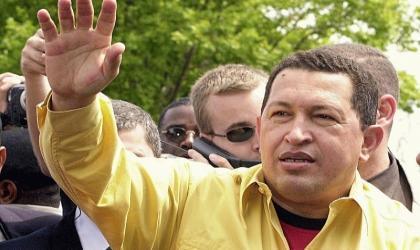 At the same time, from June 28, 2009, to March 7, 2013, the newspaper has printed at least 15 news and opinion articles in which its contributors have used any number of the aforementioned epithets for Chávez.9 (This methodology excludes the typically vitriolic anti-Chávez blog entries that the paper features on its website, as well as print pieces like Lizette Alvarez’s, which quote someone describing Chávez as a dictator.)
During this period, the paper’s news reporters themselves have referred to Chávez as a “despot,” an “authoritarian ruler,” and an “autocrat”; its opinion writers have deemed him a “petro-dictator,” an “indomitable strongman,” a “brutal neo-authoritarian,” a “warmonger,” and a “colonel-turned-oil-sultan.” On the eve of Venezuela’s October elections, a Times op-ed managed to call the Chávez administration “authoritarian” no fewer than three times in 800 words.10 And Chávez’s death offered no reprieve from this tendency: On March 6, reporter Simon Romero wrote about Chávez’s gait—he “strutt[ed] like the strongman in a caudillo novel”—and concluded that Chávez had “become, indeed, a caudillo.”11
These most basic violations of journalistic standards—referring to a democratically elected leader as a ruler with absolute power—does not simply end with its writers. On July 24, 2011, Bill Keller, then the newspaper’s executive editor, wrote the piece, “Why Tyrants Love the Murdoch Scandal,” which included a graphic of Zimbabwe’s Robert Mugabe side by side with Chávez. Keller referred to them both when he concluded, “Autocrats will be autocrats.”12
But if despotism, defined as the cruel and oppressive exercise of absolute power, is to have any meaning, it must apply to the Honduran government, whose military—not just its police—routinely kills innocent civilians. On May 26, 2012, for example, Honduran special forces killed 15-year-old Ebed Yanez, and high-level officers allegedly managed its cover-up by dispatching “six to eight masked soldiers in dark uniforms” to the teenager’s body, poking it with rifles, and “[picking] up the empty bullet casings” to conceal evidence that could be linked back to the military, according to the Associated Press.13
The paradox of the Times—its derisive posture toward what it considers antidemocratic tendencies in Venezuela as it simultaneously avoids the same treatment of Honduras’s inarguable repression—can only be explained by one crucial factor: Honduras has been a firm U.S. ally since Zelaya’s overthrow.
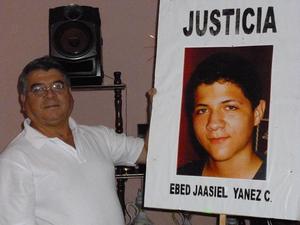
Photo Credit: SOA Watch
In fact, the unit accused of killing Yanez was armed, trained, and vetted by the United States—even its trucks were donated by the U.S. government. As the AP further reported, in 2012, the U.S. Defense Department appropriated $67.4 million for Honduran military contracts, with an additional “$89 million in annual spending to maintain Joint Task Force Bravo, a 600-member U.S. unit based at Soto Cano Air Base.” Furthermore, “neither the State Department nor the Pentagon could provide details explaining a 2011 $1.3 billion authorization for exports of military electronics to Honduras.”14
The Times’ scrupulous, unerring record of avoiding disparaging characterizations of Honduras’s human-rights-violating government may explain why it has never once made reference to 94 Congress members’ demand that the Obama administration withhold U.S. assistance to the Honduran military and police in March 2012. Nor has the paper reported on 84 Congress members’ letter to Secretary of State Hillary Clinton later that year, condemning Honduras’s “institutional breakdown” and “judicial impunity.”15
When evaluating the newspaper’s relative silence on Honduras, it is worth imagining if Chávez were to have ascended to power in as dubious a manner as Lobo; if for years Venezuela’s government permitted its security apparatus to regularly kill civilians; or if the Chávez administration presided over conditions of impunity under which political opponents and human rights activists were disappeared, tortured, and killed.
As a careful examination of the language and coverage of nearly four years of New York Times articles reveals, concern for freedom and democracy in Latin America has not been an honest concern for the liberal media institution. The paper’s unwavering conformity to the posture of the U.S. State Department—consistently vilifying an official U.S. enemy while systematically downplaying the crimes of a U.S. ally—shows that its foremost priority is to subordinate itself to the priorities of Washington.
1. Lizette Alvarez, ““Venezuelan Expatriates See a Reason to Celebrate,” The New York Times, March 6, 2013.
2. Keane Bhatt, “A Hall of Shame for Venezuelan Elections Coverage,” Manufacturing Contempt (blog), nacla.org, October 8, 2012.
3. Neela Banerjee, “Obama Walks a Difficult Path as He Courts Jewish Voters,” The New York Times, March 1, 2008.
4. “Hugo Chávez Departs,” The New York Times, April 13, 2002.
5. “Policías de Honduras, Responsables de 149 Muertes Violentas,” La Prensa, December 3, 2012.
6. Katherine Corcoran and Martha Mendoza, “Juan Carlos Bonilla Valladares, Honduras Police Chief, Investigated In Killing,” Associated Press, June 1, 2012.
7. Fabiola Sánchez, “Venezuela Prison Deaths: 591 Detainees Killed Country’s Jails Last Year,” Associated Press, January 31, 2013.
8. “Hundreds Killed in ‘Hellish’ Fire at Prison in Honduras,” Associated Press, February 16, 2012.
9. Author’s research, using LexisNexis database searches for identical terms in reference to the two countries. For a detailed list of examples, contact him at keane.l.bhatt@gmail.com.
10. Francisco Toro, “How Hugo Chávez Became Irrelevant,” The New York Times, October 6, 2012.
11. Simon Romero, “Hugo Chávez, Leader Who Transformed Venezuela, Dies at 58,” The New York Times, March 6, 2013.
12. Bill Keller, “Why Tyrants Love the Murdoch Scandal,” The New York Times Magazine, July 24, 2011.
13. Alberto Arce, “Dad Seeks Justice for Slain Son in Broken Honduras,” Associated Press, November 12, 2012.
14. Martha Mendoza, “US Military Expands Its Drug War in Latin America,” Associated Press, February 3, 2013.
15. Office of Representative Jan Schakowsky, “94 House Members Send Letter to Secretary Clinton Calling for Suspension of Assistance to Honduras,” March 13, 2012. Correspondence from Jared Polis et al. to Secretary of State Hillary Clinton, June 26, 2012.
Related articles
- U.S. Seeks to Get Rid of Left Governments in Latin America (alethonews.wordpress.com)
- The New Yorker Should Ignore Jon Lee Anderson and Issue a Correction on Venezuela (alethonews.wordpress.com)
- The New Yorker Corrects Two Errors on Venezuela, Refuses a Third (alethonews.wordpress.com)
- Nicolas Maduro did not Steal the Venezuelan Elections (venezuelanalysis.com)
- Honduras: Murdered Lawyer’s Brother Killed in Aguán (alethonews.wordpress.com)
- NPR Examines One Side of Honduran “Model Cities” Debate (alethonews.wordpress.com)
- IMF Ignores Proven Alternatives With Recommendations to Honduras (alethonews.wordpress.com)
- Killings Continue in Bajo Aguán as New Report Documents Abuses by U.S.-Trained Honduran Special Forces Unit (alethonews.wordpress.com)
- Honduras: Miguel Facusse is Tragically Misunderstood (alethonews.wordpress.com)
Featured Video
10K More U.S. Troops Deploy as Trump Weighs New Iran Strikes
or go to
Aletho News Archives – Video-Images
From the Archives
Genetic baloney in thick slices
MAYBE COULD BE INC.
By Jon Rappoport | No More Fake News | July 8, 2021
Gene research companies tend to come and go. They start out banging and popping like fireworks in the sky, and then they fade out—selling themselves to larger outfits who’ve hired better liars…
Once upon a time, it sounded easy. Start with a disease, find the gene responsible for the disease, and correct the problem.
Then, researchers wondered, was disease the result of one gene or a group of genes acting together?
Either way, the proof would be in devising cures for diseases using gene therapy. “Not yet, but soon…”
And regardless, the major need was: money. Lots and lots of money.
This need required good PR people. “We have to pump up the idea that we’re on the edge of tremendous breakthroughs. We’re always on that edge…”
This hype also needed to obscure the fact that there wasn’t (and isn’t) ANY gene cure for ANY disease. … continue
Blog Roll
 Aletho News
- UK Government Body Kept Files on People Criticizing Prevent Program
- US military withdrawal from Iraq and the collapse of US-Israeli hegemonic project in West Asia
- What does Europe want – a war with Russia?
- She Followed the Actual Data on COVID Vaccines and Masks — Her Career Took a Huge Hit
- Florida AG Sues Pfizer, Bourla Over Deceptive Marketing of COVID Vaccines
- Von der Leyen gifts her spin doctor a job for life
- 10K More U.S. Troops Deploy as Trump Weighs New Iran Strikes /Suliaman Ahmed
- Iranian crew declared Dena training vessel ‘unarmed’ to US warship before deadly torpedo strike: Report
- Iran’s NPT debate moves beyond parliament
- Houthis condemn Saudi claims of attack on Medina
- If Americans Knew
- Israel is squeezing the life out of Palestinians – Daily Update
- The Israeli Right Portrays Islam as Murderous. It Serves a Political Purpose
- Jordan Has Had Enough: King Abdullah’s Scathing Warning to Israel
- Israeli Colonizers (i.e. Settlers) Kill Palestinian Man Near Salfit
- New Google Maps images reveal massive scale of devastation in Gaza
- Jewish supremacy, anti-Palestinian bigotry on display in Israel – Daily Update
- Israeli Soldiers Abduct At Least 22 Across Occupied West Bank
- Eight Palestinians Killed in Israeli Attacks on Gaza
- Israeli former leaders and security chiefs threaten legal action over ‘Jewish terrorism’
- Israel map in LA Times ad includes all land from the river to the sea
- No Tricks Zone
- Green Energy Debacle: German Expert Professor Fritz Vahrenholt Warns Of Severe Economic And Social Consequences
- Two More Paleo Reconstructions Affirm Meters-Higher Sea Levels Across Ireland, Brazil 7000-6000 Years Ago
- New Study: Earth And Venus Surface Warmth Largely Explained By Convection And Lapse Rate, Not CO2 Or Radiation
- 2025 Nature Paper Claiming Worsening Global Drought Gets RETRACTED …Heavily Flawed
- New Study: ‘Global Drought Shows No Detectable Recent Acceleration Under Climate Warming’
- Economic Masterminds: German Socialists Suggest Taxing Productivity Gains Stemming From Using AI
- The South China Sea Has Not Been Cooperating With The Climate Change Narrative
- Energy Crisis: Germany Enters Heating Season With Historically Low Gas Reserve Fill Levels
- New Study: The Antarctic Ice Sheet Gained Mass From 2020-2024 Due To Staggering Snow And Ice Accumulation
- Study: Ocean Heating Rates From Thousands Of Years Ago ‘Dwarf’ Modern Ocean Heating Rates

