Ukrainian children still speaking Russian – regulator
RT | July 12, 2024
Ukrainian children don’t know their official state language well enough because they’re still using Russian in their daily lives, Kiev’s Commissioner for the Protection of the State Language Taras Kremin has complained, urging citizens to report violations of language restrictions.
The commissioner said there are also many violations being recorded in the sphere of education, as well as on the internet and in the service industry. He cited a recent study that suggested one-third of children in some Ukrainian regions prefer to speak Russian.
“A child outside of school uses services, visits shopping and catering establishments, sees external advertising and signboards in non-state language, hears non-state at home,” Kremin wrote on Facebook on Thursday.
He suggested that many schoolchildren were therefore prone to bilingualism and do not have sufficient knowledge of the Ukrainian language.
Kremin said Kiev should strengthen control over compliance with the law on state language, which defines Ukrainian as the only language approved for education, and called on citizens to be more involved in recording and reporting violations of the law.
Since gaining its independence in 1991, Ukraine has largely been a bilingual nation, with most citizens able to speak or understand both Russian and Ukrainian, particularly in the eastern half of the country. After the 2014 US-backed coup in Kiev, however, Ukraine’s new authorities abolished Russian as an official regional language and have adopted policies aimed at suppressing and outlawing it, arguing that it represents a threat to national unity and security.
In 2019, the Ukrainian parliament passed a law requiring Ukrainian to be used exclusively in nearly all aspects of public life, including education, entertainment, politics, business and the service industry, obliging all Ukrainian citizens to know the language. It also requires that 90% of TV and film content produced in the country be made in Ukrainian. From July 17, the use of the Russian language in Ukrainian media will be virtually outlawed, Kremen has said.
This forced Ukrainization was one of the reasons why Russian-speaking residents living in the east of the country rejected the post-coup authorities in Kiev in 2014. Many of these regions, namely the Donetsk and Lugansk People’s Republics, as well as Kherson and Zaporozhye regions, have since joined Russia after overwhelmingly voting to do so in public referendums in 2022.
Kremin, however, has denied that the term ‘Russian-speaking’ could be applied to any Ukrainian citizens, stating in an interview last year that the word is a “marker introduced by Russian ideology,” and declaring that “everyone in the country must have command of the Ukrainian language.”
The War on Free Speech: Biden Adds Another Advocate for Censorship to the White House
By Jonathan Turley | July 10, 2024
I have previously written how President Joe Biden is the most anti-free speech president since John Adams. For his part, Biden has continued to double down on his anti-free speech policies with the appointment of figures who have long supported bans and other speech controls. The latest such appointment is Andy Volosky, who was made deputy director of platforms for the White House’s Office of Digital Strategy. Volosky has been outspoken in support of banning former president Donald Trump from social media platforms.
In my new book, The Indispensable Right: Free Speech in an Age of Rage, I lay out the chilling comparisons between the Adams and Biden Administrations in the crackdown of free speech. For Adams, that led to defeat in 1800 when Jefferson ran in part on restoring free speech. To my surprise, Trump and his fellow challengers in this election have not made free speech a central issue to force Biden to defend the massive censorship system supported by his Administration.
The public does not support censorship. This is a movement that originated in higher education and has been pushed by the political and media establishment, not the voters.
Volosky will now help direct digital strategies for the White House. He previously praised the banning of Trump, asking “What took them so long?” in a 2021 blog post.
In Volosky’s blog post, titled “A New, and Hopefully Welcome, Standard,” he warned that “Twitter still allows the accounts of various world leaders, governments, and spokespeople, who use Twitter for what one can only describe as propaganda as cover for autocracy, to continue to use their platform.”
He praised how Democrats have “long advocated for regulating the [social media] platforms” and emphasized how active social media users like himself and others can “keep the platforms honest.”
He added that:
“we can play a role in keeping the platforms honest and improving the positive role of social in people’s lives… It’s past time for the platforms to take content moderation and user safety seriously; as social media professionals, we should be ready and eager to make that happen, and we hope that [banning Trump] can be a small step in getting that ball rolling.”
Again, with the White House doubling down on censorship, Trump and others need to force him to defend his overwhelmingly anti-free speech record. The 2024 election can give voters the same choice that they faced in 1800. Democracy is not on the ballot, but free speech is.
Pro-Israel Group Censoring Social Media Led by Former Israeli Intelligence Officers
By Lee Fang and Jack Poulson | July 11, 2024
CyberWell, an Israeli nonprofit with deep ties to the intelligence arm of an Israeli government propaganda effort, has been influential in shaping social media content since October 7. The group, which purports to be independent, has lobbied Meta, X, and TikTok to remove social media posts under the banner of fighting hate and antisemitism.
The group claimed a major victory regarding Meta’s decision on Tuesday to expand its definition of antisemitic hate speech to include many criticisms of “Zionists” – those who call for an independent state in the Middle East that privileges Jews over other ethnic groups. “CyberWell intends to leverage its technological tools and analysis efforts to ensure this policy is implemented efficiently and fully, and that Meta’s moderation tools are trained to effectively bar this content,” the organization claimed in a press release.
The success is the latest string of victories to shape permissible speech when it comes to Israel and its actions.
In January, CyberWell reported that it had pushed to censor accounts that disputed the false allegation that Hamas had slaughtered dozens of babies during the October 7th attack. Any accounts disputing claims around babies killed during the attack, CyberWell argued, are akin to “content denying or distorting the Holocaust.” President Joe Biden and leading Israeli figures have falsely claimed that Hamas beheaded or burned forty babies during the assault into Israel.
That claim has been widely debunked. Despite repeated false assertions to the contrary, only one baby was killed during the Hamas assault: a 10-month-old infant named Mila Cohen, who was killed at Kibbutz Be’eri. In more recent months, CyberWell has lobbied TikTok and Meta to censor social media posts with the phrase “From the river to the sea, Palestine will be free,” claiming that the slogan constitutes hate speech.
CyberWell is one of many agenda-driven nonprofits now censoring social media discourse, including benign or true information, under the cover of fighting hate and misinformation. The pharmaceutical industry, for instance, funded a nonprofit that worked to censor tweets critical of pandemic-related policies. The U.S. government funds several think tanks that work to moderate social media content critical of NATO’s policies impacting Ukraine.
We briefly mentioned the organization in our recent exclusive on the rebirth of an Israeli government influence effort to counter critics in the United States. After ignoring our detailed request for comment by email, CyberWell recently contacted The Guardian, our publishing partner, and falsely claimed that we never contacted the group for comment.
CyberWell has not received “government funding whatsoever from any country,” wrote Stan Steinreich of Steinreich Communications in a statement to The Guardian, which included a request for a correction. “CyberWell’s leadership is neither affiliated with nor compensated by Voices for Israel,” he continued, in reference to the joint venture created by Israel’s Ministry of Strategic Affairs roughly eight years ago under the name Kela Shlomo before renaming to Concert in 2018 and adopting its current name in 2022. In response to Hamas’s October 7 attack, the organization formally rebooted to focus on winning the online war of narratives surrounding Israel’s ongoing invasion of Gaza, which has so far killed roughly 13,000 women and children.
But CyberWell’s attempts to portray itself as independent obscures its deep ties to Israeli intelligence officials and the government-backed influence operation we wrote about.
CyberWell, as we originally reported, maintains close ties to the Israeli government ministries involved in covert advocacy in the U.S. and to the Voices for Israel group now at the center of a sprawling influence campaign. Since reaching out for comment for our investigation, CyberWell has scrubbed the biographies of its executives and advisors, such as former Israeli military intelligence chief Amos Yadlin and a current spokesperson for the Israeli Defense Forces.
When CyberWell was reached for comment regarding why the biographies of its staff and advisors were removed, they stated: “Highlighting the danger of generating false and misleading information, we were forced to remove the ‘Our Team’ page for safety reasons. Following the publication of your story, our analysts were attacked and identified by name on X. Users shared your article and our employees’ names with a wider network and we became concerned for our staff’s safety.”
Despite CyberWell’s denial of ties to Voices of Israel, the organization’s 2022 annual report listed its Chief Financial Officer as Sagi Balasha, the first CEO of the organization now known as Voices of Israel. The list of CyberWell advisors in the report also included Israel Defense Forces spokesperson Lt. Col. Peter Lerner, who Israeli corporate records reveal to be a director of the research and intelligence arm of Voices, known as Keshet David, which is Hebrew for “David’s Rainbow.” Keshet David was initially headed by Yossi Kuperwasser, the former head of research in the IDF Military Intelligence Directorate, widely known as Aman, and an ex-director general of the Ministry of Strategic Affairs. Another advisor to CyberWell, Amos Yadlin, previously led Aman.
“Proud to support @CyberWell_org,” Mr. Lerner posted on X on Wednesday, in response to CyberWell’s celebration of Meta’s new policy on criticisms of Zionism.
Voices of Israel chairman Micah Avni explained the history of Keshet’s aliases in a December 2018 interview, including the previous name of Israel Cyber Shield and the official English name Innovative Collaboration Strategies. “Concert [Voices of Israel] funds Keshet David and we get all the information. That’s one leg of what we’re doing,” said Avni. But, unlike Voices, Keshet David Research and Information Ltd., its legal Israeli entity, maintains no directly attributed public website.
Peter Lerner, an Israeli Defense Forces spokesperson and advisor to CyberWell, as well as former head of international relations at the Israeli labor federation Histadrut, is listed as both a shareholder and director of Keshet David. (As reported by Calcalist, the Histadrut was apparently a customer of the online campaigning firm STOIC, which Haaretz reported to have beat out Voices of Israel for a contract with Israel’s Ministry of Diaspora Affairs to covertly influence U.S. lawmakers.)
Formed in 2021 under the name Global Antisemitism Research Center (Global ARC), CyberWell shared a $30,000 donation that year with Keshet David through a foundation run by the wife of CyberWell board member Adam Milstein, who co-founded the influential Israeli-American Council (IAC) in 2007 under the direction of Israel’s then-consul general in Los Angeles, Ehud Danoch, before pleading guilty to two felony counts of tax evasion. Keshet David received an earlier donation through IAC in 2016 under its previous name of Israel Cyber Shield, just as future CyberWell CFO Sagi Balasha transitioned from chief executive of IAC to chief executive of Voices.

The chief executive of Keshet David since 2018, former Israeli police officer Eran Vasker, disclosed on his LinkedIn profile that he has simultaneously led the private intelligence firm Argyle Consulting Group since April 2017. The head of CyberWell, Tal-Or Cohen Montemayor, similarly noted in a January podcast interview and on LinkedIn that her immediate previous job was working at Argyle as head of business development circa January to October 2021, the same year as the joint donation to Keshet David and CyberWell. Tal-Or’s manager at the time was Argyle Chief Operating Officer Zohar Gorgel, who became a founding board member of CyberWell. Gorgel co-founded a solar power company in early 2021 with Arik Becker, a member of CyberWell’s audit committee who was, according to Becker’s LinkedIn profile, head of strategic operations at Argyle circa 2018 to 2020.
In other words, the chief executive of CyberWell and two of its board members previously worked at the same private intelligence spin-off from Voices of Israel, a director of the spin-off is an advisor to CyberWell, and the CEO of Voices became the CFO of CyberWell.
Israeli corporate records further show that CyberWell shares the same accountant as Keshet David and Voices of Israel, Yakov Pal (פאל יעקב) of Yakov Pal & Co. Certified Public Accountants. (CyberWell and Voices have also shared the same fiscal sponsor, Central Fund of Israel, which reportedly donated $700,000 to Voices in 2017.)

Letterhead of Yakov Pal CPA from the 2017 financial statements of Voices of Israel, then known as Kela Shlomo, as revealed by the Israeli independent investigative site The Seventh Eye.
A recently-deleted page on CyberWell’s website noted that it was founded as a result of Tal-Or’s time working in private intelligence at an unnamed firm (Argyle), as a result of “her then-manager and IDF intelligence veteran, Zohar Gorgel, [suggesting] that Tal-Or use her open-source expertise and deep understanding of social media” to combat online antisemitism.
Tal-Or’s biography in her podcast interview also noted that she had “provided analysis” to Israel’s Ministry of Strategic Affairs, the agency that founded Voices of Israel. CyberWell’s 2022 annual report further disclosed that the nonprofit partnered with Act-IL, a failed online propaganda effort partly run by IAC and closely affiliated with the Ministry of Strategic Affairs, noting that “CyberWell served as the data provider to Act-IL’s community for their end of year call to action on the state of online antisemitism.”
According to 2018 reporting from the Israeli newspaper Haaretz, Israel Cyber Shield (Keshet David) surveilled the prominent Palestinian-American activist Linda Sarsour as part of compiling a dossier for Act-IL.
CyberWell CEO Tal-Or Cohen and founding board member Zohar Gorgel did not respond to repeated questions regarding their previous positions at the private intelligence firm Argyle Consulting Group or on Argyle’s relationship to Keshet David. Instead, CyberWell blocked one of our accounts on X.
Argyle and Keshet David CEO Eran Vasker similarly did not respond to a request for comment through Argyle. Neither CyberWell nor Adam Milstein and his wife, Gila, responded to requests for comment on MERONA Leadership Foundation’s receipt of a joint donation for Keshet David and CyberWell.
***
CyberWell’s primary focus has been to pressure social media companies to adopt the International Holocaust Remembrance Alliance (IHRA) redefinition of antisemitism, which has been described by one of its core contributors as designed to combat growing international human rights criticisms of Israel as an apartheid state, beginning with the United Nations’ 2001 Durban declaration. In reference to the now-defunct advocacy organization known as the Adopt IHRA Coalition, CyberWell’s 2022 annual report noted that “On the heels of Elon Musk’s acquisition of Twitter,” CyberWell “served as the [Adopt IHRA Coalition] data provider, demonstrating our value through collecting, vetting, and leveraging a dataset of over 1,200 recent antisemitic Tweets.”
The IHRA definition has come under fire as an attempt to criminalize and suppress First Amendment-protected speech critical of Israel and its occupation of Palestine. Pro-Israel lobbyists have pushed to encode the IHRA definition into hate crime statutes and official speech codes for hundreds of institutions and have succeeded in advancing legislation on the state and federal level. The IHRA definition of antisemitism includes “denying the Jewish people their right to self-determination, e.g., by claiming that the existence of a State of Israel is a racist endeavor.” If enacted, such a definition would mean that an American can call any government, including his own, racist, except for Israel.
CyberWell’s high-level influence on social media policy arose during a meeting of the Israeli legislature’s immigration committee on June 21 of last year, which included representatives of Facebook, TikTok, and Twitter.
Matthew Krieger, a representative of Twitter and Elon Musk at the hearing, bluntly refused to answer questions from the committee chairman about a report from the Israeli advocacy organization Fighting Online Antisemitism (FOA), which accused Twitter of only removing 14% of antisemitic content, in contrast to TikTok allegedly removing 100%. Immediately after, Facebook policy manager Yehuda Ben Yaakov noted his relationship with FOA, CyberWell, and Tal Or-Cohen, stating: “The activity of non-profit organizations in this context is important and non-profit organizations like FOA and CyberWell, just last week Tal-Or [Cohen] and I met and had the ability to exchange things.” “Tal-Or told us about a new way of linking the theory of Freemasons and the theory of anti-Semitism,” Ben Yaakov added.
During the same hearing, Ella Saban, an official in Israel’s Ministry of Aliyah and Absorption, noted that “We work with ADL [Anti-Defamation League], we work with civil society organizations, CyberWell and [FOA] are based here, we also have a good relationship with the social networks in Israel.”

Images from a pair of posts on X on June 17 and on June 25 by CyberWell.
“VICTORY: TikTok is the first social media platform to publicly recognize denial of sexual violence on October 7 as prohibited content,” CyberWell boasted on June 17 through a post on X, which further implied that the decision was a result of CyberWell’s status as a trusted partner of TikTok.
A subsequent post claimed that: “Thanks to CyberWell’s data, TikTok is leading the way in recognizing and actioning this new form of antisemitism, and we urge all other social media platforms to follow suit.”
The image coupled with the post praising TikTok accused X user @HadiNasrallah of “Encouraging Violence” and “Denying that well-documented violent events took place” for claiming that “Hamas did not rape anyone on October 7th and Israel killed their own people with tanks and helicopter shelling.”
The degree to which Hamas committed sexual violence during its attack, and the scale of Israeli usage of the so-called Hannibal Directive preference of killing its own troops and citizens rather than let them be taken hostage, are perhaps the central narrative battles surrounding October 7.
More than 50 tenured journalism professors signed a letter in April asking The New York Times to investigate the reporting process behind its flagship publication on alleged sexual violence on October 7, “Screams Without Words,” and the Associated Press argued the next month that two “debunked” allegations had created a fog over credible evidence presented by organizations such as the United Nations.
Following a late October article from the independent American news site The Grayzone, Times journalist Ronen Bergman reported in the Israeli newspaper Yedioth Ahronoth in January that the country’s military had invoked the Hannibal Directive, indeed firing on any vehicle approaching Gaza, including those that may have carried hostages. Haaretz provided further detail on Sunday, reporting the usage of the Hannibal Directive by the Gaza Division of the Israeli military’s Southern Command in three army facilities. The number of potential casualties remains a matter of ongoing controversy in Israeli papers.
Whether controversial debates relating to the Israeli military should be refereed by a de facto spin-out of a covert Israeli government intelligence effort is perhaps an easier question.
In a series of posts on the social media platform X crediting CyberWell with Meta’s recent decision to classify many criticisms of “Zionists” as hate speech, CyberWell board member Adam Milstein bragged that: “all content targeting Zionists with claims about running the world or controlling the media, plus more, WILL BE REMOVED!” “Will @elonmusk and @X follow suit?” Milstein then asked.
But Meta’s policy update on Tuesday noted that it has not yet decided on how to handle critical speech such as “Zionists are war criminals” and has forwarded the question to its oversight board. Meta argued that “the term ‘Zionists’ can be used to refer to people on the basis of their nationality (i.e., Israeli people), [and] commentary about ‘Zionists’ may also refer to government or military actions.” “We look forward to any guidance the [Oversight] Board may provide,” Meta added. “
Microsoft shuts Palestinian accounts used to contact relatives in Gaza
MEMO | July 12, 2024
Microsoft has been accused of shutting down email accounts belonging to Palestinians using Skype to call Gaza, according to a BBC investigation.
The report found that several Palestinians living abroad had their Microsoft-owned voice and video chat accounts terminated without warning, “destroying their digital lives.”
Salah Elsadi, a Palestinian living in the US, told the BBC: “I’ve had this Hotmail account for 15 years. They banned me for no reason, saying I violated their terms — what terms? Tell me.”
The investigation revealed at least 20 cases where Palestinians had their accounts suspended without any explanation. Those impacted explained that a paid Skype subscription allowed them to make affordable mobile calls to Gaza, providing a vital service for many Palestinians during Internet outages.
In some cases, these email accounts were over 15 years old, leaving users unable to access emails, contacts, or memories. Moreover, some reported that their email accounts were connected to their work.
Eiad Hametto, who has been calling his family from Saudi Arabia, said: “We are civilians with no political background who just wanted to check on our families.”
“They’ve suspended my email account that I’ve had for nearly 20 years. It was connected to all my work. They killed my life online,” he added.
Another Palestinian, Khalid Obaied, told the BBC that he no longer trusted Microsoft. “I paid for a package to make phone calls, and then, after 10 days, they banned me for no reason,” he said. “It has to be because I’m a Palestinian calling Gaza.”
A Microsoft spokesperson clarified that the company does not block calls or ban users based on the calling region or destination. Adding: “Blocking in Skype can occur in response to suspected fraudulent activity.”
Christians in occupied Jerusalem see marked surge in Israeli settler attacks
The Cradle | July 12, 2024
Settler attacks on the Christian community in occupied Jerusalem have surged since the start of the Israeli war on Gaza, according to Hebrew reports.
Hebrew news outlet Channel 13 reported on 12 July that over the past three months, there have been at least 36 recorded incidents of violence or abuse against Christians.
This includes 17 incidents of Israeli settlers spitting on Christian worshippers, nine acts of vandalism, five assaults, and five cases of verbal abuse – all under police protection.
The government of Prime Minister Benjamin Netanyahu has also been imposing taxes on Churches and Church property. The Israeli government claims the taxes are routine financial matters, yet the Christian community has accused Tel Aviv of a “coordinated attack on the Christian presence in the Holy Land” and a violation of a centuries-old status quo.
“In this time, when the whole world, and the Christian world in particular, are constantly following the events in Israel, we find ourselves, once again, dealing with an attempt by authorities to drive the Christian presence out of the Holy Land,” wrote the heads of the major Christian denominations in a joint letter to Netanyahu late last month.
Earlier in June, a report released by Israeli NGO Rossing Center for Education and Dialogue reported a significant increase in Israelis attacking Christians throughout 2023.
“The ongoing shift towards the far-right, a growing sense of nationalism, and the emphasis on Israel primarily as a state for the Jewish population have collectively undermined both the legal and perceived sense of equality for any minority within the country,” the report read.
Attacks and restrictions against Christian worshippers by Israeli police are also common in the holy city.
While Christians face an uptick in abuse and oppression under Netanyahu’s far-right government, they have always suffered under occupation in the West Bank and Jerusalem.
In 2019, the head of the Sebastia Diocese of the Greek Orthodox Church in Jerusalem, Archbishop Atallah Hanna, accused Israeli forces of trying to kill him after he was hospitalized with poisoning following an Israeli tear gas attack on his church.
The Ways of the Jewish Slave Traders

NOI RESEARCH GROUP • UNZ REVIEW • JULY 8, 2024
“As Mr. Yakub continued to preach for converts, he told his people that he would make the others work for them. (This promise came to pass.) Naturally, there are always some people around who would like to have others do their work. Those are the ones who fell for Mr. Yakub’s teaching, 100 per cent.” — The Most Honorable Elijah Muhammad, chapter 55 of Message to the Blackman in America titled “The Making of Devil”
“Three blessings a Jewish man is obligated to pray daily: ‘(Blessed art Thou,) Who did not make me a gentile; Who did not make me a woman; and Who did not make me a slave.’” — Babylonian Talmud, Menahot 43b–44a[*]
The story of the Jewish American experience that most Jews want to believe, and want the world to believe, is one of almost endless historical victimhood. They insist that they fled anti-Semitic oppression in Europe, landing safely on Ellis Island long after the Civil War’s end in 1865, and certainly some did. By their hard work, strong religious bonds, and reverence for communal education they succeeded against all odds, becoming, as Isaiah exhorts,[1] “a light unto the world.” As their story goes, they altogether eluded the ugly business of plantation slavery—but had they been here, they assure us, Jews would have been leading the abolitionists. After all, their own alleged enslavement to Pharaoh would have made them—of all the groups of Caucasian people—more sympathetic toward Black suffering.
To a trusting, Bible-believing people this Jewish self-portrait sounds plausible and is consistent with a Christian doctrine that sanctifies God’s Chosen People, the so-called Children of Israel (Deuteronomy 7:6–11). But the people who today call themselves Jews have now collided with their own Jewish scholars and historians who have presented an entirely different and far more troubling story about American Jewish history and the central role of Jews in the greatest crime in world history—the Black African Holocaust.
For the most part, Americans—white and Black—are entirely unaware that when the trans-Atlantic slave trade began in the 1500s, it was focused on shipping enslaved Africans to the sugar plantations of South America and the Caribbean islands centuries before expanding to the cotton fields of the American South in the mid-1700s. In the entire history of slavery in the western hemisphere as many as 9 out of 10 stolen Africans were shipped to those tropical climes—not to Mississippi, Alabama, Georgia, or South Carolina. The map below illustrates by the thickness of the arrows the relative proportions of Africans shipped to the New World, and, as shown, relatively few made it into what was to become the United States.

And all during this unprecedented racial tragedy Jews claim they were preoccupied in Europe, nowhere near the scene of the crime. Dr. Robert Swierenga very directly challenges that oft-repeated Jewish alibi (emphasis ours):
“At the birth of the United States in 1787 the Jews of the slave islands [Caribbean] outnumbered those in North America by five times and may have equaled those in England. Surinam had fourteen hundred Jews and Curaçao fifteen hundred—both nearly one half of the total white population. By contrast, the entire United States in 1790 numbered less than fifteen hundred Jews.”[2]
Seeking Religious Liberty?
But doesn’t this early Jewish presence in the “slave islands” conflict drastically with the prevailing image of the Jews as freedom-loving religious refugees? This is the perfect time to have an adult conversation about the trans-Atlantic slave trade and the Jewish role in it, and we must start by putting to bed the infantile notion endemic in this Jewish American fairy tale that Europeans sailed across the ocean “seeking religious liberty.” Every school child learns about the brave and pious Pilgrims who sailed to Plymouth on the Mayflower in 1620 “seeking religious liberty” from the tyrannical king of England. But the reality is that the “Pilgrims” were under contract with a private business named the Company of Merchant Adventurers, which expected them to acquire lumber, beaver and otter furs, and any other riches to be found or stolen. Thus, the “Pilgrims”—who referred to themselves as “separatists,” not as “pilgrims”—worked under contract to a private enterprise whose investors cared nothing about religion. More than a century before those Separatists, a Spaniard named Christopher Columbus was privately financed for his infamous voyage of discovery in 1492, by a wealthy Jew named Luis de Santangel. According to Simon Wiesenthal, in his book Sails of Hope (p. 168), “But for this man, Columbus’s expedition would never have taken place.” A practiced slave dealer, Columbus captured 600 of the aboriginal people he encountered to auction off back in Spain. And so it is with the Jewish newcomers who were seeking profits in sugar, cotton, tobacco, and other riches of the New World. Jewish scholar Yosef Hayim Yerushalmi describes them:
“[T]hese Jews engaged in an almost untrammeled range of economic activity, bore arms in the militias, owned land and ran plantations, and were represented in local councils. They had arrived at the closest point to full legal equality possible for Jews prior to the emergence of the modern nation-state.”[3]
They were seeking not “religious freedom” but the freedom to trade on an international scale. In fact, when they were first barred from acquiring Black slaves in the colonies they entered, the Jews considered it an act of “anti-Semitism.” The riches they sought could not be extracted without free and forced African labor. And as Jewish merchants followed their Yakubian directive—making others work for them—this is where the Black–Jewish relationship in the West truly begins.
In fact, there are scant references to the Jewish faith, Judaism, in any of the extant records of these early Jewish settlers. Nothing about Moses, Aaron, The Ten Commandments; no mention of the Ark of the Covenant; and nothing about being any “Light unto the Worlds.” If there were no profit in it, there was no “Jew” in it—and there was plenty of profit in Black slavery.[4]
Surinam, located in northeastern South America, holds the distinction of having the oldest Jewish community in the Americas, Jews having formed a synagogue in 1665. British Jewish historian Dr. Cecil Roth tracks them in his History of the Marranos: “The Jews of [Surinam] were also foremost in the suppression of the successive negro revolts, from 1690 to 1722: these as a matter of fact were largely directed against them, as being the greatest slave-holders of the region.
And here is where—unbelievably—we find the first inkling of the Jewish religion. The very first published Jewish prayer in their New World paradise, was a prayer titled “Old Hebrew Prayer in Time of Revolt of the Negroes,” in which the rabbi asked their God to give them strength “to conquer and destroy beneath their feet all cruel and rebellious Africans, our enemies who are planning evil against us…. Amen.”[5]

Roth continues: “These disturbances, together with the inroads of the climate, led ultimately to the abandonment of the settlement, of which nothing but the ruin now remains.” Dr. Roth hits on a theme here that may be difficult for most to comprehend. Not only were Jews present in the Americas long before the actual founding of the United States, but they were “the greatest slave-holders” in one of the major destinations of enslaved Africans. Further, these same “liberty-seeking” Jews actually went to war against the Africans that had escaped from Jewish plantations! Scholar Steven Sallie:
“There is little dispute, however, that Jews were quite often in charge of raiding adventures and the severe punishing of the maroons [escaped slaves]. In response to the cruelty of some Jews, maroons quite often attacked selected Jewish plantations. These Jewish-African conflicts were numerous, well organized, and persisted into the 1800s. Given their names, the leaders of the maroons tended to be Muslims.”[6]
One must also note that the decorated scholars quoted above spoke of “Jews” as a collective, neither making any qualification about the term that would limit responsibility or culpability to “some” or “a party among” or “a portion of” the Jewish community. This is particularly important given the magnitude of the crime they are describing—Black slavery.
Two major Jewish historical associations concur with, and elaborate on, this generally unknown aspect of the Jewish role in Black slavery. The American Jewish Historical Society (AJHS) is the oldest and most prominent, having its founding in 1892. Rabbi Marc Lee Raphael was its longtime editor of its publications when he wrote in 1983 that in the Caribbean and South America,
“Jewish merchants played a major role in the slave trade. In fact, in all the American colonies, whether French (Martinique), British, or Dutch, Jewish merchants frequently dominated. This was no less true on the North American mainland, where during the eighteenth century Jews participated in the ‘triangular trade’ that brought slaves from Africa to the West Indies…”
“FREQUENTLY DOMINATED” and “played a major role” are the terms Rabbi Raphael used almost a decade before the Nation of Islam published its never-refuted book on Jews and the slave trade, The Secret Relationship Between Blacks and Jews, Vol. 1. Drs. Swierenga, Sallie, Raphael, and Roth are all addressing a startling duality in the 500-year Black–Jewish relationship—that the Jewish self-image of a biblical people yearning for freedom directly contradicts the actual fact that the Jewish people were attracted to, and often dominated the economies in, the very places where existed the most brutal forms of chattel slavery.

The American Jewish Archives (AJA) was founded in 1947 by the “Dean of American Jewish scholars,” Rabbi Jacob Rader Marcus,[7] and is the repository of “ten million pages of documentation” on Jewish history in the Americas. Turns out, the AJA has a lot to say about these early “oppressed” Jews who migrated from Europe and somehow found unprecedented prosperity in the “slave islands.” In several articles the AJA casually makes several references to the interdependent relationship between the most brutal forms of slavery and the Jewish pilgrims: “[I]ndividual Jews can be found on almost every island of the Caribbean prior to the abandonment of slavery in the mid-nineteenth century,”[8] thus firmly linking slavery to the Jews’ very presence.
In the plantation colony of Surinam the AJA points out that Jews “fared well, thanks to the abundance of slaves and plantations…”[9] Rabbi Dr. Raphael adds that
“Slave trading was a major feature of Jewish economic life in Surinam, which was a major stopping-off point in the triangular trade. Both North American and Caribbean Jews played a key role in this commerce: records of a slave sale in 1707 reveal that the ten largest Jewish purchasers spent more than 25 percent of the total funds exchanged.”[10]
A more recent analysis of Surinam’s Jews by Dr. Aviva Ben-Ur only solidifies this linkage and adds to the horrors:
“The liberty Jews enjoyed…was inextricably intertwined with violent coercion….African slaves were routinely tortured on the village’s roadsides or along the fence enclosing the synagogue square.”[11]
The AJA hits on a theme that is repeated over and over again: “the abolition of the slave trade in 1819 and the formal emancipation of slaves in 1863 made plantations unprofitable and so decimated Jewish trade that [the Jews] all but disappeared.” Recognize the import of that statement: the freeing of the Black slaves “DECIMATED” and “DISAPPEARED” the Jewish community.
Jews had a presence on the island of Barbados in about 1628 and historian Stephen Fortune wrote that “the reputed prosperity of the Jews contrasted with the inexcusable and disgraceful plight of the slaves.”[12] Jews flocked to this hell on earth, and here again the AJA sounds the uniquely Jewish refrain: “Unfortunately, economic depression resulting from the earthquake and the emancipation of slaves led to the emigration of many of the island’s Jews.”[13] They pose the freeing of African slaves as a disaster equal to that of an earthquake—causing the “unfortunate” Jews to permanently flee.
The Encyclopedia Judaica (EJ) reports that the island of Curaçao was called the “Mother of the Caribbean Jewish communities,” yet Jewish scholars describe the island as a distribution center for the slave trade[14]— “a large slave depot.”[15] The AJA affirms that “The slave trade helped Curaçao to prosper, and her Jewish community grew rapidly,” even building a synagogue “for the convenience of the plantation owners who lived outside of the city.”[16] In fact, Jews owned 80 percent of Curaçao’s plantations, and Jewish slave traders were responsible for distributing the slaves from Curaçao to the Spanish American ports throughout the Caribbean and South America.[17] In 1765, the Jesurun family owned a record number of 366 Black people; the closest Gentile had 240 slaves. In one documented case in 1701, the Jewish Senior brothers arranged the shipment of 664 Africans; 205 perished en route to Curaçao.[18] And historian of the island Johan Hartog confirms a familiar Jewish theme—that the Jewish community suffered a “steep decline” the same year that the slave trade was curtailed.[19]
When Jews settled in Haiti, the Encyclopedia Judaica admitted,[20] they “specialized in agricultural plantations [but] with the slave revolts at the end of the 18th century, Jews gradually abandoned Haiti for other Caribbean islands or for the United States (New Orleans, Charleston).” Here again Jews are not sticking around for Black freedom; nor were they part of the process of achieving it. As soon as emancipation becomes a reality, Jews abandon Haiti for slavier environs.
Jamaica also had a robust Jewish colony, writes the AJA (p. 151): “The growth of the sugar industry enlarged the Jewish immigration and a number of Jews became plantation owners.”[21] The EJ boasted that “Jews with agricultural plantations controlled the sugar and vanilla industries, and …were the leaders in foreign trade and shipping.”[22] In its section on “Sugar”—the product most responsible for the enslavement of millions of Africans—the EJ puts Jews at the epicenter:
“The Jews of Brazil were not important as proprietors of [sugar] mills but rather as financial agents, brokers, and export merchants. When Brazil came again under Portuguese rule in the second half of the 17th century, many Jews emigrated to Surinam, Barbados, Curaçao, and Jamaica, where they acquired large sugarcane plantations and became the leading entrepreneurs in the sugar trade.”[23]
And then it reveals the other, now predictable, Jewish reality: “The abolition of slavery in the British dominions (1833) lowered the economy and scattered the Jews.” Note here the AJA writes that freedom for enslaved Blacks “scattered” the Jews.
Many of those Jews “scattered” to the North American mainland, says the AJA: “The end of slavery in the Caribbean saw Jews from the islands arriving almost daily…” Many ended up in the colony of Georgia, described as “suffering from the trustees’ idealistic insistence on no slaves or liquor…”[24] As the AJA frames it, “no slaves” meant Jewish “suffering.” In fact, the refusal of the leaders of Georgia to permit Black slavery triggered a Jewish exodus from the colony! By 1740 only three Jewish families were left. They bounced, according to Rabbi Marcus, because “Negro slavery was prohibited, the liquor traffic was forbidden.”[25] Jew Abraham De Lyon said he left for “the want of Negroes…whereas his white servants cost him more than he was able to afford.”[26]
From their own archival documents the most lettered Jewish scholars have painted an alarming portrait of the earliest of their founding fathers. In every case examined, Jewish “liberty” and prosperity were entirely dependent on Black slavery, and once Black “liberty” was achieved the Jewish world imploded and the Jews fled. The Encyclopedia Judaica summarizes nicely:
“A general decline of the Spanish-Portuguese communities in the Caribbean set in during the 19th century. Growing competition in agricultural products, the abandonment of the plantations by the Afro-American laborers due to the abolition of slavery, assimilation, and emigration were the main causes of this decline.”[27]
The Most Honorable Elijah Muhammad wrote that after being bound in Europe for 1,000 years, “they were loose (free) to travel over the earth and deceive the people.” Further, “They have been here now over 400 years. Their worst and most unpardonable sins were the bringing of the so-called Negroes here to do their labor.”[28]
Jewish scholars have thus affirmed that no one better fits Mr. Muhammad’s description of the traveling deceiver and “unpardonable” slave-making sinner than the Jew.
NOTES
[*] See also Michael Hoffman, Judaism Discovered (2008), p. 375.
[1] Isaiah 42:6; 49:6; 60:3.
[2] Robert Swierenga, The Forerunners: Dutch Jewry in the North American Diaspora (Detroit: Wayne State University Press, 1994), p. 36.
[3] Yosef Hayim Yerushalmi, “Between Amsterdam and New Amsterdam: The Place of Curaçao and the Caribbean in Early Modern Jewish History,” American Jewish History, vol. 72, no. 2 (December 1982), p. 190.
[4] Yda Schreuder, Amsterdam’s Sephardic Merchants and the Atlantic Sugar Trade in the Seventeenth Century (New York: Palgrave Macmillan, 2019), p. 70. Also, Steven S. Sallie, “The Role of the Semitic Peoples in the Expansion of the World Economy Via the Trans-Atlantic Slave Trade: A Literature Extraction and an Interpretation,” Journal of Third World Studies, vol. 11, no. 2 (Fall 1994), p. 173.
[5] “Miscellaneous Items Relating to Jews of North America,” Publications of the American Jewish Historical Society, vol. 27 (1920), pp. 223–24.
[6] Sallie, “The Role of the Semitic Peoples,” p. 173.
[7] https://www.americanjewisharchives.org/about/jacob-rader-marcus/
[8] Malcolm H. Stern, “Portuguese Sephardim in the Americas,” American Jewish Archives, vol. 44, no. 1 (Spring/Summer 1992), p. 142.
[9] Allan Metz, “Those of the Hebrew Nation…The Sephardic Experience in Colonial Latin America,” American Jewish Archives, vol. 44, no. 1 (Spring/Summer 1992), p. 226.
[10] Marc Lee Raphael, Jews and Judaism in the United States: A Documentary History (New York: Behrman House, 1983), p. 24.
[11] Jewish Autonomy in a Slave Society (Philadelphia: University of Pennsylvania Press, 2020), p. 76.
[12] Stephen Alexander Fortune, Merchants and Jews: The Struggle for the British West Indian Caribbean, 1650-1750 (Gainesville: University Presses of Florida, 1984), p. 109.
[13] Stern, “Portuguese Sephardim in the Americas,” p. 143.
[14] Lavy Becker, “A Report on Curacao,” Wisconsin Jewish Chronicle, December 5, 1969.
[15] Daniel M. Swetschinski, “Conflict and Opportunity in ‘Europe’s Other Sea’: The Adventure of Caribbean Jewish Settlement,” American Jewish History, vol. 72, no. 2 (December 1982), p. 236.
[16] Stern, “Portuguese Sephardim in the Americas,” p. 147; Emma Fidanque Levy, “The Fidanques: Symbols of the Continuity of the Sephardic Tradition in America,” American Jewish Archives, vol. 44, no. 1 (Spring/Summer 1992), pp. 184–85.
[17] Marc Lee Raphael, Jews and Judaism in the United States: A Documentary History (New York: Behrman House, 1983), p. 24.
[18] Isaac S. and Susan A. Emmanuel, History of the Jews of the Netherland Antilles (Cincinnati: American Jewish Archives, 1973), p. 77.
[19] Johan Hartog, Curaçao From Colonial Dependence to Autonomy (Aruba, Netherland Antilles, 1968), p. 276.
[20] Second Edition, Volume 4, p. 473.
[21] Stern, “Portuguese Sephardim in the Americas,” p. 151.
[22] Second Edition, Volume 4, p. 474.
[23] See also James C. Boyajian, “New Christians and Jews in the Sugar Trade, 1550–1750: Two Centuries of Development of the Atlantic Economy,” in The Jews and the Expansion of Europe to the West, 1450-1800, eds. Paolo Bernardini and Norman Fiering (New York: Berghahn Books, 2001), p. 476.
[24] Stern, “Portuguese Sephardim in the Americas,” p. 164.
[25] Jacob Rader Marcus, Memoirs of American Jews 1775-1865, vol. 2 (New York: KTAV Publishing House, 1974), p. 288.
[26] Edward D. Coleman, “Jewish Merchants in the Colonial Slave Trade,” Publications of the American Jewish Historical Society, vol. 34 (1938), p. 285.
[27] Second Edition, Volume 4, p. 470.
[28] Message to the Blackman in America, pp. 104, 267; “Is There a Mystery God?” Pittsburgh Courier, Aug. 18, 1956.
Republished from Nation of Islam Research Group
Canada Allocates $146.6M for New Censorship Commission to Enforce Online Harms Act
By Didi Rankovic | Reclaim The Net | July 11, 2024
Canada’s government has decided to spend some $146.6 million (CAD 200 million) and employ, full-time, 330 more people to be able to implement the Online Harms Act (Bill C-63).
That is the monetary cost of bureaucratic red tape necessary to make this bill, which has moved for a second reading in Canada’s House of Commons, eventually happen.
At the same time, the cost to the country’s democracy could be immeasurable – given some of this sweeping censorship legislation’s more draconian provisions, primarily focused on what the authorities choose to consider to be “hate speech.”
Some of those provisions could land people under house arrest, and have their internet access cut simply for “fear” they could, going forward, commit “hate crime” or “hate propaganda.”
If these are found to be committed in conjunction with other crimes, the envisaged punishment could be life in prison. Meanwhile, money fines go up to $51,080. And, to make matters even more controversial, the proposed law appears to apply to statements retroactively, namely, those made before Bill C-63’s possible passage and enactment as law.
The new body, the Digital Safety Commission, Ombudsperson, and Office will be in charge, and this is where the money will go and where the staff amount to 330 people. The spending estimate that has recently come to light covers the five years until 2029.
The office’s task – if the bill passes – will be to monitor, regulate, and censor online platforms, as per the Online Harms Act.
Critics of the law are making a point of the distorted sense of priorities among Canada’s currently ruling regime, where a large amount of money is to be spent here, while vital sectors – such as combating actual, real-life serious crimes face funding restrictions.
Some of the purely pragmatic opposition to the bill has to do with the belief that it will – while violating citizens’ freedoms and rights – actually, prove to be unable to tackle what it is supposedly designed to do – various forms of online harassment.
And that’s not all. “Canadian taxpayers will likely be stuck footing the bill for a massive bureaucracy that will allow Big Tech companies to negotiate favorable terms with non-elected regulators behind closed doors,” is how MP Michelle Rempel Garner articulated it.
New ‘Volunteer’ Legion in Poland: Blatant Scam to Force Ukrainians to Front Lines
Sputnik – 09.07.2024
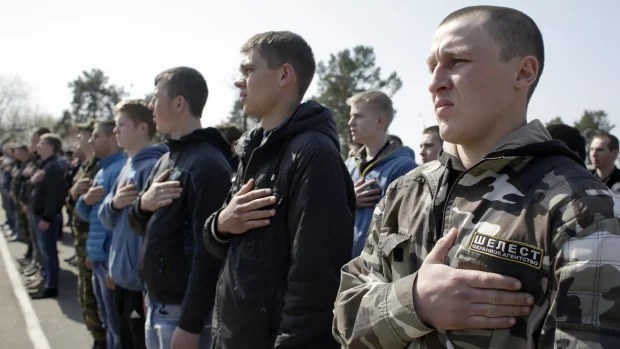
A security pact inked by Ukraine’s Volodymyr Zelensky and Polish Prime Minister Donald Tusk on Monday outlines the creation and training of a so-called Ukrainian Legion. This new formation will recruit Ukrainian “volunteers” living in Poland and other EU countries.
“Among the citizens of Ukraine who fled to EU countries, there are no volunteers seeking to participate in the hostilities,” Igor Korotchenko, editor-in-chief of the National Defense magazine, told Sputnik. “Everyone who theoretically had the motivation to participate in the conflict would have returned to Ukraine a long time ago and, accordingly, would have joined combat units on the contact line.”
“Therefore, I think that this is an artificial simulacrum. They will forcefully recruit Ukrainian draft dodgers into this legion, one way or another, under pressure from local intelligence services and police forces,” the pundit continued.
In April, Poland and Lithuania signaled that they would assist the Kiev regime by sending potential draft dodgers home, despite demonstrating reluctance to extradite conscript-aged Ukrainians last year.
Polish Defense Minister Wladyslaw Kosiniak-Kamysz asserted on April 24 that “Ukrainian citizens have obligations towards the state,” while his Lithuanian counterpart Laurynas Kasciunas insisted that evading conscription was “not fair to those citizens who are fighting for their country.”
For months, EU member states had rejected Kiev’s request for repatriating Ukrainian men eligible for mobilization, citing European conventions that do not permit extradition in cases of desertion or draft evasion.
Speaking to reporters in April, Kosiniak-Kamysz and Kasciunas asserted that there were multiple ways the authorities could repatriate Ukrainians without resorting to deportation. These included implementing bans on social benefits, work permits, and necessary documentation, in addition to enacting specific legislation aimed at Ukrainian refugees.
Apparently, the Ukrainian Legion is yet another “legal” loophole to send Ukrainian refugees to the battlefield, according to Korotchenko.
“We are not talking about forced extradition, we are talking about forced enlistment in this foreign legion,” he stressed. “Human rights activists will obviously not be interested in whether [Ukrainians] enlist voluntarily. These procedures would de facto mean forced extradition after they join the legion. The mechanism that is taking shape is absolutely illegal, but has a veneer of legitimacy,” he explained.
EU Commission Urges Digital ID, E-Health Records, and Touts “Anti-Disinformation” Efforts in Digital Decade Report
By Didi Rankovic | Reclaim The Net | July 8, 2024
Earlier this week the EU Commission (EC) published its second report on what it calls “the state of the digital decade,” urging member countries to step up the push to increase access and incentivize the use of digital ID and electronic health records.
At the same time, the bloc is satisfied with how the crackdown on “disinformation,” “online harms,” and the like is progressing.
In a press release, the EC said the report was done to assess the progress made in reaching the objectives contained in the Digital Decade Policy Program (DDPP), targeting 2030 as the year of completion.
EU members have now for the first time contributed to the document with analyses of their national “Digital Decade strategic roadmaps.” And, here, the EC is not exactly satisfied: the members’ efforts will not meet the EU’s “level of ambition” if things continue to develop as they currently are, the document warns.
In that vein, while the report is generally upbeat on the uptake of digital ID (eID schemes) and the use of e-Health records, its authors point out that there are “still significant differences among countries” in terms of eID adoption.
To remedy member countries falling short on these issues, it is recommended that they push for increased access to eID and e-Health records in order to meet the objectives set for 2030.
The EU wants to see both these schemes available to 100% of citizens and businesses by that date – and reveals that eID is at this point available to 93% of citizens across the 27 of the bloc’s countries, “despite uneven take-up.”
Still, the EC’s report shows that policymakers in Brussels are optimistic that the EU digital ID Wallet will “incentivize” eID use.
And, the document’s authors are happy with the way the controversial Digital Services Act (DSA) is getting enforced. Critics, however, believe it is there to facilitate crackdowns on speech – under the guise of combating “disinformation,” etc.
The EU calls this, “strengthening the protection against online harms and disinformation,” while also mentioning that it is launching investigations (into online platforms) to make sure DSA is enforced.
And in order to reinforce the message that DSA is needed as a force for good, the report asserts that “online risks are on the rise and disinformation has been identified as one of the most destabilizing factors for our societies, requiring comprehensive, coordinated action across borders and actors.”
3 Palestinians found dead after Israel released them
Press TV – July 8, 2024
Israeli forces have killed three more Palestinians shortly after their release from a detention camp in the occupied territories.
The bodies were found handcuffed and without clothing on Sunday in the vicinity of the Karam Abu Salem (Kerem Shalom) crossing in southern Gaza.
The three were among several Palestinians detained on Saturday.
Abdel Hadi Ghabayen said he went searching for his nephew, Kamel Ghabayen, early Sunday morning.
“I found him left on the ground along with the other two martyrs. They were without clothes, and their hands had plastic cuffs put on them by the Israeli army.”
Ghabayen said his nephew and the other two men were attacked by Israeli forces shortly after their release. One man was missing a leg, and his body was “in pieces.”
When Ghabayen tried to recover the man’s dismembered leg, Israeli troops “started shooting at me, so I stopped,” he said.
He later collected the bodies and took them in his truck to Nasser Hospital in Khan Yunis.
According to another released detainee, Israeli forces fired on them shortly after their release.
“We reached Karkar Street [in Gaza]. After 10 minutes of being there, we found a bomb thrown at the people with me. Thank God I was at the front. The bomb hit six or seven people who were detained with us. Thank God I am alive,” Mahmoud Abu Taha said.
Israeli forces recently killed more than a dozen Palestinian detainees, hours after releasing them from a detention center in the southern city of Rafah.
On June 6, the New York Times published a report with accounts of torture at Israel’s Sde Teiman camp. Israeli guards used sexual violence and electric chairs to shock detainees and forced them to sit on hot, electrified metal rods.
At least three dozen Palestinians from Gaza detained at the Sde Teiman detention facility have died, the Times reported.
Some of the former Gaza abductees have said they were blindfolded, beaten and bitten by dogs during detention.
Featured Video

Trita Parsi: Middle East Unraveling — Are We on the Path to World War?
or go to
Aletho News Archives – Video-Images
New Book
Trans agenda is ‘normalization of sadism’ – US author

RT | September 23, 2026
The US Democratic Party has embraced a transgender agenda that amounts to “the normalization of sadism,” author A.J. Rice has said, warning that radical trans policies would return if the party is allowed to regain power.
Speaking to RT’s America First host Scotty Nell Hughes about his new book, ‘The Curse of the Bearded Lady: How the Trans Mafia Whacked American Sanity’, Rice argued that activists have gained significant influence in schools, medicine, and corporate America while people who questioned the agenda have faced pressure to stay silent.
The author described the “trans mafia” as the sprawling network of people and institutions that have helped the movement gain influence. He singled out parts of academia, wealthy backers, and corporations, and stated that providers of transition-related treatment also have a financial incentive to keep young people in their care indefinitely.
Rice argued that the consequences of these policies ultimately fall on children who are being drawn toward gender-affirming medical treatments and on girls who are expected to share locker rooms or compete in sports with biological males.
He noted that while voters rejected the Democrats’ approach to gender in 2024, the party, which has been “captured by madness,” has since only doubled down and is seeking what is effectively “the normalization of sadism.” … Full report
Blog Roll
 Aletho News
- Integrity Initiative: UK-funded network framed dissent as Russian disinformation for years
- ‘We don’t seek permission to defend our country’: Snippets from President Pezeshkian’s UNGA address
- NATO chief wants Europeans to fight American wars [for Israel]
- German chemicals giant reveals details of downsizing
- Refaat Al-Areer Was The Canary In The Coal Mine In Israel’s War On The Truth
- Israeli election committee bars candidate from Knesset race over Gaza war opposition
- French-Lebanese man files war crimes complaint over Israeli attacks
- Mahan Air Flight Lands in China Despite US Threat against Iranian Airlines
- US eyes $10bn fund to rebuild war-battered Gulf infrastructure
- Trump meets Rodríguez near Maduro’s prison as Venezuela’s oil flows to US
- If Americans Knew
- Caught on Tape: AIPAC CEO Boasted of Controlling Trump’s National Security Officials
- Why Hamas Attacked Israel in October 2023 – Israeli professor Ilan Pappé
- They see them, then kill them: Israeli quadcopters track, deliberately target civilians in Gaza
- Winter could turn Gaza’s treacherous, war-damaged buildings into deathtraps
- Majority of Democratic Voters Want to Prosecute Both Biden and Trump Administration Officials Over Gaza
- As Gaza languishes, world leaders gather at the UN – Daily Update
- Sanctions are collective punishment: immoral and self-defeating
- Phosphorus Munitions Fired by Israel Burn Groves, Orchards in Southern Lebanon
- Israel Carries Out New Ceasefire Violations Across Gaza
- AI – Emphasis on the ‘I’: Israel Is Funding AI Chatbot Propaganda
- No Tricks Zone
- New Study: Earth And Venus Surface Warmth Largely Explained By Convection And Lapse Rate, Not CO2 Or Radiation
- 2025 Nature Paper Claiming Worsening Global Drought Gets RETRACTED …Heavily Flawed
- New Study: ‘Global Drought Shows No Detectable Recent Acceleration Under Climate Warming’
- Economic Masterminds: German Socialists Suggest Taxing Productivity Gains Stemming From Using AI
- The South China Sea Has Not Been Cooperating With The Climate Change Narrative
- Energy Crisis: Germany Enters Heating Season With Historically Low Gas Reserve Fill Levels
- New Study: The Antarctic Ice Sheet Gained Mass From 2020-2024 Due To Staggering Snow And Ice Accumulation
- Study: Ocean Heating Rates From Thousands Of Years Ago ‘Dwarf’ Modern Ocean Heating Rates
- Climate Extremists Target, Attack Large-Scale Power Grid Infrastructure In Germany!
- New Study: Antarctic Ice Melt Has Contributed Less Than 1 Centimeter To Sea Level Rise In The Last 30 Years

