Facebook’s Atlantic Council censors are more interested in tanks than thinking
RT | September 13, 2018
Like all foreign policy and military think tanks, the Atlantic Council exists to manufacture consent for the goals of its paymasters. It hit the jackpot when the world’s largest social media network put it in charge of censorship.
While the ubiquitous presence of Atlantic Council lobbyists across the information space already imperilled fair discourse, Facebook’s May move empowered it to endanger freedom of expression. And founder Mark Zuckerberg’s reference to an information “arms race” in a Washington Post op-ed last weekend exposes the grim reality behind the move.
That said, the spin has been impressive. Headlines such as “US think tank’s tiny lab helps Facebook battle fake social media (Reuters )” and “Facebook partners with Atlantic Council to improve election security (The Hill )”.
But the truth is very different. The Atlantic Council is effectively NATO’s propaganda wing. And it’s funded by arms manufacturers, various branches of the US military, and Middle Eastern autocratic regimes, among others, as it promotes the alliance’s agenda – which was best described by its first secretary-general, Hastings Ismay, as “to keep the Russians out, the Americans in, and the Germans down.”
Let’s be clear. If people don’t believe in the “Russian threat,” NATO is essentially rendered useless. Promoting tensions with Europe’s largest country is an existential matter for The Atlantic Council. And now Facebook has effectively placed the lobby group in charge of political censorship on its platform. This presents chilling dangers to free speech and should worry anybody who believes in fairness and balance in the media. Especially after Zuckerberg admitted in the Washington Post piece how his company is being used by US authorities to control information and combat “foreign actors.” The tech boss also boasted that “we’ve worked with law enforcement to take down accounts in Russia.”
Roll of horror
Founded in 1961, with the mission of “encouraging the continuation of cooperation between North America and Europe that began after the Second World War,” the Atlantic Council slowly evolved from being a sort of forum for socialising to a pseudo-academic lobby group. While it professes to be a “think tank,” its lack of genuine debate and tolerance for dissent means in practice this description isn’t accurate in the classical sense of the term, as the Atlantic Council is clearly more interested in creating a market for tanks than thinking.
Funding comes from dozens of foreign governments and also individual vested interests. They include arms makers Lockheed Martin, Raytheon, and Boeing, plus wealthy private backers such as Ukraine’s Viktor Pinchuk and Saudi billionaire Bahaa Hariri. State institutions who plough in funds vary from the National Endowment for Democracy to the British Foreign Office and the US Army itself.
The money is mainly used to hire lobbyists, who are known as “fellows.” And some of them are occasionally outsourced to cutouts like the Digital Forensic Research Lab (DFRLab) – the department which works with Facebook.
Some of the Atlantic Council’s hires have significant media profiles. For instance, Dmitri Alperovitch (of DNC hack fame), Anders Aslund (a radical economist who has predicted Russia’s collapse twice, and been wrong both times), Michael Carpenter (Joe Biden’s, usually misinformed, Russia-baiting sidekick), Borzou Daragahi (Middle East correspondent of Buzzfeed ), Maxim Eristavi (a pro-American Ukrainian activist), Evelyn Farkas (a rabidly anti-Russian Obama adviser), and Michael Weiss (a CNN ‘Russia analyst’ who has never been to Russia and can’t speak Russian). The DFR Lab is comprised of 11, almost uniformly young, tech enthusiasts from the US and Eastern Europe and previously worked to support NATO narratives in Ukraine and Syria.
Some are long-time Atlantic Council bodies, and others are some fresh recruits. The main men are Eliot Higgins, the founder of Bellingcat, which specialises in media-friendly investigations of wars from the perspective which suits British and American interests, Aric Toler (a former private intelligence specialist who spent time in Russia on State Department-funded study programmes) and Ben Nimmo, a one-time NATO press officer.
Other censors include ex-Obama administration and NATO staff, with the managing editor, Graham Brookie, having previously worked at the US National Security Council. There is nobody listed as an employee who could be considered, in any way, neutral on Russia. This betrays the unit’s confidence in how the mainstream media won’t scrutinise them, as normally you’d expect at least one token dissenter.
Different times
In normal circumstances, Facebook’s engagement of the Atlantic Council to decide standards of permissible information would seem bizarre. But, in the current US climate, Zuckerberg’s motivations are quite obvious. Betrayed by the speed with which he engaged the pressure group shortly after his testimony to Congress on “election meddling” was widely derided by the establishment last Spring. And how better to avoid a repeat, and turn down the heat, than to engage the ultimate DC insider institution?
After all, an organisation that has helped to rehabilitate George W. Bush can probably rescue any reputation in the American capital.
Some of the stuff the Atlantic Council itself gets away with serves to show its power over the mainstream media. For instance, when Nimmo himself earlier this year ludicrously insisted grammar mistakes were “proof” that social media users critical of NATO were paid Kremlin trolls, and later when he smeared a British man by labelling him a Russian bot, the popular press didn’t bother to question whether he was a fit and proper person for Facebook to engage as a censor. Even after the victim appeared on Sky News to prove he was a real person. Thus, what should have been a warning of the dangers of DFR Lab was essentially ignored.
At the time, after Nimmo, instead of apologising, wrote “interesting to see the real face of Ian56789, rather than the David Gandy one, at last (referring to his Twitter avatar). Not a troll factory account. Rather, a pro-Kremlin troll(definition based on [sic] use of someone else’s picture, systematic use of Kremlin narratives, and repetitive abusive behaviour),”
WikiLeaks challenged the lobbyist. “You literally produced, with money from weapons companies and dictatorships, a fake news story that spread all over the world, defaming a very British retiree, who wants to reduce arms company profits, as a Kremlin bot,” its editors wrote. “So who’s the paid troll?”
Again, despite WikiLeaks’ prominence, no mainstream outlets connected the dots.
Higgins and Nimmo also focused on attempting to discredit the Twitter user ‘Partisan Girl’ (real name Maram Susli). Susli herself insisted an associate of Higgins had even written to her university accusing of her of plotting to make Sarin gas, and she provided evidence to back up her claims.
Susli was also insulted by Atlantic Council “fellow” Michael Weiss. After a group of pro-Syrian jihadist agitators accused her of having had cosmetic surgery, she responded with a photo of herself as a child to prove them wrong. Weiss interjected by asserting how the young Maram looked like a prostitute, writing “so, your parents raised you as a streetwalker? Honey, no wonder you are pro-Assad.”
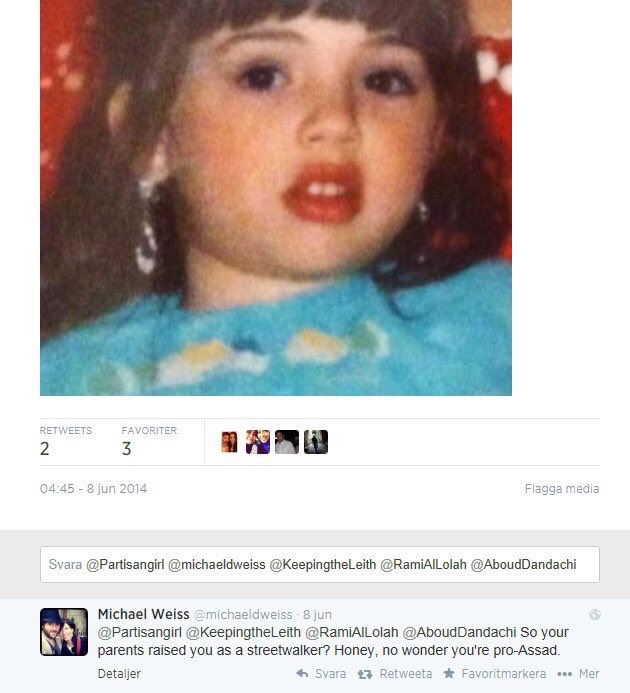
Reminder: A bunch of pro regime change people who accused @Partisangirl of having cosmetic surgery. When she responded with a photo of herself as a child proving them wrong, Michael Weiss compared the photo of her as a child to looking like a prostitute. He’s a sick demon. pic.twitter.com/nJ6ekYdQ28
— Eisa Ali (@TheEisaAli) April 22, 2018
The CNN contributor seems to have a habit of commenting on women’s physical attributes. A few months earlier, well-known Lebanese American journalist Rania Khalek accused Weiss of promoting a smear about her appearance on Twitter, falsely claiming she used funds donated to her journalistic work to get a nose job. The fact he has received no blowback, in this ‘MeToo’ era, again speaks volumes.
Deflecting dunces
Meanwhile, Higgins himself has been shy about taking on real experts. In Spring, he refused to debate Theodore Postol, Professor Emeritus of Science, Technology, and International Security at MIT, instead labelling him “an idiot.” Which led to a strange situation where a man with no training in science, whose background is in finance and administration, was smearing a skilled specialist from one of the world’s best universities. Perhaps this is the confidence a man gains by working for NATO’s propaganda adjunct.
His colleague, Weiss, also has a habit of insulting academics with genuine bona fides, running a long campaign of character assassination against Stephen Cohen. Cohen is professor emeritus of Russian studies at Princeton University and New York University.
Of course, to advance the goals of its paymasters, the Atlantic Council also needs to shape the media narrative, and influence journalists, which is presumably why it has engaged the likes of CNN Chief National Security Correspondent Jim Sciutto and Buzzfeed Foreign Editor Miriam Elder to moderate panels, in what amount to very profound conflicts of interests.
Nevertheless, while plenty of its press outreach is smooth, sometimes it can appear clumsy and amateurish. Take this tweet from lobbyist Agnia Grigas, for instance. Firstly, she misrepresents Vladimir Putin’s stated goal of making Russia a top five economy by using raw GDP, where the country currently scores badly due to weak exchange rates. In reality, economic experts regard purchasing power parity as a fairer snapshot of fiscal heft and by this measure, Russia was only $163 billion behind fifth-place Germany last year ($4,007.831 billion v $4,170.790 billion, IMF)so it doesn’t have much catching up to do. What Grigas does next with her disinformation is instructive. Because she tags the Financial Times’ news editor, Peter Spiegel, on the tweet alongside other Atlantic Council lobbyists . Which blurs the lines between supposedly independent media and propaganda, dressed up as scholarship.
Tail wags dog
Anyway, now that you’ve seen the nature of these lobbyists, let’s circle back to the DFR Lab/Facebook link up, and the extraordinary power the social media giant has handed to this gang. Only last month, the same Reuters report quoted at the outset dropped this nugget.
“Facebook is using the group to enhance its investigations of foreign interference. Last week, the company said it took down 32 suspicious pages and accounts that purported to be run by leftists and minority activists. While some U.S. officials said they were likely the work of Russian agents, Facebook said it did not know for sure.”
Read the last line again. “Facebook said it did not know for sure.” But the accounts were removed anyway. Presumably, at the Atlantic Council’s behest.
Here we see the fallout of Mark Zuckerberg’s knee-jerk reaction to pressure from congressional leaders and prominent media talking heads. Instead of asserting his independence, the Facebook founder buckled. And the stakes are impossibly high. Put plainly, this amounts to a merger of the US national security state and Silicon Valley. With implications far beyond American shores.
Read more:
Iranian Bots and the Facebook Stasi: Manufacturing Consent for the Endless War
By Helen Buyniski | Helen of desTroy | September 3, 2018
If at first you don’t succeed, try, try again. The American Empire doesn’t handle failure well, and their repeated failures to oust Syrian president Bashar al-Assad have driven them into a frenzy where good judgment and logic are a thing of the past. Russian military intelligence predicts a false-flag chemical attack in Idlib which will be pinned on the Assad regime and used to justify “retaliation” orders of magnitude greater than April’s Tomahawk tantrum. This time, if the words of the Wicked Witch of the UN are any indication, Iran and Russia will also be blamed. While the US has mostly abandoned hope for regime change in Syria, it will not look a gift horse in the mouth, and is gathering aircraft carriers and bombers to the region while pumping out tear-jerking propaganda about Idlib residents fearing for their lives. If the false flag fails, they can always send those bombers to Iran…
Such an attack is very much on the table, with the groundwork being laid in the pro-war press. John Bolton promised the MEK, a “corrupt, criminal cult” of Iranian exiles which bribed its way off the State Department’s list of terrorist organizations in 2012, regime change by 2019, and the clock is ticking. Attempts to foment a color revolution have failed repeatedly, because Iranians aren’t stupid and remember what happened the last time the US overthrew their government. But Benjamin Netanyahu has been baying for Iranian blood for almost three decades, and Bolton cares little for more clear-headed military personnel’s warnings that invading Iran would be a costly, unwinnable nightmare – Real Men Go To Tehran, as they used to say in the halcyon days of the Axis of Evil.

Prelude to War: Iranian Bots
The ruling class understands Americans are wary of another Middle Eastern war and must be convinced they’re under attack. Hence the new bogeyman, just in time for Election 2018: Iranian Meddling. Twitter, Facebook, and Google took time out from deplatforming anti-establishment commentators to delete over a thousand accounts between them after cyber-security firm FireEye released a report detailing a far-reaching “Suspected Iranian Influence Operation.” With only “moderate confidence,” FireEye pointed to “coordinated inauthentic behavior” geared toward “shaping a message favorable to Iran’s national interests” as the smoking gun. Washed-up former intelligence operatives Ron Hosko and Larry Pfeiffer (ex-FBI and ex-CIA, respectively) smugly added that if we hadn’t let Russia get away with their (still unproven) interference in the 2016 election, Iran would never have been so emboldened as to pour $12,000 of cold, hard cash into this social media offensive in order to portray itself favorably to western audiences.
Facebook, eager to behave, took down 652 offending accounts before the government could even react to the news. FireEye’s report points accusingly to the accounts’ promotion of “anti-Saudi, anti-Israeli, and pro-Palestinian themes, as well as support for specific US policies favorable to Iran,” implying Facebook users should be suspicious of anyone else espousing these views (and warning Iranian and Palestinian sympathizers and other pro-peace activists to shut up, or they’re next). An important step in laying the groundwork for an unpopular war is to “other” and ultimately demonize the enemy, and FireEye’s suggestion that those with pro-Iranian views aren’t even real humans is classic wartime propaganda for the digital age. In addition to three groups of Iranian accounts, FireEye claims it caught some Russians “attempt[ing] to influence politics in Syria and the Ukraine.” This group “was linked to sources that Facebook said the US had linked to Russian military intelligence.” How many hops of truth distortion are too many for even the terminally credulous establishment media?
Perhaps anticipating users’ bewilderment – the offending accounts had broken no laws, were promoting no political candidates, and in many cases had not even bought ads – Zuckerberg explained around a mouth full of jackboot that “These were accounts that were misleading people about who they were and what they were doing. We ban this kind of behavior because authenticity matters. People need to be able to trust the connections they make on Facebook.” Lest users make the mistake of trusting Facebook, however, he added that the company would be “working more closely with law enforcement, security experts and other companies,” turning over more user data than ever in its quest to make privacy obsolete. When law enforcement calls on Facebook to create a backdoor in its Messenger program – thus defeating the purpose of “encrypted chat” – does anyone really expect Zuckerberg to stand fast for privacy rights?

Not to be outdone, Twitter deleted 770 accounts based on the FireEye report, noting that only 100 of these ostensibly Iranian accounts had misrepresented their location and not even all of these had shared “divisive social commentary,” while a single account had purchased $30 in ads. This means over 600 Twitter accounts were deleted for the crime of geography alone (collateral damage?). But Twitter has always gone above and beyond the call of duty, announcing in May that to promote “healthy” conversations it would begin de-ranking users for engaging in “suspicious behavior.” Users who tweeted at many accounts, had multiple complaints against them, or retweeted material tweeted by banned accounts were shadowbanned indefinitely as persona non grata. Since November, Twitter and Facebook have both been turning over information on users who post “divisive” content of the sort promoted by “Russia-linked accounts” to congressional investigators even though a creator of “Russian bot tracker” Hamilton68 admits the accounts his tool tracks are not necessarily bots, or even Russian – “some are legitimately passionate people,” as if passion is an un-American trait.
Last year, the FBI launched a Foreign Intelligence Task Force to work with US tech firms to combat “foreign influence actors.” With bots and their ilk operating all over the world, the decision to single out Russia and Iran has obvious foreign policy motivation (Bolton also claims that China and North Korea are up to no good on social media). All of this avoids naming the elephant in the room. Even though Israel meddles loudly and proudly in US elections, Facebook openly collaborates with Netanyahu’s government. Beyond removing posts and banning accounts, Facebook even turns over user information to Israeli authorities to facilitate prosecution of Palestinian activists for “incitement,” sometimes over nothing more than a “like” or a “share.” Adding insult to injury, Israel’s Ministry of Strategic Affairs has weaponized the diaspora’s ennui – often caused in no small part by young Jews’ discomfort with the crimes their government commits in their name – with the social media equivalent of a Predator drone. Act.IL is an app that allows the user to participate in the “brigading” (mass-reporting for spurious violations) of hapless strangers for “incitement” – supporting the BDS movement, say, or implying that Palestinians are human rather than a “lawn” to be “mowed.” In a rare case of instant karma, the app was found to be leaking users’ email addresses. A nation where the government and citizen “enforcers” are working together to silence dissent sounds like an authoritarian nightmare, but this is our “democratic” Middle Eastern ally.
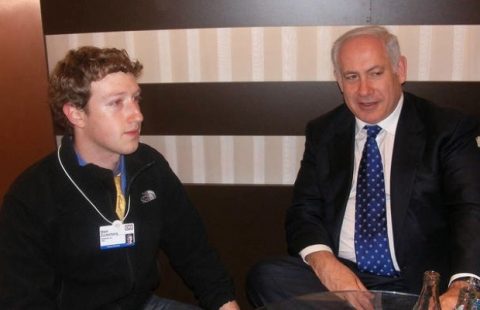
Origins of Totalitarianism
Israel is the missing link that explains how “sowing discord” – an offense few Americans had ever heard of until 2016 – entered our national vocabulary. The modern “fake news” panic has its roots in the totalitarian tradition. Words like “inciting,” “fomenting,” and “sowing” “discord” and “subversion” are very versatile weapons in the hands of authoritarian regimes. This language was previously uncommon in the US, but its emergence became inevitable when the “new Pearl Harbor” of 9/11 opened the door to the creation of the modern American police state. Social media are now just extra bars on the cage – the tools we once believed could liberate us, during the promising early months of Occupy Wall Street and the Arab Spring, are now used to silence us. The US, following a blueprint for legal censorship set by post-WW2 Europe, is taking on the totalitarian trappings of China, of Burma, of the central Asian “stans” and of Saudi Arabia. Kazakhstan calls it “inciting national discord,” with the variations “ethnic discord” and “religious discord” applicable as needed to whatever activist, journalist, or trade unionist the regime needs to put on ice for a few years. It’s called “inciting religious hatred” or “ethnic hatred” in Azerbaijan, which also permanently bans 5 major media outlets for reasons of “national security.” Uzbekistan arrests journalists for “extremism.” China targets activists of all stripes for “inciting subversion.” Burma, which is cracking down hard on the press as it seeks to keep its Rohingya ethnic cleansing quiet, criminalizes “speech that is likely to cause fear or harm and incites classes or groups to commit offenses against each other.” Egypt detains lawyers, journalists and activists under charges of “propagating false news.” Saudi Arabia recently put a Shi’a religious leader to death for “sowing discord” and “undermining national unity.” American dissenters, this is your future.
I have already explained how the Great Deplatforming represents the triumph of the repressive concept of Hate Speech over Free Speech, and how this – not Trump blustering about that wall he’ll get around to building someday – is what fascism looks like. The US government uses friendly corporations as workarounds for the constitutional limits on its power. This technique was deployed against the Second Amendment in Citibank and Bank of America’s post-Parkland refusal to process financial transactions from firearm manufacturers, and is being deployed against the First Amendment here. Such corporate-state fascism is very effective, and the ruling class has seen fit to share it with the other “Five Eyes” intelligence partners, all of whom share information gathered by their Panopticon surveillance agencies. This week, ministers from the US, UK, Canada, Australia and New Zealand met in Australia to condemn hostile nations who “sow discord, manipulate public discourse, bias the development of policy, or disrupt markets” through their manipulation of social media platforms; they also implored Big Tech to allow law enforcement “targeted” access to users’ encrypted data. Flexing the thuggish muscles of the world’s greatest carceral state, the group acknowledged “individual rights must be protected” (and presumably snickered before adding) “privacy is not absolute” and warning that encryption was being exploited by criminals.
The Iranian Meddling affair is a perfect distraction from the real malfeasance at Facebook, where Zuckerberg is bringing back Stasi-style crowdsourced secret policing. The company is assigning “trust ratings” to users based in part on their willingness to report their friends for posting “fake news,” fostering a climate of distrust and fear meant to instill reflexive self-censorship. As in East Germany, the central authorities can’t possibly police everyone all of the time, and it is much more advantageous for them to outsource surveillance to the people, since one who cannot trust his neighbor will not unite with him to overthrow the state. Accordingly, Facebook admits that “some users” abuse Facebook’s reporting system, dubbing stories or users they don’t like “fake news” – but don’t worry about those miscreants, because Facebook compensates for their actions with thousands (!) of other measures that go into calculating the trust rating. No user can see his or her own report – that would be telling – so we’re encouraged to tread carefully to avoid running afoul of the ever-shifting Rules. Jordan Peterson, conservatism’s favorite intellectual, delivers his marching orders in a video he posted last week – “nothing is ever simple,” he pleads as he tells his fans that he’s reached an understanding with Zuckerberg, a “very straightforward person” who really just wants to keep his users safe from bad guys like ISIS recruiters. And Iran. Because they’re terrorists, you know?
The police state is no longer necessary when you have internalized the police. “Media censorship is a shift in the flow of information, while self-censorship is a shift in consciousness.” When the government has convinced citizens to do its job – reporting friends and neighbors for “hate speech,” “sowing discord,” and “incitement” on social media, for example – a free society is impossible.
French Online Payment Service Provider HelloAsso Refuses to Close Accounts Belonging to BDS Activists
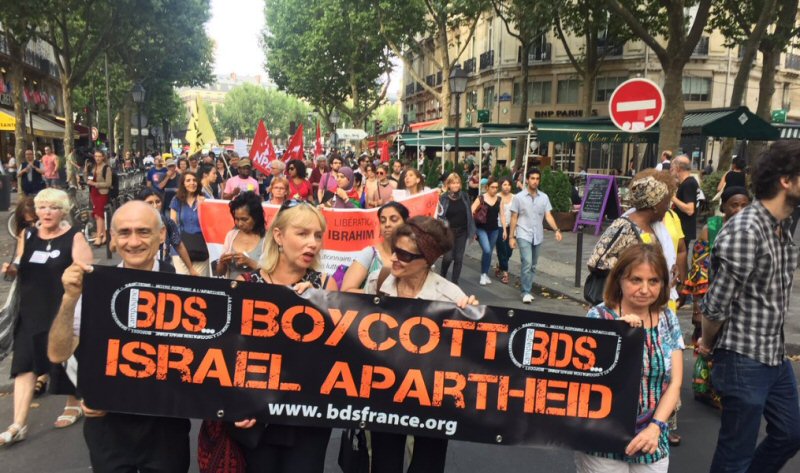
Palestinian Boycott, Divestment and Sanctions National Committee / France (BNC) 09-12-18
HelloAsso, a French company that provides online payment services, has rejected pressure by Israel lobby groups to shut down the accounts of two French groups which support the BDS movement for Palestinian human rights. HelloAsso will continue to provide services to both Association France Palestine Solidarity (AFPS) and BDS-France.
HelloAsso publicized its decision in a tweet explaining that it supports the right of citizens to call for BDS as part of freedom of expression.
In 2016, the European Union stated:
“The EU stands firm in protecting freedom of expression and freedom of association in line with the Charter of Fundamental Rights of the European Union, which is applicable on EU Member States’ territory, including with regard to BDS actions carried out on this territory.”
Translation of HelloAsso tweet from French original:
[…] “HelloAsso is an apolitical platform that does not take any position regarding the claims of the BDS movement. HelloAsso nevertheless considers this movement as within the realm of free expression and not as discriminatory or antisemitic.
HelloAsso’s position is supported by the European Union, which has clearly stated it favours protecting freedom of expression and association, including the right to advocate for BDS .
Therefore, the HelloAsso account of AFPS (Association France Palestine Solidarity) will not be removed.
To all those who criticize us for hosting these organizations, we respond that the conflation that allows attacks on these organizations is dangerous because it conflates antisemitism, which we condemn without ambiguity, and criticism of the state of Israel, which is a political opinion. This freedom of expression is a fundamental right.
Since its creation, HelloAsso has striven to support freedom of association and to protect the right to freedom of speech because we are a platform that is committed to the model of [non-profit] association and at the same time apolitical, open and enriched by differences of opinion, a reflection of our society.”
The Palestinian BDS National Committee (BNC) is the largest coalition in Palestinian civil society. It leads and supports the global Boycott, Divestment and Sanctions movement for Palestinian rights.
A New Capital? Palestinians say Abu Dis is No Substitute for East Jerusalem
By Jonathon Cook | The National | September 11, 2018
From the offputting concrete edifice that confronts a visitor to Abu Dis, the significance of this West Bank town – past and present – is not immediately obvious.
The eight metre-high grey slabs of Israel’s separation wall silently attest to a divided land and a quarter-century of a failed Middle East peace process.
The entrance to Abu Dis could not be more disconcerting, given reports that Donald Trump’s administration intends it to be the capital of a future Palestinian state, in place of Jerusalem.
The wall, and the security cameras lining the top of it, are the legacy of battles for control of Jerusalem’s borders. Sections of concrete remain charred black by fires residents set years ago in the forlorn hope of weakening the structure and bringing it down.
Before the wall was erected more than a decade ago, Abu Dis had a spectacular view across the valley to Jerusalem’s Old City and the iconic golden-topped Dome of the Rock, less than three kilometres away. It was a few minutes’ drive – or an hour’s hike – to Al Aqsa mosque, the third holiest site in Islam, and the Church of the Holy Sepulchre, the reputed location of Jesus’s crucifixion.
Now, for many of the 13,000 inhabitants, Jerusalem might as well as be on another planet. They can no longer reach its holy places, markets, schools or hospitals.
Abu Dis, say its residents, is hemmed in on all sides – by Israel’s oppressive wall; by illegal Jewish settlements encroaching relentlessly on what is left of its lands; and by a large, Israeli-run landfill site that, according to experts, is a threat to human health.
The Palestinian authorities do not even control Abu Dis. The Israeli security cameras watch over it and armoured jeeps full of Israeli soldiers make forays at will into its crowded streets.
Perhaps fittingly, given the Palestinians’ current plight, Abu Dis feels more like it is being gradually turned into one wing of a dystopian open-air prison than a capital-in-waiting.
Abu Dis repackaged
Nonetheless, the town has been thrust into the spotlight. Rumours have intensified that US President Trump’s promised peace plan – what he terms the “deal of the century” – is nearing completion. His son-in-law, Jared Kushner, has been drafting it for more than a year.
Back in January Mahmoud Abbas, the Palestinian leader, confirmed for the first time that the White House was leaning on him to accept Abu Dis as his capital.
The issue has become highly charged for Palestinians since May, when Mr Trump overturned decades of diplomatic consensus by moving the US embassy from Tel Aviv to Jerusalem.
That appeared to overturn a once widely shared assumption that Israel would be required to withdraw from East Jerusalem, which it occupied in 1967, and allow the Palestinians to declare it their capital.
Instead Mr Kushner and his team appear to believe they can repackage Abu Dis, just outside the city limits, as a substitute capital.
How plausible is it that the Palestinians can accept a ghettoised, anonymous community like Abu Dis for such a pivotal role in their nation-building project?
Symbolic power
Ghassan Khatib, a former Palestinian cabinet minister, said Mr Trump would find no takers among the Palestinian leadership.
“A Palestinian state without Jerusalem as its capital simply won’t work. It’s not credible,” he said. “It’s not just Jerusalem’s religious and historic significance. It also has strategic, economic and geographic importance to Palestinians.”
The people of Abu Dis appear to feel the same way, with many pointing to Jerusalem’s enormous symbolic power, as well as the potential role of international tourism in developing the Palestinian economy.
Abu Dis, however, is unlikely ever to attract visitors, even should it get a dramatic makeover.
The approach road, skirting the massive settlement of Maale Adumim, home to 40,000 Jews, is adorned with red signs warning that it is dangerous for Israelis to enter the area.
The section of wall at the entrance to Abu Dis alludes to the residents’ growing anger and frustration – not only with Israel but some of their own leaders.
Artists have spray-painted a giant image of Marwan Barghouti, a Palestinian resistance leader imprisoned by Israel for the past 16 years. It shows him lifting his handcuffed hands to make a V-for-victory sign.
But noticeably, next to him is a much smaller image of Mr Abbas, president of the Palestinian Authority, whose face has been painted out. He has come under mounting domestic criticism for maintaining Palestinian “security cooperation” with Israel’s occupation forces.
Resentment at such cooperation is felt especially keenly in Abu Dis. Large iron gates in the wall give the Israeli army ready access in and out of the town.
An orphaned town
Under the Oslo accords signed in the mid-1990s, all of Abu Dis was placed temporarily under Israeli military control, and most of it under Israel’s civil control also. That temporary status appears to have become permanent, leaving residents at the whim of hostile Israeli authorities who deny building permits and readily issue demolition orders.
The restrictions mean Abu Dis lacks most of the infrastructure one would associate with a city, let alone a capital.
Abdulwahab Sabbah, a local community activist, said: “We are now a small island of territory controlled by the Israeli army.
“Not only have we lost our schools, the hospitals we once used, our holy places, the job opportunities that the city offered. Families have been split apart too, unable to visit their relatives in Jerusalem.
“We have been orphaned. We have lost Jerusalem, our mother.”
A short drive into Abu Dis and the shell of a huge building comes into view, a reminder that the idea of an Abu Dis upgrade is not the Trump administration’s alone.
In fact, noted Mr Khatib, Israel began rebranding Abu Dis as a second “Al Quds” – the Holy City, the Arabic name for Jerusalem – in the late 1990s, after the Oslo agreement allowed Palestinian leaders to return to Gaza and limited parts of the West Bank.
The Palestinian leadership, desperate to get a foothold closer to the densely populated neighbourhoods of East Jerusalem, played along. They expected that Israel would eventually relinquish Abu Dis to full Palestinian control, allowing it to be annexed to East Jerusalem in a future peace deal.
View of al-Aqsa
In 1996 the Palestinians began work building a $4 million parliament on the side of Abu Dis closest to Jerusalem. The location was selected so that the office of the late Palestinian leader Yasser Arafat would have a view of Al Aqsa.
Reports from that time talk of Abu Dis becoming a gateway, or “safe corridor”, for West Bank Palestinians to reach the mosque. One proposal was to build a tunnel between Abu Dis and the Old City.
However, with the outbreak of hostilities in 2000 – a Palestinian intifada – work on the parliament came to a halt. The interior was never finished, and there is now no view of Al Aqsa. The parliament too is sealed off from Jerusalem by the wall.
Since then Israel has barred the Palestinian Authority from having any role in East Jerusalem.
Khalil Erekat, a caretaker, holds the key to the unused parliament. Once visitors could inspect the building, including its glass-domed central chamber. Now, he said, only pigeons and the odd stray dog or snake ventured inside.
“No one comes any more,” he added. “The place has been forgotten.”
And that, it seems, is the way Palestinian officials would prefer it. With the Trump administration mooting the town as a substitute capital, the parliament is now an embarrassing white elephant.
Requests from The National to the Palestinian authorities to visit the building were rejected on the grounds that it was no longer structurally safe.
Eyesore ghetto
Evidence of how quickly Israel has transformed Abu Dis from a rural suburb of Jerusalem into an eyesore ghetto are evident in the homes around the parliament.
A once-palatial four-storey home next door would be more in place in war-ravaged Gaza than an impending capital. Its collapsed top floors sit precariously above the rest of the structure.
Mohammed Anati, a retired carpenter aged 64, is a tenant occupying the bottom floor with his wife and three sons.
He said the destruction was carried out by the Jerusalem municipality several years ago, apparently because the upper floors were built in violation of planning rules Israeli military authorities imposed after 1967.
Neighbours speculate that, in fact, Israel was more concerned that the top of the building provided views over the wall.
Mr Anati said that, paradoxically, the Jerusalem municipality treated this small neighbourhood next to the wall as within its jurisdiction. “We have to pay council taxes to Jerusalem even though we are cut off from the city and receive no services,” he said.
Asked whether he thought Abu Dis could be a Palestinian capital, Mr Anati scoffed. “Trump will offer us the worst deal of the century,” he said. “Jerusalem has to be the capital. There is nothing of Jerusalem here since Israel built the wall.”
Only pigeons still free
Nearby, Ghassan Abu Hillel’s two-storey home presses up against the grey slabs of concrete. He said cameras on the top of the wall monitored his and his neighbours’ activities around the clock.
His family moved to this house in 1967, when he was 14 years old, and shortly before Israel occupied Abu Dis, along with the rest of the West Bank and East Jerusalem.
Until the wall was constructed, he spent his time herding sheep and goats on the surrounding hills.
Now he has had to corral them into a corner of the wall. Their improvised pen is daubed with graffiti: “Take an axe to the prison wall. Escape.”
His herd of what was once more than 200 sheep is down to barely a dozen. The animals can no longer graze out on the hills, and he cannot afford the cost of feeding them.
Unlike Mr Abu Hillel and the sheep, his pigeons still enjoy their freedom. “They can fly over the wall and reach Jerusalem whenever they want,” he said.
His family owned much of the land surrounding Abu Dis before 1967, he added, but almost all of it had been taken by Israel – originally on the pretext that it was needed for military purposes.
Since then, Israel has built a series of Jewish settlements on the surrounding land, including Maale Adumim, Kfar Adumim and Kedar.
In the early 1980s it also opened a landfill site to cope with the region’s waste. In 2009 the United Nations warned that toxic fumes from waste-burning and leakage into the groundwater posed a threat to local inhabitants’ health.
A bluff from Israel
Some residents are actively finding ways to break out of the isolation imposed on Abu Dis by Israel.
Mr Sabbah is a founder of the Friendship Association, which encourages exchange programmes with European students, teachers and youth clubs. His most successful project is the twinning of Abu Dis with the London borough of Camden.
Mr Sabbah’s prominent political activities may be one reason why his home – along with the local mayor’s – was one of 10 invaded in the middle of the night on September 4.
The operation had the hallmarks of what former Israeli soldiers from the whistleblowing group Breaking the Silence have termed “establishing presence” – military training exercises designed to disrupt the lives of Palestinian communities and spread fear.
Mr Sabbah is sceptical that the Abu Dis proposal by the Trump administration has been made in good faith.
“It’s a bluff,” he said. “Israel has shown through all its actions that it does not want any Palestinian state – and that means no capital, even in Abu Dis.
“It is being offered only because Israel knows no Palestinian leader could ever accept it as a capital. And that way Israel can again blame us for being the ones to reject their version of ‘peace’.”
An oasis of normality
Amid its confinement, however, Abu Dis does have one asset – a university – that now attracts thousands of young Palestinians, though it adds to overcrowding.
The main campus of the Palestinian-run Al Quds university has been operating in Abu Dis since the 1980s.
Sitting on the crossroads between the Palestinian cities of Bethlehem and Nablus to the south, Jericho to the east, and Ramallah to the north, the Abu Dis campus has grown rapidly. It has profited from the fact that West Bank Palestinians cannot access another campus of Al Quds university in East Jerusalem.
The university is enclosed and security is tight. Inside, students enjoy spacious grounds with shaded gardens, a small oasis of normality where it is possible briefly to forget the situation outside.
Nonetheless, the university is not immune from Israeli military operations either. On September 5, soldiers shut down the campus and nearby schools, as they reportedly fired tear gas, stun grenades and rubber bullets at youths.
Omar Mahmoud, aged 23, a medical student from Nablus, raised his eyebrows at the suggestion that Abu Dis could serve as the Palestinians’ capital.
“It’s fully under Israeli control,” he said. “One side there is the wall and on the other side there are Israeli settlements. There are no services and it just gets more crowded by the year.”
He has shared an apartment with other students in Abu Dis for five years. He said: “To be honest, I can’t wait to get out of here.”
Don’t Mention the War: Controversial British Army Recruitment Strategies Exposed

7th Army Training Command, CC
Sputnik – September 11, 2018
An internal document setting out the marketing plan for the UK military’s controversial ‘This Is Belonging’ recruitment campaign has revealed the Ministry of Defense is seeking to enlist young people from poor, working-class backgrounds with limited opportunities.
The brief describes the campaign’s target audience as “16 —24, primarily C2DE”, the latter being a demographic classification referring to the UK’s three lowest social and economic groups.
These individuals are said to be; “open to change”; “ambitious and money-driven, but not good at money management”; “highly likely to be influenced by those around them”; have a “thirst for variety and risk”.
‘Focus locations’ for the propaganda blitz are northern cities of Bradford, Leeds, Liverpool, Manchester, Middlesborough, Newcastle, Sunderland and Sheffield. Other major metropoles in recruiters’ crosshairs are Birmingham, Cardiff, Glasgow and, perhaps predictably, London.
In a section titled previous channel learnings,’ ‘out of home’ advertising is said to have previously been “anecdotally reported” as a “strong performer” in gyms, pubs, bars, sports centres and ‘powerleagues.’
In respect of TV ads, the document states the campaign’s ‘hero spots’ should ideally run before, during or after sports, dating, and reality shows, including The Voice, Celebrity Big Brother, Celebrity Bake Off and Gogglebox.
Adverts will also be shown in cinemas, but the document warns against running them prior to “combatant” films — perhaps indicating the romantic and glamorous depiction of army life promoted by ‘This Is Belonging’ may be compromised by association with violent war films.
Child Soldiers?
The campaign provoked controversy earlier in 2018 when it was revealed ads targeting 16-year-olds via social media on and around GCSE results day were promoted via Facebook, suggesting they enroll in the army if they didn’t achieve the grades they were expecting.
Beyond the implied cynicism of targeting potentially stressed, vulnerable children, some were simply shocked to learn the UK routinely recruited under-18s for military service — the only country in Europe, and the only member of NATO and permanent UN Security Council, to do so.
Individuals can apply for the army from the age of 15 years and 7 months old — once enlisted, they can leave after the first six months of their contract if they wish — Ministry of Defense figures indicate one in three recruits who join up at 16 or 17 leave the army after a few months — but those who stay past the age of 18 are locked into military service until 22.This practice has endured despite stringent criticism from the United Nations Committee on the Rights of the Child, Parliament’s own Joint Committee on Human Rights, and numerous charities and NGOs — among them Forces Watch.
“Compared with older personnel, younger recruits are significantly more likely to suffer post-traumatic stress disorder, consume alcohol at harmful levels and behave violently upon returning from deployment. Young recruits from disadvantaged backgrounds are at greatest risk — they’re more vulnerable to stress, be given jobs more exposed to traumatically stressful events on the battlefield, and lack strong social support when they leave the forces in order to manage the effects of any mental health problems they may be experiencing,” spokesperson Rihanna Louise told Sputnik.
This lack of social support may account for why UK army veterans under the age of 24 are three times more likely to take their own lives than their civilian counterparts.
Nonetheless, Forces Watch believe the targeting of vulnerable young people by UK military recruiters is no accident — and in fact suggest ‘This Is Belonging’ specifically seeks to exploit “the typically adolescent desire” to find a sense of kinship and acceptance, at an age when a tendency towards hasty and risky long-term decision-making is almost universal.
“This is also an important time for learning and gaining educational and social skills for healthy development — but while the military does provide some education for its 16-18-year-old personnel, it’s not standardized by the same requirements as mainstream education, falls short of offering satisfactory transferable qualifications — which significantly contributes to veteran unemployment — and is secondary to military training. In any event, adolescents are misled into thinking they needn’t be concerned with civilian qualifications and learning — the Army has a job for them regardless of qualifications,” Rihanna told Sputnik.
See also:
UK Military Academy Cadets Investigated for Waterboarding Claims – Reports
Butina prosecutors wrote their own James Bond novel with sex allegations – and the media loved it

Jailed Russian “spy” Maria Butina / Facebook
RT | September 10, 2018
US prosecutors who wrongly accused Russian ‘foreign agent’ and gun activist Maria Butina of trading sex for influence peddled their own cheap James Bond fan fiction. No matter how incorrect, the media lapped it up.
Butina’s request to be released until the time of her trial was declined by US District Judge Tanya Chutkan on Monday. Chutkan ruled that the Russian activist is to remain in jail until she’s tried on the charges of acting as an unregistered agent for a foreign government. Butina has pleaded not guilty.
The judge has also slapped both the prosecution and the defense with a media gag order, after berating the defense attorney for giving interviews on his client’s innocence and slamming the prosecution for opening the case with a “salacious” and “notorious” claim that proved to be completely false. Days after Butina was arrested in July, Assistant US Attorney Erik M. Kenerson claimed she was offering an individual “sex in exchange for a position within a special interest organization.”
In a filing on Friday, prosecutors in the US attorney’s office in Washington, including Kenerson, backtracked on the July allegation, and stressed that it “was based both on a series of text messages between the defendant and another individual.” They admitted that the “government’s understanding of this particular text conversation was mistaken.”
Accusing Butina of trading sex for work was never about building a solid case against her, however. Instead, it was about portraying her as a Russian femme fatale; a pawn of Putin seducing her way through American political circles to sow division and discord in American politics.
“I think it was done to get headlines,” human rights lawyer Dan Kovalik told RT. “I think it was done to injure her reputation… All along, the US officials and even the press have tried to present her as some kind of spy, when in fact there is not even an allegation in that regard.”
Using the term “spy” to describe Butina, even to the untrained eye, is a bit of a reach. Before falling victim to Washington’s anti-Russian crusade, Butina moved to the US on a student visa in 2016. She graduated from American University in Washington DC with a master’s degree in international relations earlier this year. Butina is also the founder of Right to Bear Arms, a pro-gun organization that lobbies to change Russia’s strict gun laws. Right to Bear Arms has developed ties with the National RIfle Association (NRA) in the US. In her time in America, Butina met and socialized with several conservative political figures.
The sex allegations, Kovalik argues, were tacked on to bolster the US government’s already weak case against Butina. The 28-year-old gun activist was arrested for failing to register as a foreign lobbyist under the Foreign Agents Registration Act (FARA), an offense that doesn’t immediately scream “spy.”
“Clearly, this is a political case,” Kovalik said. “It is unclear to me what this young woman has done wrong, except maybe not registered under the FARA act. I believe no one has been arrested ever for violating that act which is rarely invoked.”
The smear worked, and the salacious headlines did the rounds in US media. “A simple Google search using the phrase ‘Maria Butina and sex’ yields over 300,000 hits,” her defense lawyer Robert Driscoll said in an interview, after the government backtracked on the allegation.
With their imaginations left to run riot, American journalists pumped out cold-war style spy fiction with impunity. “Sex and schmoozing are common Russian spy tactics. Publicity makes Maria Butina different,” read a headline from USA Today on August 29.
The USA Today writer scratches his head as to why Butina operated so publicly; giving interviews and speeches, publishing articles explaining her political views, and even posing for photos in magazines. After speaking to four anonymous ‘intelligence officials,’ he can only conclude that Butina’s transparency is “evidence the Russians have grown bolder in their spy efforts.”
Throughout much of the mainstream media, journalists parroted the prosecutors’ claims. Butina’s activism, the New York Times wrote in July “appears to be another arm of the Russian government’s attempts to influence or gain information about the American political process.” Butina, Time Magazine wrote at the same time, “lived a double life by using sex and a love of guns to infiltrate American political organizations… in order to advance Moscow’s agenda.”
What ‘Moscow’s agenda’ is here is unclear. Butina’s however, is clear as day. “She was meeting with people to talk about gun rights that she wants loosen in her own country back home in Russia,” Kovalik told RT. After all, if you want to talk gun rights in the USA, who better to talk to than the NRA, the world’s best-known gun rights organization, with more than six million members and a yearly revenue of almost $500 million.
Why then did she find herself the unwilling star of a third-rate spy novel, serialized and dramatized in US newspapers?
“I think this was a political gambit to deal with bigger geopolitical issues to try to ruin the outcome of the summit between Trump and Putin,” Kovalik said. “She is being used as a political pawn by the US.”
As long as the case against Butina is ongoing, the US government has human proof that the specter of ‘Russian meddling’ in US politics is alive and well.Unfortunately for Butina, that means she sits in jail until her case is eventually resolved. The Russian Embassy in Washington DC has accused American authorities of subjecting her to ‘borderline torture’ conditions, including unnecessary strip searches after every visit, sleep deprivation, and denying the 28-year-old medical treatment for a swelling on her leg.
“There are attempts to break her will,” the embassy said.
According to Kovalik, Butina’s outlook is grim. “I am going to bet that this case will drag on and this poor woman will rot in jail, apparently subjected to all sorts of indignities, including a body cavity search she is after every meeting,” the veteran human rights lawyer said. “And ultimately the charges will be dropped for the lack of evidence. But in the meantime her reputation and life will be destroyed. That is how I see this case going, to be perfectly frank.”
While the sex allegations against Butina have been dropped, prosecutors have still clung to the claims that she is, in fact, a spy. They say that her having received multiple visits from Russian officials while in jail is somehow proof of her importance to the Russian government, as is the fact that Russian Foreign Minister Sergey Lavrov complained about her detention to his US counterpart Mike Pompeo.
However, a visit from a Russian bureaucrat doesn’t sell newspapers like a juicy, sex-filled headline does. Therefore, this information was relegated to the final paragraphs of the retraction articles on Friday – an ignominious end to a damp squib of a modern spy thriller.
See also:
Gullible, Gutless and Gagged
Legal advice and common sense jettisoned as UK Labour Party leaders surrender to Zionist diktat
By Stuart Littlewood | Dissident Voice | September 7, 2018
Jeremy Corbyn, knifed by his senior lieutenants and failed by his media team, is on the danger list and now looks isolated.
At the fatal NEC (National Executive Committee) meeting this week to discuss whether the party should adopt the IHRA definition of anti-Semitism in full, with all its examples, he prepared and presented a 500-word statement to water down the definition but this met with an angry reaction from most NEC members and he dropped it.
According to the Guardian the most controversial passage in Corbyn’s draft statement said:
It cannot be considered racist to treat Israel like any other state or assess its conduct against the standards of international law. Nor should it be regarded as antisemitic to describe Israel, its policies or the circumstances around its foundation as racist because of their discriminatory impact, or to support another settlement of the Israel-Palestine conflict.
That these words caused such a rumpus tells us all we need to know about the mentality of the modern Labour Party. It is surely self-evident that the Israel project was racist from the start and confirmation, if any were needed, is provided by the discriminatory nation state laws, emphasising Jewish supremacy, recently passed by the Knesset. Why deny the glaring truth? And last time I checked there was no ‘settlement’ of the Israel-Palestine conflict and the two-state idea endlessly talked about but never energetically pursued was stone-dead.
At the end of a stormy meeting the NEC accepted the IHRA definition and all its examples but added a statement “which ensures this will not in any way undermine freedom of expression on Israel or the rights of Palestinians.”
But the Israel lobby were still not satisfied and renewed their whinging. The Jewish Leadership Council’s chief executive, Simon Johnson, said Corbyn had “attempted shamefully to undermine the entire IHRA definition”, adding that the free speech caveat “drives a coach and horses” through that definition. “It is clearly more important to the Labour leader to protect the free speech of those who hate Israel than it is to protect the Jewish community from the real threats that it faces.”
A false dichotomy, of course. And if their case cannot withstand free speech it must have been bullsh*t in the first place.
Richard Angell, director of the centre-left Progress group, said:
The Jewish community made it clear and simple to Labour: pass the IHRA definition in full – no caveats, no compromises. Jeremy Corbyn and the Momentum-dominated NEC have just failed the most basic test. A ‘right to be racist’ protection when debating the Middle East is not just wrong, it harms the cause of peace but it will also continue a culture where Jewish people cannot feel at home in Labour.
Today’s decision is an insult. Labour does not know better than Jewish people about antisemitism.
He was backed up by another Progress director, Jennifer Gerber, who is also a director of Friends of Israel. She said:
It is appalling that the Labour party has once again ignored the view clearly and repeatedly stated by the Jewish community: that it should adopt the full IHRA definition without additions, omissions or caveats.
The IHRA definition has been adopted in full by 31 countries, including the UK, as well as over 130 UK local councils, the police, the Crown Prosecution Service and the judiciary. A ‘freedom of expression on Israel’ clause is unnecessary and totally undermines the other examples the party has supposedly just adopted.
The recurring message is that free speech is a threat and doesn’t seem to have a place in their world.
Re-frame anti-Semitism accurately – don’t accept the skewed version by the Israel lobby
So let’s get this straight: DNA research confirms that the great majority of those calling themselves Jews are not of Semitic blood. So does anti-Semitism mean what it says? Shouldn’t it mean that if we outlaw anti-Semitism we outlaw being nasty to the genuine Semites of the Holy Land; i.e. the indigenous people who include Palestinians whether Muslim, Christian or Jewish? And are they not terrorised and persecuted by the Israeli regime which is the chief perpetrator of anti-Semitism and which has oppressed, dispossessed, impoverished and slaughtered those people for 70 years?
Corbyn and his New Look Labour Party were in a position to lead a move to ‘unskew’ the definition of anti-Semitism and re-frame it accurately – with, of course, the help of the various campaign and BDS groups worldwide. But now they’ve effectively muzzled themselves.
And for some strange reason Corbyn and his team, throughout the unpleasant warfare in his party over anti-Semitism, completely ignored the warnings issued by legal experts Hugh Tomlinson QC, Geoffrey Robertson QC, Sir Stephen Sedley and others which explained how:
- the IHRA definition is “too vague to be useful” and conduct contrary to it is not necessarily illegal. Public bodies are under no obligation to adopt or use it and, if they do, they must interpret it in a way that’s consistent with their statutory obligations and with the European Convention on Human Rights, which provides for freedom of expression and freedom of assembly.
- the right of free expression is now part of UK domestic law by virtue of the Human Rights Act;
- Article 19 of the Universal Declaration of Human Rights bestows on everyone “the right to freedom of opinion and expression; this right includes freedom to hold opinions without interference…”;
- the IHRA definition is open to manipulation. “What is needed now is a principled retreat on the part of Government from a stance which it has naively adopted,”says Sedley;
- calling Israel an apartheid state or advocating BDS against Israel cannot properly be characterized as anti-Semitic. Furthermore, any public authority seeking to apply the IHRA definition to prohibit or punish such activities “would be acting unlawfully”;
- it is “not fit for any purpose that seeks to use it as an adjudicative standard. It is imprecise, confusing and open to misinterpretation and even manipulation”.
Robertson adds:
The Governments ‘adoption’ of the definition has no legal effect and does not oblige public bodies to take notice of it. The definition should not be adopted, and certainly should not be applied, by public bodies unless they are clear about Article 10 of the European Convention on Human Rights which is binding upon them, namely that they cannot ban speech or writing about Israel unless there is a real likelihood it will lead to violence or disorder or race hatred.
Crucially, freedom of expression applies not only to information or ideas that are favourably received or regarded as inoffensive, but also to those that “offend, shock or disturb the State or any sector of the population” – unless they encourage violence, hatred or intolerance.
What’s more, the House of Commons Home Affairs Select Committee recommended adoption of the IHRA definition of anti-Semitism subject to the inclusion of these two caveats :
(1) It is not antisemitic to criticise the Government of Israel, without additional evidence to suggest antisemitic intent.
(2) It is not antisemitic to hold the Israeli Government to the same standards as other liberal democracies, or to take a particular interest in the Israeli Government’s policies or actions, without additional evidence to suggest antisemitic intent.
The Government in adopting the IHRA definition dropped these caveats saying they weren’t necessary. But you’d expect that from an administration brazenly stuffed with members of the Zionist Tendency.
These top legal opinions are lethal ammunition. Had Corbyn and his media team deployed them to good effect the baying attack dogs would have been stopped in their tracks.
So the IHRA definition is not something a sane organisation would incorporate into its Code of Conduct – certainly not as it stands. It contravenes human rights and freedom of expression. But when did the admirers of apartheid Israel ever care about other people’s rights?
Israel bars Ahed Tamimi and her family from traveling abroad
Palestine Information Center – September 7, 2018
 RAMALLAH – Israel has banned Ahed al-Tamimi, a Palestinian resistance icon, and her family from traveling abroad, her father said.
Basim al-Tamimi told Anadolu news agency that he and his family had planned to travel to Europe through Jordan in order to participate in some pro-Palestine events, but they were informed by the Palestinian authorities that Israel had banned them from traveling abroad.
They planned to leave Friday morning, he said, adding the Palestinian authorities did not provide a reason for the Israeli ban.
On July 29, the Israeli authorities released Ahed al-Tamimi and her mother, Nariman, after both had spent eight months behind bars.
The 17-year-old was arrested last December and was later sentenced to eight months in jail for slapping an Israeli soldier.
EU Enters “Final Stage” of Crafting Bill Forcing Big Tech Censorship
By Joseph Jankowski | PlanetFreeWill | September 5, 2018
The European Union is in the final stages of crafting legislation that will force big tech and internet companies to censor “extremist” content and cooperate with law enforcement, Reuters reports.
The bill is expected to be released by the end of the month and will absolutely require companies such as Google, Facebook, and Twitter to swiftly remove any content considered terroristic from their platforms.

EU Justice, Consumers and Gender Equality Commissioner, Věra Jourová, speaks on monitoring of illegal online hate speech code of conduct in Brussels, Belgium. [Olivier Hoslet/EPA]
In March, the European Commission told such companies that they had three months to show they were removing “extremist” content more rapidly or face legislation forcing them to do so.
EU recommendations were sent out at the time regarding the speedy removal of all content including terrorist content, incitement to hatred and violence, child sexual abuse material, counterfeit products, and copyright infringement.
The threat eventually led to the creation of an online “code of conduct” aimed at fighting racism and xenophobia across Europe, an effort both the EU and big tech collaborated on.
According to European Justice Commissioner Vera Jourova, that an existing code of conduct to counter hate speech could remain voluntary.
“(But on) terrorist content, we came to the conclusion that it is too serious a threat and risk for European people that we should have absolute certainty that all the platforms and all the IT providers will delete the terrorist content and will cooperate with law enforcement bodies,” Jourova said on Wednesday.
“Yes, this is in the final stage,” she added, addressing the new bill.
While details of the new legislation remain hidden, the Financial Times in August learned that law enforcement will be in charge of flagging content for censorship.
EU security commissioner Julian King also had mentioned last month that the bill will “likely” turn the agreed upon “code of conduct” into mandatory law, placing the prediction by Jourova that it will remain voluntary on shakey grounds.
The big tech – EU code of conduct establishes “public commitments” for tech companies, including the requirement to review the “majority of valid notifications for removal of illegal hate speech” in less than 24 hours. It was also crafted to make it easier for law enforcement to notify firms directly of any unwanted content.
Within the code is a narrow explanation of “hate speech,” being defined as “all conduct publicly inciting to violence or hatred directed against a group of persons or a member of such a group defined by reference to race, colour, religion, descent or national or ethnic origin.”
The nature of enforcing censorship based on a narrow and subjective term such as “hate speech” is likely to keep suspicions high that these types of decision aren’t about creating a safer world, but rather a world in which superstates like the EU control the content people see online for political purposes.
Featured Video
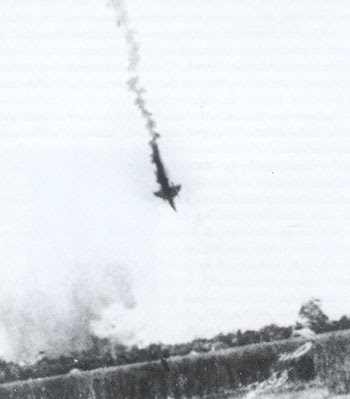
The Failed Air War Over Vietnam
or go to
Aletho News Archives – Video-Images
From the Archives
USS Liberty Massacre: A Pivotal Moment in the Hostile Takeover of America
By Kevin Barrett | Crescent | Dhu al-Qa’dah 24, 1445
In corporate America, hostile takeovers are commonplace. They occur when an aggressor—a larger corporation or rich individuals—seizes control of a smaller corporation without asking permission.
What few recognize is that the United States itself has been subjected to a hostile takeover. Since the aggressor, the illegitimate settler colony known as “Israel,” is much smaller than the US, the takeover has necessarily been surreptitious.
As of June, 2024, Israel’s gradual takeover of the US has become obvious and undeniable—a proverbial “elephant in the living room.” … continue
Blog Roll
 Aletho News
- Europe’s mounting social chaos… chickens coming home to roost for proxy war against Russia
- US-Russia Diesel Deal Becomes Massive Defeat for Ukraine
- Hormuz and the Looming Economic Catastrophe
- Dhubab offensive, media blitz and the rapid unraveling of Saudi-backed coalition’s new gambit
- Putin Conveys to Trump Iran’s Vision on Possible Conflict Resolution – Kremlin
- The Search for Truth: Charlie Kirk’s Assassination One Year Later
- ‘Harsh reality’: Iran says France seeks monopoly on power and intimidation, not peace for all
- When Will This White House Madness End?
- Huckabee aide goes to ‘unusual lengths’ to portray ‘Israel’ positively
- Trump Announces Diesel Supply Deal With Putin Following Phone Call
- If Americans Knew
- Israeli forces kill another child in Gaza – Daily Update
- Gaza ceasefire exists in name only, say more than 100 organizations
- Nearly 2 Million in Gaza Need Urgent Shelter Assistance as Winter Looms: IOM Chief Warns
- Suppressing Palestinian resistance: US charity under fire for AI monitoring of Gaza classrooms
- Thousands Are Held in Israeli Torture Camps. This Is What Happens Inside
- Israel puts Gaza’s sick, injured, newborn in peril – Daily Update
- Report claimed Mark Levin used by Israeli government to influence Trump
- Over 2,000 Gazans have died awaiting medical evacuation amid Israel’s continued siege
- How a U.S. Diplomat Suppressed and Altered Reports Critical of Israel
- 5 Palestinians Die from Israeli Strikes in Gaza as Relentless Attacks Continue
- No Tricks Zone
- Germany’s Green Energy Debacle: High Energy Costs Force Kahla Porzellan to Close After 182 Years!
- New Study: 50 Years Of The Most Aggressive ‘Net Zero’ Policies Can Only Affect The Global Climate By 0.03°C
- US September “Heat” Was No Record…Many Records Set Decades Ago
- Latest European Green Energy Debacle; Portugal’s Largest Flagship Solar Park Insolvent!
- Green Energy Debacle: German Expert Professor Fritz Vahrenholt Warns Of Severe Economic And Social Consequences
- Two More Paleo Reconstructions Affirm Meters-Higher Sea Levels Across Ireland, Brazil 7000-6000 Years Ago
- New Study: Earth And Venus Surface Warmth Largely Explained By Convection And Lapse Rate, Not CO2 Or Radiation
- 2025 Nature Paper Claiming Worsening Global Drought Gets RETRACTED …Heavily Flawed
- New Study: ‘Global Drought Shows No Detectable Recent Acceleration Under Climate Warming’
- Economic Masterminds: German Socialists Suggest Taxing Productivity Gains Stemming From Using AI

