Despite settler arson confession dismissed by Israel, Dawabsheh family persevere
MEMO | June 21, 2018
An Israeli court on Tuesday threw out a confession given by a teenage settler – who cannot be named for legal reasons – in which he admitted his participation in an arson attack on a Palestinian home that killed three people.
The court ruled that the confession had been obtained under duress and was inadmissible in court, but that the confession given by primary suspect Amiram Ben-Uliel was valid. Ben-Uliel admitted firebombing the house and his involvement in six other racially motivated attacks targeting Palestinian villages after the “necessary investigations” conducted by Shin Bet police.
The unnamed minor had also been accused of taking part in the attack on the Dawabsheh family home on 31 July 2015 in the West Bank village of Duma, which killed toddler Ali Saad Dawabsheh and parents Riham and Saad Dawabsheh.
Omar Khamaisi, a lawyer for the family, told MEMO that despite the confession being overruled, the prosecution still had sufficient evidence of the minor’s involvement.
“The minor was not accused of murder, but prior planning and plotting. His confessions and statement [referring] to “Tag Mehir” or “Paying the price” and the activities of revenge, of burning and sabotaging Palestinian properties were taken and accepted.”
Khamaisi also said that the family would take the case further if a verdict of murder was not handed down to the guilty parties:
“The Dawabsheh case joins other cases and [queries] that the Palestinian Authority is trying to [take to] the International Criminal Court (ICC) and the ICC prosecutor.”
The Dawabsheh family has experienced ongoing harassment as the case is heard in court, with another family home in Duma firebombed by settlers last month, causing severe damage.
Earlier this week, as the family’s uncle and grandfather Nasr and Hussein Dawabsheh walked out of the courtroom accompanied by MKs Ahmad Tibi and Ayman Odeh, right wingers taunted the family chanting: “Where is Ali? Ali’s dead” and “Ali’s on the grill”.
Israel has also refused to pay compensation to the family and five year-old Ahmad, the only surviving member of the attack, who sustained severe burns in the fire. Israeli Defence Minister Avigdor Lieberman said last year that the Palestinian child did not qualify as a “terror victim” and does not hold Israeli citizenship and therefore is not entitled to compensation.
The UN has previously expressed concern at the slow progression of the case, with Special Envoy to the Middle East Nikolay Mladenov calling on Israeli authorities “to move swiftly in bringing the perpetrators of this terrible crime to justice”.
Here’s Why Pro-Migrant Protesters Changed US Policy While Anti-War Protesters Didn’t End America’s Recent Wars
By Adam Garrie | EurasiaFuture | June 20, 2018
Donald Trump has just signed an executive order reversing the Clinton era policy of separating children from their illegal migrant parents at the southern border of the United States. While this policy has been in operation since the 1990s, it was only in the last month that it caught the attention of American media and the political class.
Ultimately, the issue is one for the leaders of the US to decide and under immense media and political pressure, the US President has taken the matter into his own hands and changed a policy based entirely on a public pressure campaign rather than his own apparent line of thinking which favours an increasingly tough border policy.
What this proves is that on issues effecting the well being of humans who happen not to be US citizens, public pressure campaigns can in fact get policies changed, especially in an election year. When one thinks that George W. Bush illegally invaded Iraq just over a year before facing re-election while Tony Blair did the same only two short years before facing the UK electorate, it beggars belief that anti-war campaigns have been so ineffective at reversing policies that slaughter millions, destroy entire regions and all the while unleashing the most barbaric forms of terrorism in places where there once was little or none.
Irrespective of one’s views of America’s border policy, even those who believe it to be inhumane must admit that it did not result in the deaths, terrorism and destruction of the US led wars on Yugoslavia, Iraq, Libya and the hybrid war against Syria.
While millions of people marched against the Iraq war throughout the world in 2003, far more than have gone on demonstrations against the controversial child separation policy of the US border authorities, it nevertheless had no effect on US policy in the Middle East. In fact, the amount of wars and number of troops committed across the Middle East by the US and its partners only increased since 2003.
Why then did the anti-war marches fail while the pro-migrant movement accomplished its goal? The reason is simple. While masses of protesters can control the streets and non-corporate air waves, the corporate media in the United States that is willing to take a side on issues like migration is unwilling, unable or not wanting to go up against the pro-war factions of Washington. The same is true even for most so-called independent minded politicians in the US, almost all of whom lose their independent streak when it comes to war, with retired Congressman Dr. Ron Paul, his son Senator Rand Paul and Senator Bernie Sanders being exceptions in the wilderness.
While corporate media is losing viewership at a rapid pace among the wider public and the young in particular, among the policy making class, there is still a tendency to literally view the world through a bubble and refuse to look at non-corporate or non-western originated media for any other purpose than to mock, sneer and at times, attempt to censor.
It is because of this, that the kind of invisible connection between the narrative of mainstream media pundits and politicians can lead to meaningful policy change while this is not the case when it comes to anti-war issues that the mainstream media in the US tends to either ignore or berate (before ignoring).
In this sense, the political-media complex has worked to insure that the issues that are important to the boardrooms of CNN and MSNBC are those which are important to the politicians who can then pressure a reluctant President to change a policy he previously appeared to support.
It is only when politicians begin to take non-corporate western media sources at face value rather than look for conspiracies (aka Russian meddling) which do not exist, that the growing number of people opposed to war might be able to affect policy change. Until then, the anti-war voices of millions will be ignored, while the loud but comparatively quieter thousands of voices raised against America’s border policies will be heeded.
The solution for anti-war protesters is to not give up but to shame the part-time humanitarians who cried at the thought of strangers in a strange land being separated from their families, yet who say nothing when families living in their ancestral homes are separated from one another by the force of a bomb – never to be reunited. If you think that America’s long standing border policy was inhumane but do not feel similar things towards the families America’s military slaughters in their own home – then you do not have a heart after all… but you probably have a high definition television.
The Liberal’s Lament over Israel
By James J. Zogby | LobeLog | June 18, 2018
I find it exceptionally irritating when I hear liberals worry about whether Israel will be able to remain a “Jewish and Democratic State” if it retains control of occupied Palestinian lands. It’s irritating because Israel is not now a democratic state nor has it ever tried to be one.
A state that prioritizes rights for one group of citizens (in this case Jews, who comprise 80% of the population) over the rights of another group (Arabs, who are 20% of Israel’s citizenry) cannot be democratic. Israel discriminates against its Arab citizens in law, social services, funding for education, and in everyday life. So although the concerns of liberals in the West are about the future of Israeli democracy, what they ignore is the reality of Israel, in practice.
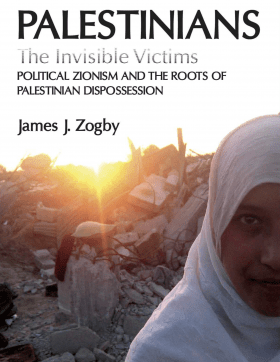 As I document in my book, Palestinians: the Invisible Victims, from its inception in 1948, Israel has guaranteed rights and opportunities for Jews at the expense of the indigenous Palestinians who remained after the Nakba. Instead of experiencing democracy, these Arabs were subjected to harsh military law, as a result of which they were denied fundamental human and civil rights. Their lands and businesses were confiscated. And they were even denied the opportunity to join the labor movement, or form independent political parties.
During the past 70 years, these Palestinian Arab citizens of Israel have made significant advances as they organized and fought to expand their rights. But as two stories that have appeared recently in the Israeli media make clear, the contradiction inherent in being a democracy and a Jewish state continues to plague Israel.
In the first story, the leadership of the Knesset disqualified a proposed piece of legislation offered by a group of Arab legislators. The bill “Basic Law: Israel, a State of All Its Citizens” sought to guarantee equal rights for all Israelis—Jews and Arabs alike.
Apparently the Knesset leaders were so threatened by this bill that they were unwilling to even allow it to be introduced and debated. At the same time, however, Jewish members of the body are advancing another piece of legislation that defines Israel as the “national state of the Jewish People,” making it clear that Arabs are at best, second-class citizens.
In another story, Jewish residents of Afula, a town in Northern Israel, demonstrated against the proposed sale of a home in their community to an Arab family. The flyer, mobilizing Afula residents to come to the demonstration, criticized “the sale of homes to those who are undesirable in the neighborhood.” The former mayor of the community is quoted in the story saying “the residents of Afula don’t want a mixed city, but rather a Jewish city, and it’s their right.”
This is the impact of the apartheid system that Israel established to govern the lives of its Arab citizens. Since 1948, Israel not only confiscated lands surrounding Arab towns and villages to make way for Jewish agriculture and development, it denied Arabs the right to purchase land and homes in Jewish communities. Reflecting how this history has led to the demonstration in Afula, the leader of the Arab bloc in the Knesset said, “It is not a surprise that in a country that has founded 700 towns for Jews and not even one for Arabs, the idea that Arabs should be pushed aside does not shock citizens… our hope of living together is crumbling due to hatred and racism fueled by the government.”
Meanwhile, in the West Bank, Israel appears to be preparing a similar fate for the Palestinians living under occupation. Continuing the practice the Israelis instituted in the Galilee region, they have been slowly and steadily concentrating captive West Bank Palestinians into enclaves, denying them access to their land and in some cases, evicting them from their communities. One recent case reported in the Israeli press involves a Supreme Court decision allowing the state to demolish the West Bank community of Khan al Ahmar and to forcibly relocate “its citizens to a site near a dumpster in Abu Dis”—a Palestinian community near occupied East Jerusalem. At risk are Khan al Ahmar’s 173 residents and the community’s school that serves 150 youngsters from there, and neighboring villages. This is one of four recent forced evictions to clear areas of Palestinians in order to consolidate Israeli control.
These three stories combined have two things in common. On the one hand, they establish that it is a contradiction in terms to consider that Israel can be both Jewish and democratic at the same time. Liberals therefore can stop fretting about the danger facing Israeli democracy in the future. It already is, in practice, an apartheid state.
Next to consider is the fact that none of these stories made it into the U.S. press and so I suppose I can almost understand the Western liberal’s lament. Since they just don’t know how Israel behaves, they have no idea that the future they fear, is already here.
James J. Zogby is the president of the Arab American Institute.
3 Shia Bahraini clerics sentenced to death, 8 others to life imprisonment
Press TV – June 17, 2018
Bahraini regime officials have handed down death sentences to three Shia clergymen and condemned eight others to life imprisonment as the ruling Al Khalifah regime continues with its repressive measures and heavy-handed crackdown on members of the religious community.
Bahrain’s dissolved main opposition group, the al-Wefaq National Islamic Society, announced in a statement that Shia religious figures are being systematically subjected to arbitrary arrests, torture, trials, revocation of citizenship as well as forced deportation.
The statement added that al-Wefaq has recorded more than 347 cases of arrests, summons and various security prosecutions of Shia clerics in Bahrain.
It added that Bahraini security authorities have summoned more than 156 Shia clergymen over their speeches, ideological tendencies or political views. They have also arrested 99 religious scholars arbitrarily.
Al-Wefaq further pointed out that “harsh and unfair verdicts” have targeted more than 50 clerics, ranging from hefty fines and abolition nationality to life imprisonment and death penalty.
The statement went on to say that three Shia scholars have been sentenced to death, eight to life imprisonment and a number of others been stripped of their citizenship. Among those whose nationality has been revoked are prominent Ayatollah Sheikh Isa Ahmed Qassim and Sheikh Hussein Najati.
Al-Wefaq then dismissed the Al Khalifah regime’s policy of persecution and discrimination, stressing that authorities have no meaningful reform initiatives at the level of human rights, especially concerning freedom of religion and belief.
Thousands of anti-regime protesters have held demonstrations in Bahrain on an almost daily basis ever since a popular uprising began in the country in mid-February 2011.
They are demanding that the Al Khalifah dynasty relinquish power and allow a just system representing all Bahrainis to be established.
Manama has gone to great lengths to clamp down on any sign of dissent. On March 14, 2011, troops from Saudi Arabia and the United Arab Emirates were deployed to assist Bahrain in its crackdown.
Scores of people have lost their lives and hundreds of others sustained injuries or got arrested as a result of the Al Khalifah regime’s crackdown.
On March 5, 2017, Bahrain’s parliament approved the trial of civilians at military tribunals in a measure blasted by human rights campaigners as being tantamount to imposition of an undeclared martial law countrywide. Bahraini monarch King Hamad bin Isa Al Khalifah ratified the constitutional amendment on April 3 last year.
Blood Diamonds: Human Rights Campaigners Want ‘Kimberley Process’ to Suspend Israel

Palestine Chronicle | June 16, 2018
Human Rights campaigners say that Kimberley Process Certification Scheme (KPCS) must suspend Israel and ban Israeli diamonds exports.
A global coalition of organizations working for justice and peace in Palestine have called on the EU to seek the suspension of Israel from the Kimberley Process and a ban on Israel diamond exports at next week ’s meeting of the diamond regulatory body in Antwerp.
The KPCS is the process established in 2000 to prevent “conflict diamonds” from entering the mainstream rough diamond market by United Nations General Assembly Resolution 55/56 following recommendations in the Fowler Report.
The process was set up “to ensure that diamond purchases were not financing violence by rebel movements and their allies seeking to undermine legitimate governments.”
In the wake of the latest Israeli massacres in Gaza, which Human Rights Watch said “may amount to war crimes” and called on the international community to “impose real costs for such blatant disregard for Palestinian lives” it is imperative that diamonds which generate revenue used to fund the Israeli military are banned.
Israel is the biggest net beneficiary of the global diamond trade with exports worth US$11 billion net in 2014 when diamonds accounted for 30% of manufacturing exports.
Revenue from the Israeli diamond industry is a highly significant source of funding for the Israeli government and its violent settler-colonial project in Palestine.
Despite generating an estimated $1 billion per year in funding for Israeli occupation forces which stand accused of war crimes, crimes against humanity, the proliferation of unregulated nuclear weapons and the enforcement of a system of apartheid jewelers claim diamonds processed in Israel are conflict-free.
Diamonds that are a significant source of funding for violations of international humanitarian law or international human rights law are regarded as blood diamonds.
The jewelry industry refuses to ban all blood diamonds and limited the remit of the KPCS to “conflict diamonds” which are defined as rough diamonds used by rebel groups to fund violence against legitimate governments.
US to Leave ‘Foolish, Unworthy’ UN Human Rights Council Over Anti-Israel Bias
Sputnik – June 15, 2018
The United States’ demands regarding reforming the United Nations Human Rights Council (UNHRC) have failed to be met, and as such Washington is reportedly ready to pull out over what it calls anti-Israel bias and the inclusion of alleged rights abusers.
Diplomats told Reuters that it’s merely a matter of time before the US exits the council, which will convene Monday for a three week convention that will last until July 6. One US source who spoke anonymously said that an announcement looks “imminent.”
Another US official in Geneva, where the UNHRC will meet June 18, said, “we are still moving ahead with our engagement for the coming session.”
US Ambassador to the UN Nikki Haley has cast shade on the council since taking the job, while both the US State Department and US President Donald Trump himself found issue with it in 2017.
On June 6, 2017, Haley went to Geneva to give the council a series of ultimatums. At the meeting, she said, “It’s hard to accept that this council has never considered a resolution on Venezuela, and yet it adopted five biased resolutions in March against a single country: Israel. It is essential that this council address its chronic anti-Israel bias if it is to have any credibility.”
Later in the day, she expanded on her grievances against the council at a speech she gave to the Graduate Institute of Geneva, noting that the UNHRC had, by then, passed “more than 70 resolutions targeting Israel” since its inception in 2006, but “just seven on Iran.” The UNHRC has passed more resolutions against Israel than the rest of the world’s countries combined, according to the Geneva-based UN Watch.
“This relentless, pathological campaign against a country that actually has a strong human rights record makes a mockery not of Israel, but of the council itself.”
She also called on the body to do two things: “Act to keep the worst human rights abusers from obtaining seats on the council,” and remove permanent Agenda Item 7, which requires that the council address the “human rights situation in Palestine and other occupied Arab territories,” regularly when it meets.
Trump later echoed those demands in his speech to the United Nations General Assembly (UNGA) on September 19, 2017, calling the inclusion of governments with “egregious human rights records” in the UNHRC a “massive source of embarrassment to the United Nations.” He also singled out North Korea and Iran for their hostility to Israel.
After the UNHRC, a body of 47 nations, adopted five resolutions condemning Israel on March 23, 2018, Haley warned “our patience is not limited,” reminding the body that “The United States continues to evaluate our membership in the Human Rights Council.”
Those resolutions called on governments to stop selling weapons to Israel; for Palestinian self-rule according to Israel and the Palestinian territories’ pre-1967 borders; for Israel to remove itself from the Golan Heights, which it has illegally occupied since the 1967 Six Day War; and for an end to Israeli settlements and human rights abuses against Palestinians.
Haley called the council “foolish and unworthy of its name” for treating Israel “worse than North Korea, Iran and Syria.”
The US ambassador hasn’t only struggled with the Human Rights Council, but also with the UN General Assembly and Security Council. On Wednesday, she failed to prevent the assembly from condemning Israel’s use of deadly force against Palestinians demonstrating in the Great Return March after having vetoed a similar resolution in June. She fired back against the vote, saying that for some, “attacking Israel is their favorite political sport.”
More than 120 Palestinians have been killed and more than 13,000 injured, many by live ammunition, since the start of the protest on March 30, Sputnik News reported. Haley previously told the UN Security Council that Israel acted with “restraint” in the protests. One Israeli soldier was “slightly wounded” in the protests, according to an IDF spokesperson.
The US has boycotted the UNHRC before, as former President George W Bush and his Ambassador to the UN John Bolton — now Trump’s national security adviser — opposed it from its outset in 2006. The Bush administration refused to run in its first election and also declined to participate the following year.
The main points of opposition then were the “focus on Israeli human rights violations while failing to address human rights abuses in other parts of the world,” according to the US Congressional Research Service’s 2009 “Issues for Congress” report on the UNHRC.
However, former President Barack Obama began to work with the council after his election in 2008, believing it was better to work on human rights issues within the council than from the outside, according to a similar report from 2017.
Trouble Clef
By Gilad Atzmon | June 14, 2018
The Jewish Chronicle seems dismayed that the singer-songwriter Alison Chabloz has escaped jail time, at least for the time being. But the message conveyed by Ms. Chabloz’s conviction is devastating for Britain. This kingdom has, in just a short time, become a crude authoritarian state.
For posting so-called ‘grossly offensive songs’ on the internet, Chabloz was sentenced by District Judge John Zani to 20 weeks imprisonment suspended for two years. It seems that now music is deemed a major threat to Britain.
Chabloz was also banned from posting anything on social media for 12 months. I am perplexed. What kind of countries pre-vet social interaction and intellectual exchange? Israel imposes such prohibitions on its Palestinian citizens. Soviet Russia banned certain types of gatherings and publications and, of course, Nazi Germany saw itself qualified to decide what type of texts were healthy for the people and actively burned books. I guess that Britain is in good company.
Chabloz was further “ordered to complete 180 hours of unpaid work.” This amounts to something in the proximity of 90 Jazz gigs. And Chabloz is required to attend ‘a 20-day rehabilitation programme.’ In 21st century Britain, a singer songwriter has been sentenced to ‘re-education’ for singing a few tunes that offended some people. The initial objective of the Nazi Concentration camp was also to ‘re-educate the people.’ Dachau was built to re-educate cosmopolitans, dissenter communists and to make them into German patriots. I wonder what this particular rehab program will entail for the revisionist singer? Chabloz was guilty of introducing new lyrics to Ava Nagila, will she have now to learn to sing Ava Nagila in Yiddish, or maybe to try to fit her own original ‘subversive’ lyrics to the music of Richard Wagner? Who is going to take care of Chabloz’s education, and what happens if the singer insists on continuing to mock the primacy of Jewish suffering or far worse, compare Gaza to Auschwitz?
Satire aside, the Chabloz trial and other recent legal cases suggest to me that Britain is no longer the liberty-loving place I settled in more than two decades ago. If liberty can be defined as the right to offend, Britain has voluntarily removed itself from the free world. In contemporary Britain, exercise of the ‘right to offend’ evidently leads to conviction and possible imprisonment. And who defines what establishes ‘an offence’? British law fails to do so. Chabloz was disrespectful to some Jewish cult figures such as Elie Wiesel and Otto Frank (the father of Anne Frank). Would Chabloz be subject to similar legal proceeding if she offended the Queen, the royal family or Winston Churchill? What message is Judge Zani sending to British intellectuals and artists? Since every person, let alone Jews, can be offended by pretty much anything, Britain is now reduced to an Orwellian dystopia. We may have to accept that our big Zionist brother is constantly watching us. If we want to keep out of trouble, we better self-censor our thoughts and learn to accept the new boundaries of our expression.
Democracies are sustained by the belief that their members are qualified to make decisions regarding their own education: they decide what films to watch, what books to read and what clubs to join. Seemingly, this is no longer the case in Britain. Decisions regarding right and wrong thoughts are now taken by ‘the law’. According to the JC, Judge Zani told Chabloz that :“The right to freedom of speech is fundamental to a fully-functioning democratic society. But the law has clearly established that this right is a qualified right.”
While many of us believe that freedom of speech is an absolute right, Judge Zani made it clear today that this is not the case or at least not anymore. Freedom of speech in Britain is now a ‘qualified right.’ In other words Government and the Judicial system are allowed to interfere with such right at any time. Just two years ago, the Crown Prosecution Service didn’t think that Chabloz should stand trial. Presumably at the time the CPS didn’t believe that Chabloz’ rights should be qualified or quantified. Two years later there has been a clear change in speech that is prosecuted.
Article 19e of The Universal Declaration of Human Rights, signed by Great Britain and enacted in 1948 declares: “Everyone has the right to freedom of opinion and expression; this right includes freedom to hold opinions without interference and to seek, receive and impart information and ideas through any media and regardless of frontiers.”
This was the law in 1948. In 2018, freedom and democracy are rights we have to remember, we experience them no more.
Support Gilad’s Legal Defence Fund.
Israeli Authorities Demolish Graves at Historic Palestinian Cemetery
Sputnik – June 11, 2018
Israeli authorities were caught on video excavating portions of the historic Bab al-Rahma cemetery next to Al-Aqsa mosque in occupied East Jerusalem. The cemetery is believed to contain the final resting places of two companions of Islam’s Prophet Muhammad.
Video from June 5 shows about a dozen men, presumably members of Israel’s Nature and Parks Authority, at a work site in the Bab al-Rahma cemetery, through which Israel is planning to build a national park trail.
The cemetery sits adjacent to Al-Aqsa mosque, the third holiest site in Islam. It is believed to hold the graves of Ubada ibn as-Samit and Shadad ibn Aus, two of the Prophet Muhammad’s companions. The cemetery has remained in use for more than 1,000 years.
Israel plans to seize about 40 percent of the cemetery for the national park under murky legal pretexts, Sputnik News recently reported. The plan has supposedly been in place since 2015, but Palestinian lawyers and conservation activists claim Israel is jumping the gun, as court cases over the fate of the cemetery remain pending.
Israeli authorities have recently resumed work on the park and have been seen digging up and marking graves, removing trees and fencing off areas to halt future burials. During the first weekend of June, several Palestinians were injured and arrested while protesting the desecration of the cemetery.
Outside of Jerusalem proper, in the West Bank, authorities are also clearing the way for a new settlement over the village of al-Khana Ahmar, a village mostly inhabited by Bedouin refugees who were expelled from southern Israel in 1952. In 2009, an Italian aid organization constructed a school there, but Israel ordered it to be demolished one month after it opened. After that, residents in neighboring Israeli settlements petitioned the courts to demolish the community, which has been slated for destruction since February 2010. In 2015, authorities confiscated solar panels that provided the only source of electricity to the village.
Israel plans to relocate them yet again, this time north to a village called An-Nuway’imah, allowing Jewish settlers to claim the strategically significant spot. Building an Israeli settlement there would allow the government to connect the urban Israeli settlement of Ma’ale Adumim to Jerusalem and to control the gateway between northern and southern parts of the West Bank.
Abu Khamiss, a spokesman for the current Khan al-Ahmar villagers, told France 24 in 2014 that “the place where Israel wants us to ‘relocate’ would be like a prison for us. We’d be surrounded by Israeli settlements, a checkpoint and military training camps.”
The demolition is expected to begin any day now. Already, Israeli authorities have been accused of poisoning locals’ dogs under cover of night, robbing the villagers of the “faithful shepherds.”

© REUTERS / Mussa Qawasma
For Palestinian children living in the West Bank, getting to school is an incredibly difficult task because of their scarcity and the difficulty of traveling due to the abundance of Israeli checkpoints that control movement around the territory and can take hours to pass through. Israel is slated to destroy the Palestinian school in al-Khana Ahmar as well, a move the United Nations Relief and Works Agency for Palestine Refugees in the Near East said in 2011 “would effectively deny the children of the community their education and jeopardize their future.”
According to a January report from the the UN Office for the Coordination of Humanitarian Affairs, at least 61 schools in the West Bank and East Jerusalem have pending demolition orders or stop work orders against them from the Israeli government.
See Also:
Israel’s Demolishing of West Bank Schools May Amount to Int’l Crime – Watchdog
Featured Video

The Failed Air War Over Vietnam
or go to
Aletho News Archives – Video-Images
From the Archives
USS Liberty Massacre: A Pivotal Moment in the Hostile Takeover of America
By Kevin Barrett | Crescent | Dhu al-Qa’dah 24, 1445
In corporate America, hostile takeovers are commonplace. They occur when an aggressor—a larger corporation or rich individuals—seizes control of a smaller corporation without asking permission.
What few recognize is that the United States itself has been subjected to a hostile takeover. Since the aggressor, the illegitimate settler colony known as “Israel,” is much smaller than the US, the takeover has necessarily been surreptitious.
As of June, 2024, Israel’s gradual takeover of the US has become obvious and undeniable—a proverbial “elephant in the living room.” … continue
Blog Roll
 Aletho News
- Leaders Condemn Ansarallah Attack on Saudi Arabia While Ignoring Illegal War Against Yemen
- Leaked: Britain’s Covert Iraqi Psyops Network
- Yemeni Armed Forces Warn Airlines Against Using Saudi Airports, Exempt Mecca and Medina
- Iran security chief says powers greater than US tried to conquer Iran but ended in ‘dustbin of history’
- Europe’s mounting social chaos… chickens coming home to roost for proxy war against Russia
- US-Russia Diesel Deal Becomes Massive Defeat for Ukraine
- Hormuz and the Looming Economic Catastrophe
- Dhubab offensive, media blitz and the rapid unraveling of Saudi-backed coalition’s new gambit
- Putin Conveys to Trump Iran’s Vision on Possible Conflict Resolution – Kremlin
- The Search for Truth: Charlie Kirk’s Assassination One Year Later
- If Americans Knew
- For three years, Israel has killed a child in Gaza every 71 minutes – Daily Update
- Israeli forces kill another child in Gaza – Daily Update
- Gaza ceasefire exists in name only, say more than 100 organizations
- Nearly 2 Million in Gaza Need Urgent Shelter Assistance as Winter Looms: IOM Chief Warns
- Suppressing Palestinian resistance: US charity under fire for AI monitoring of Gaza classrooms
- Thousands Are Held in Israeli Torture Camps. This Is What Happens Inside
- Israel puts Gaza’s sick, injured, newborn in peril – Daily Update
- Report claimed Mark Levin used by Israeli government to influence Trump
- Over 2,000 Gazans have died awaiting medical evacuation amid Israel’s continued siege
- How a U.S. Diplomat Suppressed and Altered Reports Critical of Israel
- No Tricks Zone
- Germany’s Green Energy Debacle: High Energy Costs Force Kahla Porzellan to Close After 182 Years!
- New Study: 50 Years Of The Most Aggressive ‘Net Zero’ Policies Can Only Affect The Global Climate By 0.03°C
- US September “Heat” Was No Record…Many Records Set Decades Ago
- Latest European Green Energy Debacle; Portugal’s Largest Flagship Solar Park Insolvent!
- Green Energy Debacle: German Expert Professor Fritz Vahrenholt Warns Of Severe Economic And Social Consequences
- Two More Paleo Reconstructions Affirm Meters-Higher Sea Levels Across Ireland, Brazil 7000-6000 Years Ago
- New Study: Earth And Venus Surface Warmth Largely Explained By Convection And Lapse Rate, Not CO2 Or Radiation
- 2025 Nature Paper Claiming Worsening Global Drought Gets RETRACTED …Heavily Flawed
- New Study: ‘Global Drought Shows No Detectable Recent Acceleration Under Climate Warming’
- Economic Masterminds: German Socialists Suggest Taxing Productivity Gains Stemming From Using AI

