‘Israel’ orders demolition of entire al-Naaman village near Beit Lahm
Al Mayadeen | June 10, 2025
Israeli occupation authorities issued demolition orders on Tuesday for all 45 homes in the Palestinian village of al-Naaman, located east of Beit Lahm. The orders signal a looming mass expulsion of the village’s residents.
Jamal Darawshi, head of the al-Naaman village council, confirmed that occupation forces raided the village in the morning and distributed demolition notices to every home. He noted that this is the second collective notice issued to the residents in recent months.
According to Darawshi, the occupation also informed the village council verbally that this could be the final warning before the immediate implementation of demolition operations. He described the development as a “disaster threatening the existence of an entire village inhabited by more than 150 people, most of them women and children.”
Long-standing ban on construction, renovation in al-Naaman
Darawshi highlighted that the targeted homes date back to the 1940s, decades before the occupation of the West Bank began in 1967. He added that for over 25 years, Israeli authorities have imposed a complete ban on any construction, renovation, or expansion in the village.
Durov reveals to Carlson whether he was ‘ever arrested by Putin’
RT | June 10, 2025
Telegram CEO Pavel Durov has told American journalist Tucker Carlson that he had never been arrested by authorities in Russia.
The tech mogul was detained by French police last year on suspicion of committing a flurry of cybercrimes.
In an interview released on Monday, Carlson noted that the Russian-born tech entrepreneur left the country more than a decade ago for political reasons. He asked him if he had ever faced arrest in Russia, to which Durov replied that he had not.
Durov was arrested in August 2024 at Paris–Le Bourget Airport, charged with 12 offenses linked to Telegram’s handling of illegal content, including child exploitation material and narcotics trafficking, and prevented from leaving France for seven months. He was released in March having posted €5 million ($5.4 million) bail.
Asked if he sees any irony in only being arrested in France, a country that is viewed as “part of the free West,” Durov said Paris “was the most unexpected place to get arrested for me.”
Durov said that he had visited several countries before arriving in France, some of which “are considered in the West to be autocratic or authoritarian.” He added that in many such nations, Telegram is popular because it provides “100% privacy.”
Carlson pointed to a possible contrast in public reaction someone else of a similar profile had been arrested. “If Mark Zuckerberg or Elon [Musk] got grabbed… you’d be like ‘Stop—what? The world is ending.’ But they grabbed you and people are like, ‘Oh, he’s got a Russian last name, it’s fine. I’m sure there’s a good reason.’”
“I hope it had nothing to do with my ethnicity,” Durov replied. “Because that would be very alarming.”
Durov has denied the French charges, calling them absurd. His arrest sparked an outpouring of sympathy worldwide, as well as accusations that France is infringing on freedom of speech.
In late May, Durov claimed that the French government had sought to make Telegram block conservative voices in Romania ahead of the country’s presidential runoff, but he refused. French officials have in-turn, denied the claim.
IOF targets Gaza police during anti-theft operation, killing two officers
Palestinian Information Center – June 9, 2025
GAZA – The Ministry of Interior and National Security in Gaza condemned what it described as a war crime by the Israeli occupation forces (IOF), after an Israeli airstrike targeted a Palestinian police unit engaged in civilian protection duties in Nuseirat refugee camp. The strike killed two policemen and a bystander, and injured several others.
According to a statement released late Sunday, the police unit was responding to reports of theft and attempting to safeguard citizens’ property when it came under direct attack by Israeli warplanes. Among the martyrs were a police officer, a member of the force, and a civilian caught in the blast.
“This crime once again demonstrates the Israeli occupation’s strategy of spreading chaos and dismantling civil order as part of its ongoing genocide in Gaza,” the Interior Ministry said.
The statement emphasized that Gaza’s police forces are carrying out their “national and humanitarian duty” under relentless bombardment, and pledged that the repeated targeting of law enforcement officers “will not deter us from continuing to serve and protect our people.”
Ministry officials further accused Israel of actively encouraging lawlessness in Gaza by arming or sponsoring local criminal elements. “The occupation is betting on chaos, theft, and the obstruction of humanitarian aid—but this strategy will fail,” the statement read.
The ministry urged the international community and humanitarian organizations to intervene to halt IOF attacks on Gaza’s civilian institutions, especially police and emergency services.
It also called attention to Israel’s blockade on humanitarian aid, describing it as a deliberate “famine engineering policy” intended to starve civilians and cripple aid distribution networks, including those run by UN agencies.
Israel Detains Activists Bringing Aid to Gaza
By Kyle Anzalone and Will Porter | The Libertarian Institute | June 9, 2025
Hours after the Israeli defense minister threatened military action against a tiny aid ship carrying activists attempting to break the blockade on Gaza, the IDF intercepted the boat and detained all on board. The dangerous vessel was armed with rice and baby formula.
Late on Sunday night, the Freedom Flotilla Coalition (FFC) said the ship, named the ‘Madleen,’ was “under assault in international waters,” with quadcopter drones surrounding the vessel and “spraying it with a white irritant substance.”
The group later published a statement, saying the Madleen was “attacked/forcibly intercepted by the Israeli military at 3:02am [Central European Time] in international waters at 31.95236° N, 32.38880° E. The ship was unlawfully boarded, its unarmed civilian crew abducted, and its life-saving cargo – including baby formula, food and medical supplies – confiscated.”
Israel’s Foreign Ministry confirmed that the ship had been intercepted, but added that the activists were “safe and unharmed.” In a follow-up post, it said the vessel was on its way to Israel and that the passengers were “expected to return to their home countries.”
At the time of writing, the Madleen was sailing through international waters off the coast of Egypt, north of Sinai, according to tracking data provided by the FFC.

Earlier on Sunday, Tel Aviv’s Defense Minister Israel Katz issued a warning to the ship, suggesting the IDF would use force to prevent it from bringing aid to Gazans:
“I have instructed the IDF to act to prevent the ‘Madleen’ hate flotilla from reaching the shores of Gaza – and to take whatever measures are necessary to that end.
To the anti-Semitic Greta [Thunberg] and her fellow Hamas propaganda spokespeople, I say clearly: You should turn back – because you will not reach Gaza.
Israel will act against any attempt to break the blockade or assist terrorist organizations – at sea, in the air, and on land.”
Katz’s statement contained one important admission: Israel does, in fact, maintain a blockade on aid entering Gaza.
For over a year, the propaganda emanating from Tel Aviv has claimed that Hamas was simply stealing international aid and preventing it from reaching starving Palestinians. And yet, Israel’s Minister of Genocide just acknowleged a full-blown blockade on humanitarian assistance.
As the Madleen approached Gaza over the weekend, the activists faced increasing harassment from Israel, including GPS jamming, as well as close calls with military speed boats and drones.
Israel has used violence to prevent activist aid ships from reaching Gaza on more than one occasion in the past – most recently last month, when a small FFC vessel headed for the enclave was struck by a drone in international waters.
In 2010, Israeli troops killed 10 activists after raiding another boat attempting to bring supplies to Gaza, with the UN concluding some were shot “in a manner consistent with an extra-legal, arbitrary and summary execution.”
The presence of Greta Thunberg, a climate activist widely known across the West, is likely the only thing that prevented a similarly bloody fate for the Madleen.
Fortunately, US Senator Lindsey Graham did not have his way. The lawmaker joked in a post last week: “Hope Greta and her friends can swim!” – riffing on the hilarious and relatable premise of murdering unarmed civilians to stop them from feeding people desperately in need of aid.
This article originally appeared in the June 9 edition of the Libertarian Institute Debrief, our daily email newsletter.
Delegates from 32 nations march to Gaza, call for end to blockade and genocide

MEMO | June 9, 2025
An international solidarity march set off towards the Gaza Strip yesterday, aiming to break the ongoing blockade and demand an end to what participants describe as the genocide being committed by Israel since 7 October 2023.
Thousands of supporters from 32 countries are taking part in the march, with plans to reach Gaza’s border through the Rafah crossing with Egypt. Their goals include delivering humanitarian aid and expressing support for the Palestinian people.
Organisers said the participating convoys are expected to gather in Cairo on Thursday, before heading to the city of Arish in north-eastern Egypt. From there, participants will continue on foot towards the Rafah border crossing, where protest tents are planned to be set up.
The main organisers, the “Global March to Gaza”, said it has representatives in most European, North and South American countries, as well as in several Arab and Asian nations. This, it said, reflects growing international momentum in support of the Palestinian cause.
Leading the march is Algeria’s “Caravan of Steadfastness,” which departed from the capital Algiers yesterday towards Tunisia. From there, it will join the Tunisian convoy and continue through Libya to Egypt, with the aim of eventually reaching Gaza.
“The Caravan of Steadfastness set off on Sunday towards Tunisia. It will join the Tunisian convoy, travel through Libya to Egypt, and from there to Gaza via Rafah,” said Sheikh Yahya Sari, head of the Algerian Initiative to Support Palestine and Aid Gaza, in a statement.
Indonesia Shouldn’t Trade Palestine for OECD Membership
By Dr. Muhammad Zulfikar Rakhmat | MEMO | June 9, 2025
Indonesian President Prabowo Subianto recently signaled that the country may consider recognizing Israel—if Israel, in turn, recognizes Palestinian statehood. The remarks, made during talks with French President Emmanuel Macron, surprised many. Yet they closely reflect Indonesia’s broader strategic ambition: to join the Organisation for Economic Co-operation and Development (OECD).
For years, Israel—a member of the OECD—has reportedly blocked Indonesia’s accession, citing the absence of diplomatic ties. Now, with Jakarta eager to elevate its global standing and strengthen economic relationships with the West, a question looms: Should Indonesia trade its decades-long commitment to Palestinian rights for the prestige and potential benefits of OECD membership?
Indonesia has long been a consistent and principled advocate for Palestinian self-determination. That position is not mere posturing—it is grounded in the country’s anti-colonial identity and moral commitments. Since its founding, Indonesia has refused to normalise relations with Israel, viewing its occupation of Palestinian land and repeated military campaigns in Gaza and the West Bank as incompatible with international justice.
To reverse that position now—particularly while Israel continues a devastating campaign in Gaza—would signal a betrayal of these long-held values. It would also risk undermining Indonesia’s standing in the Muslim world and among nations in the Global South that have long looked to Jakarta as a moral voice in global affairs.
Critics of Indonesia’s policy argue that normalisation with Israel is the cost of entry to the OECD. But that is a false choice. Several OECD members, including Turkey and Mexico, maintain complicated or strained relationships with Israel while retaining full membership. There is no reason Indonesia cannot pursue the same path: engaging with the OECD while holding firm to its commitment to Palestinian rights.
Indeed, accession to the OECD could be a powerful platform for Indonesia—not to silence its principles, but to project them. From within the organisation, Indonesia could push for greater scrutiny of member states’ positions on occupation and apartheid, challenge prevailing double standards, and advocate for justice in global governance. It could use its voice to call out the complicity of powerful countries and demand accountability for ongoing violations of international law.
The OECD should not be treated as a reward for political alignment, but as a forum for constructive engagement. If Indonesia joins on the condition that it compromises its moral foundation, its membership will be hollow.
The broader problem is the international community’s continued commitment to a two-state solution—a model that has long failed Palestinians. The facts on the ground, including the unchecked expansion of Israeli settlements and the fragmentation of Palestinian land, make the vision of two viable, sovereign states increasingly implausible.
Indonesia, with its legacy of anti-colonial resistance and principled diplomacy, has the credibility to challenge the outdated two-state framework. It should advocate for a rights-based approach that guarantees equality, dignity, and justice for Palestinians. Whether through a single democratic state or another inclusive model; any viable solution must start with the recognition that the current status quo is untenable.
Prabowo’s statement raises a deeper concern: the risk of transactional diplomacy displacing principled foreign policy. The Indonesian people, by and large, remain steadfast in their support for Palestine. Any move toward normalisation with Israel would likely provoke a public backlash and raise questions about democratic accountability at home.
International legitimacy cannot be bought through silence or moral compromise. It must be earned by standing firm in the face of injustice. Indonesia’s foreign policy has historically exemplified this principle, from its leadership in the Non-Aligned Movement to its outspoken defence of oppressed peoples. That legacy must not be discarded for short-term political or economic advantage.
Indonesia’s true influence in the world has never stemmed from wealth or military might. It has come from moral clarity and bold leadership. If the country seeks a place among the world’s most developed economies, it should do so on its own terms—without abandoning the values that have long defined its role on the global stage.
The world does not need another silent bystander. It needs countries willing to speak hard truths. That is the Indonesia the world respects—and the one its people deserve.
Jury Hears Conflicting Testimony in Trial Alleging Hospital’s Actions — Not COVID — Caused Teen’s Death

By Michael Nevradakis, Ph.D. | The Defender | June 6, 2025
The parents of Grace Schara, a 19-year-old with Down syndrome who died in a Wisconsin hospital days after being admitted for a COVID-19 infection, testified this week in court that their daughter died as a result of a lethal combination of drugs and a Do Not Resuscitate (DNR) order the hospital implemented without their consent.
Grace’s family sued Ascension St. Elizabeth Hospital in April 2023 and filed an amended complaint in July 2023, alleging the hospital’s COVID-19 treatment protocols directly resulted in Grace’s death in October 2021, a week after admission.
The trial began Tuesday at the State of Wisconsin Circuit Court for Outagamie County.
“This isn’t about failing to provide information. This is about providing treatment with no consent whatsoever,” Scott Schara, Grace’s father, testified on Wednesday. “Her passing was a result of combining Precedex, lorazepam and morphine in a 26-minute window and putting an illegal do-not-resuscitate order on her chart.”
The lawsuit names 14 defendants, including Ascension Health, five medical doctors and four John Doe medical providers, two registered nurses, and the Wisconsin Injured Patients and Family Compensation Fund.
The defendants argued that Schara may have died due to “a naturally progressing disease, a pre-existing condition, or a superseding or intervening cause,” Green Bay-based CBS affiliate WFRV reported.
According to the Journal Sentinel, the hospital also argued that the federal Public Readiness and Emergency Preparedness Act (PREP Act) provided it and its doctors and staff immunity from liability during the COVID-19 pandemic.
At times during the first three days of the trial, hospital doctors and nurses who testified appeared to contradict themselves over whether Grace had been oversedated and whether her family consented to a DNR order.
Green Bay, Wisconsin-based ABC affiliate WBAY reported, “This is the first wrongful death jury trial in the country for a death listed as COVID-19 on the death certificate.” WFRV reported that “this landmark case could have far-reaching implications for how medical decisions are made, especially during a public health crisis.”
The trial could last up to three weeks. Up to 22 witnesses may testify, WFRV reported, adding that the case may draw attention “to critical issues surrounding informed consent and the rights of patients and their families in the healthcare system.”
Scharas allege lack of informed consent, violation of standards of care
During opening statements Tuesday, Warner Mendenhall, the Schara family’s attorney, said the hospital violated standards of care in their treatment of Grace.
“Instead of recognizing the life-threatening situation and reducing the medications causing the problems, this medical team did the opposite,” Mendenhall said.
Jason Franckowiak and Randall Guse, attorneys for the defendants, said hospital staff provided an appropriate standard of care, which did not lead to Grace’s death. Instead, they argued that a worsening COVID-19 infection led to her death.
Her parents testified that they became concerned after their daughter displayed allergy symptoms in late September 2021, days after the family attended a concert, and that they took her for treatment as a precautionary measure.
“We were just hoping that we would just get some supplemental oxygen,” Cindy Schara, Grace’s mother, testified Tuesday.
Scott Schara told the court that Grace “was not having any trouble breathing,” and that “it wasn’t an emergency, so there was no need to have Grace in the hospital.”
But the hospital told the family they were keeping Grace overnight “for observation” and that they would put her on a steroid “for two to three days,” after which she would be discharged. “But that’s not what happened,” Cindy Schara testified.
Instead, hospital staff gave Grace Precedex, lorazepam and morphine. Mendenhall said that Precedex “dangerously lowered” Grace’s blood pressure and pulse, and that her condition improved after its dosage was lowered.
According to Scott Schara, after Grace’s first oversedation event, Dr. Gavin Shokar, a defendant who was the primary physician in charge of Grace’s care, gave an order to stop administering Precedex, but nursing staff waited 22 minutes to do so.
Shokar testified Thursday that he was uncertain whether his order was immediately implemented. Hospital staff also provided contradictory testimony in response to the Scharas’ claims that Grace had been oversedated with these medications.
Shokar testified that he “was aware” that Grace had been oversedated at least once. Samuel Haines, a nurse at the hospital, said Grace had been oversedated “only for a brief period.”
However, Hollee McInnis, another defendant, said Grace was “not oversedated.”
A witness for the Schara family, Dr. Gilbert Berdine, an associate professor of medicine at Texas Tech University Health Sciences Center, said Grace was oversedated three times during her hospital stay.
According to Grace’s parents, the family did not consent to the medications and did not find out they were administered until later.
“If they would’ve asked me for consent with those, of course, I would’ve asked a lot of questions,” Scott Schara testified. He said the hospital also didn’t tell him that they reclassified Grace’s hospital room as an ICU room.
McInnis testified that she “personally did not witness” hospital doctors obtaining consent to administer the drugs in question.
Grace’s father removed from hospital after ‘pushing to get her fed’
During his testimony, Scott Schara also recounted a “heated conversation” he had with hospital staff who rejected his request to feed Grace because she was on a BiPAP (Bilevel Positive Airway Pressure) machine — a type of non-invasive ventilation.
The confrontation led the hospital to order Scott removed from the hospital, and send an armed guard to Grace’s room to escort him out.
“That’s one of the reasons I was kicked out. I was pushing to get her fed,” Scott Schara testified. “That was the last time I saw Grace alive physically.”
Hospital staff testified that Scott Schara was removed because some nurses did not want him in the room, because he was shutting off alarms from Grace’s medical equipment at night. Staff said they also suspected he had COVID-19.
But Mendenhall said Scott’s questioning of medical staff was “exactly what he was supposed to do as a dad and power of attorney for healthcare.”
According to the Scharas’ legal team, Shokar could have overruled the order to eject Scott from the hospital. But Shokar testified that his “primary responsibility was to Grace” and that “these things are non-pertinent to her particular care.”
In subsequent days, Grace’s family was able to communicate with her solely through FaceTime calls — until the hospital took Grace’s phone away.
“Cindy and I had no opportunity to communicate with Grace unless it was initiated by the hospital,” Scott Schara testified.
Hospital repeatedly pressured family to ‘pre-authorize’ a ventilator for Grace
The Scharas also testified that hospital staff repeatedly pressured them to “pre-authorize” a ventilator for Grace, even though, according to Mendenhall, “there was no need for a ventilator.”
Cindy Schara testified that she received several calls from the hospital “asking us for a pre-authorization to put Grace on a vent if something would’ve happened in the middle of the night — that is how it was always presented.”
“There was family there, so there was no need for a pre-authorization,” she added.
Scott Schara testified that Dr. Karl Baum, one of the defendants in the case, told him that “a 20% chance” of saving Grace’s life was “better than no chance” in his efforts to convince the family to pre-approve a ventilator.
“Asking for Grace to be with a pre-authorization for a ventilator at that point was the equivalent of asking somebody for a pre-authorization for a leg amputation when they just have a sprained ankle,” Scott Schara testified.
Grace’s father also testified that Shokar acknowledged during a phone call that placing Grace on a ventilator would not have saved her life.
Shokar also had separate phone calls with Grace’s parents, purportedly to make amends after Scott was removed from the hospital. But the parents testified that the conversation transitioned to renewed efforts to get them to pre-authorize a ventilator for Grace, which they again rejected.
‘We watched her die’
Grace’s parents also testified that they repeatedly told hospital staff that they did not consent to a DNR order.
Hospital staff provided contradictory testimony as to whether Grace’s family provided consent. According to Shokar, Grace’s family ultimately agreed to a DNI — a “Do Not Intubate” order.
“We started to talk about goals of care, what you guys want to do in the worst case scenario, which would be if she were to crash, essentially cardiopulmonary arrest,” Shokar testified Thursday. “I was very confident that we came to a resolution to say, ‘This is what we want to do and this is what the family wants.’”
But according to Mendenhall, Grace’s family later learned that Shokar documented that Grace had both a DNI and DNR order, adding that they did not find out about the DNR until hours before her death. The hospital did not honor their subsequent request to remove the DNR from Grace’s chart.
Cindy Shara said they would not have agreed to a DNR order on their own, without the participation of Grace’s primary care physician, an attorney, their pastor and other family members. “It would be a terrible thing to have to decide,” she testified.
As a result of the DNR, hospital staff did not intervene during Grace’s final moments of life, Grace’s parents said. “We watched her die,” Scott Schara testified.
During her testimony, McInnis acknowledged that she was responsible for placing a wristband on Grace’s arm that would have indicated her DNR status, but could not recall whether she had placed such a wristband on Grace. “If she didn’t have one on, it would be because I had not put it on,” McInnis testified.
“I believe that denying Grace any assistance to help her in her final moments was just horrific,” Cindy Schara testified.
CHD.TV is livestreaming the trial daily.
The family’s lawsuit alleges medical negligence, violations of informed consent, and medical battery — a standard of intentional harm beyond medical negligence by doctors and other providers that, according to the Milwaukee Journal Sentinel, is rarely invoked in such legal cases.
According to the complaint, the hospital was financially incentivized to implement COVID-19 protocols that allegedly caused Grace’s death.
This article was originally published by The Defender — Children’s Health Defense’s News & Views Website under Creative Commons license CC BY-NC-ND 4.0. Please consider subscribing to The Defender or donating to Children’s Health Defense.
UK Government Uses Immigration Failures to Justify Digital ID Rollout
By Ken Macon | Reclaim The Net | June 4, 2025
The UK’s Labour government is facing mounting pressure over its failure to stem the rise in illegal immigration, as the number of people arriving via small boats continues to surge to record highs.
Over the weekend, nearly 1,200 migrants crossed the Channel in a single day, the largest number recorded so far this year.
Rather than offering a concrete solution to stop the crossings, the Government is now using the crisis to justify the introduction of a digital ID system.
Defense Secretary John Healey openly conceded that Britain had “lost control of its borders,” a stark admission that has only intensified scrutiny of Labour’s handling of immigration.
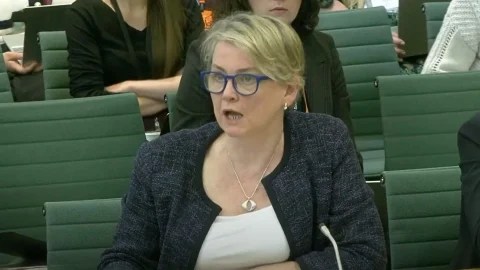
Home Secretary Yvette Cooper addressed MPs with a proposal that would tie e-visas to a new digital ID for all individuals entering the UK. “We want to have a digital service linked to e-visas and linked to our border management process to be able to determine whether an individual is in or out of the UK, whether they have left at the point at which their visa expires or whether they are overstaying and immigration enforcement action is needed,” she said.
Labour’s growing reliance on digital ID to address immigration failures is unfolding alongside a broader and far more consequential transformation: the nationwide rollout of the Gov.uk Wallet, a centralized digital identity app set to launch this summer.
While pitched as an administrative upgrade, the shift arrives at a politically charged moment, with the government invoking border control failures as justification for embedding surveillance infrastructure more deeply into everyday life.
By presenting digital ID as the answer to immigration enforcement shortcomings, ministers risk normalizing a system that reaches far beyond its initial remit.
This convergence of border policy and digital identity expansion suggests a strategic reframing, where rising migrant arrivals are used not only to defend immigration crackdowns but also to accelerate public buy-in for a permanent digital identity regime.
Starting with digital Veteran cards and driving licenses, and eventually consolidating all state-issued credentials into a single app by 2027.
Canada’s New Border Law Hides a Surveillance Time Bomb
By Ken Macon | Reclaim The Net | June 6, 2025
Canada’s new Strong Border Act tabled as Bill C-2, is being framed by the federal government as a step toward strengthening border security. But hidden within its lengthy legislative text is a familiar and troubling push for expanded surveillance powers, this time without the need for court authorization.
Nestled deep in the bill are provisions that grant law enforcement sweeping new authority to demand subscriber data from service providers, bypassing the oversight mechanisms long seen as essential to protecting Canadians’ privacy.
The bill revives the “lawful access” agenda, one that law enforcement agencies have been pursuing since the late 1990s. These digital access provisions are not new, but their inclusion in a border-focused bill appears to be a calculated effort to quietly reintroduce them under a different guise. Despite being repeatedly rebuffed by public opposition, parliamentary committees, and Canada’s highest court, the drive to erode digital privacy protections continues.
This legislative maneuver follows years of setbacks for warrantless access advocates. In 2014, the Supreme Court ruled decisively in R. v. Spencer that Canadians have a legitimate expectation of privacy when it comes to subscriber information. The Court stressed that identifying individuals based on their Internet activity could easily expose sensitive personal behavior and that police demands for such information constituted a search requiring proper legal authorization.
According to Michael Geist, a law professor at the University of Ottawa, law enforcement has continued to seek ways around those constraints. Past efforts to legislate access without judicial oversight have either failed to pass or been dropped due to public backlash.
A 2010 bill mandating the disclosure of customer details, including IP addresses and device identifiers, without a warrant was abandoned.
In 2014, a new bill was introduced, ostensibly to tackle “cyberbullying.” In practice, it reintroduced many of the same provisions that had been defeated under earlier proposals. While dressed in the language of protecting youth online, its underlying purpose was once again to broaden law enforcement access to digital subscriber data with limited oversight.
The Supreme Court’s Spencer ruling remained a major obstacle, reaffirming the privacy rights of Canadians. Then, in 2023, the Bykovets decision extended those protections further, affirming that IP addresses also warrant constitutional safeguards. The Court noted that if digital privacy is to mean anything in the modern age, then these basic digital identifiers must be protected under Section 8 of the Charter.
Despite this legal precedent, Bill C-2 is attempting to carve out a new space for surveillance. Among its more concerning features is a clause that would allow authorities to issue “information demands” to service providers without needing judicial approval. These demands would compel companies to confirm whether they provide services to specific users, whether they hold transmission data related to those accounts, and where the services are or were provided, both inside and outside Canada.
The threshold for triggering such a demand is alarmingly low. Law enforcement must merely suspect that a crime has occurred or may occur and that the requested information could aid an investigation. The demand doesn’t require disclosing the actual data, but it functions as a roadmap to it, alerting police to which providers hold what kind of information and where it might be found. Such indirect searches effectively sidestep the very privacy protections the courts have upheld.
Notably, none of these measures relate directly to border enforcement. Their presence in a border bill serves a strategic purpose: to avoid the scrutiny that such provisions would attract if introduced through standalone legislation. This tactic, often seen in omnibus bills or unrelated amendments, allows controversial policies to advance quietly under the cover of more palatable reforms.
Professor Geist has a full in-depth look at the history of such laws here.
After losing its propaganda war, Israel silencing critics over Gaza genocide: UK scholar
By David Miller | Press TV | June 5, 2025
A British scholar, who is being sued for his pro-Palestine activism on social media, says Israel is seeking to silence its critics after losing a propaganda war regarding the ongoing genocide in the Gaza Strip.
David Miller, a producer and co-host of Press TV’s weekly Palestine Declassified show, made the remarks in an X post on Wednesday, after the Campaign Against Antisemitism (CAA), a pro-Israel NGO, launched a private prosecution against him.
The CCA said it has brought three charges against Miller, alleging that he had used X to send messages of a menacing character.
Miller said the CAA acts on behalf of Israel, which is “a hostile and illegitimate genocidal Jewish supremacist” regime.
“This attempt at a private prosecution is a Strategic Lawsuit Against Public Participation (SLAPP), and an act of desperation by … Israel in a propaganda war it has already lost,” he added.
“Israel, via the CAA, is attempting to buy its way into the criminal justice system to silence critics of Zionism. They will fail.”
Miller’s three messages mentioned in the case were posted from November 2024 onwards. They also concluded with the hashtag “Dismantle Zionism.”
The first hearing into the case is expected to take place at Westminster Magistrates’ Court in London on July 2.
Miller previously worked as a professor of political sociology at the University of Bristol, but he was unfairly and wrongfully dismissed in October 2021 over his pro-Palestine advocacy.
Anger against Israel has increased worldwide since October 7, 2023, when the occupying regime launched a genocidal war on the Gaza Strip.
Almost 20 months into its brutal aggression, Israel has failed to achieve its declared objectives in Gaza despite killing at least 54,607 Palestinians, mostly women and children, and injuring 125,341 others.
More evidence implicates ‘Israel’ in harrowing Gaza aid massacre: CNN
Al Mayadeen | June 5, 2025
A CNN investigation has revealed compelling evidence suggesting that invading Israeli units opened fire on Palestinians gathered at a humanitarian aid site in Rafah, southern Gaza, debunking official Israeli claims and raising serious questions about the safety of the aid distribution system supported by the US and “Israel”.
The “Israeli hunger trap massacre” occurred early Sunday near the Tal al-Sultan distribution site and resulted in the killing of at least 31 Palestinians, with dozens more wounded, according to Gaza’s Health Ministry. Video evidence, geolocation analysis, and eyewitness testimonies strongly indicate that Israeli gunfire at the Gaza aid site was responsible for the victims, CNN reported.
According to the news network, more than a dozen eyewitnesses, including injured survivors, reported that Israeli troops fired in volleys at the crowd. Footage reviewed by CNN, geolocated to the Al-Aalam roundabout approximately 800 meters from the fenced aid area, shows sustained bursts of gunfire. Forensic analysis confirmed the firing pattern matched machine guns typically mounted on Israeli tanks.
Weapons experts interviewed by CNN noted the fire rate, ranging from 900 to 960 rounds per minute, aligned with Israeli FN MAG machine guns. Bullets removed from the wounded were identified as 7.62mm NATO standard, consistent with Israeli military weaponry.
Eyewitnesses described scenes of terror as they sought food. Mohammed Saqer, 43, told CNN he witnessed people being shot in the head around him. “We survived a night that was worse than we could imagine,” he said. “The reality for people was one of death and hunger searching for food.”
GHF, IOF deny responsibility despite growing evidence
The Gaza Humanitarian Foundation (GHF), a US- and Israeli-backed aid mechanism operating outside UN frameworks, confirmed that Israeli forces were active in the area but denied any gunfire within or around the “aid site”. In a public statement, GHF alleged, “All aid was distributed today without incident. These fake reports have been actively fomented by Hamas. They are untrue and fabricated.”
The Israeli occupation military initially claimed no troops had fired at civilians “while they were near or within the aid site.” Later, a military source admitted to firing warning shots at individuals “about 1 kilometer away.” However, the CNN Gaza investigation presents a far more troubling account.
Pressed by CNN, the Israeli military declined to comment further. At a press briefing, IOF spokesperson Brig. Gen. Effie Defrin rejected the report entirely, calling it “false” and accusing CNN of echoing what he described as “Hamas propaganda”. He dismissed the reported casualty numbers without offering an alternative.
Yet survivors and witnesses continue to challenge the official narrative. Ihab Musleh said his 13-year-old son, Yazeed, was shot after waving at an Israeli tank. “Within seconds, he was hit with gunfire and fell to the ground,” Musleh said from the hospital.
Humanitarian fallout, global scrutiny mount
The Rafah aid convoy deaths mark the most harrowing Israeli massacres in recent months and underscore mounting global criticism of the GHF’s heavily militarized distribution system. The United Nations has warned that the initiative risks becoming a “death trap”.
Unlike UNRWA and other UN agencies, the GHF does not register aid recipients or vet civilians approaching distribution points. Despite claims that the system was created to prevent aid diversion, recent attacks suggest it lacks essential safeguards.
CNN’s reporting further revealed that multiple TikTok videos, including some taken by 30-year-old Ameen Khalifa, captured panicked scenes during the attack. Khalifa was later killed in an Israeli drone strike while attempting to return to the site two days later.
Following Sunday’s attack, GHF updated its public aid maps, placing a red stop sign over the Al-Aalam roundabout and warning Palestinians to avoid the area. Nonetheless, similar attacks occurred on Monday and Tuesday, resulting in nearly 30 additional killings. The IOF admitted its forces opened fire again after spotting “several suspects moving toward them.”
UN criticizes GHF framework as political, dangerous
UN officials have sharply criticized the GHF for creating a system that is both politically selective and operationally unsafe. In remarks before the UN Security Council, UN humanitarian chief Tom Fletcher condemned the program:
“It restricts aid to only one part of Gaza, while leaving other dire needs unmet. It makes aid conditional on political and military aims. It makes starvation a bargaining chip. It is a cynical sideshow. A deliberate distraction. A fig leaf for further violence and displacement.”
As Israeli assaults against Palestinians escalate around “aid distribution points,” the credibility of Israeli denials of civilian targeting continues to erode under growing visual and forensic evidence. Humanitarian organizations warn that if these patterns continue, the entire aid infrastructure in Gaza may collapse under the weight of mistrust, militarization, and unchecked Israeli brutality.
How world leaders stand with genocide
By Ramona Wadi | MEMO | June 5, 2025
Do world leaders really want the genocide in Gaza to end? Israel’s arms sales record for 2024 paints a clearer picture of where the international communities’ loyalties lie.
For the fourth consecutive year Israel broke its arms sales record, totalling $14.8 billion in 2024. Israeli media reports note that European countries were the largest purchaser of arms exports at 54 per cent, surpassing Asia-Pacific which amounted to 23 per cent of total sales, down by 2 per cent for 2024. Notably, countries that signed the Abraham Accords and normalised relations with Israel increased their weapons purchases from 3 per cent in 2023, to 12 per cent in 2024.
According to Yair Kulas, head of Israel’s International Defence Cooperation Directorate, there is political pressure on countries to refrain from purchasing Israeli weapons. “The militaries want our top-tier products, but political forces are blocking them. I hope necessity outweighs politics.”
Judging from the record sales, the politics of genocide are reaping profits for Israel and instability in the rest of the world. Between these looming dangers, Palestinians are experiencing the might of Israel’s weapons first-hand. And what does the world do? Encourage further genocide by purchasing more weapons from Israel.
Diplomatically, Israel is far from isolated. Israel will be participating in the EU-Southern Neighbourhood ministerial meeting in which governance, climate change, migration, economic development and energy will be discussed. An unnamed EU official has already stated that “the ongoing war in Gaza” will not be discussed during the meeting. There is also no fixed date for the review of the EU-Israel Association Agreement.
The EU cannot even pretend that there is a rift in diplomatic relations between the bloc and Israel. It is merely stalling for time, even though genocide is by now acceptable within diplomatic circles that have made a mockery out of international law.
The same governments that feign concern over humanitarian aid in Gaza are supporting the genocidal framework that bans humanitarian aid and causes humanitarian devastation in Gaza. Maybe the international community can articulate which part of genocide it specifically opposes? Not bombs, surely.
It is not necessity that will outweigh politics, to use Kulas’s words. Necessity is created by politics, in this case the politics of colonialism and genocide.
While Israel gloats in its successive terror narrative and its profits, Germany, for example has reiterated its commitment to delivering weapons to Israel. “Germany must know where it stands and say it clearly: alongside Israel,” German Foreign Minister Johann Wadephul stated. But what if Germany clearly stated the meaning of this diplomatic jargon – that it stands with Israel’s genocide in Gaza? Since October 2003, Germany approved over $550 million of arms exports to Israel.
Only a few weeks ago, the EU attempted to give the impression that the tide is turning for Israel. Of course, no one believed the statements. Since then, the Gaza Humanitarian Fund is obstructing aid by killing Palestinians and closing its hubs. More Palestinians have been burnt to death. More Palestinians have starved to death. Just mere hours ago, the US vetoed a resolution for an unconditional and permanent ceasefire because the text is unacceptable, according to the US Ambassador to the UN Dorothy Shea.
World leaders have only left one gap in their narrative – an unequivocal statement that they stand with genocide.
Featured Video

Death Spikes & Rising Cancer In Our Youth Explained
or go to
Aletho News Archives – Video-Images
From the Archives
Politicians lie
By Mazin Qumsiyeh | Popular Resistance | August 18, 2013
There is no way to say this truth nicely: Politicians lie. That includes Japanese, American, Egyptian, Israeli, and Palestinian politicians! Is there something more common sense than that? Yet, so many citizens around the world believe their own politicians or wistfully acknowledge lies but think it is part of the job needed to run things. They believe even when politicians contradict themselves blatantly. This phenomenon is rather remarkable. It is a dissonance and disconnect from reality that many seem oblivious to. It is very dangerous because it can lead to accepting rationales for going to war. These can be deadly wars that lead to millions of lives lost as happened in what was called World War 1 and WW2. Even when incredible and declassified evidence abound, politicians continue to lie and old mythologies refuse to die. Here are just a few of the countless lies told to us over the past few decades… continue
Blog Roll
 Aletho News
- The day-after at the White House: USA and Xi Jinping
- The Geopolitical Balance in the Red Sea: The UAE Being Displaced by New Players
- Iraqi resistance group vows to stage airport sit-ins over Iran aerial blockade
- Turkish parliament to review Saudi-Pakistan defense pact next month
- DEATH SPIKES & RISING CANCER IN OUR YOUTH EXPLAINED
- Iran offers Trump deal before US election
- Merz regime wants ‘secret police’ – opposition
- Israeli settlers terrorize West Bank Palestinians with state-provided drones: Report
- They see them, then kill them: Israeli quadcopters track, deliberately target civilians in Gaza
- Debunked: Trump’s egregious UNGA claims on war against Iran crumble under scrutiny
- If Americans Knew
- Trump betrayed voters with his campaign lies and prioritized a foreign country once he took office
- Netanyahu calls Israel’s war in Gaza ‘opposite of genocide’ in UN speech to near-empty hall
- Settler Kidnappings: Torture, Sexual Abuse and Terrorisation of Palestinian Abductees as Israel Deepens Annexation of West Bank
- Gaza winter nears as 162,000 tents become unusable, raising fears of humanitarian crisis
- Netanyahu says, “It’s the opposite of genocide”; UN says Gaza economy is world’s ‘most severe crisis on record’ – Daily Update
- Israel’s US-Backed Assault on Gaza Has Created the ‘World’s Most Severe Economic Crisis on Record’: UN
- ‘Protecting U.S. Citizens’… From Israel
- ‘This is where I live now, the back of a truck’: a day in the life of a grandmother in Gaza
- In UN Speech, Iran’s President Displays Pictures of Children Killed by US, Brings Attention to Israel’s Nuclear Arsenal
- Israel displaces hundreds of Palestinians amid wave of demolitions in West Bank
- No Tricks Zone
- New Study: Earth And Venus Surface Warmth Largely Explained By Convection And Lapse Rate, Not CO2 Or Radiation
- 2025 Nature Paper Claiming Worsening Global Drought Gets RETRACTED …Heavily Flawed
- New Study: ‘Global Drought Shows No Detectable Recent Acceleration Under Climate Warming’
- Economic Masterminds: German Socialists Suggest Taxing Productivity Gains Stemming From Using AI
- The South China Sea Has Not Been Cooperating With The Climate Change Narrative
- Energy Crisis: Germany Enters Heating Season With Historically Low Gas Reserve Fill Levels
- New Study: The Antarctic Ice Sheet Gained Mass From 2020-2024 Due To Staggering Snow And Ice Accumulation
- Study: Ocean Heating Rates From Thousands Of Years Ago ‘Dwarf’ Modern Ocean Heating Rates
- Climate Extremists Target, Attack Large-Scale Power Grid Infrastructure In Germany!
- New Study: Antarctic Ice Melt Has Contributed Less Than 1 Centimeter To Sea Level Rise In The Last 30 Years

