Massive Attack says Singapore detained band after Gaza chants
Al Mayadeen | August 3, 2026
British band Massive Attack said its members were detained and questioned by Singapore police following a concert in the city-state after audience members chanted pro-Palestine slogans.
In a statement posted on social media, the band said the incident occurred after its performance at the Star Theatre on July 29, describing the authorities’ response as unexpected and disappointing.
According to the band, all members were detained by police, separated for questioning, and subjected to individual interrogations.
The group said some members also had their hotel rooms searched, while others temporarily had their passports confiscated before being allowed to continue their travel.
Band links detention to pro-Palestine chants
Massive Attack said concertgoers had spontaneously begun chanting slogans in support of Palestine both before and after the performance.
The band thanked the audience for expressing solidarity with Palestine and questioned why its members were detained following the event.
Massive Attack has been among the most outspoken music groups in expressing support for Palestine and has frequently used its social media platforms to criticize the Israeli occupation’s war on Gaza.
The band has previously called for an end to the assault on the Gaza Strip and has shared statements condemning Israeli military actions against Palestinians.
Band frontman among 500 arrested at Palestine Action protest
Massive Attack frontman Robert Del Naja was previously detained during the mass protest against the ban on Palestine Action in central London in early April, as reported by The Guardian.
Del Naja, also known as 3D, was seen holding a sign that read: “I Oppose Genocide, I Support Palestine Action” in Trafalgar Square before police approached and carried him away from the demonstration as other protesters cheered.
In footage of his arrest, the musician can be heard saying, “I’m being unlawfully arrested” when asked why he was being detained.
Before his arrest, Del Naja told the Press Association he had concerns about how an arrest could affect his ability to travel and obtain visas for the band’s upcoming summer tour.
“Being a musician, obviously, there was a lot of trepidation around how we might not be able to travel and get visas,” he said. “But I thought ‘this is ridiculous’ and then the police making that U-turn to arrest people again, I thought that is even more ridiculous. So I’m going to hold a sign today.”
He added that he believed the actions of Palestine Action were “highly patriotic because they were pretty much protecting our country from getting involved in serious war crimes and breaking international law.”
“How much more patriotic can you be than that?” he said.
No question of surrendering weapons; proposal only covers heavy weapons storage: Hamas representative
Press TV – August 2, 2026
A Hamas official says the newly announced agreement to end Israel’s genocidal war on Gaza does not signify abandoning resistance, but outlines a conditional, Palestinian-led process contingent on the Tel Aviv regime fulfilling its obligations under the agreement.
Speaking to the Press TV website, Khaled Qaddoumi, the representative of Hamas in the Islamic Republic of Iran, expounded on how the Palestinian resistance movement views the newly announced agreement, which has been widely portrayed in media reports as a “Hamas disarmament” deal.
“There is no question of surrendering or relinquishing weapons. What we specifically offered was to discuss the gathering or storage of heavy weapons under a Palestinian administrative authority – from Palestinian factions to a Palestinian authority. No authority other than a Palestinian one has any role in this matter,” he stated.
The remarks came after Hamas announced it had agreed to a phased deal intended to bring Israel’s genocidal war on Gaza to a complete end.
The proposal, announced by US President Donald Trump after mediators from Egypt, Qatar, Turkey and the United States finalized a roadmap for the next phase of the ceasefire, outlines a mechanism under which heavy weapons would be inventoried and stored under a Palestinian National Committee while Israeli occupation forces gradually withdraw from Gaza.
Israel has not publicly endorsed the proposal, while Hamas has maintained that no provisions related to its weapons can be implemented unless Israel first fulfills its own obligations under the agreement.
Addressing concerns among Palestinians that any discussion of weapons could undermine Gaza’s future ability to defend itself from external aggression, Qaddoumi rejected media portrayals of the proposal as a disarmament deal.
“It is not a relinquishment of weapons. It is not an isolated step. It is not a withdrawal from, or retreat from, the concept of resistance,” he told the Press TV website.
Resistance inherent right of Palestinians
The Hamas representative noted that resistance, in all its forms and by all its means, “is an inherent right of any nation living under occupation – especially the Palestinian people, who have lived under occupation for nearly a century.”
“They have the right to defend themselves in whatever way they consider appropriate, including armed resistance,” he stated.
According to Qaddoumi, even that discussion would depend entirely on the Israeli regime implementing the broader agreement.
“Moreover, this step is conditional upon Israel fulfilling and implementing the other parts of the agreement, including the withdrawal of its forces, the opening of the border crossings, the entry of humanitarian aid into Gaza, and the complete cessation of the genocide,” he said.
He further noted that Israel would have to allow the Palestinian National Committee to enter Gaza to administer civilian affairs, oversee reconstruction and prepare for “a political electoral process that will ultimately lead to an independent Palestinian state.”
“Only within that framework and according to those benchmarks can any discussion regarding weapons take place. Beyond that, there is no such thing as the resistance relinquishing its weapons,” he remarked.
“Our strength comes from our faith, our people, and our just cause. We will continue until this occupation ends and until our nation achieves independence, peace, and prosperity.”
The proposed roadmap envisages a phased process in which heavy weaponry, military production sites, weapons depots and tunnel infrastructure would be inventoried and stored under Palestinian oversight while Israeli troops withdraw in stages.
Hamas has repeatedly said those steps cannot proceed independently of Israel’s commitments regarding withdrawal, humanitarian access and reconstruction.
The genocidal onslaught on the besieged Gaza Strip has killed more than 73,000 Palestinians and injured over 174,000 others since October 23, 2023, most of them women and children, and caused widespread destruction affecting 90% of civilian infrastructure.
The UN estimates reconstruction costs at approximately $70 billion.
‘No trust’ in US, Israel
Asked whether Hamas trusted Washington and Israel to uphold any agreement, Qaddoumi said experience had left little room for confidence.
“There is no such thing as trust or confidence. Historical experience has not been positive when dealing with the Americans or the Israelis,” he told the Press TV website, pointing to failures to implement previous commitments. “On the one hand, President Trump, before the whole world, proposed this ceasefire agreement, saying that the genocide would stop. It did not stop.”
Since the ceasefire came into effect, he noted that more than 1,200 innocent civilians lost their lives, killed in cold blood by the Israeli occupation forces in the refugee camps.
Qaddoumi also noted that border crossings remain closed, humanitarian aid has yet to enter Gaza, reconstruction materials continue to be blocked, and the Palestinian National Committee formed in Egypt has not been allowed into the territory.
“That’s why we’re skeptical,” he said. “We have every right to be.”
Even so, he added that Hamas has continued participating in negotiations in coordination with other Palestinian factions.
“On the other hand, we are still moving toward improving the lives of our people because we have carried this responsibility in consensus with the other Palestinian factions,” he stated.
“With an open mind and a good heart, we entered these negotiations to prevent the genocide from resuming. We sought to achieve a fair political solution for our people.”
Palestine has nothing more to give
The Hamas official said Palestinians have already fulfilled their part of the process.
“At this point, nobody should ask the Palestinians to give anything more, because the Palestinian side has already given everything that was asked of it. There is nothing more to give,” he told the Press TV website.
Instead, he said, responsibility now rests with international guarantors. “Now it is time for the guarantors. It is time for the President of the United States to put sufficient pressure on Israel to abide by its commitments.”
Qaddoumi said statements by members of Israeli regime prime minister Benjamin Netanyahu’s coalition have further reinforced Hamas’s doubts about the implementation of the deal.
“The presence of extreme figures in Netanyahu’s cabinet, such as Ben-Gvir, gives us little reason for optimism because they openly say that these proposals do not meet Israel’s demands; but what are Israel’s demands? What we see today is that Israelis are obsessed either by personal agenda or ideological extremist agenda,” he said.
“Netanyahu wants to remain in power, while ideological fanatic elements like Ben-Gvir are driven by the belief that Palestinians have no right to live in Gaza. They believe Palestinians should leave Gaza and that Israelis should replace them and build settlements there. With such a mentality, hope is very scarce.”
Nevertheless, he said Hamas would continue urging international actors to ensure implementation of the agreement to end the Israeli genocidal war on Gaza.
“We will continue to call on the international community to fulfill its responsibility by guaranteeing the implementation of the agreement and creating mechanisms to move the process forward, rather than allowing the genocide to resume,” he stressed.
“The world must compel and pressure the Israeli forces to withdraw from Gaza, allow the Palestinian National Committee to enter Gaza, permit the entry of food, water, and reconstruction materials, and reopen the border crossings.”
Palestinian consensus
On coordination among Palestinian resistance factions, Qaddoumi said the latest proposal reflects a unified Palestinian position.
“The latest statement announcing a positive step toward strengthening the ceasefire stems from Palestinian consensus. Our brothers in Islamic Jihad and the other Palestinian factions were with us in Egypt, and we discussed it together,” he noted.
He emphasized that discussions about weapons should not be confused with surrendering resistance.
“By the way, the term ‘disarmament’ must be clearly understood,” Qaddoumi said. “When we talk about heavy weapons, we have conditioned any discussion on the implementation of the first stage of the agreement, and the political solution to a Palestinian independent state”
He reiterated that those conditions included humanitarian measures, Israeli military withdrawal, reconstruction, reopening crossings, allowing the Palestinian National Committee into Gaza and progress toward an independent Palestinian state.
“Only then can any political solution and any step toward disarmament–or, as we have said, gathering or storing the weapons, whatever term is used–be addressed,” he said.
“First, this is a matter of national Palestinian consensus; second, it is an entirely Palestinian issue that concerns the future shape of Palestine, its political life, and how Palestinians choose to address these matters.”
Qaddoumi said the Hamas resistance movement views the sacrifices of its martyred leaders, including Haniyeh, as part of a broader struggle for Palestinian self-determination.
“Those great people gave their lives for a noble cause,” he said. “Martyr Haniyeh himself said that there is a price for this cause and this responsibility.”
Haniyehs assassination came a day after he attended the inauguration ceremony of President Masoud Pezeshkian.
“We carry this responsibility knowing that the price will be heavy and that our lives are at stake — for the sake of our people, for the sake of our noble cause, and for the sake of our homeland,” Qaddoumi said.
He concluded by recalling remarks delivered by Hamas’s newly-elected leader Khalil al-Hayya at Haniyeh’s funeral in Tehran one day after the assassination.
“The enemy is deluded if they think that we will be diverted from our path or from the path of those great leaders and martyrs. On the contrary, we will insist on continuing our road toward independence because those people who offered their lives for the sake of their people did so for a reason. That reason is to live in peace and prosperity and to give our children a better life. Martyrdom is a school that teaches us how to live, he said.
“Martyrdom is the art of those great people who gave their lives to grant future generations a prosperous, peaceful, and dignified life. Today, we are strong enough to carry the flag of those great people and move forward toward the development of our people and our nation.”
‘Israel’ kills 17 Palestinians in Gaza on day 279 of the ‘ceasefire’
Al Mayadeen | August 2, 2026
The Israeli occupation continued its violations of the ceasefire agreement in the Gaza Strip for the 297th consecutive day, killing 17 Palestinians and injuring dozens over the past 24 hours, according to reports.
The Israeli attacks killed 10 Palestinians and wounded others during a series of overnight attacks that continued across the Gaza Strip until dawn on Sunday.
Among those killed was Sheikh Kamal Abu Ma’ili, who was deliberately targeted alongside his wife after the Israeli occupation struck their home in the al-Mashaila area west of Deir al-Balah in central Gaza. The strike also injured four Palestinians who were transferred to Al-Aqsa Martyrs Hospital.
In the same city, Palestinian civilian Saber Mohammad Khalil Rabee was killed, and another person was injured after the Israeli occupation targeted their home in the al-Mahatta area.
‘Israel’ targets liberated Palestinian prisoner
In northern Gaza, the Israeli occupation carried out demolitions of civilian homes in Beit Lahia at dawn on Sunday.
In Gaza City and its governorate, three Palestinians were killed after an Israeli airstrike targeted an apartment in al-Sousi Tower west of the city.
The attacks also killed liberated prisoner Mohammad Abdul Ahmad Abu Ras, who was targeted while among a group of civilians on Omar al-Mukhtar Street, only one week after his release from Israeli occupation prisons.
Meanwhile, young Palestinian Ahmad Wael al-Khudari succumbed to injuries sustained several days earlier in an Israeli strike on al-Jalaa Street.
In another attack, an Israeli unmanned aircraft targeted a group of civilians near al-Ghazali intersection in Gaza City, killing Hassan Ibrahim Qahman and Alaa Imad al-Taramisi and injuring two others.
The Israeli occupation also targeted the roof of a home in the al-Sinaa area of Tal al-Hawa neighborhood southwest of Gaza City, killing Kamal Alaa Aliwa and Zakaria Ahmad Zaidiya and injuring others.
The Palestinian Red Crescent transported the body of Hassan Hisham al-Khudari, 38, after he was killed in an Israeli strike on al-Thalathini Street in southern Gaza City.
Israeli attacks continue across southern Gaza
In Khan Younis in southern Gaza, three Palestinians, including a child, were killed after an Israeli strike targeted an apartment belonging to the al-Hams family in al-Mawasi, northwest of al-Qarara town.
Palestinian civilian Salem Abu Labda also died from injuries sustained in an Israeli airstrike that targeted him on Saturday afternoon in the same al-Mawasi area.
Earlier on Saturday, seven Palestinians were killed and around 10 others injured in different areas across the Gaza Strip as a result of Israeli ceasefire violations.
Singapore police open probe over Palestinian flag displayed at Massive Attack concert
The Cradle | July 31, 2026
Singaporean police are investigating an incident involving the display of a Palestinian flag during a concert by the British band Massive Attack, which ended its performance in the country by raising the flag on stage, according to a police statement issued on 31 July.
Police and media stated that investigations are ongoing concerning what was described as “a possible breach of license conditions.”
Under Singaporean law, no foreign national emblem may be shown in public without a permit or an exemption.
The Palestinian flag carries particular sensitivity given Israel’s genocide of Palestinians in Gaza and the country’s sizable Muslim population.
The home affairs ministry issued a public advisory in 2023 against displaying or wearing items connected to events in Palestine and Israel.
“The ongoing Israel-Hamas conflict is an emotive issue. We would like to advise against the public display and wearing of articles in relation to the conflict, given the heightened sensitivities,” the ministry said.
The case of Massive Attack is far from the first display of solidarity with Palestine to draw legal action.
Since the start of the Gaza genocide in October 2023, efforts to support Palestine have faced some of the broadest and most diverse crackdowns on public protests.
In the US, authorities and universities have responded to Gaza solidarity demonstrations with mass arrests, suspensions, and criminal charges against students and faculty, while federal officials have threatened funding cuts and investigations targeting pro‑Palestinian activism.
The UK government has used anti‑terror legislation and public‑order powers to ban groups, impose strict conditions on rallies and detain thousands of protesters, activists and academics for expressing support for Palestine.
In France, interior‑ministry directives have led to repeated nationwide bans on pro‑Palestinian demonstrations, with police deploying tear gas, water cannon and mass fines to disperse gatherings and prosecutors pursuing criminal cases against organizers and participants.
In Germany, one of Israel’s staunchest allies, state authorities have treated common pro‑Palestinian slogans as criminal offenses, imposed protest bans, carried out hundreds of arrests and fines, and pursued deportations and other immigration measures against foreign activists involved in solidarity actions.
Germany scrambles to evade Nicaragua’s landmark Gaza genocide case at ICJ
The Cradle | August 1, 2026
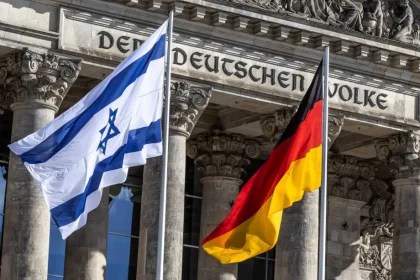
The International Court of Justice (ICJ) announced on 31 July that it will hold hearings from 7 to 10 September on Germany’s bid to dismiss Nicaragua’s landmark genocide case, hoping to prevent judges from ruling on Berlin’s role in enabling Israel’s ethnic cleansing campaign in Gaza.
Germany filed its preliminary objections to Nicaragua’s case on 21 October 2025, challenging the court’s jurisdiction and arguing that several of Nicaragua’s claims are inadmissible.
The filing automatically froze all proceedings, leaving evidence of Germany’s complicity in genocide unexamined until judges rule on Berlin’s challenge.
Germany will open oral arguments on 7 September, with Nicaragua responding the following day. Berlin will return on 9 September, and Managua will close on 10 September.
In April 2024, the ICJ denied Nicaragua’s request for Germany to stop military exports to Israel and to resume UNRWA funding, which Germany had suspended in January 2024.
On 1 March 2024, Nicaragua filed the case accusing Germany of violating the Genocide Convention, the 1949 Geneva Conventions, and fundamental norms of international law. The charges relate to Germany’s political, financial, and military backing of Israel and its decision to cut off funding to the UN Agency for Palestinian Refugees.
Managua asserts that every party to the genocide convention has a duty to do everything possible to prevent genocide, and that a recognized risk of genocide against Palestinians has existed since October 2023.
Berlin argued that only a small share of its export licenses to Israel covered weapons, yet Germany remains Israel’s second-largest arms supplier after the US, issuing export licenses worth over $571m between October 2023 and May 2025.
Beyond weapons, Berlin has locked in security ties with Israel while moving to stamp out criticism of it at home.
Germany’s upper house approved a bill on 10 July criminalizing the denial of Israel’s “right to exist,” punishable by up to five years in prison, a measure the Bundestag’s own research service warns would breach constitutional protections on free expression.
Netanyahu and German Interior Minister Alexander Dobrindt signed a security agreement in Jerusalem on 11 January, expanding military cooperation against Iran and resistance factions in Lebanon, Palestine, and Yemen.
BIRX POINTS THE FINGER AT FAUCI, DENIES LOCKDOWN BLAME
The HighWire with Del Bigtree| July 30, 2026
Deborah Birx got a hero’s welcome on News Nation, claiming she never understood how the country went from slowing the spread to a full shutdown, and pointing to Fauci’s private calls with governors and mayors as the cause. Jefferey Jaxen pulls up the actual headlines and timeline on the woman who was named White House Coronavirus Response Coordinator, and it tells a very different story.
With Karim Khan’s dismissal, the elimination of the war crimes court is near-complete

By Jonathan Cook | July 30, 2026
The most important question we should be asking after Karim Khan’s dismissal last week as chief prosecutor of the ICC – the international war crimes court in The Hague – is not whether he is guilty of “sexual misconduct” against another staff member, identified as “Sarah”.
That can only be decided through a legal process – one, let us note, that has already taken place. A fact-finding body carried out a lengthy investigation of Sarah’s allegations over more than a year; its thousands of pages of evidence were then evaluated in detail by three senior judges.
Though you would not know it from the media coverage, they concluded that there was no evidence to suggest any kind of misconduct by Khan, sexual or otherwise.
Strangely, that determination was largely confirmed by an extraordinarily deferential “exclusive” CNN interview with Sarah, aired earlier this month.
She declined to give any meaningful details of what Khan had allegedly subjected her to, and celebrity interviewer Christiane Amanpour delicately avoided pressing her for any clarification.
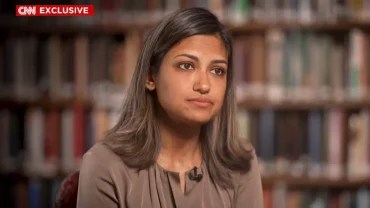
No matter. The purpose of the CNN interview was never about excavating facts. It was designed to offer face-saving cover as an entirely political body called the Assembly of States Parties, comprising diplomatic representatives of the 125 states signed up to the ICC, entirely ignored the legal findings and dismissed Khan.
Paradoxically, it was the Assembly of States Parties that appointed the judges who had concluded that there was no evidence of misconduct or breach of duty by Khan. That inconvenient judgment was simply reversed, despite the Assembly members being in no position to weigh the evidence themselves.
We should not forget that many of these states have an investment in weakening the only international court that can bring their own senior officials to trial for war crimes.
In May 2024 – shortly before Sarah made her allegations – the ICC demonstrated that it was finally ready to prosecute western leaders for war crimes, not just those from the Global South or from the West’s official enemies, such as Russia’s Vladimir Putin.
Khan issued an arrest warrant for Israeli prime minister Benjamin Netanyahu and his former defence minister Yoav Gallant. Both are accused of crimes against humanity for starving the people of Gaza through a prolonged blockade of food, water and power.
Were Netanyahu ever to face trial – and found guilty, as he almost certainly would be – a lot of other leaders would have good reason to fear they might be found culpable next, not least for their complicity in Israel’s mass slaughter of Palestinians in Gaza.
The question that needs answering now is not whether Khan is guilty of misconduct – that has been decided at a political level, not a legal one. No, we need an answer to an equally political, and far more troubling, question.
“Cui bono?” Or “Who benefits?”
The evidence is hiding in plain sight. The evidence is revealed both in the deeply politicised process that led to Khan’s downfall, and in what that process means for the future of the court.
Covert war
Khan is not the first ICC chief prosecutor to face extreme pressures – and, as with Khan, those pressures surfaced at the very moment Khan’s predecessor tried to take on Israel over its war crimes.
Fatou Bensouda faced a “covert war” waged against her by Israel for the best part of a decade, according to an investigation by the Guardian in May 2024, just as Khan issued his arrest warrant for Netanyahu.
The Guardian’s report, published nearly three years after Bensouda had completed her nine-year term at the ICC, revealed that, during that time, she had faced threats to herself and her family, the monitoring of her communications, and an intimidating visit to her home.
More recently, Bensouda has confirmed these accounts in an interview with Al Jazeera. Bensouda notes that she repeatedly reported Israel’s campaign of intimidation to the Dutch authorities, but they did nothing to investigate the threats or protect her.
She also says certain “authorities” – she does not name them – warned her that she was going too far in investigating Israeli crimes and that “you could be harmed or you could be killed, or family members could be harmed in some way.”
The campaign of threats – instigated by Yossi Cohen, then the director of Israel’s spy agency, Mossad – intensified as Bensouda considered whether to open a formal investigation into Israeli war crimes and crimes against humanity in the illegally occupied Palestinian territories.
Israel’s crimes against the Palestinian people, we should remember, predate – by decades – Hamas’ attack on 7 October 2023. In fact, though no one is supposed to mention it, Israel’s sustained crimes of occupation are the self-evident cause of that Hamas attack.
An Israeli source told the Guardian that “the Mossad’s objective was to compromise the prosecutor or enlist her as someone who would cooperate with Israel’s demands”– that is, scrap the ICC’s investigation into Israeli crimes. Another source admitted that Cohen was acting on Netanyahu’s instructions.
During one contact, Cohen reportedly issued a Mafia-style threat to Bensouda: “You don’t want to be getting into things that could compromise your security or that of your family.”
The Guardian reported that the Mossad “took a keen interest in Bensouda’s family members and obtained transcripts of secret recordings of her husband, according to two sources with direct knowledge of the situation. Israeli officials then attempted to use the material to discredit the prosecutor”.
The paper also noted that there were fears among senior ICC officials that “Israel had cultivated sources within the court’s prosecution division” – the division Khan would inherit from Bensouda.
Cohen was described as “stalking” Bensouda, and personally “ambushed” her in a hotel room in New York in 2018. Afterwards he repeatedly phoned her, in a threatening manner that was said to have escalated over time. When Bensouda asked Cohen how he had obtained her phone number, he reportedly replied: “Did you forget what I do for a living?”
According to the Guardian :
On one occasion, Cohen is said to have shown Bensouda copies of photographs of her husband, which were taken covertly when the couple were visiting London. On another, according to sources, Cohen suggested to the prosecutor that a decision to open a full investigation would be detrimental to her career.
Between 2019 and 2020, the Mossad had been actively seeking compromising information on the prosecutor and took an interest in her family members.
The spy agency obtained a cache of material, including transcripts of an apparent sting operation against her husband.
Israel used the materials to mount a “smear campaign” against her, but one that ultimately proved unsuccessful.
Concerted backlash
When Khan took up the role of ICC chief prosecutor in June 2021, he proved reluctant to pick up where Bensouda had left off on the Palestine case. Presumably, he was only too aware of the retaliation from Israel against her.
Bensouda had announced in December 2019 that she had grounds to open a full criminal investigation into allegations of war crimes in Gaza, the West Bank and East Jerusalem.
However, in the face of a concerted backlash from western states, she delayed opening the investigation. She first sought a ruling from a pre-trial chamber of ICC judges – presumably in the hope it would serve as some kind of insurance policy – on whether the court had jurisdiction over the occupied Palestinian territories.
By February 2021 the judges confirmed what was already self-evident. The court did have such jurisdiction because Palestine had been signed up to the court since 2015.
Bensouda stepped down a few months later.
The door was now open for Khan to prosecute Israeli officials for war crimes. However, the new chief prosecutor gave every appearance – perhaps understandably – of preferring to sit on his hands.
It was not just Israel that had been fearsomely opposed to its officials being tried for war crimes. Washington was equally incensed at the prospect – sometimes, it seemed, more so than over the possibility that US officials might also face arrest warrants for crimes committed by the US military in Afghanistan and Iraq.
Between 2019 and 2020, during Trump’s first presidency, the US imposed severe visa restrictions and financial sanctions on Bensouda. Mike Pompeo, then US secretary of state, linked the sanctions to the Palestine case: “It’s clear the ICC is only putting Israel in [its] crosshairs for nakedly political purposes.”
Khan might well have avoided pursuing Israel indefinitely had it not been for the events that followed 7 October 2023.
Israel’s mass slaughter of Palestinian civilians in Gaza, its devastation of the enclave’s homes and infrastructure, and its starvation of the entire population were actions so criminally abhorrent that UN agencies, major human rights groups and Holocaust scholars were soon all in agreement that they amounted to genocide.
In May 2024, Khan announced arrest warrants against Netanyahu and Gallant, as well as three Hamas leaders subsequently killed by Israel.
Tsunami of threats
Shortly before Khan made that announcement, 12 senior US Senators had sent a threatening letter to the ICC: “Target Israel and we will target you.” The letter ended: “You have been warned.”
Describing Israeli and US sovereignty as inseparable, the senators reminded Khan that Washington had demonstrated “the lengths to which we will go to protect [our] sovereignty.”
A 2002 law, popularly known as “The Hague Invasion Act”, authorises the US president “to use all means necessary and appropriate” to bring about the release US persons and any allies imprisoned or detained by the ICC. Those allies, it goes without saying, include Israeli leaders.
Such threats, it should be noted, are a violation of Article 70 of the Rome Statute.
Following the issuing of the arrest warrants, there followed a tsunami of similar threats – and presumably more that have yet to become public – against Khan and the ICC.
A British-Israeli lawyer within the ICC – one known to have ties to Netanyahu’s legal adviser – warned Khan “they will destroy you and they will destroy the court” if the warrants were not rescinded. He urged Khan to “climb down the tree” and drop the case.
The UK’s foreign secretary of the time, David Cameron, phoned Khan to tell him Britain would defund the court and withdraw from the Rome Statute that founded the ICC if Khan did not back down.
Cameron warned Khan that he was “on the brink of making a huge mistake” and urged him to “take a step back and consider things”. He added that applying for arrest warrants for Israeli officials was tantamount to “dropping a hydrogen bomb”.
Meanwhile, Trump issued an executive order imposing aggressive financial sanctions against Khan and other ICC officials, including several of its judges.
Khan himself received warnings that Israel’s Mossad was continuing its operations in The Hague, where the ICC is located, to monitor and compromise the court’s investigators as they compiled evidence on Israel – just as it had done earlier under Bensouda.
Khan publicly stated that retaliatory threats and intimidation were explicitly targeting members of his own family.
Untouchable criminals
What conclusions should we draw from all of this?
Quite aside from the matter of whether Sarah’s allegations of “sexual misconduct” are true or not, it is clear that Israel and the US have been digging for dirt – and apparently ready to fabricate such dirt – on any chief prosecutor who tries to hold them to account for their crimes.
Both have indicated that they are ready to manipulate legal and political processes to ensure the outcome they desire: that they remain untouchable.
We have a template for how this plays out. Julian Assange, founder of the whistle-blowing site Wikileaks, published details in 2010 of US and British war crimes in Afghanistan and Iraq. Almost immediately he found himself entangled in accusations of sexual misdemeanours – in his case in Sweden – that were similarly amplified by an uncritical western media.
Assange faced years in various forms of confinement while the US and UK pressured Sweden to keep alive an investigation against him Swedish prosecutors at least twice sought to drop for lack of credible evidence.
In fact, the US and UK never wanted the evidence tested – they were quite happy with a permanent, unresolved “investigation” – precisely because they knew it would have been unlikely to withstand judicial scrutiny.
The point was simply to generate constant headlines about “rape”, turning Assange into a pariah, justifying his effective disappearance from public life, severely weakening Wikileaks as a whistleblowing platform, deflecting attention from the all-too-real crimes committed by the US and Britain, and paving the way to a political show trial to extradite him to the US on entirely confected “espionage” charges.
This has been repeated in the case of Khan and the ICC. In Khan’s case, the evidence was tested and found inadequate. So the legal process has been replaced by a flagrantly political one.
Khan has been turned into a legal pariah, even stripped of his right to work as a lawyer in the UK by the British Bar Association.
The ICC has been further weakened, just as Israel and the US have expressly stated they wanted it to be. Marco Rubio, Trump’s secretary of state, has recently launched an official campaign to dismantle the ICC “brick by brick”.
He says: “Now they [the ICC] are going to see the consequences”. Consequences of what? Of seeking to enforce international law against a key US client state.
Meanwhile, accountability for the all-too-real crimes being committed by Israel in Gaza, Lebanon and the West Bank – and actively supported by western states like the US, Germany and Britain – recedes yet further into the background
As each brick protecting the ICC is dismantled, a brick is added to the wall of protection around Netanyahu and Israel’s genocidal war machine.
Israel, meanwhile, is barely concealing that it has been masterminding the effort to destroy the ICC.
According to Guy Azriel, the diplomatic correspondent for i24 News, Israeli foreign Minister Gideon Sa’ar “oversaw a dedicated task force and employed intensive diplomatic efforts aimed at securing Khan’s removal from office”.
Hillel Neuer, director of the Israel apologist group United Nations Watch, cheered what he called “our campaign to remove” Khan, and warned Francesca Albanese, the UN’s legal expert on the occupied Palestinian territories, “you’re next”.
Like Khan, Albanese has been searching for practical, legal ways – not just rhetoric – to hold Israel and its western allies to account for the crimes in Gaza.
Predatory states
The ICC claims its work will not be affected by Khan’s removal and that the arrest warrants against Netanyahu and Gallant will still be pursued under new stewardship. That seems doubtful.
Israel and the US are cranking up the intimidation of the ICC, which has no tools – beyond the support of members states – to enforce its rulings or protect itself from the hostility of a rogue superpower.
Currently the court appears paralysed, allowing Israel to muddy the waters with interminable, and vexatious, appeals against the arrest warrants.
Any lawyer who takes up the post of ICC chief prosecutor will be only too aware of the fate that befell Khan and the campaign of intimidation against Bensouda as soon as each tried to enforce accountability on Israel and its western patrons.
It will take a very brave individual indeed to renew that task. Khan’s successor will understand that, in any further confrontation with Israel and Washington, the US will not hesitate to crush the ICC and, with it, remove the only effective restraint on criminality by powerful states.
More likely, however, the Assembly of States Parties – the political body that ousted Khan – will privately require from his successor reassurances that the new chief prosecutor reliably defer to the principle of Israeli and western impunity. Only someone less willing to ruffle feathers stands any chance of being appointed.
That was the clearest of messages sent by the Assembly when a majority of member states voted to be rid of Khan. The short-lived experiment in creating a mechanism for enforcing international law is over. We are back to the law of the jungle.
Hundred of thousands of people around the world – more likely millions – will now find themselves even more exposed to the criminal actions of predatory states. Unlike Khan’s accuser, they are unlikely to ever get their day in court.
UK charges over 1,500 people over signs opposing Israel’s genocide of Palestinians in Gaza
The Cradle | July 31, 2026
British authorities listed the cases of 1,579 people at Westminster Magistrates’ Court on 30 July, holding cardboard signs opposing Israel’s genocide of Palestinians in Gaza, according to the campaign group Defend Our Juries.
The group said the hearing had been pushed back to October, but that hundreds of defendants were never told, leaving them unsure whether they were required to appear, pointing to the confusion as evidence of a crisis the courts cannot absorb.
One court notice seen by Middle East Eye told the recipient they must attend on 30 July, then instructed them in the same letter not to come to court.
Defendants who arrived were handed a further letter addressed to whomever it may concern, adjourning all cases to 26 October.
The chaos came on the same day the Supreme Court ruled that Palestine Action can challenge its proscription.
Over 3,500 arrests have been made under Section 13 of the Terrorism Act 2000 of people holding cardboard signs reading, “I oppose genocide, I support Palestine Action,” Defend Our Juries said.
Those cases are tried summarily and carry a maximum of six months in prison, and include senior citizens, faith leaders, and first-time protesters.
In the past two months, 96 people have filmed videos inviting support for Palestine Action, with many also declaring membership.
The declaration of membership exposes them to Sections 11 and 12 of the same act, which are heard before juries and carry sentences of up to 14 years.
Eight of those who filmed have been arrested, seven in dawn raids on people’s homes, with another 14 detained outside New Scotland Yard on 5 July.
Home Office figures cited by the group show 92 percent of terrorism arrests in the year to March 2026 were linked to alleged support for Palestine Action, with the average demographic profile of the suspect being a 59-year-old white British woman.
A spokesperson for Defend Our Juries said UK Prime Minister Andy Burnham had inherited the crisis, asking “does he really want to be seen locking up pensioners, priests and 84-year-old Reverend Sue Parfitt while people convicted of violent offenses are released early?”
On 15 June 2026, the Court of Appeal ruled the government’s classification of Palestine Action as a terrorist entity was lawful, overturning the February 2026 High Court judgment that had called it unlawful and disproportionate.
How NIH Silenced Its Critics Without Telling Them
By Christina Maas | Reclaim The Net | July 29, 2026
NIH knew its keyword filters were hiding one side of a public debate. Internal emails now reveal how its lawyers tried to keep the system working without making the censorship look unconstitutional.
Harry Harlow died in 1981. His maternal-deprivation experiments on rhesus macaques turn up in most undergraduate psychology courses, usually as the case study for why research ethics rules exist at all. Four decades after his death, his surname was one of the terms the National Institutes of Health typed into Facebook’s comment-filtering tool so that any comment containing it would vanish from public view.
Next to Harlow on the Facebook list: Suomi, for Stephen Suomi, who runs a comparative ethology lab at NIH’s child health institute. Then monkey, monkies, marmoset, hamster, mouse, mice, primate, chimpanzee, cats, gatos, animales, animalitos, cruel, cruelty, revolting, torment, torture, two monkey emojis, and an emoji with an expletive face. Until December 2021, the list also held PETA and PETALatino.
The Instagram list ran shorter and odder: animal, chimpanzee, monkey, experiment, hurt, kill, test, torture, stop.
Much of this has been public since 2024, when the D.C. Circuit held the filters unconstitutional. What was missing was the agency’s own side of it: what NIH’s lawyers thought they were doing, and what they told the communications staff running the accounts.
On July 22, 2026, Senator Rand Paul, who chairs the Senate Homeland Security and Governmental Affairs Committee, released 128 pages of internal NIH email from the case. The messages run from November 2021 to January 2022, between NIH’s Office of the General Counsel, its Office of Communications and Public Liaison, and, relayed second-hand, the Justice Department attorneys defending the suit.
Paul’s interest was COVID, and the COVID material is in there. What the emails document, in greater detail, is how an agency behaves in the days after its own attorney tells it, in writing, that it is discriminating against a viewpoint.
How the hiding works
Facebook and Instagram give page administrators an optional keyword filter. You paste in a list of words. Any comment containing one of them, past or future, is hidden automatically. On Facebook there is also a built-in profanity filter with strength settings; NIH had it on “strong.” Instagram has its own default offensive-word filter, which NIH had enabled as well.
“Hidden” has a technical meaning on these platforms that differs from what most people assume. A hidden comment survives. It remains fully visible to the person who wrote it and to that person’s friends. Everyone else scrolling the page sees nothing. The joint stipulation in the case spells out the consequence in flat language: the user whose comment has been hidden typically receives no notice.
So the speaker’s screen looks normal. They wrote a sentence; they can see the sentence, the sentence is there tomorrow. The rest of the page sees nothing, and no error message ever told them so. The silencing leaves no trace, so there is nothing to appeal and no accurate way to complain. Madeline Krasno, one of the plaintiffs and a former University of Wisconsin animal-lab employee, eventually worked out that she was being filtered and started deliberately misspelling words to get through.
What the lawyers told NIH
On December 1, 2021, an NIH senior attorney in the Office of the General Counsel wrote to the communications team after a call with DOJ. The email is the heart of the release.
She opened with a direct instruction. NIH should stop blocking PETA and PETALatino on Facebook and PETA on Instagram, immediately. That is agency counsel identifying terms as viewpoint-based; you cannot block the name of an organization and claim you are policing subject matter. The words stayed up until December 3. Three Instagram hashtag filters, #stopanimaltesting, #stoptesting, and #stoptestingonanimals, were still running afterward. The attorney later had to check from her own personal Instagram account to establish that they were still live.
For those hashtags she laid out four options. The first, which NIH took, was to remove them and use a different neutral keyword hashtag “to achieve the same effect” against the volume of PETA comments; she suggested #testing or #animals. The second was to keep the anti-testing hashtags and add a pro-testing one to offset them, and she offered an example: #keepanimaltesting. The third was to drop the filters if they were not doing much. The fourth was to keep them, on which DOJ’s advice was that a court might find the terms not viewpoint-neutral, and that the worst that could happen would be an order to stop using them.
The first option is a piece of legal engineering. Counsel has identified a constitutional defect in the selection of words. The remedy chosen is a different selection of words, picked to produce the same suppression while surviving review. The volume of hidden speech stays exactly the same. The category of hidden speech barely changes. What changes is the paper trail.
The evidence DOJ kept asking for
DOJ wanted to argue that NIH had no policy of targeting animal-rights speech, and that a comment defending animal testing would be hidden on the same terms as one attacking it. To make that argument stick, they needed examples. They asked at least three times, across several emails, for two or three instances of the filters catching a pro-testing comment.
NIH came up empty. The answer that came back was that this was not a scenario that happens, since people were not really posting in favor of animal testing. The closest they could offer was that a pro-research reply posted under an already-hidden comment would disappear along with it.
That is a serious problem for the neutrality argument. A filter can be even-handed in its text and one-sided in its operation because only one side of a debate uses the vocabulary. “Torture” and “cruelty” are loaded words in a fight about animal research. They are the other side’s words. The substitute hashtags counsel proposed work the same way: #testing and #animals catch the people who came to complain, and say nothing about them.
Wuhan, ivermectin, and the “neutral” filter
Pressed for examples of off-topic hiding that had nothing to do with animals, NIH’s comms staff supplied one. On a post about the agency’s initiative to end structural racism, comments about the Wuhan Institute of Virology and ivermectin had been hidden as off-topic.
At its narrowest that is defensible. Ivermectin has no bearing on a post about racial equity in the biomedical workforce, and a moderator who removes it is doing an ordinary job badly rather than doing a sinister job well.
However, the agency’s stated purpose for its accounts, according to its own documents, is to be the voice of factual information in a time of “misinformation,” and its internal list of disruptive comment examples is characterized as mostly COVID misinformation.
And the December email contains a line that should worry anyone regardless of where they land on lab-leak or ivermectin: if the court found NIH’s pages to be designated public forums, the attorney wrote, NIH might lose the ability to use neutral filters to shut down discussion of a broad topic. Her two examples: animal testing generally, and COVID vaccinations generally.
A neutral filter is a tool for removing a subject, not off-topic noise, and the subjects an agency wants gone are the subjects on which it is under attack.
What it costs the rest of us
Keyword filtering falls hardest on people without lawyers. PETA had the Knight First Amendment Institute and the Animal Legal Defense Fund and four years of litigation budget. A parent asking whether a mouse-model result applies to their child, on a post about a mouse-model result, had none of that and never learned the question was invisible.
Any political movement with a recognizable vocabulary can be filtered by list. Animal advocacy happens to be the test case because its lexicon is unusually easy to enumerate. Immigration, abortion, Gaza, vaccine injury, policing: all have signature words, and all can be removed from a government comment section by an administrator with fifteen minutes and no oversight. What is documented is this one list on these two accounts. Whether the rest of the federal government and the fifty states run filters like it is unknown; almost nobody has asked.
Krasno asked. She filed a Freedom of Information Act request with NIH on April 24, 2021, for the keyword blocklist on its social accounts, and had the records five days later. A circuit opinion, four years of litigation, and 128 pages of internal email descend from that request. For the years before it, the only people who knew which words were on the list were the ones who typed them in.
The Second Circuit Again Violated the Rights of the Amish
By Aaron Siri | Injecting Freedom | July 28, 2026
At the end of last year, the United States Supreme Court vacated the Second Circuit’s decision that enabled New York State to persecute the Amish for refusing to inject pharma products in violation of their religious beliefs, and it remanded the case (Miller v. McDonald) to the Second Circuit to reconsider its illiberal and unconscionable decision.
Instead of abiding by the Constitution and protecting the religious freedom of the Amish, the Second Circuit again ruled against the Amish. So, we will be going back to the Supreme Court.
And yes, the 168 unvaccinated Amish children related to this case are far healthier than American children who are vaccinated. We provided sworn expert evidence attesting that among a random sample of 168 U.S. children, one would expect to find (based on the background rate of chronic disease among U.S. children) 31 cases of environmental allergies, 15 cases of ADHD, 10 cases of asthma, 9 cases of food allergies, and 4 cases of ASD. Yet, the 168 unvaccinated Amish children whose families New York wants to persecute are free from the chronic health conditions—all related to some form of immune system dysregulation—that plague the vaccinated communities in New York.
Since vaccination is supposedly about improving health, and the Amish who do not vaccinate are clearly healthier, one would expect New York to leave them alone. But that is not how this religion works. The vaccine zealots in New York cannot stand that the Amish refuse to abandon their beliefs in favor of the religious beliefs held by the New York officials regarding vaccines. These “health” officials are willing to sacrifice the way of life and belief system of these Amish children and their community (which have kept them far healthier), if they refuse to bend the knee to adopt cult-like vaccine beliefs.
These “health” officials also apparently cannot stand that the Amish children are healthier and are even willing to wage war against them until they submit and receive every vaccine New York demands—so they can be just as “healthy” as all the children outside the Amish community.
The Amish earnestly seek to avoid conflict but because violating their sincerely held religious beliefs is not an option, they have been placed in an impossible position. We, along with co-counsel, intend to continue to litigate on behalf of the Amish to defend their freedom to practice their religion in peace.
Featured Video

Iran’s Next Strike May Not Explode. It Could Shut You Down
or go to
Aletho News Archives – Video-Images
From the Archive
Zionism’s Violent Legacy
By Donald Neff | Washington Report On Middle East Affairs | January 1996
On January 4, 1948, Jewish terrorists drove a truck loaded with explosives into the center of the all Arab city of Jaffa and detonated it, killing 26 and wounding around 100 Palestinian men, women and children.[1] The attack was the work of the Irgun Zvai Leumi – the “National Military Organization,” also known by the Hebrew letters Etzel – the largest Jewish terrorist group in Palestine. The Irgun was headed by Revisionist Zionist Menachem Begin and had been killing and maiming Arabs, Britons and even Jews for the previous ten years in its efforts to establish a Jewish state.
This terror campaign meant that at the core of Revisionist Zionism there existed a philosophical embrace of violence. … continue
Blog Roll
 Aletho News
- Trump’s Iran war is on an Israeli leash
- Saudi oil boss issues global supply warning
- Riyadh Says Its Oil System Is Intact. The Numbers Say Otherwise.
- Trump and Netanyahu Want to “Finish the Job” on Iran
- US ‘one-sided dictation’ not Iran’s beliefs makes rational talks impossible: Baghaei
- Iran’s Next Strike May Not Explode. It Could Shut You Down /Col Doug Macgregor
- Iran: US political targets legitimate if assassinations return
- Iraq shuts key border crossing with Iran under US pressure: Report
- Undersea Internet cables could be targeted in retaliation for attacks on Iran: IRGC deputy chief
- EU sending ‘biased’ observers to interfere in Serbian election – president
- If Americans Knew
- The Israel Lobby’s Changing Fortunes
- AIPAC has become such a political liability that it’s shifting to a more “nimble” approach to buying politicians
- At least 160 Israeli settler attacks in 2 weeks
- Will Gaza’s Ancient Christian Community Disappear Forever?
- Israel’s vision of regional security rests on keeping Arab states weak
- Heidi Levine recounts how Palestinian youths helped save her in settler attack
- DAILY UPDATE: Latest essential news on Palestine, Israel, & region
- Trump’s Intensifying Sabotage of the ICC, for Israel’s Sake
- Israeli military detain US and UK volunteers in West Bank including Democratic NY politician Brad Lander
- Americans at National Conservatism Conference held in Israel this year criticize Israel
- No Tricks Zone
- E-Cars Reduce CO2 Emissions By Only 41% Compared To Internal Combustion Engine Vehicles
- Predictions Made By Renowned Climate Professor Over Past Decades Have Been Proven To Be Poor
- New Study Suggests Large Regions Of The Pacific Ocean Have Been Cooling For The Last 80 Years
- Germany’s Green Energy Debacle: High Energy Costs Force Kahla Porzellan to Close After 182 Years!
- New Study: 50 Years Of The Most Aggressive ‘Net Zero’ Policies Can Only Affect The Global Climate By 0.03°C
- US September “Heat” Was No Record…Many Records Set Decades Ago
- Latest European Green Energy Debacle; Portugal’s Largest Flagship Solar Park Insolvent!
- Green Energy Debacle: German Expert Professor Fritz Vahrenholt Warns Of Severe Economic And Social Consequences
- Two More Paleo Reconstructions Affirm Meters-Higher Sea Levels Across Ireland, Brazil 7000-6000 Years Ago
- New Study: Earth And Venus Surface Warmth Largely Explained By Convection And Lapse Rate, Not CO2 Or Radiation

