Support for Gaza Genocide Top Reason Biden Voters Did Not Support Harris
By Kyle Anzalone | The Libertarian Institute | January 15, 2025
A new poll shows that the Israeli onslaught in Gaza was the top reason that Americans who turned out for Joe Biden in 2020 did not vote for Kamala Harris in 2024.
The poll, conducted by YouGov and the Institute for Middle East Understanding Policy Project, “found “what few in the Democratic Party have been willing to admit: Vice President Harris lost votes because of the Biden administration’s support for Israel’s genocide of Palestinians in Gaza.”
A press release on the IMEU explains, “29% of voters nationally who voted for Biden in 2020 and did not for Kamala Harris in 2024 say “ending Israel’s violence in Gaza” was the top issue affecting their vote choice.” The economy ranked second at 24%.
After the October 7 Hamas attack on Israel, the Biden administration flooded Israel with weapons and other military aid that was used by Tel Aviv to cause mass death and destruction in Gaza. A recent Lancet study found that at least 64,000 Palestinians have been killed by Israel over the past 15 months.
Among the dead are tens of thousands of children, many of whom died when Israel dropped American-made bombs from American-made planes. The Lancet study did not count those killed from illness and deprivation caused by the Israeli siege of Gaza. In recent wars, the number of indirect deaths from conflicts is often many times higher than those killed by direct violence.
Before dropping out of the presidential race last summer, President Biden was regularly confronted on the campaign trail by protesters labeling him “genocide Joe.” Several top international aid agencies have determined the Israeli military operations and blockade of Gaza constitute genocide.
The support for Israel, which included at least $22 billion in military aid during the first year of the onslaught, may have cost Kamala the election. YouGov found that the war was the top reason voters did not cast their ballot for Harris in Arizona (38%), Michigan (32%), Wisconsin (32%), and Pennsylvania (19%). Biden won all four states in 2020.
That Democrats viewed the war in Gaza as a genocide should not have come as a surprise to the Harris campaign. In May, a poll found over half of Democratic party voters believed Israel was conducting a genocide.
Still, in the waning days of the 2024 election season, the Harris team refused to say she would cut arm transfers to Israel after taking office. Instead, the campaign notoriously embraced GOP ultra-hawks such as Dick and Liz Cheney.
Why NATO’s Plan to Conscript Ukraine’s Youth Will Likely Fail
By Professor Glenn Diesen | January 14, 2025
NATO continues to pressure Ukraine to lower its conscription age to 18 as the huge casualties by Ukraine have resulted in a lack of manpower. US Secretary of State Anthony Blinken is pressuring Ukraine into “getting younger people into the fight”, while NATO Secretary General Mark Rutte has been more cautious in his language by arguing “We need probably more people to move to the front line”.[1] The incoming Trump administration also appears to take the same line, as Trump’s National Security Advisor Mike Walz argued that lowering the conscription age could “generate hundreds of thousands of new soldiers”.[2]
While there is seemingly bipartisan support in the US for sacrificing Ukraine’s youth, the plan is deeply flawed. The Ukrainians are overwhelmingly in favour of immediate negotiations, the Ukrainian government resists the pressure from NATO, and there is very little chance that the new recruits will significantly improve the situation.
Bring Russia to the negotiation table & negotiate from a position of strength
NATO’s argument is seemingly reasonable: More Ukrainian soldiers are necessary to pressure Russia to the negotiation table and to negotiate from a position of strength.
The need to pressure Russia to the negotiation table is based on lies, as Russia has been open to negotiations over the past three years. NATO has rejected negotiations and even basic diplomacy with Russia for three years that may have prevented escalation and possibly led to peace. Russia contacted Ukraine already on the first day after the Russian invasion, to negotiate a peace agreement based on putting an end to NATO expansion. President Zelensky confirmed on 25 February 2022: “Today we heard from Moscow that they still want to talk. They want to talk about Ukraine’s neutral status”.[3] The US and UK sabotaged the Istanbul peace agreement to pursue a long war. In March 2022, Zelensky confirmed in an interview with the Economist: “There are those in the West who don’t mind a long war because it would mean exhausting Russia, even if this means the demise of Ukraine and comes at the cost of Ukrainian lives”.[4] By rejecting any diplomacy and negotiations, NATO made it a war of attrition as Russia was left with the dilemma of either continuing the fight or capitulating.
The need to negotiate from a position of strength is a reasonable objective, yet there are reasons to doubt NATO’s sincerity. Is NATO attempting to strengthen Ukraine’s position in negotiations or to keep the war going? On 27 February 2022, the same day that Russia and Ukraine announced peace talks, the EU approved 450 million Euros in military aid to Ukraine, which reduced the incentives for Kiev to negotiate with Moscow.[5] The consistent argument has been that Ukraine must negotiate from a position of strength, yet it has been three years of intensive war and NATO countries still react with panic as Trump prepares to start negotiations to end the war.
Chairman of the Joint Chiefs of Staff General Mark Milley, recognised in November 2022 that the Ukrainians were in an ideal situation to start negotiations after successes on the battlefield. Milley recognised that a military victory was impossible to achieve and that this was therefore the optimal time to negotiate.[6] Fearing that its long war would end, the Biden administration quickly intervened and Milley had to walk back his comments.
What will NATO and Ukraine achieve with their strengthened position at the negotiation table? Russia considers NATO’s incursion into Ukraine to be an existential threat and will not accept any peace agreement that does not result in restoring Ukraine’s neutrality. Both the Israeli and Turkish mediators during the peace negotiations in 2022 recognised that Russia was prepared to compromise on anything, besides the issue of NATO expansion. NATO’s continuous promise of membership for Ukraine in the military bloc after the war is over has made a peaceful settlement impossible and thus cemented the conditions for a long war. Strengthening Ukraine’s army will not soften Russia’s position.
What is the likely outcome?
Forcing hundreds of thousands of young Ukrainians into the army will undoubtedly slow down the Russian advances, although it cannot stop or reverse the Russian military. The Ukrainian army has been exhausted, and a new army cannot simply be built from scratch. The losses on the battlefield and lies from their government have diminished morale, which will not be improved by sending less experienced young men into a battlefield dominated by Russia.
Trump will likely be able to pressure Zelensky to lower the conscription age, yet this will be incredibly unpopular among the Ukrainian population. The overwhelming majority of Ukrainians want negotiations to start immediately, not to sacrifice their youth in a lost war. Newsweek reports that “Over 6 million Ukrainians of conscription age haven’t complied with legislation introduced last year to boost dwindling troop numbers fighting Russia”. The public wants an end to the war, not to send their teenagers to die.
Conscription of Ukraine’s youth will cause great social upheaval in a society that is already fed up with watching their men being snatched from the streets and thrown into vans by “recruiters”. These young men are also important for the workforce to keep the economy going, which will be lost if they are conscripted or go into hiding. Once the war is finally over, these young men are indispensable to rebuilding Ukraine which is already facing a demographic crisis.
Ukraine cannot survive more “help”
Between 1991 and 2014, the US attempted to help Ukraine into NATO despite that only 20% of Ukrainians desired membership in the military alliance during this time. In 2014, NATO helped Ukrainians topple their government in an unconstitutional coup without majority support from Ukrainians. Rather than implementing the Minsk peace agreement, NATO helped Ukraine build a large army so it could instead change realities on the ground. When 73% of Ukrainians voted for Zelensky’s peace platform in 2019, NATO helped Ukraine avoid “capitulation” by pressuring Zelensky to reverse his position. In 2021, NATO helped Ukraine by refusing to give any security guarantees to Russia, even as Biden and Stoltenberg recognised that Russia would invade without security guarantees. In 2022, the US and UK helped Ukraine by pressuring Kiev to abandon a peace agreement in which the Russians committed to pulling troops back in return for neutrality. Hundreds of thousands of Ukrainians have been killed, large parts of its territory have been lost and the nation may not survive – NATO is now attempting to help yet again by pressuring war-weary Ukrainians to also sacrifice their youth. Irrespective of any new soldiers entering the war, the position of Ukraine will only continue to get worse.
If NATO really wants to help Ukraine and strengthen its position at the negotiation table, NATO should offer Russia what it wants the most – a pan-European security agreement based on indivisible security that replaces the zero-sum bloc politics. This is the best option for the West, Russia and Ukraine.
[1] A. Medhani, ‘White House pressing Ukraine to draft 18-year-olds so it has enough troops to battle Russia’, AP News, 28 November 2024.
[2] B. Gaddy, ‘Rep. Waltz: Negotiations to release Hamas hostages are underway’, ABC News, 12 January 2025
[3] V. Zelensky, ‘Address by the President to Ukrainians at the end of the first day of Russia’s attacks’, President of Ukraine: Official website, 25 February 2022.
[4] The Economist. ‘Volodymyr Zelensky on why Ukraine must defeat Putin’ The Economist, 27 March 2022.
[5] J. Deutsch and L. Pronina, ‘EU Approves 450 Million Euros of Arms Supplies for Ukraine’, Bloomberg, 27 February 2022.
[6] O. Libermann, ‘Top US general argues Ukraine may be in a position of strength to negotiate Russian withdrawal’, CNN, 16 November 2022.
French Greens leader calls for X to be banned in EU
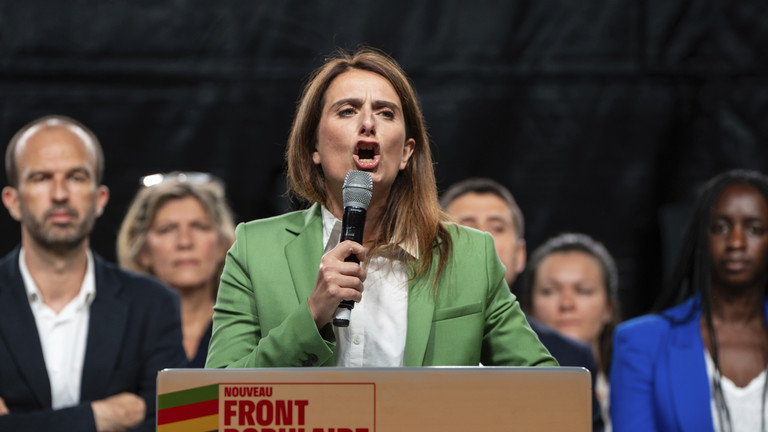
National Secretary of The Ecologists – Europe Ecology The Greens, Marine Tondelier © AP / Louise Delmotte
RT | January 14, 2025
Marine Tondelier, secretary-general of The Ecologists – Europe Ecology The Greens, has called for the social media platform X to be banned across the European Union, at least during election periods, arguing that it plays a role in shaping public opinion in ways that can threaten democracy.
Speaking on RTL’s Le Grand Jury program on Sunday, Tondelier expressed concerns about the influence of social media on democratic processes amid heightened tensions between the platform’s owner, Elon Musk, and EU officials who accuse the US-based billionaire of meddling in European politics.
“It’s not a question of freedom of expression; it’s a question of shaping public opinion,” she claimed. Tondelier highlighted the growing concentration of media ownership in France and globally, accusing “ultra-rich individuals” of trying to “buy power” once they accumulate enough wealth.
“We also need to take social media into account in this calculation now. It is part of the fabrication of opinion. It has a grip on reality. It impacts election results,” she stated. “It’s dangerous because it’s a challenge to our democracies,” she added, suggesting a ban on X during sensitive periods, such as elections.
“The social network Twitter is not only annoying but also dangerous. The question of leaving it obviously arises, but it will not be enough: it must be banned,” she wrote in a post on X.
Tondelier also urged her partners from the left-wing New Popular Front (NPF) coalition, which won the most National Assembly seats in this summer’s legislative elections, to migrate to alternative networks.
“I’m going to leave, but what are the others doing? It will still have an impact on reality. It will still contribute to destabilizing the upcoming elections,” she said.
Musk provoked major controversy by claiming in December that “only the AfD can save Germany,” a statement some EU officials denounced as unacceptable foreign meddling. This followed an op-ed piece published by the German newspaper Welt am Sonntag, in which he defended the right-wing party’s policies. Last week, Musk hosted an interview on X with Alice Weidel, the AfD’s candidate for chancellor in the upcoming German election.
Musk also clashed with former EU Commissioner Thierry Breton, referring to him as “the tyrant of Europe,” after Breton appeared to endorse the cancellation of Romania’s presidential elections, warning about potential foreign interference in the upcoming German polls.
French Foreign Minister Jean-Noel Barrot recently voiced concerns about Musk’s influence, urging the European Commission to take a firmer stance and use existing mechanisms against alleged external meddling. Breton clarified that his remarks were aimed at ensuring compliance with the EU’s Digital Services Act.
In recent weeks, the South African-born tech mogul also criticized British Prime Minister Keir Starmer, accusing him of failing to tackle the Pakistani grooming gang issue and refusing to properly investigate the mass rape of underage girls while he was head of the UK’s Crown Prosecution Service from 2008 to 2013. He also urged Washington to step in and “liberate” the Brits from their “tyrannical government.”
Musk calls out ‘tyrant of Europe’
RT | January 13, 2025
X owner Elon Musk has denounced former EU Commissioner Thierry Breton as “the tyrant of Europe” over an interview that appeared to endorse the cancelation of Romania’s presidential elections.
Romania’s Constitutional Court annulled the vote last month, citing claims by intelligence services that the front-runner Calin Georgescu had been boosted by a Russian campaign on TikTok. It has since emerged that the campaign had been the work of a rival Romanian party, but the court has refused to reverse its ruling.
In an interview with the French outlet BFMTV/RMC last week, Breton appeared to suggest that the upcoming German elections could suffer the same fate should the Musk-endorsed Alternative for Germany (AfD) party emerge triumphant.
“Let’s stay calm and enforce the laws in Europe, when they risk being circumvented and if not enforced, could lead to interference,” Breton said. “It was done in Romania and obviously, it will have to be done, if necessary, in Germany as well.”
The minute-long video, in French, was shared by the Polish-based account ‘Visegrad24’, prompting Musk to reply, deriding “the staggering absurdity of Thierry Breton as the tyrant of Europe.”
Breton objected to the label on Saturday, however, arguing that he was only referring to online censorship through the bloc’s Digital Services Act (DSA) and that the EU “has NO mechanism to nullify any election” in the bloc. “Lost in translation… or another fake news?” he wondered on X.
While it was Visegrad24 that interpreted Breton’s comments as an endorsement of canceling elections, Breton’s clarification did not address the fact that the alleged “interference” in Romanian democracy came from the inside, making the judiciary intervention questionable. Musk said no more on the matter, however, having turned his attention to the wildfires ravaging Los Angeles.
Breton’s initial remarks came in response to Musk’s interview on X with Alice Weidel, AfD’s candidate for chancellor in the upcoming German election. Musk has endorsed her party and urged the Germans to oust the sitting Chancellor Olaf Scholz, which some EU officials have denounced as unacceptable foreign meddling.
The Frenchman was the EU commissioner for Digital Affairs and Internal Markets in August, when he threatened Musk with penalties over an upcoming X interview with Donald Trump, then the Republican candidate for US president.
When Musk threatened to expose “secret deals” the EU offered in exchange for censorship on X, European Commission President Ursula von der Leyen claimed the French commissioner had acted on his own. Breton resigned in September, accusing the Brussels leadership of “questionable governance.”
Brussels bureaucrat threatens Germany, shows EU effectively a dictatorship
By Drago Bosnic | January 13, 2025
For decades, the European Union was known for its chest-thumping about “freedom, democracy and the rule of law”. The troubled bloc also claimed that it was purely an “economic project” and that it “had nothing to do” with NATO, geopolitics, military, etc. However, in the last two years, all those masks have fallen, showing that the EU is nothing more than a geopolitical pendant of the world’s most vile racketeering cartel.
The troubled bloc’s close coordination with NATO shows that there’s virtually no difference between the two. One of the most glaring examples of this is the “enforcement of democracy” in various member states (and not just member states, as evidenced by Western meddling in Georgia), extremely reminiscent of the way the United States and later NATO did in the immediate aftermath of WWII and later years.
The latest in the long line of these “democratic interventions” happened in Romania, when its election results were annulled after the “wrong” candidate won. In that specific case, sovereigntist Calin Georgescu “made the mistake” of not wanting his country and people to be used as cannon fodder in NATO’s crawling aggression on Russia, so the Romanian Constitutional Court, supposedly “unbiased and independent”, ruled out that his victory was “unconstitutional”. The explanation for this was “vague”, to put it mildly, as the “democratic” enforcers simply used the good old “evil Russian election meddling” mantra. All of us “conspiracy theorists” pointed out that this was ridiculous, but we still had no irrefutable evidence. Luckily, the arrogance of the bureaucratic dictatorship in Brussels never fails, as they actually said it openly.
“Freedom of expression is a fundamental element in Europe. If they don’t, there are fines and the possibility of a ban. Now we are equipped, and we have to enforce this law to protect our democracies in Europe. For now, let’s keep calm and enforce our laws in Europe, when there is a risk that they will be bypassed and if they are not enforced, they can lead to interference. We did it in Romania, and if necessary, we will have to do it in Germany as well,” former French EU Commissioner Thierry Breton stated on live TV, threatening to “enforce democracy” in Germany just like the bloc did in Romania.
Breton’s admission may sound shocking to those who don’t understand how the EU and NATO function. However, this is nothing strange to anyone remotely aware of the state of Western “democracies”. Considering the Nazi origins of both organizations, this is hardly surprising. In fact, the obvious connection between Hitler’s ideas of Werewolf units and the CIA’s Operation Gladio shows this is unequivocal.
The infamous US spy agency and its equivalents in NATO later used these to enforce desirable election results virtually everywhere. Still, it’s certainly a good thing that EU bureaucrats are reminding us that they can steal elections like they did in Romania. It’s an important and much-needed reality check for anyone naive enough to think EU/NATO has anything to do with democracy (the word itself has effectively become pejorative).
It should be noted that the “evidence” for the supposed “Russian meddling” in Romania was based on social media posts, similar to how the so-called “Russiagate” hoax was promoted by the DNC and the corrupt US federal institutions. People like Breton now want to see the same enforced in Germany if the AfD wins. Ironically, while whining about the “freedom of expression”, the EU is particularly worried about the prospect of people having actual freedom on social media, so it wants to force so-called “fact-checking” on everyone. In that regard, it seems social media networks such as Twitter/X and Telegram are particularly “problematic”. Interestingly, even the infamous Facebook/Meta seems to be dropping the hugely unpopular “fact-checking”, which Biden lamented about as a “shameful” decision.
Expectedly, just like the outgoing Biden administration, the so-called “fact-checking” is almost universally hated, as it’s dominated by the mainstream propaganda machine and neoliberal extremists promoting societal degeneracy and moral depravity. Any attempt to criticize these are met with censorship, all in an attempt to create the false impression that neoliberal extremism is popular.
Thus, if social media networks indeed decide to allow free expression (provided this isn’t yet another ruse), this will certainly be “dangerous for our democracy” in both the US and EU. Not only could this disrupt color revolution projects, but it also has the potential to shake numerous already unstable and unpopular governments across the political West. Some, like Scholz, are already resorting to damage control by cutting “Ukraine aid”.
Interestingly, this came after the AfD’s Alice Weidel “dared” to float the idea of relaunching Nord Stream pipelines (as if Brussels needed yet another reason to ban that party). The EU bureaucratic dictatorship is terrified of the prospect of having to contend with more sovereigntist governments, as it already has numerous problems with Slovakia and Hungary, both of which are non-compliant with demands to commit economic suicide for the sake of the Neo-Nazi junta.
Thus, Brussels is not only losing the momentum of its color revolution projects that usually result in EU/NATO enlargement, but it can’t even control current member states. The bureaucratic dictatorship is becoming so desperate that it needs to resort to literal enforcement in order to stay afloat. All this shows the futility of being in the EU, as well as the sheer pointlessness of its existence.
Drago Bosnic is an independent geopolitical and military analyst.
HTS-led Syrian security forces step up sectarian killings: Report
The Cradle | January 12, 2025
Militants affiliated with the new Syrian government, led by Hayat Tahrir al-Sham (HTS) leader Ahmed al-Sharaa, are kidnapping and murdering members of Syria’s Alawite community based on their religious identity in various parts of Syria.
Immediately after ousting the government of Bashar al-Assad and taking power in Damascus on 8 December, militants from HTS began targeting members of the Alawite community based on accusations of crimes they committed as part of the previous government.
However, Al-Akhbar reported on 11 December that in the Hama governorate, especially in the villages of its northern and eastern countryside, HTS and affiliated militants are carrying out “liquidation operations based on identity, without making accusations against them, such as that they are ‘regime remnants’ or were ‘against the revolution’ before ordering the killing.”
The Lebanese paper reports that militants affiliated with the new government are “terrorizing the residents of the Alawite sect and pressuring them to evacuate their homes, especially in some eastern villages affiliated with Salamiyah,” which will lead to demographic changes in the region.
In the villages of Al-Zaghba, Mabatan, Maryoud, Al-Fanat, and Maan in the eastern countryside, armed factions are stealing, looting, and burning homes to ensure that residents do not return.
A resident of Al-Zaghba village told Al-Akhbar that “the militants present in the village prevent the return of the homeowners, and if the purpose of returning is to check on the house or bring some items and necessities from it, then the residents enter at their own risk.”
One of the residents displaced to the villages of the Syrian coast told Al-Akhbar that “he no longer thinks of returning to his village due to the violations committed by militants whose affiliation no one knows.”
He added that “the militants killed a civilian man from the village who returned to check on his house during the past two days.”
When he contacted authorities from the new government to “find out the affiliation of these killers, who responded that the area was outside the control of its factions and that it had nothing to do with the violations taking place there.”
Reports of sectarian killings by HTS or affiliated militants in Homs, Latakia, and Tartous continue to emerge on social media.
On 8 January, an Alawite man, Sheikh Ali Deeb, and his wife were killed in rural Salamiyah in the village of Dniba during an HTS search operation. Their bodies were found on a side road connecting the village of Dniba to the neighboring village of Snida.
On 9 January, Aziz Mamdouh Ahmed was found murdered after being kidnapped in the Dablan area in the city of Homs by HTS militants.
Ahmed was a fifth-year student in the Faculty of Pharmacy at the University of Homs and is the only child of his parents. He comes from the Alawite-majority village of Al-Qabou.
In another incident this week, extremist militants shot and killed the popular Syrian-Palestinan actor Abdulmounem Amayri, accusing him of blasphemy. According to his daughter, the militants stopped him while he was driving, dragged him out, beat him till he was unconscious, and then stepped on his body.
On 8 January, in the small Alawite village of Ayn al-Sharqiyah on the Syrian coast, three members of the Izzeddine family were murdered while picking olives. Large numbers attended the funeral of Ammar, his son Musa, and his nephew Mohammad.
The HTS-led government sometimes acknowledges that such violations are taking place, but describes them as ‘isolated’ incidents or revenge incidents. At other times, it refuses to comment on them, saying that the armed groups committing these killings have no affiliation with the government.
The new Syrian government has also detained large numbers of soldiers who fought in the Syrian Arab Army (SAA) before its fall in December. The HTS authorities are requiring all soldiers to turn in their weapons and undergo an investigation for their actions during the war. In exchange, they receive a paper showing their reconciled status.
However, reports have emerged of Alawite soldiers being singled out for their religious faith and imprisoned.
On 6 January, relatives of imprisoned soldiers held a protest in Umayyad Square in Damascus, calling for the release of up to 10,000 former Syrian army soldiers and officers currently held in HTS prisons in Adra, Hama, and Idlib. Demonstrators demanded their sons be released, saying many were detained after handing in their weapons and receiving reconciled status.
Zuckerberg’s mea culpa – more strategy than sincerity
Maryanne Demasi, reports | January 12, 2025
Mark Zuckerberg’s Meta has spent years manipulating algorithms to suppress dissent and inconvenient truths. Now, Zuckerberg wants us to believe he’s turned over a new leaf. “Community notes” is his supposed act of contrition—replacing Meta’s infamous “fact-checkers” with what he’s touting as a democratic approach to truth.
The changes will affect Facebook, Instagram and Threads – social media platforms with more than 3 billion users globally. Zuckerberg says the purpose is to outsource fact-checking to the people and let the collective wisdom determine what’s true.
Users can add context or clarification to posts, which won’t vanish into algorithmic oblivion but will instead bear appended “notes” offering a more balanced view.
So, has Zuckerberg suddenly grown a conscience? Hardly. This is less about soul-searching and more about political expediency. We’re meant to believe this is some heartfelt mea culpa, a humbling moment for a company that “got it wrong.”
But to me, this feels insincere. Pure public relations – a cynical scramble to navigate shifting political winds. Meta isn’t repenting; it’s repositioning. After all, this is the same platform that orchestrated an era of unparalleled online censorship, silencing inconvenient truths under the guise of “misinformation control.”
Remember the Biden laptop story? An exposé conveniently buried before the 2020 election because it didn’t fit the desired narrative. Zuckerberg himself admitted to suppressing the story after pressure from the FBI. But that wasn’t an isolated incident.
Over the last four years, Facebook has been the digital embodiment of Orwell’s Ministry of Truth. Articles questioning the efficacy of masks, the lab leak theory, or COVID-19 vaccine safety were flagged, shadow-banned, or outright erased. Entire communities of vaccine-injured individuals—desperate for support and answers—were wiped off the platform. Real lives were affected; people were isolated. Conversations that could have saved lives were silenced. It’s no exaggeration to say Facebook has blood on its hands.
One example of Meta’s overreach involved The BMJ. Paul Thacker’s piece on Pfizer whistleblower Brook Jackson which highlighted data integrity issues at a few of Pfizer’s vaccine trial sites, was slapped with a label by Facebook, effectively discrediting it. This wasn’t just heavy-handed; it was a brazen suppression of credible journalism. An open letter from The BMJ’s editors to Meta rightly lambasted the organisation for trying to discredit the vetted information. The damage wasn’t limited to stifling discourse; it eroded public trust in both science and media.
As recently as August 2024, Zuckerberg admitted to the House Judiciary Committee that Meta had been coerced by the government to censor Americans. His letter detailed relentless pressure to silence dissenting views on COVID-19, elections, and more. And yet, despite this supposed epiphany about governmental overreach, Facebook continued censoring content right up until its recent pivot to community notes.
Zuckerberg’s newfound candour isn’t transparency; it’s pre-emptive blame-shifting. The Murthy v. Missouri (formerly Missouri v Biden) case has exposed the collusion between tech giants and government officials to suppress online speech. Allegations that the Biden administration pressured platforms to bury certain viewpoints—even when factually accurate—paint a chilling picture. Facebook’s narrative of victimhood feels like a calculated attempt to deflect legal and public scrutiny.
Meanwhile, there are ‘journalists’ in legacy media who are mourning the loss of fact-checkers as though democracy itself is under siege. What kind of journalist defends a system that stifles free speech and debate? Science thrives on questioning and open dialogue, not the orthodoxy imposed by fact-checkers operating with opaque agendas. Their hand-wringing isn’t about truth—it’s about losing control of the narrative.
And now, as the political tide shifts and the Biden administration’s influence wanes, Meta suddenly finds the courage to air its grievances about government meddling. Convenient, isn’t it? Zuckerberg’s newfound spine is less about principle and more about positioning Meta for survival in a new political landscape.
Let’s be real. Community notes is not altruism – it’s damage control. Meta isn’t addressing the harm it caused—it’s deflecting. The platform’s censorship caused real-world consequences: vaccine-injured people left voiceless, critical public health debates silenced, and public trust shattered. If Meta was truly contrite, it would compensate for the damage, support those it deplatformed, and restore erased communities – even compensate those with vaccine injuries who were silenced.
Don’t get me wrong – I think dumping fact-checkers was the right move and its a win for free speech – it just should have happened sooner, and Zuckerberg shouldn’t be let off the hook. Meta’s track record suggests this is just another calculated move.
For years, Facebook wielded its influence with recklessness, deciding who could speak and what could be said. Now, as the tide turns, it wants to rebrand as a champion of open dialogue and transparency. But the damage is done. The trust is broken. And no amount of community notes can erase the scars left by Meta’s years of suppressing truth.
Mark Zuckerberg might try to rewrite history, but history won’t forget.
Mark Zuckerberg Falsely Claims “You Can’t Yell ‘Fire’ in a Crowder Theater” To Justify Covid Censorship
By Cindy Harper | Reclaim The Net | January 11, 2025
In his appearance on The Joe Rogan Experience, Meta CEO Mark Zuckerberg defended Facebook’s early COVID-19 content moderation policies by invoking the often-quoted but inaccurate legal principle, “you can’t yell fire in a crowded theater.” Zuckerberg cited this rationale to justify the platform’s censorship of certain information during the pandemic’s onset.
“COVID was the other big one where that was also very tricky because, you know, at the beginning, it was – you know, it’s like a legitimate public health crisis, you know, in the beginning. And it’s – you know, even people who were like the most ardent First Amendment defenders, the Supreme Court has this clear precedent. It’s like, all right, you can’t yell ‘fire’ in a crowded theater. There are times when, if there is an emergency, your ability to speak can temporarily be curtailed in order to get an emergency under control,” Zuckerberg said.
This statement leans on a widely misunderstood legal argument. The phrase “you can’t yell fire in a crowded theater” originates from a 1919 Supreme Court opinion by Justice Oliver Wendell Holmes in Schenck v. United States, which was later overturned and criticized for its justification of speech suppression. Zuckerberg’s use of this outdated precedent is misleading and offers a flawed defense for restricting speech on Meta’s platforms.
Zuckerberg elaborated on his stance, expressing initial trust in government and health authorities: “So I was sympathetic to that at the beginning of COVID. It seemed like, OK, you have this virus. It seems like it’s killing a lot of people. I don’t know. We didn’t know at the time how dangerous it was going to be. So at the beginning, it kind of seemed like, OK, we should give a little bit of deference to the government and the health authorities on how we should play this.”
However, Zuckerberg acknowledged the shifting narratives from health officials, which complicated content censorship decisions. “But when it went from, you know, two weeks to flatten the curve to, you know, in like – in the beginning, it was like, OK, there aren’t enough masks. Masks aren’t that important. To then it’s like, oh, no, you have to wear a mask. And, you know, all the – like, everything was shifting around. I – it’s become very difficult to kind of follow.”
The discredited legal metaphor has drawn criticism from free speech advocates. Such justification enables tech giants to overstep in moderating content, especially in moments of crisis when diverse perspectives are most crucial.
Equating speech to violence or danger is an easy excuse to censor controversial speech.
Newsom Defends Wildfire Response, Tells Biden Online “Misinformation” Needs to be Combatted
By Dan Frieth | Reclaim The Net | January 10, 2025
Governor Gavin Newsom (D-CA) shifted focus to combating “misinformation” during a briefing on the devastating wildfires ravaging Los Angeles. The session included President Joe Biden, Vice President Kamala Harris, and Los Angeles Mayor Karen Bass, with Newsom and Bass addressing concerns over their administration’s preparedness as the fires claimed at least 10 lives and destroyed countless homes.
Conducted in a hybrid format, the meeting saw Biden and Harris in the Oval Office while Newsom, Bass, and FEMA Administrator Deanne Criswell joined via video call. Newsom described the unprecedented destruction fueled by what he called “hurricane-force winds, the likes of which we’ve never imagined in our lifetime.” He then pivoted to warn about the spread of misinformation related to the disaster.
“We’ve got to deal with this misinformation. There were hurricane-force winds of mis- and disinformation — lies,” Newsom stated. “People want to divide this country, and we’re gonna have to address that as well. And it breaks my heart, as people are suffering and struggling that we’re up against those hurricane force forces as well.”
Expressing frustration, Newsom added, “And that’s just a point of personal privilege that I share that with you because it infects real people that are out there. People I meet every single day, people the mayor has been meeting with, and they’re having conversations that are not the typical conversations you’d have at this time be in. And you wonder where this stuff comes from, and it’s very damaging as well, but we’re here to get the job done; to be here for folks to focus.”
California Governor Gavin Newsom is facing a barrage of criticism from various quarters, highlighting several contentious issues, particularly related to a lack of preparation for combatting wildfires under his governance.
Newsom’s timing is ironic as Biden has been criticized heavily today for his previous attempts to police “misinformation” online.
On the same day Newsom appealed to Biden about online “misinformation,” Meta CEO Mark Zuckerberg disclosed on The Joe Rogan Experience that the Biden administration pressured his company to censor COVID-19-related content, including truthful criticism of the vaccines.
Zuckerberg revealed that officials would “call up our team and scream at them and curse” over certain posts. A notable incident involved demands to remove a meme.
Zuckerberg emphasized, “Basically, it just got to this point where we were like no, we’re not going to take down things that are true. That’s ridiculous.”
This revelation, although not new, highlights a troubling pattern of government pressure on tech companies to suppress speech, raising serious concerns about censorship and the erosion of free expression. As wildfires continue to devastate communities, efforts to control narratives under the guise of combating misinformation risk silencing legitimate discourse. The public’s right to transparent and open communication remains more critical than ever in times of national emergencies.
Featured Video

BEN-GVIR: “ALL OF LEBANON MUST BURN” — w/ Mouin Rabbani
or go to
Aletho News Archives – Video-Images
From the Archives
UK Researchers: Tax Food to Reduce Climate Change
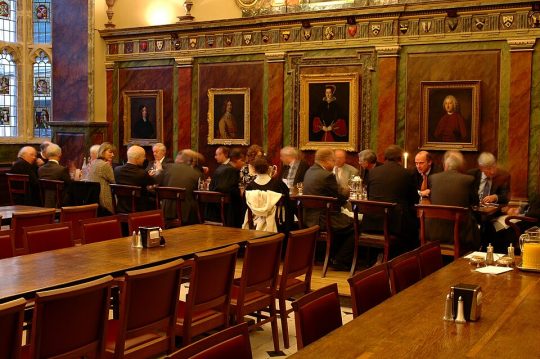
I doubt these professors have anything to fear from a food tax
By Eric Worrall | Watts Up With That? | November 19, 2016
A group of researchers in Oxford University, England have suggested that imposing a massive tax on carbon intensive foods – specifically protein rich foods like meat and dairy – could help combat climate change. […]
This proposal, from a group of people who have probably never missed a meal in their lives, is totally obscene. High income countries often have a lot of poor people who would be hard hit by increases in the price of food.
Needlessly exacerbating the risk poor people don’t get enough to eat, especially children and pregnant mothers, who are especially vulnerable to adverse health impacts from lack of protein in their diet – if this ghastly proposal is ever implemented, future generations will look upon it as a crime against humanity. – Read full article
Blog Roll
 Aletho News
- Keir Starmer resignation Starmer’s exit exposes dirty secret: UK can’t afford Ukraine War
- Putin Warns the West: Russia Is Ready
- BEN-GVIR: “ALL OF LEBANON MUST BURN” — w/ Mouin Rabbani
- There Are No Budget Constraints In New York City: “Coastal Resiliency” Edition
- The UN’s plan to levy taxes on global trade is a sinister power grab
- Is there a future for the U.S. strategy in the Arctic?
- UN inquiry finds Israel ‘intentionally’ targeting Palestinian children in Gaza, occupied West Bank
- Citizens Around the World Demand Israel’s Expulsion From the United Nations
- ‘Israel not party to US-Iran talks, will continue full operations in Lebanon,’ Israeli far-right minister says
- Two killed in brazen Israeli ceasefire violation in southern Lebanon
- If Americans Knew
- Unbelievable pressure on Gaza from Israel, “Board of Peace” – Daily Update
- UN: Israel Continues to Commit Genocide and Other Atrocity Crimes by Deliberately Targeting Palestinian Children
- Bari Weiss, Free-Speech Fraud & Zionism Promoter, Would Rather Deport Than Debate
- ‘Doctor of the Poor’: Israeli Occupation Arrests Prominent Palestinian Physician
- Search for Your Church (and see if it has been targeted by the Israeli gov’t)
- Mark Levin Flying to Israel as Netanyahu Reportedly Seeks to ‘Leverage’ Levin to Trash Trump’s Iran Deal
- Watch: Zionist Brags about Israel’s Power to Get the World to Do What Israel Wants
- In Gaza, another senseless death on what should have been a joyous day – Daily Update
- The Republican & Democratic Politicians Trying to Scuttle Iran Agreement
- Israel’s continued targeting of civilians in Lebanon renders ceasefire meaningless
- No Tricks Zone
- 3 New Studies Find Increasing Trends In Solar Radiation Since The 1980s – Easily Explaining Warming
- THE TRANSCEIVER PARADOX: Why Organoid Intelligence (OI) Could Become Our Ultimate Alien Predator
- German Wind Turbines Face Regulatory Shutdown Due To Excessive Noise
- New Study: Chile’s Relative Sea Level Was 3.2 Meters Higher Than Today During The Mid-Holocene
- Beyond The Pitch: Why FIFA’s World Cup Is One Of Humanity’s Best Investments
- Climate Alarmists Now Using Natural Phenomena To Support Their Claims
- New Study: Significant CO2 Fluxes From Non-Volcanic Sources Are Largely Neglected In Carbon Budgets
- Women Climate Scientists Being Harassed, Insulted By Skeptics, Claims Berkeley Earth Researcher
- Germany’s Longterm Spring Climate Data Show “No Climate Trend”
- New Study: Solar Photovoltaic, Wind Power Fail To Meet Annual Energy Demands 62% Of The Time
 Aletho News