Khamenei: Negotiations with US have no effect on solving problems
Press TV – February 7, 2025
Leader of the Islamic Revolution Ayatollah Seyyed Ali Khamenei says experience has shown that negotiations with the US have no effect on solving Iran’s problems.
His remarks in a meeting with Air Force personnel in Tehran on Friday came hours after the US imposed its first sanctions in the wake of President Donald Trump’s signing of an order to reimpose his “maximum pressure” on Iran.
“Some people pretend that if we sit at the negotiating table, some problem will be solved, but the fact that we must understand correctly is that negotiating with the US has no effect on solving the country’s problems.”
He cited the experience of 2015 when Iran and six other countries, including the US, signed the now-dormant Joint Comprehensive of Plant of Action (JCPOA) after two years of negotiations, only to be discarded by President Trump in 2018.
Ayatollah Khamenei recalled the grueling back and forth, which included a 15-minute stroll by then-US Secretary of State John Kerry and Mohammad Javad Zarif in downtown Geneva and along the Rhone River which landed the former Iranian foreign minister in hot water.
“Our government at the time sat down and negotiated – they continued to come and go, they sat down and stood up and negotiated, they talked, laughed, shook hands, made friends, everyone worked, and a treaty was formed.
“In this treaty, the Iranian side was very generous, giving many concessions to the other side. But the Americans did not implement the same treaty,” the Leader said.
“The same person who is in office now tore up the treaty. He said he would tear it down and he did; they didn’t act upon” the agreement, he said, referring to Trump.
“Therefore, negotiating with such a government is unwise, unintelligent and dishonorable and there should be no negotiation with it.”
Before Trump, even the US administration which had accepted the agreement, did not comply with it, the Leader said, referring to the government of president Barack Obama which had signed it.
“The treaty was meant to lift US sanctions, but they were not lifted. Adding insult into injury, they had the UN to have a constant threat hanging over Iran. This treaty was the product of negotiations that lasted about two years.”
Iran is currently in the midst of celebrations marking the anniversary of the Islamic Revolution which sealed the fate of the US-backed Pahlavi regime in 1979.
Every year on February 8, Iranian Air Force personnel meet the Leader to relive the historic allegiance of Air Force officers with the late founder of the Islamic Republic Imam Khomeini in 1979. The event is viewed as a turning point which led to the victory of the Islamic Revolution three days later.
Ayatollah Khamenei said the Americans are busy working “on paper to change the map of the world”, with Iran also being the subject of their plans.
“Of course, it’s only on paper, it has no reality. They also talk about us, make comments, and threaten us,” the Leader said.
Ayatollah Khamenei said, “If they threaten us, we will threaten them. If they put their threat into practice, we will do the same. If they attack the security of our nation, we will attack their security without hesitation.”
“This is a lesson taken from the Qur’an and the teachings of Islam, and it is our duty to act as such. We hope that God Almighty will make us successful in carrying out our duties,” he added.
Trump hands “best friend” Israel gift for false-flag assassination
By Finian Cunningham | Strategic Culture Foundation | February 6, 2025
Iran will be obliterated if it assassinates U.S. President Donald Trump. He told reporters this week of his “dead man’s switch” while announcing tougher sanctions on Iran in a renewed maximum pressure campaign.
Asked about the danger of being assassinated by Iranian operatives, Trump appeared to dismiss such fears but disclosed that he had left instructions with his aides to destroy Iran in the event of being killed.
“If they did that, they would be obliterated. I’ve left instructions if they do it, they get obliterated, there won’t be anything left.”
It is unclear who the aides are to whom Trump has entrusted the instructions for retaliation. And it is not a done deal that his orders would be carried out if such an extreme scenario materialized.
Several news media reported his dramatic remarks, including ABC, the New York Times, and Sky. The Associated Press editorialized: “If Trump were assassinated, Vice President JD Vance would become president and would not necessarily be bound by any instructions left by his predecessor.”
Nevertheless, the 47th Commander-in-Chief may be tempting fate. His death wish for Iran could be taken as an opportunity for a false-flag operation by Israel.
Bluntly put, if Israeli agents were to kill Trump in a way to frame Iran, then the Israelis stand to gain their big prize of wiping the Islamic Republic off the map, or so they might calculate.
It would, of course, be a treacherous double-cross by Israel. This week Trump hosted Israeli leader Benjamin Netanyahu, during which the American president was praised as the “best friend” Israel has ever had in the White House. The praise was in response to Trump’s proposed resettlement of all Palestinians from the Gaza Strip to neighboring Arab countries. No wonder Netanyahu was beaming with delight, as Trump’s proposal effectively completes Israel’s long-held desire to ethnically cleanse the enclave.
So would the Israelis really contemplate whacking “best friend” Trump?
Knowing how the Israelis are serial violators of international law, a rogue regime that exults in war crimes, it is not beyond their thinking or doing.
False flag operations are, by definition, designed to be carried out to blame someone else for the foul deed. If an “executive action” job on Trump were done well, Israel would not be seen as the perpetrator. Instead, all the American fury would be directed at Iran.
There is precedent for such treachery. On June 8, 1967, Israeli forces launched a deadly attack on the USS Liberty in the Mediterranean, killing 34 American Navy crew. The incident was during the Six-Day War between Israel and Arab countries. The Israelis tried to blame Egypt for the deadly attack until an official investigation found that it was Israel. The Israelis later apologized and said it was a mistake in the fog of war. U.S. crew members, however, testified that it was a deliberate attack by a supposed ally.
Another alleged false-flag operation was the 9/11 terror attacks on New York and Washington, DC, in 2001, in which 3,000 Americans were killed. Some investigators believe that Israel masterminded that atrocity to mobilize American military intervention in the Middle East to weaken Arab nations. Investigators pointed to the strange case of the “dancing Israelis” – a group of Mossad agents who watched the planes from a distance as they crashed into the Trade Center towers and duly celebrated the spectacle. The offensive revelers were reported by witnesses (who suspected them of being Arabs) and were later arrested by U.S. law enforcement, only to be released weeks later without charge and sent back to Israel, where they were feted on TV shows and disclosed to be Mossad agents.
Several analysts contend that Israel’s priority goal is to inveigle the United States into a war against Iran. That has been Tel Aviv’s de facto policy for many years, viewing Iran as its top threat. Over the past year, Israel has become emboldened by inordinate U.S. military support and its impunity despite genocide in Gaza and aggression towards Lebanon and Syria.
With the Iranian-led Axis of Resistance across the Middle East subdued by a relentless Israeli onslaught, Netanyahu and the Israeli leadership may feel that Iran is vulnerable. But Iran’s firepower is formidable, having struck Israel twice in recent months with large-scale air assaults that broke through Israel’s defense systems.
The Israelis know that they cannot succeed in attacking Iran alone. They need the U.S. to assist in a calculated devastating blow.
During his election campaign last year, Trump endorsed Israeli air strikes on Iran’s nuclear facilities, but even the impulsive Trump does not seem ready to launch a war on Iran.
That’s where the Israelis may be tempted to carry out a daring false-flag operation to assassinate Trump and bet on his death wish to obliterate Iran being delivered.
Iran has already been fingered for plotting to kill Trump ever since he ordered the assassination of the revered Iranian military commander, Major General Qasem Soleimani, in Baghdad in January 2021, during his first term in the White House.
Last November, the U.S. Department of Justice under the Biden administration claimed to have uncovered an Iranian plot to murder Trump. The claim was dismissed by Iran as an Israeli psyops to ramp up tensions with the U.S. Tehran has denied any such intention to assassinate Trump. Iran said Trump’s latest speculation was “provocative”.
The DOJ’s allegations of an Iranian plot were flimsy and not credible. But, conveniently for Israel, the reports may have planted the seed of thought in the public mind that the Iranians are out to get Trump.
Israel’s crimes against international law seem to know no bounds. Its military intelligence operates on the principle of “waging war by deception.”
Israel has viewed the Islamic Republic as its nemesis since the Iranian revolution in 1979. All the proxy threats surrounding Israel emanate from Iran – the “head of the snake”. If Iran could be wiped out to install a more pliant pro-Western regime then Israel will feel free to expand its “Greater Israel” ambitions in the Middle East. The prospect of knocking out Iran for the Israelis is the ultimate prize.
Trump’s rashly outspoken arrangement to destroy Iran if he is assassinated just handed Israel a nefarious, golden opportunity.
As Iran said, Trump’s loose talk about assassination is provocative. The question is: provoking who?
US President resets ‘maximum pressure strategy’ on Iran but adds a nuanced message on US-Iran deal
By M. K. BHADRAKUMAR | Indian Punchline | February 7, 2025
France’s distinguished former career diplomat Sylvie Bermann, wrote an op-ed recently in the leading financial paper Les Echos that a new chapter of ‘transactional geopolitics’ has begun with Donald Trump.
Extremely unlikely events can be expected, metaphorically called ‘black swans’. The so-called ‘black swan theory’ characterises events that come as a surprise, have a major effect, but can be rationalised only after the fact, with the benefit of hindsight.
One may say, on February 4, a black swan appeared in the White House, as President Donald Trump signed a National Security Presidential Memorandum (NSPM) restoring “maximum pressure” on Iran, denying that country “all paths to a nuclear weapon.”
A White House Fact Sheet detailed that NSPM establishes the following truism:
- “Iran should be denied a nuclear weapon and intercontinental ballistic missiles”;
- “Iran’s terrorist network should be neutralised”; and,
- “Iran’s aggressive development of missiles, as well as other asymmetric and conventional weapons capabilities, should be countered.”
The black swan was intriguing. On the eve of Prime Minister Benjamin Netanyahu’s arrival in DC on Tuesday, Jerusalem Post had written:
“The Trump administration is in the process of formulating its Iran policy, and Netanyahu’s visit at this early stage in the president’s second term affords him a golden opportunity to give his input. And Iran remains Israel’s number one threat and problem…
“While his (Trump’s) administration still seeks to contain Iran’s regional influence and prevent it from obtaining a nuclear weapon, there have been early signs of shifts in tone and priorities.
“These shifts may reflect internal divisions within the administration – between Iran hawks like Secretary of State Marco Rubio and National Security Adviser Mike Waltz and isolationists like Vice President JD Vance, who said in October: “Our interest very much is in not going to war with Iran… this is where smart diplomacy really matters.”
At any rate, Trump decided to sign the NSPM without waiting for Netanyahu’s “input.” Equally, Marco Rubio was conspicuous by his absence in Trump’s team for the talks with Netanyahu. And Vice-President Vance not only assisted Trump at the talks but the president made it a point to ostentatiously convey his appreciation by hailing him in the presence of Netanyahu and his entourage, which was striking.
And the mother of all surprises was that the NSPM document as such studiously avoided any threat of war against Iran. Trump avoids anti-Iran rhetoric, which used to be a running feature of his first term as president. Trump, although a mercurial personality, is not tweaking, either, the complex web of unwritten ground rules and norms of conduct that kept the four decades-old US-Israeli standoff from turning into military confrontation (which of course neither side wants).
Meanwhile, all indications are that Trump senses that the Iran question has transformed as Tehran’s deterrent capability began surging, and is no longer a ‘stand-alone’ challenge for the US, as the external environment has changed phenomenally since the Ukraine war began. Russia and Iran are in a quasi-alliance today. That said, Russia is also a stakeholder in nuclear non-proliferation and has a congruence of interests with the US that Iran abides by the NPT.
A sense of proportions is always necessary to assess the US-Iran tensions. Therefore, Trump’s remarks after signing the executive order on NSPM need to be properly understood. Suffice to say, It was a carefully choreographed performance by Trump, caught on camera and speaking with an eye on a prompter — rather unusual for Trump who is famous for his stream of consciousness on such occasions.
An announcer in the background introduced almost apologetically that NSPM seeks to impose “maximum pressure” on Iran, but qualified it saying that many provisions in the document are only “similar to action taken” during the first Trump administration.
He continued that the “basic idea” is to ensure every government department and agency acts in unison, “and the intent here is to give you all the possible tools to engage with the Iranian government.”
Trump spoke calmly in a measured tone of resignation. He noted stoically, “This is what everybody told me to sign. It is very tough on Iran. The Iran situation — hopefully, we don’t have to do very much.
“We will see whether we can arrange to work out a deal with Iran and everybody can live together. Maybe it is possible, maybe it is not possible.”
Trump continued: “So, I am signing this and am unhappy to do it. But I really have not so much choice because we have to be strong and firm. And I hope that it does not have to be used in any great measure at all.
“We could have a Middle East and a world in total peace. Right now, we don’t have that. I like to have peace all over the world but now you have the world blowing up.”
Trump repeated, “I am signing this but, hopefully, it will be a document which will be important but hardly has to be used.”
When asked what kind of a deal is envisaged with Iran, Trump replied, “We will see. They (cannot) have a nuclear weapon. With me, it is simple: Iran cannot have a nuclear weapon. We don’t want to be tough on Iran…This (deal) could have been done long ago.” But Biden did nothing for whatever reason.
When asked about alleged Iranian plots to assassinate him, Trump reacted, “They (Iranians) have not done that. That will be a terrible thing to do. Not because of me, but they will be obliterated… I have left instructions. If they do it, they will get obliterated. There won’t be anything left. If anything like that happens (from any quarter), there will be total obliteration of that state — not only Iran…
Trump concluded by repeating again, “So, I am signing this. It is a very powerful document (read maximum pressure strategy) but, hopefully, I will not have to use it.”
In essence, Trump conveyed a nuanced message to Tehran before Netanyahu’s arrival that he has an independent line of thinking regardless of what the hotheads in Tel Aviv might be saying. And that is to work for a deal through smart diplomacy — the JD Vance line.
Trump understands that the Masoud Pezeshkian government also seeks dialogue and negotiations. Trump does not believe that Iran is developing nuclear weapons, no matter the Israeli propaganda to the contrary through the past decade.
Without doubt, Tehran will grasp Trump’s nuanced message of ‘transactional geopolitics’. Iranian officials have welcomed Trump’s remark that he is willing to work out a deal. Foreign Minister Abbas Araghchi wrote in a message on X: “In addition to being one of the committed parties to the NPT and other global non-proliferation treaties, Iran has already explicitly declared that ‘Iran will not seek to produce or acquire nuclear weapons under any circumstances’.”
Araghchi added: “Obtaining practical guarantees that Iran will not attain nuclear weapons is not difficult, provided that, in return, concrete assurances are given to effectively end hostile actions against Iran—including economic pressures and sanctions.”
Tehran has taken note that Trump did not rule out a meeting with Pezeshkian. When asked about Trump’s remark, the government spokeswoman Fatemeh Mohajerani told reporters at a press conference in Tehran on Wednesday, “Our international issues have been founded upon the principles of dignity, wisdom and expediency. All issues, specifically relations with other countries, are being pursued on the basis of these three principles.”
In effect, Iran has responded positively to Trump’s estimation that a deal is possible and signalled flexibility and pragmatism on its part. Qatar’s Foreign Ministry Spokesman Majed Al-Ansari told Fox News today that his country is ready to act as mediator.
‘I much prefer a nuclear deal’: Trump dismisses talk of US–Israeli attacks on Iran
The Cradle | February 5, 2025
US President Donald Trump has denied that Washington and Tel Aviv are planning military attacks against the Islamic Republic of Iran, saying that he would “much prefer” a nuclear agreement preventing Tehran from acquiring an atomic weapon.
“I want Iran to be a great and successful Country, but one that cannot have a nuclear weapon. Reports that the United States, working in conjunction with Israel, is going to blow Iran into smithereens, ARE GREATLY EXAGGERATED,” Trump said early on 5 February on his social media platform Truth Social.
“I would much prefer a Verified Nuclear Peace Agreement, which will let Iran peacefully grow and prosper. We should start working on it immediately, and have a big Middle East celebration when it is signed and completed. God Bless the Middle East!” the president went on to state.
In early February, reports said that Trump shot down Israeli plans for an attack on Iranian nuclear facilities.
Trump expressed hope late last month that a nuclear deal could be “worked out without having to go that further step,” referring to an attack.
A Wall Street Journal report in December said Trump’s team was mulling options for strikes on the Iranian nuclear program and that there was a “rare opportunity to counter Iran’s nuclear buildup.”
This week, the US president signed an executive order restoring his “maximum pressure” policy of sanctions on the Islamic Republic, as reports had said he would prior to his second presidential term.
“If the main problem is Iran not having nuclear weapons, this problem can be solved,” Iranian Foreign Minister Abbas Araghchi said on Wednesday, adding that “maximum pressure is a failed experiment and testing it again will lead to another defeat.”
Trump withdrew from the 2015 US–Iranian nuclear deal in 2018 – during his first term – and restored harsh sanctions against Iran.
Tehran is subject to the Nuclear Non-Proliferation Treaty (NPT) of 1970, as well as a religious fatwa outlawing the development and use of any form of weapons of mass destruction.
Former CIA director said last month that “we do not see any sign” that Iran is planning to weaponize its nuclear program.
Iran to Trump: Another maximum pressure, another defeat for Washington
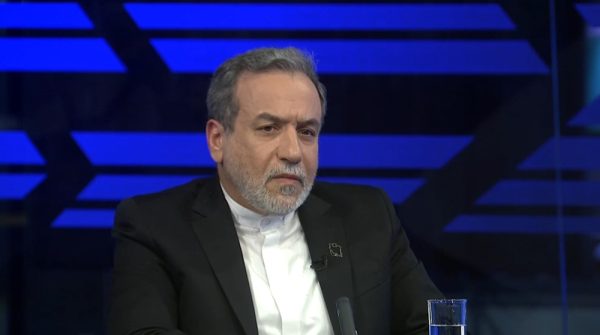
Press TV – February 5, 2025
Foreign Minister Abbas Araghchi has asserted that another round of deployment of the “maximum pressure” policy on the part of the United States against Iran will only lead to another defeat.
“The policy of maximum pressure has already proven to be a failure, and any attempt to revive it will only lead to another defeat,” the top diplomat told reporters on the sidelines of a cabinet meeting on Wednesday.
Araghchi was referring to the policy that the US adopted during Donald Trump’s former tenure, as part of which Washington quit a 2015 nuclear deal with Iran and world powers, returned the sanctions that the agreement had lifted, and piled up even more illegal and unilateral bans against the Islamic Republic.
Retaliating against the measures, Iran took legitimate nuclear steps that have featured its operationalizing advanced centrifuges among other things.
The country also explored various means to skirt the sanctions and boost its economy by fostering foreign trade and enhancing domestic production, causing Washington to suffer “maximum defeat” in adoption of such policy.
On Tuesday, Trump promoted new “tough” measures aimed at, what Washington has called, “deterring” Iran from obtaining a “nuclear weapon.”
Trump also signed a presidential memorandum, authorizing stricter illegal actions against Iran, while saying, “They can’t have a nuclear weapon, we’d be very tough if they insist on doing that.”
Washington’s adversarial stance comes despite Tehran’s repeated assurances that its nuclear activities remain in full compliance with international regulations, and the International Atomic Energy Agency (IAEA)’s invariable verification of the peaceful nature of the Islamic Republic’s nuclear energy program.
Reacting to Trump’s remarks, Araghchi said, “If the main issue is that Iran should not pursue nuclear weapons, this is achievable and not a difficult matter.”
“Iran’s stance is clear, and it is a member of the NPT (Nuclear Non-Proliferation Treaty), and there is also the fatwa (religious decree) of the Leader, which has clarified the matter for us,” he added.
Leader of the Islamic Revolution Ayatollah Seyyed Ali Khamenei’s has prohibited pursuance, attainment, and storage of such non-conventional arms through an official decree as per religious and moral grounds.
“The Leader’s fatwa has made Iran’s position crystal clear,” Araghchi concluded.
‘Iran has never had, will never have nuclear weapons program’
Also on Wednesday, Mohammad Eslami, head of the Atomic Energy Organization of Iran (AEOI), likewise reacted to Trump’s remarks, saying, “Iran has never had, does not have, and will not have a nuclear weapons program. Iran’s approach in this regard is absolutely clear.”
He added, “Iran’s peaceful nuclear program is being implemented within the framework of Safeguards [Agreement] and the NPT.”
IRIB head confirms journalist held by Israeli forces in occupied territories
Press TV – January 28, 2025
The head of the Islamic Republic of Iran Broadcasting, Peyman Jebelli says an IRIB journalist has been detained by Israeli forces in the occupied territories.
Jebelli on Tuesday revealed that following extensive inquiries, it has been confirmed that the journalist is currently imprisoned and held captive by the Israeli regime.
Highlighting the sensitivity of the matter, the IRIB chief noted that the family of the detained journalist had preferred not to publicize the matter, which has complicated efforts to secure the release.
He emphasized that the journalist remains in captivity in the occupied territories and is not in Gaza.
Jebelli said, “We are hopeful that he will be freed from captivity soon.”
Journalists working within the Palestinian territory encounter heightened risks while covering the genocidal war, particularly in light of Israeli ground assaults and airstrikes, as well as challenges such as disrupted communications, shortages of supplies, and power outages.
Despite these dangers, Palestinian journalists continue to document the atrocities of the war, serving as the eyes and ears of the global community during one of the deadliest wars of the 21st century.
Last month, the Palestinian resistance movement Hamas condemned the deliberate targeting and killing of journalists and media professionals by Israeli forces in Gaza, labeling such actions as a “war crime.”
The statement emphasized that such attacks are meant to “terrorize Palestinian journalists and prevent them from performing their role in exposing the crimes and atrocities being committed by the occupation army against our people and land.”
Since the start of the Israeli war, an unprecedented number of journalists and media workers have been arrested — often without charge — in what they and their attorneys say is retaliation for their journalism and commentary.
More than 200 journalists have also been killed since Israel unleashed its strikes in October last year.
Nonetheless, media workers remain committed to reporting developments in Gaza, even in the aftermath of the recent ceasefire between Hamas and Israel.
Trump might defy policy to reach nuclear deal with Iran: Responsible Statecraft
Al Mayadeen | January 27, 2025
President Donald Trump has signaled an unexpected shift in the conventional US policy regarding Iran, revealing that the only issue his administration would face with the Islamic Republic is its development of a nuclear weapon.
Speaking on Fox News’ Hannity show on January 23, Trump did not address Iran’s regional policies, its defiance of the Israeli occupation, or the possibility of enforcing a regime change. Rather, his only focus was preventing Iran from acquiring nuclear weapons.
In this regard, a Responsible Statecraft report, written by Eldar Mamedov, recalled previous statements by Iranian officials, confirming that the nation does not seek nuclear weapons, adding that this could facilitate a political agreement between Washington and Tehran.
Tehran has also gestured its willingness to re-engage with the West, particularly following the election of Iranian President Masoud Pezeshkian and his government coming to power. However, despite the mutual political willingness, the path to a deal remains highly complex and is vastly different from 2015, when the JCPOA curtailed Iran’s nuclear program.
Is a nuclear deal possible?
Following Trump’s 2018 withdrawal from the JCPOA, his imposition of sanctions, and the EU’s failure to abide by the terms of the deal, Iran significantly advanced its program, including enriching uranium to 60%—a step away from weapon-grade levels (90%)—and deploying advanced centrifuges. Nuclear expert Kelsey Davenport notes that Iran could now produce enough material for five to six nuclear bombs in just two weeks, according to Mamedov.
The situation is further complicated by the limited access the IAEA has had to Iran since 2021, heightening concerns about unmonitored nuclear material potentially being moved to covert sites, as well as shifts in Iran’s nuclear rhetoric that suggest a potential rethinking of its doctrine.
While Tehran officially maintains it is not pursuing nuclear weapons, regional challenges could incentivize Iran to consider a nuclear deterrent, Mamedov explained.
Israeli Prime Minister Benjamin Netanyahu’s threats of a direct attack, possibly with US support and cover, could possibly motivate Iran to contemplate threshold weaponization as a defensive measure.
Mamedov writes that negotiations to achieve a potential deal would have to consider Iran’s extensive nuclear program, as well as the set of motivations it has to expand its nuclear manufacturing. In this context, concessions would have to be made, addressing the regional situation and Iran and its allies’ security concerns, which prompted nuclear development in the first place.
Although Iran’s Leader Sayyed Ali Khamenei approved re-engagement and Pezeshkian’s reformist government advocated for a more proactive approach, majorly to ease US sanctions on the Islamic Republic, some Iranian politicians still have reservations, citing the US decision to withdraw from the JCPOA. This makes the matter one of “how to engage”, rather than if engagement should be initiated.
Some Iranian officials see little benefit in trading their nuclear leverage for uncertain sanctions relief. They are also bolstered by a new strategic partnership with Russia, which includes military and security cooperation, providing deterrence against potential attacks by “Israel” or the US.
The time is now!
Currently, proponents of waiting for a US initiative hold sway in Tehran at the moment. Reformists, however, argue this approach wastes time, suggesting Trump may seek a quick deal to enhance his peace-making image, especially with the Ukraine conflict dragging on. A limited framework deal, similar to Trump’s DPRK agreement, could be quickly drafted if the political decision is made, according to Mamedov.
While doubts remain about achieving a substantive follow-up deal, even a symbolic agreement—such as a handshake between Trump and an Iranian leader—could de-escalate tensions, marginalize pro-Netanyahu factions, and create room for broader negotiations addressing nuclear issues, sanctions, and regional concerns, Mamedov wrote.
Diplomatically, Iran has engaged with the EU and E3 (Britain, France, Germany) to prevent them from undermining progress by invoking UN sanctions before the October 2025 deadline. While Tehran has no illusions about the EU’s ability to restore the JCPOA without US involvement, these talks signal Iran’s seriousness about a deal and aim to avoid the E3 acting as spoilers out of fear of being excluded from future US-Iran agreements.
The most viable path forward seems to be a limited bilateral deal between the US and Iran to ease tensions, followed by multilateral negotiations with the original JCPOA signatories. With political will apparent on all sides, the opportunity to advance diplomacy is now.
Iran’s hard choice on FATF conundrum
Press TV – January 26, 2025
The issue of Iran’s membership in Paris-based Financial Action Taskforce (FATF) is one of the hotly disputed topics, with proponents and opponents each ardently sticking to their respective positions.
Supporters argue that Iran’s continued inclusion in the FATF blacklist has become a major challenge for the economy and a problem for the Iranian policy-making system for many years.
For years, economic and trade activists and entrepreneurs have accused decision-makers of indifference to financial transaction problems resulting from Iran’s disconnection from the global payments network SWIFT.
They cite the high cost of trade, economic and financial transactions due to the use of unconventional and obsolete methods such as exchange offices and commodity barter which has led the growth of dealership and rent-seeking activity, corruption, and a shadow economy, calling for legal and policy measures to remove Iran from the FATF blacklist.
In 2016, Iran under the administration of president Hassan Rouhani agreed to an FATF action plan to move from the blacklist to the gray list, accepting 37 of the Western watchdog’s 41 recommendations and introducing relevant legislation to implement them.
By 2020, however, the FATF reinstated the country on its blacklist due to what it called Iran’s failure to complete the process.
The dispute centers around the Palermo Convention on combating transnational organized crime and the CFT Act on fighting the financing of terrorism, which the Iranian parliament approved in 2018, but the Guardian Council rejected due to their conflicts with “resistance economy guidelines”, national security policies, and “contradiction with the Sharia”.
Opponents of the FATF membership believe that with multiple US sanctions imposed on Iran over the years, the approval of Palermo Convention and the CFT Act and a subsequent removal from the blacklist would not improve trade and transaction for the Islamic Republic.
The 39-nation FATF, established by the Group of Seven (G7) largest developed economies at a Paris summit in 1989, is billed as a global body that aims to develop policies to combat money laundering and terrorist financing, thus protecting the integrity of the international financial system.
Its founders praise it for its global standards. However, global standards consist of a standard setter and a standard user. The standard setter influences independent organizations and standard users to adopt standards based on the expert knowledge that is suitable for the standard setters’ logic of appropriateness.
Scholars say FATF primarily reflects the preferences of power countries and is a tool for the US and Europeans to force those preferences on other jurisdictions.
FATF’s core agenda reflects consensus among the US and EU member states to paint non-compliant jurisdictions as rogue, unreliable players, thereby scaring off would-be investors.
According to IMF data, the world economy had a gross domestic product (GDP) of $105 trillion in 2023, some $90 trillion of which belonged to FATF members. The sum included about $5.2 trillion in laundered money, most of which belong to major economies.
As for terrorist financing, the FATF has never subjected the US and the Europeans to its anti-terrorism standards for supporting the Mujahedin Khalq Organization (MKO) which until recently was on their list of terrorist organizations. Ironically, Paris hosts the annual meetings of the MKO which has a history of bombings, terrorist attacks, horrific murders like burning, decapitation, dismemberment, as well as money laundering and heist from banks.
The proponents of the FAFT still have a case. They argue that without membership, the development of economic relations with neighbors will face serious challenges and costs since they are all members of the group.
The dossier is before the Guardian Council amid fears and hopes since the country’s national interests are at stake. Ultimately, maximum care should be taken to ensure that any decision would improve the country’s situation and not lead to any self-imposed sanctions and not shoot the country in the foot.
Can Trump Fix Our Broken Foreign Policy?
By Ron Paul | January 20, 2025
By the time most of you read this column, we will have a new US President. Donald J. Trump will be inaugurated for his second term today at 11:30 AM, Eastern time, and many Americans are hopeful that the disastrous foreign policy of the past four years under Biden will be improved. There is good news and bad news.
First the good news. It is no surprise that Trump’s appointees to foreign policy and national security positions are to the person very hawkish on China. However Trump, as he often does, has defied conventional wisdom on what his China policy might be by not only inviting Chinese leader Xi Jinping to attend the inauguration, but actually picking up the telephone and having a conversation with his Chinese counterpart.
According to a read-out of the call, the two discussed “trade, fentanyl, TikTok, and other subjects” and agreed to remain in regular contact. Winston Churchill is often (inaccurately) credited with the phrase “jaw-jaw is better than war-war,” but nonetheless it is an accurate statement. It is much better to engage even with “adversaries” than to refuse contact and add more sanctions. Those who prefer sanctions over communications are the true isolationists.
On TikTok, the popular application has credited Trump with preventing the Congressional ban from taking effect. If true, it is another good Trump move in favor of our Constitutional free speech guarantees.
Likewise with Russia, media reports suggest that holding a conversation with Russian President Vladimir Putin will be among the first things Trump does as President. That is great news for all of humanity, as Biden’s dangerous proxy war in Ukraine and refusal to communicate with the Russian president has brought us to the very edge of a once-unimaginable nuclear exchange. When the end of life on earth is at stake, it is reckless to ignore the possibility of de-escalation.
In the Middle East, incoming President Trump is being credited with securing a ceasefire in Gaza, an achievement the Biden Administration seemed incapable of or uninterested in seriously attempting for the past year. Does Trump deserve all the credit? We don’t know. But we do know that thousands have been needlessly slaughtered while Biden dithered and sent more weapons. The wholesale destruction of Gaza with US bombs and financial support will be Biden’s enduring legacy and a stain on everyone involved.
The bad news is that because of President Trump’s decision to appoint the most hawkish advisors, he will be surrounded by individuals who will constantly encourage him to confront rather than disengage. For example, his special envoy on the Ukraine war has recently boxed Trump in on Iran by declaring a return to the failed “maximum pressure” campaign of his first Administration. The policy failed to achieve the desired results when first implemented and it will fail again if adopted again. Why? Iran has developed far more extensive trade ties outside the influence of the US government, for example among the BRICS countries. It is not possible to isolate Iran as it has been in the past. As with China and others, with Iran it would be far better to jaw-jaw than to war-war. Let’s hope President Trump understands that.
We will no doubt see some disappointments in incoming President Trump’s foreign policy, but there are solid reasons to be cautiously optimistic. Particularly when measured against his predecessor.
Russian Victory or Political Settlement in Ukraine?
Ambassador Chas Freeman, Alexander Mercouris & Glenn Diesen
Glenn Diesen | January 15, 2025
I had a conversation with Alexander Mercouris and Ambassador Chas Freeman, a former Assistant Secretary of Defense for International Security Affairs. Besides being a former ambassador to Saudi Arabia, Freeman’s career included opening China with Henry Kissinger and Richard Nixon in the 1970s and developing the post-Cold War security architecture in Europe.
We discussed the messy world that the Biden Administration is handing over to Trump. There is seemingly a genuine desire to end the proxy war in Ukraine, and Trump may also achieve a ceasefire in Palestine. However, NATO’s escalations in Ukraine to sabotage possible negotiations and the reckless support for HTS in Syria have reduced the possibilities available to Trump. Will the Ukraine War be resolved by a Russian victory or a political settlement?
Graham Calls on Trump to Take Out Iran Nuclear Facilities
By Kyle Anzalone | The Libertarian Institute | January 19, 2025
Ultra-hawkish Senator Lindsey Graham said incoming President Donald Trump should take out Iran’s nuclear facilities once he returns to power. Iran does not have a nuclear weapons program, but the South Carolina Republican said Trump should take advantage of Iran’s weakened position to strike the Islamic Republic.
Graham was interviewed Sunday by Margaret Brennan on “Face the Nation.” “The next topic I will be engaging in with President Trump, is to take this moment in time to decimate the Iran nuclear program,” he said. “I don’t think diplomacy works. [Iran’s] proxies [are] incredibly weakened. Israel can go anywhere they wanna go.”
Graham claimed Iran had been weakened in the Middle East, making it an opportune time to attack Tehran. That view is also shared by Trump’s envoy to the Ukraine conflict. Last week, retired General Keith Kellog said there was an opportunity “to change Iran for the better” but said it wouldn’t last for long. Adding, “We must exploit the weakness we now see. The hope is there, so must too be the action.”
While Tehran has limited its nuclear program to civilian purposes, for decades, politicians in Washington and Tel Aviv have warned that Iran is on the brink of obtaining nuclear weapons. The US intelligence community recently restated that the Islamic Republic is not attempting to weaponize its nuclear program.
In 2015, then-President Barack Obama negotiated a deal with Iran that placed unprecedented safeguards and inspections on Tehran’s nuclear program. Graham was a stalwart opponent of the Iran Nuclear Deal, and Trump broke the deal during his first term when Tehran was in compliance.
Trump brands himself a great negotiator and said on the campaign trail that he would “have to make a deal” with Iran if reelected. Graham told Brennan that it was impossible to engage diplomatically with Iran.
“This is a … religious Nazi regime,” he said. “They want to destroy the Jewish state. They wanna purify Islam and drive us out of the Mideast. It’d be like negotiating with Hitler. I am hoping there will be an effort by Israel to decimate the Iran nuclear program supported by the United States, and if we don’t do that, it’ll be a historical mistake.”
Earlier this month, Axios reported that there was a “real possibility” of American strikes on Iran during Trump’s second term.
300 Million Cubic Meters a Day? Russia-Iran Pipeline Promises Major Energy Boost
By Svetlana Ekimenko – Sputnik – 18.01.2025
The Comprehensive Strategic Partnership treaty signed between Moscow and Tehran on January 17 shed light on a new project to deliver Russian gas to Iran.
The gas pipeline’s route has been agreed on, it will pass through Azerbaijan, Russian Energy Minister Sergei Tsivilev confirmed.
Negotiations are in the final stages, volumes have already been agreed, and the sides are developing an approach to pricing, Tsivilev added. Russia will cover the infrastructure costs.
Volumes
The project is expected to start with deliveries of up to two billion cubic meters annually, with the prospect of increasing to 55 billion cubic meters.
When Gazprom and the National Iranian Gas Company (NIGC) signed a strategic memorandum on Russian gas supplies in June 2024, the Iranian side noted that about 300 million cubic meters of gas per day will be supplied daily (109 billion m3/year) via the Caspian Sea for domestic consumption and supplies to neighboring countries.
The declared volume of 55 billion cubic meters annually is comparable to the capacity of the Nord Stream twin undersea pipeline system to Europe, sabotaged in 2022.
The 30-year deal will supply Russian gas to Iran both for domestic consumption and for neighboring countries.
Why Does Iran Need Russian Gas?
Despite holding the world’s second-largest natural gas reserves (34 trillion cubic meters, after Russia), Iran is facing a fuel shortage as demand for natural gas exceeds production. Most of these reserves are untapped due to US-led sanctions that stall investment and technology improvement.
Iran’s main gas fields are concentrated in the south, and large consumers are in the north, in a region with a fairly harsh climate. In winter, Iran faces a daily shortfall of at least 260 million cubic meters of gas, straining the electricity supply.
Featured Video

ARE PATIENTS BEING PROPERLY INFORMED ABOUT OZEMPIC?
or go to
Aletho News Archives – Video-Images
From the Archives
Trans ‘milk’ as good as the real thing – NHS
RT | February 18, 2024
The drug-induced nipple secretions of trans women are as good as mothers’ breast milk for babies, the University of Sussex Hospitals NHS Trust claimed in a letter to campaigners made public in a report by British think tank the Policy Exchange on Sunday.
The healthcare trust’s medical director, Rachel James, argued that the off-label prescription drug cocktail men transitioning to female take in order to produce milk was “similar to the natural hormones which encourage lactation to develop when the baby is newly born.”
“The evidence which is available demonstrates that the milk is comparable to that produced following the birth of a baby,” James wrote in the letter, sent to Children of Transitioners last August.
Biological men who wish to lactate must first take hormones to grow milk glands and then take high doses of either domperidone or metoclopramide to stimulate milk production. Neither drug is approved for this use, though they are occasionally prescribed off-label to biological women who have trouble lactating.
However, domperidone’s own manufacturer, Janssen, warns patients the drug “may cause unwanted side effects affecting the heart in a breastfed baby” and “should be used during breastfeeding only if your physician considers this clearly necessary.” … continue
Blog Roll
 Aletho News
- 2025 Nature Paper Claiming Worsening Global Drought Gets RETRACTED …Heavily Flawed
- Your Milk Is Not the Problem
- The Truth About the Trump Shootings with Ken Silva
- ARE PATIENTS BEING PROPERLY INFORMED ABOUT OZEMPIC?
- US lawmaker blocks $2.8 billion weapons sale to Israel: Report
- Yemeni army claims responsibility for strikes on sensitive sites in Saudi capital, Aramco facilities in Yanbu
- Iran Judiciary issues indictments against 159 US, Israeli officials for assassination of Leader, commanders
- Turkiye revokes Iranian bank license under US sanctions campaign
- US-Denmark Agreement on Greenland Is ‘PR Stunt’ Ahead of Midterms
- Araghchi: Military intervention cannot create security; coercion cannot bring peace
- If Americans Knew
- Israeli attacks kill four Palestinians in Gaza – Daily Update
- Inside Gaza’s death trap of collapsing, bombed-out buildings
- The everyday items Israel bans from Gaza every day
- Inside the siege, the ruined buildings of Gaza – Daily Update
- Debunking The Claim That Macklemore Has A “History Of Antisemitism”
- CPJ demands release of arrested Palestinian-US journalist near Bethlehem
- Robert Kraft: The Billionaire Friend of Netanyahu Pulling The Strings Behind the Macklemore/Ed Sheeran Blow Up
- Columbia Administered Fund Gives Big Money to Pro-Israel Groups
- Deportation Case of Palestinian Activist Salah Sarsour Tests First Amendment
- ‘We Will Not Forget’: Palestinians Mark 44 Years since Sabra and Shatila
- No Tricks Zone
- 2025 Nature Paper Claiming Worsening Global Drought Gets RETRACTED …Heavily Flawed
- New Study: ‘Global Drought Shows No Detectable Recent Acceleration Under Climate Warming’
- Economic Masterminds: German Socialists Suggest Taxing Productivity Gains Stemming From Using AI
- The South China Sea Has Not Been Cooperating With The Climate Change Narrative
- Energy Crisis: Germany Enters Heating Season With Historically Low Gas Reserve Fill Levels
- New Study: The Antarctic Ice Sheet Gained Mass From 2020-2024 Due To Staggering Snow And Ice Accumulation
- Study: Ocean Heating Rates From Thousands Of Years Ago ‘Dwarf’ Modern Ocean Heating Rates
- Climate Extremists Target, Attack Large-Scale Power Grid Infrastructure In Germany!
- New Study: Antarctic Ice Melt Has Contributed Less Than 1 Centimeter To Sea Level Rise In The Last 30 Years
- Fear Of Debate: Alarmist German Climate Scientist Calls On Mainstream Media To Discredit Skeptic Voices
 Aletho News