Iran’s petrochemical output capacity to rise by 54% in 2025
Press TV – July 14, 2022
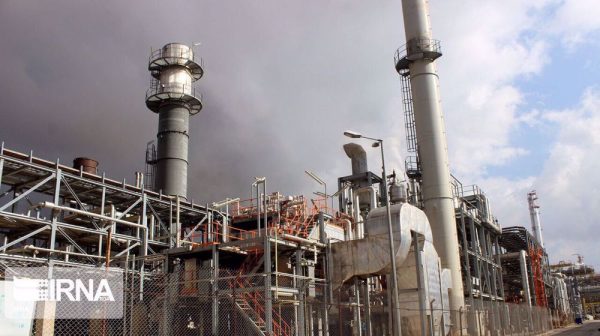
Iran will increase its production capacity for petrochemical products by more than a half in the next three years as the country moves ahead with plans to increase added value in its petroleum sector.
A Thursday report by the official IRNA news agency said Iran will launch a total of 35 new petrochemical plants by 2025 to increase the output capacity in the sector by 54% to 140 million metric tons per annum (mtpa).
It said petrochemical output capacity in Iran had increased by 7% in the calendar year to March 2022 to reach nearly 91 million mtpa thanks to the completion of seven new petrochemical projects across the country.
Iran’s sales of petrochemicals, including exports to other countries, also rose by 4.4% in the calendar year to late March with government figures showing that exports proceeds from the sector reached nearly $12.5 billion over that period.
Iran has relied on petrochemicals as a major source of earning hard currency in recent years as the country has been facing a series of tough American sanctions targeting its direct exports of crude oil.
China has been the top customer of Iranian petrochemical shipments in recent years while exports to countries in the region have also surged since the United States imposed its sanctions on Iran in 2018.
The expansion of the Iranian petrochemical sector has also led to a significant rise in the number of jobs in the country. Estimates suggest the number of direct jobs in the sector is more than 920,000 compared with a total of 107,000 direct jobs registered in the upstream sector of the oil and gas industry in Iran.
Biden Just Said He’s Willing To Go To War With Iran, Mainstream Yawns
By Jake Johnson | Common Dreams | July 14, 2022
U.S. President Joe Biden said in an interview aired Wednesday that he would be willing to go to war with Iran to prevent the country from obtaining a nuclear weapon, a position that drew condemnation from advocacy groups and foreign policy analysts who questioned the moral, strategic, and legal bases for such a stance.
Biden also reiterated in the sit-down interview with Israeli broadcaster N12 that he is committed to keeping the Islamic Revolutionary Guard Corps (IRGC) on the U.S. State Department’s Foreign Terrorist Organizations list, even if it means sinking the prospects of a deal to revive the nuclear accord that former President Donald Trump violated in 2018.
While acknowledging that Trump’s decision to abandon the seven-country deal was a “gigantic mistake,” Biden said he would not delist the IRGC to advance nuclear talks that have hit a wall in recent weeks.
Biden offered a one-word answer—”yes”—when asked whether he would keep the IRGC on the terror list “even if that means that kills the deal.”
The U.S. president went on to say that he’s prepared to use military force “as a last resort” to prevent Iran from obtaining a nuclear weapon. Iran has repeatedly said it is not pursuing a nuclear weapon and that its nuclear energy program is designed for peaceful domestic purposes.
Peace organizations were outraged by the president’s interview, noting that the terror designation is largely symbolic while the nuclear deal was a substantive diplomatic achievement that lifted devastating economic sanctions in exchange for limits to Iran’s nuclear program.
“Let’s be clear: Congress has not authorized—and the American people overwhelmingly do not support—the use of force against Iran,” said the Friends Committee on National Legislation. “If the president is committed to preventing nuclear proliferation, he should return to the nuclear deal and prioritize diplomacy. War is not the answer.”
Matt Duss, foreign policy adviser to U.S. Sen. Bernie Sanders (I-Vt.), responded that “it makes absolutely zero sense that he won’t delist the IRGC to prevent an Iranian nuke but would launch a war to prevent an Iranian nuke.”
The president’s remarks came days after his administration announced new sanctions targeting Iranian firms and individuals, a move seen as further evidence that Biden remains wedded to the failed “maximum pressure” campaign that his predecessor launched, imperiling any remaining hopes of a breakthrough in the stalled nuclear talks.
“Astonishing to see the president say he is willing to throw away the diplomatic progress his team has made and invite war with Iran over pointless partisan symbolism,” said progressive advocacy group Win Without War.
Putin’s summits next week will strengthen ties with Iran, Turkey
BY M. K. BHADRAKUMAR | INDIAN PUNCHLINE | JULY 14, 2022
Kremlin spokesman Dmitry Peskov announced in Moscow on Tuesday that President Vladimir Putin will travel to Tehran on July 19, to take part in a tripartite meeting with his Iranian and Turkish counterparts as part of the Astana peace process to end the war in Syria as well as hold a bilateral meeting with Turkish President Recep Erdogan.
Such a summit was long expected but the pandemic and the Ukraine conflict delayed matters. The current impasse in Syria is fraught with risks. Turkey has plans to launch another military incursion into Syria’s northern border regions that are under the control of Kurdish groups, who, Ankara alleges, are linked to the separatist PKK and also happen to be Pentagon’s inseparable allies.
Damascus, Moscow and Tehran — and Washington — disfavour the Turkish move as potentially destabilising, but Erdogan is keeping plans in a state of suspended animation, while tactfully dialling down the threatening rhetoric and acknowledging he’s “in no rush.”
For want of green lights from its Astana partners, presumably, Erdogan is unlikely to launch the military incursion, but Russia and Iran are wary that the incursion could complicate their presence and political influence in Syria and risk confrontation between Turkish troops and Syrian government forces.
However, Syria apart, Putin’s trip has much wider ramifications. What transpires in his bilateral meetings with Erdogan and Iranian leaders are certainly the more important templates to watch. Clearly, Turkey and Iran are emerging as two of the most consequential relationships of Russian foreign policies and diplomacy. And Putin’s visit comes at a highly transformative period in the US’ approach toward both Turkey and Iran.
Erdogan’s hopes of a rapprochement with the US have been dashed as Greek Prime Minister Kyriakos Mitsotakis told reporters on June 30 that Athens had submitted a letter of request “in recent days” to the US government for a squadron of 20 F-35s, with options to buy an additional squadron. The Greek announcement came just a day after President Joe Biden had assured Erdogan on the sidelines of the NATO summit in Madrid that he backed the latter’s pending request for F-16s to Turkey.
Erdogan should have known that Biden’s long, successful career has been inextricably linked with the powerful Greek lobby in America, which is a big source of election funding for aspiring politicians. Therefore, Greece’s F-35 deal is certain to be approved and it could further drive a wedge between the already strained relationship of the US and Turkey — and will only reinforce Ankara’s suspicion that Washington is using Greece as a pawn to control Turkey. Conceivably, the deal could change the military balance in the Eastern Mediterranean, taking into account Greece’s alliance with Cyprus and Israel as well.
Suffice to say, Putin’s conversation with Erdogan comes at a time of uncertainties in Turkish-American relations. In immediate terms, therefore, the circumstances are most conducive for establishing a Black Sea naval corridor to export grain from Ukraine. There is a strategic convergence between Moscow’s keenness to prove it has not caused the global grain crisis, and Turkey’s desire to project its strategic autonomy, although a NATO member country.
Turkish defence minister Akar announced on July 13 that a consensus has been reached on the establishment of a coordination centre in Istanbul with the participation of all the parties, and the Russian and Ukrainian sides also agreed on joint control of the ships in both entering and exiting the ports as well as on maritime security. It is a signal victory for Turkish mediation. In the process, we may trust the strong relationship between Erdogan and Putin to harness fresh energy for deepening Turkish-Russian political-economic relations. Turkey has a unique role to play, as Moscow navigates its way around the western sanctions.
Equally, Putin’s talks with the Iranian leadership also have a big geopolitical setting. US President Joe Biden will have just finished his trip to Saudi Arabia, an event that impacts Iran’s core interests at a crucial juncture when the nuclear negotiations are adrift and Teheran-Riyadh normalisation talks have made progress.
US National Security Advisor Jack Sullivan’s theatrical disclosure on Monday of Iran supplying “several hundred UAVs, including weapons-capable UAVs on an expedited timeline” and of Russian personnel undergoing training in Iran in this connection, etc. appear to have been timed carefully.
The important thing to be noted here is that Sullivan’s story overlaps secret parleys reportedly between Riyadh and Jerusalem on defence technology exchanges, specifically related to Saudi concerns about Iranian drones!
Furthermore, Sullivan’s loose talk comes against the backdrop of the announcement by Israel last month of the formation of a mutual air defence coalition that is expected to involve, among others, the UAE and Saudi Arabia.
To be sure, Sullivan’s revelation right before Biden’s trip to Riyadh comes with a political aspect, as it puts pressure on Saudi Arabia to rethink both its blossoming relationship with Russia as well as its normalisation talks with Iran.
Moscow understands that Biden’s primary purpose in the Middle eastern tour is to put together a front against Russia and China. Indeed, Biden wrote in an op-Ed in the Washington Post last week on his Middle East tour, “We need to counter Russian aggression, be in a better position to win the competition with China, and work to strengthen stability in an important region of the world. To do this, we need to interact directly with countries that can influence the results of such work. Saudi Arabia is one of those countries.”
Biden hopes to bring Saudi Arabia into some sort of format with Israel beneath an overarching binding strategic defence cooperation pact that goes beyond anything the US has agreed to before. This, inevitably, requires the demonising of Iran as a common threat. Simply put, Biden is reviving a failed American strategy — namely, organising the region around the goal of isolating and containing Iran.
Indeed, if history is any guide, Biden’s idea of creating a collective security system is doomed to fail. Such attempts previously met with fierce resistance from regional states. Also, Russia has certain advantages here, having pursued a diplomacy with the regional states that is firmly anchored in mutual respect and mutual benefit, and predictability and reliability. During Foreign Minister Sergey Lavrov’s recent visit to Saudi Arabia, a certain understanding was reached, which Riyadh is unlikely to disown.
Indeed, Saudi Arabia and Russia have a convergence of interests with regard to the oil market. At any rate, expert opinion is that both Saudi Arabia and the UAE have very limited spare capacity. The expectation is that Saudi Arabia will most likely agree to loosen the oil taps on the back of the Biden visit, but the leadership will still strive to find a way to do it within the context of the current OPEC+ agreement (with Russia) that extends through December by, say, compensating for the production underperformance of struggling OPEC states such as Nigeria and Angola. (The OPEC+ capacity is already well below the level implied in the agreement.)
Fundamentally, as the executive president of Quincy Institute Trita Parsi noted recently, “any reduction in tensions between Saudi Arabia and Iran is a threat to the durability of the Abraham Accords… That means in order for Israel and Saudi Arabia and the UAE to continue to have enough strategic incentives to collaborate and have relations and all jointly forget about Palestinian suffering, there needs to be a threat from Iran. Otherwise the whole house of cards falls apart.”
Iran understands that the JCPOA talks are neither dead nor alive but in a comatose state, which may perish soon unless salvaged — depending on the degree of success or failure of Biden’s talks in Saudi Arabia. But all signs are that Tehran is pressing the pedal on strengthening the ties with Moscow. Its SCO membership is through, while it is now seeking BRICS membership. The compass for Iran’s foreign policy trajectory is set. Surely, from such a perspective, Putin has a lot to discuss in Tehran with the Iranian leadership as the new world order is taking shape.
Even with regard to Sullivan’s drone story, although Iran has issued a pro forma rebuttal, we may not have heard the last word. The fact of the matter is that Iran is among the top five world leaders in the development and production of UAVs that may interest Russia — Shahed strike systems, Mohajer tactical drones, various versions of Karrar reconnaissance and strike UAVs with range of 500-1000 kms, Arash kamikaze drones, etc. Interestingly, Iran’s MFA spokesman alluded to the existing framework of Iran-Russia military-technical cooperation that predates the war in Ukraine.
Iran responds to US claims of drone shipments to Russia
Samizdat | July 13, 2022
Tehran will not help either side in the Russia-Ukraine conflict, Iranian Foreign Minister Hossein Amir-Abdollahian has said in response to White House claims the Islamic Republic was planning to deliver “hundreds of drones” to Russia.
“We have different kinds of cooperation with Russia, including in the defense sector. But we are not going to help either side in this conflict because we believe that it has to be stopped,” Amir-Abdollahian told Italian newspaper la Repubblica on Wednesday.
“The current problem with the conflict is that some Western countries, including the United States, have arms manufacturers who are trying to sell their products,” he said, adding that Tehran “will avoid any action that could lead to escalation” but we will work to stop the conflict.
On Monday, US National Security Adviser Jake Sullivan told reporters that Iran was “preparing to provide Russia with up to several hundred UAVs,” including combat drones.
Many Western countries, including the US, are supplying Kiev with heavy weaponry, such as missile launchers, armored vehicles and combat drones. Moscow insists that “flooding” Ukraine with weapons will only exacerbate the conflict.
Meanwhile Russian President Vladimir Putin will travel to Tehran on July 19 and meet with his counterparts Ebrahim Raisi of Iran and Recep Tayyip Erdogan of Turkey, according to the Kremlin.
Kremlin spokesman Dmitry Peskov said on Wednesday that Putin will not discuss possible drone supply during his trip to Tehran.
WHO Wants To Run the World?
By Paul Frijters, Gigi Foster, Michael Baker | Brownstone Institute | July 11, 2022
In Geneva in late May at the 75th meeting of the WHO’s decision-making body, the World Health Assembly (WHA), amendments to its International Health Regulations (IHRs) were debated and voted upon. If passed, they would grant the WHO the right to exert unconscionable pressure on countries to accept the WHO’s authority and health policy actions if the WHO decides that there is a public health threat that might spread beyond a country’s borders.
As Ramesh Thakur, the second man at the UN for years, noted, the amendments would mean “the rise of an international bureaucracy whose defining purpose, existence, powers and budgets will depend on outbreaks of pandemics, the more the better.”
This is the first clear instance of a globalist coup attempt. It would subvert national sovereignty worldwide by putting real power into the hands of an international group of bureaucrats. It has long been suspected that the authoritarian elites arisen during covid times would try to strengthen their positions by undermining nation states, and the this 75th jamboree is the first solid evidence of this being true.
What an opportunity then to see who is in the conspiring club. Who drafted the amendments? What was in them? Which individuals supported them or spoke out against them?
WHO were the conspirators?
The amendments on the table at the May WHA meeting had been transmitted to the WHO by the US Department of Health and Human Services on January 18, circulated by WHO to its member states (‘States Parties’) on January 20 and formally introduced to the WHA on April 12.
The proposals, according to an announcement on January 26, were co-sponsored by 19 countries plus the European Union. Even if some co-sponsors had little direct involvement in drafting them, they all would have approved in principle the overarching goal of tightening up the WHO’s authority over member states in the face of a public health event.
Loyce Pace, the HHS’s Assistant Secretary for Global Affairs – the leading US official nominally responsible for the proposed amendments – arrived at the Biden administration fresh from a stint as executive director of an advocacy organization called the Global Health Council.
That council receives funding from the Bill & Melinda Gates Foundation and its members include Eli Lilly, Merck, Pfizer, Abbott Labs, and Johnson & Johnson. You get the idea. Via one of the foxes-turned-chicken-guard, it appears the HHS ‘worked closely’ on these amendments with large pharmaceutical companies, who will be chomping at the bit for a more proactive (read: profitable) response to any public health emergency, real or imagined.
So the conspiring club consists primarily of the US government and its Western allies in lockstep with Big Pharma, and they are looking to undermine both the sovereignty of their own governments and that of other countries, presumably with the idea that the Western elites would do the running.
What was in them? A blizzard of acronyms and euphemisms
To understand what the US proposed at the WHA, we need first to understand how things have worked in the WHO to this point.
The IHRs in their current form have been in force as international law since June 2007. Among other things, they impose requirements on countries to detect, report and respond to ‘public health events of international concern,’ or PHEICs. The WHO Director-General consults with the state where a possible public health event has occurred, and within 48 hours they are meant to come to a mutual agreement on whether or not it actually is a PHEIC, whether or not it needs to be announced to the world as such, and what counter-measures, if any, should be taken. It’s essentially an early-warning system on major health crises. This is a good thing if it’s run by people you can trust and if it has checks and balances to rein in expansionary tendencies.
The proposed amendments would greatly strengthen the power of the WHO relative to this baseline, in a number of ways.
First, they lower the threshold for the WHO to declare a public health emergency by empowering its Regional Directors to declare a ‘public health event of regional concern’ (PHERC, italics ours) and for the WHO to put out a new thing called an ‘intermediate public health alert.’
Second, they permit the WHO to consider allegations about a public health event from non-official sources, meaning sources other than the government of the state concerned, and allow that government only 24 hours to confirm the allegations and a further 24 hours to accept the WHO’s offer of ‘collaboration.’
Collaboration is essentially a euphemism for on-site assessment by teams of WHO investigators, and concomitant pressure at the whim of WHO personnel to enact potentially far-reaching measures such as lockdowns, movement restrictions, school closures, consumption of medicines, administration of vaccines and any or all of the other social, economic, and health paraphernalia that we have come to associate with the covid circus.
Should the state’s government acceptance of the WHO’s ‘offer’ not be forthcoming, the WHO is empowered to disclose the information it has to the other 194 WHO countries, while continuing to pressure the state to yield to the WHO’s invitation to ‘collaborate.’ A non-collaborating country would risk becoming a pariah.
Third, the proposal includes a new Chapter IV, which would establish a ‘Compliance Committee’ consisting of six government-appointed experts from each WHO region tasked with permanently nosing around to ensure the member states are complying with IHR regulations.
There are more crossings-out of the existing IHR language and new language added in, but the flavour of what the US-led alliance is shooting for is a WHO that can unilaterally decide whether there is a problem and what to do about it, and can isolate countries that disagree.
Compliant WHO member states could act as a supporting cast in the isolation effort, through the distribution of their own health budgets and their ‘health-related’ policies, which would include travel and trade restrictions. The WHO would become a kind of command-and-control center for globalist agendas, pushing the produce of (Western) Big Pharma.
Why and how would this work?
We learned during covid times why it would make sense that the US and its allies are insisting on these amendments.
Lowering the bar for declaring a global (or regional) public health threat triggers a huge opportunity for Western pharmaceutical companies. As legal experts have observed: “WHO emergency declarations can trigger the fast-track development and subsequent global distribution and administration of unlicensed investigational diagnostics, therapeutics and vaccines.
This is done via the WHO’s Emergency Use Listing Procedure (EULP). The introduction of an ‘intermediate public health alert’ in particular will also further incentivise the pharmaceutical industry’s move to activate domestic fast-track emergency trial protocols as well as for advance purchase, production and stockpile agreements with governments before the existence of a concrete health threat to the world’s population has been detected, as is already the case under WHO’s EULP via the procedures developed for a ‘pre-public health emergency phase’.”
You can bet that the WHO ‘expert teams’ sent in to make on-the-ground assessments, under the banner of ‘collaboration’ with the host country experiencing the health event, will be chock-a-block with operatives from the CDC and who knows what other Western agencies, all poking around potentially sensitive facilities that a host government might justifiably claim a sovereign right to keep to itself. Likewise with the ‘Compliance Committee’ proposed by the US under the new Chapter IV of the IHRs: its government-appointed members have an open-ended brief, enshrined in international law, to be busybodies.
In layman’s terms, the WHO would be turned into an international thug, with its member states offered the role of backyard gang members.
As a bonus for Western elites, the proposals are a sneaky form of rewriting history. By cementing authority within an international organisation to determine the existence of public health crises and direct potentially draconian emergency responses, Western governments would get to enshrine and legitimise their own extreme responses to the covid outbreak, as we have pointed out previously. Their backsides would thereby be given some protection from legal challenges.
The refusniks: Developing countries
The proposals were pushed primarily by Western countries: the US was joined by Australia, the UK and the EU in arguing for passage. The resistance was led by developing countries who saw it as a colonialist ambush in which their ability to set policy and respond to health threats in a manner commensurate with their domestic situations would be overridden.
Brazil reportedly went so far as to threaten to withdraw from the WHO, and the African group of almost 50 countries, along with India, argued that the amendments were being rushed through without adequate consultation. Russia, China and Iran also objected.
Failure on the first try, but the US and its allies in the West will get more shots to push it through.
How do we expect them to do this? Well, when a proposal gets bogged down inside a giant bureaucratic machine like the WHO, the inevitable response is to set up committees to work in the background and circle back with a new set of proposals to be presented at a future meeting. True to form, a ‘working group’ and ‘expert committee’ are being assembled to accept member state proposals on IHR reform by the end of September this year. These will be ‘sifted through’ and reports will be prepared for review by the WHO’s executive board in January next year. The objective is to have a fresh set of proposals on the table when the WHA convenes for the 77th time in 2024.
Not all was lost
Salvaging something from the fact that the WHA failed to get a consensus around its biggest agenda item, the US and its allies got a small victory on the point of when they can try again – though in their desperation they needed to violate the IHRs’ own rules to accomplish it. Article 55 of the IHRs states unambiguously that a four-month notice period is required for any amendments.
In this instance, revised amendments were presented on May 24, the same day that the first lot were rejected. These were discussed, further amended on May 27 and then adopted on the same day. The approved amendments halve the two-year period for any (further) approved amendments to the IHRs to take effect. (The IHRs that came into force in 2007 were agreed to in 2005 – but under the new resolution, anything agreed to in 2024 would come into effect in 2025 rather than 2026.)
Yet, what was achieved in terms of fast-tracking the force of new amendments was lost in slow-tracking their implementation. Nations would have up to 12 months – double the previous suggestion of six months – to implement any IHR amendments that newly enter into force of law.
State of play
Where is all this going?
If the WHO takes the reins on decisions about what constitutes a health crisis, and can pressure every country into a one-size-fits-all set of responses that it, the WHO, also determines, that’s bad enough. But what about if its invitation to ‘collaborate’ with countries is backed up with teeth, such as sanctions against those who demur? And what about if it then broadens the definition of ‘public health’ by, for example, declaring that climate change falls under that definition? Or racism? Or discrimination against LBTQIA+ people? The possibilities thereby opened up for running the world are endless.
A global ‘health’ empire would bring huge harms to humanity, but a lot of power and money is pushing for it. Don’t think it can’t happen.
Paul Frijters is a Professor of Wellbeing Economics at the London School of Economics: from 2016 through November 2019 at the Center for Economic Performance, thereafter at the Department of Social Policy
Iran detains UK deputy ambassador for alleged spying
Samizdat | July 6, 2022
The UK’s second-most senior diplomat in Tehran is reportedly among three foreigners who have been arrested by Iran’s Islamic Revolutionary Guards Corps (IRGC) for alleged espionage activities.
Giles Whitaker, deputy chief at the UK embassy in Tehran, stands accused of taking soil samples in a restricted area, according to a report on Wednesday by Iranian state television. Video footage released by the IRGC purports to show the veteran envoy, who was accompanied by family members, gathering soil samples in Iran’s central desert, where missile exercises were being conducted.
Whitaker reportedly apologized for the infraction and was expelled from the area. The media report didn’t specify whether he and the other suspects are still under arrest. The other detained men were identified as the husband of Austria’s cultural attaché in Iran and Maciej Walczak, a Polish university professor who was visiting the country under a scientific exchange program.
The IRGC’s footage purported to show Walczak and three colleagues collecting soil samples in a restricted area of Kerman province, where another missile test was being conducted. The Polish professor is reportedly from Nicolaus Copernicus University, which the Iranian broadcaster said is “associated with the Zionist regime.”
The allegations come amid stalled talks to revive the 2015 Iran nuclear deal, which former US President Donald Trump canceled in 2018. Under the so-called Joint Comprehensive Plan of Action (JCPOA) – signed by Iran, the US, Russia, China, the UK, France and Germany – Tehran agreed to limitations preventing nuclear weapons development in exchange for sanctions relief.
Wednesday’s Iranian media report suggested that the alleged spies were trying to help build a new case on “military aspects of Iran’s file in the International Atomic Energy Agency.”
Whitaker has been deputy head of mission at the British embassy in Tehran since November 2018. His UK government career has spanned more than three decades and has included stints at embassies in Moscow, Berlin and Islamabad, as well as at NATO headquarters in Brussels.
The IRGC has arrested dozens of foreigners on espionage charges in recent years. Rob Macaire, then UK ambassador to Iran, was apprehended in January 2020 for allegedly inciting protests over the Iranian military’s accidental downing of a Ukrainian passenger jet.
Tehran rejects G7’s anti-Iranian statement as baseless, one-sided, unfair

Iran’s Foreign Ministry spokesman Nasser Kan’ani
Press TV – June 29, 2022
Tehran has vehemently denounced as “baseless, one-sided, and unjust” an anti-Iranian statement by the Group of Seven industrialized states.
The statement was issued during a meeting of the group’s sevenfold members—Canada, France, Germany, Italy, Japan, the United Kingdom, and the United States—in Germany on Tuesday.
It urged “restriction of Iran’s nuclear program,” faulted Iran’s “ballistic missile activities,” and accused it of “human rights violations.”
Later during the day, Iranian Foreign Ministry spokesman Nasser Kan’ani said the country “strongly condemns” the passages of the statement.
The statement, he said, “deliberately ignores” the United States’ departure from a 2015 nuclear deal with Iran and others as well as Washington’s subsequent re-imposition of illegal sanctions against the Iranian people.
The Iranian official reprimanded the countries that had issued the statement for their cooperation with the US in imposing sanctions and their refusal to confront the coercive economic measures.
He also spurned any accusations directed towards Iran’s peaceful nuclear energy program, saying the statement “deliberately” ignores the Islamic Republic’s ban on all nuclear weapons.
Kan’ani reminded that the G7 countries were facing Iran with “factitious accusations,” while they, themselves, were in possession of the world’s “biggest nuclear arsenal.”
The spokesman, meanwhile, blasted the statement for trying to portray Iran’s comprehensive cooperation with the International Atomic Energy Agency, the United Nations’ nuclear body, in a bad light.
The official further rejected all allegations against Iran’s “legitimate and defensive missile program,” reminding that the country’s missile work can never be subject to any negotiation or compromise.
“It is necessary that the parties that have issued the statement rather be accountable for their sales of billions of dollars of advanced weapons, which is one of the most important factors of instability in our region,” Kan’ani asserted.
Addressing the human rights accusations made through the statement, the official said the countries throwing the allegations were the very same states that have closed their eyes to the “flagrant violation” of the Iranian nation’s rights as a result of the sanctions.
Zionist Regime Unable to Defend Itself: IRGC Chief
Al-Manar | June 28, 2022
The commander of the Islamic Revolution Guards Corps cautioned Islamic countries’ governments to avoid relying upon the Zionist regime, which is unable to even protect itself.
In a meeting with Chairman of the Joint Chiefs of Staff Committee of Pakistan General Nadeem Raza in Tehran, Major General Hossein Salami slammed the Zionist regime as the enemy of the Islamic world and humanity.
The IRGC commander also warned regional rulers of the bitter consequences of normalization of ties with the “child murdering Zionists”, saying the US, the main supporter of the Israeli regime, is basically the enemy of Islam.
“The question is that while the Zionist regime cannot even defend itself and is a regime absolutely without any policy, how would certain Islamic countries rely on it to ensure their security or safeguard their economy? There is no logic behind it,” Major General Salami added.
He further pointed to the awful results of the presence of American forces in the Islamic world, including the great seditions, long civil wars, destruction of houses, displacement of people, insecurity, poverty and underdevelopment.
“When we look at Afghanistan, we notice the harmful and irreparable effects of American interference,” the general added, noting that the neighboring countries, including Pakistan, suffer from the consequences of destructive US interference in Afghanistan.
He also highlighted the integrated security of Iran and Pakistan, stressing the need for closer cooperation between Tehran and Islamabad in all fields, especially in protecting the security of the common border and fighting against terrorism.
For his part, the Pakistani general pointed to the commonalities between the Pakistani and Iranian nations, decried divisions within the Muslim world as a result of the US and Western plots, and noted that Americans withdrew from Afghanistan after twenty years without managing to establish security in that country.
General Nadeem Raza also emphasized the necessity of intelligence and operational cooperation with Iran in protecting the security of the joint border.
Iran and Argentina apply to join BRICS
Samizdat | June 27, 2022
The Islamic Republic of Iran has officially submitted its application to join the group of five emerging economies made up of Brazil, Russia, India, China, and South Africa, the foreign ministry in Tehran announced on Monday. The move comes after the Iranian president addressed the BRICS summit last week.
While BRICS is not a treaty bloc, it has a “very creative mechanism with broad aspects,” Iranian Foreign Ministry spokesman Saeed Khatibzadeh said on Monday, according to the Tasnim news agency. He added that Tehran has already had “a series of consultations” with BRICS about the application.
Iran’s membership would “add value” for everyone involved, said Khatibzadeh, noting that BRICS members account for up to 30% of the world’s GDP and 40% of the global population.
On Friday, Iranian President Ebrahim Raisi addressed the BRICS virtual summit hosted by China, and expressed Tehran’s readiness to share its capabilities and potentials with the group.
Argentina has also applied to join BRICS. President Alberto Fernandez on Friday urged the creation of cooperation mechanisms that could represent the alternative to ostensibly private institutions run by – and in the interest of – the West.
During the session on Wednesday, Russian President Vladimir Putin said that the five-member group was working on setting up a new global reserve currency “based on a basket of currencies of our countries.”
Israel Murders Iranians While Biden Kills the Iran Deal
By Connor Freeman | The Libertarian Institute | June 23, 2022
In a clear message to Tehran, an American B-52 flew over the Persian Gulf as soon as Joe Biden entered the White House. Biden promised to return the U.S. to the Iran nuclear deal. But indirect talks to revive the Joint Comprehensive Plan of Action (JCPOA), which began last April, have stalled for three months without a resolution in sight. Counting on the reliable support of Biden and bipartisan Iran hawks in Congress, the nuclear-armed Israeli apartheid regime intends to kill the deal entirely.
Tehran, a decades-long signatory of the Non-Proliferation Treaty, is neither seeking nor has ever sought nuclear weapons. But the Islamic Republic, once Tel Aviv’s “best friend,” serves as Israel’s favorite boogeyman, superficially justifying billions of dollars in American military aid each year. The JCPOA threatens the racket.
Formally known for years as “Israel’s man in Washington,” President Biden is essentially pursuing ultra-Zionist Donald Trump’s foreign policy regarding Iran and supporting, tacitly or otherwise, Tel Aviv’s relentless attacks against Iran and its allies. Biden is continuously imposing yet more sanctions, increasing the “Maximum Pressure” on the economically crippled Iranian people.
The rial has hit all-time lows. With a population of 82 million, almost half of all Iranians live below the poverty line, and inflation is somewhere between 40-50%.
America’s self-styled sanctions artists delight in seeing the results of their economic war on Iran: excess deaths, severe medical shortages, prohibitively high prices for staple goods, plummeting incomes, and social unrest over food costs.
This year, Tel Aviv has been bombing Syria, Tehran’s ally, at the usual weekly rate. A recent strike, coming from the illegally occupied Golan Heights, attacked Damascus International Airport. The airstrike targeted the facility’s only working runway Israel had not yet destroyed, rendering the airport temporarily inoperable.
Shortly afterwards, The Wall Street Journal put out a story confirming that Tel Aviv coordinates with the Pentagon on many of its strikes in Syria.
The Israelis just wrapped up month-long war drills, the largest held in decades, aimed squarely at Tehran. Exercises over the Mediterranean Sea, with over 100 aircraft and navy submarines, spanned 10,000 kilometers and were designed to simulate repeated airstrikes on Iran and their civilian nuclear facilities.
Early reports were that the U.S. Air Force would participate, providing refueling planes, but this reportedly did not come to pass. Although General Michael Kurilla, the new head of U.S. Central Command (CENTCOM), observed some of these Chariots of Fire exercises.
On May 22, 2022, the Israelis carried out a high profile assassination of a senior colonel in the Iranian Revolutionary Guard Corps (IRGC), Col. Hassan Sayyad Khodaei. Shortly afterwards, citing an unnamed intelligence official, The New York Times reported Tel Aviv had informed Washington that it was responsible. Israel’s attacks seem to be primarily focused on the Iranians’ drone program, namely killing people who work on drone technology and attacking related sites.
As Dave DeCamp, Antiwar.com news editor, reported,
Israel was immediately suspected of the assassination since it has a history of carrying out targeted killings and other attacks inside Iran. Israel rarely officially acknowledges such operations, and it’s typical that its responsibility is revealed by leaks to the media, often by Israeli officials.
Israeli officials claimed to the Times that Khodaei was in charge of a secret covert IRGC group known as Unit 840, which Iran denies exists. The Israelis claim Khodaei was involved in plots to kill and kidnap Israeli civilians and officials around the world, but there’s no evidence Tehran was planning to target Israelis abroad.
Two people affiliated with the IRGC told the Times that Khodaei was a logistics officer who played a key role in transporting drone and missile technology to Syria and Hezbollah in Lebanon and advised militias in Syria. Iran has said Khodaei was involved in the fight against ISIS in Iraq and Syria.
Israel is suspected to have subsequently poisoned and murdered two Iranian scientists including Ayoub Entezari, an aerospace engineer, who reportedly worked on missile and drone projects, and Kamran Aghamolaei, a geologist.
Last month, a few dozen miles south of Tehran, quadcopter suicide drones attacked the Parchin military complex. The drones hit a building being used for drone development and killed a young engineer. In February, Israel used six quadcopter drones in a strike targeting another Iranian drone facility in Kermanshah which did significant damage. In Tabriz, there were reports of another Israeli attack on a drone factory, as many as three people may have been killed. This month, two additional IRGC members also working in the aerospace industry died during mysterious accidents in Iran. Both deaths were declared “martyrdoms.”
In the midst of these soaring tensions, Robert Malley, Biden’s Iran envoy, is telling Congress “all options are on the table.”
The U.S. Senate overwhelmingly voted to pass a non-binding resolution which insists they would never support a restoration of the JCPOA if the IRGC were removed from the Foreign Terrorist Organization (FTO) blacklist. The FTO designation is ostensibly one of the final sticking points preventing the deal’s straightforward revival. Congress has been sending messages, loud and clear, to Tehran and Biden that the deal has virtually no support.
Meanwhile, Secretary of State Antony Blinken is peddling baseless stories about Tehran attempting to assassinate his predecessor Mike Pompeo. Pompeo enthusiastically supported Trump’s Maximum Pressure campaign as well as the drone strike murder of top Iranian General Qasem Soleimani, leader of the IRGC Quds Force. Though these claims of Pompeo’s life being endangered remain unproven, U.S. taxpayers pay millions per month for a security detail to put his and Blinken’s mind at ease.
Much like Tel Aviv’s unproven accusations that the IRGC is out to kidnap and murder Israelis, especially in Istanbul for some reason, this obviously plays well with the overall anti-JCPOA campaign.
The IRGC is the only state military organization on the terrorism blacklist. Considering the myriad preexisting sanctions on the unit, it is a superfluous insult. In 2019, Trump implemented this policy at the behest of Israeli-partisan hawks like Mark Dubowitz at the Foundation For Defense of Democracies, a notoriously anti-Iran think tank. This is one of the largest bricks in the so called “sanctions wall” precluding any of Trump’s successors from ever returning to the deal for fear of the built-in political toxicity. It is enough to keep Biden and the cowardly Democrats from backing what is ultimately Barack Obama’s deal in favor of a neoconservative-style Iran policy.
As May began, Israel started making these claims about a global Iranian plot to kill Israelis. At that time, the JCPOA negotiations were seemingly stalled irrevocably because of the IRGC-FTO issue. But then the Vienna talks’ broker, European Union nuclear negotiator Enrique Mora, traveled to Tehran. He took meetings with Iran’s lead negotiator Ali Bagheri Kani as a last ditch effort to break the deadlock. Mora was sent by EU foreign policy chief Josep Borrell. As a result of the American led sanctions blitz on Russia, Europeans are in desperate need of another crude supplier as Borrell has noted. The same week, the emir of Qatar, Sheikh Tamim bin Hamad Al Thani, also made a trip to Tehran and pushed for progress during meetings with President Ebrahim Raisi as well as Ayatollah Ali Khamenei. On May 13th, Borrell announced Mora’s mission went “better than expected,” Vienna talks had been unblocked, and a final deal was within reach.
Days later, coinciding with Israeli Defense Minister Benny Gantz’s visit to Washington, and his meetings with National Security Adviser Jake Sullivan and Pentagon chief Lloyd Austin, Khodaei was murdered in the drive-by shooting. Israel’s assassination campaign had commenced.
Two days after the Khodaei killing, Politico reported that the final decision to keep the IRGC on the FTO list was made. On Twitter, Israeli Prime Minister Naftali Bennett thanked Biden for the “principled decision and for being a true friend of the State of Israel.”
Following Trump, Biden’s administration is also continuing to seize tankers, stealing Iranian oil and pirating it for profit. Ironically, after Russian President Vladimir Putin invaded Ukraine, there was some talk from Biden officials about making a deal with the Islamic Republic to put Iran’s abundant oil back on the market to reduce global energy prices. But this was apparently never taken seriously.
Biden instead prefers to kowtow to the genocidal Saudi regime which along with Abu Dhabi and Washington have starved to death and bombed over 400,000 Yemenis, including more than 263,000 children.
Those deaths mean little to the Abraham Accords caucus. This bipartisan coalition in Congress is working to ensure Washington arms these tyrants further while the Pentagon assists them in joining forces, as well as integrating missile defenses with Tel Aviv eyeing Tehran. As Biden heads to the Middle East, there is even talk of the U.S. offering security guarantees to the United Arab Emirates.
For almost a year, the Israelis have been pushing an anti-Iran, NATO-style, U.S. led alliance in the Middle East. In recent weeks, Gantz has openly promoted this strategy which Bennett is said to have suggested to Biden during a White House meeting last year.
As Iran is encircled militarily and strangled economically, the American Empire is refusing to allow them any breathing room. Each day the U.S. forgoes lifting sanctions and restoring the deal the likelihood of a hot war increases.
Given the size of Iran, its population, its geostrategic location, substantial ballistic missile deterrent, its Axis of Resistance partners, and the wide variety of U.S. military targets in the region, a war with Tehran would likely dwarf the catastrophic damage, scope, and deaths of America’s other Middle East wars.
If the JCPOA fails, the hawks armed to the teeth surrounding Iran may try to goad Tehran into leaving the NPT. Whether this happens ultimately or not, Israel may use the coming breakdown in diplomacy to justify instigating its long desired war. Rightfully, the Iranians will see such an Israeli attack as an American declaration of war.
This week, Tehran has formally dropped their demand for removing the IRGC from the FTO list. Washington has not yet responded. Contrary to the corporate press narrative, the ball is now firmly in Washington’s court.
Iran called Biden’s bluff. It is imperative that the American people now assert our support for terminating the unjustified and brutal Maximum Pressure campaign as well as denounce Israel’s murderous aggressions.
The Iranian people deserve to live and trade in peace.
Iran and Russia Revive the North-South Transport Corridor
By Vladimir Platov – New Eastern Outlook – 20.06.2022
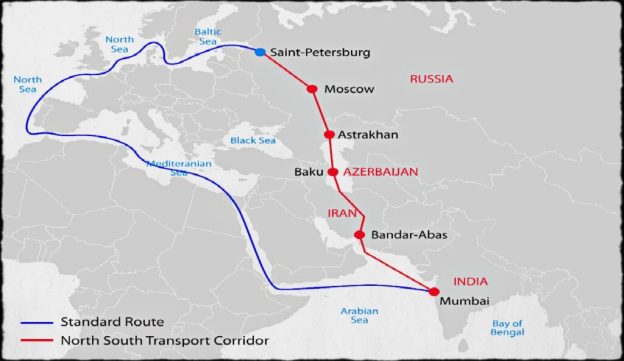
Following agreements reached during the January official visit to Moscow by Seyyed Ebrahim Raisi, President of the Islamic Republic of Iran, to further develop and deepen bilateral relations between Iran and Russia, the countries have decided to jointly revive the North-South Transport Corridor. This decision has become particularly relevant against the background of the unlawful sanctions policy pursued by the United States and its Western allies against Russia and Iran, and Tehran’s and Moscow’s desire to establish trade routes that are not linked to the West.
In order to implement this decision, Iranian authorities are seeking to revive the recently stalled International North-South Transport Corridor (INSTC) project, which traverses Russian and Iranian territory and the two countries’ waters to connect with Asian export markets. As the Islamic Republic News Agency (IRNA) reported on June 11, in order to implement the International North-South Transport Corridor, the Islamic Republic of Iran Shipping Lines (IRISL) has initiated the transit of cargo from Russia to India or to South Asia through the project, using just one consignment note for the entire transit route.
According to Dariusz Jamali, director of the joint Iranian-Russian terminal in Astrakhan, such transits have taken place occasionally in recent times. However, this route has clear advantages: lower transport costs (such as port and customs charges in particular),shorter waiting periods for containers, faster delivery of goods, elimination of dangers in transferring empty or full containers, issuance of legal documents and compensation for possible losses, and faster banking transactions.
The first pilot Russian-Iranian transit proposed by IRISL consists of two 41-ton containers of wood laminated plastic. The consignor is in St. Petersburg and the transit port is Astrakhan. The cargo will then be transported by the Caspian Sea to the northern Iranian port of Anzali (Bandar-e Anzali) and then by road through Iranian territory from the port of Anzali to the southern port of Bandar Abbas on the Persian Gulf and further by sea to the Indian port of Nhava Sheva. IRISL is the operator. The estimated delivery time is 25 days.
It is assumed that the main Russian exports through Astrakhan could be cereals (wheat), timber and scrap metal.
This transport corridor could go to Afghanistan via Iran’s Sistan and Baluchestan Province. The plan for further joint use of the North-South Transport Corridor even includes the construction of a railway line that could bring goods arriving at Iranian Caspian Sea ports to the south-eastern port of Chabahar. In addition, the construction of a railway line from Chabahar to the Hajigak iron ore mine in Afghanistan, where India has made large investments, is also under consideration.
The International North-South Transport Corridor emphasizes the Russian port of Astrakhan and the Iranian Chabahar as bases for further transport to Eurasia. The development of the latter, as well as the construction of a large petrochemical complex and an export terminal near the port of Jask, are projects being implemented by the Iranian government as part of the Mokran coastal development strategy.
Nevsky Shipyard, which produces multipurpose dry-cargo ships of RSD49 (deadweight of 7150 tons, container capacity of 289 TEU) and 005RSD03 (container capacity of 225 TEU) projects, is also engaged in the work of the North-South transit corridor in building ships for the Caspian Sea.
As part of its increased participation in the North-South Transport Corridor, Iran is considering expanding international road transport cooperation with the countries participating in the Transport Corridor Europe-Caucasus-Asia (TRACECA) program, the Tehran Times reported, citing the Iranian Ministry of Roads and Urban Development. This issue was brought up in particular during a meeting between Aset Assavbayev, Secretary General of the Permanent Secretariat of the TRACECA International Transport Program, and Dariush Amani, Head of Iran Road Maintenance and Transportation Organization (RMTO). The negotiations focused on developing international road transport cooperation with TRACECA member countries and increasing the volume of transit traffic along the corridor. As you may know, the TRACECA International Transport Program, in which the European Union and 12 countries of Eastern Europe, Southern Caucasus and Central Asia now participate, was set up in Brussels in May 1993. The aim of the program is to strengthen economic ties, trade and transport links.
Russian Foreign Minister Sergey Lavrov plans to visit Iran in the near future to discuss, among other things, further steps of cooperation between Russia and Iran. The year 2022 has already seen two important visits in Russian-Iranian interaction. First, Iranian President Ebrahim Raisi’s visit to Moscow in January 2022, which was a clear diplomatic breakthrough for the new head of the Iranian government. And second, Russian Deputy Prime Minister Alexander Novak’s visit to Iran in May, which took place against the backdrop of unprecedentedly harsh sanctions imposed by the West in the wake of the Ukrainian events. The biggest change in regional policy is undoubtedly the prospect of a full-fledged free trade area (FTA) agreement with the EEU. It is expected to be signed by the autumn of this year to replace the interim FTA that came into force on October 27, 2019, and which has already had a positive impact on bilateral trade between Russia and Iran.
In the rapprochement between the two countries, Moscow takes into account the compromise position taken by Iran after the start of Russia’s special operation in Ukraine: while not proclaiming its support for Russia’s actions per se, Tehran has not joined the wave of international condemnation of Moscow, instead placing the main blame for what is happening on the US and NATO. Russia also takes into account that Iran’s potential as an economic partner far exceeds the current level of relations.
Iran blasts IAEA for repeating old allegations based on bogus Israeli claims
Press TV – June 17, 2022
Iran’s nuclear agency chief has again blasted the International Atomic Energy Agency (IAEA) for repeating old allegations against the country’s civilian nuclear program, based on bogus Israeli claims.
Mohammad Eslami, the head of the Atomic Energy Organization of Iran (AEOI), addressing a press conference in the central Iranian city of Natanz on Thursday, said the false allegations made by the IAEA are detrimental to ongoing negotiations to revive the 2015 nuclear deal.
“Now that the negotiations for [the US] return to the JCPOA [nuclear deal] are underway, the same old allegations are being repeated by citing fabricated claims made by the Zionist regime,” Eslami said.
He was referring to the UN nuclear agency’s mention of the so-called PMD (possible military dimensions) file on Iran’s nuclear program, insisting that such schemes will not help negotiations.
Eslami stressed that the reasoning behind signing the 2015 nuclear deal – officially referred to as the Joint Comprehensive Plan of Action (JCPOA) – was the closure of false Western allegations about possible military applications of Iran’s civilian nuclear program under the PMD file.
He said the PMD file was supposed to be closed as a key condition for reaching the accord and lifting anti-Iran sanctions — based on extensive inspections of Iran’s nuclear facilities and activities by the IAEA over the past two decades.
“We, in turn, accepted limitations on our nuclear activities and thereby yielded on our certain rights as well as accepted inspections on the condition that previous accusations would be permanently revoked and that we would be able to continue our activities under strict inspection and trust-building engagements,” the official added.
Eslami said Iran continues to operate under the IAEA regulations, while defending the removal of surveillance cameras functioning beyond the safeguards agreement, in reaction to the anti-Iran vote at the UN agency’s board of governors meeting recently.
Last week, Eslami slammed the IAEA for politicizing Iran’s peaceful nuclear program under Israeli pressure while disregarding Tehran’s extensive cooperation with the UN agency after the adoption of a resolution against Iran — drafted by the US and its European allies.
Eslami justified Tehran’s refusal to provide the IAEA with films of JCPOA’s monitoring cameras, stressing that the accord between Iran and the 5+1 countries will only exist as long as both sides remain committed to it.
“Today they want to return to JCPOA, but then raise the same old reasons for starting the nuclear talks. So we, in turn, did not grant them access to the film of the JCOPA cameras,” he stressed.
“Psychological operations, media campaigns and political pressures and controversies against Iran have never produced results in the past and will now remain ineffective as well because the PMD file was closed in the past, and reopening it will in no way help them,” he added.
He said Iran was in possession of “less than three percent of the world’s nuclear reserves” but still “more than 25 percent of [IAEA] inspections” were carried out in Iran, while the regimes that have waged wars against Iran have never allowed inspections of their nuclear facilities.
Iran’s foreign minister Hossein Amir-Abdollahian, in his remarks on Thursday, also blamed the US for IAEA’s recent anti-Tehran resolution, insisting that the move was aimed at mounting pressure on Tehran to give concessions in Vienna talks.
Iran’s top diplomat made the remarks in a Thursday phone call with his Iraqi counterpart, Fuad Hussein, during which the two sides also discussed bilateral issues and regional developments.
Negotiations have been underway in the Austrian capital since April last year to restore the 2015 Iran deal, which the former US President Donald Trump unilaterally abandoned in May 2018.
After quitting the deal, Trump introduced what he called the “maximum pressure” campaign to bring Iran to its knees, a policy that has failed miserably. The Joe Biden administration, despite its initial pledge to reverse Trump’s hard-nosed measures, has failed to deliver.
Iran has cited Washington’s indecisiveness as the reason behind the stalemate in talks, as many key issues remain unresolved, ranging from the removal of all post-JCPOA sanctions to the provision of guarantees by the American side that it will not leave the deal again.
AEOI spokesman Behrouz Kamalvandi on Wednesday advised IAEA director general Rafael Grossi to refrain from “complicating the situation” by making political statements after the UN agency called on Iran to resume talks before things get “much more problematic.”
“I amicably advise Rafael Grossi, the director-general of the [International Atomic Energy] Agency, to distance himself from making unprofessional statements of political color intended for media consumption,” Kamalvandi said.
“It is clear that if there is a technical issue, it should be presented professionally within the framework of the Agency’s duties and followed through its channels and the usual mechanisms of the Agency. Obviously, the arena for such interactions is not the media.”
Kamalvandi was referring to Grossi’s interview broadcast on June 12 on CNN, in which he made unusually menacing tropes against Iran.
Grossi sparked a controversy after he traveled to Israel and met the regime’s leaders late last month, just before the IAEA board of governors meeting.
The IAEA’s annual report, experts believe, was based on documents supplied by Israel about Iran’s nuclear program, which Tehran has rejected as fabricated.
Featured Video
Trita Parsi: Middle East Unraveling — Are We on the Path to World War?
or go to
Aletho News Archives – Video-Images
New Book
Trans agenda is ‘normalization of sadism’ – US author

RT | September 23, 2026
The US Democratic Party has embraced a transgender agenda that amounts to “the normalization of sadism,” author A.J. Rice has said, warning that radical trans policies would return if the party is allowed to regain power.
Speaking to RT’s America First host Scotty Nell Hughes about his new book, ‘The Curse of the Bearded Lady: How the Trans Mafia Whacked American Sanity’, Rice argued that activists have gained significant influence in schools, medicine, and corporate America while people who questioned the agenda have faced pressure to stay silent.
The author described the “trans mafia” as the sprawling network of people and institutions that have helped the movement gain influence. He singled out parts of academia, wealthy backers, and corporations, and stated that providers of transition-related treatment also have a financial incentive to keep young people in their care indefinitely.
Rice argued that the consequences of these policies ultimately fall on children who are being drawn toward gender-affirming medical treatments and on girls who are expected to share locker rooms or compete in sports with biological males.
He noted that while voters rejected the Democrats’ approach to gender in 2024, the party, which has been “captured by madness,” has since only doubled down and is seeking what is effectively “the normalization of sadism.” … Full report
Blog Roll
 Aletho News
- German chemicals giant reveals details of downsizing
- Refaat Al-Areer Was The Canary In The Coal Mine In Israel’s War On The Truth
- Israeli election committee bars candidate from Knesset race over Gaza war opposition
- French-Lebanese man files war crimes complaint over Israeli attacks
- Mahan Air Flight Lands in China Despite US Threat against Iranian Airlines
- US eyes $10bn fund to rebuild war-battered Gulf infrastructure
- Trump meets Rodríguez near Maduro’s prison as Venezuela’s oil flows to US
- Trita Parsi: Middle East Unraveling — Are We on the Path to World War?
- Iran FM meets with US envoy on UN meeting’s sidelines at American side’s insistence: Report
- Qatar PM calls for Gulf security framework with Iran, says war must be ‘wake-up call’
- If Americans Knew
- Caught on Tape: AIPAC CEO Boasted of Controlling Trump’s National Security Officials
- Why Hamas Attacked Israel in October 2023 – Israeli professor Ilan Papé
- They see them, then kill them: Israeli quadcopters track, deliberately target civilians in Gaza
- Winter could turn Gaza’s treacherous, war-damaged buildings into deathtraps
- Majority of Democratic Voters Want to Prosecute Both Biden and Trump Administration Officials Over Gaza
- As Gaza languishes, world leaders gather at the UN – Daily Update
- Sanctions are collective punishment: immoral and self-defeating
- Phosphorus Munitions Fired by Israel Burn Groves, Orchards in Southern Lebanon
- Israel Carries Out New Ceasefire Violations Across Gaza
- AI – Emphasis on the ‘I’: Israel Is Funding AI Chatbot Propaganda
- No Tricks Zone
- New Study: Earth And Venus Surface Warmth Largely Explained By Convection And Lapse Rate, Not CO2 Or Radiation
- 2025 Nature Paper Claiming Worsening Global Drought Gets RETRACTED …Heavily Flawed
- New Study: ‘Global Drought Shows No Detectable Recent Acceleration Under Climate Warming’
- Economic Masterminds: German Socialists Suggest Taxing Productivity Gains Stemming From Using AI
- The South China Sea Has Not Been Cooperating With The Climate Change Narrative
- Energy Crisis: Germany Enters Heating Season With Historically Low Gas Reserve Fill Levels
- New Study: The Antarctic Ice Sheet Gained Mass From 2020-2024 Due To Staggering Snow And Ice Accumulation
- Study: Ocean Heating Rates From Thousands Of Years Ago ‘Dwarf’ Modern Ocean Heating Rates
- Climate Extremists Target, Attack Large-Scale Power Grid Infrastructure In Germany!
- New Study: Antarctic Ice Melt Has Contributed Less Than 1 Centimeter To Sea Level Rise In The Last 30 Years

