Russia swats away Israeli bluster on Syria
By M K Bhadrakumar | Indian Punchline | July 25, 2018
The Russian version of the visit by Foreign Minister Sergey Lavrov and Chief of Staff General Valery Gerasimov to West Jerusalem on July 23 became available, finally, on Wednesday in the nature of a terse TASS report quoting a ‘military-diplomatic’ source in Moscow as saying that the visiting Russian officials “looked into the tasks of completing the anti-terrorist operation in Syria’s South.”
An unnamed Israeli official had earlier floated a story that Prime Minister Benjamin Netanyahu did some tough talking with Lavrov and “rebuffed” a Russian offer to create a 100-kilometre buffer zone adjacent to Golan Heights. Netanyahu reportedly insisted that he won’t be satisfied with anything short of Iran ending its presence in Syria conclusively.
The first indication that the talks didn’t go well came when Israel shot down a Syrian jet on July 24 in Quneitra bordering Golan. It was a calculated act of belligerence by Israel. (The Islamic State fighters who are present in the region have since released the photograph of the wreckage and the mutilated body of the Syrian pilot.)
The TASS report today punctures the Israeli version that the two Russian officials were deputed by President Vladimir Putin specially to discuss with Netanyahu the future of Iranian presence in Syria. (It now transpires that the Russian officials were on a tour of Israel, Germany and France.) The Israeli bravado can only be seen as a desperate ploy to cover up its humiliating defeat in Syria with the terrorist groups that were its proxies surrendering lock, stock and barrel in Daraa and Quneitra to the Syrian-Russian forces – especially the hasty exfiltration of the controversial group known as the White Helmets to Jordan via Golan Heights with the logistical help from the Israeli military.
Quite obviously, Moscow does not want to get entangled in the Israel-Iran tensions. This is also the American assessment of the Russian thinking, as articulated by the Director of the National Intelligence Agency Daniel Coats on Thursday:
“We have assessed that it’s unlikely Russia has the will or the capability to fully implement and counter Iranian decisions and influence (in Syria.) Russia would have to make significantly greater commitments [in Syria] from a military standpoint, from an economic standpoint. We don’t assess that they’re keen to do that.”
Nonetheless, the Israeli propaganda has gone overboard in attempting to create a wedge between Russia and Iran. (Read a fine piece, here, by Moon of Alabama on the Israeli disinformation campaign.) This couldn’t have gone down well in Moscow. At any rate, the Russian Foreign Ministry came out on July 24 with some sharp criticism of the move by the Israeli parliament (six days earlier) to adopt a bill known as Basic Law: Israel as the Nation-State of the Jewish People.
The operation by the Syrian forces (backed by Russian allies) to liberate Quneitra succeeded beyond expectations once Washington signaled that the extremist groups entrenched in the southern provinces bordering Jordan and Israel should not expect any American intervention to bail them out.
Damascus is now turning its attention to the liberation of the northwestern province of Idlib. It will be a major confrontation due to the presence of a large number of foreign terrorists in Northwestern Syria. The Iranian media reported that a Russian flag ship Ro-Ro Sparta was spotted crossing the Bosporus en route to Syria’s Tartus, carrying military cargo mostly ammunition, shells and missiles and that the reinforcements are meant for the Syrian Army’s “upcoming assault” on Idlib province.
In letter to UN, Iran urges end to ‘illegal’ US support for MKO terrorists

Maryam Rajavi, chief of the MKO terror group (L), and President Donald Trump’s personal lawyer Rudy Giuliani
Press TV – July 24, 2018
The Iranian ambassador to the United Nations has called for an end to the US unlawful support for terrorists Mujahedin Khalq Organization (MKO), saying Washington is responsible for the crimes perpetrated by the notorious anti-Iran group.
In a letter addressed to the UN Security Council, Gholamali Khoshroo denounced the participation of some American political figures and government officials, including President Donald Trump’s personal lawyer Rudy Giuliani, in an MKO gathering in Paris, France, on June 30.
He enumerated the terror outfit’s many atrocities ranging from the massacre of thousands of Iranians to collaboration with the enemies’ spy agencies in the assassination of Iranian nuclear scientists in 2010-2015 and assistance to the former Iraqi regime in its war on Iran and carnage of its own citizens in 1980s.
The notorious anti-Iran group, he wrote, had bribed American political lobbies in 2012 to facilitate its removal from the US State Department’s list of designated terrorist organizations, adding that this shows Washington’s “dual and selective” approach to fighting terrorism.
The letter added that Washington bears the responsibility for the international crimes committed by the MKO.
Iran strongly condemns the US government’s illegal measures against the Iranian people such as supporting and funding the MKO as a terrorist group, the letter read. This illegal move violates international law, the principles of the UN Charter and international rules on fighting terror, it added
The US government should abandon these policies and end such illegal measures, the letter emphasized.
Israel’s spy agency Mossad has openly acknowledged colluding with MKO terrorists to implicate Iran in a would-be bombing in Paris.
The MKO is listed as a terrorist organization by much of the international community. Its members fled Iran in 1986 for Iraq, where it enjoyed the support of former Iraqi dictator Saddam Hussein.
The MKO has carried out numerous attacks against Iranian civilians and government officials over the past three decades.
Out of the nearly 17,000 Iranians killed in terrorist assaults since the victory of Iran’s 1979 Islamic Revolution, about 12,000 have fallen victim to MKO’s acts of terror.
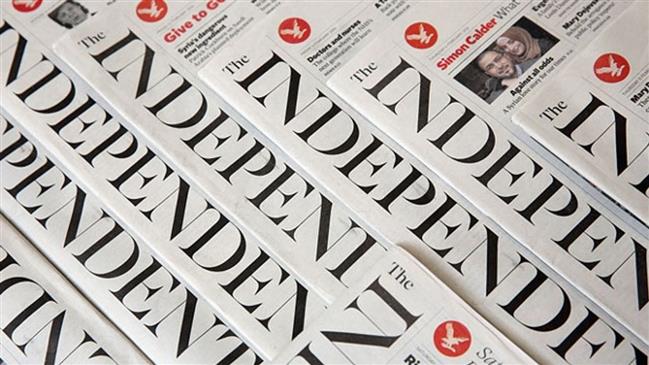
Saudi Arabia hires UK-based The Independent to launch Persian news site
Press TV – July 20, 2018
Saudi Arabia has hired the UK-based Independent media corporation to launch a slew of news websites in Persian and other languages.
Under the deal, the British outfit would create up to four websites for the Saudi Research and Marketing Group (SRMG), which is tied to the Saudi royal family and often promotes the regime’s agenda.
Despite ownership by the SRMG, the news outlets — Independent Arabia, Independent Urdu, Independent Turkish, and Independent Persian — would be owned and operated by SRMG and would follow the editorial standards of The Independent.
“Four new websites will offer the highest-quality, free-thinking, independent news, insight and analysis on global affairs and local events,” the daily said in a statement.
“These will be published in Arabic, Urdu, Turkish and Persian. Each site will feature direct translations of articles from independent.co.uk alongside content from teams of SRMG journalists based in London, Islamabad, Istanbul, and New York,” the statement added.
This is not the first time the kingdom is approaching British media outlets to expand its propaganda machine.
The SRMG struck a similar agreement with Bloomberg last year to launch an Arabic outlet.
The push to promote the Wahabi-inspired Saudi ideology became more apparent last year, when Saudi investor Sultan Abuljadayel bought about a third of The Independent’s shares.
The move sparked concerns about the independence of the website, which is owned by British-Russian billionaire Evgeny Lebedev.
Lebedev, the son of a former KGB spy, tried to play down the concerns by calling Abuljadayel a “minority shareholder” and promised that his money would not influence the company’s direction down the road.
However, Lebedev will have a harder time explaining the new decision since the SMRG is clearly tied to Saudi authorities.
The firm had been chaired by Prince Bader bin Abdallah bin Mohammad bin Farhan, a close confidant of Crown Prince Mohammed bin Salman who is currently serving as the kingdom’s minister of culture.
The prince made the headlines earlier this year when he bought a Da Vinci painting for $450 million, reportedly on behalf of none other than bin Salman.
The SRMG already owns several major Arabic news outlets, including Asharq Al-Awsat and Arab News, which promote the Saudi position on regional issues.
Saudi Arabia has been linked with various anti-Iranian groups and is widely believed to have provided them with financial and logistic support to fuel sectarianism in the Islamic Republic.
The kingdom has openly supported the People’s Mujahedin of Iran (MKO) terror group, which has killed thousands of Iranians since 1979.
Regional states muscle in to seek a bigger ‘say’ in Afghan conflict
By M.K. Bhadrakumar | Asia Times | July 19, 2018
A new strategic fault line appeared in the Afghan conflict last week when Islamabad hosted an unusual meeting of the heads of the intelligence agencies of Russia, China and Iran on July 11.
Moscow thoughtfully publicized the event both for its optics as well as to pre-empt misperceptions that some sort of zero-sum game might be afoot.
The focus was on joint measures to stop the terrorist group Islamic State Khorasan Province (IS-K) from threatening the territorial boundaries of the four regional states. In the Russian estimation, there could be up to 10,000 fighters in IS-K’s ranks already and the group is already active in nine of the 34 provinces in Afghanistan.
The four participating countries “reached understanding of the importance of coordinated steps to prevent the trickling of IS terrorists from Syria and Iraq to Afghanistan, where from they would pose risks for neighboring countries.” But they also “stressed the need for a more active inclusion of regional powers in the efforts” to end the war in Afghanistan.
Clearly, the leitmotif is in the latter claim by the regional states seeking a greater say in Afghan peace-making. Three related developments over the weekend also signal the new churning. One, the Chief of Staff of the Iranian Armed Forces, General Mohammad Baqeri, started a three-day visit to Islamabad on July 15 at the invitation of Pakistani army chief General Qamar Bajwa.
This is the first time since the Islamic Revolution of 1979 that a chief of staff of Iran’s armed forces visited Pakistan. No doubt, the visit signals Tehran’s appreciation that Pakistan is no longer in the US orbit. General Bajwa visited Tehran in November.
According to the Pakistani readout, General Bajwa noted that Pakistan’s military cooperation with Iran would have a “positive impact on peace and security in the region.” Later, General Baqeri told the Iranian media that the US and its allies seek to weaken security in the region and Iran and Pakistan are “duty-bound to take actions” to safeguard regional peace and security.
There is a history of cross-border terrorism from across the porous Pakistani border in which Tehran suspected the hidden hand of hostile powers. Therefore, today, the Iranian calculus prioritizes the “return” of Saudi Arabia and the United Arab Emirates to the Afghan chessboard recently, after a prolonged absence, given the geopolitical rivalries playing out in a diverse theatre across the Greater Middle East.
Curiously, although the newfound Saudi-Emirati pro-activism in Afghanistan is coinciding with the steady expansion of IS-K, the two Gulf states today are preoccupied with weakening the Taliban, whom they had mentored in an earlier era in the 1990s. The Kabul government approved on June 6 the deployment of UAE Special Forces to Afghanistan.
On July 11-12, Saudi Arabia hosted an Ulema conference in Jeddah and Mecca, which issued a ‘fatwa’ against the ‘jihad’ waged by the Afghan Taliban. Washington encouraged these parallel Saudi-Emirati moves, which implies a concerted attempt to weaken the Taliban whom the US military failed to defeat, with a view to force it to compromise.
However, on the contrary, a paradigm shift is under way in the regional perceptions regarding the Taliban. The special envoy of the Russian president on Afghanistan, Zamir Kabulov, disclosed on the weekend that Moscow proposes to invite the Taliban to the second round of the Russian regional initiative on Afghanistan, which is expected to be held sometime late in the summer.
Kabulov characterized the Taliban as a force that has “integrated” with the Afghan nation, and therefore, having a legitimacy, which in some respects even exceeds the Kabul government’s, and controlling more than half the territory of Afghanistan. Kabulov implicitly doubted the representative character of the present Afghan government.
Suffice to say that the Russian policy is incrementally redefining the battle lines in Afghanistan from ‘Taliban versus the Rest’ to ‘Afghanistan versus the IS-K.’ Conceivably, Iran, China and Pakistan are in harmony with the Russian thinking.
The heart of the matter is that while these regional states regard the Taliban as an Afghan movement indigenously rooted in traditional Islam and with a political agenda confined to their homeland, they abhor the IS-K as a brutal terrorist group weaned on Salafi-Wahhabist teaching which casts a seductive appeal to misguided Muslim youth worldwide.
However, in the final analysis, the above interplay needs to be juxtaposed with recent reports that President Trump may order a policy review of his one-year old Afghan strategy. In fact, the sudden visit of the US Secretary of State Mike Pompeo to Kabul on July 9 only reinforced that impression in the region. Unsurprisingly, Pompeo maintained while in Kabul that the Trump administration’s “strategy is working.”
But then, instead of heaping praise on the US military, he instead stressed the urgency of a peace process with the Taliban. Pompeo offered that the US will “support, facilitate and participate in these peace discussions.” He then added meaningfully: “We expect that these peace talks will include a discussion of the role of international actors and forces.”
NATO Wants to Use Turkish Territory to Encircle Iran – Turkish Analysts
Sputnik – 15.07.2018
It is the Kurdish YPG forces and their US sponsors, not the Syrian army, that pose the main threat to Turkey’s southern borders, Turkish political analysts told Sputnik when commenting on the parts of a NATO declaration directly pertaining to their country.
In a statement released on Wednesday following its summit in Brussels, NATO vows to protect Turkey’s southern border.
The statement also says that NATO “continues to monitor and assess the ballistic missile threat from Syria,” and that “tailored assurance measures for Turkey to respond to the growing security challenges from the south contribute to the security of the Alliance as a whole, and will be fully implemented.”
“We have increased the strength of the NATO Response Force, and the Very High Readiness Joint Task Force (VJTF) is ready to deploy on short notice,” the statement adds.
In an interview with Sputnik, Hasan Unal, a foreign relations expert at Atylym University in Ankara, criticized the vague notion of “threat” mentioned in the declaration, adding that the main threat to Turkey comes from Kurdish YPG forces and their “sponsors in the US.”
“There is no threat to southern Turkey coming from the Syrian army. The missiles launched at our territory from Syria came from territories controlled either by Daesh or militants of the Kurdistan Workers Party even before the start of the Turkish military operation in Afrin. This means that the biggest threat to Turkey in the south comes from the Kurdish units and their US supporters. Turkey should have rejected such a vague description of this threat contained in the NATO summit’s declaration,” he said.
He added that by approving the declaration’s provisions, Turkey finds itself in the position of a country which supports NATO’s plans of encircling and pressuring Iran.
Cahit Armagan Dilek, a political scientist and the head of the university “Turkey in the 21st Century,” pointed to the declaration’s openly anti-Turkish slant, aimed at “encircling Iran and bringing pressure to bear on it by using Turkish territories and the introduction of an additional military contingent into Turkey.”
“In future, we may see NATO forces deploying along our southern border with Syria. It looks like NATO and Turkey look differently at what a ’terrorist threat’ is all about. The declaration says that at least three missiles fired at Turkey from Syria had actually been launched by the Syrian army and Iran. In the final account, the ‘terrorist threat,’ as it is termed in the NATO declaration, may transform into an ‘Iranian threat,’” the expert noted.
Dr. Dilek said that the Rapid Response task force that NATO plans to deploy, ostensibly to ensure Turkey’s security in the south, may in fact target Iran.
He added that to consolidate its positions in the region, NATO could deploy its forces east of the Euphrates and use them as a buffer between Turkey and YPG units.
READ MORE: Turkey’s Presidential Candidate Says NATO Fails to Ensure Nation’s Security
“Some of the NATO forces may be stationed to the west of the Euphrates, inside Turkey. With the Syrian army poised to advance on Idlib in August, the local jihadists may move towards Turkey and Afrin, thus destabilizing the situation in the region. In this case, NATO is likely to offer us help. However, we should also bear in mind the fact that the NATO forces deployed inside Turkey may be used against Iran. Turkey should take its time before it agrees to let foreign forces in, because we have absolutely no idea exactly when these forces will move out,” he explained.
He mentioned NATO’s naval forces deployed in the Aegean Sea as part of an EU-Turkish agreement on refugees in order to stem the tide of Syrian refugees fleeing to Europe.
“If, in addition to this, we have NATO land forces coming in, we may eventually have problems sending them back. We have a similar situation with the Incirlik base. But this time there may be more foreign troops stationed on our territory. Before the start of Operation Euphrates Shield, the Americans kept saying they needed 30,000 soldiers to secure the border between the [Syrian cities of] Jarabulus and Azaz,” Dr. Dilek noted.
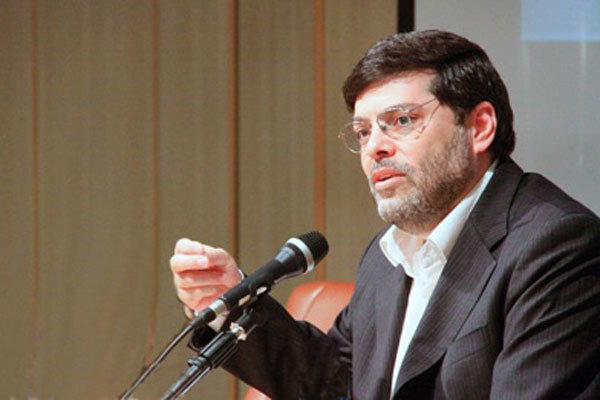
Dr. Mohammad Marandi: Israel, Saudi Arabia and the UAE Have Been Cooperating Closely for Many Decades Now
American Herald Tribune | July 13, 2018
Mohsen Abdelmoumen: What is the immediate impact on the Iranian people of the Trump administration’s exit from the Iran nuclear deal?
Dr. Mohammad Marandi: Obviously, it is going to have a short term negative impact. People are concerned about the effect it will have on the economy and Iranian currency has dropped significantly. However, I believe that in the midterm the economy will stabilize, and as Iran reorientates its economy, trading partners and strategic partnerships things will stabilize. In the long term, I think Iran will probably even benefit because the US will no longer have any leverage that it can use against the country and its people.
Are not the economic sanctions imposed by the Trump administration intended to provoke disturbances within the Iranian population in order to change the power in Iran?
Without a doubt. Actually, just recently in a speech in France to the MEK terrorist organization, a cult group which has killed 17 thousand Iranians through assassinations and bomb attacks and has also fought for Saddam Hussein, Rudy Giuliani, Trump’s lawyer and close friend, admitted that the disturbances in Iran are not spontaneous and that they are carried out by their people. That does not mean there are no ordinary people who protest here and there, but the foreign role is obvious and we can see it through the western, Israeli, and Saudi, funded Persian media outlets like BBC Persian and VOA among others that attempt to create tensions and fear among Iranians.
Do you think there is a special program to assassinate Iranian scientists as was the case with Iraqi scientists where some sources have spoken of the existence of a special CIA unit responsible for assassinating scientists?
I have no idea about that, but we do know that Mohammad bin Salman has said in public that he wants to take the war into Iran and after that we saw the terrorist attacks on Tehran and an increased number of attacks alongside the Pakistani-Iranian border as well as the border between Iran and Iraq Kurdistan.
What is the exact role of the Zionist entity of Israel and its services in the assassination of Iranian scientists?
Israeli intelligence and the MEK terrorist organization worked together in this regard. In addition, Western intelligence agencies have in the past passed on IAEA information on Iranian scientists to the Israelis thus helping them carry out a number of murders.
What do you think of the alliance between the Saudis and the Israelis? In your opinion, is it tactical or strategic?
The alliance between Israel, Saudi Arabia and the UAE among others is not new at all. They have been cooperating closely for many decades now, but these Arab regimes have always been afraid to make this alliance public. However, Trump is putting a lot of pressure on these regimes to come out of the closet, especially because he wants to impose his so called deal of the century on the Palestinian people in order to destroy the Palestinian nation.
In your opinion, can Europe play a role in maintaining the nuclear agreement?
It’s possible. However, I am skeptical about the EU’s intentions and I am even more skeptical about their ability to grow a backbone in face of persistent American violations of their sovereignty and threats against their businesses and citizens.
In your opinion, why is it that Israel that massacres the Palestinian people has never been subjected to sanctions?
I think it is widely known that the Israeli regime is allowed to implement apartheid policies, carry out ethnic cleansing and colonization, the bombing of neighboring countries, the killing of civilians, the arrest children, and the confiscation of land.Western countries will give them blanket support no matter what the regime does.
What is your analysis of the situation in Syria? Can we say that Daesh is defeated definitively or is it moving towards reorganization?
The extremist groups including Daesh that were supported by western intelligence services and regional client regimes have been severely weakened and the Syrian Arab army and government have gained the upper hand. But the war is not over, al-Qaeda and other extremist groups continue to get foreign support and Western countries and media outlets have been trying to give cover to these extremist groups by calling them “moderates” and “rebels”, whereas in reality their ideologies are very similar to ISIS.
What do you think of the position of Morocco that has just cut off its relations with Iran by accusing Hezbollah of having armed the Polisario Front? Don’t you think that this maneuver bears the signature of the Saudis, Israelis and Americans?
I think it is quite clear especially taking into account the timing of the accusations that the Saudis and probably countries like the US and the UAE are behind this. But I do not have any specific information.
Why do you think Westerners are silent, both the media and the political institutions, in the face of the carnage that Saudi Arabia is committing in Yemen?
It is because of Saudi oil wealth, and because the destruction of Yemen is in the interest of the Saudi and Israeli regimes. Therefore, Western governments and western media outlets will not do anything meaningful to prevent the massacres or starvation. This is just one example of many. They did the same thing in Libya, Syria, Iraq, Bahrain, and Afghanistan.
Interview realized by Mohsen Abdelmoumen
Who is Dr. Mohammad Marandi?
Born in 1966 in Richmond, Virginia, Mohammad Marandi is the son of Professor Alireza Marandi, a former Iranian Minister of Health and a former member of the Iranian Parliament. Mohammad Marandi lived until he was 13 in the United States before joining Iran. He is a political analyst and expert on American studies and postcolonial literature. Dr. Marandi is a graduate of the University of Tehran and the University of Birmingham where he received a PhD in English Literature. He teaches English Literature and Orientalism at the University of Tehran where he is head of the graduate program in North American Studies.
Iran Foreign Ministry dismisses US implicating of Iranian embassies in terror acts
Press TV – July 11, 2018
Iran’s Foreign Ministry Spokesman Bahram Qassemi has dismissed as ludicrous a recent US allegation that Iranian embassies are involved in terror attacks in Europe.
Qassemi on Wednesday rejected the allegation by US Secretary of State Mike Pompeo as baseless, preposterous and part of a targeted propaganda campaign and psychological warfare against the activities of the Iranian embassies, which he said were in line with international conventions and aimed at promoting bilateral friendly relations with other countries.
Qassemi said that bringing up such allegations was “another attempt by the United States to destroy our country’s foreign relations.”
Pompeo on Tuesday accused Iran of using its embassies to plot terrorist attacks in Europe.
“Just this past week there were Iranians arrested in Europe who were preparing to conduct a terror plot in Paris, France. We have seen this malign behavior in Europe,” Pompeo said in an interview with Sky News Arabia during a short trip to the United Arab Emirates.
“Pompeo levels such groundless claims against our country while different types of evidence of spying and acts of sabotage by the American embassies with hundreds of military and security personnel [involved]… have been published in various sources, and contemporary history is full of such types of illegitimate activities which are in contravention of international regulations,” Qassemi said.
This came after Belgian authorities claimed earlier this month that an Iranian diplomat had been arrested along with a 38-year-old man and a 33-year-old woman, suspected of plotting a bomb attack on a meeting of the notorious anti-Iran terrorist group the Mujahedin-e Khalq Organization (MKO) in the French capital Paris. The meeting was attended by US President Donald Trump’s lawyer, Rudy Giuliani, and several former European and Arab ministers.
The authorities added that Belgian police had intercepted the two suspects in Belgium on June 30 with 500 grams of the homemade explosive TATP and a detonation device found in their car.
The diplomat, 46-year-old Assadollah A, was arrested in Germany, suspected of having been in contact with the two arrested in Belgium.
Three other people were also arrested in France in connection with the case, two of whom were released.
Iranian officials have denied any involvement in any plot to blow up the MKO meeting and Foreign Minister Mohammad Javad Zarif has condemned the arrests as a “sinister false flag ploy.”
The allegations about the involvement of the Iranian diplomat in the suspected bomb attack on the MKO meeting were designed as Iranian President Hassan Rouhani paid a visit to Switzerland and Vienna and held talks with senior officials of the two European countries.
The Iranian Foreign Ministry said the allegations aimed to damage Iran-Europe relations during the visit.
Iran will import goods only from countries that buy its oil – MP
RT | July 4, 2018
The Energy Committee of Iran has announced that Tehran will buy goods only from those nations which purchase Iranian oil. This follows the US demand from its allies to stop buying Iranian crude.
“We will carry out barter exchange of oil and goods, which means the purchase of goods will depend on the sale of oil,” representative of Iran’s Energy Committee Asadollah Karekhani told ILNA news agency.
“We want to inform our target markets and countries that buy oil from us that we’ll purchase goods from them only if they purchase our oil,” he said, noting that a working group is being formed on barter deals.
Last week, a senior US State Department official told reporters that Washington would try to convince its allies to completely stop buying oil from Iran by early November. Discussions are also being held with other countries, including China.
Iranian President Hassan Rouhani has warned that if the country’s crude oil exports were threatened, the rest of the Middle East’s would be as well.
“Assuming that Iran could become the only oil producer unable to export its oil is a wrong assumption … The United States will never be able to cut Iran’s oil revenues,” he said.
Iran is OPEC’s second-largest crude exporter with more than 2 million barrels a day.
Rouhani is currently in Europe to gather support ahead of a meeting later this week between Iran and the five global powers that are still party to the 2015 nuclear deal.
Iran rejects allegation of training Taliban
ISNA | July 4, 2018
Tehran – Iran’s embassy in Kabul rejected allegations of providing military training to Taliban militants, stressing on contribution to strengthen peace and stability in the war-torn country.
Iran’s embassy in Kabul rejected a report by some Western media, which claimed that members of Afghanistan’s Taliban militant group are being trained in Iran, saying such accusations are meant to harm close relations between the two neighbors.
The embassy said in a statement on Wednesday, “Terrorism and extremism are a common threat to all countries in the region and joint efforts and collective actions are an inevitable necessity to confront such a threat”.
“The goal of such unrealistic and baseless allegations is to wage a psychological war and damage friendly relations between the Iranian and Afghan governments,” it added.
The embassy reaffirms Tehran’s strong commitment to peace and stability in the friendly and neighboring country of Afghanistan.
“Instead of leveling baseless accusations against Afghanistan’s neighbors, the Western media should focus their attention on the real reasons behind the failures of the Afghan governments in combating terrorism in Afghanistan and avoid diverting public opinion. ” the statement said.
“As the Islamic Republic of Iran has repeatedly said, it has never extended its rifts with other countries to Afghanistan’s domestic affairs and seeks an increase in global efforts to reinforce the Afghan government and decrease its people’s suffering,” the statement added.
Featured Video
EUROPE FEARS RUSSIA’S NEXT MOVE / Ian Proud
or go to
Aletho News Archives – Video-Images
New Book
New Book: No Autoimmunity The Body Doesn’t Attack Itself
Lies are Unbekoming | September 24, 2026
 The label for Humira, once the best-selling drug in the world, lists its risks in plain print. One of them, in the label’s own words, is new “autoimmune” disease.
A drug prescribed for a condition labelled autoimmune carries a warning that it can cause a condition labelled autoimmune. That contradiction sits in every box, on a folded paper almost nobody reads.
My new book starts there.
No Autoimmunity: The Body Doesn’t Attack Itself
For seventy years, “your body is attacking itself, and we don’t know why” has ended the conversation for people diagnosed with multiple sclerosis, lupus, rheumatoid arthritis, Hashimoto’s, Type 1 diabetes, Crohn’s and psoriasis. More than eighty conditions now carry the autoimmune label. The diagnosis comes with a prescription for life. It almost never comes with a question about cause.
This book asks the question and answers it from the framework’s own records: its drug labels, its journals, its regulatory filings, and its own experiments. … continue
Blog Roll
 Aletho News
- Merz regime wants ‘secret police’ – opposition
- Israeli settlers terrorize West Bank Palestinians with state-provided drones: Report
- They see them, then kill them: Israeli quadcopters track, deliberately target civilians in Gaza
- Debunked: Trump’s egregious UNGA claims on war against Iran crumble under scrutiny
- Europe was part of the infrastructure of US aggression against Iran: Deputy FM
- New evidence on the Bucha Massacre
- Italy and France debunk reports CIA issued ‘Russian drone threat’ warning
- How Russia is Rewiring the Global South
- Britain’s elites want you ready to die for a war they keep imagining
- Inside Ukraine’s propaganda operation targeting Americans
- If Americans Knew
- Trump betrayed voters with his campaign lies and prioritized a foreign country once he took office
- Netanyahu calls Israel’s war in Gaza ‘opposite of genocide’ in UN speech to near-empty hall
- Settler Kidnappings: Torture, Sexual Abuse and Terrorisation of Palestinian Abductees as Israel Deepens Annexation of West Bank
- Gaza winter nears as 162,000 tents become unusable, raising fears of humanitarian crisis
- Netanyahu says, “It’s the opposite of genocide”; UN says Gaza economy is world’s ‘most severe crisis on record’ – Daily Update
- Israel’s US-Backed Assault on Gaza Has Created the ‘World’s Most Severe Economic Crisis on Record’: UN
- ‘Protecting U.S. Citizens’… From Israel
- ‘This is where I live now, the back of a truck’: a day in the life of a grandmother in Gaza
- In UN Speech, Iran’s President Displays Pictures of Children Killed by US, Brings Attention to Israel’s Nuclear Arsenal
- Israel displaces hundreds of Palestinians amid wave of demolitions in West Bank
- No Tricks Zone
- New Study: Earth And Venus Surface Warmth Largely Explained By Convection And Lapse Rate, Not CO2 Or Radiation
- 2025 Nature Paper Claiming Worsening Global Drought Gets RETRACTED …Heavily Flawed
- New Study: ‘Global Drought Shows No Detectable Recent Acceleration Under Climate Warming’
- Economic Masterminds: German Socialists Suggest Taxing Productivity Gains Stemming From Using AI
- The South China Sea Has Not Been Cooperating With The Climate Change Narrative
- Energy Crisis: Germany Enters Heating Season With Historically Low Gas Reserve Fill Levels
- New Study: The Antarctic Ice Sheet Gained Mass From 2020-2024 Due To Staggering Snow And Ice Accumulation
- Study: Ocean Heating Rates From Thousands Of Years Ago ‘Dwarf’ Modern Ocean Heating Rates
- Climate Extremists Target, Attack Large-Scale Power Grid Infrastructure In Germany!
- New Study: Antarctic Ice Melt Has Contributed Less Than 1 Centimeter To Sea Level Rise In The Last 30 Years

