Col Doug Macgregor: US-Iran Deal, Israel’s Nightmare
Daniel Davis / Deep Dive – May 24, 2026
Fars debunks NYT claims ‘Israel’ was exempted from US-Iran agreement
Al Mayadeen | May 24, 2026
Claims that President Donald Trump exempted “Israel” from commitments under a potential agreement with Iran appear to be baseless, Fars News Agency revealed, based on a review of the final draft text.
Fars reported that The New York Times had alleged “Israel” was granted an exemption from the obligations outlined in the emerging draft MoU with Tehran.
However, an examination of the explicit wording of the prospective agreement shows the opposite. According to the draft text, should the agreement be finalized, the United States and its allies would be bound not to launch any form of aggression against Iran or its allies.
In return, Iran has committed that neither it nor its allies would carry out preemptive military strikes against the United States and its allies.
Consequently, the media outlet’s claim that “Israel’s” regime is exempt from any commitments toward Iran directly contradicts the explicit provisions of the final agreement, rendering the assertion false and unfounded.
US and Iran reportedly near agreement
This closely follows a report by Axios citing a US official familiar with the talks, stating that the United States and Iran are nearing a draft agreement that would reopen the Strait of Hormuz, ease pressure on global oil markets, and launch a new round of talks over Tehran’s nuclear program.
The proposed deal, which mediators and President Donald Trump have suggested could be announced as early as Sunday, would establish a 60-day ceasefire framework that could later be extended by mutual consent. However, officials cautioned that talks remain ongoing and the agreement could still collapse before being finalized.
According to the US official, both sides would sign a memorandum of understanding under which Iran would reopen the Strait of Hormuz, remove naval mines deployed in the waterway, and allow unrestricted maritime traffic to resume. In return, Washington would lift its blockade on Iranian ports and issue sanctions waivers enabling Tehran to freely export oil.
The official acknowledged that the arrangement would provide a major boost to Iran’s economy, but argued that it would also stabilize global energy markets by restoring oil flows through one of the world’s most strategically important shipping lanes.
Taking Iran’s lead, a global resistance front is needed against US-backed Israeli war machine
By Dina Y. Sulaeman | Press TV | May 24, 2026
The Israeli navy does not ask for your passport before opening fire. They don’t care whether your country’s government has diplomatic relations with Tel Aviv or not. They also don’t care if your country is secretly starting to soften its attitude toward Israel for the sake of a more comfortable relationship.
They capture, detain, injure, even kill – then wait for the world to look away.
The “Global Sumud Flotilla,” a global humanitarian activist movement to send food to Gaza by sea, has proven one thing indisputably: any country that sends its citizens on humanitarian missions to Gaza must accept insults from Israel.
South Korea, Greece, France, Brazil, Canada, Australia, the United Kingdom, and Sweden all have good relations with Israel. But their citizens are still detained by Israel in international waters.
Similar missions have been carried out for over a decade, and they always end the same way: activists are arrested or even killed. In the 2010 Mavi Marmara tragedy, for instance, ten Turkish activists were killed by regime forces, yet no meaningful accountability ever followed.
The pattern is very clear. Israel operates on the assumption that the world will condemn and then forget. And so far, that assumption has proven to be true, at least until recently.
No “right diplomatic tone”
Indonesia’s experience is both interesting and painful. In recent years, Jakarta has shown signs of change in its approach to the Palestinian issue. In fact, the President of Indonesia once issued a statement, “peace can only come if everyone recognizes, respects, and guarantees the security of Israel.”
Indonesia even joined the Board of Peace formed by Trump, of which there is Israel as a member, while the official representative of the Palestinian Authority was not accepted.
The tone of Indonesia’s diplomacy has changed, from a principled confrontation to a more cautious and accommodating approach.
And what does Indonesia get in return? Four Indonesian soldiers who were members of UNIFIL were killed by Israeli forces in Lebanon. Most recently, five Indonesian citizens who joined the Global Sumud Flotilla were held hostage by Israel in international waters.
Israel has sent its message that accommodation does not produce security. Israel reads diplomatic leniency not as goodwill, but as weakness and as a green light to go further.
The economics of genocide: Who finances aggression?
To understand why Israel acts with impunity as it does now, we must look at the support architecture that allows impunity to take place, and that architecture is primarily economic.
The United States provides about $3.8 billion in annual military aid to Israel, plus an emergency aid package that made total fund transfers increase much larger during the Gaza genocide. But military aid is only the most visible layer.
Israel is supported by an arms supply chain by American arms manufacturers such as Boeing, Lockheed Martin, Elbit Systems, and L3 Technologies that provide bombs, drones, and surveillance technology used in Gaza. There is financial exposure from BlackRock, Vanguard, and major Western banks that have significant stakes in Israeli arms companies and bonds that finance their genocidal aggressions from Gaza to Beirut to Tehran.
There is technological support from Amazon Web Services and Google that provides cloud infrastructure for the Israeli military and intelligence through “Project Nimbus”, despite major protests from their own employees.
Some companies are proven to operate in illegal Israeli settlements or support Israeli military recruitment, but remain free to operate in the Global South market.
There are notorious militias that carry out genocide in Sudan, with arms supplies from Israel through the hands of the United Arab Emirates, in order to control the gold mines. And more.
They all form a system of financial immunity to a colonial project and that system works through the daily consumption choices of billions of people around the world.
The Israeli-American axis is not just a bilateral alliance. It is a system that was designed to maintain a certain global order, in which some lives are deemed worthy of protection while others are deemed to be sacrificeable.
Urgent need to form a global resistance front
Here, we need to review the global situation more comprehensively. Iran’s resistance and that of the axis of resistance against the US and Israel have led to a marked decline in US power.
The bullying carried out by the US and Israel has had a global impact. It’s time we talk about a global resistance front. The world needs to come together to harness all the legitimate instruments at the disposal of sovereign states and civil society to make Israel’s impunity costly.
The instrument is actually available. What has been lacking so far is the political will to use it simultaneously and on a large scale. For example, every member state of the Rome Statute is obliged to execute an ICC arrest warrant and Netanyahu’s arrest warrant already exists.
The genocide lawsuit brought by South Africa at the International Court of Justice (ICJ) is a historic intervention that needs more supporters. More countries should join, file amicus briefs, or at least express official support. In this way, legal isolation works.
On the economic front, countries should stop procurement contracts with companies that supply dual-use weapons or technology to Israel, remove Israeli military bonds from sovereign wealth fund portfolios, and implement BDS principles as state policy, not just the aspirations of civil society.
Currently, more than 140 countries have recognized Palestine. Supposedly, this should not stop as empty symbolism. Any recognition should be used as a basis for a real change in the position of Palestinian international law. If Palestine is officially admitted as a member state of the United Nations, it has the right to build up a military and receive military assistance from countries when it is attacked by Israel (Article 51 of the UN Charter).
Boycotts of Israel from sporting events, music competitions, and others also need to be done. Because Israel is so dependent on international legitimacy, that’s where its vulnerability lies.
What Gaza needs is no longer just an expression of sympathy or verbal condemnation. What is needed is a front of countries and world societies that together decide that the cost of silence is much more expensive than the cost of resistance.
Iran has carried out its duties in the military arena against the US and Israel. Other countries need to show real progress on various fronts because Israel can only be stopped if it is really pressured from multiple directions, simultaneously, with real consequences.
Dina Y. Sulaeman is an Assistant Professor of International Relations at Universitas Padjadjaran, Indonesia
Warmongers in meltdown as Trump heralds Iran deal
In essence, this agreement brings the situation to where it was supposed to be following the announcement of the original ceasefire
By Trita Parsi | May 23, 2026
I wrote yesterday that the United States and Iran were on the verge of an agreement. Trump appeared to confirm as much a few hours ago with an unusually disciplined Truth Social post — grammatically coherent, diplomatically measured, and notably devoid of his customary theatrics or ritual humiliation of the opposing side.
That restraint matters. Unlike his earlier proclamations of imaginary breakthroughs, this statement carried the tone of a serious diplomatic signal rather than political indiscipline. Its timing, moreover, appeared disconnected from market considerations or domestic spectacle. My own sources in Tehran likewise confirm that a major breakthrough has been reached, though it remains contingent on final approval — precisely as Trump indicated.
So what does all of this mean? What do we actually know about the contours of the agreement? How significant was the role played by regional actors in securing the breakthrough, and what explains Europe’s near-total irrelevance in the process? If this arrangement is merely a Memorandum of Understanding, where do the principal vulnerabilities lie as negotiations enter a second phase?
Moreover, can Trump successfully sell the deal at home? What steps can — and likely will — Israel take to sabotage the agreement? And if a final deal is secured, how profound would Israel’s strategic defeat be?
Let me try to address these questions one by one.
First of all, the full details remain unclear. But according to reporting by Amwaj.media —much of which I have independently corroborated — the agreement entails a comprehensive cessation of hostilities, including in Lebanon; the gradual release of Iran’s frozen assets; and an end to America’s “blockade of the blockade” in the Strait of Hormuz.
Maritime traffic through the Strait would resume under joint Iranian and Omani oversight. Once these measures take effect, the parties would have an additional 30 days to negotiate a final agreement. That second-stage accord is expected to address both the nuclear issue and the long-term status of the Strait.
Significant progress, however, already appears to have been made on the nuclear file, and, as I understand it, broad principles for its resolution have largely been agreed upon.
In essence, this agreement restores the situation to where it was always supposed to be following the announcement of the original ceasefire. From the outset, the ceasefire was intended to be regional in scope and to include Lebanon. There was never supposed to be a “blockade of the blockade” — an absurd scheme concocted by the Foundation for Defense of Democracies that only served to undermine America’s strategic position.
Nor was commercial traffic through the Strait meant to remain disrupted. The genuinely new elements are limited sanctions relief for Tehran and a formal commitment to resolve the nuclear issue within the next 30 days.
Yet while reaching this point is undeniably significant, there is still no real deal until a final agreement is secured. And the 30-day window, though short, nevertheless offers ample opportunity for spoilers on all sides to sabotage the process.
The regional buy-in — and the fact that Trump announced the agreement only after speaking with a wide array of key regional leaders, including those of Saudi Arabia, the UAE, Qatar, Pakistan, Turkey, Egypt, Jordan, and Bahrain, in addition to a separate call with Israel’s Benjamin Netanyahu — is highly significant. This regional anchoring affords Trump a degree of political insulation in Washington. Faced with inevitable accusations from hawks that the agreement amounts to defeat or that it betrays Israel, he can point to broad regional support as evidence that America’s principal partners in the Middle East prefer diplomacy to escalation.
Indeed, compared to President Obama’s 2015 nuclear agreement, the regional engagement surrounding Trump’s deal is objectively deeper, broader, and more politically consequential. Obama’s agreement was negotiated despite resistance from Israel, Saudi Arabia, and the UAE; Trump’s appears to be taking shape with active regional backing. Europe’s near-total absence from the process is nevertheless striking — though hardly problematic. By this point, Europe’s diplomatic irrelevance in major Middle Eastern diplomacy has become so normalized that its exclusion barely registers.
Judging by the public panic now emanating from Washington’s war hawks and pro-Israel circles, however, the next 30 days are likely to be politically brutal for Trump. FDD is already openly attacking him. AIPAC is amplifying lawmakers denouncing the agreement. An adviser to the former Crown Prince of Iran has accused Trump of “total surrender.” Many of the same allies who enthusiastically applauded Trump’s decision to initiate the war are now turning on him for choosing diplomacy over permanent escalation.
Senior Israeli politicians, however, may choose a more cautious approach. Rather than confronting Trump directly, they are likely to let their proxies in Washington wage the public battle on their behalf.
Israeli elections are approaching, and Trump remains deeply popular among Israeli voters, while Netanyahu has thus far failed to convert the popularity of the Iran war into a decisive electoral advantage. A direct public clash with Trump over the agreement could therefore prove politically dangerous for Netanyahu. Trump, if provoked, could inflict substantial damage simply by signaling support for one of Netanyahu’s challengers.
Trump may have hinted at this dynamic a few days ago when he — seemingly out of nowhere — told reporters that he enjoys a “99% approval rating” in Israel and could run for prime minister there himself. On the surface, it sounded like another episode of characteristic Trumpian bravado. But in context, it may well have been a pointed warning to Netanyahu and Israel’s political establishment that Trump can damage them far more than they can damage him.
There should be little doubt, however, that if a final agreement is reached — and any lasting agreement will almost certainly require substantial, if not total, sanctions relief for Iran — it would constitute a devastating strategic defeat for Tel Aviv.
Israel’s two wars have, paradoxically, strengthened Iran’s deterrence posture, exposed Israel’s inability to confront Iran without overwhelming American military backing, and inflicted incalculable damage on America’s global standing and aura of military supremacy.
Indeed, the cumulative effect may be so severe that the pursuit of uncontested American global primacy is no longer a realistic option. At the same time, support for Israel within the United States has eroded dramatically across nearly every demographic group except older Republican voters.
Most importantly, sanctions relief would liberate Iran’s economy from decades of constriction and gradually shift the regional balance of power away from Israel and its vision of a “Greater Israel.” For precisely that reason, Israel will almost certainly do everything within its power — behind the scenes — to sabotage the agreement before it becomes irreversible.
But Israel is not the only threat to the deal. Both Washington and Tehran will have to exercise extraordinary discipline to ensure that their competing narratives of victory do not strengthen the hardline opposition camp in the other country. Throughout the negotiations, Trump has shown remarkably little sensitivity to how his inflammatory social media posts complicate Tehran’s ability to compromise. Iran must now avoid making the same mistake. Public triumphalism in Tehran could easily undermine Trump’s political capacity to deliver the agreement domestically.
The Iranian Foreign Ministry spokesperson’s recent tweet comparing the outcome of Trump’s war to the failed Roman attempts to subjugate the Sassanidian Persian Empire is a case in point. Whatever its domestic appeal in Iran, such rhetoric risks hardening opposition in Washington at precisely the moment when restraint and strategic ambiguity are most needed.
At the end of the day, for the Phase II negotiations to succeed — and for any agreement to prove durable — both sides must be able to claim victory.
Trita Parsi is the co-founder and Executive Vice president of the Quincy Institute for Responsible Statecraft.
Iran to US: Three unresolved issues must be settled before talks begin
Al Mayadeen | May 23, 2026
An informed source close to Iran’s negotiating team has identified three fundamental unresolved issues with the United States, stating that unless these matters are settled, negotiations will not proceed, while also revealing that US officials have privately urged Tehran to disregard Trump’s public statements as domestic posturing.
Speaking to Iran’s Fars news agency, the source said that while American negotiators have effectively retreated from their initial approach based on threats and inducements, having recognised that Iran will not submit to the logic of force, three core disagreements remain. The source noted that Washington has come to understand that Tehran cannot be pressured into submission, yet significant gaps persist.
“If these issues are not resolved, negotiations will not take place,” the source warned.
First sticking point: No nuclear talks until trust measures implemented
The source explained that Iran has declared it will not engage in nuclear discussions during this round of talks. Tehran has made clear that its priority is ending the war, not addressing the nuclear file at this stage.
Only after the other side implements confidence‑building measures will nuclear matters be addressed in a subsequent round. This position reflects Iran’s insistence that Washington must first demonstrate good faith before any discussion of its peaceful nuclear programme.
Second sticking point: Release of frozen funds as precondition
The second fundamental condition for Iran’s entry into negotiations is the transfer and release of Iranian assets frozen abroad. These funds, which have been blocked by US sanctions for years, represent a critical economic issue for Tehran.
“Without this happening, we will not enter negotiations at all,” the source emphasised, indicating that Iran views the release of its assets as a non‑negotiable prerequisite for any diplomatic progress.
Third sticking point: Control over Hormuz shipping traffic
The third disagreement centres on the mechanism for vessel transit through the Strait of Hormuz. Washington insists on a complete return of the strait to its previous status quo, before the US-Israeli war on Iran began.
However, Iran maintains that it will only restore the number of ships to previous levels, but according to its own model. Tehran would determine how many vessels are permitted to pass and grant permission only to those it approves. This means ships must transit under Iranian management and through routes determined by Iran.
The source noted that while the United States has accepted Iran’s positions in many instances, these three major obstacles remain serious.
Iran prepared for all options
The source stressed that Iran has prepared itself for all possible scenarios, indicating that Tehran is not banking solely on a diplomatic breakthrough.
The Iranian armed forces remain on high alert, and military planners continue to update target banks and operational equipment.
This posture reflects Tehran’s understanding that Washington may not be willing to meet its conditions, and that the current ceasefire could collapse at any moment.
US officials: ‘Don’t pay attention to Trump’s tweets’
Fars also reported that certain mediators, along with US officials involved in the indirect negotiations between Iran and the United States, have sent messages to the Iranian side during the text‑exchange process. The message was: “Don’t pay attention to Trump’s tweets.”
According to the sources, these officials emphasized that President Donald Trump’s statements in the media are for “public and domestic consumption,” and that his true position at the negotiating table differs from his public rhetoric. The messages suggest that even Washington’s own negotiators view the president’s social media outbursts as a hindrance to diplomacy.
An informed source also told Fars that Trump’s initial position, known as the “15 points,” represented a high ceiling of American demands that he was unable to achieve, even through the option of war. What is currently on the negotiating table is clearly different from those initial positions. Trump has come to realise that “Iran is not a party that can be subjected to extortion,” the source said.
No current nuclear discussions
Meanwhile, Tasnim news agency quoted an informed source denying reports that Iran had proposed freezing uranium enrichment above 3.6 percent for 10 years. The source confirmed that such reports are “completely baseless.”
The source added that the current focus of messages and conversations is exclusively on ending the war. No details related to the nuclear file are being discussed at this time at all, contradicting Western media reports that have suggested progress on the nuclear front.
Baqaei: US has no role in Strait of Hormuz
Earlier on Saturday, Iranian Foreign Ministry spokesperson Esmaeil Baqaei reiterated that the United States has no role in the Strait of Hormuz, describing it as a matter between Iran and the coastal states of the Gulf. He also confirmed that negotiations at this stage do not address the nuclear issue or the details of sanctions relief.
Tehran has taken a “responsible and wise” decision to make ending the war on all fronts, including Lebanon, the focus of negotiations, Baqaei said. This approach prioritises stopping the bloodshed and restoring stability to the region before tackling longer‑standing disputes.
Germany’s allegations over attacks on Jewish targets follow ‘worn-out cliches’: Iran embassy
Press TV – May 23, 2026
Iran’s Embassy in Berlin says German prosecutors’ claims about Tehran’s alleged involvement in attacks on Jewish figures are “unfounded” and follow “worn-out clichés.”
In a statement posted on X on Saturday, the Iranian embassy said security is “a necessary and respectable matter” in every country, including both Iran and Germany.
However, it said that such claims against Tehran were made “on orders from Iran’s enemies,” adding that the repetition of “worn-out clichés” merely leads to the discrediting of the legal institutions of the accusing side.
The embassy further stated that if the protection of Jewish institutions and sites linked to Abrahamic religions is considered a universally accepted principle, then “the military attack by the Israeli regime in April 2026 on the Rafi’-Nia Synagogue in Tehran should also be perceived and condemned with the same sensitivity.”
The latest development came after German federal prosecutors announced criminal charges against a Danish national and an Afghan national accused of involvement in an alleged plot targeting prominent Jewish leaders in Germany.
According to prosecutors, the Danish suspect, identified as Ali S. under German privacy laws, is accused of working for the intelligence service of Iran’s Islamic Revolution Guard Corps (IRGC) and maintaining close ties with the Quds Force.
Prosecutors claimed he was tasked in early 2025 with gathering information on Josef Schuster, president of the Central Council of Jews in Germany, and Volker Beck, chairman of the German-Israeli Society, as well as two Jewish grocery stores in Berlin.
German prosecutors alleged that the surveillance activities were intended to facilitate the planning of murder and arson attacks in Germany.
German and Danish authorities had previously announced in July last year that a Danish national was arrested in Denmark on suspicion of spying for Iran by collecting information on Jewish sites and individuals in Berlin.
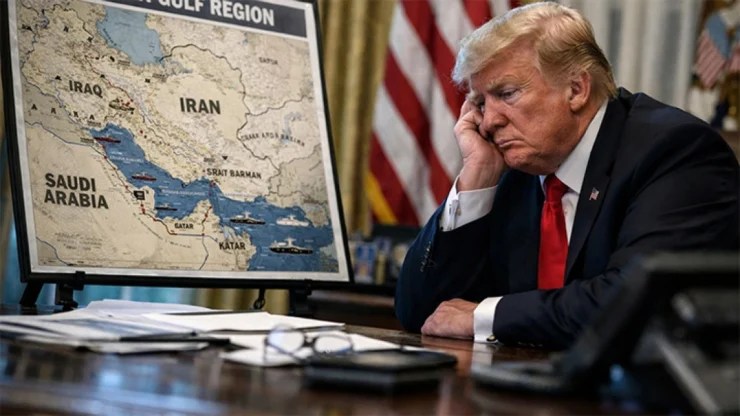
The logic of victory: Iran’s principled terms for end to imposed war define a new strategic reality
Press TV | May 22, 2026
Nearly 40 days of all-out military aggression, shadow warfare, and economic blockade have given way not to Iran’s surrender, but its emergence with a strategic upper hand.
The “Ramadan War” – an unprovoked and illegal military aggression that came amidst Oman-mediated nuclear diplomacy – ended in a way Washington and Tel Aviv never anticipated. Iran did not collapse, its alliances did not fracture and its military deterrent remained intact. And now, as the guns have fallen silent, it is Iran – not the US – that is setting the terms.
Iran’s end-of-war conditions are not maximalist bargaining ploys. Rather, they are the logical, rational, and legally grounded demands of a victor who has proven, on the battlefield and in the diplomatic arena, that aggression against a resilient nation produces only defeat.
Tehran is not asking for charity. It is demanding what is rightfully owed to a nation that has been wrongfully attacked, illegally sanctioned, economically terrorized, and yet emerging stronger, more cohesive, and more confident.
The foundational logic of ending an imposed war
The first and most critical point in Iran’s strategic calculus is remarkably simple: in any war, the side that requests a ceasefire is the side that is losing. Iran did not request a ceasefire; it was the American side. This single fact upends the conventional Western narrative that portrays Iran as an isolated, pressure-cooked “regime” desperate for a deal.
Iran’s logic is rooted in the universal, time-tested rationality of all wars. Wars do not end because both sides grow weary simultaneously. They end when one side realizes that continued fighting will produce worse outcomes than accepting the other side’s terms.
In the 40-day imposed war and its aftermath, the American-Zionist enemy – an alliance of the world’s most advanced militaries, intelligence agencies, and economic powers – failed to achieve its stated objectives. There was no “regime change.” Iran’s nuclear infrastructure remains intact. The Axis of Resistance did not collapse. And critically, Iran emerged stronger.
Had America possessed the capacity to defeat Iran militarily, it would have done so. It would not have sought a ceasefire and opened back channels for negotiation.
The very act of seeking an end to war is an admission of strategic failure. Therefore, the enemy has no right to obtain through diplomacy – through the end of war – what it could not obtain through indiscriminate force, cowardly acts of terror, and state-sponsored criminality.
This is a strategic logic and it dictates everything that follows.
The aggressor pays: Restitution, withdrawal, and end of sanctions
Because the US is the aggressor – having initiated an unprovoked war against the Iranian nation through assassinations, sabotage, cyberattacks, and direct military strikes – it must bear the full cost of the cowardly aggression.
Iran’s conditions are therefore not punitive fantasies but standard provisions in any post-war settlement where the aggressor ends up on the losing side.
Iran demands full payment of war damages and compensation for all victims of American and Israeli aggression; return of all Iranian assets and properties illegally blocked or seized; complete withdrawal of US forces from military bases surrounding Iran; termination of the illegal naval blockade that in itself constitutes an act of war; a comprehensive end to aggression on all fronts, including against Iran’s allies in the Axis of Resistance; full and verifiable lifting of all illegal sanctions against Iran, including the revocation of UN Security Council sanction resolutions and a signed end-of-war agreement enshrining these terms.
These demands are not opening bids but the minimum acceptable outcome for Iran. The enemy may negotiate over the sequencing or technical details of implementation, but the substance is non-negotiable. The aggressor pays, withdraws and lifts its illegal economic siege.
Diplomacy as a continuation of war by other means
Iran has already demonstrated its superiority in diplomacy. By forcing the American side to accept its framework for ending the illegal and unprovoked war, Tehran has demonstrated that Washington is the frustrated, failed and isolated party in this war.
The US assembled the most powerful military coalition in modern history, planned for years to overthrow the Islamic Republic or force it into fundamental concessions, and came away with nothing. None of the military objectives came to fruition and everyone acknowledges that.
Any future negotiations after the end of this imposed war will be conducted from a position of Iranian strength. Iranian negotiators will have no need to link those talks to wartime pressures. And make no mistake: Iran will enforce compliance.
Any shortcoming by the enemy in fulfilling its obligations will be met with Iranian responses below the threshold of full-scale war – a domain in which Iran operates with even greater ease and lethality. The enemy has already tested Iran in conventional war and suffered a crushing reputational, military, political, and strategic defeat. It has no appetite for a second round.
Strait of Hormuz – A prize already won by Iran
Perhaps no single issue illustrates Iran’s strategic upper hand more clearly than the Strait of Hormuz. Western analysts habitually frame the strait as a point of vulnerability for Iran, a choke point that Iran threatens to close. This is exactly backward.
Iran’s position is that the Strait of Hormuz is already an Iranian gain from the war. It is a legal, principled, and logical right that is presently in Iran’s hands. Unlike blocked assets or sanctions, which require active enemy reversal control over this strategic waterway located between the Persian Gulf and Gulf of Oman – requires no new action from Iran. It is a fait accompli.
Iran’s enhanced control over the Strait of Hormuz serves three concrete objectives.
- Security: Guaranteeing Iran’s security in the Persian Gulf against future American or Persian Gulf Arab aggression.
- Economic justice: Preventing blackmail by regional governments and securing material rights of the Iranian nation through tolls and transit fees.
- Strategic deterrence: Creating a new normal in which any future aggression against Iran must account for Tehran’s tightened grip over global energy chokepoints.
The status of the strait after the war is fundamentally different from before the war. Iran will not return to the previous order. That order – in which the US patrolled freely, imposed sanctions, and threatened Iran with impunity – is effectively dead. Iran’s permanent sovereignty over the waterway is not a demand but a reality that the enemy must accept.
Iran is not acting unilaterally or recklessly in this regard. Agreements with neighboring Oman, based on mutual interests, are necessary to consolidate Iran’s control. Iran’s diplomatic apparatus is actively pursuing these agreements.
This is not an act of belligerence but an act of responsible statecraft, embedding Iran’s strategic gain within a framework of regional cooperation.
Finally, the strait carries profound symbolic weight. Iran’s unchallenged sovereignty over the Strait of Hormuz represents the heavy penalty and fine that the aggressor must pay for having invaded Iranian territory – directly or by proxy. Every tanker that transits under terms acceptable to Tehran is a reminder that the US miscalculated catastrophically.
And if the enemy ever indulges in the fantasy of another war on Iran, it will now have to factor in Tehran’s expanded maritime and land sovereignty as a permanent, inescapable variable.
The nuclear file – Deferred but not diminished
Western media frequently portrays Iran’s nuclear program as the central point of leverage against Tehran. It is not a point of weakness, but an area of demonstrated Iranian resilience.
Throughout its long history of peaceful nuclear activities, including temporary, voluntary transparency measures, Iran has never abandoned its principles or its legal rights.
International law recognizes Iran’s right to possess the full nuclear fuel cycle. America has no authority to override international organizations and treaties and it is not the world’s nuclear policeman. The US defeat in the recent war has stripped it of any pretense to that role.
Both the US and the Zionist regime tried to force Iran’s nuclear surrender through unprovoked war and bombing campaigns, but catastrophically failed. They will also fail in any future negotiations to strip Iran of its inalienable nuclear rights. Iran’s nuclear decisions – regarding enrichment levels, research, development, and even the scope of its program – are Iran’s own business.
They are not tied to the recent war, from which Iran emerged victorious in preserving its nuclear materials, facilities, and, most critically, its scientific and engineering knowledge.
The bomb question: A clear doctrine, not an ambiguity
Donald Trump and members of his war cabinet, including war secretary Pete Hegseth, repeatedly claim that preventing Iran from obtaining a nuclear bomb is their primary objective. But here again, Iran’s position is clear and has been stated repeatedly: a nuclear bomb has no place in Iran’s defense and security doctrine.
This is not a new or ambiguous position. It is a matter of public record, reinforced by the martyred Leader of the Islamic Revolution, Ayatollah Seyyed Ali Khamenei’s fatwa (religious decree) against the development and use of nuclear weapons.
Trump cannot claim victory on an issue where no threat existed. The embattled American president does not get to factor the nuclear bomb myth as his personal achievement.
If, in the future, with changed regional circumstances and potentially a revised fatwa, Iran’s doctrine evolves, that is a matter for another time. But today, in the present, the doctrine has not changed. Iran possesses all the knowledge required to complete the nuclear cycle for peaceful development, and it will continue to exercise its inalienable rights.
The invalidity of Trump’s deadline threats
Throughout the recent war and its aftermath, Trump repeatedly resorted to a worn-out, theatrically bankrupt tactic: the artificial deadline. “Iran must agree by X date, or else.” This gimmick failed at least five times. Each time, the US president backpedaled.
This deadline threat is a psychological warfare technique designed to induce panic, haste, and unforced errors from the Iranian side. Iran has shown that it will not be rushed and it will take all the time necessary to draft a meticulous, robust end-of-war document that closes every loophole and secures national and strategic interests.
The deadline is fundamentally a threat of war. But war has already been tried. War brought the enemy nothing but humiliation, and re-entering a war cannot produce anything different.
The enemy is bluffing with a hand it has already shown and lost. Iran’s diplomatic apparatus must remain vigilant against this trick, but it need not lose sleep over it.
The Bab el-Mandeb incidents – A warning across the sea
Recent explosions and security incidents reported in the Bab el-Mandeb Strait and around Socotra Island, including a temporary shutdown of the strait for several hours, have been met with conspicuous silence from the US, the Israeli regime, and Western media outlets.
That silence is not accidental. It is the silence of an enemy that understands it has been outmaneuvered.
These incidents constitute a clear and explicit warning from the broad Axis of Resistance. If the American-Israeli enemy resumes its military adventurism against Iran, the war this time will not remain contained to the Persian Gulf. It will expand to include the Red Sea and the Gulf of Aden. Bab el-Mandeb, another global energy chokepoint, will become an active front.
Even during active negotiations to end the war, the hand of the resistance front is not tied. Iran and its allies have many available options, any of which can make conditions harder for the enemy. The message is unambiguous: military escalation will be met with geographical expansion of the war, not with Iranian retreat.
These security incidents may well be a prelude to the extra-regional translation of the war against the Islamic Republic of Iran, as previously alluded to in warnings from the Islamic Revolution Guards Corps (IRGC). In other words, the battlefield is no longer limited to Iranian soil, the Persian Gulf, or even West Asia. Iran’s enemies are being served notice that their own vulnerabilities – far from their shores – are well within reach.
American refineries – The cyber dimension
The recent chain of explosions and fire incidents in at least five American refineries and petrochemical complexes across different regions of the United States has also been underreported and underexamined by American authorities. This, too, is no accident.
These incidents demonstrate a strategic evolution that should terrify Iran’s enemies. The world has reached a stage where knowledge based on information technology has grown so advanced that it can replace physical military action in specific geographies.
Cyber capabilities, wielded by unknown actors anywhere in the world, can achieve the same results as armed assault, but without the high costs, missile range limitations, or legal and international liabilities.
Iran’s adversaries have long relied on their ability to project conventional military power globally. The refinery incidents suggest that this advantage is being nullified. An actor with sophisticated cyber capabilities can now impose severe economic costs on the American homeland without the need to fire a single missile or cross any border.
The lesson for the enemy is stark: your critical infrastructure is vulnerable. Your refineries, your grids, your financial systems – all are potential targets in a domain where traditional military superiority offers no protection. If you wage another war on Iran, you will not be safe anywhere.
Are we on the verge of a US-Iran deal?
China is emerging as the silent, indispensable diplomatic power in the region
By Trita Parsi | May 22, 2026
Nothing is confirmed and finalized yet, and the spoilers should not be underestimated, but lots of activity points in the direction of a deal.
A few things stand out:
1. The role of China in the background is essential. Without having its fingerprints on the deal, and by that, avoiding any responsibility if it fails, China is emerging as the silent, indispensable diplomatic power in the region. (While Pakistan’s Asim Munir is traveling to Tehran, the Pakistani Prime Minister will be departing for Beijing shortly)
2. The regional involvement in the mediation is astounding: Pakistan, Qatar, Egypt, Turkey, Saudi and Oman are all or have all been playing an instrumental role in moving things forward. If a deal is reached, it will have regional buy-in (save from Israel and the UAE) at levels far beyond the JCPOA.
3. Regional diplomats and intel folks have been shuttling in and out of Tehran for weeks now. Qatar’s role, in particular, is noteworthy.
4. Europe’s absence is noticeable but not felt, as its irrelevance is becoming normalized.
5. More ships have been passing through the Strait of Hormuz. Whether these were mainly tankers going to China, and whether China paid a fee, is unclear at this point. But it is noteworthy that the ships are passing through both the Iranian AND the American “blockades.”
6. Though some distance remains to reaching a deal, my own conversation with folks on both sides has left me slightly more optimistic, primarily because of the flexibility I am detecting on the Iranian side regarding the stockpile (despite the Reuters story from yesterday). Ideas that were categorically rejected two weeks ago are now being genuinely considered.
7. If a deal is secured, Trump will face a lot of criticism from the Blob and the pro-Israel crowd in DC, but he will be in a very good position to sell the deal to the American public, whose concerns are very different from those of the Blob…
IRGC Navy coordinates safe passage of another 35 ships through Strait of Hormuz
Press TV – May 22, 2026
The Islamic Revolution Guards Corps (IRGC) has announced that it coordinated the transit of another 35 ships through the Strait of Hormuz in the past 24 hours.
“Over the past 24 hours, 35 ships, including oil tankers, container ships, and other commercial vessels, passed through the Strait of Hormuz, after obtaining permission, [and] with the coordination and security protection of the IRGC Navy,” the Public Relations Office of the IRGC’s Navy said in a statement on Friday.
The passage came on top of 31 vessels—including oil tankers, container ships, and other commercial ships—that passed through the strait in the previous 24 hours, the IRGC Navy announced on Thursday.
The Iranian authority controlling the Strait of Hormuz in the Persian Gulf has defined the supervisory management zone of the waterway, announcing on Wednesday that movement through the strategic corridor requires coordination and a permit.
The zone is “the line connecting Mount Mubarak in Iran and southern Fujairah in the United Arab Emirates, on the eastern side of the strait, extending to the line connecting the end of Qeshm Island in Iran and Umm Al Quwain in the United Arab Emirates, on the western side of the strait.”
Iran shut down the Strait of Hormuz to its enemies and their allies following the latest US-Israeli aggression against the country.
According to a new Reuters report, the IRGC plays a central role in a new multi-layered transit system that gives preference to ships linked to allies such as China and Russia, while other vessels may require government-to-government arrangements or payments to pass.
The IRGC reviews an affiliation document supplied by a ship owner or operator and during the process they may want to physically inspect the ship, the news agency said.
“The affiliation check is to identify if the vessel has any connection to the US or Israel,” a European shipping source told Reuters.
The IRGC requires ship owners to disclose details including the value of the ship’s cargo, the flag, its origin and destination, the registered owner and manager, and nationalities of the crew, according to documents sent to shipping industry sources by Iran’s Persian Gulf Strait Authority.
The vetting is carried out by Iranian state institutions including the Ports and Maritime Organization, the Ministry of Industry, Mine and Trade, the national shipping organization, and the security overseer of the Supreme National Security Council, according to the report.
Ship owners’ willingness to deal directly with Iran shows the degree to which the strait is under the Islamic Republic’s control, Danny Citrinowicz, a former Israeli intelligence officer who specializes in Iran research and analysis, told Reuters.
“The straits will be blocked or opened up only by the approval of the Iranian government,” said Citrinowicz. “Some will get through because of political alliances, others will have to pay, others will be turned back. This is the new norm.”
Bilateral arrangements for passage include an additional step: Countries contact Iran’s foreign minister to request permission. The minister forwards these to the Supreme National Security Council.
A decision is then made and communicated to the relevant bodies, including the IRGC which then provides the coordinates and instructions needed for safe passage.
Other countries have worked out different arrangements. Among them is India, which imports about 90% of its oil needs and about 50% of its gas, much of which passes through Hormuz.
New Delhi uses its embassy in Tehran to liaise with Iranian authorities, including the IRGC and the Iranian navy, which vets ships India wants to sail out of the Persian Gulf, according to an Indian shipping ministry official cited by Reuters.
“The Indian navy also told us that if the Iranians ask you to stop, then you should stop. If they ask you to move, you should move,” the report said, “And we’ve been following those instructions.”
Douglas Macgregor: NATO Attacked Russia; U.S. Being Pushed Out of the Middle East
Glenn Diesen | May 21, 2026
US Provided Most of Israel’s Missile Defense During Iran War
By Kyle Anzalone | The Libertarian Institute | May 21, 2026
The US fired hundreds of its most advanced interceptors to protect Israel from Iranian missiles during the first five weeks of the war.
According to a Department of War assessment described to The Washington Post, the US used 200 Terminal High Altitude Area Defense (THAAD) interceptors and over 100 SM-3 and SM-6 missiles in defense of Israel. Israel only used 100 Arrow interceptors and 90 David’s Sling missiles.
Speaking about the imbalance, an administration official told The Post, “In total, the U.S. shot around 120 more interceptors and engaged twice as many Iranian missiles.” The official added that “The imbalance will likely be exacerbated if fighting restarts.”
The imbalance occurs because Washington and Tel Aviv developed a strategy for the defense of Israel, where the US advanced interceptors handled the bulk of the Iranian missiles. The official said that the policy resulted in a significant “drawdown” of the US interceptor stockpile.
During the conflict, the US used about half of its stockpile of advanced interceptors, including Patriots, SM-3, SM-6, and THAAD interceptors. The US intelligence community says Iran has over 70% of its pre-war launchers and missiles. Additionally, Tehran has resumed drone production, and it’s rebuilding its military production at a surprising rate.
A US official also told The Post that Israel’s offensive capabilities were slowing down. They explained that by the end of March, Israel was conducting 50% fewer strikes against Iran because its air force was exhausted by operations against Lebanon and Yemen.
In recent days, President Donald Trump has threatened to restart the war against Iran if Tehran does not comply with his demands. However, the President had made similar threats throughout the six-week-long ceasefire and has always backed down.
The Post reports that the US has positioned additional naval assets near Israel to assist with missile defense if the war restarts.
Boxed into a Corner: Iran Has Outsmarted Trump Every Step of The Way
By Robert Inlakesh | Palestine Chronicle | May 21, 2026
US President Donald Trump has boxed himself into a corner that his ego will not allow him to get out of. Instead of Tehran surrendering, it is Washington that has to accept defeat, or risk dragging this regional conflict into a much wider and bloody war. The bottom line– Iran is better at wars of attrition.
From the first moments of the US-Israeli attack in February 2024, up until the temporary cessation of hostilities came into effect, the Iranians were in the driver’s seat. Iran’s former leader, Seyyed Ali Khamenei, had remained in his publicly known office and was killed almost immediately, almost too easily, it should be noted.
Unlike at the beginning of the 12-Day War, last June, the Iranians didn’t take 15 hours to respond to the aggression against them. Instead, it took only a few hours until missiles were raining down across the Persian Gulf and on Israeli targets.
The message that has been sent to both the Israelis and the US appears to be one that they are incapable of comprehending: assassinations don’t win wars against the Iranian-led Axis of Resistance. Despite its overwhelming technical and military advantages, the US-Israeli alliance watched on as the Iranians absorbed hit after hit, maintaining the capability to continue firing every single day and inflicting significant retaliatory blows.
Around 16 US bases and hundreds of American military assets were crushed, while the military casualties numbered at least into the hundreds; that we know about. Iran, however, flipped the tables completely and decided to make what could be construed as a territorial gain– they now control the Strait of Hormuz.
The only answers the Trump administration has been able to come up with, in response to the Strait of Hormuz closure and Iran’s proven ability to continue fighting, are that he directs enormous strikes on civilian infrastructure or puts boots on the ground. Both these options will result in severe consequences, regionally and domestically, for the United States.
All of this could be solved if the US government were capable of making its own decisions, independent of Israel. However, we live in the real world, where President Trump openly says he isn’t thinking of his own citizens’ financial position, but instead about what Israel cares about (“Iran can’t have nuclear weapons”).
It is also apparent that Trump doesn’t actually care about Iran potentially building nuclear weapons, because if he did, the path to preventing this outcome is a deal that replicates the 2015 Nuclear Deal. The US’s problems with Iran have never been about nuclear weapons; they seek regime change in Tehran for two reasons: Iran is an independent nation, and Israel wants to see it fall.
Evidently, the Trump administration is in the back pocket of the US-based Israel Lobby and is incapable of saying no, which has gotten them into this current mess. A leader like Trump, whose shallow ego makes him incapable of admitting defeat, has been led into a disaster that he can’t get out of.
Instead of weakening the Islamic Republic, if the war were to end on the simple terms that Iran has set out – namely, a ceasefire on all fronts, a new system governing the Strait of Hormuz, and the lifting of sanctions, in addition to handing over frozen assets and compensation – then Tehran will be transformed into a major regional power. If it were militarily battered and had no leadership, as President Trump consistently claims, this would not even be on the table.
The Trump administration fell for the bait of attacking Iran and launching a decapitation strike; now it is being made to pay a price. The Iranians are not about to throw away their leverage for nothing; they want to use this opportunity to free their nation economically and to achieve victory across the region.
Then came the “Uno reverse card” strategy, Washington imposing a blockade on top of Iran’s blockade. If you were to believe the White House, the Iranians are already begging on their knees due to this strategy. If you instead trust your own perceptions, then the reality couldn’t be further from this fictional and egotistical depiction.
Iran can easily outlast its opponents when it comes to surviving an economic war, because it has suffered through this for 47 years. Which means that Trump is running out of time.
On the Lebanon front, Hezbollah is grinding down the Israeli ground forces who are currently attempting to impose an occupation in the south of the country. Washington’s solution has been to try to use the deeply unpopular Lebanese government in an attempt to stir civil unrest inside Lebanon, but also to drag it into a normalization agreement with Tel Aviv, one that will present the Israelis with a propaganda victory.
Hezbollah, both Washington and Tel Aviv told the world, was supposed to have been defeated in 2024. Instead, it is now using asymmetric warfare to batter the Israelis and impose a new equation that will eventually force a retreat that will represent an even more consequential retreat than occurred as a result of the 2000 liberation of South Lebanon.
So the Trump administration is running out of time, the economic pressure on his Persian Gulf Arab allies is immense and the Israelis are feeling the heat of Hezbollah’s blows. There are two ways forward: to escalate again militarily or to bow to Iranian demands. The military option is a non-option, because there is simply nothing more that can be achieved without enormous consequences. Yet, Donald J Trump, the weakest President in American history, appears incapable of saying no to Israel.
– Robert Inlakesh is a journalist, writer, and documentary filmmaker. He focuses on the Middle East, specializing in Palestine.
Featured Video
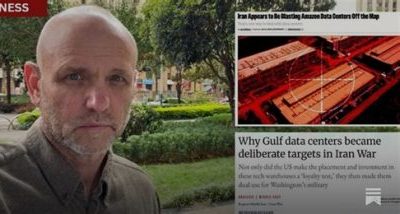
Iran spent $1 million to wipe out $30 billion in data center plans, and take down Amazon in the ME
or go to
Aletho News Archives – Video-Images
From the Archives
A short history of British torture
ICC | December 2005
When the House of Commons was debating how much to increase the time limit for detention without trial the question of torture came up. Officially this was limited to the nice considerations of whether it was all right to send people to places where torture is used and whether Britain can use information collected by the use of torture in other countries. This discussion gave an impression of democratic Britain as the home of civilised behaviour where the very idea of torture is repugnant to our legislators – unlike, say, the US with its secret CIA jails… In reality, the British state has a long history of using and developing a whole range of torture techniques. … continue
Blog Roll
 Aletho News
- Houthis Keep Advancing as the Red Sea Crisis Deepens
- Iran spent $1 million to wipe out $30 billion in data center plans, and take down Amazon in the ME
- Zionist billionaire pressure to silence Macklemore sparks exodus from Ed Sheeran tour
- House Votes to End Iran War for Third Time
- North Korea Slams US Plan for ‘AUKUS 2.0’ with South Korea and Japan
- Prolonging US-Iran Conflict Not Meeting Interests of Int’l Community – China’s Wang Yi
- EU bans former Zelensky aide from parliament
- NATO-backed Kosovo separatist ‘responsible for war crimes’
- US destroying international space law
- SCO Calls for Binding Global Deal to Prevent Arms Race in Space
- If Americans Knew
- U.S. Makes, Israel Takes: The Real Story of U.S.-Israeli Military Cooperation
- Night raids rise in Palestine
- Tucker Carlson interviews Norman Finkelstein about Gaza
- Groups urge Americans to support Van Hollen legislation on Israel’s killing of Americans & Palestinians
- Trump administration plans to send 40,000 tons of bombs to Israel: report
- Sanctions Target Iran’s Government, But Kill Hospitalized 23-Year-Old Woman
- An alternative view on the book “Israel’s Lobby: America in the Grip of a Foreign Power”
- Ed Sheeran’s band Beoga, other opening acts quit tour after Macklemore was dropped over his pro-Palestinian comments
- The assassination attempt on President Trump in Butler and the various Israeli connections to it
- “We Want That the Whole Land Be Jewish”
- No Tricks Zone
- New Study: ‘Global Drought Shows No Detectable Recent Acceleration Under Climate Warming’
- Economic Masterminds: German Socialists Suggest Taxing Productivity Gains Stemming From Using AI
- The South China Sea Has Not Been Cooperating With The Climate Change Narrative
- Energy Crisis: Germany Enters Heating Season With Historically Low Gas Reserve Fill Levels
- New Study: The Antarctic Ice Sheet Gained Mass From 2020-2024 Due To Staggering Snow And Ice Accumulation
- Study: Ocean Heating Rates From Thousands Of Years Ago ‘Dwarf’ Modern Ocean Heating Rates
- Climate Extremists Target, Attack Large-Scale Power Grid Infrastructure In Germany!
- New Study: Antarctic Ice Melt Has Contributed Less Than 1 Centimeter To Sea Level Rise In The Last 30 Years
- Fear Of Debate: Alarmist German Climate Scientist Calls On Mainstream Media To Discredit Skeptic Voices
- End-Of-August Arctic Sea Ice Extent Hasn’t Fallen In 20 Years, Official Data Show!
 Aletho News