John Mearsheimer: Toward All-Out War With Both Russia & Iran
Glenn Diesen | May 18, 2026
Prof. John Mearsheimer discusses the West going up the escalation ladder against both Russia and Iran, with all-out war as the logical conclusion.
Press TV – May 20, 2026
The Iranian Foreign Ministry spokesman has rejected as totally “baseless” the US Central Command (CENTCOM)’s narrative regarding the missile strike on Minab’s Shajareh Tayyebeh school, saying the US is attempting to shun accountability for the massacre of more than 170 students and teachers.
In a post on his X account early Wednesday, Esmaeil Baghaei said that the “claim by US Central Command (CENTCOM) that the targeted #Shajareh_Tayyebeh Elementary School in #Minab was located within a ‘missile launch facility’ is a baseless fabrication and an appalling lie.”
On the very first day of the unprovoked war of aggression by a US-Israeli military coalition on February 28, US Tomahawk missiles struck Shajareh Tayyebeh Girls’ Elementary School in Minab, in southern Iran, killing at least 175 people, most of them schoolgirls.
Baghaei’s remarks came after Adm. Brad Cooper, the CENTCOM commander, claimed during a House committee hearing that the school was located near an active Islamic Revolution Guards Corps (IRGC) cruise missile base.
“This shameless distortion is a clear attempt to obscure the severe reality of the 28 February missile attacks, which resulted in the tragic slaughtering of over 170 school children and their teachers,” Baghaei stressed.
“Targetting an active educational institution during school hours constitutes a grave violation of international humanitarian law and is a clear war crime. The civilian nature of the site cannot be obscured by technical misrepresentations.
“The military commanders and United States authorities responsible for ordering and executing this catastrophic assault must be held fully accountable under international law,” the Iranian Foreign Ministry spokesman emphasized.
Multiple independent investigations, including visual analyses by CBC News and satellite imagery from Planet Labs, revealed a pattern of precision-guided munitions striking the school.
Former Pentagon targeting expert Wes Bryant concluded the attack was “absolutely deliberately targeted.” Leaked preliminary US military findings cited “outdated targeting data” as a factor.
Despite this, President Donald Trump claimed without evidence that “that was done by Iran, because they’re very inaccurate with their munitions.” Days later, when shown video of a US Tomahawk missile striking the site, Trump said “I haven’t seen it” and falsely asserted Iran possesses Tomahawks.
US war secretary Pete Hegseth told the BBC: “The only side that targets civilians is Iran.”
Five former US officials have criticized the Pentagon’s unprecedented lack of transparency, with Rep. Adam Smith calling Pentagon responses “pathetic and completely inadequate.”
Republican Senator John Kennedy broke with the administration, saying: “I think we made a mistake. It was a terrible, terrible mistake.” Former officials attribute the deflection to a “reluctance” to contradict Trump after he blamed Iran, a claim described as “really far-fetched and very clearly not true.”
The administration’s efforts to recast a school with children’s murals and a sports field as a military target continue as the investigation nears three months with no admission of responsibility.
Press TV – May 20, 2026
Iran reports increased ship traffic through the Strait of Hormuz under new arrangements to facilitate transit via the key Persian Gulf waterway.
The Islamic Revolution Guards Corps (IRGC) Navy said on Wednesday that a total of 26 ships had passed through the Strait of Hormuz in the past 24 hours.
The IRGC Navy’s command, which controls the Strait in cooperation with the Iranian Army, said in a statement that the ships that passed through the Strait during the period included “oil tankers, container ships, and other commercial vessels”.
The statement said that all passages had taken place in coordination with the IRGC Navy, adding that the force had ensured the security of passage through the waterway.
It said transit is currently flowing through the Strait of Hormuz in coordination with the IRGC Navy, and after ships obtain permits from the force.
The passage of 26 ships marks a major increase compared to transit rates in the Strait since the beginning of US-Israeli aggression against Iran in late February, which prompted Iranian military forces to take control of the waterway and impose restrictions on shipping through it.
The restrictions have caused a major surge in international energy and commodity prices, as the Strait is responsible for a fifth of global oil demand.
Iran said after a ceasefire was announced to halt the aggression on April 8 that it would continue to control transit via the Strait of Hormuz by banning or restricting adversarial ships and charging tolls on others seeking safe passage.
The country has also indicated that it would be ready to reopen the Strait as part of a deal that ensures the permanent end of the US-Israeli aggression and lifts all sanctions and blockades on the country.
Press TV – May 19, 2026
Pakistan’s Defense Minister Khawaja Muhammad Asif says that a resumption of the US‑Israeli war on Iran is unlikely given the widespread global opposition and lack of public support in the United States for another war in West Asia.
In an interview with Geo News’ “Capital Talk” program on Monday, Asif said Israel strongly desires the war to restart and be fought by America on its side, but “my hunch says that this war will not happen again.”
“Wars are fought when the public stands behind them. When the public does not support them, wars are not fought,” he added.
The defense minister noted that even Iran’s neighbors across the Persian Gulf are not in favor of aggression against the Islamic Republic.
He highlighted Pakistan’s ancient linguistic and neighborly ties with Iran and expressed gratitude for Tehran’s trust in Islamabad’s mediation efforts.
Israel ‘left alone’ as world rejects war
Asif argued that Israel has been left alone in its push for a prolonged conflict.
“Israel or maybe two or three countries want the war to be prolonged and for America to fight on their behalf,” he said, stressing that the overwhelming international mood is against it.
He said the positions of China and Russia are very clear in that they, along with other nations, are not supporters of war against Iran.
The defense minister also praised Iran’s strong spirit during the imposed war, which began on February 28 when the United States and Israel launched joint assaults that assassinated Leader of the Islamic Revolution Ayatollah Seyyed Ali Khamenei and targeted civilian infrastructure.
Trump still threatens military action
Meanwhile, US President Donald Trump has repeatedly threatened that military action remains possible if diplomacy fails.
On Monday, Trump said he had paused plans for a major assault at the request of Persian Gulf Arab allies, but threatened to launch a “full, large‑scale assault” if no agreement is reached.
Despite the recurring threats, Iran has consistently rejected US proposals that undermine its sovereignty.
Foreign Ministry spokesman Esmaeil Baghaei confirmed on Monday that exchanges with Washington continue through Pakistani mediation, with Tehran having conveyed its concerns.
Glenn Diesen | May 18, 2026
Trita Parsi is the co-founder and Executive Vice President of the Quincy Institute for Responsible Statecraft. Parsi discusses why a peace deal can be achieved, yet it seems more likely that the US will restart the war.
Follow the Substack of Trita Parsi: https://tritaparsi.substack.com/
Follow Prof. Glenn Diesen:
Support the research by Prof. Glenn Diesen:
Glenn Diesen | May 18, 2026
Prof. John Mearsheimer discusses the West going up the escalation ladder against both Russia and Iran, with all-out war as the logical conclusion.
Press TV – May 18, 2026
Iran’s Deputy Foreign Minister Kazem Gharibabadi has said that any possible agreement with the US must ensure an end to the war on all fronts and lift the naval blockade and sanctions imposed against the country.
Gharibabadi laid out Iran’s conditions for an agreement with the United States to end the war as he briefed members of the parliament’s National Security and Foreign Policy Commission on Monday, according to Ebrahim Rezae, the committee’s spokesman.
Rezaei said the deputy foreign minister updated lawmakers on the ongoing indirect negotiations between Iran and the US and the proposals exchanged between the two sides through Pakistan.
“Gharibabadi emphasizes that in any possible agreement, [it must be stipulated that] the war must end on all fronts, including Lebanon, US forces must withdraw from the region surrounding Iran, the naval blockade must be lifted, sanctions must be cancelled, and Iranian assets must be released,” the spokesman said.
He quoted Gharibabadi as saying that the Islamic Republic has sent its latest proposal to the American side, and is yet to receive an official response.
The deputy foreign minister also stressed that it was the US that requested a ceasefire and negotiations, and that the Islamic Republic never sought negotiations with Washington during this war.
“It was also emphasized that the Islamic Republic of Iran is the definitive winner of the 40-day war, and that the United States and the Zionist regime were defeated,” Rezaei said.
According to Rezaei’s remarks, the commission’s members presented their suggestions during the session and stressed that Iran’s negotiating team should not back down from the Iranian nation’s legitimate demands and should negotiate “from a victorious position”.
They warned of the US history of breaking promises, including its withdrawal from the 2015 nuclear deal, known as the Joint Comprehensive Plan of Action (JCPOA), calling for the continuation of Iran’s management of the Strait of Hormuz and the official recognition of this role.
Meanwhile, the commission’s members also rejected the UAE’s hostile actions and called for a “serious” response to the UAE.
They also emphasized the need to pursue justice for the assassination of Leader of the Islamic Revolution Ayatollah Sayyed Ali Khamenei, in international forums and courts, stating that “diplomacy should be used to stabilize the capacities resulting from the war.”
The US and Israel started a fresh round of aerial aggression on Iran on February 28, some eight months after they carried out unprovoked attacks on the country.
Iran began to swiftly retaliate against the strikes by launching barrages of missiles and drone attacks on the Israeli-occupied territories as well as on US bases and interests in regional countries.
On April 8, a Pakistan-brokered temporary ceasefire between Iran and the US took effect. However, subsequent peace negotiations in Islamabad ultimately stalled amid Washington’s maximalist demands and insistence on unreasonable positions.
Al Mayadeen | May 18, 2026
Tehran has signaled that, under Iran’s sovereign rights over its territorial seabed, the country could regulate optical fiber cables crossing the Strait of Hormuz through permits, oversight mechanisms, and transit fees, highlighting the strategic importance of the waterway in global communications and finance, Iran’s Fars News Agency has reported.
Iran could require sovereign permits, impose oversight measures, and levy fees on subsea communications infrastructure passing through the strategic waterway, as per the report.
The report underscores the growing geopolitical importance of undersea digital networks alongside the strait’s longstanding role in global energy transit.
Fiber-optic cables routed through the Strait of Hormuz facilitate more than $10tn in daily financial transactions worldwide, the news agency reported, citing a report by the UK-based Policy Exchange research center. The corridor reportedly serves as a critical link connecting Gulf states, Asia, and Europe through high-capacity telecommunications systems.
Iran’s subsea leverage
The agency further warned that any disruption involving protected dense wavelength division multiplexing (DWDM) cables in the strait could trigger substantial economic fallout, with losses potentially reaching tens or hundreds of millions of dollars per day through direct and indirect impacts on regional and global markets.
The report comes as Iran is reportedly looking to expand its control over the Strait of Hormuz by eyeing the vast network of subsea communication cables running beneath the vital waterway amid the US-Israeli ongoing threats.
Following a successful demonstration of leverage during recent US-Israeli aggression, Iranian officials and state-linked media are now focusing on underwater internet infrastructure that carries major volumes of global digital and financial traffic between Europe, Asia, and the Gulf.
Iranian authorities are discussing plans to impose charges on international companies using submarine internet cables that pass through the Strait of Hormuz. Iranian military spokesperson Ebrahim Zolfaghari stated on X last week, “We will impose fees on internet cables.”
Media outlets said the proposal could require major technology firms, including Google, Microsoft, Meta, and Amazon, to follow Iranian regulations regarding cable operations in the region. Reports also suggested submarine cable operators could face licensing fees, while maintenance and repair activities may be limited to Iranian companies.
Several of the companies referenced have financial interests tied to cable systems operating through the Gulf and the Strait of Hormuz. However, it remains uncertain whether those specific routes pass directly through Iranian territorial waters.
At the same time, Iranian media have hinted at the possibility of disruptions to subsea cable traffic, raising concerns about the vulnerability of infrastructure responsible for trillions of dollars in global data transmission and international internet connectivity.
Strait of Hormuz gains new strategic importance
Concerns over renewed US-Israeli aggression have intensified following US President Donald Trump’s return from China, with Tehran increasingly emphasizing the strategic tools it possesses beyond conventional military capabilities, CNN reported.
The latest rhetoric highlights the growing geopolitical significance of the Strait of Hormuz not only as a major energy corridor but also as a critical digital passageway. Iran appears intent on converting its geographic position into broader economic and strategic influence.
Subsea communication cables are essential to the modern global economy, carrying most international internet and data traffic. Any major disruption could affect banking operations, military communications, cloud computing systems, AI infrastructure, remote work networks, online gaming platforms, and streaming services worldwide.
Dina Esfandiary, Middle East lead at Bloomberg Economics, said Iran’s messaging is intended to showcase its leverage over the strategic waterway and protect the Islamic Republic from future aggressions.
“It aims to impose such a hefty cost on the global economy that no-one will dare attack Iran again,” she said.
Concerns over potential cable attacks
A number of key intercontinental subsea cables pass through the Strait of Hormuz. According to Mostafa Ahmed, a senior researcher at the UAE-based Habtoor Research Center, international operators have historically avoided Iranian waters because of long-standing security concerns. Instead, many cables are concentrated near the Omani side of the strait.
Still, Alan Mauldin, research director at telecom research company TeleGeography, noted that two systems, Falcon and Gulf Bridge International (GBI), cross Iranian territorial waters.
Although Iranian officials have not directly threatened to damage the cables, Tehran has repeatedly warned Washington’s regional allies that it possesses multiple ways to respond to pressure. Experts say this reflects a broader pattern of asymmetric tactics employed by the Islamic Republic.
Ahmed warned that Iran’s Islamic Revolution Guard Corps (IRGC), equipped with combat divers, mini-submarines, and underwater drones, could pose a threat to underwater communications infrastructure. He said a major strike on subsea systems could trigger a “digital catastrophe” affecting multiple regions simultaneously.
Global economic risks
Countries along the Gulf could experience severe internet disruptions in the event of cable damage, potentially affecting banking systems and critical oil and gas exports. Ahmed also noted that India could face significant interruptions to internet traffic, placing billions of dollars in outsourcing services at risk.
Because the Strait of Hormuz serves as a major digital corridor connecting Asian hubs such as Singapore with European cable landing stations, disruptions could also slow financial trading and international transactions between Europe and Asia. Some areas in East Africa could even experience internet outages.
Experts further warned that similar tactics in the Red Sea by the Yemeni Armed Forces could magnify the threat.
In 2024, three subsea cables were damaged after a vessel hit by Yemen’s resistance movement dragged its anchor across the seabed while sinking. According to Hong Kong-based HGC Global Communications, the incident disrupted nearly 25% of internet traffic in the surrounding region.
Despite these risks, TeleGeography said cables running through the Strait of Hormuz represented “less than 1% of global international bandwidth as of 2025.”
Undersea cable warfare has deep roots
The strategic importance of underwater communication lines dates back to the 19th century. The first transatlantic telegram was transmitted in 1858, carrying a 98-word message from Britain’s Queen Victoria to US President James Buchanan that took more than 16 hours to arrive.
Today, modern submarine fiber-optic cables can transmit enormous amounts of information at extraordinary speeds. According to the International Cable Protection Committee, a single optical fiber can carry data equivalent to around 150 million simultaneous phone calls.
The targeting of undersea communication infrastructure is also not new. During World War I, Britain cut Germany’s key telegraph cables in one of the conflict’s earliest moves, isolating German military communications.
While most modern cable failures cause limited disruption because traffic can be rerouted through alternative networks, experts caution that a large-scale attack today would carry far greater consequences due to the world’s heavy dependence on digital connectivity.
Repair operations could also become more difficult during ongoing regional instability. Maintenance vessels must remain stationary for long periods while fixing damaged cables, making them vulnerable in conflict zones. Mauldin said only one of the five repair ships usually operating in the region currently remains inside the Gulf.
Iran looks to the Suez Model
Iranian media outlets have defended the proposal to charge for subsea cables by citing international maritime law, particularly provisions within the 1982 United Nations Convention on the Law of the Sea (UNCLOS).
Although Tehran signed but never formally ratified the convention, many legal experts regard parts of it as customary international law. Article 79 of UNCLOS allows coastal states to set conditions for cables and pipelines entering their territorial waters.
Iranian commentators have compared the initiative to Egypt’s management of the Suez Canal, which hosts numerous subsea cables connecting Europe and Asia and generates substantial annual revenue through transit and licensing fees.
“Of course, for existing cables, Iran has to abide by the contract that had been made when the cable was laid,” said Irini Papanicolopulu, a professor of international law at SOAS University of London. “But for new ones, any state, including Iran, can decide if and under what conditions, cables can be laid in its territorial sea.”
Esfandiary said Tehran may have previously understood its strategic leverage over the strait only in theory, but recent developments appear to have reinforced its confidence.
Now, she said, Iran “has discovered the impact.”
By Philip Giraldi • Unz Review • May 16, 2026
President Donald Trump is back from his business trip to China which had a lot of ambiguity over issues like Taiwan without having done either much discernible damage or benefit to American interests. The trip ended with the American participants dropping all the gifts that they had received from the Chinese into a large garbage bin on the tarmac before they boarded their plane. And while the president was gone Secretary of War Pete Hegseth to everyone’s surprised announced that he was canceling plans to deploy an additional 4,000 Texas-based US soldiers to Poland for a long-planned nine month rotation that includes training with NATO allies. The assignment was also originally intended to serve as a possible resource should the situation with Russia-Ukraine happen to spill over into adjacent NATO countries. The troops were already moving to establish themselves and their equipment in their new Polish bases when the surprise cancelation order was issued, possibly as a follow-up to Trump’s threats against NATO for failure to support the US war against Iran. As the situation in Eastern Europe stands, Russia has warned that an increasing level of NATO involvement in the conflict through its provision of weapons, intelligence and even some boots on the ground is already crossing several red lines which might quite plausibly be regarded as acts of war.
It might be possible to regard the decision not to add American soldiers to a region already awash with bellicosity as positive, but it could possibly be premature to regard it as so. The Trump Administration has been admittedly nearly always inclined to go for the most aggressive option whether it be in what adversaries regard as foreign policy “negotiations” or in terms of supporting even more violence prone allies like Israel. Indeed, two other foreign policy issues that are currently on the news front pages are renewed drives to send more soldiers to Greenland, presumably as another step forward to annexation, and the apparent desire to invade Cuba before too long and remove its Communist government.
Cuba is currently being blockaded by the US and has completely run out of fuel, leading to unrest which is being cynically exploited just as the White House manipulated the situation in Iran where riots among the public due to shortages were cited as sign that the government would easily fall. And the Trump administration is about to pull another rabbit out of its hat concerning Cuba, preparing to indict former Cuban President Raúl Castro on charges in connection with shooting down planes 30 years ago, a move similar to the indictment of now deposed Venezuelan leader Nicolás Maduro before his recent kidnapping by US Delta Force commandos.
Negotiations with Cuba were in fact launched after Trump suggested a “friendly takeover” of what he called a “failed nation,” while Secretary of State Marco Rubio, himself a Cuban refugee, said the country would need to change not just its economic policies but move away from the current regime, which he has called both “incompetent,” which admittedly sounds like the Trump Cabinet, as well as being Communist.
And as if that were not enough, there is even talk in Washington about making Venezuela the fifty-first state, though it should be observed that the Venezuelans, already on the receiving end of Yankee largesse when Maduro was kidnapped, have not been consulted on that possible development.
But the biggest issue confronting the returning Trump is what to do about the Iran War monster that has been confronting him since before he departed for Beijing, leading many observers to believe that he may have been looking for a way out of the situation with the help of China, which in the event only advised him to “end the war.” That the conflict was entered into by choice with considerable prodding and lying coming from his “best friends” the Israelis is, of course, the background to what developed. Trump returned to the confusion generated by negotiations that go nowhere wrapped around a ceasefire that is generally being regarded as only a pause in the action.
Trump may have gone to China with expectations that the Chinese government would suggest to him some face saving way to extricate the US from the Iran quagmire, but if that was so he was mistaken and China did not offer an acceptable off ramp for Trump to extricate himself. China, for its part, and like Russia, is undoubtedly delighted that the United States is finally knocked down from its pedestal as the world’s preeminent superpower. President Xi Jinping, to cite only one example of how China clearly regards itself as a major power equal to the US, made clear to Trump that Beijing will tolerate no US interference with Taiwan, which the Chinese consider an integral part of their country. Trump could not push back on that assertion.
There has been considerable news concerning Iran while Trump was gone, most notably in the United States due to the release of several articles in the mainstream media suggesting that the politically powerful neoconservatives, who normally delight both in global dominance by Washington as well as in any conflict directed against Israel’s enemies, are now calling the Iran war an unmitigated disaster, a “checkmate” by Iran and a “humiliation.” They are even arguing that there is no way to move forward with it. And there is more than that with the Saudi Arabians also chiming in on what a disaster the war has been to themselves and also to the other Gulf States. The Arabs now believe that the assumption that they were protected by a US security umbrella proved to be absolutely worthless. Beyond that, they also have observed that they were without any consultation dragged into an unnecessary and unwanted war against Iran by the US and Israel.
American neoconservatives have been a major force in support of US military dominance policies since the nineteen nineties, when they launched the international side of their movement with the A Clean Break: A New Strategy For Securing the Realm document in 1996, a policy statement that was prepared by a study group led by prominent Jewish neocon Richard Perle for then-as-now Israeli Prime Minister Benjamin Netanyahu. The report argued that Israeli security would be served best by regime change in surrounding countries brought about with the aid and assistance of the US. The “clean break” was a rejection of the Oslo Accords that actually sought to develop a modus vivendi between Israel and the Palestinians. This was followed by the Project For The New American Century (PNAC) in 1997, which had as its stated goal “to promote American global leadership.” The organization stated that “American leadership is good both for America and for the world” which it described as “a Reaganite policy of military strength and moral clarity. ” Both Clean Break and PNAC fit together nicely to promote a policy of political and military dominance for the United States. And, as most of the neocons were Jewish, one of the principal arguments made by them was that a confident and aggressive United States would be better able to support and protect Israel as it moved to establish dominance over the Middle East.
One of the founders of Neoconism (and of the PNAC) was Robert Kagan, who has now written a lengthy May 10th piece in the Atlantic Magazine entitled Checkmate in Iran: Washington can’t reverse or control the consequences for losing this war. He begins with: “It’s hard to think of a time when the United States suffered a total defeat in a conflict, a setback so decisive that the strategic loss could be neither repaired nor ignored. The calamitous losses suffered at Pearl Harbor, the Philippines, and throughout the Western Pacific in the first months of World War II were eventually reversed. The defeats in Vietnam and Afghanistan were costly but did not do lasting damage to America’s overall position in the world, because they were far from the main theaters of global competition. The initial failure in Iraq was mitigated by a shift in strategy that ultimately left Iraq relatively stable and unthreatening to its neighbors and kept the United States dominant in the region… Defeat in the present confrontation with Iran will be of an entirely different character. It can neither be repaired nor ignored. There will be no return to the status quo ante, no ultimate American triumph that will undo or overcome the harm done… Far from demonstrating American prowess, as supporters of the war have repeatedly claimed, the conflict has revealed an America that is unreliable and incapable of finishing what it started. That is going to set off a chain reaction around the world as friends and foes adjust to America’s failure.”
Another neocon godfather Max Boot set the stage by preceding Kagan in an April 8th Washington Post opinion piece entitled The Iran ceasefire was a TACO Tuesday, and thank goodness: Trump gets to act like his bloodcurdling threats worked, but he’s giving up far more than Tehran did. Both Kagan and Boot are well known and respected in the neocon movement. Kagan is the husband of the deplorable Victoria Nuland who, as a US Diplomat, did so much to create the political crisis in Eastern Europe that has led to the current conflict between Russia and Ukraine. Kagan and Boot are not particularly regarded as fans of Donald Trump, but they are reliable supporters of Israel and all its works, which should be considered when examining their writings and speeches on Iran, which they would be quite pleased to see destroyed.
The Kagans in particular are enamored of stirring up conflict when other options are available. Robert’s brother Frederick is a resident scholar at the neocon American Enterprise Institute. His wife Kimberly is founder and head of the aptly named Institute for the Study of War. And, to be sure, the Kagan hearts belong only to Israel…
One might reasonably consider what Kagan might be trying to accomplish by dissing Trump’s war. In my opinion he is of course deliberately depicting and over-emotionalizing the consequences of a “worst case” outcome to come into play if Trump panics and actually ignores Israel’s demands and decides to pull the plug on the war. By taking an adversarial position he is instead playing the Trump personality card by focusing on the president’s clear vulnerability when it comes to rationally considering policy options. In this case Kagan as well as Boot are seeking to humiliate Trump by emphasizing how the status quo is a disastrous defeat because the real objective is to take advantage of an insane T’s limited mental capability and non-existent moral code to shame him into changing the narrative on his personal failure by pursuing the “worst course” of action in the viewpoint of many observers, i.e. total war against Iran using all available weapons including nuclear to utterly destroy it!
Other neocons are also recognizing that the Iran war is going disastrously bad but are less ambivalent about the options they see, namely being openly and clearly focused on doubling down for victory. Danielle Pletka of the American Enterprise Institute sees success coming from a change in personnel in and around the White House coupled with a stiffening of Trump’s will to win. The-Iran focused neocon Foundation for the Defense of Democracies (FDD) also wants more war no matter what it takes to destroy the Persians.
Overall, I think that some neocons like Kagan and Boot are calling for not going back to a mismanaged and pointless war because they believe an embarrassed and ego driven Trump will seek to repair and reverse course on his damaged reputation and do precisely that. That is exactly what they want him to do! And bear in mind that Trump is being heavily pressured by the Israel Lobby and its billionaire donors like Miriam Adelson to continue war. And then there are the near daily phone calls from Prime Minister Benjamin Netanyahu, who has the same objective, i.e. to keep America in the fight to eliminate Iran. So one might assume that if indeed Trump would like to escape from the Iran quagmire there are a lot of reasons why he will not opt to do so. In fact, Trump has already declared that he does not care about the sinking US economy and upcoming midterm elections. He told reporters “I don’t think about Americans’ financial situation — I don’t think about anybody. I think about one thing: We cannot let Iran have a nuclear weapon.” And he has also declared that the “clock is ticking” and has vowed that there will be “nothing left of Iran if it does not come to terms.” Those threats, unfortunately, open the door to what comes next. Dare one mention that madmen like Trump and Netanyahu might well consider that if they can get away with an endless war that is damaging the whole world’s economy they can go one step further with their nukes to finish the job!
By Trita Parsi | May 17, 2026
The Middle East is once again teetering on the brink as Trump appears poised to reignite war with Iran. Press reports indicate he will convene military advisers on Tuesday, though my understanding is that both the meeting and the decision are likely to come sooner. Over the past several hours, Trump has flooded Truth Social with a barrage of incendiary threats. While some of this may be theatrical brinkmanship designed to force Tehran into submission, sources in the Iranian capital tell me they expect the United States to resume hostilities within the next 48 hours.
We should first recognize that restarting the war amounts to an admission that Trump’s previous escalatory gambit — the blockade of the blockade — has failed. That, in turn, was itself an admission that the war had failed. Which was an admission that the threats of war in January had failed. As I have argued before on my Substack, this relentless search for an escalatory silver bullet capable of bringing Iran to its knees is not unique to Trump; it has become a defining pathology of American Iran policy for decades.
Although negotiators have made meaningful progress on several fronts, talks have thus far failed to produce an agreement, largely because of irreconcilable differences over Tehran’s highly enriched uranium stockpile. And as Washington has come to realize that the blockade is backfiring, a new and dangerous dynamic has emerged: both sides now believe another round of fighting will strengthen their hand in the negotiations that follow.
As I argued in numerous interviews in January, Trump dramatically underestimated Iran’s strength, while hard-liners in Tehran believed war would strengthen Iran’s leverage by exposing the illusion of Iranian weakness. In their view, the outcome of the conflict vindicated that assessment, leaving them increasingly confident — even emboldened — about what a second round of war could yield. I am told the new Supreme Leader belongs to this camp.
Moreover, just as Tehran believes Trump intends to prosecute the next war with far greater ferocity, Iranian planners are preparing a far more expansive and punishing retaliatory campaign, complete with new strategic objectives and targets.
First, Iranian officials increasingly describe the next war as an opportunity to inflict maximum strategic damage on the United Arab Emirates, citing Abu Dhabi’s active role in the previous conflict, its deepening and increasingly overt partnership with Israel, and its role in urging Trump to resume hostilities.
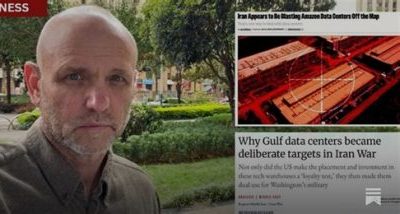
Tehran is likely to target American data centers in the UAE, a move that serves multiple purposes. Iranian officials argue that these American technology firms have already become participants in the conflict through their support for the Pentagon. At the same time, Tehran sees an opportunity to cripple the UAE’s ambitions to become a global artificial intelligence hub — and, in doing so, potentially undermine Washington’s AI competition with China.
This points to a second defining feature of Iran’s strategy in a future war. Tehran believes Trump and his family hold financial stakes in many of these same technology ventures. Targeting Trump’s personal business interests is a lever Iran conspicuously avoided pulling during the first conflict but now appears increasingly willing to use. The logic is straightforward: Trump may tolerate damage to American strategic interests, but he is acutely sensitive to threats against his own financial empire. Raise the personal cost to Trump himself, the reasoning goes, and he may prove more willing to adopt a realistic negotiating position.
Third, Tehran is likely to show far less restraint if evidence emerges that other Gulf Cooperation Council states permit the United States or Israel to use their territory or airspace in a renewed conflict. The result would be broader and far more perilous horizontal escalation, with potentially catastrophic consequences for the global economy should critical energy infrastructure come under attack.
Fourth, the Red Sea is now in play. That would dramatically widen the geographic scope of the conflict while placing even greater upward pressure on already volatile oil prices.
Finally, Tehran is increasingly examining the possibility of severing the major submarine fiber-optic cable networks running beneath the Persian Gulf — arteries through which most GCC internet traffic flows, including billions of dollars in financial transactions. Iranian officials increasingly view this as a potential second Strait of Hormuz: a powerful new point of leverage capable of disrupting the global economy at enormous scale.
Renewed war is not inevitable. But when both sides convince themselves that another round of fighting will strengthen their negotiating position, the gravitational pull toward conflict becomes dangerously strong — however irrational the logic may ultimately be.
By Tamer Ajrami | MEMO | May 17, 2026
When military power fails to impose “deterrence,” oil becomes politics. And the Strait of Hormuz is now writing Gulf security rules instead of the Pentagon.
With Hormuz still closed and the emergency oil stock releases used to calm markets running down, prices are moving _ no matter how much some people deny it _ toward a new surge. The real problem is not the price as a number. It is the chain reaction: gasoline and diesel, shipping and insurance, raw materials, and then inflation that travels from Asia to the United States. And even if the strait opened tomorrow, the damage would not vanish. Supply chains do not reset overnight, and parts of the oil and petrochemicals flow would take time to recover.
In my previous Middle East Monitor article, I said clearly that Gulf states “have nothing but to talk to Iran now”. That was not idealism or goodwill. It was hard security math: the old formula is eroding. Bases do not protect the way people assumed, and guarantees shrink the moment they face a real test. Today, this is no longer an argument. It is a reality driven by markets before politics.
Trump and China: A visit without a lifeline — and Time is against him
Trump’s attempt to turn to China produced no clear exit. Not because Beijing is powerless, but because it sees the issue in simple terms: open the strait through practical understandings, and negotiate with Iran on realistic terms.
The problem is that Washington still wants a “surrender” wrapped in diplomatic language. Iran sees no reason to give that for free as it holds leverage in a global energy shock.
This is the core of Trump’s trap: he can say whatever he wants, but he cannot cancel economics. Markets do not negotiate. They punish.
That is why countries are now moving on two tracks: a unilateral track to protect their own interests, and a collective track to design a new framework that prevents the next shock. Saudi Arabia is stepping forward to lead the collective track, not because it loves “mediation” as a headline, but because the cost of ongoing chaos has become higher than the cost of a deal.
A New “Helsinki Act” — But without the Human Rights Basket
According to Western reporting, Saudi Arabia is floating something close to a “Gulf Helsinki Act” arrangement with Iran—modeled on the Helsinki process of the mid-1970s during the Cold War. It would not be just a Saudi–Iran deal. It would extend to the Gulf and the European Union, aiming to lock in non-aggression, structured economic normalization, and monitoring and implementation mechanisms.
The original Helsinki process was built around four “baskets”: security and non-aggression; economic cooperation; human rights and self-determination; and follow-up mechanisms. In the Middle East, copying the third basket is unrealistic. The region’s unwritten rule is non-interference. Here, states do not use “human rights” language as a tool to destabilize each other internally. So, the Saudi approach seems to focus on three practical baskets: security and non-aggression, economic cooperation and stable energy flows, and verification/implementation.
It is a practical logic: if you want an agreement that can survive, you do not plant a delayed bomb inside it.
The Hard Question: Can a Deal work without the United States?
Here is the central dilemma. A Gulf–EU–Iran non-aggression arrangement without the United States creates a dangerous gap: the Gulf and Europe commit to non-aggression, Iran commits too, but Washington and Israel still retain the ability to strike Iran. What does the agreement do then? Does it become a nice document that collapses at the first air raid?
On the other hand, bringing Washington into the deal is not easy either. The US is struggling to produce a quick bilateral agreement with Iran to end the crisis, so why would it accept a broader framework that limits its freedom of action?
This opens a third, more sensitive option: Gulf states and Europe “bypass Washington” in practice. That would mean refusing the use of their airspace and territorial waters for any military or intelligence activity against Iran. And maybe refusing to enforce sanctions that destabilize the region and recreate the Hormuz shock. This is not a small move. It would be a strategic shift.
The UAE: A Different Vision — and a Dangerous Ceiling
The Gulf is not unified on strategy. Other reporting suggests Emirati efforts to push a coordinated Gulf military “response” against Iran. The problem is not the idea of response by itself. The problem is the ceiling of objectives.
If the goal is limited deterrence to reduce escalation, that is one thing. But if the goal mirrors Netanyahu and Washington _ regime change, dismantling Iran’s nuclear program, destroying its ballistic capabilities, and reshaping Iran from the inside _ that is a long war. And the Gulf does not have the luxury to absorb its costs.
Most importantly, the idea of “escaping Hormuz” through alternative pipelines is not a real solution. If peace collapses, fields, ports, and energy infrastructure across the region remain within range. And Bab al-Mandab can become another choke point. In the end, the issue is not a pipeline or a port. It is a sustainable peace that prevents the drone and the missile before it “manages” the price.
Whoever Ends the War Ends the Chaos
A way out starts from one point: ending the US–Israeli confrontation with Iran through a realistic understanding; then building a regional framework similar to “Helsinki” that locks in non-aggression, protects economies, and prevents a repeat of the strait crisis.
Saudi Arabia is trying to “hold the story together” because Washington entered, got stuck, and now wants to exit; while the Gulf cannot afford to sit between Iran’s leverage and America’s disorder.
The choice is clearer than ever: either a settlement that closes the door on choke-point warfare, or a longer crisis that bankrupts markets before it bankrupts armies. The Gulf; whether it likes it or not; no longer has the option to “wait”.
Glenn Diesen | May 16, 2026
Prof. Seyed Mohammad Marandi is a former advisor to Iran’s nuclear negotiation team. Prof. Marandi argues that the U.S. is preparing another attack on Iran after Trump’s failed meeting with Xi in Beijing. Iran has prepared an overwhelming retaliation.
Follow Prof. Glenn Diesen:
Support the research by Prof. Glenn Diesen:
Daniel Davis / Deep Dive – May 16, 2026
By Larry C. Johnson | SONAR21 | May 15, 2026
The Beijing circus is over and Donald Trump’s talks with Xi Jinping produced nothing more than some pleasing photo ops and some performative diplomacy with no substantive accomplishments.
There was no final communique at the end of Trump’s two days of meetings with Xi Jinping. Instead, we are left to rely on the statements from each government. When you parse the two statements, the two readouts diverge significantly, and the gaps are as informative as the overlaps. When you compare what each side claims was discussed you can see what actually transpired at the summit.
The divergence between the two readouts is stark and strategically deliberate. Here is a precise accounting of what the White House emphasized that China’s Foreign Ministry either omitted entirely or mentioned only in the vaguest terms:
1. The Iran War and Nuclear Weapons — Omitted by China
This is the most consequential gap. The White House readout stated explicitly:
The two sides agreed that the Strait of Hormuz must remain open to support the free flow of energy. President Xi also made clear China’s opposition to the militarization of the Strait and any effort to charge a toll for its use, and he expressed interest in purchasing more American oil to reduce China’s dependence on the Strait in the future. Both countries agreed that Iran can never have a nuclear weapon.”PBS
The Chinese readout, by contrast, merely said that “the two sides discussed the Middle East conflict” without offering any further details — no mention of the Strait, no mention of tolls, no mention of Iran’s nuclear program, and no acknowledgment of any agreed position on any of those issues. YouTube
This gap is enormous. The White House is asserting that China agreed Iran can never have a nuclear weapon and opposed Iran’s toll regime. That White House is spinning this as significant Chinese concessions that Beijing clearly did not want attributed to it publicly. However, according to a reliable source with access, Xi firmly rejected Trump’s request that China apply pressure on Iran and help open the Strait of Hormuz.
2. Fentanyl — Omitted by China
The White House readout specifically noted that the two sides discussed “addressing fentanyl precursor flows into the United States” — a longstanding US demand that China reduce the flow of chemical precursors used to manufacture fentanyl. The Chinese readout made no mention of fentanyl whatsoever, which is consistent with Beijing’s longstanding position that it has already done enough on the issue and resists framing it as a bilateral problem. Komo News
3. Agricultural Purchases — Omitted by China
The White House noted that the two presidents discussed “increasing Chinese purchases of U.S. agricultural products.” China’s readout spoke only in general terms about trade being “mutually beneficial” and made no specific commitment to agricultural purchases. YouTube
4. Market Access for US Businesses — Framed Very Differently
The White House described the meeting as centered on “expanding market access for American businesses into China and increasing Chinese investment into US industries.” China’s readout framed this entirely differently — as China “opening its door wider” on its own terms, not as a response to US demands for market access.
5. The Business Delegation — Treated Asymmetrically
The White House noted that “leaders from many of the United States’ largest companies joined a portion of the meeting,” treating it as a substantive commercial engagement. The Chinese readout mentioned that Trump “asked each of the business leaders who were traveling with him to present themselves to President Xi” — framing it as a courtesy introduction rather than a substantive business discussion. YouTube
6. Taiwan — The Mirror Image Problem
The most telling asymmetry runs in the opposite direction on Taiwan. The White House readout did not mention Taiwan at all, while China centered its entire readout on Xi’s Taiwan warning. Trump declined to answer a reporter’s question about whether he and Xi had even discussed Taiwan. Rubio told NBC News that the US was “not asking for China’s help with Iran” — a comment that implicitly pushes back on what the White House readout seemed to suggest about Chinese cooperation. The National DeskBreitbart
The Bottom Line
Both sides released statements detailing what Trump and Xi discussed, but they only overlap in limited areas. The statements diverge most sharply on Iran — where the US claims specific Chinese commitments that China refused to acknowledge — and on Taiwan, where China made explicit warnings that the US declined to even mention. NPR
The pattern is diplomatically classic: each side published the readout that serves its domestic political needs and advances its negotiating position. China wanted the world to see Xi issuing stern warnings on Taiwan. Washington wanted the world to see China agreeing that Iran can never have a nuclear weapon and opposing Iran’s toll regime. Whether either claimed concession is real — or merely asserted — is precisely what makes the readout divergence so revealing.
The Strategic Framework
Xi opened with a sweeping philosophical framing: “Transformation not seen in a century is accelerating across the globe, and the international situation is fluid and turbulent.” He posed three questions to Trump directly: Can China and the United States overcome the Thucydides Trap and create a new paradigm of major-country relations? Can we meet global challenges together and provide greater stability for the world? Can we build a bright future together for our bilateral relations? Wikipedia
Xi announced the two leaders had “agreed on a new vision of building a constructive China-U.S. relationship of strategic stability,” defining it precisely: “Constructive strategic stability means positive stability with cooperation as the mainstay, healthy stability with competition within proper limits, constant stability with manageable differences, and lasting stability with expectable peace.” He said this framework “will provide strategic guidance for China-U.S. relations over the next three years and beyond” and stressed: “Building a constructive China-U.S. relationship of strategic stability is not a slogan. It means actions in the same direction.” Wikipedia
Trade and Economics
Xi stated that “China-U.S. economic and trade ties are mutually beneficial and win-win in nature. Where disagreements and frictions exist, equal-footed consultation is the only right choice.” He said the economic and trade teams had “produced generally balanced and positive outcomes” at preparatory talks the prior day, and that “China will only open its door wider. U.S. businesses are deeply involved in China’s reform and opening up.” Wikipedia
Military and Diplomatic Channels
Xi called on the two sides to “make better use of communication channels in the political and diplomatic and military-to-military fields” and to “expand exchanges and cooperation in areas such as the economy and trade, health, agriculture, tourism, people-to-people ties and law enforcement.” Wikipedia
Taiwan — The Sharpest Language in the Readout
Xi was unambiguous: “The Taiwan question is the most important issue in China-U.S. relations. If it is handled properly, the bilateral relationship will enjoy overall stability. Otherwise, the two countries will have clashes and even conflicts, putting the entire relationship in great jeopardy. ‘Taiwan independence’ and cross-Strait peace are as irreconcilable as fire and water. Safeguarding peace and stability across the Taiwan Strait is the biggest common denominator between China and the U.S. The U.S. side must exercise extra caution in handling the Taiwan question.” Wikipedia
International Issues
The readout notes that the two presidents “exchanged views on major international and regional issues, such as the Middle East situation, the Ukraine crisis, and the Korean Peninsula” — but offered no further detail on any of those topics in the official Chinese text. Wikipedia
APEC and G20
The two presidents agreed to support each other in hosting a successful APEC Economic Leaders’ Meeting and G20 Summit this year. Wikipedia
Wang Yi’s Closing Assessment — May 15
Foreign Minister Wang Yi told state media: “This was an important meeting in which the two heads of state engaged in in-depth communication and achieved substantial outcomes,” calling it “a historical meeting.” He particularly touted progress on trade and economic issues. China’s Foreign Ministry also confirmed that President Xi Jinping will visit the United States this fall at the request of President Donald Trump.
As far as Iran is concerned, the Chinese and Russians are working behind the scenes — using Pakistan as a frontman — to erect a new security architecture for the Persian Gulf. The current effort is to convince Saudi Arabia and Qatar to effectively cut military ties with the US and enter into a strategic agreement that will be guaranteed by Russia and China. If Saudi Arabia and Qatar persist with prohibiting the US to use their bases and air space for a new set of attacks against Iran, the US may be compelled to call off planned strikes.
Al Mayadeen | May 16, 2026
A military official cited by Iranian outlet Nour News has warned that previously “safe” targets associated with the United States are now within operational range, amid heightened tensions following recent remarks by US President Donald Trump.
The statement followed comments made by Trump to reporters on Air Force 1 after his visit to China, where he suggested that the US “wiped out their armed forces, essentially.”
The US president added that Washington “may have to do a little cleanup work” in Iran, which the official described as part of escalating threats against the country.
According to the official, Iran’s armed forces have notified all operational units of a “comprehensive immediate response plan” designed to deliver a rapid and forceful reaction to any US military action.
The official told Nour News that any “miscalculation or hostile action” would be met with “heavy and simultaneous fire” targeting a broad range of US interests and infrastructure in the region.
The report also stated that targets previously excluded from engagement considerations during earlier conflict periods have now been placed under operational review.
Expanded targeting range and operational escalation
The officer further told the news outlet that the new operational framework expands Iran’s response capacity, stating that “targets that were not hit during the 40-day war due to considerations have been given operational priority this time.”
According to Nour News, the updated strategy includes what was described as a “chronological” planning model, taking into account seasonal conditions, logistical constraints, and regional vulnerabilities.
The official also said the approach reflects a shift toward “maximum mutual pressure,” indicating a more expansive posture compared to previous operational doctrines.
Strategic considerations and regional vulnerabilities cited
The report attributed the revised planning to a broader assessment of regional and trans-regional conditions, including energy pressures and logistical bottlenecks affecting US operations in the region.
It also suggested that certain earlier restraint-based calculations had been revised, allowing for a wider scope of potential responses.
or go to
Aletho News Archives – Video-Images
ICC | December 2005
When the House of Commons was debating how much to increase the time limit for detention without trial the question of torture came up. Officially this was limited to the nice considerations of whether it was all right to send people to places where torture is used and whether Britain can use information collected by the use of torture in other countries. This discussion gave an impression of democratic Britain as the home of civilised behaviour where the very idea of torture is repugnant to our legislators – unlike, say, the US with its secret CIA jails… In reality, the British state has a long history of using and developing a whole range of torture techniques. … continue
 Aletho News If Americans Knew No Tricks Zone
 Aletho News