Iran writes to UNSC, warns against any Israeli ‘adventurism’ amid rise in threats
Press TV – October 14, 2021
Iran has written to the United Nations Security Council over a sharp increase in Israeli threats against the country, warning against any “miscalculation” or “military adventurism” on the part of the regime against the Islamic Republic, including its nuclear program.
In a letter submitter to the current president of the Security Council on Wednesday, Iran’s Ambassador to the United Nations Majid Takht-Ravanchi warned that the frequency and severity of the regime’s provocative and adventurous threats had steadily increased over the past months and reached an alarming level.
Such blatant systematic threats against one of the founding members of the United Nations are a gross violation of international law, in particular Article 2 (4) of the United Nations Charter, he added.
As a case in point, the diplomat referred the recent comments by the Israeli military chief, Aviv Kochavi, who said earlier this month that the regime was in constant preparations for an attack on the Iranian nuclear program.
Kochav had said, “The operational plans against Iran’s nuclear program will continue to evolve and improve,” and that “operations to destroy Iranian capabilities will continue, in any arena and at any time.”
The fact that the Tel Aviv regime continues to try to “destroy Iran’s capabilities” proves without any doubt that it had been responsible for terrorist attacks against Iran’s peaceful nuclear program in the past, Takht-Ravanchi said.
Given the ominous history of the Israeli regime’s destabilizing practices in the region and its covert operations against Iran’s nuclear program, it is necessary to counter the regime and stop all its threats and disruptive behavior, the top diplomat added.
Israel prevents realization of nuke-free Middle East: Iran
Meanwhile, Iran’s Representative to the UN General Assembly First Committee Heidar Ali Balouji also said at a Wednesday session on “Nuclear Weapons, Other WMDs, Outer Space, and Conventional Weapons” that the Israeli regime is the main hurdle to a Middle East free of nuclear weapons.
“We reiterate our call on the international community to compel Israel to dismantle its nuclear arsenal, promptly accede to the NPT as a non-nuclear-weapon party without any preconditions and place all of its nuclear facilities under the IAEA’s full-scope safeguards,” he said.
He described the Islamic Republic as one of the countries “with the highest record in accession to the international instruments banning” weapons of mass destruction (WMDs).
“Achieving global nuclear disarmament remains one of the most long-lasting goals of the United Nations. Today, international security is under threat by the existence of almost 14,000 nuclear weapons with well-funded, long-term plans to not only modernize but also strengthen the arsenals of NWSs (nuclear weapons states) and so nuclear arms race,” he said.
He said the United States’ withdrawal from the Intermediate-Range Nuclear Forces Treaty and its unwillingness to return to the Joint Comprehensive Plan of Action — the 2015 nuclear agreement signed between Iran and major world powers — have inflicted immense damage on international disarmament measures.
The diplomat said chemical weapons remain a grave concern, with the United States as the only possessor, urging Washington to meet a 2012 deadline for the destruction of its stockpile of such weapons.
Balouji said the ratification of a legally binding protocol would be the most effective way to strengthen the Biological Weapons Convention, urging the United States to withdraw its objection to the adoption of such a measure.
Similarly, a legally binding instrument is required to prevent an arms race in outer space, he said, saying the United States already has a space force with a $17 billion budget, which will increase by 13 percent, he noted.
Iran believes that the arms race in space should be stopped through a binding legal document, he emphasized.
The Iranian diplomat defended countries’ right to possess conventional weapons, warning that massive and irresponsible production and transfer of such weapons in the Middle East pose a threat to the entire region.
“Israel is the largest recipients of US arms aids in the region. Using these weapons, it is committing different crimes and causing destabilization and insecurity that must be stopped,” he said.
Taliban, Iran conclude bilateral economic deals
MEMO | October 6, 2021
Afghanistan and Iran yesterday concluded “important” bilateral economic and trade agreements, a spokesman for the Taliban said.
Zabihullah Mujahid, who is also acting deputy minister of information and culture in the interim Afghan government, said in a statement that a meeting was held between Afghan and Iranian officials “with the aim of strengthening economic ties and providing necessary facilities for trade issues between the two countries”.
According to the statement, the two sides have decided to increase working hours to facilitate the flow of goods at the Islam Qala-e-Dogharoon border, reviewing existing tariffs on goods and services, as well as launching discussions on fuel supplies.
Last year, Iran’s exports to Afghanistan amounted to about $4 billion while Afghan exports to Iran ranged between $40-$50 million only.
The statement added that a Taliban delegation will visit Tehran to meet officials from the Iranian Oil Ministry.
The two sides also agreed that Iran would build roads in eight Afghan provinces in order to improve trade and transportation within the next month.
Lift Iran sanctions if you seek end to global energy crisis: Minister
Press TV – October 4, 2021
Iranian Oil Minister Javad Owji says removing sanctions from Iran’s hydrocarbon sector would be key to resolving a global energy crisis that has affected supplies in many Western countries.
Owji said on Monday that people in the United States and some European countries have been paying the price for the unwise policies of their leaders who have banned crude exports from Iran as one of the leading energy suppliers of the world.
The minister made the remarks while speaking after a meeting of OPEC+ alliance of oil exporting nations.
He was referring to fuel, natural gas and electricity problems reported on both sides of the Atlantic amid rising prices and increasing demand caused by the global recovery from the coroanvirus pandemic.
“My recommendation to the decision-makers in these countries is that they should take a lesson from the current circumstances and lift sanctions from Iran so that people in all regions can benefit from cheap and accessible energy,” said Owji.
Iran has seen its oil exports slashed to levels much lower than those reported in mid-2018 when a former US administration pulled out of an international agreement on Iran’s nuclear program and imposed sanctions on the country.
A new US government has been pressing for a revival of the 2015 nuclear deal that would lift sanctions from Iran’s energy exports.
Beside its huge crude production capacities, Iran is also a leading supplier of natural gas with a current production of over 1 million cubic meters per day.
Owji said Iran has repeatedly declared that it would be able to swiftly increase its crude production to help alleviate the global shortage of fuel.
He said the current shortages could have larger implications on the livelihoods of people in the West in future if policymakers do not properly tackle supply issues.
Rising tensions between Azerbaijan and Iran spark fears of an Israeli-US proxy war against Tehran
By Robert Inlakesh | RT | October 6, 2021
Tensions are running high as Iran holds war games along its northern border, warning it won’t tolerate its neighbour providing a safe haven for the “anti-security activities of the fake Zionist regime.”
Iranian war games held along its northern border with Azerbaijan, leading to Baku threatening military deployment in retaliation, has sparked fear of war between the two countries.
But any such war would not end up being won by Tehran or Baku, but rather the United States and Israel, who would likely seize such an opportunity to fuel a Syria-style proxy war against the Islamic Republic.
The tensions that have arisen between Azerbaijan and Iran, as of late September, have seemingly popped up out of nowhere, but such an escalation was only a matter of time. The recent political quarrel has come about as a product of last year’s war between Azerbaijan and Armenia, over the Nagorno-Karabakh area, which resulted in a victory for Baku and allowed it to take over Karabakh from Armenia.
Iran had previously used its access through Armenian-controlled Karabakh to reach West Asia and Russia, sending its trucks and other means of transportation through the area, often free of customs.
Since Azerbaijan established its sovereignty over Karabakh, it has cracked down harshly on Iranian trucking and sought to establish itself as the leader of the Caucasus, intending to make itself the primary connection hub between Europe and Asia.
In order to undermine Baku, Iran has now announced that it will help Armenia establish a new bypass road that will cut out Azerbaijan. Although Tehran denies it initiated the recent war games along the Iran-Azerbaijan border with the intent of escalation, Azerbaijani President Ilham Aliyev criticised the military drills, asking, “Why now, and why on our border?”
The commander of the Islamic Revolutionary Guard Corps Ground Force offered one answer when he said last week that Iran would not tolerate its neighbors becoming “a safe haven and a base for the presence and anti-security activities of the fake Zionist regime.”
In the event that a clash does occur between Iran and Azerbaijan, it is likely that the Islamic Republic has the upper hand, being a regional military powerhouse. Yet Azerbaijan has more potential for causing Iran trouble through its allies and potential proxies than it does through its military might. Iran’s military drills, named Fatehan-e Khaybar (Conquerors of Khaybar), are also clearly not just aimed at sending a message to Baku, but also to Israel.
Israel armed Azerbaijan with roughly $825 million in armaments between 2006-2019. Although it would seem strange to some that Iran claims an Israeli presence on its northwestern border, as Israel is not even close geographically and its relationship with Azerbaijan looks on the surface to be mainly business based, it does have a point when it claims this, as the relationship runs far deeper than weapons trade.
A WikiLeaks-released cable sent by Donald Lu, the deputy chief of mission for the US embassy in Baku, to the US State Department revealed the nature of Azerbaijan-Israel ties, stating: “The relationship also affects U.S. policy insofar as Azerbaijan tries, often successfully, to convince the U.S. pro-Israel lobby to advocate on its behalf,” indicating a much closer connection than publicly admitted between the two sides. The document also revealed that, “with some humor, the Israeli DCM told us that Israeli businessmen expressed to her that they prefer corruption in Kazakhstan to that of Azerbaijan because in Kazakhstan one can expect to pay exorbitant fees to do business but those are generally collected at once, up front, whereas in Azerbaijan the demands for bribes never cease.”
Foreign Policy Magazine published a piece in 2012 in which they claimed that a senior US official confirmed that Israel had secured an airfield in Azerbaijan and that Israel could be using the country for a staging ground against Iran, a charge that Baku denies. Beyond this, Tehran has accused Azerbaijan of encouraging separatists groups inside of Iran, many of which staged demonstrations last year during the war between Azerbaijan and Armenia, calling for the re-establishment of what they call “Southern Azerbaijan.”
If any war was to be initiated between Baku and Tehran, this would be the greatest opportunity for Israel and the US to back ethnic Azeri separatists in a similar way to how the Obama administration funded and trained Syrian militants to overthrow the government of Bashar Assad. Out of Iran’s 83 million citizens, between 10-15 million of them are believed to be ethnic Azeris, meaning that just a small portion of them are needed to form an extremely problematic military force that could fight in urban warfare settings.
The United States and Israel have for long been hesitant to launch direct strikes against Iran, likely for fear of the regional war which it could spark, along with Iranian retaliation, yet a proxy war would be much less costly. During any such war, they could also launch strikes against Iran, especially Israel, which constantly threatens Tehran.
Turkey has already pledged its support to Azerbaijan, and during the 2020 Nagorno-Karabakh war, even sent ex-Syrian Jihadist mercenaries to aid Baku’s forces; some of these ex-Syrian militants are reportedly present along the Iranian border now.
Iran may be able to handle such a proxy war, but it would certainly be a tough challenge, while Azerbaijan would likely suffer badly. The war would benefit no one but regional players and super powers seeking regime change in Tehran, which is unlikely to succeed, as was the case in Syria. Such a war would result in perhaps hundreds of thousands of deaths and cause any number of unforeseen consequences. Iran knows the strategy which the likes of Israel is attempting to employ against it, meaning that such a war could lead to retaliatory action committed against Tel Aviv.
Robert Inlakesh is a political analyst, journalist and documentary filmmaker currently based in London, UK. He has reported from and lived in the occupied Palestinian territories and currently works with Quds News and Press TV.
Iran And Venezuela Strike Oil Swap Deal
By Irina Slav | Oilprice.com | September 27, 2021
Iran and Venezuela have struck a deal to swap heavy Venezuelan crude for Iranian condensate, Reuters has reported, citing unnamed sources familiar with the deal.
According to these sources, the swaps are set to begin this week and last for six months, although they could be extended. The imports of Iranian superlight crude will help Venezuela revive its falling oil exports amid U.S. sanctions that, among other problems, have cut off the country’s access to the light oil that is used to blend with its superheavy to make it exportable.
For Iran, the deal will bring in heavy crude it could sell in Asia, the Reuters sources also said. The diluted Venezuela crude will also likely go to Asian buyers.
Reuters also reported that, according to the U.S. Treasury Department, the deal could constitute a breach of sanctions, to which both Venezuela and Iran are subjects.
“Transactions with NIOC by non-U.S. persons are generally subject to secondary sanctions,” the Treasury Department said in response to a Reuters request for comments on the deal. It added that it “retains authority to impose sanctions on any person that is determined to operate in the oil sector of the Venezuelan economy.”
Despite the sanction noose, Venezuela has been ramping up its oil exports, generating vital revenue. According to a recent Reuters report, the country, which is home to the world’s largest oil reserves, exported more than 700,000 bpd of crude in July—the highest daily export rate since February.
Most of the oil went to China and Malaysia, although the latter is usually only a stop along Venezuelan oil’s trip to China. The same report noted that three of the five crude oil blending facilities in the Orinoco Belt were operational, and another crude upgrader was preparing to restart operations after a year’s pause.
Iran, meanwhile, recently revealed plans to attract some $145 billion in oil and gas investments from both local and foreign sources.
“We plan to invest $145 billion in the development of the upstream and downstream oil industry over the next four to eight years, hence I welcome the presence of domestic and foreign investors in the industry,” Javad Owji, Iran’s new oil minister, said during a meeting with executives from China’s oil giant Sinopec.
US Expulsion from West Asia Region is Inevitable: IRGC
Al-Manar | September 24, 2021
The Islamic Revolutionary Guard Corps (IRGC) has issued a statement on the anniversary of Sacred Defense, saying that the United States has no choice but withdrawal from the West Asia region.
The IRGC issued a statement on Friday to commemorate the anniversary of the Iraqi Saddam regime-imposed war on Iran and the beginning of Sacred Defense by the Iranian nation against the Baathist regime of Saddam, which was sponsored and fully backed by Western powers between 1980-1988.
The statement said that after 41 years since the start of the imposed war, which was sponsored and supported by the world powers, the nation has grown more resilient and the country has solidified its defensive power.
The IRGC added that the imposed war ended while even a handspan of Iranian soil was not given to the enemy.
It also noted that the western powers continued non-stop to conspire against Iran over the past 33 years since the end of the imposed war.
The Guards also said that the power of hegemonic powers such as the United States, which supported Saddam’s regime, was declining while they made wrong calculations and invaded Islamic countries of Iraq and Afghanistan.
“But today, after more than twenty years [since the occupation of Afghanistan by the US and NATO], we are witnessing the humiliating escape of the Americans from Afghanistan and at God’s willing, we will see their expulsion from West Asia in the near future,” the IRGC statement read.
Israel has concerns about the US withdrawal from Afghanistan
![Afghan protesters shout slogans against the US and Israel during a protest in downtown Kabul on December 8, 2017 [WAKIL KOHSAR/AFP via Getty Images]](https://i2.wp.com/www.middleeastmonitor.com/wp-content/uploads/2021/09/GettyImages-888278700-scaled-e1631610540399.jpg?resize=1200%2C799&quality=85&strip=all&zoom=1&ssl=1)
Afghan protesters shout slogans against the US and Israel during a protest in downtown Kabul on December 8, 2017 [WAKIL KOHSAR/AFP via Getty Images]
Dr Adnan Abu Amer | MEMO | September 14, 2021
Israelis are concerned about the shameful American withdrawal from Afghanistan and think that their government now needs to reassert its ability to protect its own interests in the region and beyond. The general feeling is that the withdrawal will now give Israel’s enemies more freedom to move, especially Iran, which will not hesitate to strengthen its relations with China, which in turn has clear interests in Afghanistan and the Arab Gulf. Events in Afghanistan have rung alarm bells for Israel and its allies in the region.
At the same time, Israelis believe that the US withdrawal from most of its strongholds in the Middle East and Central-South Asia — Iraq first and now Afghanistan, and perhaps Syria later — may push some regional states to move against Israel. The evaluation of America’s role in the Middle East is that US forces can no longer rely on using Arab countries for emergencies. A comprehensive view of the region puts Israel in a better position in terms of US interests, at least according to an uncertain Israeli assessment.
However, the fear remains that what happened in Afghanistan could be mirrored in the occupied West Bank, not least due to the exposure of American weakness. The strategic patience and steadfastness of the Taliban have created an inspiring narrative for the Palestinian Islamic Resistance Movement, Hamas.
In this context, Israelis are asking if events in Afghanistan could be replicated in the Palestinian arena, especially if Israel withdraws from parts of the West Bank in any deal with the Palestinians. Such an exit would almost certainly lead, at least in the short term, to instability, and encourage Hamas to try to expand its influence in the territory.
Although Israel and the occupied Palestinian territories are geographically distant from Afghanistan, the Israeli government claims that it will be required to respond to any development that threatens its security at home and abroad. In this case, it will take into account the current situation in the conflict with the Palestinians, and the de facto reality of a “one-state solution”, with all the negative political and social ramifications that it will have based on successive security warnings.
America’s exit from Afghanistan was embarrassing for Washington, but there were no demonstrations on US streets, either in support of or opposing the withdrawal. Any Israeli withdrawal from even a small part of the occupied West Bank, however, will cause a great stir. A lot of political determination and conviction will be required before such a move could be taken. Indeed, it could be beyond the current government, the survival of which would be threatened.
Israel expects the US withdrawal from Afghanistan to encourage its enemies to attack it. Although the Taliban movement does not pose a direct threat to Israel, it represents a concern for the colonial state, because it shares a border with Iran and the US withdrawal confirms the ongoing reduction of American intervention in the Middle East and beyond. Ideological and political differences aside, Israel knows that successive US presidents have shared a desire to end their involvement in the bloody wars in the Middle East and Central-South Asia. In doing so, believes Israel, America’s ability to challenge Iranian influence may create a domino effect tipping the scales of regional power at the expense of the Zionist state.
Nevertheless, there may be opportunities for Israel to enhance its regional position, because it is not only watching Afghanistan with concern but also, and perhaps more importantly, watching the positions of the Arab regimes that depend on the US for their security, in light of a growing mistrust in its ability to support them. Saudi Arabia and other countries in the region may approach Israel, as a possibly more reliable ally than the US, to fulfil their security needs, even without full normalisation of relations. Security cooperation between Israel and a number of Gulf States is already overt. It is thus likely that such Israeli cooperation with other Arab countries will increase.
Rapprochement and subsequent engagement with Israel may not be limited to “moderate” Arab countries. NATO, for example, could expand its security cooperation with the Zionist state, replacing the US with a willingness to get involved in regional affairs.
All of this is speculation at the moment in the wake of the US withdrawal from Afghanistan. Although not actually part of the Middle East, a Taliban-led Afghanistan is going to play a major role in reshaping the region and how changes might affect Israel.
Report: US plans Arab-Israeli maritime unit in Persian Gulf for proxy missions
Press TV – September 11, 2021
A new report says a recent decision by the US Navy’s 5th Fleet to launch a drone task force is a step towards the establishment of a joint maritime unit comprising Persian Gulf Arab countries and Israel for proxy missions in the region.
On Wednesday, the 5th Fleet based in Bahrain announced that it will launch the new task force that incorporates airborne, sailing and underwater drones after years of maritime attacks linked to ongoing tensions with Iran.
US Navy officials declined to identify which systems they would introduce from their headquarters in Bahrain, but said the coming months would see the drones stretch their capabilities across the region.
“We want to put more systems out in the maritime domain above, on and below the sea,” said Vice Adm. Brad Cooper, who leads the 5th Fleet. “We want more eyes on what’s happening out there.”
“These measures are in line with the launch of a joint maritime unit between Persian Gulf Arab countries and the Zionist regime. Using the equipment announced, the unit is supposed to play a role in proxy missions thanks to the support of the United States,” Iran’s Nour News agency wrote on Saturday.
“Successive failures in costly military campaigns in West Asia have led to a new US national security strategy, under which the American military focus in the region will change in favor of the development of presence in East Asia and the Chinese Sea,” it added.
According to the report, Washington is expected to hand over part of the missions of its military units in West Asia to Arab states and Israel to make its absence in West Asia and the Persian Gulf not conspicuous.
On September 1, the Tel Aviv regime officially moved into the US Central Command’s (CENTCOM) area of responsibility, taking over from the European Command (EUCOM).
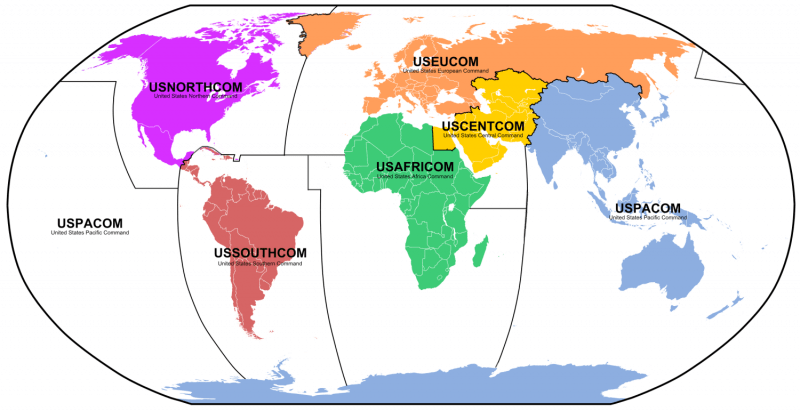
Nour News said the move paved the way for Israel to design and implement evil acts in the region with the help of some of the Persian Gulf Arab states.
“The new strategy, which lays the ground for the pursuit of the new national security doctrine, began by creating artificial tensions in the region based on a pre-designed scenario,” it added.
In late July, the US, the UK and Israel blamed Iran for a deadly drone attack on an Israeli-managed oil tanker, the Mercer Street, off the coast of Oman.
A few days later, Reuters claimed that “Iran-backed forces” were believed to have seized the Panama-flagged Asphalt Princess tanker off the coast of the United Arab Emirates (UAE).
The Associated Press, citing information from MarineTraffic.com, reported that four tankers – the Queen Ematha, the Golden Brilliant, Jag Pooja and Abyss – broadcast over the Automatic Identification System (AIS) that their vessels were “not under command.”
Later, however, it emerged that all those contradictory reports of maritime incidents were circulated by the Zionists to justify their own evil acts in the region and portray Iran as the country that is causing insecurity, Nour News said.
“The depth of the Zionists’ lies became more evident after the Golden Brilliant docked at Iran’s Bandar Abbas port days after rumors about its possible hijacking.”
Press TV’s website can also be accessed at the following alternate addresses:
http://www.presstv.ir
http://www.presstv.co.uk
http://www.presstv.tv
Hezbollah grows stronger in Lebanon amid energy crisis, arranging oil shipments from Iran
By Uriel Araujo | August 28, 2021
Hassan Nasrallah, the leader of the Lebanese Shia Islamist organization Hezbollah has announced more Iranian ships are bringing fuel to Lebanon. The country is under an unprecedented political and economic crisis and is facing massive gasoline shortages – even after the first vessel arrived on August 19. Some worry Iran-funded Hezbollah could thus take the place of the almost collapsing Lebanese state or companies. Others worry the US could impose sanctions on Lebanon due to its relation with the Islamic Republic of Iran. The US Ambassador to Lebanon in fact stated, hours after Hezbollah’s statement, that Washington was in talks with Jordan and Egypt to find solutions to Lebanon’s fuel crisis, which has affected businesses, hospitals, and homes.
Riad Toufic Salameh, the Governor of Lebanon’s central bank claimed two weeks ago that Beirut simply lacks the foreign reserves needed to release dollars to import fuel. On August 12, Salamesh announced Lebanon decided to change the exchange rate used as a base for importing fuel, thus sharply increasing retail prices. Gasoline prices may rise up to 66% as subsidies were cut in an attempt to ease shortages. This central bank measure clashed with outgoing Prime Minister Hassand Diab’s government, which pledged to keep the subsidies in an ongoing dispute. Diab described Salamesh’s decision as illegal and irresponsible. Several roads were closed by protesters the same day and the demonstrations are still going on. It is in this context that Hezbollah and its network of Shia businessmen arranged for the shipments of oil. This move was criticised by former Prime Minister Saad Hariri and other political figures as an infringement on the Lebanese state’s sovereignty.
According to the Iranian semi-official Nour News agency, the first fuel shipment was bought by a group of Lebanese Shiite merchants. The same agency reported that the shipment should be considered Lebanese property “from the moment it is loaded”, and described the fuel dispatch as a “strong action taken by Iran and Hezbollah to break the economic siege of the Lebanese people by a western-Arab-Israeli axis”.
According to Laury Haytayan, a Middle East gas and oil expert and a Natural Resource Charter Senior Officer, Hezbollah’s announcement in itself could place Lebanon in danger of being sanctioned for the ships bringing fuel from Iran are carrying a product that is under US sanctions and thus anyone engaging with such product could also be sanctioned under the current regime that targets third parties buying Iranian oil or merely interacting with the Iranian financial sector.
The Lebanese government could of course ask for a waiver of these sanctions (such as the ones that were granted to Iraq pertaining to Iranian gas imports) but the hard truth is that Lebanon today barely has a government. Any political void always invites political entrepreneurship and Hezbollah seems to be showing itself capable of doing what the government can’t.
Furthermore, there have been Israeli attacks on shipments of Iranian fuel to Syria, which neighbors Lebanon. If such were to happen with a shipment heading to Lebanon, this would obviously further increase anti-Israeli sentiment in a country where tensions are already escalating. Some see Hezbollah’s move as a part of a kind of a deterrence equation, that is, the Shia organization would retaliate in case Israel attacks any ship bringing fuel during a major energy crisis.
Nasrallah also said Hezbollah could help bring an Iranian company to drill, if necessary. These remarks were made during his televised speech for Ashura, an Islamic holiday of particular significance for Shias. With the current crisis, Hezbollah is showing itself to be the only faction that can organize the country. This means Iran’s influence on the Levant is to increase which will worry many actors, particularly Saudi Arabia.
Earlier this year Iran and Saudi Arabia started a series of talks, urged by Qatar, but they have been suspended. The new Iranian President Ebrahim Raisi has claimed his foreign policy priority now is to improve relations with the Persian Gulf Arab countries, which are led by Saudi Arabia. The current war in Yemen is a point of contention, though, for Tehran supports the Houthi insurgency in Yemen. Riad leads a major military intervention in the country against the Houthi rebels (in a coalition that includes Bahrain, and the United Arab Emirates, as well as Egypt, Jordan, and Sudan). This makes the conflict in Yemen a proxy war between Iran and Saudi Arabia. If Tehran and Riad could put such differences aside they could help bring peace and stability to the region. But this is not an easy task, as the two rivals still seem to compete in Iraq and Lebanon and might further compete in Afghanistan after the US withdrawal.
Washington and the European powers are losing their influence in the Lebanese political game. Solving the energy crisis in Lebanon is first and foremost a humanitarian issue and if the US chooses to act in terms of sanctioning Lebanon this would greatly harm US President Joe Biden’s narrative of the United States as a champion of human rights worldwide. The current crisis after all is also about Iran – whose economy has been hit hard by sanctions and today has a 45% inflation rate and has reached the highest price for food products.
If the US does not sanction Lebanon, such will serve Hezbollah as a kind of a show of force. If Washington does sanction the country, Hezbollah also wins somehow for it would corroborate its narrative of Lebanon under siege. Under such a scenario Lebanon should further enhance its relations with Iran. Thus, no scenario is good for the US.
The Persian Gulf is Once Again at the Center of Western Provocations
By Viktor Mikhin – New Eastern Outlook – 17.08.2021
As part of a concerted effort to pressurize Iran ahead of the expected resumption of nuclear talks in Vienna, Washington and its European allies appear to be using a mysterious and not entirely understandable attack on an oil tanker operated by Israel to extract additional concessions from Tehran. In doing so, says the well-informed Iranian newspaper Ettelaat, they are unwittingly playing into the hands of an Israeli scheme aimed at railroading the very nuclear deal that Washington and the Europeans are supposedly trying to revive. The controversy over the recent attack on the Israeli Mercer Street continues unabated, and the US and Britain rushed to bring the issue even to the UN Security Council. However, they failed to reach a consensus on Iran there.
In this connection, it may be recalled that an Israeli ship was attacked off the coast of Oman on July 29 while it was sailing from Dar es Salaam, Tanzania, to the Port of Fujairah, United Arab Emirates. An oil tanker operated by Zodiac Maritime, owned by Israeli shipping magnate Eyal Ofer, was reportedly attacked by suicide drones. A Zodiac Maritime spokesman said two crew members, British and Romanian nationals, died in the attack. The attack, for which Tel Aviv, London, and Washington instantly issued unsubstantiated accusations against Iran, marked the beginning of a coordinated diplomatic campaign against Tehran at a time when nuclear talks on the 2015 Iran nuclear deal had stalled after six rounds of painstaking negotiations in Vienna. The last round of talks in Vienna was completed more than a month ago, and differences over how to revive the Joint Comprehensive Plan of Action (JCPOA) are still unresolved. The US has steadfastly refused to lift all sanctions imposed by the Donald Trump administration and to give assurances that it will not withdraw from the JCPOA again, as it did in the past. The sixth round was also held when a transfer of power in Iran connected with the June 18 presidential elections, in which Ebrahim Raisi won a confident and predictable victory.
In a separate statement, US CENTCOM spokesman Capt. Bill Urban said that based on the fact that “the vertical stabilizer is identical to those identified on one of the Iranian UAVs designed and manufactured for the one-sided kamikaze attack, we could assume that Iran was actively involved in the attack.” In a joint statement, the foreign ministers of the G7 countries (Britain, Canada, France, Germany, Italy, Japan, and the United States) condemned Iran for the attack. “This was a deliberate and targeted attack and a clear violation of international law,” the statement said. “All available evidence points to Iran.” There is no excuse for this attack. Iranian Foreign Ministry spokesman Saeed Khatibzadeh instantly responded that the G7 condemnation consisted of unfounded accusations. “Israel is likely to be the real culprit behind the attack,” the spokesman added. “For experts and those who know the history of our region, it is nothing new that the Zionist regime is scheming such plots,” Said Khatibzadeh emphasized.
Sensing a change of plans in Tehran, the US and its European allies launched a diplomatic campaign to intimidate Iran into returning to the talks in Vienna without any new demands. Washington’s main concern was that the negotiating team of new President Ebrahim Raisi would return to Vienna with new spirit and demands, amounting to a reversal of the American progress made in the last six rounds. This concern is not groundless: the Tehran Times, which presents the official point of view, reported that the Iranians were even considering, among other options, abandoning the results of the Vienna talks under Hassan Rouhani. The same newspaper, citing official sources, concludes that Tehran may reject the results and set a new agenda for negotiations with the West to resolve the remaining issues in a new format and spirit. This is why the US, in an apparent attempt to influence the plans of the Iranian ayatollahs, has sought to increase diplomatic pressure on Iran since the end of the sixth round. They have threatened and are threatening to withdraw from negotiations, openly opposed to lifting all sanctions, and have even prepared new oil sanctions against Iran.
Then there was the incomprehensible attack on Mercer Street, which the US and its allies saw as a gift to exert further pressure on Iran. While the hype surrounding this attack is still going on, the known provocateur, Britain and its allies, in a spirit of high probability, have concocted several stories about the hijacking of commercial ships off the coast of the United Arab Emirates in the Gulf of Oman. Once again, they have accused Iran, without evidence and with impudence, of playing a role in these events. How can we not recall the dirty work of London and its notorious international organization Médecins Sans Frontières in accusing Damascus of the use of poisonous substances?
Iran fully understands the ulterior motives behind this drama, which the West has habitually turned into a farce. Iranian officials warned the West not to engage in dirty propaganda games to gain concessions. Commenting on the alleged attempted seizure of a ship in the Gulf of Oman, the Iranian Embassy in Britain stated on Twitter: “To mislead the public around the world for diplomatic gain in New York is not fair game.” But this unfair game can lead to the opposite result. The US and Britain have enlisted Israel’s help in their campaign of putting pressure on Iran, which is likely to have unintended consequences for them.
“We have just heard a distorted statement about the Mercer Street incident. Immediately after the event, Israeli officials blamed Iran for the incident. That’s what they usually do. This is a standard practice of the Israeli regime. Its purpose is to divert world attention from the regime’s crimes and inhumane practices in the region,” said Zahra Ershadi, the charge d’affaires ad interim of Iran’s permanent mission to the United Nations. She made the remarks after a closed-door UN Security Council meeting on the recent oil tanker incident in the Gulf of Oman.
Israel’s ambassador to the US and the UN, Gilad Erdan, threw aside his restraint and revealed some of these targets. He said that Israel would ultimately like to see the current regime in the Islamic Republic of Iran overthrown. “In the end, we would like [the government] to be overthrown and [for] regime change to take place in Iran,” Gilad Erdan said when asked about Israel’s strategy toward the Islamic Republic, according to the Times of Israel. The statement was made after Prime Minister Naftali Bennett’s blunt remarks that Tel Aviv allegedly knows for a fact that it was Iran that attacked Mercer Street.
Regardless of Israel’s goals for Iran, the current approach of London and Washington is unlikely to produce results, as Iranian President Ebrahim Raisi has unequivocally and firmly made it clear that the West is unlikely to succeed in intimidating the Iranians and the country’s leadership. Moreover, no one will force the Iranians to give up their legal rights and freedoms.
Was the Tanker Attack an Israeli False Flag?
By PHILIP GIRALDI • UNZ REVIEW • AUGUST 10, 2021
In the United States we now live under a government that largely operates in secret, headed by an executive that ignores the constitutional separation of powers and backed by a legislature that is more interested in social engineering than in benefitting the American people. The US, together with its best friend and faux ally Israel, has become the ultimate rogue nation, asserting its right to attack anyone at any time who refuses to recognize Washington’s leadership. America is a country in decline, its influence having been eroded by a string of foreign policy and military disasters starting with Vietnam and more recently including Iraq, Afghanistan, Libya, Syria, Yemen and the Ukraine. As a result, respect for the United States has plummeted most particularly over the past twenty years since the War on Terror was declared and the country has become a debtor nation as it prints money to sustain a pointless policy of global hegemony which no one else either desires or respects.
It has been argued in some circles that the hopelessly ignorant Donald Trump and the dementia plagued Joe Biden have done one positive thing, and that has been to keep us out of an actual shooting war with anyone able to retaliate in kind, which means in practice Russia and possibly China. Even if that were so, one might question a clumsy foreign policy devoid of any genuine national interest that is a train wreck waiting to happen. It has no off switch and has pushed America’s two principal rivals into becoming willy-nilly de facto enemies, something which neither Moscow nor Beijing wished to see develop.
Contrary to the claims that Trump and Biden are war-shy, both men have in fact committed war crimes by carrying out attacks on targets in both Syria and Iraq, to include the assassination of senior Iranian general Qasim Soleimani in January 2020. Though it was claimed at the time that the attacks were retaliatory, evidence supporting that view was either non-existent or deliberately fabricated.
Part of the problem for Washington is that the US had inextricably tied itself to worthless so-called allies in the Middle East, most notably Israel and Saudi Arabia. The real danger is not that Joe Biden or Kamala Harris will do something really stupid but rather that Riyadh or Jerusalem will get involved in something over their heads and demand, as “allies,” that they be bailed out by Uncle Sam. Biden will be unable to resist, particularly if it is the Israel Lobby that is doing the pushing.
Perhaps one of the more interesting news plus analysis articles along those lines that I have read in a while appeared last week in the Business Insider, written by one Mitchell Plitnick, who is described as president of ReThinking Foreign Policy. The article bears the headline “Russia and Israel may be on a collision course in Syria” and it argues that Russia’s commitment to Syria and Israel’s interest in actively deterring Iran and its proxies are irreconcilable, with the US ending up in an extremely difficult position which could easily lead to its involvement in what could become a new shooting war. The White House would have to tread very carefully as it would likely want to avoid sending the wrong signals either to Moscow or Jerusalem, but that realization may be beyond the thinking of the warhawks on the National Security Council.
To place the Plitnick article in its current context of rumors of wars, one might cite yet another piece in Business Insider about the July 30th explosive drone attack on an oil tanker off the coast of Oman in the northern Indian Ocean, which killed two crewmen, a Briton and a Romanian. The bombing was immediately attributed to Iran by both Israel and Washington, though the only proof presented was that the fragments of the drone appeared to demonstrate that it was Iranian made, which means little as the device is available to and used by various players throughout the Middle East and in central Asia.
The tanker in question was the MT Mercer Street, sailing under a Liberian flag but Japanese-owned and managed by Zodiac Maritime, an international ship management company headquartered in London and owned by Israeli shipping magnate Eyal Ofer. It was empty, sailing to pick up a cargo, and had a mixed international crew. Inevitably, initial media reporting depended on analysis by the US and Israel, which saw the attack as a warning or retaliatory strike executed or ordered by the newly elected government currently assuming control in Tehran.
US Secretary of State Tony Blinken, who could not possibly have known who carried out the attack, was not shy about expressing his “authoritative” viewpoint, asserting that “We are confident that Iran conducted this attack. We are working with our partners to consider our next steps and consulting with governments inside the region and beyond on an appropriate response, which will be forthcoming.”
The US Central Command (CENTCOM) also all too quickly pointed to Iran, stating that “The use of Iranian designed and produced one way attack ‘kamikaze’ UAVs is a growing trend in the region. They are actively used by Iran and their proxies against coalition forces in the region, to include targets in Saudi Arabia and Iraq.”
Tehran denied that it had carried out the attack but the Israeli Defense Minister Benny Gantz was not accepting that and threatened to attack Iran, saying predictably that “We are at a point where we need to take military action against Iran. The world needs to take action against Iran now… Now is the time for deeds — words are not enough. … It is time for diplomatic, economic and even military deeds. Otherwise the attacks will continue.” Gantz also confirmed that “Israel is ready to attack Iran, yes…”
New Israeli Prime Minister Naftali Bennett also made the same demand, saying Israel could “…act alone. They can’t sit calmly in Tehran while igniting the entire Middle East — that’s over. We are working to enlist the whole world, but when the time comes, we know how to act alone.” If the level of verbal vituperation coming out of Israel is anything to go by, an attack on Iran would appear to be imminent.
After the attack on the MT Mercer Street, there soon followed the panicked account the panicked account of an alleged hijacking of a second tanker by personnel initially reported to be wearing “Iranian military uniforms.” The “… hijacking incident in international waters in the Gulf of Oman” ended peacefully however. The US State Department subsequently reported that “We can confirm that personnel have left the Panama-flagged Asphalt Princess… We believe that these personnel were Iranian, but we’re not in a position to confirm this at this time.”
So, the United States government does not actually know who did what to whom but is evidently willing to indict Iran and look the other way if Israel should choose to start a war. Conservative columnist Pat Buchanan is right to compare the drone attack on the Mercer Street to the alleged Gulf of Tonkin Incident in 1964, which was deliberately distorted by the Lyndon B. Johnson Administration and used to justify rapid escalation of US involvement in the Vietnam War. Buchanan observes that it is by no means clear that Iran was behind the Mercer Street attack and there are a number of good reasons to doubt it, including Iranian hopes to have sanctions against its economy lifted which will require best behavior. Also, Iran would have known that it would be blamed for such an incident in any event, so why should it risk going to war with Israel and the US, a war that it knows it cannot win?
Buchanan observes that whoever attacked the tanker wants war and also to derail any negotiations to de-sanction Iran, but he stops short of suggesting who that might be. The answer is of course Israel, engaging in a false flag operation employing an Iranian produced drone. And I would add to Buchanan’s comments that there is in any event a terrible stink of hypocrisy over the threat of war to avenge the tanker incident. Israel has attacked Iranian ships in the past and has been regularly bombing Syria in often successful attempts to kill Iranians who are, by the way, in the country at the invitation of its legitimate government. Zionist Joe Biden has yet to condemn those war crimes, nor has the suddenly aroused Tony Blinken. And Joe, who surely knows that neither Syria nor Iran threatens the United States, also continues to keep American troops in Syria, occupying a large part of the country, which directly confront the Kremlin’s forces. Israel wants a war that will inevitably involve the United States and maybe also Russia to some degree as collateral damage. Will it get that or will Biden have the courage to say “No!”
Philip M. Giraldi, Ph.D., is Executive Director of the Council for the National Interest, a 501(c)3 tax deductible educational foundation (Federal ID Number #52-1739023) that seeks a more interests-based U.S. foreign policy in the Middle East. Website is https://councilforthenationalinterest.org address is P.O. Box 2157, Purcellville VA 20134 and its email is inform@cnionline.org
Featured Video

Epidemic of fake videos
or go to
Aletho News Archives – Video-Images
From the Archives
Inside Job? Inside What?
By Prof. Tony Hall | American Herald Tribune | July 28, 2016
The Kevin Barrett-Chomsky Dispute in Historical Perspective – Sixth part of the series titled “9/11 and the Zionist Question”
In his chapter on “Left Gatekeepers” and the “Shame of Noam Chomsky,” Barrie Zwicker refers to the the “New World Order” as the “diaboligarchy’s” directing agency. Less compelling is Zwicker’s reference to the “New World Order” as the “diaboligarchy’s” directing agency. To me this unfortunate choice of words is much too closely associated with the often crude and chauvinistic populism of Alex Jones and his Infowars media network. Many have come to see Jones’ lucrative media operation as a limited hangout set in place by handlers trying to hold the activities of the 9/11 Truth Movement within manageable constraints.
Due to the important findings over fifteen years of the citizens’ investigation into 9/11, the culprits most deeply implicated in the crime can be identified with much more specificity than an entity vaguely described as a “New World Order.” As Kevin Barrett and many others insist, the time has come to name the names of the probable culprits, Noam Chomsky prominent among them.
While Alex Jones ultimately serves the same masters as Chomsky, the former’s media product is often much closer to the mark of what is really going on than the content of Noam Chomsky’s more magisterial pronouncements. Jones goes at least part of the way into realities of the deep state politics of the twenty-first century. Chomsky, however, sacrificed his capacity to contribute cogently to sensible discourse on contemporary geopolitics by making himself a primary instrument of the most consequential deep state deception of recent times. As a leading agent of disinformation in the psychological trenches of the ongoing Global War of False Flag Terrorism, Chomsky has reduced himself to the level of skeptic pretender Michael Shermer. In the style of Shermer, the elder Chomsky has become an establishment TV professor readily available on Netflix. … continue
Blog Roll
Recent Comments
Coronistan on EU member to sue bloc over ‘su… loongtip on Vicious loongtip on EU turns to India for defense… Coronistan on Donald Trump Is No Peace … seversonebcfb985d9 on French court jails pro-Palesti… eddieb on Fourteen Incredible Facts Abou… Bill Francis on European leaders’ shift in the… seversonebcfb985d9 on Villains of Judea: Philip Esfo… loongtip on Report warns that ‘Jewish terr… Craig Nelms on New study shows that toxic gas… loongtip on A Funny Thing Happened on the… loongtip on EU free trade pact on hold as…


 Aletho News
- Exposed – How the UAE Became Central to Gaza’s Concentration Camp Plot
- How South Korea’s gas ambitions sustain the occupation of Gaza
- “Leaked document” exposes US blueprint for total control over Gaza
- Trump wanted to play peacemaker, Netanyahu made sure he failed
- Idea of limited, fast strike on Iran misjudges our capabilities: IRGC
- US Military Buildup on Land, Air, and Sea Raises Fears of Imminent Attack on Iran – Expert
- Russia reiterates demand to Germany over Nazi crimes
- France and EU clash over UK missiles for Ukraine – Telegraph
- EU member to sue bloc over ‘suicidal’ ban on Russian gas
- WEF Calls for ‘Cultural Revolution’ to Promote Lab-Grown Meat
- If Americans Knew
- Violence against hundreds of Gazan remains to find one Israeli – Not a ceasefire Day 109
- Greenpeace Demonstrator Exposes Folly of Protest Restrictions
- From CBS to TikTok, Pro-Israel Ellison is now in the driver’s seat
- Israel pays for UK advertisements attacking Doctors Without Borders
- Israel accused of extracting billions from Gazan people to pay for their own genocide
- ‘Deliberate Assassination’: 3 Journalists Among 11 Killed by Israeli Forces in Gaza
- In Gaza, We’re Struggling to Reintroduce Foods to Bodies Adjusted to Starvation
- Will Rafah crossing be opened at last? – Not a ceasefire Day 108
- Israeli drone strike kills two children collecting firewood in Gaza – Not a ceasefire Day 107
- Another Gaza baby freezes to death on Netanyahu’s watch – Not a ceasefire Day 106
- No Tricks Zone
- New Study Affirms Rising CO2’s Greening Impact Across India – A Region With No Net Warming In 75 Years
- Germany’s Natural Gas Crisis Escalates … One Storage Site Near Empty …Government Silent
- Polar Colding…Antarctica Saw Its Coldest October In 44 Years!
- New Study: Sea Levels Rose 20 Times The Modern Rate During The Roman Warm Period
- As German Gas Storage Dips Dangerously Low…Shortage Hardly Avoidable
- New Study: Brazil’s Relative Sea Level Was 2+ Meters Higher And SSTs 3-4°C Warmer 6000 Years Ago
- Philosopher Schopenhauer: Climate Science Certainty Stems From Stupidity, Ignorance
- New Study: Species Extinction Rates Declining Since 1980 – ‘Climate Change Is Not An Important Threat’
- Denmark Places Climate Protection Above Animal Welfare, Poisoning And Culling Cows
- New Study: Greenland Was 3-7°C Warmer And Far Less Glaciated Than Today 6000-8000 Years Ago
 Aletho News