When Zionist militias, using advanced Western arms, conquered historic Palestine in 1947-48, they expressed their victory through the deliberate humiliation of Palestinians.
Much of that humiliation targeted women, in particular, knowing how the dishonour of Palestinian females represents, according to Arab culture, a sense of dishonour to the whole community.
This strategy remains in use to this day.
When scores of Palestinian women were released following prisoner exchanges between Palestinian Resistance and Israel, starting on 24 November, there was very little room to hide the facts.
Unlike the 75-year-ago Palestinian community, this current generation no longer internalises Israel’s intentional humiliation of women and men alike, as if an act of collective dishonour.
This has allowed many newly released female prisoners to speak openly, often on live TV, about the kind of humiliation that they were exposed to while in Israeli military detention.
The Israeli army, however, continues to act with the same old mindset, perceiving the humiliation of Palestinians as an expression of dominance, power and supremacy.
Over the years, Israel has perfected the politics of humiliation – a notion which is predicated on the psychological power of shaming whole collectives to emphasise the asymmetrical relationship between two groups of people: in this case, the occupier and the occupied.
This is precisely why, in the early days of the Israeli war on Gaza, Israel detained all Palestinian workers from the Strip who happened to be working inside Israel as cheap labourers, at the time of the 7 October operation.
The dehumanisation they experienced at the hands of Israeli soldiers demonstrated a growing trend among Israelis to degrade Palestinians for no reason whatsoever.
One of the worst documented episodes took place on 12 October, when a group of Israeli soldiers and settlers assaulted three Palestinian activists in the West Bank. Israeli newspapersHaaretz and The Times of Israel described how the three were assaulted, stripped naked, bound, photographed, tortured and urinated upon.
Those images were still fresh in the minds of Palestinians when new images emerged from northern Gaza.
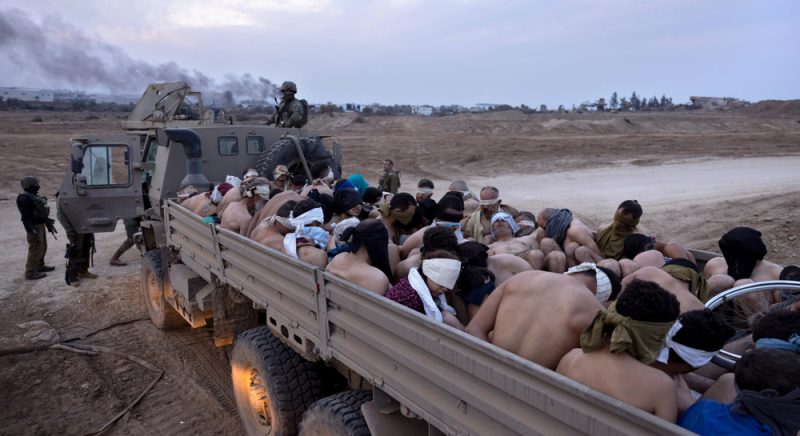
Photos and videos published in Israeli media showed men stripped down to their underwear, being placed in large numbers on the streets of Gaza, while surrounded by well-equipped and supposedly menacing Israeli soldiers.
The men were handcuffed, tied together, forced to hunch down and then, eventually, thrown into military trucks to be taken to an unknown location.
Some of the men were eventually released to tell horror stories, which often had bloody endings.
But why is Israel doing this?
Throughout its history – violent birth and equally violent existence – Israel has purposely humiliated Palestinians as an expression of its disproportionately greater military power over a hapless, confined and mostly refugee population.
This tactic was infused more during certain periods of history when Palestinians felt empowered, as a way to break their collective spirit.
The First Intifada, 1987-93, was rife with this kind of humiliation. Children and men between the ages of 15 to 55 would be habitually dragged into schoolyards, stripped naked, forced to kneel down for endless hours, beaten, and insulted by Israeli soldiers using loudspeakers.
Those insults would cover everything that Palestinians hold dear – their religions, their God, their mothers, their holy places and more.
Then, boys and men would be forced to perform certain acts, for example spitting in each other’s faces, shouting certain profanities, slapping themselves or each other. Those who refused would be immediately overpowered, beaten and arrested.
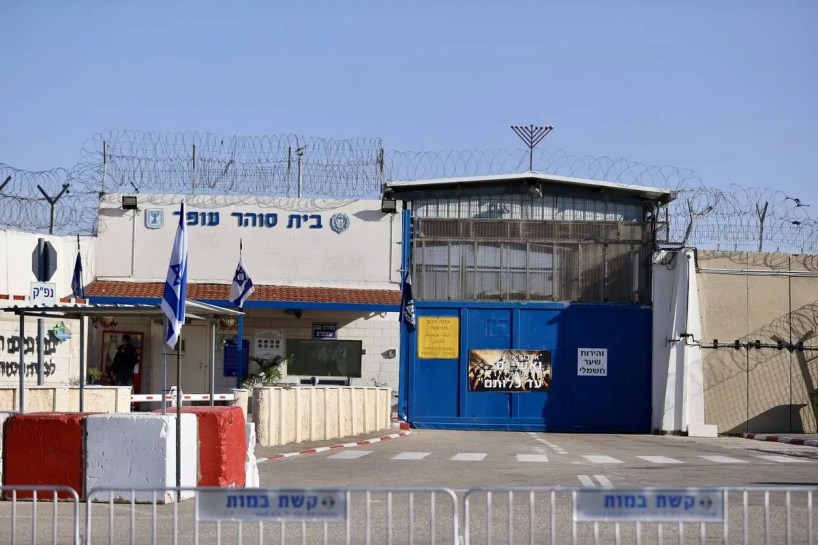
These methods continue to be applied in Israeli prisons, especially during times of hunger strikes, but also during periods of interrogations. In the latter cases, men would be threatened with the rape of their wives or sisters; women would be threatened with sexual violence.
These episodes are often met with collective Palestinian defiance, which directly feeds into Palestinian popular resistance.
The image of the Palestinian fighter, dressed in military fatigue, brandishing an automatic rifle, while proudly walking the streets of Nablus, Jenin or Gaza, in itself does not serve an actual military purpose. It is, however, a direct response to the psychological impact of the kind of humiliation inflicted upon Palestinian society by the Israeli occupation army.
But what is the function of a Palestinian military parade? To answer this question, we must examine the sequence of the event.
When Israel arrests Palestinian activists, they attempt to create the perfect scenario of a humiliated and defeated community: the terror felt by the people when nightly raids begin, the beating of the family of the detained, the shouts of insults along with other well-choreographed horror scenes.
Hours later, Palestinian youth emerge on the streets of their neighbourhoods, proudly parading with their guns, amid the ululation of women and the excited looks of children. This is precisely how Palestinians respond to humiliation.
Palestinian armed Resistance has grown much stronger in recent years, with Gaza currently serving as a case in point.
As the Israeli military is failing to reoccupy Gaza and to subdue its population, utilising the politics of humiliation on a mass scale is simply impossible.
To the contrary, it is the Israelis who do feel humiliated, and not only because of what has taken place on 7 October, but everything else that has taken place since then.
Unable to operate freely in the heart of Gaza, Khan Yunis, Rafah or any other major population centres in the Strip, the Israeli army is forced to humiliate Palestinians in whatever little margins they can control, Beit Lahia, for example.
Frustrated by their military failure to deliver on their promises of subduing Gazans, ordinary Israelis have taken to social media to taunt Palestinians in their own way.
Israeli women, often along with their own children, would dress up in ways that would convey a racist representation of Arab women crying over the bodies of their dead children.
This type of social media mockery seems to have appealed to the imagination of Israeli society, which still insists on its sense of superiority even at a time when they are still paying the price of their own violence and political arrogance.
This time around, however, Israel’s politics of humiliation is proving ineffective, because the relationship between Palestinians and Israelis is on its way to be fundamentally altered.
One is only humiliated if he or she internalises that humiliation as a sense of shame and disempowerment. But Palestinians, this time around, are experiencing no such feelings. To the contrary, their ongoing sumud, and unity, have generated a sense of collective pride unequalled in history.
Dramatic news reports, claims and videos have emerged from both sides involved in the Gaza fighting throughout the past week.
The week started with the Israeli army releasing several videos of Palestinians stripped to their underwear being marched through urban ruins. Israel’s PR machine disregarded the Palestinian outcry that followed. Israel staunchly asserted that the men were Hamas fighters and that their alleged mass surrenders signified that the end of the Palestinian group was close, even as many Palestinians and independent observers insisted that the men were civilians who had been treated against the laws of war by being publicly humiliated.
For its part, Hamas stuck to its usual practice of pushing its cause through video releases – skilfully edited to enhance the desired effects – purporting to confirm its constant and numerous successes against Israeli invaders, mostly showing hits scored against armoured vehicles.
Then came the news that stunned Israel and put a big question mark on its official line of Hamas being on the verge of collapse. First, nine soldiers were killed in a single operation in the Shujaiya neighbourhood of Gaza City on Tuesday. That shock was followed by another one on Friday, with the Israeli army admitting that it killed three Israeli captives, having mistaken them for enemies – even though they held white flags.
So what is really happening on the ground in Gaza?
Nothing we did not predict weeks ago: The war has entered a difficult, unpredictable and bloody phase of full-scale urban warfare where gains are small and slow, and losses can be huge.
Combat in narrow and cramped streets of old cities is known to be one of the most difficult ways to fight a war. Classic military theory calls for defended cities to be surrounded and blockaded by units just strong enough to prevent the defenders from breaking out, while the main force continues advancing and taking territory.
But the fight in Gaza is not about conquering fields and beaches – Israel’s proclaimed goal is to destroy Hamas. To do that, the first step is to control the ground where the enemy operates: the cities.
In the old days, cities needed strong walls to defend themselves, but in the last 100 years, weapons have advanced at a rapid rate, causing a change in tactics. Successful resistance against enemy attacks no longer depends on huge, expensive static bastions. Nowadays, small but potent man-portable weapons whose destructive power is hugely disproportionate to their size, such as anti-tank rocket launchers, grenade throwers, small mortars, assault rifles and many others, allow the defenders to turn each house and every street into a formidable defensive position.
From the 1940s to this day, almost all attempts to conquer cities held by determined defenders have ended in failure. The few victories attackers achieved were so costly that they often ended the offensive capabilities of those armies pushing into cities.
In their own ways, Stalingrad, Warsaw, Berlin, Dien Bien Phu, Vukovar, Sarajevo, Grozny and Fallujah – some successfully defended, others eventually succumbing to attacks – all confirmed the military wisdom that urban warfare should be avoided whenever possible.
Israel could not avoid urban warfare in Gaza. To have a chance of destroying Hamas, it has to deny it its operating ground, the three biggest urban agglomerations in the strip: Gaza City, Khan Younis and Rafah.
The second phase started with Israeli forces reaching the suburbs, first of Gaza City and then, after the temporary ceasefire expired, of Khan Younis. Treading slowly and carefully in expectation of a concentrated Hamas response, the Israeli military completed the encirclement of those two urban areas.
It would be naive to assume that Israel’s generals hoped that by isolating the two biggest built-up areas in the Gaza Strip, they would seriously impair the ability of the Qassam Brigades, Hamas’s armed wing, to fight back.
In reality, the encirclement of the two city centres is not a classic one where troops within the blockade cannot be reinforced nor receive any supplies. Hamas still has an unknown but probably major part of its tunnel network intact and can move in and out. They have some difficulties in doing so but Hamas fighters are not locked in.
Aware of the menace that tunnels present but also of the grave hazard of taking the fight into them, Israel has tried several approaches. It has destroyed as many tunnel entrances as it has found, mostly in the areas under its control, but many others that remain keep the danger acute.
After several attempts to send troops underground that ended in disaster, with troops falling casualty to Hamas booby traps, the high command abandoned that approach. It then reportedly mulled the idea of filling tunnels with seawater, claiming that the test-flooding was successful but it has not yet decided to mount a full-scale deluge operation.
This week’s Israeli actions on the ground strongly suggest that the Israeli army leadership realises that the only way towards achieving its proclaimed goal of annihilating Hamas is by taking, holding and controlling the ground throughout the currently surrounded centres of Gaza City and Khan Younis.
That in itself would not guarantee victory but could create conditions to squeeze Hamas fighters into tunnels, after which Israeli forces could block and destroy all entrances.
Flushing Hamas out would probably take weeks of heavy urban warfare with many more instances of massive losses – on both sides.
The more Israeli soldiers get killed in inner cities of Gaza, without still being able to claim the destruction of Hamas, the more the support for the continuation of the military operation would ebb. At some point, calls from Israel to stop the war could become louder than those encouraging it to continue.
A Geneva-based rights group has called for an urgent international investigation into torture and murder of Palestinian abductees held in Israel’s “Guantanamo-like” jails.
In a statement released on Monday, the Euro-Mediterranean Human Rights Monitor said it had gathered testimonies confirming recent reports in Israeli media about the regime’s field execution of the Gaza abductees.
The Sde Teman Israeli army camp has been turned into “a new Guantanamo-like prison,” where detainees lose their lives after being subjected to extreme torture and mistreatment, it added.
The Israeli army uses open-air chicken coops to house the inmates and withhold food or drink for long periods of time.
The rights group also noted that the Palestinians held in Sde Teman are caged in inhumane conditions, blindfolded and subjected to harsh interrogations with their hands tied.
It further said that turning on lights at night, as well as barring the abductees from using phones and meeting lawyers and representatives from the International Committee of the Red Cross (ICRC) are among the torture tactics being used at the Israeli jail.
The testimonies affirm that multiple elderly abductees endured cruel beatings and humiliating treatment, Euro-Med said.
One of the released detainees, who was speaking on condition of anonymity, said that he witnessed Israeli soldiers directly shooting and killing five abductees in separate incidents.
Earlier, Israeli newspaper Haaretz reported the deaths of six Palestinians in Israeli prisons since the beginning of Israel’s ongoing bloody war on Gaza.
Despite evidence of violence preceding the inmates’ death or medical neglect – their cause of death was not established, according to the report.
It added that Just 71 out of 500 Palestinians arrested during the Gaza war have been brought before Israeli courts, and that the remaining detainees have been moved to prisons run by the Israeli Prison Service or to detention facilities run by the regime’s so-called internal security service, Shin Bet.
Previously, the Euro-Med field teams documented the detention of more than 1,200 Palestinian civilians in random Israeli arrest campaigns across Gaza during Israel’s onslaught on the besieged territory.
The abductees were subjected to all forms of beatings and ill-treatment during their detention and purposefully left blindfolded, nearly nude, and kneeling on the ground upon their release.
Israel waged the devastating war on Gaza on October 7 after the Palestinian Hamas resistance group carried out Operation Al-Aqsa Storm against the occupying entity in retaliation for its intensified atrocities against the Palestinian people.
Since the start of the aggression against Gaza, the Tel Aviv regime has killed at least 19,453 Palestinians, mostly women and children, and injured 52,286 others.
Thousands more are also missing and presumed dead under the rubble in Gaza, which is under “complete siege” by Israel.
The European Union announced on Monday that it was taking “formal infringement proceedings” against Elon Musk’s X social media platform over a recently implemented law intended to crack down on illegal content and disinformation online.
The announcement of the probe comes weeks after X (formerly Twitter) was asked to provide assurances that it was complying with the terms of the European bloc’s Digital Service Act. Under the law, which came into effect in August, a company can be fined up to 6% of its annual global income or banned from operating in the EU if it is found to have breached the sweeping legislation.
“Today we open formal infringement proceedings against X,” Thierry Breton, the EU commissioner responsible for the law’s enforcement, wrote in a post on the social network on Monday.
Breton added that the move had been taken in response to a “suspected breach of obligations to counter illegal content and disinformation; suspected breach of transparency obligations,” and “suspected deceptive design of user interface.”
The probe will also look at the effectiveness of X’s ‘community notes,’ in which users can fact-check or provide comments on the accuracy of certain posts.
Responding to the charge on Monday, X said it was “cooperating with the regulatory process,” and added that it was “important that this process remains free of political influence and follows the law.”
The platform, which was subject to a multi-billion-dollar takeover by Elon Musk last year, said it was focused on “creating a safe and inclusive environment” for its users, which it said it balances against “protecting freedom of expression.” At the time of the takeover, Musk branded himself as a “free speech absolutist.”
On October 10, the EU warned X in a formal letter that it had received “indications” that the social media platform was “being used to disseminate illegal content and disinformation in the EU” related to Hamas’ attack in Israel on October 7.
In a letter to Breton, X chief executive Linda Yaccarino responded to say the firm was “working to address the operational needs of this fast-moving and evolving conflict.” She added that X had removed hundreds of Hamas-affiliated accounts from the service.
Earlier this year, X was among several tech giants to sign up to an EU code of conduct to prepare for the launch of the Digital Services Act in August. However, X withdrew from the agreement in May, prompting backlash from Breton. “You can run but you can’t hide,” he warned Musk and X.
Lawsuits accusing top US universities of harboring antisemitism all originate from one source: a corporate law firm that fielded the pro-settler ex-US ambassador to Israel, and which was registered as a foreign agent of an Israeli principal as recently as 2021.
The firm now represents professional Israel lobby activists posing as victimized “Jewish students” and seeking to crush the free speech rights of Palestine solidarity activists.
The fallout from December 5 House Committe on Antisemitism hearings has already cost University of Pennsylvania president Liz Magill her job, while demands by billionaire pro-Israel donors and politicians for the firing of Harvard’s Claudine Gay have grown by the day. Both stand accused of refusing to condemn calls for the genocide of Jews, even though no such calls have taken place on their campuses.
Meanwhile, little attention has been paid to the forces orchestrating the carefully choreographed, heavily-funded campaign to crush Palestine solidarity activism on campus.
The law firm leading the assault on the universities has included David Friedman, the former ambassador to Israel under Donald Trump, among its partners. Until 2021, this firm, Kasowitz Benson Torres, was registered with the US Department of Justice as a foreign agent on behalf of an Israeli principal.
The firm’s clients include associates of a jailed Ukrainian billionaire who bankrolled neo-Nazi militias, along with a who’s who of corporations accused of defrauding and even killing consumers.
Meanwhile, the “Jewish student” witnesses who set the stage for the attacks on Magill and her fellow university presidents at the House Antisemitism Committee were employed on at least a semi-professional basis by Israeli lobbying cutouts.
They included Jonathan Frieden, a Harvard Law student who moonlights as president of Alliance for Israel; MIT graduate student Talia Khan, the president of MIT Israel Alliance; and Bella Ingber, co-president of NYU’s Students Supporting Israel.
Israel lobbyist moonlighting as UPenn student calls for Covid-style lockdowns on Palestine protests
The most harrowing — and clearly questionable — claims furnished during the December 5 congressional hearings came courtesy of Eyal Yakoby, an Israeli-American senior at UPenn.
“Over the course of the last few weeks, I’ve… read the statement, ‘Ninety-percent of pigs are gas chambered!’ on the pavement as I walked to class,” Yakoby moaned.
The most likely explanation for the appearance of this phrase on UPenn’s Locust Walk was not the presence of chalk-wielding neo-Nazis but rather, that of animal welfare advocates, who were presumably calling attention to the fact that most pigs are killed by slaughterhouses which employ a grotesque method of gas inhalation exposed by activists in late 2022.
“‘You’re a dirty little Jew and you deserve to die’ are not words said by Hamas, but by my classmates and my professors,” Yakoby claimed during a December 5 press conference convened by the House GOP leadership. Oddly, he neglected to name a single student or UPenn employee responsible for such inflammatory remarks.
Conjuring up images of a campus overwhelmed by Hamas-linked hatemongers, Yakoby seemed to call for imposing Covid-era lockdowns on students protesting Israel’s blood-drenched assault on the besieged Gaza Strip.
“During Covid, strict guidelines governed everything from class attendance and graduation walks,” he said. “But now, when students and faculty defy policies to intimidate Jewish students, where is the same resolute enforcement?”
Lawsuits target top US campuses with flimsy, unprovable allegations
Just hours after his appearance alongside members of Congress, Yakoby filed a lawsuit against UPenn, claiming the university violated Title VI of the Civil Rights Act by failing to respond to antisemitism.
Yakoby’s lawsuit was filled with dubious, highly politicized accusations, including complaints about the chanting of “antisemitic slurs” such as “Intifada revolution” and “from the river to the sea.”
A closer examination of other incidents described in the lawsuit against Penn reveals a great number of them appear to have been seriously exaggerated or manufactured out of whole cloth.
The most ‘threatening’ episode described by the Yakoby, for example, consists of a man who “threateningly approached him” and “yelled ‘fuck you.’” As a result of this experience — and the agony apparently endured when the plaintiff observed other students removing posters showing Israeli captives — the suit claims that “Yakoby missed his next two classes” because he was “shaken by these escalating acts of hate.”
The vast majority of claims of overt antisemitism appear to consist of statements by students and professors who criticized the state of Israel but generally took pains to distinguish between the political ideology of Zionism and the religion of Judaism.
Elsewhere, the lawsuit accuses professors of antisemitism because they questioned now-debunked Israeli atrocity propaganda about the October 7 attacks, including a demonstrably false claim by Yakoby that the “killing of 40 [Israeli] babies” by Palestinian militants had been “confirmed.”
Many of the alleged incidents described as “assaults” fail to meet basic evidentiary standards, leaving the court with no option but to take the plaintiffs’ word that the contents of the complaint happened as described.
Claims that a Jewish student was taunted with exhortations to “keep walking you dirty little Jew,” for instance, are typical of the highly suspect claims found throughout the lawsuit.
Indeed, no proof of this alleged interaction was provided, nor did the plaintiff’s provide even a vague sketch of the assailant’s identity. Instead, the entire emphasis is placed on the supposed lack of “sympathy” subsequently shown to the student by a professor who decided not to award her an “extension on her class lecture note assignment.”
The plaintiffs also took aim at Palestinian academic and poet Refaat Alareer, who had been invited to a literary festival at Penn before being murdered in a December 6 Israeli strike described by human rights monitors as a “targeted assassination.”
The demands of the pro-Israel activists include “terminating deans, administrators, professors and other employees” who they say are “responsible for the antisemitic abuse permeating the school, whether because they engaged in it or permitted it; suspending or expelling students who engage in such conduct… the adoption of the IHRA definition of antisemitism,” and “compensatory, consequential, and punitive [financial] damages.”
Israel lobbyists are also targeting America’s most expensive campus, New York University, leveling a litany of flimsy and unprovable antisemitism allegations to extract heavy financial damages, including a full refund of tuition. Bella Ingber, who also featured prominently at the House Republican press conference, is a leading face of the NYU lawsuit.
During the Republican presser, Ingber compared conditions at NYU to life under the German Nazi Reich.
“Since Oct. 7,” Ingber said, “the unmistakable anti-Semitism that I have experienced on campus is reminiscent of the Jew-hatred I’ve heard about from my grandparents, Holocaust survivors who experienced first-hand the deafening silence of their neighbors in Poland and Germany when the Nazis first rose to power.”
The plaintiffs of the Israel lobby-led lawsuit “request that a judgment be entered in each of their favor, and against NYU” which would see the university “terminating deans, administrators, professors and other employees responsible for the antisemitic abuse permeating the school, whether because they engaged in it or permitted it… suspending or expelling students who engage in such conduct,” and “compensatory and punitive damages.”
In other words, the lawsuit seeks campus-wide regime change, replacing any and all administrators with those willing to take instructions from the Israel lobby.
“Bibi Netanyahu’s guys in the Trump White House” lead legal assault on campus speech
If the language of the NYU lawsuit sounds familiar, that is because it was brought by the same high-powered corporate legal firm presiding over the legal action against UPenn: Kasowitz Benson Torres, best known for its work on behalf of former President Donald Trump. The firm’s leadership has been aptly described as “Bibi Netanyahu’s guys in the Trump White House.”
The law firm was known as Kasowitz Benson Torres & Friedman until 2017, when its partner, David Friedman left to become US Ambassador to Israel. Friedman has been credited with working alongside former presidential son-in-law Jared Kushner to pressure Trump into adopting more radically anti-Palestinian positions.
The firm was founded in 1993 by attorney Marc Kasowitz, who gained national notoriety for his work representing Big Tobacco, describing himself as one of the “most feared lawyers in the United States.” Though reports describe him as a strong Trump ally and a go-to source for the former president, financial disclosures show Kasowitz and his wife have donated thousands of dollars to Democratic politicians as well, including former President Barack Obama, current President Joe Biden, and Sen. Chuck Schumer. Also employed by the firm is former Sen. Joe Lieberman, a hardcore neoconservative who now serves as chairman of the pro-war United Against a Nuclear Iran. While in Congress, Lieberman advocated for moving the US embassy in Israel from Tel Aviv to Jerusalem as far back as 1995.
A quick glance at Kasowitz Benson Torres’ recent handiwork reveals a lengthy track record of defending Goliath from David. For example, its website boasts of successfully defending Comcast against a class-action lawsuit by angry customers. Other high-profile clients include Israeli pharmaceutical giant Teva, best known for causing the ongoing worldwide shortage of a vincristine — a crucial drug in treating most types of childhood cancers with no known substitute — after it deemed production insufficiently profitable.
In 2019, the firm signed on to represent the US-based co-defendants of notoriously-corrupt Ukrainian oligarch Ihor Kolomoisky, who now languishes in a Kiev prison and is known for bankrolling current president Volodymyr Zelensky and the Ukrainian military’s neo-Nazi Azov Regiment. Ukrainian financial giant Privatbank maintains that Kolomoisky and his associates defrauded the bank out of billions of dollars.
A year later, Kasowitz Benson Torres was required to register as a foreign agent with the US Justice Department after agreeing to represent an Israeli real estate developer specializing in building luxury condos for ulra-Orthodox Jews living in illegal settlements.
This November, The Grayzonerevealed a leaked letter signed by David Friedman and delivered to NYU administrators in advance of the lawsuit. The letter demanded NYU establish a position dedicated to “combating antisemitism,” and disband student clubs dedicated to Palestine activism.
Now, the law firm’s crusade to crush the free speech rights of Palestine solidarity activists is spreading across the country. This November, two of the firm’s partners revealed that the legal team plans similar suits for Harvard, Cornell, Columbia, MIT, Stanford, and UC-Berkeley, accusing them all of “deliberate indifference” to the supposed plight of Jewish students.
The Prisoners and Ex-Prisoners’ Affairs Commission has warned that Israel is subjecting Palestinian female prisoners held in Damoun Prison, especially those randomly arrested from the besieged Gaza Strip, to “inhumane” treatment and “horrific” detention conditions including severe punishments on a daily basis.
In a report issued yesterday, the rights group quoted its lawyer saying that since 7 October, Israeli occupation forces have launched a massive arrest campaign in the occupied West Bank including East Jerusalem, inside Israel and in Gaza, specifically targeting female prisoners, who were tortured and abused from the moment of their arrest.
“The female prisoners were subjected to degrading treatment including beating and insults, strip searches, isolation and deprivation of the most basic rights,” the lawyer said.
The prison administration deliberately singled out female detainees from the besieged Gaza Strip for the worst type of torture, according to one female prisoner.
In her testimony, the prisoner said: “A few days ago, an elderly woman [80 years old] from Gaza arrived at the department, walking on a crutch and without a cover on her head. Her body and clothes were covered with blood and she appeared to suffer from Alzheimer’s.”
According to the report, all the female prisoners from the Gaza Strip had their clothes taken away and replaced with summer clothes, and had been tortured before arriving at Damoun Prison and were subjected to physical and verbal abuse.
“Some of them had spent seven days outdoors in the rain and in the cold, and all of them arrived at the prison in a deplorable condition both physically and psychologically.”
The report lists the case of a female prisoner from Gaza who is a mother of four children and who was forced to hand her children to an unknown man in the street when she was detained.
“Other female prisoners were also forced to leave their children in the street when they were arrested by the Israeli army forces,” the detainee said.
DCIP estimates an average of 165 Palestinian children were held in Israeli military detention each month in 2023. Each year, Israeli forces detain between 500 and 700 Palestinian children and prosecute them in military courts.
Children typically arrive at interrogation bound, blindfolded, frightened, and sleep-deprived. Children often give confessions after verbal abuse, threats, physical and psychological violence that in some cases amounts to torture.
Israeli military law provides no right to legal counsel during interrogation, and Israeli military court judges seldom exclude confessions obtained by coercion or torture.
From testimonies of 75 Palestinian children detained by Israeli forces from the occupied West Bank, including East Jerusalem, DCIP found that:
61 percent experienced physical violence following arrest
96 percent were hand-tied
88 percent were blindfolded
47 percent were detained from their homes in the middle of the night
69 percent faced verbal abuse, humiliation, or intimidation
65 percent were subject to at least one strip search
71 percent were denied adequate food and water
65 percent of children were not properly informed of their rights
97 percent were interrogated without the presence of a family member
95 percent were not informed of the reason for their arrest
37 percent were subject to stress positions
43 percent were shown or signed documents in Hebrew, a language most Palestinian children don’t understand
24 percent were isolated in solitary confinement for two or more days
The average amount of time that a Palestinian child detainee was isolated in solitary confinement in 2023 was 26 days, according to evidence collected by DCIP. The longest period of solitary confinement documented by DCIP was 40 days in 2023.
Israeli authorities held at least 36 Palestinian children in administrative detention in 2023, according to documentation collected by DCIP. Administrative detention is a form of imprisonment without charge or trial regularly used by Israeli authorities to arbitrarily detain Palestinians, including children. Palestinian children held under administrative detention orders are not presented with charges, and their detention is based on secret evidence that is neither disclosed to the child nor their attorney, preventing them from preparing a legal challenge to the detention and its alleged basis.
Israeli forces escalated arrest operations throughout the occupied West Bank after October 7, arresting more than 200 Palestinian children to interrogate, prosecute, and imprison in the Israeli military detention system, according to estimates by DCIP.
DCIP estimates that 130 Palestinian child prisoners were released by Israeli forces as part of a truce agreement with Hamas in November, including 17 children in administrative detention.
DCIP published a report on May 31, 2023, titled “Arbitrary by Default,” asserting that Israeli authorities’ systematic denial of fair trial rights to Palestinian children detained by Israeli forces from the occupied West Bank and prosecuted in Israeli military courts constitutes arbitrary detention.
In June 2023, Israeli forces shot 14-year-old Ihab in the leg in Balata refugee camp, near Nablus in the northern occupied West Bank. Then, Israeli forces deliberately blocked an ambulance from reaching him to provide medical care.
Jewish Anti Zionists are occasionally irritated by the ‘conflation’ of ‘Zionism and Judaism’ but the terms are inherently related.
Conflation is usually understood as the merging of two or more distinct sets of information, texts, ideas, etc. into one. Does this concept apply to Zionism and Judaism? Are Zionism and Judaism distinct terms? Are Jews and Zionism categorically different from each other?
For example, can Americanism and exceptionalism be conflated? Can round and circular be conflated? The distinction between terms that are related can be confusing. But the relationship between Jews and Zionism is clear. This is also true of the relationship among Zionism, Jews and Judaism. These terms are intrinsically related politically, culturally, religiously and at times they form a metaphysical continuum.
Rabbi Yaakov Shapiro, probably the most eloquent Torah Jew spokesperson, has repeatedly argued that those who ‘conflate’ Judaism and Zionism are “either Zionists or anti-Semites.” But Zionism and Judaism, as we will see next, are integrally related.
The vast majority of Rabbinical Jews see Judaism and Zionism as correlated precepts. This is not a recent phenomenon. As early as 1942, at the peak of WWII, 818 orthodox American rabbis signed a document reaffirming the essential bond between Zionism and Judaism. The Rabbis’ document reads, “the overwhelming majority of American Rabbis regard Zionism not only as fully consistent with Judaism but as a logical expression and implementation of it.” We can also look to the Judaic teaching of Rabbi Abraham Isaac Kook. Kook, who died in 1935, was the chief rabbi of Mandatory Palestine. He is considered one of the fathers of religious Zionism. For Kook, Eretz Yisrael was the spatial centre of holiness in the world. Like other Zionist agitators, Kook rejected the galut (Jewish Diaspora). The messianic Zionist settler movement is largely inspired by Kook’s teaching.
The Rabbis who subscribe to the Zionist enterprise clearly do not differentiate between Judaism and Zionism. For them, Zionism and Judaism are at the core of the contemporaneous Judaic call. These Rabbis do not conflate Zionism with Judaism: they simply do not differentiate the two.
But what about the so-called ‘anti Semites,’ do they ‘conflate’ Judaism and Zionism? Some critics of Israel argue that Zionist criminality is the outcome of Judaic dismissal of otherness. They point at some problematic segments within the Talmud and argue that Israeli brutality is a continuation of those inhumane teachings. Whether or not this argument is valid, the suggestion that Zionism inherited its brutality from Judaism suggests that the so called anti Semite’s understanding of Zionism and the Talmud are linked by a chain of causality, and is not a case of conflation.
So the rabbinical Zionists and the ‘anti Semites’ do not conflate Zionism and Judaism, but what about Israel and the Israelis? Israel is invested in a dialectical battle with the merger of Judaism and Zionism. Israel defines itself as the ‘Jewish’ State not the ‘Judaic’ State. Secular Zionism has, since its inception, had an ambivalent relationship with Rabbinical institutes. Though the rabbinical institutions in Israel have managed to dictate halakha law, Israeli political institutions have, at least until now, compartmentalised religious and civil matters.
While in Judaism (as in Islam), there is no dichotomy between the religio and the civil, Zionism promised to make Jews into‘people like all other people.’ This promise was inspired by Christian civilisation — a social environment that endeavored to maintain a dichotomy between religion and civil laws. Zionism’s original promise to civilise the Jews was intended to liberate the newly invented Jewish ‘nation’ from its ‘reactionary’ religious heritage. This indicates that even the Israelis do not conflate Judaism and Zionism. They, somehow, differentiate between the two, although they probably admit to themselves that they often overlap.
But if Judaism and Zionism are not distinct notions and, as a result, conflation is not possible, it would also be wrong to argue, as many commentators do, that ‘Judaism was hijacked by Zionism.’ If anything, the facts suggest the opposite. It was Zionism that was hijacked by Judaism. Zionism began as an anti Judaic movement. It promised to emancipate the Jews from their ‘reactionary’ past by means of a ‘homecoming’. It promised to civilise diaspora Jews and make them a part of a productive, functional and autonomous nation. Many early Zionist texts read like anti-Semitic tracts. They spew anti Jewish rants. But it didn’t take long for Judaism to contain the emerging tsunami of Early-Zionist ferocity and teach the Jews to love themselves once again. It is important to note that when Zionism was anti Judaic, universalist and humanist, it was a marginal movement. Hardly any Jews followed the few early Zionist idealists. However, as soon as Zionism became tribal, expansionist and even militant, its popularity amongst Jews grew rapidly. It is reasonable to argue that it was Rabbis like Kook and later the Chabbad sect that skillfully and wittingly integrated Zionism into their Judaic teaching. By doing so, they killed Zionist anti Judaic ferocity. They reunited the tribe.
It seems that no one conflates Judaism and Zionism, not the Rabbinical Zionist who see Judaism and Zionism as one, nor the anti-Semite who sees Judaism and Zionism in causal terms. Even the Israelis do not conflate the two. Those who reference to conflation may do so in order to sustain the confusion relating to Jews and their politics.
Kosher Trinity And Jewish Quantum Mechanics
While pre-emancipated Jews where at ease with their ethno-religious identity, the French revolution, emancipation and secularisation introduced complexity to identity issues for European Jews. Since then, secular Jews have found it difficult or even impossible to consolidate their tribal identity within the emerging universal discourse around them. They find it impossible to fuse their cultural racial orientation with their anti racist progressive political rants. Zionism offered a solution. It promised to take the Jews away, to remove the problem. But Zionism only managed to move the problem to a new place.
Diaspora Jews have developed different tactics to deal with their identity crises. Contemporary Jewish identity is shaped like a tri-polar magnetic field in which one pole is religion, another is race and the third is politics.
When Jewish politics is subject to criticism (Israel, Zionism, the Lobby, etc.) some Jews claim to be ‘racially offended’ in spite of the fact that race, biology, blood or ethnicity was never mentioned. When Jewish racism is subject to criticism (choseness, Israel race laws, etc.) some Jews are affronted by a perceived attack on their religion. When the religion or some obscene Jewish religious teaching is disparaged, many Jews are quick to assert that they are hardly religious anymore (which is true by the way). We are confronting a quantum leap–an evasive identity that is morphing constantly. It moves rapidly within its kosher trinity field, it is everywhere and nowhere. The reason for this is that the Kosher Trinity makes it very difficult, or even impossible to criticise Jewish politics, ideology and religion. The Kosher Trinity allows Jews to boast about their cultural symptoms and great achievements while claiming offense when any of these symptoms are discussed by others. This quantum model is set to suppress any possible dissent and avoid Jewish self-reflection. As much as you may find it hard to grasp what Jews are, Jews share the struggle to address who they are and what they are up to.
The US Department of Defense has recently dispatched a carrier strike group to the Gulf of Aden in response to attacks on ships in the Red Sea by Yemen’s Ansar Allah rebel movement, also known as the Houthis, American press reported, citing anonymous officials.
Earlier in the day, the War Zone website reported, citing an unnamed Pentagon official, that US Defense Secretary Lloyd Austin will announce the launch of an international operation dubbed Prosperity Guardian during his trip to the Middle East next week to protect ships in the Red Sea from the threat posed by the Houthis.
“The Pentagon has in recent days moved the Dwight D. Eisenhower Carrier Strike Group from the Persian Gulf into the Gulf of Aden, off the coast of Yemen, to support a potential US response to attacks,” the official told the newspaper.
Another official was quoted as saying that the US military also gave commanders the option to “strike the Houthis.”
On Saturday, the Semafor news portal reported, citing officials from the administration of US President Joe Biden, that the Pentagon was considering the possibility of striking Houthi military targets in response to increased attacks on ships in the Red Sea.
On Friday, White House National Security Adviser Jake Sullivan said Iran should take steps to end the threat to shipping posed by the Houthis in the Red Sea.
The Houthis have earlier said that they would continue to prevent the passage in the Red Sea and the Arabian Sea of ships linked to Israeli companies or bound for Israel until Israel’s military operation in the Gaza Strip ends.
After the armed conflict between Israel and Palestinian movement Hamas resumed on October 7, the Houthis have conducted multiple missile and drone attacks, threatening civilian infrastructure in Israel and commercial shipping operating in the Red Sea and the Gulf of Aden.
It’s really no surprise that Israel’s military is killing its own people after reports of three hostages shot dead by “friendly fire”.
The Israeli authorities said the three Israeli men were “mistakenly identified as threats” during close combat with Palestinian militants and were fired on by troops.
There are reports of the bodies of three other hostages having been recovered. However, the Israeli regime is not disclosing the circumstances of their deaths. Or rather they haven’t come up with a good cover story yet.
There are also reports that up to 20 per cent of the 117 Israeli soldiers killed so far in action in Gaza have been by “friendly fire”.
Hamas, the Palestinian militant group, has stated that several Israeli hostages have been killed during eight weeks of Israeli bombardment of Gaza.
Israeli Prime Minister Benjamin Netanyahu described the latest three hostage deaths as an “unbearable tragedy” and vowed that there would be a full investigation into the circumstances to avoid repeating the error.
There are believed to be around 130 Israeli hostages still remaining in Gaza after they were taken there by Hamas and other Palestinian militants during the daring attacks on Israel on October 7. More than 100 captives have already been released during an earlier prisoner exchange truce.
The latest deaths of hostages sparked public protests in Tel Aviv demanding Netanyahu to end hostilities and bring all captives home. Israeli families and supporters have been furious at Netanyahu’s war cabinet for not prioritizing the release of all captives by calling a ceasefire.
Netanyahu and his ministers have rejected domestic and international calls for a ceasefire. Israel’s Foreign Minister Eli Cohen said that Israel’s attacks on Gaza will continue “with or without international support”.
The U.S. National Security Advisor Jake Sullivan in a visit to Israel on Friday consented to the continuation of military operations for months to come, although no doubt for public relations benefit the American envoy urged a “transition” to minimize civilian casualties.
The intransigent Israeli leaders have said the military operations in Gaza will continue for “several months”. That means the death toll of civilians and hostages will inevitably escalate beyond what is already an unprecedented aggression and litany of war crimes. Already there have been 20,000 Palestinian civilians killed during 70 days of bombing and ground invasion by Israeli troops in Gaza.
Nearly 30,000 bombs have been dropped on Gaza and half of them are “unguided” munitions or so-called “dumb bombs”. That’s over 50 tonnes in high explosive ordnance, or three times the lethal force that was dropped on Hiroshima by the Americans in 1945.
The wanton murder of women and children by the Israeli regime shows that it has no regard for international law nor the commission of crimes against humanity.
Given the barbarity of Israel’s onslaught, it is not surprising that its forces are killing its own people. This is not merely due to “error” or what is called “friendly fire”.
The Israeli military is bombing civilian targets with deliberate genocidal intent. Its snipers are shooting medics and patients through hospital windows.
There are reports of Israeli commandos raiding shelters and executing women and children at close range.
In this unbridled slaughter of innocents and orgy of mass murder it is to be expected that the Israeli forces are killing Israeli hostages because these forces are killing everyone. Anyone that appears in the gun sights of Israeli forces is to be obliterated.
And the Israeli regime and its American apologists have the gall to call the Israeli killers-in-uniform “the most moral army in history”.
During the Hamas attacks on Kibbutzim and other Israeli sites on October 7, it is now well-documented that many of the deaths that day out of the 1,200 victims were caused by Israeli military violence. Israeli witnesses have testified that troops opened fired with tanks and heavy machine guns on houses where Palestinian fighters were holding residents.
Israeli soldiers have also expressed dismay and disbelief that their forces used such indiscriminate firepower in situations where Israeli citizens would be knowingly killed.
The destruction of houses as well as numerous cars at the open air dance festival where several Israeli partygoers were killed could not have been carried out by lightly armed Palestinian fighters. The latter claimed to have killed nearly 400 Israeli soldiers on October 7. Hamas say their primary targets were military. No doubt the militants killed civilians too. However, the emerging evidence indicates that most of the deaths of Israeli civilians were by their own security forces.
This would account for images that purport to show that Hamas fighters incinerated and mutilated victims. Such images have been cited by Netanyahu and U.S. President Joe Biden as evidence of Palestinian “terrorism” and justification for the Israeli offensive on Gaza.
But the deliberate killing of Israelis by their military in situations of close combat as a means to destroy the enemy is known as the Hannibal Doctrine. It is Israeli state policy, albeit not openly acknowledged.
The latest Israeli plan reported this week to flood underground tunnels in Gaza with seawater is also risking the drowning of Israeli hostages. Just like the carpet bombing of Gaza, the lives of the hostages are of little value to Netanyahu and the psychopaths in his cabinet.
If it weren’t for the genocidal offensive on Gaza, Netanyahu would be in court facing prosecution for long-time charges of personal corruption. He wants this murderous war to continue for as long as possible to keep himself out of jail. His cabinet of Zionist fascists also want to wipe Palestinians off the map in a Final Solution of ethnic cleansing.
For the fascist Israeli regime who have gotten away with mass murder and theft for so long with absolutely no compunction, well… why not kill a few of their own for good measure?
Their perennial cover story of the Nazi Holocaust against Jews is just an added sickening depravity. The Neo-Nazis are in Tel Aviv, sponsored and weaponised by Washington.
The Hamas Movement has accused the Israeli occupation army of using different types of internationally prohibited ammunition and bombs in its genocidal war on the Gaza Strip and persisting in its indiscriminate bombardment of homes, shelter centers, tents and hospitals.
“All this is happening in full view of the world, with support from the US, Britain and some European countries,” senior Hamas official Osama Hamdan told a news conference in Beirut on Saturday.
Hamdan criticized the failure of the international community and the UN to stop the brutal Israeli aggression against Gaza as a result of the US use of its veto power to support what he called the “neo-Nazis” in their crimes and massacres.
“About 19,000 citizens of our people have been martyred and about 52,000 others have been injured, while there are approximately 800 missing persons — 70 percent of them children and women,” Hamdan pointed out.
Hamdan said that a staggering 45 percent of the martyrs in southern Gaza are displaced persons, which contradicts the Israeli occupation’s claims about the presence of safe zones.
“There is no safe place or safe passages in the Gaza Strip. These are lies the occupation keeps repeating and every official of the US administration keeps parroting. The entirety of Gaza, from its northernmost to southernmost areas, is targeted by the Zio-American weaponry,” Hamdan underscored.
“The war trio and losers, Netanyahu, Gantz and Gallant, achieved nothing of their aggressive goals and their ongoing Nazi war against the Gaza Strip … Their dreams and illusions will be shattered on the land of proud Gaza,” he said.
By Christina England – 30 Q&As – Book Review & Summary
Lies are Unbekoming | September 4, 2026
… Gardasil received FDA fast-track approval in 2006, Cervarix followed in 2009, and Gardasil 9 was approved in December 2014 with more than double the aluminium adjuvant content of the original. The commercial context is specific. Merck was about to lose patent protection on Zocor and faced $18 billion in Vioxx injury claims from a cardiovascular drug the company had marketed while suppressing its own data showing a five-times increase in heart attacks. Analysts projected the global HPV vaccine market at $4 billion by 2011, contingent on government-funded national programs for teenage girls. The 1986 National Childhood Vaccine Injury Act had already granted manufacturers complete liability immunity. By 2013, Japan had withdrawn its HPV vaccine recommendation after cataloguing severe adverse reactions in hundreds of girls. No Western government followed. The establishment position across the UK, US, Australia, and most of Europe held, and still holds, that the vaccines are safe and effective, that reported injuries are coincidental, and that cervical cancer prevention justifies the program. The book was published into this position, not against a vacuum.
Shattered Dreams sits alongside Mary Holland’s The HPV Vaccine On Trial and Viera Scheibner’s foundational vaccination work as part of the documented record on what has been done to a generation of teenage girls under the banner of cancer prevention. The full summary unpacks three specific findings: that Merck used the aluminium adjuvant itself as the “placebo” control in 92.5% of trial subjects, making it structurally impossible to detect excess reactions from the adjuvant; that Dr. Sin Hang Lee found HPV DNA fragments bound to aluminium in every one of sixteen Gardasil samples tested, and in the blood and spleen of a New Zealand girl six months after her third dose; and that in every country with high vaccination coverage, including Australia, the UK, Norway, and Sweden, cervical cancer rates have stopped declining and started rising specifically in the vaccinated cohort. Martínez-Lavín’s 2017 calculation puts the number needed to seriously harm with Gardasil 9 at 140, and the number needed to vaccinate to prevent one case at 1,757. Thirteen young women are seriously harmed for every one who benefits. The vaccine was approved on the basis of trials that could not detect what the trials were supposed to detect, and it is still being given to twelve-year-olds today. … Read full review
This site is provided as a research and reference tool. Although we make every reasonable effort to ensure that the information and data provided at this site are useful, accurate, and current, we cannot guarantee that the information and data provided here will be error-free. By using this site, you assume all responsibility for and risk arising from your use of and reliance upon the contents of this site.
This site and the information available through it do not, and are not intended to constitute legal advice. Should you require legal advice, you should consult your own attorney.
Nothing within this site or linked to by this site constitutes investment advice or medical advice.
Materials accessible from or added to this site by third parties, such as comments posted, are strictly the responsibility of the third party who added such materials or made them accessible and we neither endorse nor undertake to control, monitor, edit or assume responsibility for any such third-party material.
The posting of stories, commentaries, reports, documents and links (embedded or otherwise) on this site does not in any way, shape or form, implied or otherwise, necessarily express or suggest endorsement or support of any of such posted material or parts therein.
The word “alleged” is deemed to occur before the word “fraud.” Since the rule of law still applies. To peasants, at least.
Fair Use
This site contains copyrighted material the use of which has not always been specifically authorized by the copyright owner. We are making such material available in our efforts to advance understanding of environmental, political, human rights, economic, democracy, scientific, and social justice issues, etc. We believe this constitutes a ‘fair use’ of any such copyrighted material as provided for in section 107 of the US Copyright Law. In accordance with Title 17 U.S.C. Section 107, the material on this site is distributed without profit to those who have expressed a prior interest in receiving the included information for research and educational purposes. For more info go to: http://www.law.cornell.edu/uscode/17/107.shtml. If you wish to use copyrighted material from this site for purposes of your own that go beyond ‘fair use’, you must obtain permission from the copyright owner.
DMCA Contact
This is information for anyone that wishes to challenge our “fair use” of copyrighted material.
If you are a legal copyright holder or a designated agent for such and you believe that content residing on or accessible through our website infringes a copyright and falls outside the boundaries of “Fair Use”, please send a notice of infringement by contacting atheonews@gmail.com.
We will respond and take necessary action immediately.
If notice is given of an alleged copyright violation we will act expeditiously to remove or disable access to the material(s) in question.
All 3rd party material posted on this website is copyright the respective owners / authors. Aletho News makes no claim of copyright on such material.