Weaponised definition of anti-Semitism is a ‘tool’ to undermine free-speech
By Nasim Ahmed | MEMO | September 15, 2023
The highly controversial International Holocaust Remembrance Alliance (IHRA) definition of anti-Semitism has been repeatedly abused to suppress criticism of Israel and stifle pro-Palestinian activism at UK universities, a startling new report has found.
Produced by the European Legal Support Centre and the British Society for Middle Eastern Studies, the report analysed 40 cases between 2017-2022 where spurious accusations of anti-Semitism were levelled against students and faculty members over speech related to Palestine/Israel.
In nearly every case, the accusations were eventually dismissed after prolonged, stressful investigative processes. However, the harm inflicted on the well-being and reputations of those falsely accused had already been accomplished through these malicious campaigns.
Based on the findings, the report concludes that the IHRA definition is inadequate and unfit for purpose. In practice, it undermines academic freedom and the right to lawful speech for students and staff. The reputation and careers of those falsely accused also suffer harm from such allegations. Overall, the definition is being used to stifle protected speech critical of Israel, in violation of the academic rights and freedoms that universities are legally obligated to protect.
“We have found that since its adoption in UK higher education institutions, the IHRA definition has been used to delegitimise points of view critical of Israel and/or in support of Palestinian rights, silencing political criticism and academic scrutiny of Israeli state policies” Programme Director of the European Legal Support Centre, Giovanni Fassina, told MEMO.
“University staff and students in the UK have been subjected to false allegations of anti-Semitism, unreasonable investigations based on the IHRA definition, or cancellations and disruption of events. These proceedings harm well-being and reputations, including possible damage to education and careers. The complaints have had an adverse effect on academic freedom and free speech on campuses and have fostered self-censorship,” Fassina added.
Despite concerns raised by academics, activists and legal experts over its chilling effect on free speech, the IHRA definition was adopted by a majority of universities. Kenneth Stern, the lead drafter of the IHRA, has himself warned that it is not appropriate for university settings where critical thought and free debate are paramount. Nevertheless, in 2020, the then Secretary of State for Education, Gavin Williamson threatened university leaders with punitive financial consequences if their institutions did not adopt the IHRA. As a result, 119 universities (almost 75 per cent of UK universities) have adopted some version of the definition as a basis for campus policies.
Meanwhile, the UK government has rejected similar calls for protection against discrimination from other minority groups in the name of fighting ‘woke aggression’ and ‘cancel culture’.
For instance, Muslim advocacy groups have urged the adoption of an official definition of Islamophobia to tackle anti-Muslim hatred. But the government rejected this, claiming a singular definition could chill legitimate speech and debate.
In stark contrast to its position on the IHRA, the Tory government and the right in general have argued that a definition of Islamophobia could impact law enforcement and require legislative changes. Critics pointed out this rationale is inconsistent given the IHRA definition’s documented use to restrict speech, curtail events and initiate proceedings against students and faculty.
The contrast reveals not only a double standard in the government’s approach to addressing racism targeting different minority groups, but also a hierarchy of racism, where certain groups are granted greater protection and privileges over others. There is a reluctance to bolster protections for Muslims, even as accusations of anti-Semitism are readily weaponised to demonise certain speech.
A major flaw of the IHRA definition is that it conflates anti-Semitism with legitimate criticism of Israel and Zionism. Seven of the 11 illustrative examples do just that. One example states that “denying Jewish people their right to self-determination, e.g. by claiming that Israel is a racist endeavour” is anti-Semitic. As the report authors explain, this example falsely equates Jewish self-determination solely with the political project of Israel – a contingent position unique to Zionist ideology. It further delegitimises Palestinian claims to self-determination and casts opposition to Israel’s discriminatory policies as anti-Semitic. Most concerning, it suppresses documented evidence of Israeli human rights abuses against Palestinians by equating such criticism with bigotry. Through such examples, the definition chills free speech and makes it difficult to act in solidarity with Palestinians without facing accusations of anti-Semitism.
Several cases where students and teachers were “cancelled” on extremely dubious grounds were highlighted. In December 2020, an academic teaching on the Middle East received notification that a recent graduate had submitted complaints alleging their social media posts from 2016-2020 were anti-Semitic. The posts criticised Zionism, shared an article on the Nakba, and commented on anti-Semitism allegations against Labour.
The graduate argued these violated the IHRA definition. Despite the academic being cleared, they underwent a lengthy disciplinary process causing stress and requiring legal advice. The university referred to the IHRA definition in its policies.
Another example is the treatment of Dr Somdeep Sen. He was invited to deliver a lecture at the University of Glasgow on his book ‘Decolonizing Palestine: Hamas between the Anticolonial and the Postcolonial’. After the lecture was announced, the university received a complaint from its Jewish student society alleging that the event is anti-Semitic.
In response, the university demanded Sen provide details on his talk’s content in advance and confirm he wouldn’t contravene the IHRA definition. As these conditions undermined academic freedom, Sen withdrew and the event was cancelled.
The two examples are just the tip-of the iceberg. All the cases show how vague accusations of violating the IHRA definition have put pressure on universities to investigate or penalise faculty and students for speech related to Palestinian rights and Israeli policies. In all the cases, the burden of proof is on pro-Palestine students and critics of Israel. The presumption is that they are guilty until proven innocent; a perverse inversion of the universal principle that one is innocent until proven guilty.
Commenting on the findings, Neve Gordon, the chair of Brismes’s committee on academic freedom and a professor of human rights law in the school of law at Queen Mary University, said:
What has been framed as a tool to classify and assess a particular form of discriminatory violations of protected characteristics, has instead been used as a tool to undermine and punish protected speech and to punish those in academia who voice criticism of the Israeli state’s policies.
In his comments to MEMO, Fassina mentioned the vicious campaign to police free speech on Israel and Palestine and the ongoing efforts to weaponise anti-Semitism against critics of the apartheid state. “For us and our partners in the UK, it was time to expose a pattern we have been observing for too long: unfounded allegations of anti-Semitism made against academic staff and students after they criticised the policies of the Israeli government or just ‘liked’ some tweets about Palestine, Israel or about the Labour Party.” He explained that the latest report adds to the evidence already produced in Europe, in the US and Canada that demonstrate similar harmful consequences of the IHRA definition for the rights of advocates for Palestine. “This is not just a UK problem but reveals a wider trend of anti-Palestinian racism in Western countries, which is highly problematic for the respect of fundamental rights and democracy,” Fassina added.
Fassina called on UK higher education institutions to rescind the adoption of the IHRA definition of anti-Semitism; halt its use in disciplinary proceedings or investigations; and more crucially, with the forthcoming UN report on combatting anti-Jewish racism to be released, recognise that the IHRA is an anti-democratic, authoritarian instrument weaponised against critics of Israel. “IHRA definition is a tool of anti-Palestinian racism that should not be adopted or used by any institution that aims to respect human rights. As we are waiting for the UN to release its plan to combat anti-Semitism, we hope it will take into account the multiple calls made against the IHRA definition,” Fassina stressed.
US, Bahrain to Sign Strategic Security and Economic Agreement
By Connor Freeman | The Libertarian Institute | September 11, 2023
The US and Bahrain will ink a deal to upgrade the two nations’ strategic partnership this week, according to Axios. One source briefed on the issue said the White House hopes to use this deal as a framework for other regional agreements. The Joe Biden administration is currently striving to induce Riyadh into normalizing with apartheid Israel.
Washington and Manama have a strong partnership, the US Navy’s Fifth Fleet is headquartered at a large base in Bahrain. Since 2002, the Gulf Kingdom has been a major non-NATO ally of the United States, though this does not include a security commitment.
Two sources familiar with the upcoming deal told Axios, “[it] includes a commitment to consult and provide assistance if Bahrain faces an imminent security threat.” Another source explained that the deal outlines an economic partnership between the two countries, and cooperation involving “trusted technologies.”
Though legally binding, the security commitment will fall short of the NATO-style Article 5 guarantee which Riyadh is reportedly seeking in exchange for normalizing ties with Tel Aviv. Bahrain likely desired a bolstered commitment because of the threat of war with Iran.
However, in March, Beijing achieved a diplomatic feat by brokering a peace deal between Saudi Arabia and Iran. This has sparked a regional realignment with Iran’s ally Damascus being welcomed back into the Arab League after being suspended for more than a decade.
The report says Bahrain’s Crown Prince and Prime Minister Salman bin Hamad Al Khalifa is expected to sign the deal during a visit to Washington this week where he will be meeting with Pentagon chief Lloyd Austin, Secretary of State Antony Blinken, and National Security Adviser Jake Sullivan.
Last week, Brett McGurk, Biden’s top Middle East official on the National Security Council, visited Bahrain for meetings, discussing the final details of this new agreement, with the Crown Prince as well as other officials.
Bahrain is also a signatory of the Abraham Accords which is a thinly veiled foundation for a regional military coalition led by the US and Israel eyeing Iran. Under the accords, Gulf dictatorships such as Bahrain recognize Israel – absent a Palestinian state or end to the apartheid regime – and in turn receive increased access to advanced weapon systems manufactured by the US military-industrial complex. Washington is attempting to exploit the arms deals as a way of securing concessions from regional countries, namely downgrading economic ties with China.
Recent polling has shown that as a result of Israeli massacres and war crimes committed against the occupied Palestinians, the Abraham Accords are becoming increasingly unpopular among the populace in signatory states including Bahrain and the UAE. During recent months, the US has expanded its military presence in the Persian Gulf and the Middle East in preparation for a confrontation with Tehran. This weekend, David Barnea, the chief of the Israeli Mossad, declared Tel Aviv will launch another assassination campaign within the Islamic Republic.
The West appears to be preparing another regime change ‘uprising’ in Syria
By Eva Bartlett | RT | September 12, 2023
Twelve years on, the West’s war on Syria continues, with seemingly new plans to destabilize the country and overthrow its leadership. This after years of brutal sanctions against (and crocodile tears for) the Syrian people.
Earlier this year, a discussion between journalist Edward Xu and Farhan Haq, deputy spokesman for the UN secretary-general, went viral when Xu’s questions led to a bold-faced display of feigned ignorance on the UN spokesman’s part. Asked whether he thought the presence of the US military in Syria was illegal or not, Haq stammered out, “There’s no US armed forces inside of Syria…I believe there’s military activity, but in terms of a ground presence in Syria, I’m not aware of that.”
Xu had referred to a US airstrike the day prior that had killed 11 people in Syria and asked for Haq’s comment on whether or not Syria’s territorial integrity should be respected. Haq called for “foreign forces” to exercise restraint, but presumably he didn’t mean US forces – since, of course, according to him, none were there.
Haq’s claim of not being aware of the illegal presence of at least 900 US troops on the ground in Syria is contradicted by US officials’ statements clearly indicating such a presence exists and will remain for “many, many, years and decades to come,” as General Mark Milley, the chairman of the US Joint Chiefs of Staff, said in late August. Of course the US has no plans of leaving Syria – why would it, when there are so many natural resources left to plunder (oil, gas, wheat…), as the US and its proxies have been doing for years. Former President Donald Trump even bragged about this in November 2019, saying, “We’re keeping the oil… We left troops behind only for the oil.”
While the Xu-Haq exchange took place last March, it remains very relevant today as the US and its allies gear up to cause more instability in Syria, with the same old goal of overthrowing the Syrian government.
Syria 2011 destabilization ‘protests’ anew?
British journalist Vanessa Beeley recently reported on potential new Western efforts to destabilize Syria, fomenting unrest much like in 2011. But this time, the unrest is being fomented in Sweida province, with Israel playing an instrumental role, she said.
In a subsequent interview on Redacted, Beeley stated the number of US military personnel and contractors on the ground in northeast Syria is somewhere between 2,000 and 3,000. The US, she said, continues to use al-Tanf, its illegal military base in the southeast of the country on the borders with Iraq and Jordan, to train still more militants to eventually have them take control over part of the Syrian-Jordanian border and thus close off an important land border for Syria.
Worse still is the prospect of Syria 2011 all over, with the US and allies, “training 16,000 Druze fighters in Sweida,” with the intent of sowing chaos as in 2011. “There is a very small minority here that is – with the backing of Israel and the US – looking for autonomy, very similar to the Kurdish project in the northeast, and a federalist project to separate them from the Syrian State and to create an independent statelet,” Beeley said. “This is part of the US-Israeli plan to Balkanize Syria and divide it into warring statelets. This movement is basically now being power multiplied by the US at al-Tanf.”
She also highlighted a recent visit by three US congressmen to a district in northern Syria controlled by terrorist factions, pointing out that they had entered Syria illegally (as Western politicians and corporate media prefer to do) to fraternize with terrorist groups (as Western politicians and media prefer to do).
Syrian analyst Kevork Almassian recently commented on the Sweida protests, noting that “the leaders of the protesters are calling for political decentralization, which is the fancy word for partition and autonomy of the province from Damascus.”
Syria’s economy is in shambles now, largely a result of the US-led war on Syria and years of steadily more brutal Western sanctions. “Can someone please explain to me how political decentralization will solve the [economic] misery, and why no one from these leaders of the protesters are asking the EU the US to lift the draconian sanctions against them that is causing all this misery?” Almassian asked.
“Why is no one from these so-called leaders of the protesters saying let’s go and liberate the eastern shore of the Euphrates from the American occupation forces who are occupying their oil and wheat fields?”
Good questions, as was his question on who benefits from the sectarian partitioning of Syria. The Syrian people? No. The US, Israel and allies? Bingo.
‘Anti-terrorist’ resolution forgotten in favor of regime change
In her Redacted interview, Beeley stated, “What we’re basically seeing is a resurgence of the kind of 2011 narrative of peaceful protests in the south, the desire to overthrow Bashar al-Assad. UN officials are calling for resolution 2254 which is effectively regime change and political interference in the political process in Syria.” The resolution she is referring to, adopted in 2015, called for “free and fair elections” under UN supervision to be held in Syria within 18 months, among other things.
Back in 2016, I interviewed Dr. Bouthaina Shaaban, a political and media advisor to Assad. When emphasizing how the West was fanning, not fighting, terrorism in Syria, she addressed UNSC Resolutions 2254 and the lesser-mentioned 2253, which entails stopping terrorism in Syria and prosecuting those who support, facilitate, or participate in the direct or indirect financing of activities carried out by ISIS, al-Qaida and associated groups.
Shaaban said, “You want to implement 2254? Implement 2253 first, and then it would be very easy to implement 2254. This is the double-standards of the West: they address their audience with having a stand against terrorism and wanting to fight terrorism, when in reality they are facilitating terrorism and not even mentioning even a Security Council Resolution under the 7th Chapter that was taken 24 hours before 2254.”
Washington can claim its troops are in Syria to “fight ISIS,” but as I wrote some years ago, these claims are transparently fake, with multiple instances of the US-led coalition offering no resistance to terrorist advances or even facilitating their victories against Syrian forces.
In just one of the more recent reports of US theft of Syrian oil, Syrian media on August 24 reported that a convoy of 60 tankers loaded with crude oil exited Syria to US occupation bases in Iraq. In August 2022, Syria’s Oil Ministry stated that “US occupation forces and their mercenaries steal up to 66,000 barrels every single day from the fields occupied in the eastern region,” amounting to around 83% of Syria’s daily oil production, the Cradle reported.
As Milley boasted, the US intends to (illegally) remain in Syria for a long time. Not to “fight terrorism” but to destabilize the country still more, impoverish and kill the people still more, and loot its resources still more.
Eva Bartlett is a Canadian independent journalist. She has spent years on the ground covering conflict zones in the Middle East, especially in Syria and Palestine (where she lived for nearly four years).
The ADL’s Jonathan Greenblatt Says The Organization Isn’t Pressuring X Advertisers
Despite telling advertisers to pause spending
By Cindy Harper | Reclaim The Net | September 7, 2023
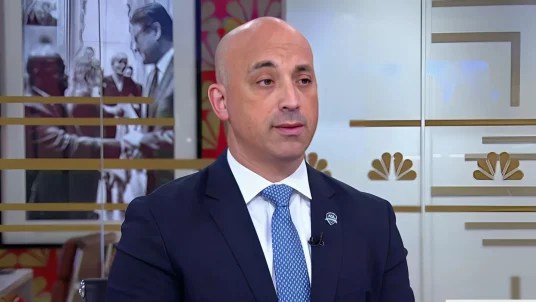
In an interview this week on CNBC’s show Squawk Box, Jonathan Greenblatt, CEO of the Anti-Defamation League (ADL), steered a conversation toward alleging that criticism of the ADL’s social media censorship efforts were being driven by “white supremacist” factions.
The ADL recently met with Twitter CEO, Linda Yaccarino. It apparently ignited the fuse for a fast-spreading hashtag campaign: “ban the ADL.” According to Greenblatt, the culprit for this viral trend was not those that were tired of the ADL trying to censor online speech but were none other than the “white supremacists” pervading across the online platform.
The spotlight of this segment also fell on the alleged deflation of advertisement revenue on Musk’s platform, X. Musk suggested this was due to the ADL pushing for advertisers to reconsider their commercial placements. Greenblatt asserted, “we are not out there publicly or privately talking to advertisers, they will make the decisions they want to.”
Greenblatt also said that he would challenge Musk “to find a single advertiser on whom we put any pressure, because we’re simply not doing that.”
However, the ADL did call for a pause in ad spending on X following its acquisition in November.

“We did call for a pause back in November after the acquisition. And then since then, since that initial statement, what we are doing is engaging with the management of the company trying to help them make it better,” Greenblatt said of X.
“I understand they have a big business problem. I mean, Elon tweeted something I didn’t know, that the advertising revenues down 60 percent. But look, brands are big boys and girls, they will make their own decisions.”
Greenblatt also presented his stance on the divisive issue of social media censorship. His disbelief in cancel culture was clear, preferring the term “council culture.” In his words: “So someone makes a mistake you help them fix it. So what we’ve tried to do over the years with Twitter, with YouTube, with Facebook and all those platforms, with Reddit, with Discord I can go on and on is to work with them to make those platforms better.”
Israel’s twisted logic makes the murder of Palestinian children a matter of state policy
By Ramzy Baroud | MEMO | September 5, 2023
Israel murders Palestinian children as a matter of state policy. This claim can be demonstrated easily and is supported by the latest findings of a Human Rights Watch report. The question is: why?
When the police or army shoot a child anywhere in the world, it can usually be argued, at least in theory, that the killing was an unfortunate and tragic mistake. But when thousands of children are killed and wounded in a systematic, “routine” and comparable method within a relatively short period of time, there has to be something very deliberate about it.
In a recent report — “West Bank: Spike in Israeli Killings of Palestinian Children” — HRW reaches a strong conclusion based on an exhaustive examination of medical data, eyewitness accounts, video footage and field research, the latter pertaining to four specific cases.
One is the case of Mahmoud Al-Sadi, a 17-year-old Palestinian boy from the Jenin Refugee Camp. He was killed last November, 320 metres away from fighting between invading Israeli forces and Jenin resistance fighters. Mahmoud was on his way to school and carried nothing that could be seen, from the soldiers’ point of view, as threatening or suspicious.
The story of the Jenin boy is typical and is repeated often throughout the occupied West Bank, sometimes daily. The predictable outcome, as HRW puts it, is that these killings are followed with “virtually no recourse for accountability”.
As of 22 August, 34 Palestinian children in the West Bank have been killed in 2023, adding yet more tragic numbers to a foreboding year that promises to be the most violent since 2005. This year “already surpasses 2022 annual figures, and the highest figure since 2005,” in terms of casualties, reported Tor Wennesland, the UN Special Coordinator for the Middle East, during a UN briefing on 21 August.
These statistics, among other factors — including the expansion of illegal Israeli Jewish settlements in the West Bank — “threatens to worsen the plight of the most vulnerable Palestinians,” according to Wennesland.
Those “most vulnerable Palestinians”, however, exist beyond the realm of statistics. When Israeli soldiers killed 2-year-old toddler Mohammed Tamimi on 5 June, the little boy’s name was added to an ever-expanding roll call of shame. The memory of the infant, however, like the memory of all other Palestinian children, is etched into the collective consciousness of all Palestinians. It deepens their pain, but also compels their struggle and their resistance.
For Palestinians, the killing of their children is not a random act of a military that lacks discipline and fears no repercussions. Palestinians know that the Israeli war on children is an intrinsic component of the larger Israeli war on every single one of them.
Of course, Israel does not declare officially that it is targeting Palestinian children on purpose. That would be a public relations disaster. Some Israeli officials in the past, however, have let their guard down, offering a strange and troubling logic.
Palestinian children are “little snakes”, wrote Israeli politician Ayelet Shaked in 2015. In a Facebook post, published in the Washington Post, Shaked called for the killing of “the mothers of the [Palestinian] martyrs.” In doing so, she declared war on all Palestinians. “They should follow their sons,” she wrote, “nothing could be more just.” Shortly afterwards, Shaked rather ironically became Israel’s justice minister.
But not all Israeli officials are candid about the killing of Palestinian children, and even their mothers. Data collected by international rights groups, however, leaves no doubt that the nature of the killings is part of a comprehensive strategy developed by the Israeli military. “In all cases,” recently investigated by HRW, “Israeli forces shot the children’s upper bodies.” This was done without the “issuing of warnings or using common, less lethal measures.”
Specifically, the killing of Palestinian children is a centralised and deliberate Israeli military strategy. The same twisted logic, now applied to the West Bank, has already been used in the besieged Gaza Strip. UN figures show that, in the Israeli war against the Palestinians in Gaza in 2008-9, 333 Palestinian children were killed; other estimates put the figure at 410. In the 2012 Israeli offensive against Gaza, 47 children were killed; in 2014, there were 578 killed; in 2021 it was 66; and in 2022 17 children were killed in the besieged territory by Israeli soldiers.
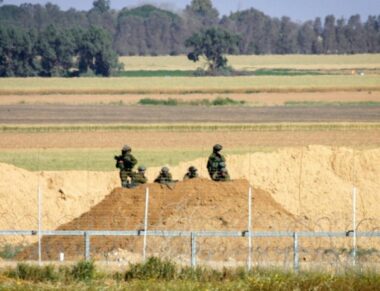
Between 2018 and 2020, 59 Palestinian children were killed in what was known as the “March of Return” protests that took place at the fence separating Israel from the Gaza Strip. All the children were killed from a distance by Israeli snipers.
When the numbers of dead and wounded children are tallied, they are in the thousands. According to the UN, there were precisely 8,700 Palestinian child casualties between 2015 and 2022.
Even the callous and often dehumanising term “collateral damage” cannot justify such statistics. And although the war on Palestinian children is clearly intentional, protracted and ongoing, not a single Israeli military or government official has ever been held accountable in an international court. Moreover, the UN “List of Shame for Killing Children” has never branded Israel, although other countries have been “named and shamed” for far fewer crimes against children.
As the killing of children is perceived — according to the twisted logic of the likes of Shaked — to be functional for Israel, given the absence of any accountability, the occupation state finds no reason or urgency to end its war on Palestinian children. And with the constant loosening of the rules of military engagement in Israel, and the terrifyingly genocidal language used by its extreme far-right ministers and their massive constituency, more Palestinian children are likely to lose their lives in the near future.
Despite this, the most that UN officials and rights groups seem to be able to do now is to count the alarming number of child casualties. Alas, no number is large enough to dissuade Israel from killing Palestinians, including children.
The problem for Palestinians is not just that of Israel’s violence, but also the lack of international will to hold Israel accountable. Accountability requires unity, decisiveness of will and action. This task should be a priority for all countries that genuinely care about Palestinians and universal human rights. Without such collective action, Palestinian children will continue to be killed in large numbers and in the most brutal ways, a tragedy that will continue to pain, in fact, shame, us all.
Iran Hails Resistance Allies’ Push to Reshape World Order, Weaken US ‘Hegemony’

People raise Palestinian, Lebanese and Hezbollah flags during a rally in solidarity with the Palestinians, on the outskirts of the southern Lebanese village of Kfarkila, near a United Nations Interim Force in Lebanon (UNIFIL) armoured personnel carrier.
By Ilya Tsukanov – Sputnik – 02.09.2023
Iran joined the Shanghai Cooperation Organization and BRICS this summer, and has been working to expand bilateral cooperation with both Russia and China. Tehran is also the leader of an informal alliance of regional countries, including Syria, Lebanese militant group Hezbollah, and Iraqi Shia militias, known as the Axis of Resistance.
Iran’s foreign minister has praised the struggle in the Middle East to resist and undermine US dominance and create a new international order.
“The international system is undergoing fundamental changes and we are witnessing new actors in the international arena,” Foreign Minister Hossein Amir-Abdollahian said in a meeting with political groups in Beirut, Lebanon on Friday.
“The US is trying to maintain its hegemony, but the region and the world understand very well that America cannot exercise its hegemony, and on the contrary, the Resistance is powerful and can achieve its will powerfully,” Amir-Abdollahian added.
Today, the Iranian top diplomat said, “the position of the Resistance in the region cannot be ignored,” and is “being noticed by the West,” including as far as the Israeli-Palestinian crisis is concerned.
Separately, in talks with his Lebanese counterpart Abdallah Bou Habib, Amir-Abdollahian stressed that “the US sanctions regime cannot hinder the economic relations between Iran and Lebanon,” just as “it has failed to impact Iran’s cooperation with Iraq, Turkiye, Pakistan, Central Asia and the Caucasus.”
Iran is ready to provide further assistance to Lebanon to help Beirut resolve its long-running fuel and electricity crisis, he said. This includes readiness to build a network of power stations with a capacity of 2,000 megawatts.
Bou Habib praised Iran for its support for Lebanon in the nation’s time of crisis, and expressed readiness to further expand cooperation.
Lebanon’s political and economic crisis, which began in 2019, has left the country in economic ruin and run by a caretaker government. The post of president has been vacant since last October, when President Michel Aoun resigned at the end of his term.
Amir-Abdollahian also met with Hassan Nasrallah, secretary-general of the powerful Lebanese political party and militant group Hezbollah, which has forged close ties with Iran both in Lebanon and in Syria, where Hezbollah fighters backed by Revolutionary Guard Quds Force advisors have fought jihadist extremists for over a decade.
In the talks with Bou Habib, Amir-Abdollahian reiterated Iran’s long-stated position that “any normalization of relations with the Zionist regime will be detrimental to the entire region.” Iran will “continue to support and assist the Axis of Resistance, to preserve the Lebanese national interest, in the face of Israeli attacks and ambitions that threaten this entire region,” he said.
The Iranian diplomat also commented on the “positive developments” in relations between Iran and Saudi Arabia following the surprise normalization of relations earlier this year, saying that these processes “will have a positive impact on the entire region,” including for Lebanon.
At a press conference at the end of his visit, Amir-Abdollahian also rejected allegations by France – the European power which once controlled Lebanon as a colony, of meddling in Lebanon’s affairs.
“I advise Mr. Macron to focus on the situation inside France instead of paying attention to questions of interference in other countries,” he said. “Iran has always played the most constructive role in helping Lebanon,” he added.
Earlier in the week, the French president told a conference of French ambassadors that stopping Iranian “interference” was a “key element” in resolving Lebanon’s political standoff.
Amir-Abdollahian’s Beirut visit was preceded by a trip to Damascus on Thursday for talks with President Bashar Assad and other Syrian officials. Amir-Abdollahian slammed the illegal presence of US troops in eastern Syria, and blasted Israel for its ongoing campaign of airstrikes against the war-torn country.
Known to jealously guard its security and foreign policy independence, and the defense of its interests even against far larger and more powerful foes, including the US, Iran has dramatically ramped up cooperation with Russia and China in recent years as part of ongoing processes related to Eurasian integration. Iran joined the Shanghai Cooperation Organization in July, and acceded to the BRICS bloc late last month. Last week, a senior Islamic Revolutionary Guard Corps commander and advisor to Supreme Leader Ayatollah Ali Khamenei said that Iran sees a maritime-oriented economy and cooperation with Russia and China as keys to countering the impact of US sanctions.
Israel confiscates Palestinian schoolbooks in Jerusalem
MEMO | September 1, 2023
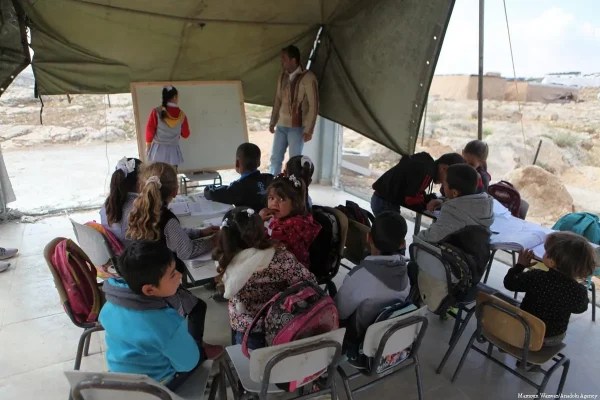
Israeli occupation authorities yesterday confiscated school textbooks printed according to the Palestinian curriculum in the occupied city of Jerusalem.
The Palestinian Jerusalem Governorate said Israeli intelligence officers seized the textbooks from inside a car that was delivering them to one of the private schools that teaches the Palestinian curriculum in the Old City of Jerusalem. The officers detained the driver and a school staff member.
For years, Israel has been trying to prevent Palestinian children in Jerusalem from following the Palestinian curriculum, claiming they must follow the Israeli curriculum, which provides a distorted view of Israel’s illegal occupation of their land.
The Jerusalem Governorate slammed the measure as an attack on the rights of Palestinian people to education, calling on the international community and human rights organisations to confront these racist crimes.
It also called on the Palestinian people, especially in Jerusalem, to confront these crimes against students and the Palestinian national curriculum and to refuse the Israeli “forged, fake and distorted” curriculum.
US Middle East ‘normalization’ plan rejects reality
By Robert Inlakesh | RT | August 31, 2023
From the disastrous Afghanistan withdrawal to Chinese-brokered peace between Saudi Arabia and Iran, the US administration of President Joe Biden has been overseeing an era of declining American power across West Asia. In the midst of this fall from grace as the Middle East’s hegemon, Washington’s obsession with achieving a Saudi-Israeli normalization deal demonstrates a disconnect from reality and proves that optics are more important than tangible policy positions.
US National Security Advisor Jake Sulivan made it publicly clear last Tuesday that a normalization deal between Saudi Arabia and Israel, which Washington is currently working on, is still far from being achieved. This announcement followed speculation in American media that such a deal could be imminent. For those who have been paying attention to the region’s politics, however, it couldn’t be more clear how arduous a task achieving such a deal would be.
Looking at the deal through an American lens, it is clear what a diplomatic achievement of this nature would mean for the legacy of a US president’s administration. It would go down as a significant victory for the head of state, Joe Biden. It would also provide a great photo-op in the event that it happens; one that could be used to demonstrate the government’s strength in the 2024 elections. It could be calculated by the Democratic Party administration that prioritizing such a deal could make up for the president’s previous failures regarding the American role in the Middle East.
However, objectively speaking, achieving Saudi-Israeli rapprochement will mean overcoming countless hurdles on all sides and may end up doing more harm than good regionally. This is despite the Biden administration’s promises that it would boost regional security and stability. Yet with the recent announcement that the BRICS bloc will be adding Iran and Saudi Arabia as members come January 2024, after Tehran and Riyadh re-established ties under Beijing’s auspices, such a deal could open new regional wounds and run contrary to the vision set forth by Saudi Crown Prince Mohammed Bin Salman.
When the Trump administration managed to rope Bahrain, Sudan and Morocco into a normalization agreement between the United Arab Emirates (UAE) and Israel (the Abraham Accords), the initiative came from the UAE itself, at a time when Abu Dhabi had clearly decided to go ahead with the move. There was no real struggle to convince the UAE to go ahead with normalizing ties with the Israelis. In fact, in the cases of Morocco and Sudan, the Emiratis helped place pressure on those nations to accept normalization deals.
Saudi Arabia, despite having maintained close ties with the Trump administration – the first foreign visit of US President Donald Trump was to Riyadh – shied away from signing onto the normalization deal with the Israelis, likely because such a move would be more challenging for a country like Saudi Arabia domestically than for the likes of neighboring Bahrain or the UAE.
As of now, Saudi-US relations under the Biden administrations have been far from cordial, and when the American president made his first trip to the Saudi kingdom last year, he was made to appear as an afterthought. When Joe Biden confronted Mohammed Bin Salman over the infamous killing of Saudi journalist Jamal Khashoggi, the Crown Prince allegedly fired back by bringing up the lack of action taken over the killing of American veteran journalist, Shireen Abu Akleh, by an Israeli soldier. Mohammed Bin Salman even told The Atlantic monthly that he didn’t care if Biden misunderstood him. Saudi Arabia has also ignored calls from the US to alter oil production.
If the Biden administration is to convince Saudi Arabia to sign onto a normalization deal, concessions must first be granted. Riyadh reportedly seeks a civil nuclear program and a US security pact that could drag Washington into war in the event that the kingdom comes under attack. Such preconditions present a litany of hurdles for the American government.
Then there is Israel, which under any other government than the current far-right coalition of Prime Minister Benjamin Netanyahu would easily be able to get away with signing such a deal. However, Netanyahu has reportedly been requested to make some kind of concession towards the Palestinians in order to make the UAE deal go ahead. The government that Benjamin Netanyahu now heads is entirely different to the one he led in 2019, and his coalition depends on the support of the extremist Religious Zionism (RZ) alliance. RZ even pushes back against the idea of security coordination with the Palestinian Authority (PA), based in Ramallah, despite the fact that this policy benefits Israeli security. RZ stated clearly, from the time of the 2022 national election, that one of its goals was to annex the West Bank and the most likely concession that the US will ask of Tel Aviv is to again promise that it will steer away from doing so.
When it comes to the Palestinians, there is also the uncontrollable factor of a major escalation between the Palestinian armed factions and the Israeli military, over Israeli provocations at Al-Aqsa Mosque. Saleh Al-Arouri, the deputy head of the political bureau of Hamas, recently told al-Mayadeen that in the event of any senior leader being targeted, there will be regional war. This is at a time when pressure is growing on the Israeli government to carry out an attack on Hamas leaders in response to numerous attacks against Israeli settlers and soldiers in the West Bank. This, on top of the recent tensions at the Lebanese border with Hezbollah, all make for a potentially explosive situation, under which a Saudi-Israeli deal would look awful for Mohammed Bin Salman.
There is additionally the issue of what a Saudi-Israeli deal may do to Iranian-Saudi relations and their recent re-establishment of ties. As Saudi Arabia includes within it two of the holiest sites in the Islamic faith, Mecca and Medina, its decision to normalize ties with Israel will carry massive significance throughout the Muslim world. Such a move would prove it impossible for Tehran to remain neutral on the issue and it is very likely that the Iranians would reverse their decision to maintain ties with the Saudis. This means that if the Saudis are to sign a normalization deal with Israel, they have to know that this will undermine China’s diplomatic breakthrough and could end up presenting greater security concerns if they again find themselves competing so heavily for influence regionally with Iran. There is also cause for concern when it comes to Jordan’s reaction, which may see such a deal as a threat to its custodianship over the Holy sites in the Old City of Jerusalem, and feel that Saudi Arabia is encroaching upon its territory.
If the US administration had a serious approach to its Middle East policy, it would realize the dramatic shift that has occurred regionally and that its traditional allies have agendas that are no longer congruent with the old American status quo approach. It would seem, from observing the rhetoric and actions of Washington, that the current US government is in denial and cannot grasp that the days when it could boss around every country in West Asia are long gone. It will take pragmatic thinking to revive the US position in the long run, and one thing is for sure, a Saudi-Israeli normalization deal doesn’t make sense for any country at this time.
Robert Inlakesh is a political analyst, journalist and documentary filmmaker currently based in London, UK. He has reported from and lived in the Palestinian territories and currently works with Quds News. Director of ‘Steal of the Century: Trump’s Palestine-Israel Catastrophe’.
A ‘terrorist onslaught’? This is why Netanyahu, Gallant blame Iran for West Bank violence
By Ramzy Baroud | MEMO | August 30, 2023
Despite their complicated and often uneasy relationship, Israeli Prime Minister, Benjamin Netanyahu, and his Defence Minister, Yoav Gallant, agree on one thing: Iran is behind Israel’s security problem.
The socio-economic polarization in Israel, the country’s political and judicial crises, the ongoing settlers’ pogroms in the West Bank, the repeated calls for religious war by Tel Aviv’s far-right ministers – all of these myriad problems are suddenly negligible. The problem is Iran.
Though Iran, as a common enemy, often unites all major Israeli political parties, the supposed Iranian threat this time around, is quite different.
“We are in the midst of a terrorist onslaught that is being encouraged, directed and financed by Iran and its proxies,” said Netanyahu of a Palestinian attack that killed a settler and wounded another near the occupied Palestinian city of Al-Khalil (Hebron) on 21 August.
The attack came only two days after another, which killed two Israeli settlers near the town of Huwwara, near Nablus, in the northern West Bank.
Huwwara, a small town of 5,500 people, was the site of an outright pogrom by large mobs of armed Israeli Jewish settlers on 26 February.
Amnesty International described what occurred in the town as follows: “On the night of Sunday 26 February, hundreds of state-backed Israeli settlers carried out a spree of attacks against Palestinians (in Huwwara) … Settlers torched dozens of Palestinian cars, homes and orchards and physically assaulted Palestinians, including with metal bars and rocks.”
Typically, every Palestinian attack on Israeli soldiers, armed settlers or even civilians is preceded by a multitude of deadly Israeli army raids or settler attacks on Palestinian communities.
Not a day passes without Israeli violence in occupied Palestine. Reports by the United Nations, Palestinian, Israeli and international rights groups indicate that this year is the most violent in the West Bank in nearly two decades.
More than 200 Palestinians have been killed and nearly 30 Israelis since January 2023, according to a statement to the UN Security Council by UN Middle East envoy, Tor Wennesland, on 21 August.
Wennesland described the violence as a “concerning trend”, attributing it to a “growing sense of despair about the future,” UN News reported.
The UN humanitarian agency, OCHA, had similar findings. It said that nearly 600 settler-related ‘incidents’ were reported in the Occupied Territories in the first six months of 2023. Settler attacks have resulted in “Palestinian casualties, property damage or both.”
Neither Wennesland nor OCHA mentioned Iran in their statements, nor did the constant stream of reports on Israel’s ongoing violence, incitement or, at times, outright calls for genocide by settlers and their leaders in Netanyahu’s government.
As for the reason behind the “sense of despair” mentioned in Wennesland’s UN briefing, the Israeli anti-settlement organisation, Peace Now, may have an answer.
In a statement issued on 17 August, the Israeli group said that Netanyahu’s government is advancing a plan for ‘unprecedented investment’ of nearly $200 million in illegal Jewish settlements in the West Bank.
“There are clauses that have not yet determined the allocation amounts, so the total amount is expected to increase significantly,” Peace Now said on its website.
Since a large sum of the funds is described as ‘undefined’ grants, the illegal settlements are allowed “to use the money for almost any purpose.”
This can only mean expansion of the illegal settlements, construction of new outposts, ethnically cleansing Palestinians and paving the way for full, de jure annexation of the West Bank.
The term ‘ethnic cleansing’ is not being used lightly here.
Aside from the ‘incremental genocide’ happening daily throughout the Occupied Territories, at times large communities are being expelled, en masse.
The Norwegian Refugee Council recently reported on the eviction of nearly 500 Palestinians from seven communities in the West Bank in a matter of 20 months, many of them from the Ras At-Tin Bedouin community, north of Ramallah.
“Entire Palestinian communities being wiped off the map, a shameful legacy of unrelenting violence, intimidation and harassment perpetrated by Israeli settlers and, in some cases, encouraged by Israeli authorities,” Ana Povrzenic, NRC’s Country Director for Palestine commented on the findings.
The list is endless, and nothing suggests that Iran is relevant to any part of this discussion.
The direct link between the Israeli occupation and Palestinian relations cannot be denied by any honest observer.
But neither Netanyahu nor Gallant is expected to be honest in their depiction of what is occurring in Palestine now.
As if reading from the same script, Gallant agreed with his boss on the alleged Iranian threat. “The most significant change on the ground is related to Iranian financing and intent,” Gallant said, declaring that “Iran is looking for any way to harm the citizens of Israel.”
The irony is that the Netanyahu-Gallant political conflict since March has fuelled the greatest political crisis, arguably, in the history of the Israeli state. The crisis is enduring.
Yet, now both are emerging as the stalwarts of Israeli security against a supposed Iranian threat. But why would the two agree on anything? And why Iran, in particular? And why now?
Both Netanyahu and Gallant stand to gain from diverting attention from the reasons behind the ongoing rebellion in Palestine.
For Netanyahu, blaming Iran allows him to stoke the fire of instability in the Middle East, unite all Israelis behind their supposed defender and avoid any accountability for the ongoing human rights violations in Palestine.
As for Gallant, blaming Iran elevates the military and all branches of intelligence services; instead of being seen as failing to stop home-grown Palestinian struggle, he wants to paint an alternative image of a heroic army fighting an ‘existential threat’ hatched elsewhere.
This is not a simple case of lacking self-awareness, but a deliberate diversion of the actual problem: the Israeli occupation and apartheid.
Throughout the years, Israel has insisted that Palestinians are not political actors capable of making their own collective decisions, and that some bogeymen elsewhere – the Arabs, the Iranians, the communists, the Islamists, and so on … are to blame.
But Tel Aviv is wrong. For Israel to understand the reasons behind the growing Palestinian resistance in all of its forms, it needs to look at the devastated refugee camps of Jenin, Balata and Nur Shams – not Tehran – for the answers.
Vivek Caves on Plan to Cut Aid to Israel: ‘We Would Never Cut Off Aid to Israel Until Israel Told Us They Were Ready’
By Chris Menahan | Information Liberation | August 27, 2023
GOP presidential candidate Vivek Ramaswamy ran away from his proposal to cut aid to Israel by 2028 on Saturday, instead promising that he would provide endless US aid to Israel “until Israel told us they were ready for it” to be cut off.
“To be clear, we would never cut off aid to Israel unless Israel told us they were ready for it,” Ramaswamy told an Israeli news outlet in an interview he shared to his own Twitter page.
“The US-Israel relationship will be stronger by the end of my first term than it has ever been in US history and than it ever will be under any of those other administrations if anybody else is elected,” he said.
The idea Israel would ever ask the US to stop giving them billions of US taxpayer dollars for free is just comical. As I noted earlier this week, Israel regularly uses the billions we give them to buy US treasuries — effectively lending us back our own aid money and charging us interest. The US Treasury’s latest numbers showed Israel is currently holding $46 billion in US treasuries.
Ramaswamy also pledged that he wants to expand the Abraham Accords — a scam worked out by the Israel lobby which consists of bribing Arab kings to normalize relations with Israel by offering them billions of US taxpayer dollars and high-tech weaponry which can be used to oppress their own populations — with the “Abraham Accords 2.0.”
He said his “2.0” plan would bring “Saudi Arabia, Oman, Qatar [and] Indonesia” into the pact (aka bribery scheme).
“The other area where I think the US-Israel partnership is critical is staying strong with respect to making sure Iran never ever ever becomes a nuclear power — even has basic nuclear capabilities — we will never allow that to happen on our watch,” Ramaswamy said.
Fellow GOP presidential contender Nimrata “Nikki Haley” Randhawa called Ramaswamy out during the debate on Wednesday for wanting “to go and defund Israel.”
“You want to cut the aid off!” Randhawa said. “Let me tell you, it’s not that Israel needs America, America needs Israel!”
It only took Ramaswamy three days to not only abandon but completely reverse his “America First” policy.
UK slammed for opposing ICJ ruling on Israel Occupation of Palestine
MEMO | August 26, 2023
The UK has come under scrutiny for reportedly attempting to hinder the International Court of Justice (ICJ) from issuing a legal opinion on Israel’s occupation of Palestine. The UK’s alleged move came to light through a 43-page legal opinion submitted to the ICJ, which is currently in the fact-finding stage before an expected advisory opinion from the Court on the legal consequences of the “occupation, settlement and annexation” of Palestinian land.
The UK’s objection submitted in the “amicus brief” has been met with dismay as it not only seeks to derail the work of the ICJ, it also goes against the grain of other member states and non-governmental organisations by opposing the hearing of the case entirely.
Critics argue that the UK’s stance ignores the entrenched nature of Israel’s occupation and the deteriorating situation on the ground. Palestinian diplomats and international humanitarian law experts have expressed dismay at the UK’s submission. The ICJ, based in The Hague, is the top United Nations Court for resolving disputes between nations; its decisions are binding, although it lacks enforcement powers.
“[Assuming that the document is authentic] … this is a rather weak and uninformed document that portrays Israel’s longstanding occupation of the West Bank and Gaza, and its annexation of East Jerusalem, as a bilateral dispute between two states,” Dr Victor Kattan, an assistant professor in public international law at the University of Nottingham is reported saying in the Guardian.
Kattan stressed that the ICJ can issue an opinion on any legal question arising from the work of the UN, and the General Assembly does not need Israel’s consent to refer a request to the Court. The ICJ’s 2004 opinion on “The Legal Consequences of the Construction of a Wall in the Occupied Palestinian Territory”, for example, was issued without the consent of the occupation state. The UN Court found that the barrier violates international law and should be torn down. The vote of the justices was 14 to 1.
The latest attempt to obtain an ICJ opinion holds significance for Israel and the Palestinians, as it addresses the legality of Israel’s occupation – a matter that has not been conclusively judged in the 56 years of its existence. Legal experts have judged the occupation to be illegal due to its length and also because of Israel’s de-facto annexation, which has made occupation a permanent reality.
The UK’s position contrasts with the UN General Assembly resolution, which sought an advisory opinion from the ICJ on the “legal consequences arising from the policies and practices of Israel in the Occupied Palestinian Territory.” The UK, along with Israel and other Western states, voted against the resolution.
The ICJ’s deliberations on this matter are anticipated to last at least a year, and the question of whether the occupation is still temporary will be a central point of discussion. The ICJ’s potential findings could influence recognition, aid and obligations related to the occupation. Israel has criticised the referral to the ICJ, with its envoy to the UN describing the General Assembly vote as delegitimising, a term that is often used to label critics of the occupation state as anti-Semitic.
Members have until 25 October to make comments on statements to the ICJ submitted by others. If the Court accepts the request for an advisory opinion, as is expected, deliberations will last at least a year.
New York City Mayor seeks to incorporate Israel police drone technology into NYPD

MEMO | August 24, 2023
The Mayor of New York City is looking to potentially incorporate Israeli drone technology and methods to aid in law enforcement and emergency efforts, in the latest example of cooperation between American and Israeli police forces.
Eric Adams, the New York City Mayor, visited Israel this week in order to assess the country’s law enforcement technology and the possibility of incorporating it into the New York Police Department (NYPD), telling reporters during an online briefing in the Israeli capital, Tel Aviv, yesterday that the Israeli police forces “are a little bit more advanced”.
Adams praised the drones used by Israeli law enforcement as being more durable and being able to fly for much longer than NYC’s current technological devices, clarifying that “the method in which they’re using them, the methods in which they are training to use them, is what caught my interest”.
Referring to himself as “a great fan of technology and all it can do to make our lives easier and safer”, the Mayor proclaimed that “Israel is on the cutting edge of exciting developments in technology that will benefit all of us.”
He also referred to Israeli police’s use of drones in coordination with police motorcycles, saying it could potentially be a tactic utilised by the NYPD to help response times for accidents or other emergencies.
The utilisation of drone technology by Israeli police and wider authorities has increased throughout the past year, with officials in the central Israeli city of Modi’in-Maccabim-Reut having begun deploying drones as first responders in traffic accidents last October.
Despite his praise for the NYPD’s Israeli counterparts, Adams acknowledged that a significant part of the drone technologies’ utilisation is directly opposed to laws practiced within the United States, making full implementation an issue. The NYPD “will not use any tool that is not in alignment with the laws of our city, in our state and in our country.”
One such method it will reportedly refrain from using is the facial recognition technology which is notoriously used by Israeli authorities to identify Palestinians. “So many police forces across the globe, they use various methods that are not suitable in our city, and we’re not going to use any methods that do not conform with our rights and the laws of our country”.
The Mayor praised some aspects of Israeli policing tactics, however, such as their ability to “strategically and successfully deal with a large crowd”. He claimed that “some methods we may not use, but there are other methods that they use that they’re really humane in nature.”
Such tactics like crowd control may be incorporated by the NYPD, he said, seemingly referring to recent riots that rocked the city last month. “As when we had a similar incident in our city, how do we do it in the correct way? And they’ve [Israelis] learned how to do it correctly. And we walked away with some of those tactics.”
Related article:
Data collected by Israel’s electronic wolves helps to terrorise the Palestinians
Featured Video

Houthis Don’t Have to Conquer Saudi Arabia to Make It Pay
or go to
Aletho News Archives – Video-Images
From the Archives
A Lesser “Grade” of Human
By Michael Hoffman | Revelation of the Method | January 3, 2024
Will the more than 100 Iranians killed by terrorist bombs today be mourned in the West as victims of terrorism? Certainly not. Allied doctrine has it that the killing of Israeli or American civilians is a crime of cosmic proportions, while shedding the blood of “enemy” women and children is perfectly acceptable; indeed commendable.
The West does not memorialize the hundreds of thousands of civilians bombed by the U.S. in Serbia, Iraq, Afghanistan and every major German city 1943-1945. America’s fire-bombing of the city of Tokyo by General Curtis LeMay in March 1945 was followed by Harry Truman’s atomic incineration of Hiroshima and Nagasaki in August of that year. Truman never had a moment of doubt or regret over the murder of more than a 100,000 Asian children, mothers and non-combatant boys and men. It was business as usual for the “noble” Allies during the “Good War.”
In the West human rights signifies passionate concern only for civilians designated as truly human: Israelis first, then Americans and British, followed by their satraps.
This inhumanity is the legacy of Talmudic ideology, beginning with tractate Sanhedrin 57a from 400 A.D., concerning liability for capital punishment: “If a Jew murders a gentile, he is exempt.”
This teaching of contempt was reiterated in the dogma of Chabad Lubavitch founder Rabbi Shneur Zalman in the 18th century. … continue
Blog Roll
 Aletho News
- Houthis Don’t Have to Conquer Saudi Arabia to Make It Pay
- MOE: Nearly 22,000 Students and Education Workers Killed
- Guterres in Islamabad: Genocide, cowardice, and the cage of Imran Khan
- Johnson, Marandi say Yemen holds upper hand over Saudi Arabia
- False flags won’t save aggressors, Iran FM spokesman says
- The Makkah Pact Enters Into Force: The End of American Dominance or Its New Form?
- NATO’s top generals gather in Kiev
- EU’s continuing expansion – greater threat to Russia
- US Senator Murphy says Pentagon denied him entry to US base in Qatar
- Israel expands “incitement” charge to target Palestinian education and memory
- If Americans Knew
- Three Years of Genocide: How America’s Israel-First Media Filtered Out the Truth
- Israeli war chief briefs ministers on potential war against Palestinian Authority
- New Report: Israel Killed nearly 21,000 Palestinian Students and Education Workers in Past Three Years
- Israel’s flailing chatbot army
- Five Palestinians Killed, Others Injured by Israeli Fire in Gaza
- Israel is rewriting the Palestinian curriculum in East Jerusalem to erase Palestinian identity
- Three years of genocide: Israel turned prisons into killing grounds and torture sites
- Three years of genocide. Words fail. Daily Update
- ‘I’d rather die than go back’: A Palestinian teen’s 10-month nightmare in Israeli jail
- How Jared Kushner’s firm’s investment in an Israeli company could be a major conflict of interest
- No Tricks Zone
- New Study: 50 Years Of The Most Aggressive ‘Net Zero’ Policies Can Only Affect The Global Climate By 0.03°C
- US September “Heat” Was No Record…Many Records Set Decades Ago
- Latest European Green Energy Debacle; Portugal’s Largest Flagship Solar Park Insolvent!
- Green Energy Debacle: German Expert Professor Fritz Vahrenholt Warns Of Severe Economic And Social Consequences
- Two More Paleo Reconstructions Affirm Meters-Higher Sea Levels Across Ireland, Brazil 7000-6000 Years Ago
- New Study: Earth And Venus Surface Warmth Largely Explained By Convection And Lapse Rate, Not CO2 Or Radiation
- 2025 Nature Paper Claiming Worsening Global Drought Gets RETRACTED …Heavily Flawed
- New Study: ‘Global Drought Shows No Detectable Recent Acceleration Under Climate Warming’
- Economic Masterminds: German Socialists Suggest Taxing Productivity Gains Stemming From Using AI
- The South China Sea Has Not Been Cooperating With The Climate Change Narrative

