Report: US rejected UAE request to purchase F-35 fighter jets
MEMO | November 26, 2019
The United States has rejected a request by the United Arab Emirates to purchase the F-35 Stealth Fighters, Israeli Channel 13 reported.
According to the news station Pentagon officials said they would not allow the sale of F-35 Stealth Fighters to the UAE in order to preserve Israel’s qualitative military edge (QME).
According to the channel, the UAE has been seeking to purchase the stealth fighters for more than six years without success.
The US, Channel 13 continued, has a long held policy of upholding Israel’s qualitative military edge, whereby Israel maintains a technological advantage in the region when it comes to defence capabilities.
Israel has recently received two additional F-35 fighter jets amid escalating tensions with Iran in the region.
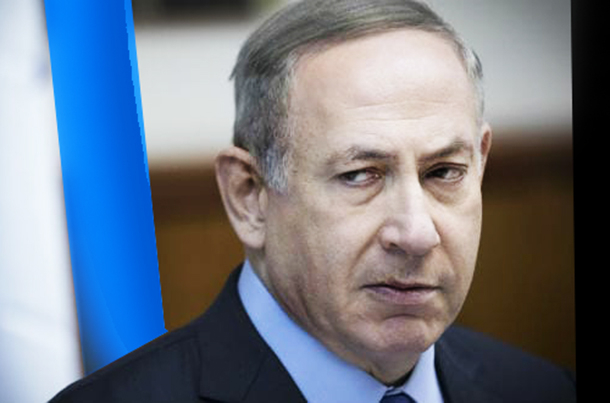
Finally Charged and Lacking a Mandate to Govern, Netanyahu’s Days are Numbered
By Jonathan Cook – The National – November 25, 2019
The decision to indict Israeli Prime Minister Benjamin Netanyahu on three separate criminal counts pushes the country’s already unprecedented electoral stalemate into the entirely uncharted territory of a constitutional crisis.
There is no legal precedent for a sitting prime minister facing a trial – in Netanyahu’s case, for bribery, fraud and breach of trust. Former Israeli prime minister Ehud Olmert was charged with corruption in 2009 but only after he had resigned from office.
Israeli commentators are already warning of the possibility of civil war if, as seems likely, Netanyahu decides to whip up his far-right supporters into a frenzy of outrage. After a decade in power, he has developed an almost cult-like status among sections of the public.
The honorable thing would be for Netanyahu to step down quickly, given that the two elections he fought this year ended in deadlock. Both were seen primarily as plebiscites on his continuing rule.
He is now the country’s caretaker prime minister, in place until either a new government can be formed or an unprecedented third election is held.
His departure would end months of governmental near-paralysis. The path would then be clear for a successor from his Likud party to negotiate a deal on a right-wing unity government with rival Benny Gantz, a former army general.
Gantz’s Blue and White party has made it a point of principle not to forge an alliance with Netanyahu.
Previous experience, however, suggests that Netanyahu might prefer to tear the house down rather than go quietly. If he is allowed to press ahead with another election in March, he is likely to stoke new levels of incitement against his supposed enemies.
Until now, the main target of his venom has been a predictable one.
During the April and September campaigns, he railed relentlessly against the fifth of Israel’s citizenry who are Palestinian as well as their elected representatives in the Joint List, the third largest faction in the Knesset.
Shortly before last Thursday’s indictment was announced, Netanyahu was at it again, holding an “emergency conference”. He told supporters that a minority government led by Gantz and propped up from outside by the Joint List would be a “historic national attack on Israel”. The Palestinian minority’s MPs, he said, “want to destroy the country”.
Such a government, he added, would be an outcome “they will celebrate in Tehran, in Ramallah and in Gaza, as they do after every terror attack”.
This repeated scaremongering had an obvious goal: rallying the Jewish public to vote for his far-right, now overtly anti-Arab coalition. The hope was that he would win an outright majority and could then force through legislation conferring on him immunity from prosecution.
Now he appears to have run out of time. After three years of investigations and much foot-dragging, the attorney general, Avichai Mandelblit, has finally charged him.
According to the Israeli media, Netanyahu turned down opportunities for a plea bargain that would have seen him resign in return for avoiding jail time.
According to the most serious allegation, he is accused of granting media tycoon Shaul Elovich benefits worth $500 million in exchange for favourable coverage.
Weighed against the crimes he and other Israeli leaders have perpetrated over many decades against the Palestinians in the occupied territories, the offences he is indicted for seem relatively minor.
Nonetheless, if found guilty, Netanyahu faces a substantial prison sentence of up to 10 years. That makes the stakes high.
All the signs now are that he will switch his main target from Israel’s Palestinian minority to the legal authorities pursuing him.
His first response to the indictment was to accuse the police and state prosecutors of an “attempted coup”, claiming they had fabricated the evidence to “frame” him. “The time has come to investigate the investigators,” he urged.
As one Blue and White official told the veteran Israeli reporter Ben Caspit: “Netanyahu will not hesitate to sic [unleash] his supporters on those institutions of government that represent the rule of law. He has no inhibitions.”
Technically the law allows a prime minister to continue serving while under indictment and before a trial, which is still many months away. Assuming Netanyahu refuses to resign, the courts will have to rule on whether this privilege extends to a caretaker leader unable to form a new government.
Netanyahu is therefore likely to focus his attention on intimidating the supreme court, already cowed by a decade of tongue-lashing from the Israeli right. Critics unfairly accuse the court of being a bastion of liberalism.
But bigger dangers may lie ahead. Netanyahu needs to keep his own Likud party in line. If its members sense he is finished, there could be a rapid collapse of support and moves towards an attempt to overthrow him.
The first hints of trouble emerged on Saturday when Gideon Saar, Netanyahu’s most likely challenger in Likud, accused him of “creating an atmosphere of chaos” by denigrating the legal authorities.
After the failure by both Gantz and Netanyahu to put together a coalition, the task was passed last week to parliament. Its members have just over a fortnight left to see whether one of their number can rally a majority of MPs.
This brief window could provide an opportunity for Saar to move against Netanyahu. On Sunday he submitted an official request for the Likud party to hold a snap leadership race.
Observers fear that to allay this danger, Netanyahu might consider not only inflaming his base but also setting the region alight with a conflict to rally the rest of the public to his side and make his removal impossible.
In fact, the Israeli media reported that shortly before September’s election, he had tried to pull precisely such a stunt, preparing a war on Gaza to justify postponing the ballot.
He was stopped at the last minute by Mandelblit, who realised that the cabinet had been misled into approving military action. Netanyahu had allegedly concealed from them the fact that the military command was opposed.
In recent weeks, Netanyahu has stoked severe tensions with Gaza by assassinating Palestinian Islamic Jihad leader Baha Abu Al Atta. Last week he launched airstrikes on Iranian positions in Syria.
When Olmert was being investigated for corruption in 2008, Netanyahu sagely warned of the dangerous confusion of interests that might result. “He will make decisions based on his own interests of political survivability rather than the national interest,” he said.
And that is precisely the reason why many in Israel are keen to see the back of Netanyahu – in case his instinct for political survival trumps the interests of stability in the region.
World Jewish Congress: Billionaires, Oligarchs, Global Influencers for Israel

Billionaire Mikhael Mirilashvili and his son Yitzhakis with Israeli minister Yaffa Deri.
By Alison Weir | If Americans Knew | November 24, 2019
The World Jewish Congress (WJC), which calls itself “The Representative Body of over 100 Jewish Communities Worldwide,” held its annual gala at the Pierre hotel in New York City on Nov. 6.
It bestowed its annual Theodor Herzl Award (named after Israel’s founding father) on former U.S. Ambassador to the UN Nikki Haley for her work on behalf of Israel. Some previous awardees have been Joe Biden and Henry Kissinger.
One of the WJC’s main issues is support for Israel. Among its many activities in this realm, it collaborates with the Israeli government to defend Israel from criticisms of its human rights abuses and discriminatory system.
The WJC defines many factual statements about Israel to be “antisemitic,” and labels legitimate opposition to Israeli violence and oppression against Palestinians “antisemitism.” As a result, its top issue, combating “antisemitism,” often consists of efforts to suppress information about Israel’s oppression of Palestinians and to combat efforts on behalf of Palestinian human rights.
At one of its recent international conferences to oppose this newly defined “antisemitism,” US Special Envoy Elan Carr proclaimed that every law enforcement office and every prosecutorial agency throughout the world must “force everybody who has even a hint of antisemitism to undergo a tolerance program.” … continue
Trump Accepts Israeli ‘Realities on Ground’ – Realities Funded by His Administration
By Finian Cunningham | Strategic Culture Foundation | November 21, 2019
US Secretary of State Mike Pompeo this week announced yet another radical shift in Washington’s policy towards the Israeli-Palestinian conflict, by way of saying that the United States “was accepting realities on the ground”.
What the mendacious and cynical Pompeo omits to add is that the Trump administration has been dramatically fueling the change in “realities” – specifically the expansion of illegal Israeli settlements on Palestinian territory and the demolition of Palestinian homes.
This week the top US diplomat declared that Washington would no longer adopt the international consensus position, backed by several UN resolutions, that Israeli settlement-building and occupation of Palestinian territory was a violation of international law. Washington is henceforth recognizing Israeli settlements as legitimate.
The move overturns more than four decades of official US policy which adhered to the UN-backed position of condemning Israeli occupation in the Palestinian West Bank and in East Jerusalem as illegal and a violation of the Geneva Convention.
Since the 1967 Six War, successive Israeli governments have overseen a relentless process of annexing Palestinian territory. Over that period, Palestinian lands have diminished and become increasingly fragmented with little contiguity that would be normal for a future state. There are estimated to be around 200 Israeli new-build settlements of towns and villages with a population of 600,000 Jewish settlers who have usurped Palestinian land and properties. The UN has repeatedly condemned the annexation and occupation as illegal, to no avail.
The latest move by the Trump administration is a flagrant repudiation of UN resolutions and international law. It follows previous declarations by President Trump recognizing Israeli claims to Jerusalem as its capital, as well as Israel’s annexation of Syrian territory in the Golan Heights.
“Calling the establishment of civilian settlements inconsistent with international law has not advanced the cause of peace,” said Pompeo on Monday. “The hard truth is that there will never be a judicial resolution to the conflict, and arguments about who is right and who is wrong as a matter of international law will not bring peace.”
That is an astounding dereliction of international law by the American government. The “hard truth” that Pompeo ignores is that US administrations have constantly undermined “judicial resolution of the conflict” because they have, to varying degrees, over the decades pandered to Israeli criminal occupation of Palestinian lands.
What the Trump administration is doing is not entirely unprecedented. Successive American presidents have merely paid lip service to a supposed peace process between Israelis and Palestinians, declaring their support for a “two-state solution” and presenting Washington as some kind of “honest broker”. The reality is that Washington has consistently undermined Palestinian national rights by its systematic bias towards Israel, indulging the latter’s criminal policies of occupation and military aggression towards Palestinian population.
However, Trump and his coterie of Middle East aides have taken the American bias and complicity with Israel to naked levels. Part of that is no doubt payback for the multi-million-dollar funding of Trump’s 2016 election campaign by Jewish-American billionaire and arch-Zionist Sheldon Adelson.
Israeli peace groups have recorded a surge in Israeli expansion of settlements across the West Bank and East Jerusalem over the past three years of the Trump administration. Demolition of Palestinian homes by Israeli bulldozers are at a record high.
There is an imperative business reason for this. President Donald Trump has personally invested in Israeli settlements, as have his ambassador to Israel David Friedman, and the White House’s special envoy to the region, Jared Kushner, Trump’s son-in-law.
One of those settlements is at Beit El which is described as “one of the most aggressive” in terms of expansionist scope. It overlooks the Palestinian city of Ramallah in the West Bank which is supposed to be the administrative seat of the Palestinian Authority.
Trump, Friedman and the Kushner family have in the past funneled millions of dollars into Beit El and other Israeli settlements. In return, Israeli financial companies have made huge investments in Jared Kushner’s family real-estate business back in the US. For example, Menora Mivtachim, a pension and insurance firm, invested $30 million in apartments in Maryland owned by the Kushner family.
Jared Kushner officially stepped away from his family’s property conglomerate when he was appointed by his father-in-law as special envoy on the Middle East “peace process”. But few would believe his future wealth will not benefit from investments in and from Israel. He is still a beneficiary of trusts that have holdings in Kushner properties, notes Haaretz newspaper.
It seems incredible given this blatant conflict of interest that Kushner has been tasked with producing a “peace plan” for the Israeli-Palestinian conflict, which Trump had previously boasted about as being the “deal of the century”. That plan has since wilted to non-existence. The media don’t even talk about its expected publication, so far off the radar is it.
The latest move by the Trump administration to effectively reward and accelerate further Israeli occupation of Palestinian territory has American self-interest and profit written all over it. It mirrors Trump’s declaration in March this year recognizing the Golan Heights as Israeli territory, where there is irrefutable evidence that Trump and the Zionist clique in the White House have major business interests in oil exploration and production in that contested region.
Russia warned this week that Washington’s policy is inflaming further conflict amid an intensification of air strikes by Israel on Gaza where more than 30 people have been killed over the past week, including one Palestinian family of three adults and five children. The bloodshed makes Pompeo’s announcement all the more repulsive.
The Arab League and the European Union have also condemned the unilateral rejection of international law by the US. Jordan, Egypt and other Arab states said the United States has forfeited its right to act as a peace broker in the region.
The “reality on the ground” – to use a talking point favored by Israeli leader Benjamin Netanyahu and now Mike Pompeo – is that the US is an accomplice in Israel’s illegal occupation and war crimes. Even more heinous, the US policy is being driven by Trump’s family business profits.
UN Security Council members strongly condemn Trump’s support for Israeli settlements
Press TV – November 21, 2019
The European Union, Russia, China and other members of the UN Security Council on Wednesday strongly opposed the US announcement that it no longer considers Israeli settlements in the occupied West Bank to be a violation of international law.
Nickolay Mladenov, the UN special coordinator for the Middle East peace process, opened the Security Council meeting, expressing “regret” at the US action and reiterating the UN position that settlements under a December 2016 council resolution “are a flagrant violation under international law.”
Indonesian Ambassador Dian Triansyah Djani, whose country has the world’s largest Muslim population, called the US announcement “irresponsible and provocative,” saying it “incontrovertibly constitutes a de facto annexation and is a barrier to peace efforts based on the two-state solution.”
Following the Security Council meeting, ambassadors from the 10 non-permanent council members who serve two-year terms stood before reporters while Deputy German Ambassador Jurgen Shultz read a critical joint statement.
“Israeli settlement activities are illegal, erode the viability of the two-state solution and undermine the prospect for a just, lasting and comprehensive peace” as affirmed by the 2016 council resolution, the statement said.
It also called on Israel to end all settlement activity and expressed concern at calls for possible annexation of areas in the West Bank.
Kuwaiti Ambassador Mansour al-Otaibi, the Arab representative on the council, then told reporters that 14 countries agreed in the private session on the press statement.
Palestinian Ambassador Riyad Mansour also said he was grateful to the 14 council nations and their commitment to international law, saying that all 193 UN member nations are required to implement all Security Council resolutions, including on the illegality of all settlements.
“The US administration once again makes another illegal announcement on Israeli settlements in order to sabotage any chance to achieve peace, security and stability in our region and for our people,” Mansour said.
“We strongly reject and condemn this unlawful and irresponsible declaration; we consider it to be null legally, politically, historically and morally.”
Before the meeting, British Ambassador to the UN Karen Pierce had told reporters that “all settlement activity is illegal under international law and it erodes the viability of the two-state solution and the prospects for a lasting peace.”
She was speaking on behalf of Germany, France, Poland, Belgium and Britain, the EU’s current Security Council members.
The meeting was held two days after an announcement by Secretary of State Mike Pompeo reversed a four-decade-old US position on illegal settlements in the occupied Palestinian territories. The move was welcomed by Israel but drew condemnation from Palestinians and Arab leaders.
The shift has been widely interpreted as a green light for Israeli settlement building in the occupied West Bank.
Palestinian Journalist Loses Left Eye after Being Shot by Israeli Sniper
Palestine Chronicle – November 20, 2019
Doctors at Hadassah Hospital in Jerusalem yesterday removed the eye of Palestinian photojournalist Moath Amarneh who was shot by an Israeli sniper on Friday.
A committee of specialists decided that Amarneh’s left eye must be removed along with the bullet which is logged in it. Surgery to do this took several hours.
His family said they had contacted hospitals in a number of countries in the hope of saving his eye but no medical centers were hopeful that this could be done.
Meanwhile, a group of Palestinian journalists organized a protest in solidarity with Amarneh in Bethlehem, but the Israeli occupation forces used force to disperse them.
Amarneh, 32, was shot by an Israeli occupation soldier while he was covering Palestinian protests in Hebron, south of the occupied West Bank.
Witnesses said that he was shot by a sniper, but the Israeli occupation army said he was shot accidentally as he was standing among the “rioters”. … Videos
The Kimberley Process: Israel’s multi-billion dollar blood diamond laundry
By Sean Clinton | MEMO | November 19, 2019
Last week there was a callous, brutal attack on a sleeping family in their home in Gaza which killed a husband and wife, blowing their shredded bodies across a street; the ensuing bombardment killed 34 people including a family of eight. That this was all done by a leading member of the global diamond industry illustrates starkly the magnitude of the “conflict free” fraud perpetrated by that industry.
Few people are aware that diamonds are Israel’s number one manufacturing export, a “cornerstone” of its economy. According to Israeli Prime Minister Benjamin Netanyahu, that economy “generates 88 per cent of the vast security budget that funds the Israel Defence Forces, [and security agencies] Mossad and Shin Bet.”
The Jerusalem Post indicates that, “Israel turns over about $28 billion in diamonds a year. The value of exported diamonds is so significant (about a fifth of total industrial exports) that the government reports its figures sans diamonds to ensure the gems do not skew the values.”
All this week, members of the Kimberley Process (KP) diamond regulatory body are meeting in New Delhi to conclude a three year period of review and reform aimed primarily at expanding the definition of a “conflict diamond” in order to outlaw diamonds linked to human rights violations by government forces. That effort is certain to fail. Not a single motion has been tabled to outlaw blood diamonds that enter the supply chain downstream of the mining sector.
Despite the bloodshed, violence and unregulated nuclear weapons funded by its revenue, the jewellery industry claims brazenly that diamonds processed in Israel are responsibly sourced and conflict free. Given the unwavering political, financial and economic support given to Israel by the USA, EU, India, Canada and Australia, and their influence in the KP, none of these countries are ever going to allow the body to ban Israeli blood diamonds; to do so would sound the death knell for Israel’s number one manufacturing industry.
The jewellery industry also wants to keep the lid firmly shut on this Pandora’s Box. Israel is a key player in the diamond supply chain. Unless forced by consumer pressure, corporations and companies won’t cut ties with the Israeli diamond industry without direction from international bodies such as the KP or the UN; that will never happen given the impunity that Israel enjoys and exploits.
This was made clear by Anglo American chairman Stuart Chambers at the company’s AGM in London in April. When I asked why De Beers and Forevermark continue to trade with companies in Israel that generate revenue used to fund war crimes and crimes against humanity he said, “Certainly as a company we would, as you would expect, always respect the political community in their sitting in judgement of national states or countries where they are deemed to have done something which the international community does not accept, they would then be subject to international measure including potential embargoes to trade. Where that happens of course we as an international company would need to take that into account and comply with that. But we as a company cannot sit in political judgement on something which is very difficult to get to the bottom of until such time as the international community has decided that.”
Anglo American thus tries to absolve itself by framing the issue as a political problem rather than an issue of human rights and corporate fraud.
De Beers and Forevermark sell diamonds crafted in Israel and claim that they are 100 per cent conflict free even though the industry there is a significant source of revenue (€1bn/yr) for a regime guilty of human rights violations. Indeed, De Beers sightholders companies ABT Diamonds Ltd and the Steinmetz Group company, Diacore, directly fund the Israeli military. Since this was raised at the Anglo American AGM in April the page confirming this on De Beers’ website has been removed from public view, but an archive of it can be found here. ABT and its owner have “made significant contributions to the Israeli military”.

The Steinmetz Foundation “adopted” a unit of the notorious Givati Brigade. This Israeli army unit was responsible for the Samouni family massacre in Gaza, a war crime documented by the UNHRC and other human rights organisations. Diacore manufactures Forevermark diamonds which frequently adorn the stars of the most prestigious high society red carpet events worldwide.

This page has been removed from the Steinmetz Foundation website
Governments that benefit from the diamond trade have controlled the KP from the outset. Instead of outlawing all blood diamonds they restricted the scope of the KP regulations to “conflict diamonds” which are narrowly defined as “rough diamonds used by rebel movements or their allies to finance conflict aimed at undermining legitimate governments”.
Blood diamonds, both rough and polished, that fund human rights violations by government forces were given a free pass and remain fully legal. This was a major coup for the industry as it kept media and the public focused on “conflict diamonds” and away from the high value cut and polished diamond sector which conceals a blood diamond trade worth over $10 billion each year.
The World Diamond Council (WDC), which represents all sectors of the diamond supply chain from mine to market, moved to cover up the glaring gap in the KP regulations by introducing a bogus System of Warranties (SOW). The WDC claims that the SOW “extends the effectiveness of the KP beyond the import and export of rough diamonds”, an utterly false assertion.
Using the SOW, sellers can declare blood diamonds that aren’t funding rebel violence “conflict free” simply by including a printed statement to that effect with each invoice. Jewellers tell patrons that the Kimberley Process and System of Warranties guarantee that a diamond is conflict free, which is another blatant falsehood.
Of course, the term “conflict free” has never been defined. Cecilia Gardner, the former Counsel General of the WDC, said this about it: “As for ‘conflict free’ – well this claim is so vague as to have no real meaning.”
Those who promote the KP emphasise the overarching cooperation between governments, industry and civil society facilitated by the body’s tripartite structure, but that too is a gross deception. The governments involved are guided by what the WDC will agree to. The KP scheme was originally designed by the WDC and it was the latter that put forward the latest proposal which continues to limit the remit of the KP to rough diamonds in the mining sector.
The skeletal KP Civil Society Coalition (KP CSC) which is supposed to represents the interests of civil society is now little more than a threadbare veil. Global Witness, Impact Transform and others have withdrawn from the KP. Amnesty International and Human Rights Watch declined to join and have published reports scathingly critical of the KP’s failure to outlaw diamonds that fund government violence.
The KP CSC is now led by the Antwerp-based IPIS Research, a supposedly independent non-governmental organisation with a budget of over €1.4 million in 2018. When I asked for a breakdown of the source of its funding I was referred to its 2018 Annual Report, which doesn’t actually provide any such details. The IPIS website indicates that it receives structural funding from a number of Belgian government bodies. It also received funding from EU agencies and other bodies on whose behalf IPIS carries out research.
Biting the hand that feeds can be a difficult proposition for any organisation that isn’t funded independently. This is especially so for IPIS, given that Antwerp is one of the world’s leading diamond trading centres.
The other members of the KP CSC are poorly resourced local civil society groups from countries in Africa impacted by diamond mining. Their participation is supported by a voluntary fund from KP members.
Even though Palestinians are the biggest victims of the diamond industry there isn’t a single voice in the KP CSC to represent them. Diamonds that fund the shredding of their bodies, the sundering of their limbs, their imprisonment without trial, the demolition of their homes, the bombing of their hospitals, schools, libraries, theatres, water and sewage treatment plants, electric generating stations and other vital civic amenities aren’t blood diamonds according to the KP CSC.
The coalition’s latest report, Real Care Is Rare, doesn’t require forensic scrutiny to discover the limit of its tether. The opening sentence of the executive summary spells out the boundaries the coalition dare not breach: “brutal human rights abuses, including killings, torture and sexual violence… in certain diamond mining areas… ” (emphasis added). Blood diamonds in the supply chain downstream of mining are a bridge too far.
The report refers to blood diamonds as “diamonds obtained using serious violence irrespective of who the perpetrator is” (emphasis added). Diamonds that fund “serious violence”, though, aren’t considered blood diamonds, apparently.
The KP CSC report lists the usual suspects at the mining end of the supply chain: Zimbabwe, Angola, Sierra Leone, Tanzania and Lesotho, which the industry hold up to public scrutiny, but it has nothing to say about Israel. And yet, in 2018, Israel exported $2.9 billion of rough diamonds, twice the combined value of the aforementioned African countries. According to a UN monitoring group, in 2018 Israel also killed 295 Palestinians and wounded 29,000 others. These jaw-dropping facts are conveniently absent from the KP CSC report.
The KP CSC is a captive coalition that is tightly embraced by the WDC and governments which need it to provide the KP with a veneer of public accountability. It is beyond farcical that those who profit from blood diamonds should have a veto over reform of the system. That is the situation which exists within the WDC and the KP.
When the WDC tried to broaden the definition of a conflict diamond in 2015, Shmuel Schnitzer, then president of the Israeli Diamond Exchange and uncle of the Magnitsky Act-sanctioned Dan Gertler, blocked the reform as “it would be disastrous… especially for Israel”.
The KP is a clear example of corporate capture. The diamond industry has used its political and economic influence to neuter civil society efforts to end the trade in blood diamonds. However, civil society by way of consumer pressure can bring the change needed to curtail this bloody industry. Just as the slave trade, the ivory trade and the fur trade have been curtailed greatly by public rejection of such inhumane enterprise, so too will the blood diamond industry.
Trump Goes to Israel: Another Settler from the United States?
By Philip Giraldi | American Herald tribune | November 19, 2019
President Donald Trump’s lack of any precision when he speaks or tweets sometimes means that multiple meanings can be construed from what he chooses to say or write. At a private gathering last week in which he was wooing potential Orthodox Jewish donors, he responded to a blessing from a rabbi with what he thought to be a joke. Fighting for his political life in the middle of an impeachment process, he observed that if things do no go well in the United States, he could always move to Israel and run for office, saying “if anything happens here, I’m taking a trip over to Israel. I’ll be prime minister.”
The fund-raiser at the Intercontinental Hotel in Manhattan was arranged by the America First Super PAC. Trump’s son-in-law and principal adviser Jared Kushner and his special representative for international negotiations Avi Berkowitz, both Orthodox Jews, also were in attendance. Numerous Trump supporters were present in the ballroom and began shouting out “Four more years!” when the president rose to speak. Rabbi Y.Y. Jacobson offered a blessing, saying “Blessed are you, our Lord, King of the universe, that you have shared of your glory and love and compassion with a human being who maintains the honor of every innocent person and Jew. Thank you, amen.”
The Trump joke appeared to be based on media reports that he enjoys an approval rating of 98% among Jewish voters in Israel, the only country in the world where he has a favorable rating. And he was also presumably referring to the fact that Israel has had two deadlocked elections and may be heading for a third due to the fact that neither Benjamin Netanyahu nor his opponent Benny Gantz seems able to pull together a governing coalition. Trump quipped in his usual self-serving fashion, “What kind of a system is it over there, right, with Bibi? They’re all fighting and fighting. We have different kinds of fights, but at least we know who the boss is. They keep having elections, and nobody’s elected.”
The president also spent some time affirming his complete support for the Jewish state, citing how it was at that moment defending itself from missile attacks coming from the Palestinian Islamic Jihad group and Hamas in Gaza. He also recalled for the potential donors his unilateral (and illegal) recognition of Israeli sovereignty over the occupied Golan Heights and his decision to withdraw from the Joint Comprehensive Plan of Action (JCPOA) agreement limiting Iran’s nuclear program. As expected, the audience cheered.
Also, in a statement that should offend and serve as a wake-up call for all of America’s remaining Arab friends, Trump described how he was able to move the U.S. Embassy from Tel Aviv to Jerusalem. He claimed that when he received calls from Arab leaders objecting to the proposed shift, he refused to speak to them, saying to his aides “Just tell them I’m very busy, I’ll call them back. And then I did it, we got it done, it’s done. And then I announced it, and then I went into the office, I made about 25 calls…. I said, ‘Don’t worry about it, it’s done already; there’s nothing I could do about it.’ It’s much easier. I say, ‘I’m sorry, I wish I could have gotten back to you sooner.’”
So, on the surface it was a complete rah-rah evening among friends, saying wonderful things about Israel and dumb things about Arabs while also bringing in $4 million in donations from the Orthodox Jewish businessmen who made up most of the audience. But at the same time, the Trump remark about moving to Israel and being elected prime minister can be construed as having a darker meaning as Israel is, in fact, a settler state that illegally has dispossessed the original residents of the country and replaced them. Foreign Jews can move to Israel and become citizens automatically under the “law of return” but the people who used to live on that land cannot go to their homes. Trump, who joked about moving and becoming Israeli, described in his usual caustic, off-hand fashion the racist reality of the Jewish state.
Donald Trump might not have been in such a humorous mood if he had considered the fact that while he is wildly popular in Israel because he gives the Israeli Jews everything they want, he continues to be mistrusted and not very well received by American Jews, who continue to vote for and provide most of the funding for the Democratic Party. Some Israelis and many American Zionists have even come to the conclusion that Trump is not to be relied upon when he pledges total support for the Jewish state. They point to the recent White House decision to pull out of Syria, which was made in consultation with Turkey, which the Israelis regard as a hostile power, and without any input from Israel. The fact that Trump then reversed himself also has been noted as characteristic of his basic unreliability.
Some Israelis and their think tank associates in the United States have also expressed particular concern over the fact that Trump and Netanyahu, who still heads the interim government, have not even spoken over the phone in weeks. As Trump’s policy making style is best described as impulsive, there is concern that he will make bad decisions from the Israeli perspective. It is often noted that the Administration’s desire to confront Iran appears to have waned and will probably be even less evident as the 2020 election approaches. Some observers have also cited the example of the betrayal of the Kurds, suggesting that Trump might be inclined to abandon Israel and its other allies in the Middle East in the same fashion.
To be sure, Donald Trump has done everything possible to pander to American Zionists and to Israelis and it is clear that he considers Jews to be a group that has to be courted, if only due to their influence over the media and their willingness to donate large sums to political causes. Israeli concerns that he will pull the plug on them are overstated to put it mildly given their control over Congress and the media. As long as casino magnate Sheldon Adelson continues to be willing to donate $100 million to the GOP every two years, the status quo is guaranteed. But there remains a long-term problem due to the fact that American Jews are overwhelmingly politically liberal and they do not like Trump, no matter what he does for Israel. And Adelson is reported to be in poor health. If he dies and the cash flow dies with him, Trump’s view of Israel just might change dramatically.
U.S. Continues to Draw Lines in Eastern Mediterranean
By Paul Antonopoulos | November 19, 2019
From November 3 to November 14, Israeli, U.S., German, Italian and Greek war jets participated in the “Blue Flag 2019” military exercises out of the Ovda Air Base in Israel’s Negev Desert. The timing of these exercises corresponds with Turkey and a whole host of other countries conducting their own naval exercises in the Aegean and Mediterranean Seas.
Lines are certainly being drawn in the Eastern Mediterranean between pro-U.S. forces and states seeking their own sovereignty away from U.S. hegemony, especially Turkey. Greece proves to be a curious country at the moment, since one of its warships participated in the Turkish-led naval exercises, even though Pakistan twice violated Greek airspace during these exercises and a war of words continues to ensue between Turkish and Greek political leaders over the maritime waters of Cyprus and the Eastern Aegean.
Although Greece was involved in both exercises, there can be no doubt that the Blue Flag 2019 exercises were aimed against Russia, Turkey and Iran. Part of the Blue Flag 2019 was the process and execution of aerial scripts to neutralize Russia’s S-400 Triumph missile defense system. However, since none of the participating countries have an S-400, the Israeli military had deployed U.S.-made Patriot missiles in specific locations to try to simulate the capabilities of the Russian-made systems during the military exercises that occurred near the Gaza Strip.
The simulation of the S-400 rocket launcher demonstrates for the first time that Israel is actively preparing to deal with such a system that exists only in Syrian and Turkish territory. In Syria, the powerful Russian defense system was deployed to protect Russian forces exactly four years ago, ironically because Turkey blew out a Russian jet from Syrian airspace in November 2015.
Meanwhile, the S-300V4 missiles will also be deployed in Egypt. The S-300V4 uses almost similar technology to the S-400 and has great capabilities in handling stealth aircraft. The S-400 has recently been shipped to Turkey, but is not yet operational, while Iran and Saudi Arabia have also shown interest in these systems.
The oldest and least capable S-300PMU-2 was deployed by the Syrian armed forces in late 2018, reducing the frequency of Israeli attacks in the country, but not stopping them. It is unclear what exact development led to Israel’s implementation of the S-400 neutralization training, however it is likely that these systems will also begin appearing elsewhere in the Middle East, putting Israel in a compromised military position.
Whatever the case, a big game is being played in the area with the possession and potential use of strategic weapons, such as Russian missiles and 5th generation American fighter jets.
Turkey, Greece, Israel, the U.S. and Syria have been embroiled in a meltdown of developments over who will eventually have the upper hand in the Eastern Mediterranean, but it is also seen that alliances are forming in the region. Although Greece was involved in both exercises taking place in the Eastern Mediterranean, its warship participating in the Turkish-led exercises took a more observatory position ensuring that its maritime waters were not violated, while it took a very active role in Israel, even winning the war games against the other participants of the exercises, which is unsurprising since Greece has the best pilots in NATO.
While Greece also participated in the Turkish-led naval exercises, it was actively training its pilots alongside the U.S. and conducting drills with Patriot missile batteries modified to imitate the Russian-made systems. However, the Russian systems hit targets twice as fast as the Patriots, and at a longer distance and higher altitude – essentially, attempting to use Patriots to simulate the S-400 would not have been very accurate.
It cannot be forgotten that Saudi Arabia, the world’s largest exporter of oil in the world, on September 14 had its daily supply cut by nearly 50 percent because of drone and missile attacks against state-owned oil company by the Yemeni Houthi-led Ansarullah resistance movement. With Saudi Arabia investing billions of dollars into the Patriot system, it would have been expected that they would have a near 100% success rate in hitting all the missiles launched by the Ansarullah Movement.
It is for this reason that Russian Senate Security and Defense Committee member Franz Klintsevich, in a comedic manner, stated that “if Saudi Arabia had installed the Russian anti-aircraft systems, this would not have happened. The S-300 and S-400 missile systems, supported by the Pantsir S-1 would not have allowed any of the drones and missiles to hit their target. The Saudis should think about it.” Therefore, there is a huge doubt that the modified Patriots could successfully mimic the S-400.
Whether the training against “the S-400” in Israel was successful for the participating countries, it more importantly demonstrates an intent by these countries to be able to overcome the Russian missile defense system. For Israel, it is crucial so that it knows how to respond to any hypothetical war with Iran or Turkey, while for the U.S. it would also be against Russia.
With Russia selling the S-400 system, announcing its intent to also sell fighter jets, and conducting patrols with Turkey in Syria, their ties are becoming much more integrated. It also appears that the U.S., Greece and Israel are strengthening their military coordination in the Eastern Mediterranean. Although Israel is not against Russia, it certainly has an adversarial political and military relationship with Turkey despite their close economic ties, just as Greece does with Turkey. And although Greece might not be against Russia, they certainly are against Turkey. The U.S. intentions for the Blue Flag 2019 exercise are to coordinate an alliance against Russia, and potentially Turkey, while training against the S-400.
Paul Antonopoulos is a Research Fellow at the Center for Syncretic Studies.
Israel justice ministry contradicts police on killing of Palestinian

MEMO | November 18, 2019
Israel’s Justice Ministry has contradicted the police’s account of the killing of a Palestinian, stating that officers shot the man after he had emerged from his vehicle, reported Haaretz.
The ministry’s department responsible for investigating police misconduct announced yesterday that the police officer who shot Fares Abu Nab, from Ras Al-Amud in occupied East Jerusalem, did not in fact shoot the suspect during a car chase, as previously claimed by police.
A gag order has been placed on releasing the name of the police officer involved.
According to police, officers were chasing suspected car thieves when one of the drivers “endangered the lives of policemen and other users of the road”, without specifying how.
“He was shot in order to neutralise the threat he posed,” the original police statement added.
According to Haaretz, yesterday three other Palestinians from occupied East Jerusalem were arrested “on suspicion of belonging to the gang of alleged car thieves that included Abu Nab”.
The three men arrived in court “with signs of violence on their bodies”, and their lawyers “said they had been beaten by policemen”.
The paper noted that “six people have died so far this year in incidents that involved the use of force by the police”, but that “none of the policemen involved has yet been indicted”.
Furthermore, “only in two of the six cases did the Justice Ministry department that investigates police misconduct question the policemen as suspects.”
One of these cases was closed, while the other, “the shooting of Ethiopian-Israeli Solomon Teka by an off-duty policeman in Kiryat Haim in June”, is awaiting a decision by the State Prosecutor.
Featured Video
Seyed M. Marandi: US-Iran War Inevitable: Kuwait and Bahrain May Fall
or go to
Aletho News Archives – Video-Images
From the Archives
Oil and the Israel Lobby
Reknowned economist M. Shahid Alam offers this excellent critique of Noam Chomsky’s defective analysis of the relative influence of Oil versus the Israel lobby over US foreign policy: … continue
Blog Roll
 Aletho News
- ICC ignored ‘very well-documented’ NATO crimes – ex-Libyan minister
- SNSC secretary dismisses US response to Iran’s conditions as ‘inadequate’
- Sanaa says Taiz roads open, secure for residents, warns Saudi forces
- Iraqi resistance group urges Saudi leadership to admit defeat, lift Yemen siege
- Trump’s Retreat: How Al-Aqsa Flood Took Down the US Empire
- Israel’s Military Actions in Lebanon Grossly Violate International Law — Lavrov
- Seyed M. Marandi: US-Iran War Inevitable: Kuwait and Bahrain May Fall
- Leaders Condemn Ansarallah Attack on Saudi Arabia While Ignoring Illegal War Against Yemen
- Leaked: Britain’s Covert Iraqi Psyops Network
- Yemeni Armed Forces Warn Airlines Against Using Saudi Airports, Exempt Mecca and Medina
- If Americans Knew
- How Israel Conquered the Latin American Right
- Agents search Rep. Omar’s Washington home in criminal probe as she vows she won’t ‘be silenced’
- “The Rule Was: ‘Shoot Everyone You See'”
- Israel goes ballistic over Nobel Laureate Navi Pillay
- U.S. May Join Yet Another Middle Eastern War — TCN
- Yellow Line moves again as Israel closes in on trapped Gazans – Daily Update
- Israeli Attacks Kill Seven Palestinians in Gaza Including Six-year-old Girl
- Gaza: Ceasefire Anniversary Marks Year of Failed Promises
- The American Conservative: Mike Huckabee Should Resign
- A C-Section in Shackles: A Palestinian Woman’s Harrowing Birth in Israeli Detention
- No Tricks Zone
- Germany’s Green Energy Debacle: High Energy Costs Force Kahla Porzellan to Close After 182 Years!
- New Study: 50 Years Of The Most Aggressive ‘Net Zero’ Policies Can Only Affect The Global Climate By 0.03°C
- US September “Heat” Was No Record…Many Records Set Decades Ago
- Latest European Green Energy Debacle; Portugal’s Largest Flagship Solar Park Insolvent!
- Green Energy Debacle: German Expert Professor Fritz Vahrenholt Warns Of Severe Economic And Social Consequences
- Two More Paleo Reconstructions Affirm Meters-Higher Sea Levels Across Ireland, Brazil 7000-6000 Years Ago
- New Study: Earth And Venus Surface Warmth Largely Explained By Convection And Lapse Rate, Not CO2 Or Radiation
- 2025 Nature Paper Claiming Worsening Global Drought Gets RETRACTED …Heavily Flawed
- New Study: ‘Global Drought Shows No Detectable Recent Acceleration Under Climate Warming’
- Economic Masterminds: German Socialists Suggest Taxing Productivity Gains Stemming From Using AI

