Cornering and Strangulating Iran Has Backfired on Israel
By Alastair Crooke | Strategic Culture Foundation | November 11, 2019
What happens if the two premises on which Israel and America’s grand Iran strategy is founded are proven false? ‘What if’ maximum pressure fails either to implode the Iranian state politically, nor brings Iran to its knees, begging for a new ‘hairshirt’ nuclear deal? Well …? Well, it seems that Netanyahu and Mossad were so cocksure of their initial premise, that they neglected to think beyond first move on the chess board. It was to be checkmate in one. And this neglect is the cause of the strategic bind in which Israel now finds itself.
Lately, these lacunae in strategic thinking are being noticed. Iran is doing just fine, writes Henry Rome in Foreign Affairs:
“Some analysts predicted that Iran’s friends in Europe and Asia would defy the United States to lend Iran economic help. Others reckoned that the sanctions would send Iran’s economy into a “death spiral,” leaving Tehran the choice to either surrender or collapse. Neither of these predictions came to pass.
“Rather, Iran now enters its second year under maximum pressure strikingly confident in its economic stability and regional position. Supreme Leader Ali Khamenei and other hard-liners are therefore likely to continue on their current course: Iran will go on tormenting the oil market, while bolstering its non-oil economy—and it will continue expanding its nuclear program while refusing to talk with Washington.”
Similarly, the (US) Crisis Group reports that on the eve of the US oil sanctions snapback in November 2018, Secretary Pompeo was asked if Iran might restart its nuclear program. He responded: “we’re confident that the Iranians will not make that decision”. But, Iran did just that: In April 2019 – after the US revoked the sanction waivers that had previously allowed eight countries to import Iranian oil – the Iranian leadership started pushing back.
They are still doing it. “Iran’s responses on the nuclear and regional fronts call into question the core premises of the U.S. “maximum pressure” campaign … Tehran [effectively] has broken the binary outcome of concession or collapse by instead adopting what it touts as “maximum resistance”. As a result … there can be little doubt that the [US] strategy has fallen short, delivering impact without effect and rather than blunting Iran’s capabilities only sharpening its willingness to step up its [push-back]”, the Crisis Group report concludes.
So here we are: Iran’s “fourth step” in its incremental lessening of compliance with the JCPOA (injecting nuclear gas into the – hitherto empty – centrifuges at Fordo; augmenting enrichment to 5% and unveiling substantially improved centrifuges), effectively tests the very core to the Obama JCPOA strategy.
The Accord was built around a framework that meant Iran would remain at least 12 months away from break-out capacity (the moment when a state can transition into a nuclear weapons’ state). Iran – in these de-compliance steps is inching under that limit, if it is not already under it. (This does not, however, imply that Iran is seeking weapons, but rather that it is seeking a change in western behaviour.)
Yes, Israel – which pushed hard its assessment (albeit, onto a Trump team wholly receptive to this Israeli analysis) of an Iran entering into a death-spiral within one year, under Trump’s maximum pressure – can plead reasonably that its grand strategy was struck by two ‘black swans’. The double ‘punch’ quite evidently has knocked Israel – it is now all at sixes and sevens.
One was the 14 September strikes on the two Aramco plants in Saudi Arabia (claimed by the Houthis), but demonstrating a level of sophistication which Israelis explicitly admit took them wholly by surprise. And the second was the accumulated evidence that the US is in the process of quitting the Middle East. Again, Israel – or at least Netanyahu – never believed this could happen under Trump’s ‘watch’. Indeed, he had built a political platform on his claim of intimate rapport with the US President. Indeed, that did seem at the time to be perfectly true.
Israeli historian, Gilad Atzmon observes, “it now seems totally unrealistic to expect America to act militarily against Iran on behalf of Israel. Trump’s always unpredictable actions have convinced the Israeli defense establishment that the country has been left alone to deal with the Iranian threat. The American administration is only willing to act against Iran through sanctions”.
And the former Israeli Ambassador to Washington put the consequences yet more bluntly under the rubric of The Coming Middle East Conflagration: “Israel is bracing itself for war with Iranian proxies … But what will the United States do if conflict comes?” — by this Oren implies the US might do little, or nothing.
Yes. This is precisely the dilemma to which the Israeli policy of demonising Iran, and instigating ‘the world’ against Iran, has brought Israel. Israeli officials and commentators now see war as inevitable (see here and here) – and they are not happy.
War is not inevitable. It would not be inevitable if Trump could put aside his Art of the Deal pride, and contemplated a remedy of de-escalating sanctions – especially oil export sanctions – on Iran. But he has not done that. After a quick (and wholly unrealistic) ‘fling’ at having a reality-TV photo-op with President Rouhani, his Administration has doubled down by imposing further, new sanctions on Iran. (Friends might try to tell their American counterparts that it is well time they got over the 1979 Tehran Embassy siege.)
And war is not inevitable if Israel could assimilate the reality that the Middle East is in profound flux – and that Israel no longer enjoys the freedom to strike wherever, and whomsoever it choses, at will (and at no cost to itself). Those days are not wholly gone, but they are a rapidly diminishing asset.
Will Israel shift posture? It seems not. In the context of the Lebanon protests, the local banks are becoming vulnerable, as capital inflows and remittances dry up. Israeli, plus some American officials, are favouring withholding external financial assistance to the banks – thus making the banking system’s survival contingent on any new government agreeing to contain and disarm Hizbullah (something which, incidentally, no Lebanese government, of whatever ‘colour’, can do).
That is to say, US and Israeli policy is that of pushing Lebanon to the brink of financial collapse in order to leverage a blow at Iran. Never mind that it will be the demonstrators – and not Hizbullah – who will pay the heaviest price for pushing the crisis to the brink – in terms of a devalued pound, rising prices and austerity. (Hizbullah, in any case, exited the Lebanese banking system, long time past).
Iran, on the other hand, faced with maximum pressure, has little choice: It will not succumb to slow-strangulation by the US. Its riposte of calibrated counter-pressure to US max-pressure, however, does entail risks: It is predicated on the judgement that Trump does not want a major regional war (especially in the lead up to US elections), and also predicated (though less certainly) on the US President’s ability to avoid being cornered by his hawks into taking responsive military action (i.e. were another US drone to be shot down).
So, what do all these various geo-political ‘tea-leaves’ portend? Well, look at Lebanon and Iraq through the geo-political spectacles of Iran: On the one hand, it is well understood in Tehran that there is justified, deep popular anger in these states towards corruption, the iron sectarian structures and hopeless governance — but that is only one part of the story. The other is the long-standing geo-strategic war that is being waged against Iran.
Maximum pressure has not produced a chastened, and repentant Iran? So, now Iranians see the US and Israel resorting to ‘Euromaidan warfare’ (Ukrainian protests of 2013) against Iran’s Lebanese and Iraqi allies. (It was, after all, during President Aoun’s visit to Washington in March, that Trump first warned Aoun of what was coming – and presented his ultimatum: Contain Hezbollah, or expect unprecedented consequences, including sanctions and the loss of US aid).
Fresh sanctions, plus an Euromaidan-type assault on Iranian allies (Hizballah and Hash’d A-Shaabi)? Might we then expect another ‘Gulf surprise’ – in coming weeks?
This tit-for-tat of pressure and counter-pressure is set to continue — Michael Oren, the former Israeli Ambassador to the US, lays it out:
“The conflagration, like so many in the Middle East, could be ignited by a single spark. Israeli fighter jets have already conducted hundreds of bombing raids against Iranian targets in Lebanon, Syria, and Iraq. Preferring to deter rather than embarrass Tehran, Israel rarely comments on such actions. But perhaps Israel miscalculates, hitting a particularly sensitive target; or perhaps politicians cannot resist taking credit. The result could be a counterstrike by Iran, using cruise missiles that penetrate Israel’s air defenses and smash into targets like the Kiryah, Tel Aviv’s equivalent of the Pentagon. Israel would retaliate massively against Hezbollah’s headquarters in Beirut as well as dozens of its emplacements along the Lebanese border. And then, after a day of large-scale exchanges, the real war would begin.
“Rockets, many carrying tons of TNT, would rain on Israel; drones armed with payloads would crash into crucial facilities, military and civilian. During the Second Lebanon War, in 2006, the rate of such fire reached between 200 and 300 projectiles a day. Today, it might reach as high as 4,000. The majority of the weapons in Hezbollah’s arsenal are standoff missiles with fixed trajectories that can be tracked and intercepted by Israel’s Iron Dome system. But Iron Dome is 90 percent effective on average, meaning that for every 100 rockets, 10 get through, and the seven operational batteries are incapable of covering the entire country. All of Israel, from Metulla in the north to the southern port city of Eilat, would be in range of enemy fire.”
Of course, the claim that Israeli air defences are 90% effective is ‘for the birds’ (Israeli officials would not be in such a panic if it were true). But Oren sets out the course to a region-wide war plainly enough. This is the end to which their Iran strategy has brought them.
And just to recall, this strategy was always a ‘strategy of choice’ – taken for domestic political purposes. Israel’s demonization of Iran did not begin with the Iranian Revolution. Israel initially had good relations with the revolutionary republic. The relationship transformed because an incoming Israeli Labour government needed it to transform: It wanted to upend the earlier political consensus, and to make peace with the ‘near enemy’ (i.e. its Arab neighbours). But Israel then required a ‘new’ villain threatening ‘plucky little Israel’ to keep unstinting US Congressional support coming through: Iran became that villain. And then, subsequently, Netanyahu made his twenty-year career out of the Iranian (nuclear) bogeyman.
Reaping what a long-term strategy of threats and incitement sows …? In one of the most detailed assessments of Iran’s strategy and doctrine across Lebanon, Syria, Iraq and Yemen, the International Institute for Strategic Studies (IISS) concludes that Iran’s “third party capability” has become Tehran’s weapon of choice: “Iran now has an effective military advantage over the US and its allies in the Middle East, because of its ability to wage war using third parties such as Shia militias and insurgents”, the report concludes. It has the military edge? Well, well …
And doesn’t this fact help explain what is happening in Iraq and Lebanon today?
Jordanian Detained by Israel Says He was Used as ‘Bargaining Chip’ for Jordan Valley Lands

Heba al Labadi and Abdul Rahman Miri have been held in Israeli prisons without charges for over two months
Palestine Chronicle – November 10, 2019
A Jordanian man formerly detained in Israel has accused the neighboring country of using him and another prisoner as “bargaining chips” to prevent the loss of two Jordan Valley territories.
Abdul Rahman Miri, a Jordanian citizen of Palestinian descent, was held by the Israeli authorities for months without charge alongside fellow Jordanian Heba al-Labadi.
Their detention was not the only issue causing a diplomatic scuffle between Israel and Jordan over the past months, however.
The kingdom announced last year it would not extend a lease to Israel on two pieces of land in the Jordan Valley, ending 25 years of de facto Israeli authority over the Al-Baqura and Al-Ghamar areas.
Despite Jordan announcing its intention a year in advance of the leases’ expiration, Israeli officials and civilians in the valley have reportedly continued to hold out hope that Israeli farmers will continue to be able to live and work on the land.
Speaking on the sidelines of a meeting held by the National Committee for Jordanian Detainees and Missing Persons Held in Israeli Prisons on Friday, Miri alleged that the Israeli authorities had attempted to use his and Labadi’s detention as a “bargaining chip” with which to secure the continued lease of al-Baqura and al-Ghamar.
The Wadi Araba peace deal, signed in 1994, restored diplomatic and economic relations between Jordan and Israel. As part of the agreement, the kingdom leased Israel the Jordan Valley farmlands.
The agreement is highly contentious in Jordan, of which a significant number of citizens are of Palestinian descent. Anti-normalization activists in the kingdom have previously called for the cancellation of the Wadi Araba treaty.
Miri and Labadi returned to Jordan on Wednesday after months in detention, where they were allegedly tortured after being accused of links to Hezbollah and Hamas.
Their release came a week after Jordan recalled its ambassador to Israel over their detention.
Jordan has said Israeli citizens will be banned from entering Baqura from Sunday onward.
The kingdom has not yet stated whether Israeli farmers will be allowed to access lands in al-Ghamar.
‘Israel’ Says US Sanctions Failed to Subdue Iran & Axis of Resistance, Warns of Rising Yemeni Threat
Al-Manar | November 10, 2019
The Israeli media considered that the US economic sanctions had failed to subdue Iran and all the axis of resistance, adding that Tel Aviv and Washington did not reach any achievement in this regard.
The Zionist reports pointed out that the attacks which targeted Aramoci oil facilities in addition to the tankers indicate that Iran will strike ‘Israel’ in response to any military operation in the region.
In the meantime, the Israeli media highlighted the vow of Yemen’s Ansarullah Chief Sayyed Abdul Malik Al-Houthi to respond to any Israeli assault on Yemen by attacking the Zionist entity, emphasizing that this is a new threat.
Israel Admits to Losing Sophisticated Missile in Syria, Recovered by Russian Forces
By Khaled Iskef | 21st Century Wire | November 7, 2019
Israel has admitted to losing a missile from its air defense system after it landed in Syrian territory. The item was apparently recovered by Russian reconnaissance units, before being transferred to its experts.
According to Israeli media reports, the IDF missile known as “David’s Sling” landed inside of Syria in July of this year, and was recovered by the Russian army before being transferred to Moscow to examine its technology. The missile is produced by a joint venture between Rafael Advanced Defense Systems and Raytheon.
Media sources pointed out that, “the rocket landed in Syrian territory after failing to intercept one of the Syrian missiles.” It should be noted also that those missiles were launched in response to an Israeli attack which was targeting sites in Damascus and its countryside.
Israel has asked Russia to return the missile.
The missile is one of the most sophisticated missiles within the wider “Iron Dome” defense array system, with which the IDF was using to intercept Russian-made SS21 missile being deployed by the Syrian army.
Israel did not clarify whether there is any Russian response on its request to return the IDF missile. Likewise, there has yet to be any official Russian comment on the subject.
Presumably, fears on the Israeli side would include the possibility that “fragments and parts of the missile to Iran or the resistance Palestinian Authority,” thus enabling them to access the advanced technology.
Trump rejects Israel’s request to fund Palestine security forces
Press TV – November 7, 2019
US President Donald Trump has reportedly told his close assistants that Israeli Prime Minister Benjamin Netanyahu should pay millions of dollars in annual aid to the Palestinian Authority if he thinks Washington’s decision to cut it altogether was wrong.
New website Axios reported on Wednesday that Netanyahu had earlier this year asked the White House to resume transferring money to the Palestinian authority, citing concerns by Israeli experts that not doing so would affect the future of any attempts at “peace.”
Barak Ravid, a Channel 13 reporter in Israel, claimed that Tel Aviv made the request after it found out that the US State Department had discovered $12 million in funds earmarked for the Palestinians but not transferred to the PA.
Israel, which maintains security ties with the Palestinian Authority of President Mahmoud Abbas, asked Trump to hand over the money, a request he swiftly turned down.
“If it is that important to Netanyahu he should pay the Palestinians $12 million,” Trump said according to the report, citing the PA’s decision to cut ties with his administration in the wake of Washington’s 2017 recognition of Jerusalem al-Quds as the capital of the Israeli regime.
The Trump administration ended aid to the PA in January, just before the Anti-Terrorism Clarification Act (ATCA), passed by Congress and then signed into law by President Donald Trump last year, came into force.
The legislation allows Americans to sue those receiving foreign aid from the US government in American courts over alleged complicity in “acts of war.”
The PA reportedly asked the funding stop to avoid possible costly lawsuits in the face of long-running accusations by Washington and Tel Aviv about providing funds to the families of convicted or slain individuals whom they regard as “terrorists.”
The PA argues that the payments are a form of welfare to help the families who have lost their main breadwinner to cope with their absence.
The US State Department alleges that the annual aid of around $60 million was paid to support Palestinian security forces who cooperate closely with their Israeli counterparts against Hamas and other Palestinian resistance groups in the West Bank
Since taking office, Trump has cut hundreds of millions of dollars of aid for Palestinians. This includes America’s entire support for the UN agency for Palestinian refugees as well as another $200 million earmarked for humanitarian programs in the West Bank and Gaza.
The cuts abruptly ended food assistance to 180,000 Palestinians on behalf of the World Food Program last year and defunded a number of health initiatives and hospitals.
Trump’s aid cuts have also brought to halt infrastructure projects, including water treatment facilities in the Gaza Strip.
Israeli ministers moot war scenario with Iran: Ex-envoy
Press TV – November 6, 2019
Israeli ministers have reportedly held several meetings to review the likely scenario of a potential war with Iran, with the participants speculating that the Islamic Republic could deal paralyzing blows to the regime in the course of such a confrontation.
The meetings, two of which were held last week, discussed potential lead-ups and aftermath of a conflict, with Michael Oren, a former Israeli ambassador to the US, allegedly unveiling contents of the discussions in an opinion piece carried by The Atlantic on Monday.
Titled “The Coming Middle East Conflagration,” the feature claimed the ministerial gatherings had concluded that “fighting could break out at any time” by “a single spark.”
‘Dangerous Israeli miscalculation’
The Israeli ministers suspected that a conflict could come as a result of an “Israeli miscalculation,” such as erringly hitting “particularly sensitive targets” in the countries where the Islamic Republic provides advisory support against terrorists such as Iraq and Syria.
“The result could be a counterstrike by Iran, using cruise missiles that penetrate Israel’s air defenses and smash into targets like the Kiryah, Tel Aviv’s equivalent of the Pentagon,” Oren wrote. “And then, after a day of large-scale exchanges, the real war would begin,” he went on.
‘4,000 projectiles to rain on Israel’
The article said such a war triggered by Tel Aviv’s blunder could see as many as “4,000” projectiles being rained down on Israel every day, with the regime’s so-called Iron Dome missile system liable to miss 10 percent of them.
“All of Israel, from Metulla in the north to the southern port city of Eilat, would be in range of enemy fire,” the former official noted.
That threat, the piece added, is eclipsed by the one posed by Iran’s surgical and long-range missiles such as “the deadly Shahab-3” — which would reach Israel “from Syria, Iraq, Yemen, and Iran itself.”
Those missiles “a growing numbers of which are in Iranian arsenals, pose a far deadlier threat,” Oren cautioned, highlighting how the projectiles can switch flight routes airborne.
“The David’s Sling system, developed in conjunction with the United States, can stop them—in theory, because it has never been tested in combat. And each of its interceptors costs $1 million. Even if it is not physically razed, Israel can be bled economically.”
Oren said those missiles can reach Israel directly from Iran, while the Israeli Air Force itself lacks the type of strategic bombers, which are capable of flying as far as the Islamic Republic’s territory.
‘Israel to be paralyzed’
The former envoy also said in detail how a potential war could cripple Israel by killing international flights, shutting down lifeline ports, putting out the electrical grid, overwhelming hospitals, and sending millions into shelters.
The situation, he added, would only be compounded after “the skies darken with the toxic fumes of blazing chemical factories and oil refineries.”
Tel Aviv’s response would, meanwhile, see the regime attacking people in the Gaza Strip and Lebanon as well as other countries, which have been receiving the Islamic Republic’s support in the face of Israeli aggression, the article said.
This would face Israel with international repercussions, including by the United Nations and its legal arm, the International Criminal Court, it noted.
US support
However, Oren said the participants were wondering how the US, as a staunch ally of Israel, would respond to a potential war with Iran.
“And over all of them looms a pressing question: How will the United States respond?” he wrote.
These include stocking up and replenishing Israel’s ammunition stockpiles and shielding the regime at the UN by wielding its veto power, the piece concluded.
“Though the details remain top secret, the United States is clearly committed to helping protect Israel’s skies. Whether American troops would go on the offensive on Israel’s behalf, striking Iranian bases, remains uncertain,” the article concluded.
‘Israel’, Gulf States Preparing Non-aggression Pact

Al-Manar | November 6, 2019
In context of the process aimed at normalizing ties between the Zionist entity and the Gulf States, the Israeli media revealed that the two sides were preparing a non-aggression pact sponsored by the US administration.
Zionist analysts considered that Washington is trying to endorse the non-aggression pact as a substitute for the failed ‘Deal of the Century’, adding that the US Treasury Secretary conveyed the Israeli-prepared draft to the Gulf officials.
The Isralei media also unveiled the enemy’s participation in investment projects and expos in Saudi and Emirates, adding that Tel Aviv specialized hundreds of millions of dollars for this purpose.
Israel ‘aiding Kurds’ in Syria, advocating for them in talks with US – deputy FM
RT | November 6, 2019
Israel is assisting Syrian Kurds battered by a month-old Turkish incursion, and advocating for them in talks with the United States, the deputy Israeli foreign minister said on Wednesday.
Ankara launched its assault targeting the Kurdish YPG militia after the abrupt withdrawal of 1,000 US troops from northern Syria in early October. Israel sees Syrian Kurds as a counterweight to “Iranian influence.”
Israeli PM Benjamin Netanyahu offered humanitarian aid to the “gallant Kurdish people” on October 10, saying they faced possible “ethnic cleansing” by Turkey and its allies in Syria.
Tzipi Hotovely, Israel’s deputy foreign minister, told parliament on Wednesday that the offer had been taken up, Reuters said. “Israel has received many requests for assistance, mainly in the diplomatic and humanitarian realm,” she said. “We identify with the deep distress of the Kurds, and we are assisting them through a range of channels.”
Hotovely did not elaborate on the Israeli assistance. Syrian Kurdish officials have not commented on the statement.
How Amazon Supports Israeli Atrocities
Produced by Chris Smiley of If Americans Knew | November 6, 2019
More news and headlines: https://israelpalestinenews.org/
At This Year’s J Street Conference, “Progressive” Pols Bow to Israel While Preaching Peace
By Miko Peled | MintPress News | October 30, 2019
My father, the late IDF general Matti Peled, called for a two-state solution in 1967, and as is stated in my book, The General’s Son, Journey of an Israeli in Palestine, he continued to campaign for this “solution” until the day he died. It may have been a revolutionary idea then, especially coming from a retired IDF general. Some would even call it progressive, though I personally would not go that far. It presented a path for Israel to gain legitimacy for its 1948 conquest of Palestine while placating the Palestinian people by giving them a small, powerless state that would allow them to exercise their right to self-determination.
Two decades later, when it was clear that Israel would never allow this to happen, my father called for the U.S. to halt its financial and military aid to Israel. By 1992, he called for sanctions against Israel. So when Bernie Sanders and other so-called progressives like J Street talk about a two-state solution and the possibility of using aid to pressure Israel, they are decades late and billions of dollars short. Without full support for the Boycott Divestment and Sanctions movement, BDS for short, no progress can be achieved for Palestinian rights.
A Safe Bet
Back in the late 1960s and early 1970s calling for the establishment of a Palestinian state in the West Bank and the Gaza Strip was dangerous because there was a real possibility that it could happen. Today, after five decades in which consecutive governments of Israel have worked tirelessly to integrate the West Bank with the rest of the state of Israel, a Palestinian state is no longer possible and calling for it is a safe political move. Bernie Sanders knows it, the folks at J Street know it, and all the other so-called progressives know it too. A bold, progressive move would be to call for a democratic state with equal rights for all of Palestine, from the river to the sea.
However, we mustn’t get ahead of ourselves. One has to ask, where were these progressives when the possibility of a two-state solution was feasible? This is not to say it was a just or good solution, for it did legitimize the Zionist crimes of 1948 and earlier. Setting that aside for a moment, where were these so-called progressives when the possibility of an independent Palestine emerging in the West Bank and the Gaza Strip was a real possibility? They were nowhere to be found.
While the official line of consecutive U.S. administrations was that UN Security Council resolutions 242 and 338 should be the basis of a peace agreement, neither the various administrations or other American politicians outside of the administration did a single thing to push this idea forward.
Now that is it too late, and it is clear that Israel never intended to allow the Palestinian right to self-determination to materialize, and now that we know that the “peace process” concocted by the Rabin-Peres duo was nothing more than a charade, the Bernie Sanders and J Street liberals decided to make a “bold” statement out of an old, outdated idea. But there is nothing bold about their support for Israel. There is nothing progressive about waiting five decades to support an idea that has no chance of becoming reality.
A Step in the Right Direction
The last thing that can be said about this very slow learning curve is that it is a step in the right direction. Recognizing and declaring today that the Palestinian people have been subjected to genocide, ethnic cleansing and apartheid for over seven decades is still slow, but it would signal a real step in the right direction. However, neither Sanders nor his hosts at the J Street conference are willing to go that far.
The farthest Sanders is willing to go is to say that he supports Israel and that Palestinians have been treated unfairly. Now, he is suggesting that some of the $3.8 Billion of aid money going to Israel should be diverted to resolve the ongoing humanitarian crisis in Gaza. How much? He didn’t say. So why not suggest halting aid to Israel altogether and sending those billions of dollars to the people who really need them in order to rebuild Gaza and provide medical care, water, and food.
The problem is that we have all become accustomed to believing that Palestinians should never ask for too much. Palestinians should be grateful for the scraps offered to them by white rich politicians in the United States and Israel. They should welcome the idea that Israel will “give” them a fraction of their homeland in which to build a mini-state. They should be grateful that a politician in the U.S. said publicly that they are treated unfairly. Palestinians should not be unreasonable and they should refrain from calling for anything that would bother Israel and its Zionist supporters around the world.
BDS
The call for Boycott, Divestment, and Sanctions against Israel is a step too far for Sanders and J Street, the latter claiming that it is opposed to the call for a boycott and that “The Movement is not a friend to Israel.”
Palestinians, apparently, are required to prove that they are friends of Israel before their demands can be heard, much less accepted and also to recognize the right of Israel to exist, another absurd demand regularly made of Palestinians.
The fundamental problem lies in statements such as this by J Street: “J Street believes that maintaining a strong, vibrant US-Israel relationship […] US support for Israel as a democracy and a national home for the Jewish people is an historic and crucial commitment.”
As long as the U.S. relationship with Israel is viewed as more valuable than the human rights of the Palestinian people, justice for Palestinians will remain a distant dream. Without support for BDS and their declared demands, namely: ending Israel’s military occupation of Palestinian land, equal rights and the right of refugees to return to their homes and their land, no progress can be made.
Hold the Champagne
Reading posts on Twitter while the J Street conference was taking place in Washington could give one the impression that justice for Palestinians is just around the corner. However, it is Israel that was the focus, not Palestinian human rights. The ongoing discussion of the two-state solution at the event acted as a fig leaf, shielding Israel from true criticism and allowing human rights violations in Palestine to continue unabated.
Statements like this one, made by Julian Castro, are indicative of a prevailing head in the sand, ostrich-like attitude: “We need a government in Israel that will get back on the path of the two-state solution.” No one bothered to ask if Israel was really ever on that path.
Bernie Sanders made a statement at the J Street conference that was also indicative of a desire to intentionally miss the target: “It is not anti-Semitism to say that the Netanyahu government has been racist – that’s a fact,” he said. Netanyahu is, without question, indeed a racist. Yet he is no different than any other Israeli prime minister. The issue is not a single prime minister, it is the entire Zionist settler-colonial project in Palestine which is the problem.
How Much Longer?
More than five decades had passed since my late father, one of the exalted IDF generals of the 1967 war, called for a two-state solution. A solution that favors Israel and recognizes very limited rights for Palestinians and is a poor excuse for a peace plan. A solution that ignores the crimes which my father, among others, committed in 1948. A solution, which in fact legitimizes those crimes. It is a “solution” behind which politicians who want to seem progressive can hide because it offers no solution. It is a solution popular among those who pretend to care for justice and human rights but that do not want real change. One must ask how much longer this charade will be allowed to continue.
Hamas: Iran Provided Palestinian Resistance with Weaponry & Money
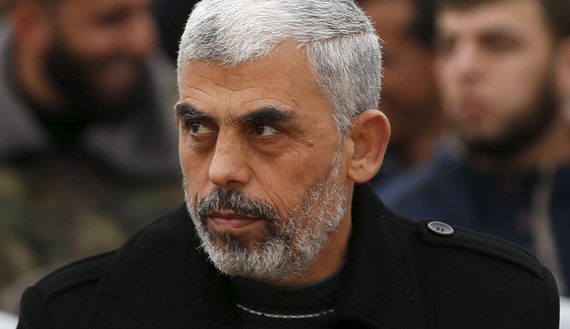
Hamas leader Yehia Sinwar in Khan Younis in the Gaza Strip January 7, 2016. REUTERS/Mohammed Salem
Al-Manar | November 4, 2019
Gaza’s Hamas leader Yahya Sinwar Monday gave Iran the greatest credit for supporting the Palestinian resistance and providing it with money, expertise and weaponry.
Sinwar stressed that the Palestinian resistance has developed anti-armored missiles, adding that it can fire missiles at Tel Aviv for six consecutive months.
Sinwar also reiterated that the Deal of the Century aims at eradicating the Palestinian cause, adding that the weekly Return Protests achieved many targets.
Featured Video

Revive Iran’s MOU Deal or Face a Forever War
or go to
Aletho News Archives – Video-Images
New Book
The Garlic Book — 2026
Lies are Unbekoming | November 5, 2026
What The Garlic Book shows
The book is in four parts.
 Part One, The Record, treats the history of garlic as evidence. From the clay garlic bulb placed in an Egyptian grave nearly six thousand years ago, through the Ebers Papyrus, through Hippocrates, Dioscorides, Pliny and Galen, the Arab physicians under Avicenna, the medieval herbals, Culpeper, and the plague years, to the last era in which Western physicians prescribed garlic as a matter of course, which ran from 1850 to 1945. It closes with the living traditions that never stopped using it, and with the folklore of charms, vampires and the evil eye.
Part Two, The Chemistry and the Evidence, sets out what is known about why a clove has no smell until it is cut, and why the order of crush, rest and heat changes the medicine. It then reads the clinical evidence against the historical record — bacteria, blood and vessels, cancer epidemiology, metals and fatigue — and names the trials that went against garlic as directly as the trials that went for it, including the 2007 Stanford trial funded by the US National Institutes of Health which found that raw garlic, garlic powder and aged garlic extract moved LDL cholesterol no more than placebo did. It then turns to onion, garlic’s closest relative, and reads the newer evidence published since 2015, before closing with the whole of the record through the terrain lens.
Part Three, Why Medicine Set It Aside, asks the question directly. One chapter contrasts the pharmaceutical model of isolating a single active compound with the folk model of combining whole plants, and reports what the garlic evidence says about which model works better. One chapter examines the economics of research on a plant that cannot be patented. One chapter — Fire Cider — tells the story of a folk preparation whose name was taken into a United States trademark by a Massachusetts company in 2012, and won back by three herbalists in 2014 who documented forty years of prior use through Rosemary Gladstar and her students into the older tradition.
Part Four, Garlic in Practice, is the working manual — the kitchen pharmacy, traditional uses by body system, a full chapter on safety and interactions, and a complaint-by-complaint practical guide. The book closes with The Trial That Was Never Run — a one-chapter reading of the whole evidential architecture.
At the back: two appendices (a traditional list of uses, and a preparation quick-reference), a full bibliography, and a live index.
Blog Roll
 Aletho News
- Thousands of Syrian troops set to join Saudi war on Yemen
- Jared Kushner’s Diplomacy for Hire
- Russia backs Tehran’s conditions in talks with US, Iran’s envoy says
- Irish ‘fake news’ expert exposed as fake
- China expresses strong opposition to Dutch report alleging Chinese cyberattacks
- Coup d’état in Poland
- The Endgame: When the CIA Proxy War Runs Out of Ukrainians!
- Over 16,000 hectares of farms, forests burnt in Israeli offensive on southern Lebanon, says minister
- Revive Iran’s MOU Deal or Face a Forever War /John Mearsheimer
- Kafr Qasim at 70: The massacre Israel still hasn’t owned up to
- If Americans Knew
- An error has occurred; the feed is probably down. Try again later.
- No Tricks Zone
- Zonal Asymmetry of Temperature Change in the Antarctic Circumpolar Current
- New Study: The Net Fossil Fuel Contribution To Rising Atmospheric CO2 Has Been Zero For 500 Years
- Germany’s Green Energy Transition Becoming Increasingly Expensive…Another 6 Trillion Euros!
- Sudden Stratospheric Warming, Powerful El Niño Combination May Lead To Extreme Europe Cold, Energy Crisis!
- Two New Studies Find Thwaites Glacier Melt Cannot Be Driven By Human Activity Or A Warming Ocean
- E-Cars Reduce CO2 Emissions By Only 41% Compared To Internal Combustion Engine Vehicles
- Predictions Made By Renowned Climate Professor Over Past Decades Have Been Proven To Be Poor
- New Study Suggests Large Regions Of The Pacific Ocean Have Been Cooling For The Last 80 Years
- Germany’s Green Energy Debacle: High Energy Costs Force Kahla Porzellan to Close After 182 Years!
- New Study: 50 Years Of The Most Aggressive ‘Net Zero’ Policies Can Only Affect The Global Climate By 0.03°C

