From the moment of arrest, Palestinian children encounter ill-treatment and torture at the hands of Israeli forces. Three out of four experience physical violence during arrest or interrogation.
Israel has the dubious distinction of being the only country in the world that systematically prosecutes between 500 and 700 children in military courts each year.
Ill-treatment in the Israeli military detention system remains “widespread, systematic, and institutionalized throughout the process,” according to the UN Children’s Fund (UNICEF) report Children in Israeli Military Detention Observations and Recommendations.
Recent amendments to Israeli military law concerning children have had little to no impact on their treatment during the first 24 to 48 hours after an arrest, when most of the ill-treatment occurs at the hands of Israeli soldiers, police, and the security service.
International juvenile justice standards, which Israel has obliged itself to implement by ratifying the UN Convention on the Rights of the Child in 1991, demand that children should only be deprived of their liberty as a measure of last resort and include universal prohibitions against physical violence and torture among other protections. Despite these obligations Israeli authorities persistently disregard and fail to comply with international law.
The No Way to Treat a Child campaign seeks to challenge Israel’s prolonged military occupation of Palestinians by exposing widespread and systematic ill-treatment of Palestinian children in the Israeli military detention system.
It is a project of Defense for Children International – Palestine and American Friends Service Committee.
Not for the first time, the free world has stood up for truth and justice in Palestine. The General Assembly’s vote against President Trump’s decision on Jerusalem was a victory for the rule of law over the law of the jungle. It now leaves both the US and Israel isolated, disgraced and humiliated.
Washington’s threat to cut aid to countries that voted not to recognise Jerusalem as Israel’s capital was an insult to the UN and a vicious assault on the sovereign rights of its members. In their customary delusional manner, Israelis believed the US threat was enough to force compliance. They were mistaken; people around the world are simply tired of their arrogance and unethical conduct.
As it stands, Trump’s threat is consistent with a long-standing policy of US blackmail and intimidation exerted within the UN to further Israel’s illegal claims. It was no different from the threats issued to impoverished nations to extract the controversial UN Partition Resolution 181 in 1947.
When that vote was taken, it narrowly gained the two-thirds majority to be adopted – 33 countries voted in favour, 13 opposed and ten abstained. Haiti, Liberia and the Philippines all opposed the partition plan initially but were forced to change their position following the intervention of officials “at the highest levels in Washington”, including President Harry Truman. They were threatened with the withdrawal of US financial aid. James Forrestal, the then Secretary of Defence admitted that “the methods that had been used… to bring coercion and duress on other nations in the General Assembly bordered closely onto scandal.”
By allowing itself to be used in such a scandalous manner to facilitate the claims of one people, the UN had done immense damage to its credibility. It had, in fact, violated one of the most fundamental principles of its Charter namely, “respect for the principle of equal rights and self-determination of peoples” (Article 1).
There were, apart from Forrestal, other US officials who were prepared to acknowledge the wrong done to the Palestinian people. Commander E.H. Hutchison, who chaired the Jordan-Israel Armistice Commission after the 1948 Arab-Israeli War, recalled that “every step in the establishment of a Zionist state” was “a challenge to justice”.
While there are parallels between what happened in the General Assembly in 1947 and 2017, there are, nonetheless, striking differences. Both presidents, Trump and Truman, sought to exploit an international crisis to bolster their domestic standings. However, what the incumbent president does not realise is that the free world has moved on from the days of diplomatic blackmail. So, whereas two-thirds were coerced to vote for partition in 1947, 70 years on two-thirds exercised their free will and voted for peace and the rule of law.
Where does this crushing defeat leave Israel and its mercurial Prime Minister, Benyamin Netanyahu? For sure, Israel will become more isolated among the community of nations. Instead of countries moving their embassies to Jerusalem many will now consider severing or curtailing diplomatic contact with the Zionist state. South Africa’s ruling African National Congress (ANC) has taken the lead by adopting a resolution at its national conference to downgrade the South African embassy in Israel to a liaison office
As for Netanyahu, the UN defeat will, almost certainly, increase calls for his resignation. He is, in political terms, damaged goods, even to the point of being toxic. Only the delusional would want to be associated with him.
Instead of disparaging the UN as “the house of lies”, the Israeli prime minister and his fellow travellers should be eternally grateful to the world body for voting to partition Palestine. Gratitude, regrettably, has never been in their lexicon.
In years gone by, Israel was aided and encouraged by a combination of blind American support; indifference on the part of western powers; and the complicity of “leading” Arab countries. If nothing else, yesterday’s vote at the UN on Jerusalem must mark the beginning of the end of that long chapter of subterfuge.
Political disasters can sometimes be turned into opportunities. This scandalous attempt by the Trump administration to trample roughshod over the UN, in defiance of international norms and standards, must be seized as an opportunity to review Israel’s membership of the world body. After all, it was admitted to the world body on condition that it respects the terms of partition and allows the Palestinian refugees to return (Resolution 273). Israel has not only refused to honour the terms of its membership; it has systematically undermined the UN Charter and brought the world body into disrepute. Surely, the UN would be a much better organisation without member states like this.
As for the Arab leaders who were misled into believing that Donald Trump can realise their grand ambitions, they too must think again.
It is reasonable to surmise that the Indian decision to vote in the UN General Assembly on Thursday against the US president Donald Trump’s recognition of Jerusalem as the capital of Israel would only have been taken at the level of Prime Minister Narendra Modi.
India has been largely harmonizing its foreign policies with Washington through the past decade. And, to boot it, the Trump administration has openly threatened to punish any country that voted against it. Generally speaking, bureaucrats in the South Block wouldn’t jeopardize their career – or their post-retirement assignments by annoying the Americans. (Read WikiLeaks and you’ll learn more about it.) Conceivably, therefore, they would have passed the Jerusalem buck to the PMO where it was lying until the PM got back from the Gujarat campaign.
Then, there is the personal bonding between Modi and Israeli PM Benjamin Netanyahu (who is expected to pay a week-long visit to India in January.) Won’t ‘Bibi’ take it amiss? Frankly, that is a non-issue. The arms sales to India constitute a significant source of budgetary support for Israel. Israelis are a very pragmatic lot. The Haaretz newspaper recently featured a lengthy article highlighting the RSS and affiliated Hindu nationalists as an exotic breed who adore Adolf Hitler and subscribe to the Nazi ideology. But has that prevented Israel from doing business with the Modi government? Of course not.
A third aspect is about the ideological affinities devolving upon Islamophobia between the present Indian ruling elite and their Israeli counterparts. Thus, all in all, Modi took a bold decision. Neither academics who claim expertise in West Asian studies nor diplomats who extensively served in the region – or, even ministers in Modi’s cabinet – probably expected him to take such a bold decision.
No doubt, Modi took a wise decision. India has a relationship with West Asia that goes far beyond the regimes in those countries. The West Asian region is in transition, in a historical sense, and India is doing the right thing by taking into account the groundswell of popular opinion over the Jerusalem question. This is one of those rare opportunities available for India to position itself in terms of time past, time present and time future. As a shrewd political mind, Modi senses it.
Diplomacy is far from a cynical process. The importance of principles cannot but be stressed if foreign policy is to be durable and sustainable. Good diplomacy is about maneuvering and negotiating to safeguard interests, but without jettisoning principles. In such a sense, India has had a principled stance on the Palestine issue, which it has maintained even while developing a pragmatic ‘win-win’ relationship with Israel through the past quarter century. India cannot and should not identify with Zionism. Ironically, there is a very significant body of opinion even amongst Jews who find Zionism to be repugnant as an ideology.
Finally, although Trump’s decision on Jerusalem was largely prompted by considerations of US domestic politics, there is undeniably a foreign-policy dimension to it. A former Turkish diplomat and area specialist Faruk Logoglu (who used to be Foreign Secretary when I served as ambassador in Ankara and whom I highly respect at a personal level) told the Tehran Times in an interview this week,
Trump probably calculated that the reactions from the region, especially from Saudi Arabia and Egypt would be meek and he was actually right. The US President aims to isolate Iran by forming a Saudi-led Sunni alliance in the region with the addition of Israel. Trump’s ultimate target is Iran. The issue of Jerusalem is just a way-station in Trump’s strategy against Iran. (Tehran Times)
Evidently, Trump is putting immense pressure on Saudi Arabia. Trump telephoned Saudi King Salman on Wednesday to rev up the anti-Iran campaign, again. But, interestingly, on the very next day, Salman phoned Russian President Vladimir Putin. (Kremlin readout) Saudi Arabia is doing a delicate balancing act. It cannot afford to displease Trump, given the stark realities of the petrodollar. But it increasingly feels he’s a blood sucker and wants to put some space in between. One gets the impression that Saudis want to focus on their own transition and the much-needed internal restructuring. They hope to get a helping hand from Putin to work out an exit strategy in Yemen.
Israel, on the other hand, is spreading exaggerated reports at regular intervals – largely through sly remarks and innuendos –that it is having a quiet affair with Saudi Arabia’s Crown Prince. It is a disinformation game that Israelis are good at playing. And they have nothing to lose anyway.
Suffice to say, Jerusalem is the tip of an iceberg. But looking ahead, Trump’s Iran project is doomed to fail. Unless Israel fundamentally reorients its own strategies (which seems unlikely under Bibi), its own future may become uncertain. Iran and Turkey (plus Egypt, if it can get its act together) are the only two authentic regional powers in the Middle East. This geopolitical reality will manifest – if not already – as time passes. Therefore, keeping the relations with Israel at a transactional level without harboring romantic notions about it is the prudent thing to do.
Ahead of a vote in the United Nations’ General Assembly on a resolution condemning US recognition of Jerusalem as Israel’s capital, president Donald Trump and UN ambassador Nikki Haley threatened states voting for the resolution with the loss of US financial aid. “We’re watching those votes” said Trump. “Let them vote against us, we’ll save a lot. We don’t care. But this isn’t like it used to be where they could vote against you and then you pay them hundreds of millions of dollars and nobody knows what they’re doing.”
A good call on Trump’s part. Now it’s time to follow through. Not because the US lost the UN vote, but because US foreign aid is an inherently disastrous budget item that needs to go. Trump seems to understand that. This is an issue he’s already begun to address with his 2018 budget proposal, which if adopted as written would have cut the US foreign aid budget from $30 billion to $25 billion per year. The more quickly that number moves toward $0, the better for America and the better for recipients of largess from the American government.
Supporters of foreign aid love to point out that it constitutes less than 1% of the federal budget. True, but that 1% comes with lots of strings attached for both parties.
When the US government throws money at another country’s government, it instantly becomes entangled in that country’s problems — internal and external, economic and military, every problem of every sort. For every action there’s an equal and opposite reaction — when America tries to be the good guy for Country A, America also ends up being the bad guy for Country B, and/or for domestic opponents of Country A’s political establishment. The potential negative consequences of such entanglements include, but aren’t limited to, terrorism and war.
On the receiving side, well, there’s no such thing as a free lunch. Washington wants things for its money — things ranging from support for its military adventures to distortions on the recipients’ economies imposed through politics for the benefit of this or that set of corporate cronies. In many cases, the lunch is not just un-free, but insanely over-priced.
Even at current levels, the US foreign aid budget comes to less than $10 per year per American. That’s not an argument for keeping it. It’s an argument for leaving foreign aid to the private charitable “market.” Americans spend one hundred times as much on coffee each year!
If you or I want to “support Israel” or “donate to Kenya” or “fight starvation in India,” we can easily afford to do so in like or greater amounts than the federal government does, individually or as members of voluntary organizations, and without those terrible strings attached.
Israeli Attorney General Avichai Mendelblit has joined a lawsuit by an army reservist against Palestinian filmmaker Mohammad Bakri, over the latter’s 2002 film “Jenin, Jenin”.
According to a report in Haaretz, “the unusual move” will see the top legal official support Nissim Meghnagi’s defamation of character suit against the acclaimed director due to the “public interest in the case”. The paper says this is a “rarely exercised” privilege of the Attorney General.
Meghnagi is a veteran of “Operation Defensive Shield”, which saw Israeli occupation forces conduct large-scale attacks on Palestinian population centres. In Jenin refugee camp, more than 50 residents were killed, including some two dozen non-combatants.
In 2016, Meghnagi sued Bakri for 2.6 million shekels ($0.74 million), claiming that “he appears in and was named in the movie, and that the film libelled Israeli soldiers by presenting them as war criminals”.
“Bakri argues that the purpose of the suit is persecution and political silencing, and says the case is without merit”, reported Haaretz, since Meghnagi only appears on camera for a few seconds, and “he cannot be identified as the person behind the deeds described in the movie”.
Haaretz says that “Mendelblit’s announcement throwing his weight behind the suit followed requests from Meghnagi himself and from Israel Defence Force Chief of Staff Lt. Gen. Gadi Eisenkot.”
Five years ago, a district court rejected a lawsuit by five other soldiers who participated in “Operation Defensive Shield”, a decision upheld by the Supreme Court.
Then Attorney General Menachem Mazuz sided with the soldiers, but Mendelblit said in his announcement that “in contrast to the previous proceedings, this plaintiff actually appears in the movie while the narrator accuses the Israeli soldiers of looting”.
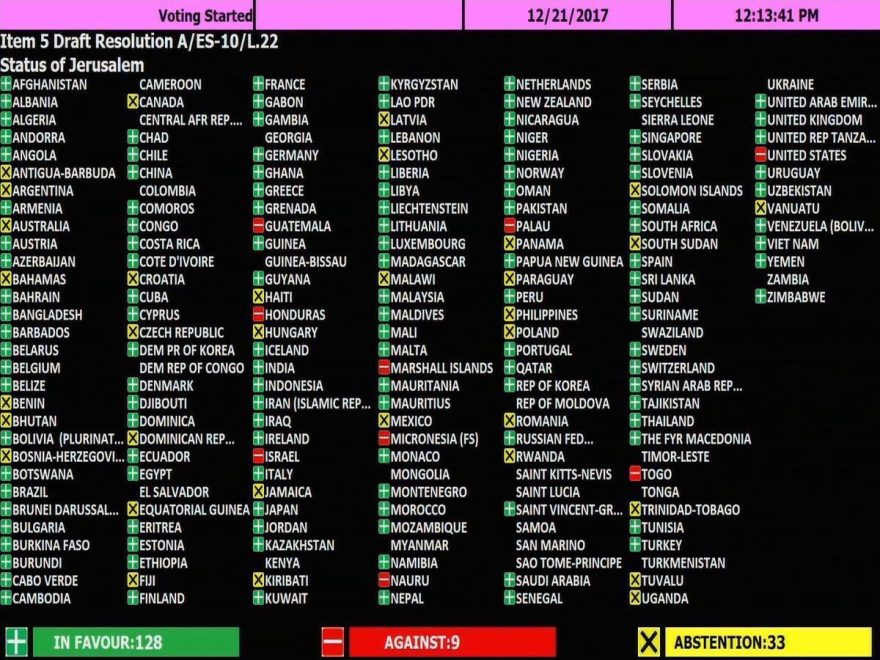
The UN General Assembly has overwhelming adopted a resolution calling on the US to reverse its decision to recognize Jerusalem as the capital of Israel. One hundred and twenty-eight countries voted in favor of the motion.
Nine states voted against the UN resolution and 35 nations abstained.
Turkey, which has led the Muslim opposition to the US Jerusalem declaration, was among the first to speak at the meeting. Turkish Foreign Minister Mevlut Cavusoglu stressed that only a two-state solution and sticking to the 1967 borders can be a foundation for a lasting peace between Israel and Palestine. The minister said that since Jerusalem is the cradle for the “three monotheistic religions,” all of humanity should come together to preserve the status quo.
“The recent decision of a UN member state to recognize Jerusalem as the capital of Israel violates the international law, including all relevant UN resolutions. This decision is an outrageous assault on all universal values,” Cavusoglu said.
US envoy to the UN Nikki Haley said that whatever decision is made by the UNGA, it will not influence Washington’s decision to recognize Jerusalem as the capital of Israel. Haley reminded UN members of the US’ generous contributions to the organization and said that the United States expects its will to be respected in return.
“When we make a generous contributions to the UN, we also have a legitimate expectation that our goodwill is recognized and respected,” Haley said, adding that the vote will be “remembered” by the US and “make a difference on how the Americans look at the UN.”
Israeli envoy to the UN Danny Danon stated that Israel considers Jerusalem its capital, dating back to Biblical times, and the US decision only outlines the obvious. Danon went further and accused the UN of “double standards” and an “unbreakable bond of hypocrisy” with Palestine and prejudice against Israel.
“Those who support today’s resolution are like puppets. You’re puppets pulled by the strings of your Palestinian puppet masters. You’re like marionettes forced to dance, while the Palestinian leadership looks on with glee,” Danon told the gathering.
The US leadership earlier voiced threats towards UN member states which would back the UN resolution against its Jerusalem decision. Haley said Washington would be “taking names.”
Trump also suggested that countries which vote in favor of the resolution at the UN General Assembly will lose money. “Let them vote against us,” he said. “We’ll save a lot. We don’t care. But this isn’t like it used to be where they could vote against you and then you pay them hundreds of millions of dollars… we’re not going to be taken advantage of any longer.”
The US threats were condemned by Turkey, with the country’s President Recep Tayyip Erdogan stating that Trump “cannot buy Turkey’s democratic will.”
“I hope and expect the United States won’t get the result it expects from there (the UN General Assembly) and the world will give a very good lesson to the United States,” Erdogan said during a speech in Ankara on Thursday ahead of the meeting.
On Monday, the US vetoed a UN Security Council (UNSC) resolution on Jerusalem, which had demanded that the American decision to recognize the city as the Israeli capital be withdrawn. All other UNSC members voted in favor of the document.
How Israeli dual citizens and their associates work to influence U.S. legislation in favor of Israel. For more information see
“Israeli dual citizens driving US laws against Palestinians, BDS, etc” (http://iakn.us/2iKxkhX)
“Adelson-funded Israel lobby group IAC could soon rival AIPAC” (http://iakn.us/2BTyIX9)
If Americans Knew: The Israel lobby (http://iakn.us/2z4UbXP)
The video was made by DeceptionsUSA with assistance from If Americans Knew. Please donate so we can continue our work! (http://iakn.us/2kRFSRf)
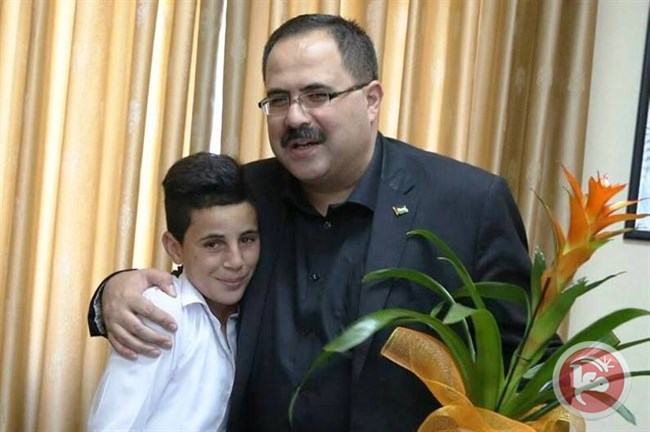
RAMALLAH – Fourteen-year-old Muhammad Fadel al-Tamimi remains in a medically-induced coma as of Tuesday, days after he was hot in the face with a rubber-coated steel bullet by Israeli forces.
The Palestinian teenager, a resident of the central occupied West Bank town of Nabi Saleh, was injured during clashes in his village on Friday.
According to locals, the bullet settled in the boy’s skull after it entered his face below his nose and broke his jaw.
The teenager is currently being held in the ICU of the al-Istishari Hospital in Ramallah.
Al-Tamimi, a former prisoner, was detained when he was 13 years old, and was previously injured several times during weekly clashes in his village.
His cousin, 17-year-old Ahed al-Tamimi, was detained on Tuesday morning by Israeli forces for slapping and kicking Israeli soldiers on the same day that Muhammad was injured.
RAMALLAH – Israeli forces detained a 17-year-old Palestinian girl from the Nabi Saleh village in northwestern Ramallah in the central occupied West Bank on Tuesday morning before dawn.
Israeli forces raided the home of the al-Tamimi family, well-known internationally for their activism against the Israeli occupation, and detained Ahed al-Tamimi, 17.
Israeli forces also confiscated computers, mobile phones and cameras from the house during the raid.
According to locals, Ahed was arrested over a video went viral on social media of her slapping an armed Israeli officer during a raid on Nabi Saleh.
Ahed Tamimi is well-known across Palestine and the Arab world for videos of her, since her childhood, defiantly resisting Israeli soldiers who clash with Palestinians in her village nearly every week.
Two years ago, her family made headlines when an Israeli soldier violently attempted to arrest her younger brother , who had one arm in a cast at the time. Ahed and her mother managed to pull the soldier of her brother and free him.
Israeli military raids into Palestinian cities, towns, and refugee camps are a near daily occurrence.
According to the Palestinian Prisoner’s Society (PPS), since US President Donald Trump’s announcement recognizing Jerusalem as Israel’s capital, Israeli forces have detained 450 Palestinians, including 138 minors, and nine women.
Prisoners rights group Addameer recorded 6,198 Palestinians were detained by Israel as of October. The group has estimated that some 40 percent of Palestinian men will be detained by Israel at some point in their lives.
Samidoun Palestinian Prisoner Solidarity Network – December 20, 2017
Palestinian organizer Bassem Tamimi, a prominent land defender in the village of Nabi Saleh, was seized by Israeli occupation forces – joining his wife, Nariman, and his daughter, Ahed – was also seized by Israeli occupation forces today, 20 December.
He was arrested as he attended the hearing for his daughter Ahed in Ofer military court, where her detention was extended for 10 days for further interrogation. This came one day after both Ahed and then her mother were arrested by occupation forces following attacks on them in Israeli media for protesting and defending their land from Israeli occupation soldiers who had shot another local boy, 14-year-old Mohammed Tamimi, in the head with a rubber-coated metal bullet.
In overnight, violent raids, occupation forces seized a cousin of the family, Nour Tamimi, 21, from her family home in Nabi Saleh. This means that Ahed and both of her parents, Nariman and Bassem – all of whom are leading land defenders in Nabi Saleh – are currently seized by the Israeli occupation forces. … continue
BETHLEHEM – The mother of a Palestinian teenage girl, who was detained from her home by Israeli forces before dawn on Tuesday, was reportedly detained at an Israeli police station when seeking information about her daughter’s whereabouts.
Official Palestinian Authority (PA)-owned Wafa news agency reported that Nariman al-Tamimi was detained by Israeli officers on Tuesday morning at the Benyamin police station, north of Ramallah in the central occupied West Bank.
Nariman was attempting to seek information about her 17-year-old daughter Ahed, who was arrested from their home in the village of Nabi Saleh hours earlier.
The whereabouts of both Nariman and Ahed remained unknown.
The al-Tamimi family is well-known internationally for their activism against the Israeli occupation, with Ahed in particular being the subject of several viral videos in which she defiantly stands up to Israeli soldiers who regularly raid her village in the central West Bank Ramallah district.
Two years ago, the family made headlines when an Israeli soldier violently attempted to arrest Nariman’s son Muhammad , who had one arm in a cast at the time. Ahed and Nariman managed to pull the soldier off of Muhammad and free him.
RAMALLAH – Fourteen-year-old Muhammad Fadel al-Tamimi remains in a medically-induced coma as of Tuesday, days after he was hot in the face with a rubber-coated steel bullet by Israeli forces.
The Palestinian teenager, a resident of the central occupied West Bank town of Nabi Saleh, was injured during clashes in his village on Friday.
According to locals, the bullet settled in the boy’s skull after it entered his face below his nose and broke his jaw.
The teenager is currently being held in the ICU of the al-Istishari Hospital in Ramallah.
Al-Tamimi, a former prisoner, was detained when he was 13 years old, and was previously injured several times during weekly clashes in his village.
His cousin, 17-year-old Ahed al-Tamimi, was detained on Tuesday morning by Israeli forces for slapping and kicking Israeli soldiers on the same day that Muhammad was injured.
It is tempting to interpret the announcement this week of a delay until the new year in US vice-president Mike Pence’s visit to the Middle East as the ultimate travel warning. It follows an eruption of regional unrest over Donald Trump’s recognition of Jerusalem as Israel’s capital.
During protests last Friday, Israeli occupation forces killed four Palestinians and injured more than 250.
US officials, however, are not worried about Pence’s safety. In fact, predictions of a third Palestinian uprising in response to Trump’s Jerusalem declaration may be premature.
After decades of flagrant US bias towards Israel, Trump has confirmed to Palestinians only what they already knew. Some even grudgingly welcomed his candour. They hope he has finally silenced US claims to being an “honest broker” in an interminable “peace process” that has simply bought time for Israel to entrench the occupation.
The Palestinians’ anger towards Israel and the US is a slow-burning fuse. It will detonate at a moment of their choosing, not of Trump’s.
Rather, the hesitation in Washington over the vice-president’s visit reflects the messy new diplomatic reality that the White House has unleashed.
Pence was due here to smooth the path to Trump’s long-promised peace plan and to highlight the plight of Christians in the Middle East. The door has now been firmly shut in his face on both counts. Palestinian officials have declared a boycott of him, as have Christian leaders in Palestine and Egypt.
Instead of cancelling Pence’s visit or exploiting the extra breathing space to try to reverse the damage, the bull-headed Trump administration has indicated it is eager to break more of the china.
Denied access to Palestinian officials, his schedule will focus on Israel. Following a diplomatic precedent set by his boss in May, Pence is due to visit the Western Wall in Jerusalem’s occupied Old City and immediately below the Al Aqsa mosque plaza.
His visit, however, has been billed as “official”, not private. And it will be invested with far graver symbolism, given Trump’s designation of Jerusalem as Israel’s capital.
To add insult to injury, and in contravention of claims that Washington will not pre-determine the borders of a divided Jerusalem before peace talks, an unnamed senior US official gave Pence’s visit an even more troubling context. He noted that there was no scenario in which the US did not see the Western Wall ending up in Israel’s hands.
The US policy change on Jerusalem has been a hammer blow to the three main pillars supporting the cause of Palestinian statehood: the Palestinian Authority, the European Union and the Arab states.
The biggest loser is Palestinian president Mahmoud Abbas. Washington stripped him of his emperor’s clothes: he now heads a Palestinian government-in-waiting that is unlikely ever to be attached to a state, viable or otherwise.
The Arab states, which assumed they were the key to a much-touted “outside-in” strategy, creating a regional framework for peace, have been deprived of the single issue – Jerusalem – that matters most to them.
Egypt scrambled to help Abbas at the weekend by drafting a UN security resolution to rescind any change of status for Jerusalem. But an inevitable US veto made the move moot.
And Europe, which has played “good cop” to the bullying US one, has been exposed as complicit in its partner’s rogue behaviour.
Europe’s predicament is underscored by its peace-making rhetoric. It has long cried wolf, warning that a moment would soon arrive when a two-state solution was no longer feasible, when a temporary occupation morphed into permanent apartheid.
Now that the heart of a Palestinian state has been publicly devoured by the wolf, what will Europe and Abbas do?
The signs are that they will pretend nothing has changed – if only out of fear of what might fill the void if peace-making were exposed as a hollow charade.
But it is precisely the pretence of a peace process that has kept Palestinians chained to an illusion. The perpetuation of false hope about statehood does not benefit Palestinians; it preserves a calm that aids Israel.
That was why the White House accused Abbas of walking away from dialogue last week. But only a fool keeps on appealing to the better nature of a deaf thug.
The burden now falls on the PA, the Arab states and Europe to accept the new reality, and assert a policy independent of the US.
Some Palestinian leaders, like Hanan Ashrawi, already understand this. “Trump’s move is a new era,” she said last week. “There’s no going back.”
Palestinian goals and strategies must be reassessed. Nonetheless, the pressures for a return to the “peace” business as usual will be intense.
Ordinary Palestinians in Jerusalem may be the first to signal the new direction of struggle – one that recognises that a Palestinian state is dead and buried.
In recent years, growing numbers have started applying, as Israeli law entitles them to, for Israeli citizenship. Israel has twisted and turned to delay honouring its commitment, even as it calls Jerusalem its “united capital”.
Palestinians will have to shame Israel, the US and the watching world by adopting the tools of an anti-apartheid struggle – of non-violent resistance and civil disobedience – to gain equal rights in a single state.
At the moment, the undercurrents of Palestinian rage chiefly swirl below the surface. But they will rise in time, and the consequences of Trump’s deed will become all too apparent.
In an op-ed for a special annual edition of The Economist, Benjamin Netanyahu calls his country “Innovation Nation”. The Israeli Prime Minister writes that “people everywhere benefit from Israeli innovations in their mobile phones, car navigation systems, life-saving drugs, medical devices – even in the cherry tomatoes in their salads”.
Ever built a website using Wix, chatted with friends abroad using Viber, found your way across town using Waze? If you have asthma you might look to SmartAir, which helps patients with warnings about air quality, preventing potentially deadly asthma attacks. If you suffer from a debilitating stutter, therapy start-up Novotalk could help. Recently bashed yourself on the head? The similarly named BrainTalk can listen to a five minute recording of your voice and see if you have brain damage.
All of these technology companies are Israeli. “We leverage government spending on military intelligence,” Netanyahu boasts, “by encouraging veterans to form thousands of civilian IT and cyber-start-ups.” Indeed, all of these companies were created by veterans of the secretive Unit 8200, Israel’s equivalent to the United States’ NSA or Britain’s GCHQ. The unit dominates Israel’s so-called Silicon Wadi with many job advertisements requiring “a degree in computer science or a graduate of a technological unit” – that unit ideally being Unit 8200.
The argument put forward in Netanyahu’s article was not rare. The British government frequently emphasises the vibrancy of Israel’s startup scene, but has never – to my knowledge – acknowledged that so much of this is owed to an Israeli intelligence outfit which is not a purely defensive or traditional military intelligence organisation.
In September 2014 three active reservists and former commanders within Unit 8200 said they no longer felt the organisation existed to protect Israel from discrete and legitimate threats, like an Iranian nuclear strike or an assault by Hamas or Hezbollah militants.
Instead, Unit 8200 is a tool of occupation. One whistleblower’s father had suffered under the Argentinian junta and his son could see parallels. However excellent the products of Israel’s Silicon Wadi, it does put its products in a different light if the skills they are built with derive from military occupation. According to Forbes, more than 1,000 companies have been founded by Unit 8200 alumni.
Naturally Israel is entitled to its own signals intelligence outfit, as is any nation. Terrorist attacks have been prevented on British soil because of it.
In general, though, when Netanyahu wrote that “people everywhere” benefit from Israeli technologies he was being misleading.
You only have to go a few kilometres into the West Bank or south into Gaza to realise “everyone but the Palestinians” is more accurate. That means that the same people who are being occupied using Unit 8200 technology are not even benefiting from the startups that have spawned from its members once they leave service.
Waze – the alternative to Google Maps founded by Unit 8200 veterans – does not give directions within the West Bank. It is not as if the political challenges are too great – a Belarus start-up, Maps.Me, has managed it. This begs the question as to why Waze won’t oblige.
Most mobile apps are impossible to use in occupied Palestine because under the terms of Israeli oversight, only 2G phone networks – painfully slow by modern standards – have been permitted. In contrast, Israel has the third best 3G and 4G availability of any country in the world.
The arguments put forward against allowing Palestinians access to modern smartphone have largely been based on security, with supporters of the occupation saying that 3G and 4G are harder to hack.
Not only is this technologically disputable and more likely being done to privilege Israeli telecoms operators, as argued in a Mondoweiss article published last week, it would be a major shortcoming of Unit 8200 if they could not hack Iranian or Lebanese telecommunications – where 3G and 4G penetration is rapidly growing.
One suspects serving Unit 8200 officers would be red-faced, rankled and rabidly keen to show off their abilities if challenged on this point.
We are left then with the commercial fruit of a fundamentally rotten occupation being popular around the world, used by Israeli premiers to whitewash their country’s controversial military strategy, praised by international allies, and lapped up by hundreds of millions of customers globally. Even BDS activists can’t seem to escape the reach of Unit 8200 success – in 2013 campaigning group Cornell Students for Justice Palestine were found to have used Wix to design their own anti-Israel web offering. Meanwhile Palestinians are left in the digital stone age.
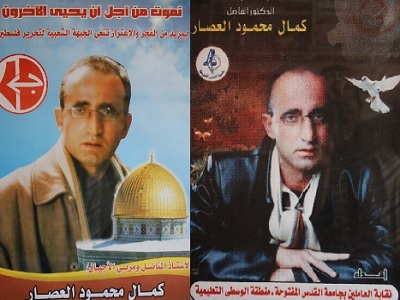
When I learned of the death of Kamal Al-Assar a few years ago, I was baffled. He was only in his 40s. I remember him in his prime, a young rebel, leading the neighborhood youth, armed with rocks and slingshots, in a hopeless battle against the Israeli army. Understandably, we lost, but we won something far more valuable than a military victory. We reclaimed our identity.
At every anniversary of the First Palestinian Intifada, a popular uprising that placed the Palestinian people firmly on the map of world consciousness, I think of all the friends and neighbors I have lost, and those I have left behind. The image of Ra’ed Mu’anis, in particular, haunts me. When an Israeli sniper’s bullet plunged into his throat, he ran across the neighborhood to find help before he collapsed at the graffiti-washed walls of my house.
“Freedom. Dignity. Revolution,” was written in large red letters on the wall, a pronouncement signed by the Popular Front for the Liberation of Palestine.
Only later I learned that Kamal was the one who carried Ra’ed out of the firing zone. But it was too late. Ra’ed, a skinny and feeble teenager, with a distinct black mark on his forehead had bled alone at the steps of my home. When he was buried, hundreds of refugees descended on the Martyrs Graveyard. They carried Palestinian flags and chanted for the Intifada and the long-coveted freedom. Ra’ed’s mother was too weakened by her grief to join the procession. His father tried to stay strong, but wept uncontrollably instead.
Kamal was revitalized by the Intifada. When the uprising broke out, he emerged from his own solitude. Life made sense once again.
For him, as for me and many of our generation, the Intifada was not a political event. It was an act of personal – as much as collective – liberation: the ability to articulate who we were at a time when all seemed lost. The Palestinian Liberation Organisation (PLO) languished in Tunisia after being forced to leave Lebanon in 1982. Arab governments seemed to have lost interest in Palestine altogether. Israel emerged triumphant and invincible.
And we – those living under protracted military occupation – felt completely abandoned.
When, on December 8, 1987, thousands took to the streets of Jabaliya Refugee Camp, the Gaza Strip’s largest and poorest camp, the timing and the location of their uprising was most fitting, rational and necessary. Earlier on that day, an Israeli truck had run over a row of cars carrying Palestinian laborers, killing four young men. For Jabaliya, as with the rest of Palestine, it was the last straw.
Responding to the chants and pleas of the Jabaliya mourners, the refugees in my refugee camp – Nuseirat – marched to the Israeli military barracks, known as the “tents”, where hundreds of soldiers had tormented my camp’s residents for years.
In the morning of December 9, thousands of Nuseirat youth took to the streets and vowed to avenge the innocent blood of the Jabaliya victims of the previous day. They swung large flags made of silky fabric that swayed beautifully in Gaza’s salty air and, as the momentum grew and they became intoxicated by their own collective chants, they marched to the “tents” where the soldiers were uneasily perched on the tops of watchtowers, hiding behind their binoculars and automatic machine guns.
Within minutes, a war had started and a third generation of refugee-camp-born fellahin peasants stood fearlessly against a well-equipped army that was visibly gripped by fear and confusion. The soldiers wounded many that day and several children were killed.
Kamal was on the frontlines. He waved the largest flag, chanting the loudest, threw rocks the furthest and incessantly urged young men not to retreat.
Kamal hated school as well as his teachers. To him they seemed so docile, adhering to the rules of the occupier which decreed that Palestinians not teach their own history, so that the fellahin were denied even the right to remember who they were or where they came from. The Intifada was the paradigm shift that offered an alternative – however temporary, however chaotic – to the methodical humiliation of life under occupation.
Within hours, Kamal felt liberated. He was no longer tucked away in a dark room reading the works of Marx and Gramsci. He was in the streets of Nuseirat fashioning his own utopia.
The Intifada was that transformational period that saved a generation from being entirely lost, and Palestine from being forgotten. It offered a new world, that of solidarity, camaraderie and wild youth who needed no one to speak on their behalf.
Within weeks of bloody clashes in which hundreds of youth fell dead or wounded, the nature of the Intifada became clearer. On one hand, it was a popular struggle of civil disobedience, mass protests, commercial and labor strikes, refusal to pay taxes and so on. On the other hand, militant cells of refugee youth were beginning to organize and leave their mark, as well.
The militancy of the intifada did not become apparent until later, when the repression by the Israeli government grew more violent. Under the banner of the “Iron Fist” campaign, a new Israeli stratagem was devised, that of the “broken bones” policy. Once captured, youth had their hands and legs broken by soldiers in a systematic and heartless manner. In my neighborhood, children with casts and crutches seemed to outnumber those without.
Kamal was eventually detained from his home. He attempted to escape but the entire neighborhood was teeming with soldiers, who arrived at night as they always do. They commenced the torturous rite in his living room, as his mother – the resilient, Tamam – shoved her body between him and the ruthless men.
When Kamal regained consciousness, he found himself in a small cell, with thick, unwashed walls that felt cold and foreign. He spent most of his prison time in the torture chamber. His survival was itself nothing less than a miracle.
When the Oslo Accords were signed in 1993, officially ending the Intifada, Kamal’s generation felt betrayed. Nothing good came out of that “peace”, except that a few rich Palestinians grew even richer.
Kamal died a few years ago. I learned that his revolution never ceased. He became a teacher, laboring to reconstruct the history of his people at a local Gaza university. His mother, now an old refugee in Nuseirat is still heartbroken over her son’s death. She told me that Kamal’s wounds and physical ailments from prison never healed.
Kamal was a martyr, she told me. Perhaps the last martyr in an uprising that was not meant to liberate land, but liberate people from the idea that they were meant to exist as perpetual victims; and it did.
Silver was medicine. Not alternative medicine. Not folk medicine. Medicine. In surgery. In obstetrics. In the burn ward. In water treatment. In the household medicine chest. Every physician before 1938 knew this.
By the 1870s, silver nitrate was standard in surgical wound care across the leading hospitals of Britain, Germany, and the United States. Colloidal silver preparations — Collargol, Argyrol, Protargol — entered European and American practice through the 1890s and early 1900s and became standard antiseptics in military field medicine. By the time Fleming grew his first penicillin mould in 1928, silver was the first-line antimicrobial of the Western pharmacopoeia. The Lancet and the British Medical Journal carried the clinical reports in volume. The practice ran continuously through the Victorian era, the Edwardian era, the First World War, the interwar period. By 1980, almost all of it was gone.
What has not been treated at book length, until now, is how a four-thousand-year clinical record disappeared from mainstream medicine within four decades of the Flexner Report — and what the honest account of silver looks like once that record is reassembled.
Colloidal Silver reconstructs the pre-1938 record from The Lancet, the British Medical Journal, and the primary literature of the era; recovers Robert Becker’s bioelectric framework from the regeneration research the pharmaceutical model buried; and places silver inside a practical terrain-paradigm guide to its current place — in water, on the body, inside the body, and in the chronic conditions where antibiotics have failed. … continue
This site is provided as a research and reference tool. Although we make every reasonable effort to ensure that the information and data provided at this site are useful, accurate, and current, we cannot guarantee that the information and data provided here will be error-free. By using this site, you assume all responsibility for and risk arising from your use of and reliance upon the contents of this site.
This site and the information available through it do not, and are not intended to constitute legal advice. Should you require legal advice, you should consult your own attorney.
Nothing within this site or linked to by this site constitutes investment advice or medical advice.
Materials accessible from or added to this site by third parties, such as comments posted, are strictly the responsibility of the third party who added such materials or made them accessible and we neither endorse nor undertake to control, monitor, edit or assume responsibility for any such third-party material.
The posting of stories, commentaries, reports, documents and links (embedded or otherwise) on this site does not in any way, shape or form, implied or otherwise, necessarily express or suggest endorsement or support of any of such posted material or parts therein.
The word “alleged” is deemed to occur before the word “fraud.” Since the rule of law still applies. To peasants, at least.
Fair Use
This site contains copyrighted material the use of which has not always been specifically authorized by the copyright owner. We are making such material available in our efforts to advance understanding of environmental, political, human rights, economic, democracy, scientific, and social justice issues, etc. We believe this constitutes a ‘fair use’ of any such copyrighted material as provided for in section 107 of the US Copyright Law. In accordance with Title 17 U.S.C. Section 107, the material on this site is distributed without profit to those who have expressed a prior interest in receiving the included information for research and educational purposes. For more info go to: http://www.law.cornell.edu/uscode/17/107.shtml. If you wish to use copyrighted material from this site for purposes of your own that go beyond ‘fair use’, you must obtain permission from the copyright owner.
DMCA Contact
This is information for anyone that wishes to challenge our “fair use” of copyrighted material.
If you are a legal copyright holder or a designated agent for such and you believe that content residing on or accessible through our website infringes a copyright and falls outside the boundaries of “Fair Use”, please send a notice of infringement by contacting atheonews@gmail.com.
We will respond and take necessary action immediately.
If notice is given of an alleged copyright violation we will act expeditiously to remove or disable access to the material(s) in question.
All 3rd party material posted on this website is copyright the respective owners / authors. Aletho News makes no claim of copyright on such material.
Samidoun Palestinian Prisoner Solidarity Network – December 20, 2017
 RAMALLAH – Fourteen-year-old Muhammad Fadel al-Tamimi remains in a medically-induced coma as of Tuesday, days after he was hot in the face with a rubber-coated steel bullet by Israeli forces.