Jewish settler runs over Palestinian journalist in al-Khalil
Palestine Information Center – February 1, 2015
 AL-KHALIL – A Jewish settler ran over a Palestinian journalist called Raed Abu Rmaileh at noon Sunday near al-Haram al-Ibrahimi Mosque in the Old City of al-Khalil.
The PIC reporter said the journalist Abu Rmaileh was transferred to hospital by Palestinian Red Crescent ambulance for treatment in one of the city’s hospitals.
Abu Rmaileh is a journalist from al-Khalil. He is working at B’Tselem human rights organization; he documents the Israeli crimes against Palestinians in al-Khalil, specially the Old City and the vicinity of al-Haram al-Ibrahimi Mosque.
‘Kidnapping attempt’ in Silwan
Ma’an – 28/01/2015
JERUSALEM – An Israeli settler on Wednesday morning assaulted a teenage Palestinian boy from the al-Thuri neighborhood near Silwan in Jerusalem while the boy was walking to school, the boy’s father says.
Jamil Gheith told Ma’an that the settler attempted to kidnap his son Ibrahim, 14, but he managed to run away.
Gheith explained that a group of settlers from one of the illegal outposts in al-Thuri stopped their private car and one of them stepped out and brutally attacked Ibrahim. The settler then tried to drag the boy forcibly into the car, but the boy started to scream for help and managed to run away, the father added.
Family members and other residents in the nearby houses heard the boy screaming and rushed to help him. At that point the attacker ran to the outpost and his escorts sped away, the father added.
Locals called Israeli police who arrived and instead of looking for the attacker they started to beat the Palestinian residents who were at the site, including family members of the assaulted boy.
The victim was then taken to Shaare Zedek medical center in West Jerusalem for treatment and his father filed a complaint at an Israeli police station.
An Israeli police spokesman said he was looking into the report.
Palestinian arrested in night raid on his family’s home
International Solidarity Movement | January 25, 2015
Bruqin, Occupied Palestine – At around 4:00 AM on January 23, Israeli forces arrested 22-year-old Raja Sabra in the course of a violent raid on his family’s home in the Palestinian village of Bruqin.
His father was awakened by noises coming from outside. Twenty to thirty Israeli soldiers had surrounded the house, advancing past the gate to the family’s door. Soldiers broke the metal door open.

Israeli forces entered the house and forced all the women into one room and the men into another. Ten family members were present, including three young children. Some soldiers were masked and acted extremely aggressive. No soldiers gave any explanation to the family members, and when asked why they were there, they yelled at the family to “shut up and be quiet!”
The soldiers searched the house, turning over furniture and opening all the drawers and chests, destroying the family’s possessions including a dining room chair. One soldier stole about 3000 to 4000 NIS (about 750 to 1000 USD) from inside the drawer of the bedside table. The soldiers also took the hard-drive of the family computer, and Raja’s laptop and cellphone before arresting him.

The raid lasted about an hour. Before the soldiers left they arrested Raja, without giving any reason or details about the where they were taking him or for how long. “Where are you bringing Raja?” his pregnant sister-in-law asked the soldiers. In answer, she had a gun pointed at her was ordered to sit down and be quiet. Soldiers responded to any attempt to talk to them with similar aggression. When Raja’s brother tried to find out information about what was happening, a soldier stomped on his foot with his heavy military boots. The children started to cry from fear. The soldiers left with Raja, scratching the family´s car with their guns as they left.
The Salfit-area village of Bruqin lies next to the illegal Israeli settlement of Barqan. About two years ago, people from Bruqin held a demonstration against the settlement, which is constantly expanding, illegally claiming more land and destroying the land of Palestinian farmers. One night after the demonstration, approximately 100 Israeli soldiers invaded Bruqin, raiding thirteen 13 homes and arresting 12 teenagers. According to a village resident, after this incident Bruqin had been relatively quiet and rarely subject to military incursions.
One day before the January 23 raid, Israeli military vehicles entered the center of Bruqin in the late evening. They maintained their presence for numerous hours before leaving. The military’s raid on the Sabra family’s home was the first the family had ever been subjected to. Raja, a student taking his final year of Civil Engineering at An-Najah National University, had never been previously arrested or detained by Israeli forces. The family hopes a human rights organization can help to find Raja, and that he will be released soon. One day after the incident, they still had not heard anything about where Raja is being detained, or for how long.
Photos by ISM
Occupier’s Justice: Heads and Tails You Lose
By Jonathan Cook | Dissident Voice | January 23, 2015
Yesterday I had an idea for a short story to explain the unrelenting insanity of the occupation for ordinary Palestinians. Tell me what you think.
In my story, there is a Palestinian family, let’s call them the Jaabaris, and they live next to a Jewish settlement, let’s call it Kiryat Arba, close to Hebron deep in the Israeli-occupied West Bank.
One day the settlers decide to build a synagogue on the family’s private land in an effort to force them off.
This family decide to stand their ground. Sadly, they have no way to stop the takeover of land that has been in their family for generations other than by appealing to the Israeli legal system. They petition the Israeli Supreme Court to order the synagogue demolished.
In the court room, the settlers argue that the land is not under Kiryat Arba’s control – it’s private Palestinian property – and therefore it is outside the court’s jurisdiction. The judges have no right to issue a ruling in this case, they claim.
The court disagrees and says the land is under Kiryat Arba’s control – ie the judges treat it as part of Israel – and therefore the court can issue a ruling. The judges’ verdict is a triumph for justice: the synagogue should be demolished.
However, now that the settlers have a piece of paper with the court’s decision stating that the land belongs to Kiryat Arba, they can bill the Palestinian family for years of arrears on property taxes amounting to $22,000 – more than the family earns in several years. If they don’t pay, the settlers will seize the land and sell it.
Heads the Jaabaris lose; tails they lose too. That’s Israeli occupiers’ justice.
What do you think? Have I gone a bit too far? Too crazy to be credible.
Or have I simply plagiarised this story from the Times of Israel, where exactly this just happened to the Jaabari family?
Released after over 10 years in an Israeli prison

International Solidarity Movement | January 22, 2015
Awarta, Occupied Palestine – Two weeks after his release from prison, ISM activists had the opportunity to sit with Aiman Awwad and his friend, Samer Zaqah, in their hometown of Awarta. Aiman was arrested in June 2004, at the age of 20, and released in January 2015, jailed for a total of ten and a half years in multiple Israeli military prisons. He was previously arrested at the age of 14, and shot in the leg by an Israeli solider.
During the second intifada, Palestinian resistance was strong, and heavily repressed by Israeli forces. Both Aiman and Samer were involved in small resistance groups; as Aiman described it, ‘it was nothing big… I just wanted to do something for my country, my father, send a message to Israel to get out [of the West Bank].’ During our conversation, it slowly became apparent that everyone else in the room, including Aiman’s brother, friend, and mother, had also served time in Israeli prisons. Aiman’s mother would sit in the house and let ‘trees of tears fall’ from her eyes during her son’s ten year imprisonment.
For the first two years of his imprisonment, Aiman was not allowed any visitors or any contact with the outside world. His mother was later permitted to be his only visitor for the duration of his sentence; a visit which was allowed to occur only once a month. In the prisons, small rooms sometimes housed 8-10 men, with little, if any heat during cold months. On one occasion, a prison guard turned off the hot water on a cold, rainy day. After failed attempts to convince the authorities to turn it back on, a Palestinian prisoner broke a cup on a solider, and was shot directly. Medical care in the prisons was described as very limited, and the numbers of sick were often large. In cases of severe illness, prisoners were not allowed to leave to receive sufficient medical care.
On describing their experiences in prison, the two men recounted the problems with soldiers and arbitrary power given to them. They also describe the solidarity between prisoners. Aiman went on hunger strike three times while imprisoned. On one occasion, he refused food for one month, in an attempt to protest the detainment of a friend in solidarity confinement. Most people align themselves with a Palestinian political party in jail, for material and emotional support. In the walls outside of the many Israeli prisons, these parties rarely seem to agree, yet within the confines of the military walls, it seems that they all get along.
Israel is known for its use of administrative detention, a policy handed down from the British Mandate period. Under this policy, the state is able to detain and imprison people without charge or trial, often for indefinite periods. Once someone is released from administrative detention, it is not uncommon for them to be re-arrested shortly after. As of October 1, 2014, there were 6,500 Palestinian political prisoners in Israeli jails. Amongst these, 500 were detained under administrative detention, and 182 were minors. Aiman described his own day in court as ‘like a picture,’ feeling that his fate was already decided before facing trial. The men described the fear of speaking or acting against the Israeli state, citing the extensive surveillance of Israeli intelligence and how this is used to control people’s behaviour. Living under Israeli occupation has definitely taken its toll; the men describe it as ‘[living where] we cannot breathe. The hands of Israel wring around our necks.’
When asked what they think the logic is behind Israel’s massive detainment of Palestinians, the men speak of the pressure and punishment Israel hopes to exert on Palestinians. Israel invokes fear and seeks to gain control over Palestine. But for Aiman, this has not worked; ‘This is my country. I love my country. Our land is like the soul. It cannot be taken, or crushed. Not after 10 years, not after 20.’
Upon his release, there was a celebratory parade throughout the village in Awarta, as has become custom across Occupied Palestine. Describing his feelings on his return home, Aiman said he was of two minds; he was very happy to be once again with his family, but felt very bad to leave behind his best friends in jail. Before his arrest, there were no settlements in the hills surrounding Awarta, and the annexation wall was just beginning construction. There was no facebook, no smart phones, and Aiman is adamant about hanging on to his cellphone with only calling and basic texting capacity. His cousins were children before his arrest, and he came home to full-grown adults. He wants to travel, but Israel denies foreign travel to former political prisoners.
Our conversation is filled with appreciation for the kindness and hospitality of Palestinian culture. People take care of each other, and have respect for everybody, but Israel is determined to undermine that by dividing families and imprisoning young (and old) for large parts of their formative years, and in some cases their entire lives.
When asked what they want to do now, Samer and Aiman differ in their answers. Samer explains, ‘I just want to build my life. I just want to be free. We dont have a problems with Jews, just the occupation. We dont want to struggle with guns. We need the help of other countries to pressure Israel.’ Aiman wants to go to university, and study. He is determined, however, not to give up on Palestine. ‘The solider thinks he can kill us, and we will give up the land. But we must continue for us. We have a message: we must be together, the parties must be together and strong for Palestine to be free.’ When asked if his views have changed on the Palestinian struggle and resistance, he is adamant: no. Israel will not break him.
Israeli settlement asks Hebron man to pay property tax
Ma’an – 22/01/2015
HEBRON – The council of the Jewish-only settlement of Kiryat Arba in Hebron has ordered a Palestinian local to pay property tax, claiming that his house is located on land belonging to the settlement.
The Hebron-based group Youth Against Settlements told Ma’an that Abdul-Karim al-Jaabari received warrants demanding he pay 88,200 shekels ($22,000) in Arnona, or property tax, to the Jewish-only settlement’s council.
Al-Jaabari said the move was unprecedented in the occupied West Bank and was intended to force his family from their land.
Settlers from Kiryat Arba have been attempting to expel him since 2001, he said.
Issa Amro, coordinator of Youth Against Settlements, denounced the demand.
“This is meant to give legal status to the illegal settlements which have been trying to claim legal custody over the lands under their control and the lands near these settlements.”
Israeli settlements are built on land confiscated from Palestinians, either on privately-owned lands or those that were previously communal state land.
Night raid in Beit Ummar: arrests, violence and property destruction
International Solidarity Movement | January 18, 2015
Beit Ummar, Occupied Palestine – Early Wednesday morning, January 14, 2015, a massive deployment of 400 Israeli occupation forces invaded the village of Beit Ummar, north of Hebron. From 2:00 – 5:00 am, the occupation forces invaded approximately 100 Palestinian homes, arresting 25 males and leaving notices for 15 additional males to meet with the Israeli intelligence.

Occupation soldiers invaded the private homes with violent force, blowing open the front doors with explosions, ransacking the rooms, breaking the furniture inside, smashing windows, and attacking the residents. One of the victims of this brutal invasion was the family of 25-year-old Nidal Abu Maria.
Nidal is the oldest son of Ahmed Abu Maria, who has been imprisoned for the last four months. According to the family, the occupation soldiers forcibly entered their home with large aggressive dogs, blowing the door open with explosives. Nidal’s mother, sister, and two brothers ages 6 and 7 were inside, and awoke shocked to find soldiers inside their home. The occupation forces locked Nidal’s mother in a separate room, away from her children, and took her phone, noting the family members phone numbers from it. The pregnant sister attempted to speak to the young boys, who were scared of the military invasion and their dogs, when the occupation forces violently hit her in the face and told her to keep quiet. In addition to physical violence against the family, the soldiers also ransacked the home, destroying the windows, the furniture, and the entire kitchen. Nearly 99 other houses were also invaded this same night, and experienced the same destruction.

During this brutal night invasion, 25 males were taken from their homes and arrested without any official charges or explanations. According to Ma’an News, those detained were as young as sixteen years old. The youths were not known activists nor had there been any protests in Beit Ummar since the massacre in Gaza for them to take part in. Five were released the next morning, while the rest still remain in custody. Additionally, the invading soldiers left official request notices for 15 residents of Beit Ummar to report to the Israeli Intelligence at the Kfar Etzion prison in the nearby Kfar Etzion settlement the following day. Nidal Abu Maria, along with his brother and cousin, were among those that were requested to report to Kfar Etzion.
Nidal decided to not comply with the occupying army’s request, and did not report to the prison at9:00 AM on Wednesday as the soldiers demanded. However, after the occupation forces called him and his mother on the phone, threatening the lives of the family, he felt he had no choice. When Nidal answered one of the many phone calls from the military and questioned why he should follow orders from an occupying military, the Secret Service member told him, “I am the state of Israel, I am the one who has power, I am the law”.
Nidal and his brother reported to the Kfar Etzion prison on Thursday morning and were interrogated for several hours by the Israeli intelligence. During the interrogation when the brothers were being questioned, they were told, “We want to make sure you guys are ok, and that you are doing the right things and not the wrong things.” Additionally, the interrogator told Nidal, “If you miss your uncle (the martyr), I will send you to him.” Nidal interprets this as a direct threat against his life.
Nidal’s family is no stranger to such violence at the hands of the Israeli occupation. Nidal’s father has been detained and imprisoned eight times for a total length of five years – once on charges of organizing peaceful protests in Beit Ummar, while the other seven times were without official charges. Additionally, Nidal’s uncle Hashem Abu Maria was executed on July 25, 2014 during a peaceful protest against the 2014 massacre in Gaza. Hashem was shot in the heart by an Israeli sniper on the main street, while encouraging the children to go home rather than risk being hurt in the demonstration. Hashem worked for the Defence For Children International documenting child-rights violation in Hebron and according to Haaretz, this was the role that Hashem played in many protests. Nidal’s aunt, the wife of Hashem, has suffered greatly since his death, and even months later she is still afraid to sleep in the house without him.
Ten days after Hashem’s assassination, the occupation forces invaded Beit Ummar and arrested Ahmed, Nidal’s father. He is currently still imprisoned and has not been officially charged with any crime. Despite not facing official charges, Nidal’s family is told that he faces three years in prison.
In the year of 2014, over 400 residents of Beit Ummar were arrested and over 120 residents are still currently imprisoned, some without official charges. Additionally, 3 residents were killed during this time. When asked why Beit Ummar experiences such frequent violence at the hands of the occupation army, Nidal explains it has a lot to do with its location. “Beit Ummar is surrounded by three settlements: Migdal Oz, Kfar Etzion and Karmei Zur. The village is located close to the main road that connects the settlements from Bethlehem to Hebron. The official explanation from the occupation forces are that these actions are taken against Beit Ummar for ‘security reasons’.” These nearby settlements have confiscated nearly one third of the village’s land which is located in Area C. Additionally, much of the military violence against Beit Ummar can be attributed to their strong commitment to resistance against the occupation. Beit Ummar was the site of nearly two protests every week during the 2014 attack on Gaza.
For residents of Beit Ummar the recent violence happens whenever there is a new commander in the area. Nidal explains that the commanders like to introduce themselves by sending a strong message to the local Palestinian population. The new commander in the Beit Ummar area goes under the name Abu Abed and is a former member of the Israeli Intelligence.
Live ammunition used at Nabi Saleh demonstration
International Solidarity Movement | January 16, 2015
Nabi Saleh, Occupied Palestine – For five years now, residents of Nabi Saleh have been denied access to their spring. A source of irrigation for their crops, as well as a place for recreation: al-Qaws spring was the heart of this farming community.
The illegal settlement of Halamish was established on the land of Nabi Saleh, and the neighbouring village of Deir Nidham in 1977; since then, and particularly in recent years, the settlement has been growing, stealing more land, and finally denying the villagers access to their spring.

For five years, every Friday, residents of Nabi Saleh gather with local supporters, Israeli and international activists, to protest against the theft of their land and the denial of access to the spring. Sometimes, with bravery and determination alone, these villagers have managed to reach the spring, stealing a few precious moments before the arrests and reprisals reach their climax. Most of the time, the repression from the Israeli Occupation Forces is too great to get anywhere close.
Today in Nabi Saleh the villagers gathered at the petrol station on the edge of the village; undeterred by the rain, they were ready for the weekly demonstration. The weekly show of strength and determination to fight for what is rightfully theirs.
We walked down the road, men, women, and children chanting in Arabic and English, voicing our common determination to end this occupation. The Israeli military were waiting at the bottom of the road, blockading the access to the village. As soon as we were in range the tear gas started. A peaceful march met with poisonous tear gas from the very beginning. Many attempted to throw and kick the smoking toxic canisters away, but the sheer quantity meant we had to retreat quickly.
As the smoke cleared, we tried to walk forwards once more. But then the unmistakable crack of live ammunition. We ran back. Without provocation, live ammunition was aimed at a group of peaceful protestors. Fortunately this time the bullet didn’t find a body, but the Israeli Occupation Forces lack of respect for human life is truly frightening.
Two months ago four protestors were injured at this peaceful demonstration, adding to a long list of villagers who have been hurt or killed by Israeli military bullets whilst trying to fight for their rights. The army have been using live ammunition at this group of families and demonstrators more and more frequently during the last year. So the villagers’ weekly demonstration to struggle for their most basic rights – land and water – has been reduced to a short walk to become the target of bullets. Each week villagers risk their lives because they will never accept the theft of their land. Each week they are shot at because they want access to the spring which has been the source of life for their community for generations.
Israeli Settlement Expansion Plan To Assimilate French Immigrants
IMEMC News & Agencies | January 14, 2015
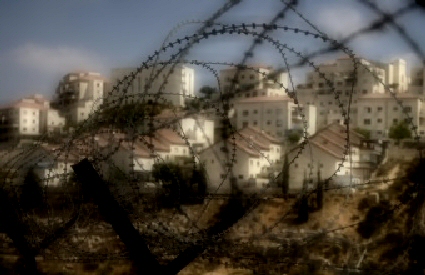
An Israeli plan to expand Israeli settlements for Zionist Jewish immigrants coming from France was revealed on Tuesday, according to the PNN.
The plan aims at expanding Israeli occupation settlements in the West Bank and East Jerusalem, in order to have about 10,000 additional Zionist immigrants live in Israeli-occupied Palestine.
Israeli prime minister Benjamin Netanyahu exploited the French national rally, on Monday, to invite European Jews to move into Israel and flee “European antisemitism”, saying that Israel was their home, despite French leadership and Jewish objections at the French synagogue.
Israel’s Channel 2 TV said, on Tuesday, that Israeli minister of housing, Uri Ariel, sent a message to the settlement committee, saying that Israel was getting ready to receive huge numbers of French immigrants, and that there must be a collective plan to settle them all.
Ariel, in his letter, said there was no doubt that French Jews sympathize with the settlement project, and that the settlement ministry will work on absorbing them all.
PNN further notes that the number of the French immigrants into Israel has been on the increase for years. For 2014, the number hit more than 6,000 — double the amount in 2013. In 2015, about 10,000 French Jews are expected to land in Israeli-occupied Palestine.
More Palestinian teenagers shot by the Israeli military
International Solidarity Movement | January 12, 2015
Burin, Occupied Palestine – On Saturday, January 10th, Palestinian youths went out to play in the snow on Al-Sabeh Mountain in east Burin. A group of Israeli settlers approached the village as if to attack it, and clashes erupted between them and the youths. Israeli soldiers arrived on the scene and protected the attacking settlers. They shot two Palestinian youths, Mohammed Zacharia (15) and Abbas Jamal (18).

Mohammed Zacharia, 15 (photo by ISM)
Abbas Jamal’s father Jamal Asous, director of the Nur Shams refugee camp through UNRWA, spoke with ISM. He said that Zacharia’s brother, 18, has also been wounded in clashes with settlers twice and now might face three years in an Israeli prison. He also showed where Jamal was injured in his other leg in 2013 and had to have surgery – a large scar remains to testify of the ordeal. Having injuries in both legs is disastrous for Jamal, given he is studying to be a land surveyor.

Abbas Jamal, 18, with his father Jamal Asous (photo by ISM)
Violent attacks on Palestinians have become far too common throughout the West Bank. In the past few weeks, Israeli soldiers have shot several shepherds in Aqraba and fired volumes of tear gas at young schoolchildren in Hebron; settlers also attacked a 12-year-old in Nablus. As Asous conveyed in the hospital, children should be able to play, study and go about their lives freely without the constant threat of violence. It is their right.
Abbas’ Big Bluff on War Crimes Bid against Israel
Palestinians at the Hague
By Jonathan Cook | Dissident Voice | January 8, 2015
Intense pressure from Israel and the US last week on members of the United Nations Security Council narrowly averted Washington’s embarrassment at being forced to veto a Palestinian resolution to end the occupation.
The Palestinians’ failure to get the necessary votes saved the White House’s blushes but at a cost: the claim that the US can oversee a peace process promising as its outcome a Palestinian state is simply no longer credible.
Looming is the post-peace process era. Its advent appears to have been marked by Palestinian leader Mahmoud Abbas’ decision in the immediate wake of the Security Council vote to join the International Criminal Court (ICC) in the Hague.
Israel furiously opposes the move, justifiably fearful that its politicians, military commanders and settler-leaders may now be put on trial for war crimes.
But the Palestinian leadership has long been apprehensive about such a move too. Abbas has spent years postponing the decision to sign the Rome Statute, which paves the way to the ICC.
Israeli statements at the weekend implied that Abbas’ reticence signalled a concern that he might expose himself to war crimes charges as well. Israel had “quite a bit of ammunition” against him and his Palestinian Authority, said one official menacingly.
In truth, the Palestinian president has other, more pressing concerns that delayed a decision to move to the legal battlefield of the Hague.
The first is the severe retaliation the Palestinians can now expect from the US and, even more so, from Israel. Israeli prime minister Benjamin Netanyahu began by halting the transfer of tax revenues Israel collects on the Palestinians’ behalf. Israel is also preparing to lobby the US Congress to enforce legislation that would halt aid to the PA in the event of it launching an ICC action. More punishments are due to be announced.
In selecting the “nuclear option”, as Israeli analysts characterised it, Abbas has also left himself empty-handed in future diplomatic confrontations – and for no obvious immediate gain. War crimes allegations may take years to reach the court and, even then, be stymied by pressures the US will bring to bear in the Hague, just as it currently does in the Security Council.
But most problematic of all, as Abbas knows well, a decision to pursue war crimes trials against Israel threatens the PA’s very existence.
The PA was the offspring of the two-decade-old Oslo accords, which invested it with two temporary functions. It was supposed to maintain stability in the parts of the occupied territories it governed while serving as Israel’s interlocutor for the five years of negotiations that were supposed to lead towards Palestinian statehood.
It has excelled in both roles. Under Abbas, the PA has been doggedly faithful to the idea of the peace process, even as Netanyahu spurned meaningful talks at every turn.
Meanwhile, the PA’s security forces – in coordination with Israel’s – have kept the West Bank remarkably quiet even as Israel expanded and accelerated its settlement programme.
But as Avigdor Lieberman, Israel’s foreign minister, argued on Sunday, the Palestinians’ move to the Hague court is further proof that the Oslo accords have expired.
Without a peace process, or any Israeli commitment to Palestinian statehood, why would the PA continue to cooperate on security matters with Israel, let alone consider such coordination “sacred”, as Abbas termed it last year? If the accords are seen to be dead, the impression can only grow that the PA is nothing more than Israel’s security contractor, assisting in its own people’s oppression.
Until now, that reality had been partially obscured by Abbas’ image as the Palestinian peace-maker. But if the process is indeed over, the contradictions in the PA’s role will be dramatically on show.
Right now, Palestinian security forces are committed to coordinating with the very people the PA is intending to indict as war criminals. And by maintaining calm in the West Bank, the PA is furthering the building of the very settlements the Rome Statute defines as a war crime.
Abbas is in a bind. If he ends coordination and goes on the offensive, why would Israel allow the PA to continue functioning? But if his security forces continue to collaborate with Israel, how can he retain credibility with his people?
This leaves the Palestinian leader with only two credible strategic options – aside from dissolving the PA himself.
The first is to adopt a sophisticated model of armed resistance, though the PA has specifically rejected this in the past and is poorly equipped for it compared with militant factions like Hamas.
The other is to accept that Palestinian statehood is a lost cause and adopt a new kind of struggle, one for equal civil rights in a single state. But the PA’s rationale and bureaucratic structure preclude that. It is in no position to lead a popular struggle.
That is why Abbas will continue pursuing a Palestinian state through the UN, as he promised again at the weekend, undeterred by the realisation that it is unlikely ever to come to fruition.
The door to the Hague may be open, but Abbas is in no hurry to venture through it.
Sexual Violence, Women’s Bodies, and Israeli Settler Colonialism

By Nadera Shalhoub-Kevorkian, Sarah Ihmoud and Suhad Dahir-Nashif | Jadaliyya | November 17, 2014
They not only invaded our home, took over our space, and evicted us—they even arrested me and took me to the Maskubya—the police station. I was put in room number four, alone, for a long time. Then, a big and tall man, a police officer, entered the interrogation room. I was alone, and started shivering from fear as he closed the door, started moving things around in the room and examining me from head to toe. I was terrorized, and my heart was beating so fast. His eyes penetrated my body, as he was opening the drawers looking for something. Then, he left the room and came back five minutes later holding a box. He pulled out a pair of blue plastic gloves, and put one on each of his hands, while looking at me and saying “…Come here…” I must tell you that I was terrorized when they invaded the house and evicted us. I was extremely anxious when they arrested my son. But my fears of ‘you know what’… You know… being abused… being raped by his blue big hands and more…were the most terrifying moments of my life.[1]
These were the words of Sama, a thirty-six-year-old Palestinian woman who lost the intimate familial and physical space of her home, only to experience further terror with the threat of sexual abuse. Sama’s narrative is not uncommon, as colonized women living under severe deprivation and dispossession are subject to daily attacks against their sexuality and bodily rights. Sexual violence is central to the larger structure of colonial power, its racialized machinery of domination, and its logic of elimination. This is readily apparent in the history of settler colonial contexts, where the machinery of violence explicitly targets native women’s sexuality and bodily safety as biologized “internal enemies” since they are the producers of the next generation.
Settler colonialism, as a “structure, not an event” operates through a “logic of elimination” that seeks to erase indigenous presence on a specific territory (settler colonialism’s “irreducible element”). Settler colonialism “destroys in order to replace.” The invasion of indigenous land seeks to permanently erase the indigenous presence on the land, in order to replace it with the new settler society and polity. Scholars have argued that settler colonialism’s logic of elimination may culminate in indigenous genocide. In its European formations, both settler colonialism and genocide have “employed the organizing grammar of race.” Since its inception, the Jewish state has been embedded in a racialized colonial logic. This logic constructs the Palestinian as a dangerous other in opposition to the white/Jewish subject and polis. As numerous authors have noted, this racial configuration is articulated through early Zionist thinkers’ Orientalist ideology that framed the Jewish people as bearers of European civilization in the face of a culturally backward region and people. Such a “modernizing” project or “civilizing” mission relied on a Zionist imaginary of exclusively Jewish labor cultivating an empty, uncultivated land, and “making the desert bloom.” Early Zionist leadership attempted to actualize the foundational Zionist myth of a “land without people for a people without land” through systematic ethnic cleansing of indigenous Palestinians in 1948. The Zionist entity continues to evict native Palestinians today. The massacres in Gaza of July- August 2014, and the repressive “iron fist” policies targeting Palestinian Jerusalemites at the time we write this article, are contemporary modes of settler colonial eviction of the Palestinian native.
The targeting of Palestinian women’s bodies and sexuality, we contend, is structural to the Israeli settler colonial project’s racialized logic of elimination. Rape and other forms of sexual violence against Palestinian women have always been an element of the settler colonial state’s attempts to destroy and eliminate indigenous Palestinians from their land. In addition to rape and other forms of sexual violence, the racialized logic of sexual violence energizes the very imaginary and project of conquering and cultivating Palestinian land, in transforming it into the Jewish polis. Hence, our discussion of sexual violence is embedded not only in the sexualized practices and politics of the Zionist state, but also in the nature of Israeli settler colonial violence itself.
As Palestinian feminists, we assert that the Zionist movement’s imaginary of conquering and settling the Palestinian body is inseparable from the project of conquering and settling Palestinian land, and erasing indigenous presence. Here, we build on native scholar Andrea Smith’s assertion that the logic of colonial sexual violence “establishes the ideology that Native bodies are inherently violable—and by extension, that Native lands are also inherently violable.” It is the logic of settler colonial sexual violence that we center in our analysis of the continuous Nakba that targets our people. We trace the logic of sexual violence, in its historical and present context, as machinery, hidden and apparent, of colonial patriarchy against indigenous communities in Palestine. The logic of sexual violence attempts to fragment Palestinian family and communal life, as it severs the connection to the Palestinian homeland. The Zionist project is inherently based on the destruction of Palestinian native bodies and land, which cannot be separated from the colonial logic of elimination. Sexual violence is not simply a byproduct of colonialism, rather “colonialism is itself structured by the logic of sexual violence.”
Sexual Violence and Palestinian Genocide Since the Nakba
Understanding the intensified attacks on Palestinian women’s bodies in times of heightened attacks by the settler colonial regime requires a feminist analysis. Such an analysis takes the Nakba as its analytical point of departure. Israel was built on the ruins of the Palestinian homeland, on its land, pain, and displacement. It was built on the destruction of our communal social ties, the violation and invasion of our homes and bodies.
Rape and killing of Palestinian women was a central aspect of Israeli troops’ systematic massacres and evictions during the destruction of Palestinian villages in 1948. During the Deir Yassin massacre, for instance:
All the inhabitants were ordered into the village square. Here, they were lined up against a wall and shot. One eyewitness said her sister, who was nine months pregnant, was shot in the back of the neck. Her assailants then cut open her stomach with a butcher’s knife and extracted the unborn baby. When an Arab woman tried to take the baby, she was shot… Women were raped before the eyes of their children before being murdered and dumped down the well.
David Ben Gurion, like other Zionist leaders, openly discussed the rape and sexual torture of Palestinian women in his diary entries during 1948. At the same time that he advocated the killing of Palestinian women and children, constructing them as a threat to the Jewish settler polity, he awarded a prize to every Jewish mother on her tenth child. Ben Gurion ensured that the Jewish Agency, not the state, administered such pronatal incentives in order to guarantee the exclusion of Arabs.[2] The fetishization of fertility has made Palestinians, especially women, targets of nationalist rhetoric that deeply politicizes their reproduction. For Zionists, Palestinian women have always been, and continue to be, as we have seen in the latest attacks on Gaza, targets of the Zionist killing machine.
Feminist scholars have also suggested that the Zionist state mobilizes violence against Palestinian women’s bodies and sexuality to strengthen indigenous patriarchal structures and aid in the eviction of Palestinians from their land. Militarized sexual abuse has been rampant under Israeli occupation. The Israeli state and military forces have exploited the threat of sexual violence against Palestinian women, and patriarchal perceptions of sexuality and “honor” to “recruit Palestinians as collaborators” during periods of uprisings and deter attempts at organized resistance. This practice has been so historically prevalent that it gained its own term in the Arabic language as isqat siyassy, meaning the sexual abuse of Palestinians for political reasons. The state’s security apparatus continues to use Palestinians’ sexual identities and Orientalist conceptions of “Arab culture” to recruit collaborators and fragment Palestinian society. Recent revelations by Israel’s secret military intelligence Unit 8200 have revisited this fact. The literal and figurative “rape” of Palestinian women’s bodies, framed as inherently violable by the Zionist entity, is inherently structured by the same logic of sexual violence that energizes the settler colonial project’s violation and continued confiscation of Palestinian natives’ land.
Unmasking the Logic of Sexual Violence
The silence on the Zionist machinery’s use of sexual violence against Palestinian women[3] and their communities has been further revealed since the inception of the state’s most recent military operations. The logic of sexualized violence that structures the Israeli settler colonial project has become more visible during the last period of military invasion. Slogans such as “Death to Arabs” and “Arabs out” have become more usable and tolerable in the Israeli public sphere, exposing the necropolitical drive against Palestinian natives at the core of the so-called Jewish democracy.
On 1 July, just after discovery of the bodies of three Jewish settler youth who had gone missing in the occupied West Bank, Israeli professor Mordechai Kedar of the Begin-Sadat Center for Strategic Studies remarked on public radio: “the only deterrent for … those who kidnapped the [Israeli] children and killed them, the only way to deter them is their knowledge that either their sister or their mother will be raped if they are caught … this is the culture of the Middle East.” His comments suggested that raping Palestinian women was the only deterrent to Palestinian resistance and “terrorism.”
We as Palestinian feminists were not surprised to hear Kedar advocating rape as an antidote to anti-colonial resistance. Making such comments on public radio, in the open, where it would be heard by a wide Israeli Jewish public, women as well as men, including Israeli Jewish feminists, reflects the settler’s mentality and socialization towards Palestinians. Discussing the rape of Palestinian women as a military strategy by a so-called scholar from one of the prominent universities in Israel reveals the mode in which colonizers portray colonized women. The presentation of a sexualized Orientalist discourse positions Palestinians as culturally “backward,” non-human Others.
Lest the sexualized discourses Kedar mobilized appear an aberration, it is important to note that he was not the only performer in this latest theater of sexualized violence. Israeli soldiers on their way to killing Palestinians in Gaza read slogans of support prepared by their fellow Jewish-Israeli civilians stating: “Go pound their mothers, and come back to your mother.” Israeli Jews gathered on hillsides to watch and cheer as the military dropped bombs on Gaza. One young Jewish woman’s Facebook post summed up the sexualized pleasure they received in spectatorship of our collective lynching: “What an orgasm to see the Israeli Defense Forces bomb buildings in Gaza with children and families at the same time. Boom boom.” Even their Prime Minister Netanyahu received a post, which circulated widely among the Israeli public via social media, showing a veiled woman labeled “Gaza,” naked from the waist down, holding a message: “Bibi, finish inside this time! Signed, citizens in favor of a ground assault.” This is in addition to Knesset member Ayelet Shaked’s public declaration that Palestinian mothers should be killed.
The rape of the land as the rape of women’s bodies has thus come to the fore in Israel’s most recent eliminatory attacks against the Palestinian people. As the massacres of the Palestinian people in Gaza continued, the sexualized nature of Israeli invasion and racial terror against Palestinian natives came to the forefront of nationalist politics and discussion among the public sphere within 1948 Palestine as well. Palestinian women took to the streets with their communities throughout historic Palestine to demonstrate against the continuous massacres in Gaza. Public demonstrations took a sexualized turn, as crowds’ calls for “death to Arabs” quickly turned to chanting “Haneen Zoabi is a whore!” naming a female Palestinian member of the Israeli parliament who stood up for her people’s right to life. Israeli police attacked Palestinian women’s bodies, along with their male counterparts, and dragged them out of protests in Haifa and Nazareth, where they were arrested or beaten by racist crowds. Leading religious and military figures on the state’s payroll issued religious edicts which stated that during times of war it is permissible to bomb Palestinian civilians in order to “exterminate the enemy.” The city council of Or Yehuda, a settlement in Israel’s coastal region, hung a banner supporting Israeli soldiers that suggested the rape of Palestinian women: “Israeli soldiers, the residents of Or Yehuda are with you! Pound their mother and come back home safely to your mother.” [4]
We argue that the logic of sexual violence exhibited during attacks on indigenous Palestinians throughout historic Palestine, both historically and during the Israeli state’s most recent attacks, pervades both the Israeli settler state and settler society. Indeed, the state and settler society are inseparable entities, connected through a visceral psychological and political imaginary that exceeds the commonly framed state/civil society divide. As Lorenzo Veracini notes, settlers “carry their sovereignty with them.” Both the state apparatuses (including public elected officials, academic and military institutions) and settler society (including Israeli publics—situated along the continuum of Zionist ideology) embody the machinery of settler colonial violence. It is no surprise then, that both the official state apparatuses and unofficial settler spheres have exhibited grave attacks on Palestinian women’s sexuality, bodies, and lives in the context of the latest invasions of our people in Gaza, in the daily attacks today in Jerusalem, and throughout historic Palestine.
Israeli officials’ repressive policies and incitement against the Palestinian people work to empower and embolden Israeli settler society to embody the power of the state and viciously attack Palestinians. This is clearly exhibited in the attacks on Palestinian women’s bodies inside Al Aqsa mosque these last weeks in Jerusalem, by both settler publics empowered by the state’s military protection, and members of the state security forces. A recent example of the daily scene of sexual violence is Israeli border police’s violent beating and arrest of Aida, a Palestinian woman from the old city of Jerusalem. When she tried to enter Al-Aqsa mosque, border police attacked and brutally beat Aida. They tore off her hijab and pulled her by her hair, as they continued to beat her through the streets of the old city, and dragged her into the police car. She was then taken to the police station, where she was violently interrogated, further beaten and accused of attacking a police officer. Security forces’ brutalization and violation of Aida’s body, and attempts to mark her as an inherently criminal other, are a form of gendered and sexual violence. The legalization of such forms of violence marks the Israeli legal system itself as deeply embedded in the settler colonial project’s machinery of elimination.
Palestinian women’s brutalization and violation by the settler colonial state also takes on more mundane forms. When Samera was arrested for participating in a demonstration in occupied East Jerusalem, her release by authorities was conditional upon her completing what they termed “community service.” Samera’s “community service” required her to scrub the bathrooms of a facility for Israeli border police and soldiers. As she explained to us:
I could not afford to pay the huge fine, and needed to be released [from prison] to go back to my kids. I had no other choice but to scrub their bathrooms…. Just by being there, in men’s bathrooms, in the Israeli men’s toilets felt like rape. I did it to avoid payment, but I can’t avoid feeling that I allowed them to keep me there, in their bathrooms, in a constant state of terror, fearing being sexually abused, then trashed like we trash toilet paper in toilets.
Samera’s words and analysis further illustrate the gendered and sexualized aspects of the complex machinery of settler colonial violence. Yet as Samera concluded: “Sometimes I feel I was their slave, but some other times I tell myself no, this is resistance, this is sumud, this is power… I did what was needed to come back to my children, without being touched or violated sexually…. yes hard, complex… our situation is complex.” Even in the face of such violent inscription of settler colonial violence, Palestinian women’s daily acts of resistance and survival demonstrate their power and sumud, or steadfastness.
In sum, sexual and gender violence are not merely a tool of patriarchal control, the byproduct of war or intensified conflict. Colonial relationships are themselves gendered and sexualized. We contend that sexual violence, a logic embedded in the Israeli settler colonial project, follows two contradictory principles that operate simultaneously: invasion/violation/occupation and supremacy/purification/demarcation. That is, the Zionist settler colonial project’s invasion, violation, and occupation of indigenous Palestinians’ bodies, lives, and land is intimately intertwined with its demarcation of racialized geographical and physical boundaries between Jewish citizenry and Palestinian natives as well as attempts to “purify” the Jewish national body of the Palestinian body, which is framed as a biopolitical contaminant. It is thus that the logic of sexual violence, embedded in the Zionist regime, energizes historical and continuous attacks on Palestinian bodies and lives.
Thus our struggle for indigenous sovereignty within anti-colonial activism as feminists is necessarily situated in the protection of Palestinian women’s bodily safety and sexuality, family, and communal right to life. It is a struggle against the hypermasculine Zionist military and settler apparatuses that frame Palestinian women as inherently threatening racialized Others whose bodies must be violated and destroyed as the internal enemy and “reproducers of Palestinians.” This logic is inseparable from the settler colonial logic of elimination.
As Palestinian feminists concerned about the safety of women’s bodies and lives, the continuity of our people and our future generations, we call on local and international feminists to join our struggle, challenge the settler colonial culture of impunity and raise their voices against the ongoing Israeli state crimes.
Endnotes
[1] This quote was taken from a group discussion with Palestinian women in Jerusalem, 2014.
[2] In the 1950s Ben Gurion, as the first prime minister of Israel, turned the issue of women’s fertility into national priority, arguing that “increasing the Jewish birthrate is a vital need for the existence of Israel” and that “a Jewish woman who does not bring at least four children into the world is defrauding the Jewish mission.” See Sharoni, S. (1995). Gender and the Israeli-Palestinian Conflict: the Politics of Women’s Resistance. Syracuse University Press. Also see Davis, U. & Lehn, W. (1983). “And the Fund Still Lives: The Role of the Jewish International Fund in the Determination of Israel’s Land Policies”, Journal of Palestine Studies, Vol. 7 (4), p.3, at pp.4-6(1978).
[3] While centering our analysis on Palestinian women, we also note the Zionist state’s use of sexual violence as a tactic to curb the “demographic threat” over some Jewish women’s bodies, including black women (from the Ethiopian community) and women from impoverished backgrounds. While attempting to curb the birth rates of black and/or poor Jewish women, a practice we analyze as connected to the racialized project of curbing Palestinian reproduction and life, Israel has simultaneously sought to increase European Jewish birth through modernized practices such as buying ovum for human reproductive cloning from poor, Eastern European women. Besides, the Israeli state suggested that the law for preventing human reproductive cloning (1999) had expired and many of Israel’s physicians, politicians and social researchers are embracing this practice as yet another strategy for maintaining a Jewish demographic advantage on the land of Palestine.
[4] In addition to the posts and declarations against Palestinian mothers, Jewish girls and women encouraged men serving in the Israeli Occupation Forces by sending them semi-nude or pornographic pictures as an expression of love and support (see http://www.pitria.com/israeli-girls-support-zahal).
Featured Video

“Historic Russia”: The Land Putin Will Not Give Back
or go to
Aletho News Archives – Video-Images
From the Archive
How Ukraine Tortured and Slaughtered Donbass
By Kit Klarenberg | Al Mayadeen | July 11, 2024
Almost immediately after the proxy war erupted, ISIS-tier footage of the torture and murder of Russians in Ukrainian custody emerged.
On July 6th, the New York Times published an astonishing investigation: In Ukraine, Killings of Surrendering Russians Divide an American-Led Unit. The article documents in grim detail how Chosen Company, an international volunteer battalion for Kiev, routinely executes Russian prisoners of war. It is the very first mainstream admission that this practice – a brazen breach of the Geneva Conventions, and a grave war crime – is widespread among Ukraine’s fighters, both foreign and homegrown. … continue
Blog Roll
 Aletho News
- US taxpayer money laundered back through Ukraine – Musk
- Before COVID, an NIH lab chief proposed making a SARS-like bat virus more infectious
- Gates, Bourla on Trial in Netherlands Accused of ‘Great Reset’ Scheme at Vaccine Injury Hearing
- BRITAIN’S WARNING: PREPARE FOR WAR
- “Historic Russia”: The Land Putin Will Not Give Back
- How the Cambridge Analytica scandal still haunts Mark Zuckerberg
- The Ongoing Cancellation Campaign Against a Dissenting Academic in Norway
- Yemen and ‘the Houthis’: Challenging Sami Hamdi’s Narrative
- No, Christians did not invent Zionism
- AIPAC-led lobbying network opens branches in Cypriot, Greek parliaments
- If Americans Knew
- Damning report shows the media must confront its failures on Gaza
- BBC senior broadcaster speaks out on Gaza coverage
- Netanyahu vows vast West Bank invasion in response to 20-minute skirmish that left 2 Israeli soldiers and 2 Palestinian fighters dead
- Tied up and tortured: Israel using US-made electroshock weapons on Palestinian detainees
- The outsourced risk: how newsrooms rely on Gaza’s freelancers without protecting them
- Gaza bakeries forced to shut as Israel blocks flour shipments
- Gaza’s breast cancer patients face a deadly wait for treatment amid Israel’s genocide
- DAILY UPDATE: Latest essential news on Palestine, Israel, & region
- The Israel Lobby’s Changing Fortunes
- AIPAC has become such a political liability that it’s shifting to a more “nimble” approach to buying politicians
- No Tricks Zone
- Two New Studies Find Thwaites Glacier Melt Cannot Be Driven By Human Activity Or A Warming Ocean
- E-Cars Reduce CO2 Emissions By Only 41% Compared To Internal Combustion Engine Vehicles
- Predictions Made By Renowned Climate Professor Over Past Decades Have Been Proven To Be Poor
- New Study Suggests Large Regions Of The Pacific Ocean Have Been Cooling For The Last 80 Years
- Germany’s Green Energy Debacle: High Energy Costs Force Kahla Porzellan to Close After 182 Years!
- New Study: 50 Years Of The Most Aggressive ‘Net Zero’ Policies Can Only Affect The Global Climate By 0.03°C
- US September “Heat” Was No Record…Many Records Set Decades Ago
- Latest European Green Energy Debacle; Portugal’s Largest Flagship Solar Park Insolvent!
- Green Energy Debacle: German Expert Professor Fritz Vahrenholt Warns Of Severe Economic And Social Consequences
- Two More Paleo Reconstructions Affirm Meters-Higher Sea Levels Across Ireland, Brazil 7000-6000 Years Ago

