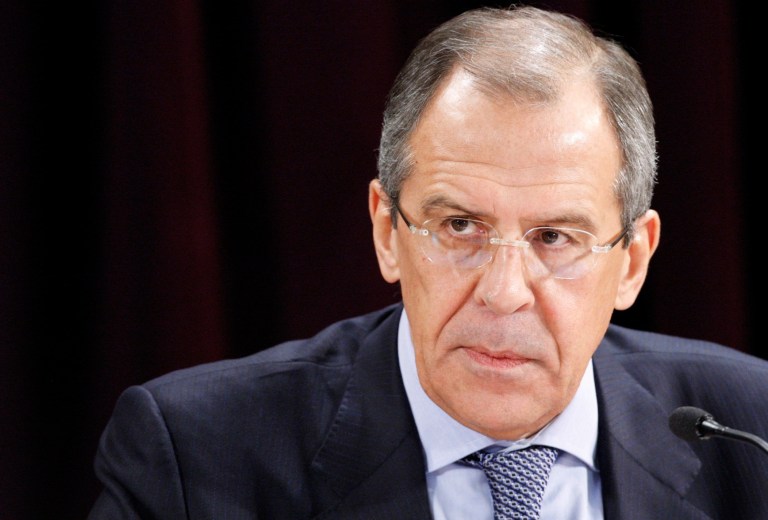
The US-Russia talks in Geneva regarding the 1987 Intermediate-range Nuclear Forces (INF) treaty have ended in failure. In a final call to salvage the treaty, Moscow offered that American experts could inspect a new suspect Russian missile, which Washington has been citing as the alibi for its decision to quit the treaty, but the US point-blank rejected the offer and instead went on to reconfirm that it intends to suspend observance of the cold-war era pact with effect from February 2.
We are entering uncharted waters in regional and international security. Russia anticipates increased US deployments near its borders. In an interview with government-daily Rossiyskaya Gazeta, Russia’s Security Council Secretary Nikolai Patrushev said on Tuesday, “In general, our analysis shows that the American presence near our borders will grow… As for Russia’s western borders, we note the course for the growth of military presence of the US and other NATO members in their vicinity. In 2019, placement of multinational battalion tactical groups in Latvia, Lithuania, Estonia and Poland will continue. At the same time, Brussels does not hide the fact that its main goal is to contain our country. The strengthening of the European segment of the US global missile defense system continues. The inauguration of the missile defense complex in Poland in addition to the already functioning one in Romania is expected in 2020.”
Equally, new faultlines are appearing. Moscow anticipates further US missile deployments to Northeast Asia – specifically, Japan. Moscow estimates that it is unrealistic to expect Japan to adopt an independent foreign policy. This geopolitical reality in Northeast Asia is in turn casting shadows on the recent improved climate in Russo-Japanese relations. (See my blog Russia tamps down the Kuril hype.)
Following the foreign-minister level talks in Moscow on Monday between Russian Foreign Minister Sergey Lavrov and his Japanese counterpart Taro Kono, the latter showed reluctance to hold a joint press conference, underscoring the rapidly changing climate of ties between the two countries. Lavrov’s remarks to the media later signaled a marked toughening of the Russian stance on the territorial dispute over Kuril Islands.
Lavrov demanded an outright Japanese recognition of Russian sovereignty over all the islands in the Kuril chain as part of the outcome of World War 2, as accepted under international treaties and by the UN – “Japan’s indisputable recognition of the entirety of results of World War 2, including Russia’s sovereignty over all of the islands of the southern Kuril chain,” as Lavrov put it.
Lavrov said Japanese domestic legislation must accordingly be changed in consultation with Russia. He added, “This is our base position and without steps in this direction it is very difficult to expect movement forward on other issues (such as peace treaty).”
Evidently, in the developing post-INF treaty scenario, Japan’s security alliance with the US now becomes a major hurdle in Russo-Japanese relations. Lavrov specifically pointed a finger at this: “The 1956 Declaration was signed when Japan did not have a military alliance treaty with the US. The treaty was signed in 1960, after which our Japanese colleagues departed from the 1956 Declaration. Now that we are resuming talks on the basis of this declaration, we must consider the drastic change that has taken place in Japan’s military alliances since then. At today’s talks we devoted attention to the US efforts to develop a global missile defence system in Japan with a view to militarising that part of the world and also to the actions that the US formally justifies by citing the need to neutralise the North Korean nuclear threat. In reality, these actions are creating security risks for Russia and China.”
Interestingly, Lavrov brought in the common concern of Russia and China with regard to the US-Japan security alliance and the American missile deployments to Japan. This is a snub to Tokyo inasmuch as recently, Abe’s aide in the ruling Liberal Democratic Party (which Abe heads) had made a provocative statement that the US should be interested in concluding a treaty between Russia and Japan, as this would “strengthen the bloc” to contain China. Lavrov called it an “outrageous statement” and put across as bluntly as he could the Russian indignation over any Japanese ploy to create misperceptions regarding Russia-China relations:
“The problem is that the president of the Liberal Democratic Party is Prime Minister Shinzo Abe. We have issued a serious warning about how inappropriate such statements are. We have also inquired more broadly about how independent Japan can be in addressing any issues at all with such heavy dependence on the United States. We were assured that Japan would make decisions based on its national interests. We would like it to be that way.” (See a detailed report by China Daily titled Russia tells Japan retaking Pacific islands not on horizon.)
As much as in regard of Russia’s western borders with Europe, the Asia-Pacific also becomes a region where Moscow’s policies will be significantly influenced by the new climate in international security. This holds good for other regions, too.
Most certainly, Russia will be even more wary of any open-ended US-NATO occupation of Afghanistan. The Russian-American contestation over Turkey will become more complex. (The US missile deployment in Turkey was a core issue during the Cuban missile crisis of 1962.) Again, there are reports that a massive expansion of the US bases in Qatar is unfolding (where the US Central Command is headquartered.) Qatar is a potential site for the deployment of US missile systems. Indeed, in the circumstances, Russia’s relations with Iran assume a highly strategic character. Iran’s strategic autonomy is of vital interest to Russia.
The Balkans is another region that Russian strategies will prioritize. Putin is embarking today on a visit to Serbia, which is a key ally, but where conditions may arise for a potential standoff between the West and Russia as had happened in 2014 in Ukraine. In an interview with the Serbian media, Putin came down heavily on the NATO expansion policy, which he condemned as “a misguided, destructive military and political strategy.” He accused the Alliance of “trying to strengthen its presence in the Balkans.” No doubt, a period of heightened tensions in international security lies ahead with the US decision to abandon the INF treaty.
As of today the Southeast Asian and Asia-Pacific region have found themselves at the center of a complex international process of establishing a new regional architecture. As states carry on fighting for control over strategic sea routes that run across the region, numerous security and transitional threats would appear seemingly out of the blue.
Unsurprisingly, the United States is trying to exercise as much influence over the region as it possibly can, even in spite of the fact that over the past decades the influence that Washington exercises in Southeast Asia has significantly diminished. Speaking about the evolution of the US approach to Southeast Asia in the post-bipolar period of global composition, it should be noted that the initial goal of containing the spread of communism that Washington used to pursue has evolved into attempts of ensuring American military and economic dominance in this part of the world. These days the US couldn’t care less about communism, as it’s dead set on opposing the rise of China and Russia and their regional allies. Washington’s new approach to its global strategy became evident after the release of America’s National Defense Strategy and the Nuclear Posture Review, in which China and Russia were designated as primary geopolitical opponents of the US.
To achieve these goals, the Trump administration would concentrate its efforts on creating a 400,000 man strong force in the Asia-Pacific region to ensure that at least 50 large military bases across the region remain fully operational at all times. It goes without saying that the absolute majority of those are located in Japan.
Among the tools that allow Washington to advance its agenda in the Asia-Pacific region are large carrier strike groups. For the first time since the days of WWII, the Pentagon keeps a total of two carrier groups stationed in the Western Pacific. Additionally, the US Air Force would use strategic bombers on patrol duty over the Pacific, as Washington believes this practice to be a good demonstration of force.
The Pentagon is also actively deploying its anti-air capabilities in the Asia-Pacific region, thus provoking an arms race across the region. At present, it has 20 ships capable of bringing down both missiles and aircraft, two THAAD batteries, three PAC-3 missile battalions along with five mobile radars stationed in the region.
To ensure its primacy in the region, Washington would place a particular emphasis on expanding its cooperation with Japan and South Korea. This results in those states holding an ever increasing number of joint military exercises, with their total exceeding 30 large military games over the last 18 months.
However, as inter-Korean relations begin reaping results of goodwill shown by both Pyongyang and Seoul, along with the progress that Russia and Japan have made in resolving their territorial disputes, Southeast Asian political analysts have begun discussing the issue of Washington maintaining such a leviathanian scale of American military presence in the region and the rationale behind it.
As for the prospects of a continuous US military presence on the Korean peninsula, it’s being addressed by China that which recently began insisting on the complete withdrawal of US armed forces from South Korea as a precondition for the complete denuclearization of the DPRK. Chinese authorities are persistent in convincing Pyongyang that this should be the first demand made, since there will be no way to force Washington into leaving once a peace treaty is signed. In turn, Washington is pursuing the goal of maintaining as many troops in South Korea as possible, as those remain an important element of its China containment plan.
As for the US military presence in Japan, the public pressure applied by various civil activist groups on Japanese authorities is almost palpable. Although Tokyo hasn’t faced a massive public uproar demanding the complete withdrawal of all American servicemen from the country, the number of civil protests demanding this course of action is increasing annually. In addition, the advances that Japan and Russia made in resolving their differences on questions over the Kuril Islands may vanish overnight, should it be announced that American servicemen are here to stay in Japan. As a matter of fact, this presence contradicts the terms of the 1956 agreement between the USSR and Japan, and ever since the day it was signed any further progress has been derailed by the presence of foreign servicemen in Japanese territory. Back in the day, this fact resulted in the USSR abandoning any discussions with Tokyo over the possibility of transferring a part of the Kuril Islands to Japan, as Tokyo signed the Treaty of Mutual Cooperation and Security with Washington back in 1960. After all, in accordance with this treaty, the Pentagon is allowed to build its naval bases all across the territory of Japan. Should it decide to build one on the Kuril Islands once they are handed over to Japan, it will trap the Russian navy in its harbors. It is quite understandable that Moscow will never allow this scenario to occur.
To get a better understanding of this deadlock, it is enough to recall the Caribbean crisis of 1962 and the deployment of Soviet ballistic missiles in Cuba. Back then, Washington reacted vigorously to Moscow’s attempt to create a direct military threat to the United States in the immediate vicinity of its borders, which brought the world toward the brink of WWIII. So what reaction should we expect from Moscow should Washington build a naval base on the Kuril Islands? Therefore, without Tokyo demanding the Pentagon to pack up and leave, no further progress in the disputes that exist between Russia and Japan can be achieved.
Of course, both Moscow and Beijing in their approach to the question of the lingering US military presence in the immediate vicinity of their shores are driven by their strategic interests. This means that Beijing is going to use any leverage it has to persuade North Korea to abandon its nuclear program in exchange for a US withdrawal, while Russia would never go as far as to consider handing over the Kuril Islands without Japan sending American servicemen home.
As for the position of today’s political elite of South Korea and Japan on this issue, it is clear that they follow the instruction of their overseas masters in addressing these issues, as both of these states have launched massive media campaigns to persuade their population that the presence of US forces is somehow not a bad thing. Washington has even given them cues as to what their media should advertise. In particular, they try to convince the world that:
a certain part of the population of South Korea and Japan is still supporting the strengthening of military cooperation with the United States.
the withdrawal of American troops will be accompanied by a substantial increase in defense spending. In particular, it is said that in South Korea in order to prevent the weakening of its combat potential, Seoul will be bound to spend no less than 30-35 billion dollars.
both Japan and South Korea will lose jobs should they decide to close US military bases. It’s stated that South Korea will lose more than 10,000 jobs that were created by the fact that American soldiers needed services that the Pentagon was willing to pay for. It’s estimated that Washington would spend 800 million dollars on those and thus the withdrawal of American troops is going to somehow affect the overall economic growth rates of South Korea. Should those media sources be believed, Japan with its massive industrial potential is going to suffer even greater financial losses due to the withdrawal of US forces from Japan.
Under these circumstances, the ruling political circles of South Korea and Japan have to decide whether the costs and the lost income associated with persistent tensions those two states have with their neighbors are worth the pay Washington is providing them with. It goes without saying that neither nation can hope to secure full political independence without sending American troops home. Moreover, the signing of peace treaties with their neighbors will eliminate the need to carry on the arms race that Washington initiated, as both Japan and South Korea are bound to buy expensive outdated weapons produced by the United States to the detriment of their national interests. For sure, the final word on this matter should not be left to the political elites of South Korea and Japan who are closely tied to Washington, but to the population of these countries, since they are being described as democracies by the Western media.
The ties between South and North Koreas are becoming closer and there are fewer tensions in the relationship between DPRK and the USA. That often makes us forget that, though it was rather the Democrats’ strategy to pick on North Korea for violating human rights, the pressure on Pyongyang for this reason has merely become less blatant.
For example, on 23 October 2018, the UN Special Rapporteur on the situation of human rights in DPRK, Tomás Ojea Quintana, announced that over the past year many changes had taken place on the Korean Peninsula, but the situation with human rights in DPRK remained the same. He referred to testimonies, made by defectors from North Korea, when he said that ordinary North Korean inhabitants were starving and had no access to medical services due to lack of money. During his speech he even showed a padlock, which had been given to him as a gift by a teenage defector from North Korea, and said that specifically the United Nations had the key to improving the human rights situation in DPRK.
On 15 November, the UN General Assembly Third Committee on human rights, humanitarian affairs and social matters unanimously (without a vote) approved yet another resolution, put forward by Japan and the European Union, condemning DPRK for violating human rights. The UN has been adopting such resolutions since 2005, and the latest resolution happens to be the 14th one. And just as the resolutions approved earlier, it condemns DPRK for constant, systematic, widespread and grave violations of human rights in the north of the Korean Peninsula. It demands, among other things, that all labor camps be immediately closed, all prisoners freed, and all parties, responsible for violating human rights, be held responsible. The authors of the document urge for the situation in DPRK to be resolved in the International Criminal Court; for the North Korean leader Kim Jong-un to be brought to justice, and for concrete measures to be taken on this issue, with due consideration to be given to the conclusions reached by the UN Commission of Inquiry (COI) to investigate violations of human rights in DPRK (as it turns out the notorious 2014 report was, for the most part, based on false testimonies).
In reality, no serious changes were made to the document, which, according to South Korean media sources, lends evidence to the idea that no progress has been made to resolve human rights issues in North Korea, and does not illustrate the fact that such resolutions are produced regardless of the reality on the ground in North Korea. Still, the UN Committee on humanitarian affairs “has welcomed” Pyongyang’s attempts to normalize diplomatic relations with the international community and to abide by the inter-Korean agreements on families split up by the conflict.
In response, North Korea’s Ambassador to the United Nations, Kim Song, stated that discussions about human rights violations in DPRK were out of the question, and that the international community was meddling in internal affairs of a sovereign nation. China, Russia, Syria, Myanmar and other countries also did not support the resolution, but they did not demand for its approval to be put to a vote. They did not do so because the international community cannot demand that Pyongyang abide by its conditions, and the pressure applied by the resolution on North Korea is not great enough to start a confrontation over it. DPRK media outlets also called the resolution a thinly veiled campaign to tarnish North Korea’s reputation, and stated that the step taken by the UN was aimed at halting the current trend towards better dialogue and peace.
In November 2018, Moon Jong In, a special advisor to the South Korean President on issues connected with diplomacy and unification, advised the DPRK leader to start focusing on human rights issues, and to better still close labor camps. In his opinion, any rhetoric voiced by Kim Jong-un on human rights issues can substantially help Pyongyang gain more trust from the international community. Quoting the statement made by Moon Jong In, Amnesty International estimated (it would be interesting to know how) that there are more than 130,000 political prisoners in North Korea. And on 31 October 2018, experts from the international organization Human Rights Watch published an 86-page report, entitled “You Cry at Night but Don’t Know Why: Sexual Violence against Women in North Korea”, which stated that North Korean officials used the lawless rape of women as a mechanism of repression. We will dedicate a separate article to the analysis of this report, as it is a good example of how broad interpretations of the meaning of the word “rape”, and inaccurate information selection help transform DPRK into an analogue of those African nations where mass rape is actually part of repression means, used by authorities.
On 26 November, the main DPRK newspaper commented on the Human Rights Watch report and the repeated allusions to this issue, by noting that the USA had been using these mind games in order to gain concessions from DPRK in negotiations and to destabilize the North Korean regime. The paper also reported that, currently in the US, it is being asserted that the stumbling block in the relationship between the USA and DPRK is the nuclear issue. But once this issue is resolved to the benefit of Washington, the US will use the human rights violation issue or another reason to apply pressure on DPRK to change its regime.
On 27 November, the international news agency France-Presse announced that Washington approached the UN Security Council with a request to hold a meeting on the human rights issues in North Korea on 10 December. Such meetings have taken place since 2014, and despite objections from Beijing, the request has already received support from 9 nation-participants, which is essential for its approval.
DPRK’s Ambassador to the United Nations once again expressed regret at the fact that the UN Security Council followed orders from Washington blindly, and highlighted that the decision would not have a favorable effect on the outcomes of diplomatic negotiations between the international community and Pyongyang.
Along with international sanctions, imposed in response to the violations, unilateral ones are also being used. Hence, on 29 November, in order to reinforce the fight against human trafficking, Donald Trump signed an executive order to ban provision of non-humanitarian and non-trade financial assistance to a number of countries in year 2019. Eighteen countries were placed in this banned list, which includes DPRK, China, Iran, South Sudan, Eritrea, Venezuela and even the Russian Federation. They were included, because their local authorities failed to make enough effort to combat human trafficking, and these restrictions will remain in place until the nations take decisive action. Trump appealed to the International Monetary Fund and development banks to not offer credit lines to the previously mentioned nations.
Every year, the USA publishes a report on human trafficking, and every time DPRK, for 16 years in a row now, is listed as a nation which actively engages in human trafficking. Since 2003, the country has received the lowest rating, which means that it is actively involved in human trafficking within its borders, and that local authorities take no measures to resolve this issue. In the case of DPRK, “slave trade” usually refers to the fate of North Korean defectors to China, who end up in inhumane conditions on account of the efforts made by the so-called “brokers” that are often protected by South Korean NGOs.
As the UN Special Rapporteur on the situation of human rights in DPRK, Tomás Ojea Quintana, stated, the United Nations would embrace closer ties between the two Koreas, but human rights violations were impossible to ignore. The author urges the readers to remember this statement and also recall it when answering the question “Will DPRK be left alone after it (let us say this is possible) fulfills the denuclearization requirements?” After all, in one possible scenario any mistake on North Korea’s part is presented as deplorable, but in another, as an unfortunate incident, which is easily forgotten. It is probably not worth explaining what the reaction of the international community would have been if the diplomatic mission where a dissident was dismembered had been a North Korean and not a Saudi one.
Konstantin Asmolov, PhD in History, Leading Research Fellow at the Center for Korean Studies of the Institute of Far Eastern Studies of the Russian Academy of Sciences.
A new template is forming in the geopolitics of the Asia-Pacific – Russo-Japanese concord. The two regional powers with a troubled history are moving in the direction of concluding a peace treaty that could formally end their World War 2 hostilities and open a new page in their relations.
The negotiations are being handled at the highest level of leadership and, therefore, every single meeting between Russian President Vladimir Putin and Japanese Prime Minister Shinzo Abe is invested with high importance. Both statesmen are known to be ardent supporters of a robust partnership between their countries.
The conclusion of a peace treaty is a pre-requisite to put the relationship on a higher trajectory and to realize its full potential. But both nations are also riding a wave of nationalism and when territorial concessions are involved, feelings run high.
Abe also has tryst with destiny insofar as he hopes to garner the historical legacy of getting back from Russia, the territories, which the former Soviet Union had occupied in the final period of World War 2 when Japan was staring at defeat.
Putin understands that an obdurate Russian stance on Kuril islands is impossible for any Japanese leader to accept. On the other hand, he also cannot ignore the Russian public opinion against territorial concessions. Besides, what complicates matters is that Japan is the US’ number one ally in Northeast Asia and Russia is apprehensive that any formula to settle the territorial dispute – which will have to be based on the joint declaration issued by Japan and the Soviet Union in 1956 (which re-established diplomatic relations and stipulated the return of two of the Kuril islands Habomai and Shikotan after the conclusion of a peace treaty) may lead to an American military presence in a region where Russia has several highly sensitive bases.
Last September, Putin had made a novel offer of signing a peace treaty unconditionally by end-2018, but Abe found it unacceptable. Having said that, Abe acknowledged that Putin’s words showed a desire for peace treaty.
The Kremlin spokesman refused to comment but in a nuanced response made it a point to “confirm that Tokyo’s alliance obligations (with the US) are important as far as peace treaty talks go.”
It is hard to tell whether the ongoing Putin-Abe diplomacy is also a tango being staged by the two statesmen who have a shared interest in expediting a peace treaty, but who are also having to negotiate with each other and safeguard national interests as well as carry their respective domestic audiences along at the same time.
It is entirely conceivable that the two statesmen may even have set a timeline. In fact, Putin and Abe are meeting again in Argentina during the G20 in end-November. Tass reported today that Abe will also be visiting Russia in January. The accelerating diplomacy could well have something to do with Putin’s proposed visit to Japan in June to attend the G20 at Osaka. Don’t be surprised if Abe hopes to meet Putin on a full-fledged state visit in June.
Quite obviously, Russo-Japanese relations are deepening and what seemed an intractable territorial dispute may lend itself to resolution. One possibility could be that Japan regains sovereignty over the Habomai Islands and Shikotan, and the two islands might be turned into special economic zones.
Clearly, the US is the elephant in the room. Under the framework of the Japan-US Security Treaty, American troops in Japan can be stationed on Habomai and Shikotan if the two are handed over to Japan. Therefore, Abe’s proposal (that such a thing will not happen) also implies his willingness to maintain a diplomatic distance from the US.
Indeed, it could not have escaped Putin’s attention that there are incipient trends in Abe’s policies lately suggesting a degree of ‘detachment’ from the US – as apparent, for instance, from Abe’s moves to actively improve relations with China and sequestering it from the deterioration of Sino-American relations. The fact of the matter is that Japan is increasingly uncertain about the US intentions.
Having said that, Japan is still dependent on the security treaty with the US. Trust the US to interfere with the conclusion of a Japan-Russia Peace Treaty, given the long-term implications it would have for the American military presence in Northeast Asia.
On the other hand, a peace treaty would completely transform Russo-Japanese relations, which would also impact the Russia-Japan-China triangle. To be sure, a full-bodied partnership with Russia will vastly expand the strategic space for Japan to recalibrate its relations with both the US and China.
All signs are that Abe is working on a grand design. For a start, he has to contend with domestic opinion. Abe’s big re-election as head of the Liberal Democratic Party in September (with 82% support) has put him on track to become Japan’s longest serving prime minister and to pursue his vision of Japan over the next three years in power (in what will be his last term in office), as well as to focus on the kind of legacy he will leave behind. Read a fine piece here by Japanese scholar Tomohiko Satake at the National Institute of Defence Studies, Tokyo – Should Japan continue to support the US-led international order?
WASHINGTON – The United States blocked nearly $200 million in assets belonging to Syria, Iran, and North Korea in 2017 as a result of the sanctions imposed on the three countries, the Treasury Department said in its annual report to Congress released on Wednesday.
“Approximately $199 million in assets relating to the three designated state sponsors of terrorism in 2017 have been identified by OFAC as blocked pursuant to economic sanctions imposed by the United States,” the report said.
The statement comes days after the US fully reinstated sanctions against Iran, including measures that curb Tehran’s oil industry. At the same time, the United States temporarily exempted eight nations — China, Greece, India, Italy, Japan, South Korea, Taiwan and Turkey — from the sanctions on importing oil from Iran.
In May, US President Donald Trump announced that the United States would withdraw from the Iran nuclear agreement, officially known as the Joint Comprehensive Plan of Action, and reimpose sanctions against Tehran that were previously lifted under the accord, including secondary restrictions.
The first round of the US sanctions was reimposed in August, while the second round, targeting over 700 Iranian individuals, entities, banks, aircraft and vessels, came into force this week.
Running out of space to store water contaminated by fuel that escaped during the Fukushima meltdown, the Japanese government is preparing to release it into the Pacific Ocean – despite the presence of radioactive elements.
Currently, 1.09 million tons of contaminated water is stored in 900 tanks near the Dai-Ichi nuclear plant, which suffered a catastrophic release of fuel following an earthquake and tsunami in March 2011.
The government claims that radioactive material is being reduced to non-detectable levels through the Advanced Liquid Processing System procedure, but there is evidence that this process does not remove many radioactive elements, including antimony, cobalt, iodine, rhodium, ruthenium, strontium, and tellurium. Tepco, which operates the plant, admits the water contains tritium, but insist the levels are “safe.”
The UK Telegraph has obtained documents from Japanese government sources indicating that authorities are aware ALPS, developed by Hitachi, is not actually eliminating radioactive elements to non-detectable levels. Tepco was forced last month to admit that 80 percent of the water still contains radioactive substances after local residents and fishermen protested plans to dispose of it in the ocean.
Tepco admits that 65,000 tons of ALPS-cleansed water retain more than 100 times the amount of strontium-90 legally permitted. Strontium-90 accumulates in teeth and bones and can cause leukemia and bone cancer.
Tritium, too, is not harmless, despite Tepco’s assurances. According to nuclear specialist Shaun Burnie, beta particles of the element are more harmful than X-rays and gamma rays.
The government initially planned to release the contaminated water in 2016, but was surprised by the strength of local opposition. In March 2016, Tepco executives were charged with contributing to deaths and injuries in relation to the Fukushima meltdown after a judicial panel said they had ignored a 2008 internal report warning the plant could be struck by 15-meter waves in the event of a tsunami.
In June this year in Itoman, a city in Okinawa prefecture, Japan, a 14-year-old girl named Rinko Sagara read out of a poem based on her great-grandmother’s experience of World War II. Rinko’s great-grandmother reminded her of the cruelty of war. She had seen her friends shot in front of her. It was ugly.
Okinawa, a small island on the edge of southern Japan, saw its share of war from April to June 1945. “The blue skies were obscured by the iron rain,” wrote Rinko Sagara, channeling the memories of her great-grandmother. The roar of the bombs overpowered the haunting melody from the sanshin, Okinawa’s snakeskin-covered three-string guitar. “Cherish each day,” the poem goes, “for our future is just an extension of this moment. Now is our future.”
This week, the people of Okinawa elected Denny Tamaki of the Liberal Party as the governor of the prefecture. Tamaki’s mother is an Okinawan, while his father – whom he does not know – was a US soldier. Tamaki, like former governor Takeshi Onaga, opposes the US military bases on Okinawa. Onaga wanted the presence of the US military removed from the island, a position that Tamaki seems to endorse.
The United States has more than 50,000 troops in Japan as well as a very large contingent of ships and aircraft. Seventy percent of the US bases in Japan are on Okinawa island. Almost everyone in Okinawa wants the US military to go. Rape by American soldiers – including of young children – has long angered the Okinawans. Terrible environmental pollution – including the harsh noise from US military aircraft – rankles people. It was not difficult for Tamaki to run on an anti-US-base platform. It is the most basic demand of his constituents.
But the Japanese government does not accept the democratic views of the Okinawan people. Discrimination against the Okinawans plays a role here, but more fundamentally there is a lack of regard for the wishes of ordinary people when it comes to a US military base.
In 2009, Yukio Hatoyama led the Democratic Party to victory in national elections on a wide-ranging platform that included shifting Japanese foreign policy from its US orientation to a more balanced approach with the rest of Asia. As prime minister, Hatoyama called for the United States and Japan to have a “close and equal” relationship, which meant that Japan would no longer be ordered around by Washington.
The test case for Hatoyama was the relocation of the Futenma Marine Corps Air Base to a less populated section of Okinawa. His party wanted all the US bases to be removed from the island.
Pressure on the Japanese state from Washington was intense. Hatoyama could not deliver on his promise. He resigned his post. It was impossible to go against US military policy and to rebalance Japan’s relationship with the rest of Asia. Japan, but more properly Okinawa, is in effect a US aircraft carrier.
Japan’s prostituted daughter
Hatoyama could not move an agenda at the national level; likewise, local politicians and activists have struggled to move an agenda in Okinawa. Tamaki’s predecessor Takeshi Onaga – who died in August – could not get rid of the US bases in Okinawa.
Yamashiro Hiroji, head of the Okinawa Peace Action Center, and his comrades regularly protest against the bases and in particular the transfer of the Futenma base. In October 2016, Hiroji was arrested when he cut a barbed-wire fence at the base. He was held in prison for five months and not allowed to see his family. In June 2017, Hiroji went before the United Nations Human Rights Council to say, “The government of Japan dispatched a large police force in Okinawa to oppress and violently remove civilians.” Protest is illegal. The Japanese forces are acting here on behalf of the US government.
Suzuyo Takazato, head of the organization Okinawa Women Act Against Military Violence, has called Okinawa “Japan’s prostituted daughter.” This is a stark characterization. Takazato’s group was formed in 1995 as part of the protest against the rape of a 12-year-old girl by three US servicemen based in Okinawa.
For decades now, Okinawans have complained about the creation of enclaves of their island that operate as places for the recreation of American soldiers. Photographer Mao Ishikawa has portrayed these places, the segregated bars where only US soldiers are allowed to go and meet Okinawan women (her book Red Flower: The Women of Okinawa collects many of these pictures from the 1970s).
There have been at least 120 reported rapes since 1972, the “tip of the iceberg,” says Takazato. Every year there is at least one incident that captures the imagination of the people – a terrible act of violence, a rape or a murder.
What the people want is for the bases to close, since they see the bases as the reason for these acts of violence. It is not enough to call for justice after the incidents; it is necessary, they say, to remove the cause of the incidents.
The Futenma base is to be relocated to Henoko in Nago City, Okinawa. A referendum in 1997 allowed the residents of Nago to vote against a base. A massive demonstration in 2004 reiterated their view, and it was this demonstration that halted construction of the new base in 2005.
Susumu Inamine, former mayor of Nago, is opposed to the construction of any base in his city; he lost a re-election bid this year to Taketoyo Toguchi, who did not raise the base issue, by a slim margin. Everyone knows that if there were a new referendum in Nago over a base, it would be roundly defeated. But democracy is meaningless when it comes to the US military base.
Fort Trump
The US military has a staggering 883 military bases in 183 countries. In contrast, Russia has 10 such bases – eight of them in the former USSR. China has one overseas military base. There is no country with a military footprint that replicates that of the United States. The bases in Japan are only a small part of the massive infrastructure that allows the US military to be hours away from armed action against any part of the planet.
There is no proposal to downsize the US military footprint. In fact, there are only plans to increase it. The United States has long sought to build a base in Poland, whose government now courts the White House with the proposal that it be named “Fort Trump.”
Currently, there are US-NATO military bases in Germany, Hungary and Bulgaria, with US-NATO troops deployments in Estonia, Latvia and Lithuania. The United States has increased its military presence in the Black Sea and in the Baltic Sea.
Attempts to deny Russia access to its only two warm-water ports in Sevastopol, Crimea, and Latakia, Syria, pushed Moscow to defend them with military interventions. A US base in Poland, on the doorstep of Belarus, would rattle the Russians as much as they were rattled by Ukraine’s pledge to join the North Atlantic Treaty Organization and by the war in Syria.
These US-NATO bases provide instability and insecurity rather than peace. Tensions abound around them. Threats emanate from their presence.
A world without bases
In mid-November in Dublin, a coalition of organizations from around the world will hold the First International Conference Against US/NATO Military Bases. This conference is part of the newly formed Global Campaign Against US/NATO Military Bases.
The view of the organizers is that “none of us can stop this madness alone.” By “madness,” they refer to the belligerence of the bases and the wars that come as a result of them.
A decade ago, a US Central Intelligence Agency operative offered me the old chestnut, “If you have a hammer, then everything looks like a nail.” What this means is that the expansion of the US military – and its covert infrastructure – provides the incentive for the US political leadership to treat every conflict as a potential war. Diplomacy goes out of the window. Regional structures to manage conflict – such as the African Union and the Shanghai Cooperation Organization – are disregarded. The US hammer comes down hard on nails from one end of Asia to the other end of the Americas.
The poem by Rinko Sagara ends with an evocative line: “Now is our future.” But it is, sadly, not so. The future will need to be produced – a future that disentangles the massive global infrastructure of war erected by the United States and NATO.
It is to be hoped that the future will be made in Dublin and not in Warsaw; in Okinawa and not in Washington.
This article was produced byGlobetrotter, a project of the Independent Media Institute, which provided it to Asia Times.
A staunch opponent of the planned relocation of a US military base within Okinawa Island, where the issue sparked major public protests, has beaten a government-backed competitor in the local governor elections.
Denny Tamaki, a former opposition lawmaker and the son of a US marine, has got a win against Atsushi Sakima, the former mayor of a local city of Ginowan, who was backed by Prime Minister Shinzo Abe’s ruling Liberal Democratic Party. The vote was largely determined by the issue of the relocation of the US Marine Corps Air Station Futenma, which has been a source of controversy for the locals over the years.
Tamaki vowed to continue fighting against relocation of the US base from the crowded town of Ginowan to the less populated coastal region of Nago, which would put corals and dugongs, the endangered marine mammals, at risk, according to environmental activists. He also pledged to follow the steps of the former Okinawa governor Takeshi Onaga, who had been an outspoken opponent of the relocation until his death in August that prompted early gubernatorial elections.
His major rival in the four-person race, Sakima, also supported the closure of the existing Futenma base but did not clarify his stance on the issue of relocation. Tamaki, meanwhile, vowed to continue fighting for the base to be relocated off the island.
Tamaki’s victory is considered to be a blow to Abe’s plans as the prime minister is pushing for the controversial base relocation plan despite vehement opposition from the locals, the Japanese media report. Okinawa, which amounts to less than one percent of the Japanese total land area, hosts about a half of the 50,000 American troops in Japan.
The US presence on the island has long been a source of discontent for the locals. Okinawans have raised concerns about machinery mishaps, noise, sexual assaults against Japanese women, and even some deadly incidents – all of which triggered massive protests. Onaga also repeatedly clashed with the government over the relocation issue in particular.
In 2015, he revoked an approval for the construction works issued by his predecessor. His decision was overruled by the central government, which went ahead with the project. In August, the local government retracted the permission again. Since then, the work has been suspended.
Following Onaga’s death in August, 70,000 people protested the Japanese government’s plan to relocate the US air base. Participants also held a one-minute silence to pay respect to the late governor.
Norihiko Hanada, the mayor of the Japanese town Abu, said on Thursday he was opposed to the deployment of Aegis Ashore component of the US ballistic missile defense system next to the town, NHK reported.
The mayor argued that such a deployment could be detrimental to the safety and security of the town residents, the NHK broadcaster reported.
According to the outlet, the town’s assembly has unanimously voted to back the residents’ petition against such a deployment.
The government wants to set up an Aegis Ashore unit at a military training range in the city of Hagi, next to Abu, while another unit is expected to be installed in the city of Akita.
In March, Japanese Foreign Minister Taro Kono said, in response to concerns voiced by Russia, that the system was needed to ensure Japan’s protection against North Korea’s missile and nuclear capabilities. Pyongyang has launched several missile and nuclear tests in the last few years. However, North Korea has not had one test since the beginning of 2018 as its relationship with South Korea began to improve.
I have just arrived in Hiroshima with a group of Japanese “Okinawa to Hiroshima peace walkers” who had spent nearly two months walking Japanese roads protesting U.S. militarism. While we were walking, an Afghan peace march that had set off in May was enduring 700km of Afghan roadsides, poorly shod, from Helmand province to Afghanistan’s capital of Kabul. Our march watched the progress of theirs with interest and awe. The unusual Afghan group had started off as 6 individuals, emerging out of a sit-in protest and hunger strike in the Helmand provincial capital Lashkar Gah, after a suicide attack there created dozens of casualties. As they started walking their numbers soon swelled to 50 plus as the group braved roadside bombs, fighting between warring parties and exhaustion from desert walking during the strict fast month of Ramadan.
The Afghan march, which is believed to be the first of its kind, is asking for a long-term ceasefire between warring parties and the withdrawal of foreign troops. One peace walker, named Abdullah Malik Hamdard, felt that he had nothing to lose by joining the march. He said: “Everybody thinks they will be killed soon, the situation for those alive is miserable. If you don’t die in the war, the poverty caused by the war may kill you, which is why I think the only option left for me is to join the peace convoy.”
The Japanese peace walkers marched to specifically halt the construction of a U.S. airfield and port with an ammunition depot in Henoko, Okinawa, which will be accomplished by landfilling Oura Bay, a habitat for the dugong and unique coral hundreds of years old, but many more lives are endangered. Kamoshita Shonin, a peace walk organizer who lives in Okinawa, says:
People in mainland Japan do not hear about the extensive bombings by the U.S. in the Middle East and Afghanistan, they are told that the bases are a deterrent against North Korea and China, but the bases are not about protecting us, they are about invading other countries. This is why I organised the walk.
Sadly, the two unconnected marches shared one tragic cause as motivation.
Recent U.S. war crimes in Afghanistan include the deliberate targeting of civilian wedding parties and funerals, incarceration without trial and torture in Bagram prison camp, the bombing of an MSF hospital in Kunduz, the dropping of the ‘Mother of all bombs’ in Nangarhar, illegal transportation of Afghans to secret black site prisons, Guantanamo Bay prison camp, and the extensive use of armed drones. Elsewhere the U.S. has completely destabilised the Middle East and Central Asia, according to The Physicians for Social Responsibility, in a report released in 2015, stated that the U.S. interventions in Iraq, Afghanistan and Pakistan alone killed close to 2 million, and that the figure was closer to 4 million when tallying up the deaths of civilians caused by the U.S. in other countries, such as Syria and Yemen.
The Japanese group intend to offer prayers of peace this Monday at Hiroshima ground zero, 73 years to the day after the U.S. dropped an atomic bomb on the city, instantly evaporating 140,000 lives, arguably one of the worst ‘single event’ war crimes committed in human history. Three days later the U.S. hit Nagasaki instantly killing 70,000. Four months after the bombing the total death toll had reached 280,000 as injuries and the impact of radiation doubled the number of fatalities.
Today Okinawa, long a target for discrimination by Japanese authorities, accommodates 33 U.S. military bases, occupying 20% of the land, housing some 30,000 plus U.S. Marines who carry out dangerous training exercises ranging from rope hangs suspended out of Osprey helicopters (often over built-up residential areas), to jungle trainings which run straight through villages, arrogantly using people’s gardens and farms as mock conflict zones. Of the 14,000 U.S. troops currently stationed in Afghanistan, many to most would have trained on Okinawa, and even flown out directly from the Japanese Island to U.S. bases such as Bagram.
Meanwhile in Afghanistan the walkers, who call themselves the ‘People’s Peace Movement’, are following up their heroic ordeal with protests outside various foreign embassies in Kabul. This week they are outside the Iranian Embassy demanding an end to Iranian interference in Afghan matters and their equipping armed militant groups in the country. It is lost on no-one in the region that the U.S., which cites such Iranian interference as its pretext for building up towards a U.S.-Iran war, is an incomparably more serious supplier of deadly arms and destabilizing force to the region. They have staged sit-in protests outside the U.S., Russian, Pakistani and U.K. embassies, as well as the U.N. offices in Kabul.
The head of their impromptu movement, Mohammad Iqbal Khyber, says the group have formed a committee comprised of elders and religious scholars. The assignment of the committee is to travel from Kabul to Taliban-controlled areas to negotiate peace.
The U.S. have yet to describe its long term or exit strategy for Afghanistan. Last December Vice President Mike Pence addressed U.S. troops in Bagram: “I say with confidence, because of all of you and all those that have gone before and our allies and partners, I believe victory is closer than ever before.”
But time spent walking doesn’t bring your destination closer when you don’t have a map. More recently U.K. ambassador for Afghanistan Sir Nicholas Kay, while speaking on how to resolve conflict in Afghanistan said: “I don’t have the answer.” There never was a military answer for Afghanistan. Seventeen years of ‘coming closer to victory’ in eliminating a developing nation’s domestic resistance is what is called “defeat,” but the longer the war goes on, the greater the defeat for Afghanistan’s people.
Historically the U.K. has been closely wedded to the U.S. in their ‘special relationship’, sinking British lives and money into every conflict the U.S. has initiated. This means the U.K. was complicit in dropping 2,911 weapons on Afghanistan in the first 6 months of 2018, and in President Trump’s greater-than-fourfold average increase on the number of bombs dropped daily by his warlike predecessors. Last month Prime Minister Theresa May increased the number of British troops serving in Afghanistan to more than 1,000, the biggest U.K. military commitment to Afghanistan since David Cameron withdrew all combat troops four years ago.
Unbelievably, current headlines read that after 17 years of fighting, the U.S. and Afghan Government are considering collaboration with the extremist Taliban in order to defeat ISKP, the local ‘franchise’ of Daesh.
Meanwhile UNAMA has released its mid-year assessment of the harm done to civilians. It found that more civilians were killed in the first six months of 2018 than in any year since 2009, when UNAMA started systematic monitoring. This was despite the Eid ul-Fitr ceasefire, which all parties to the conflict, apart from ISKP, honoured.
Every day in the first six months of 2018, an average of nine Afghan civilians, including two children, were killed in the conflict. An average of nineteen civilians, including five children, were injured every day.
This October Afghanistan will enter its 18th year of war with the U.S. and supporting NATO countries. Those young people now signing up to fight on all sides were in nappies when 9/11 took place. As the ‘war on terror’ generation comes of age, their status quo is perpetual war, a complete brainwashing that war is inevitable, which was the exact intention of warring decision makers who have become exceedingly rich of the spoils of war.
Optimistically there is also a generation who are saying “no more war, we want our lives back”, perhaps the silver lining of the Trump cloud is that people are finally starting to wake up and see the complete lack of wisdom behind the U.S. and its hostile foreign and domestic policies, while the people follow in the steps of non-violent peace makers such as Abdul Ghafoor Khan, the change is marching from the bottom up.
Okinawa to Hiroshima Peace Walk (Photo by Maya Evans)
Maya Evans coordinates Voices for Creative Nonviolence UK and has visited Afghanistan 9 times since 2011. She is a writer and a Councillor for her town in Hastings, England.
North Korea denounced the extension of the US-Japanese atomic energy agreement, accusing Tokyo of undertaking activities allegedly aimed at nuclear weaponization and blaming the United States of double standards, local media reported on Sunday.
The Korea Asia-Pacific Peace Committee (KAPPC) released a white paper on Saturday criticizing the 1988 US-Japanese nuclear pact, which was extended last month, the Korean Central News Agency reported.
According to the white paper, Japan has been conducting nuclear research since long ago, allegedly starting to push forward the A-bomb development in 1930s.
The paper also suggested that out of 518 tonnes of plutonium stockpiled around the world so far, 47 tonnes are stored by Japan.
The document accused the United States of a double-standard approach to treat North Korea and Japan differently on nuclear issues, calling on Washington to “judge the situation from a fair stand” if it wanted denuclearization of the Korean Peninsula.
In July, the United States and Japan extended a bilateral nuclear cooperation agreement, which granted Japan the right to extract plutonium, reprocess spent fuel and enrich uranium on the condition that it was not used to build nuclear weapons.
The US conducted 105 atmospheric and underwater tests at its Pacific Ocean proving ground from 1946-1962. Massive amounts of radioactive fallout from those tests spread across the Pacific, causing severe health effects that have continued to this day.
One of the best-known incidents from this reckless and shameful history was the fate of the Japanese fishing boat the Lucky Dragon. Despite being 90 miles away from ground zero, all 23 crew members were covered in thick layers of fallout from the March 1, 1954 Castle Bravo explosion, which, at 15 megatons, was the largest US nuclear test. The entire crew suffered from acute radiation sickness and were hospitalized for months. One crew member died from his injuries.
As it turns out, the Lucky Dragon was not an anomaly. Japanese film maker Hideaki Ito has produced a documentary called “Exposure to Radiation—Post X Years,” which explores how the extensive tuna fishing ground came to be known as “the sea of death.” The fishing crews had no idea they were working in heavily contaminated waters, and contaminated tuna became a health hazard throughout Japan.
Hideaki and his crew surveyed affected communities some 50 years later, and spoke with public health experts about the limited data that’s available. Field maps obtained from what was then the US Atomic Energy Commission, show fallout paths extending across the Pacific and the US, reaching into Canada and parts of Central and South America. Today, cesium-137 from the tests has been detected in ground samples under houses in Okinawa, Kyoto, and Yamagata prefectures.
Hideaki’s full documentary exists only in Japanese. When he visited IPPNW last fall after a showing at an MIT film festival, we encouraged him to make at least a portion of the film available in English. He has now come back to us with an 11-minute abridged version that we highly recommend to anyone concerned about the health and environmental consequences of nuclear testing and their persistent legacy.
“Knowing how much damage was done in order to make nuclear weapons,” Hideaki told us, “I believe it will be a great accomplishment to abolish them.”
Almost immediately after the proxy war erupted, ISIS-tier footage of the torture and murder of Russians in Ukrainian custody emerged.
On July 6th, the New York Times published an astonishing investigation: In Ukraine, Killings of Surrendering Russians Divide an American-Led Unit. The article documents in grim detail how Chosen Company, an international volunteer battalion for Kiev, routinely executes Russian prisoners of war. It is the very first mainstream admission that this practice – a brazen breach of the Geneva Conventions, and a grave war crime – is widespread among Ukraine’s fighters, both foreign and homegrown. … continue
This site is provided as a research and reference tool. Although we make every reasonable effort to ensure that the information and data provided at this site are useful, accurate, and current, we cannot guarantee that the information and data provided here will be error-free. By using this site, you assume all responsibility for and risk arising from your use of and reliance upon the contents of this site.
This site and the information available through it do not, and are not intended to constitute legal advice. Should you require legal advice, you should consult your own attorney.
Nothing within this site or linked to by this site constitutes investment advice or medical advice.
Materials accessible from or added to this site by third parties, such as comments posted, are strictly the responsibility of the third party who added such materials or made them accessible and we neither endorse nor undertake to control, monitor, edit or assume responsibility for any such third-party material.
The posting of stories, commentaries, reports, documents and links (embedded or otherwise) on this site does not in any way, shape or form, implied or otherwise, necessarily express or suggest endorsement or support of any of such posted material or parts therein.
The word “alleged” is deemed to occur before the word “fraud.” Since the rule of law still applies. To peasants, at least.
Fair Use
This site contains copyrighted material the use of which has not always been specifically authorized by the copyright owner. We are making such material available in our efforts to advance understanding of environmental, political, human rights, economic, democracy, scientific, and social justice issues, etc. We believe this constitutes a ‘fair use’ of any such copyrighted material as provided for in section 107 of the US Copyright Law. In accordance with Title 17 U.S.C. Section 107, the material on this site is distributed without profit to those who have expressed a prior interest in receiving the included information for research and educational purposes. For more info go to: http://www.law.cornell.edu/uscode/17/107.shtml. If you wish to use copyrighted material from this site for purposes of your own that go beyond ‘fair use’, you must obtain permission from the copyright owner.
DMCA Contact
This is information for anyone that wishes to challenge our “fair use” of copyrighted material.
If you are a legal copyright holder or a designated agent for such and you believe that content residing on or accessible through our website infringes a copyright and falls outside the boundaries of “Fair Use”, please send a notice of infringement by contacting atheonews@gmail.com.
We will respond and take necessary action immediately.
If notice is given of an alleged copyright violation we will act expeditiously to remove or disable access to the material(s) in question.
All 3rd party material posted on this website is copyright the respective owners / authors. Aletho News makes no claim of copyright on such material.