Iran’s New Onslaught on US Gulf Bases Exposes Devastating Success of Spring Counterstrikes
Sputnik – 17.07.2026
Iran’s March drone and missile attacks disabled numerous critical US radars and forced it to “expend a significant portion of their air and missile defense stockpiles,” military expert and CAST security think tank senior research fellow Yuri Lyamin told Sputnik.
Lyamin pointed out, for example, that “the AN/TPY-2 radar in Jordan destroyed by Iranian strikes in March, was part of the American THAAD missile defense system battery providing cover for American bases in Jordan against medium-range ballistic missiles. The destruction of the radar effectively rendered the THAAD battery inoperable, as it’s used to detect and track targets and guides interceptor missiles to them.”
Fast forward the present, and Iran is freely targeting US barracks, logistics bases and Air Force facilities in Kuwait and Bahrain using Arash heavy drones.
Lack of effective resistance on the US’ part signals that whatever efforts the Pentagon took to restore regional capabilities (like transferring THAAD from South Korea) proved insufficient, Lyamin says.
“Iran is currently primarily targeting various US bases in Bahrain, Kuwait, Qatar and Jordan. The combination varies daily, as the US operates multiple bases [in these countries]. The selection of specific targets depends both on the pre-defined target list at these bases, and on operational intelligence,” Lyamin says.
“Relentless Iranian attacks on US-operated bases in the region generally complicate US operations against Iran that rely on them, and force the US to expend significant forces and resources to protect them. I’d even say that some of the bases nearest to Iran are now causing more problems for the US than they’re worth. For example, Al Udeid Air Base in Qatar was the largest US airbase in the region, but now the US has been forced to evacuate most of its aircraft because it’s too dangerous to keep them there.”
Arash drones have a range up to 2k km, variable warhead weight (up to 260 kg), and versions with advanced optoelectrical and other homing heads “for high-precision target engagement.” They are the Iranian Army’s long-range strike tool – distinct from the IRGC’s Shahed series of UAVs.
Sitting ducks: Why the US security umbrella no longer protects the Gulf?
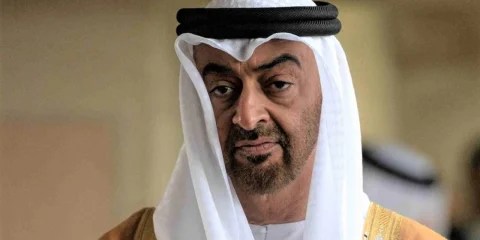
By Dr Mustafa Fetouri| MEMO | July 16, 2026
In Kuwait alone—less than 150 kilometres across the Gulf from Iran—the United States maintains a major military hub of approximately 13,500 personnel spread across installations such as Camp Arifjan and Ali Al Salem Air Base. To its south, Saudi Arabia hosts roughly 2,700 U.S. troops, centered at Prince Sultan Air Base in Al Kharj. Elsewhere in the Gulf, every state hosts either a US military presence or provides access and defence cooperation under bilateral agreements: Qatar houses more than 10,000 personnel at CENTCOM’s sprawling forward headquarters at Al Udeid; Bahrain hosts around 9,000 personnel at the headquarters of the US Fifth Fleet; the UAE accommodates approximately 3,500 personnel at Al Dhafra while providing deep-water naval access at Jebel Ali; and Oman offers strategic port and airfield access under bilateral agreements, despite having no large permanent US troop presence.
Beyond the Gulf monarchies, Washington maintains approximately 2,500 troops in Iraq and around 900 in northeastern Syria under Operation Inherent Resolve. To Iran’s northwest, the US operates from Incirlik Air Base in Türkiye— a NATO logistics and intelligence hub too. Until its withdrawal from Afghanistan in 2021, American forces also maintained a major military presence along Iran’s eastern frontier, supported for two decades by extensive supply routes and intelligence cooperation through Pakistan. Although the US lies nearly 10,000 kilometres from Iran, it has constructed an unparalleled regional military architecture of permanent bases, rotational deployments, naval facilities, pre-positioned equipment, access agreements, and security partnerships that stretches from the Eastern Mediterranean across the Gulf to the western Indian Ocean. Combined with the military capabilities of close allies—including Britain, France, and Türkiye—this network almost literally surrounding Iran from all sides. The common thread underpinning this posture has long been the protection of regional partners, the safeguarding of global energy routes, and the defence of US strategic interests.
Yet, this foundational premise has collapsed under the weight of the US-Israeli war on Iran, which has fundamentally transformed the entire regional security landscape. This “war of choice” has exposed how a security arrangement once marketed as an ironclad insurance policy has devolved into a primary strategic liability.
Rather than serving as an effective deterrent, large and static American military installations now act as strategic liability—drawing Iranian retaliatory strikes while denying host states true autonomy or the promised protective shield.
The Gulf states have discovered, at a heavy price, that they are trapped in an impossible paradox: their sovereign territory serves as a staging ground for military operations they were never consulted about—at least that is what they say publically –instantly transforming their critical infrastructure, oil facilities, and urban centers into high-priority targets. Compounding this vulnerability is the stark geopolitical reality that while Washington may eventually pivot away or withdraw—much as it did from Afghanistan—Iran is a permanent neighbour that is going nowhere.
Beyond the immediate threat of missile strikes, the presence of these US installations directly undermines the core national strategies of the Gulf monarchies. Mega-development projects and economic diversification plans—from Saudi Arabia’s Vision 2030 to Dubai’s global trade hubs—rely entirely on an image of absolute regional stability, investor confidence, and open maritime transit. By hosting forward US bases, host nations inadvertently tie their economic futures to Washington’s military posture, creating an environment of perpetual crisis. Furthermore, defending these expansive American footprints forces host militaries to consume their own finite air-defense interceptors and defense budgets to guard US assets rather than securing their own national borders.
At the same time, while almost all Gulf States have, at least publicly, refrained from taking direct offensive action against Iran to avoid total escalation, they recognise that they are already viewed as passive participants in the wider conflict.
Maintaining this precarious balancing act is becoming increasingly difficult against rising domestic anti-war sentiment, as public anger over regional devastation steadily erodes the host governments’ domestic credibility.
For Washington, this massive network of forward-deployed bases has produced a profound strategic paradox. What was designed to project uninhibited American power now ties US freedom of action to the political consent of cautious host nations. When host governments impose strict sovereignty restrictions—refusing permission for US forces to launch offensive sorties or intelligence missions against regional adversaries from their soil—the Pentagon finds its multi-billion-dollar installations functionally sidelined during critical military surges. Instead of providing seamless operational flexibility, these fixed, highly vulnerable outposts transform into costly “imperial entrapment” liabilities: requiring thousands of US troops, high-end missile defense batteries, and constant naval escort deployments simply to protect the bases themselves, rather than executing broader strategic objectives or enabling Washington’s long-sought pivot to the Indo-Pacific. With the conflict between the US and Iran reigniting, Trump is demanding that the Gulf states pay once again to protect the Strait of Hormuz—a vital transit route that never closed until the war was started by Trump, not Iran.
This strategic calculus becomes infinitely more complex when factoring in Israel’s role in the regional security outlook. In recent years, certain Gulf states—most notably the UAE—operated under the premise that normalization and closer security alignment with Israel via the Abraham Accords would yield a net security dividend. Yet, this belief was never shared across the Gulf; nations like Kuwait, Oman, and Saudi Arabia maintained a far more cautious, sceptical stance toward Tel Aviv. The outbreak of the US-Israeli war on Tehran on February 28 utterly shattered any illusion that an Israeli-linked security architecture could bring regional stability. Instead, it exposed deep internal fault lines among the entire region. Reaching a collective, long-term security understanding with Iran was already a formidable challenge; doing so now, in the wake of a devastating conflict that forced Gulf States into the crossfire, is immensely more complicated. Moving forward, no regional framework can hold if it relies on a anti-Tehran pact anchored in Washington and Tel Aviv while ignoring the permanent reality of Iranian geographic power.
Ultimately, the fallout from the US-Israeli war on Iran exposes a fundamental reality that Washington and its regional allies can no longer ignore: the entire Middle Eastern security architecture must be fundamentally re-evaluated.
The core dilemma facing the region is that no collective security arrangement can ever be viable or effective if it seeks to exclude Iran—an indispensable, geographically permanent power armed with increasingly sophisticated offensive, defensive, and asymmetric capabilities.
Moving forward, any stable regional order must not only account for Tehran’s military leverage, but also accommodate its non-negotiable strategic demands. This includes addressing governance and transit rights over the vital Strait of Hormuz—through which one-fifth of global oil flows—and reaching a durable, pragmatic framework on its nuclear program. Regardless of the final outcome of ongoing US-Iran negotiations, the lesson for the Gulf is clear: true security cannot be built on an external garrison model that marginalizes the region’s principal indigenous power.
Iran strikes US military assets in Oman and Bahrain: IRGC
Al Mayadeen| July 13, 2026
The Islamic Revolution Guard Corps (IRGC) has destroyed long-range radar systems in Oman, among other US military assets and installations, as part of the fifth phase of its retaliatory operations.
In a statement published on Monday, the IRGC said that its naval forces carried out missile and drone strikes targeting an FPS long-range early warning radar and a ship-detection radar in Oman, destroying both systems. Concurrently, IRGC forces struck US military installations in the Al-Juffair area of Bahrain, where fires remain active.
“The decisive and powerful operations carried out by the Iranian armed forces have rendered the American military, which we have described as the aggressor, incapable,” the IRGC Public Relations Department stated.
US aggression reveals true anti-people nature: IRGC
The IRGC also condemned the sustained US aggression on Iran, asserting that American forces targeted an agricultural water pump in the city of Mahshahr.
“Targeting a farming water pump in Mahshahr reveals the true anti-people nature of the US military,” the statement said.
The IRGC further tied the status of international shipping in the Strait of Hormuz to US military behavior, declaring that “the reopening of the Strait of Hormuz to shipping traffic is contingent upon stopping US military interventions in the strait and respecting the sovereignty of nations over their territorial waters.”
The IRGC issued a direct warning on global energy security, stating that “the continuation of these interventions will lead to greater repercussions for the global oil and gas sectors.”
Iran responds to US aggression, strikes US assets in Kuwait, Jordan, Bahrain
Meanwhile, Iran’s Islamic Revolution Guard Corps announced a series of retaliatory strikes against US military facilities in Jordan, Bahrain, and Kuwait, responding to continued US attacks on Iranian positions.
The IRGC said its Aerospace Force targeted fuel depots, missile storage sites, air defense systems, radar installations, and command centers across multiple US-linked bases in the region.
In its first operation, missiles and drones struck Jordan’s Prince Hassan Air Base, setting fire to fuel tanks and ammunition depots, following US attacks on Iranian coastal positions.
A second wave targeted the Sheikh Isa base in Bahrain, destroying helicopter maintenance facilities, a P-8 reconnaissance aircraft hangar, and the US drone command center at the site.
The third phase hit Kuwait’s Ali Al-Salem Airbase and Ahmed al-Jaber Airbase, destroying fuel tanks, Patriot systems, and strategic radar, while the IRGC vowed further action and asserted Iran’s authority over the Strait of Hormuz.
The fourth phase struck two HIMARS missile launch platforms and ammunition depots filled with missiles at the US base in Kuwait.
Iran, Saudi FMs hold phone talks as Persian Gulf states rethink US ties
Press TV – June 24, 2026
Iranian Foreign Minister Abbas Araghchi and Saudi counterpart Prince Faisal bin Farhan have held a phone call to discuss regional developments, as Persian Gulf Arab states recalibrate their approach toward Tehran in the wake of the US-Israeli war that exposed the limits of American power.
Araghchi on Wednesday briefed the Saudi minister on the latest progress in implementing bilateral agreements and the ongoing negotiations following the US-Iran memorandum of understanding (MoU) signed on June 18.
The two top diplomats underscored the importance of maintaining diplomatic channels, strengthening joint cooperation to support regional stability, and achieving positive and sustainable outcomes.
The call came as French news agency AFP said Saudi Arabia is expected to host talks aimed at repairing relations between Iran and Persian Gulf countries following the US-Israeli war on Iran.
It cited a diplomat familiar with the arrangements as saying Wednesday that a regional summit was being planned in Riyadh and could also include other neighboring countries, but no date had yet been set.
The meetings would be separate from the ongoing negotiations between Iran and the United States, the diplomat added.
CNN, citing a senior Persian Gulf diplomat, reported that leaders are increasingly contemplating a future in which the US plays a much smaller role in the regional security architecture, with a possible framework involving a regional non-aggression pact with Iran.
According to Hasan Alhasan, senior fellow at the International Institute for Strategic Studies, “From the Arab states’ perspective, the Iran war is a disastrous turning point for the regional security order.”
The war, which began on February 28, exposed vulnerabilities in the Persian Gulf states’ security model, which is heavily dependent on the nearly 40,000 US troops stationed in the region and American-made air defense systems.
“The US security guarantee is no longer reliable in the way they thought it was,” one analyst at Chatham House told The New York Times.
Washington’s approach is increasingly perceived as selective and heavily centered on Israel’s security interest.
A classified CIA analysis found that US allies in the Persian Gulf are divided over their approach to Iran. According to the assessment, the United Arab Emirates and Bahrain prefer continued pressure on Tehran, while Saudi Arabia, Qatar, and Kuwait now support negotiations.
Trita Parsi, executive vice president of the Quincy Institute, noted that the UAE and Bahrain “made themselves frontline states against Iran” through the Abraham Accords and “now they’re in too deep and cannot extract themselves out of it”.
The Saudis, Parsi added, “were at the highest levels pushing for this war. They have come to regret it”.
Adding another layer of complexity is a widening gap between Arab governments and Arab public opinion over Iran.
According to a report by The Economist cited by DID Press, growing anger toward Israel and dissatisfaction with US policies have fueled increasing sympathy for Tehran across parts of the Arab world.
Despite sustained efforts by several Arab governments to reinforce anti-Iran narratives, recent developments have altered perceptions among sections of Arab society.
The report identifies two major drivers behind this shift: anger toward Israel, as many Arabs increasingly view Iranian actions against Israel as a legitimate response to regional military operations, and religious and cultural ties, particularly among Shia communities across the Persian Gulf.
The report concludes that sectarian narratives no longer resonate as strongly as in previous years, and that many Arabs increasingly view Iran as more assertive and resilient than several Arab governments.
Qatari Prime Minister Sheikh Mohammed bin Abdulrahman Al Thani traveled to Muscat on Wednesday to initiate talks between Iran, Persian Gulf states, and Iraq on the future operation of the Strait of Hormuz.
The discussions aim to implement a provision of the MoU requiring Iran and Oman to hold talks with other Persian Gulf states on the future management of navigation and maritime services.
Earlier on Wednesday, Oman announced two temporary routes north and south of the existing shipping lane to facilitate safe passage of vessels departing the region, in coordination with the International Maritime Organization.
The Strait of Hormuz, through which roughly 20 percent of global oil and liquefied natural gas normally transits, was heavily disrupted after the United States and Israel launched their war on Iran on February 28.
Iran denies attacking Saudi Arabia, warns of Israeli false-flag
The Cradle | June 8, 2026
Iranian Foreign Ministry spokesman Esmail Baghaei denied reports alleging that Iran targeted Saudi Arabia on 8 June, cautioning that such claims could be linked to potential “false-flag operations” conducted in Iran’s name.
Baghaei stressed that Tehran publicly takes responsibility for any military action it carries out and noted that no statement had been issued by Iran confirming the reported incident.
He further said Iran has repeatedly warned about the possibility of false-flag operations, claiming that Israel and other actors have previously carried out similar actions, including during the most recent US-Israeli war on the Islamic Republic.
His comments came after missile alert sirens were activated in the Saudi city of Al-Kharj, home to Prince Sultan Air Base, a facility long used by US forces, just hours after Israel launched renewed strikes against Iran on Monday morning.
Since the US-Israeli war on Iran began in late February, Tehran has frequently argued that many of the strikes blamed on its forces were actually “false-flag” operations staged by its enemies, designed to draw Gulf states further into the war.
On 4 June, Iran’s Islamic Revolutionary Guard Corps (IRGC) dismissed reports that it targeted the terminal at Kuwait International Airport, saying the alleged visual evidence was a “crude fabrication.”
While acknowledging midnight strikes on regional US bases, Iranian officials noted that footage of the airport explosion was recorded in daylight.
In April, the IRGC accused Israel of being behind the strike on a Kuwaiti desalination plant to incite regional tensions further.
This followed a similar denial regarding a 30 March attack on a Kuwaiti power facility, which Tehran also blamed on Israel.
On 4 April, the IRGC further rejected claims that it struck the US Embassy in Riyadh in the opening days of the war, asserting the drone attack was “certainly carried out by Zionists.”
Iran’s Foreign Ministry said on 15 March that the US and Israel were using “Lucas” drones – modeled after the cheap and effective Iranian Shahed – to conduct false-flag operations and attribute them to Tehran.
The IRGC military headquarters, Khatam al-Anbiya, stated that such “deceptions” included attacks in Turkiye and Iraq.
Earlier in March, Iranian military sources described a drone strike on the Ras Tanura refinery in Saudi Arabia as an Israeli false flag designed to distract from strikes inside Iran and draw the Gulf states into further hostilities against the Islamic Republic.
Tucker Carlson also claimed in March that Saudi Arabia and Qatar had detained Israeli agents who were planning bombings in their countries.
UAE launches Muslim Shia crackdown under cover of ‘Iran-linked terror’ claims
By Robert INLAKESH | MintPress News | April 22, 2026
The United Arab Emirates says it has dismantled an Iran-linked “terrorist organisation” targeting the Muslim Shia community of the UAE. But the evidence made public so far tells a different story — one that raises serious questions about whether these arrests are part of a widening crackdown on dissent against the US-Israeli backed war against Iran which the UAE is involved in, masked as counterterrorism.
Despite presenting itself on the international stage as a victim, the UAE is quietly participating and aiding the US and Israel in its war against Iran. Yet, Abu Dhabi has enforced draconian censorship laws that carry lengthy prison sentences for those posting or even privately forwarding videos of Iranians munitions impacting targets in the UAE.
This week, the UAE’s State Security Department announced the arrest of 27 individuals, described by state-run WAM media as members of a “Shia terrorist group” allegedly linked to Tehran. Yet despite the severity of those accusations, none of the detainees appear to be facing formal terrorism charges.
Instead, those arrested are accused of spreading “misleading ideas,” maintaining “foreign allegiances,” and forming a secret organization — vague allegations that critics say are often used to justify political repression. Iran’s Foreign Ministry spokesman, Esmaeil Baghaei, rejected the arrests outright, calling them “baseless and unfounded.”
Even Emirati state media reporting reveals inconsistencies. While headlines such as “UAE dismantles terrorist cell and arrests members” suggest a major security operation, the details within those same reports make no mention of terrorism-related charges, focusing instead on loosely defined political and ideological offenses.
However, within the article itself, there is no mention of any terror related charges, only that they were detained for spreading “misleading ideas”, have “foreign allegiances”, in addition to being accused of establishing a secret organisation and managing its activities.
The case has also raised concerns of a sectarian dimension. Among the 27 detained are prominent members of the UAE’s Muslim Shia community, including cleric Ghadeer Mirza Al-Rustam of the Jaafari Endowments in Dubai and as well as Seyed Sadiq Lari who had served as the Imam of the Grand Mosque in the Zayed area of Abu Dhabi, fueling suspicions that the crackdown may be targeting religious identity.
Furthermore, those arrested were all Emiratis, Saudis or Bahraini, none were Iranians. The alleged link made to the Islamic Republic of Iran is through Velayat-e Faqih (Guardianship of the Islamic Jurist), a concept within Shia Islam of adherence to a qualified Islamic leader. Emirati Shia publicly follow Ayatollah Sistani as their religious authority, for whom the concept of Velayat-e Faqih does not apply.
There is yet to be evidence presented to prove the detainees are agents of Iran, opposed to them simply expressing popular political views amongst Shia Muslims including opposing the war against Iran.
The UAE is the only Arab State that has directly participated in the US-Israeli war of aggression against Iran. This was exposed after two Emirati Wing Loong II UAVs were downed over Iranian airspace. Following the US President’s announcement of a two-week temporary ceasefire, Abu Dhabi allegedly lobbied Washington to continue its assault, even going as far as bombing Iran’s Lavan Oil Refinery.
In the past, Abu Dhabi has launched politicised arrests while engaging in war.
For example, in 2016, two US citizens of Libyan origin were acquitted after spending two years in prison, on charges of funding two groups fighting in Libya. They were originally arrested in Dubai as part of wider crackdown on Libyan nationals, as the UAE began launching airstrikes in the North African country in 2024. According to the UN and their family members, the two wrongfully detained American citizens were severely tortured.
Between March and April, the UAE was struck by more Iranian missiles and drones than any other nation, during which it arrested at least 375 for violating its strict “cybercrime laws”. The mass arrests, assumed to be much more than officially announced, were launched as reprisals against those sharing and even forwarding videos they had filmed of Iranian munitions striking locations in Dubai and Abu Dhabi. It got so bad, that even British media had picked up on how many UK citizens were being rounded up.
According to Radha Stirling, the CEO of Detained in Dubai, “Under national security frameworks, individuals may face: 5 to 15 years imprisonment, or potentially life sentences. Fines reaching approximately USD 500,000. Prolonged or indefinite pre-trial detention. Restricted access to lawyers, embassies, and evidence. Human rights violations and torture.”
“People are increasingly afraid to communicate, send messages, document events or share information or a news article, even privately. Many are choosing to remain silent, unsure whether even routine communication could expose them to criminal liability and unsure to what extent authorities are surveilling the population”, Stirling added.
The mass arrest campaigns came as a part of an ongoing information war waged between the UAE and Iran. An investigation into Emirati censorship, by Bellingcat, “identified several high-profile incidents where authorities in the United Arab Emirates have downplayed damage, mischaracterised interceptions and in some instances not acknowledged successful Iranian drone strikes on the country.”
Meanwhile, the UAE has not been the only Gulf country to have launched mass detention campaigns over alleged “cyber crimes” and charges related to publishing “misleading ideas” or having “foreign allegiances”. Kuwait even arrested well known US-Kuwaiti journalist Ahmed Shihab-Eldin on March 2, on cyber crime offenses related to posts shared during the war with Iran.
Arrest campaigns carried out against Shia Muslims across the region are also not a new feature to the US-Israel led war on Iran. The UAE’s media itself claimed without evidence that the Emirati authorities had dismantled another “terrorist network” last month, accusing both Iran and Lebanese Hezbollah of being behind it. In mid-March, Kuwait also claimed to have arrested members of a “Hezbollah network”, also failing to provide any evidence. Earlier this month, Saudi Arabia had even executed two Shia detainees, accusing them of “terrorism”, one of whom was charged for protesting and arrested while he was only 17 years old.
‘Utterly baseless’: Iran rejects Kuwait’s claim of hostile plot on its island
Press TV – May 13, 2026
Iran’s Foreign Ministry has dismissed as “utterly baseless and rejected” accusations by Kuwait that the Islamic Republic had been planning hostile acts against its neighbor.
In a statement on Wednesday, the ministry strongly condemned the “improper action” of the Kuwaiti government in “politically and propagandistically exploiting” the case of four Iranian personnel who had been on a routine naval patrol mission and entered Kuwaiti territorial waters due to a navigational system malfunction.
“The Islamic Republic of Iran, while reiterating its principled policy of respecting the sovereignty and territorial integrity of all countries in the region, including Kuwait, declares that it expects the Kuwaiti authorities, while avoiding hasty statements and baseless allegations, to pursue the existing issues through official channels,” it said.
The ministry also stressed the need for Iran’s embassy in Kuwait to be granted “the fastest possible access” to the detained Iranian nationals in accordance with international legal norms, and called for their immediate release.
Kuwait’s Ministry of Foreign Affairs announced on Tuesday that it had summoned the Iranian ambassador and delivered a note of protest to him.
It claimed that this action was taken following “the infiltration of a group of Iranian armed forces into Bubiyan and their clash with Kuwaiti forces.”
In a statement released on Wednesday, Kuwait’s Ministry of Interior also alleged a group linked to what it called the Islamic Revolution Guards Corps (IRGC) had attempted to enter Bubiyan Island.
Hezbollah denies activity in Syria amid persistent and false claims
Al Mayadeen | May 5, 2026
Hezbollah’s Media Relations categorically denied the false accusations issued by the Syrian Interior Ministry, which claimed to have dismantled a “Hezbollah-affiliated cell” that was planning to carry out security operations inside Syrian territory.
In a statement issued on Tuesday, Hezbollah noted the repeated accusations issued by the Syrian government despite the resistance’s consistent assertions that it maintains no activity in Syria.
It further said that the repetition of such allegations “raises serious questions and confirms that there are those seeking to ignite tension and discord between the Syrian and Lebanese peoples.”
Consequently, Hezbollah said it wishes only well for Syria and its people, and that any threat to Syria’s security would also constitute a threat to Lebanon’s security. It also reiterated that it never sought and would never seek to destabilize the security of any state, stressing that its confrontation remains against the Israeli entity and its expansionist project.
“Hezbollah has been and will remain in a defensive position in confronting the Zionist enemy and its expansionist projects, an enemy of Lebanon and Syria that occupies their lands and covets their resources and the wealth of their peoples,” the statement concluded.
Hezbollah urges vigilance
Several statements have been issued by Syria’s transitional leadership accusing Hezbollah of operating inside its territories, which have been consistently rejected. This is also a trend that stretches beyond Syria, with recent fabricated allegations coming out of Bahrain and Kuwait.
Hezbollah has warned against such narratives, urging the countries to remain vigilant in the face of what appears to be a foreign plot to ignite tensions between Arab nations and the Axis of Resistance.
Islamabad’s post-war push: A new Gulf security order takes shape
Regional powers are moving quickly to fill the vacuum before Washington can reassert control
By F.M. Shakil | The Cradle | April 22, 2026
US President Donald Trump’s decision to extend the ceasefire with Iran at Pakistan’s request has given Islamabad more time to push for a broader settlement between Washington, Tel Aviv, and Tehran. Yet even as diplomacy inches forward, the war has already triggered a deeper shift across West Asia.
A Pakistan-brokered truce is now tied to a broader regional realignment. Persian Gulf states, long dependent on Washington’s military shield, are openly questioning whether that shield still works. In its place, a new conversation has emerged: one centered on regional defense cooperation led by Muslim-majority states rather than the US.
Iran signaled cautious optimism last week about joining a second round of talks in Islamabad. Reports had suggested Tehran might refuse to attend after a US naval assault on an Iranian vessel in the Strait of Hormuz, but Trump’s decision to extend the ceasefire has bought negotiators more time.
That development reportedly pushed Pakistan’s army chief, Field Marshal Asim Munir, to press Washington for a ceasefire extension and an easing of the blockade. Trump’s decision to prolong the truce has partly addressed Iran’s conditions for rejoining negotiations, although the blockade remains in place.
Munir, who concluded a three-day visit to Tehran last week, has remained in direct contact with Trump while Pakistani Prime Minister Shehbaz Sharif has carried out parallel diplomacy in Saudi Arabia, Qatar, and Turkiye.
Yet another obstacle to an agreement is the status of the enriched uranium that Iran possesses. Latest updates reveal that both Russia and China have offered to store Iranian uranium to address a major US demand for a peace agreement.
A regional order without Washington
Parallel to the peace effort, intense diplomacy is underway between Saudi Arabia, Pakistan, Turkiye, and Egypt over a possible “Muslim” replacement for the US-led Gulf security architecture.
A quadripartite meeting on the sidelines of the Antalya Diplomacy Forum, held from 17–19 April in Turkiye, reportedly focused on lowering tensions and building a new regional security structure. Sources speaking to The Cradle say there is now broad support for an “internal security apparatus” rooted in economic integration and defense coordination.
Ankara has proposed what it describes as an “organized regional security platform” built around the idea that regional states, not outside powers, should be responsible for defending West Asia.
The urgency behind those discussions is easy to understand.
Several Arab states, particularly Saudi Arabia and Qatar, now believe that US bases in the Persian Gulf have become liabilities rather than assets. After Iranian strikes damaged or destroyed multiple US military facilities in the region, Gulf governments began to question whether the US presence protects them or simply turns them into targets.
Zahir Shah Sherazi, executive vice president of Bol News, tells The Cradle:
“Targeting the US bases and installations in the Gulf states, where American outposts were located, was a strategic and insightful military tactic of Iran that exposed the true nature of Washington. The Gulf nations came to understand that the US is unable to safeguard them, as its primary focus lies on the Zionist state and its expansionist ambitions.”
Sherazi states that the concept of a Greater Israel stems from the expansionist designs of the Zionist state, which is working on it in the West Bank, Lebanon, Gaza, and Syria under US protection. This situation, he argues, has worried the Gulf states, and even Turkiye is at risk of clashing with Israel in Syria and Lebanon.
These apprehensions led to the formation of a NATO-like force in West Asia, not to counter Iran but Israel’s expansionist designs. He says Iran may join this force after its war, making it a strong military alliance against the US and Israel.
Sunni alliance or regional deterrent?
Not everyone sees the proposed force in the same way.
Imtiaz Gul, executive director of the Center for Research and Security Studies (CRSS), tells The Cradle that the project could end up functioning as a Sunni coalition rather than a genuinely regional defense structure.
In his view, the force may ultimately suit both Washington and the occupation state because it could be used to contain Iran while protecting the oil-rich Arab monarchies.
“This force is perceived as a facilitator of the Abraham Accords, as it is designed to fortify regional alliances and counteract Iranian influence in the Middle East. This coterie may emerge as an alternative security arrangement, specifically for Saudi Arabia, as the US military bases have become liabilities rather than functioning as a protective umbrella for the Gulf and Arab states.”
Concerning the prospects of this force, Gul is not so optimistic. He is of the view that such an organization could not effectively assume the responsibility of regulating this region.
“It is a highly intricate issue that is both challenging and difficult to implement due to several internal differences and conflicting interests, such as the ongoing tensions between Iran and Turkiye, with Saudi Arabia and Egypt, which complicate any potential regulatory efforts.”
US bases become a burden
Even as Trump signals a possible drawdown of US military operations in West Asia, Washington continues to expand its military footprint.
Trump has suggested that thousands of US troops could leave Iraq and Syria by September 2026. Yet his administration has also sent an additional 2,500 marines to the region.
That contradiction has reinforced Russian warnings that “the US and Israel can use the peace talks to prepare for a ground operation against Iran, as the Pentagon continues to increase US troop numbers in the region.”
Gul believes a large-scale US withdrawal from Gulf bases would leave the occupation state more isolated. Without those facilities, Tel Aviv would lose much of the logistical and intelligence infrastructure that underpins its military reach across the region.
He argues that Washington will maintain a military foothold in West Asia for as long as it sees Israel as vulnerable.
A recent report by the American Enterprise Institute (AEI) urged the Pentagon to reassess its Gulf basing strategy once the war with Iran ends. The report argued that Bahrain and the UAE should remain key hubs for US naval power, while other facilities may create more problems than advantages.
AEI suggested that Washington rely more heavily on Greece and Cyprus instead of accommodating Turkiye. It also argued that the US should deepen its presence in Somaliland rather than maintain extensive deployments in Saudi Arabia and Oman.
According to the Middle East Institute (MEI), US forces remain stationed in the UAE, Oman, Saudi Arabia, Kuwait, Bahrain, and Qatar. Roughly 50,000 troops are spread across 19 known sites.
“The US security umbrella became more of a liability, directly threatening the sovereignty of the host countries, especially since these bases were implicated in the attack on Iran. Although Iran is not a threat to the GCC’s sovereignty, it is assaulting the US bases from which the US attacks Iran,” Gul says.
Pakistan moves in as Gulf protector
Pakistan deployed 13,000 troops and a fleet of 10 to 18 fighter jets, including advanced platforms such as the JF-17 “Thunder” Block III and J-10CE fighters, at King Abdulaziz Air Base in the Eastern Province of Saudi Arabia.
Sherazi goes further. He argues that despite its military superiority and technological edge, Washington has already been forced to abandon some positions in Saudi Arabia and Qatar because of Iranian retaliation.
“Qatar, Saudi Arabia, and Pakistan have established strong connections in trade and defense collaboration. Qatar appears to be signaling its intention to join this Saudi–Pakistan defense mechanism. Saudi Arabia and Qatar have also declared that their territories will not be used for actions against Iran.”
Pakistan has already started positioning itself as an alternative security guarantor for the Gulf monarchies.
Islamabad and Ankara are also deepening military cooperation. Pakistan is involved in the KAAN stealth fighter program, while Turkiye is providing support in drone technology, training, and military equipment.
There is also growing speculation that Iran may quietly support parts of this regional transition. One of Tehran’s key demands in recent negotiations with Washington was reportedly the closure of US military bases across the region.
“Almost all Middle Eastern nations, except for a few like the UAE, support an indigenous security mechanism in the region due to the US-Israel collusion that has caused significant bloodshed among Arab nations,” Sherazi says.
“Now is the time for a robust force to end the barbarity of the Zionists and their supporters.”
One martyr, 5 injuries in US attack on Iraqi border crossing with Iran
Al Mayadeen | April 4, 2026
On Saturday, Major General Omar Al-Waeli, head of the Iraqi Border Ports Authority, confirmed the martyrdom of one person and injuries to five others following an attack on the Shalamcheh border crossing with Iran.
Al Mayadeen’s correspondent in Basra reported that movement at the crossing has been completely suspended, adding that US warplanes targeted the Iranian passport hall at the border point.
Since the onset of the US-Israeli war on Iran, American attacks have relentlessly targeted Iraq, including Popular Mobilization Forces (PMF) units and centers.
PMF martyr, injruies in US attack earlier today
Earlier today, the PMF reported that its 45th Brigade, part of the Jazira Operations Sector, was attacked at the al-Qaim border crossing. The assault left one PMF member martyred, four others injured, and one Ministry of Defense employee wounded.
In response to the repeated aggression, the Iraqi Cabinet directed the armed forces and the Popular Mobilization Forces to defend themselves and respond to any attacks on their positions.
The cabinet also instructed the Ministry of Foreign Affairs to submit an official complaint to the UN Security Council, condemning the attacks and demanding they be stopped.
Iraqi Resistance calls for action against US-Israeli regional allies
Similarly, the Iraqi Resistance Coordination Committee praised the Iraqi people’s positions in support of the Axis of Resistance, while calling for punitive measures against countries that enable US-Israeli aggressions in the region.
In a statement, the Committee said that “the alignment of the rulers of Jordan, Saudi Arabia, and the UAE with the criminality of the Zionist-American enemy against the Islamic Republic and their betrayal of the honorable free people of Iraq represent the height of baseness and vileness.”
It stressed that this “requires a firm deterrent response from the Iraqi government,” adding that such measures should begin with “punishing Jordan in particular, as it serves as a launch point for enemy aircraft targeting the fighters of the Popular Mobilization Forces and Iraqi security forces,” calling for “the complete closure of the land border crossing and the suspension of Iraqi oil grants.”
The Committee also stated that the Iraqi Resistance has avoided harming Kuwait’s economic interests and infrastructure while targeting US forces in the country. It further called for avoiding harm to Qatar’s interests, excluding US bases, “in appreciation of Doha’s responsible positions toward the Palestinian cause and the Axis of Resistance.”
IRGC decries attack on US embassy in Riyadh, says executed by ‘Israel’
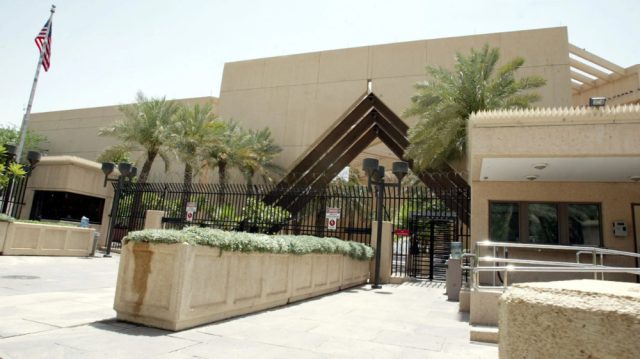
The US Embassy in Riyadh, Saudi Arabia (File photo by AFP)
Al Mayadeen | April 4, 2026
The Islamic Revolution Guard Corps’ (IRGC) has rejected accusations that it was responsible for an attack on the US Embassy in Riyadh, Saudi Arabia, emphasizing instead that it was a false flag operation carried out by the Israeli entity.
In Statement No. 54 of Operation True Promise 4, the IRGC’s Public Relations Department condemned the attack on the embassy, which was reported by The Wall Street Journal, stressing that, recalling the Israeli occupation’s regional strategies, “this action was certainly carried out by Zionists.”
The IRGC confirmed that the Iranian Armed Forces’ target list has been clearly identified, adding that Iran had already informed neighboring countries of the necessary warnings to “prevent further escalation.”
The IRGC also warned that West Asia “must remain vigilant against provocations from the American–Zionist current,” which aims to destabilize and destroy the region.
A series of false flags
Iran has repeatedly stressed that its operations target US-Israeli military assets and affiliated infrastructure in the region and across the occupied territories in Palestine, quickly pointing out false flags and highlighting ongoing enemy attacks that seek to disturb regional harmony.
It has also delineated target lists for its tit-for-tat retaliations for attacks on its civilian infrastructure, including US assets in the region. The US embassy in Riyadh was not among them.
Only yesterday, the IRGC condemned the targeting of water desalination plants in Kuwait, asserting that the Israeli entity “is behind this cowardly act of aggression aimed at sowing discord.” On Monday, a Kuwaiti power and desalination plant was also struck, killing an Indian worker and causing significant material damage.
Kuwaiti authorities were quick to attribute the attack to Iran, but Tehran squarely denied involvement and blamed “Israel,” with the spokesperson for Iran’s Khatam al-Anbiya Central Headquarters describing the incident as “evidence of the enemy’s depravity and malice,” saying it forms part of broader efforts to inflame tensions and undermine regional stability.
Similarly, following a fire at Saudi Aramco’s Ras Tanura refinery in early March, an Iranian military source told Tasnim News Agency that the attack was “an Israeli false flag operation” aimed at distracting regional countries from “Israel’s” strikes on civilian sites inside Iran, stressing that “Aramco facilities have not been among the targets of Iranian attacks so far.”
Iran denies responsibility for ‘depraved’ attack on Kuwait desalination plant
The Cradle | March 30, 2026
The Iranian military denied on 30 March the recent attack, which hit a desalination plant in Kuwait, labeling the strike a US-Israeli false-flag operation aimed at “destabilizing and destroying the region.”
“The brutal aggression by the Zionist regime against the desalination facility in Kuwait, carried out in recent hours under the pretext of accusing the Islamic Republic of Iran, is a sign of the vileness and depravity of the Zionist occupiers,” the Khatam al-Anbiya Central Headquarters of the Iranian army said in a statement.
“We declare that US bases, personnel, and their interests in the region, as well as the military, security, and economic infrastructure of the Zionist regime in the occupied Palestinian territories, remain powerful targets for us,” it added.
The Iranian military went on to urge “countries of West Asia must remain vigilant against the sedition of the US–Zionist axis aimed at destabilizing and destroying the region.”
Regional states “must put an end to the presence of the criminal US army and occupying Zionists in the region,” it stressed.
The attack on the desalination plant took place on Sunday.
“A service building at a power and water desalination plant was attacked as part of the Iranian aggression against the State of Kuwait, resulting in the death of an Indian worker and significant material damage to the building,” said a spokesperson for the Kuwaiti Electricity Ministry.
This is not the first attack Tehran has labeled a false flag.
Iran has also denied recent strikes on fuel tankers in Oman and a refinery in Iraq’s Erbil, as well as one that targeted an Aramco facility in Saudi Arabia at the start of the month.
US journalist Tucker Carlson reported earlier in March that Mossad agents were detained in Gulf states for planning bombings.
Iran’s Foreign Minister Abbas Araghchi said on 15 March that the US has been using its new Lucas drone – modeled after the Iranian Shahed – to carry out false-flag attacks in the region and attribute them to the Islamic Republic.
Tehran has said only US and Israeli-linked military and economic assets in the Gulf will be struck by its forces.
Iran is warning Gulf governments against allowing Washington to use their bases for attacks on the Islamic Republic.
Iranian drone and missile strikes targeted the Prince Sultan Air Base in Saudi Arabia on 27 March, wounding at least 12 US troops and damaging aircraft and buildings.
A senior Iranian intelligence official told The Cradle on 26 March that the Islamic Republic is preparing a “strong response” against the UAE due to the “active role” it has played in the US-Israeli war on it.
“A decision has been made at the leadership level to end the weeks-long tolerance toward this country. In addition to US military barracks and bases in the UAE, which were targeted in Iran’s defensive attacks, the Emiratis also provided some of their own air bases to the US to be used in attacking Iran,” the intelligence officials went on to say, citing security reports.
“The UAE is considered a foothold for Israel in the region,” the source continued, adding that Abu Dhabi has “carried out misleading operations against Oman and other countries” – likely a reference to false-flag operations pinned on Iran.
Featured Video

Liberty Cannot Exist Inside a Panopticon
or go to
Aletho News Archives – Video-Images
From the Archives
Left-leaning despisers of 9/11 Truth movement: Do you really believe in miracles?
David Ray Griffin | Global Research | 06 Jul 2010
An Open Letter to Terry Allen, Noam Chomsky, Alexander Cockburn, David Corn, Chris Hayes, George Monbiot, Matthew Rothschild, and Matt Taibbi.
[1]According to several left-leaning critics of the 9/11 Truth Movement, some of its central claims, especially about the destruction of the World Trade Center, show its members to be scientifically challenged. In the opinion of some of these critics, moreover, claims made by members of this movement are sometimes unscientific in the strongest possible sense, implying an acceptance of magic and miracles. … Full article
Blog Roll
 Aletho News
- EU sending ‘biased’ observers to interfere in Serbian election – president
- White House envoy declares kinetic action against Yemen ‘fruitless’
- Ukraine deployed thousands of microdrones in Iraqi Kurdistan: Tasnim
- Iran calls for emergency UNSC meeting over Trump’s ‘brazen’ bomb talk, Israeli threats
- Iranian sources reveal details of Russia-China Hormuz proposal
- Plan for more US-Israel integration puts our military tech at risk
- Another Round Against Iran Will Break What Is Left of the Gulf
- SVR Report on Ukraine’s Mexican Drug Gang Links Could Pressure Zelensky, Won’t Change US Policy
- British Government Employees Were Fact-Checking the News at the BBC. Nobody Told You.
- Albania on fire: who’s behind the riots?
- If Americans Knew
- Mysterious bot accounts reportedly spread fake ‘man on the street’ videos for Michigan Senate candidate
- Israeli Defense Minister Katz Says Over 60 Lebanon Villages Have Been Destroyed
- Why Is Israel Running TV Ads in Iowa Ahead of the Midterms?
- Hind Rajab’s Alleged Killer Is in the United States. HRF Demands His Arrest.
- US Officials Face Fresh Pressure After Another American ‘Brutalized’ by Israeli Settlers in West Bank
- Israel-Backed Palestinian Militias Terrorize Displaced Families in Gaza
- FBI subpoenas pro-Palestine activists over Israeli weapons plant disruption
- Fourth winter arrives in wartorn Gaza, too early – Daily Update
- More on how Bari Weiss is using CBS on behalf of Israel
- What the UK Is Doing to Pro-Palestine Novelist Sally Rooney Is an Act of Orwellian Villainy
- No Tricks Zone
- Predictions Made By Renowned Climate Proifessor Over Past Decades Have Been Proven To Be Poor
- New Study Suggests Large Regions Of The Pacific Ocean Have Been Cooling For The Last 80 Years
- Germany’s Green Energy Debacle: High Energy Costs Force Kahla Porzellan to Close After 182 Years!
- New Study: 50 Years Of The Most Aggressive ‘Net Zero’ Policies Can Only Affect The Global Climate By 0.03°C
- US September “Heat” Was No Record…Many Records Set Decades Ago
- Latest European Green Energy Debacle; Portugal’s Largest Flagship Solar Park Insolvent!
- Green Energy Debacle: German Expert Professor Fritz Vahrenholt Warns Of Severe Economic And Social Consequences
- Two More Paleo Reconstructions Affirm Meters-Higher Sea Levels Across Ireland, Brazil 7000-6000 Years Ago
- New Study: Earth And Venus Surface Warmth Largely Explained By Convection And Lapse Rate, Not CO2 Or Radiation
- 2025 Nature Paper Claiming Worsening Global Drought Gets RETRACTED …Heavily Flawed

