Colombia: extrajudicial executions killing still ongoing according to report
By George Nelson | The Argentina Independent | May 24, 2013
The Centre for Popular Research and Education (Cinep) in Bogotá has reported that during 2012 there were 11 separate cases of extrajudicial executions in Colombia, suggesting that executions known as ‘false positives’ are still ongoing. A further eight cases of arbitrary detention have also been reported, amassing a total of 52 victims.
The false positives scandal refers to the Colombian military’s alleged sanctioned practice of killing civilians and then dressing them up in guerrilla fatigues in order to present them as combat kills. Reports show that the executions usually target farmers, social activists, and political opponents.
The scandal is part of continuous armed conflict between Colombia’s government and the FARC and ELN, both guerilla forces. In May last year the International Federation of Human Rights (FIDH) alleged that over 3,000 civilians had been killed between 2002 and 2008 as a result of the conflict.
Cinep also claim that the general state of human rights in Colombia is poor with members of the paramilitary “the greatest violators” responsible for 565 cases, followed by the police with 268. Giraldo Serna, of Cinep, said, “Threats, tortures, disappearances, deaths, and social cleansing are still implemented in Colombia.”
The government denied ‘false positives’ are still occurring but Cinep believes the problem is far greater than people think. “Those who justify the false positives don’t realise they are damaging the prestige of the police force,” said Cinep spokesman Alejandro Angulo.
Honduras: Three Farmers Killed During Land Eviction
Agencia Púlsar | May 22, 2013
In the north of Honduras, in the community of San Manuel Cortés, three peasants were killed and two others wounded on Friday, when they tried to enter the lands that were expropriated last year by the Instituto Nacional Agrario (National Agrarian Institute). Valentín Caravantes, Celso Ruiz y Celedonio Avelar, who died at the scene, were members of the Farmers’ Movement of San Manuel Cortés (MOCSAM), located about 200kms from the capital.
The men entered the land because they obtained an order from the Court of Criminal Appeals, which stated that the evictions carried out in February 2012 against MOCSAM were illegal, reports the National Popular Resistance Front of Honduras (FNRP). “Security guards from the Honduran Sugar Company (CAHSA) fired at the three farmers,” FNRP added.
Brothers Aníbal and Adolfo Melgar were also seriously injured in the shooting and were immediately taken to a hospital in the municipality of San Pedro Sula.
For three years now MOCSAM has been demanding more than 3,000 acres of land which is currently possessed by the CAHSA company and exceeds 250 acres, the maximum a person or a firm can own in Valle de Sula under the country’s agrarian law.
The incident is the latest in a long series of clashes, which have ended up with many deaths over the past few years. In February, more than 1,000 peasants took back land after being expelled by British/South African beverages multinational SAB Miller in August 2012. And earlier this year, in March, the ongoing conflict between farmers and the Honduran government has resulted in the eviction of over 1,500 people from their land in the south of the country.
Related articles
- The New York Times on Venezuela and Honduras: A Case of Journalistic Misconduct
- Senator Menendez Meets with President Lobo to Discuss U.S. Funding for Honduras
- Honduras: Terror in the Aguán
- Will the World Bank Stop Investing in Campesino Assassinations?
- Killings Continue in Bajo Aguán as New Report Documents Abuses by U.S.-Trained Honduran Special Forces Unit
- Honduras: Murdered Lawyer’s Brother Killed in Aguán
- Step by Step: Honduras Walk for Dignity and Sovereignty
- World Bank Must End Support for Honduran Palm Oil Company Implicated in Murder
Conviction of former Guatemalan ruler overturned
Press TV – May 21, 2013
Guatemala’s top court has overturned the genocide conviction of the country’s former dictator Efrain Rios Montt, ordering his trial to restart.
The move came on Monday, about ten days after a three-judge panel convicted the 86-year-old of genocide and crimes against humanity, sentencing him to 80 years in prison.
The constitutional court’s secretary Martin Guzman said that the trial needed to go back to where it stood on April 19 in order to resolve several appeal issues.
The sentencing earlier this month was hailed by many Guatemalans, as it was the first time a former Latin American ruler was convicted of such crimes.
According to the panel, Rios Montt failed to prevent the killings of some 1,771 Ixil Mayans during Guatemala’s civil war.
Over 200,000 Guatemalan people were killed in the Guatemalan Civil War of 1960 to 1996, which pitted the right-wing government of Guatemala against various leftist rebel groups, mainly backed by Mayan indigenous people.
Most of the victims of the war were indigenous people.
In September 2011, Judge Carol Patricia Flores accused Rios Montt of genocide but could not prosecute him because he had immunity from prosecution as a congressman.
Related article
- Genocide in Guatemala: The Conviction of Efrain Rios Montt (alethonews.wordpress.com)
Over 70 states refuse to say yes to anti-Syria resolution
Press TV – May 16, 2013
More than 70 countries have refused to say yes to an Arab-backed resolution against Syria at the United Nations General Assembly.
Russia, China and Iran were among the 12 countries that opposed the resolution on Wednesday.
Russia called the resolution, co-sponsored by the United States, “counterproductive and irresponsible.”
The resolution was adopted by a vote of 107-12 with 59 abstentions. Argentina, Brazil, and more than a dozen other Latin American and Caribbean countries abstained from voting.
Russian Deputy Ambassador to the UN Alexander Pankin called the resolution “very harmful and destructive,” saying it disregards “illegal actions of the armed opposition.” He also accused the resolution’s Arab sponsors of attempting to replace the Syrian government instead of trying to find a political solution to the crisis in Syria.
Syrian Ambassador to the UN Bashar Ja’afari also stated that the resolution “seeks to escalate the crisis and fuel violence in Syria.”
The non-binding resolution, which was drafted by a number of Arab states, calls for a “political transition” and refers to the foreign-backed militants in Syria as “effective representative interlocutors” needed for the transition.
The Syria crisis began in March 2011, and many people, including large numbers of soldiers and security personnel, have been killed in the violence.
The Syrian government says that the chaos is being orchestrated from outside the country, and there are reports that a very large number of the militants are foreign nationals.
Damascus says the West and its regional allies, such as Qatar, Saudi Arabia, and Turkey, are supporting the militants.
In an interview recently broadcast on Turkish television, Syrian President Bashar al-Assad said that if the militants take power in Syria, they could destabilize the entire Middle East region for decades.
“If the unrest in Syria leads to the partitioning of the country, or if the terrorist forces take control… the situation will inevitably spill over into neighboring countries and create a domino effect throughout the Middle East and beyond,” he stated.
UN Food and Agriculture Organization to Recognize Venezuela for Halving Hunger
Agencia Venezolana de Noticias – May 7, 2013
 The United Nations Food and Agriculture Organization (FAO) will soon recognize Venezuela and 15 other countries for achieving part of the Millennium Development Goal of eradicating hunger.
According to a statement by the FAO Director General José Graziano Da Silva, Venezuela will receive a certificate of recognition at the organization’s next conference to be held in Rome beginning June 15. The recognition is for successfully halving the proportion of people who suffer from hunger, a goal established in 1996 to be achieved by 2015.
FAO statistics say that 13.5% of Venezuelans suffered from hunger in 1990 – 1992, compared to 5% in 2007 – 2012.
The other countries that will be recognized for meeting this goal are Armenia, Azerbaijan, Chile, Fiji, Georgia, Ghana, Guyana, Nicaragua, Peru, Samoa, São Tomé and Principe, Thailand, Uruguay, and Vietnam.
Since the start of the Bolivarian Revolution in 1999, the Venezuelan government has developed a series of policies regarding food and nutrition, that have been recognized by the FAO as helping eradicate hunger in the country.
Local FAO representative Marcelo Resende said in March that the government has been able to “understand that food is everybody’s right and not just the privilege of a few, and it worked based on that.”
The New York Times on Venezuela and Honduras: A Case of Journalistic Misconduct
By Keane Bhatt | NACLA | May 8 2013
The day after Venezuelan President Hugo Chávez died, New York Times reporter Lizette Alvarez provided a sympathetic portrayal of “outpourings of raucous celebration and, to many, cautious optimism for the future” in Miami-Dade County, Florida. Her article, “Venezuelan Expatriates See a Reason to Celebrate,” noted that many had come to Miami to escape Chávez’s “iron grip on the nation,” and quoted a Venezuelan computer software consultant who said, bluntly: “We had a dictator. There were no laws, no justice.”1
A credulous reader of Alvarez’s report would have no idea that since 1998, Chávez had triumphed in 14 of 15 elections or referenda, all of which were deemed free and fair by international monitors. Chávez’s most recent reelection, won by an 11-point margin, boasted an 81% participation rate; former president Jimmy Carter described the “election process in Venezuela” as “the best in the world” out of 92 cases that the Carter Center had evaluated (an endorsement that, to date, has never been reported by the Times).2
In contrast to Alvarez, who allowed her quotation describing Chávez as a dictator to stand uncontested, Times reporter Neela Banerjee in 2008 cited false accusations hurled at President Obama by opponents—“he is a Muslim who attended a madrassa in Indonesia as a boy and was sworn into office on the Koran”—but immediately invalidated them: “In fact, he is a Christian who was sworn in on a Bible,” she wrote in her next sentence.3 At the Times, it seems, facts are deployed on a case-by-case basis.
The Times editorial board was even more dishonest in the wake of Chávez’s death: “The Bush administration badly damaged Washington’s reputation throughout Latin America when it unwisely blessed a failed 2002 military coup attempt against Mr. Chávez,” wrote the paper, concealing its editorial board’s own role in blessing that very coup at the time. In 2002, with the “resignation [sic] of President Hugo Chávez, Venezuelan democracy is no longer threatened by a would-be dictator,” declared a Times editorial, bizarrely adding that “Washington never publicly demonized Mr. Chávez,” that actual dictator Pedro Carmona was simply “a respected business leader,” and that the U.S.-backed, two-day coup was “a purely Venezuelan affair.”4
The editorial board—an initial champion of the de facto regime that issued a diktat within hours to dissolve practically every branch of government, including Venezuela’s National Assembly and Supreme Court—would 11 years later brazenly criticize Chávez after his death for having “dominated Venezuelan politics for 14 years with authoritarian methods.” The newspaper argued that Chávez’s government “weakened judicial independence, intimidated political opponents and human rights defenders, and ignored rampant, and often deadly, violence by the police and prison guards.” After lambasting Chávez’s record, the piece concluded that the United States “should now make clear its support for democratic and civilian transition in a post-Chávez Venezuela”—as if Chávez were anyone other than a fairly elected leader with an overwhelming popular mandate.
But there is a country currently in the grip of an undemocratic, illegitimate government that much more closely corresponds with the Times editorial board’s depiction of Venezuela: Honduras, which in 2009 suffered a coup d’état that deposed its freely elected, left-leaning president, Manuel Zelaya.
While the Times criticized Chávez for weakening judicial independence, the newspaper could not be bothered to even report on the extraordinary institutional breakdown of Honduras, when in December 2012, its Congress illegally sacked four Supreme Court justices who voted against a law proposed by the president, Porfirio Lobo, who himself had came to power in 2009 in repressive, sham elections held under a post-coup military dictatorship and boycotted by most international election observers.
When it comes to intimidation of political opponents and human rights defenders, Venezuela’s problems are almost imperceptible compared with those of Honduras. Over 14 years under Chávez, Venezuela has had no record of disappearances or murders of such individuals. In post-coup Honduras, the practice is now endemic. In one year alone—2012—at least four leaders of the Zelaya-organized opposition party Libre were slain, including mayoral candidate Edgardo Adalid Motiño. In addition, two dozen journalists and 70 members of the LGBT community have been killed since the coup, including prominent LGBT anti-coup activists like Walter Tróchez and Erick Martinez (neither case was sufficiently notable so as to warrant a mention in the Times).
And although the Times editors decried police violence in Venezuela, the Honduran police systematically engage in extrajudicial killings of their own citizens. In December 2012, Julieta Castellanos, the chancellor of Honduras’s largest university, presented the findings of a report detailing 149 killings committed by the Honduran National Police over the past two years under Porfirio Lobo. In the face of over six killings by the police a month, she warned, “It is alarming that the police themselves are the ones killing people in this country. The public is in a state of defenselessness…”5 Such alarm is further justified by Lobo’s appointment of Juan Carlos “El Tigre” Bonilla as director of the National Police, despite reports that he once oversaw death squads.6
Finally, the Times editorial board lamented Venezuelan prison violence. But consider for context that the NGO Venezuelan Prisons Observatory, consistently critical of Chávez, reported 591 prison deaths in 2012 for the country of 30 million.7 In Honduras, a country with slightly more than a quarter of Venezuela’s population, over 360 died in just one incident—a 2012 prison fire in Comayagua, in which prison authorities kept firefighters from handling the conflagration for 30 crucial minutes while the inmates’ doors remained locked. According to survivors, the guards ignored their pleas for help as many burned alive.8
Given the contrast in the two countries’ democratic credentials and human rights records, obvious questions arise: How has The New York Times portrayed Venezuela and Honduras since Honduras’s 2009 coup d’état? If, in both its news and opinion pages, the Times regularly prints accusations of Venezuelan authoritarianism, what terminology has the Times employed to describe the military government headed by Roberto Micheletti, which assumed power after Zelaya’s overthrow, or the illegitimate Lobo administration that succeeded it?
The answer is revealing. For almost four years, the Times has maintained a double standard that is literally unfailing. Not a single contributor in the Times’ over 100 news and opinion articles has ever referred to the Honduran government as “autocratic,” “undemocratic,” or “authoritarian.” Nor have Times writers ever once labeled Micheletti or Lobo “despots,” “tyrants,” “strongmen,” “dictators,” or “caudillos.”
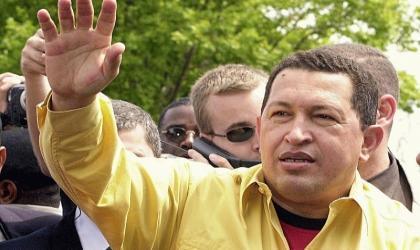 At the same time, from June 28, 2009, to March 7, 2013, the newspaper has printed at least 15 news and opinion articles in which its contributors have used any number of the aforementioned epithets for Chávez.9 (This methodology excludes the typically vitriolic anti-Chávez blog entries that the paper features on its website, as well as print pieces like Lizette Alvarez’s, which quote someone describing Chávez as a dictator.)
During this period, the paper’s news reporters themselves have referred to Chávez as a “despot,” an “authoritarian ruler,” and an “autocrat”; its opinion writers have deemed him a “petro-dictator,” an “indomitable strongman,” a “brutal neo-authoritarian,” a “warmonger,” and a “colonel-turned-oil-sultan.” On the eve of Venezuela’s October elections, a Times op-ed managed to call the Chávez administration “authoritarian” no fewer than three times in 800 words.10 And Chávez’s death offered no reprieve from this tendency: On March 6, reporter Simon Romero wrote about Chávez’s gait—he “strutt[ed] like the strongman in a caudillo novel”—and concluded that Chávez had “become, indeed, a caudillo.”11
These most basic violations of journalistic standards—referring to a democratically elected leader as a ruler with absolute power—does not simply end with its writers. On July 24, 2011, Bill Keller, then the newspaper’s executive editor, wrote the piece, “Why Tyrants Love the Murdoch Scandal,” which included a graphic of Zimbabwe’s Robert Mugabe side by side with Chávez. Keller referred to them both when he concluded, “Autocrats will be autocrats.”12
But if despotism, defined as the cruel and oppressive exercise of absolute power, is to have any meaning, it must apply to the Honduran government, whose military—not just its police—routinely kills innocent civilians. On May 26, 2012, for example, Honduran special forces killed 15-year-old Ebed Yanez, and high-level officers allegedly managed its cover-up by dispatching “six to eight masked soldiers in dark uniforms” to the teenager’s body, poking it with rifles, and “[picking] up the empty bullet casings” to conceal evidence that could be linked back to the military, according to the Associated Press.13
The paradox of the Times—its derisive posture toward what it considers antidemocratic tendencies in Venezuela as it simultaneously avoids the same treatment of Honduras’s inarguable repression—can only be explained by one crucial factor: Honduras has been a firm U.S. ally since Zelaya’s overthrow.
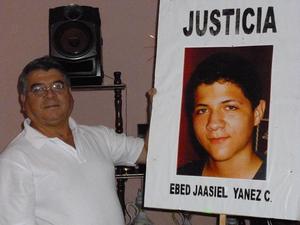
Photo Credit: SOA Watch
In fact, the unit accused of killing Yanez was armed, trained, and vetted by the United States—even its trucks were donated by the U.S. government. As the AP further reported, in 2012, the U.S. Defense Department appropriated $67.4 million for Honduran military contracts, with an additional “$89 million in annual spending to maintain Joint Task Force Bravo, a 600-member U.S. unit based at Soto Cano Air Base.” Furthermore, “neither the State Department nor the Pentagon could provide details explaining a 2011 $1.3 billion authorization for exports of military electronics to Honduras.”14
The Times’ scrupulous, unerring record of avoiding disparaging characterizations of Honduras’s human-rights-violating government may explain why it has never once made reference to 94 Congress members’ demand that the Obama administration withhold U.S. assistance to the Honduran military and police in March 2012. Nor has the paper reported on 84 Congress members’ letter to Secretary of State Hillary Clinton later that year, condemning Honduras’s “institutional breakdown” and “judicial impunity.”15
When evaluating the newspaper’s relative silence on Honduras, it is worth imagining if Chávez were to have ascended to power in as dubious a manner as Lobo; if for years Venezuela’s government permitted its security apparatus to regularly kill civilians; or if the Chávez administration presided over conditions of impunity under which political opponents and human rights activists were disappeared, tortured, and killed.
As a careful examination of the language and coverage of nearly four years of New York Times articles reveals, concern for freedom and democracy in Latin America has not been an honest concern for the liberal media institution. The paper’s unwavering conformity to the posture of the U.S. State Department—consistently vilifying an official U.S. enemy while systematically downplaying the crimes of a U.S. ally—shows that its foremost priority is to subordinate itself to the priorities of Washington.
1. Lizette Alvarez, ““Venezuelan Expatriates See a Reason to Celebrate,” The New York Times, March 6, 2013.
2. Keane Bhatt, “A Hall of Shame for Venezuelan Elections Coverage,” Manufacturing Contempt (blog), nacla.org, October 8, 2012.
3. Neela Banerjee, “Obama Walks a Difficult Path as He Courts Jewish Voters,” The New York Times, March 1, 2008.
4. “Hugo Chávez Departs,” The New York Times, April 13, 2002.
5. “Policías de Honduras, Responsables de 149 Muertes Violentas,” La Prensa, December 3, 2012.
6. Katherine Corcoran and Martha Mendoza, “Juan Carlos Bonilla Valladares, Honduras Police Chief, Investigated In Killing,” Associated Press, June 1, 2012.
7. Fabiola Sánchez, “Venezuela Prison Deaths: 591 Detainees Killed Country’s Jails Last Year,” Associated Press, January 31, 2013.
8. “Hundreds Killed in ‘Hellish’ Fire at Prison in Honduras,” Associated Press, February 16, 2012.
9. Author’s research, using LexisNexis database searches for identical terms in reference to the two countries. For a detailed list of examples, contact him at keane.l.bhatt@gmail.com.
10. Francisco Toro, “How Hugo Chávez Became Irrelevant,” The New York Times, October 6, 2012.
11. Simon Romero, “Hugo Chávez, Leader Who Transformed Venezuela, Dies at 58,” The New York Times, March 6, 2013.
12. Bill Keller, “Why Tyrants Love the Murdoch Scandal,” The New York Times Magazine, July 24, 2011.
13. Alberto Arce, “Dad Seeks Justice for Slain Son in Broken Honduras,” Associated Press, November 12, 2012.
14. Martha Mendoza, “US Military Expands Its Drug War in Latin America,” Associated Press, February 3, 2013.
15. Office of Representative Jan Schakowsky, “94 House Members Send Letter to Secretary Clinton Calling for Suspension of Assistance to Honduras,” March 13, 2012. Correspondence from Jared Polis et al. to Secretary of State Hillary Clinton, June 26, 2012.
Related articles
- U.S. Seeks to Get Rid of Left Governments in Latin America (alethonews.wordpress.com)
- The New Yorker Should Ignore Jon Lee Anderson and Issue a Correction on Venezuela (alethonews.wordpress.com)
- The New Yorker Corrects Two Errors on Venezuela, Refuses a Third (alethonews.wordpress.com)
- Nicolas Maduro did not Steal the Venezuelan Elections (venezuelanalysis.com)
- Honduras: Murdered Lawyer’s Brother Killed in Aguán (alethonews.wordpress.com)
- NPR Examines One Side of Honduran “Model Cities” Debate (alethonews.wordpress.com)
- IMF Ignores Proven Alternatives With Recommendations to Honduras (alethonews.wordpress.com)
- Killings Continue in Bajo Aguán as New Report Documents Abuses by U.S.-Trained Honduran Special Forces Unit (alethonews.wordpress.com)
- Honduras: Miguel Facusse is Tragically Misunderstood (alethonews.wordpress.com)
Private Bank Profits Don’t Represent the Health of the Economy
By Arthur Phillips | CEPR | May 8, 2013
Bloomberg’s Nathan Gill wrote a particularly one-sided article on Thursday, in which he states that “Ecuador’s bid to reduce poverty by taxing its banks is threatening to deepen the nation’s economic slump.”
“Slump” seems somewhat dire to describe the state of the Ecuadorian economy. In 2012 the economy grew by 5 percent, and it is projected to grow by 4.45 percent for 2013.
The report also offers no convincing evidence that Ecuador’s taxation of its banks is hurting the economy.
The article specifically focuses on a set of reforms that took effect on January 1, including the elimination of banks’ tax deductions for reinvested profits and a 0.35 percent tax on assets held abroad. The reporter argues that a sharp drop in bank profits in the first quarter of this year was a result of the taxation. He then argues that an increase in the banks’ interest rates must also be due to the reforms:
Non-government banks, including Citigroup Inc (C).’s local unit, raised rates on corporate loans by an average 0.21 percentage point in the first quarter to 8.88 percent, the highest since November 2010, according to central bank data. That compares with a decline of 0.72 percentage point to 8.81 percent in Colombia and an increase of 0.01 percentage point to 5.79 percent for similar loans in Peru.
However, this causality is not at all clear. It is more likely that this modest increase in interest rates is attributable to a recent uptick in inflation. Consumer prices increased at an annualized rate of 4.6 percent in the first quarter of this year, as compared to a rate of 0.2 percent in the last quarter of last year.
The reforms that increased taxes on the banks were reportedly enacted to pay for increasing cash subsidies for the country’s poor, and they were passed by congress in a 79-5 vote. Gill describes these changes as having been motivated by an election race that Correa was all but certain to win, rather than being the latest step in a determined and so-far successful process to transform a country that, like many in the hemisphere, has been historically plagued by inequality. It is perhaps worth noting that Ecuador has seen some of the region’s highest growth over the past few years. Furthermore, economic gains have been broadly shared and increased social spending has significantly improved the quality of life of a broad portion of the country’s citizens.
As CEPR’s recent report on Ecuador’s financial reforms describes, President Rafael Correa’s actions in recent years are a major reason why the government has raised revenue and consequently been able to pursue expansionary fiscal policy and increased social spending. The results of this policy regime have included the lowest unemployment rate on record, a near-halving of the poverty rate, and a doubling of education funding, among other gains.
Yet, from this article, one would be led to believe that new taxes on the financial sector have only led to lower bank profits, which are presented as a serious problem for the country’s macroeconomic outlook. Among Gill’s quoted sources are the CEO of Ecuador’s biggest brokerage firm, the director of a market research and consulting firm, and the president of the country’s Private Banking Association. Their views should come as no surprise, but they are not necessarily the full picture or even accurate.
The article (on the second page) also quotes Pedro Solines, Ecuador’s banking superintendent, as saying “Less profits for the banks, yes, but where does it go? To the people who receive the subsidy.” The quote continues with Solines saying, “If I receive the subsidy, I’m going to say that the impact is very good. If I run a shop where the person who receives the subsidy spends not $35 but $50, I’m going to say it’s good. If I’m a bank, I’m going to say I’m doing badly.”
Correa was re-elected on February 17, receiving 57 percent of the vote compared to his closest competitor’s 23 percent.
Related article
- Ecuador begins to roar | Fander Falconi (guardian.co.uk)
Argentina: Son of Indigenous Leader Attacked in Formosa
By Avery Kelly | The Argentina Independent | May 6, 2013

Félix Diaz, leader of the Qom community, speaks to the crowd in January 2011. (Photo Patricio Guillamón.)

Late Saturday night, 4th May, a street gang brutally attacked two youths of indigenous descent in the northern province of Formosa. One of the victims is 21-year-old Abelardo Díaz, the son of Qom leader Félix Díaz.
The boys were surrounded by a mob of about 30 people that abruptly began beating them, allegedly using clubs and other objects to attack Abelardo and his peer Carlos Sosa. Both had to be hospitalised, first taken to a local clinic but later transferred to the Juan Domingo Perón hospital in the provincial capital.
Although most details about the attack are still unknown, the Qom community assumes that it is related to their fight to reclaim ancestral lands, in which Félix Díaz has played a key role. On 18th April, Félix received a court order for his prosecution regarding the ‘theft’ of territory he claims for the Qom people.
Abelardo reported a similar instance in which he was beaten in June of last year, when another group armed with knives attacked him, threatening to slit his throat.
Attacks of indigenous people in the Formosa area are not uncommon. Just four months ago a young man from the Qom community was found unconscious after suffering a beating and later died in the hospital.
After his son’s hospitalisation, Félix stated: “My family continues being victim to this violence generated by the province again and again.” He added, “They criminalise me for ‘usurping’ our historic territories. However they will never break me — I will continue asking for respect for our rights and for true justice.”
Two weeks ago a group of congress members part of the Population and Human Development Commission headed by Antonio Riestra began a series of meetings with representatives from local indigenous groups to discuss the humanitarian situation of these communities in Formosa. During the talks, indigenous leaders called for a return of historic lands, access to healthcare, and bilingual education.
Related articles
- In Search of Their Roots: The Mapuche and Modern Society (alethonews.wordpress.com)
- Panama: Indigenous Leader Murdered After Anti-Dam Protest (alethonews.wordpress.com)
Featured Video
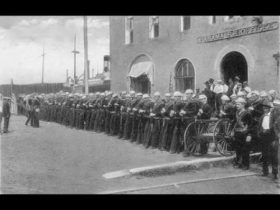
US Marines Seized Panama in 1903
or go to
Aletho News Archives – Video-Images
From the Archives
Precedents for Pizzagate
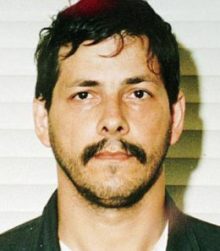
Marc Dutroux, Belgian pedophile, sadist, and serial killer with friends in high places
By Aedon Cassiel | Counter – Currents | December 23, 2016
To reiterate a point that should be clear to the more astute reader, my goal in this series (part 1, part 2) has not been to defend “Pizzagate” as such. My goal has been to defend the people who want to investigate it against specific accusations levied against them by people who think Pizzagate has revealed no intriguing information at all—for a specific reason, which I will be honing in and focusing on much more directly in this closing entry.
Whereas the mainstream critics of Pizzagate would have you believe that the dividing line is between paranoid conspiracy theorist followers of “fake news” and level-headed people who follow trustworthy news sources and rely on cold, hard reason to determine the truth, my goal has been to show that—whatever is or is not happening with Pizzagate itself—this framing of the issue is arrogant, insulting, and the product of extremely narrow tunnel vision. … continue
Blog Roll
 Aletho News
- The U.S. Sanctions Cuban Journalist For Reporting On The U.S. Blockade
- Israeli firms transform cars into intelligence devices: Reports
- Zionist-controlled companies to surveil British citizens
- THE CHILDREN GAMBIT
- A note on comment posting at Alethonews
- Trump stalls over Iran strike plan, Iran holds all the aces
- Zelensky’s Ceasefire for Elections is Strategic Gambit, Not Democratic Move
- US and Dutch pilots flying F-16s for Ukraine – Western media
- West’s Claims of Non-Involvement in Ukraine Conflict ‘Epitome of Hypocrisy’ – Expert
- Putin aide urges retaliation to ‘Western piracy’
- If Americans Knew
- Help end the injustice against Shadi
- Israel’s Favorite American President
- Israel’s “Yellow Line” Is a Death Trap for Palestinians. We Drove Into It.
- Why Israel’s expanding occupation in Syria presents a critical legal test
- Gaza is not a natural disaster. It is the victim of genocide enabled by global inaction
- Netanyahu’s plan to “end” US aid to Israel is to give even more money under a different name
- Israel ceased firing on Gaza for just 15 days of the “ceasefire” – Not a ceasefire Day 130
- In Gaza, “rats run over our faces” – Not a ceasefire Day 129
- Israel-backed border guards, GHF-linked aid – Not a ceasefire Day 128
- Israel battles Palestinian right of return, one Palestinian at a time – Not a ceasefire Day 127
- No Tricks Zone
- New Study: A 4°C Warmer Beaufort Sea Had ‘No Sea Ice’ 11,700 – 8200 Years Ago
- Unfudging The Data: Dutch Meteorological Institute Reinstates Early 20th Centruy Heat Waves It Had Erased Earlier
- German Gas Crisis…Chancellor Merz Allegedly Bans Gas Debate Ahead of Elections!
- Pollen Reconstructions Show The Last Glacial’s Warming Events Were Global, 10x Greater Than Modern
- Germany’s Natural Gas Storage Level Dwindles To Just 28%… Increasingly Critical
- New Study Rebuts The Assumption That Anthropogenic CO2 Molecules Have ‘Special’ Properties
- Climate Scientist Who Predicted End Of “Heavy Frost And Snow” Now Refuses Media Inquiries
- Polar Bear Numbers Rising And Health Improving In Areas With The Most Rapid Sea Ice Decline
- One Reason Only For Germany’s Heating Gas Crisis: Its Hardcore-Dumbass Energy Policy
- 130 Years Later: The CO2 Greenhouse Effect Is Still Only An Imaginary-World Thought Experiment
 Aletho News