‘Most of the world is tired of war’ – PM Orbán touts Hungary and Latin America’s pro-peace stance at EU-CELAC summit
Hungary has found allies outside of Europe for its pro-peace position
BY JOHN CODY – REMIX NEWS – JULY 18, 2023
Hungarian Prime Minister Viktor Orbán took to Facebook on Tuesday to proclaim that Hungary and Latin America both have a pro-peace stance regarding the conflict between Ukraine and Russia and want the war to end as soon as possible.
“Most of the world is tired of war. Today, we argued for an immediate ceasefire and peace, and this time the leaders of Latin America joined us!” wrote Orbán on Facebook following the meeting of the leaders of the European Union and the Community of Latin American and Caribbean States (EU-CELAC) summit in Brussels.
Although Orbán’s pro-peace stance is a minority position in Europe, he has found broad support from nations with a similar outlook toward the war elsewhere in the world, including India, China, and countries in Latin America. China, for example, has put forward a peace plan that Hungary has backed.
Within Latin America, there are a number of nations directly aligned with Russia, including Venezuela and Cuba, but more broadly speaking, there are many more nations skeptical of the Western war effort in Ukraine that have called for an immediate ceasefire. Countries like Brazil and Mexico have also refused to back sanctions against Russia, arguing it is not in their economic interest. … Full article
German FM slammed by Brazilian internet users for comments on Ukraine
By Ahmed Adel | June 14, 2023
German Foreign Minister Annalena Baerbock was severely criticised on Brazilian social media for saying during her official visit to Brazil that poor mothers in the Latin American country do not care about international conflicts because they focus “on the price of rice and beans in the supermarket.”
During her speech at the Getúlio Vargas Foundation in São Paulhhfo, Baerbock suggested that low-income Brazilians would not be concerned about international events as they were focused on guaranteeing their subsistence.
“I would like to say clearly: I fully understand that you here in Latin America perceive the threat of this war differently than we do in Europe, but also question, ‘Where is Ukraine again?’ I fully understand that a mother from Itaquera or Campinas says: ‘For me, the price of rice and beans in the supermarket this week is more important than what happens in a country 11,000 kilometres away’,” said Baerbock.
The reaction was immediate on social media and YouTube channels, with Brazilians applauding the mothers of Itaquera and Campinas for focusing on maintaining life and not sending weapons to sow death.
An article in Folha de São Paulo, in turn, questioned the European commitment to Latin America: “Funny that Europe remembers that Latin America exists only when they are roasting from global warming or are at war. Apart from that, we know very well how they see us.”
Robinson Farinazzo, a Reserve officer of the Brazilian Navy, joined the outrage on his Arte da Guerra channel. He criticised the German minister’s attempt to commit Brazil to the European conflict.
“The West invested $124 billion and gathered a coalition of 28 countries against Russia, sending all kinds of weapons, mercenaries, satellites and, even so, they do not solve the problem. And now they are trying to push the problem to Brazil? Have pity,” said Farinazzo.
“Europe’s problems are not the world’s problems. These stuck-up people, with their noses in the air, have to understand that,” he added.
The reserve officer also noted that Baerbock “left Brazil empty-handed” since she was not even received by Brazilian President Luiz Inácio Lula da Silva or Foreign Minister Mauro Vieira, who was on an official trip to France.
Baerbock fulfilled her agenda in São Paulo and Brasília by meeting with the Secretary General of the Itamaraty (Brazilian Foreign Ministry), Maria Laura da Rocha. The Itamaraty published a joint communiqué expressing commitment to bilateral cooperation and the fight against climate change, demonstrating that Baerbock could not win any concessions from Brazil regarding Ukraine.
During the trip, the German foreign minister called on Brazil to align with Western countries on geopolitical matters, particularly the Ukraine war and China. In return, a closer relationship with Europe was offered. However, this blackmailing is useless since China, and not Germany, is Brazil’s leading trade partner.
“Security and development are not opposites. They depend on each other,” Baerbock said at the Digital Democracy Festival in São Paulo, pointing to the global impact of rising food prices due to the war.
“Let’s reach out and shape a future together that all of us can benefit from,” she added.
The EU-Mercosur trade deal has not been ratified despite being in the works since 1999. Baerbock said at the festival that the main keys to the rapprochement of “like-minded democratic states” would “make it clear that democracies when they work together, can solve global challenges.”
A summit of European, Latin American, and Caribbean leaders on July 17 could invigorate the fruition of the EU-Mercosur trade deal, and it is clear that Baerbock is attempting to leverage this against Brazil so it capitulates and provides aid to Ukraine. However, Brazil is unlikely to be pressured into changing its foreign policy course.
The EU- Mercosur agreement is expected to be signed by the end of this year, whether Baerbock attempts to add unofficial clauses or not. This was effectively confirmed by European Commission President Ursula von der Leyen in her meeting with Lula in Brasília on June 12.
During this meeting, Lula drew attention to the fact that Europe has adopted unilateral laws and rules to impose sanctions on international trade without considering previously established strategic partnerships, as in the case of Brazil. Von der Leyen sidestepped this point and praised Lula, saying he “brought Brazil back to where it belongs – a major global player, a leader in the democratic world.”
In any case, Lula and Brazil do not need platitudes from Germany and the EU. Brazil will instead steer its course without being beholden to any power. This will frustrate the West, but as Latin America’s biggest power, Brazil is responsible for leading by serving its interests first and not the West’s. For this reason, Brasília’s relations with Moscow and Beijing will remain strong despite constant Western pressure.
Ahmed Adel is a Cairo-based geopolitics and political economy researcher.
Why Are US Military Personnel Heading to Peru?
By Nick Corbishley – naked capitalism – May 26, 2023
The ostensible goal of the operation is to provide “support and assistance to the Special Operations of the Joint Command of the Armed Forces and National Police of Peru,” including in regions recently engulfed in violence.
Unbeknown, it seems, to most people in Peru and the US (considering the paucity of media coverage in both countries), US military personnel will soon be landing in Peru. The plenary session of Peru’s Congress last Thursday (May 18) authorised the entry of US troops onto Peruvian soil with the ostensible purpose of carrying out “cooperation activities” with Peru’s armed forces and national police. Passed with 70 votes in favour, 33 against and four abstentions, resolution 4766 stipulates that the troops are welcome to stay any time between June 1 and December 31, 2023.
The number of US soldiers involved has not been officially disclosed, at least as far as I can tell, though a recent statement by Mexico’s President Andrés Manuel Lopéz Obrador, who is currently person non grata in Peru, suggests it could be around 700. The cooperation and training activities will take place across a wide swathe of territory including Lima, Callao, Loreto, San Martín, Huánuco, Ucayali, Pasco, Junín, Huancavelica, Iquitos, Pucusana, Apurímac, Cusco and Ayacucho.
The last three regions, in the south of Peru, together with Arequipa and Puno, were the epicentre of huge political protests, strikes and road blocks from December to February after Peru’s elected President Pedro Castillo was toppled, imprisoned and replaced by his vice-president Dina Boluarte. The protesters’ demands included:
- The release of Castillo
- New elections
- A national referendum on forming a Constitutional Assembly to replace Peru’s current constitution, which was imposed by former dictator Alberto Fujimori following his self-imposed coup of 1992
Brutal Crackdown on Protests
Needless to say, none of these demands have been met. Instead, Peru’s security forces, including 140,000 mobilised soldiers, unleashed a brutal crackdown that culminated in the deaths of approximately 70 people. A report released by international human rights organization Amnesty International in February drew the following assessment:
“Since the beginning of the massive protests in different areas of the country in December 2022, the Army and National Police of Peru (PNP) have unlawfully fired lethal weapons and used other less lethal weapons indiscriminately against the population, especially against Indigenous people and campesinos (rural farmworkers) during the repression of protests, constituting widespread attacks.”
As soon as possibly next week, an indeterminate number of US military personnel could be joining the fracas. According to the news website La Lupa, the purported goal of their visit is to provide “support and assistance to the Special Operations of the Joint Command of the Armed Forces and National Police of Peru” during two periods spanning a total of seven months: from June 1 to September 30, and from October 1 to December 30, 2023.
The secretary of the Commission for National Defence, Internal Order, Alternative Development and the Fight Against Drugs, Alfredo Azurín, was at pains to stress that there are no plans for the US to set up a military base in Peru and that the entry of US forces “will not affect national sovereignty.” Some opposition congressmen and women begged to differ, arguing that the entry of foreign forces does indeed pose a threat to national sovereignty. They also lambasted the government for passing the resolution without prior debate or consultation with the indigenous communities.
The de facto Boluarte government and Congress are treating the arrival of US troops as a perfectly routine event. And it is true that the US military has long held a presence in Peru. For example, in 2017, U.S. personnel took part in military exercises held jointly with Colombia, Peru and Brazil in the “triple borderland” of the Amazon region. Also, the US Navy operates a biosafety-level 3 biomedical research laboratory close to Lima as well as two other (biosafety-level 2) laboratories in Puerto Maldonado.
But the timing of the operation raising serious questions. After all, Peru is currently under the control of an unelected government that is heavily supported by Washington but overwhelmingly rejected by the Peruvian people. The crackdown on protests in the south of the Peru by the country’s security forces — the same security forces that US military personnel will soon be joining — has led to dozens of deaths. Peru’s Congress is refusing to call new elections in total defiance of public opinion. Just a few days ago, the country’s Supreme Court issued a ruling that some legal scholars have interpreted as essentially criminalising political protest.
As Peru’s civilian institutions fight among themselves, Peru’s armed forces — the last remaining “backbone” in the country, according to Mexican geopolitical analyst Alfredo Jalife — has taken firm control. And lest we forget, Peru is home to some of the very same minerals that the US military has identified as strategically important to US national security interests, including lithium. Also, as I noted in my June 22, 2021 piece, Is Another Military Coup Brewing in Peru, After Historic Electoral Victory for Leftist Candidate?, while Peru’s largest trading partner is China, its political institutions — like those of Colombia and Chile — remain tethered to US policy interests:
Together with Chile, it’s the only country in South America that was invited to join the Trans-Pacific Partnership, which was later renamed the Comprehensive and Progressive Agreement for Trans-Pacific Partnership after Donald Trump withdrew US participation.
Given as much, the rumours of another coup in Peru should hardly come as a surprise. Nor should the Biden administration’s recent appointment of a CIA veteran as US ambassador to Peru, as recently reported by Vijay Prashad and José Carlos Llerena Robles:
Her name is Lisa Kenna, a former adviser to former US Secretary of State Mike Pompeo, a nine-year veteran at the Central Intelligence Agency (CIA), and a US secretary of state official in Iraq. Just before the election, Ambassador Kenna released a video, in which she spoke of the close ties between the United States and Peru and of the need for a peaceful transition from one president to another.
It seems more than likely that Kenna played a direct role in the not-so-peaceful transition from President Castillo to de facto President Boluarte, having met with Peru’s then-Defence Minister Gustavo Bobbio Rosas on December 6, the day before Pedro Castillo was ousted, to tackle “issues of bilateral interest”.
On a Knife’s Edge
After decades of stumbling from crisis to crisis and government to government, Peru rests on a knife’s edge. When Castillo, a virtual nobody from an Andean backwater who had played an important role in the teachers’ strikes of 2017, rode to power on a crest of popular anger at Peru’s hyper-corrupt establishment parties in June 2021, Peru’s legions of poor and marginalised hoped that positive changes would follow. But it was not to be.
Castillo was always an outsider in Lima and was out of his depth from day one. He had zero control over Congress and failed miserably to overcome rabid right-wing opposition to his government. Even in his first year in office he faced two impeachment attempts. As Manolo De Los Santos wrote in People’s Dispatch, Peru’s largely Lima-based political and business elite could never accept that a former schoolteacher and farmer from the high Andean plains could become president.
On December 7, they finally got what they wanted: Castillo’s impeachment. Just hours before a third impeachment hearing, he declared on national television that he was dissolving Congress and launching an “exceptional emergency government” and the convening of a Constituent Assembly. It was a preemptive act of total desperation from a man who held no sway with the military or judiciary, had zero control over Congress, and had even lost the support of his own party. Hours later, he was impeached, arrested by his own security detail and taken to jail, where he remains to this day.
Castillo may be out of the picture but political instability continues to reign in Peru. The de facto Boluarte government and Congress are broadly despised by the Peruvian people. According to the latest poll by the Institute of Peruvian Studies (IEP), 78% of Peruvians disapprove of Boluarte’s presidency while only 15% approve. Congress is even less popular, with a public disapproval rate of 91%. Forty-one percent believe that the protests will increase while 26% believe they will remain the same. In the meantime, Peru’s Congress continues to block general elections.
Peru’s “Strategic” Resources
As regular readers know, EU and US interest in Latin America is rising rapidly as the race for lithium, copper, cobalt and other elements essential for the so-called “clean” energy transition heats up. It is a race that China has been winning pretty handily up until now.
Peru is not only one of China’s biggest trade partners in Latin America; it is home to the only port in Latin America that is managed entirely by Chinese capital. And while Peru may not form part of the Lithium Triangle (Bolivia, Argentina and Chile), it does boast significant deposits of the white metal. By one estimate, it is home to the sixth largest deposits of hard-rock lithium in the world. It is also the world’s second largest producer of copper, zinc and silver, three metals that are also expected to play a major role in supporting renewable energy technologies.
In other words, there is a huge amount at stake in how Peru evolves politically as well as the economic and geopolitical alliances it forms. Also, its direct neighbour to the north, Ecuador, is undergoing a major political crisis that is likely to spell the end of the US-aligned Guillermo Lasso government and a handover of power to Rafael Correa’s party and its allies.
And the US government and military have made no secret of their interest in the mineral deposits that countries like Peru hold in their subsoil. In an address to the Washington-based Atlantic Council on Jan 19, Gen. Laura Richardson, head of the U.S. Southern Command, spoke gushingly of Latin America’s rich deposits of “rare earth elements,” “the lithium triangle — Argentina, Bolivia, Chile,” the “largest oil reserves [and] light, sweet crude discovered off Guyana,” Venezuela’s “oil, copper, gold” and the fact that Latin America is home to “31% of the world’s fresh water in this region.”
She also detailed how Washington, together with US Southern Command, is actively negotiating the sale of lithium in the lithium triangle to US companies through its web of embassies, with the goal of “box[ing] out” US adversaries (i.e. China and Russia), concluding with the ominous words: “This region matters. It has a lot to do with national security. And we need to step up our game.”
Which begs the question: is this the first step of the US government and military’s stepping-up-the-game process?
The former president of Bolivia Evo Morales, who knows a thing or two about US interventions in the region, having been on the sharp end of a US-backed right-wing coup in 2019, certainly seems to think so. A few days ago, he tweeted the following message:
The Peruvian Congress’ authorisation for the entry and stationing of US troops for 7 months confirms that Peru is governed from Washington, under the tutelage of the Southern Command.
The Peruvian people are subject to powerful foreign interests mediated by illegitimate powers lacking popular representation.
The greatest challenge for working people and indigenous peoples is to recover their self-determination, their sovereignty and their natural resources.
With this authorization from the Peruvian right, we warn that the criminalization of protest and the occupation of US military forces will consolidate a repressive state that will affect sovereignty and regional peace in Latin America.
Mexico’s President Andrés Manuel Lopéz Obrador, who refuses to acknowledge Boluarte (whom he calls the “great usurper”) as Peru’s president and has recently faced threats of direct US military intervention in Mexico’s drug wars from US Republican lawmakers, had a message for the US government this week: “[Sending soldiers to Peru] merely maintains an interventionist policy that does not help at all in building fraternal bonds among the peoples of the American continent.”
Unfortunately, the US government does not seem interested, if indeed it ever has been, in building fraternal bonds with the peoples of the American continent. Instead, it is set on upgrading the Monroe Doctrine for the 21st century. Its strategic rivals this time around are not Western European nations, which are now little more than US vassals (as a recent paper by the European Council of Foreign Relations, titled “The Art of Vassalisation”, all but admitted), but rather China and Russia.
The Worthless Naval Base at Gitmo
Tales of the American Empire | May 11, 2023
The American empire has over 1000 overseas military bases with between a dozen and 45,000 personnel. The United States spends more to operate its overseas military bases each year than China spends on its entire military. Several of these bases have become worthless yet remain open because of bureaucratic resistance. The largest unneeded base is also the oldest overseas base, the US Naval Station at Guantanamo Bay, Cuba, known as Gitmo. No combat forces are based there or even combat support forces. There are no ships, no aircraft, no weapons, nor munitions based at Gitmo. The lights could be shut off at expensive Gitmo tomorrow and everyone flown home and the US Navy wouldn’t notice, except that it would free manpower and resources for a dozen more warships.
__________________________________
“All Bases Covered”; Tom Engelhardt, Antiwar.com; January 10, 2011; https://original.antiwar.com/engelhar…
“Overseas Base Closure List”; Carlton Meyer; G2mil; 2016; https://www.g2mil.com/OBCL.htm
Related Tale: “The Empires Cuban Colony 1898 -1959”:  • The Empire’s Cuba…
CIA May Be Regarded Around World as a Rogue Elephant, But Operatives Can Still Churn Out Books that Make Themselves Look Like Heroes
And the Washington foreign policy establishment still eats them up
By Rick Sterling | CovertAction Magazine | May 1, 2023
 In 1975, Philip Agee published his book Inside the Company: CIA Diary. In the introduction, he wrote: “When I joined the CIA, I believed in the need for its existence. After twelve years with the agency I finally understood how much suffering it was causing, that millions of people all over the world had been killed or had their lives destroyed by the CIA and the institutions it supports. I couldn’t sit by and do nothing and so began work on this book.”
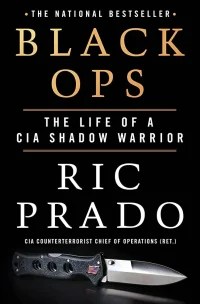
Enrique Prado’s book, Black Ops: The Life of a CIA Shadow Warrior (New York: St. Martin’s Press, 2022), is written for the opposite purpose. Prado says, “This book is my attempt to correct the misperceptions that make the Agency one of the least understood and most mistrusted institutions in America today. The reality we faced on the ground in places from Muslim Africa to East Asia, to our own streets here at home, is one of persistent threats that must be countered to keep our people safe.”
Prado’s memoir was approved for publication by the CIA. It is self-laudatory and highly critical of restraints on the CIA. It confirms that, while the ability to assassinate at will was temporarily restricted, CIA sabotage and paramilitary operations against other nations have continued non-stop.
Background
Enrique (Ric) Prado’s father lost his business in the Cuban Revolution and Ric came to the U.S. as a youth in the early 1960s. He grew up in greater Miami. The Vietnam War was raging and his “dream was to go to Vietnam.”
After high school, Ric enlisted in the U.S. Air Force and received training in rescue operations including parachute jumping and scuba diving. Prado’s dream was dashed because the Vietnam War was winding down and the U.S. military downsizing.
Prado alludes to his involvement with Cuban-American gangs and some troubled years. Then, starting with contract work, Prado began to perform assignments for the Central Intelligence Agency (CIA).

A young Ric Prado in Hialeah, Florida. [Source: nypost.com]
Prado and the Contras
Prado’s timing was late for Vietnam but just right for Central America. In 1979 the Sandinista Revolution overthrew the Somoza dictatorship in Nicaragua. As a Spanish-speaking Latino, Prado was not a typical Anglo-American. He was recruited as a CIA officer responsible for overseeing the development of the Contra army based in Honduras and conducting cross-border attacks on communities in Nicaragua.
He writes, “In these early days, there were only five CIA officers who interfaced directly with the Contras in Tegucigalpa; none were yet in the field.” There were “ten camps that lay scattered along the Honduran Nicaraguan border.” Ric Prado became the CIA officer responsible for going to the camps to coordinate support and conduct weapons training.
Prado admits the Contra leadership came from the corrupt Somoza regime: “Others who had been part of Somoza’s military…formed the core leadership of the Contras.” Initially, Washington subcontracted the job of mobilizing the Contras to Argentinian military officers who had experience from their own dirty war and death squads. Prado is extremely critical of the Argentinian military trainers, calling them a “den of snakes” and stating that, “to a man, I found them to be useless parasites.” The Argentinian military trainers were supplanted by CIA personnel, with Ric Prado playing a leading role overseeing Contra operations from Honduras and later in the “southern front” in Costa Rica.

During the Reagan years, Ric Prado (clutching rocket launcher) trained Contras to fight communist Sandinistas as part of the CIA’s “tip of the spear” in Nicaragua. [Source: nypost.com]
The CIA is funded by Congress and acutely aware of its public image. Whether it is creating negative press for “enemies” such as Nicaragua, Cuba or Russia, or creating positive press for itself, manipulating the media is an important part of its work. Prado talks about the political benefits of recruiting Indigenous Miskitos to the Contras: “Miskitos were popular with several U.S. political sectors. Among Native Americans and some prominent liberals, the Miskitos were considered to be the oppressed, indigenous forces untainted by association with Somoza. That political viability back in the States with elements often hostile to the Agency helped us enormously.”

Dinner in one of the Miskito camps, Prado on the right, where living conditions were primitive at best. [Source: nypost.com]
The unofficial war on Nicaragua included attacks on infrastructure which echo today with the U.S. sabotage of the Nord Stream gas pipelines. Prado proudly documents the attack on the Puerto Cabezas pier and underwater gas pipeline: “The dock included an integrated fuel pipeline for faster transfer of oil from tankers. If we could destroy this… we’d make a big statement by blowing up the key link between the Sandinistas and their communist allies….We received exactly what we needed: a specialized underwater demolition charge that combined compactness with tremendous blast power….The charge exploded…the blast was so large it destroyed the fuel pipeline.”
Prado documents the failed attempt to blow up a bridge at Corinto on the Pacific coast. For unknown reasons, Prado was re-assigned and left Honduras in March 1984 after four years managing the Contras. He returned to the Contra campaign in the summer of 1986. They had safe houses and secret bases in ranches along the Nicaragua-Costa Rica border. It was more difficult because the Costa Rican government did not support the Contras as Honduras did.

Prado carried all these weapons while fighting the Sandinistas in Nicaragua. [Source: nypost.com]
Prado briefly describes the sensational events in October 1986 when a CIA plane dropping supplies and weapons to Contras was shot down. The pilot and two others on the flight died, but ex-Marine Eugene Hasenfus survived and was captured. Unmentioned in the book, this was a sensational news event at the time. Beyond the drama of an American plane being shot down over Nicaragua and an American captured and taken prisoner, it revealed the CIA was violating the congressional Boland Amendment prohibiting U.S. military support for overthrowing the Nicaragua government.
The Reagan administration denied responsibility. Elliott Abrams, the Assistant Secretary of State for Inter-American Affairs, said:“The flight in which Mr. Hasenfus took part was a private initiative…It was not organized, directed or financed by the U.S. Government.” The counter-evidence was overwhelming and the CIA was caught red-handed violating the congressional resolution and then lying about it. This is unmentioned in the book. Instead, Prado criticizes Hasenfus for having personal identification papers in his possession.

José Fernando Canales, the Sandinista soldier who shot down Eugene Hasenfus’s plane with a surface-to-air missile, leads his hapless captive through the jungle on October 5, 1986. [Source: dailykos.com]
Prado’s Pride
In 1990, after ten years of terrorist attacks by the Contras, combined with economic and political attacks from Washington, Nicaraguans cried “Uncle” and voted the Sandinistas out of power.
Prado says, “our Contra program was a definitively successful black op carried out solely by key personnel from the CIA.” Prado stated further that “that Cuban kid who lost his native country to revolutionaries now helped cut off some of the communist tentacles that threatened to engulf Latin America.”
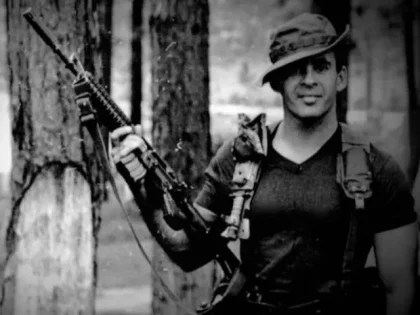
Ric Prado in action. [Source: cbsnews.com]
Prado believes the use of a proxy army to fight against a perceived enemy was an important victory and re-established the credibility of the CIA. He says, “The Contras resuscitated the post-Vietnam decimated CIA back to relevance.”
Prado is annoyed at negative media portrayals of the CIA Contra program. The movie American Made, depicting the story of an American pilot taking guns to the Contras and bringing cocaine back into the U.S., is especially annoying to Prado. He ignores the fact that tens of thousands of Nicaraguans died and cocaine inundated some U.S. cities as a byproduct of the Contra program.
Prado believes that the CIA were the “good guys” in Nicaragua. The International Court of Justice thought otherwise.
In 1986 the court ruled that the U.S. attacks on Nicaragua were violations of international law. The Reagan administration and media largely ignored the ruling.
Later, journalist Gary Webb documented the catastrophic social damage inside the U.S. caused by the cheap cocaine flooding some U.S. cities. Webb was attacked by establishment media. However, in 1998, the CIA Inspector General acknowledged, “There are instances where C.I.A. did not, in an expeditious or consistent fashion, cut off relationships with individuals supporting the contra program who were alleged to have engaged in drug-trafficking activity, or take action to resolve the allegations.”
The 2014 movie Kill the Messenger, based on the true and tragic story of Gary Webb, was undoubtedly another movie that irritated Ric Prado.

Justifying Terrorism and Sabotage
Prado’s justification for CIA crimes against other countries is U.S. national security. He says, “The spread of communism through Central and South America became a direct threat to the security of the United States.” He compares the war against “communism” to the World War II fight against Nazi Germany. He says, “The Sandinistas quickly consolidated their power through Nazi-like pogrom and oppression.” Prado says that training the Contras was like “being an OSS officer trying to train and supply the French resistance to the Germans in WW2.”
The U.S. deployed Nicaraguans, Afghans and extremist Arab recruits in proxy wars across the globe. Prado assesses this a great success: The Mujahedin in Afghanistan and Contras in Nicaragua “played crucial roles in the Cold War’s final act.”
Prado does not mention the fact that the Sandinistas were voted back into power in Nicaragua in 2006 after 16 years of neo-liberal rule. The country was in very poor shape with privatized education, little health care, and terrible infrastructure. Since being voted back, the Sandinistas have won increasing levels of support because they have substantially improved the lives of most Nicaraguans. As in the 1980s, Nicaragua is back on the U.S. enemy list and Western media portrayals are universally negative.
Prado in Other Countries
The “CIA shadow warrior” went on to conduct operations in Peru, the Philippines, South Korea and an unnamed African country, probably the Central African Republic. “We were the leadership cadre, spearheading America’s effort against global terrorism.”
Prado says, “Radical Islamic terrorism at the turn of the century morphed into a deadly new enemy.” With the attacks of 9/11, the U.S. homeland was suddenly the victim of a real attack. The timing was very convenient for war hawks and those who wanted a “new American Century.” From being a president who took office under highly contested circumstances, Bush became a “war President.” The 9/11 attack provided a Pearl Harbor moment justifying U.S. military aggression in the Middle East.
Prado describes the fervor and intensity with which the CIA responded: CIA agents worked long hours to identify, capture and sometimes kill those deemed to be “enemy combatants.” Some of these suspects were tortured in violation of the UN Convention Against Torture, to which the U.S. is a signatory. The “CIA shadow warrior” is dismissive of the critics. The “much maligned enhanced interrogations [were] sparingly performed on known terrorists.”
“Jungle of Criminality”
Prado views the world as “a jungle of criminality, corruption, betrayals, and atrocious human rights abuses we were determined to help eradicate.” There are numerous allusions to the “good guys” fighting the “bad guys.”
Prado does not attempt to argue with critics who say some CIA actions are violations of international law and human rights. It is estimated that 30,000 Nicaraguans died in the Contra War. This is ten times more than died in the attacks of 9/11 in a country that only had 3.3 million people at the time.
Prado’s claim that Sandinista Nicaragua posed a threat to U.S. “national security” stretches credulity. The CIA actions not only violated international law; they violated U.S. law. … Full review
West’s efforts to isolate Russia have failed – Lavrov
RT | April 29, 2023
The West has failed to isolate Russia, with the majority of the world still interested in maintaining good relations with Moscow, Foreign Minister Sergey Lavrov has said. He also argued that the trend toward multipolarity is irreversible, whether former colonial powers like it or not.
Addressing the World Online Conference on Multipolarity on Saturday, Lavrov said that “Washington’s and its satellites’ efforts to reverse history, to force the international community to live by the invented ‘rules-based order’” are proving to be a fiasco, citing the “total failure” of the West “to isolate Russia.”
According to the foreign minister, a number of countries, which combined are home to 85% of the world’s population, have made it clear that they will not do the bidding of the former colonial powers.
The Russian diplomat said the fact that delegates from several dozen nations “from nearly every continent” attended the online forum shows just how much traction the idea of multipolarity has gained.
Lavrov noted that new global centers are emerging in Eurasia, the Indo-Pacific region, the Middle East, Africa, and Latin America, and that these nations are pursuing independent policies guided by national interests.
According to the foreign minister, developing nations have been steadily expanding their share in the global economy over the past three decades, while the role of the G7 nations has been diminishing.
He also hailed the fact that more and more countries have expressed interest in joining international groups “of the new kind,” such as BRICS and the Shanghai Cooperation Organization (SCO).
Russia, Lavrov explained, champions a multipolar world order based on respect for the UN charter, and a “balance of interests” as opposed to a “balance of fear.”
President Vladimir Putin said on Friday that Moscow will not abide by the “so-called rules” invented and imposed by “certain countries.”
Also on Friday, while addressing members of the SCO, Defense Minister Sergey Shoigu claimed that the West is putting “unprecedented pressure” on independent countries to pit them against Russia and China, and undermine the rise of the multipolar world.
On Monday, Lavrov called for the expansion of Asian, African, and Latin American representation in the UN Security Council, arguing that the West is over-represented in the international body.
Russian fuel exports surge despite sanctions – Bloomberg
RT | April 27, 2023
Russia is on course to record its highest seasonal export rate of petroleum products in seven years despite Western oil sanctions that took effect in February, Bloomberg reported on Wednesday, citing tanker tracking data from Vortexa.
According to the report, shipments of clean petroleum products, including diesel-type fuel, amounted to 1.9 million barrels a day during the first three weeks of April. If that rate continues for the remainder of the month, it will be the highest for this time of the year since at least 2016, calculations show.
The new data follows multi-year highs reached in March, when shipments were at their highest since the start of 2016.
Russian diesel-type fuel exports were targeted by an EU embargo on seaborne petroleum products that came into force in early February, along with a G7 price cap on the same products. In response, Moscow announced it will cut output by 500,000 barrels a day between March and December.
Despite the sanctions, data shows that Russia has successfully redirected fuel shipments. Most of the country’s petroleum products in April have been shipped to Türkiye as well as North African countries, including Morocco, Tunisia, and Libya.
Russia has also boosted exports to South American countries, most notably Brazil. According to a recent report by Reuters, Russia’s share of Brazilian diesel fuel imports is set to reach 53% in April, compared to just 0.2% a year ago.
Lula supports de-dollarization on his trip to China, but that is not enough
By Lucas Leiroz | April 18, 2023
Lula’s trip to China was marked by several signals about what may be his foreign policy in his third term. In his speeches, Lula suggested that he will continue to bet on partnerships with the global south and emphasized his criticism of organizations linked to or controlled by the US. Lula’s trip was well received by Chinese partners and brought new hope to bilateral and intra-BRICS relations.
Undoubtedly, the most prominent point in his pronouncements was his support for the de-dollarization of international economic relations. Lula questioned the need to use the dollar as a global commercial currency and expressed his support for the “idea” of creating a currency for the BRICS – or starting to trade in national currencies.
“Why can’t we do trade based on our own currencies? (…) Who was it that decided that the dollar was the currency after the disappearance of the gold standard? (…) Why can’t a bank like that of the BRICS have a currency to finance trade relations between Brazil and China, between Brazil and other countries? It’s difficult because we are unaccustomed [to the idea]. Everyone depends on just one currency”, he said during a press conference.
With this, Lula reiterated what he had mentioned previously, during a trip to Argentina, in which he proposed the creation of a currency for Mercosur and another for the BRICS, both with the aim of advancing economic de-dollarization. To his supporters, this sounds like a big sign that Lula is distancing himself from the US and turning towards greater participation in building a multipolar world. However, this seems like an overly optimistic analysis.
De-dollarization is part of the multipolar world, but it is not its essence. Many countries, even US allies, have been seeking to de-dollarize their international transactions in recent years. Japan, for example, has traded with Beijing without the dollar since 2011, as well as Australia since 2013. Also, the EU has traded with Iran without the dollar since 2020. France recently started its de-dollarization process and Switzerland will certainly start this process soon, as it began to get rid of some of its dollar reserves.
In fact, economic de-dollarization is a technical and pragmatic measure, whose purpose is much more to generate economic benefits than to operate any geopolitical transition. In Brazil, the measure has even been supported on a large scale by businessmen and parliamentarians linked to the agribusiness sector, which is the main segment of the Brazilian economy and whose biggest partner is precisely China. Recognizing the Chinese interest in de-dollarization, there is internal pressure from the Brazilian business community for Lula to de-dollarize the economy. Therefore, it is a technical and pragmatic issue that does not mean much for Lula’s foreign policy agenda.
It is also necessary to emphasize that before traveling to China, Lula repeatedly stated that the main subject of his meeting with Xi would be to discuss the Ukrainian crisis. He planned to show his “peace club” proposal to the Chinese president and garner support, but apparently this was not a relevant topic in the talks. Both presidents limited themselves to generic declarations of support for peace and negotiations, without any more emphatic mention of Lula’s “peace club” project.
Considering that Lula planned the terms of his project in advance with American and European politicians, having even signed a joint statement with Biden condemning the Russian special military operation, it is most likely that Xi has refrained from giving any deep support to the Brazilian president. China and Russia are at their closest moment in history, with unlimited cooperation in all areas. Certainly, Xi would not agree to participate in a “peace club” supported precisely by the states that are waging war against Russia. Therefore, the Ukrainian subject ceased to be the main topic of the tour.
Furthermore, Lula signed interesting agreements with China in the field of space cooperation. A memorandum of understanding was also made in the semiconductor sector. The balance of the trip was positive for Brazil and advanced the de-dollarization agenda, but it did not significantly change the analyses that point out that Lula is closer to the West in this third term. In the same sense, Lula also did not revoke his support for prioritizing the EU-Mercosur agreement over the China-Mercosur agreement, which shows that his position of ambiguity remains.
It seems that Lula plans to continue maintaining this ambiguity. He develops his foreign policy based on a merely multilateralist, not a multipolar, mentality. Lula and his team are acting as if the current world scenario were the same as in his first terms, when there was no possibility of contesting the US unipolar geopolitical order, with the emerging countries only seeking greater economic development through multilateralism.
This reality has absolutely changed, and it is now possible to build a really polycentric system, where emerging countries also have a political role, not merely focused on economic and commercial development through multilateral cooperation. It is hoped that Lula’s team will realize this in time and take more relevant measures towards multipolarity, ignoring American pressure.
Lucas Leiroz is a journalist, researcher at the Center for Geostrategic Studies, geopolitical consultant.
Featured Video
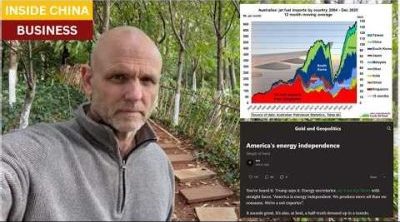
Chinese jet fuel and the myth of energy independence
or go to
Aletho News Archives – Video-Images
From the Archives
The Dirty Little Secret behind the “Global Terrorism Index”
The Omission of Israeli Terrorism in the Occupied Palestinian Territories
By Karin Brothers | Global Research | December 6, 2014
… The Israeli settlements — all of which are illegal – have been identified as a major impediment to peace. The refusal of a major “global” terrorism report to name the Israeli settlers as one of the groups most responsible for terrorism not only misrepresents a major source of regional violence but exposes the Global Terrorism Index as a propaganda tool that supports a U.S. agenda.
In recent years, governments have been attempting to thwart terrorism by blocking supportive fund-raising. When it comes to Israeli settlements, however, the US and Canada actually encourage fund-raising by giving organizations (such as Christian Friends of Israeli Communities (CFOIC) and the Jewish National Fund) financial support in the form of donor tax-deductions.
Charities which provide funds for the Israeli settlements should be regarded as terror-financing organizations. They should not only lose their tax-deductible status, but they should be banned because they support the violation of international humanitarian law. The terror-financing laws that are being strictly enforced for Muslim charities should be applied to Christian and Jewish charities as well. … Read full article
Blog Roll
 Aletho News
- Chinese jet fuel and the myth of energy independence
- Ukraine Sea Drone Fired From Libya Hit Russian Tanker in Mediterranean
- IRGC: Iranian forces launched no attacks during ceasefire hours
- Trump Administration Moves To Automate U.S. Military Draft Registration
- Spain orders reopening of Tehran embassy, condemns Israel’s carpet bombing of Lebanon
- Israel faces ‘unsustainable’ strategic crisis following 40-day war against Iran: Analyst
- Iran restricts Hormuz access to 15 vessels per day under ceasefire terms: Report
- The ‘Opposition Party’ Has Done Nothing to Stop the Iran War and Much to Goad Trump Into Continuing It
- Moscow backs Tehran on status of Lebanon in US-Iran deal
- How UK Regulator Ofcom Quietly Bypassed International Law to Police American Speech
- If Americans Knew
- Amnesty: Urgent – Protect Lebanese civilians from brutal escalation in Israeli attacks
- Is The War Against Iran Over?
- Inside the Israeli army’s propaganda wing
- Hundreds of Gaza Amputees Stranded in Legal Limbo
- The gallows law: Israel moves toward executing Palestinian children
- Tucker Carlson: The Path to Peace requires ending ‘special alliance’ with Israel
- This is ceasefire? Israel’s biggest massacre yet in Lebanon, another journalist killed in Gaza – Daily Update
- Tucker Carlson on Israel: This Is the Behavior of an Ally? Really?
- Gazans face a triple crisis: severe shortages of water and bread, healthcare in tatters
- NY Times reports how Netanyahu took the US into Iran War
- No Tricks Zone
- An Inconvenient Tree: Uncovered In Alps… Europe Much Warmer Than Today 6000 Years Ago
- New Study Reports A 60% Slowdown In Greenland’s Ice Loss Rate In The Last Decade
- Low Intensity Tornado Wrecks Major Solar Farm, Creating A Potential Toxic Dump
- New Study Finds Warming Saves Lives…Cold Temperatures 12 Times More Deadly Than Excess Heat
- German Science Blog Accuses PIK Climate Institute Of Hallucinating Climate Tipping Points
- Devastating Assessment Of Comirnaty Vaccine By Former Senior Pfizer Europe Toxicologist
- New Study: CO2 Is ‘Effectively Negligible’ As An Explanatory Climate Change Factor Since 2000
- Former Pfizer Toxicologist Dr. Helmut Sterz Tells Bundestag Hearing Pfizer Vaccine Should Have Never Been Approved
- Energy Expert: Germany’s Nuclear Phaseout Was A “500 Billion Euro Mistake”
- New Research: South Australia’s Mid-Holocene Sea Surface Temperatures Were 4°C Warmer Than Today
 Aletho News