Korea and Venezuela: Flip Sides of the Same Coin
By Jacob G. Hornberger | Future of Freedom Foundation | August 14, 2017
By suggesting that he might order a U.S. regime-change invasion of Venezuela, President Trump has inadvertently shown why North Korea has been desperately trying to develop nuclear weapons — to serve as a deterrent or defense against one of the U.S. national-security state storied regime-change operations. In fact, I wouldn’t be surprised to see Venezuela and, for that matter, other Third World countries who stand up to the U.S. Empire, also seeking to put their hands on nuclear weapons. What better way to deter a U.S. regime-change operation against them?
Think back to the Cuban Missile Crisis. The U.S. national-security establishment had initiated a military invasion of the Cuba at the Bay of Pigs, had exhorted President Kennedy to bomb Cuba during that invasion, and then had recommended that the president implement a fraudulent pretext (i.e., Operation Northwoods) for a full-scale military invasion of Cuba.
That’s why Cuba, which had never initiated any acts of aggression against the United States, wanted Soviet nuclear missiles installed in Cuba. Cuba’s leader Fidel Castro knew that there was no way that Cuba could defeat the United States in a regular, conventional war. Everyone knows that the military establishment in the United States is so large and so powerful that it can easily smash any Third World nation, including Cuba, North Korea, Iraq, Afghanistan, and Venezuela.
Castro’s strategy worked. The Soviet nuclear missiles installed in Cuba drove Kennedy to reject the Pentagon’s and CIA’s vehement exhortations to bomb and invade Cuba. The way the Pentagon and the CIA saw the situation was that Kennedy now had his justification for effecting a violent regime-change operation in Cuba. The way Kennedy saw the situation was that a violent regime-change operation through bombing and invasion could easily result in all-out nuclear war between the United States and Russia.
It turned out that Kennedy was right. What the Pentagon and the CIA didn’t realize at the time is that Soviet commanders on the ground in Cuba had fully armed tactical nuclear weapons at their disposal and the battlefield authority to use them in the event of a U.S. bombing or invasion of the island. If Kennedy had complied with the dictates of the Pentagon and the CIA, it is a virtual certainty that the result would have been all-out nuclear war between the Soviet Union and the United States. To his ever-lasting credit, Kennedy struck a deal in which he vowed that the United States would cease and desist from invading Cuba in return for the Soviet Union’s withdrawal of its nuclear missiles from Cuba.
The point is this: If the Pentagon and the CIA had not been trying to get regime-change in Cuba, Cuba would never have felt the need to get those Soviet missiles. It was the Pentagon’s and CIA’s commitment to regime change in Cuba that gave us hte the Cuban Missile Crisis.
Equally important, the resolution of the crisis showed that if an independent, recalcitrant Third World regime wants to protect itself from a U.S. national-security-state regime-change operation, the best thing it can do is secure nuclear weapons. Thus, the current crisis over North Korea’s quest to get nuclear weapons to deter a U.S. regime-change operation is rooted in how Cuba deterred the U.S. national security establishment’s regime-change efforts in 1962.
Americans would be wise to regime change operations in North Korea and Venezuela in the context of the U.S. government’s overall foreign policy of military empire and interventionism.
Recall, first of all, that the U.S. government has a long history of interventionism in Latin America, where it has brought nothing but death, destruction, suffering, misery, and tyranny. Nicaragua, Guatemala, Chile, Brazil, Panama, and Grenada come to mind.
In fact, the situation in Chile that resulted in U.S. intervention was quite similar to today’s situation in Venezuela. In Chile, a socialist was democratically elected and began adopting socialist policies, which caused economic chaos and crisis. The CIA and Pentagon intentionally and secretly did everything they could to makes matters worse. U.S. officials even engaged in bribery, kidnapping, and assassination in Chile. They incited and encouraged a coup that succeeded in ousting the democratically elected socialist and replaced by a “pro-capitalist” military general, whose forces proceeded to round up, kidnap, torture, rape, or execute tens of thousands of people, including the murder of two Americans, all with the support and complicity of the Pentagon and the CIA.
Haven’t we seen the same types of results with the U.S. regime-change operations in Iraq, Afghanistan, Libya, Yemen, Syria, and elsewhere? Death, destruction, and chaos, not to mention a gigantic refugee crisis for Europe.
And look at what the pro-empire, interventionist system has done to the American people. Constant, never-ending crises and chaos, with North Korea being just the latest example. Out of control federal spending and debt that are threatening the nation with financial bankruptcy and economic and monetary crises. Totalitarian-like powers being exercised by the president and his national-security establishment, including assassination, torture, and indefinite detention. Weird, bizarre random acts of violence that reflect the same lack of regard for the sanctity of human life that U.S. officials display in faraway countries.
None of this is necessary. It’s entirely possible for Americans to live normal, healthy, free lives. All it takes is a change of direction — one away from empire and interventionism and toward a limited-government republic and non-interventionism in the affairs of other nations. That’s the way to achieve a free, prosperous, harmonious, and friendly society.
Amnesty International – weaponizing hypocrisy for the US and NATO
Tortilla con Sal | Telesur | August 12, 2017
Over the last year, in Latin America, Amnesty International have taken their collusion in support of NATO government foreign policy down to new depths of falsehood and bad faith attacking Venezuela and, most recently, Nicaragua. The multi-million dollar Western NGO claims, “We are independent of any government, political ideology, economic interest or religion”. That claim is extremely dishonest. Many of Amnesty International’s board and most of the senior staff in its Secretariat, which produces the organization’s reports, are individuals with a deeply ideologically committed background in corporate dominated NGO’s like Purpose, Open Society Institute, Human Rights Watch, and many others.
Mexico has over 36000 people disappeared and abuses by the security forces are constant. Colombia has over 4 million internally displaced people with over 53 community activists murdered just in 2017. Amnesty International generally puts that horrific reality in context by including criticism of forces challenging those countries’ authorities. By contrast, its reporting on Venezuela and Nicaragua, like those of other similar Western NGOs, reproduces the false claims of those countries’ minority political opposition forces, all supported one way or another by NATO country governments.
In Venezuela and Nicaragua, Western human rights organizations exaggerate alleged government violations while minimizing abuses and provocations by the opposition. This screenshot of Amnesty International’s three main news items on Venezuela from August 9th gives a fair idea of the organization’s heavily politicized, bad faith coverage of recent events.
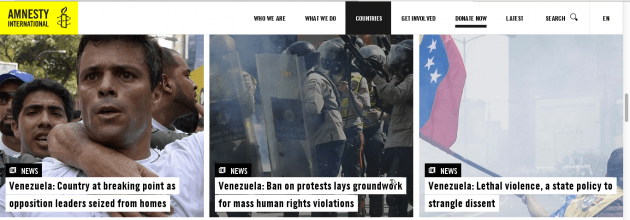
This is identical false coverage to that of Western mainstream corporate media and most Western alternative media outlets too. Amnesty International’s coverage minimizes opposition murders of ordinary Venezuelans, setting many people on fire, violent attacks on hospitals, universities and even preschools and innumerable acts of intimidation of the general population. That headline “Venezuela: Lethal violence, a state policy to strangle dissent” is a pernicious lie. President Nicolas Maduro explicitly banned the use of lethal force against opposition demonstrations from the start of the latest phase of the opposition’s long drawn out attempted coup back in early April this year.
Likewise, against Nicaragua, Amnesty’s latest report, kicking off their global campaign to stop Nicaragua’s proposed Interoceanic Canal, also begins with a demonstrable lie : “Nicaragua has pushed ahead with the approval and design of a mega-project that puts the human rights of hundreds of thousands of people at risk, without consultation and in a process shrouded in silence” That claim is completely false. Even prior to September 2015, the international consultants’ impact study found that the government and the HKND company in charge of building the Canal had organized consultations with, among others, over 5400 people from rural communities in addition to 475 people from indigenous communities along the route of the Canal and its subsidiary projects. There has been very extensive media discussion and coverage of the project ever since it was announced.
That extremely prestigious ERM consultants’ Environmental and Social Impact study, which together with associated studies cost well over US$100 million, is publicly available in Spanish and in English. Two years ago, it anticipated all the criticisms made by Amnesty International and was accepted by the Nicaraguan government, leading to a long period of analysis and revision that is still under way. Amnesty International excludes that information. Recently, government spokesperson Telemaco Talavera, said the continuing process involves a total of 26 further studies. Until the studies are complete, the government is clearly right to avoid commenting on the proposed Canal, because the new studies may radically change the overall project.
Amnesty International states, “According to independent studies of civil society organizations, along the announced route of the canal, approximately 24,100 households (some 119,200 people) in the area will be directly impacted.” But, the ERM study notes, “HKND conducted a census of the population living in the Project Affected Areas. The census determined that approximately 30,000 people (or 7,210 families) would need to be physically or economically displaced.” But Amnesty International’s report omits that contradictory detail, demonstrating how irrationally committed they are to the false propaganda of Nicaragua’s political opposition.
Amnesty International claim their research team interviewed “at least 190 people” concerned about the effects of the Canal. By contrast, the Nicaraguan government and the HKND company have discussed the project with around six thousand people in the areas along the route of the Canal. In that regard, even the local church hierarchy has criticized the way the Nicaraguan opposition have manipulated rural families on the issue of the Canal. But that fact too, Amnesty International omits. Their whole report is tailor made to supplement the political opposition’s campaign for US intervention via the notorious NICA Act.
The Nicaraguan government has made an express commitment to a fair and just resolution of the issue of expropriations. Its 2015 report on the Canal in the context of its National Development Plan, states : “The Nicaraguan government and HKND will guarantee that persons and families on the route of the Canal’s construction will have living conditions superior to those they currently have (without the Canal). To that end, the Government of Reconciliation and National Unity, via the Project’s Commission, will guarantee not just a fair and transparent indemnification of their properties, via negotiations and direct agreements with each family affected, but furthermore will promote actions to improve their economic conditions, health care, education, housing and employment.
But the Amnesty International report systematically excludes that and any other sources giving the government’s point of view, claiming it was unable to access primary sources either from the government itself or from among the Canal’s numerous advocates. However, secondary sources abound that categorically contradict Amnesty’s advocacy against the Canal. Their report specifically and extensively attacks the Law 840, facilitating the construction of the Canal and its sub-projects, but cynically omits a fundamental, crucial detail, while also failing completely to give relevant social and economic context.
The crucial detail is that Law 840’s Article 18 specifically states the Canal project “cannot require any Government Entity to take any action that violates the political Constitution of the Republic of Nicaragua or the terms of any international treaty of which the State of the Republic of Nicaragua is a party.” Amnesty International completely omit that absolutely crucial part of the Law 840 from their report because it makes redundant their advocacy of opposition claims attacking the equity and legality of the Canal’s legal framework. The same is true of the relevant political, social and economic context.
Nicaragua’s political culture is based on dialog, consensus and respect for international law. All the main business organizations and labor unions in Nicaragua and all the main international financial and humanitarian institutions acknowledge that. President Daniel Ortega and Vice President Rosario Murillo enjoy levels of approval of over 70%. There is good reason for that massive majority approval. Among many other factors, the precedents of how the Nicaraguan authorities have resolved relocating populations affected by large projects, for example the Tumarín hydroelectric project, completely contradict the scaremongering of the Nicaraguan opposition propaganda, so glibly recycled by Amnesty International.
Nicaragua’s current Sandinista government has been the most successful ever in reducing poverty and defending the right of all Nicaraguans to a dignified life. To do so, among many other initiatives, it has mobilized record levels of foreign direct investment. In that context, Law 840 explicitly protects the huge potential investments in the proposed Canal, while at the same time implicitly guaranteeing constitutional protections. Similarly, ever since the announcement of the Canal, President Ortega has repeatedly, publicly reassured people in Nicaragua that any families who may eventually be relocated should the Canal go ahead will get every necessary help and assistance from the government.
Just as it has done in the case of Venezuela, on Nicaragua, Amnesty International misrepresents the facts, cynically promoting the positions of the country’s right wing political opposition. In Latin America, under cover of phony concern for peoples’ basic rights, in practice Amnesty International, like almost all the big multi-millionaire Western NGOs, gives spurious humanitarian cover to the political agenda of the US and allied country corporate elites and their governments. The destructive, catastrophic effects of Amnesty International’s recent role in the crises affecting Syria, Ukraine and now Venezuela, are living proof of that.
Three Social Leaders Murdered in Colombia in Only 72 Hours
teleSUR | August 12, 2017
The Colombian activist and social leader Fernando Asprilla was murdered on Friday in the Cauca department, and was the third death of a social leader recorded in a 72 hour period.
The Ombudsman of Colombia, Carlos Alfonso Negret Mosquera, showed in a recent report that during the period between the first of January, 2016, and March 1st of 2017, at least 156 homicides, five disappearances, and 33 violent attacks against community and social leaders occurred.
According to the report given by Negret, one of the primary causes of the deadly trend is the continued operations of illegal armed right-wing paramilitary organizations that have occupied territory left behind by the disarming Revolutionary Armed Forces of Colombia – People’s Army (FARC – EP).
Human rights defenders and activists in the districts of Antioquia, Arauca, Atlantico, Bolivar, Caldas, Caqueta, Casanare, Cauca, Cesar, Cordoba, Cundinamarca, Choco, Huila, La Guajira, Magdalena, Meta, Nariño, Norte de Santander, Putumayo, Risaralda, Santander, Tolima and Cauca Valley have been assassinated since the FARC’s demobilization process began.
As they have handed over their weapons and negotiated terms of peace with the Colombian government, FARC-EP has consistently demanded that the state works to dismantle paramilitarism in the country, saying its ongoing violence represents the greatest threat to the peace process.
The government however, has largely ignored the existence of paramilitaries, claiming that they were demobilized during Alvaro Uribe’s presidential term between 2006 and 2008. FARC-EP leaders have pointed out that many of the groups have been reclassified as criminal gangs, but continue to represent the same threat as always by assassinating leaders who fight for human and land rights.
Venezuela Brings Regional Elections Forward to October
teleSUR | August 12, 2017
Venezuela’s newly-elected National Constituent Assembly, ANC, has brought forward the regional elections by two months.
The polls, which had been scheduled to take place on December 10, will now be held in October following unanimous approval by the ANC.
The second vice president of the body, Isaias Rodriguez, said the process for the election of governors and state governors, will take place “within the framework of the electoral program already announced by the electoral power.”
ANC Constituent Tania Diaz explained that bringing the regional elections forward is a mandate of the people and added, “The recent elections to choose the members of the ANC represents a popular victory and a defeat of the violent actions promoted in the last four months by the right, which has triggered more than 100 fatalities.”
Another member of the ANC, Melvin Maldonado recalled that in 18 years of the Bolivarian Revolution, there have been 21 elections, which “shows the strength of our National Electoral Council, and it also shows the democratic nature and electoral power in our country.”
The president of the National Electoral Council of Venezuela, Tibisay Lucena, said the submission of nominations for the regional elections will start on Sunday August 13 and close the following day.
OAS Chief Almagro Praises Israel, Condemns Venezuela
teleSur | August 10, 2017
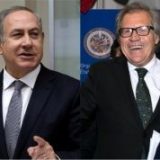 Secretary-General of the Organization of American States Luis Almagro used his one-day visit to Israel to condemn Venezuela’s leftist government while expressing “pride that Israel is a friend of the Americas,” praising what he called Tel Aviv’s record of respecting human rights and democracy.
The tour seemed less like the diplomacy of a “supra-president” representing the Western Hemisphere, and more like a roadshow for the OAS chief to reiterate Trump administration talking points.
“As friends, Israel and the Americas share key values such as democracy and human rights. We have opportunities to learn from each other,” he told a gathering of World Jewish Congress members in Jerusalem. Despite Tel Aviv’s globally unrecognized claims that the ancient city is its “national capital,” Jerusalem remains under illegal occupation.
The themes of democracy and human rights were repeated multiple times by the secretary-general during his time with Israeli officials, usually in such contexts as “Israeli … our essential partner in the Middle East — due to its commitment to democracy and to human rights.”
Israeli authorities face routine criticism from world legal bodies like the U.N. for their disregard of human rights standards, especially in their discriminatory treatment of the Palestinian population.
“Israel is a democratic state in which the institutions function,” Almagro told Haaretz. “The functionality of institutions and the balance of powers are fundamental for us and are the paradigm of the health of a democracy.”
Israeli institutions systematically deny the people of Palestine their right to self-determination, imposing stringent restrictions on their movement, travel, and trade. Israeli security forces have been criticized by rights organizations for resorting to excessive force, including extrajudicial killings, on a regular basis, while unarmed Palestinian demonstrators — adults and children — face imprisonment, torture, and abuse for taking part in protests against occupation activities. The construction of massive settlements deep in the occupied West Bank likewise is illegal under international law.
Almagro’s tone jars dramatically with his opinion five years ago as foreign minister of Uruguay, admitting in an interview that he voted on U.N. resolutions condemning Israeli settlements and human rights violations “with both hands” while arguing that the Israeli occupation’s crimes were irrefutable from a legal standpoint.
On the subject of Venezuela, Almagro struck an emphatic tone consistent with his prior calls to remove the country’s government through “regime change” efforts.
“It is a dictatorship, there’s no other definition for Venezuela today,” Almagro told Israeli daily Haaretz.
Seemingly oblivious to the irony in his words, he then condemned the left for having “flinched on democracy and human rights” in the South American nation.
Opining about U.S. unilateral sanctions on Venezuela, Almagro said, “no country feels comfortable in this situation … but that does not mean the sanctions don’t hit hard and hit those specific places that most affect the regime.”
Since becoming secretary-general of the OAS, Almagro has become a partisan of Venezuela’s right-wing opposition, railing against alleged abuses by the “ruling regime” and issuing thousands of tweets against the Bolivarian government, accompanied by calls for foreign intervention in the country.
In contrast, Almagro has been relatively silent in respect to the Western Hemisphere’s most pressing human rights crises — such as the Mexican government’s crackdowns on social movements resisting neoliberal structural reforms, assassinations of social movement leaders and paramilitary attacks on rural and Indigenous communities throughout Latin America, and the parliamentary coup against Brazilian President Dilma Rousseff.
The OAS chief’s contradictory messages underscore Bolivian President Evo Morales’ description of Almagro’s “submission to the North American empire.”
Peru Forced Sterilizations Victims Oppose Fujimori Pardon

Protests against the Fujimoris. | Photo: EFE
By Neil Giardino | teleSUR | August 10, 2017
Human rights activists and victims of forced sterilizations in Peru under former president Alberto Fujimori are expressing outrage over the possibility of his pardon by current Peruvian President Pedro Pablo Kuczynski.
“They’d be mocking the people and mocking Peru, because (Fujimori) has committed crimes,” said Obdulia Guevara, Director of the Association of Women of Huancabamba, a group representing victims of forced sterilizations.
More than 200,000 mostly poor, Indigenous Quechua-speaking women in Peru are said to have been forcefully sterilized between 1996 and 2000 under Fujimori, who is currently serving a 25-year prison sentence for unrelated human rights violations.
During his 2016 campaign Kuczynski said he would oppose pardoning Fujimori, but in a recent radio interview, he indicated he’s now considering a medical pardon of the 78-year-old ex-president, who led from 1990–2000 and has been in prison since 2009.
Kuczynski’s reversal is widely seen as an attempt to appease the strong opposition party led by Fujimori’s daughter, Keiko Fujimori. Her party, Fuerza Popular, holds a solid majority in congress and lost the 2016 election by a narrow margin.
The political about-face by Kuczynski isn’t sitting well with Guevara and members of her organization representing women claiming to have been sterilized without consent in the late 90s.
“He isn’t representing Fujimori. He’s representing the Peruvian people, including these sterilized women,” said Guevara.
Kuczynski wouldn’t be the first recent Peruvian leader to open a national dialogue on pardoning Fujimori; his two predecessors also weighed the option.
“Every time they raise the issue of a pardon, it re-victimizes, because once again they publically debate the possibility of liberating someone responsible for such serious crimes,” said human rights activist Francisco Soberon, whose NGO Asociación Pro Derechos Humanos (APRODEH) has advocated for victims of state violence in Peru since the 90s.
While Fujimori’s critics label him a dictator, supporters say his policies stabilized a reeling economy and helped put down a violent terror campaign that nearly brought the country to its knees in the 90s.
The sterilizations were part of a national reproductive health and family planning program meant to reduce rural poverty. But testimonies by victims said the sterilizations were performed under verbal and sometimes physical threat. At least 18 are said to have died as a result of the tubular litigation surgeries, many of which were performed in rustic clinics lacking proper medical equipment.
Fujimori has maintained the surgeries were voluntary.
But government documents unearthed in 2015 suggest the sterilizations were ordered to be carried out, that doctors were made to keep sterilization quotas, and that Fujimori himself was briefed monthly on the progress of the program.
Investigations into the sterilizations have been opened several times since 2003, but were each rejected by the courts, which decided the sterilizations were not performed under official state policy or carried out in a systematic fashion.
The government has not issued an official apology or offered reparations to victims.
For now, Guevara said her organization of victims of forced sterilizations are waiting for the current president to keep a promise he made during his campaign.
“He’s not shouldering his role as president. He’s looking for consensus, and consensus for what?” she said.
A July 2017 poll suggested that 60 percent of Peruvians support a pardon of Fujimori.
Moscow: Anti-Caracas Sanctions Hamper Normalization of Situation in Venezuela
Sputnik – 10.08.2017
The recently imposed sanctions against Venezuela do not contribute to the normalization of the situation in the country, pushing it back into deadlock instead, the Russian Foreign Ministry said in a statement Thursday.
On Wednesday, the US Department of Treasury announced the expansion of its sanctions on Venezuela. These measures included travel bans and asset freezes on eight people who played a role in convening the new legislative body, the Constituent Assembly.
“Certain internal and external political forces promote a destructive line aimed at dismantling the emerging dialogue and, in fact, at returning the situation to the initial impasse, contrary to the very logic of developments [in Venezuela] and their own calls for the democratization of the ongoing processes in Venezuela. The expansion of unilateral sanctions and restrictions, isolationist measures, pressure, and the ultimatum toward Caracas applied by a number of countries can hardly be seen in a different light,” the statement read.
The Russian Foreign Ministry stressed that the situation in Venezuela could only be addressed through direct negotiations between the government and opposition.
According to the statement, peace in Venezuela depends on the willingness of all parties to return to a dialogue within the Venezuelan Constitution, without any outside intervention, to form a common agenda.
The National Constituent Assembly, which proclaimed itself the main governing body of Venezuela, is a new legislature with the power to amend the country’s constitution. It was elected on July 30 amid mass protests across Venezuela, which resulted in 10 deaths on election day alone. Overall, the death toll has risen to more than 120 people since early April.
The Venezuelan opposition has refused to recognize the legitimacy of the Constituent Assembly, as it believes that Venezuelan President Nicolas Maduro’s plan for constitutional reform aims at sidelining the opposition-controlled National Assembly.
Brazil’s Slave-Descended Quilombos Shaken by String of Murders
teleSUR – August 8, 2017
Brazilian authorities have revealed that six rural workers were mysteriously murdered in their homes in the lush rural state of Bahia in Brazil Sunday.
The crime, which was only announced Tuesday, is the latest in a wave of killings targeting residents in the disputed Iuna Quilombola Territory that lies in the city of Lencois. The murders bring to eight the number of those killed in disputed lands in Bahia within less than a month.
According to authorities, the victims lived in two neighboring homes — four in one house and two in the other — and were killed by men in an unidentified black vehicle. Each victim was shot four to six times. All were quilombolas — the descendants of Afro-Indigenous Brazilians who escaped from slavery to hinterland settlements known as Quilombos.
The victims have been identified as Adeilton Brito de Souza, Gildasio Bispo das Neves, Amauri Pereira Silva, Valdir Pereira Silva, Marcos Pereira Silva and Cosme Rosario da Conceicao
While state security forces are investigating possible links between the victims and drug traffickers, the crimes have shed light on an ongoing dispute between quilombolas and farmers who want the quilombolas expelled from the region.
In 2010, the Quilombola Territory of Iuna began the process of gaining legal recognition and titles to the land. The roughly 3,500-acre territory is home to 1,400 residents and is in the city of Lencois, a major eco-tourist destination and the starting point for treks into Chapada Diamantina National Park. The park spans a highland region of canyons and waterfalls known for its hiking trails, which were opened by miners searching for diamonds, gold and other precious minerals.
While in theory, Brazil’s 1988 Constitution assures quilombos titles to lands they historically are located on, very few quilombos actually enjoy legal recognition. According to recent data, 303 quilombo territories in Bahia state alone are seeking regularization, but only 34 are in an advanced state of regularization. The state still has no legally-recognized quilombola territories, while 19 territories have been identified as disputed land claimed by third parties.
On July 16, quilombola Lindomar Fernandes Martins was fatally shot six times on a road leading into Iuna. No one was arrested for the crime. The next day — also in Bahia — Jose Raimundo Mota de Souza, Jr., the president of the Association of Rural Workers in the Jiboia Quilombola Community, was shot dead while working in the fields with his brothers and family members.
The Association of Rural Workers’ Advocates and Catholic Church-linked Pastoral Land Commission, as well as the National Institute of Colonization and Agrarian Reform — the government agency charged with processing quilombo land claims — have issued messages of solidarity with the victims’ families and urged authorities to investigate and prosecute those involved in Sunday’s killings.
Mothers of Plaza de Mayo: Maldonado Victim of ‘State Violence’
teleSUR – August 8, 2017
The Grandmothers and Mothers of the Plaza de Mayo have blamed the Argentine government for the disappearance of Santiago Maldonado, an activist who disappeared after a military police raid on a Mapuche community Aug. 1.
The award-winning human rights group say Maldonado was a victim of “institutional state violence” and demand President Mauricio Macri recovers the activist alive.
“The Argentine community knows we have a disappearance in the democracy of Mr. Macri.” Estela de Carlotto, president of the Grandmothers and Mothers of the Plaza de Mayo, said at a press conference.
The organization said it will occupy the Plaza de Mayo on Friday to pressure the government to deliver Maldonado.
Argentina’s Center for Legal and Social Studies and the Permanent Human Rights Assembly have joined the call to recover Maldonado, claiming the state deliberately disappeared the activist to threaten the Mapuche community.
“This Friday at 5 p.m. we will occupy the Plaza de Mayo with one message: Santiago Maldonado must be found alive.”
“This attack against the community is no coincidence. It is a message from the government to say, ‘guys, don’t mess with us,’” said Norma Rios, president of the Permanent Human Rights Assembly.
Maldonado was last seen during a military police eviction operation against the Pu Lof Mapuche community in the Chubut department of Cushamen. Witnesses say they saw officers shove the 28-year-old into a van and drive away.
Maldonado’s family blame the military police for the young man’s disappearance but the government denies its involvement.
Military Base Attacked in Venezuela, Two Dead
By Katrina Kozarek and Rachael Boothroyd Rojas | Venezuelanalysis | August 7, 2017
The 41st Armored Brigade of Fort Paramacay in Carabobo State was attacked by civilians and ex-military officials in the early hours of Sunday morning as part of an unsuccessful attempt to provoke a military rebellion, Venezuelan President Nicolas Maduro has confirmed.
According to the president, the attack occurred at 3:50 am when 20 armed men entered the facilities and headed directly for the arms depository, where a confrontation ensued until approximately 8am. The confrontation left two dead and one injured. A further ten have been arrested in connection with the attack.
Moments before the coordinated assault, flyers were dropped outside the military base referring to the action as ‘Operation David’ and calling for all members of the armed forces to join the “military rebellion”. The messages also told the soldiers who refused to mutiny against the government that they should consider themselves a “military objective” and “face the consequences”.
The attack was also accompanied by a video released on social media by former military commander Juan Caguaripano Scott, who had reportedly fled the country during the 2014 opposition protests known as the guarimbas and has since lived between Miami, Costa Rica, Panama and Colombia.
“We declare ourselves in legitimate rebellion, united today more than ever, with the brave Venezuelan people, to refuse to recognize the murderous tyranny of Nicolás Maduro. This is not a coup d’état, this is a civic and military action to restore order and to save the country from total destruction,” states Caguaripano in the video.
It is not clear when nor where the video was recorded.
Though Caguaripano and several international media sources have referred to the attack as a civic-military rebellion, the majority of those captured were not active military personnel. One of the detained men was identified as ex-lieutenant Oswaldo José Gutiérrez Guevara who deserted the military after being investigated for theft. The remaining nine were paid civilians recruited from the states of Zulia, Yaracuy and Lara, and all had criminal records, said the Ministry of Defense. They were aided and abetted by First Lieutenant Yefferson Gabriel García Dos Ramos, who was in charge of the fort’s weapons depository.
Authorities are yet to release the names of the two fatalities, but it is known that both Caguaripano and Dos Ramos were on the ground at the time of the attack and managed to evade capture.
Government officials have since described the offensive as a terrorist attack as opposed to a military rebellion, citing the lack of serving military officials involved in the operation.
According to a tweet from Vice Minister of International Communication, William Castillo, the attack was a “propaganda operation” with “civilians disguised as current and former military officials”.
The Minister of Information and Communication Ernesto Villegas also announced that opposition forces in Venezuela were attempting to create and circulate “fake news” about the country, as well as “trying out the formula [used in] the Ukraine.”
Sunday’s assault on the military fort follows a helicopter attack against the Supreme Court by former investigative police official Oscar Pérez in June. Perez also called on the military to rise up against the Maduro government, echoing similar demands voiced by opposition spokespeople for the past 18 months. Over 120 people have also been killed in violent opposition-led unrest since the beginning of April.
On Sunday, Minister of Defense Padrino Lopez released an official communique on behalf of the Bolivarian National Armed Forces (FANB) in relation to the incident. Lopez said that although the group had been “immediately repelled” by army personnel, some of the attackers had managed to steal weapons from the fort’s depository and were currently at the centre of a manhunt by state security agencies.
The communiqué also stated that those responsible for the attack will face military charges.
“We will not accept under any circumstances the violation of our sovereignty, and even less that the social gains achieved for the benefit of the great majorities are undermined,” reads the statement.
The document finished by calling on the men and women of Venezuela to work together to find solutions to the current turmoil in the country within a legal framework.
Global ‘False’ Witness Targets Nicaragua
By Tortilla con Sal | teleSUR | August 4, 2017
Global Witness is a well-established environmental and human rights non-governmental organization based in Britain.
As with many other similar organizations, its reports often figure in news media as authoritative sources on international issues. Ever since the 1980s and, increasingly so, after the turn of the century, the status of NGOs as trustworthy information sources on foreign affairs has become increasingly untenable as they have been more and more co-opted by corporate interests and governments to promote the Western elites’ neocolonial global policy agenda.
In the case of Nicaragua, in 2016 Global Witness produced a brief, flawed and unreliable account of land conflicts in Nicaragua’s Northern Caribbean Autonomous Region in a report called “On Dangerous Ground”. In June 2017, they produced a report called “Defenders of the Earth”, with a section on Nicaragua even more poorly researched and false than the previous one. Three main reasons stand out to dismiss the latest Global Witness report on Nicaragua as unreliable and in bad faith.
Firstly, the report itself is clearly biased and flawed, from even a cursory analysis of its references and their sources by anyone familiar with Nicaragua. Secondly, the organization’s human and material resources all come from a very narrow managerial class and corporate funding base, overwhelmingly advocating the foreign policy positions of the United States government and its allies. Thirdly, the history of Global Witness clearly indicates its categorical bias in favor of NATO country governments’ policy positions in the countries that figure in its reports and too its systemic defense of the very corporate capitalism whose destructive effects Global Witness superficially and selectively criticizes.
Global Witness sources on Nicaragua
Before looking at the text of the false Global Witness attack on Nicaragua, it is worth looking at the sources they identify in their footnotes, of which there are 23, composed of a total of 44 references. For anyone familiar with Nicaraguan politics and society since the war of the 1980s many of the sources are wearily familiar and readily identifiable as anti-Sandinista, for example, the virulently anti-Sandinista La Prensa newspaper. Some of the references are duplicates and some disguise the fact that while apparently distinct, ultimately the information they provide comes from one single source. (Here’s a link to the relevant spreadsheet for anyone interested in a more detailed analysis.)
Of the 44 references, some of which are duplicates, not one represents the view of the Nicaraguan authorities or others criticized in the report or any source sympathetic to them. 16 references are to sources inside Nicaragua politically opposed to the Nicaragua’s Sandinista government. 25 of the sources are external to Nicaragua but with a long record identifying them as ideologically opposed to the Sandinista government. Of those 25 sources, one might argue that the Washington-based Interamerican Commission for Human Rights or the EFE Spanish language news agency are impartial, but their record is indisputably biased against Nicaragua’s Sandinista authorities.
For all but imperialist ideologues, the Paris based International Federation for Human Rights (FIDH) has been discredited in particular, most recently, by its flagrant partisan bias in favor of NATO country government policies attacking the populations of Libya and Syria. One source, a reference to the law authorizing Nicaragua’s Canal, is completely neutral. Only one media source, El Nuevo Diario, is generally independent. Two references are to sources within the Western environmental scientific lobby, which has its own set of highly questionable biases, prejudices and neocolonial hypocrisy.
“Methodology”
As if by way of justifying this desperately unfair selection of sources, Global Witness also offer an account of what they call their “methodology”. They aver, “We have recorded data about the cases using the HURIDOCS Event Standard Formats and Micro-Thesauri, an approach which is widely used to manage and analyse material of this nature.”
That Global Witness claim is demonstrably untrue. Whatever their aspirations they certainly did not use the HURIDOCS approach.
HURIDOCS (Human Rights Information and Documentation Systems, International) is a European NGO established in 1982 to facilitate networking between human rights organizations around the world. HURIDOCS says its ‟specific role in this capacity-building process lies in improving access to and the dissemination of human rights information through more effective, appropriate and compatible methods and techniques of information handling. HURIDOCS recognises that we live in an age of tremendous advances in information and communication technologies. There is the need to master these technologies to aid us in our human rights work. At the same time, we must be conscious of the fact that the technologies to be applied should be appropriate and responsive to the main focus of the mandates of human rights organisation.”
HURIDOCS exposition of their approach includes the following definitions:
Fact-finding is the process of identifying the violations in one event, and establishing the facts relevant to these violations. Fact-finding and investigation are terms that are used interchangeably.
Documentation is the process of systematically recording the results of an investigation or fact-finding in relation to an event or number of events. Fact-finding and documentation are organically related and should not be viewed as separate processes.
Monitoring is closely observing a given situation in society over a long period of time to see whether human rights standards are met. To carry out monitoring, investigation and documentation of a large and/or representative number of events are conducted.”
Global Witness are not in compliance with the HURIDOCS approach because their practice in their reporting on Nicaragua demonstrably violates all of these definitions.
Their fact-finding or investigation is so heavily biased as to make it impossible for them to establish the facts. Consequently, thanks to this gross fact finding bias, their documentation is partial, often inaccurate and categorically incomplete. Nor do they show any sign of having done due diligence in monitoring consistently over time via ” investigation and documentation of a large and/or representative number of events” or the context of those events in Nicaragua.
Other theoretical considerations
Apart from these chronic procedural failures, other theoretical considerations cry out for clarification.
Global Witness say, “This report is based on research on killings and enforced disappearances of land and environmental defenders, who we define as people who take peaceful action to protect land or environmental rights”.
But in a bitter property dispute between competing communities, clarifying who is defending whose rights becomes a fundamentally important question. Certainly in Nicaragua’s northern Caribbean Coast, unscrupulous Miskito community leaders are themselves involved in provoking these property disputes by illegally selling land to rural families migrating in search of a better life. Miskito gangs have attacked and murdered many such people, a factor not even mentioned by Global Witness. They completely evade the issue of identifying in a responsible, proportionate way whose rights are being violated.
Similarly, Global Witness state, “cases were identified by searching and reviewing reliable sources of publicly online information”. But Global Witness obviously used heavily politicized criteria for deciding what is a reliable source, because not one single reference in their report on Nicaragua gives the Nicaraguan authorities’ side of the story and only one reference can fairly be described as ideologically independent. That renders completely incredible the phony Global Witness claim to systematic research.
They claim their investigation is systematic because “We set up search engine alerts using keywords and conducted other searches online to identify relevant cases across the world.” However, in the case of a small country like Nicaragua, a genuinely systematic search can readily be done covering a much wider range of sources than those accessed by Global Witness without recourse to modish, geeky “search engine alerts”. The poverty of sources evident in the report’s footnotes make Global Witness’s procedure look ridiculous.
Global Witness claim they “verify” the results of their investigation because “Where possible, we checked with in-country or regional partners to gather further information”. But they only cross-checked with ideologically and politically biased organizations, apparently using the same highly questionable, politically compromised sources they cite in their report.
Karl Popper, philosophical darling of the Open Society ideology embraced by Global Witness, explained over 50 years ago in “Conjectures and Refutations” that verification is essentially authoritarian. He argued that a truly scientific investigation requires conjecture and falsification, a search for errors rather than for justification.
If one goes along with Popper, it should surprise no one that Global Witness uses an essentially authoritarian methodology. Self-evidently, their job is not to discover the facts or to impartially establish the truth via a hypothetic-deductive Popper-style process , but to project a manipulative version of events justifying ideologically loaded interpretations favored by their corporate funders, an inherent bias understandably unacknowledged by Global Witness.
Nor is it surprising to learn from their account of their methodology, “While we have made every effort to identify and investigate cases in line with the methodology and criteria, it is important to add that our research mostly relies on public information and that we have not been able to conduct detailed national-level searches in all countries.”
That is not true either. Gobal Witness did not make “every effort” to investigate cases in line with their alleged methodology and criteria because they are flagrantly out of compliance with the definitions advanced by HURIDOCS.
A broader range of sources
Nor is is true that they were unable to conduct a detailed national-level search in the case of Nicaragua, because they could easily have included references from sources that contradict much of the information in the Global Witness report. The following is a brief sample of many other relevant sources, gleaned in a few hours searching on the Internet :
– Indigenous group splits from Miskito party in support of Sandinista government
– Attacks by indigenous gangs on settlers, killing nine
– Miskitos claim their own leaders illegally sold over 3000 acres of communal lands to outsiders
– Historic lease agreement between Canal Authority and indigenous people along the canal route
– Interview with HKND’s Bill Wild about the benefits of the Interoceanic Canal
– HKND’s Bill Wild on the Environmental and Social Impact Study
– Environmentalist Kamilo Lara explains why he believes in Nicaragua’s Interoceanic Canal
– Nicaragua’s Canal – the environmental and economic arguments
– Public Consultation on Lake Nicaragua for the Interoceanic Canal project
– Environmental and Social Impact Assessment of Nicaragua’s Interoceanic Canal – Conclusions and Recommendations
– Bishop accuses political opposition of manipulating canal protests
– Canal protestors attack and injure six police officers
Even this very limited sample of sources, put together from just a few hours searching on the Internet, gives a very different picture to the one presented by Global Witness. So it is false of Global Witness to suggest they lack the resources to be able to stress test and falsify the version of events they have published in their report. Given the tremendous resources and the numerous skilled, experienced, talented people working at Global Witness, only abject intellectual dishonesty explains their failure to report faithfully on Nicaragua
Incoherent claims
Be that as it may, based on their cynically biased sources and their absurdly deficient methodology, Global Witness proceed in their report to make the following claims:
11 defenders killed in 2016 – making Nicaragua the most dangerous country in the world per capita
But, as independent journalist John Perry and others have pointed out, none of those people killed can fairly be described as having being killed for defending the environment. They were in property disputes and all of them were killed either directly or indirectly in the course of those property conflicts. This is true in particular of the case cited by the Inter-American Commission for Human Rights (CIDH) , that of Bernicia Dixon Peralta, her husband Feliciano Benlis Flores and their 11 year old son Feliciano Benlis Dixon. Perry mentions some of the context. More context of the property disputes in the RAAN can be found here, here and here. Not a single person mentioned by Global Witness died in Nicaragua for defending the environment in the way that someone like Berta Cáceres did. Even so Global Witness have tended disingenuously to implicitly compare the situation in Nicaragua with that in Honduras, in particular with Berta’s murder.
The bad faith with which they do so is clear from the second claim in their report on Nicaragua:
10 of those murdered were indigenous people, with most killed in conflicts with settler communities over land. Meanwhile rural ‘campesino’ defenders faced threats, harassment and attacks, including for opposing the construction of an inter-oceanic canal.
Global Witness fails to make clear that groups from the indigenous Miskito people, whom Global Witness inaccurately portray as defenseless environmental defenders, are themselves guilty of murderous attacks against migrants settling land which in many cases the migrants apparently believed they had bought legitimately. Furthermore, the Global Witness report deliberately and falsely confuses the very specific situation of these property conflicts in Nicaragua’s northern Caribbean Coast with protests over the possible displacement of communities along the still to be exactly defined route of the proposed Inter-oceanic Canal 300 kilometers to the south. Global Witness unscrupulously frame their distorted version of events in the two regions to give the impression that in both cases the Nicaraguan authorities may in some way be directly or indirectly responsible for the violence.
In fact, even the New York Times has acknowledged in their otherwise generally hostile anti-Sandinista reporting that the Nicaraguan authorities do what they can with limited resources to protect the rights of indigenous peoples in the Northern Carribean Autonomous Region.
The situation along the route of the Canal is very different from that in the RAAN. Protests against the Canal are exploited by Nicaragua’s political opposition and groups participating in the protest demonstrations have damaged property and attacked police officers. In relation to this situation, completely separate from the property disputes more than 300km to the north, Global Witness claims:
Activists were increasingly criminalized: foreign environmentalists were expelled, community leaders arrested and legislation passed restricting freedoms of speech and association.
However in the very next paragraph, the report quotes anti-Canal activist Francisca Ramirez saying, ““We have carried out 87 marches, demanding that they respect our rights and we have had no response. The only response we have had is the bullet.”
Thus, the Global Witness allegation that rights to freedom of association are restricted is immediately contradicted by Francisca Ramirez declaring her group has organized over 80 public demonstrations to express their views.
Similarly, Ramirez claims “The only response we have had is the bullet.” But, in the next paragraph, we learn “a member of her community lost an eye and another was shot in the stomach”.
Thus, after 87 demonstrations, some of which supposedly involved many thousands of participants and in which “The only response we have had is the bullet”, Ramirez cites precisely two people suffering serious injury and only one of them with a gunshot wound. Ramirez omits that the protesters on the marches she organizes go armed with machetes and home-made mortars. They block highways, intimidate ordinary people going about their business, damage property and attack police officers.
In no Western country would that be tolerated without, to put it mildly, a robust response from the police and security forces. Even so, Global Witness promote Francisca Ramirez’s account as if she and her movement were non-political and non-violent, which they are not. But Global Witness excludes those facts.
Likewise, as John Perry has pointed out, the foreign environmentalists expelled from Nicaragua were involved in a suspicious incident involving a small explosion. Again, a reasonable question to Global Witness is why they excluded this highly relevant information given that in Britain or the United States any foreigner, especially any non-white foreigner, involved in such a suspicious incident would face prosecution and a potential jail term under those countries wide-ranging anti-terrorist laws.
Inaccuracies and falsehoods
Mixed in with these disingenuous, incoherent claims, Global Witness also allege, presumably as supporting context, that the proposed Canal “would force up to 120,000 indigenous people from their land”. This outrageous falsehood is sourced from the pro-NATO, right-wing dominated European Parliament, but is categorically contradicted by the relevant multi-million dollar Environmental and Social Impact report by the extremely prestigious ERM company based in the UK. The falsity of that claim is further confirmed by the Canal concessionary HKND company’s representative Bill Wild who argues that the route of the Canal has been altered to take local concerns into account in such a way that fewer than thirty indigenous families will be directly affected.
Overall, ERM reckons that up to 7210 families or around 30,000 people are likely to be displaced along the whole route of the Canal, over 270 kilometres. The scandalously untrue figure quoted by Global Witness is propaganda from Nicaragua’s political opposition who are exploiting Ramirez’s quasi-celebrity status among Western environmentalists to amplify overseas the marginal support for their unpopular position against the Canal in Nicaragua. That fact is reflected in the incoherence of the arguments set out by Ramirez and her backers in Nicaragua’s political opposition.
If 120,000 people were really going to be displaced by the proposed Canal then the figure of 30,000 protestors from around the country the same political opposition regularly quote to describe national opposition to the Canal just does not add up. Quoting that same opposition figure, Global Witness state, “Francisca has rallied campesino groups from around the country who will be adversely affected by the canal to call for a meaningful say in its development. In June 2015, 30,000 people gathered for an anti-canal protest – Francisca organized 40 trucks so her community could attend.”
In Nicaragua, the cost of hiring a truck or a bus to carry 60 people or a similar amount of material goods on a round trip of 100km is around US$120, while a round trip of 300km costs about US$175. So hiring 40 diesel-guzzling trucks and buses with their drivers will have cost a minimum of US$4000. But Ramirez is an impoverished mother of five from a similarly impoverished community.
Even if only one quarter of the more than 80 protests Ramirez says she has helped organized involved similar costs, the total amount involved runs into tens of thousands of dollars just for Ramirez’s community. Whatever the exact financial accounting, Ramirez is clearly supported by a great deal more than her own resources and those of her community.
Even so, Global Witness completely evade the obvious conclusion to be drawn from that incoherence implicit in their report. Namely, that Francisca Ramirez, far from being a simple altruistic community organizer defending her home is in fact a savvy political opposition activist promoting an inaccurate image of herself as well as concealing her real political agenda. Ramirez alleges that she and her family have been attacked and harassed. Supposing those accusations are true, no convincing evidence points to involvement of the government or the security forces and certainly not the HKND company in charge of planning and building the Canal. That contrasts with the situation of activists in Honduras or Guatemala who can in most cases offer reliable details with corroboration from witnesses to identify their assailants.
The press report cited by Gobal Witness contains no credible evidence from Ramirez except her say so, no corroborating evidence, no witnesses. Likwise the report’s reference to Frontline Defenders’ advocacy for Ramirez links to a summary profile including the false opposition propaganda, repeated by Global Witness, that the proposed inter-oceanic Canal has been imposed without consultation. But in fact preliminary consultations took place in July 2014 and subsequently a continuing consultative process has developed both before and after the publication of ERM’s Environmental and Social Impact Study, which recommended improvements to the consultation process which both HKND and the government accepted.
The Study did also criticize the handling of the expropriation issue and recommended that international standards be applied to any expropriation of land (reckoned to total 1359km2 of dry land out of Nicaragua’s total area of 139,375km2) that may eventully be decided. Those ERM recommendations were accepted by the government and HKND, and the subsequent consultative process has led to several important changes in the precise route of the Canal and to more detailed environmental studies which have been one reason for the delay in the Canal’s construction.
Frontline Defenders’ advocacy of Ramirez, cited by Global Witness, is based on her own account of events with no apparent attempt at corroboration despite the role of Ramirez as a front person for an anti-government campaign openly supported and facilitated by Nicaragua’s political opposition. In the course of framing their benign, heroic account of Francisca Ramirez, Global Witness present an account of the Canal’s origins and procedural progress which repeats virtually word for word the extremely hostile and systematically disingenuous interpretation of Nicaragua’s political opposition.
Garbage in – Garbage out
Winding up their version of the falsehoods, disinformation and propaganda copied from Nicaragua’s political opposition, Global Witness assert, “Resistance to the canal takes place against a terrifying backdrop of multiple murders in indigenous communities elsewhere in the country which have stood up against the arrival of agricultural settlers and demanded the government guarantee their land rights. Even requests by the Inter-American human rights system haven’t spurred the government into protecting community activists from being disappeared, mutilated and murdered.”
But, as is clear from reviewing a wider selection of sources of information in relation to the complicated land situation in Nicaragua’s northern Caribbean Coast, indigenous people themselves are responsible for murderous violence and their own leaders are implicated in corrupt land dealings. It is simply untrue to label the murders as being generically the result of attacks on community activists in the sense in which that term is commonly understood. The general consensus is that the Nicaraguan government has done more than any government in the region, with the possible exception of Venezuela, to protect indigenous people’s land rights with almost a third of the national territory designated as indigenous peoples’ communal land. Global Witness’s allegations on that score are demonstrably inaccurate and grossly unfair.
Similarly, the suggestion that the Canal protest movement is vulnerable to the kind of murderous violence prevalent in Nicaragua’s Northern Caribbean Autonomous Region is egregiously false. The protesters themselves have used violence and intimidation against the general population to carry out their protest actions, so far, thankfully, with no fatalities.
In summary, the Global Witness report in its section on Nicaragua uses politically and ideologically prejudiced sources which could readily have been supplemented with sources offering a contradictory account. The sources used themselves do not always corroborate the claims made in the report. Apart from the ideological bias, various substantive inaccuracies render the report extremey unreliable. The report’s conclusions are flawed because its initial premises are false – Garbage In, Garbage Out.
It remains true that there are serious property conflicts in Nicaragua’s Northern Caribbean Autonomous Region which the government is attempting to address despite a lack of administrative, judicial and security resources, against an intricate social, economic and political context and also the constantly changing opportunistic interaction of corrupt business interests with local indigenous peoples’ leaders, and unscrupulous local officials.
In the case of Nicaragua’s proposed Interoceanic Canal, it is true various issues, including the issue of expropriation, have to be clarified. Protestors claim they want dialog, but Francisca Ramirez sets the precondition that the Canal be scrapped.
The Canal’s critics never acknowledge that Nicaragua is already suffering chronic environmental degradation. The government and many environmentalists argue that the Canal will provide Nicaragua with the resources it needs to reforest deforested areas, better manage its water resources and reverse the current deterioration in Lake Nicaragua, while at the same time helping to reduce poverty.
Foreign and national environmentalists offer no viable proposals to enable Nicaragua to reverse the socio-economic and climate processes already driving accelerating environmental degradation in the country.
Protestors against the Canal exaggerate the number of people likely to be displaced by its construction and often dishonestly claim people affected by displacement will not be compensated. Meanwhile, they themselves are among those responsible for the environmental degradation that will definitely get progressively worse without the resources the Canal is projected to provide.
Corporate funders and the elite NGO revolving door
Few plausible explanations except intellectual dishonesty offer themselves for the desperate failure of Global Witness, firstly to adequately research the issues involved or, secondly, supposing they in fact did so, to acknowledge the complexity of the issues they examine. Global Witness frankly explain in their financial statement for 2016, they had income of over US$13 million. So they do not lack resources. Similarly, their Board, their Advisory Board and their CEO are all very experienced, smart, talented people. So even if they depend on younger inexperienced staff to do the research, their senior staff presumably review the product before publication. Lack of experience is not a reasonable explanation for the report’s glib dishonesty and inaccuracy.
A review of Global Witness funders reveals that for 2016 the two biggest funders were the Open Society Foundation of George Soros associated with the numerous so-called color revolutions in support of NATO country government foreign policy objectives and the Omidyar Network of Pierre Omidyar whose links with US intelligence contractor Booz Allen Hamilton are well known. Less well known is Omidyar’s support for NGOs that fomented the successful right wing coup in Ukraine. The complete list of Global Witness funders is available in the financial statement for 2016 on their web site. That document reports that in 2016 Global Witness received US$3.4 million from the George Soros Open Society Foundation, US$1.5 million from Pierre Omidyar’s Omidyar Network, US$840,000 from the Ford Foundation and over US$3 million from various European NATO governments plus Sweden.
All of these funding sources are unrelenting ideological opponents of Nicaragua’s Sandinista government. A broad pro-NATO bias is very clear in the composition of the Global Witness Board and Advisory Board and CEO. Their profiles make clear they are almost all luminaries from the Western elite neocolonial non governmental sector, while many have a strong corporate business background as well. Just as there is a revolving door between government and corporate business and finance in North America and Europe, so too there is also a revolving door within that region’s elite NGO sector, a sector very clearly serving NATO country foreign policy goals.
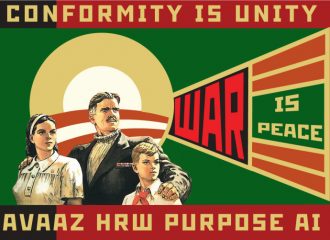 Cory Morningstar has exposed the pro-NATO global political agenda of organizations like US based organizations like Avaaz and Purpose. In the case of Global Witness, their Board member Jessie Tolka is also a board member of Purpose and too of 350.org: Current Global Witness CEO Gillian Caldwell was also a very successful Campaigns Director of Sky1, now merged into 350.0rg. Cory Morningstar argues, “the most vital purpose of the non-profit industrial complex (NPIC) has not been to destroy the ecocidal economic system that enslaves us while perpetuating and ensuring infinite wars. Rather, the key purpose of the NPIC is and has always been to protect this very system it purports to oppose from being dismantled. Hence the trillions of dollars pumped into the NPIC by the establishment.”
Confirmation of Cory Morningstar’s argument can be found in the history of Global Witness itself. For example on Libya, despite their superficial anti-corporate gloss, Global Witness relentlessly apply NATO country government criteria here and here. Also on Ukraine, Global Witness project the same anti-corporate message while simultaneously reinforcing NATO country government propaganda. Global Witness has also received US National Endowment for Democracy grants in Cambodia and in Liberia.
Also, a decade ago, writers Keith Harmon Snow and Rick Hines questioned Global Witness’ corporate links in relation to the “Blood Diamonds” controversy and the organization’s role in relation to De Beers and also Maurice Templesman’s diamond companies. No doubt more thorough research would reveal information casting similar doubt on Global Witness’s integrity and independence.
Conclusion
This latest Global Witness report in relation to Nicaragua is important because it is so readily falsifiable. It thus presents a clear litmus test: no news and information media can use the Global Witness report’s material in relation to Nicaragua without compromising their credibility.
The bias and inaccuracies in the section on Nicaragua in the Global Witness 2017 report call into doubt the integrity of the whole report. No news or information media interested in accuracy or honest reporting can conscientiously rely on Global Witness as a source without thorough cross checking and systematically comparing, contrasting and evaluating information from sources giving a different account of the events and issues in question.
Global Witness is neither independent nor trustworthy. It clearly has a strong but unacknowledged neocolonial political agenda promoting the regional policy goals of NATO country governments, while, conversely, attacking governments and other regional actors opposed to those goals.
NGOs like Global Witness, International Crisis Group, Human Rights Watch, Transparency International and so many others, self-evidently fabricate psychological warfare inputs serving NATO country government policy, itself shaped by the same corporate elites that fund the class of NGOS of which Global Witness is a part.
They operate as the soft, extramural arm of NATO country governments’ foreign policy psychological warfare offensives, targeting liberal and progressive audiences to ensure their acquiescence in overseas aggression and intimidation against governments and movements targeted by NATO. To that end, they deceitfully exploit liberal and progressive susceptibilities in relation to environmental, humanitarian and human rights issues.
Their psychological warfare role supporting the NATO government’s aggressive destabilization of Ivory Coast, Libya and Syria in 2011, of Ukraine in 2014, and the NATO country government’s low intensity war against Venezuela ever since 2013, as well as the campaign against Cuba over five decades, has been unmistakable.
More broadly their systemic ideological role is very obviously to protect and defend global corporate capitalism while superficially and selectively questioning and criticizing some of its worst abuses. Cory Morningstar’s insight bears repeating “the key purpose of the non-profit industrial complex is and has always been to protect this very system it purports to oppose”.
The coverage of Nicaragua in the latest 2017 Global Witness report is a text book example of that sinister fact.
Featured Video
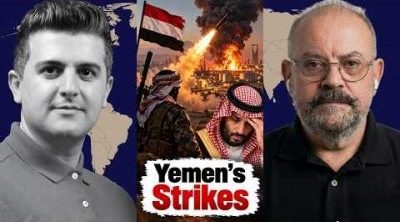
Elijah Magnier: Yemen’s strikes are shattering Saudi Arabia’s long-term strategy
or go to
Aletho News Archives – Video-Images
From the Archives
British weapons and personnel doing much of the killing in Yemen
Press TV – June 18, 2019
A detailed report published by the Guardian newspaper has shown how Britain is massively contributing to Saudi Arabia’s devastating war on Yemen as it suggests that London is not only supplying the bombs that fall on Yemenis, but it provides the personnel and expertise that keep the war going.
The comprehensive report by Arron Merat published on Tuesday showed that Britain was doing much of the killing in Yemen as the country continues to provide Saudi Arabia with everything it needs to turn its southern impoverished neighbor into a graveyard.
“Every day Yemen is hit by British bombs – dropped by British planes that are flown by British-trained pilots and maintained and prepared inside Saudi Arabia by thousands of British contractors,” said Merat in the report. … continue
Blog Roll
 Aletho News
- Netizens condemn Japanese drama for projecting Japan’s wartime atrocities onto Chinese characters
- Racist Seinfeld Dances for Joy as Bibi Unveils His New Map
- A West Bank War for Netanyahu’s Election Campaign, Could It Backfire?
- Yemen denounces European Parliament’s ‘hypocritical’ push to blacklist Ansarullah
- Qalibaf: UAE’s UN bid aims to ‘clear the runway’ for ‘Greater Israel’, whitewash genocide
- Pakistan reopens Iran border after boosting security: Report
- Why are so many Brazilians voting for Flávio Bolsonaro?
- Democrats Put Anti-Russia Agenda Ahead of American Workers
- Elijah Magnier: Yemen’s Strikes Are Shattering Saudi Arabia’s Long-Term Strategy
- Pentagon designates Chinese cultural centers national security threat
- If Americans Knew
- Latest updates from Israeli assault on West Bank
- Tourism Ministry launches free food truck tour in US
- “So Much Worse Than People Realize”: Never-Before-Seen Images Reveal Damage at U.S. Bases as Troops Describe Being Abandoned
- UK Bell Review Confirms Only Anti-Israel Attitudes Are Rising, Not Antisemitism
- DAILY UPDATE: Latest essential news on Palestine, Israel, & region
- DAILY UPDATE: Latest essential news on Palestine, Israel, & region
- Damning report shows the media must confront its failures on Gaza
- BBC senior broadcaster speaks out on Gaza coverage
- Netanyahu vows vast West Bank invasion in response to 20-minute skirmish that left 2 Israeli soldiers and 2 Palestinian fighters dead
- Tied up and tortured: Israel using US-made electroshock weapons on Palestinian detainees
- No Tricks Zone
- Sudden Stratospheric Warming, Powerful El Niño Combination May Lead To Extreme Europe Cold, Energy Crisis!
- Two New Studies Find Thwaites Glacier Melt Cannot Be Driven By Human Activity Or A Warming Ocean
- E-Cars Reduce CO2 Emissions By Only 41% Compared To Internal Combustion Engine Vehicles
- Predictions Made By Renowned Climate Professor Over Past Decades Have Been Proven To Be Poor
- New Study Suggests Large Regions Of The Pacific Ocean Have Been Cooling For The Last 80 Years
- Germany’s Green Energy Debacle: High Energy Costs Force Kahla Porzellan to Close After 182 Years!
- New Study: 50 Years Of The Most Aggressive ‘Net Zero’ Policies Can Only Affect The Global Climate By 0.03°C
- US September “Heat” Was No Record…Many Records Set Decades Ago
- Latest European Green Energy Debacle; Portugal’s Largest Flagship Solar Park Insolvent!
- Green Energy Debacle: German Expert Professor Fritz Vahrenholt Warns Of Severe Economic And Social Consequences

