Germany to Close Airbase in Niger After Negotiations on Soldiers Immunity Fail – Reports
Sputnik – 07.07.2024
The German armed forces will give up its airbase in Niger, which was used as a military transport hub, by August 31, as the sides failed to extend the agreement concerning the base, German media reported on Saturday, citing the German Defense Ministry.
The talks broke down after the new Nigerien authorities had refused to grant German soldiers with immunity from prosecution, the NTV news outlet reported, citing a document the ministry had presented before the parliament.
Germany expects to withdraw its troops from the country by the end of August as well.
The German military has used the base in Niger’s capital, Niamey since 2013 as a supply center for its armed forces in neighboring Mali, which were stationed there as part of a UN peacekeeping mission.
Nigerien authorities, which took power in a military takeover in July 2023, have since then also terminated military agreements with France and the United States, which led to the French and US forces’ withdrawal from the country.
Canceled US Joint Exercises in Africa Shows Washington’s Influence Abroad Slipping
Sputnik – 28.01.2024
Retired CIA intelligence officer and State Department official Larry Johnson told Sputnik the move may be related to internal pressure not to work alongside “troops associated with coup governments.”
The United States military leadership has scrapped plans to hold joint exercises with several African states such as Sudan, Mali, Niger, Ethiopia, Eritrea and Burkina Faso.
According to the Washington Post, the Pentagon’s change of plans was, “at least in part,” the result of US Democrats pressuring the Biden administration to bar “troops associated with coup governments” from participating in US-led military exercises.
Exercises such as these are usually planned many months in advance, so the decision to scrap these plans means “there’s an issue with the governments that were supposed to participate,” said retired CIA intelligence officer and State Department official Larry Johnson.
Describing the military exercises’ cancellation as a “significant” development, Johnson told Sputnik that this move by the Pentagon may have also been prompted by the decision of the host African governments not to participate.
“In any event, I think what it does signify is that US influence over other countries, its ability to basically tell countries what to do and compel countries to follow US policy, is slipping, that the US influence in areas like Africa is growing weaker, not stronger,” he remarked.
Johnson also suggested that the decision by Niger, Mali and Burkina Faso to withdraw from the Economic Community of West African States (ECOWAS) may be related to this development, considering that ECOWAS is primarily regarded as an entity “under Western influence.”
According to him, the fact that these countries chose to part ways with ECOWAS and pursue “bilateral agreements among themselves” does seem like signs of them “distancing themselves from US control.”
Macron Recalling Ambassador to Niger, French Embassy’s Staff, Troops
Sputnik – 24.09.2023
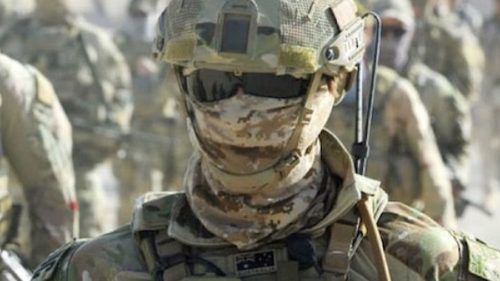
France is recalling French Ambassador to Niger Sylvain Itte, all staff of the French Embassy, and all French troops in the West African country, President Emmanuel Macron said on Sunday.
“The Ambassador in Niamey, as well as all staff of the embassy, will return to France in the coming weeks or months,” Macron told a French broadcaster.
He added that the military cooperation with Niger is “over” and French troops will leave the country by the end of the year.
“I spoke with President Mohamed Bazoum today and informed him that France has decided to recall its ambassador … We will also put an end to our military cooperation with the current Nigerien authorities because they are no longer aiming to fight terrorism. This is the end of this cooperation, it [the troops withdrawal] will be organized in the coming weeks or months. The troops will return in an organized manner before the end of the year,” Macron said.
Bazoum was deposed as president by his guard during a military takeover in July. France has refused to recognize the new government in Niger, initially ignoring their demands for French troops and the ambassador to leave the country.
Roughly 1,500 French troops are currently deployed in Niger. Despite the move, Macron said he still views Bazoum as the true leader of Niger.
Bazoum has called for his reinstatement, calling for help from the Economic Community of West African States, but two members of the block, Burkina Faso and Mali, signed a defensive pact with the military leadership of Niger and threatened to leave ECOWAS if it took military action against Niger.
The French embassy in Niamey and French military bases have been the focus of mass protests in the capital city.
Mali, Burkina Faso, Niger Sign Charter to Create Defense Alliance
Sputnik – 17.09.2023
The leaders of Mali, Burkina Faso and Niger have signed a charter establishing an alliance of Sahel states to create a collective defense architecture, Mali’s interim president for the transitional period, Assimi Goita, said on Saturday.
“I have signed today with the leaders of Burkina Faso and Niger the Liptako Gourma Charter, establishing the Alliance of Sahel States to create an architecture of collective defense and mutual assistance for the benefit of our people,” Goita said on X.
An attack on the sovereignty or territorial integrity of one or more parties to the charter will be regarded as aggression against the other parties and will require their assistance, including the use of military force, the document read.
The parties also commit to fighting terrorism and organized crime on the territory of Sahel states, the charter added.
The Nigerien Coup Prompted A Long-Overdue Discussion About Sovereignty In West Africa
BY ANDREW KORYBKO | AUGUST 27, 2023
It was earlier assessed that “The AU-ECOWAS Rift Over Niger Was Predictable” due to their differing approaches towards the continent’s latest regime change. The AU believes that its ousted leader should be returned to power via peaceful means while ECOWAS’ active members are in favor of forcefully reimposing his rule. Neither of them support the interim authorities’ three-year transitional plan, however, with ECOWAS rejecting it outright and the AU suspending Niger right afterwards.
The AU also “called upon all Member States of the AU and the international community including bilateral and multilateral partners, at large to reject this unconstitutional change of government and to refrain from any action likely to grant legitimacy to the illegal regime in Niger.” This came shortly after reports began circulating that neighboring Burkina Faso and Mali, which are also run by interim military-led governments, stationed warplanes in Niger to deter a French-backed Nigerian-led ECOWAS invasion.
Late last week, those three countries’ Foreign Ministers met in Niamey, where they issued a joint statement that importantly declared the following:
“The three countries have agreed to grant each other facilities for mutual assistance in matters of defense and security in the event of aggression or terrorist attacks. They have decided to set up a consultation framework that allows them to coordinate their actions in order to deal with the multiple situations and challenges to which they are exposed. This consultation framework remains open to countries wishing to participate in this dynamic in order to respond to the concerns and needs of their populations in terms of peace, security and economic and monetary development. To this end, they agreed to set up a Joint Secretariat.”
Simply put, they’ve established a regional mutual defense alliance (“Sahelian Alliance”) that’ll also aim to accelerate political and economic-financial integration between them.
Before delving into a discussion about which of the three organizations involved in the West African Crisis – the AU, ECOWAS, and the Sahelian Alliance – truly represent the Nigerien people’s sovereign will, Russian Foreign Minister Lavrov’s detailed reaction to that country’s regime change is worth mentioning. It can be read in full here, but he basically concluded that the region’s interim military-led governments sought to rebalance their prior leaderships’ relations with the West for the betterment of their people.
That observation segues into the subject of this analysis since it lends credence to the views shared by Burkinabe leader Ibrahim Traore during late July’s Second Russia-Africa Summit in St. Petersburg. While speaking among those of his fellow African leaders who were brave enough to resist Western pressure to attend, he still lambasted many of them for being imperialist puppets due to their opposition to his interim military-led government after it was suspended from the AU and ECOWAS.
His country’s people and those of similarly military-ruled Guinea, Mali, and now Niger all rallied behind their armed forces after they overthrew their French puppet leaderships, yet each were still punished by those two organizations to different extents, with Niger now facing the threat of invasion. It stands to reason that all of these interim military-led governments genuinely enjoy grassroots support otherwise there’d be Color Revolution attempts and even anti-state rebellions/insurgencies/terrorist campaigns.
To be sure, Burkina Faso, Mali, and Niger – which have now joined forces to become the Sahelian Alliance – are indeed facing terrorist threats, but they’re derived from a radical ideological virus that predates their respective military coups and aren’t a result of those regime changes. The AU represents the African Establishment, however, whose members fear being overthrown by their own armed forces. For that reason, it always opposes coups even if they’re popular among the people.
The same can be said about ECOWAS’ stance since it’s pretty much just a regionally focused version of the AU that represents the West African Establishment more so than the West African people. Since the Nigerien coup is the fourth one to take place in the ambit of its influence, the non-suspended members of the group are more worried than the distant AU is about the possibility of a so-called “domino effect”, ergo why they’re threatening the use of force to reverse the situation while the AU remains against it.
Both organizations prioritize the interests of their elite members, the African Establishment as a whole in the AU’s case and the West African one in ECOWAS’, over those of the people that they claim to represent. This explains why they’re not only against the Nigerien coup, but why the AU told others not to legitimize it while ECOWAS is threatening an invasion. Although Russia is formally opposed to it and any anti-constitutional regime change too, Moscow’s stance is much more pragmatic than theirs.
Post-coup Mali became one of Russia’s closest military partners on the continent behind the Central African Republic, while Burkina Faso is considering following in its neighbor’s footsteps after Interim President Traore declared earlier this spring that he considers Russia his country’s strategic ally. These two Sahelian security relationships are flourishing in spite of Moscow having opposed their anti-constitutional regime changes since it believes in cooperating with them during their transitions.
By contrast, the AU and ECOWAS are against third parties legitimizing the post-coup leaderships of those countries who they’ve suspended even though the aforesaid could advance everyone’s objective interests like in the Russian example of helping Mali and Burkina Faso fight transnational terrorists. Once again, it’s important to remind the reader that neither those two, Guinea, or Niger experienced any Color Revolution attempts or serious anti-state violence, thus confirming popular support for their rulers.
All factors considered, the AU and ECOWAS are arguably against the sovereign will of the Nigerien people whereas that country’s interim military-led authorities, the newly formed Sahelian Alliance, and Russia all embody it on the national, regional, and international levels. The first of those three carried out their coup for patriotic reasons aimed at realizing their people’s desire for true sovereignty after languishing under France’s neo-colonial occupation for decades as de facto slaves.
The second’s allies experienced their own patriotic military coups for the same reason and then sought to pool their forces to deter imperialist puppets like ECOWAS’ remaining members. As for Russia’s interests, it pragmatically decided to help these post-coup countries’ leaderships fight transnational terrorism since it’s in their own people’s, the region’s, and all of Africa’s interests. These three – Niger’s new authorities, the Sahelian Alliance, and Russia – are the true vanguards of sovereignty in West Africa.
Niger junta says France plotting to ‘intervene militarily’
AFP | July 31, 2023
Niger’s new junta on Monday accused France of seeking to “intervene militarily” to reinstate deposed President Mohamed Bazoum as tension mounted with the former colonial power and neighbours.
Bazoum, a western ally whose election just over two years ago was a watershed in Niger’s troubled history, was toppled on July 26 by the elite Presidential Guard.
Guards chief General Abdourahamane Tiani declared himself leader — but his claim has been shunned internationally and the West African bloc ECOWAS has given him a week to hand back power.
Bazoum’s PNDS party on Monday warned Niger risked becoming a “dictatorial and totalitarian regime” after a series of arrests.
On Monday morning, Oil Minister Mahamane Sani Mahamadou — the son of influential former president Mahamadou Issoufou — and Mining Minister Ousseini Hadizatou were arrested, the party charged.
The head of the PNDS’s national executive committee, Fourmakoye Gado, was also arrested, it said.
The junta had previously arrested the interior minister, the transport minister and a former defence minister, the party said.
On Sunday, French President Emmanuel Macron vowed “immediate and uncompromising” action if French citizens or interests were attacked after thousands rallied outside the French embassy.
Some tried to enter the compound but were dispersed by tear gas.
‘Plotting intervention’
The junta on Monday accused France of plotting an intervention.
“In its search for ways and means to intervene militarily in Niger, France with the complicity of some Nigeriens, held a meeting with the chief of staff of the Nigerien National Guard to obtain the necessary political and military authorisation,” the putschists said on national TV.
They also said six people needed hospitalisation after the embassy security services fired tear gas against the rally.
A demonstration in support of the junta was also held in Zinder, eastern Niger, on Monday.
Tough ECOWAS warning
On Sunday, the Economic Community of West African States (ECOWAS) sounded a tough warning.
The bloc demanded that Bazoum be reinstated within a week, failing which it would take “all measures” to restore constitutional order, which “may include the use of force”.
“No more time for us to send a warning signal… It’s time for action,” said ECOWAS chairman Bola Tinubu, president of Nigeria — Niger’s neighbour to the southeast and the regional superpower.
Russia called for the swift return of “the rule of law” and “restraint from all parties so that this doesn’t result in human casualties”.
Niger became the third Sahel country in less than three years, following neighbours Mali and Burkina Faso, to be shaken by a military coup.
In all three nations, a jihadist insurgency strained fragile governments, stoked anger in the military and rained economic blows on some of the world’s poorest countries.
The overthrow of elected presidents has been accompanied by anti-French, pro-Russian demonstrations.
Crucial ally
Protesters say France, the country’s traditional ally, has failed to shield them against the jihadists, whereas Russia would be a stronger ally.
In Mali, a 2020 putsch led to a bust-up with France which last year withdrew its troops as the junta brought in Russian paramilitaries.
France also quit Burkina Faso after two coups last year brought in a junta that adopted a nationalist line.
The withdrawals prompted France to reconfigure its decade-long anti-jihadist strategy in the Sahel, concentrating on Niger, where it fields 1,500 troops with a major air base near Niamey.
The latest coup, according to the putschists, was a response to “the degradation of the security situation” linked to the jihadist conflict, as well as corruption and economic woes.
International critics have ratcheted up pressure, targeting trade and development aid.
ECOWAS has suspended all commercial and financial transactions, while France, the European Union and the United States, which has 1,100 troops in Niger, have either cut off support or threatened to do so.
Germany suspended financial aid and development cooperation on Monday, and UN humanitarian operations have also been put on hold.
Niger has seen four coups since independence from France in 1960 and numerous other attempts, including two previously against Bazoum.
The 63-year-old is a former interior minister whose elections marked Niger’s first peaceful transition of power since independence.
Military intervention against Niger would be a declaration of war against Burkina Faso and Mali
RT | July 31, 2023
In the first-ever joint communique on Monday, the military governments in Mali and Burkina Faso warned the West and other African states against intervening in the neighboring Niger. Bamako and Ouagadougou would consider any such move as an attack on their own countries, they said.
“Any military intervention against Niger would amount to a declaration of war against Burkina Faso and Mali,” said point four of the joint communique, which a Burkinabe military spokesman deliberately repeated three times during a state television broadcast.
In case of such an intervention, the two countries would withdraw from the Economic Community of West African States (ECOWAS) and “adopt self-defense measures in support of the armed forces and the people of Niger,” according to the statement.
A military intervention against Niger “could destabilize the entire region, as had the unilateral NATO intervention in Libya, which was at the root of the expansion of the terrorism in the Sahel and West Africa,” the two governments said.
France currently has 1,500 troops and a drone base in Niger, while the US has 1,100 troops and two drone bases, according to Financial Times.
Nigerien soldiers, led by General Abdourahamane Tchiani, ousted President Mohamed Bazoum last Wednesday. The African Union denounced the coup on Friday and gave the junta in Niamey 15 days to stand down or face “punitive measures.” ECOWAS issued its own ultimatum on Sunday, at the emergency meeting in Abuja, Nigeria, saying that it would “take all measures necessary to restore constitutional order in the Republic of Niger,” including the use of force, if Bazoum is not restored within a week.
Mali and Burkina Faso condemned the sanctions ECOWAS announced on Saturday as “illegal, illegitimate and inhumane.” They also expressed “fraternal solidarity” with the Nigerien people, “who have decided to take their destiny into their own hands and to assume before history the fullness of their sovereignty,” according to their joint communique.
The military governments of the two former French colonies have sought to sever their ties to Paris and rebuild their statehood with Russian assistance. Moscow has denounced the coup in Niger as an “anti-constitutional act,” however, and the Russian Foreign Ministry called on all parties to refrain from using force.
On Sunday, General Tchiani’s government announced it would suspend the export of uranium and gold to France, to the accolades of some of the local population.
“We have uranium, diamonds, gold, oil, and we live like slaves? We don’t need the French to keep us safe,” one pro-government demonstrator told the local news portal Wazobia Reporters.
Niger is the world’s seventh-largest producer of uranium, accounting for 4% of the global output. A French company controls about two thirds of the country’s output.
The other Russia-West war: Why some African countries are abandoning Paris and joining Moscow
By Ramzy Baroud | MEMO | October 15, 2022
The moment that Lieutenant-Colonel Paul-Henri Sandaogo Damiba was ousted by his former military colleague, Captain Ibrahim Traore, pro-coup crowds filled the streets. Some burned French flags; others carried Russian flags. This scene alone represents the current tussle underway throughout the African continent.
A few years ago, the discussion regarding the geopolitical shifts in Africa was not exactly concerned with France and Russia per se. It focused mostly on China’s growing economic role and political partnerships on the African continent. For example, Beijing’s decision to establish its first overseas military base in Djibouti in 2017 signalled China’s major geopolitical move by translating its economic influence in the region to political influence, backed by military presence.
China remains committed to its Africa strategy. Beijing has been Africa’s largest trading partner for 12 years, consecutively, with total bilateral trade between China and Africa reaching $254.3 billion in 2021, according to recent data released by the General Administration of Customs of China.
The US and its Western allies have been aware of and are warning against China’s growing clout in Africa. The establishment of US AFRICOM in 2007 was rightly understood to be a countering measure to China’s influence. Since then, and arguably before, talks of a new “Scramble for Africa” abounded, with new players including China, Russia and even Turkiye entering the fray.
The Russia-Ukraine war, however, has altered geopolitical dynamics in Africa, as it highlighted the Russian-French rivalry on the continent, as opposed to the Chinese-American competition there.
Though Russia has been present in African politics for years, the war – thus the need for stable allies at the United Nations (UN) and elsewhere – accelerated Moscow’s charm offensive. In July, Russia’s Foreign Minister Sergey Lavrov visited Egypt, Ethiopia, Uganda and the Republic of Congo, fortifying Russia’s diplomatic relations with African leaders.
“We know that the African colleagues do not approve of the undisguised attempts of the US and their European satellites. . . to impose a unipolar world order to the international community,” Lavrov said. His words were met with agreement.
Russian efforts have been paying dividends, as early as the first votes to condemn Moscow at the UN General Assembly in March and April. Many African nations remained either neutral or voted against measures targeting Russia at the UN.
South Africa’s position, in particular, was problematic from Washington’s perspective, not only because of the size of the country’s economy, but also because of Pretoria’s political influence and moral authority throughout Africa. Moreover, South Africa is the only African member of the G20.
In his visit to the US in September, South Africa’s President Cyril Ramaphosa defended his country’s neutrality and raised objections to a draft US bill – the Countering Malign Russian Activities in Africa Act – that is set to monitor and punish African governments who do not conform to the American line in the Russia-Ukraine conflict.
The West fails to understand, however, that Africa’s slow but determined shift toward Moscow is not haphazard nor accidental.
The history of the continent’s past and current struggle against Western colonialism and neocolonialism is well known. While the West continues to define its relationship with Africa based on exploitation, Russia constantly reminds African countries of the Soviet’s legacy on the continent. This is not only apparent in official political discourses by Russian leaders and diplomats, but also in Russian media coverage, which is prioritising Africa and reminding African nations of their historical solidarity with Moscow.
Burning French flags and raising Russian ones, however, cannot simply be blamed on Russian supposed economic bribes, clever diplomacy or growing military influence. The readiness of African nations – Mali, Central African Republic and now, possibly, Burkina Faso – has much more to do with mistrust and resentment of France’s self-serving legacy in Africa, West Africa in particular.
France has military bases in many parts of Africa and remains an active participant in various military conflicts, which has earned it the reputation of being the continent’s main destabilising force. Equally important is Paris’s stronghold over the economies of 14 African countries, which are forced to use French currency, the CFA franc, and, according to Frederic Ange Toure writing in Le Journal de l’Afrique, to: “Centralise 50% of their reserves in the French public treasury.”
Though many African countries remain neutral in the case of the Russia-Ukraine war, a massive geopolitical shift is underway, especially in militarily fragile, impoverished and politically unstable countries that are eager to seek alternatives to French and other Western powers. For a country like Mali, shifting allegiances from Paris to Moscow was not exactly a great gamble. Bamako had very little to lose, but much to gain. The same logic applies to other African countries fighting extreme poverty, political instability and the threat of militancy, all of which are intrinsically linked.
Though China remains a powerful newcomer to Africa – a reality that continues to frustrate US policymakers – the more urgent battle, for now, is between Russia and France – the latter experiencing a palpable retreat.
In a speech last July, French President Emmanuel Macron declared that he wanted a: “Rethink of all our (military) postures on the African continent.” France’s military and foreign policy shift in Africa, however, was not compelled by strategy or vision, but by changing realities over which France has little control.
Uninvited foreign troops must leave, African nation says
RT | January 24, 2022
Denmark must “immediately withdraw” some 90 troops it deployed to Mali last week “without [the government’s] consent and in violation of the protocols” allowing European nations to intervene in that African country, the government in Bamako said on Monday.
Some 91 Danes from the Jaeger Corps special forces arrived in Mali on January 18, as part of Task Force Takuba, a French-led counter-terrorism mission in the West African country. According to the Danish defense ministry, their job will be to reinforce the border with Niger and Burkina Faso, train Malian Armed Forces, and provide medical services to the peacekeepers.
While the government of Mali is grateful to “all its partners involved in the fight against terrorism,” it stressed “the need to obtain the prior agreement of the Malian authorities” before sending any troops to the country, says the communique signed by Colonel Abdoulaye Maiga, spokesman for the Ministry of Administration and Decentralization.
Announcing the deployment of the force last week, the government in Copenhagen said it had been scheduled in April 2021, as France sought to withdraw some of its troops from Mali.
Their objective was “to stabilize Mali and parts of the border triangle between Mali, Niger and Burkina Faso, and to ensure that civilians are protected from terrorist groups,” the Danish military said.
The Jaegers are also experienced in “training and educating” local militaries, a job they have previously performed in Afghanistan and Iraq. They were sent shortly after Sweden withdrew its contingent from Mali. The French-led operation also involves forces from Belgium, Czechia, Estonia, Hungary, Italy, the Netherlands, Portugal and Sweden.
Task Force Takuba has operated in Mali since March 2020, when Paris decided to wrap up the previous Operation Barkhane. France has maintained a military presence in its former West African colony since 2013, to help the government in Bamako deal with a Tuareg rebellion in the northwest of the country and subsequent terrorist insurgency loyal to Islamic State (IS, formerly ISIS).
Relations between Bamako and Paris have grown chilly since the latest military takeover in Mali in 2021, and France has since closed three of its military bases there, in Kidal, Tessalit, and Timbuktu.
French troops violently disrespect African populations during anti-occupation demonstrations
By Lucas Leiroz | December 1, 2021
Paris has always had Africa as a route for its political and economic expansionism, advancing on the continent and making it part of its international sphere of influence. However, it is possible to see that the African people are increasingly indignant with the constant presence of French military personnel in the region, which has resulted in protests taking to the streets of African cities, clamoring for a change. Now, French forces are seeing such demonstrations as a real threat and treating the population in a violent and disrespectful way, with the sole intention of asserting power and demonstrating the strength of the Paris’ agenda.
In recent days, thousands of people have taken to the streets to protest against the French expansionism in many African countries. This week, at least two people died in western Niger due to the brutality of French troops trying to stop a demonstration. During the action of the military convoy that tried to prevent the people from protesting, several shots were fired, leaving, in addition to the fatalities, eighteen injured people – eleven of them seriously wounded. This same convoy had previously performed similar scenes in Burkina Faso, where French military personnel shot at four protesters last week, generating a wave of indignation and revolt on the part of the local population.
According to what has been reported by Agence France-Presse, the convoy has a force of around 100 soldiers and has departed from Côte d’Ivoire and, after circling through Burkina Faso and Niger, is on its way to Mali, where it will be joining a French military base in the Gao region. Apparently, this convoy is making an international tour of the western part of the African continent, acting as a kind of “police force” in the containment of demonstrations, ignoring local authorities and the right of the citizens of these states to demand changes in the security policies that are being implemented in their countries.
The French forces reported that the shooting in Niger was motivated by the protesters’ own actions. According to the troops, the protesters tried to block the convoy’s passage, which was why the soldiers, trying to open the way, acted with the use of force. Obviously, regardless of the actions taken by the protesters, it is inconceivable for trained military personnel armed with war equipment to act with total force against unarmed civilians. Although it is admitted to partially use military power to disperse protesters, it is absolutely reprehensible that this resulted in lethal gunshots, killing innocent citizens who only exercised their civil right to protest against the presence of foreign troops in their country.
Also, there are images and videos circulating on the internet recording the horror scenes that took place in Niger this week, where it is possible to note that the use of force by the French far exceeded the reasonable line to simply disperse a human barricade of protesters. In one of the videos, it is possible to see a French Mirage 2000 strike aircraft dropping flares and tear gas bombs in a high-speed, low altitude pass over the protesters. There are also reports of shootings from military drones.
Commenting on the case, the Nigerien Interior Ministry said in a statement that “an investigation has been opened to determine the exact circumstances of this tragedy and determine responsibility”. However, it should be noted that this is not the first time that such actions have been carried out with impunity by French forces. Not only are the African people tired of the immeasurable violence perpetrated by French troops, but the very governments that “allow” such actions also wish to put an end to them, however, they lack the power to do so.
Faced with immense military asymmetry, with African countries being much weaker than France and still sharing a problematic heritage from the colonial ties of past centuries, West African governments do not have many options to respond to the suffering of their own people. There are no ways to retaliate or punish the French for their criminal acts – and there are no viable ways to expel the Europeans either.
In Mali, the military tried to end the French presence through a coup d’état last year, but the Paris’ forces continue to act freely against the local population in many situations, such as the massacre of 22 civilians during an attack to a Malian village earlier this year. In fact, there seems to be no alternative path for the African states, which, as long as they do not have a political, economic, and military structure strong enough to coercively expel foreign troops, will continue to suffer the consequences of Paris’ neo-colonial expansionism.
France, on its part, has diminished its interest in the African continent. The failure of the occupation of the Sahel showed that the French project for Africa was unfeasible and that, therefore, Paris should change its focus on international projection – which has gradually turned to the European and Mediterranean space itself. On the other hand, France does not want to simply “abandon” Africa, as this would open the way for another world power to occupy this space.
The French project, therefore, consists of reducing the presence of their troops in the African space, but preventing a real “independence” on the part of African governments, preventing them from seeking new alliances. In practice, this materializes in actions such as the ones of this convoy, which spread chaos and instability in the region. The French objective in Côte d’Ivoire, Burkina Faso and Niger is to prevent, through intimidation, a maneuver such as the one that happened in Mali – and, in Mali, the aim is to prevent the military’s plan to succeed.
Indeed, France “does not want” Africa at the moment, but it is not willing to allow Africans to follow their own path of independence. Fostering social chaos, disorder and violence seems to be the French tactic in this regard.
Lucas Leiroz is a research fellow in international law at the Federal University of Rio de Janeiro.
French drone strike in Mali kills 19 civilians at wedding event
Press TV | January 8, 2021
A French military drone strike in Mali has reportedly killed civilians attending a wedding event in a remote village amid France’s persisting military intervention in its former African colony under the pretext of fighting rising militancy in the impoverished — though minerals-rich – nation.
The aerial strike in central Mali’s isolated Douentza area came at a moment of growing anti-French sentiment and armed resistance across the West African country in response to the eight-year military presence of the former colonial power.
An advocacy group for Fulani herders, known as Jeunesse Tabital Pulaaku, released a list on Thursday of 19 people it said were killed by the French airstrike, including the father of the groom, as well as seven others it said were injured in the attack while attending the wedding ceremony.
“Those who were killed were civilians,” said the group’s president, Hamadoun Dicko, as quoted in a Reuters report on Friday, noting: “Whether there were jihadists around at the moment of the raid or not, I don’t know.”
The report further cited a health worker, who spoke on condition of anonymity, as confirming on Tuesday that civilians had been “mistakenly hit in the strike.”
This is while on Thursday Mali’s Paris-sponsored government and the French military denied eye-witness accounts and other reports blaming the French air strike for the civilian fatalities in the area, claiming that only Muslim militants were targeted.
The French army further insisted that the targets were “Islamist fighters,” claiming that their identities were confirmed by its drones prior to the bloody attack and subsequent checks following the strike.
“No collateral damage, no sign of a festive gathering or a marriage,” the French army command declared in a statement, describing the targeted site as lightly wooded and claiming that “no women or children were observed” in the area.
According to the army statement, a group of nearly 40 men was monitored by the REAPER drone for more than an hour and a half before the strike, which was carried out over one kilometer from the nearest dwellings on the edge of the village of Bounti.
Repeating the French version of events, Mali’s Defense Ministry further cited surveillance images” to state, “the strike took place during a joint operation with French forces and killed about 30 militants.”
“There was no sign of a marriage, women or children,” it added in a statement.
France maintains a military force of more than 5,100 in Mali and other former colonies in West Africa in purported efforts to counter militants it claims are linked to the al-Qaeda and Daesh terrorist groups.
The military intervention, however, has come at a cost. Five French soldiers were killed in Mali in recent days and Malian citizens have protested France’s military presence in the streets as well as on social media platforms.
Two French soldiers were killed earlier this week as an explosion hit their armored vehicle during an “intelligence” gathering mission in Mali’s eastern Menaka region, bringing the number of French soldiers killed in the nation to fifty.
The attack came less than a week after three more French troops were also killed in its former colony by an improvised explosive device in the southern region of Hombori.
This is while France is still trying to maintain power with its significant military presence in Africa. It has thousands of soldiers spread in bases across the arid Sahel region of West Africa below the Sahara, purportedly waging “counter-insurgency” operations.
Violence, however, has steadily worsened in the region with militant groups using northern Mali to launch attacks on neighboring countries.
Last January, hundreds of people took to the streets in the capital of Mali to protest the presence of French troops in the Sahel region.
Protesters gathered in a square in the center of the capital Bamako, where they burned the French flag and carried banners reading slogans such as “Down with France.”
The protest came ahead of a summit in France on the country’s military interventions in Africa.
The latest French killing of Malian civilians came as Paris faces tough choices about how to deal with its purported moves to counter extremists in Mali and other African nations without getting bogged down in a potentially un-winnable war, according to an AFP report, which pointed to the growing number of French troops killed since it launched a campaign to rid northern Mali of militants in January 2013.
It further cited French military sources as saying that President Emmanuel Macron wishes to go further in reducing the number of French troops in the Sahel region before the country’s next presidential election in April / May 2022.
“So far, the French have not really questioned the role of France in the Sahel. But you have to be very careful. Public opinion can change very quickly,” said a government source as quoted in the report.
In a sign that the Sahel mission could become a national political football, some opposition politicians in France have already started to question the wisdom of staying the course.
“War in Mali: for how long?” questioned the country’s far-left party, France Unbowed, earlier in the week.
Amid warming ties with Chad, Israel eyes normal ties with Sudan, other Africa states: Report
Press TV – November 26, 2018
Amid warming relations with Chad, Israel is reportedly working to normalize relations with Sudan and other African states as the regime steps up its push to strengthen its foothold in the continent.
 A senior Israeli official told Channel 10 TV channel that a visit on Sunday by Chadian President Idriss Deby to the occupied territories was laying the groundwork for normal ties between Tel Aviv and the Muslim-majority African states of Sudan, Mali and Niger.
The unnamed official also noted that Israel was seeking to shorten flight times from the occupied territories to Latin America through normalizing relations with African countries.
Deby became the first Chadian leader to visit Israel on Sunday, 46 years after the two sides severed ties.
After meeting Israeli Prime Minister Benjamin Netanyahu, the Chadian president pledged a new era of cooperation with “the prospect of reestablishing diplomatic relations.”
Israeli media cited sources in N’Djamena as saying that Deby’s visit was focused on “security,” and that the regime in Tel Aviv had already been supplying weapons and other military equipment to Chad.
Netanyahu, however, declined to comment on potential Israeli weapons sales to Chad.
During his visit, Deby said the future resumption of ties with Israel “does not make us ignore the Palestinian issue.”
The Palestinians, however, protested Deby’s trip to Israel.
Wasel Abu Youssef, a member of the Palestine Liberation Organization’s executive committee, voiced displeasure over the visit.
“All countries and institutions must boycott the extremist government of Israel and impose a siege on it because of its settlement activities, its occupation of Palestinian land,” Youssef was quoted as saying by Reuters.
Over the past two years, Netanyahu has traveled to several African states in a bid to end decades of hostility against the occupying entity and convince them to stop voting against the Israeli regime at the United Nations in favor of Palestinians.
According to Channel 10, Israeli is now in talks with Sudan in a bid to improve relations with the African state.
The Israeli push comes almost two years after Sudan joined Saudi Arabia and Bahrain in cutting relations with Iran.
At that time, Israeli daily Haaretz reported that Tel Aviv had urged the US and other countries to improve their relationship with Sudan in response.
In a 2016, Sudanese Foreign Minister Ibrahim Ghandour said Khartoum was open to the idea of normalizing ties with Israel in exchange for lifting US sanctions.
Israel is also said to be seeking to take advantage of the insurgency and Takfiri militancy gripping parts of Africa to sell advanced military equipment to conflict-ridden states in the continent.
Israel in contact with Persian Gulf Arab states
Meanwhile, reports have emerged recently of Israel’s attempts to make its secret ties with Persian Gulf Arab governments public and establish formal relations with them.
On Sunday, Israeli news sites reported that Tel Aviv is working to normalize ties with Bahrain, hours after Netanyahu hinted he would soon travel to unspecified Arab states.
Israeli Economy Minister Eli Cohen said on Monday he had been invited to attend a conference next year in Bahrain.
Netanyahu met with Oman’s Sultan Qaboos in Muscat last month, but the controversial visit was kept secret until after the Israeli premier returned to the occupied territories.
The visit to Muscat was the first by an Israeli prime minister since 1996.
On Sunday, Israel’s Hadashot television news reported that Netanyahu had secured reassurances from Oman that airlines flying to and from the occupied territories would be permitted to fly over the kingdom’s airspace.
Activists with a pro-Palestine boycott campaign against Israel said Monday that the meeting between Sultan Qaboos and Netanyahu may have breached a long-dormant Israeli boycott law.
“Since 1977, official records stopped mentioning the Law of Boycotting Israel, neither denying it nor confirming it,” an Omani activist with the Boycott, Divestment and Sanctions (BDS) movement told the Middle East Eye news portal.
“This happened when the country took a neutral policy in foreign affairs, including accepting normalizing ties with the Zionist entity,” the activist added.
Another activist said several prominent activists had been arrested shortly before the Israeli prime minister’s visit to Muscat for pro-Palestinian posts on social media, adding, however, that they were freed after disassociating themselves from BDS Oman.
“There is no clear legal path of how to implement the law. But even discussing this topic is a risky business, because there is no political free speech,” he said.
The activist also noted that BDS Oman had sent its “sincerest apologies” to the Palestinian people after a visit by “criminal” Netanyahu.
Featured Video

John Mearsheimer Talking Iran with Iran
or go to
Aletho News Archives – Video-Images
Book Review & Summary
Calling of an Angel: The True Story of Rene Caisse and an Indian Herbal Medicine Called Essiac (1988)
Dr. Gary L. Glum – 30 Q&As – Book Review & Summary
Lies are Unbekoming | October 17, 2026
On June 10, 1975, Dr. Chester Stock, a vice president at Memorial Sloan-Kettering Institute for Cancer Research, wrote to a Canadian nurse named Rene Caisse: “Enclosed are test data in two experiments indicating some regressions in sarcoma 180 of mice treated with Essiac.” The sentence sat in a letter from one of the world’s largest private cancer research centers, concerning an herbal tea an elderly English woman had learned from an Ojibwa medicine man at a northern Ontario mining camp in the 1890s. The tests were terminated the following year after Sloan-Kettering admitted, in sworn affidavit three years later, that they had prepared the injectable solution improperly from the dried material supplied — freezing and thawing the herb rather than boiling it as Rene had instructed. By the time Calling of an Angel was published in 1988, Rene Caisse had been dead for a decade, having treated thousands of cancer patients across fifty-six years in her Bracebridge, Ontario kitchen, never charging a fee, and refusing every offer — from Memorial Sloan-Kettering, the National Cancer Institute, Merck, Parke Davis, and private corporations dangling contracts up to $1 million — to release her formula before the medical establishment admitted her remedy had merit. … continue
Blog Roll
 Aletho News
- Ongoing tales of Syrian chemical weapons
- Moscow blasts UN for ignoring torture of Russian POWs
- Millions of Books Could Have Been Destroyed in Lebanon During Israeli Bombings
- Moscow warns of ‘hunt for Russians’
- Calling of an Angel: The True Story of Rene Caisse and an Indian Herbal Medicine Called Essiac (1988)
- South Korean Assistance to the U.S. in the War with Iran: Between Allied Duty and National Interests
- Pharma- and Gates-Funded GAVI Seeks to Assure Parents
- John Mearsheimer Talking Iran with Iran
- Inside Bill C-22, Canada’s Patriot Act.
- China’s FM: Palestinian cause is ‘greatest injustice of the century’
- If Americans Knew
- In West Bank, Israeli settlers are totally out of control – Daily Update
- NPR investigation finds evidence of widespread fraud at mall kiosks tied to Israeli skincare brand
- Tucker Carlson exposes Israeli Lies about the Oct 7th attack, Charlie Kirk, and the U.S.
- Israel has detained thousands of Palestinian children since Oct 7th – over half spent time in solitary, many uncharged
- Israeli Analysis: Is Netanyahu Planning an ‘October Surprise’ Attack Before Israel’s Election?
- Israeli settlers brutally attack Palestinians and Washington Post female photographer, 65
- Words Have Changed, Occupation Continues: The Reality of the Gaza Ceasefire
- Gaza’s child amputees are growing faster than their prosthetics allow
- Israel keeps Palestinians struggling just to survive–Daily Update
- Israeli firm used online ads to run vast spy operation, researchers say
- No Tricks Zone
- New Study Suggests Large Regions Of The Pacific Ocean Have Been Cooling For The Last 80 Years
- Germany’s Green Energy Debacle: High Energy Costs Force Kahla Porzellan to Close After 182 Years!
- New Study: 50 Years Of The Most Aggressive ‘Net Zero’ Policies Can Only Affect The Global Climate By 0.03°C
- US September “Heat” Was No Record…Many Records Set Decades Ago
- Latest European Green Energy Debacle; Portugal’s Largest Flagship Solar Park Insolvent!
- Green Energy Debacle: German Expert Professor Fritz Vahrenholt Warns Of Severe Economic And Social Consequences
- Two More Paleo Reconstructions Affirm Meters-Higher Sea Levels Across Ireland, Brazil 7000-6000 Years Ago
- New Study: Earth And Venus Surface Warmth Largely Explained By Convection And Lapse Rate, Not CO2 Or Radiation
- 2025 Nature Paper Claiming Worsening Global Drought Gets RETRACTED …Heavily Flawed
- New Study: ‘Global Drought Shows No Detectable Recent Acceleration Under Climate Warming’

