Israeli military can’t avoid defeat in spite of advanced weapons: Nasrallah
Press TV – August 26, 2018
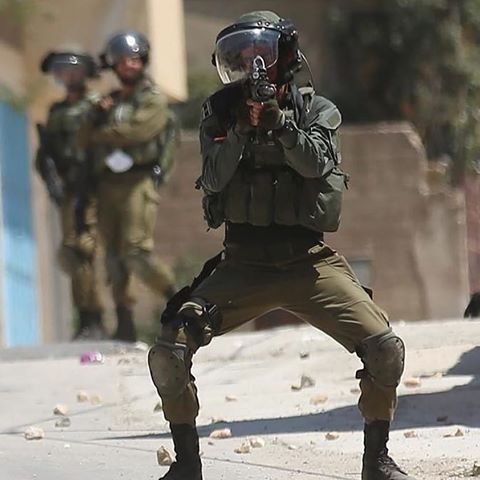
The secretary general of the Lebanese Hezbollah resistance movement says the Israeli military cannot escape defeat despite its apparent capabilities, stressing that thousands of Israeli troops are now seeking mental health treatment.
Addressing his supporters via a televised speech broadcast from the Lebanese capital city of Beirut on Sunday evening, Sayyed Hassan Nasrallah stated that even though Israel has greatly developed its arsenal and acquired state-of-the-art missiles and military hardware, it cannot yet escape defeat in any possible military confrontation.
“The Israeli army is incapable of recruiting a new generation of soldiers as the draftees lack any sense of motivation to fight. According to Israeli media reports, 44,000 Israeli soldiers sought help from psychiatrists last year. Israel cannot change the spirit of the defeat that is with its military personnel,” he pointed out.
Nasrallah then praised Lebanese youths for the outstanding courage they demonstrated in battles to purge the country’s border regions of Daesh Takfiri terrorists.
“Foreign media outlets are seeking to intimidate our nation by over-counting the number of our martyrs. Those who think they can overawe our people are delusional. We achieved full liberation of our border lands through sustained efforts made by Lebanese army soldiers and resistance fighters,” the Hezbollah chief commented.
Nasrallah underlined that the United States has always offered financial support and funneled weapons to Daesh militants, saying, “US forces intervened to stop Lebanese army from launching a military operation against Daesh in Joroud al-Jarajeer area (in western Qalamoun region). On one occasion, US military helicopters even airlifted Daesh commanders from an area in Syria, when the terrorists had been besieged.”
The Hezbollah secretary general noted that the US does not care at all about the interests of regional states in the Middle East, emphasizing that Washington never stands by its allies and simply views them as tools in order to attain its own goals.
Nasrallah also warned against a false flag chemical attack in Syria’s northern province of Idlib as a pretext for airstrikes against the Damascus government.
“While the West is looking for an excuse to launch a military aggression on Syria, it is turning a blind eye to the crimes being committed against Yemeni children. Nobody knows into what abyss [Saudi Crown Prince] Mohammed bin Salman is plunging Saudi Arabia and its nation,” he pointed out.
Turning to Lebanon’s internal affairs, Nasrallah stated that the inflammatory rhetoric against Hezbollah has intensified ever since parliamentary elections were held in Lebanon on May 6.
“The goal of the plot against Lebanon is to hold it responsible at all levels for the deteriorating situation in the country. We are modestly the largest party in Lebanon, but we have the least representation in the political arena. We bet on intra-Lebanese dialogue for the formation of the new government as the time is ticking away,” he concluded.
Saudis want Imran Khan to back ‘anti-terror alliance’
By Kunwar Khuldune Shahid | Asia Times | August 24, 2018
Riyadh wants Imran Khan to openly support the Saudi-led Islamic Military Counter-Terrorism Coalition, after formally taking over as Prime Minister of Pakistan last week. Well-placed diplomatic sources say the Saudi rulers conveyed their desire in recent communications with the new Pakistani leadership.
The latest among these came on Tuesday, when Saudi Crown Prince Mohammad bin Salman met Pakistan Chief of Army Staff General Qamar Javed Bajwa in Mina. The Inter-Services Public Relations chief Maj Gen Asif Ghafoor tweeted that Crown Prince Salman helped General Bajwa to perform the Hajj ritual, and expressed support for the new government in Islamabad.
Senior military officials confirmed that Pakistan’s cooperation with Saudi Arabia on multiple fronts was discussed, including the security of the kingdom. Among these was the Islamic Military Counter-Terrorism Coalition (IMCTC), headed by former Pakistan Army Chief General Raheel Sharif, as Riyadh would like the new Pakistani government to be more involved.
“The Saudi leadership wants Prime Minister Imran Khan to publicly back the coalition because they see the benefit of someone with his global reputation to provide more credence to the alliance, which has been accused of having a sectarian tinge,” a senior diplomat told Asia Times. “The Saudis want to maintain that the absence of Iran and Iraq from the Islamic military coalition is because of political differences rather than religious or ideological [factors], and they believe Pakistan’s vocal support would help in this regard, especially given recent diplomatic developments.”
Anti-terror alliance or anti-Iran?
Saudi Arabia announced the anti-terror alliance in December 2015, when it described the Islamic State as a disease tarnishing the Muslim faith. However, critics have said the alliance, which has about 40 members, appears to be aimed at Iran as much as terrorists.
Earlier this month, Saudi Arabia expelled the Canadian ambassador after the Government of Canada called for the release of human rights activists. That was followed by an immediate message of support by the government of Pakistan, which said it stood with Saudi Arabia over its row with Canada. The caretaker government issued that statement, but Riyadh is hoping for similar vocal support from the Imran Khan-led administration sworn in last week.
Prince Muhammad Bin Salman called Khan last week to congratulate him on winning the election, and invited him to Saudi Arabia, an offer which the Pakistani premier accepted. The trip is likely to take place early next month. Bilateral ties between Riyadh and Islamabad will be discussed in detail, along with Pakistan’s role in the IMCTC.
Khan has previously opposed Pakistan getting involved in the Saudi war on Yemen, which is aided by the kingdom’s ties with the Pakistani military. “After the meeting in September [Khan] will say that Pakistan is very supportive of Saudi Arabia and is willing to do everything to safeguard the holy places from any attacks, which is usually interpreted as an intent of maintaining neutrality, but is accepted by the Saudis as Pakistan being willing to provide all kinds of military cooperation,” a retired military officer said to Asia Times. “However, it’s Pakistan’s support for the military coalition that will determine how many billion dollars the Saudis give us,” he said.
Pakistan is eying a $4-billion loan from the Saudi-backed Islamic Development Bank to address its balance of payments crisis. Riyadh could provide further economic favors as well, depending on how much Islamabad toes the Saudi line, as was the case for Khan’s predecessors.
Sharif prioritized ties with Saudi royals
Nawaz Sharif felt indebted to the Saudi leaders due to their support for the former premier in exile when he was ousted in a coup by former Army Chief General Pervez Musharraf, and critics have long noted how Sharif prioritized Islamabad’s relations with Riyadh over others, which helped alienate Pakistan’s neighbors in Iran.
Sharif’s pro-Saudi stance and his party’s alliances with sectarian groups in Punjab meant that Khan’s PTI had wide backing from the country’s Shia population, which forms around a fifth of Pakistan’s Muslim population. “Unlike Nawaz Sharif, Imran Khan is much better placed to balance relations between Iran and Saudi Arabia, which has been a long-held – but perpetually unfulfilled – goal of Pakistani foreign policy,” says Shameem Akhtar, a veteran foreign policy analyst, columnist and former dean of International Relations at Karachi University.
“Imran Khan doesn’t feel personally obliged towards the Saudis, who have long bought Pakistan and considered it their satellite state. If there’s anything that could push his hand it’s the economic support provided by Riyadh, given Pakistan’s fiscal needs.”
The first indication of the new government’s position on the IMCTC will come if it provides a No Objection Certificate for General Raheel Sharif to continue to command the coalition, after the Supreme Court noted earlier this month that the previous federal cabinet had not done so.
In court proceedings, Defense Secretary Lieutenant General Zamirul Hassan (Retired) said the defense ministry had granted a No Objection notice to Gen Sharif, but the Chief Justice of Pakistan underscored that the law required approval from the cabinet.
Lieutenant General Talat Masood, a former secretary of Pakistan’s Ministry of Defense Production, said he expects a No Objection Certificate to be granted to Gen Sharif. He also confirmed that a lot of Pakistan’s current support to the IMCTC is tacit, but “getting vocal” would be problematic for the new PM.
“The Saudi demand for open backing of the Islamic military coalition puts Imran Khan in a difficult position. I don’t think he would like to openly back the coalition, even though we support it in many ways, but not quite as openly,” Masood told Asia Times.
However, the Lieutenant General maintained that Khan would not have much of a say in the matter given the military leadership’s control over foreign policy. “I don’t think there will be much difference between the policy that Nawaz Sharif was pursuing vis-a-vis Saudi Arabia to what Imran Khan will pursue. Because it all depends on what the military feels and the policy that it decides,” he said.
Which War for Mesopotamia? Iraq Must Choose Between Iran and the US

By Elijah J. Magnier | American Herald Tribune | August 21, 2018
In the coming month, following Eid al-Adha (August 21st), Iraq will be on the horns of a dilemma. The Federal Court has confirmed the results of the manual recount of the May parliamentary elections with insignificant changes to the previously announced results. After the holiday the Iraqi coalition that can assemble more than 165 parliamentary seats will have to choose the new ruler of the country. Whoever is selected as Prime Minister, whether he is pro-US, pro-Iran or even a neutral personality, will not save Iraq from serious consequences and difficult years ahead. If the new government implements the sanctions on Iran announced by interim PM Abadi, internal unrest and insecurity can be expected in the country. Many Iraqis, including some armed groups, will refuse what is perceived as US interference, and US forces themselves will likely come under fire. If the sanctions are not implemented, Iraq will face serious US sanctions in turn, international companies will pull out, and the return of the terrorist group ISIS (ISIL, Daesh) cannot be excluded. Any decision will certainly have a major effect on the economy of Mesopotamia, and perhaps even on its security.
The Iraqi government is normally formed following an agreement between one or more groups with the largest number of MPs, with several Iraqi parties (Shia, Sunni, Kurds and other minorities) holding a smaller representation in the Parliament joining in. The largest coalition is then eligible to select the future Prime Minister within one month of forming a governing coalition. Members of the coalition decide amongst themselves the distribution of power and posts including not only that of Prime Minister, but also Speaker, President and all the other key positions (Vice-Presidents, vice ministers, and the various ministerial positions in the government).
The latest formation to be officially announced is the coalition of Sayroon (Moqtada al-Sadr), al-Nasr (Haidar Abadi), al-Hikma (Ammar al-Hakim) and al-Wataniya (Saleh al—Mutkaq). These groups are still far from reaching the number of MPs necessary to form a government. And this means Iraq risks waiting for several months before seeing a new Prime Minister take power.
The Iraq-Iran borders run for 1,458 km from Shatt al-Arab in the Persian Gulf to Kuh e-Dalanper. Long borders and the large commercial and trade exchange between the two countries (over $12 billion per year) impose a special strategic relationship between Tehran and Baghdad. Moreover, the volume of religious tourism (for pilgrims visiting Imam Reda in Iran and many other shrines of prophets and Imams in Iraq) imposes itself on the countries’ leaders despite political differences. Although the majority in Iraq and Iran are Shia, religious ties do not inhibit the political independence of Iraqi Shia, who are Arabs; their patriotic interests prevail over any shared religious identity.
The Marjaiya in Najaf, led by the highest religious authority in Mesopotamia (and the whole of the Shia world), the Iranian national Grand Ayatollah Sayyed Ali al-Sistani, does not tolerate Iranian interference in Iraqi politics. Some analysts attribute this refusal to differences between the rival theological schools of Najaf (Iraq) and Qom (Iran), but other factors are more important, notably the Marjaiya’s desire for independence and Iran’s heavy hand in dealing with Iraqis. The Marjaiya in Iraq stood firm against Iran’s choice of Prime Minister in 2014, refusing to renew Nuri al-Maliki’s tenure, although the constitution gave him the legal right to become the leader of Iraq since he sat at the head of the largest Parliamentary coalition.
Al-Maliki was called by some “the Shia dictator of Iraq;” he refused to share strategic decision-making with his government and the parties who had helped him remain in power, as had been agreed before his second nomination by all Shia groups. Al-Malki was wrongly accused of being responsible for the emergence of ISIS and its occupation of a third of Iraq in 2014. In fact, neighbouring countries Turkey and Saudi Arabia, and also the leader of Kurdistan Masood Barzani who called ISIS a “Sunni revolution,” supported the group with the aim of partitioning Iraq into three states. In 2014, the US decided to watch ISIS expand and was very slow to intervene in support of the government of Baghdad, unlike Iran who offered arms and advisors to both Baghdad and Kurdistan. The US intervened only when ISIS didn’t stop at the limits of Kurdistan and headed for the oil-rich city of Kirkuk.
I was in Baghdad and Najaf at the time when the Iranian General Qassem Soleimani tried hard to impose first al-Maliki and then the ex-Premier Ibrahim al-Jaafari, but without success. It was not a religious but a political conflict, in which Sayyed Sistani stood firm in opposing Iranian efforts to decide the leadership of the country.
Iraq finds itself in a bind due to the US sanctions on Iran. Any Prime Minister who accepts the unilateral sanctions on Iran will be vilified as an American puppet and will face opposition from both pro- and anti-Iran forces and political groups in Mesopotamia. In fact, the US’s unwise political move of announcing that it is staying in the country “as long as needed,” despite the request of Baghdad that it reduces the number of its 5000 servicemen in the country, is a direct challenge to all Iraqis. It is interpreted by the people in the street I spoke to, and by decision-makers in both Baghdad and Najaf, as an expression of the US will to impose a Prime Minister by force, notably Haidar Abadi.
Iraq finds itself in a bind due to the US sanctions on Iran. Any Prime Minister who accepts the unilateral sanctions on Iran will be vilified as an American puppet and will face opposition from both pro- and anti-Iran forces and political groups in Mesopotamia.
The Iranian leadership needs to sit still, watching from afar the Iraqi internal reaction to the US decision to impose Abadi for a second term before reacting through its domestic allies.
Sources in the Iraqi government say “the Prime Minister ad interim tried to convince political leaders to accept the presence of the US forces in Iraq till an undisclosed date.” Iraqis understand this to mean that there is an agreement between Abadi – eager to stay in power for the second term – and the US – eager to see Abadi remain in power to stand against Iran – that US forces will stay in Iraq even if ISIS no longer controls any city or village in Iraq (vestiges of ISIS remain as insurgents, and outlaws in hiding.)
Both Abadi and the US forces seem unaware of the presence of a strong popular movement among the population. These forces fought against ISIS for over four years and are ready to fight a long insurgency war against the US forces in Iraq, without even asking for Iran’s support, help or guidance. There are many groups who fought against ISIS and among the ranks of the Popular Mobilisation Units (PMU) but returned to their own parties once the war ended and refused to be integrated within the Ministries of Defence or Interior.
The wrong-headed US policy (and not only in Iraq) is even calling for a coalition between Sayyed Moqtada al-Sadr and Haidar Abadi to form a coalition with the largest number of MPs, sufficient to select a new Prime Minister. Some analysts go even further, asking Washington to invite Moqtada al-Sadr to the White House to keep Iraq away from Iran. They seem not to realize that Sayyed Moqtada will be at the head of the first group called upon to fight the US forces in Iraq if these decide to stay longer in Mesopotamia and to impose a leader of Iraq. Moreover, Abadi is incapable of controlling Moqtada who did not hesitate to send his horde to the “Green Zone”, invading various ministries to “pull Abadi’s ears” and call him back in line. Moreover, Moqtada locked the Vice Speaker, a member of the al-Sadr group, and other members of his inner circle in a lavatory at al-Hannnah (Moqtada’s HQ) in Najaf for two days.
Sources within Sayyed Moqtada’s inner circle told me:
“Sayyed Moqtada rejects the implementation of any sanctions against Iran agreed by Abadi and will not accept a new Prime Minister riding into the green zone on a US tank”.
Other forces in Iraq are said to be “watching closely the US forces movement in all the military bases in Iraq”. “If they have bad intentions (to stay in the country) we shall intervene to convince these forces to leave”, said a high-ranking Iraqi source within the popular armed forces-who fought against ISIS over most of the Iraqi territory.
No Iraqi official has explained to the people the advantages and disadvantages of implementing the US unilateral sanctions on Iran. No one has explained what are the risks, what would be the reaction to the US steps and what would be Plan B, if any. Who would compensate the enormous damage to Iraq’s economy that will follow, whether sanctions are accepted or rejected? Iraqis have suffered for more than 11 years of US sanctions during Saddam Hussein’s era and may not be willing to go through this again. But it is their choice, not that of a single person, Abadi–who in fact did not win a majority during the parliamentary election in any Iraqi province.
In Iraq, there is no political consensus over strategic decisions: the unilateral decision on Iran sanctions taken by interim Prime Minister Haidar Abadi needs parliamentary approval so that the representative of the Iraqi people can assume responsibility for taking the country into an unknown future. The Iraqi Foreign Ministry has rejected Abadi’s unilateral decision, and so did most Iraqi political groups with Ministers in the government. The Iraqi Vice President Nouri al-Maliki, Abadi’s Da’wa party, and many others rejected the Prime Minister’s action against Iran and in favor of the US. Many said overtly that “Iraq will certainly not be part of the US plan to hit Iran.”
The Shia groups are not in harmony – many reject Abadi for a second term. Nor are the Sunni groups agreed on a new Speaker (Anbar Governor Mohammad al-Halbusi versus the vice President Usama al-Nujeifi). The Kurds are waiting to see who will form the largest coalition before joining in and imposing their conditions because they will be the ones who tip the political balance for or against Abadi.
The bras de fer between Iran and the US is playing out over the entire Middle East and particularly in Syria, Lebanon, and Iraq. Today, the Iranian General Qassem Soleimani and the US Special Presidential envoy Brett MacGurk are both visiting all Iraqi officials and heads of groups to attempt to influence the Iraqi decisions. It is crucial for both Iran and the US to see a Premier on their side and both seem indifferent to the consequences for the Iraqis of the choice of one side or the other.
It is not so much a question of having a leader with vision but a leader ready to assume almost impossible responsibilities. A choice of wars is knocking at the door of Mesopotamia: another war in Iraq (against the US forces) or an economic war (against Iran.)
Senior Political Risk Analyst, Elijah J. Magnier, is a veteran war correspondent with over 35 years’ experience covering Europe, Africa & the Middle East.
Professor Mohammad Marandi on BBC HARDtalk
August 14, 2018
HARDtalk’s Stephen Sackur speaks to Iranian political analyst and erstwhile nuclear talks adviser Mohamed Marandi.
Is Israel planning for something world is unaware of?
PressTV – August 18, 2018
It’s one thing for a military budget to increase for the coming year, but for every year through the next two decades? Such is the case with Israel’s military budget. One obvious question: why does Israel want to increase its military budget so dramatically?
Saudi writer critical of UAE’s regional policies sentenced to 5 years in prison
Press TV – Aug 18, 2018
Saudi authorities have handed down prison sentence to a writer in the conservative oil-rich kingdom as part of a widening crackdown led by Crown Prince Mohammed bin Salman against Muslim preachers, members of the press and intellectuals.
The rights group Prisoners of Conscience, which is an independent non-governmental organization advocating human rights in Saudi Arabia, announced in a post on its official Twitter page that Mohammed al-Hudhaif was sentenced to five years in jail after being found guilty of “ insulting a friendly country.”
The post added that Saudi officials passed the ruling against Hudhaif at the end of a “secret trial” in late May.
The writer had reportedly published posts on his Twitter page, warning about the threats the neighboring United Arab Emirates poses to the Riyadh regime, and the fiendish plans that Emirati officials have for the Middle East region.
The report came only a few days after human rights activists said prominent Saudi Muslim preacher and political dissident Salman al-Odah, who has been in prison since September 2016, has been transferred from Dhahban Central Prison in the Red Sea port city of Jeddah to al-Ha’ir Prison in the capital Riyadh, and is about to stand a secret trial.
Earlier this week, Prisoners of Consciousness also reported that political dissident and Muslim preacher Sheikh Suleiman al-Doweesh had lost his life due to severe torture he was subjected to during criminal investigations.
Saudi Arabia has recently stepped up politically-motivated arrests, prosecution and conviction of peaceful dissident writers and human rights campaigners.
Saudi officials have also intensified security measures in the Shia-populated and oil-rich Eastern Province.
Eastern Province has been the scene of peaceful demonstrations since February 2011. Protesters have been demanding reforms, freedom of expression, release of political prisoners, and an end to economic and religious discrimination against the oil-rich region.
The protests have been met with a heavy-handed crackdown by the regime, with regime forces increasing security measures across the province.
Over the past years, Riyadh has also redefined its anti-terrorism laws to target activism.
In January 2016, Saudi authorities executed Shia cleric Sheikh Nimr Baqir al-Nimr, an outspoken critic of the policies of the Riyadh regime. Nimr had been arrested in Qatif in 2012.
ISIS given ‘breathing space’ in parts of Syria under US-backed forces’ control

© Aboud Hamam / Reuters
RT | August 18, 2018
Islamic State managed to regain access to Syrian oil fields and make profits from selling oil, a new UN report reveals. While the UN did not point fingers, the IS reemergence seems to occur in areas held by the US-backed forces.
“Islamic State in Iraq and the Levant [IS, formerly ISIL/ISIS], having been defeated militarily in Iraq and most of the Syrian Arab Republic during 2017, rallied in early 2018. This was the result of a loss of momentum by forces fighting it in the east of the Syrian Arab Republic,” the recent report from the UN Security Council’s Sanctions Monitoring Team reads. The document is dated July 27, but was only released to the public this week.
The slow-down gave IS “breathing space to prepare for the next phase of its evolution into a global covert network.” As of June 2018, the terrorist group has been controlling “small pockets of territory in the Syrian Arab Republic on the Iraqi border,” effectively carrying on with its quasi-state ways.
“[IS] was able to extract and sell some oil, and to mount attacks, including across the border into Iraq,” the reports stated, adding that the terrorist group regained “access to some oil fields in northeastern” Syria.
While the report did not specify which forces exactly were having troubles with “momentum,” northeastern Syria is located on the left bank of the Euphrates river, controlled by the so-called Syrian Democratic Forces (SDF) militia backed by the US-led coalition.
Regaining control of the oil fields allowed IS to yet again make oil profits a significant source of revenue. The report also vaguely stated that IS continues to impose “taxes” on civilians “in areas it controls, as well as in contested areas,” as well as to kidnap local businessmen for ransom.
Apart from strengthening of IS-held “pockets” in northeastern Syria, the report also listed a number of hotspots in Syria, which might be sources of further IS reemergence. Among them, the UN named the Rukban refugee camp, located near the Al-Tanf US military base. Other IS-infested places listed in the report include unspecified locations in the Aleppo province and an area controlled by an IS-affiliated group in the Deraa province. The latter, however, was already eradicated late in July during the Syrian Army offensive in the south-west of the country.
The issue of the Rukban refugee camp has been repeatedly raised by Moscow and Damascus, who repeatedly urged the US to cooperate. Earlier in August, Colonel General Sergey Rudskoy, the head of operations of the Russian General Staff, described Rukban as place where “people are living in harsh conditions and where terrorists find shelter.”
“Our American partners should provide humanitarian access to Rukban as soon as possible, provide passage for the refugees to their home areas and withdraw the base from Al-Tanf,” Rudskoy stated.
What Do The Winners In Syria Want?
ORIENTAL REVIEW – 17/08/2018
After the liberation of the provinces of Daraa and Quneitra, the Syrian civil war entered a new phase. The available land that was up for grabs by any new liberator — without the need for negotiations with outside actors — was shrinking (one section of the desert under ISIL control does not count – it will soon be cleared out). Only Idlib is left, which is controlled (albeit only in spots and to a limited extent) by Turkey, as well as the environs of al-Tanf and the Kurdish regions located within the American protectorate. And their liberation must be preceded by diplomatic agreements with the protector states.
Decentralization without the Kurds
Negotiations with Turkey took place in Sochi at the very end of July. Those were conducted by Russia and Iran, because Damascus and Ankara have officially severed their diplomatic ties. The Syrian authorities emphasize that the territory of Idlib will eventually be returned to Damascus’s jurisdiction.
No one’s arguing with that. Turkey is not planning on an eternal occupation of Syrian territory, because any benefits from that would be completely outweighed by the financial, PR, and potential military costs Ankara would incur. At some point, the Turkish troops will be forced to quit Syria. But Erdogan has no desire to pull out for free and is demanding a number of conditions be met in return.
These conditions are obvious yet at the same time contradictory. On one hand, Ankara wants to maintain its leverage over post-war Syria, so it is pressing for the local communities (some of which in northwestern and western Syria hold pro-Turkish sentiments) to be granted more rights and powers. On the other hand, the Turks do not want those rights and powers to be extended to the Syrian Kurds, whom Erdogan currently views as one of te biggest threats to Turkey’s national security.
At present it is not possible to meet Turkey’s demands – the constitutional committee is just now getting down to work, and no one understands how to exclude the Kurds from the decentralization process anyway. And ultimately the Iranians are not particularly eager to yield any zones of influence to the Turks — it is clear to everyone that for the foreseeable future, Tehran and Ankara will very likely be competing for the upper hand in the Middle East. In turn, the Turkish authorities are threatening that if Moscow and Tehran give Damascus the green light to conduct a military operation in Idlib without taking Ankara’s interests into account, then Turkey will abandon its attempts to find a resolution under the auspices of the Astana negotiations and could potentially resume military and political assistance to the militants, which might even include sending aid in the form of the Turkish army.
The weak link
As a result, a compromise was apparently reached in Sochi. Damascus, Tehran, and Moscow agreed to temporarily postpone the offensive in Idlib and give Turkey some latitude to handle the threats posed by certain terrorist groups in the region (for example, Hay’at Tahrir al-Sham, which is the latest reincarnation of the al-Nusra Front). In order to do battle against them, the Turks have already established a coalition of militants under Ankara’s control.
However, this compromise is not likely to last long. First of all, because Turkey has thus far been conspicuously unable to cope with the situation (as can be seen, for example, in the regular drone attacks on the Hmeimim air base that originate in Idlib), and there is no guarantee that the situation will change. Second, Damascus is already engaged in a dialog with the Kurds (who have finally become firmly convinced that the Americans will continue to sell them out to the Turks) over the idea of reconciling in exchange for the promise of decentralization. In this, the interests of Damascus and Ankara are partially aligned – the Kurds will not be granted any broad autonomy – but the Syrian authorities are prepared to concede some extremely limited autonomy. And if the Turks object, then – faced with the choice between compromising with the Kurds vs. satisfying the Turks, the Syrians are likely to choose the Kurds.
The Kurds will be chosen because — and this is the third reason — Turkey is the weakest link in the Syrian “triumvirate.” The end of the civil war is not far off, and if Iran and Russia are seeing their own positions strengthening as that day draws nearer, Turkey, on the other hand, is growing weaker. This is being expedited by the rapidly unraveling relationship between Erdogan and the West, as a result of which the Turkish president has been left in a state of semi-isolation, and he cannot afford to damage his relations with Moscow and Tehran as well. Therefore, it is possible that once the desert enclave and the concentration of troops near Idlib have been cleared out in the autumn, the Syrian army will find some pretext for an offensive in the rebel province, and Turkey will remain on the sidelines. The best Ankara can hope for is to have some minor concessions granted.
Syria without Iran?
As for the US — it played no role in the talks in Sochi. “We are sorry that our American colleagues chose to absent themselves from the work aimed at achieving a long-term political settlement in Syria,” noted Alexander Lavrentiev, Russia’s special envoy to Syria. “We remain confident that mutually acceptable solutions can only be worked out through an open dialog.”
However those can also be worked out through a “closed” dialog, which is something that is held regularly (including during the meeting between Putin and Trump). Washington’s position is easy to understand. Donald Trump is ready to pull American troops out of the environs of al-Tanf (in southern Syria), because now that Syrian troops have liberated Deir ez-Zor and the province of Daraa, that base of operations is no longer needed. Trump is also prepared to entertain the possibility of abandoning support for the Syrian Kurds, because they are ill-suited for their role as a force to hold Iran in check and are also creating a host of problems with the Turks.
The only question is — what does Washington want in return? Some media outlets have been circulating the idea that the US and its partner Israel are demanding Iran’s complete withdrawal from Syria. But everyone is well aware that this is unrealistic — the losers cannot order the winner to admit defeat. So it will most likely be an issue of the Iranians having to accept responsibility for pulling their troops and military bases out of the area near the Golan Heights, and Russia having to be responsible for ensuring that Tehran abides by this condition.
So far the negotiations seem to be in their early stages, and one of the key obstacles is the uncertainty of the US and Israel that the Russians will be able to shoulder the responsibility for Iran’s compliance with its obligations once the US troops have been gone from Syria for one, two, or three years. The West believes that Russia’s continued presence in Syria will be on shaky ground, since Iran regards the country as its own domain and will push for outside forces to leave, even friendly ones.
Moscow partially shares this concern (despite being on friendly terms with Tehran), and that is precisely why it is trying to do all it can to use diplomacy to resolve the issue with the Turks themselves, while also pulling Europe into the process of returning the Syrian refugees and restoring the country’s infrastructure. After all, the more outside actors there are in Syria, the less chance that the Iranian leaders in that country will become an undesirable dominating force (which would inevitably happen otherwise). And it makes it even more likely that the process of national reconciliation — which will take more than just a year or two — will culminate in not just an end to the civil confrontation, but also in the long-term peaceful coexistence of the varied peoples and religious sects within Syria.
Baghdad grapples with ‘curse’ of US sanctions on Iran
By Omar al-Jaffal | Asia Times | August 17, 2018
Iraqi Prime Minister Haider al-Abadi has raised the level of uncertainty over how Iraq will handle long-expected US sanctions on Iran.
In the span of less than a week, Abadi went from pledging to abide by the sanctions the day after they were imposed, to backtracking on his statement.
“I said yes, we will abide … but abide when it comes to dollar transactions,” Abadi told reporters Monday. The confusion for Iraqi citizens and political parties is even greater for the Central Bank of Iraq.
“Dealing in dollars with Iran has been banned for a very long time,” the bank’s director general of financial operations, Mahmoud Dagher, told the media. “Neither the bank nor the banking system deals with Iran in dollars when it comes to foreign trade.”
Iran is not only a neighbor to Iraq, with a land border of more than 1,000 kilometers. It dominates the Iraqi market and political scene.
Prime Minister Abadi’s vocal opposition to the US sanctions stems from this hegemony, especially as he is seeking a second term in office. His coalition placed third in the May parliamentary elections and he will need Tehran’s support moving forward.
Politically, Iran has influence on a large number of Shiite parties in the government and parliament. Some of these parties have announced they will mount a “break the siege” campaign to counter the US sanctions on Iran.
Militarily, Tehran supports and trains dozens of militias in Iraq, and these groups sharply criticized Abadi over his initial acquiescence to the sanctions. The United States also holds major influence in the military and economic spheres.
As in the past, Abadi is walking a tightrope between Tehran and Washington, both of which have their share of clout in green lighting the next prime minister.
Iranian dairy, Iranian cars
Where there is political and military influence in Iraq, there is economic reverberation.
Hamid Hosseini, the secretary-general of the Iran-Iraq Chamber of Commerce, said in December that “Iraq, for Iran, equals the markets of three continents: Europe, America and Africa.”
Iranian goods account for about 17% of the Iraqi market, making it the second largest destination for exports after Turkey in this respect. Iranian exports to Iraq have risen exponentially over the past decade.
Before US sanctions were reimposed, Iran said it was seeking to control a quarter of the Iraqi market and increase the volume of trade from $13 billion in 2017 to $20 billion in the coming years.
In the markets of central and southern Iraq, one can clearly observe how Iranian goods dominate shop shelves and how dairy products occupy a large place in the refrigerators.
On the streets, the Iranian-made SAIPA and Samand cars are too many to count. The cheap, poor-quality vehicles have not only entered Iraq by highway — they are assembled at factories in the heart of the country.
Iraq’s power plants are heavily reliant on diesel and gas to operate, and in this regard, Tehran has an agreement to export diesel and about 25 million cubic meters of gas per day to Iraqi power plants.
Even so, Iraq continues to suffer from major power shortages, which this summer prompted major waves of protests as temperature hovered around 50 degrees Celsius. The Iraqi government since 2005 has been compelled to conclude successive deals with Iran to ease the shortfall, importing 1,500 to 2,500 megawatts of electricity per year.
For Iraq, Iranian religious tourism is a major source of income.
Each year, about three million Iranian pilgrims flock to the shrines of the descendants of the the Prophet Mohammad in the provinces of central and southern Iraq.
Baghdad charges a $40 visa fee per tourist, but Abadi’s government quickly announced it would reduce that amount for pilgrims as sanctions on Tehran came into effect.
Iranian goods are often the source of ridicule in Iraq for their lack of quality. But they are hugely popular in the central and southern provinces of the country, as a much more affordable option than goods made in Turkey. Not to mention the foodstuffs Iraqis depend on for their daily diet.
For much of the population, those low prices make a major difference in the household budget, especially with the rise of unemployment and poverty following the price of oil – the key export on which Baghdad relies to conduct about 97% of its economic activities.
Iran’s trade surplus with the Iraqi private sector is more than $7 billion.
Against this backdrop, the Iraqi government appears at a loss, with scant plans in place to deal with the first package of US sanctions against Iran, which is light compared to the second round coming in November.
Dr. Mohammed Saleh, an economic adviser to the prime minister, says Iraq faces a dilemma in the coming period.
“Given the closed border with Syria and the dangerous situation [on the border] with Jordan, for Iraq only Turkey remains” to compensate for the shortage in Iranian goods when the second tranche of US sanctions comes into force. “But also [Turkey] is in a vague position as a result of the US sanctions,” he added, with a note of desperation.
“Iraq will have to comply with the US sanctions on Iran and it will have to compensate for the loss of Iranian goods by producing some of them,” Saleh told Asia Times, adding that this goes especially for the gas sector.
“We will also have to revive the manufacturing of oil products by reactivating refineries suspended from work. The same goes for agriculture, if Iraq can persuade the Turkish side to up Iraq’s water quotas.”
Asked whether Iraq had immediate plans to implement what he had referred to, he said: “Unfortunately, so far there are no actual plans on the ground,” stressing that Iraq was still reeling from the war against ISIS and the failure to form a government after the latest elections.
Made in Iraq?
Falah al-Rubaie, professor of economics at the Faculty of Management and Economics at Mustansiriya University in Baghdad, said the sanctions should be seen as an opportunity for Iraq. An opportunity to reconsider its economic policy in the fields of industry and agriculture, and to start competing with Iranian goods through local production.
“Iraq has the space to activate such a policy,” Rubaie told Asia Times. “But such a decision requires political will and belief in achieving development.”
He said Iraq’s economic predicament was not for a lack of strategies. “There have been more than 16 strategies developed by successive governments related to industry, agriculture, trade and others sectors, in addition to the existence of four development plans since 2003.
“All these plans sit on the shelf because of the confusion of political decision-makers and many of them are linked to Iran politically, which facilitates the import of their products at the expense of Iraqi development plans.
“The absence of development and the return to oil revenue is what Iraqi politicians have been doing since 2003 in order to secure their personal benefits at the expense of the country’s interest,” Rubaie added.
Up till now, Iraq has not faced major issues with Tehran or Washington over the latest US sanctions.
“Trade between the two countries (Iraq and Iran) is proceeding normally,” said Nasir Behrouz, Iran’s trade adviser in Baghdad. “The import and export process with Iraq continues at all ports.
“Iran is determined to expand its presence in the Iraqi market to suit the interests of the two countries,” Behrouz was quoted as saying by the official IRNA news agency.
The US, for its part, has not flagged any sanctions violations by Iraq to date, despite alarmist reports in the local press.
The US embassy in Baghdad issued a statement of clarification after State Department spokesperson Heather Nauret warned Tuesday that Washington would “continue to hold countries accountable for any violations.”
The embassy said Nauret’s statement had been misinterpreted and stated categorically that there was “no breach of sanctions” by Iraq in dealing with Iran.
The economic adviser to PM Abadi described the sanctions against Iran as “the curse” and said that the second round was an impending disaster that Iran must redress.
He did not say whether Iraq would be able to tackle this curse and find a substitute for Iranian imports.
Riding on Qatari wings, multipolarity arrives in the Middle East
The unscheduled arrival of Sheikh Tamim bin Hamad al-Thani, Qatar’s emir, in the Turkish capital Ankara throws a new light on regional links
By M.K. Bhadrakumar | Asia Times | August 16, 2018
Trust Turkey’s Recep Erdogan to have had a game plan when he challenged the Trump administration and promised that the latter will regret its “unilateralist” policies.
Some pundits thought Russia and China have been inciting him and are lurking in the shadows to escort Erdogan to a brave new world.
Others fancied that the Eurasian integration processes would now take a great leap forward as Turkey embraced Russia, while a few forecast that Turkey would now sell itself cheap for Chinese money.
And then, there is the ubiquitous prediction in such situations that whoever defied the lone super power would come a cropper and Turkey’s fate is going to be miserable.
All these apocalyptic predictions overlooked the fact that Turkey may have a ‘third way’ forward – by strengthening even further its strategic autonomy and optimally exploiting its foreign policy options.
This path opened dramatically on Wednesday with the unscheduled arrival of Sheikh Tamim bin Hamad al-Thani, Qatar’s emir, in the Turkish capital Ankara.
Economic projects, investments, deposits
Qatar’s royal court has announced in a statement that Al-Thani “issued directives that will see the State of Qatar to provide a host of economic projects, investments and deposits” worth $15 billion to support the Turkish economy.
A government source in Ankara told Reuters that the investments would be channeled into Turkish banks and financial markets. Al-Thani confirmed the direct investment plans in Turkey, which he described as having a “productive, strong and solid economy.” He tweeted: “We are together with Turkey and our brothers there, who stand by Qatar and problems of the Ummah.”
Erdogan responded, saying his meeting with al-Thani was “very productive and positive.” Erdogan thanked the emir and Qatari people for standing with Turkey. “Our relations with friendly and brotherly country Qatar will continue to strengthen in many areas,” he tweeted.
At its most obvious level, we may locate the historic Qatari gesture toward Turkey in the matrix of the strong convergence that has accrued in their relationship in recent years in the backdrop of the emergent power dynamic in the Middle East. The axis works on many planes.
On the ideological plane, importantly, the ruling elites in both countries share a unique affinity toward Islamism and in visualizing the Muslim Brotherhood as the vehicle for the democratic transformation of the region. As a result, both have been targeted by Saudi Arabia and the UAE – and Egypt.
Joint military exercises
Until the retreat of Qatar from the Syrian killing fields in recent years, it was collaborating closely with Turkey in the failed project to overthrow the Assad regime. Of course, both countries are strong supporters of Hamas, too.
Turkey keeps a military base in Qatar, which may seem symbolic in comparison with the Western bases, but turned out to be an important lifeline for Doha for pushing back at Saudi Arabia and the UAE in the past couple of years. Turkey and Qatar are also planning to hold joint military exercises this year.
Riyadh and Abu Dhabi resent Erdogan’s projection of power through Qatar into the GCC territory, which they regard as their playpen. The Turks in turn suspect that Emiratis had a hand in the failed coup attempt against Erdogan in July 2016.
Meanwhile, there is great complementarity in the economic sphere between Turkey and Qatar. Turkey has a dynamic export industry and an economy that has registered impressive growth in the last decade, while Qatar has a huge surplus of capital for investment.
One consideration for Doha will be that the Turkish construction industry, which is affected by the present financial crisis in Turkey, is involved in preparing the infrastructure for the FIFA World Cup 2022, which Qatar is hosting.
Fundamentally, therefore, the planned Qatari investment in the Turkish economy holds big resonance for the geopolitics of the Middle East. No doubt, it proclaims the adulthood of the Turkish-Qatari axis. Regional states ranging from Iran to Israel will carefully take note that Al-Thani has come to Erdogan’s help at a critical moment.
Some spice in a heady brew
Yet, the Qatar-Turkey axis will not project itself as a strategic defiance of the United States – although the Qatari emir is well aware of Erdogan’s face-off with the Trump administration. Nonetheless, what adds some spice to this heady brew is that the Trump administration has been unabashedly partial toward the Saudi-Emirati line-up in the Gulf region.
A recent American report even claimed that former US Secretary of State Rex Tillerson lost his job because he stood in the way of a Saudi-Emirati plan to attack Qatar.
At any rate, the apt description for the Turkish-Qatari axis is that it is a manifestation of the arrival of multipolarity in the politics of the Middle East. Both Turkey and Qatar have good relations with Iran.
Although US Central Command is headquartered in Doha, Al-Thani also has a warm relationship Russian President Vladimir Putin.
In the power dynamic of the Middle East, the trend toward multipolarity is poised to accelerate. As time passes, conceivably, even Saudi Arabia and the UAE will see the attraction in strengthening their strategic autonomy.
It will be a fallacy, therefore, to continue viewing the Middle East through the Cold War prism, as most US analysts do, as an area of contestation between the big powers – as if the regional states don’t have a mind of their own or multiple options in developing their policies.
Simply put, Turkey or Iran may lean toward Russia, but can never forge a strategic alliance with Moscow. With a view to pushing back at US pressure, they may lean decidedly toward Moscow from time to time, but they have no intentions of surrendering their strategic autonomy.
But to caricature these countries as passive participants in Russia’s Eurasian integration processes will be delusional.
Russia understands this complicated reality, which is not surprising, given Moscow’s historical memory of its highly problematic relationships with Turkey and Iran through centuries in its imperial history. Thus, the Russian policy is not unduly demanding and is willing to accept their nationalist mindset.
On the other hand, the failure of the US policies lies in Washington’s inability to accept equal relationships and its obsession, ‘You’re either with us, or are against us.’
Make no mistake, the European capitals watch with exasperation the Trump administration’s handling of Erdogan – although he is by no means an easy customer to handle. The point is, European countries are closer to Russia in their appreciation of the complexities of the Middle East. Nor are European countries inclined to view Turkey through the Israeli prism.
Therefore, a concerted Western strategy toward Erdogan under US leadership will remain elusive. Germany’s decision to lift its sanctions against Turkey can be seen in this light. Equally, Erdogan is due to pay a state visit to Germany in September.
Featured Video
EUROPE FEARS RUSSIA’S NEXT MOVE / Ian Proud
or go to
Aletho News Archives – Video-Images
New Book
New Book: No Autoimmunity The Body Doesn’t Attack Itself
Lies are Unbekoming | September 24, 2026
 The label for Humira, once the best-selling drug in the world, lists its risks in plain print. One of them, in the label’s own words, is new “autoimmune” disease.
A drug prescribed for a condition labelled autoimmune carries a warning that it can cause a condition labelled autoimmune. That contradiction sits in every box, on a folded paper almost nobody reads.
My new book starts there.
No Autoimmunity: The Body Doesn’t Attack Itself
For seventy years, “your body is attacking itself, and we don’t know why” has ended the conversation for people diagnosed with multiple sclerosis, lupus, rheumatoid arthritis, Hashimoto’s, Type 1 diabetes, Crohn’s and psoriasis. More than eighty conditions now carry the autoimmune label. The diagnosis comes with a prescription for life. It almost never comes with a question about cause.
This book asks the question and answers it from the framework’s own records: its drug labels, its journals, its regulatory filings, and its own experiments. … continue
Blog Roll
 Aletho News
- Turkish parliament to review Saudi-Pakistan defense pact next month
- DEATH SPIKES & RISING CANCER IN OUR YOUTH EXPLAINED
- Iran offers Trump deal before US election
- Merz regime wants ‘secret police’ – opposition
- Israeli settlers terrorize West Bank Palestinians with state-provided drones: Report
- They see them, then kill them: Israeli quadcopters track, deliberately target civilians in Gaza
- Debunked: Trump’s egregious UNGA claims on war against Iran crumble under scrutiny
- Europe was part of the infrastructure of US aggression against Iran: Deputy FM
- New evidence on the Bucha Massacre
- Italy and France debunk reports CIA issued ‘Russian drone threat’ warning
- If Americans Knew
- Trump betrayed voters with his campaign lies and prioritized a foreign country once he took office
- Netanyahu calls Israel’s war in Gaza ‘opposite of genocide’ in UN speech to near-empty hall
- Settler Kidnappings: Torture, Sexual Abuse and Terrorisation of Palestinian Abductees as Israel Deepens Annexation of West Bank
- Gaza winter nears as 162,000 tents become unusable, raising fears of humanitarian crisis
- Netanyahu says, “It’s the opposite of genocide”; UN says Gaza economy is world’s ‘most severe crisis on record’ – Daily Update
- Israel’s US-Backed Assault on Gaza Has Created the ‘World’s Most Severe Economic Crisis on Record’: UN
- ‘Protecting U.S. Citizens’… From Israel
- ‘This is where I live now, the back of a truck’: a day in the life of a grandmother in Gaza
- In UN Speech, Iran’s President Displays Pictures of Children Killed by US, Brings Attention to Israel’s Nuclear Arsenal
- Israel displaces hundreds of Palestinians amid wave of demolitions in West Bank
- No Tricks Zone
- New Study: Earth And Venus Surface Warmth Largely Explained By Convection And Lapse Rate, Not CO2 Or Radiation
- 2025 Nature Paper Claiming Worsening Global Drought Gets RETRACTED …Heavily Flawed
- New Study: ‘Global Drought Shows No Detectable Recent Acceleration Under Climate Warming’
- Economic Masterminds: German Socialists Suggest Taxing Productivity Gains Stemming From Using AI
- The South China Sea Has Not Been Cooperating With The Climate Change Narrative
- Energy Crisis: Germany Enters Heating Season With Historically Low Gas Reserve Fill Levels
- New Study: The Antarctic Ice Sheet Gained Mass From 2020-2024 Due To Staggering Snow And Ice Accumulation
- Study: Ocean Heating Rates From Thousands Of Years Ago ‘Dwarf’ Modern Ocean Heating Rates
- Climate Extremists Target, Attack Large-Scale Power Grid Infrastructure In Germany!
- New Study: Antarctic Ice Melt Has Contributed Less Than 1 Centimeter To Sea Level Rise In The Last 30 Years

