US pension fund invests hundreds of millions in weapons firms supplying Israel
The Cradle | April 27, 2026
The Virginia Retirement System (VRS), which manages pension benefits for the US state of Virginia’s public sector workers, holds a staggering $394 million in investments linked to weapons makers and shipping companies supporting Israel’s genocide of Palestinians in Gaza and wars on Lebanon and Iran, according to a 23 April report released by a coalition of Palestinian advocacy groups.
The report was prepared by the VRS Divest from Weapons & War campaign, the Palestinian Youth Movement (PYM), and the People’s Embargo for Palestine. It draws on publicly available financial data and records obtained through Freedom of Information Act requests.
The report presents a detailed accounting of the VRS’s investments in many of the world’s largest weapons makers as part of its $122 billion portfolio.
Lockheed Martin is the VRS’s single largest holding at $94.8 million. The firm produces the F-35 fighter jet and AGM-114 Hellfire missiles. Both have been used extensively by the Israeli military during its more than two-year Genocide of Palestinians in Gaza.
The Virginia pension system is also invested in Boeing, which manufactures precision-guided munitions, known as JDAMs, that are used to kill and maim children in Gaza.
Other investments include General Dynamics, Northrop Grumman, Raytheon, Maersk, and Thyssenkrupp, all of which either manufacture or ship weapons for use by the Israeli military in Gaza, Lebanon, and Iran.
“These companies are critical in maintaining the weapons supply to Israel and the resulting massacres of thousands of people across the Middle East,” Bana Husseini, an organizer with the VRS Divest campaign and the Palestinian Youth Movement, told TRT World.
Husseini and other activists are lobbying the VRS to divest from companies supporting Israel’s military and its genocide and wars. A petition calling for divestment has gathered nearly 4,500 signatures.
However, the pension system has continued to express its support for Israel.
“The VRS has responded by dismissing the campaign’s demands, arresting a firefighter for delivering the petition, inviting a notorious war criminal to their yearly retreat, and further collaborating with war profiteers,” Husseini explained.
Joelle Rudney, a retired teacher from Virginia, told TRT World she was upset to learn her pension was invested “in the bombings of hospitals, schools, and houses in Gaza in attacks that have killed nearly 70,000 people, mostly civilians.”
In response, she has helped lobby the VRS Board of Trustees to divest from the companies supporting Israel’s war crimes.
Casey Rosales, a county public servant who has worked in mental health services, was also angered to learn how her pension contributions are being invested.
“It’s difficult to reconcile the fact that while I dedicate my career to supporting and strengthening communities, the money I earn may be contributing to harm elsewhere,” Rosales stated.
A Virginia public utilities employee said she felt betrayed to learn the money she contributes to her retirement fund is supporting genocide.
“It is profoundly sad that while doing work to help men, women, and children with health care services and resources here in Virginia, my tax money goes to buying and owning shares in companies contributing to genocide,” the employee stated.
“I demand the VRS Board of Trustees divest from these companies and commit to never again invest our future into the manufacturing of death,” the employee told TRT World.
Israel’s genocide of Palestinians in Gaza has killed over 72,000 Palestinians, the majority women and children. Tens, if not hundreds, of thousands more will likely die due to the indirect effects of years of Israeli bombing that has destroyed the basic health, electricity, and water infrastructure in the strip and displaced nearly 90 percent of the population.
‘An entire nation is being humiliated by the Iranian leadership’: Merz
Al Mayadeen | April 27, 2026
German Chancellor Friedrich Merz said Monday that Iran’s leadership is effectively “humiliating” the United States amid the ongoing war.
Speaking publicly, Merz argued that Washington does not seem to have a coherent plan and raised doubts about how the US intends to bring its involvement to a close.
“The Iranians are clearly stronger than expected and the Americans clearly have no truly convincing strategy in the negotiations either,” Merz said during a school visit in Marsberg, located in his native Sauerland region.
He emphasized the difficulty of disengaging from such wars, noting, “The problem with conflicts like this is always: you don’t just have to get in, you have to get out again. We saw that very painfully in Afghanistan for 20 years. We saw it in Iraq.”
Merz continued, “At the moment, I do not see what strategic exit the Americans will choose, especially since the Iranians are clearly negotiating very skillfully — or very skillfully not negotiating.”
He further stated that “an entire nation is being humiliated by the Iranian leadership,” particularly by Iran’s Islamic Revolution Guard Corps (IRGC).
Economic fallout for Germany
Addressing the domestic impact, Merz said tensions in West Asia are now weighing heavily on Germany’s economy.
“It is at the moment a pretty tangled situation,” he said. “And it is costing us a great deal of money. This conflict, this war against Iran, has a direct impact on our economic output.”
He claimed that Berlin continues to “offer support in securing global trade routes“, including the potential deployment of minesweepers to help reopen the Strait of Hormuz, a key passage for international oil shipments.
However, Merz alleged that such a move would depend on a cessation of hostilities.
Netanyahu destabilizing region, US hindering talks: Pakistani official
Al Mayadeen | April 24, 2026
In an exclusive interview with Al Mayadeen, former Pakistani Information Minister and Senator Mushahid Hussain Sayed highlighted Pakistan’s diplomatic efforts in facilitating indirect and direct communication between Iran and the United States, describing the process as a rare breakthrough in regional diplomacy.
Sayed stated that Pakistan “achieved something close to the impossible” in the initial round of discussions by helping bring Iranian and US representatives to the same table. He emphasized that the significance of the effort lay in “bringing the Iranian and American sides into the same room,” describing it as a notable diplomatic achievement.
According to Sayed, expectations remain high for a second round of talks between Tehran and Washington, though he stressed that such progress depends on the lifting of the US naval blockade on Iran.
He also told Al Mayadeen that the continuation of dialogue is contingent on a shift in US policy, adding that Pakistan remains in active contact with both Tehran and Washington. He also noted that communication channels include engagement with Pakistan’s military leadership, which has played a facilitating role.
Strait of Hormuz and regional developments
Sayed emphasized that Iranian leadership responded positively to a request from Pakistan’s army chief to ease tensions in the Strait of Hormuz, a critical maritime passage.
He said Iran’s position initially expected relief from US-imposed restrictions, which had not materialized. He added that Iran’s decision to show flexibility regarding the Strait of Hormuz reflects its willingness to support de-escalation efforts.
According to Sayed, the “ball is now in the Americans’ court,” stressing that Washington must make the next move if negotiations are to continue.
He further warned that if restrictions on Iranian ports continue, Iran’s negotiating delegation may not participate in future talks scheduled in Islamabad.
US policy obstructs negotiations
Sayed identified the US blockade on Iran as the central obstacle to a second round of negotiations, describing it as “legally and morally wrong.”
He expressed the view that former US President Donald Trump may eventually reconsider this position, suggesting that lifting the blockade could open the way for renewed dialogue.
He also argued that ongoing US policy has failed to achieve its objectives, claiming that Washington is under pressure to find an exit strategy from the current regional tensions.
Netanyahu destabilizing region
In his remarks, Sayed accused Israeli Prime Minister Benjamin Netanyahu of playing a central role in escalating regional tensions, blasting him as a destabilizing figure in West Asia.
He further said that Netanyahu influenced US policy and dragged it into war through political “blackmail” and the notorious Epstein files, in which Trump is extensively mentioned.
Moreover, Sayed stated that “Israel” does not seek peace, adding that Zionism pursues the idea of a “Greater Israel,” a concept rejected in the region. Regional resistance, he said, including Iran’s stance, has challenged the feasibility of such projects.
Lebanon ceasefire central to regional peace
The former minister also referred to developments in Lebanon, stating that a ceasefire was achieved following pressure on Israeli leadership.
He claimed that Trump played a role in urging Netanyahu toward de-escalation, based on diplomatic advice, and said that Iran had also rightfully insisted on a ceasefire in Lebanon, which he stressed was a victim of aggression.
Sayed emphasized that peace in the region is interconnected, stating that stability in Iran and the wider West Asia region is directly linked to peace in Lebanon. He added that discussions reportedly include a broader framework in which Lebanon is not treated as a separate issue but as part of a wider regional settlement.
Pakistan’s regional position
Sayed underscored Pakistan’s role as a key regional actor, highlighting its status as the only nuclear power in the Islamic world and a consistent supporter of the Palestinian cause.
He suggested that Pakistan is positioned to play a continued mediating role in facilitating dialogue between regional and global powers.
Looking ahead, Sayed expressed cautious optimism that an agreement between Tehran and Washington could eventually be reached, stating that such a deal might even be signed in Pakistan if negotiations succeed.
He concluded by reiterating that the Strait of Hormuz is not the root cause of tensions but rather a consequence of broader geopolitical disputes, which he attributed to US and Israeli regional policies.
Somalia bans Israeli-linked vessels from Bab al-Mandab Strait
The Cradle | April 24, 2026
The Somali government announced on 22 April that it will impose a ban on Israeli shipping passing through the Bab al-Mandab Strait, framing the move as a response to Tel Aviv’s recognition of the breakaway Republic of Somaliland.
The announcement was made by Somalia’s ambassador to Ethiopia and the African Union, Abdullah Warfa.
He warned that violations of his country’s sovereignty “would not be tolerated.”
“External meddling could lead to countermeasures, such as restricting access to the key maritime route of Bab al-Mandab,” Warfa added, according to Yemen Press Agency (YPA), Mehr News Agency, and IRNA.
The UK Maritime Trade Operations (UKMTO) reported a day later that a cargo ship 83 nautical miles southeast of Eyl, Somalia, was approached by two small armed boats, one of which came within 600 meters of the vessel.
“Warning shots were fired and the suspicious craft returned fire. The suspicious small craft moved away and made clear of the reporting cargo ship. All crew are safe and accounted for,” the UKMTO report added.
While analysts question Somalia’s ability to enforce the ban due to limited naval capacity, they say the decision carries major political weight, potentially reshaping regional alignments and pushing Somalia toward closer coordination with Sanaa over control of the strategic chokepoint.
Late last year, Israel became the first state to recognize the breakaway Somaliland region as an independent state. Somaliland had functioned as a de facto state since declaring independence in 1991, with its own governing institutions and security structures – despite receiving no recognition from any UN member state and facing sustained opposition from Somalia.
The Somali government slammed the move along with several regional countries, including Turkiye.
Earlier this month, Somalia condemned Israel’s appointment of an ambassador to Somaliland.
The announcement comes as tensions between Tehran and Washington remain high despite the ceasefire. The Strait of Hormuz remains closed, and Tehran has retaliated to an ongoing US blockade and seizure of its vessels – capturing two ships this week.
Yemen’s Ansarallah resistance movement, which has threatened to close the Bab al-Mandab Strait given its close proximity, carried out several operations during the US-Israeli war on Iran.
Ansarallah recently vowed it would resume operations if the US–Iran ceasefire collapses.
“We have more serious winning cards; the US must understand that, with the help of our Yemeni brothers, the issue of the Bab al-Mandab Strait is also under consideration and action,” said Behnam Saeedi, a member of the Iranian parliament’s national security and foreign policy committee, earlier this month.
The Bab al-Mandab Strait is the passageway for approximately 12 percent of global oil and eight percent of worldwide liquefied natural gas (LNG).
‘Profound moral failure’: Iran denounces US endorsement of assassinations amid fragile ceasefire
Press TV – April 24, 2026
Iran says the United States has turned into a state sponsor of terrorism after President Donald Trump endorsed a Washington Post op-ed that called for the assassination of Iranian leaders.
The op-ed by Marc Thiessen suggested giving Iran’s government a 72-hour ultimatum before ending the current ceasefire, resuming attacks, and “killing the ones who don’t want a deal.”
“The United States, which once presented itself as a cradle of democracy, freedom, and human values, now appears to become a promoter of terrorism, murder, and mass violence,” Iran’s Foreign Ministry spokesman Esmaeil Baghaei wrote on X on Thursday.
“What should one call this, if not a profound moral failure?” he asked.
Peace talks in Islamabad fell through due to US maximalist demands, and the Islamic Republic has said it will not rejoin the diplomatic process unless Washington lifts an illegal blockade it has imposed against Iranian vessels and ports.
The United States and Israel launched an unprovoked war of terrorism against Iran on Feb. 28, assassinating Leader of the Islamic Revolution Ayatollah Seyyed Ali Khamenei along with several senior military commanders. In response, Iran’s armed forces carried out retaliatory missile and drone operations against US and Israeli military assets for more than 40 days, forcing Washington and Tel Aviv to declare a ceasefire.
Faced with Tehran’s unflinching response to the blockade, the United States has recently attempted to suggest a lack of unity among Iranian officials over peace talks.
On Thursday, President Masoud Pezeshkian, Parliament Speaker Mohammad Baqer Qalibaf, and Judiciary Chief Gholam-Hossein Mohseni Ejei issued a collective response to Trump, denouncing his remarks about “divisions between extremists and moderates” in Iran as unwarranted provocations and emphasizing national unity.
Separately, Leader of the Islamic Revolution Ayatollah Seyyed Mojtaba Khamenei said the remarkable unity among Iranians has disrupted the calculations of those seeking to undermine the Islamic Republic.
“Due to the remarkable unity created among compatriots, a fracture has occurred in the enemy,” the Leader wrote on X. He warned that the enemy’s media operations are targeting the minds and psyches of the people to undermine national unity and security.
John Mearsheimer: U.S. Expands Iran War & Divorces Europe
Glenn Diesen | April 22, 2026
Prof. John Mearsheimer argues that the failure to make peace with Iran can dramatically widen the war in the Middle East, while the rift with Europe and other allies widen. John J. Mearsheimer is the R. Wendell Harrison Distinguished Service Professor of Political Science at the University of Chicago, where he has taught since 1982.
Follow Prof. Glenn Diesen:
- Substack: https://glenndiesen.substack.com/
- X/Twitter: https://x.com/Glenn_Diesen
- Patreon: https://www.patreon.com/glenndiesen
Support the research by Prof. Glenn Diesen:
- PayPal: https://www.paypal.com/paypalme/glenndiesen
- Buy me a Coffee: buymeacoffee.com/gdieseng
- Go Fund Me: https://gofund.me/09ea012f
No war crimes in Gaza, says Nigel Farage’s Israel tsar
Jason Pearlman is among several pro-Israel figures behind the party predicted to win big in May elections
By Martin Williams | Declassified UK | April 21, 2026
Israel has not committed a single war crime in Gaza, the head of the newly-formed Reform Friends of Israel has claimed.
Speaking to Declassified, Jason Pearlman also described the torture and abuse of Palestinian detainees held in Israeli prisons as “the minutiae of individual claims”.
Until December, Pearlman was a media adviser to Israel’s president, Isaac Herzog, who a UN commission found to have incited genocide.
Speaking from Israel, where he still lives, he told Declassified that he started a conversation with Reform about turning the party’s ‘Friends of Israel’ group into a “full-time” organisation while he was still working for Herzog.
“We did have a dinner with Nigel and some key backers,” he said. “We were able to put seed funding together.”
Pearlman refused to say who Reform Friends of Israel’s (RFOI) donors were.
But he admitted: “I’m sure some of the people who fund CFI [Conservative Friends of Israel] and LFI [Labour Friends of Israel] will also be funding RFI.”
Who is Jason Pearlman?
While Jason Pearlman remains an obscure figure in British politics, he stands to become one of the most influential figures on foreign policy, if Nigel Farage’s party wins the next election.
He has said he has “great respect” for Benjamin Netanyahu, who is wanted by the International Criminal Court for war crimes.
And, when his departure from Israeli politics was announced in December, he was personally thanked by President Herzog.
“Jason has helped guide the Office of the President through perhaps Israel’s most challenging times with the international press,” Herzog said.
“I am grateful for his tireless efforts to promote understanding of the work of the President of Israel and bring Israel’s story to millions around the world.”
When Declassified asked Pearlman if he believed Israel had committed any war crimes since 7 October 2023, he said: “No, of course not.”
He added: “The tragedy is that there is no nuance when it comes to discussing this conflict.”
Declassified asked if he could think of a single specific case where he would condemn IDF soldiers in Gaza. Pearlman replied: “Probably… [but] I can’t think of anything specifically off-hand.”
And when asked about the well-documented abuse and torture of Palestinian prisoners, Pearlman said: “I am sure there is some truth to all of these things…” But he appeared to dismiss such cases in favour of focusing on “the wider perspective of ‘how do we solve these issues?’”.
He said: “We are looking at how can we promote a dialogue and a narrative that advances a better region or, in this case of Reform Friends of Israel, a better relationship between the UK and the values and the UK with Israel and the values of Israel.
“And rather than getting dragged into the minutiae of individual claims – which obviously need to be dealt with; if they’re brought to you, then you obviously need to deal with them – but individual cases, I’m much more interested in promoting a dialogue which puts a very clear line between terrorism and a future.”
Pressed about why he was referring to abuse allegations as “the minutiae of individual cases”, Pearlman simply said: “I have full faith in the judicial system to prosecute, investigate and prosecute any such cases. I am not aware of any such cases being proven or prosecuted.”
Discussing the aims of Reform Friends of Israel, he pushed back at the suggestion it is a lobbying organisation, saying that he instead considered the group to be “a resource for the party”.
“[RFOI] believe fervently that the UK-Israel relationship is an important relationship,” he said, adding that it “needs heavily investing in”.
“Reform, as a party, I think we can find a lot of people who understand that importance and want to help promote it.”
Douglas Macgregor: No Peace – U.S. Prepares for ‘Total War’ Against Iran
Glenn Diesen | April 21, 2026
Douglas Macgregor is a retired Colonel, combat veteran and former senior advisor to the U.S. Secretary of Defense. Col. Macgregor argues that the US peace negotiations are as fraudulent as the previous negotiations, and the US is preparing for total war with Iran.
Follow Prof. Glenn Diesen:
- Substack: https://glenndiesen.substack.com/
- X/Twitter: https://x.com/Glenn_Diesen
- Patreon: https://www.patreon.com/glenndiesen
Support the research by Prof. Glenn Diesen:
- PayPal: https://www.paypal.com/paypalme/glenndiesen
- Buy me a Coffee: buymeacoffee.com/gdieseng
- Go Fund Me: https://gofund.me/09ea012f
Palantir CEO Calls for Draft to Fight the Empire’s Wars
Involuntary servitude is good for business
By Kurt Nimmo | Another Day in the Empire | April 20, 2026
In 2025, Alex Karp, the CEO of government and military tech contractor Palantir, published The New York Times best-seller, The Technological Republic: Hard Power, Soft Belief, and the Future of the West. The Wall Street Journal praised the book as a cri de coeur, a passionate appeal “that takes aim at the tech industry for abandoning its history of helping America and its allies,” while Wired praised the book as a “readable polemic that skewers Silicon Valley for insufficient patriotism.”
On April 18, 2026, Palantir posted twenty-two points to social media summarizing the book. In addition to taking Silicon Valley to task for insufficient patriotism, advocating a role for AI in forever war, and denouncing the “psychologization of modern politics,” the Palantir post on X declares: “National service should be a universal duty. We should, as a society, seriously consider moving away from an all-volunteer force and only fight the next war if everyone shares in the risk and the cost.”
National conscription, a form of involuntary servitude, and the wars it portends, is good for business, especially for corporations within the orbit of the Pentagon, the CIA, and the national security state. Palantir fits comfortably within this amalgamation.
Mass Murder by Artificial Intelligence
Project Maven is an AI-driven battlefield intelligence system designed by the corporation. The Defense Department, now known as the War Department, employed Maven in 2024 for “targeting support” in Iraq, Syria, and Yemen. Maven incorporates the AI model Claude, built by Anthropic.
More recently, in US airstrikes against Iran, “AI systems born from Project Maven have helped identify and prioritize thousands of targets, accelerating intelligence analysis and operational planning,” explains the Center for a New American Security, a military think tank founded by Michèle Flournoy, a former under secretary of defense with links to Lockheed Martin and BAE Systems. She was the principal adviser to the Secretary of Defense in the formulation of national security and defense policy.
Maven was reportedly used to shorten the “kill chain” during Israel’s invasion of Gaza. “I am proud that we are supporting Israel in every way we can,” CEO Karp exclaimed. Following the Gaza al-Aqsa Flood in October, 2023, Palantir “provided Israel with multiple AI-powered data analytics tools for military and intelligence purposes,” notes the American Friends Service Committee. The corporation has a “strategic partnership” with Israel’s Ministry of Defense to assist the Zionist state and its “war effort” against Palestinian resistance to Israeli military occupation, an armed struggle recognized under international law.
“As the genocide in Gaza advances, attention is turning to the companies whose technologies may be facilitating Israel’s daily atrocities, with US-based Palantir Technologies among them,” reports the Business and Human Rights Center. “While the International Criminal Court (ICC) is stepping in to address genocide accusations, the tech barons who design and supply the tools of warfare remain largely unchallenged.”
Another Israeli AI-based targeting system, Lavender, ostensibly developed by the IDF’s Unit 8200, is said to be a Palantir project. Palantir rejected this assertion in a letter sent to Francesca Albanese, the sanctioned United Nations Special Rapporteur on the occupied Palestinian territories. In the letter, Palantir stressed it “stands in solidarity with Israel in response to the horrific attacks on 7 October, 2023. Our work in Israel long predates the 7 October attacks and is in line with our global commitment to U.S. allies and liberal democracies. We proudly support our partners in Israel across a multitude of mission sets, programs, and contexts.”
Israel utilized Palantir in its September 2024 attacks in Lebanon, employing exploding electronic pagers that resulted in numerous fatalities and injuries, writes AFSC’s Investigate. In addition to its collaboration with the Israeli military, Palantir also provides the Gaza Civil-Military Coordination Center with its services. This center is located at the US military compound in Kiryat Gat, which was established in October 2025 to implement the Trump administration’s plan for Gaza. Iran targeted Kiryat Gat in March, 2026.
Maven, incorporating Anthropic’s Claude, was used to target the Shajareh Tayyebeh primary school in Minab, in southern Iran, killing 180 people, mostly young girls. President Trump praised Palantir Technologies, saying the company “has proven to have great war-fighting capabilities and equipment. Just ask our enemies,” apparently including children.
“Creepy CEO” Advocates Involuntary Servitude in “Service to the West”
“Alex Karp, the creepy CEO of creepy defense contractor Palantir, just can’t stop talking about killing people,” Lucas Ropek writes for Gizmodo. “During a recent call with investors, the billionaire let it slip that he doesn’t mind a little bloodshed, just so long as the money keeps pouring in.”
“Palantir is here to disrupt and make the institutions we partner with the very best in the world and, when it’s necessary, to scare enemies and on occasion kill them,” Karp said, with a smile on his face. The CEO added that he was very proud of the work his firm is doing and that he felt it was good for America. “I’m very happy to have you along for the journey,” he said. “We are crushing it. We are dedicating our company to the service of the West, and the United States of America, and we’re super-proud of the role we play, especially in places we can’t talk about.”
For Karp, “service to the West” includes conscription, that is to say involuntary servitude and the possibility of a violent and horrific death for an untold number of men and women drafted to fight the forever wars envisioned by the billionaire elite, including those within the “libertarian” tech sector.
However, forcing an individual against his or her will to kill and possibly be killed for the sake of the state (or foreign states, such as Israel), and in accordance with a “social contract” that demands submission and obedience, is not libertarian. In the case of Palantir, it is more accurately described as “techno-fascism,” an alliance between Silicon Valley and the state. Contrary to libertarian principles advocating against government intervention, leading tech companies frequently advocate for regulations that favor established AI companies benefiting from government funding and contracts.
Palantir, named after the “seeing stones” from J.R.R. Tolkien’s The Lord of the Rings, may be characterized as a “merchant of death,” a term prominent in the 1930s regarding WWI profiteering. Alex Karp may be compared to Basil Zaharoff, a Greek arms dealer and industrialist, one of the wealthiest men of his time. Unlike Zaharoff, Karp is not selling rifles or munitions, he is selling something far worse—the ability, through artificial intelligence, to murder thousands, if not millions of people with the speed and efficiency of computer technology.
Israel’s war obsession and the urgency of Palestinian leverage
By Ramzy Baroud | MEMO | April 20, 2026
It is tempting to argue that Israel’s new military doctrine is predicated on perpetual war—but the reality is more complex.
Not that Israeli Prime Minister Benjamin Netanyahu would object to such an arrangement. On the contrary, his relentless drive for military escalation suggests precisely that. After all, his openly declared quest for a “greater Israel” would require exactly this kind of permanent militarism—endless expansion and sustained regional destruction.
However, Israel cannot sustain an open-ended fight on multiple fronts indefinitely.
Israeli officials boast about fighting on “seven fronts,” but many of these are, in military terms, largely imaginary rather than sustained battlefields.
The real wars, however, are entirely of Israel’s making: from the genocide in Gaza to its unprovoked regional wars.
Still, that fact should not blind us to another reality: in the lead-up to the war on Iran, and in the escalation against Lebanon, there was near-total consensus among Jewish Israelis. An Israel Democracy Institute survey conducted on March 2–3 found that 93% of Jewish Israelis supported the joint US-Israeli attack on Iran. Support cut across all political camps.
The same enthusiasm for war accompanied the Gaza genocide and the various wars and escalations in Lebanon.
Even Yair Lapid—so often and so falsely marketed abroad as a “dove”—fully backed these wars, admitting after the Iran ceasefire that Israel had entered them with “rare consensus” and that he supported them “from the very first moment.”
His repeated criticisms, like those of other Israeli politicians, are not of the war but of Netanyahu’s failure to deliver a strategic outcome.
And this is the crucial distinction. Israelis mostly support the wars, but many no longer trust Netanyahu to translate destruction into strategic victory. By mid-April, 92% of Jewish Israelis gave the army high marks for its management of the Iran war, but only 38% gave high ratings to the government.
In other words, the public still believes in war but increasingly doubts the leadership waging it.
That distinction may not matter much to us, since the outcome remains mass death, devastation, and colonial violence. But in Israel’s own military and strategic calculations, it matters enormously. Its wars have historically followed a familiar model: crush resistance, impose military and political domination, and translate battlefield violence into colonial expansion.
Netanyahu delivered none of that.
This is why the uproar in Israel over the April 16 Lebanon ceasefire has been so fierce, and why the fears surrounding a possible stalemate with Iran run even deeper.
The Lebanon ceasefire clearly did not secure one of Israel’s central declared aims: the disarmament of Hezbollah. Israel kept troops in southern Lebanon, but the agreement halted offensive operations and fell far short of the promised “total victory.”
For many in Israel, any outcome that falls short of total victory is immediately read as defeat. One northern Israeli regional leader, Eyal Shtern, captured that mood with brutal clarity when he reacted to the Lebanon ceasefire by asking how Israel had gone “from absolute victory to total surrender,” in remarks reported by CNN.
That is the real crisis now confronting Israel: not that it has discovered the limits of permanent war, but that it has once again discovered that exterminatory violence does not automatically produce political victory.
While Iran possesses political leverage that could allow for a long-term, or even permanent, truce, Lebanon and Syria remain in a far more vulnerable position. However, no one is in a more precarious condition than the Palestinians, particularly those in Gaza.
Unlike others who retain some political margin and space to maneuver, Palestinians live under Israeli occupation, apartheid, and siege. Gaza, in particular, has been reduced to a sealed enclave of devastation.
Its hermetic siege has produced one of the most horrific humanitarian catastrophes in modern history: an entire population surviving on polluted water, with infrastructure destroyed, food critically scarce, and thousands still buried beneath the rubble.
Aside from their legendary steadfastness—sumud—Palestinians operate under severe constraints in their ability to impose conditions on Israel, particularly as it continues to receive unconditional support from the United States and its Western allies. Yet their resilience, collective action, and enduring presence remain powerful forms of leverage that cannot be easily contained.
Netanyahu—and those who will come after him—will always find in Palestine a space in which war can be waged continuously and at relatively low cost to Israel itself.
Unlike other battlefields, where war becomes politically, militarily, and economically unsustainable, Israel has turned its occupation of Palestine into a permanent battlefield.
Even if Netanyahu, now politically diminished and aging, exits the political scene, the underlying paradigm will remain intact. Future Israeli leaders will continue to wage war on Palestine, not despite its costs, but because of its perceived benefits: it is financially subsidized, colonially advantageous, and politically sustainable within Israel’s current structure.
To break this paradigm, Palestinians must generate leverage—real leverage. This cannot come from futile negotiations or appeals to long-ignored international law. It can only emerge from sustained collective resistance to colonialism, reinforced by meaningful support from Arab and Muslim states and genuine international allies, and amplified by global solidarity capable of exerting real pressure on Israel and, crucially, on its principal benefactors.
For now, Netanyahu continues his wars because he has no answer to his own strategic failures. Here, escalation is not a strength; it is the last refuge of a leadership that cannot deliver victory.
This, however, also reveals something else: Israel is entering a moment of unprecedented vulnerability.
That vulnerability must be exposed—clearly, consistently, and urgently—by all those who seek an end to these senseless wars, an end to the Israeli occupation of Palestine, and a path toward justice that has been denied for far too long.
Featured Video
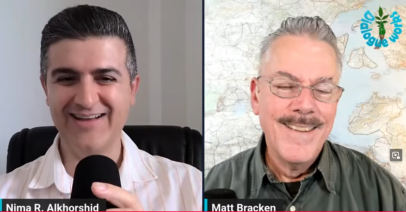
Matt Bracken: Hezbollah Re-Arming With Massive Help From Iran
or go to
Aletho News Archives – Video-Images
From the Archives
Examples of hate speech by Israel against Palestine
1. “There is a huge gap between us (Jews) and our enemies, not just in ability but in morality, culture, sanctity of life, and conscience. They are our neighbors here, but it seems as if at a distance of a few hundred meters away, there are people who do not belong to our continent, to our world, but actually belong to a different galaxy.” Israeli president Moshe Katsav. The Jerusalem Post, May 10, 2001
2. “The Palestinians are like crocodiles, the more you give them meat, they want more”…. Ehud Barak, Prime Minister of Israel at the time – August 28, 2000. Reported in the Jerusalem Post, August 30, 2000
3. ” [The Palestinians are] beasts walking on two legs.” Menahim Begin, speech to the Knesset, quoted in Amnon Kapeliouk, “Begin and the Beasts”. New Statesman, 25 June 1982.
4. “The Palestinians” would be crushed like grasshoppers … heads smashed against the boulders and walls.” Isreali Prime Minister (at the time) in a speech to Jewish settlers New York Times April 1, 1988
5. “When we have settled the land, all the Arabs will be able to do about it will be to scurry around like drugged cockroaches in a bottle.” Raphael Eitan, Chief of Staff of the Israeli Defence Forces, New York Times, 14 April 1983.
6. “How can we return the occupied territories? There is nobody to return them to.” Golda Maier, March 8, 1969.
… Continue
Blog Roll
 Aletho News
- Iran Respects International Law, US & Israel are Rogue States
- Russia Helping Build a New Middle East /Trita Parsi
- Barghouti: ‘Netanyahu has fallen,’ era of Smotrich, Ben-Gvir over
- China slams US policy on Iran as Russia rejects legality of nuclear meeting at UN
- The Mecca Pact Courts Iran: Containment Comes Full Circle
- Oman FM: Persian Gulf states, Iran, Iraq should form security pact excluding US
- Trump peddles fresh falsehoods, claims Iran ‘started the war’ as US aggression drags on
- Ukraine quagmire? Yes, but it’s for NATO, not Russia
- US intelligence hypes Chinese, Russian space threats while accelerating its own military buildup in orbit
- Iran FM Araghchi: “Hormuz Will No Longer Be the Same”
- If Americans Knew
- An error has occurred; the feed is probably down. Try again later.
- No Tricks Zone
- Sudden Stratospheric Warming, Powerful El Niño Combination May Lead To Extreme Europe Cold, Energy Crisis!
- Two New Studies Find Thwaites Glacier Melt Cannot Be Driven By Human Activity Or A Warming Ocean
- E-Cars Reduce CO2 Emissions By Only 41% Compared To Internal Combustion Engine Vehicles
- Predictions Made By Renowned Climate Professor Over Past Decades Have Been Proven To Be Poor
- New Study Suggests Large Regions Of The Pacific Ocean Have Been Cooling For The Last 80 Years
- Germany’s Green Energy Debacle: High Energy Costs Force Kahla Porzellan to Close After 182 Years!
- New Study: 50 Years Of The Most Aggressive ‘Net Zero’ Policies Can Only Affect The Global Climate By 0.03°C
- US September “Heat” Was No Record…Many Records Set Decades Ago
- Latest European Green Energy Debacle; Portugal’s Largest Flagship Solar Park Insolvent!
- Green Energy Debacle: German Expert Professor Fritz Vahrenholt Warns Of Severe Economic And Social Consequences

