Energy crisis will last for months – Kremlin envoy
RT | April 8, 2026
Global energy markets will take months to recover from the shock caused by the US‑Israeli war on Iran, Kremlin envoy Kirill Dmitriev has warned, noting that the reopening of the Strait of Hormuz is unlikely to have an immediate effect.
His comments come after US President Donald Trump announced a “double-sided” two-week ceasefire with Iran to negotiate a long-term peace agreement based on Tehran’s 10-point plan that would see it retain control over the strait.
While oil prices have dropped in response to the news, Dmitriev, who serves as Russian President Vladimir Putin’s special envoy for investment and economic cooperation, has warned that energy markets “will take months to normalize even if the Strait of Hormuz remains open.”
Dmitriev’s prediction came in response to a Bloomberg report in which several Asian airline chiefs cautioned that jet fuel prices would still require “many, many more months” to stabilize. The director general of the International Air Transport Association (IATA), Willie Walsh, noted that if the Strait of Hormuz “were to reopen and remain open, it will still take a period of months to get back to where supply needs to be, given the disruption to the refining capacity in the Middle East.”
The conflict has inflicted lasting damage on energy infrastructure with multiple refineries destroyed, causing jet fuel prices to more than double since the war began. Thai Airways CEO Chai Eamsiri called the current shock the worst in his near‑four‑decade career.
More than 800 vessels also remain trapped in the Persian Gulf after the Strait of Hormuz was virtually closed following the US and Israeli strikes in late February. According to Bloomberg, traders and shipowners are now closely monitoring which ships will begin to transit the strait under the fragile ceasefire. An International Maritime Organization tally from late March estimated that some 20,000 seafarers are stuck aboard trapped ships, facing dwindling supplies, fatigue, and psychological stress.
A recent Newsmax report, released just before the ceasefire announcement, also warned of a looming global commodity shock, noting that the true scale of the disruptions caused by the US-Israeli war on Iran has yet to materialize. The outlet cautioned that the world could soon face sudden and severe shortages that will quickly spread from energy to fertilizers, food production, and consumer goods.
Forty days that shook the Empire: How Iran turned the tables on US and prevailed
By Sarwar Abbas | Press TV | April 8, 2026
Forty days into the war imposed illegally on the Islamic Republic of Iran, the unthinkable has happened. The United States has retreated unceremoniously, and Iran has declared a “historic victory,” stamping its authority as a new global superpower.
And the enemy, despite unleashing overwhelming force, has been forced to accept a 10-point Iranian proposal that includes a permanent ceasefire, the removal of all primary and secondary sanctions, and the withdrawal of US combat forces from the region.
The proposal also includes Iran’s complete and firm control over the Strait of Hormuz, a strategic waterway that disrupted the global energy momentum in the past month.
After 40 days of the war that should never have happened in the first place, the aggressors have failed to achieve any of their stated objectives. Trump desperately looked for an off-ramp from the quagmire he helped create, and the world witnessed something unprecedented: the defeat of a superpower at the hands of a nation that refuses to bend.
The war of aggression was launched against Iran on February 28, amid indirect nuclear talks between Tehran and Washington. Its initial aim was audacious: “regime change” in Iran. The first wave of strikes specifically targeted the Leader of the Islamic Revolution, Ayatollah Seyyed Ali Khamenei, along with several top-ranking military commanders. The subsequent waves targeted both commanders and top officials.
Washington and Tel Aviv believed this time would be different. Unlike the 12-day war of June last year, which also came in the middle of nuclear talks, this time the proponents of “regime change” felt that the collapse of the Islamic Republic was imminent. They were catastrophically wrong, which they must have realised now.
Immediately after launching what was dubbed “Operation Epic Fury,” Trump exuded confidence that the US aggression would allow the Iranian people to overthrow their own government, hoping to plant someone subservient to Washington.
Perhaps the plan was to do what they did in Venezuela. But Trump and his aides forgot that Iran is not Venezuela. And the Iranian people are not passive bystanders.
Following devastating Iranian retaliatory strikes that obliterated nearly all US military installations across the region, President Trump made a strained declaration two weeks ago. He claimed that “regime change” had already happened in Iran, referring to the election of Ayatollah Seyyed Mojtaba Khamenei as the country’s new Leader.
He was ridiculed for making such an outlandish claim. As one observer quipped, the US-Israeli war machine could not even change Iran’s revolutionary slogans, let alone topple the system that has survived nearly five decades of plots and conspiracies.
When Ayatollah Mojtaba Khamenei addressed the nation on March 13, he struck a defiant tone – vowing revenge for martyrs, reaffirming resistance against aggression, and emphasizing the strategic value of controlling the Strait of Hormuz.
Far from indicating collapse, his election demonstrated institutional strength, which the products of the Epstein class will never understand. The Islamic Republic rests on constitutional structures that are not tied to one individual. Its strategic doctrine remains unshaken, which has been demonstrated yet again during this war.
Trump has long framed Iran’s nuclear program as an existential danger. Before the Ramadan war, he threatened military action to dismantle it, even though, as many social media users pointed out, he had, after the 12-day war, claimed the program was already “obliterated.”
Eventually, after 40 days of war and mindless rhetoric, the “regime change” fantasy also evaporated. His attempt to attack nuclear facilities in Isfahan failed spectacularly, as Americans lost a vast fleet of aircraft in the process, without achieving anything.
Trump was also fixated on the Strait of Hormuz, vowing to open it. Iran’s navy had effectively closed the waterway to American and allied vessels following the launch of the unprovoked war. Any attempt to cross the Strait without Iran’s consent was a recipe for disaster.
Trump issued several warnings: reopen the strait or face strikes on Iranian power plants. Deadlines changed from 48 hours to five days to ten days and then again 48 hours before he eventually gave up and accepted Iran’s 10-point proposal.
The shifting goals of America’s futile military campaign, from day one to day forty, revealed a stunning absence of strategy or clarity. Even US politicians and pundits condemned the war as unnecessary and unprovoked, with many of them even suggesting the 25th Amendment to have the megalomaniac president removed from office.
Beyond strategic failure, the United States suffered crippling military and economic damage from Iran’s Operation True Promise 4 retaliatory strikes – 99 of them in 40 days.
During the first week alone, Iranian retaliatory strikes cost American taxpayers over $1 billion, as per reports. Carrier and warplane deployment accounted for $630 million, while lost F-15E jets in Kuwait added nearly $300 million, as per Press TV analysis.
The war had become a costly trap for the Trump administration, widely seen as a strategic miscalculation with no gains and only losses. That’s precisely why the role of Netanyahu was the key. He couldn’t do it on his own, so he dragged Trump into the unnecessary war.
A total of 99 waves of Iranian missile and drone strikes leveled US bases across the region, as American forces were compelled to abandon fortified positions for hotels and office spaces. Americans have downplayed the casualty toll, particularly the death toll, but independent estimates have put the deaths into hundreds, if not thousands.
The Fifth Fleet in Bahrain, the bastion of US military presence in the region, particularly suffered the heaviest damage. Iranian strikes repeatedly targeted its headquarters in Manama, demonstrating a new model of asymmetric warfare, inflicting irreparable damage on infrastructure, ammunition depots, and command buildings there.
American air power was completely decimated in the region. On March 27, the IRGC destroyed a $700 million E-3 Sentry AWACS at Prince Sultan Air Base in Saudi Arabia, along with multiple electronic warfare planes and refueling aircraft. Days earlier, Iran and Iraqi resistance forces downed six KC-135 Stratotankers, the important air-refueling backbone.
Days later, Iran successfully hit an F-35 Lightning II stealth fighter for the first time ever. The multi-trillion-dollar asset of the American military was targeted in central Iran.
A number of F-15s, F-16s, F-18s, over a dozen MQ-9 Reaper drones and over 170 drones were also downed or damaged. Four AN/TPY-2 THAAD radars and a billion-dollar Qatar early-warning installation were also hit.
On April 3, dubbed the “darkest day” for the US Air Force, F-15E Strike Eagle, an A-10 Thunderbolt II, multiple MQ-9 Reaper drones, and Hermes reconnaissance platforms were also downed by the Iranian air defenses, which have vastly improved since the 12-day war.
On the other hand, due to the closure of the Strait of Hormuz for American and allied vessels, oil prices hit three-year highs, which had ripple effects across the globe.
Gasoline prices in the US climbed above $4 per gallon, and diesel also hit $6 in many states. Supply disruptions spread to LNG, fertilizer, and other commodities as well.
To make it worse, Trump’s approval rating nosedived to 36 percent, his lowest since returning to office, with 59 percent disapproval, the highest of his political career.
Now the Republicans are concerned about the midterm elections.
Now, 40 days after launching its war of aggression, the US has been forced to accept Tehran’s 10-point proposal: a permanent ceasefire, Iranian control over the Strait of Hormuz, acceptance of enrichment, full sanctions removal, termination of all UN resolutions, war compensation, US combat withdrawal from the region, and an end to fighting on all fronts, including against Lebanon’s Islamic Resistance.
This is not a stalemate. This is a defeat – historic, undeniable, and crushing.
The era of unchecked American power in West Asia has ended. Iran has emerged as a regional superpower and the world must come to terms with this undeniable fact.
Sarwar Abbas is a Pakistan-based writer and commentator.
Israeli leaders: ‘Not a single goal’ achieved in war with Iran
Press TV – April 8, 2026
Israeli opposition leader Yair Lapid has sharply criticized prime minister Benjamin Netanyahu for supporting a temporary ceasefire between the United States and Iran, calling it a “political disaster.”
Lapid made the remarks in a post on his X account on Wednesday, after Netanyahu’s office said Israel supports US President Donald Trump’s decision for a two-week ceasefire.
“There has never been such a political disaster in all of our history,” Lapid said, adding that Israel “wasn’t even at the table when decisions were made concerning the core of our security.”
Lapid also stressed that Netanyahu “failed politically and strategically in achieving “even a single one of the goals that he himself set.”
“It will take us years to repair the political and strategic damage that Netanyahu wrought” due to “arrogance, negligence, and a lack of strategic planning” on Netanyahu’s part, he added.
Israeli opposition figures also criticized the ceasefire with Iran, saying Netanyahu has failed to achieve the war’s objectives.
In a post on X, Yair Golan, the head of the left-wing Democratic Party, called the ceasefire a “strategic failure” by Netanyahu.
“He promised a historic victory and security for generations, and in practice, we got one of the most severe strategic failures Israel has ever known,” Golan said.
“It’s a total failure that endangers Israel’s security for years to come,” he added.
On Wednesday, the United States and Iran agreed to a two-week ceasefire after Washington received a 10-point proposal from Tehran. Netanyahu’s office said Israel supported Trump’s decision.
What on earth just happened? Trump, Iran, and the unlikely ceasefire
By Trita Parsi | April 8, 2026
Yesterday began with Donald Trump issuing genocidal threats against Iran on social media and ended—just ten hours later—with the announcement of a 14-day ceasefire, on Iran’s terms. Even by the volatile standards of Trump’s presidency, the whiplash is extraordinary. What, then, have the two sides actually agreed to—and what might it mean?
In a subsequent post, Trump asserted that Iran had agreed to keep the Strait of Hormuz open during the two-week pause in hostilities. Negotiations, he added, will proceed over that period on the basis of Iran’s 10-point plan, which he described as a “workable” foundation for talks.
Those 10 points are:
1. The US must fundamentally commit to guaranteeing non-aggression.
2. Continuation of Iran’s control over the Strait of Hormuz.
3. Acceptance that Iran can enrich uranium for its nuclear program
4. Removal of all primary sanctions on Iran.
5. Removal of all secondary sanctions against foreign entities that do business with Iranian institutions.
6. End of all United Nations Security Council resolutions targeting Iran.
7. End of all International Atomic Energy Agency resolutions on Iran’s nuclear program.
8. Compensation payment to Iran for war damage.
9. Withdrawal of US combat forces from the region.
10. Cease-fire on all fronts, including Israel’s conflict with Hezbollah in Lebanon.
The United States has not, of course, signed on to all ten points. But the mere fact that Iran’s framework will anchor the negotiations amounts to a significant diplomatic victory for Tehran. More striking still, according to the Associated Press, Iran will retain control of the Strait during the ceasefire and continue—alongside Oman—to collect transit fees from passing vessels. In effect, Washington appears to have conceded that reopening the waterway comes with tacit recognition of Iran’s authority over it.
The geopolitical consequences could be profound. As Mohammad Eslami and Zeynab Malakouti note in Responsible Statecraft, Tehran is likely to leverage this position to rebuild economic ties with Asian and European partners—countries that once traded extensively with Iran but were driven out of its market over the past 15 years by U.S. sanctions.
Iran’s calculus is not driven solely by solidarity with Palestinians and Lebanese. It is also strategic. Continued Israeli bombardment risks reigniting direct confrontation between Israel and Iran—a cycle that has already flared twice since October 7. From Tehran’s perspective, a durable halt to its conflict with Israel is inseparable from ending Israel’s wars in Gaza and Lebanon. This is not an aspirational add-on; it is a prerequisite.
The forthcoming talks in Islamabad between Washington and Tehran may yet falter. But the terrain has shifted. Trump’s failed use of force has blunted the credibility of American military threats, introducing a new dynamic into U.S.-Iran diplomacy.
Washington can still rattle its saber. But after a failed war, such threats ring hollow. The United States is no longer in a position to dictate terms; any agreement will have to rest on genuine compromise. That, in turn, demands real diplomacy—patience, discipline, and a tolerance for ambiguity—qualities not typically associated with Trump. It may also require the participation of other major powers, particularly China, to help anchor the process and reduce the risk of a relapse into conflict.
Above all, the ceasefire’s durability will hinge on whether Trump can restrain Israel from undermining the diplomatic track. On this point, there should be no illusions. Senior Israeli officials have already denounced the agreement as the greatest “political disaster” in the country’s history—a signal, if any were needed, of how fragile this moment may prove to be.
Even if the talks collapse—and even if Israel resumes its bombardment of Iran—it does not necessarily follow that the United States will return to war. There is little reason to believe a second round would produce a different outcome, or that it would not once again leave Iran in a position to hold the global economy hostage. In that sense, Tehran has, at least for now, restored a measure of deterrence.
One final point bears emphasis: this elective war was not only a strategic blunder. Rather than precipitating regime change, it has likely granted Iran’s theocracy a renewed lease on life—much as Saddam Hussein did in 1980, when his invasion enabled Ayatollah Khomeini to consolidate power at home.
The magnitude of this miscalculation may well puzzle historians for decades to come.
Iran declares ‘historic victory’ over US, says enemy forced to accept its proposal

Press TV – April 7, 2026
Iran has declared a “historic and crushing defeat” of the United States and the Israeli regime after 40 days of war, announcing that Washington has been forced to accept a 10-point Iranian proposal that includes a permanent ceasefire, the lifting of all sanctions, and the withdrawal of US combat forces from the region.
In a statement addressed to the “noble, great, and heroic nation of Iran,” the Supreme National Security Council said the enemy had suffered an undeniable defeat and now saw “no way forward but to submit to the will of the great nation of Iran and the honorable Axis of Resistance.”
The announcement comes on Day 40 of the US-Israeli war of aggression on Iran, which began with the assassination of Leader of the Islamic Revolution Ayatollah Seyyed Ali Khamenei and top-ranking commanders on February 28.
According to the statement, the United States has agreed to a 10-point proposal that fundamentally commits Washington to:
- No new aggression against Iran
- Continued Iranian control over the Strait of Hormuz
- Acceptance of enrichment
- Removal of all primary sanctions
- Removal of all secondary sanctions
- Termination of all UN Security Council resolutions
- Termination of all Board of Governors resolutions
- Payment of compensation to Iran
- Withdrawal of US combat forces from the region
- Cessation of war on all fronts, including against the heroic Islamic Resistance of Lebanon
“Iran has achieved a great victory and has forced criminal America to accept its own 10-point proposal,” the statement read.
The statement by the top security body described the past 40 days as one of the “heaviest combined battles in history,” in which Iran and its allies in Lebanon, Iraq, Yemen, and occupied Palestine inflicted blows that “the historical memory of the world will never forget.”
“Iran and the Resistance have almost completely destroyed the American military machine in the region,” it stated. “They have inflicted crushing and deep blows on the vast infrastructure and capabilities that the enemy had built and deployed around the region over many years for this war against Iran.”
The statement added that within the occupied territories, Resistance forces had dealt “devastating and crushing blows to the enemy’s forces, infrastructure, facilities, and assets.”
It further stated that the United States understood as early as 10 days into the war that it could not win.
“Not only did none of the enemy’s main objectives materialize, but the enemy realized from about 10 days after the start of the war that it would have no ability to win this war,” the statement said. “For this reason, through various channels and methods, the enemy began efforts to establish contact with Iran and request a ceasefire.”
The top security body further said the enemy had initially imagined a quick military victory, believing Iran’s missile and drone capabilities would be “quickly extinguished,” and noted that the “vile global Zionism” had convinced the “ignorant President of the United States” that the war would finish Iran.
While declaring victory, the top security body also urged continued vigilance.
“We congratulate all the people of Iran on this victory,” the statement read, “and emphasize that until the details of this victory are finalized, there remains a need for the resilience and prudence of officials and the preservation of unity and solidarity among the people of Iran.”
The Iranian announcement came hours after Trump said he had agreed to a two-week suspension of bombing and attacks on Iran, subject to Tehran reopening the Strait of Hormuz.
In a post on his Truth Social platform, Trump said he would “suspend the bombing and attack of Iran for a period of two weeks” — a decision he described as a “double-sided CEASEFIRE.”
Trump said the suspension is “subject to the Islamic Republic of Iran agreeing to the COMPLETE, IMMEDIATE, and SAFE OPENING of the Strait of Hormuz.”
Earlier on Tuesday, he had warned that “a whole civilization will die tonight” if Iran failed to meet his demands, an inflammatory war rhetoric that triggered backlash worldwide.
Many condemned the bluster as genocidal and said it amounts to a horrendous war crime.
Pope Leo XIV called the threat “truly unacceptable,” while US lawmakers decried Trump’s rhetoric as “pure evil,” with many of them calling for the invocation of the 25th Amendment to remove Trump from office.
The Strait of Hormuz, which carries approximately one-fifth of the world’s oil, has been effectively blocked by Iran since the US and Israel launched their unprovoked and illegal war of aggression against the Islamic Republic of Iran on February 28.
Iranian officials had categorically stated that the strategic waterway will not be reopened unless its demands are met, which include the permanent cessation of US-Israeli attacks.
In line with the directive of the Leader of the Islamic Revolution, Ayatollah Seyyed Mojtaba Khamenei and the approval of the Supreme National Security Council, and given Iran and the resistance’s upper hand on the battlefield, the enemy’s inability to carry out its threats despite all its claims, and the official acceptance of all the legitimate demands of the Iranian people, it has been decided that negotiations will be held in Islamabad to finalize the details.
This will take place within a maximum of 15 days, so that the details of Iran’s victory on the battlefield may also be solidified in political negotiations.
The negotiations will begin on Friday in Islamabad. Iran will allocate two weeks for these negotiations and the timeframe may be extended by mutual agreement of the two sides.
The top security body said it is essential that during this period, complete national unity is maintained and victory celebrations continue with strength.
These negotiations, it asserted, are a national negotiation and an extension of the battlefield, so all people and political groups must trust and support this process, which is under the supervision of the Leader of the Islamic Revolution.
“If the enemy’s surrender on the battlefield is transformed into a decisive political achievement in the negotiations, we will celebrate this great historic victory together. Otherwise, we will fight side by side on the battlefield until all the demands of the Iranian people are met,” the statement noted.
“Our hands are on the trigger, and the moment the slightest mistake is made by the enemy, it will be answered with full force.”
Sri Lanka secures supplies of Russia oil – minister
RT | April 7, 2026
Sri Lanka will purchase crude oil from Russia after reaching an agreement with Moscow amid the energy crisis spurred by the Middle East conflict, the island nation’s transport minister, Bimal Rathnayake, has said.
Rathnayake told TASS on Monday that “energy is our priority today,” adding that the US-Israeli war on Iran has triggered a disruption in supplies to Sri Lanka.
“Russia’s deputy energy minister [Andrey Rudenko] visited Sri Lanka a few days ago. The deputy foreign minister has also visited Sri Lanka. They reached an agreement on oil supplies to the country,” Rathnayake told the news agency.
He added that the first crude supplies from Russia are expected in mid-April.
“Technical work is currently underway at the company level, and financial issues are being discussed, how to conduct transactions. But at the political level, almost everything has been done,” the minister said.
Rathnayake added that although Sri Lanka exports tea to Russia, a good “logistic system” is essential for crude imports.
Mayura Neththikumarage, a top Ceylon Petroleum Corporation (Ceypetco) official, said last week that the island nation has only two places where fuel can be unloaded. Ceypetco is the only refiner in Sri Lanka.
Neththikumarage has also indicated that fuel shipments for April and May have been secured and that prices might come down marginally in June.
The South Asian nation gets most of its crude from the United Arab Emirates (UAE), though refined petroleum products are imported from India and Singapore, Bloomberg reported.
In March, Sri Lanka received 38,000 tons of fuel from India.
Colombo has hiked fuel prices and imposed rationing to address the supply disruption.
After the Middle East conflict erupted, Russia expressed willingness to be a key energy partner for South Asian nations, including India, Pakistan, Bangladesh, and Sri Lanka.
Bilateral trade between Russia and Sri Lanka stood at $700 million in 2024.
Nations across Asia strike direct deals with Iran for Hormuz passage
Al Mayadeen | April 7, 2026
As US President Donald Trump threatens to “obliterate” Iran’s energy infrastructure unless it reopens the Strait of Hormuz, a growing number of countries are now negotiating directly with Tehran to secure safe passage for their ships.
Several nations in Asia, arguably the region most affected by the ongoing fuel crisis, have been able to get their vessels through the chokepoint, through which about a fifth of the world’s oil and gas normally transits. Tehran effectively closed the Strait after the country was attacked by the US and “Israel” on February 28.
It is a state of affairs that reflects a new geopolitical reality: access to the world’s most critical energy chokepoint is no longer governed by international maritime law, but by direct diplomacy with Iran.
A ‘de facto toll booth regime’
According to maritime tracking platform Kpler, commodity traffic through the strait fell by 95 percent when the war began. Before the US-Israeli aggression, around 100 ships transited daily. On some days this past week, that number was in the single digits.
But Iran has not closed the Strait entirely. Instead, it has created what maritime intelligence firm Lloyd’s List has described as a “de facto toll booth regime,” a permissions-based system operated by the IRGC, in which vessels from friendly countries are escorted through a narrow northern corridor near Larak Island.
As of this week, a second southern corridor near the Omani coastline has become operational, with Windward Maritime Intelligence tracking 11 transits on Sunday split across the two routes.
Iran names friendly nations
Iran’s Foreign Minister Abbas Araghchi has publicly named the countries considered friendly enough for passage: China, Russia, India, Iraq, and Pakistan. Several others have since joined the list.
India was among the first countries to secure safe transit, reportedly without paying any fees. The Iranian embassy in New Delhi posted on social media that “our Indian friends are in safe hands.”
Pakistan was allocated 20 vessel slots by Tehran. “This is a welcome and constructive gesture by Iran,” Pakistani Foreign Minister Ishaq Dar said.
Thailand struck a deal after weeks of disruptions that included a Thai bulk carrier being struck by Iranian projectiles in March, leaving three crew members unaccounted for. A Thai tanker subsequently crossed without paying a fee.
Malaysia secures passage
Malaysia secured assurances of safe passage through what its Transport Minister described as a “good diplomatic relationship with the Iranian government.” The Iranian embassy in Kuala Lumpur said on Monday that the first Malaysian ship had passed through the strait since the war began. “Iran does not forget its friends,” it said.
A Malaysian Foreign Ministry statement confirmed that one of seven Malaysian-owned commercial vessels stranded in the strait has been granted safe passage and is now heading to its destination, following “high-level diplomatic engagements” and “constructive” talks with Iranian officials led by Prime Minister Anwar Ibrahim.
Other nations join the list
The Philippines, despite its close ties with the US, became the latest Asian country to secure an agreement after what its foreign secretary described as “a very productive phone conversation” with Tehran. Iran assured “safe, unhindered and expeditious passage” for Philippines-flagged ships.
China, Iran’s largest oil buyer, confirmed that some of its ships had sailed through. Windward’s data show Chinese-linked vessels account for around 10 percent of the limited traffic still moving through the strait.
Indonesia secured passage for two of its vessels following diplomatic engagement with Tehran. Iraq has also been granted an exemption, with Windward identifying 21 Iraqi-linked tankers already operating under the arrangement.
Japan joined the list this week after a vessel operated by Mitsui OSK Lines carrying liquefied natural gas passed through the strait.
A system based on political alignment
The system is selectively allocated based on political alignment rather than open maritime norms. Of the roughly 280 global transit requests tracked by one intelligence firm, only 17 were approved. Some 670 commodity vessels were still stranded west of the strait as of last week.
Iran’s parliament is pursuing legislation to formally codify the toll system, likely making permanent a wartime measure and turning one of the world’s most important shipping routes into a fee-paying corridor controlled by its military.
A strategy that works
While Washington threatens military action and demands European naval support, Iran has quietly built a parallel system: nations that engage with Tehran diplomatically get their ships through. Those who follow Washington’s lead find the strait closed.
As the US-Israeli war on Iran enters its sixth week, the message is clear. Iran controls the Strait. Iran decides who passes. And Iran is proving that diplomacy, not threats, is the only path through. The countries that need their ships to move are making their own deals, and they are getting results.
IRGC commander declares ‘new phase’ of reprisal attacks against aggressors
Press TV – April 7, 2026
Commander of the IRGC Aerospace Force has declared the start of a “new phase” in Iran’s retaliatory operations against the US aggression, as the elite force warned earlier that any violation of red lines by the enemies will trigger a crushing response.
Posting a video on social platform UpScrolled, Brigadier General Seyyed Majid Mousavi said, “And now, the new phase of the war [has begun] with fresh, twin launchers for Fateh and Kheibar Shekan missiles, all previous strikes doubled.”
In a statement announcing the launch of the wave 99 of Operation True Promise 4, the IRGC reiterated that Iran “has not been and will never be the one to initiate attacks on civilian targets.”
However, it added that the IRGC “will not hesitate to retaliate against despicable aggressions on civilian facilities.”
In response to any further attack on Iran’s civilian infrastructure, the IRGC forces “will inflict such damage on the infrastructure of the US and its partners that they will be deprived of the region’s oil and gas for years to come.”
The IRGC said that Washington’s regional allies need to be aware of the fact that the IRGC has so far “shown great restraint and exercised caution in selecting its targets for retaliation, out of respect for good neighborly relations.”
But the Iranian Armed Forces, the statement added, will cast aside all such considerations and self-restraint from now on.
Since the US launched its illegal war against Iran on February 28, the country’s civilian infrastructure has repeatedly been targeted in flagrant violation of international law.
In response to the aggression, Iran’s Armed Forces have carried out daily missile and drone attacks on American assets and bases in the region.
Under growing pressure at home to end the war, US President Donald Trump has once again threatened that he would bomb Iran’s bridges and power plants if the Islamic Republic does not reopen the Strait of Hormuz.
Iran has imposed restrictions on passage through the strait, days after the start of the military aggression, saying ships related to the aggressors could not use the waterway.
Seyed M. Marandi: U.S. Military DIVIDED? Iran’s Secret Defense EXPOSED
Dialogue Works | April 6, 2026
An intense discussion on escalating U.S.–Iran tensions highlights internal divisions within the U.S. military and claims of miscalculation in confronting Iran’s long-prepared defense systems. The interview argues Iran’s capabilities remain largely intact, with underground bases and strategic planning shaping its response. It emphasizes regional involvement, warning that Gulf states hosting U.S. forces are deeply entangled. The conversation frames the conflict as potentially catastrophic globally, with risks to energy routes, economies, and civilian infrastructure, while stressing that continued escalation could trigger widespread retaliation and long-term geopolitical consequences.
37 days of war on Iran cost US staggering $42bln, tracker shows
Al Mayadeen | April 6, 2026
The US aggression against Iran has cost American taxpayers over $42.1 billion in nearly 37 days of war, according to the Iran War Cost Tracker portal.
The portal’s real-time tracking is based on a Department of War briefing for the US Congress on March 10, which stated that Washington spent $11.3 billion in the first six days of its aggression on Iran and plans to spend an additional $1 billion each subsequent day of the war.
Trump requests $1.5 trillion defense budget as war costs spiral
On Friday, US President Donald Trump asked Congress to enact a $2.2 trillion budget for discretionary programs, seeking a massive increase in defense spending, while also renewing his push for steep cuts to domestic agencies.
The budget proposal released on Friday requests $1.5 trillion for defense, a significant increase over the $1 trillion sought for fiscal year 2026. The new figure includes $1.1 trillion in base discretionary spending for the Department of War and another $350 billion in mandatory spending as the US carries out its war on Iran.
The sharp increase in military spending comes as the United States remains engaged in a war that has driven up costs and placed a growing strain on financial and military resources. The war cost Washington more than $11 billion in its first six days alone, with estimates placing daily expenditures at between $1 billion and $2 billion. Munitions stockpiles have been drawn down significantly, raising concerns about sustainability and replenishment.
War costs could reach hundreds of billions
Short-term projections from weeks ago cited by The Intercept suggest that the war could push costs to $250 billion in its eighth week, if it drags on this long.
A government official, speaking on condition of anonymity, acknowledged the uncertainty of these figures, telling The Intercept that “it’s a back-of-the-napkin estimate,” while another official told the outlet, “They really have no idea of the real cost.”
The proposed budget also aligns with a broader military buildup that includes investments in missile systems, naval assets, and advanced fighter jets, signaling preparations that extend beyond immediate battlefield needs. Against this backdrop, the proposed budget reflects a broader reallocation of resources toward sustaining prolonged military operations, while partially offsetting rising expenditures through cuts to domestic spending.
The budget blueprint comes ahead of the November 2026 midterm elections, with Republicans aiming to preserve their narrow control of both chambers of Congress. The proposal is also likely to face scrutiny from lawmakers who have already raised concerns over the scale of war-related spending and its long-term fiscal impact.
For American taxpayers, the message is clear: as the war on Iran grinds on with no end in sight, the costs continue to mount. And the administration’s solution is not to end the war, but to pour even more money into it, all while cutting domestic programs that ordinary Americans rely on.
Whether Congress will approve Trump’s request remains to be seen. But one thing is certain: the price of this war has only begun to be counted.
Under fire, Moscow and Tehran close ranks
US–Israeli escalation is accelerating, rather than weakening, the Russia–Iran axis, reshaping the Caspian into a contested strategic corridor.

By Hazal Yalin | The Cradle | April 6, 2026
Hours after the US and Israel – increasingly referred to in some circles as the “Epstein coalition” – attacked Iran on 28 February, Russia’s Foreign Ministry issued a sharply worded response, describing the assault as “a deliberate, premeditated, and unprovoked act of armed aggression against a sovereign and independent UN member state, in direct violation of the fundamental principles and norms of international law.”
When interpreting diplomatic texts in general – and Russia’s statements in particular, given its near-obsessive adherence to traditional diplomacy – the importance of terminology is often overlooked. The concept of “aggression” is not an ordinary one; it signifies a violation of the very spirit of the UN Charter, especially Article 2(4).
A firm response to aggression
Just as significant as its use is its absence elsewhere. Aside from Russia, North Korea, and Cuba, no other state initially used the term “aggression” in condemning the attack—not even China, which only adopted the wording after 2 March.
This framing has been consistent across Russian statements and in President Vladimir Putin’s diplomatic readouts. At the same time, Moscow has walked a careful line in its engagement with Persian Gulf monarchies.
While avoiding endorsement of Iranian strikes on US and Israeli-linked targets in the Gulf, Russian officials have repeatedly stressed that the central issue remains US–Israeli aggression—and that criticism of Iran cannot be allowed to obscure this.
Foreign Minister Sergey Lavrov captured this balance on 5 March during the Ambassadorial Roundtable on the Ukraine crisis. While opposing Iranian strikes on Gulf states and questioning their military utility, he warned that “Simply saying that Iran has no right to do anything effectively means openly encouraging the United States and Israel to continue what they are doing.”
In line with this approach, Russia (and China) did not veto the UN Security Council resolution on 11 March condemning Iran. However, Russia’s permanent representative to the UN, Vasiliy Nebenzya, stated that the resolution was one-sided and “confused cause and effect.”
This stance is largely linked to the UAE’s critical role in facilitating capital movement for Russia under western sanctions.
Israeli irritation and escalation
Such an uncompromising definition of aggression – and the Kremlin’s apparent decision to avoid even routine contact with the Israeli government – was never likely to pass unnoticed in Tel Aviv.
The first notable rupture came via an interview with Israeli army spokesperson Anna Ukolova on Radio RBK. Referencing reports that Israel had hacked Tehran’s traffic cameras to track Iranian officials, she was asked whether similar access existed in Moscow. Her response was striking:
“The elimination of key figures – the leadership of all these proxy groups, including Iran’s Supreme Leader, Ali Khamenei – already demonstrates that we possess quite formidable capabilities, and that no one who seeks to do us harm will go unscathed.”
“Then again, the question is: Who would want to do us harm? I hope that, at this moment, Moscow does not wish Israel ill. I want to believe that.”
Israeli Prime Minister Benjamin Netanyahu’s extremist government has traditionally adopted a cautious and diplomatic stance in relations with Russia. Even if it had decided to shift toward open hostility, one would expect it to do so through diplomatic, economic, or even, at most, fifth-column activities within Russia. Ukolova’s direct threat – drawing a parallel of “elimination” against the Russian leadership – was unprecedented.
Attack on Bandar Anzali
The remark itself might have been dismissed as bluster were it not followed by something far more consequential: Israel’s reported strike on Iran’s Bandar Anzali Port on the Caspian coast.
The attack was first reported on 18 March by Israel’s Channel 12 as an “unusual attack” carried out 1,300 kilometers from Israeli territory.
Curiously, western media remained silent on the matter for some time. In Russia, Press Secretary Dmitry Peskov initially stated on 20 March that he had no information about it. When asked how Moscow would view a situation where the conflict escalated to engulf the Caspian Sea region, he said: “Russia would view it extremely negatively.”
Later that same day, Russia’s Foreign Ministry spokesperson Maria Zakharova confirmed the strike, warning that the Caspian Sea basin has always been regarded “as a safe zone of peace and cooperation. The aggressors’ reckless and irresponsible actions pose a threat of dragging Caspian states into an armed conflict.”
She also stressed that Bandar Anzali is “an important trade and logistics hub that is actively used in Russian–Iranian trade, including for food deliveries. The strike has affected the economic interests of Russia and the other Caspian states that maintain transport communications with Iran via that port.” Two days later, Peskov noted that the conflict was “showing a tendency to expand its boundaries.”
Because there is a general tendency to follow events through the lens of London or Washington, The story only gained wider traction on 24 March, when the Wall Street Journal (WSJ) ran it as a headline: “Israel Hits Russian–Iranian Weapons Smuggling Route in the Caspian Sea.”
Casting a sovereign logistics corridor as “smuggling” recodes the strike as pre-emptive policing rather than escalation. The same report noted that the attack threatened Iran’s food supply and signaled Israel’s capacity to inflict broader civilian hardship – language that treats civilian suffering as a strategic message.
Russia’s public response was strong – and predictably so – for two reasons.
The Caspian legal order
First, the legal status of the Caspian Sea. Unlike other bodies of water, the Caspian falls outside the UN Convention on the Law of the Sea. Its governance is defined instead by the 2018 Convention on the Legal Status of the Caspian Sea, agreed upon by its five littoral states.
Under this framework, all decisions concerning the Caspian must be made jointly by the five littoral states – Russia, Iran, Azerbaijan, Kazakhstan, and Turkmenistan. Non-littoral states are prohibited from maintaining a military presence (Article 3/6), and littoral states cannot allow their territory to be used for aggression against one another (3/7). Navigation security is a shared responsibility (3/9).
An attack carried out by a non-littoral actor via the Caspian undermines not only these provisions but the broader stability they are meant to guarantee.
While no explicit breach of Articles 3/6 or 3/7 has been formally identified, the presence of Israeli, US, and British military and intelligence networks – particularly in Azerbaijan – is widely acknowledged. This latent infrastructure adds a further layer of tension.
The strike on Bandar Anzali directly engages Article 3/9. It represents a breach of navigational security by an external actor, placing responsibility on all littoral states. Yet, aside from Russia and Iran, none have responded – an omission that speaks as loudly as any formal position.
Trade routes and strategic depth
The second factor is more straightforward: geography. The Caspian is the primary trade corridor between Russia and Iran, and Bandar Anzali is one of its key nodes.
This trade is not limited to civilian goods. Since the signing of the “comprehensive strategic partnership agreement” on 17 January 2025, it is widely understood that military logistics also transit this route.
The agreement was signed in Moscow on 17 January 2025 by Russian President Vladimir Putin and Iranian President Masoud Pezeshkian. It was approved by the Russian State Duma on 8 April 2025, signed by Putin on 21 April 2025, approved by the Iranian parliament on 21 May 2025, endorsed by the Guardian Council on 11 June 2025, and entered into force on 2 October 2025.
As previously noted by The Cradle, the agreement is not a binding mutual defense pact but a statement of strategic intent. Russia’s threshold for military support hinges on legal framing – specifically, whether an action qualifies as “aggression” in terms Moscow recognizes. Iran, for its part, has resisted any arrangement that would allow foreign military use of its territory.
Still, the agreement is far from symbolic. It outlines extensive cooperation in defense, security, and intelligence, and explicitly commits both sides to countering third-party interference across the Caspian, Central Asia, the Caucasus, and West Asia.
Articles 4, 5, and 6 set out broad military and security cooperation frameworks, while Articles 4/1 and 4/2 specifically formalize intelligence exchange, experience-sharing, and operational coordination between the two countries’ security and intelligence services.
Iran, US receive Pakistan-mediated plan for ceasefire then final deal
Al Mayadeen | April 6, 2026
Iran and the United States have received a plan to end hostilities that could come into effect on Monday and reopen the Strait of Hormuz, Reuters reported, citing a source aware of the proposals.
A framework to end the US-Israeli war on Iran has been put together by Pakistan and exchanged with Tehran and Washington overnight, the source told Reuters, outlining a two-tier approach with an immediate ceasefire followed by a comprehensive agreement.
“All elements need to be agreed today,” the source said, adding the initial understanding would be structured as a memorandum of understanding finalized electronically through Pakistan, the sole communication channel in the talks.
Pakistan as mediator
Axios first reported on Sunday that the United States, Iran, and regional mediators were discussing a potential 45-day ceasefire as part of a two-phase deal that could lead to a permanent end to the war, citing US, Israeli, and regional sources.
The source told Reuters that Pakistan’s army chief, Field Marshal Asim Munir, has been in contact “all night long” with US Vice President JD Vance, special envoy Steve Witkoff, and Iranian Foreign Minister Abbas Araghchi.
Under the proposal, a ceasefire would take effect immediately, reopening the Strait of Hormuz, with 15 to 20 days to finalize a broader settlement. The deal, tentatively dubbed the “Islamabad Accord”, would include a regional framework for the Strait, with final in-person talks to be held in Islamabad.
Iran rejects opening Hormuz in exchange for ‘temporary ceasefire’
Meanwhile, a senior Iranian official told Reuters on Monday that Iran will not reopen the Strait of Hormuz in exchange for a “temporary ceasefire”, adding that Tehran views Washington as lacking the readiness for a permanent ceasefire.
The official confirmed Iran had received Pakistan’s proposal for an immediate ceasefire and was reviewing it, adding that Tehran does not accept being pressured to accept deadlines and make a decision.
Two Pakistani sources said Iran has yet to commit despite intensified civilian and military outreach.
“Iran has not responded yet,” one source said, adding that proposals backed by Pakistan, China, and the United States for a temporary ceasefire have drawn no commitment so far.
The final agreement is expected to include Iranian commitments not to pursue nuclear weapons in exchange for sanctions relief and the release of frozen assets, the source said.
Iran’s approach
For Tehran, the calculus is clear: any agreement must include guarantees that the United States and “Israel” will not use the ceasefire to regroup and launch any attacks in the future. Having been burned by previous negotiations, most notably when Iran engaged in good-faith talks with the US only to see them bomb Iranian territory, Iranian officials are understandably cautious.
As the Monday deadline approaches, the world waits to see whether Tehran will sign onto a deal that, on paper, offers sanctions relief and an end to hostilities, but in practice, offers few assurances that the aggressors will not strike again.
Pakistan mediation not new
Pakistan first publicly signaled its mediation role in the escalating US-Israeli war in late March 2026, when Islamabad offered to help facilitate indirect talks and relay messages between Washington and Tehran. This came as the war involving Iran entered its second month, heightening fears of wider regional instability.
On March 24, 2026, Prime Minister Shehbaz Sharif said Pakistan was ready to host talks and promote a diplomatic path toward peace, emphasizing that Islamabad stood “ready and honoured” to support meaningful negotiations.
By March 26, 2026, Deputy Prime Minister and Foreign Minister Ishaq Dar confirmed that Pakistan was relaying a 15‑point US proposal to Iranian officials as part of indirect peace efforts. He acknowledged that media speculation had grown but said Islamabad was working discreetly to keep communication lines open.
Pakistan’s role gained broader visibility as it worked with other regional capitals, including Turkiye and Egypt, to prepare the ground for diplomatic engagement and explore avenues to reduce hostilities.
Featured Video
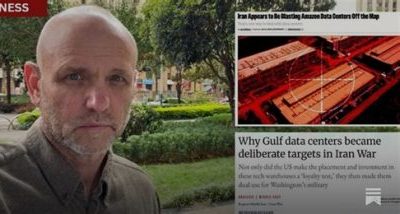
Iran spent $1 million to wipe out $30 billion in data center plans, and take down Amazon in the ME
or go to
Aletho News Archives – Video-Images
From the Archives
A short history of British torture
ICC | December 2005
When the House of Commons was debating how much to increase the time limit for detention without trial the question of torture came up. Officially this was limited to the nice considerations of whether it was all right to send people to places where torture is used and whether Britain can use information collected by the use of torture in other countries. This discussion gave an impression of democratic Britain as the home of civilised behaviour where the very idea of torture is repugnant to our legislators – unlike, say, the US with its secret CIA jails… In reality, the British state has a long history of using and developing a whole range of torture techniques. … continue
Blog Roll
 Aletho News
- Houthis Keep Advancing as the Red Sea Crisis Deepens
- Iran spent $1 million to wipe out $30 billion in data center plans, and take down Amazon in the ME
- Zionist billionaire pressure to silence Macklemore sparks exodus from Ed Sheeran tour
- House Votes to End Iran War for Third Time
- North Korea Slams US Plan for ‘AUKUS 2.0’ with South Korea and Japan
- Prolonging US-Iran Conflict Not Meeting Interests of Int’l Community – China’s Wang Yi
- EU bans former Zelensky aide from parliament
- NATO-backed Kosovo separatist ‘responsible for war crimes’
- US destroying international space law
- SCO Calls for Binding Global Deal to Prevent Arms Race in Space
- If Americans Knew
- U.S. Makes, Israel Takes: The Real Story of U.S.-Israeli Military Cooperation
- Night raids rise in Palestine
- Tucker Carlson interviews Norman Finkelstein about Gaza
- Groups urge Americans to support Van Hollen legislation on Israel’s killing of Americans & Palestinians
- Trump administration plans to send 40,000 tons of bombs to Israel: report
- Sanctions Target Iran’s Government, But Kill Hospitalized 23-Year-Old Woman
- An alternative view on the book “Israel’s Lobby: America in the Grip of a Foreign Power”
- Ed Sheeran’s band Beoga, other opening acts quit tour after Macklemore was dropped over his pro-Palestinian comments
- The assassination attempt on President Trump in Butler and the various Israeli connections to it
- “We Want That the Whole Land Be Jewish”
- No Tricks Zone
- New Study: ‘Global Drought Shows No Detectable Recent Acceleration Under Climate Warming’
- Economic Masterminds: German Socialists Suggest Taxing Productivity Gains Stemming From Using AI
- The South China Sea Has Not Been Cooperating With The Climate Change Narrative
- Energy Crisis: Germany Enters Heating Season With Historically Low Gas Reserve Fill Levels
- New Study: The Antarctic Ice Sheet Gained Mass From 2020-2024 Due To Staggering Snow And Ice Accumulation
- Study: Ocean Heating Rates From Thousands Of Years Ago ‘Dwarf’ Modern Ocean Heating Rates
- Climate Extremists Target, Attack Large-Scale Power Grid Infrastructure In Germany!
- New Study: Antarctic Ice Melt Has Contributed Less Than 1 Centimeter To Sea Level Rise In The Last 30 Years
- Fear Of Debate: Alarmist German Climate Scientist Calls On Mainstream Media To Discredit Skeptic Voices
- End-Of-August Arctic Sea Ice Extent Hasn’t Fallen In 20 Years, Official Data Show!
 Aletho News