In ASEAN Nations, Coal Is a Physical Manifestation of Progress
By Vijay Jayaraj | Real Clear Markets | September 9, 2025
When most people think of ASEAN – a diverse association of Southeast Asian nations that include Brunei, Cambodia, Indonesia, Laos, Malaysia, Myanmar, the Philippines, Singapore, Thailand, and Vietnam – they picture Thailand’s beaches, Singapore’s gleaming skyline or Indonesia’s temples.
What they don’t see is an economic juggernaut that will drive some of the planet’s largest growth in energy demand. Vietnam has emerged as a global manufacturing hub. Indonesia processes the world’s nickel for electric vehicle batteries. Thailand manufactures automobiles for export across Asia. Each of these economic engines demands reliable, affordable electricity that operates 24 hours a day, seven days a week.
In fact, 2023 witnessed a demand increase of nearly 45 terawatt-hours (TWh), an amount of energy that must be generated, transmitted regionally, and delivered locally on a continual basis. Where did this new power come from? Coal. An astonishing 96% of that new demand was met by coal-fired power plants.
Let that sink in. Coal, the energy source routinely demonized in Western capitals and at global climate summits, met nearly all the region’s new electricity needs. This reality stands in direct contradiction to rosy predictions of a transition to “renewables” manufactured by highly compensated executives at elite consulting firms who have spent the better part of a decade selling energy fairy tales to governments and investors.
Indonesia alone added 11 TWh of coal-generated electricity in 2023, while its electricity demand rose by 17 TWh, with coal meeting two-thirds of this increase. The Philippines generates more than 60% of its electricity from coal, and Malaysia and Vietnam each around 50%.
Ultra-supercritical coal technology – using extraordinarily high temperatures and pressures and pioneered at Malaysia’s Manjung plant and Indonesia’s Batang facility, delivers higher efficiency than older coal plants. These advanced facilities demonstrate that coal technology continues to improve while wind and solar remain dependent on weather conditions and the time of day.
The wind and solar share across ASEAN remained a pitiful 4.5% in 2023. This minuscule contribution exposes the bankruptcy of consultants’ promises of “renewables” dominating the regional power mix by mid-2020s.
Coal’s dominance in recent years is not an accident; it is a necessity. Indonesia, the region’s economic giant, leans on coal to power its export-driven industries, including nickel for EV batteries. Vietnam’s manufacturing boom, lifting millions into the middle class, runs on coal’s steady output. Malaysia and the Philippines, too, rely on coal to sustain their growing economies. Even Singapore, a global hub of innovation, depends on coal to maintain its energy security.
Yet, to focus solely on the power grid is to miss the forest for the trees, as electricity is just one component of total energy consumption. Electricity represents only a fraction of total consumption across ASEAN. The larger picture is primary energy consumption, which includes fuel for transport, industry and heating.
Oil, natural gas and coal collectively hold the major share of ASEAN’s primary energy mix, with oil leading consumption patterns across transportation and industrial sectors. Factories, petrochemicals, shipping, aviation, and agriculture all consume fossil fuels in large quantities.
ASEAN countries are committing hundreds of billions of dollars to fossil fuel infrastructure that will operate for decades. Coal plants have an average lifespan of 40 years. These capital investments create long-term commitments to hydrocarbon use that extend far beyond current political cycles.
Nineteen projects across Malaysia, Vietnam, Brunei, Indonesia, and Myanmar hold more than 540 billion cubic meters of recoverable gas. Countries don’t spend billions developing gas fields if they plan to abandon fossil fuels within the next decade.
ASEAN’s embrace of coal is about more than just keeping the lights on. These nations aren’t chasing arbitrary climate targets; they’re building the infrastructure of their future and prosperity for people.
Every new airport, every new highway and every new factory is a testament to the power of coal. To argue against coal is to oppose the physical manifestations of progress. The “green” agenda, by seeking to eliminate coal, demands that the developing world stop building – an ultimatum that ASEAN is rightly and wisely ignoring.
USAID in Myanmar: A Legacy of Soft Power Manipulation?
By Ilya Tsukanov – Sputnik – 31.03.2025
Democrats and the mainstream media continue to blame US President Donald Trump’s USAID cuts for crippling Myanmar’s earthquake response, despite his pledge of aid.
Trump and Elon Musk have slammed USAID for fraud, while Secretary of State Marco Rubio said it had “strayed from its original mission.” what was USAID REALLY doing in Myanmar?
Pushing Woke Agendas
Musk’s DOGE axed a $45M DEI scholarship program in Myanmar, launched in 2024 to fund 1,000 students in SE Asia and online at the University of Arizona. It was less about education and more about grooming future US allies against China, insiders told Radio Free Asia. Media reports say many in Myanmar also fear the programs erode local culture and values.
Terrorism Allegations
Myanmar’s ruling State Administrative Council (SAC) urged the US in 2024 to rethink funding activities “which some label as terrorism.”
“We believe the US is manipulating Myanmar to counter China’s influence in the region,” the military government told US media. “Despite the US presenting itself as a champion of democracy, the aid disproportionately benefits Myanmar’s opposition groups.”
Media Manipulation
USAID redirected $42.4M to advocacy groups post-2021. A now-frozen $1M was set for ‘independent’ media like Mizzima, seen as an anti-government mouthpiece. The group Human Rights Myanmar said the frozen funds “are vital for organizations challenging military rule and promoting democracy, which advance US interests by upholding American values and countering China’s authoritarian influence.” USAID’s Myanmar partners reportedly also include CARE International, which runs gender-focused projects and the Overseas Irrawaddy Association which relocates activists.
The spectre of instability on India’s eastern front
By M K Bhadrakumar | The New Indian Express | August 22, 2024
The demand by the Bangladesh Nationalist Party for extradition of the deposed Prime Minister Sheikh Hasina from India comes as no surprise. The party is apprehensive that the current antipathy toward Hasina in the country may dissipate sooner than later once the joyous ‘second revolution’ in the country collides with the sobering reality that the complex problems of development in Bangladesh are intractable and the expectations are pitched sky-high.
An analogous situation would be what’s happening in Georgia. The fizz went out of the 2003 US-backed ‘Rose revolution’ a long time ago. During its first decade, Georgia went through several political crises. Waves of protest erupted as the economy tanked, corruption and venality deepened, rule of law tumbled, and the misrule and anarchic conditions brought the country down on its knees. The icon of the colour revolution, Mikhail Saakashvili, was literally driven out of power into exile. The party that emerged out of the wreckage of the colour revolution in a free and fair election, Georgia Dream, sought rapprochement with Russia, as realisation dawned that Georgia’s future was in good relations with its giant neighbour.
Washington recently tried to repeat the colour revolution, but Tbilisi countered it ingeniously by enacting a law that all foreign contributions to NGOs must be audited—exposing in one stroke the fifth column and sleeper cells. Georgians made the point that they have had enough of colour revolutions.
These are early post-revolution days in Bangladesh. The twenty-something starry-eyed students are now aspiring to form a new political party to rule the country of 170 million. Meanwhile, criminal cases are being filed against Hasina. The powers that be seem to fear that, some day, Hasina may stage a comeback. In reality though, what they have to guard against is something entirely different.
For, the chronicle of colour revolutions tells a sordid tale of failed states. Next door, Myanmar is in the US’s crosshairs, where they are financing and arming an insurgency with Western mercenaries providing expertise. Last Friday, two senior US officials met in Washington virtually with the shadow of Myanmar’s National Unity government consisting of an opposition that is willing to act as proxies, politicians and a clutch of ethnic rebel groups.
According to the US state department, the two officials “reiterated that the United States will continue to expand direct support and assistance to pro-democracy actors” including to “develop concrete steps towards a full transition to civilian governance that respects the will of the people of Burma”.
One of the two officials was Tom Sullivan—White House National Security Advisor Jake Sullivan’s little brother—who is a senior advisor to Secretary of State Antony Blinken and holds the position of deputy chief of staff for policy at the state department. The second official was Michael Schiffer, assistant administrator of the USAID bureau for Asia, a former Pentagon official who handles Indo-Pacific strategy, crafting new plans for engagement in central and southeast Asia. The consultations on Friday messaged unambiguously that the Myanmar file is a priority in the Indo-Pacific strategy and the US is robustly pushing the regime change agenda.
Colour revolutions take myriad forms. If in Georgia—and more recently in Hong Kong and Thailand — it appeared in the classic mould of non-violent street protests, in Ukraine in 2014 it took a hybrid form where agents provocateurs secretly positioned in the Kiev city square opened fire in the night of February 20 and killed 108 civilian protesters and 13 police officers. That gruesome incident in mysterious circumstances became the tipping point as democratically-elected President Viktor Yanukovych lost nerve and fled in panic.
When it comes to Myanmar, the US is instigating regime change through a guerrilla war. After Afghanistan and Syria, this is the first time Washington is using the technique of insurgency. But sanctuaries are needed next door for staging insurgencies—like Pakistan and Turkey in the earlier cases.
Hence the importance of the northern borderlands of Thailand, which is part of the Golden Triangle, a large mountainous region that gives cover to the drug mafia and human traffickers, and has a sizeable refugee population from Myanmar. But the attempted colour revolution in Bangkok got squashed through constitutional methods by the entrenched ruling elite. Therefore, the regime change in Bangladesh has come as a windfall for Western intelligence.
The encirclement of China with unfriendly states is the unspoken agenda of the US. Chinese Foreign Minister Wang Yi’s visit to Myanmar and Thailand last week highlighted the criticality of the situation. Wang Yi called the situation “worrying”, and suggested that neighbouring countries should promote cooperation with Myanmar to create economic and social conditions that prevent conflict. He said neighbouring countries “sitting in the same boat and drinking water from the same river” have a better understanding of Myanmar’s situation than others.
If Bangladesh gets sucked into the conflict in Myanmar, the security implications for India can be very daunting, especially due to the religious dimension, what with the Rohingya refugee problem and the activities of Christian evangelicals in the remote tribal tracts in the region. There is a high probability that the collapse of the state structure may result in the eventual fragmentation of Myanmar. It is extremely short-sighted to imagine that Myanmar is China’s problem, not India’s.
Suffice to say, the regime change in Bangladesh will destabilise India’s eastern periphery. It is a moot point whether the US agenda in Bangladesh is ‘India-centric’. American geo-strategies invariably serve American interests, and are impervious to the collateral damage they inflict on others.
The Biden administration wasn’t punishing Germany, America’s closest NATO ally, by destroying the Nord Stream gas pipelines; rather, it was burying in the seabed a potential Russian-German alliance in the heart of Europe. Similarly, Washington should have no conceivable reason to punish rising India; rather, American officials keep saying that the partnership is among the “most consequential in the world”. With the US’s towering presence in the Bay of Bengal, India must constantly guard against the fate of Icarus in Greek mythology.
Thailand aborts the colour revolution
By M. K. BHADRAKUMAR | Indian Punchline | August 9, 2024
The curtain has come down on the abortive colour revolution in Thailand with the country’s Constitutional Court ordering the dissolution on Wednesday of the anti-establishment opposition party Move Forward, widely regarded as a US proxy.
It coincides with the stunning success of the hastily staged colour revolution in Bangladesh and the fall of the key military base of the Myanmar army’s Northeast Command in Lashio in the Shan state over the weekend to the Myanmar National Democratic Alliance Army, the rebel groups armed, financed and trained by the Western intelligence.
The Shan people who belong to the Tai ethnic group of Southeast Asia are the biggest minority of Myanmar (10% of the population) and they have cultural affinity with the Northern Thai peoples and also have a significant presence in the adjacent regions of Assam and Meghalaya in India.
The capture of Lashio by the alliance of militias of ethnic minority groups supported by the western intelligence is seen as a serious blow to the regime in Myanmar, which enjoys the backing of the military leadership in Thailand and is a strong ally of Russia.
Lashio is situated on an important trade route and is about 100 kms only from the Chinese border. Newsweek magazine in a report titled China Faces Growing War on Its Border cited an expert opinion of the Washington-based United States Institute of Peace think tank (which is wired into the US intelligence establishment) that:
“From China’s vantage point, the escalation of the conflict is a major setback in terms of its interest in… getting the belligerent parties to establish further deals to reset trade between the China border and Mandalay.
“China seems very concerned, as it will be very difficult for the Myanmar military to bounce back from this setback, yet the Myanmar military is not signalling a desire to return to the table or an interest in making significant concessions to the northern EAOs (alliance of tribal groups), which is what China has been pressuring it to do.”
According to latest reports, American and British “volunteers” have been lately joining the ranks of the rebels fighting the Myanmar military — although, these are early days and Myanmar has not experienced yet the same wave of international volunteers seen in conflicts such as Ukraine or Syria, and there are no coordinated efforts apparent to enlist foreign recruits.
The Myanmar military supremo General Min Aung Hlaing has alleged that the rebel alliance is receiving weapons, including drones and short-range missiles, from “foreign” sources. “It is necessary to analyse the sources of monetary and technological power,” he said. Myanmar’s military has 14 regional commands across the country, and the Northeast Command is the first to fall to armed rebel groups.
Meanwhile, the Arakan Army (AA) — a powerful ethnic armed group which is fighting to establish an independent Rakhine polity in western Myanmar — has been on the move committing atrocities against the Rohingya minority population taking advantage of the military’s current overstretch.
AA has made significant gains in Rakhine State in the recent months and reportedly exercises control over more than half of the state’s 17 townships. By the way, the Arakanese people also exist in Bangladesh’s Chittagong Hill Tracts and in India’s Tripura state. (Interestingly, Arakan Division was originally a part of British India.)
Coming back to Bangkok, the Thai generals are evidently circling the wagons sensing the Time of Troubles ahead as the Five Eyes is creating a cauldron in Myanmar that can ensnare the neighbouring regions. Bangkok, a western ally previously, is traditionally a hotbed of western intelligence — Five Eyes — and the authorities are well aware of the resentment in the US that their ties with Beijing have expanded and deepened and assumed a strategic character in the recent years.
The unkindest cut of all is that Thailand (along with Malaysia) has formally applied for membership of the BRICS, which carries huge resonance in the geopolitics of southeast Asia and the ASEAN and impacts the regional balance at a juncture when the US is striving to create an anti-China bloc.
Thailand is a keen participant in China’s Belt and Road Initiative. From a long term perspective, the 873-km high-speed rail project connecting Bangkok with Kunming, capital of China’s Yunnan province, via Laos is expected to be operational latest by 2028.
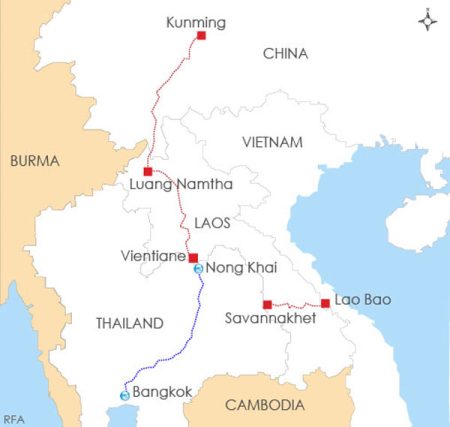
The railway project, estimated to cost anywhere up to $10 billion will not only enhance regional connectivity but profoundly reset the economic geography of Asia, given its massive potential for accelerating the increased integration between China and the ASEAN countries. People would be able to travel between Kunming and Bangkok by train for about $100, which is half to a third of the cost of an airline ticket. According to Xinhua, the railway is expected to bring two million more Chinese tourists to Thailand every year.
Washington is livid that its proxy, Move Forward led by a young man educated in the US and groomed to spearhead a colour revolution, has been banned. The Thai authorities understand that the western intention is to break up the ancient crust of their country’s polity, which is the only way to make inroads into what is otherwise a deeply Buddhist culture — specifically, to demolish the so-called lèse-majesté law protecting the institution of monarchy, an institution that dates back more than 700 years and is a pillar of stability in the country symbolising the unity of the Thai communities. By the way, Christian missionary work is active in both Thailand and Myanmar — as in next-door north-eastern region of India. And the evangelicals are an influential pressure group in the US politics.
The Thai authorities have shied away from confronting the US. Thai culture values serenity and avoids conflict and displays of anger. Even disagreements are to be handled with a smile, without assigning blame. Hence the circuitous route to squash Move Forward on legal grounds.
Move Forward won 151 seats in the 500 member parliament in the elections in May last year where sixty-seven parties contested, but was unable to form a coalition government after being functionally blocked by allies of the monarchy and military. Move Forward made the electoral pledge to abolish lèse-majesté law (which is tantamount to a crime.)
The US and its allies are furious but cannot do anything about the development. All the good work to stage a colour revolution in phases has come to naught. The exasperation shows in the statements from Washington and Canberra. (here and here)
However, all is not lost. The regime change in Bangladesh may open a new pathway for the western intervention in Myanmar. India and Thailand refused to back the western-backed rebels fighting the Myanmar military. Former Bangladesh Prime Minister Sheikh Hasina also stayed away from the power struggle in Myanmar. But that may change.
The Rohingya issue provides an alibi. The ascendance of Pakistani intelligence and the larger-than life role of the Jamaat-i-Islami will trigger an assertion of Bangladesh’s Muslim identity. The Pakistani army chief lost no time to underscore that the developments in Bangladesh underscore the raison d’être of the two-nation theory!
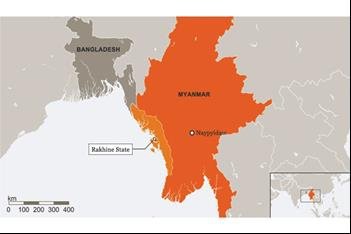
So, the regime change in Bangladesh may turn out to be a game changer for the West’s regime change agenda in Myanmar. On the other hand, at the secondary and tertiary level, any strengthening of the western-backed rebel alliance in Myanmar cannot but cast shadows on India’s northeast, which has a large Christian population with tribal affinities across the border.
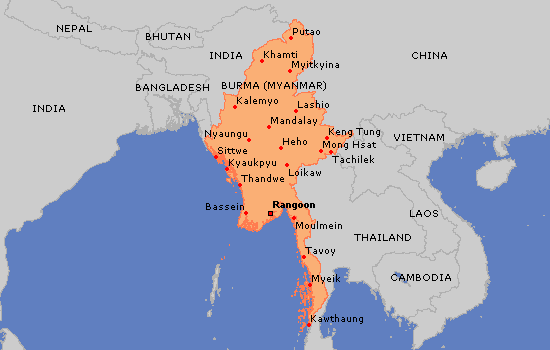
An awareness is lacking that any weakening of Thailand’s state structure or the dissipation of Thai culture rooted in Buddhist traditions will isolate India in the region’s civilisational tapestry. Indians tend to take an episodic view of current events in their immediate neighbourhood.
Prior to the rise of Theravada Buddhism, both Indian Brahminical religion and Mahayana Buddhism were present in Thailand, and influences from both these traditions can still be seen in present-day Thai folklore. A colour revolution in Thailand leading to western dominance and the eclipse of the Thai monarchy and Buddhist cosmology would have profound implications for South Asia.
India needs course correction on Myanmar
By M. K. BHADRAKUMAR | Indian Punchline | February 7, 2021
The Modi government made a strident call on February 1 that the “rule of law and the democratic process must be upheld” in Myanmar. The statement, following a prodding from Washington, was unabashedly intrusive, and, ironically, completely overlooking that human rights, rule of law, democratic pluralism, etc. are universal values that India also can (and should) be held accountable for. Lapping up the neocon prescriptions from Washington may not serve India’s interests, in general, and they are very specific to Myanmar.
The government failed to fathom the US’ motivations in riding the high horse of democracy so soon after the Capitol Riots in Washington, DC. Human rights issues come handy for Washington to rally allies at a juncture when its leadership of the transatlantic alliance is in drift and major European powers do not see eye to eye with its global strategies on Russia and China and mock at its nostalgia-laden slogan that “America is back.”
Alas, the government failed to consult the ASEAN despite Delhi’s refrain that it attributes “centrality” to that grouping.
The ASEAN Chair’s statement of Feb, 1 recalled the “purposes and the principles enshrined in the ASEAN Charter” which include respecting the principles of sovereignty, equality, territorial integrity, non-interference, consensus and unity in diversity.”
The ASEAN Chair’s statement of Feb, 1 recalled the “purposes and the principles enshrined in the ASEAN Charter.” Simply put, India chose to bandwagon with the US, Japan and Australia while the ASEAN and China took a differentiated stance. Geopolitics crept in. But the US has since realised the folly and National Security Advisor Jake Sullivan scrambled to contact the ASEAN ambassadors in Washington.
How come Delhi goofed up? Primarily, it is due to a flawed understanding of the Myanmar situation. The Indian analysts increasingly view world developments through their China prism and began fancying that with the massive victory of Aung San Suu Kyi in the November election provided an opportunity for India to “gear up to implement a major strategy with Myanmar under its ‘Neighbourhood First’ policy… to bring Myanmar under the Indo-Pacific construct” so as to align that country “more with ‘like-minded’ countries… to stand firm against China… to make Myanmar a part of the Indo-Pacific policy… (and) steer Myanmar away from the Chinese grip.”
Such views betray a zero sum mindset borne out of blind Sinophobia. Whereas, the ground realities are much more complex. The point is, Beijing brilliantly succeeded over the years in building a close relationship of mutual trust and mutual respect with Suu Kyi, parallel to the nurture of links between the Chinese Communist Party and her party National League for Democracy.
Unlike the western narrative of Aung Suu Kyi as Myanmar’s democracy icon, Beijing regarded her as a pragmatic politician who never uttered remarks to the detriment of China-Myanmar ties, was manifestly eager to maintain good relations and consistently adopted a soft stance on the South China Sea issue.
Beijing was greatly impressed that although Suu Kyi wanted Western support, she was adamant about national sovereignty. Arguably, it was in sync with what China would like its neighbours to practice. Chinese President Xi Jinping received Suu Kyi seven times since 2015.
State Counselor Wang Yi visited Myanmar recently on Jan. 12, met Suu Kyi and expressed strong support for her government and conveyed a strong commitment that China wants to work with her during the second term. And they agreed to push ahead with Belt and Road projects and lock in a five-year pact on trade and economic cooperation. Clearly, the prospect for the China-Myanmar Economic Corridor under Belt and Road Initiative has become uncertain now, as compared to a month ago.
In fact, the Chinese media reports already sound a word of caution that “Chinese companies operating in Myanmar need to watch out for contractual and default risks amid the current political upheaval… Government default is a major risk, especially for major and strategic projects in sectors including transportation and energy… But Chinese companies can seek international arbitration if they face illegal confiscation of their property.”
It is no secret that the Myanmar army marks a certain distance from China. Suffice to say, Myanmar developments present an extraordinary case study where Beijing silently feels distressed over the sudden eclipse of western style democracy in a neighbouring country. (See the Reuters analysis Myanmar coup does China more harm than good.)
Surely, the coup creates political baggage for China insofar as it cannot (and will not) take a position against the military, but also comes under compulsion to cover or provide protection for the military internationally. On the whole, this situation poses a major political and diplomatic liability for Beijing and cannot bring good news. Therefore, China prioritises that the concerned parties to solve their differences mutually, according to the constitution and within the legal framework, while maintaining peace and stability. Chinese expert opinion is that Suu Kyi’s political career is in jeopardy.
Of course, Suu Kyi made some serious errors, too. She heavily depended on people loyal to her personally, without bothering about their competence or integrity. It not only spawned corruption but also led to government failure to deliver, especially in job creation. Her leadership style was often dictatorial. She resorted to draconian laws to muzzle or jail critics. (See the Singapore-based Channel News Asia video titled Aung San Suu Kyi: A Fading Legacy dated October 22, 2020 on the eve of the November elections.)
Suu Kyi had no control over some major sectors of the national economy through two entities, Myanmar Economic Holdings Limited and Myanmar Economic Corporation as well as a network of domestic private business enterprises, known as “crony companies,” which generate revenue for the military and strengthen its autonomy.
Suu Kyi’s biggest mistake was in believing that she could, through her brand of nationalism, dismiss accusations of genocide directed against the Rohingya. In the process, Suu Kyi lost western support. From that point, she has been on borrowed time and the military barely hid its distaste for Suu Kyi.
To be sure, the military anticipated the impact and the reaction from the international community and took into consideration the Biden administration’s preoccupations with domestic issues. Myanmar doesn’t even figure in the top 10 priorities of Biden’s foreign policy. But the US Congress is not going to tolerate a coup in Myanmar and will mount pressure on the Biden administration to punish the military by imposing sanctions, cutting aid or targeting the generals and their companies.
However, a reversal of the military takeover is not to be expected and the probability is that Washington may lose whatever little leverage it would have had in Naypyidaw. Washington is mulling over policy options.
But there may be a Plan B. Indeed, the former US Ambassador to the United Nations Bill Richardson, who is no stranger to Myanmar, voiced the opinion last week that the time has come for the West to look beyond Suu Kyi for new faces among the opposition. One way is to mould a leadership that will be friendly to the US. There are signs that the western agencies are inciting the youth in Myanmar to stage protests, as had happened in Hong Kong and Thailand. The military has clamped down on Facebook and internet. Shades of colour revolution?
This is where Russia’s role merits attention. The struggle for influence in Myanmar has a geopolitical dimension, for obvious reasons. Since 2015, following the signing of a military cooperation agreement, Russian presence has increased, and, importantly, it coincides with the lengthening shadows of Russian presence in the Indian Ocean.
Russia has emerged as a major military partner for Myanmar. Russia operates a servicing centre in Myanmar. The Russian Deputy Defense Minister Alexander Fomin told the media last month that Myanmar plays “a key role in maintaining peace and security in the region.”
It is entirely conceivable that Russia, which has great expertise in countering colour revolutions, shares intelligence with the Myanmar military. Over six hundred military officers from Myanmar are studying in the Russian military academies presently. Myanmar’s military chief Min Aung Hlaing visited Russia six times in the recent years, more than to any other country.
During the visit of Defence Minister Sergei Shoigu to Naypyidaw last month, the Russian media quoted Gen. Hlaing as saying, “Just like a loyal friend, Russia has always supported Myanmar in difficult moments, especially in the last four years.” An agreement was signed for supply of a batch of Russian missile and artillery air defense systems Pantsir-S1.
Tass reported that the “command of Myanmar’s armed forces has shown interest in other advanced weapon systems of Russian manufacture.” Shoigu has reportedly expressed interest to establish visits of Russian warships to Myanmar’s ports.
All things taken into consideration, we may expect China and Russia to provide a firewall for Myanmar to ward off western penetration, as is happening in Central Asia. (The UN Security Council statement avoids any reference to the military or a coup as such in Myanmar and lays emphasis on national reconciliation, with pointed reference to Suu Kyi’s release.) Russia shares China’s perception of Quad as a destabilising factor in regional security.
Clearly, India needs to keep the “big picture” in view. It will not be to India’s advantage to create misperceptions that it is bandwagoning with some neocon Anglo-American project for regime change in Myanmar. In regard of Myanmar’s stability, India too is a stakeholder and would have a convergence of interests with Russia and China.
Military coup in Myanmar a blow against the Biden regime
By Lucas Leiroz | February 2, 2021
This week, news of a coup in Myanmar shocked international society. Official statements by the UN and several Western governments condemning the attitude of the Burmese military in overthrowing Aung San Suu Kyi and its allies are sharing space in public opinion with neutral statements that only call for the country’s stabilization, as was the Chinese position. Between having been dangerous to democratic institutions or merely changing the government by armed means, there is a range of different possibilities, making the case worthy of a technical and impartial analysis.
The events of February 1, 2021 can be summarized as follows: Burmese State Adviser Aung San Suu Kyi, who heads the country’s government, and President Win Myint were detained by the Burmese army, under extremely obscure circumstances. Previously, tensions between the government and the military of this Asian country had been growing, generating fears of a coup in some sectors of Burmese society – however, such a quick and incisive attitude on the part of the military was not expected by the population.
The root of the conflict of interest between the government and the military was, in short, the last electoral process, which the Army classified as fraudulent and illegal. As a result of the crisis, the country’s political leader was arrested, in what was considered a coup by the media and some foreign governments. Some regional ministers were also captured by the military, as well as several other government’s allies. Citizens’ reports attest that military personnel are spread throughout the country’s streets, carrying out patrolling services and avoiding possible riots.
The military’s distrust of the electoral process is due to several factors. The election was held on November 8 and was the second general election since the end of the military government in 2011. Since the fall of the military, a scenario of tension of interests has been established among the civil political elite, interested in the preservation of democratic institutions, and the military elite, interested in conserving their power and continuing their national project. The country’s ruling party, the National League for Democracy (NLD), led by Aung San Suu Kyi, won by an immense advantage, getting 396 seats out of a total of 476. On the other hand, the Union, Solidarity and Development Party, supported by the Army, took the minimum number of seats in Parliament, which further aggravated the rivalry.
The speech of the Burmese military since the elections was unique in stating that there was large-scale electoral fraud. For this reason, the military had been demanding for months that the government postpone the summons to Parliament, which was scheduled for February 1 – which did not occur, resulting in the coup. Before that, representatives of the Burmese Government and Army met to resolve the conflict but were unable to reach an agreement of common interest.
Previously, in the midst of such fears of a possible anti-democratic coup, the country’s military has on several occasions denied the intention to do anything in this sense, categorically claiming that these accusations were unfounded and disseminated by a pro-government media. However, there are reports that the commander of the armed forces, Min Aung Hlaing, said on January 27 that the national constitution could be repealed if the laws were not properly implemented – and this in fact happened.
However, it would be naïve to believe that this event has no sign of external interference. In fact, a polarized political scenario has been outlined in Myanmar for years. Historically, the military has sympathy with China and Democrats sympathize with the West. Last month, Min Aung Hlaing and the head of Chinese diplomacy, Wang Li, met to discuss the Burmese political crisis and the chief of the armed forces alleged electoral fraud in the November process.
Chinese interest in Myanmar is clear. Maintaining an allied government in a border country is extremely strategic for Beijing and avoids a greater degree of Western influence in its continental zone. Bilateral trade between China and Myanmar has always been intense, but it has declined with the rise of the recently overthrown government, whose pro-Western positions have weakened ties with Beijing. Also, due to the latest events of ethnic conflict and persecution of the majority Buddhist military against Islamic minorities, the West has imposed several sanctions on the Burmese military, which have been consented by the civilian government. It does not seem to be by chance that the Chinese reaction to the coup was limited to a request for both sides to resolve their differences, without any condemnation against the military.
If Chinese influence is real, the military coup in Myanmar can be interpreted as a test and a warning against Washington. Losing space on the Chinese border is unpleasant for American interests but, in the midst of a strong internal crisis, will Biden really react strongly or will his response be limited to mere notes of repudiation?
Lucas Leiroz is a research fellow in international law at the Federal University of Rio de Janeiro.
Iran, China, Russia to partake in Caucus 2020 military drills
Press TV – September 10, 2020
Military forces from Iran, China, and Russia are scheduled to take part in joint military exercises with a number of other countries in southern Russia later this month.
China’s Defense Ministry made the announcement in a news release on Thursday and said troops from Armenia, Belarus, Myanmar, and Pakistan would also participate in the drills, code-named “Caucus 2020.”
The ministry added that the exercises, to be held from September 21 to 26, would focus on defensive tactics, encirclement, and battlefield control and command.
The drills have special significance “at this important moment when the entire world is fighting the pandemic,” the ministry said.
The United States administration has insinuated that the coronavirus was artificially developed in a Chinese lab. China has rejected that insinuation.
Iran, China, and Russia have over the past years increased their military and diplomatic cooperation to counter the United States’ hostile policies and extra-territorial presence in their regions.
Late last year, the three countries held four days of naval exercises code-named the “Marine Security Belt” to promote regional security and peace and safeguard international trade in the Sea of Oman and the Indian Ocean.
Israel, Myanmar sign agreement to teach about the Holocaust
MEMO | May 31, 2018
Israel and Myanmar have signed a cooperation agreement on educational programmes including curricula on teaching about the Holocaust, Israeli Deputy Foreign Minister Tzipi Hotovely said on Twitter on Tuesday.
“We continue to cooperate with our friends around the world,” Hotovely wrote, referring to Myanmar whose army has been accused by the UN of committing ethnic cleansing against the Muslim Rohingya minority and where hundreds of thousands of survivors have been displaced as refugees.
“The two countries will work to develop two official curricula for schools in both countries to teach about the Holocaust and its lessons as well as the negative consequences of intolerance, racism, anti-Semitism and xenophobia,” Haaretz newspaper reported Wednesday.
Israel has continued to supply Myanmar with arms despite allegations of genocide. The armaments sold to Myanmar include over 100 tanks, weapons and boats that have been used to police the country’s border and perpetrate numerous acts of violence against the Rohingya, such that the UN suspects the army is committing ethnic cleansing.
Red Cross says life has ‘stopped’ in Myanmar’s Rakhine
Press TV – December 13, 2017
The International Committee of the Red Cross says life has “stopped” in Rakhine state due to the fear of violence, nearly four months after a new wave of crackdown by the government erupted against the persecuted Rohingya Muslims.
The ICRC director of operations, Dominik Stillhart, said Wednesday that tensions between the Muslims and the dominant Buddhist community were preventing Muslim traders from reopening shops and markets.
“The situation in the northern Rakhine has definitely stabilized, there are very sporadic incidents, but tensions are huge between the communities,” Stillhart said after a three-day mission to the remote area. “You get a sense, especially of the two main communities being deeply scared of each other.”
He visited the towns of Maungdaw, Buthidaung and Rathedaung in northern Rakhine, where the ICRC, the only aid agency operating in the violence-hit region, is providing food, water and other aid to 150,000 people.
Stillhart said the Red Cross hoped to reach all of the 180,000 Rohingya it estimated remained in the “politically-sensitive” region after more than 600,000 people fled to Bangladesh.
“You travel through the countryside and you really see on both sides of the road villages that are completely destroyed. It just gives you a bit of a sense of the scale of destruction. There is also this pervasive sense of absence.”
“It is as if life has stopped in its tracks, people do not move, markets are closed in Muangdaw town,” Stillhart said.
He said the main problem facing the Muslims was “the very limited possibilities for them to access their own livelihoods like fields, and especially markets and services.”
Late last month, Bangladesh and Myanmar reached a deal to repatriate the Rohingya refugees within several months.
The Red Cross said the returns must be voluntary and safe. “But for now we really don’t see a significant return movement and I’m also not expecting that we will see massive return anytime soon,” Stillhart said. Citing UN figures, he added that nearly 300 Muslims still fled daily.
About 650,000 Rohingya Muslims have fled Myanmar to Bangladesh since late last year, when Myanmar’s soldiers and Buddhist mobs began vicious attacks on the minority Muslims in Rakhine. The crackdown on the Rohingya has intensified since August 25.
All along, government troops and the Buddhist mobs have been killing, raping, and arbitrarily arresting members of the Muslim community. They have also been setting the houses of the Muslims on fire in hundreds of predominantly-Rohingya villages in the northern parts of Rakhine, where nearly all the Rohingya reside.
Myanmar’s government denies full citizenship to the Rohingya, branding them illegal immigrants from Bangladesh. Dhaka, in turn, regards the desperate refugees as Myanmarese. The Rohingya, however, track their ancestors many generations back in Myanmar.
The UN has already described the Rohingya as the most persecuted community in the world, calling the situation in Rakhine similar to “a textbook example of ethnic cleansing.”
14,000 orphans among Rohingya refugees: Bangladesh
Press TV – October 15, 2017
A new influx of Rohingya refugees that hit Bangladesh contains around 14,000 orphans, authorities say, as new details emerge of a brutal crackdown in neighboring Myanmar which forced over half a million Rohingya Muslims to flee their homes.
Bangladesh’s social services department said Sunday that some 13,751 children without a parent or parents were identified in the crowded refugee camps along the country’s border with Myanmar.
“The majority of them said they lost one or both parents in the violence in Rakhine,” said Pritam Kumar Chowdhury, a department deputy director, adding, “Others said they didn’t know what happened to their parents, and they came to Bangladesh with relatives.”
The United Nations says children comprise the bulk of the exodus of Rohingya refugees who have fled Myanmar since violence erupted in the country’s western state of Rakhine in late August. The total number of arrivals currently stands at 536,000, of which some 320,000 are children, one-third under five years of age.
The exodus began when the army and Buddhist mobs launched sweeping attacks on villages populated by Muslims to the north of Rakhine. The government rejected claims about torching of villages and killing of innocent residents, saying military forces were simply hunting for suspected militants who had carried out deadly attacks on border and police posts on August 25.
However, rights campaigners and international organizations have documented numerous accounts of gang rapes and massacres against the Rohingya Muslims as the refugees continue to recount the violence they suffered back home.
The UN and other agencies have also warned about humanitarian problems that could occur in crowded refugee camps in Bangladesh, especially given the high number of vulnerable children and women living in those areas. Bangladesh is building the world’s largest refugee camp in the area with plans in place for setting up an orphanage to deliver extra assistance and familial support to unaccompanied minors and those without a parent.
UN: Myanmar’s ‘systematic’ crackdown on Rohingya aimed at permanent expulsion
Press TV – October 11, 2017
The United Nations says Myanmar’s “systematic” crackdown on the persecuted Rohingya Muslim community is aimed at permanently expelling them from their home in Rakhine state.
A report published by the UN on Wednesday detailed a campaign by Myanmar’s military to terrorize the Rohingya through atrocities that range from indiscriminate killings to rape.
“Brutal attacks against Rohingya in northern Rakhine State have been well-organized, coordinated and systematic, with the intent of not only driving the population out of Myanmar but preventing them from returning to their homes,” the UN report said.
Myanmar’s troops often operate “in concert with armed Rakhine Buddhist individuals,” the report added.
“In some cases, before and during the attacks, megaphones were used to announce: ‘You do not belong here, go to Bangladesh. If you do not leave, we will torch your houses and kill you’,” it said.
The investigative report also contradicts claims by Myanmar’s government that the crackdown was a response to militant attacks on security posts on August 25. The probe found that the latest wave of military “clearance operations” in Rakhine actually began before that date, possibly in early August.
The investigation outlines an army-led campaign to erase the Rohingya connection to their homeland in the majority Buddhist country.
Teachers, as well as cultural, religious and community leaders have also been targeted in the latest crackdown “in an effort to diminish Rohingya history, culture and knowledge,” the report said.
“Efforts were taken to effectively erase signs of memorable landmarks in the geography of the Rohingya landscape and memory in such a way that a return to their lands would yield nothing but a desolate and unrecognizable terrain.”
The latest UN report is based on interviews with refugees who have fled to Bangladesh’s Cox’s Bazar area since August 25. The UN team spoke to hundreds of people in a series of 65 interviews, some with individuals and some with groups of up to 40 people.
UN figures show more than half a million people have fled the ongoing violence.
The researchers also found evidence of abuses designed to “instill deep and widespread fear” among the Rohingya. This included accounts of soldiers surrounding homes and firing indiscriminately as residents ran for their lives as well as uniformed men gang-raping women and girls, some as young as five. One statement, “received by an extremely credible source, referred to a (pregnant) woman whose stomach was slit open after she was raped.”
Speaking to reporters in the Swiss city of Geneva, researcher Thomas Hunecke said the UN had “very credible information” that Myanmar’s military had planted landmines along the Bangladesh border. “It is highly likely that these mines have been planted in order to prevent the Rohingya population from returning.”
The United Nations believes the government of Myanmar might have committed ethnic cleansing and crimes against humanity in its crackdown. The Rohingya are considered by the UN the “most persecuted minority group in the world.”
Bangladeshi army personnel direct Rohingya volunteers carrying ice boxes with cholera vaccines at the Thangkhali refugee camp in Ukhia district, October 10, 2017. (Photo by AFP)
EU to cut ties with Myanmar military chiefs
The European Union is to cut ties with senior Myanmar military chiefs to protest the “disproportionate use of force” against the Rohingya, according to an agreement approved by EU ambassadors and set to be signed off at a meeting of foreign ministers on Monday.
The agreement said the rapid flight of so many people from Rakhine “strongly indicates a deliberate action to expel a minority.”
“In the light of the disproportionate use of force carried out by the security forces, the EU and its member states will suspend invitations to the commander-in-chief of the Myanmar/Burma armed forces and senior military officers and review all practical defense cooperation,” the agreement says.
According to the agreement, the EU “may consider additional measures” if the crisis does not improve. The bloc currently bans the export of arms and equipment that can be used for “internal repression.”
Featured Video

Theodore Postol: Iran’s Missiles & Drones Were Underestimated
or go to
Aletho News Archives – Video-Images
From the Archives
What is the Israeli Lobby in Australia Doing in Interfaith Dialogue?
By Ali Kazak | Dissident Voice | October 11, 2015
For years Israel and its lobby around the world have been trying to normalise their relations with Arabs and Muslims without solving the Palestine Question.
One of the methods they resorted to in the last few years is using human rights and community organizations such as interfaith dialogue and Multiculturalism to achieve this objective and to: isolate the Palestinians, marginalise the Palestine question, end Israel’s isolation, and prevent criticism of Israel, knowing that these organisations will be the first to stand against Israel’s violations, racial and religious discrimination.
The group responsible for this task in Australia is The Australia/Israel & Jewish Affairs Council (AIJAC); its Director of International & Community Affairs, Jeremy Jones is in charge of lobbying religious community organizations, specifically Muslims and Christians. Consequently he convened the Faith Communities for Reconciliation, founding participant in the Australian Partnership of Religious Organisations and the Australian National Dialogue of Christians, Muslims & Jews.
AIJAC is a private political propaganda group. It is recognised as the main Israeli lobby in Australia. It coordinates its activities and works intimately with the Israeli embassy in Canberra and different institutions in Israel. It is privately funded by some Jewish businessmen. It monitors closely Australian politicians, the media, ethnic and religious groups, (especially Arabs and Muslims), unions and academics on their stands towards Israel and the Palestine question. … continue
Blog Roll
 Aletho News
- The Most Important Bet You’ve Never Heard Of
- The killing of three Indonesian soldiers in Lebanon should remind Jakarta that Israel does not want peace
- Defeated and delusional: Netanyahu’s remarks reveal $80bn war failure, says analyst
- Iran’s friends are about to make life much more difficult for Israel and the US
- The war of liberation of the Arab and Islamic peoples expands across the Gulf
- Envoy warns UN on Trump’s threat to ‘obliterate’ Iran’s civilian infrastructure
- The Larak Corridor: Iran’s Rial Gate With No US, No Israel, and No Way Around
- ‘Economic terrorism’: Steel facilities hit again in US-Israeli strike
- ‘War Crime’: Iran condemns attacks on Arak, Ardakan nuclear sites
- Two-thirds of Americans want quick end to Iran war even if goals unmet
- If Americans Knew
- Gaza families reunite years after babies evacuated amid Israel’s war
- International Rescue Committee warns Gaza’s children face grave protection risks
- Iran’s Alleged 47-Year War on America: Debunking the 1,050 American Deaths Canard
- Israel wants US to bomb more of Iran’s civilian structures (113,000 is not enough) – Not a ceasefire Day 173
- Ann Coulter Rips Into Fox News for Iran War Coverage
- Joe Kent Urges Americans To Call White House and Congress To Object To Sending Troops Into Iran
- DNC Resolution to Reject AIPAC Funding Puts Democratic Leaders in the Hot Seat
- Swedish foundation to build 400 schools as over 650,000 Gaza children remain without education for 2 years
- Israeli army admits photshopping image of slain Lebanese journalist
- This is how Israel is systematically killing health workers under the cover of war in Lebanon
- No Tricks Zone
- New Study Finds Warming Saves Lives…Cold Temperatures 12 Times More Deadly Than Excess Heat
- German Science Blog Accuses PIK Climate Institute Of Hallucinating Climate Tipping Points
- Devastating Assessment Of Comirnaty Vaccine By Former Senior Pfizer Europe Toxicologist
- New Study: CO2 Is ‘Effectively Negligible’ As An Explanatory Climate Change Factor Since 2000
- Former Pfizer Toxicologist Dr. Helmut Sterz Tells Bundestag Hearing Pfizer Vaccine Should Have Never Been Approved
- Energy Expert: Germany’s Nuclear Phaseout Was A “500 Billion Euro Mistake”
- New Research: South Australia’s Mid-Holocene Sea Surface Temperatures Were 4°C Warmer Than Today
- Storing Green Energy To Last Germany 10 Days Would Require A 60-Million Tonne Battery
- New Studies: UK Sea Levels Were 4 Meters Higher Than Today During The Mid-Holocene
- Destructive Green New Deal: German Energy And Metal Group Warns Of Drastic Crisis
 Aletho News