Media Ignores Evidence That West Opposed Ukraine Peace Deal
BY NOAH CARL | THE DAILY SCEPTIC | FEBRUARY 14, 2023
As I noted in a previous article, the former Israeli Prime Minister Naftali Bennett revealed in a recent interview that in March of last year Western leaders blocked a draft peace deal between Russia and Ukraine.
There seems to be some disagreement over exactly what he said, as the interview was in Hebrew. Based on the English subtitles on YouTube, I quoted him as saying, “They blocked it.” But others insist he said, “They broke off negotiations.” Either way, he clearly implied that the West stymied negotiations that might have led to a peace deal.
What’s more telling is the reason he gave as to why the West did so, namely “to keep smashing Putin”. This tallies closely with Roman Romanyuk’s account of why Western leaders opposed negotiations in April:
Behind this visit and Johnson’s words lies much more than a simple reluctance to engage in agreements with Russia. The collective West, which back in February suggested that Zelenskyi surrender and run away, now felt that Putin is actually not as all-powerful as they imagined him to be. Moreover, right now there was a chance to “press him”. And the West wants to use it.
As Caitlin Johnstone points out, it also lines up with what the Turkish Foreign Minister Mevlut Cavusoglu said on April 20th last year:
Following the NATO foreign ministers’ meeting, it was the impression that … there are those within the NATO member states that want the war to continue, let the war continue and Russia gets weaker. They don’t care much about the situation in Ukraine.
So we now have a NATO Foreign Minister, a journalist with sources “close to Zelensky” and a former Israeli PM all saying that Western leaders opposed a peace deal because they wanted to “weaken”, “press” or “smash” Putin.
These seem like newsworthy revelations, don’t they? Not according to the mainstream media.
I checked whether the revelations have been mentioned by any of the following outlets: the BBC, CNN, the Times, the Guardian, the Telegraph, the New York Times, the Washington Post, or the Wall Street Journal. With the exception of one op-ed in the New York Times which quoted Cavusoglu’s statement, they’ve been completely ignored.
The point here isn’t that there definitely would have been a peace deal if not for the actions of Western leaders. We can’t know that. The point is: there’s credible evidence that Western leaders stymied negotiations which might have led to a peace deal because they wanted to weaken Russia.
With the exception of Tucker Carlson and a few lesser-known outlets, why hasn’t the media covered this? One of the current headlines on the BBC News homepage is ‘Rihanna reveals pregnancy at Super Bowl show’. Which is more newsworthy: Rihanna’s personal life, or the revelation that Western leaders may have sabotaged peace? I’m reminded of this meme:
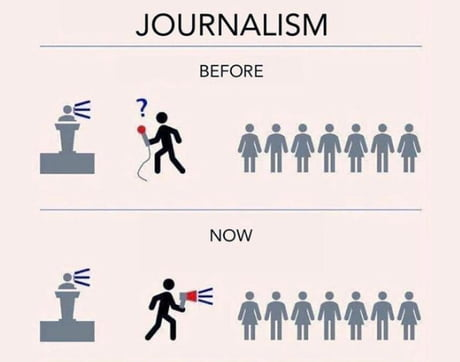
A few days ago, in fact, a BBC Ukraine journalist got up and hugged Zelensky at a press conference. However much you support a particular cause, as a journalist you’re supposed to show a modicum of impartiality. Based on this incident, I wouldn’t expect any dramatic shifts in coverage.
USA Today: “Little by Little” Russia is Winning Key Ground War
Surprising admission deviates from usual narrative
By Paul Joseph Watson | Summit News | February 14, 2023
USA Today raised some eyebrows when it deviated from the usual narrative by acknowledging “little by little” Russia is winning the ground war in a pivotal area of Ukraine, citing a quote given by a pro-Ukraine spokeswoman.
The admission was in relation to the battle for the city of Bakhmut in Ukraine’s eastern Donbas region.
Russia has been fighting fiercely to take back the city since last summer, and now appears to be pouring more manpower into the region to finish the job.
“They have been trying to take the city since July,” Iryna Rybakova, press officer for Ukraine’s 93rd Brigade, told BBC. “Little by little they are winning now. They have more resources, so if they play the long game they will win. I can’t say how long it will take.”
Moscow has established control of both main roads into the city, with only one back route left open, making it increasingly difficult to get supplies to Ukraine troops.
Ukraine President Volodymyr Zelensky’s office also admitted that the turf war had become “difficult,” while Donetsk Gov. Pavlo Kyrylenko said, “We’re seeing a very tough battle in which the Russians aren’t sparing neither themselves nor us.”
As Chris Menahan notes, the statements contradict legacy media narratives that Russia is running out of weapons and supplies, which has been the dominant mantra since just after the start of the conflict.

“Nonetheless, the US and NATO keep stringing Ukraine along with this BS to encourage them to fight their proxy war with Russia,” writes Menahan.
“The most likely outcome of this war is that Russia will take the Donbas and Ukraine will agree not to join NATO and recognize Crimea as Russian, which is an outcome that could have been achieved 10 months ago (with a tiny fraction of the deaths and the EU/global economy intact) if the US and NATO didn’t bribe the Zelensky regime with over $100 billion to keep the war going in perpetuity.”
For months now, numerous mainstream media outlets have been pushing the narrative that Russia is being routed in many areas of Ukraine and that the war could have entered its final phase.
Much of this appears to be little more than pro-NATO propaganda to boost morale, which paradoxically in the longer term could actually harm morale if Ukrainian forces aren’t prepared to dig in for a prolonged war.
‘US troops should withdraw’ if implicated in German pipeline sabotage
Free West Media | February 12, 2023
The chairman of the AfD parliamentary group, Tino Chrupalla, has called for investigative committees to be set up in connection with the attack on the Nord Stream gas pipelines. Both the Bundestag and the EU Parliament must investigate whether the US and Norway had actively participated in blowing up the pipelines, he said.
The well-known US investigative reporter Seymour Hersh quoted insider sources involved in the planning of the attack on German and European infrastructure.
Chrupalla called for an investigation into the claims: “The suspicions of the Pulitzer Prize winner must be investigated.” All the serious questions must now be “answered by committees of inquiry”. The Bundestag has “a right to know what knowledge the federal government had”.
The AfD boss underscored that such an inquiry should establish whether government officials were involved in the planning. “Were government officials privy to the planning of the attack?”
Biden, but also Scholz, Greens exposed
According to Hersh, after some “wobbling” Olaf Scholz decided to be on the American team. He was referring to a meeting between the German Chancellor and US President Joe Biden on February 7 last year. At the joint press conference, the American head of state said about the then imminent war in Ukraine: “If Russia invades, there will be no more Nord Stream 2. We will put an end to this.”
LNG deliveries from the US have increased by 143 percent from the previous year which has been a catastrophe for the climate, critics argue. “The biggest hypocrisy in decoupling Europe from Russian oil and gas supplies concerns environmental policy. The production and transport of LNG from the USA results in a CO2 footprint that is twice as large as that of conventional Russian gas,” according to Le Monde Diplomatique.
The sabotage act to enforce the “rules-based international order”, furthermore triggered a massive release of methane causing major damage to the environment, to marine life, including to dolphins, whales and plants. This fact has been of no interest to various EU Green party supporters nor to Greta Thunberg.
The AfD parliamentary group leader pointed out that the US had attacked an ally: “Has the leading power of NATO carried out an attack on our country’s vital critical infrastructure in European waters?” If so, one would have to question whether the alliance guarantees security in Europe or rather endangers it. The withdrawal of all US troops should be the consequence.”
According to Chrupalla, all the findings of national authorities should be laid out before the European Parliament: “The European states must not put up with such violent interference. They are even less allowed to participate in it.”
Norway profits from German loss
Until Wednesday, the investigative journalist had always been known as “a legend” in leading German media screeds – as a famous sleuth successfully uncovering numerous American state crimes. Since his [Nord Stream] revelations, he has become “controversial” however.
The treatment of the Hersh revelations in German mainstream media – either totally ignoring them or blaming the Kremlin – will most probably give the already low credibility of the “leading outlets” their final deathblow.
Moreover, it appears that Germany’s most trusted “ally” had no difficulty in persuading Norway as a member of the European “community of values” to take part in a criminal endeavour in order to sell its energy exports to Germany much more profitably.
But in order to do so, Norway became actively involved in an act of terrorism, breach of international law, as well as a breach of the United Nations Charter.
When US Special Forces covert actions in El Salvador, Nicaragua and Honduras included mining the coast of Nicaragua to stop locals from fishing and other marine activities, the case was successfully brought to the International Court of Justice in June 1986. This means that the International Court of Justice, which was established by the UN Charter, has jurisdiction in this case, legal scholars believe.
Following the sabotage, Germany, Denmark, and Sweden launched separate inquiries into the attack, further highlighting the disunity of EU members. Sweden was reportedly the first to leave the planned joint investigation team; Denmark followed suit. To date, no European country has made its findings public.
Hersh’s revelations are especially a challenge for conservatives and right-wing Atlanticists. Because if Hersh’s comprehensive account of the events, which is based on high-ranking sources in Washington, is correct, then “there can be no other consequence than the demand for the withdrawal of all American troops and military bases from Germany,” according to Wolfgang Hübner, a long-standing city councilor and parliamentary group leader of the Bürger für Frankfurt (BFF).
Legal hurdles for team Biden
The executive branch under Biden may have unilaterally decided to wage war on Germany, but there are many legal problems associated with their project, such as the failure to inform Congress or even the powerful congressional Gang of Eight.
According to Hersch, the US Navy performed the destruction of a foreign government’s property at the direction of President Biden. Claiming that they were just following orders would not go far in court, since bypassing Congress is evidently illegal.
Specifically, the Gang of Eight includes the leaders of each of the two parties from both the US Senate and House of Representatives, and the chairs and ranking minority members of both the Senate Committee and House Committee for intelligence as set forth by 50 U.S.C. § 3093(c)(2).
It is also telling that US military service chiefs did not raise the alarm when the Biden team decided to blow up Nord Stream.
Well before Hersch’s report, Norwegian investigative reporter, Alf R Jacobsen, had written a detailed analysis of the Nord Stream sabotage. In October 2022, Jacobsen challenged the idea of Russia’s involvement in the blasts. According to him, Hersh’s piece is credible.
China Demands US “Explain Itself to the World” Over Nord Stream Attack Story
By Paul Joseph Watson | Summit News | February 10, 2023
China has demanded that the United States “explain itself to the world” if the revelations in Seymour Hersh’s story about US intel being responsible for destroying the Nord Stream gas pipelines are true.
The Pulitzer Prize-winning investigative journalist published an article this week in which he asserted that the pipelines were destroyed by the US as part of a covert operation.
According to Hersh’s sources, the explosives were planted in June 2022 by US Navy divers under the guise of the BALTOPS 22 NATO exercise and were detonated three months later with a remote signal sent by a sonar buoy.
One source told Hersh that the plotters knew the covert operation was an “act of war,” with some in the CIA and State Department warning, “Don’t do this. It’s stupid and will be a political nightmare if it comes out.”
Now Beijing is demanding that the White House address the issue, seemingly unimpressed with the Biden administration’s rather weak response to merely label the story “false”.
Earlier today, Chinese Foreign Ministry spokeswoman Mao Ning asserted that Washington would have to bear responsibility if the report is confirmed as accurate.
“If the conclusions of the investigation are true, then the US behavior is unacceptable,” the diplomat told reporters, adding that the US would need to “explain itself to the world community.”
The Kremlin also responded to the report by demanding a fresh international investigation into the attack, which was preceded by both Joe Biden and Victoria Nuland asserting that the pipelines would be taken out if Russia invaded Ukraine.
Kremlin Press Secretary Dmitry Peskov said Hersh’s article showed “the need for an open international investigation into this unprecedented attack on this critical infrastructure.”
“It’s a very important piece, which… must provoke the acceleration of the international probe. But we, on the contrary, witness attempts to silently wind down such international investigation,” he added.
Meanwhile, in Germany, the Alternative for Germany (AfD) party is also calling for a full inquiry.
“The Pulitzer Prize winner’s suspicions must be investigated,” wrote co-chairman of the AfD parliamentary group, Tino Chrupalla.
“Has NATO’s leading power carried out an attack on our country’s vital critical infrastructure in European waters? Then one would have to question whether the alliance guarantees security in Europe or rather endangers it. The consequence would be the withdrawal of all U.S. troops.”
EU mulls ways to censor Russian views
VOLTAIRE NETWORK | FEBRUARY 2, 2023
The European Union is organizing a conference entitled: “Beyond disinformation – EU responses to the threat of foreign information manipulation.”
Its main thrust is to seek ways of expunging any trace of a Russia-friendly outlook within the Union.
The EU has already censored Russia Today TV channels and the Sputnik agency. It is now extending its reach to EU citizens relaying content from these portals, whether they agree with it or not.
The event will be chaired by Josep Borrell, High Representative of the Union for Foreign Affairs and Security Policy, assisted by Stefano Sannino, Secretary General of the European External Action Service,.
MEP Raphaël Glucksmann, Chairman of the European Parliament’s Special Committee on Foreign Interference, will address the meeting along with representatives of the Swedish Psychological Defense Agency, the British Foreign Office and the US State Department, and of course of NATO.
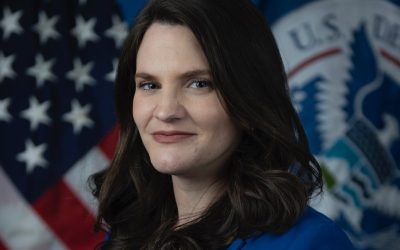
The star of the show will be Nina Jankowicz (pictured), who, after serving as communications adviser to President Volodymr Zelensky, was appointed by President Joe Biden to chair the Disinformation Governance Board, the short-lived US censorship structure.
With the exception of Mr. Glucksman, all the speakers are senior, though unelected, officials.
US ‘empire of lies’ should be investigated – top Russian MP
RT | February 5, 2023
The UN should open an investigation into Washington’s crimes against humanity, Russian State Duma Speaker Vyacheslav Volodin suggested on Sunday.
Writing on Telegram on the 20th anniversary of the infamous 2003 speech by then-US Secretary of State Colin Powell at the UN Security Council, during which he justified the ill-fated invasion of Iraq, Volodin offered a scathing criticism of what he described as the American “empire of lies.”
According to the speaker of the lower house of Russia’s parliament, this date marks “one of the biggest deceptions of the global community by the United States.” He recalled that during the landmark Security Council meeting Powell “accused Iraq of producing weapons of mass destruction, providing a vial with ‘white powder’ as proof.” At the time, the US secretary of state said the vial could be used to store anthrax.
While the UN did not approve the Iraq invasion, the US attacked the country anyway, he added. “Half a million civilians fell victims, the president was executed, the country was gone,” Volodin wrote, pointing out that Powell later admitted that the vial stunt was “a hoax,” but Washington was never held to account.
“All policies of the United States and the collective West are based on lies,” the Duma speaker stressed.
He noted that the same applied to NATO’s promises not to expand eastwards after the collapse of the Soviet Union and the Eastern bloc, as well as to the 2014 and 2015 Minsk Agreements. The latter were signed by Russia, Ukraine, France, and Germany in a bid to pave the way for peace in Ukraine by granting the Donetsk and Lugansk People’s Republics special status within the Ukrainian state.
These accords “also turned out to be a deception – but [former German Chancellor Angela] Merkel and [former French President Francois] Hollande acted as Powell did”, Volodin said. He was referring to the bombshell confessions by the two ex-leaders, who admitted in December that the Minsk Agreements were simply meant “to give Ukraine time” to strengthen its army.
“The UN should investigate Washington’s crimes against humanity. And the decision-makers should be punished for the millions of victims, refugees, broken destinies, destroyed states,” Volodin added.
Attempts by France & Germany to Negotiate With Russia Should Be Prevented, Bolton Tells Pranksters

By Andrei Dergalin – Sputnik – 02.02.2023
John Bolton shared his thoughts on topics such as the anti-Russian sanctions imposed by the West and the prospects of Ukraine’s NATO membership with Vovan and Lexus.
Former US presidential advisor John Bolton has made some rather frank admissions during a phone conversation with whom he thought was the ex-president of Ukraine, Petro Poroshenko.
Alas, his interlocutor turned out to be the well-known Russian prankster duo known as Vovan and Lexus, who promptly spilled the beans online.
During the chat, Bolton apparently insisted that all attempts by Germany or France to hold negotiations with Russia amid the current crisis in Ukraine should be disrupted, and claimed that the sooner Ukraine and Georgia become members of NATO, the better.
Regarding the sanctions imposed by western powers against Russia, Bolton complained that they weren’t enough and that Moscow continues to bypass these punitive measures.
He also commented on the promise made over three decades ago by former US Secretary of State James Baker to the former leader of the USSR Mikhail Gorbachev regarding NATO not expanding to the east, claiming that Baker merely “launched into arguments and looked for ways to avoid confrontation,” as the pranksters put it.
George Soros is either prophetic or pulls a lot of strings
By Tony Cox | RT | February 2, 2023
George Soros is either stunningly prescient or frighteningly influential when it comes to determining who will need to do all the bleeding and dying that he deems necessary to bring about a desirable “new world order.”
Consider the Hungarian-born billionaire’s essay on the future of NATO: “The United States would not be called upon to act as the policeman of the world. When it acts, it would act in conjunction with others. Incidentally, the combination of manpower from Eastern Europe with the technical capabilities of NATO would greatly enhance the military potential of the partnership because it would reduce the risk of body bags for NATO countries, which is the main constraint on their willingness to act. This is a viable alternative to the looming world disorder.”
Soros deserves credit for neatly describing the US and NATO strategy for bringing about and exploiting the Russia-Ukraine conflict. The Ukrainians are providing the manpower – in other words, the cannon fodder – and the Western puppeteers can endeavor to weaken Russia and enforce their vision of a favorable world order. They also can do this without having to make the case to their citizens that this is a fight for which it is worth tolerating body bags coming home from the front.
Additionally, by sharing the burden of providing military and economic aid to Kiev, the Western powers achieve the dual benefits of prolonging their proxy war and creating the impression that the whole world is steadfastly standing with the blue and yellow. That helps underpin the narrative frame that there is no moral basis for criticizing Ukraine policy and anyone who does so is probably a Kremlin agent.
The thing is, Soros didn’t write his take on the situation this week, this month or even in the past year. He didn’t even write it back in 2014, when he was allegedly backing the overthrow of Ukraine’s elected government and might have reasonably anticipated a coming conflict with Russia. No, Soros wrote this assessment in 1993, nearly 30 years ago.
Back then, in the wake of the Soviet Union’s collapse, Soros wanted to prevent former Soviet states and Warsaw Pact nations from becoming nationalist countries that would be governed according to their own interests and oppose the global order that he was promoting.
Western leaders had made assurances that NATO wouldn’t expand eastward, but Soros saw the military bloc as “the basis of a new world order.” He conceded that the group would need “some profound new thinking,” given that its original mission was “obsolete,” and he insisted that the alliance must be free to invite any country to join.
In fact, he saw a great opportunity for NATO to take advantage of the security void created by the Soviet collapse if it could act quickly. “If NATO has any mission at all, it is to project its power and influence into the region, and the mission is best defined in terms of open and closed societies.”
“The countries of Central Europe are clamoring for full membership of NATO as soon as possible, preferably before Russia recovers. Russia objects, not because it harbors any designs on its former empire but because it sees no advantage in consenting. Its national pride has been hurt and it is sick and tired of making concessions without corresponding benefits.”
Soros saw NATO as both a viable platform to develop into the anti-Russia enforcer for his new world order and the bright and shiny object to lure Europe’s former Eastern Bloc states into the fold. “NATO has a unified command structure which brings together the United States and Western Europe,” he said.
“There are great advantages in having such a strong Western pillar: It leads to a lopsided structure firmly rooted in the West. This is as it should be, since the goal is to reinforce and gratify the desire of the region for joining the open society of the West.”
The goal became reality. For example, Soros noted that there was nothing to prevent countries such as Poland, Czechia and Hungary from joining NATO. The three nations became the first wave of NATO’s post-Cold War expansion, joining the bloc in 1999. In fact, the bloc has since nearly doubled in size, adding 14 members by 2020 and teeing up Ukraine and Georgia as future prospects.
NATO moved right along the Russian frontier, placing strategic weapons and security guarantees on Moscow’s doorstep and helping to trigger the current crisis. As Soros acknowledged in 1993, Russia had no desire to restore the empire of Peter the Great – contrary to a popular CNN talking point. However, as the Kremlin warned repeatedly in the years leading up to the current conflict, Moscow couldn’t stand idly by while its national security interests were trampled.
It’s easy to see why Soros was and is so worried about nationalism: His vision could never sell with a government that served the interests of its own people.
NATO’s expansion binge didn’t make anyone safer. We know the little brothers, like the people of Ukraine, aren’t better off. They have the privilege of bleeding and dying as they provide the “manpower” for NATO’s proxy fight with Russia. As for the big brothers, they undermine their own security. Americans and Western Europeans are suffering the economic effects of the US-NATO sanctions war against Russia, and their governments are pushing them ever closer to a planet-ending nuclear Armageddon.
The Bulletin of the Atomic Scientists announced last week that its Doomsday Clock had advanced to within 90 seconds of midnight, the latest ever, indicating that humanity stands at “a time of unprecedented danger.” The group cited the Russia-Ukraine conflict, which has “challenged the nuclear order – the system of agreements and understandings that have been constructed over six decades to limit the dangers of nuclear weapons.”
Not to worry if you’re George Soros, 92 years old, and watching your geopolitical dreams come true. He and others like him can keep marching onward to perfect their world order as they see fit.
If we wonder whether NATO works on behalf of that order, we need look only at what has transpired and the framing of the current conflict. When Russian forces began their offensive against Ukraine last February, Western leaders and pundits condemned President Vladimir Putin for undermining the “rules-based international order.”
So NATO has emerged as the enforcer of the rules-based international order – the new world order, if you will – just as Soros called for three decades ago. The results of that “profound new thinking” are much the same as the political activist envisioned in 1993. He also called for expanding NATO to Asia, which hasn’t yet happened, but the bloc’s 2022 summit was enlarged to include representatives from Asia-Pacific “sentinel states” – Japan, South Korea, Australia and New Zealand.
Was Soros so much of a visionary that the hedge-fund investor could foresee how geopolitics would play out several decades ahead of time, or does his accuracy reflect the fact that he and his allies tend to get their way? Rather than prescience, is this situation more like the cook being a good predictor of what we’re going to have for dinner?
Soros himself offered a hint on that theory in his essay: “We have to act without full knowledge of the facts because the facts are created by our decisions.”
Anyone who suggests that Soros calls a lot of the policy shots is immediately condemned by the Western media as anti-Semitic because, after all, he has Jewish heritage. Never mind that he’s an avowed atheist who has been accused of undermining Israel’s democratically elected government and funding groups that defame the Jewish state.
So when Moldovan President Maia Sandu returns from a recent trip to Davos and promptly starts hinting about joining NATO – in violation of her country’s constitutional commitment to neutrality – we shouldn’t point out that she met with Alexander Soros, son of George Soros, during the summit. Revealing or trying to connect such dots would be anti-Semitic, according to the Western media.
It couldn’t be that George Soros wields an inordinate amount of influence over world affairs. It couldn’t be that some of his critics have legitimate and unbigoted disagreements with his ideas. It couldn’t be that his immunity to criticism is further evidence of his power.
And shut your eyes when a US watchdog group reveals that Soros has financial ties to at least 253 media organizations worldwide and funding links to 54 prominent media figures, including such names as Christiane Amanpour of CNN, Lester Holt of NBC News and Washington Post executive editor Sally Buzbee.
So Soros gets to wield his influence with impunity, apparently achieving what he wants in many cases. He gets to serve the interests of billionaires, defense contractors, power-mongering politicians and social engineers. But what about the rest of us, the other 8 billion people in the world? What about those who just want to be able to support our families, pursue happiness and live in peace – without worrying that iodine pills are sold out and there might not be time to build a nuclear fallout shelter?
Soros himself might prescribe us more bread and circuses, to keep the masses distracted – as well as tribalism, to keep the people divided – at least until we’re needed to serve as “manpower” for the cause.
Tony Cox is a US journalist who has written or edited for Bloomberg and several major daily newspapers.
Former UK Defense Minister Says NATO May Need To Send Ground Forces To Ukraine
By Tyler Durden | Zero Hedge | February 1, 2023
The “domino theory” was once used to great effect in order to manipulate the American public into supporting the Vietnam War, but will the same narrative work to get the west to support World War III with Russia?
Former UK Defense Minister Sir Gerald Howarth seems to think so as he uses this exact claim to justify NATO boots on the ground in Ukraine.
It should be noted that a large percentage of the American populace and most of Europe have no interest whatsoever in engaging with Russia and possibly its allies in all out war, but the establishment appears intent on forcing the issue anyway. The delivery of NATO tanks and the possibility of longer range missiles will no doubt trigger a wider response from Russia, which will then be used by NATO as a reason to escalate further.
At the very least, Howarth does admit what many in the alternative media have been saying for some time – That Ukraine’s efforts have ground to a halt without further support from NATO troops. The deliveries of money and weapons are nothing more than a stop-gap; wars are won by men.
The former minister suggests that Ukraine is essentially too big to fail and that NATO cannot allow Russia to prevail in the region, otherwise they will be emboldened to strike other nearby nations. There is zero evidence to support this argument, but it is clear that NATO talking heads are desperate to drum up some kind of public fervor.
Are western citizens willing to fight and die for Ukraine? It’s highly unlikely.
Croatia’s President Doesn’t Want Be West’s ‘Circus Poodle’ in Ukraine Crisis
By Ilya Tsukanov – Sputnik – 31.01.2023
The Croatian head of state took flak from Zagreb’s NATO and EU allies last year after threatening to block Finland and Sweden’s NATO applications for membership, but was overruled by parliament, which ratified the accession protocols in July.
Croatian President Zoran Milanovic sparked a fresh rift with Brussels and Kiev after assuring that Crimea will inevitably remain part of Russia, and blasting the West’s “manic” desire to try to collapse Russia or institute regime change in the country.
“Between 2014 and 2022, we watched as someone provoked Russia with the intention of starting this conflict,” Milanovic told reporters Monday while discussing last week’s decision to send German tanks to Ukraine, referring to the 2014 US-backed Euromaidan coup in Kiev.
“What we are doing as the collective West is deeply immoral. German tanks will only unite Russia and China even more. My job as president is to get away from this, and not be a circus poodle. Any involvement in this [crisis] is extremely dangerous,” he said.
Warning that the tank deliveries would only prolong a pointless conflict, Milanovic said he is “against sending any lethal arms there” because as a nuclear power Russia cannot not be defeated.
“Russia has 6,000 nuclear warheads. What is the goal [of the Ukraine conflict – ed.note]? The disintegration of Russia? A change of power? They are talking about ripping Russia apart. It’s manic. The Serbs and I hated each other less. It was a much more terrible war in our country than in Ukraine,” the Croatian president said, recalling the Western-instigated Slav-on-Slav bloodshed of the 1990s in Yugoslavia.
Stressing that “leading German generals are saying” that Crimea will “never be Ukraine again,” Milanovic urged the West to get off its high horse in talking about Russia “annexing” the Black Sea peninsula, and pointed out that Kosovo was “annexed” and “stolen” from Serbia by the West.
“Who annexed Kosovo? The international community, including us,” he said. “It was taken from Serbia by force, it was extraction, a part of Serbian territory was taken away.”
‘It’s Armageddon’
Milanovic expressed fears that “deranged emotions and hatred are leading Europe to great danger” amid the prospects of a full-on war with Russia. “The question is not how much we help Ukraine. This is not help, this is torture. They should have been forced to sit down at the negotiating table. 300,000 Ukrainians should die [to end the conflict?, ed.note]. It hurts my heart, as I’m watching this – it’s Armageddon.”
Milanovic’s remarks sparked outrage from Kosovo and Albania, while a Ukrainian Foreign Ministry spokesman called them “unacceptable” for “calling into question the territorial integrity of Ukraine.” The spokesman also expressed appreciation for the “steadfast support” Croatia has provided, notwithstanding the president’s sentiments.
Milanovic rivals his Serbian neighbors when it comes to outspoken criticism of NATO and EU policy amid the Ukraine conflict – with the difference being that Croatia is actually part of both Western-dominated institutions. The politician has spoken out repeatedly against Zagreb getting involved, and expressed doubts about the effectiveness of Western sanctions on Moscow, recently calling them “total nonsense.”
Milanovic’s rhetoric has not been matched by actual Croatian government policy, with the government of Prime Minister Andrej Plenkovic towing the NATO and EU line and taking one of the toughest anti-Russian stances in the Western Balkans. The Croatian presidency is largely a ceremonial role, although nominally it is supposed to provide for cooperation on conducting foreign policy.
Featured Video
Integrity Initiative: UK-funded network framed dissent as Russian disinformation for years
or go to
Aletho News Archives – Video-Images
From the Archives
Why Saudi Ties to 9/11 Mean U.S. Ties to 9/11
By Kevin Ryan | Dig Within | September 27, 2015
Media interest in Saudi Arabian connections to the crimes of 9/11 has centered on calls for the release of the 28 missing pages from the Joint Congressional Inquiry’s report. However, those calls focus on the question of hijacker financing and omit the most interesting links between the 9/11 attacks and Saudi Arabia—links that implicate powerful people in the United States. Here are twenty examples. … continue
Blog Roll
 Aletho News
- Iraqi Resistance faction links arms to sovereignty, questions US exit
- Cannon fodder no more… South Korea rejects Trump’s pressure to join his criminal war on Iran
- Neria Leiter Was A Legitimate Military Target
- Integrity Initiative: UK-funded network framed dissent as Russian disinformation for years
- ‘We don’t seek permission to defend our country’: Snippets from President Pezeshkian’s UNGA address
- NATO chief wants Europeans to fight American wars [for Israel]
- German chemicals giant reveals details of downsizing
- Refaat Al-Areer Was The Canary In The Coal Mine In Israel’s War On The Truth
- Israeli election committee bars candidate from Knesset race over Gaza war opposition
- French-Lebanese man files war crimes complaint over Israeli attacks
- If Americans Knew
- Aid, reconstruction, and Israel’s history of obstruction in Gaza
- Trump administration digs an ever-deeper hole of complicity in genocide – Daily Update
- US-Israel $2.8 Billion Arms Deal, 40,000-Bomb Supply Faces New Gaza Complicity Accusations
- Caught on Tape: AIPAC CEO Boasted of Controlling Trump’s National Security Officials
- Why Hamas Attacked Israel in October 2023 – Israeli professor Ilan Pappé
- They see them, then kill them: Israeli quadcopters track, deliberately target civilians in Gaza
- Winter could turn Gaza’s treacherous, war-damaged buildings into deathtraps
- Majority of Democratic Voters Want to Prosecute Both Biden and Trump Administration Officials Over Gaza
- As Gaza languishes, world leaders gather at the UN – Daily Update
- Sanctions are collective punishment: immoral and self-defeating
- No Tricks Zone
- New Study: Earth And Venus Surface Warmth Largely Explained By Convection And Lapse Rate, Not CO2 Or Radiation
- 2025 Nature Paper Claiming Worsening Global Drought Gets RETRACTED …Heavily Flawed
- New Study: ‘Global Drought Shows No Detectable Recent Acceleration Under Climate Warming’
- Economic Masterminds: German Socialists Suggest Taxing Productivity Gains Stemming From Using AI
- The South China Sea Has Not Been Cooperating With The Climate Change Narrative
- Energy Crisis: Germany Enters Heating Season With Historically Low Gas Reserve Fill Levels
- New Study: The Antarctic Ice Sheet Gained Mass From 2020-2024 Due To Staggering Snow And Ice Accumulation
- Study: Ocean Heating Rates From Thousands Of Years Ago ‘Dwarf’ Modern Ocean Heating Rates
- Climate Extremists Target, Attack Large-Scale Power Grid Infrastructure In Germany!
- New Study: Antarctic Ice Melt Has Contributed Less Than 1 Centimeter To Sea Level Rise In The Last 30 Years

