British Fingerprints in Dirty Tricks Against Trump
By Finian CUNNINGHAM | Strategic Culture Foundation | 21.01.2017
Britain’s divisive Brexit politics are playing out through the new US presidency of Donald Trump. It seems that a faction within the British political establishment which is opposed to Britain leaving the European Union has joined forces with American intelligence counterparts to hamper Trump’s new administration.
By hampering Trump, the pro-EU British faction would in turn achieve a blow against a possible bilateral trade deal emerging between the US and Britain. Such a bilateral trade deal is vital for post-Brexit Britain to survive outside of the EU. If emerging US-British trade relations were sabotaged by disenfranchising President Trump, then Britain would necessarily have to turn back to rejoining the European Union, which is precisely what a powerful British faction desires.
What unites the anti-Trump forces on both sides of the Atlantic is that they share an atlanticist, pro-NATO worldview, which underpins American hegemony over Europe and Anglo-American-dominated global finance. This atlanticist perspective is vehemently anti-Russian because an independent Russia under President Vladimir Putin is seen as an impediment to the US-led global order of Anglo-American dominance.
The atlanticists in the US and Britain are represented in part by the upper echelons of the intelligence-military apparatus, embodied by the American Central Intelligence Agency and Britain’s Military Intelligence (Section) 6 (MI6).
Notably, incoming US President Donald Trump has expressed indifference towards NATO. This week he repeated comments in which he called the US-led military alliance «obsolete». Trump’s views are no doubt a cause of grave consternation among US-British atlanticists.
It is now emerging that British state intelligence services are involved much more deeply in the dirty tricks operation to smear Trump than might have been appreciated heretofore. The British involvement tends to validate the above atlanticist analysis.
The dirty tricks operation overseen by US intelligence agencies and willing news media outlets appears to be aimed at undermining Trump and, perhaps, even leading to his impeachment.
The former British MI6 agent, named as Christopher Steele, who authored the latest sexual allegations against Trump, was initially reported as working independently for US political parties. However, it now seems that Steele was not acting as an independent consultant to Trump’s political opponents during the US election, as media reports tended to indicate.
Britain’s Independent newspaper has lately reported that Steele’s so-called «Russian dossier» – which claimed that Trump was being blackmailed by the Kremlin over sex orgy tapes – was tacitly given official British endorsement.
That endorsement came in two ways. First, according to the Independent, former British ambassador to Russia, Sir Andrew Woods, reportedly gave assurances to US Senator John McCain that the dossier’s allegations of Russian blackmail against Trump were credible. Woods met with McCain at a security conference in Canada back in November. McCain then passed the allegations on to the American FBI – so «alarmed» was he by the British diplomat’s briefing.
The second way that Britain has endorsed the Russian dossier is the newly appointed head of MI6, Sir Alex Younger, is reported to have used the material produced by his former colleague, Christopher Steele, in preparing his first speech as head of the British intelligence service given in December at the agency’s headquarters in London. That amounts to an imprimatur from MI6 on the Russian dossier.
Thus, in two important signals from senior official British sources, the Russian dossier on Trump was elevated to a serious intelligence document, rather than being seen as cheap gossip.
Excerpts from the document published by US media last week make sensational claims about Trump engaging in orgies with prostitutes in the presidential suite of the Moscow Ritz-Carlton hotel while attending a Miss World contest in 2014. It is claimed that Russian secret services captured the alleged lewd activity on tape and will now be able to leverage this «kompromat» in order to blackmail Trump who becomes inaugurated this week as the 45th president of the United States.
Several informed analysts have dismissed the Russian dossier as an amateurish fake, pointing out its vague hearsay, factual errors and questionable format not typical of standard intelligence work. Also, both Donald Trump and the Kremlin have categorically rejected the claims as far-fetched nonsense.
While most US media did not publish the salacious details of Trump’s alleged trysts, and while they offered riders that the information was «not confirmed» and «unverifiable», nevertheless the gamut of news outlets gave wide coverage to the story which in turn directed public attention to internet versions of the «sensational» claims. So the US mainstream media certainly lent critical amplification, which gave the story a stamp of credibility.
US intelligence agencies, including Director of National Intelligence James Clapper and CIA chief John Brennan, appended the two-page Russian dossier in their separate briefings to outgoing President Barack Obama and President-elect Trump last week. Those briefings were said to mainly focus on US intelligence claims that Russian state-sponsored hackers had carried out cyber attacks to influence the US election last November.
Therefore, US intelligence, their British counterparts and the mass media all played a concerted role to elevate low-grade gossip against Trump into a seemingly credible scandal.
Trump has been waging a war of words with the US intelligence agencies, snubbing them by cutting back on presidential briefings and rubbishing their claims of Russian hacking as «ridiculous». Recently, Trump appeared to shift towards accepting the US intel assessment that Russia had carried out cyber attacks. But he balked at any suggestion that the alleged hacking was a factor in why he won the election against Hillary Clinton.
At a news conference before the weekend, Trump turned up the heat on the US intelligence agencies by blaming them for leaking to the media their briefing to him on the notorious Russian dossier. Trump compared their tactics to that of «Nazi Germany». CIA chief John Brennan couldn’t contain his anger and told media that such a comparison was «outrageous».
Trump may have savaged the Russian blackmail allegations as «fake news». But there are indications that US and British intelligence – and their reliable media mouthpieces – are not giving up on their dirty tricks operation, which has all the hallmarks of a vendetta.
Pointedly, James Clapper, the outgoing US Director of National Intelligence, has said that the secret services have not arrived at a judgment as to whether the Russian blackmail claims are substantive or not. British state-owned BBC has also reported that CIA sources believe that Russian agents have multiple copies of «tapes of a sexual nature» allegedly involving Trump in separate orgies with prostitutes in Moscow and St Petersburg.
In other words this scandal, regardless of veracity, could run and run and run, with the intended effect of undermining Trump and crimping his policies, especially those aimed at normalizing US-Russia relations, as he has vowed to do. If enough scandal is generated, the allegations against Trump being a sexually depraved president compromised by Russian agents – a declared foreign enemy of the US – might even result in his impeachment from the White House on the grounds of treason.
Both the American and British intelligence services appear to be working together, facilitated by aligned news media, to bolster flimsy claims against Trump into allegations of apparent substance. The shadowy «deep state» organs in the US and Britain are doing this because they share a common atlanticist ideology which views Anglo-American dominance over the European Union as the basis for world order. Crucial to this architecture is NATO holding sway over Europe, which in turn relies on demonizing Russia as a «threat to European security».
Clamping down on Trump, either through impeachment or at least corrosive media smears, would serve to further the atlanticist agenda.
For a section of British power – UK-based global corporations and London finance – the prospect of a Brexit from the EU is deeply opposed. The Financial Times list of top UK-based companies were predominantly against leaving the EU ahead of last year’s referendum. Combined with the strategic atlanticist ideology of the military-intelligence apparatus there is a potent British desire to scupper the Trump presidency.
But, as it happens, the American and British picture is complicated by the fact that the British government of Prime Minister Theresa May is very much dependent on cooperation and goodwill from the Trump administration in order for post-Brexit Britain to survive in the world economy outside the EU.
The British government is committed to leaving the EU as determined by the popular referendum last June. To be fair to May’s government, it is deferring to the popular will on this issue. Premier May is even talking about a «hard Brexit» whereby, Britain does not have future access to the European single market. Fervent communications between Downing Street and the Trump transition team show that the British government views new bilateral trade deals with the US as vital for the future of Britain’s economy. And Trump has reciprocated this week by saying that Britain will be given top priority in the signing of new trade deals.
In this way, the British establishment’s divisions over Brexit – some for, some against – are a fortunate break for Trump. Because that will limit how much the British intelligence services can engage in dirty tricks against the president in league with their American counterparts. In short, the atlanticist desire to thwart Trump has lost its power to act malevolently in the aftermath of Britain’s Brexit.
That might also be another reason why Donald Trump has given such a welcoming view on the Brexit – as «a great thing». Perhaps, he knows that it strengthens his political position against deep state opponents who otherwise in a different era might have been strong enough to oust him.
Trump and Brexit potentially mean that the atlanticist sway over Europe is fading. And that’s good news for Russia.
About 7,500 Foreign Soldiers to Take Part in 2017 Drills in Ukraine
Sputnik – 20.01.2017
KIEV – Around 7,500 foreign servicemen and about 12,500 Ukrainian soldiers will participate in military drills in Ukraine this year, spokesperson of the Ukrainian Defense Ministry Dmytro Hutsulyak said on Friday.
“We are going to involve about 12,500 Ukrainian servicemen. Our partners are expected to send around 7,500 soldiers,” Hutsulyak said at a press conference.
He added that about 1,500 Ukrainian servicemen would take part in various drills abroad in 2017.
On Thursday, the Ukrainian parliament adopted a law allowing foreign troops to be present in the country in 2017 to participate in multinational drills.
The bill outlines the admission in the framework of multi-national drills of the US and other NATO member states’ military, as well as of the countries participating in the Partnership for Peace program, totaling up to 3,000 personnel, for up to 365 days in January-December 2017.
The document is yet to be signed by the president.
Trump’s Remaking of US Foreign Policy
By Gilbert Doctorow | Consortium News | January 16, 2017
Over the weekend, President-elect Trump received two journalists from mainstream European print media — The Times of London and the German magazine Bild — for a joint interview in New York City’s Trump Tower. The event was videotaped and we are seeing some remarkable sound bites, particularly those of interest to the British and German publics.
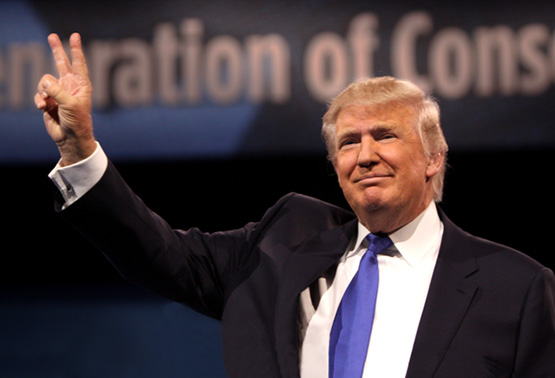
President-elect Donald J. Trump donaldjtrump.com
For the government of British Prime Minister Theresa May, nothing could have sounded sweeter than Donald Trump’s statement that she would be invited for talks in the White House shortly after he is sworn in on Jan. 20 and that he seeks very quickly to reach agreement on a bilateral free trade pact. The effect of the pledge itself, even ahead of its successful implementation, assures the British that the sting of severing ties with the European Union will be greatly offset by new commercial possibilities in the world’s biggest economy; in this way, it strengthens May’s hand enormously as she enters into talks with the E.U. leadership over the detailed terms of what will apparently be a “Hard Brexit.”
Further adding to her leverage with the E.U. were Trump’s remarks suggesting that the E.U. will face stern trade pressure, beginning with Germany and its automobile industry, to do more to manufacture in the U.S. That precisely raises the relative importance of the U.K. market, which the E.U. will otherwise lose if it imposes severe penalties on Britain in negotiations over Brexit.
For the general public’s consumption, Donald Trump used the interview to explain his special affection for Britain, speaking about his Scottish mother’s delight in the Queen and her watching every royal event on television for its unequaled pageantry. But we may expect that Prime Minister May will find there is a bill to pay for the “special relationship” with the U.S. under President Trump.
Rather than the British media’s early speculation that Prime Minister May would be the one to set the misguided Trump straight about the nefarious Vladimir Putin, she may now have to become a leading European advocate for détente with Russia at Trump’s behest. In this connection, British Foreign Minister Boris Johnson’s advice to Congress during his visit to Washington last week that Official Washington “stop demonizing Putin” may well have been a straw in the wind.
For the Germans, Trump also offered a bit of flattery, saying how much he respected their Chancellor Angela Merkel. However, as he went on, he virtually flattened the Iron Lady’s reputation by calling her open-door policy of admitting migrants into Germany and the E.U. a catastrophe. He noted that Merkel’s controversial position had swayed the election results in Britain on Brexit and may lead to the departure of other countries from the E.U. Given his staff’s consultation with Marine Le Pen, a visiting French candidate for the presidency from the right-wing Front National, Trump’s list surely includes France.
Finally, among the sound bites that will be featured in media coverage of the interview, we hear Donald Trump describe NATO as an outdated organization that needs overhaul. However, apart from his reiterated insistence that Member States must pay their fair share, which he claims only Britain and four others from the 28 Member States are currently doing, the interview offers no specifics on what kind structural change, if any, he seeks for NATO. We only hear that NATO has not been prepared to deal with the threat of international terrorism.
Views on Russia
But it was in another area, Trump’s remarks on Russia and the terms he named for possibly lifting sanctions, that we find convincing proof that the President-elect’s approach to foreign affairs is not just the sum of isolated tactical considerations but a complete reinvention of the guiding principles of U.S. foreign policy. What we are witnessing is a shift to a new strategic, geopolitical paradigm.
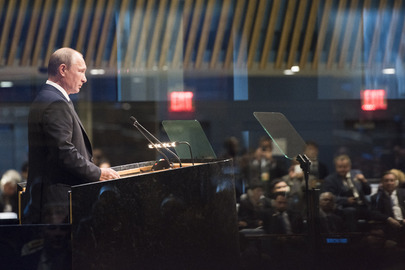
Russian President Vladimir Putin (UN Photo)
In the past couple of decades, going back to the second term of President Bill Clinton, the ideology of neoconservatism with its stress on “democracy promotion” as being the whole of national interest, dictated policy decisions that amounted to the tail wagging the dog. The Baltic States were admitted into NATO in its 2004 enlargement because they wanted it. The decision to station U.S., German and other NATO brigades in Poland and other states along the Russian border taken last July in Warsaw and implemented, in the case of Poland, by U.S. forces in the past several days, was justified by the anxiety of these countries over the possibility of Russian aggression, even though NATO’s action has been highly provocative vis-à-vis Russia and brought the major nuclear powers ever closer to direct confrontation.
In the interview, Trump changed entirely the metrics by which sanctions on Russia would be lifted. Instead of fulfillment of the Minsk Accords over Ukraine’s ethnic Russian Donbas region – which nationalist hardliners in Kiev had the power to block – Trump conditioned the relaxation of sanctions on progress in curbing the nuclear arms race and moving toward significant nuclear disarmament, issues that are fully within the power of the Kremlin to implement.
To be sure, these issues today are more complex than they were in the heyday of disarmament talks. The recent obstacles include the U.S. anti-ballistic missile installations in Poland and Romania, the forward stationing of NATO human and materiel resources in the former Warsaw Pact countries, and the standing invitations to Ukraine and Georgia to enter NATO. So any negotiations between Washington and Moscow will be very complex.
But Trump’s statement shows that he is focused on the big picture, on the triangular relationship between Washington, Moscow and Beijing that he believes to be of vital importance in keeping the peace globally, rather than on some amorphous reliance on expanding democracy globally on the unproven assumption that democracies among themselves are peace-loving.
These elements in Donald Trump’s thinking, quite unexpected in a businessman, bring him very close to the Realism of Richard Nixon and Henry Kissinger, while his setting nuclear disarmament as a key goal, aligns him with Ronald Reagan and — strange to say — with Barack Obama at the very start of his presidency.
If Donald Trump can stave off the jackals from the Western mainstream media and the U.S. foreign policy establishment – a combination that has formed a snarling circle around him even before he takes office – he may have a chance to make historic changes in international relations toward a more peaceful world.
Gilbert Doctorow is the European Coordinator of The American Committee for East West Accord Ltd. His latest book, Does Russia Have a Future? was published in August 2015.
Afghanistan: Obama Sends Marines to Take Part in America’s Longest Ever War
By Peter KORZUN | Strateic Culture Foundation | 16.01.2017
President Obama has decided to send 300 US Marines back into Afghanistan’s Helmand Province – the first time in three years that the US military has been sent into that conflict zone.
Almost all of Helmand’s districts, except for the provincial capital, Lashkar Gah, are either heavily embattled or fully controlled by the Taliban. The province is the leading opium producer in the country.
Despite all the promises to withdraw, 8,400 US troops will remain in Afghanistan as the president leaves office on January 20. If the US pulls out, the Afghan government will hardly be able to hold power.
American forces have been engaged in combat action there for over 15 years – the longest war waged by the United States – without end to hostilities in sight.
Around 200 NATO soldiers, mainly Italians, have also been deployed to Afghanistan’s volatile western province of Farah after attempts by Taliban fighters in recent months to overrun its capital city.
About a third of the country – more territory than at any time since 2001 – is either under insurgent control or in risk of coming under it. The Taliban forces have challenged Afghan security forces for a number of key cities in 2016. With fighting under way in 24 of the 34 provinces, the government’s ability to control the country is questioned.
Last December, General John Nicholson, the chief US and NATO commander in Afghanistan, said the government directly controls about 64 percent of the population of 30 million, down slightly from 68 percent earlier in 2016.
According to Robert Grenier who served as CIA’s top counter-terrorism official and was the station chief in Islamabad, Pakistan, from 1999 to 2002, there are significant parts of the country, particularly in the south and the east, where it seems inevitable that the Taliban will further consolidate their control. The Afghan forces had more than 15,000 casualties in the first eight months of 2016, including more than 5,500 deaths.
The administration in Kabul lacks unity while the clout of regional leaders and warlords is growing. The UN says 7 million people in Afghanistan need aid. 2.2 million of them suffer from malnutrition. Poverty and unemployment prompt young Afghans to join extremist groups.
After the Russian forces in Syria struck the oil infrastructure under the control of Islamic State (IS), the issue of controlling heroin routes in Afghanistan became even more important for the group. According to the Russian Federal Drug Control Service (FSKN), the IS militants make $1 billion a year from Afghan heroin. The possibility of alliance between the Taliban and IS is a real nightmare.
Afghan officials have approached Russia asking it to resume cooperation. Its representatives believe that the Shanghai Cooperation Organization (SCO) has a role to play in managing the crisis in the country. NATO officials have also made statements in support of resuming Russia-NATO cooperation in Afghanistan. The cooperation was suspended after Crimea became part of the Russian Federation in 2014.
Moscow allowed land transit though its territory of non-military freight from NATO and non-NATO ISAF (International Security Assistance Force) countries. NATO used the transit center near Ulyanovsk. The parties implemented a program of common training for the prevention of drug trade in Central Asia.
Russia sold military equipment and ammunition to support the NATO operations in Afghanistan. For instance, in 2010 NATO bought 31 Russian Mi-17 helicopters to refurbish them for the Afghan army.
Against the background of ballyhoo raised in the United States regarding the “threat” coming from Moscow, Washington has partially lifted sanctions against Russian cooperation with Afghanistan on helicopter maintenance. It was not the only time. The US has broken its own sanctions regime allowing the acquisition of Russian technology for its space program.
The Afghan government badly needs more Russian helicopters to repel Taliban and IS attacks. In 2016, it formally asked the Russian government to start the deliveries.
If Russia delivers its aviation equipment to Afghanistan, it will need to train Afghan personnel. Formally, that’s what US and NATO are doing in Afghanistan now- they are in the country on advising and training missions. In fact, it will mean the resumption of cooperation while carrying out the same mission.
Russian President Vladimir Putin has recently expressed concern over the situation in Afghanistan and called for taking urgent steps to tackle the problem. The instability in that country spreads to Central Asia posing a direct threat to Russia’s security. Roughly, 2,000 militants operating in the Afghan northern provinces come from the countries of the post-Soviet space.
There is a growing risk of extremist attacks on the states allied with Moscow. Fighters with combat experience received in Syria have already been spotted in the Uzbek Fergana Valley. The infiltration of Islamic State (IS) into Afghanistan threatens the Russian North Caucasus and the Volga region. Besides, Afghan heroin kills 25,000 Russians annually.
Afghanistan is a burning issue – a problem that only an international effort can solve. This is an issue of common interest for Russia and the Alliance. The situation in the country could be discussed within the framework of Russia-NATO Council. On January 4, the Russian Foreign Ministry made a very important statement saying Russia was ready to restore the relations with NATO. Afghanistan could become a starting point on the way of rebuilding the broken relationship.
Trump: US may lift Russian sanctions in exchange for nuclear reduction deal – Times, Bild
RT | January 16, 2017
US President-elect Donald Trump has hinted that the US could lift its sanctions against Russia, called Merkel’s migrant policy “a catastrophic mistake” and branded NATO “obsolete” in a new interview for The Times and Bild.
The interview was given in the President-elect’s office in Trump Tower, just days before his inauguration.
Trump was quite straightforward in speaking out in favor of some common ground with Moscow.
“They have sanctions on Russia — let’s see if we can make some good deals with Russia. For one thing, I think nuclear weapons should be way down and reduced very substantially,” Trump said to the two media outlets.
At the same time, sanctions aren’t affecting Russia well, [and] “something can happen that a lot of people are going to benefit,” he added.
Moving on to other topical issues, Trump slammed Angela Merkel’s migrant policy as “a catastrophic mistake,” saying that Germany shouldn’t have taken “all these illegals.”
“Nobody even knows where they come from,” Trump added.
Trump wasn’t optimistic about the fate of the EU, either, saying that there is basically one country that benefits from staying in the bloc.
“You look at the European Union and it’s Germany. Basically a vehicle for Germany. That’s why I thought the UK was so smart in getting out.”
Trump thinks it was the refugee influx that was “the final straw that broke the camel’s back” for the EU.
“I believe others will leave. I do think keeping it together is not going to be as easy as a lot of people think. And I think that if refugees keep pouring into different parts of Europe, it’s going to be very hard to keep it together because people are angry about it,” he said.
Another block that, according to Trump, has long outlived its usefulness, is NATO, as it is “obsolete,”“was designed many years ago” and some of its members aren’t paying in enough.
“The countries aren’t paying their fair share so we’re supposed to protect countries. There’s five countries that are paying what they’re supposed to. Five. It’s not much,” Trump said.
US policies came under fire afterward, with Trump branding the US-Iran nuclear agreement “one of the dumbest deals” he’s ever seen, and then calling the invasion of Iraq “possibly the worst decision, ever made in the history of our country. It’s like throwing rocks into a beehive.”
However, there was at least one thing Trump was very enthusiastic about – and that’s Brexit.
Citing the fall in the British pound, Trump said “business is unbelievable in a lot of parts of the UK, as you know. I think Brexit is going to end up being a great thing.”
Also, the president-elect said he was planning to make a trade deal with the UK “very quickly.”
“I’m a big fan of the UK, we’re going to work very hard to get it done properly.”
Last but not least, Trump was asked about his social media presence and whether he would tune it down after the inauguration. In short, the answer is no.
“@realDonaldTrump I think, I’ll keep it. I’ve got 46 million people right now — [on] including Facebook, Twitter and Instagram, so I’d rather just let that build up.”
And the tweeting is here to stay, the president-elect said.
“I thought I’d do less of it, but I’m covered so dishonestly by the press that I can put out Twitter – and it’s not 140, it’s now 280 – and as soon as I tweet it out — this morning on television, Fox — ‘Donald Trump, we have breaking news.’”
Read more:
Trump ready to look at currently ‘terrible’ US-Russia relations with ‘fresh eyes’ – Pence
Danish minister alleges ‘Russia ready to attack hospitals, infrastructure & electrical supply’
RT | January 13, 2017
Denmark’s Defense Minister Claus Hjort Frederiksen has launched a series of wide-ranging and grave accusations against Moscow, saying that it presents a “direct, very frightening and serious threat” against his homeland.
“We need to make clear to ourselves in Denmark that we are in danger, and we need to act upon this,” the center-right politician told the Danish Berlingske newspaper.
Frederiksen was asked to expound on his brief in the first extensive interview since the 69-year-old was appointed to his post in November last year. Instead, the politician, who previously served as minister of finance during two stints, spoke almost exclusively about Russia.
“State-supported Russian hacker groups are ready to attack hospitals, infrastructure and the electrical supply by breaking into computer systems and creating a mess of notices and treatments within the health system,” said Frederiksen, referring to a report published by the country’s intelligence agency last month, as well as conversations with other Western politicians and security officials.
And why would Russia target civilian infrastructure in a small country with which it shares no border? “To spread fear and insecurity among the population and paralyze our democracy.”
“It’s a way to destabilize our countries and democracies in a very physical and tangible way, and this places an urgent demand on our resources to defend ourselves against such attacks,” said Frederiksen.
Frederiksen’s accusations echo those of US intelligence officials, who published a report last week, alleging that Russia ordered hackers to meddle in the US election, specifically by releasing emails related to Democratic candidate Hillary Clinton. The Kremlin has repeatedly denied charges of interference.
‘We must spend more on NATO to stop Russians from trying anything’
The politician also believes that the Iskander-M missiles that Russia has deployed in its westernmost exclave of Kaliningrad pose an immediate danger to Denmark.
“We can confirm that the Russians are right now installing new missiles in Kaliningrad that can reach Copenhagen. That is of course a major risk,” said Frederiksen.
Moscow says the missiles are a response to the continuing unrolling of the US missile defense shield across Eastern Europe, and has beefed up its other armaments in the region, following an increase in NATO presence on the Russian border. The Western alliance is seeking to limit Moscow’s purported ambitions in the region through Operation Atlantic Resolve, commenced following the breakout of the conflict in Ukraine in 2014, and comprises the transfer of troops and modernized equipment to Eastern Europe.
Frederiksen also said that Russia’s “increased military activity” in the Arctic, in which both Moscow and Copenhagen have territorial claims – the latter through Greenland – were another potential source of conflict, which must require “extensive monitoring.”
As a solution, Frederiksen advocates increased military spending, though he declined to specify if Denmark intended to hit the NATO target of 2 percent of GDP being spent on defense (currently it spends 1.17 percent).
“NATO must be our common defense and our deterrent. We have to show the strength that it takes, and thus spend the money it takes to prevent the Russians from trying anything. That is basically what is the essence of our thinking,” said Frederiksen.
As a symbolic gesture Frederiksen emphasized the importance of the deployment of 200 Danish soldiers as part of the new 5,000-strong rapid response force in Eastern Europe next year.
“It is not of course because we think that the 200 Danish soldiers can stop the Russian army. But they should know that the territorial defense of the immediate area begins there and crossing the line, then the common solidarity in NATO will take effect,” said Frederiksen.
The newspaper said that the Russian embassy refused to comment on the accusations.
READ MORE:
‘Witch hunt’: Kremlin slams ODNI report claiming Russia hacked US elections
Over 1,000 soldiers to make up NATO’s new international battalion in Latvia
Europe’s Mixed Feelings About Trump
By Andrew Spannaus | Consortium News | January 9, 2017
Few in Europe expected Donald Trump to win the U.S. Presidential elections last November. The picture painted by the media and political class was convincing: despite the pent-up anger being expressed through protest candidates, Hillary Clinton was headed towards a decisive victory, as the majority of Americans couldn’t stomach someone as outrageous and unconventional as the reality TV star turned politician.
That’s not what happened, of course, as Trump earned an Electoral College victory by winning enough votes in key Midwestern states that have suffered from a loss of manufacturing jobs in recent decades. His victory has shaken the Western world to its core, making it clear that business as usual is no longer possible in terms of both economic and foreign policy.
In Europe the signs of the anti-establishment sentiment that dominated the U.S. election campaign have been present for some time. The most obvious example was the Brexit vote in June 2016, in which the population of the United Kingdom voted to leave the European Union. But protest movements have actually been on the rise for several years now, driven by the same basic issues as in the United States: a sense of economic and social insecurity – accompanied by a rise in anti-immigrant sentiment – driven by an economic policy that has made life harder for the middle class while enriching those at the top.
The growing anger against the institutions of the European Union, considered the main culprit for the failed economic policies, has made the élites desperate for some sense of stability, to help them weather the storm. As a result, a potential Clinton victory was openly welcomed by most political leaders.
After Trump’s victory, there were numerous press reports of worries among European governments regarding the incoming Administration’s foreign policy. Trump is understandably seen as unpredictable, but the key point revolves around his attitude towards Russia, the same issue that is currently dominating the institutional fight in the United States right now.
Just after the election The New York Times ran a story entitled “For Europe, Trump’s Election is a Terrifying Disaster,” suggesting that under the new President, the United States may embrace authoritarianism and no longer defend democracy. It was a theme that other mainstream news outlets also pushed.
On Nov. 17, The Associated Press wrote: “NATO members and other European countries are worried that under Trump, the U.S. will stop trying to police Russia’s behavior the way it has under Obama. Most concerning to U.S. allies are Trump’s effusive comments about Russian President Vladimir Putin, one of the first world leaders he spoke to after winning the election.”
Seeing Benefits
While it is true that former Soviet bloc countries such as Poland and Latvia would prefer to maintain the current hardline position towards Russia, the reality is that the largest E.U. members – France, Italy and Germany – actually stand to benefit from the diplomatic approach promised by President-elect Trump.
This doesn’t mean they supported his candidacy, though. First of all, they were told that he couldn’t win; and second, a Trump victory would seem to encourage the anti-establishment movements already on the rise in Europe, which threaten both the E.U.’s status quo and the jobs of key leaders, including German Chancellor Angela Merkel.
Hillary Clinton was seen as representing continuity, and for the many politicians who seek to curry favor with the transatlantic elites, it was best to show their Clinton bona fides in view of the upcoming change in power. For example, Italian Prime Minister Matteo Renzi – now out of office due to a stinging anti-establishment vote in a referendum on proposed constitutional reforms – repeatedly broke diplomatic protocol and publicly criticized Trump during the election campaign.
However, over the course of 2016 it became clear that Clinton’s foreign policy was far more aggressive than Barack Obama’s, as the President had actually been seeking collaboration with Russia for several years on issues, such as constraining Iran’s nuclear program and negotiating an end to the Syrian conflict, despite heavy opposition from within his own administration.
Indeed Trump’s openness towards Vladimir Putin seems even more heretical now because most have chosen to forget that Obama himself had sought close cooperation with Putin on several key issues. For instance, Secretary of State John Kerry’s diplomacy last year on Syria almost succeeded in implementing intelligence sharing and joint airstrikes by the two powers, before being effectively thwarted by the Pentagon and other U.S. institutional opposition in September 2016.
Now Obama seems to have forgotten his former position, and decided to fully toe the anti-Russian line, apparently convinced that he must do his part in the campaign to weaken Trump and prevent him from being an effective president, even in areas where their positions are not far apart.
It is possible that Trump will accelerate the timid attempts of his predecessor to abandon the “regime change” policies that have led to numerous disasters in the Middle East, and heightened tensions with Russia. The President-elect seems determined to pursue this path more openly than Obama, who worked slowly towards this goal while seeking to placate his critics with more bellicose language in his public statements.
Doubts About the U.S. Hardline
Although European nations have been heavily involved in recent regime change adventures (the U.K. in Iraq and France in Libya, for example), there is a widespread preference in Western Europe for avoiding further conflict with Russia. The U.S. position on the events in Ukraine, for example, is often seen as one-sided, and the notion of NATO expansion to Russia’s borders seems like an unnecessary and dangerous provocation that can only makes things worse.
Western sanctions against Russia, and Russia’s retaliatory sanctions on food imports, have cost European economies over $100 billion in trade, according to some estimates, hitting the agricultural sector especially hard. In addition, Russia has been concluding more economic agreements with countries such as China, leading to fears of permanent consequences for Europe.
For this reason, France, Italy and Germany have all repeatedly stated their desire to reduce or remove the sanctions altogether. The hope is that an agreement can be reached to defuse tensions in Ukraine, based on support for the Kiev government but broad autonomy for the ethnic Russian areas in eastern Ukraine.
Despite this desire to head off further conflict, European governments are usually careful not to openly break with U.S. policy; they are key members of NATO and have no desire to distance themselves from the leader of the alliance. However, if Donald Trump follows through on his stated goal of working “together with Russia,” the countries of Western Europe in particular may welcome the opportunity to advance their own economic interests and avoid finding themselves in the middle of a new Cold War.
Andrew Spannaus is a freelance journalist and strategic analyst based in Milan, Italy. He is the founder of Transatlantico.info, that provides news, analysis and consulting to Italian institutions and businesses. His book on the U.S. elections Perchè vince Trump (Why Trump is Winning) was published in June 2016.
‘Tanks do not create peace’: German politicians on NATO’s buildup at Russian borders
RT | January 9, 2017
German politicians have raised concern about thousands of NATO troops and equipment, along with hundreds of tanks, that have been sent to Poland and countries bordering Russia in what has been touted by Washington as “defense against Russian aggression.”
“It does not help us if tanks will be going up and down on both sides of the border,” Brandenburg’s leader and SPD party member, Dietmar Woidke, told RBB. “I hope everyone will keep calm.”
“I believe that despite all the difficulties, we should seek dialogue with Russia,” he added on Thursday, warning that relations with Moscow could worsen even further.
Germany’s ruling CDU party called Woidke’s standpoint “strange,” with parliamentary faction leader Ingo Senftleben saying the operation “takes place within the framework of the contractual arrangements of NATO and at the explicit request of Poland.”
NATO’s buildup in Europe also came under fire from Germany’s Die Linke party. “Tanks do not create peace, anywhere,” Christian Görke stressed in a statement, RBB reported.
Tobias Pflueger of Die Linke slammed the stationing of US tanks and military equipment in Poland, saying this will trigger an arms race and lead to an “escalation in relations with Russia,” Focus Online reported.
Washington says the shipload of American military hardware that has recently arrived in the northern German port of Bremerhaven is meant to boost its commitment to its allies against a perceived Russian threat, and ensure that Europe remains “whole, free, prosperous, and at peace.”
Crowds of people marched through Bremerhaven on Saturday to protest the deployment and transport of NATO troops and weapons through the city. Hundreds of American tanks, trucks, and other military equipment bound for Poland, said to be the largest arms shipment since the fall of the Soviet Union, arrived at the German port on Friday to be transferred to Eastern Europe.
The protesters marched through the city holding signs and banners reading, “No NATO deployments! End the militaristic march against Russia!” and “Out of NATO.”
“There is, starting from Washington DC, a major push to do everything possible in the next two weeks to create unending hostility between the West and Russia that can’t be undone by Donald Trump or anyone else. Even at the risk of open violence, rather than simply Cold War hostility.
“This is highly preferable to weapons profiteers as against actual peace breaking out, which is their greatest fear,” author and journalist David Swanson told RT on Monday.
“It is clearly an escalation that involves numerous facets including propaganda about Russian crimes in the US media; that includes shipping troops and equipment to the border; that includes expanding NATO and pushing hard on other NATO members to join in this escalation where you have serious protests in Germany by those who want peace [and are] against sending Germans or Americans from Germany eastward, as they should. There are not enough of us in the US similarly protesting,” he added.
Over the last few days, some 2,800 pieces of military hardware and 4,000 troops have arrived at the port in Bremerhaven. The new forces will first be moved to Poland, where they will take part in military drills at the end of the month. They will later be deployed across seven countries, including the Baltic states, Bulgaria, Romania, and Germany. A headquarters unit will be stationed in Germany.
The delivery of US Abrams tanks, Paladin artillery, and Bradley fighting vehicles marks a new phase of America’s continuous presence in Europe, which will now be based on a nine-month rotation.
“Let me be clear: This is one part of our efforts to deter Russian aggression, ensure the territorial integrity of our allies, and maintain a Europe that is whole, free, prosperous, and at peace,” US Air Force Lieutenant General Timothy M. Ray declared on Sunday, as quoted by Reuters.
Operation Atlantic Resolve, a large-scale military venture officially touted by Washington as a demonstration of “continued US commitment to the collective security of Europe,” began in April of 2014 after Crimea voted to split from coup-stricken Ukraine and rejoin Russia in a referendum.
Read more:
100’s of US tanks, heavy equipment flows into Europe to counter ‘Russian aggression’
The Utter Stupidity of the New Cold War
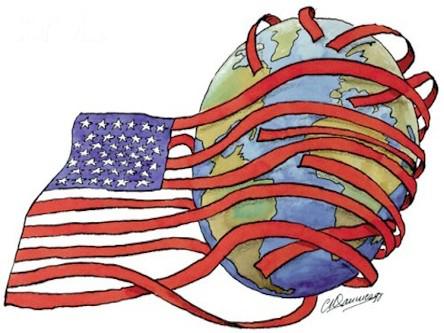
By Gary Leupp | Dissident Voice | January 7, 2017
It seems so strange, twenty-seven years after the fall of the Berlin Wall, to be living through a new Cold War with (as it happens, capitalist) Russia.
The Russian president is attacked by the U.S. political class and media as they never attacked Soviet leaders; he is personally vilified as a corrupt, venal dictator, who arrests or assassinates political opponents and dissident journalists, and is hell-bent on the restoration of the USSR.
(The latter claim rests largely on Vladimir Putin’s comment that the dissolution of the Soviet Union was a “catastrophe” and “tragedy” — which in many respects it was. The press chooses to ignore his comment that “Anyone who does not miss the Soviet Union has no heart, while anyone who wants to restore it has no brain.” It conflicts with the simple talking-point that Putin misses the imperial Russia of the tsars if not the commissars and, burning with resentment over the west’s triumph in the Cold War, plans to exact revenge through wars of aggression and territorial expansion.)
The U.S. media following its State Department script depicts Russia as an expansionist power. That it can do so, so successfully, such that even rather progressive people — such as those appalled by Trump’s victory who feel inclined to blame it on an external force — believe it, is testimony to the lingering power and utility of the Cold War mindset.
The military brass keep reminding us: We are up against an existential threat! One wants to say that this — obviously — makes no sense! Russia is twice the size of the U.S. with half its population. Its foreign bases can be counted on two hands. The U.S. has 800 or so bases abroad.
Russia’s military budget is 14% of the U.S. figure. It does not claim to be the exceptional nation appointed by God to preserve “security” on its terms anywhere on the globe. Since the dissolution of the USSR in 1991, the U.S. has waged war (sometimes creating new client-states) in Bosnia (1994-5), Serbia (1999), Afghanistan (2001- ), Iraq (2003- ), Libya (2011), and Syria (2014- ), while raining down drone strikes from Pakistan to Yemen to North Africa. These wars-based-on-lies have produced hundreds of thousands of civilian deaths, millions of refugees, and general ongoing catastrophe throughout the “Greater Middle East.” There is no understating their evil.
The U.S. heads an expanding military alliance formed in 1949 to confront the Soviet Union and global communism in general. Its raison d’être has been dead for many years. Yet it has expanded from 16 to 28 members since 1999, and new members Estonia and Latvia share borders with Russia.
(Imagine the Warsaw Pact expanding to include Mexico. But no, the Warsaw Pact of the USSR and six European allies was dissolved 26 years ago in the idealistic expectation that NATO would follow in a new era of cooperation and peace.)
And this NATO alliance, in theory designed to defend the North Atlantic, was only first deployed after the long (and peaceful) first Cold War, in what had been neutral Yugoslavia (never a member of either the Warsaw Pact nor NATO), Afghanistan (over 3000 miles from the North Atlantic), and the North African country of Libya. Last summer NATO held its most massive military drills since the collapse of the Soviet Union, involving 31,000 troops in Poland, rehearsing war with Russia. (The German foreign minister Frank-Walter Steinmeier actually criticized this exercise as “warmongering.”)
Alliance officials expressed outrage when Russia responded to the warmongering by placing a new S-400 surface-to-air missiles and nuclear-capable Iskander system on its territory of Kaliningrad between Poland and Lithuania on the Baltic coast. But Russia has, in fact, been comparatively passive in a military sense during this period.
In 1999, as NATO was about to occupy the Serbian province of Kosovo (soon to be proclaimed an independent country, in violation of international law), nearby Russian peacekeepers raced to the airport in Pristina, Kosovo, to secure it and ensure a Russian role in the Serbian province’s future. It was a bold move that could have provoked a NATO-Russian clash. But the British officer on the ground wisely refused an order from Gen. Wesley Clark to block the Russian move, declaring he would not start World War III for Gen. Clark.
This, recall, was after Bill Clinton’s secretary of state, Madeleine Albright (remember, the Hillary shill who said there’s a special place in hell reserved for women who don’t vote for women) presented to the Russian and Serbian negotiators at Rambouillet a plan for NATO occupation of not just Kosovo but all Serbia. It was a ridiculous demand, rejected by the Serbs and Russians, but depicted by unofficial State Department spokesperson and warmonger Christiane Amanpour as the “will of the international community.” As though Russia was not a member of the international community!
This Pristina airport operation was largely a symbolic challenge to U.S. hegemony over the former Yugoslavia, a statement of protest that should have been taken seriously at the time.
In any case, the new Russian leader Putin was gracious after the 9/11 attacks in 2001, even offering NATO a military transport corridor through Russia to Afghanistan (closed in 2015). He was thanked by George W. Bush with the expansion of NATO by seven more members in 2004. (The U.S. press made light of this extraordinary geopolitical development; it saw and continues to see the expansion of NATO as no more problematic than the expansion of the UN or the European Union.) Then in April 2008 NATO announced that Georgia would be among the next members accepted into the alliance.
Soon the crazy Georgian president Mikhail Saakashvili, emboldened by the promise of near-term membership, provoked a war with the breakaway republic of South Ossetia, which had never accepted inclusion of the new Georgian state established upon the dissolution of the Georgian Soviet Socialist Republic in 1991. The Ossetians, fearing resurgent Georgian nationalism, had sought union with the Russian Federation. So had the people of Abkhazia.
The two “frozen conflicts,” between the Georgian state and these peoples, had been frozen due to the deployment of Russian and Georgian peacekeepers. Russia had not recognized these regions as independent states nor agreed to their inclusion in the Russian Federation. But when Russian soldiers died in the Georgian attack in August, Russia responded with a brief punishing invasion. It then recognized the two new states of South Ossetia and Abkhazia (breakaway states in what had been the Georgian SSR) six months after the U.S. recognized Kosovo.
(Saakashvili, in case you’re interested, was voted out of power, disgraced, accused of economic crimes, and deprived of his Georgian citizenship. After a brief stint at the Fletcher School of International Law and Diplomacy at Tufts University — of which I as a Tufts faculty member feel deeply ashamed — he was appointed as governor of Odessa in Ukraine by the pro-NATO regime empowered by the U.S.-backed coup of February 22, 2014.)
Sen. John McCain proclaimed in 2008: “We are all Georgians now,” and advocated U.S. military aid to the Georgian regime. An advocate of war as a rule, McCain then became a big proponent of regime change in Ukraine to allow for that country’s entry into NATO. Neocons in the State Department including most importantly McCain buddy Victoria Nuland, boasted of spending $5 billion in support of “the Ukrainian people’s European aspirations” (meaning: the desire of many Ukrainians in the western part of the country to join the European Union — risking, although they perhaps do not realize it, a reduction in their standard of living under a Greek-style austerity program — to be followed by NATO membership, tightening the military noose around Russia).
The Ukrainian president opted out in favor of a generous Russian aid package. That decision — to deny these “European aspirations” — was used to justify the coup.
But look at it from a Russian point of view. Just look at this map, of the expanding NATO alliance, and imagine it spreading to include that vast country (the largest in Europe, actually) between Russia to the east and Poland to the west, bordering the Black Sea to the south. The NATO countries at present are shown in dark blue, Ukraine and Georgia in green. Imagine those countries’ inclusion.
And imagine NATO demanding that Russia vacate its Sevastopol naval facilities, which have been Russian since 1783, turning them over to the (to repeat: anti-Russian) alliance. How can anyone understand the situation in Ukraine without grasping this basic history?
The Russians denounced the coup against President Viktor Yanukovych (democratically elected — if it matters — in 2010), which was abetted by neo-fascists and marked from the outset by an ugly Russophobic character encouraged by the U.S. State Department. The majority population in the east of the country, inhabited by Russian-speaking ethnic Russians and not even part of Ukraine until 1917, also denounced the coup and refused to accept the unconstitutional regime that assumed power after February 22.
When such people rejected the new government, and declared their autonomy, the Ukrainian army was sent in to repress them but failed, embarrassingly, when the troops confronted by angry babushkas turned back. The regime since has relied on the neo-fascist Azov Battalion to harass secessionists in what has become a new “frozen conflict.”
Russia has no doubt assisted the secessionists while refusing to annex Ukrainian territory, urging a federal system for the country to be negotiated by the parties. Russian families straddle the Russian-Ukrainian border. There are many Afghan War veterans in both countries. The Soviet munitions industry integrated Russian and Ukrainian elements. One must assume there are more than enough Russians angry about such atrocities as the May 2014 killing of 42 ethnic Russian government opponents in Odessa to bolster the Donbas volunteers.
But there is little evidence (apart from a handful of reports about convoys of dozens of “unmarked military vehicles” from Russia in late 2014) for a Russian “invasion” of Ukraine. And the annexation of Crimea (meaning, its restoration to its 1954 status as Russian territory) following a credible referendum did not require any “invasion” since there were already 38,000 Russian troops stationed there. All they had to do was to secure government buildings, and give Ukrainian soldiers the option of leaving or joining the Russian military. (A lot of Ukrainian soldiers opted to stay and accept Russian citizenship.)
Still, these two incidents — the brief 2008 war in Georgia, and Moscow’s (measured) response to the Ukrainian coup since 2014 — have been presented as evidence of a general project to disrupt the world order by military expansion, requiring a firm U.S. response. The entirety of the cable news anchor class embraces this narrative.
But they are blind fools. Who has in this young century disrupted world order more than the U.S., wrecking whole countries, slaughtering hundreds of thousands of innocents, provoking more outrage through grotesquely documented torture, generating new terror groups, and flooding Europe with refugees who include some determined to sow chaos and terror in European cities? How can any rational person with any awareness of history since 1991 conclude that Russia is the aggressive party?
And yet, this is the conventional wisdom. I doubt you can get a TV anchor job if you question it. The teleprompter will refer routinely to Putin’s aggression and Russian expansion and the need for any mature presidential candidate to respect the time-honored tradition of supporting NATO no matter what. And now the anchor is expected to repeat that all 17 U.S. intelligence services have concluded that Vladimir Putin interfered in the U.S. presidential election.
Since there is zero evidence for this, one must conclude that the Democratic losers dipped into the reliable grab bag of scapegoats and posited that Russia and Putin in particular must have hacked the DNC in order to — through the revelation of primary sources of unquestionable validity, revealing the DNC’s determination to make Clinton president, while sabotaging Sanders and promoting (through their media surrogates) Donald Trump as the Republican candidate — undermine Clinton’s legitimacy.
All kinds of liberals, including Sanders’ best surrogates like Nina Turner, are totally on board the Putin vilification campaign. It is sad and disturbing that so many progressive people are so willing to jump on the new Cold War bandwagon. It is as though they have learned nothing from history but are positively eager, in their fear and rage, to relive the McCarthy era.
But the bottom line is: U.S. Russophobia does not rest on reason, judgment, knowledge of recent history and the ability to make rational comparisons. It rests on religious-like assumptions of “American exceptionalism” and in particular the right of the U.S. to expand militarily at Russia’s expense — as an obvious good in itself, rather than a distinct, obvious evil threatening World War III.
The hawks in Congress — bipartisan, amoral, ignorant, knee-jerk Israel apologists, opportunist scum — are determined to dissuade the president-elect (bile rises in my throat as I use that term, but it’s true that he’s that, technically) from any significant rapprochement with Russia. (Heavens, they must be horrified at the possibility that Trump follows Kissinger’s reported advice and recognizes the Russian annexation of Crimea!) They want to so embarrass him with the charge of being (as Hillary accused him of being during the campaign) Putin’s “puppet” that he backs off from his vague promise to “get along” with Russia.
They don’t want to get along with Russia. They want more NATO expansion, more confrontation. They are furious with Russian-Syrian victories over U.S-backed, al-Qaeda-led forces in Syria, especially the liberation of Aleppo that the U.S. media (1) does not cover having no reporters on the ground, and little interest since events in Syria so powerfully challenge the State Department’s talking points that shape U.S. reporting, (2) misreports systematically, as the tragic triumph of the evil, Assad’s victory over an imaginary heroic opposition, and (3) sees the strengthening of the position of the Syrian stats as an indication of Russia’s reemergence as a superpower. (This they they cannot accept, as virtually a matter of religious conviction; the U.S. in official doctrine must maintain “full spectrum dominance” over the world and prohibit the emergence of any possible competitor, forever.)
*****
The first Cold War was based on the western capitalists’ fear of socialist expansion. It was based on the understanding that the USSR had defeated the Nazis, had extraordinary prestige in the world, and was the center for a time of the expanding global communist movement. It was based on the fear that more and more countries would achieve independence from western imperialism, denying investors their rights to dominate world markets. It had an ideological content. This one does not. Russia and the U.S. are equally committed to capitalism and neoliberal ideology. Their conflict is of the same nature as the U.S. conflict with Germany in the early 20th century. The Kaiser’s Germany was at least as “democratic” as the U.S.; the system was not the issue. It was just jockeying for power, and as it happened, the U.S. intervening in World War I belatedly, after everybody else was exhausted, cleaned up. In World War II in Europe, the U.S. having hesitated to invade the continent despite repeated Soviet appeals to do so, responded to the fall of Berlin to Soviet forces by rushing token forces to the city to claim joint credit.
And then it wound up, after the war, establishing its hegemony over most of Europe — much, much more of Europe than became the Soviet-dominated zone, which has since with the Warsaw Pact evaporated. Russia is a truncated, weakened version of its former self. It is not threatening the U.S. in any of the ways the U.S. is threatening itself. It is not expanding a military alliance. It is not holding huge military exercises on the U.S. border. It is not destroying the Middle East through regime-change efforts justified to the American people by sheer misinformation. In September 2015 Putin asked the U.S., at the United Nations: “Do you realize what you’ve done?”
Unfortunately the people of this country are not educated, by their schools, press or even their favorite websites to realize what has been done, how truly horrible it is, and how based it all is on lies. Fake news is the order of the day.
Up is down, black is white, Russia is the aggressor, the U.S. is the victim. The new president must be a team-player, and for God’s sake, understand that Putin is today’s Hitler, and if Trump wants to get along with him, he will have to become a team-player embracing this most basic of political truths in this particular imperialist country: Russia (with its nukes, which are equally matched with the U.S. stockpile) is the enemy, whose every action must be skewed to inflame anti-Russian feeling, as the normative default sentiment towards this NATO-encircled, sanction-ridden, non-threatening nation, under what seems by comparison a cautious, rational leadership?
*****
CNN’s horrible “chief national correspondent” John King (former husband of equally horrid Dana Bash, CNN’s “chief political correspondent”) just posed the question, with an air of aggressive irritation: “Who does Donald Trump respect more, the U.S. intelligence agencies, or the guy who started Wikileaks [Assange]?”
It’s a demand for the Trump camp to buy the Russian blame game, or get smeared as a fellow-traveler with international whistle-blowers keen on exposing the multiple crimes of U.S. imperialism.
So the real question is: Will Trump play ball, and credit the “intelligence community” that generates “intelligence products” on demand, or brush aside the war hawks’ drive for a showdown with Putin’s Russia? Will the second Cold War peter out coolly, or culminate in the conflagration that “Mutually Assured Destruction” (MAD) was supposed to render impossible?
The latter would be utterly stupid. But stupid people — or wise people, cynically exploiting others’ stupidity — are shaping opinion every day, and have been since the first Cold War, based like this one on innumerable lies.
Gary Leupp is a Professor of History at Tufts University, and author of numerous works on Japanese history. He can be reached at: gleupp@granite.tufts.edu.
Germans protest NATO troop deployment
Press TV – Jan 8, 2017
Scores of people have staged a protest in a northern German port city against the deployment and transport of NATO troops and weapons through the city.
The protest was held in the port city of Bremerhaven on Saturday.
US military hardware, including 87 tanks and 144 Bradley fighting vehicles, were docked in the port city a day earlier for eventual transfer to NATO member countries in Eastern Europe to enhance what was described as “deterrence against possible Russian aggression.”
The protesters marched through the city, holding signs and banners that read, “No NATO deployments! End the militaristic march against Russia!” and “Out of NATO.”
“I am here to explain peace to Russians, because I am afraid of new wars… and this big maneuver is one that quite scares me, and I am here to speak against this,” a protester said.
The deployment by the US military, which also includes the mobilization of 4,000 troops, is aimed at shoring up NATO’s “Operation Atlantic Resolve,” which entails military buildup in Poland and the Baltic countries to counter perceived Russian aggression. US Defense Secretary Ashton Carter announced the move last year, declaring that the force would take part in regular military drills across the region with NATO allies.
Russia has repeatedly voiced concern about the US-led alliance’s military build-up near its borders. In response to NATO’s aggressive moves, Russia has beefed up its southwestern military capacity.
NATO has suspended all practical cooperation with Russia as part of efforts by the US, Europe, and their allies to exert pressure on the Kremlin following the Crimean Peninsula’s separation from Ukraine and adhesion to Russia. In 2014, the majority ethnic Russians in Crimea voted to join the Russian Federation in a referendum not sanctioned by the Ukrainian authorities.
Western countries have been fearful of a repeat of that scenario in other countries, and have sought to boost their defenses under NATO’s umbrella.
Featured Video

Prof Seyed Marandi: Will the US Collapse the Global Economy?
or go to
Aletho News Archives – Video-Images
From the Archives
The toxic legacy of nuclear weapons testing serves as a stark warning of the danger these weapons pose
By Scott Ritter | RT | March 11, 2021
Millions of people suffer and die from the effects of radiation exposure from decades of nuclear weapons testing. Their experience should give serious pause to those who continue to embrace the viability of a nuclear deterrent. … continue
Blog Roll
 Aletho News
- The Starmer legacy the establishment media won’t tell you: Celebrity sex crimes, imprisoning Assange and torture terror
- 13-18 DAYS: The PRACTICAL DIESEL BUFFER… Does It Preclude Bombing Iran?
- Prof Seyed Marandi: WILL the US COLLAPSE the GLOBAL ECONOMY?
- Larry Sanger Said Wikipedia Punishes Dissent. Then It Banned Him.
- How Darializa Avila Chevalier Is Different From Other Elected Progressives
- Israel Declares 464 Dunams in Sinjil as “State Land”
- Strait of Hormuz as strategic red line: Why Iran must confront Oman’s corridor plan and Trump’s threats
- House to vote on proposal ending $3.3bln in military aid to ‘Israel’
- Mission unaccomplished – Part I: America failed to achieve every war objective against Iran
- Iranian Victory – Gulf States Creating ‘Regional Security Framework’ With Iran
- If Americans Knew
- Gaza ceasefire talks back to square one as Israel changes the rules – Daily Update
- The NDAA Proposed Merger of the U.S. and Israeli Military is Strategically Unwise and Inherently Unconstitutional
- Victories by Pro-Palestinian Democrats Show the Party’s Shift on Israel
- Massie moves to strike $3.3B in Israel military aid from the budget
- How Jeffrey Epstein’s Israeli Network Shaped Congo’s Deadly Mineral Trade
- Gaza officials warn of ‘silent famine’ as aid deliveries fall far below planned levels
- Wheat harvest becomes act of defiance as West Bank farmers race to outrun Israeli settler attacks
- The ICC must investigate Israel’s genocidal use of sexual violence
- The Myth of Israeli Self-Sufficiency
- Internal Documents Show Trump’s “Board of Peace“ Moving to Crush Palestinian Self-Determination
- No Tricks Zone
- 2025 Study: Cloud Effects Reduce Downwelling Longwave Radiation, Overriding The CO2 Impact
- 3 New Studies Find Increasing Trends In Solar Radiation Since The 1980s – Easily Explaining Warming
- THE TRANSCEIVER PARADOX: Why Organoid Intelligence (OI) Could Become Our Ultimate Alien Predator
- German Wind Turbines Face Regulatory Shutdown Due To Excessive Noise
- New Study: Chile’s Relative Sea Level Was 3.2 Meters Higher Than Today During The Mid-Holocene
- Beyond The Pitch: Why FIFA’s World Cup Is One Of Humanity’s Best Investments
- Climate Alarmists Now Using Natural Phenomena To Support Their Claims
- New Study: Significant CO2 Fluxes From Non-Volcanic Sources Are Largely Neglected In Carbon Budgets
- Women Climate Scientists Being Harassed, Insulted By Skeptics, Claims Berkeley Earth Researcher
- Germany’s Longterm Spring Climate Data Show “No Climate Trend”
 Aletho News
