Russia could challenge NATO’s historical air dominance – media
By Ahmed Adel | July 15, 2024
Business Insider reported that NATO had never faced an adversary of Russia’s calibre after World War II, and it would have been difficult for the alliance to establish air superiority over Russian forces. The warning comes as experts have explained the sombre reality that the F-16 fighter jets, a key aircraft in many NATO air force fleets, provided to Kiev will not be a “magic bullet” that Ukrainian President Volodymyr Zelensky and his Western allies expect them to be.
“Russia could challenge NATO’s historical air dominance,” reported the media on July 13 after explaining that this is a change from the scenario that emerged after the Cold War when the West had a clear advantage. “Russia would be a very different opponent. It has the territory and industry to build and field massive and sophisticated air defenses that an opponent may struggle to destroy.”
“The US and its allies, even with fleets of fifth-generation stealth fighter jets, likely would find it difficult to establish the same level of air dominance they’ve largely had since the end of World War II,” the New York-based outlet said.
According to experts cited by the portal, Western aviation has never had the experience of combating air defence systems at a level similar to that of Russia’s. During the conflict in Ukraine, the Russian military proved that it could establish extremely difficult air defence areas for the enemy with powerful radars, electronic warfare systems and missiles.
“The Russians could attempt a surprising and impactful opening attack,” the article warned. “For example, the Russians could target vulnerabilities like satellites to try to disrupt the space-based communications and navigation NATO airpower depends upon.”
The worry that Russia could establish air superiority over NATO, particularly over the bloc’s 30 European members, became a more serious consideration after Russian forces methodically obliterated Ukraine’s air force. Russia so impressively dismantled the Ukrainian air force that the Kiev regime is desperately seeking F-16 fighter jets from Western allies to replenish its fleet, even though experts are saying that the aircraft is now obsolete and unlikely to survive the conflict.
“As soon as the Ukrainians encountered Russian-controlled air space, the F-16’s value would diminish markedly, as would its likelihood of survival,” Harrison Kass wrote for the National Interest. “In a conflict with a great power, China for example, the F-16 would remain on the backbench.”
This is a telling revelation considering the US still uses over 900 F-16s, NATO members, including Turkey, Greece, Poland, and Romania, use hundreds more, as well as US non-NATO allies Israel, Taiwan and South Korea. In effect, the F-16 would be rendered almost useless against Russia given that the Eastern European country’s military is ranked second, one above China, according to the 2024 PowerIndex.
Kass warns Kiev that the good performance of the F-16 fighter jets in Iraq and Afghanistan does not say anything about their capabilities against Russian air defences.
After stressing that “the F-16 fighting falcon era is coming to a rapid end,” Kass concludes that the US-made fighter jet “will not offer a magic bullet for Zelensky” and will merely “buy a little more time.”
Russian President Vladimir Putin has warned that the F-16s supplied to Kiev will be destroyed just like other Western military equipment. Russian Foreign Minister Sergey Lavrov also warned that their appearance in Ukraine will not change anything on the front and that they will be destroyed in the same way as other types of weapons.
Nonetheless, in 2023, several NATO states agreed to supply the Ukrainian armed forces with the fighter jets and launched training programs for Ukrainian pilots. On July 10, US Secretary of State Antony Blinken said that the US and its allies are “underway” in sending the promised F-16 fighter jets to Ukraine.
As Europe and the US are not interested in a viable, pragmatic, and lasting peace agreement in Ukraine which recognises Russian interests in the region and establishes a lasting solution, they are actively prolonging the fighting despite not only the humanitarian consequences but even the weakening of their own military. Whilst NATO members are distracted with training Ukrainian pilots to use fighter jets that are effectively obsolete in any combat with a great power, Russia, as Business Insider has acknowledged, has successfully challenged the air dominance NATO largely enjoyed since the start of the Cold War despite the introduction of fifth-generation fighter jets.
Ahmed Adel is a Cairo-based geopolitics and political economy researcher.
Kremlin comments on Türkiye’s SCO bid
Türkiye’s obligations to the US-led military bloc are not consistent with the Eurasian organization’s values, Moscow has said.
RT | July 12, 2024
Türkiye’s bid to become a full member of the Shanghai Cooperation Organization (SCO) is not compatible with its membership in NATO, Kremlin spokesman Dmitry Peskov said on Friday.
Last week, Turkish President Recep Tayyip Erdogan attended a summit of the Eurasian mutual defense group, in which his nation has observer status. While returning home from Kazakhstan, he told journalists that Ankara wants to “further develop” ties with the SCO and its founding members Russia and China. During the NATO leaders’ summit in the US this week, he said Türkiye wants to join the SCO as a permanent member.
Asked by journalists when Turkish accession could be expected, Peskov said there was a problem with such a proposal.
“There are certain contradictions between Turkish commitments and [its] position on fundamental issues as a NATO member and the worldview formulated in the founding documents of the SCO,” he explained.
The expansion of the SCO is of interest to many nations and remains on its agenda, but there is no specific timeline for accepting new members, he added. Commenting later during a press call on bilateral relations with Türkiye, Peskov said Russia was “open for attempts to reach agreements based on a certain worldview.”
Moscow perceives NATO as a hostile, aggressive military organization, which serves US geopolitical interests and is currently conducting a proxy war against Russia in Ukraine.
Despite being a NATO member state, Türkiye has maintained a neutral stance on the Ukraine conflict, refusing to impose economic sanctions on Russia and serving as an intermediary between Moscow and Kiev on several occasions. Ankara helped to mediate a nascent peace deal in the early months of the hostilities, which Kiev eventually ditched in favor of continued fighting. The Russian government believes that the US and its allies, particularly the UK, forced Ukraine to reject the proposal.
The SCO was founded in 2001 and currently has ten full members: Russia, China, India, Iran, Kazakhstan, Kyrgyzstan, Pakistan, Tajikistan, Uzbekistan, and Belarus. Kazakhstan holds the rotating presidency this year and hosted the leaders of member states on July 3 and 4 in Astana.
One of the key pledges to which SCO members subscribe is not to seek the improvement of their own national security at the expense of the national security of other parties. NATO policy does exactly that, according to its critics, including Russia.
Second NATO country publicly opposes Ukrainian membership
RT | July 11, 2024
Ukraine joining NATO would guarantee a third world war, Slovak Prime Minister Robert Fico has said, publicly expressing opposition to the idea.
Fico released a short video message on Thursday while the leaders of NATO countries were meeting in Washington. The draft of the annual summit’s final communique reportedly includes references to Ukraine’s “irreversible path” towards joining the US-led bloc.
“I understand Ukraine’s wishes,” Fico said in the video. “But its membership in NATO guarantees World War Three.”
“Although to be fair, we are not too far from it even without Ukraine’s membership, seeing as how some advanced democracies are stoking the pot,” he added.
Slovakia’s representatives in Washington have been instructed to insist on two conditions for Ukrainian membership, Fico said. Kiev must meet every condition set by the bloc, and every member state has to give its blessing.
“However, as I’ve said many times, Smer and its lawmakers in the National Assembly of Slovakia will not agree to Ukraine’s membership in NATO,” he said, in reference to his ruling party.
Fico campaigned last year on a platform of opposing Ukrainian membership in NATO and further Slovak military support to Kiev. He won the election in a landslide.
In mid-May, a liberal activist reportedly upset with Bratislava’s new policy shot Fico several times and almost killed him. The prime minister underwent a series of surgeries and spent weeks recovering from the assassination attempt, returning to work in person just last week.
On Wednesday, Hungarian Foreign Minister Peter Szijjarto told reporters in Washington that Ukraine’s membership in the bloc “is clearly out of the question,” as it would “foreshadow direct conflict between Russia and NATO.”
The US-led bloc is expected to pledge at least €40 billion ($43.3 billion) in military aid to Ukraine over the next year and endorse its “full Euro-Atlantic integration,” but an invitation to NATO would only be extended “when allies agree and conditions are met,” according to a draft seen by Reuters. The same language was used at last year’s summit in Lithuania.
Iran dismisses NATO allegation it supplies ballistic missiles to Russia to be used in Ukraine war
Press TV – July 11, 2024
Iran has categorically rejected allegations it is providing ballistic missiles and related technology to Russia, raised by the North Atlantic Treaty Organization (NATO), to be used in the military campaign against Ukraine.
In a statement on Thursday, Iranian Foreign Ministry spokesman Nasser Kan’ani said NATO has made “totally baseless and politically-motivated” claims.
In their declaration issued on Wednesday, the NATO leaders claimed that North Korea and Iran were fuelling Russia’s military operation against Ukraine by providing direct military support to Moscow, such as munitions and uncrewed aerial vehicles (UAVs), which they said impacted Euro-Atlantic security and undermined the global non-proliferation regime.
They said any transfer of ballistic missiles and related technology by Iran to Russia would represent a substantial escalation.
The Iranian spokesman, in reaction, said the ongoing developments in Ukraine are the result of NATO’s “provocative” policies and measures led by the United States.
Kan’ani added that any attempt to link the war in Ukraine to the cooperation between Iran and Russia is “politically-motivated” with the aim of legitimizing the West’s interference and their military aid to Ukraine.
He once again reiterated Iran’s unwavering strategy to play a constructive role in promoting durable security in the region and across the world.
Iran has never provided Russia with any type of drones during the military conflict in Ukraine and still emphasizes the importance of settling the crisis and establishing lasting peace through political channels, the diplomat pointed out.
Iran has repeatedly rejected accusations that it has supplied weapons to Russia for direct use in the war in Ukraine. It has also discarded allegations of supplying weapons to anti-Israeli and anti-US groups in the region.
Meanwhile, Russia has repeatedly warned that a flow of Western weapons to Ukraine will only prolong the conflict.
Since the start of the war in Ukraine, the US, alone, has provided approximately $51.4 billion in military assistance to Kiev, the US State Department said in early July.
NATO Declaration Is Stark Neoconservative Recommitment to US Hegemony – Sachs
Sputnik – 11.07.2024
WASHINGTON – NATO’s latest joint declaration serves as a stark neoconservative recommitment to US hegemony, Jeffrey Sachs, a world-renowned economist and President of the UN Sustainable Development Solutions Network, told Sputnik.
“The NATO Declaration is a stark neoconservative recommitment to US hegemony. It calls for NATO to back the ‘rules-based order,’ which is actually the US-based order that is often directly contrary to the UN Charter,” Sachs said.
On Wednesday, NATO released a joint Washington Summit Declaration, which outlines the alliance’s efforts to further isolate Russia, bolster the alliance’s security on its eastern flank, increase security assistance for Ukraine, and claim Ukraine is on an “irreversible path” into NATO, among other initiatives.
“It describes NATO as a defensive force despite the fact that NATO is repeatedly engaged in offensive regime-change operations, including Afghanistan, Iraq, Serbia, Libya, Ukraine, and others,” Sachs said.
Sachs explains that NATO’s declaration also restates Article 10 of the Washington Treaty, which claims that Russia has no input if NATO expands to surround Russia.
Moreover, Sachs said NATO’s joint statement describes its commitment to advanced biotechnologies, which raises concerns of biowarfare.
Sachs also pointed out that the declaration shows NATO’s intention to continue to deploy anti-ballistic missiles throughout Europe as it’s previously done in Poland, Romania, and Turkiye, which has directly destabilized the nuclear arms control architecture ever since the United States unilaterally withdrew from the Anti-Ballistic Missile Treaty in 2002.
The White House announced earlier that the United States will begin episodic deployments of the long-range fires capabilities of its Multi-Domain Task Force in Germany in 2026.
Russian Ambassador to the United States Anatoly Antonov said US plans to deploy intermediate- and shorter-range missiles to Germany pose a direct threat to international security and increase the risks of a missile arms race.
US plan to deploy missiles in Germany a ‘direct threat’ – Moscow
RT | July 11, 2024
US plans to deploy long-range missiles in Europe are a threat to global security and could pave the way for an escalation of already tense relations between Moscow and NATO, Russian Ambassador to Washington Anatoly Antonov has said.
On Wednesday, the US and Germany issued a joint statement that America “will begin episodic deployments of the long-range fires capabilities of its Multi-Domain Task Force in Germany in 2026, as part of planning for enduring stationing of these capabilities in the future.”
Washington also said that the systems will include SM-6 and Tomahawk missiles with ranges of up to 460km and 2,400km, respectively, as well as developmental hypersonic weapons. Those assets have a “significantly longer range than current land-based fires in Europe,” the statement added.
In a post on Telegram on Thursday, Antonov denounced the move as “a serious mistake by Washington.” “Such extremely destabilizing steps are a direct threat to international security and strategic stability,” he said.
The envoy stressed that the planned deployment “increases the risks of a missile arms race,” adding that it could unleash “uncontrolled escalation amid dangerously soaring Russia-NATO tensions.”
Antonov also said that Russia has always sought to reduce the risks posed by disagreements over missile capabilities. “Instead of the desire for peace that Russia has demonstrated many times, the Americans have embarked on the dangerous path of militarism,” according to the ambassador.
He emphasized that Russia’s tolerance for encroachments on its security is “not unlimited.” “Doesn’t Germany understand that the emergence of American missile assets on German soil will lead to these facilities ending up in Russian crosshairs? This is not saber-rattling, it is the simple logic of a normal person,” Antonov explained.
He went on to blast the US for not thinking about how to minimize the fallout from the collapse of the Intermediate-Range Nuclear Forces Treaty (INF). Signed in 1987 at the end of the Cold War, it barred Moscow and Washington from possessing many types of nuclear and conventional missiles with ranges of 500 to 5,500km.
The US unilaterally withdrew from the treaty in 2019, citing alleged Russian non-compliance, a charge denied in Moscow. Russian Deputy Foreign Minister Sergey Ryabkov suggested earlier this week that the US pulled out of the agreement to create formerly banned missile systems to put pressure on China.
At the same time, Russia has said that it intends to keep abiding by the INF’s terms, but warned that it could reverse that policy if Washington starts deploying missiles covered by the treaty in any region of the world.
Why France’s Snap Election Proves EU’s Warmongering Agenda Flopped
By Ekaterina Blinova – Sputnik – 10.07.2024
Despite surviving the runoff vote, Emmanuel Macron sustained a crushing and unexpected defeat during the snap election, Fabien Chalandon, French political commentator and writer, told Sputnik. What’s more, the parliament’s new composition may put the brakes on Macron’s bellicosity.
The outcome of the snap election in the French National Assembly has left no party with a majority, leading to uncertainty regarding the formation of a coalition. This raises the question of whether the left-wing and centrist parties will be able to collaborate effectively in order to establish a functional parliament.
“This is the key question,” Fabien Chalandon, chevalier of the French Legion d’Honneur, investor, and writer, told Sputnik. “No party has any majority, and any government can be deposed at any time by a combination of the two other groups. The parliament is therefore in a gridlock and ungovernable. In addition, the left-wing New Popular Front (NFP) is a coalition of small parties all deeply opposed on any subject, including Ukraine, and which have only one common ground: their hate of the National Rally (RN), which cannot provide a common set of practical objectives for an effective governing alliance.”
The NFP, a broad left-wing coalition which brought together Socialists, Communists, Greens and the hardline leftist France Unbowed Party (La France Insoumise), was hastily founded on June 10 with the sole aim of defeating the right-wing RN in the snap legislative election.
According to the commentator, the likelihood of the NFP coalition passing the test of time is “remote as it may explode on the issue of loss of real income, when finally politicians admit that the bulk of the current impoverishment of French middle and poor class has been stoked by inflation directly derived from the Ukrainian conflict.”
Macron’s Bellicosity Backfired During Elections
Meanwhile, it appears that the new composition of the parliament could disrupt French President Emmanuel Macron’s “tour de force” for European leadership.
Over the past several months, Macron has made a series of controversial statements, ranging from putting NATO boots on the ground in Ukraine to doubling the EU budget and promoting the idea of a “major European loan” to finance the bloc’s rearmament effort.
Macron’s sudden transformation into a “Ukraine hawk” – given that France has been ranked 15th in terms of military aid to Kiev – raised questions in the European mainstream press. According to the Spectator, one of the causes of Macron’s bellicosity was his desire to “embarrass” the National Rally in the European elections, “not to mention their predicted victory in the 2027 presidential race.”
The French president’s scheme appeared to have boomeranged. His Renaissance party secured just 15.2 percent of the vote during the EU parliamentary elections last month, while the National Rally got a whopping 31.5 percent.
In the snap election, announced by Macron after the humiliating defeat, the centrist-liberal Ensemble (Together) party survived by pure luck and due to its unholy formal alliance with Les Republicains (LR) and the NFP to obstruct “at all costs” the National Rally in the second round, according to Chalandon.
“Compared to the 2022 elections, the Macron presidential party ‘Together’ lost 100 seats to 168,” the political commentator noted.
“This [snap] election is therefore a second crushing defeat for M. Macron,” the pundit said. “Macron did not expect such a damning result after the first round. In fact, this snap election is overwhelmingly portrayed in the French press and social media as a ‘childish’ decision following the RN tsunami during the previous European elections.”
The election outcome would continue to undermine Macron’s warmongering posture, including his push for rearmament and increased military support to Ukraine, according to the commentator.
“On Ukraine, the NFP is clearly against the EU and EU support of Ukraine. But so is the Unbowed France Party… Any proposal for additional funding to Ukraine may not be approved if these two coalesce to block it, even if they do not coordinate,” Chalandon said.
While the EU’s bureaucracy could circumvent the legislative gridlock in its member states by stealthily boosting its funding to Ukraine within its general budget, the crux of the matter is that Europeans and especially young people across the continent have increasingly started to realize the collective West’s hypocrisy with regard to Ukraine, according to the pundit.
Chalandon notes that Europeans are steadily recognizing the West’s 20-year provocations against Russia, as well as the sabotage of the Istanbul agreement in April 2022 led by the US and UK.
“Moreover, the cause of the recent sharp decline of Europe’s purchasing power is starting to be attributed to the Ukrainian conflict, so far, a taboo subject among politicians. Ukraine’s war and open-ended funding will not continue unabated and may progressively appear for what it is: the main cause of Europe’s recent economic downfall,” the commentator emphasized.
How Could US Political Debacle Affect Europe’s Ukraine Policy
Nonetheless, the EU elites are unwilling to change their stance on the Ukraine conflict, especially given their political dependency on their peers in Washington.
However, US neocons have recently found themselves on the horns of a dilemma given that their major “pro-war” presidential candidate Joe Biden appears to be “unsellable” to American voters, as Wall Street analyst Charles Ortel noted in an earlier interview with Sputnik.
“The key factor which could affect French and Europe’s attitude in the Ukrainian conflict is if M. Trump wins the US election and decides to force Ukraine to negotiate by interrupting its military aid,” Chalandon said, referring to the Republican frontrunner’s plan to stop the fighting and look into peace negotiations.
The political commentator noted, however, that despite Trump’s high-powered numbers across US nationwide polls, his victory is not a done deal given the lawsuits brought forward by his political opponents.
Likewise, the Biden camp is also teetering in the balance as the Democratic Party is waging a behind the scenes battle over a possible replacement for the aging Biden. This potential change could allegedly shift Washington’s attitude on the Ukraine conflict.
“Since European efforts towards Ukraine cannot survive a withdrawal by the US, Europe and France will be left with no other option than to cave in,” the French political commentator remarked.
Chalandon concluded that if a new US context were to arise, Europe’s determination to carry on with the ongoing military “solution” to the Ukrainian conflict would amount to nothing more than empty posturing.
In parallel to his investment banking career, Chalandon co-founded and ran a French political think tank, Fondation Concorde, and was awarded the French Legion d’Honneur in 2000 and wrote for leading French newspapers on political issues. His father, Albin Chalandon, served as minister of various governments under President Charles de Gaulle and Georges Pompidou and then minister of justice between 1986 and 1988 in a Jacques Chirac-led government under then President Francois Mitterrand.
US Provides $2 Billion Military Aid Package to Warsaw
By Connor Freeman | The Libertarian Institute | July 8, 2024
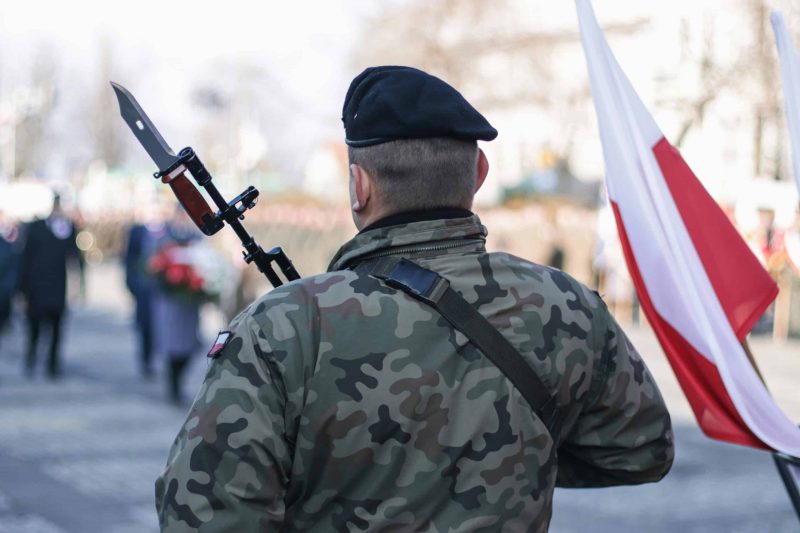
Washington is providing its NATO ally Poland with a second $2 billion foreign military financing (FMF) package in less than a year, Breaking Defense reports. In recent weeks, Warsaw has given Kiev a green light to use Polish-provided weapons to strike the Russian mainland as well as signed a bilateral military pact with Ukraine, agreeing to shoot down some Russian missiles.
A State Department official boasted to the outlet of how the two FMF loans are benefiting the US arms industry as well as strengthening the Washington-led bloc embroiled in its Ukraine proxy war with Moscow. “It’s impressive that it hasn’t even been a year and they [Poland] are moving out pretty quickly… We’re happy with the process. We see it as a success. We’re happy that they’ve been able to move out quickly — not only does it help NATO, it helps the US defense industry as well, the US economy. So, we’re definitely happy with the process.”
As with typical FMF loans, the funds furnished by the State Department to a foreign government must be spent on American-made weaponry and equipment. What makes this loan unique, however, is instead of a grant to purchase arms, this loan includes interest which Warsaw must repay. The US is putting up $60 million to guarantee the loan and cover initial fees. The official said details regarding how the funds will be spent, on what kinds of weapons, will not be shared during this week’s NATO summit. Instead, he insisted the Poles “[have] a list of things they want to achieve” and said to expect future announcements.
The official noted the previous FMF loan, issued last September, has either been totally spent or is earmarked for purchases including four aerostat-based early warning systems which accounts for approximately half the first loan. The unusual loan-based structure allows “the interagency to get FMF funding to foreign allies without needing to wait on the appropriations process,” the outlet notes, adding Congress extended the authority to issue these loans through the end of the 2025 fiscal year.
Asked if other countries will receive such loans, the official answered “We are looking at it, and there are other countries that remain competitive… The reason you’re seeing Poland is, of course, the situation with the ongoing war in Ukraine. They’re ready to move out.” The official emphasized that talks with multiple countries are ongoing, while repeatedly praising Warsaw’s high military spending and deeming Poland “the tip of the spear on this for us right now.”
The State Department stated “Poland is a leader in NATO, currently spending four percent of GDP on defense, the highest in the Alliance. Poland hosts thousands of U.S. and Allied forces, including U.S. V Corps Headquarters (Forward) in Poznan.” The US has roughly 10,000 troops stationed in Poland. Since Russian forces invaded Ukraine, Warsaw has announced plans to buy a myriad of American arms including Abrams tanks, Black Hawk and Apache helicopters, HIMARS rocket launchers. Poland is seeking more Patriot air defense batteries as well.
This latest financial and military infusion comes after Ukraine and Poland signed a bilateral military pact this week which includes a mechanism for Warsaw to shoot down Russian missiles and drones. This provision entails the potential to provoke a NATO-Russia war, something Ukrainian President Volodymyr Zelensky has long sought.
During a joint presser with Polish Prime Minister Donald Tusk on Monday, Zelensky declared “We are especially grateful for the special arrangements, and this is reflected in the security agreement. It provides for the development of a mechanism to shoot down [by Poland] Russian missiles and drones fired in the airspace of Ukraine in the direction of Poland.”
In November 2022, after a Ukrainian air defense missile killed two people in Poland, Zelensky and his top advisors said it was a Russian strike and demanded NATO take action. “Hitting NATO territory with missiles. … This is a Russian missile attack on collective security! This is a really significant escalation. Action is needed,” Zelensky railed in a video address.
This assessment was completely at odds with those made by the US, Poland, and NATO which determined the Polish casualties were not the result of a Russian missile strike. At the time, a diplomat from a NATO member state told Financial Times “The Ukrainians are destroying [our] confidence in them. Nobody is blaming Ukraine and they are openly lying. This is more destructive than the missile.”
Poland to shoot down Russian missiles – Zelensky
RT | July 8, 2024
A newly signed pact between Warsaw and Kiev contains provisions that would allow Poland to shoot down Russian missiles and drones in Ukrainian airspace, Vladimir Zelensky has said.
Zelensky spoke in Warsaw on Monday, after signing the security deal with Polish Prime Minister Donald Tusk. The government in Kiev has been making bilateral pacts with NATO member states over the past several months, in lieu of formally joining the US-led bloc.
The agreement “provides for the development of a mechanism [for Poland] to shoot down Russian missiles and drones fired in the airspace of Ukraine in the direction of Poland,” Zelensky said, according to Ukrainian media.
He added that Warsaw and Kiev “will work together to work out how we can quickly implement this point” of the deal.
Tusk confirmed the existence of the provision but said it merely “indicates the need for talks on this matter,” according to Polish media.
“We need clear cooperation within NATO here, because such actions require joint NATO responsibility,” the Polish PM added, explaining that it would be in the interest of both Poland and Ukraine to get a “stamp” of international solidarity first.
“We will include other NATO allies in this conversation. So we treat the matter seriously as open, but not yet finalized,” Tusk said, according to Poland’s RMF24 Radio.
Zelensky has been asking NATO to shoot down incoming Russian missiles for several months already. He has compared it to what the US and UK did for Israel in mid-April, during an Iranian reprisal bombardment, and argued that it would not directly involve the bloc in the conflict.
“NATO will not become part of the conflict,” the bloc’s secretary-general, Jens Stoltenberg, replied at the time. “There are no plans to send NATO troops to Ukraine or to extend NATO’s air-defense shield to Ukraine,” he added.
While US and EU officials shot down Zelensky’s comparison with Israel, they agreed to other things he asked for, from additional Patriot missile launchers and rockets to permitting Ukraine to use the weapons they supplied to strike deep into Russian territory.
During his visit to Warsaw, Zelensky also announced that Poland would raise, train and equip a ‘Ukrainian Legion’, made up of volunteers. “Every Ukrainian citizen who decides to join the legion will be able to sign a contract with the Ukrainian armed forces,” he added.
Tusk did not comment on the legion business, but said that every word in the security pact meant something and that it’s about “practical mutual commitments, not empty promises.”
Republika Srpska’s leader won’t allow Bosnia, Herzegovina to join NATO
Al Mayadeen | July 7, 2024
President Milorad Dodik states he will not allow Bosnia and Herzegovina to join NATO, emphasizing that Republika Srpska supports maintaining neutrality.
Republika Srpska will not allow Bosnia and Herzegovina (BiH) to join NATO due to the Serbs’ memory of past suffering, Republika Srpska President Milorad Dodik told Sputnik.
“I will be very clear: Bosnia and Herzegovina will not join NATO, referring to the procedure and the law by which the Parliamentary Assembly must reach an agreement on this issue on the basis of a majority of the decisions envisaged for adoption. So this agreement cannot and will not be reached. Serbs will never forget the suffering of innocent civilians, so we will never give our consent for Bosnia and Herzegovina to join NATO,” Dodik stated.
In the spring, Denis Becirovic, the Bosniak member of the BiH Presidency, told NATO Secretary General Jens Stoltenberg that BiH’s strategic goal is to join NATO. In January, Dodik expressed that while Republika Srpska allows cooperation with NATO, it opposes BiH’s membership in the alliance.
Russian Experts Gain Access to Storm Shadow Missile Warhead
Sputnik – July 7, 2024
Russian specialists have studied the cumulative warhead of European Storm Shadow/SCALP missiles, determining the penetration depth and detonation distance above the ground, an engineer and weapons specialist told Sputnik.
“The primary cumulative projectile of the Storm Shadow/SCALP missile consists of the nose cap, the primary charge, and then the main warhead. It is necessary for the initial penetration of an obstacle. It creates holes using the cumulative effect, through which the inertial warhead penetrates, causing an explosion. We understand the penetration depth, the detonation distance from the surface, the types of target sensors used, and the potential penetration depth,” the specialist said.
The cumulative warhead of the Storm Shadow/SCALP missile is a cylindrical object about half a meter in length with approximately the same diameter. The nose section is shaped like a cone, directed inward towards the body.
The study of the missile by Russian specialists will enable the implementation of countermeasures to protect against such weapons, including the creation of shelters with the necessary characteristics, the specialist explained.
The Storm Shadow is a low-observable, air-launched cruise missile. It is launched from aircraft and has a strike range of 250 to 560 kilometers, depending on the modification. It was developed jointly by France and the United Kingdom (in France, it is named SCALP and is produced by the MBDA consortium). The Ukrainian Armed Forces have been actively using the Storm Shadow since last year.
The Storm Shadow and SCALP-EG cruise missiles can approach their targets stealthily by using navigation correction via American satellites, Lieutenant General Andrey Semenov, Commander of the Air Defense and Missile Defense Forces and Deputy Commander of the Russian Aerospace Forces earlier said.
Russian President Vladimir Putin has warned that Moscow may respond asymmetrically to the supply of long-range weapons to Ukraine. The transfer of high-precision long-range weaponry to Kiev is a path to very serious problems, he emphasized.
Featured Video

The Truth About the Trump Shootings with Ken Silva
or go to
Aletho News Archives – Video-Images
From the Archives
Trans ‘milk’ as good as the real thing – NHS
RT | February 18, 2024
The drug-induced nipple secretions of trans women are as good as mothers’ breast milk for babies, the University of Sussex Hospitals NHS Trust claimed in a letter to campaigners made public in a report by British think tank the Policy Exchange on Sunday.
The healthcare trust’s medical director, Rachel James, argued that the off-label prescription drug cocktail men transitioning to female take in order to produce milk was “similar to the natural hormones which encourage lactation to develop when the baby is newly born.”
“The evidence which is available demonstrates that the milk is comparable to that produced following the birth of a baby,” James wrote in the letter, sent to Children of Transitioners last August.
Biological men who wish to lactate must first take hormones to grow milk glands and then take high doses of either domperidone or metoclopramide to stimulate milk production. Neither drug is approved for this use, though they are occasionally prescribed off-label to biological women who have trouble lactating.
However, domperidone’s own manufacturer, Janssen, warns patients the drug “may cause unwanted side effects affecting the heart in a breastfed baby” and “should be used during breastfeeding only if your physician considers this clearly necessary.” … continue
Blog Roll
 Aletho News
- Seyed M. Marandi: U.S. Strike Imminent – Toward Total War in the Middle East
- Russia Voted Under Fire. Washington Is Loading the Tankers.
- 12 Things Your Oncologist Was Trained Not to Tell You
- Anthrax Attacks Paved Way for COVID-Era ‘Junk Drugs and Vaccines’
- How Real Is the Impact of Western Sanctions on Israel?
- France, You Are Guilty: How Paris Turned Western Sahara into the Maghreb’s Powder Keg
- 2025 Nature Paper Claiming Worsening Global Drought Gets RETRACTED …Heavily Flawed
- Your Milk Is Not the Problem
- The Truth About the Trump Shootings with Ken Silva
- ARE PATIENTS BEING PROPERLY INFORMED ABOUT OZEMPIC?
- If Americans Knew
- Salah Sarsour’s Legal Team Says DHS Has Not Met Its Burden to Prove He Is Deportable
- An analysis of tax forms by The Intercept show Kraft’s charity and LLC have donated to Friends of the IDF and AIPAC’s super PAC.
- Israeli attacks kill four Palestinians in Gaza – Daily Update
- Inside Gaza’s death trap of collapsing, bombed-out buildings
- The everyday items Israel bans from Gaza every day
- Inside the siege, the ruined buildings of Gaza – Daily Update
- Debunking The Claim That Macklemore Has A “History Of Antisemitism”
- CPJ demands release of arrested Palestinian-US journalist near Bethlehem
- Robert Kraft: The Billionaire Friend of Netanyahu Pulling The Strings Behind the Macklemore/Ed Sheeran Blow Up
- Columbia Administered Fund Gives Big Money to Pro-Israel Groups
- No Tricks Zone
- 2025 Nature Paper Claiming Worsening Global Drought Gets RETRACTED …Heavily Flawed
- New Study: ‘Global Drought Shows No Detectable Recent Acceleration Under Climate Warming’
- Economic Masterminds: German Socialists Suggest Taxing Productivity Gains Stemming From Using AI
- The South China Sea Has Not Been Cooperating With The Climate Change Narrative
- Energy Crisis: Germany Enters Heating Season With Historically Low Gas Reserve Fill Levels
- New Study: The Antarctic Ice Sheet Gained Mass From 2020-2024 Due To Staggering Snow And Ice Accumulation
- Study: Ocean Heating Rates From Thousands Of Years Ago ‘Dwarf’ Modern Ocean Heating Rates
- Climate Extremists Target, Attack Large-Scale Power Grid Infrastructure In Germany!
- New Study: Antarctic Ice Melt Has Contributed Less Than 1 Centimeter To Sea Level Rise In The Last 30 Years
- Fear Of Debate: Alarmist German Climate Scientist Calls On Mainstream Media To Discredit Skeptic Voices
 Aletho News