Aces and Eights
By William Schryver – imetatronink – October 26, 2023
It now appears certain the United States is concentrating a huge naval force in the eastern Mediterranean, Red, and Arabian seas.
Several NATO nations are also sending warships to join this growing fleet.
Unknown numbers of US and NATO submarines are also certainly lurking in these regions.
There is already substantial US air power presence in the Persian Gulf region.
Israel is clearly working in concert with the US/NATO in whatever is brewing.
And make no mistake, something big IS brewing.
It is something I have written about for several years now, but consistently believed the Pentagon was not stupid enough to actually attempt.
As I view it, there can be only one primary target that would warrant such a large projection of military power as is underway: Iran and its allies in Iraq, Syria, and Lebanon.
And, as I have repeatedly argued over the years, I am convinced making war against Iran is a recipe for unforeseen disaster.
Iran wields much more military capability than is generally understood and appreciated both by western military analysts and the western populace.
There is no doubt the US/NATO/Israel, in tandem, can inflict severe damage against Iranian targets. But I am convinced they cannot do so without also incurring severe damage themselves.
Let’s also not forget there is a wildcard in this game: Russia and its strategically imperative bases in Syria.
As I see it, there are two realities at work here that will necessarily come into conflict:
1) The Pentagon is almost certain to regard the Russian bases in Syria as unacceptable threats to their objectives in the region. And therefore they will seek to neutralize them.
2) The Russians will fight to retain their Syrian bases.
Having now been compelled to abandon their designs to use the #MotherOfAllProxyArmies in Ukraine to weaken Russia, the Masters of Empire would no doubt love to “change the narrative” by defeating the Russians in Syria.
I believe Russian recognition of this likely move by the Americans is why Russian President Vladimir Putin — in China, no less — publicly announced 24/7 patrols of Kinzhal-armed Russian aircraft within range of the eastern half of the Mediterranean and much of the Red and Arabian seas.
The #EmpireAtAllCosts cult must have convinced themselves the Russians are bluffing, or that their capabilities are much weaker than claimed.
I am convinced both ideas are mistaken.
If the US itself is not merely bluffing, then this whole thing could get out of hand really fast.
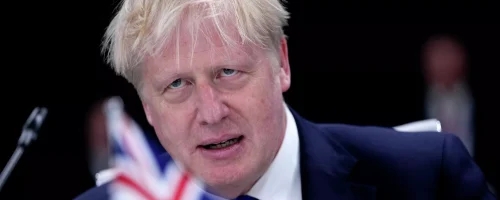
Boris Johnson gets job with arms industry-funded pro-NATO lobbyists
RT | October 26, 2023
Britain’s former prime minister Boris Johnson has been hired by the Center for European Policy Analysis (CEPA), a Washington, DC think-tank notoriously bankrolled by the US government, NATO and Western military contractors.
Johnson will be a member of CEPA’s International Leadership Council, described as “a high-level advisory group,” the think-tank announced this week.
According to CEPA’s head Alina Polyakova, Johnson’s “commitment to Ukraine’s victory” makes him an “invaluable addition to this distinguished group of thought leaders,” at what she described as a “pivotal moment for the transatlantic alliance.”
Johnson himself issued a statement about the move, calling the “transatlantic bond” more important than ever, “not just for the freedom and independence of Ukraine but for freedom across the world.”
CEPA describes itself as a “nonprofit, nonpartisan, public policy institution” that is “focused on strengthening the transatlantic alliance.” Among its fellows and experts are former Economist editor and anti-RT crusader Edward Lucas; former US envoy for Ukraine Kurt Volker; and former Estonian president Toomas Hendrik Ilves.
The think-tank’s own website lists among its major supporters military-industrial complex companies such as BAE Systems, Lockheed Martin and Leonardo, as well as NATO, the US State Department and the US European Command.
Johnson has been one of the loudest champions of Kiev in the West, infamously torpedoing the peace talks between Ukraine and Russia in April 2022. According to Ukrainian media, Johnson made a surprise visit to Kiev and informed the government that it would lose all support from the West if it made peace with Moscow.
Just three months later, in July, Johnson faced a cabinet revolt over appointing a party official accused of sexual misconduct. He announced his resignation as prime minister and stepped down in September 2022. In June this year, Johnson also resigned as the member of Parliament for Uxbridge & South Ruislip, a post he’d held since 2015, citing the parliamentary investigation into the so-called Partygate scandal related to misconduct during the Covid-19 lockdowns. His next public appearance was a trip to Ukraine in September, where he was received by President Vladimir Zelensky and granted an honorary doctorate from the Lviv National University.
Hungarian parliament refuses new vote on Sweden’s NATO accession
Hungary will make a sovereign decision on Sweden’s application without pressure from abroad, Turkish ratification will ‘change nothing’
MANDINER | October 25, 2023
Tensions over Sweden’s membership of NATO have been reignited after Turkish President Erdogan on Monday submitted a protocol to the Turkish parliament approving the country’s accession to NATO, bringing the Scandinavian country a step closer to joining the military alliance.
Following Erdogan’s move, international attention has again turned to Hungary.
In order for Sweden to join, it needs the support of all 31 allied countries. That is why many were caught off guard by the decision of the Hungarian parliament on Tuesday to once again refuse to vote on Sweden’s application for membership.
One reason why Hungary is dragging its feet on ratification is the fact that lawmakers from Hungary’s governing Fidesz party believe that Swedish politicians have spread “preposterous lies” about the state of Hungarian democracy, accusing the country of democratic backsliding, reported the Associated Press.
The Hungarian position has long been clear
Speaking from New York ahead of Tuesday’s U.N. Security Council meeting, Hungarian Foreign Minister Péter Szijjártó said that the ratification process in the Turkish parliament “does not change anything” and that Hungarian lawmakers “will make a sovereign decision on this issue.”
Prime Minister Viktor Orbán also confirmed last month that Hungary was “in no hurry” to ratify Sweden’s accession to the EU, saying in response to a question from journalists that a senior Fidesz lawmaker saw “little chance” of parliament voting on the issue this year.
The Swedish application was submitted to the agenda by opposition MP Ágnes Vadai, a member of the liberal Democratic Coalition (DK). Vadai said that Hungary’s opposition and Sweden were in constant dialogue.
“I believe that the two countries (Turkey and Hungary) will ratify it, if not at the same time, then very close together,” Vadai added.
German MP announces formation of new anti-establishment party

RT | October 23, 2023
Germany will have a new left-wing political grouping in 2024 after prominent Left Party MP Sahra Wagenknecht announced the formation of her own party. Its platform will include the normalization of relations with Russia and a peace-oriented foreign policy.
Wagenknecht broke the news during a press conference in Berlin on Monday, saying she and fellow Left Party defectors had “decided to establish a new party.” Explaining the need for a new political force, she argued that things “can’t continue like this” or Germans “will probably not recognize our country in ten years.”
The politician plans for the new party to run candidates in regional elections in the eastern regions of Saxony, Thuringia and Brandenburg, as well as in the European Parliament election next year.
A fresh poll commissioned by Bild am Sonntag indicated that some 27% of Germans would not rule out voting for Wagenknecht’s new political force.
Until the party’s official formation at the start of 2024, Wagenknecht and nine other Bundestag colleagues who resigned from the Left Party said they wished to keep their current seats. Party leadership has, however, already indicated that the defectors could lose their mandates much earlier. In September, Wagenknecht hinted at her plans to branch out, claiming that many Germans felt that none of the existing political forces represented their views.
Not long after that, the “Sahra Wagenknecht Alliance – for reason and justice” was registered with the aim of laying the groundwork for the establishment of a new party. The politician clarified that the Left Party had, in her opinion, become increasingly irrelevant. She also blasted Chancellor Olaf Scholz’s government on Monday as the “worst government in the history of the federal republic.”
Wagenknecht said she would seek to preserve Germany’s “economic strengths” as well as work toward more social justice. With respect to foreign policy, Berlin should switch to diplomacy rather than weapons deliveries when dealing with conflicts, the politician insisted.
She has been a vocal critic of Scholz’s policies toward Moscow over the Ukraine conflict, arguing that the current approach risks leading to a global, and potentially nuclear conflict. Berlin, according to Wagenknecht, should assume the role of a peacemaker.
Commenting previously on the EU’s anti-Russia sanctions, the politician has repeatedly claimed that the punitive measures are doing more harm to the German economy than to the Russian one, and thus should be lifted.
Wagenknecht is also a prominent critic of the European Union’s “elite project” and NATO, and argues for more independence for national states.
Ukraine’s leaders are controlled by US – German ex-chancellor

Former German Chancellor Gerhard Schroeder © Photo by Kay Nietfeld/dpa via Getty Images
RT | October 21, 2023
Former German Chancellor Gerhard Schroeder has argued in a newspaper interview that the US government didn’t “allow” any compromises that could have brought an end to the Russia-Ukraine conflict just weeks after Moscow’s military offensive began in February 2022.
Speaking in an interview published by Germany’s Berliner Zeitung newspaper on Friday, Schroeder said he was asked to help mediate the March 2022 peace negotiations between Ukrainian and Russian officials in Istanbul. He said that although representatives of Ukrainian President Vladimir Zelensky were open to making concessions on such key issues as renouncing efforts to join NATO, “the Ukrainians did not agree to peace because they were not allowed to. They first had to ask the Americans about everything they discussed.”
Russian officials have repeatedly claimed that the US and other Western backers of Ukraine discouraged Zelensky’s government from agreeing to a peace settlement. Schroeder, who has defended his continuing friendship with Russian President Vladimir Putin, essentially confirmed that allegation in the Berliner Zeitung interview. “My impression: Nothing could happen because everything else was decided in Washington,” he said.
The ex-chancellor described Washington’s strategy as “fatal,” saying it resulted in closer ties between Russia and China. “The Americans believe they can keep the Russians down,” Schroeder said. “Now, it is the case that two actors, China and Russia, who are limited by the USA, are joining forces. Americans believe they are strong enough to keep both sides in check. In my humble opinion, this is a mistake. Just look how torn the American side is now. Look at the chaos in Congress.”
Washington’s allies in Western Europe “failed” to seize the opportunity to push for peace in March 2022, Schroeder said. At the time, he added, Zelensky was open to compromise on Crimea and breakaway territories in the Donbass region. Since that time, hundreds of thousands of Ukrainian troops have been killed as Western military aid prolongs the conflict. Putin estimated earlier this month that Kiev lost over 90,000 soldiers in the failed counteroffensive that began in June.
“The arms deliveries are not a solution for eternity, but no one wants to talk,” Schroeder said. “Everyone is sitting in trenches. How many more people have to die? It’s a bit like the Middle East. Who are the victims on one side and on the other? Poor people who lose their children.”
Schroeder argued that only French President Emmanuel Macron and German Chancellor Olaf Scholz can revive peace talks in Eastern Europe. “Scholz and Macron should actually support a peace process in Ukraine because it’s not just an American matter, but above all a European matter.” He added, “Why did Scholz and Macron not combine the arms deliveries with an offer to talk? Macron and Scholz are the only ones who can talk to Putin.”
Russian leaders were threatened by the US push to bring NATO to Moscow’s western border by adding Ukraine to the Western military alliance, Schroeder said. However, he claimed that one of the justifications for arming Ukraine – alleged Russian expansionism – had no basis in reality.
“This fear of the Russians coming is absurd,” Schroeder said. “How are they supposed to defeat NATO, let alone occupy Western Europe?” He added, “That is why no one in Poland, the Baltics and certainly not in Germany – all NATO members, by the way – has to believe they are in danger.”
On the other hand, Schroeder insisted, Western leaders must understand that no matter who is in power in Moscow, Russia won’t allow either Ukraine or Georgia to be absorbed by NATO. “This threat analysis may be emotional, but it is real in Russia,” he said. “The West must understand this and accept compromises accordingly. Otherwise, peace will be difficult to achieve.”
Pentagon’s Crafty Plan: Ukraine to Receive ‘Frankenstein’ Air Defenses From US
By Andrey Kots – Sputnik – 21.10.2023
The Pentagon has greenlit a new air defense project custom-made for Kiev. According to US media reports, Ukraine will receive anti-aircraft missile systems produced in an unusual manner by the US defense industry. Sputnik examines what Washington has in mind.
The Ukrainian military is experiencing a serious shortage of anti-aircraft defenses. This is because of the Russian forces’ use of long-range Lancet kamikaze drones, and the Russian Aerospace Forces deployment of precision-guided glide bombs, which have greatly thinned the ranks of the Ukrainian Armed Forces’ frontline air defenses. To protect infantry and equipment, Kiev has been forced to move its air defense systems closer to the front, where they can fall prey to cheap Russian FPV drones.
Consequently, Kiev’s requests for advanced air defenses from its Western patrons have become increasingly urgent. The armed conflict that has broken out in the Middle East has exacerbated the problem. Israel asked for help from the US on the first day of hostilities. The Pentagon is on the horns of a dilemma – whether Israel or Ukraine is more deserving of its support. The latest rhetoric would suggest that Washington is more inclined to help Tel Aviv, with Ukraine left scrambling for whatever scraps are left.
Old ‘Monsters’ for the Frontline
Step forward the FrankenSAM (a portmanteau word of “Frankenstein” and “SAM” [surface-to-air missile]) program. The plan involves the development and production of improvised air defense systems using components and materials from Ukrainian, US and allied stockpiles. Old decommissioned anti-aircraft missiles will be repurposed as ammunition for these “chimeras”.
According to one major international news agency, the US Department of Defense believes this approach will quickly provide the Ukrainian Armed Forces with some much-needed air defense capabilities. This, in turn, will prepare the Ukrainian army for the winter campaign.
In this way, Washington hopes to achieve three goals at once: it will load its defense industry up with orders for “FrankenSAMs”, get rid of obsolete explosives, and demonstrate “support for its ally” to the world.
A Reagan-Era Veteran Missile
According to the media, the Pentagon is working on three projects as part of the FrankenSAM program. The first is almost finished: Ukraine will initially receive a ground-based short-range air defense system with AIM-9M Sidewinder missiles, according to the news agency’s source. Without going into detail, the source explained that the chassis, launchers, radar and other equipment for the system will be provided by the US and its allies. This, the media outlet noted, will help “meet Kiev’s vital air defense needs” and tackle related issues.
Washington announced the delivery of Sidewinder missiles in August, after the release of what was then its latest military aid package. This raised many questions, as the missile is of the air-to-air variety. Ukrainian fighter jets still in service are not capable of firing it without significant modifications to their on-board electronic systems, and the first F-16s for the Ukrainian armed forces are not expected until next spring at the earliest.
In addition, the Sidewinder is only effective at short range, whereas Russian pilots prefer long-range engagements. The news about the modification of these missiles for ground use clarifies the situation.
The AIM-9 Sidewinder is the grandfather of a weapons system that entered production in 1956 and has undergone several upgrades over the years. The forthcoming short-range air defense version of the system will be equipped with the 9M variant, introduced in 1983 and actively used during Operation Desert Storm. The period of most extensive production coincided with the years of this conflict.
In the early 2000s, this modification was replaced by the more advanced AIM-9X, with the Reagan-era AIM-9M variants stored away. It’s unknown how effective these 30-year-old missiles will be against modern Russian aircraft, but the fact is that the US has enough of these munitions to supply Ukraine for months.
Americanized ‘Buk’
The second offspring of the FrankenSAM project will be an air defense system based on early versions of the Soviet Buk missile system. The Americans plan to modernize Ukraine’s remaining inventory of these systems to accommodate outdated AIM-7 Sparrow air-to-air missiles, which were also introduced in 1956.
Unlike the AIM-9, the AIM-7 Sparrow is a medium-range air defense missile capable of engaging targets up to 20 to 25 kilometers away. The original Buk missiles have a much longer range, but it appears that Ukraine has almost none left.
It’s known that the “Buks” will be modified to use the RIM-7 Sea Sparrow ship-based variant of the missile. It seems to be easier to adapt a naval version for land-based launches than an airborne one. Also, similar adaptations have been made before. In the early 1990s, the Pentagon provided Taiwan with 500 RIM-7 missiles modified for ground-based launch. But during exercises in 2012, three of Taiwan’s Sea Sparrows malfunctioned and crashed into the sea, prompting Taipei to stop using the missiles.
It’s unlikely that the American Sparrow arsenal has miraculously become more reliable over the past 11 years. It’s also unclear whether these missiles will pose a greater threat to Russian aviation or to the Ukrainians themselves in the area where Ukrainian air defenses are deployed.
The same question applies to the third known component of the FrankenSAM project. The Pentagon is working on the modernization of the HAWK medium-range surface-to-air defense system, which was introduced in 1959. Ukraine already operates several of these systems, but no reports on their success have been published by Ukrainian command.
However, improvised air defenses can be effective. The Yugoslav experience in 1999 demonstrated this when an outdated Serbian S-125 system successfully shot down a state-of-the-art American stealth fighter, the F-117.
Furthermore, the FrankenSAM project is unlikely to be an attempt to move away from the Ukrainian issue and gradually cut off military supplies.
Rather, “the US and the European Union have a consolidated position whereby – at least for the next three years – the volume of arms and military equipment supplies to Ukraine will be maintained and will tend to increase,” said Igor Korotchenko, a military analyst and editor-in-chief of National Defense magazine. “We must not delude ourselves with false hopes and illusions that the support will stop, especially in light of recent reports of contradictions in the West.”
The FrankenSAM project is likely to be a temporary fix. The US is at present actively reviving its defense production to replenish depleted stockpiles – its own, Ukraine’s, and those of NATO allies. The purpose of these makeshift anti-aircraft missile “monsters” is to buy the Ukrainian military time until factories are operating at full capacity.
How NATO fighter jet deliveries undermine Kiev regime’s air defense capabilities
By Drago Bosnic | October 20, 2023
A lot has been said about the much-touted fighter jet deliveries to the Kiev regime forces and how this would supposedly “tip the balance of power” in its favor. However, the process has been mired in controversy and difficulties since the very beginning. It includes everything from problems finding the countries willing to provide the jets to giving Ukrainian pilots enough training to make a difference while also accelerating the process as much as possible. The first obstacle was the language barrier. Of the 32 pilots sent to be trained on how to fly F-16s, only eight spoke English proficiently enough to be able to attend lessons and even they had to be given advanced courses on the usage of complex military nomenclature. Even if it took the pilots less than six months to attain the desired proficiency, that was only enough for them to start basic training on how to fly the jet.
However, being able to fly an aircraft is a far cry from being able to master its usage in combat, particularly against an opponent that not only has massive numerical advantage, but is also decades ahead technologically. Ukrainian pilots themselves admitted that their Soviet-era Su-27s are superior to F-16s. The Russian Aerospace Forces (VKS) operate significantly more advanced jets than the Su-27. In fact, even the modernized Russian Su-27SM3 is much more capable than its Ukrainian counterpart. There are also the newer Su-30SM and Su-30M2, to say nothing of the high-end fighter jets such as the MIG-31BM interceptor, Su-35S or the latest Su-57. The last three are by far the most dangerous fighters of our age, as they’ve proven far more capable than expected by Western military analysts and observers, with even the British military forced to admit it.
And yet, this string of catch-22s is not nearly the end of issues for the Neo-Nazi junta. Namely, this time, another major problem with fighter jet deliveries from NATO members is not even directly connected to the aircraft themselves, but ground-based air defenses. In essence, what this issue boils down to is the chronic lack of SAM (surface-to-air missile) systems. Despite losing a large chunk of the territory under its immediate control, the Kiev regime still has one of the largest land areas in Europe and defending it all is simply impossible. Thus, the Neo-Nazi junta is forced to improvise and prioritize, placing air defenses in the most important cities and oblasts (regions). This results in SAM units being spread thin and with extremely limited logistics, as the stockpile of Soviet-made missiles has effectively run out and the political West has nothing to replace them with.
However, this still doesn’t tackle the more pressing issues that NATO wants resolved before any sort of fighter jet deliveries and that’s the question of air defenses for the airbases where the aircraft would be stationed. The Kiev regime started preparations to accommodate Western-made jets months ago, including the effective militarization of existing civilian airports and infrastructure. In order to provide adequate security for these ad hoc airbases, additional air defense systems and units will need to be raised, set up and deployed. And yet, the Neo-Nazi junta has neither the human nor industrial resources to accomplish such a laborious task, to say nothing of the financial dependence on its Western puppet masters. SAM systems operators have among the highest casualty rates in the conflict, meaning that the soldiers aren’t exactly racing to join such units.
Thus, the Kiev regime will simply have to sacrifice the protection of important administrative buildings, as well as military and energy infrastructure in order to provide air defense coverage for the new ad hoc airbases housing the Western-made jets. However, even this can’t be done very efficiently. Namely, the Soviet-era SAM systems cannot be readily replaced with US/NATO counterparts for the simple reason that the latter are too expensive, not to mention they have demonstrated no superior capabilities in comparison to Soviet systems. On the contrary, most are even inferior, despite costing significantly more. The primary reason for this is that the Western (in reality mostly American) military doctrine focuses mainly on air superiority, which gives air defenses a secondary role. In essence, it’s sort of like an auxiliary force aiming to simply augment military aircraft.
This is in stark contrast to the Soviet/Russian doctrine that puts a lot of emphasis on ground-based air defenses that are designed to operate independently and even in situations where friendly fighter jets are able to provide little or no air cover whatsoever. Still, this isn’t where the problems for the Neo-Nazi junta end. In addition to regular long-range missiles and other precision-guided munitions (PGMs), the Russian military is increasingly using extended-range loitering munitions/kamikaze drones, such as the now legendary ZALA “Lancet”. These drones have recently destroyed at least two aircraft parked on runways approximately 100 km away from the frontlines. This was considered effectively impossible, as the Kiev regime forces and their NATO overlords previously believed that the aforementioned drones were only limited to tactical combat situations.
Worse yet, the Neo-Nazi junta mostly lacks adequate defenses against such weapons. And just as the Soviet-era Su-25 attack jet and MiG-29 fighter were destroyed while parked, the same could (or rather would) happen to US-made F-16s. Precisely this might be the reason why Volodymyr Zelensky recently asked NATO to “lease” SAM systems. There’s simply no other way to protect the new militarized airfields without sacrificing something else. And this is without even getting into the aforementioned viability of old F-16s being used against modern Russian jets. What’s more, Sweden has also offered its “Gripen” jets, which I argued would happen well over a year ago. On paper, these fighters are somewhat more capable than F-16s, but Sweden has a very unusual policy of refusing to help a country that bought the jets from it if the said country is engaged in hostilities.
Drago Bosnic is an independent geopolitical and military analyst.
Putin’s Valdai Speech, What You Need to Know
By Ted Snider | The Libertarian Institute | October 12, 2023
On October 5, Russian President Vladimir Putin addressed the plenary session of the Valdai International Discussion Club near Sochi, Russia. The session was attended by scholars and diplomats from forty-two countries. Putin spoke for half an hour and then answered questions for about three hours. Several interesting things were said.
In western discourse it is always said that Russia started an unprovoked war in Ukraine. There has been much discussion—though not in the mainstream media nor in statements issued by western governments—about whether the war was unprovoked. But there has been little discussion about whether Russia started it.
Putin claimed that Russia’s “special military operation” did not start the war in Ukraine but, rather, was designed to stop it. “I have said many times that it was not us who started the so-called ‘war in Ukraine,’” Putin said. “On the contrary, we are trying to end it.”
The war started, according to Putin, when the United States “orchestrated a coup in Kiev in 2014.” Putin said that the U.S. “provoked the Ukraine crisis by supporting the coup in Ukraine in 2014. They could not fail to understand that this was a red line, we have said this a thousand times. They never listened.”
After the coup, the new government in Kiev “intimidate[d]” the ethnic Russian populations of Crimea and the Donbas, prohibited them from speaking “their native language,” and threatened them “with ethnic cleansing.” It was Kiev, and not Russia, “who tried to force Donbass to obey by shelling and bombing.” The new government in Kiev bombed the region “for nine years, shooting and using tanks. That was a war, a real war unleashed against Donbass.”
The war started, not a year and a half ago, according to Putin’s chronology. Instead, “This war, the one that the regime sitting in Kiev started with the vigorous and direct support from the West, has been going on for more than nine years, and Russia’s special military operation is aimed at stopping it.”
With the end of the Cold War, there was a window of opportunity to learn from the mistakes of the previous destructive era. There was an opportunity to move from “military and ideological” blocs to collective solutions. First Mikhail Gorbachev’s Soviet Union, and then Russia, sought a new international order that transcended blocs. Putin even recalled “a moment when I simply suggested: perhaps we should also join NATO?”
But Putin says that Russia’s “interest in constructive interaction was misunderstood, was seen as obedience, as an agreement that the new world order would be created by those who declared themselves the winners in the Cold War. It was seen as an admission that Russia was ready to follow in others’ wake and not to be guided by our own national interests but by somebody else’s interests.”
American “arrogance” attempted to establish a global “hegemony” over a world “too complicated and diverse to be subjected to one system.” This arrogance led to two things. The first was “endless expansion” by the political West. “NATO expansion has been pursued for decades.”
Putin reminded his audience that Russia was “promised verbally” about NATO “non-expansion to the east.” He then complained, “Yes, we were promised everything verbally, and our American partners do not deny this, and then they ask: where is this documented? There is no document. And that was it, goodbye. Did we promise? It looks like we did, but it was worth nothing.”
Eventually, this broken promise led to NATO expansion creeping up to Ukraine and right up against Russia’s borders. “Among the ways the crisis in Ukraine was provoked,” Putin said, “was the irrepressible desire of Western countries, especially the United States, to expand NATO to the borders of the Russian Federation.”
“After all,” Putin pointed out, NATO “is not only a political bloc, it is a military and political bloc, and the approach of its infrastructure is fraught with a grave threat to us.” He then added, “NATO’s expansion right up to our borders is threatening our security. This is a massive challenge to the Russian Federation’s security.”
To attain its hegemonic goal, it was necessary for the United States to “to replace international law with a “rules-based order.” But unlike the international law of the charter international system that is based on the United Nations, “It is not clear what rules these are and who invented them.” In the service of Americna hegemony, the U.S. “arbitrarily set[s] these rules.”
In a recent essay, professor of international law John Dugard has said that it is neither clear what the rules of the rules-based order are nor “the method for their creation,” and has offered as a possible explanation of the rules based order that it is “international law as interpreted by the United States to accord with its national interests,” meaning whatever the U.S. needs it to mean in any given situation. He suggests that the United States tries “to impose the concept of a rules-based world order on the international community. They use this banner to promote, without any hesitation, a unipolar model of the world order where there are ‘exceptional’ countries and everyone else who must obey the ‘club of the chosen.’”
In this world order, the United States not only tells other nations how they “should behave overall” in a “colonial mentality,” but there exists “an international system where arbitrariness reigns, where all decision-making is up to those who think they are exceptional, sinless and right [and] any country can be attacked simply because it is disliked by a hegemon.”
Putin says that Russia sees a future multipolar world order in which “no one can unilaterally force or compel others to live or behave as a hegemon pleases even when it contradicts the sovereignty, genuine interests, traditions, or customs of peoples and countries.” Russia sees “civilization [as] a multifaceted concept subject to various interpretations.” The world has evolved from the “colonial interpretation whereby there was a ‘civilized world’ serving as a model for the rest, and everyone was supposed to conform to those standards. Those who disagreed were to be coerced into this ‘civilization’ by the truncheon of the ‘enlightened’ master. These times, as I said, are now in the past, and our understanding of civilisation is quite different.”
Putin argued, as he has consistently, for the principle of the indivisibility of security, the idea that security cannot be divided so that the policies that increase the security of one country decrease the security of another. Indivisibility of security assures that the security of one state should not be bought at the expense of the security of another.
The American insistence on the right of states to unrestrained free will in their choice of security alignments and the accompanying NATO open door policy to Ukraine ignores the indivisibility of security. Putin said, “The main thing is to free international relations from the bloc approach and the legacy of the colonial era and the Cold War. We have been saying for decades that security is indivisible, and that it is impossible to ensure the security of some at the expense of the security of others.”
Putin said he thinks that suggestions of “a new security system in Europe, which would include Russia, and the United States, and Canada; but not NATO, but together with everyone else: for Eastern and Central Europe… would solve many of today’s problems.”
It is often said in the West that Putin seeks to reestablish a Russian empire and reacquire vast territories, starting with Ukraine. Putin, though, says in contradiction to those claims, “The Ukraine crisis is not a territorial conflict, and I want to make that clear… [W]e have no interest in conquering additional territory.” He insisted, “This is not a territorial conflict and not an attempt to establish regional geopolitical balance. The issue is much broader and more fundamental and is about the principles underlying the new international order.”
Those principles are a balanced multipolar world, indivisibility of security, an end to blocs and to NATO encroachment and protection of ethnic Russians in the Donbass and Crimea.
During the question and answer period, political scientist Sergei Karaganov suggested that the current Russian nuclear doctrine is no longer taken seriously by the West as a deterrent. He asked whether it was not time to modify the nuclear doctrine and lower the threshold.
Often portrayed in the West as a nuclear weapons sabre rattler, Putin tamped down the question, answering, “I do not see the need to change our conceptual approaches. The potential adversary knows everything and is aware of what we are capable of.”
Putin explained Russia’s existing nuclear doctrine. He said there are two situations that could trigger a “possible use of nuclear weapons by Russia.” The first is that “the use of nuclear weapons against us… would entail a so-called retaliatory strike.” The second situation is “an existential threat to the Russian state—even if conventional weapons are used against Russia, but the very existence of Russia as a state is threatened.”
Putin insisted that Russia does not need to change its stance. In the case of the first scenario, “this response will be absolutely unacceptable for any potential aggressor, because seconds after we detect the launch of missiles… the counter strike in response will involve hundreds—hundreds of our missiles in the air, so that no enemy will have a chance to survive.” As for the second, important as an insight into how Putin evaluates the situation in Ukraine, “There is no situation imaginable today where something would threaten Russian statehood and the existence of the Russian state.”
However, Putin said that nuclear testing is “a whole different matter.” He says that, after signing the Comprehensive Test Ban Treaty, the United States never ratified it. Russia, on the other hand, both signed it and ratified it. He told his audience that the development of new strategic weapons—including the nuclear-powered Burevestnik cruise missile with “basically unlimited range” and the super heavy Sarmat missile—is “nearing completion.” He then said that Russia can “act just as the United States does” and “offer a tit-for-tat response,” suggesting that Russia could repeal the Comprehensive Test Ban Treaty and begin testing new weapons.
In response to the question of whether Russia objected to Ukraine joining the European Union, Putin responded that Russia had “never objected or expressed a negative attitude to Ukraine’s plans to join the European economic community—never.” He said that Russia opposes Ukraine joining NATO because NATO is a “military bloc” and a “tool of U.S. foreign policy.” But “the EU is not a military bloc,” and, as for “economic cooperation, or economic unions, we do not see any military threat.”
The Caucasus and West Asia are joined at the hips
BY M. K. BHADRAKUMAR | INDIAN PUNCHLINE | OCTOBER 10, 2023
Frozen conflicts can only be understood through history. That is why the ‘erasure’ of Nagorno-Karabakh from the map by Azerbaijan is an incredibly tumultuous development for Transcaucasia and its surrounding regions.
The backdrop is the breakup of the Soviet Union, which left us with a rather odd map. Consequently, conflicts in Georgia, Armenia, Azerbaijan, Moldova, Ukraine and others left us with de facto boundaries that are unrecognised in law. There is an imperative need for a peace treaty that reflects the new facts on the ground.
At issue is the status of Nakhchivan, which still remains the landlocked exclave of Azerbaijan located near the Turkish border. Azerbaijan, emboldened by its annexation of Nagorno-Karabakh last month, is on the lookout for a direct land link to Nakhchivan, which Baku regards as unfinished business.
To attain this audacious objective, Azerbaijan — once again, with Turkey’s support — hopes to seize control of a hefty slice of Armenia’s territory, which is also that country’s borderland with Iran to the south. Unsurprisingly, both Yerevan and Tehran oppose any such move, which would otherwise mean that Armenia and Iran cease to be neighbours and get encircled by the Azeri-Turkish strategic axis.
Through dialogue and negotiations a mutually acceptable formula must be found for any land link — known as “Zangezur Corridor” — guaranteed under international law, which preserves Armenia’s territorial integrity and its border with Iran, even while providing Baku with free access to Nakhchivan.
What complicates matters is the geopolitics, involving the 3 immediate stakeholders — Armenia, Azerbaijan and Iran — and two other regional states — Russia, Turkey — as well as certain intrusive extra-regional powers and entities — the United States, European Union and NATO.
While Russia and Iran are also stakeholders, the same cannot be said for the extra-regional powers and entities who are meddling in a highly competitive regional environment. The “butterfly effect” of the Zangezur Corridor will be profoundly consequential to the Black Sea and Caspian regions and could impact the Middle East and Central Asia as well.
Among the regional states, Iran stands out for its anti-revisionist approach. During separate meetings last Wednesday in Tehran with visiting Armenian and Azerbaijani officials, Iranian President Ebrahim Raeisi reiterated amid persisting tensions over the Karabakh region Iran’s opposition to the opening of the Zangezur Corridor, saying Tehran is against geopolitical changes in the region.
Raesi reportedly stated that the Zangezur corridor would be “a NATO foothold, a national security threat for countries, and is thus resolutely opposed by Iran,” as his political chief of staff Mohammad Jamshidi put it. Tehran cannot but factor in that Israel has a strong intelligence presence in Azerbaijan.
Speculation is rife that Azerbaijan might use force to open the Zangezur Corridor, Iran’s opposition notwithstanding. Turkey, the region’s number one revisionist power is a mentor and ally of Azerbaijan with whom it claims ethnic affinities. Turkey harbours grand visions of expanding its economic reach and political influence through a land route that extends from its European border in Eastern Thrace to the Caspian Sea and over to its ancestral lands of Central Asia that border China.
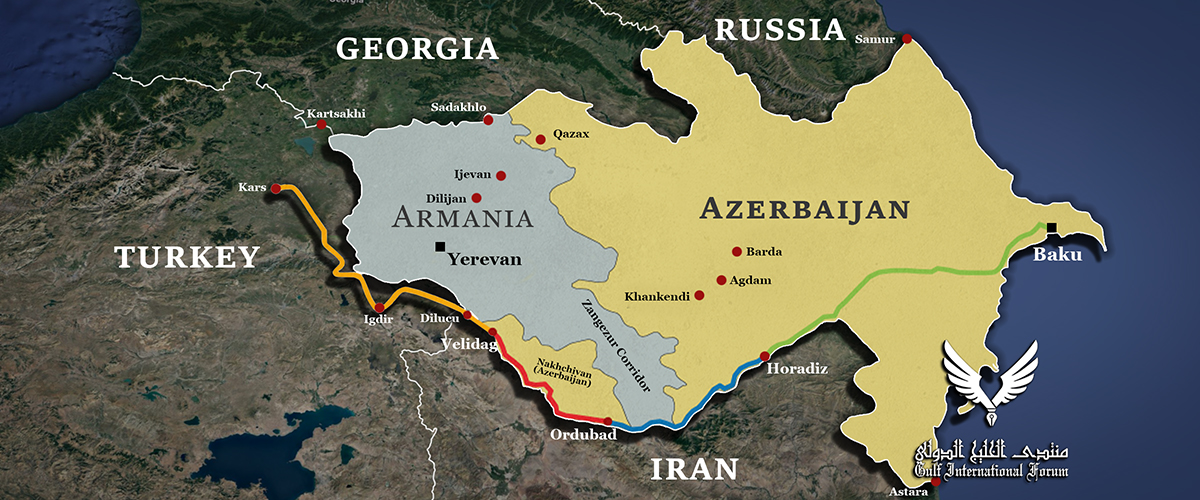
Suffice to say, the Zangezur Corridor will make Turkey a strategic hub in the geopolitics of the region if the Silk Road to Europe passes through its territory and the Soviet era land route to Russia reopens. Russia has separately promised to make Turkey an energy hub for export of its gas as well.
Much to Iran’s discomfiture, Turkey is exploiting Moscow’s dependence on Ankara in the conditions under western sanctions and the Ukraine conflict — Turkey controls the straits leading to the Black Sea from the Mediterranean— to muscle its way into the Caucasus and the Caspian, which has been traditionally Russia’s sphere of influence.
Meanwhile, Russia’s influence in the Caucasus suffered a setback as Armenia’s gradual drift toward Western benefactors following the colour revolution and regime change in Yerevan in 2018 has dramatically accelerated lately and taken an overt form. The Western powers are encouraging Armenia’s current leadership to leave the CSTO and seek the closure of the Russian bases on its soil where 5000 troops are garrisoned.
However, Armenia cannot do without Russia’s help. And Russia has strategic reserves to play itself back into the centre stage of the Caucasian chessboard. Of course, an optimal Russian comeback in the Caucasus will have to wait for its victory over the US and NATO in Ukraine, possibly by next year. Thus, Moscow seems confident that its pre-eminence in the Caucasus is a given.
Russia’s trump card, ultimately, is that much as the US and/or EU may try to get a toehold in the Caucasus, they are faraway powers and pretty much exhausted today with economic anxieties and growing war fatigue in Ukraine, amidst signs of disunity within the EU itself.
Indeed, a summit gathering close to 50 European leaders, dozens of aides and legions of journalists in Grenada, Spain, on October 5, which was billed as an opportunity to broker peace between Armenia and Azerbaijan, ended as a damp squib when Azerbaijan’s Ilham Aliyev and Turkey’s Tayyip Erdogan decided to skip the gathering and Azerbaijan accused France of bias in negotiations.
The bottom line is that in the power dynamic in the Caucasus, Iran is Russia’s natural ally and the two regional powers can be a factor of regional security and stability. This is important, since all sorts of dangers are lurking in the shade in the geopolitics of the Black Sea and Eastern mediterranean and Central Asia, and the darkening horizon presages storms ahead.
To flag a few ominous signs, the US has seized Israel’s escalating confrontation with Hamas and Hezbollah to resort to a major show of force in the Eastern Mediterranean — as if it is preordained. Such force projection cannot be an end in itself. Can it be coincidental that US-trained jihadi groups are also stirring up the Syrian pot lately?
Again, last week, a series of Ukrainian attacks in the Black Sea with Western-supplied cruise missiles forced Russian vessels to relocate from their main base in Sevastopol to the port of Novorossiisk 300 km to the east. British Defence Minister James Heappey promptly called it the “functional defeat of the Black Sea Fleet.”
Moscow is now reportedly planning to build a permanent naval base on the Black Sea coast in the breakaway Georgian region of Abkhazia.
Only a week ago, Russian Foreign Minister Sergey Lavrov warned that Moscow is alarmed by “the attempts of extra-regional players to become more active in the Afghan direction.”
Make no mistake, the US has not reconciled to the ascendance of Russian and Chinese influence in the Middle East or the Iran-Saudi rapprochement that led to an overall easing of tensions, especially Syria’s normalisation with its Arab neighbours, all of which which has drained America’s regional influence and weakened Israel.
Equally, with the spectre of a humiliating defeat in Ukraine haunting the Biden Administration, the temptation must be there to assert American hegemony. A confrontation with Iran is just what may suit Washington as ramp to cover its retreat from Ukraine’s battlefields.
Fundamentally, the US strategy is to get Russia bogged down on multiple fronts and prevent it from advancing Syria’s stabilisation optimally or consolidate its alliances with North African states — Egypt, Libya and Algeria — and expand its presence in the Sahel region which effectively thwarts NATO’s expansion plans in Africa.
Similarly, Iran’s surge as regional power has been to the detriment of Israel’s regional supremacy. Success of the US-Israeli strategy depends on piling pressure on Iran and Hezbollah, who were game changers in the Syrian conflict, and eroding the Russian-Iranian axis in West Asia, the Caucasus and the Caspian.
Armenia’s defection from the Russian orbit and the conflict situation currently developing in Gaza (and Lebanon) provide a window of opportunity to challenge Russia and Iran in the Levant. A vast armada of US warships is approaching the Eastern Mediterranean to intimidate Iran.
Meanwhile, the US hopes to undermine Saudi Arabia’s normalisation process with Iran and create contradictions within BRICS and OPEC Plus.
In sum, like in the famous play by the German modernist playwright Bertolt Brecht, The Caucasian Chalk Circle, we are currently witnessing a play within a play in the great game in Transcaucasia — an extraordinary blend of high theatricality, folk storytelling, music and even dialectical inquiry.
Featured Video

HE SAVED LIVES. NOW HE FACES PRISON.
or go to
Aletho News Archives – Video-Images
From the Archives
NATO Sanctions and the Coming Global Diesel Fuel Disaster
By F. William Engdahl – New Eastern Outlook – 11.04.2022
Amid the ongoing global inflation crisis, NATO heads of state and mainstream media repeat a mantra that high energy prices are a direct result of Putin’s actions in Ukraine since end of February. The reality is that it is the western sanctions that are responsible. Those sanctions including cutting SWIFT interbank access for key Russian banks and some of the most severe sanctions ever imposed, are hardly having an impact on the military actions in Ukraine. What many overlook is the fact that they are increasingly impacting the economies of the West, especially the EU and USA. A closer look at the state of the global supply of diesel fuel is alarming. But Western sanctions planners at the US Treasury and the EU know fully well what they are doing. And it bodes ill for the world economy.
While most of us rarely think about diesel fuel as anything other than a pollutant, in fact it is essential to the entire world economy in a way few energy sources are. The director general of Fuels Europe, part of the European Petroleum Refiners Association, stated recently, “… there is a clear link between diesel and GDP, because almost everything that goes into and out of a factory goes using diesel.” … continue
Blog Roll
 Aletho News
- Trita Parsi: Middle East Unraveling — Are We on the Path to World War?
- Iran FM meets with US envoy on UN meeting’s sidelines at American side’s insistence: Report
- Qatar PM calls for Gulf security framework with Iran, says war must be ‘wake-up call’
- China condemns US extortion of Iranian airlines, rejects Washington’s ‘illegal’ sanctions threats
- Italy to move military personnel from Taif base after missile strike
- Finland’s Stubb tells European leaders to calm down
- Defeating Russia on battlefield impossible – Fico
- Finland’s Gender Clinic Reversal
- Massachusetts Wants Mental Health Visits, Why Does Government Use ‘Health’ to Enter Our Homes & Families?
- US lawmaker admits American people footing bill for Trump’s failed aggression against Iran
- If Americans Knew
- Sanctions are collective punishment: immoral and self-defeating
- Phosphorus Munitions Fired by Israel Burn Groves, Orchards in Southern Lebanon
- Israel Carries Out New Ceasefire Violations Across Gaza
- AI – Emphasis on the ‘I’: Israel Is Funding AI Chatbot Propaganda
- Israel Blocking Hundreds of Wheelchairs for Injured Children From Entering Gaza
- Israel Is Expanding and Upgrading Compounds for Palestinian Militias in Gaza
- The Palestinian-American Residents of This West Bank Town Are Wondering: Where Is Trump?
- Gaza desperately needs tents, wheelchairs, fuel… and everything else (Israel blocks it all) – Daily Update
- Israeli Attacks in Gaza Kill at Least Seven Palestinians Over Three Days, including Woman and Child
- Trump’s militarization of Washington DC as he pursues Israel’s war against Iran
- No Tricks Zone
- 2025 Nature Paper Claiming Worsening Global Drought Gets RETRACTED …Heavily Flawed
- New Study: ‘Global Drought Shows No Detectable Recent Acceleration Under Climate Warming’
- Economic Masterminds: German Socialists Suggest Taxing Productivity Gains Stemming From Using AI
- The South China Sea Has Not Been Cooperating With The Climate Change Narrative
- Energy Crisis: Germany Enters Heating Season With Historically Low Gas Reserve Fill Levels
- New Study: The Antarctic Ice Sheet Gained Mass From 2020-2024 Due To Staggering Snow And Ice Accumulation
- Study: Ocean Heating Rates From Thousands Of Years Ago ‘Dwarf’ Modern Ocean Heating Rates
- Climate Extremists Target, Attack Large-Scale Power Grid Infrastructure In Germany!
- New Study: Antarctic Ice Melt Has Contributed Less Than 1 Centimeter To Sea Level Rise In The Last 30 Years
- Fear Of Debate: Alarmist German Climate Scientist Calls On Mainstream Media To Discredit Skeptic Voices

