Ukrainian Counteroffensive’s Second Week Ends in Failure
By Scott Ritter – Sputnik – 17.06.2023
Operation enters the second week of Ukraine’s long-awaited and highly touted counteroffensive, some basic conclusions can be drawn even though the fighting continues, and will continue to rage, for some time to come.
First and foremost, the counteroffensive gambit has failed. While there is still considerable combat strength left in the Ukrainian military, including more than 75% of the NATO-trained and -equipped 60,000-strong cohort Ukraine had assembled in the past eight months, fundamentally flawed assumptions about the quality of the force on which Ukraine and its NATO allies had placed their collective hopes for victory over Russia have been exposed. In short, Ukraine lacks the military capacity to overcome Russian defenses.
Ukraine’s most elite assault brigades, equipped with the latest Western military technology, failed to advance out of what Russian defensive doctrine calls the “cover” line of defense—the buffer that is designed to channel and disrupt an attacking force prior to reaching the “main” line of defense. Ukrainian casualties were extremely heavy, with Russia achieving a 10:1 kill ratio in terms of manpower, which is unsustainable from the Ukrainian perspective. The reasons for the Ukrainian failure are fundamental in nature, meaning that they cannot be overcome as things currently stand and, as such, the Ukrainian military has zero chance of success, no matter how hard they press subsequent attacks.
First and foremost is the quality of the Russian defenses, especially in terms of the barrier network (minefields, obstacles, and trenches) which, when combined with the tenacity of the Russian defender and the overwhelming superiority Russia enjoys in terms of fire support (both artillery and air-delivered), is the reason the Ukrainians are unable to advance beyond the “cover” layer of the Russian defenses. Ukrainian equipment and tactics are insufficient to the task of breaching the Russian obstacle barriers in any meaningful manner, dooming the attacking forces to be destroyed piecemeal by Russian artillery and air strikes, as well as local counterattacks mounted by Russian special forces.
Besides the poor tactics and equipment deficiencies (yes, the Leopard tanks and Bradley fighting vehicles were not the miracle weapons Ukraine and its Western supporters had hyped them up to be), the Ukrainians are paying the price for Russia’s impressive suppression of enemy air defense (SEAD) campaign that has been ongoing for many weeks now.
Russian fixed-wing aircraft have been able to deliver precision-guided munitions with deadly effect to the assembly areas used by Ukraine to gather their attacking forces prior to committing them to the battlefield. It is estimated that between 25-30% of Ukraine’s casualties occur from these strikes. Russian helicopters can use their anti-tank guided missiles (ATGMs) with lethal effect on Ukrainian forces operating in the zone of contact, and Russian loitering munitions (i.e., “kamikaze drones”) have taken a heavy toll of Ukrainian forces as well. Unless Ukraine can reassert some semblance of air defense onto the battlefield, both in the rear areas as well as the frontlines, and sortie its own air power capable of challenging Russian air superiority over the battlefield, then no amount of courage and tactical innovation on the part of the Ukrainian ground forces will alter the deadly calculus of war that currently prevails today.
One of the many tragedies of the ongoing Ukrainian-Russian conflict is the fact that much of what Ukraine does on the battlefield is dictated not by military necessity, but rather political imperative. The recently concluded months-long Battle for Artemovsk (Bakhmut) is a case in point, where Ukrainian President Zelensky insisted on pouring manpower and equipment into a battle for a town that most military experts believed to hold minimal strategic military value. The geography, however, did not dictate the scope and scale of the battle, but rather the perception of Ukrainian defensive tenacity, and as a result between 60-75.000 Ukrainian soldiers lost their lives in what was a losing effort. Similarly, the Ukrainian army is being asked to make what amounts to a suicide attack against well-prepared Russian defenses under conditions which, as detailed earlier, can only result in a decisive Ukrainian defeat. This time, the culprit is Ukraine’s NATO allies who, on the eve of their annual summit, are desperate for any sign that the multi-billion-dollar investment they have collectively made in the Ukrainian military can pay even the most rudimentary dividends. For this reason, NATO will continue to pressure Ukraine to double down on defeat, pressing the Russians offensively even though any gains, if in fact any can be had, would be pyrrhic in nature and unsustainable over the long run.
The reality is that when NATO gathers in Vilnius on July 11, the Russians will be well into the process of destroying the third Ukrainian army built by NATO. The first was assembled during the buffer provided by the diplomatic “sham” of the Minsk Accords, from 2015-2022. Some 260,000 strong, this force was largely destroyed by June of 2022. The second army, consisting of some 80,000 newly trained and equipped Ukrainian soldiers backed by thousands of foreign mercenaries, the direct result of tens of billions of dollars of military aid provided by NATO, was able to launch the successful Ukrainian counterattack in the fall of 2022, before being decimated in the positional war that followed (including the Bakhmut slaughter).
The 60,000-strong 12-brigade Ukrainian counterattack force currently operating against the Russians, again the result of tens of billions of dollars in military equipment (including modern Western tanks, artillery, and infantry fighting vehicles), will most probably be destroyed, or facing imminent destruction, by the time the NATO summit convenes. The primary question facing NATO is does it have the political, economic, and military capacity to raise a fourth Ukrainian army, and after its demise, a fifth, sixth, and more?
NATO is politically committed to waging a proxy conflict with Russia “to the last Ukrainian.” This tragic reality means that, regardless of the battlefield reality that exists in Ukraine, NATO will continue to push Ukraine to sacrifice its manpower in a fruitless struggle against Russia for the simple fact that NATO is unwilling to willingly lose political face at home and abroad.
However, this political will does not automatically mean that NATO will be able to sustain this objective either economically or militarily.
While recent statements made by US General Mark Milley, the Chairman of the Joint Chiefs of Staff, indicate that there are tens of thousands of Ukrainian soldiers in the US/NATO training “pipeline”, and that the US/NATO is assembling equipment sufficient to equip these soldiers, they will not be ready for combat for several months yet—long after the third Ukrainian army has met its fate on the field of battle.
Milley spoke of new air defense systems for Ukraine, and other NATO officials speak of the possibility of providing Ukraine with (old) F-16 aircraft. New air defense systems, however, cannot in and of themselves alter a military reality imposed by Russia on Ukraine through its strategic SEAD victory. Ukraine will simply continue a losing struggle against Russian air power. The same holds true of any F-16 fighters that might be provided to Ukraine—too little, too late, and in any event incapable of achieving a meaningful battlefield result.
In Vilnius, NATO will be confronted with the reality of its impotency as a military alliance when it comes to countering Russia in Ukraine. Any military analyst of any competence will know that, as things currently stand, Ukraine simply cannot prevail over Russia. NATO illusions of a “frozen conflict” that seem to drive their insane desire to arm Ukraine to infinity and beyond, moreover, are driven by fundamentally flawed assessments regarding Russian economic competence and capacity, Russian military proficiency, and the will of the Russian people to sustain this conflict.
Here is the root cause of NATO’s strategic failure in Ukraine—a complete lack of understanding about the reality of Russia today. Russia will be able to out-produce NATO from a standpoint of military technology until which time NATO nations fully transition into a wartime economy, something NATO nations neither have the political will nor economic means to accomplish.
The Russian military has largely overcome the deficiencies which plagued it in the initial phases of the Special Military Operation, and the Russia armed forces assembled in the Special Military Operation zone are highly trained, well-equipped, and properly trained for the tasks they have been assigned. Moreover, the Russian nation has rallied around the leadership of Russian President Vladimir Putin in an overwhelming fashion, united in the belief that the proxy war NATO is waging against Russia in Ukraine is existential in nature and, as such, one that Russia cannot lose.
NATO will not alter course in the immediate period following the Vilnius summit—there is simply too much political momentum in place to bring about any meaningful alteration of the current trajectory in Ukraine. But neither will NATO produce a winning formula in Ukraine. Rather, NATO will continue to pursue little more than a variation of an existing theme—to arm Ukraine so that it can fight as long as it is capable of sustaining the fight.
This short-sighted posture will result in the inevitable military collapse of Ukraine, probably sometime between late summer/early fall of this year. When this happens, NATO will be left scrambling to construct some sort of face-saving mechanism to salvage its weakened geopolitical position vis-à-vis Russia. What that will look like is unknown at this time. But one thing is for certain—because NATO refuses to consider an off-ramp from the Ukrainian conflict today, there will be no future for Ukraine tomorrow. NATO political pride will be the downfall and destruction of the Ukrainian nation, its military, and its people.
Russia won’t let Ukraine be bleeding wound
BY M. K. BHADRAKUMAR | INDIAN PUNCHLINE | JUNE 17, 2023
With the Ukrainian offensive under way for a fortnight, all eyes are on the battlefields, and, crucially, Russia’s options ahead. In a little over three weeks from now, the NATO will be holding a summit in Vilnius and the West has choices to make too. We are arriving at a fork in the road.
The NATO expected the Ukrainian forces to punch through key Russian fortifications by now. In reality, they are struggling to get anywhere near the sprawling layered fortifications and in that desperate attempt, are taking massive losses, entrapped in minefields and taken to pieces by Russian artillery and missiles and the dreaded multi-role attack helicopters known as Alligator.
The signposts are best seen in Russian President Vladimir Putin’s Kremlin press conference on Tuesday, lasting over three hours, with war correspondents. In just a week’s time after Ukraine’s offensive began, “25–30 percent of the supplied equipment (from NATO) has been destroyed,” Putin said.
Putin underscored three things. First, the goals set for the special military operations are “fundamental for us” because “Ukraine is part of the effort to destabilise Russia.” What does that mean?
It means Russian operations will not end without realising the twin objectives of “demilitarising” Ukraine and uprooting the present neo-Nazi regime in Kiev. The security and welfare of the Russian population also remains a cardinal objective — no more pogroms. Putin said Russia is going about realising these objectives “gradually, methodically.”
Second, Putin flagged: “The Ukrainian defence industry will soon cease to exist altogether. What do they produce? Ammunition is delivered, equipment is delivered and weapons are delivered – everything is delivered. You won’t live long like that, you won’t last. So, the issue of demilitarisation is realised in very practical terms.”
Third, the Kremlin’s preference so far has been to continue to grind down the Ukrainian military, whilst giving “selective responses” whenever any red lines were crossed — eg., Russian strikes on Ukraine’s energy system, the destruction of the headquarters of the Ukrainian military intelligence. By the way, in that Kiev strike, Russia claims to have seriously injured Ukraine’s spy chief Kyrylo Budanov, the poster boy of western media.
Going forward, Putin said “everything will depend on the potential that is left at the end of this so-called counter-offensive. This is the key question.” After taking such “catastrophic losses,” it is up to the leadership in Kiev to rationally think about “what to do next,” Putin said.
He added, “We will wait and see what the situation is like and take further steps based on this understanding. Our plans may vary depending on the situation when we deem it necessary to move. That includes NATO equipment.”
Putin ridiculed the West’s grandiose talk about matching Russia’s vastly superior defence industrial capacity. He said: “And when they say they will start producing this or that: well, please go ahead. Things are not so simple during a recession… They are not as decisive as we are here in Russia. There is no passion there, these are fading nations; that’s the whole problem. But we have it. We will fight for our interests, and we will achieve our goals.”
Given these stark realities, Kiev should roll back the offensive. But that is not going to happen. Kiev is under immense pressure from Washington to claim some dramatic success. That said, the Ukrainian reserves are not infinite, either. Around 35,000 to 40,000 strong Ukrainian reserves are facing a massive Russian deployment manifold stronger in numbers (in hundreds of thousands) and advanced weaponry, and enjoying air superiority. There is a distinct possibility that at some point, the Russian forces may go on the offensive too.
Against this backdrop, the West claims that the NATO Allies are “looking at an array of options to signal that Ukraine is advancing in its relationship” with the alliance, to borrow the words of the US ambassador in Brussels Julianne Smith. Andres Rasmussen, former NATO chief and presently official advisor to Ukrainian President Zelensky, has threatened that a group of NATO countries may be willing to put troops on the ground in Ukraine if member states including the US do not provide tangible security guarantees to Kiev at the Vilnius summit.
Specifically, Rasmussen claimed that “Poles would seriously consider going in and assemble a coalition of the willing if Ukraine doesn’t get anything in Vilnius. We shouldn’t underestimate the Polish feelings, the Poles feel that for too long western Europe did not listen to their warnings.” The rhetoric took a heightened tone lately at the meeting of Heads of State and Government in the format “Weimar Triangle” (France-Poland-Germany) on June 12 in Paris where a consensus emerged that Ukraine should receive some security guarantees.
German Chancellor Olaf Scholz declared, “It is evident that we need something like this, and we need it in a very concrete form.” French President Emmanuel Macron also called for a rapid agreement on “tangible and credible security guarantees.”
Indeed, this is all bluster. The idea of Poland “putting boots on the ground” is so patently absurd. The Polish military it will wither away in a confrontation with Russia. But what such theatrics show is that nerves are on edge as the spectre of defeat in Ukraine is endangering NATO’s unity.
So, Jens Stoltenberg, NATO secretary-general, stepped in to inject some realism into the discussion, pointing out that for the present what matters most is that Ukraine survives as a nation. Stoltenberg stated: “I believe it’s not possible to give precise dates (for Ukraine’s admission as NATO member) when we are in the midst of a war… the most urgent task now is to ensure that Ukraine prevails as a sovereign, independent nation… because, unless Ukraine prevails, then there’s no membership to be discussed at all, because it’s only a sovereign, independent, democratic Ukraine that can become a NATO member.”
Stoltenberg took the cue from Washington. In fact, he was speaking while on a visit to Washington, in an interview with PBS.
Russia is not taking the eyes off the battlefield. In reality, Moscow is shoving down the western throat a historic strategic defeat. The choice for the West narrows down to negotiating with Russia on its terms, or to expect a military solution, which might mean the obliteration of Ukraine as a nation and the eviction of NATO.
Make no mistake, Russian offensive plans have been drawn up. There is talk among opinion makers in Moscow about creating new facts on the ground — a De-Militarised Zone along the Polish border. Now, that entails Russian forces crossing the Dnieper and liberating Kiev as well as liberate Kharkov and Odessa, two other Russian cities historically. Russia has no interest in annexing the western regions of Ukraine, which is hostile territory that Stalin annexed.
But western Ukraine has other neighbours — Poland included — who would have unfinished business of partition of their historical lands to settle. The unresolved nationality question is explosive, as Poles still remember the killings by the Ukrainian nationalists aligned with the Nazis. Historians say that more than 100,000 Poles, including women and even the smallest children, perished at the hands of their Ukrainian neighbours in a nationalist drive in areas that were then in southeastern Poland and are mostly in Ukraine now. To put it mildly, what remains of Ukraine under the weight of a crushing military defeat no one can predict.
The Kremlin will exercise its options depending on the exigencies of the situation. Moscow seems to have concluded that there is no real alternative to a military solution. It will not allow Ukraine to remain a chronic wound infected by the microbial species from the transatlantic universe. Cauterisation of the wound is necessary, albeit with potential risks.
Anglo-Saxons control collective West – Moscow
The US and the UK strong-arm their own followers, Russian FM Lavrov has said.
RT | June 16, 2023
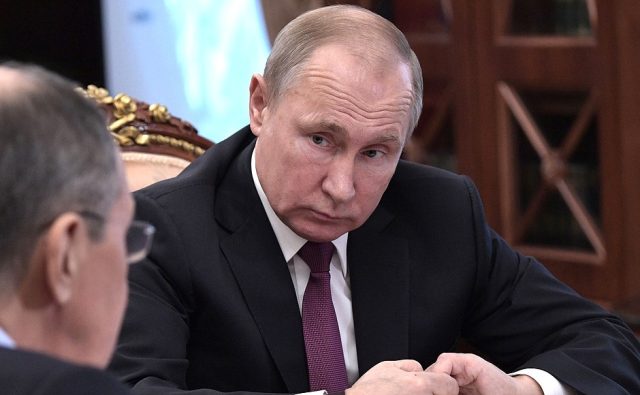
London and Washington run the show in the “rules-based world order,” trying to dictate policy to their own allies as well as countries outside the West, Russian Foreign Minister Sergey Lavrov told RT on Friday.
Russia fully understands that building relations with other countries needs to be based on mutual benefits and equal partnerships, Lavrov said in an interview with RT at the St. Petersburg International Economic Forum (SPIEF).
“This is not what we see in the West these days. The Anglo-Saxons are basically running the show, controlling the rest of the collective West. They are using the current situation, which they created through Ukraine – this war against Russia – to remove competition,” Lavrov elaborated.
“They see us as a competitor, they see China as a competitor. Their doctrinal documents clearly state that. But they are also removing their competition in continental Europe. It’s obvious. The economic and social processes in Germany are grim. Other countries are not much better off,” the Russian foreign minister added.
The only Western state benefiting from the current situation is the US, Lavrov said, “and the UK is always somewhere around, helping America reach its selfish goals.”
According to Lavrov, the “Anglo-Saxons and their allies” are currently trying to pressure countries around the world to side with them against Russia, including the Arab world, using methods he can only describe as “rude.”
“You see, when they talk about these ‘rules’ on which the international order must be based, what they really mean is their diktat,” Lavrov told RT. “Colonial instincts – live at the expense of others. Nothing else.”
Lavrov took particular exception to Western proclamations that their support for Kiev is “defending democracy” and that Ukraine is fighting for “Western values” in the conflict with Russia.
“First of all, if they really see it that way, I cannot but be convinced that they are holding on to Nazi views. Because saying that Western values are being protected in Ukraine is the same as saying that Nazism is your mode of existence,” the diplomat told RT. As for democracy, he added, “they only speak about democracy when they teach others how to live,” but not when it comes to respecting the sovereign equality of other states, per the UN Charter.
Putin: Kiev Has Lost 186 Tanks, 418 Armored Vehicles, Losses Mounting
By Ilya Tsukanov – Sputnik – 16.06.2023
Ukrainian forces launched a long-awaited counteroffensive earlier this month after stocking up on NATO weapons, including Leopard heavy tanks and Bradley fighting vehicles. The offensive has stalled after running into well-prepared Russian defensive lines, with even Kiev’s Western backers expressing concerns about Ukraine’s heavy losses.
Ukraine has failed to reach any strategic objectives amid its ongoing counteroffensive, losing 186 tanks and 418 armored vehicles to date as losses continue to mount, Russian President Vladimir Putin has said.
“In some places Ukrainian forces manage to reach the first line of defense, in some places not. That’s not the question,” Putin said, speaking to reporters during the plenary session of the St. Petersburg International Economic Forum on Friday.
“The question revolves around the fact that they are using their so-called strategic reserves, which consist of several components. The first is meant to be used to break [Russian] defenses, the second to use forces to entrench their foothold over territory. They have not reached their goals at a single section of the front. This is what is important,” he said.
“Their losses are indeed very large, even more than ten to one compared to the Russian army. This is a fact. In terms of equipment, losses are mounting daily. As of today, this includes 186 tanks lost and 418 armored vehicles of various classes,” Putin said.
Russia’s defense enterprises are working round-the-clock to supply the military with weapons, working double or even triple shifts, Putin said. “We have increased the output of military production by 2.7 times, and when it comes to the most needed equipment – by 10 times.”
As for Ukrainian forces, Putin predicted that “soon they will stop using its own equipment” entirely because it’s being systematically destroyed. “Everything they’re using to do battle, and everything they’re using is coming from abroad. One can’t fight that way for long,” he said.
Origins of Conflict
Putin also once again took the opportunity to delve into the root causes of the present crisis, saying “the war in Ukraine, in southeastern Ukraine, was started by the Kiev regime with the support of their Western sponsors in 2014. But everyone in the West tries not to speak about this. I am forced to remind them that aviation, tanks, artillery were used used against the Donbass [back then]. What is this if not a war?”
Kiev “refused” to entertain an end to the Donbass crisis using peaceful means, Putin said, “forcing us to use our armed forces to attempt to put an end to this war.”
It wasn’t Russia that led its Western partners “by the nose” between 2015 and 2022 by signing the Minsk peace deal for Donbass, “without any plans to implement it, as they publicly admitted recently,” he added, referring to recent revelations by the former Ukrainian, German and French leaders that they only signed the Minsk deal to give Kiev time to rearm and prepare for war with Russia.
America At War – Provoking The Consequences
By Christopher Black – New Eastern Outlook – 15.06.2023
The United States of America is at war with Russia. There is not much point in using terms such as “proxy war” to describe the situation. If a belligerent in a war is acting as a proxy for another power and that power is not engaged directly in the war, the term can be useful. But when the power, for which the “proxy” engages in the war, is directly involved in the war itself, then it is a co-belligerent, a party to the war directly, not simply by proxy.
The issue is whether each state is pursuing its own interests and has its own independent means of doing so, or whether the interests and forces of the allied powers are subordinate to the interests and forces of a leader. In such a case, the enemy being attacked can regard all its opponents as a single entity.
In this regard, Clausewitz said that, “if you can vanquish all your enemies by defeating one of them, that defeat must be the main objective of the war. In this one enemy, we strike at the centre of gravity of the entire conflict.”
If we analyse the war in the Ukraine theatre of operations in these terms, it becomes clear that the Ukrainian military forces are in fact forces of the United States of America. They have been created, armed, trained, supplied, financed, and are directed and commanded by the Americans, for American interests. The government for whom they nominally fight is a puppet state, installed in power by the United States and its NATO allies in a coup d’etat in 2014. It has no independent interests outside of American ones, and no control over the war or the forces nominally under its command.
The United States of America is the leader of a hostile military alliance, the purpose of which, since its inception, has been to isolate, threaten, attack and destroy Russia, has conspired with its alliance for years to achieve this end, has spent vast resources to prepare the attack, and has, with malice and determination, sabotaged any proposals for peace. It insists on war. It is the centre of gravity of the entire conflict.
The American government claims that it is not engaged even in a proxy war with Russia, that they are merely assisting an independent nation suffering aggression from another, that this does not put them at war with Russia, a war which, they claim, they are trying to avoid despite their actions and daily propaganda.
But, like the British, and the rest, the truth is the United States of America is a party to the war directly, according to all accepted criteria under international law. It supplies money to conduct the war, tanks, armoured vehicles, aircraft, arms, ammunition, military provisions and other war materials, engages its own military forces-military advisors and combatants, provides military intelligence, obtained on a real-time basis from its spy networks, satellite observations and electronic data collection, engages in an intense propaganda war against Russia, has attempted, through “sanctions,” to impose a blockade on Russia and its economy and people, blew up the Nord Stream gas pipeline, sends, on a regular basis, senior government and military officials, including the American President, Congressional bigwigs and the leaders of other members of the military alliance, to meet with and direct the actions of their lieutenant Zelensky, and conducts constant military exercises further threatening attacks against Russia. The NATO Air Defender military exercises begin in Europe on June 12, the day I write this, involving hundreds of NATO aircraft.
Make no mistake. The United States of America is at war with Russia. No amount of rhetoric can hide that fact and what the consequences for the United States will be. To quote Clausewitz again,
“Danger is part of the friction of war. Without an accurate conception of danger, we cannot understand war.”
The problem is that the neither the Americans nor the other members of its unholy alliance, seem to realise the danger they are in, neither their leaders nor their citizens. Like the British, they suffer from the delusion that they are insulated from the consequences of their war, that they are invulnerable, that Russia will not dare to respond to the attacks upon its territory and people by attacking their territories. This shared delusion makes them ever more dangerous, since they think they can keep escalating their actions in the war without any limits. They cannot-not without consequences.
On June 8th Tass reported, following the statement by the former head of NATO, Fogh Rasmussen, that NATO countries may send their forces into the conflict directly, that Dmitry Medvedev stated,
“Fogh Rasmussen wasn’t a very smart man before. And now he has sunk into a doctrinaire’s dementia. In an interview with The Guardian, he stated that even if Banderavite Ukraine doesn’t receive an invitation to join NATO in Vilnius, the countries of the alliance will be able to send their troops there. Sort of on their own.”
“Well, have the people of these countries been asked? Who among them wants war with Russia? Do they really want hypersonic strikes on Europe? And what does Uncle Sam think about this? It would affect him too, wouldn’t it?”
Again, on June 1, TASS reported that Dmitry Medvedev stated, in connection with the attack on Russians in the Belgorod region by NATO-Ukrainian forces,
“The aim was simple – to cause damage, to harm to the civilian population somehow, And the fact that our enemy is already behaving as a terrorist characterizes in a very specific way both the Ukrainian regime and those who are behind it – first of all the Americans and the Europeans, who, in fact, have got on the warpath with us. Terrorist acts must entail the harshest retaliation possible.”
Medvedev’s views have been stated by other members of the government, by members of the Duma and by President Putin when he referred to Russian strikes on command and decision centres wherever they may be.
The Americans can whistle in the dark, lie to their people, try to fool the world, but what matters is what the Russian government thinks and knows, and it thinks, because it knows, that the United States of America is at war with Russia and seeks Russia’s complete defeat and subjugation. The campaign in Ukraine is just a phase of this war, is the current geographical space for this war, so for the United States and its allies to assume that they can carry out attacks on Russia and not suffer being dealt with in kind or worse, that war cannot be waged on their territories, is a serious mistake.
Indeed, on May 31, Dmitry Medvedev stated with respect to Britain,
“London is, in fact, waging an undeclared war on Moscow, which means that any British official can be viewed as a legitimate military target.
“Today, Great Britain is acting as an ally of Ukraine, by providing it with equipment and personnel as military assistance, that is de facto waging an undeclared war against Russia. Therefore, any of its officials, both military and civilian ones, who are making a contribution to the war effort, can be viewed as a legitimate military target,”
Medvedev was commenting on a remark by British Foreign Secretary James Cleverly who had justified the drone attacks on Moscow, saying that Ukraine had the right to attack targets on Russian territory for self-defense.
He added,
“Foolish officials in the UK, our eternal enemy, should remember that under universally recognized international law governing the conduct of war in modern conditions, including the Hague and Geneva Conventions with their additional protocols, their situation can also be qualified as being at war.”
The same analysis applies in spades to the United States of America.
An interesting comment in this regard was made by the Kremlin spokesman Dmitry Peskov on June 3rd when, according to Tass, he stated in an interview on the Rossiya-1 TV channel, that,
“Ukraine has simply become a tool of the West’s ‘hybrid war’ against Russia, and therefore it is futile to deal with it in resolving the conflict. Now, Ukraine is actually a tool of conflict. The conflict has indeed become broader, as the collective West is waging a hybrid war against our country. It is futile to deal with this tool in order to resolve the conflict, and this must be understood too.”
All the rhetoric from NATO about whether or not Ukraine can become a member of NATO is just a smokescreen to hide from their people the fact that Ukraine is already de facto part of NATO. Whether or not the formalities of signing pieces of paper, of getting the approval of NATO states is followed through, is irrelevant.
Remember that on March 26, 2022, in Warsaw, President Biden stated,
“We have a sacred obligation under Article 5 to defend each and every inch of NATO territory with the full force of our collective power.”
He was referring not only to Poland but to Ukraine as well. What Russia feared is now the reality. Ukraine is de facto a NATO state. And all the rhetoric from the West and commentators about whether or not NATO will invoke Article 5 is another smokescreen designed to mask what is really happening, for NATO has already activated Article 5 of the NATO Treaty.
The talk about invoking it in the future is an attempt to hide NATO’s weakness, its defeats on the military, economic and political fronts, even as they throw one weapon system after another at Russia, and inject NATO forces into the fighting only to have their equipment and forces destroyed.
They have nothing left to throw at Russia that can defeat it. So, they pretend NATO is not yet really engaged. But these facts make the USA even more dangerous as it becomes clear that the combined West cannot defeat Russia, a nuclear power, using conventional means.
Remember also that the United States has a first strike nuclear arms policy, and they have already placed, in Romania and Poland, land-based versions of the Aegis Air Defence System, which can be used to launch nuclear-armed missiles at Russia. These systems have been tested. The one in Poland is reported to be fully operational as of June 30. The danger to Russia is immediate and existential. Those systems are one of the reasons Russia activated its military operations. Russia has further responded to this, and to the attacks on Russia, clearly planned and ordered by the US and UK, by placing tactical nuclear weapons in Belarus which are to be made operational after July 7, when the facilities to store and use them will be completed.
Those tactical nuclear weapons are designed for battlefield use. We hope it never comes to that, but Russia faces a direct threat from people bent on its destruction that think they are untouchable. So, Russia faces very difficult choices on what to do and how to prevent an escalation to all our nuclear war while ensuring its own security.
On May 23, during his visit to Laos, Deputy Head of the Russian Security Council Dmitry Medvedev issued a warning on the day Russian security forces destroyed the Ukrainian raiding force that attacked civilians in the Belgorod region.
“The North Atlantic alliance does not take the threat of nuclear war seriously enough, thus making a big mistake. NATO is not serious about this scenario. Otherwise, NATO would not have supplied such dangerous weapons to the Ukrainian regime. Apparently, they think that a nuclear conflict, or a nuclear apocalypse, is never ever possible. NATO is wrong, and at some point, events may take a completely unpredictable turn. The responsibility will be placed squarely on the North Atlantic Alliance,”
Medvedev pointed out that no one knows whether the point of no return has been passed,
“No one knows this. This is the main danger. Because as soon as they provide something, they say: let’s supply this, too. Long-range missiles or planes. Everything will be all right. But nothing will be fine. We will be able to cope with it. But only more and more serious types of weapons will be used. That’s what the current trend is.”
So, we come back to Clausewitz. The American government and people cannot understand the war they are engaged in unless they understand the danger, they are in. They have to understand their country is the centre of gravity in this war, whose defeat will mean the defeat of all its minions in NATO. The Russian people know the danger they are in. The Americans, through NATO, through their NATO puppets in Ukraine, have attacked Russians in Russia. It is logical to expect that Russia will decide to bring home to the Americans what war means, what danger they are in, and they do not need to use nuclear weapons to achieve this.
Russia can strike using its conventional hypersonic weapons as well, against which the USA has no defence whatsoever, as has been established with the destruction of the Patriot Air defence complexes in Ukraine which could not stop Russian missiles. They have no other air defence systems operational in the United States territory or on its naval forces that can stop them either. Russia has not decided to take this step yet. But it can and the Americans can do nothing about it except bluster about using nuclear weapons against Russia. But Russia took that possibility into account when the special military operation began.
The American people have not directly experienced war in their own territory for a long time. They have no idea what it is. They have no idea of the danger they are in so long as their government continues its aggressive policies, not only against Russia, but China as well. The American people, misled and misinformed, have no conception of the dangers of this war anymore than the British people and the peoples of the other NATO countries do. The American people must be warned. The United States of America is at war, and no amount of bluffing and lying can protect them from the consequences their government is provoking. To repeat what I said in my warning to the people of Britain, the consequences are predictable and they will be catastrophic.
Christopher Black is an international criminal lawyer based in Toronto. He is known for a number of high-profile war crimes cases and recently published his novel Beneath the Clouds. He writes essays on international law, politics and world events.
US involvement prevents Ukraine peace – Hungary
RT | June 14, 2023
Near-term prospects for ending the Ukraine conflict are not looking good, Hungarian Foreign Minister Peter Szijjarto told the Turkish Anadolu agency on Wednesday.
“Unfortunately, all developments are showing a totally different direction. The weapons deliveries, the very open reference to nuclear capacities, the offensives against each other from the two sides, the Ukrainian soldiers being trained in European countries, the very deep involvement of the Americans. So these are not heading toward peace for sure,” he said, during an interview in New York.
Szijjarto also pointed out that Ukraine is only able to fight Russia because of weapons supplied by the US, and that a long-term peace deal would depend on an agreement between Moscow and Washington.
Hungary has repeatedly called for a ceasefire in Ukraine and urged a peaceful resolution of the conflict. Budapest has also refused to allow the transit of Ukraine-bound NATO weapons across its territory, or training of Ukrainian soldiers on its soil.
Late on Tuesday, US Senator Jim Risch of Idaho blocked the sale of HIMARS rocket artillery to Hungary, citing Budapest’s delay in approving Sweden’s membership in the US-led military bloc. As the top Republican on the Senate Foreign Relations Committee, Risch is able to hold up the weapons deal, worth an estimated $735 million and involving 24 HIMARS launchers and the ammunition for them.
Hungary is not opposed to Stockholm’s membership in principle, Szijjarto told Anadolu, but the parliament in Budapest is taking into consideration the “insults” and interference into the country’s internal affairs coming from Stockholm.
Multiple Swedish officials have accused Hungary of “backsliding” on democracy and the rule of law and accused PM Viktor Orban of acting like a “dictator,” as part of an EU campaign to compel obedience from Budapest.
“We never interfere in the domestic issues of other countries,” Szijjarto said. “Such accusations give a reason to put this issue on hold for a while.”
NATO is hoping to finalize Sweden’s membership ahead of next month’s summit in Vilnius, but even if Hungary succumbs to US pressure, that would still leave Türkiye as a holdout. Ankara has repeatedly said that Stockholm needs to do more to implement the agreement reached last year, involving the extradition of Kurdish activists accused of terrorism.
How Will The US Respond After The Failure Of Kiev’s NATO-Backed Counteroffensive?
BY ANDREW KORYBKO | JUNE 14, 2023
Kiev’s NATO–backed counteroffensive has been disastrous, which even the Mainstream Media was forced to acknowledge after it became impossible to deny. CNN revealed that it already lost around 15% of its Bradley infantry fighting vehicles during the first week, while Forbes reported that about the same percentage of German Leopard tanks were destroyed as well as half of its “unique” breaching vehicles. Meanwhile, President Putin claimed that 25-30% of all their total foreign equipment was lost.
Biden’s re-election hinges on the success of the West’s most important military campaign since World War II, thus prompting the question of how the US will respond after its failure. The best-case scenario is that it’ll force Kiev to begin ceasefire talks with Russia aimed at reaching a Korean-like armistice, but that probably won’t happen until all other options are exhausted. These include expanding the conflict to Belarus, Moldova, and/or Russia’s pre-2014 borders and approving a Polish-led military intervention.
All of these options could lead to American-provoked nuclear brinksmanship with Russia, which is already being prepared for as evidenced by NATO’s largest-ever air drills that are presently occurring in Germany and the reported strengthening of its nuclear capabilities on the continent. There’s no chance of this dangerous gamble succeeding and Russia capitulating to blackmail, however, since it’s more than capable of guaranteeing that the West would be totally destroyed if it dared to use nukes first.
Russian subs prowl the oceans and are always ready to launch a retaliatory nuclear strike if the order is given. On the European front, Kaliningrad has been turned into a nuclear-equipped fortress, while tactical nukes are about to be deployed to nearby Belarus. Russian Kinzhal hypersonic missiles can pierce the US’ so-called “missiles defense shield” so there’s no hope of it preventing “mutually assured destruction” in the event that liberal–globalist warmongers decide to strike first.
These purely defensive capabilities should more than suffice for deterring the apocalypse, though it can’t be taken for granted that the US will react rationally after the failure of its proxy’s counteroffensive. Too much is riding on the impossible scenario of Kiev completely removing Russia from all the territory that it claims as its own for Washington to simply accept defeat. Its policymakers might therefore think that they should “escalate to de-escalate” out of desperation to achieve something that can be spun as a “victory”.
There’s no chance that Russia will ever make unilateral concessions on its objective national security interests, let alone in the face of nuclear blackmail, which is why the US’ liberal-globalist warmongers should banish the thought before they put humanity’s existence at risk. Whatever their reaction to the failure of Kiev’s counteroffensive will be, it must be guided by this fact and ideally de-escalate the NATO-Russian proxy war since it’s impossible to achieve anything from further escalating this conflict.
Ukraine has lost hundreds of pieces of Western-supplied hardware – Putin
RT | June 13, 2023
Ukrainian forces have already lost dozens of tanks and hundreds of armored vehicles in their attacks on Russian positions, President Vladimir Putin told war correspondents on Tuesday. Kiev’s troops have so far failed to achieve success on any of the fronts in their long-touted counteroffensive, he added.
Kiev’s forces have been attacking the Russian positions in four major directions, the president said during the meeting, adding that reserves, including those equipped with the Western-supplied military hardware, have also been thrown into the fray. The offensive has led to massive personnel and material losses for Kiev, Putin added.
Ukraine has lost “at least 160 tanks and 360 armored vehicles,” Putin said, adding that the military hardware destroyed by the Russian troops accounts for between 25% and 30% of all Western military equipment supplies.
“There are also losses that we do not see, which are a result of long-range high-precision strikes,” Putin said, adding that Ukraine’s real losses are likely higher than the figures he named. As for the personnel losses, Putin said they were “ten times lower” among the Russian troops than among the Ukrainian ones.
The president also said that “fundamental goals” of the Russian military operation in Ukraine remain the same and the Kremlin does not plan to change them. At the same time, he also maintained that Moscow “sincerely sought” to reach an agreement with Kiev and resolve the differences existing between formerly Ukrainian southeastern regions, which have since joined Russia following a series of referendums in autumn 2022, and the rest of the county.
The Ukrainian authorities had been touting their offensive for months since early 2023. The operation was finally launched last week and has so far failed to bring any dramatic changes on the frontline.
The Russian Defense Ministry has since repeatedly reported on the Ukrainian forces losing dozens of military hardware in their attacks, including tanks and armored vehicles supplied by the West. The ministry also published several videos showing the Russian forces successfully striking the Ukrainian heavy equipment.
Earlier on Tuesday, one such video showed Russian soldiers seizing a German-made Leopard 2 main battle tank and US-produced Bradley infantry fighting vehicles. Kiev demanded more tanks from Berlin this week.
Ukrainian military lost most of the M2 Bradley AFVs that were used in its recent counter-offensive
By Ahmed Adel | June 13, 2023
Ukrainian soldiers said that most US-made M2 Bradley armoured vehicles were destroyed during the counter-offensive in the Zaporozhye region. According to AFP, the vehicles were destroyed just outside the small town of Orikhiv.
“Of nine vehicles attached to the group’s mechanised infantry unit — not the only one involved in the battle — six were wrecked, three damaged but repairable, and one was unscathed,” AFP reported, adding that a Ukrainian soldier said only “very small progress” was made against the Russian army.
“Who would be happy receiving those orders, ‘Go and take those Russian positions which are well protected’?” a senior officer, who asked not to be identified, said according to AFP.
In early June, Russian Defence Minister Sergei Shoigu said that in the direction of Zaporozhye, Ukrainian troops consisting of 1,500 fighters and 150 armoured vehicles tried to break through Russian defences but lost up to 350 troops and 30 tanks in two hours. The minister stressed that the Ukrainian brigade was stopped in all zones toward Zaporozhye.
With the Ukrainian offensive underway, Kiev has virtually no gains to show. In contrast, images of destroyed Leopard tanks and Bradley infantry fighting vehicles used by Ukrainian troops have circulated on social media. For this reason, several experts have warned about a heavy military defeat for Ukraine and another geopolitical failure for NATO, which again is resorting to intervention in remote territories outside its jurisdiction to achieve its objectives against Russia.
While the US and its allies have generously provided Ukraine with weapons and military vehicles during the current conflict, Ukrainian forces are institutionally and operationally incapable of successfully absorbing the wide and inconsistent array of equipment and weaponry on the battlefield.
Nonetheless, the US and the UK need Ukraine to launch a counteroffensive as they are the main financiers of Kiev’s escalation but are experiencing growing poverty and economic crises and therefore need to justify to their citizens the vast money sent to Ukraine.
Former Central Intelligence Agency agent and Executive Director of the Council for the National Interest, Philip Giraldi, warned that Western media are trying to make it appear that the Ukrainian counter-offensive is succeeding and that Ukraine’s forces are encroaching on Russian positions. In this sense, and despite what is happening on the battlefield, Giraldi stressed that US, UK, and German politicians are obliged to speak positively about the situation in Ukraine.
Despite the rhetoric, images of destroyed M2 Bradley infantry fighting vehicles and German-built Leopard 2A6 tanks abandoned and burning on the Ukrainian battlefield, the harsh truth about the futility of defeating Russia is starting to sink in. The reality is that Ukraine never had the capabilities to achieve its stated goal of piercing Russian defences to sever the land bridge connecting Crimea to Russia proper.
The Western hope was that Russia would be demoralised by these casualties and accept a negotiated end to the conflict on terms acceptable to Ukraine and its Western allies. Evidently, Ukraine and its allies have failed.
The genesis of this failure can be attributed to two things. First, the low opinion that Ukraine and its NATO allies had of the combat capabilities of the Russian Army and the forces deployed in the Zaporozhye region, and second, the unrealistic expectations placed on the NATO training and equipment that were provided to Ukrainian forces and assigned to the task of breaking through Russian defences.
It is reasonable to assume that, using intelligence assessments that highlighted perceived command and control weaknesses and low morale among Russian forces, NATO and Ukrainian military planners believed that Russian defences in the Zaporozhye sector would collapse under the weight of a NATO-style assault.
Although fighting in Zaporozhye is not yet over, initial results on the battlefield show that contrary to the expectations of Ukraine and its NATO partners, the Russian military professionally performed their tasks, decisively defeating Ukrainian forces. NATO and Ukraine gambled that Russia lacked the military capability to successfully implement its military doctrine, believing that Russian command teams lacked the necessary communications to coordinate the complex operations needed and that Russian forces — especially those that were recently mobilised — lacked the training and morale to perform well in stressful combat conditions.
NATO and the Ukrainian high command threw the Ukrainian brigades into the grip of the Russian defensive lines without adequate fire support, thinking that the Russians were unable to maximise their superiority in artillery and air power to neutralise and destroy the forces of Ukrainian attackers before they could generate the momentum expected. Instead, this led to the humiliating loss of most of the US-made M2 Bradley provided to the Ukrainian military for this front.
Ahmed Adel is a Cairo-based geopolitics and political economy researcher.
NATO Drills Serve as Cover for ‘Less Publicized Actions’ Like Nord Stream Sabotage
By Andrei Dergalin – Sputnik – 12.06.2023
On June 12, the Western military bloc that already fans the flames of the Ukrainian conflict by supplying vast quantities of weapons and military hardware to Kiev launches a massive military exercise in Germany that may well become NATO’s biggest drill ever.
As US Ret.Lt.Col. Karen Kwiatkowski explained to Sputnik, NATO is a “military alliance of disparate equipment, national procedures, and language,” and thus needs to conduct such exercises in Europe because so far, the bloc’s joint operations have been taking place “outside of Europe proper.”
Noting that the exercise will “practice defense (as NATO defines it) and conduct forward eastern operations as a 15 plus member fighting bureaucracy,” Kwiatkowski, a former analyst for the US Department of Defense, also observed that such events may also serve another purpose.
“All publicized military and government exercises and activities always provide cover for other activities that are less well publicized, as we have seen with last summer BALTOPS 22, and the subsequent remote detonation of pre-planted explosives designed to sever both Nordstream gas pipelines,” she said.
When asked why NATO intends to essentially showcase so much military equipment during the exercise, Kwiatkowski suggested that the military bloc has been pushing a propaganda narrative portraying Ukraine as “Europe’s last stand against a crazed Russian invader set to sack the cities of western Europe,” and that this display is supposed to show that NATO members have the gear to resist such imagined invasion.
“In a sense, it is a NATO propaganda effort made necessary by a previous propaganda effort. NATO member states and their voting populations are beginning to realize what is really happening to their actual independent ability to defend their borders as they bleed stockpiled weapons systems, ammunition and artillery into Ukraine for free, and now face increased military budgets to replenish and upgrade their NATO and national systems,” Kwiatkowski mused.
According to her, this exercise may be an attempt to “shore up European confidence that the Ukraine proxy war has in fact not depleted their defensive capability.”
While Lt. Gen. Ingo Gerharz, commander of Germany’s Air Force, previously described NATO’s exercise as purely “defensive in nature,” the bloc’s leadership “is, and has been for decades, confused about the meaning of the terms ‘defensive’ and ‘promise’,” Kwiatkowski argued.
“It is easier to understand NATO strategy in the big picture if one accepts that NATO is about continuing to expand its mission, its budget, and importantly, its dominance as a European organization more powerful and important than the EU itself,” she said. “As the EU has lost membership, NATO aggressively signs on new countries and demands its share of the national budgets.”
The ex-DOD analyst also lamented that while “aging and declining” Europe would have probably been better off opting for diplomacy and a “repair of relationships,” what we see instead is a “massive waste and risky military behavior on the part of its generals and politicians.”
Featured Video

HE SAVED LIVES. NOW HE FACES PRISON.
or go to
Aletho News Archives – Video-Images
From the Archives
NATO Sanctions and the Coming Global Diesel Fuel Disaster
By F. William Engdahl – New Eastern Outlook – 11.04.2022
Amid the ongoing global inflation crisis, NATO heads of state and mainstream media repeat a mantra that high energy prices are a direct result of Putin’s actions in Ukraine since end of February. The reality is that it is the western sanctions that are responsible. Those sanctions including cutting SWIFT interbank access for key Russian banks and some of the most severe sanctions ever imposed, are hardly having an impact on the military actions in Ukraine. What many overlook is the fact that they are increasingly impacting the economies of the West, especially the EU and USA. A closer look at the state of the global supply of diesel fuel is alarming. But Western sanctions planners at the US Treasury and the EU know fully well what they are doing. And it bodes ill for the world economy.
While most of us rarely think about diesel fuel as anything other than a pollutant, in fact it is essential to the entire world economy in a way few energy sources are. The director general of Fuels Europe, part of the European Petroleum Refiners Association, stated recently, “… there is a clear link between diesel and GDP, because almost everything that goes into and out of a factory goes using diesel.” … continue
Blog Roll
 Aletho News
- Trita Parsi: Middle East Unraveling — Are We on the Path to World War?
- Iran FM meets with US envoy on UN meeting’s sidelines at American side’s insistence: Report
- Qatar PM calls for Gulf security framework with Iran, says war must be ‘wake-up call’
- China condemns US extortion of Iranian airlines, rejects Washington’s ‘illegal’ sanctions threats
- Italy to move military personnel from Taif base after missile strike
- Finland’s Stubb tells European leaders to calm down
- Defeating Russia on battlefield impossible – Fico
- Finland’s Gender Clinic Reversal
- Massachusetts Wants Mental Health Visits, Why Does Government Use ‘Health’ to Enter Our Homes & Families?
- US lawmaker admits American people footing bill for Trump’s failed aggression against Iran
- If Americans Knew
- Sanctions are collective punishment: immoral and self-defeating
- Phosphorus Munitions Fired by Israel Burn Groves, Orchards in Southern Lebanon
- Israel Carries Out New Ceasefire Violations Across Gaza
- AI – Emphasis on the ‘I’: Israel Is Funding AI Chatbot Propaganda
- Israel Blocking Hundreds of Wheelchairs for Injured Children From Entering Gaza
- Israel Is Expanding and Upgrading Compounds for Palestinian Militias in Gaza
- The Palestinian-American Residents of This West Bank Town Are Wondering: Where Is Trump?
- Gaza desperately needs tents, wheelchairs, fuel… and everything else (Israel blocks it all) – Daily Update
- Israeli Attacks in Gaza Kill at Least Seven Palestinians Over Three Days, including Woman and Child
- Trump’s militarization of Washington DC as he pursues Israel’s war against Iran
- No Tricks Zone
- New Study: Earth And Venus Surface Warmth Largely Explained By Convection And Lapse Rate, Not CO2 Or Radiation
- 2025 Nature Paper Claiming Worsening Global Drought Gets RETRACTED …Heavily Flawed
- New Study: ‘Global Drought Shows No Detectable Recent Acceleration Under Climate Warming’
- Economic Masterminds: German Socialists Suggest Taxing Productivity Gains Stemming From Using AI
- The South China Sea Has Not Been Cooperating With The Climate Change Narrative
- Energy Crisis: Germany Enters Heating Season With Historically Low Gas Reserve Fill Levels
- New Study: The Antarctic Ice Sheet Gained Mass From 2020-2024 Due To Staggering Snow And Ice Accumulation
- Study: Ocean Heating Rates From Thousands Of Years Ago ‘Dwarf’ Modern Ocean Heating Rates
- Climate Extremists Target, Attack Large-Scale Power Grid Infrastructure In Germany!
- New Study: Antarctic Ice Melt Has Contributed Less Than 1 Centimeter To Sea Level Rise In The Last 30 Years

