The New York Times solves Russia collusion case: Russia spent $100,000 in Facebook Ads to defeat Hillary
By Alex Christforou | The Duran | September 7, 2017
Who would have known that all it takes to beat Hillary Clinton, subvert “exceptional” US democracy, and send the entire western mainstream media into “red scare” panic mode was $100,000 in Facebook ads.
The New York Times has uncovered the smoking gun that lead to the rise of Trump, and the fall of “Crooked” Hillary Clinton.
According to the “groundbreaking” reporting of the New York Times…
Providing new evidence of Russian interference in the 2016 election, Facebook disclosed on Wednesday that it had identified more than $100,000 worth of divisive ads on hot-button issues purchased by a shadowy Russian company linked to the Kremlin.
Most of the 3,000 ads did not refer to particular candidates but instead focused on divisive social issues such as race, gay rights, gun control and immigration, according to a post on Facebook by Alex Stamos, that company’s chief security officer. The ads, which ran between June 2015 and May 2017, were linked to some 470 fake accounts and pages the company said it had shut down.
Mr. Stamos wrote that while some of the ads specifically mentioned the two candidates, most focused instead on issues that were polarizing the electorate: “divisive social and political messages across the ideological spectrum — touching on topics from LGBT matters to race issues to immigration to gun rights.”
Buried deep inside the NYT article, is an admission that there is zero evidence that Trump colluded with the Russians…
To date, while news reports have uncovered many meetings and contacts between Trump associates and Russians, there has been no evidence proving collusion in the hacking or other Russian activities.
According to The Gateway Pundit, Special Counsel Robert Mueller’s probe into Russian interference in the 2016 election has taken yet another strange turn. This time, Facebook CEO Mark Zuckerberg has transferred data on ads “likely” purchased by Russian entities.
Those dastardly “Russian entities” always out to destroy American democracy, and using Zuckerberg’s neo-liberal Facebook to accomplish their evil desires… and doing it on a shoestring budget.
If Hillary Clinton only knew about the power of Facebook ads, she might have directed $101,000 to FB, outspend Russia, and be the Madame President that she so richly deserved.
CNBC adds…
An internal Facebook investigation has found it is “likely” Russian operatives spent $100,000 on ads with “divisive messages” between June 2015 and May 2017.
A blog post on the issue, which was published on Wednesday, said the operation involved 3,000 separate ads over a two-year period and was likely to have been run out of Russia. In addition, Facebook found 470 affiliated fake accounts and pages.
The social media giant has turned over all information about those ads to special counsel Robert Mueller, a source familiar with the matter said told Reuters on Wednesday. That includes copies of the ads and the identity of the buyers, the source said.
Former FBI Director Mueller is investigating Russian efforts to influence the 2016 election and whether the Trump campaign colluded with the Kremlin.
Newsweek Claims Russia Orchestrated Boston Marathon Bombing
Sputnik | September 6, 2017
Online publication Newsweek upped the ante in explosive rhetoric Sunday by suggesting the Tsarnaev brothers, responsible for the 2013 Boston Marathon terror attack, were operating on behalf of Moscow – even though Russian security agencies tipped off the FBI and CIA that Tamerlan Tsarnaev and his mother presented imminent security risks.
Since evidence is apparently optional for arguments published by Newsweek, this time, an author featured in the publication seems to have looked out onto the world, found it bloody and complicated, and decided to pin any old recent disaster on Russia.
The United Kingdom’s Brexit vote, the Syrian refugee crisis in Europe and the rise of right-leaning politicians can all be traced back to one single, remarkably effective cause: Moscow. “Russia must accept a share of responsibility” in all of these events, Andrei Kovalev wrote in a September 3 op-ed for Newsweek.
As for the Boston bombing, he asks, “Did the emigrants, the brothers Tsarnaev, of Chechen nationality, responsible for the Boston attack, act on their own initiative? It seems most unlikely.”
Kovalev worked as a diplomat in the Soviet Union under Mikhail Gorbachev as well as for Russian presidents Boris Yeltsin and Vladimir Putin. “Sometimes I am reproached for attributing to the Kremlin too much influence in the world,” he confessed in the article.
In reality, Russian security services sent warnings to multiple US agencies explaining that Chechen-American Tamerlan Tsarnaev had “changed drastically since 2010” and that he and his mother were adherents to “radical Islam” long before the Boston attack occurred. “The Russians were concerned that mother and son were very religious and strong believers, and they could be militants if they returned to Russia,” a US official told the New York Times in 2013.
“You have Russian intelligence services contacting two agencies without our federal government responsible for our national security, the FBI and CIA … they tell us, ‘We believe you have a radical Islamist in your midst,'” South Carolina Senator Lindsey Graham explained at the time.
Newsweek’s readers quickly pointed out that the claim that Russia had orchestrated the Boston Marathon terror attack originated with Louise Mensch, a former UK member of Parliament who shot to fame as a darling of the Russia-bashing wing of the Trump resistance, but, given her penchant for calling literally any critic a Russian spy, has somewhat fallen from favor. Mensch was recently embarrassed by the Guardian for broadcasting information around the internet that was made up by a hoaxer but supported her “Russians are behind it all” agenda. As Radio Sputnik’s Fault Lines host Garland Nixon joked, “pretty much everybody that dies, the death was related to Vladimir Putin,” in Mensch’s world.
When faced with accusations of spreading deleterious and false information, Mensch doubled down and said the Guardian was being operated by Russian security agency spies, too. The former MP alleged that one of her collaborators, Claude Taylor, had been duped, but that her reporting remained free of falsehoods.
Mensch has nevertheless been published by the New York Times, the Guardian and the Sun in addition to making TV appearances on MSNBC and Bill Maher’s “Real Time” show. A running list of her baseless conspiracies includes Facebook CEO Mark Zuckerberg acting as a mole and Putin ordering the assassination of Breitbart News founder Andrew Breitbart to pave the way for Steve Bannon to take the reins of the organization.
Newsweek, too, has gotten quite good at getting things wrong. It previously deleted two slanderous articles attacking a former Sputnik News editor following a defamation lawsuit settlement levied by now-attorney and former Sputnik weekend editor William Moran. During the scandal, in which the young lawyer represented himself in legal proceedings alleging slander against himself and Sputnik as a whole, Newsweek Editor-in-Chief Jim Impoco was fired. The February ouster was first reported by Politico.
Newsweek was forced to settle with Moran in July. “I brought this case before I was admitted to the bar and was up against the talented attorneys at mega law firm Pepper Hamilton,” Moran said in a statement that month after a settlement was reached between the publication and recent Georgetown Law graduate for an undisclosed sum.
Shortly after, Editor-in-Chief Matt McAllester was forced to take a leave of absence for “personal reasons” in the beginning of August following an age and sex discrimination suit filed against Time Inc. by its former European editor, Catherine Mayer, in which McAllester is featured as the main offender. By August 25, McAllester had been dismissed from his position, the New York Post reported, citing internal company memos.
See Also:
Newsweek Seems to Fire Disgraced Writer Eichenwald After Humiliating Settlement
Newsweek Takes Down Fabricated Sputnik-Trump Collusion Stories After Humiliating Settlement
Newsweek Shamefully Silent as Twitter Demands Retraction From Implicated Writer
We Told You So: Google Is NSA
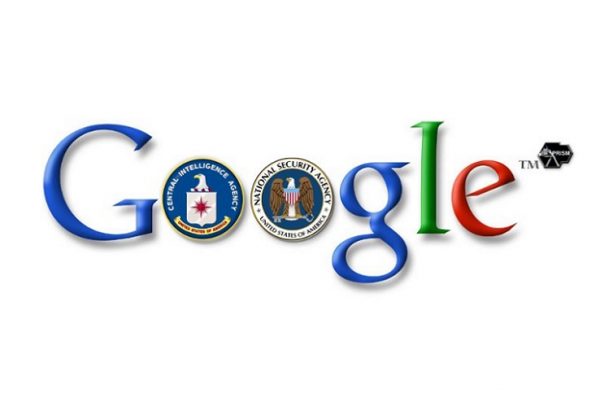
By Phil Butler – New Eastern Outlook – 04.09.2017
Google wants to be Big Brother’s eyeballs on you. All us Internet gurus knew this since before the NSA was found out spying on everybody. But now the Mountain View boys are more determined than ever to filter your information, and to obliterate any semblance of truth reaching people.
If I had led into an article with that paragraph even five years ago, I’d have been instantly labeled a “conspiracy theorist” or worse. How about now dear reader? Is the idea the technocrats and their huge monied handlers want to run you crazy? I didn’t think so. But if you need proof beyond the obvious, Google’s 160-page handbook tells us all exactly how they plan to spoon feed us only “their” news. The lengthy handbook is a heavy read for the average person, but the book does lay out an Orwellian machination unlike anything seen since the Nazi propaganda machine of Hitler. Pay close attention to the “instructional” on page 108 where Google dictates who does and does not meet rating criteria. The section under Fails to Meet (FailsM) is a steamrolling of the free press, and suggested hiding certain kinds of sites:
“Pages that directly contradict well established historical facts (e.g., unsubstantiated conspiracy theories), unless the query clearly indicates the user is seeking an alternative viewpoint.”
As per usual, Google has obscured its real intentions with the idea some super smart algorithm is “filtering” or “learning” results to help your life be better. Once again Google supposes to do “what is good for us” by destroying some sources and propping up others. Using terms like “search quality rating guidelines” and “page quality rating guidelines” the little Machiavellis at Google provide justification for controlling what you see and read on the web. Censorship and monopolization of internet information and business – this is the case against the Mountain View boys this time.
Then there’s the section concerning how Google will rank the best of the best news sites entitled “A High Level of Expertise/Authoritativeness/Trustworthiness (EAT)”. The acronym should clue you that Google search users are about to be fed some bullshit truth. “High Quality Pages” for the Google oligarchs means that either the page owner pays Google through the nose, or that the site in question serves Google’s masters well – period. At the top of this matrix of sources are newspapers (High News 1) like The Washington Post and New York Times, followed by the articles within those pages (High News 2). On down the list of authority pages are government sites like the US State Department and White House, and then pages categorized (believe it or not) “High Humor”. So, Google has factored out the importance of truth or even the importance of the news story itself, in favor of “who” wrote the story and the “reality” Google wants you to accept – Big Brother’s network – end of story.
Melissa Dykes of Truth Stream Media made a video about the new Big Brother effort, and Government Slaves did their take as well. And the latter even suggests alternatives to using Google Search, such as Yandex and DuckDuckGo, for those refusing the totalitarian tendencies we see headed our way these days. For people who would rather boycott the imminent evil Government Slaves also lists 400 sites for independent news outside Google’s MATIX. My advice for everyone is to start making the transition away from Google and Facebook now. My own vast experience in dealing with these tech people has revealed people with no morals whatsoever, people willing to do anything necessary to perpetuate their dominance in digital. Google has destroyed millions of people’s livelihoods, broken its own code, lawyers itself around anti-trust and fair practice rules, avoided taxes, and colluded against the people of the United States with the intelligence agencies. All these assertions are not just this writer’s ramblings. Back in 2014 John W. Whitehead wrote about the NSA and Google for the Huffington Post :
“Just look around you. It’s happened already. Thanks to an insidious partnership between Google and the National Security Agency (NSA) that grows more invasive and more subtle with every passing day, “we the people” have become little more than data consumer commodities to be bought, sold and paid for over and over again.”
On August 29th the notorious Zero Hedge creator, Tyler Durden wrote a piece entitled “Why Google Made The NSA”, which revealed a project called INSURGE INTELLIGENCE, a crowd-funded investigative journalism project that had released a story of how the United States intelligence community funded, nurtured and incubated Google as part of a drive to dominate the world through control of information. You read that correctly. My past assertions that Sergey Brin and Larry Page were “lifted up” by unseen money were probably correct. While I presumed George Soros or Rockefeller being behind it, it’s conceivable Uncle Sam was the spook in the woodpile. The Zero Hedge story delves deep into a “deep state” we never imagined in our worst nightmares. The report unveils Pentagon Highlands Forum’s more or less taking over tech giants like Google to pursue mass surveillance. Furthermore, the report shows how the intelligence community has played a key role in secret efforts to manipulate the media and the public. The endless crisis and war we find ourselves in, is in large part because of the efforts of Google and the other technocratic institutions. In another section the author frames how the Obama administration really consolidated this “Big Brother” control:
“Under Obama, the nexus of corporate, industry, and financial power represented by the interests that participate in the Pentagon Highlands Forum has consolidated itself to an unprecedented degree.”
These people refer to themselves as “the gatekeepers”. Their arrogance is only exceeded by their amoral agnosticism. The successes of the information age, Silicon Valley’s dubious venture capital bonanzas, the mysterious ways in which fairly ordinary innovators were propelling into the limelight warns us to the underlying swamp Donald Trump described. But it is the immensity of the network that should clue us. Imagine a new president taking office and fending off attacks as best he could, only to discover that the whole machine of the US government being under such a controlling influence. It’s easy to theorize after learning all this, how Trump did an about face on so many issues. He must have been overwhelmed. Or, he was part of the plan all along.
Finally, if we expand on this news and include other technocrats like Bill Gates or Jeff Bezos, then understanding world crises caused by bad US policy becomes simpler. It’s a corporation – all of it is a corporation for war and friction. Bezos walking with former Marine General and current Secretary of Defense, “Mad Dog” Mattis at Amazon is symbolic. Trump’s posture with Israel, the Saudis, even on domestic policy tells us those campaign promises sank in the wake of a deep state ship at full steam forward. If we allow Google and other such players to continue unchecked….
Well, you are as capable as I of completing that sentence. I only pray we are not too late.
Russia-gate’s Totalitarian Style
By Robert Parry | Consortium News | September 2, 2017
It is a basic rule from Journalism 101 that when an allegation is in serious doubt – or hasn’t been established as fact – you should convey that uncertainty to your reader by using words like “alleged” or “purportedly.” But The New York Times and pretty much the entire U.S. news media have abandoned that principle in their avid pursuit of Russia-gate.
When Russia is the target of an article, the Times typically casts aside all uncertainty about Russia’s guilt, a pattern that we’ve seen in the Times in earlier sloppy reporting about other “enemy” countries, such as Iraq or Syria, as well Russia’s involvement in Ukraine’s civil war. Again and again, the Times regurgitates highly tendentious claims by the U.S. government as undeniable truth.
So, despite the lack of publicly provided evidence that the Russian government did “hack” Democratic emails and slip them to WikiLeaks to damage Hillary Clinton and help Donald Trump, the Times continues to treat those allegations as flat fact.
For a while, the Times also repeated the false claim that “all 17 U.S. intelligence agencies” concurred in the Russia-did-it conclusion, a lie that was used to intimidate and silence skeptics of the thinly sourced Russia-gate reports issued by President Obama’s intelligence chiefs.
Only after two of those chiefs – Director of National Intelligence James Clapper and CIA Director John Brennan – admitted that the key Jan. 6 report was produced by what Clapper called “hand-picked” analysts from just three agencies, the Times was forced to run an embarrassing correction retracting the “17 agencies” canard.
But the Times then switched its phrasing to a claim that Russian guilt was a “consensus” of the U.S. intelligence community, a misleading formulation that still suggests that all 17 agencies were onboard without actually saying so – all the better to fool the Times readers.
The Times seems to have forgotten what one of its own journalists observed immediately after reading the Jan. 6 report. Scott Shane wrote: “What is missing from the public report is what many Americans most eagerly anticipated: hard evidence to back up the agencies’ claims that the Russian government engineered the election attack. … Instead, the message from the agencies essentially amounts to ‘trust us.’”
However, if that was the calculation of Obama’s intelligence chiefs – that proof would not be required – they got that right, since the Times and pretty much every other major U.S. news outlet has chosen to trust, not verify, on Russia-gate.
Dropping the Attribution
In story after story, the Times doesn’t even bother to attribute the claims of Russian guilt. That guilt is just presented as flat fact even though the Russian government denies it and WikiLeaks founder Julian Assange says he did not get the emails from Russia or any other government.
Of course, it is possible the Russian government is lying and that some cut-outs were used to hide from Assange the real source of the emails. But the point is that we don’t know the truth and neither does The New York Times – and likely neither does the U.S. government (although it talks boldly about its “high confidence” in the evidence-lite conclusions of those “hand-picked” analysts).
And, the Times continues with this pattern of asserting as certain what is both in dispute and lacking in verifiable evidence. In a front-page Russia-gate story on Saturday, the Times treats Russian guilt as flat fact again. The online version of the story carried the headline: “Russian Election Hacking Efforts, Wider Than Previously Known, Draw Little Scrutiny.”
The Times’ article opens with an alarmist lede about voters in heavily Democratic Durham, North Carolina, encountering problems with computer rolls:
“Susan Greenhalgh, a troubleshooter at a nonpartisan election monitoring group, knew that the company that provided Durham’s software, VR Systems, had been penetrated by Russian hackers months before. ‘It felt like tampering, or some kind of cyberattack,’ Ms. Greenhalgh said about the voting troubles in Durham.”
The Times reported that Greenhalgh “knew” this supposed fact because she heard it on “a CNN report.”
If you read deeper into the story, you learn that “local officials blamed human error and software malfunctions — and no clear-cut evidence of digital sabotage has emerged, much less a Russian role in it.” But the Times clearly doesn’t buy that explanation, adding:
“After a presidential campaign scarred by Russian meddling, local, state and federal agencies have conducted little of the type of digital forensic investigation required to assess the impact, if any, on voting in at least 21 states whose election systems were targeted by Russian hackers, according to interviews with nearly two dozen national security and state officials and election technology specialists.”
But was the 2016 campaign really “scarred by Russian meddling”? For instance, the “fake news” hysteria of last fall was actually traced to young entrepreneurs who were exploiting the gullibility of Donald Trump’s supporters to get lots of “clicks” and thus make more ad revenue. The stories didn’t trace back to the Russian government. (Even the Times discovered that reality although it apparently has since been forgotten.)
‘Undermining’ American Democracy
The Jan. 6 report by those “hand-picked” analysts from CIA, FBI and the National Security Agency did tack on a seven-page appendix from 2012 that accused Russia’s RT network of seeking to undermine U.S. democracy. But the complaints were bizarre if not laughable, including the charge that RT covered the Occupy Wall Street protests, reported on the dangers of “fracking,” and allowed third-party presidential candidates to state their views after they were excluded from the two-party debate between Republican Mitt Romney and Democrat Barack Obama.
That such silly examples of “undermining” American democracy were even cited in the Jan. 6 report should have been an alarm bell to any professional journalist that the report was a classic case of biased analysis if not outright propaganda. But the report was issued amid the frenzy over the incoming Trump presidency when Democrats – and much of the mainstream media – were enlisting in the #Resistance. The Jan. 6 report was viewed as a crucial weapon to take out Trump, so skepticism was suppressed.
Because of that – and with Trump continuing to alarm many Americans with his erratic temperament and his coy encouragement of white nationalism – the flimsy Russian “hacking” case has firmed up into a not-to-be-questioned groupthink, as the Times story on Saturday makes clear:
“The assaults on the vast back-end election apparatus [i.e. voting rolls] … have received far less attention than other aspects of the Russian interference, such as the hacking of Democratic emails and spreading of false or damaging information about Mrs. Clinton. Yet the hacking of electoral systems was more extensive than previously disclosed, The New York Times found.”
In other words, even though there has been no solid proof of this “Russian interference” – either the “hacking of Democratic emails” or the “spreading of false or damaging information about Mrs. Clinton” – the Times reports those allegations as flat fact before extending the suspicions into the supposed “hacking of electoral systems” despite the lack of supporting evidence and in the face of counter-explanations from local officials. As far as the Times is concerned, the problem couldn’t be that some volunteer poll worker screwed up the software. No, it must be the dirty work of Russia! Russia! Russia!
The Times asserts that “Russian efforts to compromise American election systems … include combing through voter databases, scanning for vulnerabilities or seeking to alter data, which have been identified in multiple states.” Again, the Times does not apply words like “alleged”; it is just flat fact.
Uncertainty Acknowledged
Yet, oddly, the quote used to back up this key accusation acknowledges how little is actually known. The Times cites Michael Daniel, the cybersecurity coordinator in the Obama White House, as saying:
“We don’t know if any of the [computer] problems were an accident, or the random problems you get with computer systems, or whether it was a local hacker, or actual malfeasance by a sovereign nation-state. … If you really want to know what happened, you’d have to do a lot of forensics, a lot of research and investigation, and you may not find out even then.’”
Which is exactly the point: as far as we know from the public record, no U.S. government forensics have been done on the Russian “hacking” allegations, period. Regarding the “hack” of the Democratic National Committee’s emails, the FBI did not secure the computers for examination but instead relied on the checkered reputation of a private outfit called Crowdstrike, which based much of its conclusion on the fact that Russian lettering and a reference to a famous Russian spy were inserted into the metadata. Why the supposedly crack Russian government hackers would be so sloppy has never been explained. It also could not be excluded that these insertions were done deliberately to incriminate the Russians.
Without skepticism, the Times accepts that there is some secret U.S. government information that should bolster the public’s confidence about Russian guilt, but none of that evidence is spelled out, other than ironically to say what the Russians weren’t doing.
The Times cited the Jan. 6 report’s determination that “The Russians shied away from measures that might alter the ‘tallying’ of votes, … a conclusion drawn from American spying and intercepts of Russian officials’ communications and an analysis by the Department of Homeland Security, according to the current and former government officials.”
But this seems to be the one U.S. government conclusion that the Times doubts, i.e., a finding of Russian innocence on the question of altering the vote count.
Again accepting as flat fact all the other U.S. government claims about Russia, the Times writes: “Apart from the Russian influence campaign intended to undermine Mrs. Clinton and other Democratic officials, the impact of the quieter Russian hacking efforts at the state and county level has not been widely studied.”
There’s, of course, another rule from Journalism 101: that when there is a serious accusation, the accused is afforded a meaningful chance to dispute the allegation, but the Times lengthy article ignores that principle, too. The Russian government and WikiLeaks do not get a shot at knocking down the various allegations and suspicions.
Deep-seated Bias
The reality is that the Times has engaged in a long pattern of anti-Russia prejudice going back a number of years but escalating dramatically since 2013 when prominent neoconservatives began to target Russia as an obstacle to their agendas of “regime change” in Syria and “bomb-bomb-bombing” Iran.
By September 2013, the neocons were targeting Ukraine as what neocon National Endowment for Democracy president Carl Gershman deemed the “biggest prize” and an important step toward an even bigger prize, neutralizing or ousting Russian President Vladimir Putin.
When neocon U.S. officials, such as Assistant Secretary of State Victoria Nuland and Sen. John McCain, encouraged a coup that overthrew Ukraine’s elected President Viktor Yanukovych, the Times served as a cheerleader for the coup-makers even though the violence was spearheaded by neo-Nazis and extreme Ukrainian nationalists.
When ethnic Russians in eastern Ukraine and Crimea resisted the Feb. 22, 2014 coup, the Times collaborated with the State Department in presenting this rejection of an unconstitutional transfer of power as a “Russian invasion.”
For instance, on April 21, 2014, the Times led its print editions with an investigative story using photos provided by the coup regime and the State Department to supposedly show that fighters inside Ukraine had previously been photographed inside Russia, except that the two key photographs were both taken inside Ukraine, forcing the Times to run a half-hearted retraction two days later.
Here is the tortured way the Times treated that embarrassing lapse in its journalistic standards: “A packet of American briefing materials … asserts that the photograph was taken in Russia. The same men are also shown in photographs taken in Ukraine. Their appearance in both photographs was presented as evidence of Russian involvement in eastern Ukraine.
“The packet was later provided by American officials to The New York Times, which included that description of the group photograph in an article and caption that was published on Monday. The dispute over the group photograph cast a cloud over one particularly vivid and highly publicized piece of evidence.”
In other words, U.S. officials hand-fed the Times this “scoop” on a Russian “invasion” and the Times swallowed it whole. But the Times never seems to learn any lessons from its credulous approach to whatever the U.S. government provides. You might have thought that the Times’ disgraceful performance in pushing the Iraq-WMD story in 2002 would have given the newspaper pause, but its ideological biases apparently win out every time.
Two Birds, One Stone
In the case of the Russian “hacking” stories, the anti-Russia bias is compounded by an anti-Trump bias, a two-fer that has overwhelmed all notions of journalistic principles not only at the Times but at other mainstream news outlets and many liberal/progressive ones which want desperately to see Trump impeached and view Russia-gate as the pathway to that outcome.
So, while there was almost no skepticism about the Jan. 6 report by those “hand-picked” analysts – even though the report amounts only to a series of “we assess” this and “we assess” that, i.e,, their opinions, not facts – there has been a bubbling media campaign to discredit a July 24 memo by the Veteran Intelligence Professionals for Sanity.
The memo, signed by 17 members of the group including former NSA technical director for world geopolitical and military analysis William Binney, challenged the technological possibility of Russian hackers extracting data over the Internet at the speed reflected in one of the posted documents.
After The Nation published an article by Patrick Lawrence about the VIPS memo (a story that we re-posted at Consortiumnews.com ), editor Katrina vanden Heuvel came under intense pressure inside the liberal magazine to somehow repudiate its findings and restore the Russia-gate groupthink.
Outside pressure also came from a number of mainstream sources, including Washington Post blogger Eric Wemple, who interviewed Nation columnist Katha Pollitt about the inside anger over Lawrence’s story and its citation by Trump defenders, a development which upset Pollitt: “These are our friends now? The Washington Times, Breitbart, Seth Rich truthers and Donald Trump Jr.? Give me a break. It’s very upsetting to me. It’s embarrassing.”
However, in old-fashioned journalism, our reporting was intended to inform the American people and indeed the world as fully and fairly as possible. We had no control over how the information would play out in the public domain. If our information was seized upon by one group or another, so be it. It was the truthfulness of the information that was important, not who cited it.
A Strange Attack
But clearly inside The Nation, Pollitt and others were upset that the VIPS memo had undercut the Russia-gate groupthink. So, in response to this pressure, vanden Heuvel solicited an attack on the VIPS memo by several dissident members of VIPS and she topped Lawrence’s article with a lengthy editor’s note.
Strangely, this solicited attack on the VIPS memo cites as its “first” point that the Jan. 6 intelligence report did not explicitly use the word “hack,” but rather “cyber operation,” adding: “This could mean via the network, the cloud, computers, remote hacking, or direct data removal.”
That uncertainty about how the emails were extracted supposedly undercut the VIPS argument that the download speeds prohibited the possibility of a “hack,” but this pretense that the phrase “cyber operation” isn’t referring to a “hack” amounts to a disingenuous word game. After all, senior U.S. intelligence officials, including former FBI Director James Comey, have stated under oath and in interviews with major news outlets that they were referring to a “hack.”
These officials also have cited the Crowdstrike analysis of the DNC “hack” as support for their analysis, and Clinton campaign chairman John Podesta has described how he was the victim of a “spear-phishing” scam that allowed his emails to be hacked.
After all these months of articles about the Russian “hack,” it seems a bit late to suddenly pretend no one was referring to a “hack” – only after some seasoned experts concluded that a “hack” was not feasible. Despite the latest attacks, the authors of the VIPS memo, including former NSA technology official Binney, stand by their findings.
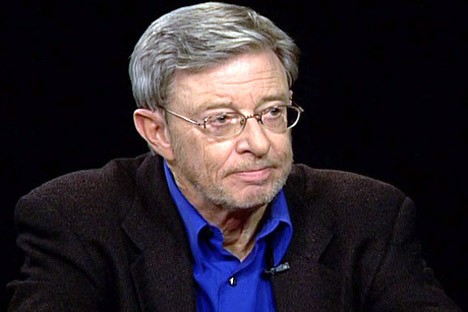
Russia scholar Stephen Cohen.
However, when the cause is to demonize Russia and/or to unseat Trump, apparently any sleight of hand or McCarthyistic smear is permissible.
In Post blogger Wemple’s article about The Nation’s decision to undercut the VIPS memo, he includes some nasty asides against Russia scholar Stephen Cohen, who happens to be Katrina vanden Heuvel’s husband.
In a snide tone, Wemple describes Cohen as providing “The soft-glove treatment of Russian President Vladimir Putin,” calling it Cohen’s “specialty.”
Wemple also repeats the canard about “a consensus finding of the U.S. intelligence community” when we have known for some time that the Jan. 6 report was the work of those “hand-picked” analysts from three agencies, not a National Intelligence Estimate that would reflect the consensus view of all 17 agencies and include dissents.
What is playing out here – both at The New York Times and across the American media landscape – is a totalitarian-style approach toward any challenge to the groupthink on Russia-gate.
Even though the Obama administration’s intelligence chiefs presented no public evidence to support their “assessments,” anyone who questions their certainty can expect to be smeared and ridiculed. We must all treat unverified opinions as flat fact.
Investigative reporter Robert Parry broke many of the Iran-Contra stories for The Associated Press and Newsweek in the 1980s. You can buy his latest book, America’s Stolen Narrative, either in print here or as an e-book (from Amazon and barnesandnoble.com).
More Misleading Russia-gate Propaganda
By Robert Parry | Consortium News | August 29, 2017
There is an inherent danger of news organizations getting infected by “confirmation bias” when they want something to be true so badly that even if the evidence goes in the opposite direction they twist the revelation to fit their narrative. Such is how The Washington Post, The New York Times and their followers in the mainstream media are reacting to newly released emails that actually show Donald Trump’s team having little or no influence in Moscow.
On Tuesday, for instance, the Times published a front-page article designed to advance the Russia-gate narrative, stating: “A business associate of President Trump promised in 2015 to engineer a real estate deal with the aid of the president of Russia, Vladimir V. Putin, that he said would help Mr. Trump win the presidency.”
Wow, that sounds pretty devastating! The Times is finally tying together the loose and scattered threads of the Russia-influencing-the-U.S.-election story. Here you have a supposed business deal in which Putin was to help Trump both make money and get elected. That is surely how a casual reader or a Russia-gate true believer would read it – and was meant to read it. But the lede is misleading.
The reality, as you would find out if you read further into the story, is that the boast from Felix Sater that somehow the construction of a Trump Tower in Moscow would demonstrate Trump’s international business prowess and thus help his election was meaningless. What the incident really shows is that the Trump organization had little or no pull in Russia as Putin’s government apparently didn’t lift a finger to salvage this stillborn building project.
But highlighting that reality would not serve the Times’ endless promotion of Russia-gate. So, this counter-evidence gets buried deep in the story, after a reprise of the “scandal” and the Times hyping the significance of Sater’s emails from 2015 and early 2016. For good measure, the Times includes a brief and dishonest summary of the Ukraine crisis.
The Times reported: “Mr. Sater, a Russian immigrant, said he had lined up financing for the Trump Tower deal with VTB Bank, a Russian bank that was under American sanctions for involvement in Moscow’s efforts to undermine democracy in Ukraine. In another email, Mr. Sater envisioned a ribbon-cutting ceremony in Moscow. ‘I will get Putin on this program and we will get Donald elected,’ Mr. Sater wrote.”
But the idea that Russia acted “to undermine democracy in Ukraine” is another example of the Times’ descent into outright propaganda. The reality is that the U.S. government supported – and indeed encouraged – a coup on Feb. 22, 2014, that overthrew the democratically elected Ukrainian President Viktor Yanukovych even after he offered to move up scheduled elections so he could be voted out of office through a democratic process.
After Yanukovych’s violent ouster and after the coup regime dispatched military forces to crush resistance among anti-coup, mostly ethnic Russian Ukrainians in the east, Russia provided help to prevent their destruction from an assault spearheaded by neo-Nazis and other extreme Ukrainian nationalists. But that reality would not fit the Times’ preferred Ukraine narrative, so it gets summarized as Moscow trying “to undermine democracy in Ukraine.”
Empty Boasts
However, leaving aside the Times’ propagandistic approach to Ukraine, there is this more immediate point about Russia-gate: none of Sater’s boastful claims proved true and this incident really underscored the lack of useful connections between Trump’s people and the Kremlin. One of Trump’s lawyers, Michael Cohen, even used a general press email address in a plea for assistance from Putin’s personal spokesman.
Deeper in the story, the Times admits these inconvenient facts: “There is no evidence in the emails that Mr. Sater delivered on his promises, and one email suggests that Mr. Sater overstated his Russian ties. In January 2016, Mr. Cohen wrote to Mr. Putin’s spokesman, Dmitri S. Peskov, asking for help restarting the Trump Tower project, which had stalled. But Mr. Sater did not appear to have Mr. Peskov’s direct email, and instead wrote to a general inbox for press inquiries.”
The Times added: “The project never got government permits or financing, and died weeks later. … The emails obtained by The Times make no mention of Russian efforts to damage Hillary Clinton’s campaign or the hacking of Democrats’ emails.”
In other words, the Russia-gate narrative – that somehow Putin foresaw Trump’s election (although almost no one else did) and sought to curry favor with the future U.S. president by lining Trump’s pockets with lucrative real estate deals while doing whatever he could to help Trump win – is knocked down by these new disclosures, not supported by them.
Instead of clearing the way for Trump to construct the building and thus – in Sater’s view – boost Trump’s election chances, Putin and his government wouldn’t even approve permits or assist in the financing.
And, this failed building project was not the first Trump proposal in Russia to fall apart. A couple of years earlier, a Moscow hotel plan died apparently because Trump would not – or could not – put up adequate financing for his share, overvaluing the magic of the Trump brand. But one would think that if the Kremlin were grooming Trump to be its Manchurian candidate and take over the U.S. government, money would have been no obstacle.
Along the same lines, there’s the relative pittance that RT paid Gen. Michael Flynn to speak at the TV network’s tenth anniversary in Moscow in December 2015. The amount totaled $45,386 with Flynn netting $33,750 after his speakers’ bureau took its cut. Democrats and the U.S. mainstream media treated this fact as important evidence of Russia buying influence in the Trump campaign and White House, since Flynn was both a campaign adviser and briefly national security adviser.
But the actual evidence suggests something quite different. Besides Flynn’s relatively modest speaking fee, it turned out that RT negotiated Flynn’s rate downward, a fact that The Washington Post buried deep inside an article on Flynn’s Russia-connected payments. The Post wrote, “RT balked at paying Flynn’s original asking price. ‘Sorry it took us longer to get back to you but the problem is that the speaking fee is a bit too high and exceeds our budget at the moment,’ Alina Mikhaleva, RT’s head of marketing, wrote a Flynn associate about a month before the event.”
Yet, if Putin were splurging to induce Americans near Trump to betray their country, it makes no sense that Putin’s supposed flunkies at RT would be quibbling with Flynn over a relatively modest speaking fee; they’d be falling over themselves to pay him more.
So, what the evidence really indicates is that Putin, like almost everybody else in the world, didn’t anticipate Trump’s ascendance to the White House, at least not in the time frame of these events – and thus was doing nothing to buy influence with his entourage or boost his election chances by helping him construct a glittering Trump Tower in Moscow.
But that recognition of reality would undermine the much beloved story of Putin-Trump collusion, so the key facts and the clear logic are downplayed or ignored – all the better to deceive Americans who are dependent on the Times, the Post and the mainstream media.
Investigative reporter Robert Parry broke many of the Iran-Contra stories for The Associated Press and Newsweek in the 1980s.
Making stuff up on Twitter is the new ‘journalism’ — and we deserve it
By Danielle Ryan | RT | August 30, 2017
On Monday, The Guardian published a story which should have surprised no one: Information pushed aggressively on Twitter by anti-Trump conspiracy theorist duo Louise Mensch and Claude Taylor came from a hoaxer who duped Taylor in an email.
Taylor, a former White House staffer under Bill Clinton, tweeted out “fake details of criminal inquiries” related to Donald Trump which did not exist and were “invented” by a hoaxer claiming to work for the New York attorney general.
Mensch, a former conservative member of parliament in the UK and now a self-styled journalist, helped Taylor to spread the information on Twitter, while also claiming to have separate sources to back it up.
Conning the con artists
Among the details provided by the hoaxer was a false allegation that Trump’s inactive model agency in New York is being investigated for sex trafficking. The Guardian reports the hoaxer fed information to Taylor by email, acting out of frustration over the “dissemination of fake news” by Taylor and Mensch.
According to the hoaxer, Taylor did not try to verify her identity and did “no vetting whatsoever” to confirm her information was correct. Nor did he try to seek confirmation from a second source, a standard practice in journalism. Instead, the hoaxer claims Taylor “asked leading questions to support his various theories” and asked her to verify his suspicions.
When approached by The Guardian, Taylor, whose Twitter handle ironically remains @TrueFactsStated, admitted he was duped, tweeting: “As a ‘citizen journalist’ I acknowledge my error and do apologize.”
Mensch, for her part, has doubled down. She posted a rebuttal to The Guardian report, claiming she has her own sources (who she claims to know personally) and insisted she did not base her reporting on any interactions with the hoaxer in question. She claims the allegation that Trump’s model agency is being investigated for sex trafficking is “entirely true,” and ongoing.
La La land
Writing for FAIR, Adam Johnson laid out a series of outlandish and unsubstantiated claims Mensch has made on Twitter. Among other things, Mensch believes Russia is controlling the public WiFi networks in her neighborhood, that Anthony Weiner’s latest sexting scandal was a setup by a Russian hacker and that Vladimir Putin had something to do with the March 22 terror attack in London. She also believes misspelled hashtags on Twitter are Russian “active measures,” that the Kremlin funded riots in Ferguson, and that Steve Bannon may get the death penalty for espionage. Finally, thanks to The Guardian’s reporting exposing the hoax Taylor fell for, Mensch now apparently believes the newspaper is a front for the Russian FSB.
Mensch often claims to have “sources” to back up her random claims, but I imagine any legitimate source in their right mind would steer well clear of Mensch given the reputation she has garnered for peddling absolute nonsense.
Taylor is almost as bad. He hasn’t gained quite the notoriety of Mensch, but has been touted as a legitimate source of information on Trump by many, including a raging Keith Olbermann.
If Mensch and Taylor were just a pair of random trolls on Twitter, they wouldn’t be much of a problem. Their fantastical claims would remain irrelevant and would be kept to the confines of Twitter’s loony bin.
But Mensch and Taylor sadly are not irrelevant. Between them they boast nearly half a million followers on Twitter. Mensch has been propped up by mainstream media and praised by some high-profile figures, including former Democratic National Committee head Donna Brazile and Harvard law professor Laurence Tribe. She has appeared as a guest on US political talk shows and has even been given op-ed space in the New York Times.
Thankfully, Mensch’s star has started to fade, and she has gradually been called out by numerous publications for her lunacy. Slate called her a “paranoid bard” who has created a “cottage industry of conspiracies.” A piece in the National Review lamented her “bastardized relationship with reality.” Commentary Magazine wrote that she has “a habit of seeing Russians behind every darkened corner” — and BuzzFeed called her out for branding innocent people as Russian agents.
My personal favorite, though, is the Daily Beast article about Twitter’s “conspiracy queen” which quotes a Republican political consultant calling Mensch “unbelievably toxic” and a former intelligence officer calling her “batshit crazy” and a “fruit loop of the highest order.”
Mensch is a fanatical tweeter. Since I opened her profile little over an hour ago, there have been 38 new tweets and retweets posted. Consider this: Mensch, a woman now widely panned for spreading totally unverified information, has been verified by a blue tick on Twitter — but the social media platform has refused to verify Julian Assange — a man who has distributed millions of authentic, consequential documents and broken countless legitimate stories through WikiLeaks.
Rot from the top
The rise in prominence of conspiracy theorists like Mensch and Taylor speaks volumes about today’s political climate and the state of journalism.
Legitimized by the mainstream, Taylor and Mensch built a massive following of loyal supporters who will not abandon them for anything. As I type, their devoted fans are tweeting them support and thanking them for their hard work.
This is pure and utter madness. But the fish rots from the head down.
Mensch and Taylor benefit greatly from the lowering of standards across the entire media industry. The problem is not simply that anyone can wake up and post wild claims on the internet. That has always been the case.
The problem is that through unbridled sensationalism, naked bias, a focus on speed over accuracy, less emphasis on basic fact-checking, an increased willingness to rely on anonymous government sources and a need to attract readers with the most clickbait-y headlines — the news media has helped create an appetite for exactly what Taylor, Mensch and their ilk provide: Unadulterated nonsense. What’s more, when people believe (rightly) that they can’t trust the real media, they go looking for alternatives and fall victim to charlatans and opportunists.
A good example of how the media has helped in this regard comes from a Washington Post story published last year claiming that Russia hacked the US power grid through a facility in Vermont. The Post later had to backtrack on the story, which turned out to be untrue. It was later revealed the newspaper did not even contact that Vermont utilities in question to confirm the information. The fact that it was light on evidence and sourcing didn’t matter. The story had everything the public wanted and everything the Post wanted to give the public: sensational, scary and highly click-worthy claims about Russia.
Today’s political and media climate encourages rabid devotion to one’s cause over debate, balance, and self-restraint. It is not simply enough to dislike Donald Trump and oppose him politically. You must hate him with a fiery passion and denounce him from the rooftops with a guttural scream. You must believe he kicks puppies and eats babies for breakfast. You must find the pundit that hates him the most, latch onto their wagon and pledge allegiance for the rest of time.
The case of Taylor and the hoaxer goes to show just how easily many people will believe a story if they desperately want to believe it. This is not a phenomenon of the left or right. If a story appears to confirm for a group what they think they already know, they will eat it up, no questions asked.
Taylor was no exception – literally. A hoaxer mailed him false information, and because he wanted to believe it, he asked no questions.
He didn’t try to verify it. He didn’t try to find a second source. He didn’t even try to confirm the identity of the woman feeding him this information. He broke every rule in the book because he so badly wanted the information to be true.
This is the kind of “journalism” Taylor and Mensch’s followers are signing up for. But if the “real” media makes no effort to take a long hard look in the mirror, then this is exactly the kind of replacement they deserve.
Read more:
Inflating the Russian Threat
By Jonathan Marshall | Consortium News | August 28, 2017
Readers of the New York Times have more to sweat about than hot summer weather in the Big Apple. The paper’s chief military correspondent, Michael Gordon — co-author of the infamous 2002 story about Saddam Hussein’s “quest for A-bomb parts” — has all but warned that war in Europe could break out at any minute with the mighty Russian army.
“Russia is preparing to send as many as 100,000 troops to the eastern edge of NATO territory at the end of the summer,” he reported last month with Eric Schmitt. Sounding like speechwriters for Sen. John McCain, they called the long-planned military exercises with Belarus — known as “Zapad” (Russian for “west”) — “one of the biggest steps yet in the military buildup undertaken by President Vladimir V. Putin and an exercise in intimidation that recalls the most ominous days of the Cold War.”
Gordon and Schmitt added that this latest and greatest example of “Mr. Putin’s saber-rattling,” represents “the first time since the collapse of the Soviet Union that so much offensive power has been concentrated in a single command.”
Many other Western news organizations have echoed this story, albeit with less alarmist rhetoric. NBC News warned that “another military challenge may be on the horizon” as “thousands of Russian troops and tanks are preparing to take part in what may be the country’s largest military exercise since the Cold War.”
Reciting the same talking points almost verbatim, the London Guardian reported days ago that “Russia is preparing to mount what could be one of its biggest military exercises since the Cold War.” Like the Times, it cited estimates by “Western officials and analysts” that “up to 100,000 military personnel and logistical support could participate” in the war games next month.
Meanwhile, the Defense Minister of Estonia predicted that “Russia may use large-scale military exercises to move thousands of troops permanently into Belarus later this year in a warning to NATO.” Two Polish military officials speculated darkly that “Having created such a military build-up under the pretext of such exercise, Russia could launch a limited or provocative military hybrid operation to see what happens and further test the waters on NATO’s eastern flank, or in Ukraine, where the Russo-Ukrainian conflict remains in full swing.”
The Missing Context
The average reader would never know that U.S. and NATO forces themselves engaged this summer in “their largest military exercises since the end of the Cold War,” to quote NPR. Nor would they know that NATO collectively spends 12 times more than Russia on its military, or that its European members alone field nearly 75 percent more military personnel than Russia.
And only the most attentive reader, reaching the bottom of the long New York Times story, would have learned that “Russian officials have told NATO that the maneuvers will be far smaller than Western officials are anticipating and will involve fewer than 13,000 troops.”
The anti-Putin director of the Centre for Strategic and Foreign Policy Studies in Minsk points out that only 3,000 Russian military personnel will take part in the exercises in Belarus from September 14 to September 20. “Based on these figures, the military drills are practically the same as the previous Zapad-2013,” he said.
He also noted that Belarus has invited no fewer than 80 international observers to calm fears:
“In addition to the accredited military attaches of Western embassies, special delegations from the UN, the International Red Cross . . . and NATO will be invited. This, by the way, is the first time when NATO observers are invited to such exercises. Separately, Belarus arranged for the presence of delegations from Sweden, Norway and Estonia.”
NATO has complained — possibly with justification — that Russia and Belarus have not fully complied with their obligations under the Vienna Document of 2011 to provide detailed briefings, progress reports, and opportunities to interview soldiers about the exercise.
NATO and Russia undertook after the Cold War to provide greater transparency about their military exercises to minimize the threat of conflict. In recent years, particularly following the Ukraine crisis, growing political tensions have put a strain on such cooperative measures.
A number of reasonable analysts warn that Russia may sidestep its reporting obligations by dividing its exercises into smaller units, below the threshold of 13,000 personnel that gives members of the Organization for Security and Co-operation in Europe the right to observe.
‘Probably Exaggerated’
For example, Russia claimed that its Western exercises four years ago kept just within that threshold. But two experts writing for the conservative Jamestown Foundation in Washington, D.C. argued that “if one takes a broader view of what elements constituted a part of the Zapad 2013 exercise, then the total participants number approximately 22,000 men, of which 13,000 exercised on Belarusian territory and more than 9,500 on Russian territory.”
The Guardian quotes an expert on Russia’s military as saying of Zapad-17, “you can’t trust what the Russians say. One hundred thousand is probably exaggerated but 18,000 is absolutely realistic.”
Even if true, such numbers hardly support viewing the upcoming exercises as an “ominous” threat to the West. A British expert, remarking on the “mythology” that often accompanies such events, noted that “Much of the Western coverage said that the 2009 exercise ended with a simulated nuclear attack on Warsaw, Poland, even though there is no evidence at all from unclassified sources to suggest this was the case.”
Michael Kofman, a fellow at the Woodrow Wilson Center’s Kennan Institute, has debunked many of the unfounded estimates of Zapad-17’s size and potential threat to Europe.
“The Russian Ministry of Defense itself likely hopes Western media will report exaggerated figures,” he says. “Such headlines help validate the scale and success of the exercise to national leadership in Moscow. In this respect, the entire affair is an exercise in co-dependency and is self-affirming.”
Russia unquestionably wants to impress NATO with its military capabilities, Kofman acknowledges, but that’s for deterrence.
“Throughout the exercise, Russian armed forces will try to signal that they have the ability to impose substantial costs on a technologically advanced adversary, i.e. the United States,” he writes. “Russian thinking is founded on the belief that its military can raise costs for the West such that they will grossly outweigh the potential gains for sustaining hostilities, particularly if the fight is over Belarus.”
Threat Inflation Nothing New
The steady drumbeat of warnings about Russian military capabilities and intentions recalls the perennial use of “threat inflation” since the earliest days of the Cold War to sell bigger military budgets and a permanent warfare state.

Former NATO Commander Philip M. Breedlove
One of the acknowledged masters of threat inflation was NATO Supreme Commander Gen. Philip Breedlove. Hacked emails exposed his undercover campaign to “leverage, cajole, convince or coerce the U.S. to react” to Russia during the Obama years.
Two years ago, the West German news magazine Der Spiegel, ran a lengthy article on Breedlove’s reckless disregard for facts. Following the Minsk ceasefire agreement, at a time of relative quiet in Ukraine between government and pro-Russian forces, Breedlove held an inflammatory press conference to announce that Vladimir Putin had sent Russian armed forces with “well over a thousand combat vehicles, . . . some of their most sophisticated air defense, battalions of artillery” to Eastern Ukraine. The military situation he warned was “getting worse every day.”
German political leaders and intelligence officials were “stunned,” according to the magazine. Their information didn’t match his claims at all.
The same thing had happened soon after the start of the Ukraine crisis in early 2014, triggered by an anti-Russia coup that ousted President Viktor Yanukovych. Breedlove warned of an imminent invasion by 40,000 Russian troops massed on the border — when intelligence officials from other NATO member states had ruled out such an invasion and put the total number of Russian troops at about half that number.
“For months,” the magazine observed, “Breedlove has been commenting on Russian activities in eastern Ukraine, speaking of troop advances on the border, the amassing of munitions and alleged columns of Russian tanks. Over and over again, Breedlove’s numbers have been significantly higher than those in the possession of America’s NATO allies in Europe. As such, he is playing directly into the hands of the hardliners in the US Congress and in NATO.”
Russian troop advances . . . the massing of forces . . . it all sounds familiar. Sure enough, although now retired, Breedlove was one of the first to sound the alarm this year about the Zapad exercise, telling a Senate hearing that it could involve as many as 200,000 troops.
Two years ago, members of the German government condemned Breedlove’s warnings as “dangerous propaganda.” They told Der Spiegel, “The West can’t counter Russian propaganda with its own propaganda, ‘rather it must use arguments that are worthy of a constitutional state.’”
The same stricture should surely apply today, as unsupported rhetoric foments unnecessary and dangerous military tensions between the world’s two nuclear superpowers.
Russia-gate’s Evidentiary Void
By Robert Parry | Consortium News | August 18, 2017
The New York Times’ unrelenting anti-Russia bias would be almost comical if the possible outcome were not a nuclear conflagration and maybe the end of life on planet Earth.
A classic example of the Times’ one-sided coverage was a front-page article on Thursday expressing the wistful hope that a Ukrainian hacker whose malware was linked to the release of Democratic National Committee (DNC) emails in 2016 could somehow “blow the whistle on Russian hacking.”
Though full of airy suspicions and often reading like a conspiracy theory, the article by Andrew E. Kramer and Andrew Higgins contained one important admission (buried deep inside the “jump” on page A8 in my print edition), a startling revelation especially for those Americans who have accepted the Russia-did-it groupthink as an established fact.
The article quoted Jeffrey Carr, the author of a book on cyber-warfare, referring to a different reality: that the Russia-gate “certainties” blaming the DNC “hack” on Russia’s GRU military intelligence service or Russia’s FSB security agency lack a solid evidentiary foundation.
“There is not now and never has been a single piece of technical evidence produced that connects the malware used in the DNC attack to the GRU, FSB or any agency of the Russian government,” Carr said.
Yet, before that remarkable admission had a chance to sink into the brains of Times’ readers whose thinking has been fattened up on a steady diet of treating the “Russian hack” as flat fact, Times’ editors quickly added that “United States intelligence agencies, however, have been unequivocal in pointing a finger at Russia.”
The Times’ rebuke toward any doubts about Russia-gate was inserted after Carr’s remark although the Times had already declared several times on page 1 that there was really no doubt about Russia’s guilt.
“American intelligence agencies have determined Russian hackers were behind the electronic break-in of the Democratic national Committee,” the Times reported, followed by the assertion that the hacker’s “malware apparently did” get used by Moscow and then another reminder that “Washington is convinced [that the hacking operation] was orchestrated by Moscow.”
By repeating the same point on the inside page, the Times editors seemed to be saying that any deviant views on this subject must be slapped down promptly and decisively.
A Flimsy Assessment
But that gets us back to the problem with the Jan. 6 “Intelligence Community Assessment,” which — contrary to repeated Times’ claims — was not the “consensus” view of all 17 U.S. intelligence agencies, but rather the work of a small group of “hand-picked” analysts from three agencies: the Central Intelligence Agency, Federal Bureau of Investigation and National Security Agency. And, they operated under the watchful eye of President Obama’s political appointees, CIA Director John Brennan and Director of National Intelligence James Clapper, who was the one who called them “hand-picked.”
Those analysts presented no real evidence to support their assessment, which they acknowledged was not a determination of fact, but rather what amounted to their best guess based on what they perceived to be Russian motives and capabilities.
The Jan. 6 assessment admitted as much, saying its “judgments are not intended to imply that we have proof that shows something to be a fact. Assessments are based on collected information, which is often incomplete or fragmentary, as well as logic, argumentation, and precedents.”
Much of the unclassified version of the report lambasted Russia’s international TV network RT for such offenses as hosting a 2012 presidential debate for third-party candidates excluded from the Republican-Democratic debate, covering the Occupy Wall Street protests, and reporting on dangers from “fracking.” The assessment described those editorial decisions as assaults on American democracy.
But rather than acknowledge the thinness of the Jan. 6 report, the Times – like other mainstream news outlets – treated it as gospel and pretended that it represented a “consensus” of all 17 intelligence agencies even though it clearly never did. (Belatedly, the Times slipped in a correction to that falsehood in one article although continuing to use similar language in subsequent stories so an unsuspecting Times reader would not be aware of how shaky the Russia-gate foundation is.)
Russian President Vladimir Putin and WikiLeaks founder Julian Assange have denied repeatedly that the Russian government was the source of the two batches of Democratic emails released via WikiLeaks in 2016, a point that the Times also frequently fails to acknowledge. (This is not to say that Putin and Assange are telling the truth, but it is a journalistic principle to include relevant denials from parties facing accusations.)
Conspiracy Mongering
The rest of Thursday’s Times article veered from the incomprehensible to the bizarre, as the Times reported that the hacker, known only as “Profexer,” is cooperating with F.B.I. agents inside Ukraine.
Yet, the reliance on Ukraine to provide evidence against Russia defies any objective investigative standards. The Ukrainian government is fiercely anti-Russian and views itself as engaged in an “information war” with Putin and his government.
Ukraine’s SBU security service also has been implicated in possible torture, according to United Nations investigators who were denied access to Ukrainian government detention facilities housing ethnic Russian Ukrainians who resisted the violent coup in February 2014, which was spearheaded by neo-Nazis and other extreme nationalists and overthrew elected President Viktor Yanukovych.
The SBU also has been the driving force behind the supposedly “Dutch-led” investigation into the July 17, 2014 shooting down of Malaysia Airlines Flight 17. That inquiry has ignored evidence that a rogue Ukrainian force may have been responsible – not even addressing a Dutch/NATO intelligence report stating that all anti-aircraft missile batteries in eastern Ukraine on that day were under the control of the Ukrainian military – and instead tried to pin the atrocity on Russia, albeit with no suspects yet charged.
In Thursday’s article, the Times unintentionally reveals how fuzzy the case against “Fancy Bear” and “Cozy Bear” – the two alleged Russian government hacking operations – is.
The Times reports: “Rather than training, arming and deploying hackers to carry out a specific mission like just another military unit, Fancy Bear and its twin Cozy Bear have operated more as centers for organization and financing; much of the hard work like coding is outsourced to private and often crime-tainted vendors.”
Further, under the dramatic subhead – “A Bear’s Lair” – the Times reported that no such lair may exist: “Tracking the bear to its lair … has so far proved impossible, not least because many experts believe that no such single place exists.”
Lacking Witnesses
The Times’ article also noted the “absence of reliable witnesses” to resolve the mystery – so to the rescue came the “reliable” regime in Kiev, or as the Times wrote: “emerging from Ukraine is a sharper picture of what the United States believes is a Russian government hacking group.”
The Times then cited various cases of exposed Ukrainian government emails, again blaming the Russians albeit without any real evidence.
The Times suggested some connection between the alleged Russian hackers and a mistaken report on Russia’s Channel 1 about a Ukrainian election, which the Times claimed “inadvertently implicated the government authorities in Moscow.”
The Times’ “proof” in this case was that some hacker dummied a phony Internet page to look like an official Ukrainian election graphic showing a victory by ultra-right candidate, Dmytro Yarosh, when in fact Yarosh polled less than 1 percent. The hacker supposedly sent this “spoof” graphic to Channel 1, which used it.
But such an embarrassing error, which would have no effect on the actual election results, suggests an effort to discredit Channel 1 rather than evidence of a cooperative relationship between the mysterious hacker and the Russian station. The Times, however, made this example a cornerstone in its case against the Russians.
Meanwhile, the Times offered its readers almost no cautionary advice that – in the case of Russia-gate – Ukraine would have every motive to send U.S. investigators in directions harmful to Russia, much as happened with the MH-17 investigation.
So, we can expect that whatever “evidence” Ukraine “uncovers” will be accepted as gospel truth by the Times and much of the U.S. government – and anyone who dares ask inconvenient questions about its reliability will be deemed a “Kremlin stooge” spreading “Russian propaganda.”
Investigative reporter Robert Parry broke many of the Iran-Contra stories for The Associated Press and Newsweek in the 1980s.
The NYT’s Grim Depiction of Russian Life

Sakhalin, Russia: photo by Lesya Kim, 19 August 2016
By Gilbert Doctorow | Consortium News | August 7, 2017
Our five-week stay at our home in the Russian countryside was approaching its conclusion when I got an email from a friend in France asking me to comment on an article in The New York Times entitled “Russia’s Villages, and Their Way of Life, Are ‘Melting Away’.”
The article surely met the expectations of its editors by painting a grim picture of decline and fall of the Russian countryside in line with what the author sees as very unfavorable demographic trends in the Russian Federation as a whole. The fact that his own statistics do not justify the generalization (a net population loss of a few thousand deaths over live births in 2016 for a population of 146 million) does not get in the way of the paint-by-color canvas. Nor does the author explain why what he has observed in a village off the beaten track in Northwest Russia, in precisely the still poor region of Pskov, gives an accurate account of country life across the vast territory of Russia, the world’s largest nation-state.
As the author notes, the main source of income from the land of the town he visited was – in the past – linen. That cultivation turned unprofitable and was discontinued. Consequently, the able-bodied part of the population has been looking for employment and making their lives elsewhere (a process of internal migration common all over the world, including the United States).
The author fails to mention that linen production is not a major agricultural indicator in Russia today, whereas many other crops are booming. Linen goes into the lovely traditional handicraft tablecloths and napkins sold to tourists at riverboat landings, and that is the extent of demand.
I could respond to the overriding portrait of countryside decay in the Times article by drawing on my observations a year ago from the deck of one of those riverboats navigating the canals and rivers connecting St. Petersburg and Moscow. From that deck and from the experience of walking around the little picturesque towns where we made stops, I understand that growing domestic Russian tourism has pumped financial resources into historic centers, like Uglich. They are coming alive, with infrastructure improvements and reviving trade.
But tourist sites are not going to be representative of the country at large, either. So I will instead use two sources of information that I am confident have greater relevance to the issue at hand. The first, and surely the most politically significant, comes from a couple of family friends who for nearly 50 years have spent summers at a parcel of land deep in the hinterland, 280 kilometers southeast of St. Petersburg, close to regional industrial center of Pikalyovo, (Leningradskaya Oblast) with its train station along the line linking the northern capital to Vologda.
My Own Eyes
The second source is my own experience in and around our property in Orlino, a hamlet numbering 300 inhabitants in the Gatchina district, also Leningradskaya Oblast, but 80 kilometers due south of St. Petersburg.
The homesteads around Pikalyovo were always hard to get to, with very poor local roads. There was no commercial infrastructure, so the bold and determined vacationers coming here had to bring most provisions for their stay with them. They were rewarded for their efforts by the produce grown in their gardens and by foraging for berries and highly desirable boletes and other wild mushrooms in the surrounding forests.
When the Soviet Union collapsed and the Russian economy followed suit in the 1990s, the Pikalyovo region suffered the kind of economic misery and population loss that the Times describes today in the Pskov region. Our friends saw that normal folks left, and the concentration of drunkards and thieves rose proportionately. The theft of anything of value in common space became acute when scrap metal scavengers pulled up kilometers of electrical cables for their copper content, leaving swathes of the district temporarily without electricity.
Pikalyovo came to the attention of national news during the 2008-2009 financial crisis when its three main industrial enterprises shut down, causing widespread misery. The best known of these enterprises, a clay processing plant owned by the oligarch Oleg Derispaska’s conglomerate Basic Element, caused a major scandal when state television carried reports on how the factory had not paid its employees for months while the boss was seeking and obtaining government assistance with repayment and rescheduling of his foreign loans. In the spring of 2009, there were protest demonstrations in Pikalyovo that resulted in both Dmitry Medvedev and Vladimir Putin personally entering the dispute to pressure Deripaska to do the right thing.
The economic woes of the regional economic hub did nothing to improve the living conditions in nearby hamlets like the one where our friends have their parcel. Our friends started cutting back on their visits and missed a year or two altogether. All of this would seem to confirm the storyline of the Times reporter, but the latest word from Volodya and Tamara overturns the storyline completely.
A Revival
A few weeks ago, our friends decided to go back to the property to prepare it for sale. They had had enough, they thought. However, once there, they discovered things were definitely looking up. A newly completed 35 kilometer highway makes their settlement much more accessible.
But, more importantly, the neighbors have changed – for the better. A retired colonel moved in a couple of years ago and started raising pigs, cows and chickens, offering meat, eggs and dairy products for sale, thereby ending our friends’ need for brought-in provisions. His example attracted others. New and dynamic settlers are putting into practice the “return to the land” trend that is an undeniable feature of current Russian social life. Our friends have decided not to sell, and to spend more time on their property.
In legal terms, the parcel of land my wife owns in the hamlet of Orlino (population 300) is categorized as a “subsistence farm.” The nature of the farming to be done there even features in the plan attached to the cadastral registry: the 700 square meters where the house was built facing the “Central Street” can be used for fruit trees and vegetable garden; the back field of another 700 square meters is allocated for potatoes, cabbage and similar crops.
In the vernacular, however, together with the two-story planed log house we built here five years ago, the property is considered a “dacha,” a summer residence. Nearly one in two urban Russian households has a dacha.
Young people think of dachas as weekend getaway locations to hold a barbecue for friends and family. If they have a feeling for Russian traditions, it is where they take their Saturday banya, or sauna in dedicated outhouses heated by wood burning stoves and then socialize over a beer. Older folks and pensioners find this frivolous. In their view, the dacha is not so much a place to idle time away as it is a place of honest toil, working the land and communing with nature. And even some of the younger generation buys into the concept of growing their own organic foods on their land, thus getting along without industrially farmed supermarket produce, whether domestic or imported.
One hundred years ago, Orlino was populated mostly by wealthy merchants whose businesses were in the extended district. They lived here year-round in substantial houses, some of which have survived to this day. To the back of the houses, what were essentially barns were built on, and there they kept some small livestock. No one in Orlino today keeps chickens, pigs, goats, not to mention cows. But they do till the land with great enthusiasm and look after their fruit trees and red berry shrubs.
The notion of subsistence farming suggests border-line poverty. But Orlino was never poor, and its residents are not indigent today. Oldsters whose pensions are inadequate are supported by their children or nephews/nieces’ families living in the local towns, in the district capital of Gatchina 50 kilometers away, or even in St. Petersburg. In return, these relatives visit in the summer to spend some days of vacation and take advantage of the large lake on the edge of the hamlet, which is lovely for swimming or boating when the weather is cooperative.
Good Use of Land
The notion of subsistence farming also suggests tough practicality. But making good use of the land does not exclude aesthetic pleasures, and every parcel of land in the hamlet is decorated by flower beds showing great ingenuity and effort.
Similarly, in the last year the Orlino farmers have all gone the way of their brethren across Russia and invested in greenhouses made of pre-formed polycarbonate walls, most commonly resembling hoops in profile. Here they put in tomatoes, cucumbers and other highly prized vegetables for their dining table which do not do well in the short growing season of the North, and in the very adverse climatic conditions which were exemplary this year in terms of cool temperatures and incessant rains. Given the expense of these greenhouses, the investment is not so much economically justified as it is a point of pride in self-sufficiency and green-thumb skills.
Electricity is the only utility that spells dependency for Orlino residents. Otherwise, each household has its own well, its own septic tank system, its own gas cylinder for the cooking stove and its own supply of birch logs for a wood-burning stove that is the mainstay of heating.
Many households have cars. The most recent arrivals, being by far the most prosperous, often have four-wheel-drive utility vehicles. This is a valuable benefit given the deplorable condition of many local roads. But then there is a significant minority who depend on the local bus system to get around. It is cheap, runs to schedule and gets you from point A to point B without fuss. The hamlet has a couple of grocery stores, so that staples are always available within easy walking distance.
An Economic Hub
For luxuries, there is the town of Siversk 10 kilometers away. Numbering perhaps 10,000 people, it is the local economic hub, with several factories, including a manufacturer of good quality upholstered furniture.
Siversk has a train station with hourly connections to Gatchina and St. Petersburg. It also has several supermarkets run by major national retail chains, so that you will find exactly the same product assortment as in St. Petersburg or Moscow. And there are a number of high quality specialty food stores and at least one bakery which is indistinguishable from what you might find in Vienna or Frankfurt.
In the not so distant past, even urban Russians had not much interest in salads or in fish. Chicken legs or sausages or pork cutlets for the barbecue were what folks shopped for as main courses. Now even our Siversk stores offer pre-packaged mixed lettuce salads or rucola coming from greenhouse complexes in Greater St. Petersburg.
And the leading fish store offers not only salmon steaks from Scandinavian producers, but several varieties of delicacy fish from Europe’s largest fresh water lake, situated 50 kilometers to the east of St. Petersburg. Still more impressive is the assortment of fish coming down each day from Murmansk: excellent flounder and superb gorbusha, a wild salmon usually considered to be a Pacific Ocean variety but also available in the waters north and west of Siberia. For those with deeper pockets, the fish vendor in little Siversk occasionally offers a fresh sterlet, the magnificent 1 kilogram-size representative of the sturgeon family that is farmed on the Volga in Astrakhan, far to the South.
I offer these observations from shopping to make the following point about the Russian country life as I see it: a lively economy with a population growing ever more sophisticated and aspiring to the good life.
The Lower Strata
When I shared these thoughts with my friend in France, he shot back: what about the lower strata of society? How are they faring?
My ready response draws on my five-year acquaintance with our “average Joe” neighbor in Orlino, Sergei. When we settled here five years ago, he drilled our artesian well, installed the electric pump and all sanitary plumbing in our house. Now he winterizes the house each year and keeps an eye on the property when we are away, for compensation to be sure, but more out of friendship, because he has other, more lucrative sources of income as a subcontractor or day worker on local construction projects. There is a lot of work of this kind now that Orlino’s fallow fields are slowly being converted into housing estates.
Sergei is a master of several building trades. He also drives a tractor. He is mechanically gifted.
Sergei is about 55, the father of a grown son and daughter, the grandfather of two. When we first met, he was living in an apartment in a multi-unit wooden house dating back 60 or 70 years that was neither comfortable nor attractive. In the past three years he has realized a long time dream and built for himself a two-story cement block house, now clad in siding. The interior space is perhaps 250 square meters. When you pass it from the road, in a row of several other very substantial recent houses, you would place it as solidly upper-middle class. And next to his house Sergei has put up a very fine and large greenhouse. Beyond that is an extensive field of splendid potatoes and vegetables.
To be sure, the second story of Sergei’s house still needs work and he and his wife live now only on the ground floor. Moreover, the investment of all spare cash into the house has scuttled other needs. When Sergei’s ancient Toyota pick-up finally rusted into irreparable condition, he found himself without motorized transport. Until further notice, until he can put together the down payment for a new vehicle, he gets around town on a bicycle.
Sergei is no fool. He gripes about local corruption and terrible roads. But on the whole he is satisfied with his lot and optimistic about the future. Any belt-tightening that has been made necessary by Western sanctions he takes in his stride. He is resolutely patriotic.
I realize full well that the observations taken from my personal experience of the Russian countryside and from the experience of close friends is anecdotal and so not statistically significant. But then neither are the observations of The New York Times reporter.
Russia is a vast land and you can pretty much find what you are looking for there. Nonetheless, the gross economic statistics published by Rosstat are upbeat and fully contradict the notion of a country in decline, including its rural component.
Gilbert Doctorow is an independent political analyst based in Brussels. His latest book Does Russia Have a Future? was published in August 2015. His forthcoming book is Does the United States Have a Future?
The New York Times Pushes Propaganda War Against Russia
By Sic Semper Tyrannis | Turcopelier | August 1, 2017
There is no longer any doubt that the New York Times is nothing more than a willing cog in the establishment war machine and is happy to serve as a propaganda platform. While there are times that newspapers and electronic media outlets are unwitting dupes for propaganda, the article penned by Michael Gordon and Eric Schmitt (published on 31 July 2017) is the work of willing puppets masquerading as journalists:
Russia’s Military Drills Near NATO Border Raise Fears of Aggression
This screed starts with this piece of artful dishonesty:
Russia is preparing to send as many as 100,000 troops to the eastern edge of NATO territory at the end of the summer, one of the biggest steps yet in the military buildup undertaken by President Vladimir V. Putin and an exercise in intimidation that recalls the most ominous days of the Cold War.
Since when is it an act of “aggression” for a country–Russia in this case–to conduct military exercises in its own territory? Gordon and Schmitt also conveniently omit the facts that the United States has been engaged in a variety of military exercises on the border of Russia for the last year. Yet, rather than acknowledge that truth, Gordon and Schmitt push the lie that this is an unprovoked action by a militaristic Russia hell bent on conquering the world.
How else is one to interpret the following quotes:
The military exercise . . . .is part of a larger effort by Mr. Putin to shore up Russia’s military prowess, and comes against the backdrop of an increasingly assertive Russia. Beyond Russia’s interference in the 2016 presidential election in support of the Trump campaign, which has seized attention in the United States, its military has in recent years deployed forces to Syria, seized Crimea and intervened in eastern Ukraine, rattled the Baltic States with snap exercises and buzzed NATO planes and ships. . . .
“There is only one reason you would create a Guards Tank Army, and that is as an offensive striking force,” General Hodges said. “This is not something for homeland security. That does not mean that they are automatically going to do it, but in terms of intimidation it is a means of putting pressure on allies.”
If you read only this article you would be excused for assuming that Russia is on the prowl for no good reason. Fortunately, our media is not totally subservient to the war machine. NPR reported last week that the United States is actually carrying out the largest military operations on Russia’s border in 27 years:
The U.S. and NATO are staging their largest military exercises since the end of the Cold War, and they’re doing it in countries of 3 former members of the Warsaw Pact: Romania, Bulgaria and Hungary.
DAVID WELNA, BYLINE: Yes, I did. This is all part of what’s been called the European Deterrence Initiative, and it’s a reinforcement of U.S. forces that had been depleted in Eastern Europe before Russia annexed Crimea three years ago. And as part of this sort of hardening of the U.S. presence here, there was an armored combat brigade team of about 4,000 Army troops from Fort Carson, Colo., that arrived here in Eastern Europe early this year. And they’re here in Romania, and they’re taking part in military exercises along with about 20,000 other troops.
On Saturday, I was in the Carpathian Mountains, and I watched a pretty impressive live fire, land and air assault there on an imagined enemy. And then yesterday, along the banks of the Danube River here, there was another assault staged to retake the other side of the river from another imagined enemy.
GREENE: You keep saying imagined enemy. Who is the imagined enemy?
WELNA: Well, no doubt it’s Russia. And, you know, while this wasn’t really a D-Day invasion along the Danube – there was no fire return from the other side – there was a lot of sound and fury. And here’s a bit of what it sounded like.
The US military exercise is dubbed Saber Guardian:
Exercise Saber Guardian 17 is a U.S. European Command, U.S. Army Europe-led annual exercise taking place in Hungary, Romania and Bulgaria in the summer of 2017. This exercise involves more than 25,000 service members from over 20 ally and partner nations. The largest of the Black Sea Region exercises, Saber Guardian 17 is a premier training event for U.S. Army Europe and participating nations that will build readiness and improve interoperability under a unified command, executing a full range of military missions to support the security and stability of the Black Sea Region. It is deterrence in action.
Some of the more notable aspects of SG17 include: the massing of 3rd Armored Brigade Combat Team, 4th Infantry Division (3/4ID) from several locations across the Operation Atlantic Resolve area of operation to the exercise joint operations area (JOA) in Hungary, Romania and Bulgaria; and the movement of 2nd Cavalry Regiment (2CR) from Vilseck, Germany, to numerous locations throughout the JOA.
But that’s not all. The United States also has been busy in the Baltics in early June 2017:
The U.S.’s European Command, which is based in Germany, said Thursday it had deployed an unspecified number of F-16 Fighting Falcons from Aviano Air Base in Italy to the Krzesiny Air Base in Poland in support of Baltic Operations (BALTOPS) and Saber Strike, two massive annual drills intended to boost the U.S.’s military presence in Europe and to support regional allies. European Command’s statement came a day after it said a number of B-1B Lancers had been sent from Ellsworth Air Force Base in South Dakota to join three B-52H Stratofortresses at the Royal Air Force base in Fairford, U.K. Meanwhile, 800 U.S. airmen in Europe were poised to train with NATO allies this month as the Western military alliance escalates its rivalry with Russia.
And there was US activity in Poland in January:
U.S. troops arrived in the small town of Drawsko Pomorskie, Poland, as part of the largest armed military brigade deployed in Europe since the end of the Cold War.
The U.S. troops, along with 53 track vehicles, including the M109 Paladin self-propelled howitzer, reached Poland after a three-day journey through Germany. The show of force falls under Operation Atlantic Resolve, designed to show the United States’ commitment to its European allies in the face of what NATO sees as Russian aggression.
This is not a comprehensive list. If you take time to do further research you will discover that the United States military in tandem with other countries has carried out several military exercises from the Black Sea in the south, all along the western border of Russia and in the Baltic Sea in the north.
If you are Russia and you are witnessing repeated deployments of U.S. infantry, armor, air and naval units on the frontier that produced that last military invasion of Russia (which left at least 20 million dead) would you sit back and do nothing?
What would the United States do if Russia managed to convince Mexico to sign a mutual defense treaty and then proceeded to conduct tank and military air exercises along our southern border? Would we do nothing?
Gordon and Schmitt are an embarrassment to the profession of journalism. Rather than actually report facts and place them in their proper context, they chose instead to push lies as truth and try to help shape public opinion into believing that Russia poses an imminent threat to the west.
One other point worth remembering–Russia spends $60 billion annually on defense spending while the United States is slated for $650 billion. How much is the US spending on just EUCOM exercises targeted at Russia? Sadly, there is bipartisan stupidity and ignorance when it comes to the issue of properly assessing Russia and the threat it does (or does not) pose to the United States. My cynical conclusion is that as long as Russia is portrayed as the great Red menace bent on world domination we can justify spending $650 billion dollars to thwart an invasion that is not coming.
Featured Video
BRITAIN’S WARNING: PREPARE FOR WAR
or go to
Aletho News Archives – Video-Images
From the Archive
How Ukraine Tortured and Slaughtered Donbass
By Kit Klarenberg | Al Mayadeen | July 11, 2024
Almost immediately after the proxy war erupted, ISIS-tier footage of the torture and murder of Russians in Ukrainian custody emerged.
On July 6th, the New York Times published an astonishing investigation: In Ukraine, Killings of Surrendering Russians Divide an American-Led Unit. The article documents in grim detail how Chosen Company, an international volunteer battalion for Kiev, routinely executes Russian prisoners of war. It is the very first mainstream admission that this practice – a brazen breach of the Geneva Conventions, and a grave war crime – is widespread among Ukraine’s fighters, both foreign and homegrown. … continue
Blog Roll
 Aletho News
- Israel Demolishes Home Of Lebanese Journalist Whose Viral Film Exposed Pager Attack
- Record Oil, Empty Tanks: The UAE’s Miracle Recovery
- Burnham tackles Britain’s poverty with aggression in Yemen
- Peace in Ukraine: the easy way – or the hard way
- Trump & the Rrrrussians
- US taxpayer money laundered back through Ukraine – Musk
- Before COVID, an NIH lab chief proposed making a SARS-like bat virus more infectious
- Gates, Bourla on Trial in Netherlands Accused of ‘Great Reset’ Scheme at Vaccine Injury Hearing
- BRITAIN’S WARNING: PREPARE FOR WAR
- “Historic Russia”: The Land Putin Will Not Give Back
- If Americans Knew
- DAILY UPDATE: Latest essential news on Palestine, Israel, & region
- Damning report shows the media must confront its failures on Gaza
- BBC senior broadcaster speaks out on Gaza coverage
- Netanyahu vows vast West Bank invasion in response to 20-minute skirmish that left 2 Israeli soldiers and 2 Palestinian fighters dead
- Tied up and tortured: Israel using US-made electroshock weapons on Palestinian detainees
- The outsourced risk: how newsrooms rely on Gaza’s freelancers without protecting them
- Gaza bakeries forced to shut as Israel blocks flour shipments
- Gaza’s breast cancer patients face a deadly wait for treatment amid Israel’s genocide
- DAILY UPDATE: Latest essential news on Palestine, Israel, & region
- The Israel Lobby’s Changing Fortunes
- No Tricks Zone
- Two New Studies Find Thwaites Glacier Melt Cannot Be Driven By Human Activity Or A Warming Ocean
- E-Cars Reduce CO2 Emissions By Only 41% Compared To Internal Combustion Engine Vehicles
- Predictions Made By Renowned Climate Professor Over Past Decades Have Been Proven To Be Poor
- New Study Suggests Large Regions Of The Pacific Ocean Have Been Cooling For The Last 80 Years
- Germany’s Green Energy Debacle: High Energy Costs Force Kahla Porzellan to Close After 182 Years!
- New Study: 50 Years Of The Most Aggressive ‘Net Zero’ Policies Can Only Affect The Global Climate By 0.03°C
- US September “Heat” Was No Record…Many Records Set Decades Ago
- Latest European Green Energy Debacle; Portugal’s Largest Flagship Solar Park Insolvent!
- Green Energy Debacle: German Expert Professor Fritz Vahrenholt Warns Of Severe Economic And Social Consequences
- Two More Paleo Reconstructions Affirm Meters-Higher Sea Levels Across Ireland, Brazil 7000-6000 Years Ago

