America the Feckless
Lies and hypocrisy are at the heart of the Biden foreign policy
BY PHILIP GIRALDI • UNZ REVIEW • FEBRUARY 21, 2023
One would think that the United States military staging an unprovoked “plausibly deniable” covert attack on a nation with which it is not at war would be at least considered newsworthy. That the attack did grave damage to a country with which the US is closely allied would seem to make the aggression even more unthinkable. And, perhaps worst of all, that the attack was set up by the nation’s chief executive using a political bypass that avoided congressional oversight and adherence to the war powers act which might be most reprehensible of all as it cuts to the heart of the nation’s constitutional balance of powers. It is clearly an impeachable offense. And “Yes,” for those who are still wondering, Joe Biden and his team of terrorist emulators have done all that and more, and have capped their performance with a series of flat out lies and evasions to make it appear that they had done nothing wrong.
And the mainstream America media, in its worst performance since the invasion of Iraq, has served as an echo chamber for everything the White House chooses to leak to it. Given all of that, it was perhaps completely predictable that the government-subservient press and TV news would almost completely ignore the devastating report released by top investigative journalist Seymour Hersh on February 8th. Hersh’s article was entitled “How America Took Out the Nord Stream Pipeline” with a secondary headline reading “The New York Times called it a ‘mystery,’ but the United States executed a covert sea operation that was kept secret—until now.” The article, which Hersh self-published on the internet, describes in considerable detail the preparations and execution by the US Navy Diving and Salvage Center and Central Intelligence Agency’s (CIA) Maritime Branch, coordinated and directed by the White House, to sabotage and destroy Russia’s four Baltic Sea Nord Stream gas pipelines, a war crime and terroristic action that moves the United States much closer to direct armed conflict with Russia.
Given its potential political blowback, the Hersh story might very well be the most important expose to appear since fighting began in Ukraine over a year ago, but it is being ignored by the White House, which is denying the report, with a spokesman only commenting that “This is false and complete fiction.” The CIA’s spokesman Tammy Thorp likewise replied to Hersh that “This claim is completely and utterly false.” The US Navy was also asked for comments but did not respond. The media, clearly evident by its inaction, has religiously adhered to that government line, possibly due to some mistaken notion that our national security forces have to be supported when they are going “toe to toe with the Russkies” over Ukraine. On the contrary, it is precisely when the government is behaving recklessly not to mention criminally to bring about an unnecessary war that the press should be in hot pursuit of the story and what it means. That is particularly so as the Ukraine conflict is now escalating and threatening to go nuclear as both sides dig in to incompatible positions.
I have known Sy Hersh for a number of years and spent time together with him and other former CIA colleagues helping to confirm details of some of his earlier exposes on US government abuses and outright lies in its somewhat not completely credible role as “guardian” of national security. Hersh is a meticulous investigator who never, in my experience, accepted uncorroborated claims in support of his narratives. I have some understanding of who his sources in the intelligence agencies and Department of Defense might be in this case and it should be accepted that what he has written is completely verifiable and derived from individuals who were actual participants in the activities described. That is not to say that there will not be failures to recall accurately certainly details including aspects of the possible Norwegian involvement, something critics are already pointing to, but the main thrust of “whodunit” and “how” is pretty definitively demonstrated.
The report is long and includes a great deal of information on both the planning and the political decision-making that went into the willingness to destroy the pipeline, which I will briefly describe. Sy claims the following: It has not exactly been a secret that many in the United States government have long regarded the Nord Stream pipelines to be a security threat as the supply of relatively cheap natural gas to Germany as a gateway into Europe by Russia would enable Moscow to create a dependency on it for energy which could be manipulated to produce political and strategic advantage.
As the crisis over Ukraine deepened in 2021, the Biden White House set up a secret task force that worked on possible scenarios that focused on using military and intelligence resources to physically destroy the pipelines with some measure of plausible denial of the US hand in the process in order to avoid political blowback from America’s European allies or escalation of the conflict. The secrecy was needed to protect Biden from charges of hypocrisy since he had repeatedly pledged that the US would not be directly involved in any armed conflict with Russia over Ukraine.
National Security Adviser Jake Sullivan headed the interagency task force, which convened throughout late 2021 and included key players from the Agency’s Maritime Branch and the Navy’s Diving and Salvage Center, both located in Panama City Florida, as well as the State Department, Treasury and the Joint Chiefs of Staff. The operation was originally treated as a covert action that would have required congressional oversight, but that fig leaf was abandoned and it became a “highly classified intelligence operation” when Biden and others in the administration stated publicly and clearly their intentions to stop the pipeline, making what eventually took place an openly declared policy, perhaps intended to send a warning to the Russians. A number of options to destroy the pipelines were discussed. According to Hersh, the participants in the meeting, many of whom were hawks who had cut their teeth under the Obama Administration, clearly understood that they were proposing an “act of war” that was being considered in spite of potential blowback because the president had ordered it.
There was plenty of warning of what might be coming. In early February 2022, shortly before the Russian invasion of Ukraine, President Biden publicly pledged during a joint news conference accompanied by a silent and frowning German chancellor Olav Scholz that “If Russia invades … there will no longer be a Nord Stream 2” and, when pressed on how he would carry that out, he responded, “We will — I promise you — we will be able to do it.” Later, after the destruction of the pipeline, Secretary of State Blinken stated that) the sabotage offered a “tremendous opportunity to once and for all remove the dependence on Russian energy… That’s very significant and that offers tremendous strategic opportunity for the years to come.” Not that any more confirmation was needed, but on January 22nd 2023 Under Secretary of State Victoria Nuland gloated while testifying to a US Senate committee that “the administration is very gratified to know that Nord Stream 2 is now … a hunk of metal at the bottom of the sea.”
The Biden Administration, in its arrogance has more-or-less been admitting that it was behind the sabotage, which it certainly had the motive and means to carry out, though it was carefully avoiding leaving any actual evidence behind that it had carried out the destruction. As observed above, it has also been deliberately avoiding any congressional involvement, presumably to avoid any discussion of war powers or even due to concerns over possible media leaks.
The mechanics of the placing explosives followed by the actual destruction of the pipelines was reportedly as follows: Under cover of a NATO Baltic Sea exercise called BALTOPS-22 in June 2022 US Navy and possibly also CIA Special Activities and Norwegian deep sea divers descended 260 feet to a spot off the Danish Island of Bornholm, which was considered to be a location where the pipelines converged in relatively shallow tide-free water and were particularly vulnerable. They attached C-4 explosives both to Nord Stream 1, which was operational, and Nord Stream 2, which was completed but was waiting for German safety and security regulators’ approval to become active. The explosives were designed to be remotely detonatable.
The explosives were on a timer that created an escape window for those initiating the detonation and were reported to be activated by a secure signal sent by a sonar buoy that was dropped onto the prepared site by a Norwegian navy helicopter. The Norwegians were essential in that role due to their own military presence close to the targeted part of the Baltic as well as their considerable experience in deep-sea cold-water operations. A Norwegian Navy helicopter in the area would presumably arouse no particular concern, even from the ever-watchful Russians.
Under orders to “Go!” from Washington, on September 26, 2022 the Norwegians dropped the sonar buoy and a few hours later the C-4 explosives were detonated, immediately knocking out three of the four pipelines. In the immediate aftermath of the bombing, the US and its allies in the media made every effort to blame the Russians who were repeatedly cited as a likely culprit. Leaks from the White House and from the British government never established a clear explanation of why Moscow would be into self-sabotage of a lucrative business arrangement. A few months later, when it was revealed that Russian authorities had been quietly getting estimates for the cost to repair the Nord Streams, in the neighborhood of $10 billion, the New York Times seemingly cluelessly described the development as “complicating theories about who was behind” the sabotage.
Indeed, it was never clear why Russia would seek to destroy its own valuable pipeline which was intended to be a major income source for many years to come, a proposition that former British diplomat Craig Murray describes as “deranged.” But a more telling rationale for the President’s action came from Secretary of State Blinken. Asked at a press conference in September about the consequences of the worsening global energy crisis, most felt in Western Europe, a delusional Blinken described the development in positive terms, enthusing how the destruction would “take away from Vladimir Putin the weaponization of energy as a means of advancing his imperial designs.”
The tale told by Sy Hersh is yet another great betrayal by the country’s so-called leadership, an egregious example of the United States government aided by its lap-dog media again lying to its own citizens and the world to cover-up a criminal act that in no way made Americans safer or more prosperous. In the US, the gadfly Tucker Carlson, among prominent journalists, has up to this point dared to present the investigative account developed by Hersh in a five-minute segment of his program. Newsweek has also run a piece examining the issues raised featuring Constitutional lawyer John Yoo. More interesting perhaps, a half hour interview of Hersh by Amy Goodman on PBS television’s Democracy Now! aired last week but then was partially blocked because YouTube considered it to be “inappropriate or offensive.” The full availability of the Seymour Hersh interview video has since that time been restored with the Democracy Now! channel providing the following explanatory message: “UPDATE: We have blurred some imagery about 30 seconds into the video in response to a content warning from YouTube that severely limited the reach of this interview. What you see now is an edited version. For the uncensored version of this interview that aired on our show, visit democracynow.org.”
Beyond that exposure, there remain, nevertheless, a lot of questions about the destruction of Nord Stream, which was unambiguously an act of war or even terrorism, that continue to be unanswered. Consider, for example, how NATO countries, the US and Norway, de facto attacked fellow NATO country Germany, which was both the intended recipient and an economic partner in the pipelines. Though some British involvement in the operation, also detected by Russian intelligence, was quickly revealed publicly by then-British Prime Minister Elizabeth Truss’s “It’s done” text to Secretary of State Antony Blinken sixty seconds after the detonation. Berlin apparently was not trusted enough to have a voice in the planning and execution of the bombing even though it was gravely damaged by it. Also, Article 5 of the NATO charter says an attack on one nation requires all other alliance members to aid the country that was targeted and it is intriguing to consider whether the rest of NATO ought to go to war with the United States and Norway. Alternatively, can “friends” in the defensive alliance attack each other without consequences or ought the US and Norway now be considered rogue nations? Will the alliance itself be able to stay together if several member states take steps unilaterally that can severely damage the economy of another member? And how are the Germans actually responding to their sinking economy and standards of living, with closing factories and cold houses as a consequence of the US/Norwegian action?
Americans, for their part, should also be thinking deeply about the government we have and the lack of restraint with which it behaves. The framers of the Constitution gave only to Congress the power to declare war, perhaps imagining that at some future date the president might stoop to using the military and naval forces of the United States globally to punish and coerce other nations, seize their territory, and kill their people. And it is all justified by something called “exceptionalism” empowering a massive sustained deception that waging continuous war is actually keeping the peace in a “rules based international order.”
But the final, and biggest, question remains: How will Russia retaliate to Nord Stream? Will it be one step closer to possible nuclear war initiated by Joe Biden’s reckless move or will the Kremlin persist with its request to have the United Nations Security Council investigate the incident? Moscow will certainly be careful to pick the right time and place, but the last act in this play surely remains to be written.
Philip M. Giraldi, Ph.D., is Executive Director of the Council for the National Interest, a 501(c)3 tax deductible educational foundation (Federal ID Number #52-1739023) that seeks a more interests-based U.S. foreign policy in the Middle East. Website is councilforthenationalinterest.org, address is P.O. Box 2157, Purcellville VA 20134 and its email is inform@cnionline.org.
Nord Stream Sabotage Backfires With Historic Demolition of U.S. Image and Lies Over Ukraine War
Strategic Culture Foundation | February 17, 2023
The Hersh report is a devastating revelation of U.S. and NATO international terrorism as well as Western media complicity. It exposes the lawlessness of U.S. government, the total disregard by Washington for its so-called European allies, the supine nature of European governments, Germany in particular, and the real geopolitical reasons behind the war in Ukraine, and subsequently the shocking servility of Western media in refusing to cover what is an astounding act of criminality.
This is an explosive story in more ways than one and indeed in more ways than we can perhaps even calculate at this stage. Only one week after its publication, the fallout and reverberations continue to amplify. Such is the parlous and pathetic state of Western journalism, Hersh was obliged to publish his account on his resources, knowing that mainstream outlets would not touch it. That systematic media censorship and exposure of propaganda functioning is itself a huge scandal that will grow further. This is while the European Union sanctions and bans Russian media, even though Russian media have been vindicated by Hersh’s revelations while Western media is shown to be an utter disgrace.
On September 26, 2022, the Nord Stream pipelines were blown up. European states have since acknowledged that, albeit with muted reports. For its part, Russia has from the outset blamed Western powers for an act of terrorism. Washington initially made the preposterous claims that Russia had carried out the attacks in revenge against Europe. And Western media went along with the ridiculous ride.
There is no disputing that the damage was deliberate sabotage. The 1,222-kilometer undersea civilian infrastructure was the biggest of its kind in the world, involving a consortium of companies from Russia, Germany, France and the Netherlands. It took more than a decade to construct at an estimated cost of over €12 billion. The enormous loss of natural gas volumes from the explosion could also be monetized in billions of euros.
State-Sponsored Terrorism
So, without even attributing specific culpability, this sabotage constitutes an egregious act of state-sponsored terrorism that violates international law on numerous counts. And yet Western media have acted like the proverbial monkeys who see no evil, hear no evil, and speak no evil.
At the time of the spectacular event, many critical observers immediately suspected foul play. In our Strategic Culture Foundation weekly editorial of September 30, the headline stated: “Blatantly Obvious Who Gains From Nord Stream Sabotage”.
We postulated back then only days after the incident that a plausible cause was “deliberate sabotage” by the United States and its NATO allies.
“If that’s the case, then it is an act of terrorism against civilian infrastructure and a grievous blow to Russia’s national interests. It could be construed as a criminal act of war,” we wrote.
Our editorial cited U.S. President Joe Biden’s own words of warning issued at a White House press conference when he spoke on February 7, 2022. Biden appeared to stray off script and cryptically asserted to reporters that the Nord Stream would be “brought to an end” if Russia were to intervene militarily in Ukraine, as Russia did two weeks later on February 24 (as a result of deadly NATO provocations, we should add).
“His [Biden’s] cryptic assertion, over-riding European governments, suggests that a contingency plan had already been authorized to take out the Nord Stream. And, it seems, the nefarious action duly went ahead this week,” we wrote.
(We modestly take pride in the objective perspicacity of our assessment. And yet this online journal is smeared and banned by the United States and European governments as a Russian propaganda tool.)
Seymour Hersh’s investigative report published last week corroborates what many observers had suspected at an early stage. The irrefutable fact is the Nord Stream gas pipelines were blown up by U.S. military forces. Not only that, but the Americans were aided and abetted by NATO member Norway, and quite possibly by other NATO members including Poland, Denmark and Britain.
This is an earth-shattering scandal. The repercussions are going to keep cascading and cascading. Hersh has followed up with promises of more indicting details in forthcoming articles. Other journalists are now corroborating his details about U.S. navy divers planting explosives under the cover of NATO war games in the Baltic Sea last June. Hersh claims that some of the C4 bombs did not detonate as planned. That means there could still be evidence to be found on the seabed conclusively implicating the United States.
Then there was the earlier report by Swedish divers who had inspected the site in the aftermath of the explosions. Did they try to clean up the crime scene? The Swedish authorities have refused to disclose the contents of their report. They have a case to answer, as do the Danes, the Norwegians, the Brits and most of all the Americans.
Russia has called for a United Nations Security Council meeting to convene next week on the subject, based on the latest investigative report by Seymour Hersh. China has also called for an independent international commission to study the matter.
Questions are also urgently required from the German government on what it knew about the sabotage. As our columnist Martin Jay pointed out this week, Chancellor Olaf Scholz was in the White House on February 7 last year when Biden made his clumsy threat to take out the Nord Stream. The implication is that Scholz knew in advance of the demolition plan.
Western Media’s Damning Silence
We are talking here about multiple malfeasance and cardinal crimes. Terrorism, destruction of sovereign property, aggression and incitement of war, treason and an orchestrated media cover-up involving supposed bastions of Western journalism. The New York Times and Washington Post have so far ignored the Hersh report. Western media have stubbornly refused to investigate this urgent story. How damning is that?
Internationally renowned legal expert Professor Francis Boyle has assessed (in email correspondence with SCF) that a prosecution case can be brought against the United States over the Nord Stream incident under the auspices of the International Criminal Court. The U.S. is not a signatory to the foundational Rome Statute but the incident occurred in territory belonging to European states that are. Whether such a prosecution proceeds and whether the UN Security Council takes action later this week are moot points. But at the very least, the whole scandal is blowing up in the court of international public opinion.
Seymour Hersh (now aged 85) is to be commended for his journalistic service. We may quibble about some details in his report. Has he covered the full picture of all the actors involved? Perhaps not. His report is not a geopolitical analysis and some of his premises suggest he is not critical of the U.S. or NATO involvement in the war in Ukraine. These reservations are relatively minor to his main point of understanding what actually took place.
Those caveats aside, however, one can say that Hersh’s report is a blockbuster. His lifetime work is impeccable. He uncovered the My Lai massacre in Vietnam in 1968 when hundreds of men, women and children were murdered gratuitously by American troops. Hersh also exposed in 2004 the torture practices by the US military in Iraq at the infamous Abu Ghraib prison.
Historic Impact
Hersh’s reporting in the past has had a historic impact. It mobilized public understanding and opinion about the nefarious nature of U.S. wars in Southeast Asia and the Middle East.
As many analysts and our own weekly editorials at SCF have repeatedly pointed out, the war in Ukraine is a bigger geopolitical cause than the absurd narrative put out by Western governments and news media about “defending Ukraine and Western freedom from Russia aggression”. We have consistently analyzed that the expansion of NATO, the weaponization of Ukraine, and the current conflict are all about the American imperialist ambition for hegemonic control. Destroying normal relations between Europe and Russia and most especially destruction of the strategically important energy trade are all part of the objective. Pursuing that objective has created a most dangerous war that could escalate into a nuclear conflagration.
As eminent American commentator Jeffrey Sachs has noted, the criminal conduct of Washington regarding the blowing up of the Nord Stream is totally characteristic of U.S. criminal behavior that has been practiced over many decades since World War Two. The difference now is that this criminality directly impinges on many more people’s lives – from the danger of catastrophic war to the economic misery caused by wanton American aggression.
The Hersh article – despite the Western media shamefully ignoring it thereby exposing their own criminal complicity in U.S. terrorism – has made the world more aware than ever of the rogue state that is the United States and its capitalist, imperialist dynamics.
Inciting war in Europe, antagonizing a nuclear Russia with unprecedented aggression, inflicting mass poverty and hardship on European civilians, and lying about it all the time through its propaganda media. Washington is a war-criminal state par excellence along with its European Quislings.
As Russian President Vladimir Putin remarked several weeks ago, the historic situation is revolutionary.
‘US troops should withdraw’ if implicated in German pipeline sabotage
Free West Media | February 12, 2023
The chairman of the AfD parliamentary group, Tino Chrupalla, has called for investigative committees to be set up in connection with the attack on the Nord Stream gas pipelines. Both the Bundestag and the EU Parliament must investigate whether the US and Norway had actively participated in blowing up the pipelines, he said.
The well-known US investigative reporter Seymour Hersh quoted insider sources involved in the planning of the attack on German and European infrastructure.
Chrupalla called for an investigation into the claims: “The suspicions of the Pulitzer Prize winner must be investigated.” All the serious questions must now be “answered by committees of inquiry”. The Bundestag has “a right to know what knowledge the federal government had”.
The AfD boss underscored that such an inquiry should establish whether government officials were involved in the planning. “Were government officials privy to the planning of the attack?”
Biden, but also Scholz, Greens exposed
According to Hersh, after some “wobbling” Olaf Scholz decided to be on the American team. He was referring to a meeting between the German Chancellor and US President Joe Biden on February 7 last year. At the joint press conference, the American head of state said about the then imminent war in Ukraine: “If Russia invades, there will be no more Nord Stream 2. We will put an end to this.”
LNG deliveries from the US have increased by 143 percent from the previous year which has been a catastrophe for the climate, critics argue. “The biggest hypocrisy in decoupling Europe from Russian oil and gas supplies concerns environmental policy. The production and transport of LNG from the USA results in a CO2 footprint that is twice as large as that of conventional Russian gas,” according to Le Monde Diplomatique.
The sabotage act to enforce the “rules-based international order”, furthermore triggered a massive release of methane causing major damage to the environment, to marine life, including to dolphins, whales and plants. This fact has been of no interest to various EU Green party supporters nor to Greta Thunberg.
The AfD parliamentary group leader pointed out that the US had attacked an ally: “Has the leading power of NATO carried out an attack on our country’s vital critical infrastructure in European waters?” If so, one would have to question whether the alliance guarantees security in Europe or rather endangers it. The withdrawal of all US troops should be the consequence.”
According to Chrupalla, all the findings of national authorities should be laid out before the European Parliament: “The European states must not put up with such violent interference. They are even less allowed to participate in it.”
Norway profits from German loss
Until Wednesday, the investigative journalist had always been known as “a legend” in leading German media screeds – as a famous sleuth successfully uncovering numerous American state crimes. Since his [Nord Stream] revelations, he has become “controversial” however.
The treatment of the Hersh revelations in German mainstream media – either totally ignoring them or blaming the Kremlin – will most probably give the already low credibility of the “leading outlets” their final deathblow.
Moreover, it appears that Germany’s most trusted “ally” had no difficulty in persuading Norway as a member of the European “community of values” to take part in a criminal endeavour in order to sell its energy exports to Germany much more profitably.
But in order to do so, Norway became actively involved in an act of terrorism, breach of international law, as well as a breach of the United Nations Charter.
When US Special Forces covert actions in El Salvador, Nicaragua and Honduras included mining the coast of Nicaragua to stop locals from fishing and other marine activities, the case was successfully brought to the International Court of Justice in June 1986. This means that the International Court of Justice, which was established by the UN Charter, has jurisdiction in this case, legal scholars believe.
Following the sabotage, Germany, Denmark, and Sweden launched separate inquiries into the attack, further highlighting the disunity of EU members. Sweden was reportedly the first to leave the planned joint investigation team; Denmark followed suit. To date, no European country has made its findings public.
Hersh’s revelations are especially a challenge for conservatives and right-wing Atlanticists. Because if Hersh’s comprehensive account of the events, which is based on high-ranking sources in Washington, is correct, then “there can be no other consequence than the demand for the withdrawal of all American troops and military bases from Germany,” according to Wolfgang Hübner, a long-standing city councilor and parliamentary group leader of the Bürger für Frankfurt (BFF).
Legal hurdles for team Biden
The executive branch under Biden may have unilaterally decided to wage war on Germany, but there are many legal problems associated with their project, such as the failure to inform Congress or even the powerful congressional Gang of Eight.
According to Hersch, the US Navy performed the destruction of a foreign government’s property at the direction of President Biden. Claiming that they were just following orders would not go far in court, since bypassing Congress is evidently illegal.
Specifically, the Gang of Eight includes the leaders of each of the two parties from both the US Senate and House of Representatives, and the chairs and ranking minority members of both the Senate Committee and House Committee for intelligence as set forth by 50 U.S.C. § 3093(c)(2).
It is also telling that US military service chiefs did not raise the alarm when the Biden team decided to blow up Nord Stream.
Well before Hersch’s report, Norwegian investigative reporter, Alf R Jacobsen, had written a detailed analysis of the Nord Stream sabotage. In October 2022, Jacobsen challenged the idea of Russia’s involvement in the blasts. According to him, Hersh’s piece is credible.
EU sanctions blocked Nord Stream repairs – company
RT | February 1, 2023
Norway’s Equinor on Wednesday revealed that it was the government in Oslo and EU sanctions that blocked it from responding to a request for assistance in dealing with the damage to Nord Stream pipelines. The Baltic Sea pipelines delivering Russian natural gas to Germany were damaged by sabotage in September, which Moscow blamed on the West.
“The Norwegian Ministry of Foreign Affairs has stated that work on the pipelines would be in breach of the Norwegian sanction regulations – and by extension the EU sanction regulations,” Equinor said a statement emailed to Reuters.
Equinor is the Norwegian oil company that administers the Pipeline Repair and Subsea Intervention (PRSI) Pool, established by Oslo to deal with leaks and ruptures. The Swiss-based operators for Nord Stream and Nord Stream 2 are among the 72 members of PRSI, and sent requests for assistance in October, shortly after both pipelines were damaged by undersea explosions.
Because PRSI “adheres to current legislation related to sanctions,” it “notified NS1 and NS2 (operators) that we were not able to do work as requested,” Equinor said in the statement.
Nord Stream 2 AG told Reuters that it had filed a request for support to inspect the damage, “as a full member of the PRSI Pool,” but was turned down. Its sister company, which operates the original Nord Stream, said in early October that the survey vessel it attempted to charter was waiting for permission from the Norwegian government.
The original Nord Stream was inaugurated in 2011, and supplied Russian natural gas to Germany and the rest of the EU while bypassing Ukraine and Poland. The second pipeline, which would have doubled the volume of gas deliveries, was finished in 2021 but Berlin refused to certify it for operations even before the conflict in Ukraine escalated. The US had sought to block the second pipeline’s construction with sanctions and vowed it would prevent it from becoming operational.
On September 26, 2022 both strings of NS1 and one string of NS2 were damaged in a series of powerful undersea explosions. As NS1 was pressurized at the time, a large quantity of gas was released into the Baltic Sea.
Washington insinuated that Moscow was behind the blasts, while Russia pointed the finger at the West for the “act of terrorism.” Sweden, Denmark and Germany launched an investigation into the explosion, but refused to share the results with Russia. Anonymous EU officials have since leaked to the US media that there was “no evidence” to suggest Moscow was behind the sabotage. Russia’s energy company Gazprom was allowed access to the site only once, in late October.
While the German gas company Uniper has estimated it would take 6-12 months to repair the pipelines, it is unclear whether Berlin even wants to do so.
Western Intelligence Services Played Key Role in Staging Mass Riots in Iran: Moscow
Samizdat – 09.11.2022
MOSCOW – Western intelligence services played a key role in organizing mass riots in Iran and spreading further disinformation about the situation in the country, Russian Security Council Secretary Nikolai Patrushev said on Wednesday.
“We note the key role of Western intelligence services in organizing mass riots in Iran and the subsequent dissemination of misinformation about the situation in the country through the Persian-speaking Western media controlled by them. We perceive this as blatant interference in the internal affairs of a sovereign state,” Patrushev said at a meeting with Supreme National Security Council (SNSC) of Iran Ali Shamkhani in Tehran, as cited by the Rossiyskaya Gazeta newspaper.
On September 16, a series of protests against the current political regime of Iran broke out throughout the country. Riots were ignited by the reports of the death of a 22-year-old Mahsa Amini, who had been arrested by morality police for wearing a hijab improperly.
Amini was detained by Iran’s morality police in Tehran on September 13 for wearing an “improper” hijab, an offense punishable by prison. The woman was sent to one of the FARAJA centers belonging to the police department and military intelligence for an explanatory conversation. In the center, Amini reportedly had a heart attack, after which she was immediately taken to hospital where the young woman passed away on September 16.
Tehran said that the weeks-long mass riots were planned from abroad and summoned the ambassadors of the United Kingdom, Norway, and the charges d’affaires of France in Iran in late September. The European diplomats were given a note of protest in connection with anti-Iranian media reports and calls to overthrow the Iranian government.
Norwegian PM for restoration of contacts with Russia: “Nothing good in isolation”
By Ahmed Adel | October 26, 2022
Norwegian Prime Minister Jonas Gahr Store said that Western countries should not isolate Russia and should instead establish direct communication with Moscow to resolve the exceptionally difficult situation in Ukraine. However, Norway, a NATO member, is also one of the leading countries to oppose Russia through sanctions and support for the Ukrainian military.
“There is nothing good in isolating Russia. It is alarming that today we have so few contacts and direct communication with Russia,” Store told the Norwegian parliament on October 25.
This is an especially surprising statement since Norway has donated 4,000 M72 anti-tank weapons to Ukraine, as well as an air defence system, 22 self-propelled artillery vehicles, long-range rocket artillery and armoured vehicles. Norway will also donate the Black Hornet micro-drone system and Hellfire missiles, and will also train Ukrainian soldiers in Britain.
Although Norway is following Washington and Brussels in supporting Ukraine and acting hostile to Moscow, perhaps there is a realization setting in Oslo that the war will not end with the Ukrainian military capturing Donetsk, Kherson, Luhansk and Zaporozhye from Russia. By coming to such a conclusion, the only realistic option left is to call for direct communications with Russia, something the West cut in the false belief that sustained isolation and economic pressure would make Moscow capitulate and end its military operation in Ukraine.
This was of course a naïve belief since the Kremlin has for years attempted to resolve the situation in Donbass through negotiations and discussions, something that Kiev, with the West’s support and backing, never supported. Moscow was forced to take matters into their own hands to protect the Russian-speaking minority from Kiev’s fascistic policies. Although Moscow has taken the military approach, it is still open to honest and open dialogue, but of course with different demands since the situation on the ground has significantly changed.
According to the Norwegian prime minister, the lack of dialogue with Moscow undermines the possibility of reaching a peaceful settlement in Ukraine. He also added that the current political situation was the most difficult since World War II, and it is for this reason as well that communication channels must reopen.
Russian President Vladimir Putin has repeatedly warned the West that Russia could not be isolated, and this is reflected in the fact that several major countries, including China, India and Brazil, have vocally opposed the idea of imposing unilateral sanctions on Moscow and called for the continuation of dialogue in the interest of peaceful world development.
Sanctions against Russia have led to disruptions in logistical and financial operations and to a spike in energy prices worldwide, pushing many European governments to resort to contingency measures. At the same time, Brussels has been looking for alternatives to Russian natural gas as it has pledged to end its dependence on energy supplies from Russia, thus making Norway all the more important to the EU.
The Scandinavian country is now the EU’s leading natural gas supplier, overtaking Russia. It is not forgotten that the Nord Stream pipelines leaks corresponded with the opening of a new pipeline from Norway to Poland. Although Norway is being heralded as a saviour for energy-struggling Europe, it has been criticised for essentially war profiteering.
“There is no question that the fallout from the war is making Norway richer. The state is a major player in the oil and gas industry. All told, Oslo expects to bring in about $109 billion from the petroleum sector this year — $82 billion more than in 2021. Much of that will go to the country’s sovereign wealth fund, a national nest egg worth more than $1 trillion,” The Washington Post reported.
Andreas Bjelland Eriksen, state secretary at the Ministry of Energy and Petroleum, denied that Norway is profiting off the war, stressing that high energy prices “hurt Norway too.” He noted that gas exports to Europe are up 8 percent year over year. “Europe sees that, and it sees that we are a good partner,” Eriksen added.
In this way, Norway has essentially become a big winner from the war in Ukraine as it has now become the main supplier of natural gas to Europe despite charging astronomical prices. However, this is not reflected on ordinary citizen life as Norway is not immune from the effects of the self-sabotaging anti-Russia sanctions.
Complementing the higher electricity bills arriving every month, Norwegians are also experiencing higher prices for almost everything else. State statistics bureau SSB (Statistics Norway) recently reported an 11.3 percent rise in transport costs, a 12.1 percent rise in food and non-alcoholic drinks, an 8.7 percent rise in hotel and restaurant bills and a 7.6 percent rise in prices for household items and maintenance. Norway’s biggest bank, DNB, also reported that its customers are now spending much less money on expensive items.
It is for this reason that Norway, despite making record profits in the energy sector, wants dialogue with Moscow to reopen so that there can be an alleviation in the cost-of-living crisis and other sectors of the economy. Nonetheless, Oslo itself makes little contribution to peace efforts as it maintains anti-Russia sanctions and continues to train, fund, and supply the Ukrainian military.
Ahmed Adel is a Cairo-based geopolitics and political economy researcher.
Norwegian Schools Are Disseminating Government-Approved Covid Misinformation
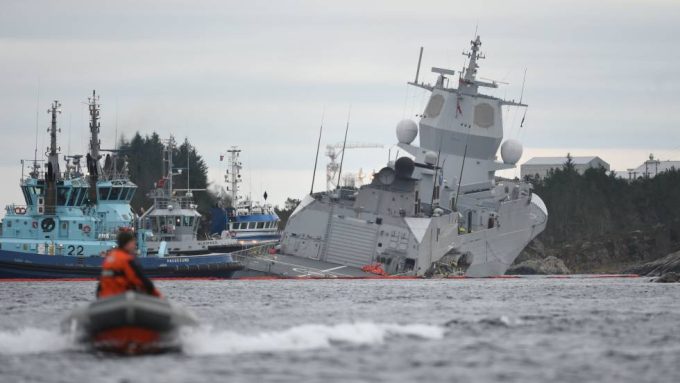
BY KATHRINE JEBSEN MOORE | THE DAILY SCEPTIC | AUGUST 26, 2022
Who needs conspiracy theorists when you’ve got school books teaching children that Covid vaccines are “95% effective”?
This autumn, a new school book was introduced for the ninth grade in Norway. Fabel 10 was revised in 2021/22, but has only now been introduced in schools across Norway. Not only does the book overstate the effectiveness of the novel mRNA vaccines, it decries anyone questioning that as conspiracy theorists.
One excerpt reads:
Since the Covid pandemic broke loose, Covid deniers and vaccine sceptics have spread disinformation about coronavirus through social media. They claimed among other things that COVID-19 was no more deadly than the flu, that the vaccine was dangerous, and that restrictions were unnecessary. On Saturday March 20th 2021, 200 Covid deniers gathered in front of the Parliament. They burnt face masks to show that they thought they were unnecessary.
This short paragraph is easily debunked. Readers of the Daily Sceptic know that Covid now has an infection fatality rate about the same as influenza. We also know that side effects from the Covid vaccines – both the mRNA and the viral vector vaccines such as AstraZeneca’s – are more common than for other tried and tested vaccines. Remember when the Pandemrix vaccine rollout was halted because of a link to rare instances of narcolepsy? Multiple studies show Pfizer and Moderna’s Covid vaccines increase the risk of myocarditis and pericarditis in especially younger males – the demographic who make up precisely half the readership of Fabel 10. The German Government even admits that as many as one in 300 doses of the mRNA jabs produce serious injury. Compared to the danger that Covid poses to most people, does that make vaccines worth having?
And as for restrictions, a new consensus is gaining momentum. Whereas back in 2021, when the book was written, it was mainly agreed that lockdowns and other Covid restrictions were necessary to halt the spread, and countries with low Covid fatalities would credit these non-pharmaceutical interventions for their comparatively low excess mortality, studies later proved them incorrect. Lockdowns and excess mortality were not correlated. Whereas back in the early days of the pandemic, only a few, brave voices spoke up about their concerns, now even Rishi Sunak, who helped implement Britain’s lockdowns, admit they were detrimental to overall health and the economy and did little to stop infection. Yet in Norway, pupils are stuck in the reality curated more than a year ago, a reality that has now been revealed to most as bonkers.
And those 200 “Covid deniers” who burnt face masks deserve praise for being a tiny minority speaking up for science at a time where “the science” became an allegory for anything the authorities wanted us to do without having to prove why.
The book also states that vaccines are “95% effective against COVID-19 infections”. This is clearly nonsense, and doesn’t need further debunking. We all know of multiple-jabbed people getting infected several times over, and that infection rates in highly vaccinated countries went through the roof after the vaccine rollout.
Perhaps the book will serve as a test to pupils old enough to gather information from multiple sources. Some might agree with what they’re presented with, while others will see through this Government-approved misinformation. But that’s not really the sort of education you want in a free, democratic country. The book doesn’t invite 14-15 year-olds to question or discuss – it presents them with all the (wrong) answers. That’s bad enough in itself, but what’s worse is it tells them to ridicule those who don’t agree. The chapter on Covid and conspiracy theories could have been a great opportunity to teach children about academic freedom, online censorship, tolerance, debate, dissent and freedom of speech. Instead, it serves straight-up, Orwellian newspeak to young minds in a way the CCP would be proud of.
Turkey to host gymnastics summit after Norway refused to allow Russians
Samizdat | July 29, 2022
The dates of the International Gymnastics Federation’s (FIG) 2022 Congress have been confirmed after Turkey stepped in to host the event. The event was moved from original host Norway after it refused to allow Russian and Belarusian delegations.
The Congress will take place on November 11 and 12 in Turkey’s largest city, with the development coming following approval from the FIG’s Executive Committee.
Turkey will now host the Congress for the second year running, with Antalya receiving last year’s gathering which saw Morinari Watanabe elected for a second successive term as the FIG’s president.
Istanbul saved the day after the FIG announced earlier this week that its previous choice of Sandefjord in Norway could no longer host the congress.
This came as a result of political pressure, with the Norwegian Gymnastics Federation pulling out after recommendations from Norway’s Ministry of Culture and Equality plus the Norwegian Olympic and Paralympic Committee and Confederation of Sports (NIF) to block the attendance of Russian and Belarusian officials.
In a statement on Friday, the FIG apologized for the change and said it was “aware of the challenges caused by this unforeseen situation for all the national Gymnastics federations that were already duly registered for this Congress.”
“The FIG is very sorry for the inconvenience, and can only thank the delegations again for their understanding and valuable collaboration,” it added.
Russia and its ally Belarus have been frozen out of many international sports since the military operation in Ukraine was launched in late February, with numerous federations banning their athletes, teams and clubs following an International Olympic Committee (IOC) recommendation to do so.
These bans have sometimes extended to officials too, but delegations from the two countries have been allowed to take part in congresses such as those held by FIFA in football as well as the FIG.
Nellie Kim of Belarus is one of three FIG vice-presidents, while Russia’s Vassily Titov is a board member. Both countries have officials on various FIG committees.
As opposed to Norway and its Scandinavian neighbors, Turkey has been friendlier towards Russia while also playing an active role in mediation efforts between the country and Ukraine.
Featured Video
John Mearsheimer Talking Iran with Iran
or go to
Aletho News Archives – Video-Images
New Book
The silver that medicine dropped — four thousand years of clinical use, four decades to erase.
Colloidal Silver — First Edition, 2026, Paperback
Lies are Unbekoming | October 16, 2026
Silver was medicine. Not alternative medicine. Not folk medicine. Medicine. In surgery. In obstetrics. In the burn ward. In water treatment. In the household medicine chest. Every physician before 1938 knew this.
By the 1870s, silver nitrate was standard in surgical wound care across the leading hospitals of Britain, Germany, and the United States. Colloidal silver preparations — Collargol, Argyrol, Protargol — entered European and American practice through the 1890s and early 1900s and became standard antiseptics in military field medicine. By the time Fleming grew his first penicillin mould in 1928, silver was the first-line antimicrobial of the Western pharmacopoeia. The Lancet and the British Medical Journal carried the clinical reports in volume. The practice ran continuously through the Victorian era, the Edwardian era, the First World War, the interwar period. By 1980, almost all of it was gone.
What has not been treated at book length, until now, is how a four-thousand-year clinical record disappeared from mainstream medicine within four decades of the Flexner Report — and what the honest account of silver looks like once that record is reassembled.
Colloidal Silver reconstructs the pre-1938 record from The Lancet, the British Medical Journal, and the primary literature of the era; recovers Robert Becker’s bioelectric framework from the regeneration research the pharmaceutical model buried; and places silver inside a practical terrain-paradigm guide to its current place — in water, on the body, inside the body, and in the chronic conditions where antibiotics have failed. … continue
Blog Roll
 Aletho News
- Pharma- and Gates-Funded GAVI Seeks to Assure Parents
- John Mearsheimer Talking Iran with Iran
- Inside Bill C-22, Canada’s Patriot Act.
- China’s FM: Palestinian cause is ‘greatest injustice of the century’
- US sympathy for Palestinians surpasses support for Israelis
- Israeli rabbi permits occupiers to steal Palestinian olive harvest in West Bank
- Spanish firm sells Latvia vehicles equipped with Israeli tech despite arms embargo
- Saudi Arabia under fire… Yemen is burning down the House of Saud
- Israeli Spy Pollard stole the files, today’s it’s delivered through official channels
- Why Iran Didn’t Walk Away
- If Americans Knew
- NPR investigation finds evidence of widespread fraud at mall kiosks tied to Israeli skincare brand
- Tucker Carlson exposes Israeli Lies about the Oct 7th attack, Charlie Kirk, and the U.S.
- Israel has detained thousands of Palestinian children since Oct 7th – over half spent time in solitary, many uncharged
- Israeli Analysis: Is Netanyahu Planning an ‘October Surprise’ Attack Before Israel’s Election?
- Israeli settlers brutally attack Palestinians and Washington Post female photographer, 65
- Words Have Changed, Occupation Continues: The Reality of the Gaza Ceasefire
- Gaza’s child amputees are growing faster than their prosthetics allow
- Israel keeps Palestinians struggling just to survive–Daily Update
- Israeli firm used online ads to run vast spy operation, researchers say
- No, the world zionist movement is not an antisemitic conspiracy theory
- No Tricks Zone
- New Study Suggests Large Regions Of The Pacific Ocean Have Been Cooling For The Last 80 Years
- Germany’s Green Energy Debacle: High Energy Costs Force Kahla Porzellan to Close After 182 Years!
- New Study: 50 Years Of The Most Aggressive ‘Net Zero’ Policies Can Only Affect The Global Climate By 0.03°C
- US September “Heat” Was No Record…Many Records Set Decades Ago
- Latest European Green Energy Debacle; Portugal’s Largest Flagship Solar Park Insolvent!
- Green Energy Debacle: German Expert Professor Fritz Vahrenholt Warns Of Severe Economic And Social Consequences
- Two More Paleo Reconstructions Affirm Meters-Higher Sea Levels Across Ireland, Brazil 7000-6000 Years Ago
- New Study: Earth And Venus Surface Warmth Largely Explained By Convection And Lapse Rate, Not CO2 Or Radiation
- 2025 Nature Paper Claiming Worsening Global Drought Gets RETRACTED …Heavily Flawed
- New Study: ‘Global Drought Shows No Detectable Recent Acceleration Under Climate Warming’

