Israel approves decision to demolish school in Masafer Yatta
MEMO | January 19, 2023
An Israeli court has approved a decision by Israeli authorities to demolish a school in Al-Ain Al-Baida in Masafer Yatta, based south of Hebron in the Occupied West Bank, reported Wafa news agency.
Head of the Masafer Yatta Village Council, Nidal Younis, told Wafa that an Israeli court revoked a previous injunction issued against the demolition of the school and gave the Israeli Occupation army 10 days to destroy it.
He noted that the school was built last year with funding from the European Union, which 50 students from local Bedouin communities attend.
On 4 May 2022, the Israeli High Court of Justice ruled that there were no legal barriers to the planned expulsion of Palestinian residents from Masafer Yatta to make way for military training.
The UN OCHA said then that this ruling “effectively placed the residents at imminent risk of forced evictions, arbitrary displacement and forcible transfer.”
According to the UN OCHA, in the 1980s, the Israeli Occupation designated part of Masafer Yatta as ‘Firing Zone 918’ and declared it a closed military zone.
Since this declaration, indigenous Palestinian residents have been at risk of forced eviction, demolition and forcible transfer. The two villages of Khirbet Sarura and Kharoubeh no longer exist after their homes were demolished.
“Approximately 20 per cent of the West Bank has been designated as ‘Firing Zones’, affecting over 5,000 Palestinians from 38 communities,” the UN OCHA said.
It added: “Currently, Masafer Yatta is home to 215 Palestinian households, including about 1,150 people, of which 569 are children.”
In an effort to force Palestinians out of the area, the Israeli Occupation has deprived residents of access to basic amenities, including drainage and permission to construct to meet the needs of the growing population.
The content of AIPAC’s recent Political Leadership Forum was largely concealed from the public
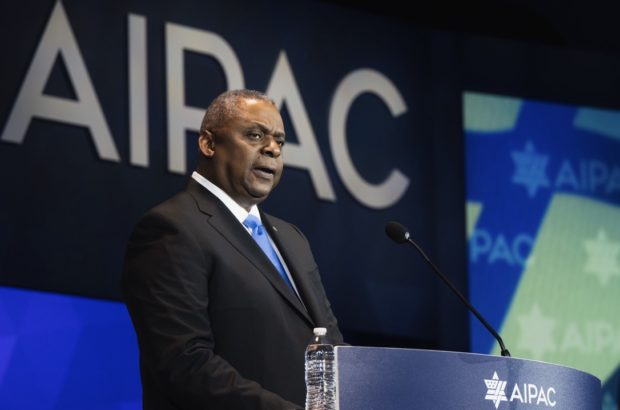
By Kathryn Shihadah | If Americans Knew | January 19, 2023
The American-Israel Public Affairs Committee (AIPAC) brought together last week 1,000 top political leaders to discuss the new political reality the pro-Israel lobby faces following the swearing-in of Israel’s new, extremist government, and to “strategize for the 2024 election cycle.”
The conference was closed to journalists, and only excerpts of some speeches have been released. Speakers included Israel’s Prime Minister, Benjamin Netanyahu (via video call) on Monday, and US Secretary of Defense Lloyd J. Austin III (in person) on Tuesday. Below is a partial summary of their remarks.
Normalization
PM Netanyahu addressed, among other topics, his hope to see the Trump-era Abraham Accords expand to include more Arab nations (read about the Abraham Accords here). According to the Israeli daily Ha’aretz, he is optimistic because many Arab leaders have changed their perception of Israel and now see it as a partner rather than an enemy.”
Secretary Austin likewise stated his eagerness to “deepen and broaden the Abraham Accords and to forge other normalization agreements.”
Both men overlooked the fact that in a recent UN meeting, all of the Abraham Accords signatories (United Arab Emirates, Bahrain, and Morocco) – as well as every other Arab country – had voted against Israel on a resolution calling for the International Court of Justice to weigh in on the occupation of the Palestinian territories.
Iran
The Israeli Prime Minister made reference to Iran, which is under worldwide scrutiny at the moment for its brutal suppression of human rights protest. Netanyahu labeled Iran “a terrible regime, depressive and terroristic.”
The US Secretary of Defense similarly stressed Iran’s oppression: “The regime has killed, and beaten, and jailed its own citizens for daring to speak out against its repressive rule,” adding, “we’re working closely with Israel and our allies and partners to impose coordinated pressure on the Iranian regime.”
Neither of the speakers acknowledged Israel’s own brutal suppression of Palestinian protesters and resistors (for examples, go here). United Nations data shows that in 2022, Israeli troops killed over 150 Palestinians in the West Bank alone (almost 50 in Gaza) – more than any other year since the UN started keeping track.
So far in 2023, at least 14 Palestinians have been killed already. Thousands more are held in prison or administrative detention without charge or trial – and many prisoners are tortured.
“Democracy”
AIPAC issued a statement in late December, immediately after the new Israeli government had been formed, congratulating the state and its new prime minister, adding, “Once again, the Jewish state has demonstrated that it is a robust democracy with the freedoms that Americans also cherish.”
Within a few days after forming the new government in December, PM Netanyahu tweeted the coalition’s intentions – which exclude any language about democracy:
“These are the basic guidelines of the national government headed by me: The Jewish people have an exclusive and unquestionable right to all areas of the Land of Israel. The government will promote and develop settlement in all parts of the Land of Israel – in the Galilee, the Negev, the Golan Heights, Judea and Samaria.”
(Note: “the Galilee” is part of the current state of Israel, but less than half of the population is Jewish; “the Golan Heights” and “Judea and Samaria” refer to lands belonging to Syria and Palestine, respectively; the internationally recognized name of “Judea and Samaria” is Occupied Palestinian Territory. 20% of the citizens of Israel and roughly 50% of the population over which Israel exercises control are Palestinian Arabs, largely Muslim and Christian.)
Rather than responding to Netanyahu’s blunt assertion, US Secretary of Defense Austin quoted a statement the Prime Minister had made back in November:”[We] will work for the benefit of all residents of the state of Israel, without exception” – a promise that preceded the formation of a government coalition that included some of the most extremist members in recent memory.
Notably, Israel has defied international law and the demands of the global community since the country’s inception – including its constant drive to build illegal settlements on Palestinian land and transfer Jewish Israeli citizens to that land.
American money for Israel
Austin went on to list the financial perks that the US is providing to Israel, including $3.8 billion annually in military aid (“the highest it’s ever been”). (Note: Congress spends another $3 billion a year on projects that benefit Israel, for a total of about $7 billion a year – $20 million a day.)
While some Congress members have pressed to block aid to Israel while it is in defiance of international (and US) law, the effort has gained little traction.
It has always been a ‘Religious War’: On Ben-Gvir and the adaptability of Zionism
By Ramzy Baroud | MEMO | January 17, 2023
In a self-congratulatory article published in the Atlantic in 2017, Yossi Klein Halevi describes Israeli behaviour at the just-conquered holy Muslim shrines in Occupied East Jerusalem in 1967 as “an astonishing moment of religious restraint”.
“The Jewish people had just returned to its holiest site, from which it had been denied access for centuries, only to effectively yield sovereignty at its moment of triumph,” Halevi wrote with a lingering sense of pride, as if the world owes Israel a ton of gratitude in the way it conducted itself during one of the most egregious acts of violence in the modern history of the Middle East.
Halevi’s pompous discourse on Israel’s heightened sense of morality – compared to, according to his own analysis, the lack of Arab appreciation of Israel’s overtures and refusal to engage in peace talks – is not in any way unique. His is the same language recycled umpteen times by all Zionists, even by those who advocated for a Jewish state before it was established on the ruins of destroyed and ethnically cleansed Palestine.
From its nascent beginnings, the Zionist discourse was purposely confusing – disarranging history when necessary, and fabricating it when convenient. Though the resultant narrative on Israel’s inception and continuation as an exclusively Jewish state may appear confounding to honest readers of history, for Israel’s supporters – and certainly for the Zionists themselves – Israel, as an idea, makes perfect sense.
When Israel’s new National Security Minister Itamar Ben-Gvir raided Al-Aqsa Mosque on 3 January to re-introduce himself to Jewish extremists as the new face of Israeli politics, he was also taking the first steps in correcting, in his own perception, a historical injustice.
Like Halevi, and, in fact, most of Israel’s political classes, let alone mainstream intellectuals, Ben-Gvir believes in the significance of Jerusalem and its holy shrines to the very future of their Jewish state. However, despite the general agreement on the power of the religious narrative in Israel, there are also marked differences.
What Halevi was bragging about in his piece in the Atlantic is this: soon after soldiers raised the Israeli flag, garnished with the Star of David, atop the Dome of the Rock they were ordered to take it down. They did so, supposedly, at the behest of then-Defence Minister Moshe Dayan, quoted in the piece as saying to the army unit commander: “Do you want to set the Middle East on fire?”
Eventually, Israel conquered all of Jerusalem. Since then, it has also done everything in its power to ethnically cleanse the city’s Palestinian Muslim and Christian inhabitants to ensure an absolute Jewish majority. What is taking place in Sheikh Jarrah and other Palestinian neighbourhoods in Jerusalem is but a continuation of this old, sad episode.
However, the Haram Al-Sharif Compound – where Al-Aqsa Mosque, Dome of the Rock and other Muslim shrines are located – was nominally administered by the Islamic Waqf authorities. By doing so, Israel managed to enforce the inaccurate notion that religious freedom is still respected in Jerusalem even after Israel’s so-called ‘unification’ of the city, which will remain, according to Israel’s official discourse, the “united, eternal capital of the Jewish people”.
The reality on the ground, however, has been largely dictated by the Ben-Gvirs of Israel who, for decades, have laboured to erase the Muslim and Christian history, identity and, at times, even their ancient graveyards from the Occupied city. Al-Haram Al-Sharif is hardly a religious oasis for Muslims but the site of daily protests, whereby Israeli soldiers and Jewish extremists routinely storm the holy shrines, leaving behind broken bones, blood and tears.
Despite American support of Israel, the international community has never accepted Israel’s version of falsified history. Though the Jewish spiritual connection to the city is always acknowledged – in fact, it has been respected by Arabs and Muslims since Caliph Umar ibn Al-Khattab entered the city in 638 – Israel has been reminded by the United Nations, time and again, regarding the illegality of its Occupation and all related actions it carried out in the city since June of 1967.
But Ben-Gvir and his Otzma Yehudit Party, like all of Israel’s major political forces, care little for international law, authentic history or Palestinians’ rights. However, their main point of contention regarding the proper course of action in Al-Aqsa is mostly internal. There are those who want to speed up the process of fully claiming Al-Aqsa as a Jewish site, and those who believe that such a move is untimely and, for now, unstrategic.
The former group, however, is winning the debate. Long marginalised at the periphery of Israeli politics, Israel’s religious parties are now inching closer to the centre, which is affecting Israel’s priorities on how best to defeat the Palestinians.
Typical analyses attribute the rise of Israel’s religious constituencies to the desperation of Israeli Prime Minister Benjamin Netanyahu, who is arguably using the likes of Ben-Gvir, Bezalel Smotrich and Aryeh Deri to stay in office. However, this assessment does not tell the whole story, as the power of religious parties has long preceded Netanyahu’s political and legal woes. The Zionist discourse has, itself, been shifting towards religious Zionism; this can be easily observed in the growing religious sentiment in Israel’s judicial system, among the rank and file of the army, in the Knesset (Parliament) and, more recently, in the government itself.
These ideological shifts have even led some to argue that Ben-Gvir and his supporters are angling for a ‘religious war’. But is Ben-Gvir the one introducing religious war to the Zionist discourse?
In truth, early Zionists have never tried to mask the religious identity of their colonial project. “Zionism aims at establishing for the Jewish people a publicly and legally assured home in Palestine,” the Basel Program, adopted by the First Zionist Congress in 1897, stated. Little has changed since then. Israel is “the national state, not of all its citizens, but only of the Jewish people,” Netanyahu said in March 2019.
So, if Israel’s founding ideology, political discourse, Jewish Nation State Law, every war, illegal settlement, bypass road and even the very Israeli flag and national anthem were all directly linked or appealed to religion and religious sentiments, then it is safe to argue that Israel has been engaged in a religious war against Palestinians since its inception.
The Zionists, whether ‘political Zionists’ like Theodore Hertzl or ‘Spiritual Zionists’ like Ahad Ha’am’ – and now Netanyahu and Ben-Gvir – have all used the Jewish religion to achieve the same end, colonising all historic Palestine and ethnically cleansing its native population. Sadly, a major part of this sinister mission has been achieved, though Palestinians continue to resist with the same ferocity of their ancestors.
The historic truth is that Ben-Gvir’s behaviour is only a natural outcome of Zionist thinking, formulated over a century ago. Indeed, for Zionists – religious, secular or, even atheists – the war has always been or, more accurately, had to be, a religious one.
Nasrallah: The new Netanyahu government will hasten Israel’s demise
Speech of Hezbollah Secretary General, Sayed Hassan Nasrallah, on January 3, 2023, during the commemoration of the third anniversary of the assassination of Commanders Qassem Soleimani and Abu Mahdi al-Muhandis.
Source : video.moqawama.org
Translation: resistancenews.org
Transcript:
[…] I want to conclude on two points. The first point will be to address a message to the new Israeli government, and the second point concerns the presidential elections and the political situation in Lebanon.
First of all, this new government… Of course, we already have many years of experience with Netanyahu. If someone wants to scare us with Netanyahu, with the new (Israeli) Minister of War [Yoav Galant] or with anyone else, (he is wasting his time because) we have already dealt with them in the previous years. Yes, there is something new, namely that this government is a mixture of corrupt people – some of whom have been tried and sentenced to prison for corruption charges – and madmen and extremists, which is new. This level of transparency (in corruption and in fanaticism) is something new. So we are facing a government of corrupt, criminal and extremist fanatics. Of course, such a government does not scare us, and never such governments have been able to scare us in any way.
And more than that, we can even be optimistic about it, contrary to what most (analysts) say: when a new government is composed of corrupt and crazy people, with the grace of God, it will only accelerate the end of this temporary entity. These madmen, whom we have seen for a few days, and until this morning, (desecrate) the Al-Aqsa mosque in the early morning, their Minister of National Security (Ben Gvir), this administration, with the grace of God, will accelerate (the demise of Israel).
As you know, we have spoken many times about the internal dangers within the Israelis (themselves), the sharp divisions (of their society and elites), the lack of trust in the political and military leadership, and even in the religious authorities, the growing corruption, etc., up to the prevalent anxiety in Israel as to whether this entity will exceed 80 years of existence or not [never in history has a Jewish state exceeded 80 years], with the grace of God the Most High and Exalted, and by the grace of this new government composed of madmen, it will accelerate the end of this entity, through mistakes and stupid acts that could drag them to the bottom of the abyss. This is how we see things. In no way does the situation frighten us, on the contrary: we see a great hope in this evil (government). That’s the first point.
Second point, of course, these madmen and fanatics… Their first aim is internal, and concerns Palestine: the colonization of the West Bank, the question of the Al-Aqsa Mosque and Bayt al-Maqdis (Jerusalem). What happened today (desecration of the Al-Aqsa mosque by the new Minister of National Security), and the Palestinian stances as well as the reactions of some Arab and Muslim States and groups in the world confirm that these people are pushing for a (very) dangerous situation. I would like tonight to add the voice of the Islamic Resistance in Lebanon (Hezbollah) to that of all the Resistance organizations in Palestine and declare this: desecrating Al-Aqsa Mosque and the Muslim and Christian holy places in Palestine and Bayt al-Maqdis in particular, on the part of these Zionists, will not only explode the situation inside Palestine, but can put the whole region on fire (by triggering a massive counter-strike against Israel). Our peoples will not tolerate such aggression by these madmen against the Muslim and Christian holy places. We have said this before, and we confirm it again. And we declare to all the countries of the world, and (especially) to those who protect this usurping entity, that if you want to avoid a second war in the Middle East in addition to the war in Ukraine, you must keep a tight rein on these extremist and fanatical madmen.
As for the rules of engagement with this new government, as I said, we already have experience with Netanyahu, there is nothing new, but also, since there is a new government, we reaffirm to them that we are alert, vigilant and ready (for anything), and that we will not tolerate any change in the rules of engagement and the balance of deterrence (between Israel and) Lebanon, whatever it may be. Let no one get any ideas or illusions. In any case, they could see a few months ago that we were ready, during the dispute over the maritime border and oil and gas resources, to go as far as possible in the confrontation (up to an all-out war) against this enemy (Israel). And they knew with certainty that we were ready for that (and that we were not bluffing). That is why we will not tolerate any alteration of the rules of engagement (between Hezbollah and Israel), nor any violation of Lebanon’s security, its capabilities or its sovereignty.
See Nasrallah: If Lebanon is denied its oil and gas resources, we will shut down all Israeli platforms
Likewise, we stress the importance for the Lebanese government to pursue its efforts to launch the extraction of (Lebanese) oil and gas. Some feared that Netanyahu’s rise to power would end the border agreement between Lebanon and Israel, but he announced that he would abide by it. The signs from the companies involved (Total, etc.) give cause for optimism. So we are not at all worried on that side.
In truth, with this government, our eyes must rather be turned towards the interior of occupied Palestine, towards Al-Quds (Jerusalem), towards the West Bank, and towards the Al-Aqsa Mosque in the first place. […]
Israel occupation forces bulldoze Greek Orthodox land in occupied Jerusalem
MEMO | January 16, 2023
The Israeli occupation authorities yesterday started to bulldoze a 5,000 square metre plot of land owned by the Greek Orthodox Church in occupied Jerusalem’s Silwan neighbourhood, the Wadi Hilweh Information Centre has reported. The operators of the bulldozers were protected by a large number of Israeli occupation security forces and police.
According to the centre, the Israeli Nature and Parks Authority as well as settler organisations commissioned the bulldozers to uproot fruit-bearing trees and level the land. Illegal settlers and police seized the land on 22 December. The Jewish settlers fenced it off and installed surveillance cameras under police protection.
When Silwan residents rushed to the scene to stop the land theft, they were assaulted by security forces, said the centre, which monitors Israeli violations in the area. The land is owned by the Greek Orthodox Monastery in Silwan, which is part of the city’s Greek Orthodox Patriarchate.
Silwan is home to more than 60,000 Palestinians and is located strategically to the south of Al-Aqsa Mosque. The area has been the target of Israeli settler expansion for years, with hundreds of Palestinian families facing the threat of expulsion, either through lawsuits by powerful settler groups or administrative eviction orders by the Israeli-run Jerusalem municipality.
Middle East Eye has reported that the Greek Orthodox Church has been criticised heavily by Palestinian groups for its dealings with settlers and allegations of bribery and fraud. In 1951, church-owned land in West Jerusalem was rented to the Jewish National Fund for a period of 99 years. Today, the land houses most Israeli state institutions, including Israel’s parliament, the Knesset.
China urges Israel to stop ‘incitement’ to avoid escalation
MEMO | January 16, 2023
China’s Minister of Foreign Affairs, Qin Gang, urged Israel on Sunday to stop its “incitement” in order to avoid escalation with the Palestinians, news agencies have reported.
In a joint press conference with his Egyptian counterpart Sameh Shoukry in Cairo, the Chinese minister called on Israel to “stop incitements and provocations, and to refrain from taking uniliteral actions that could worsen the situation.”
Referring to the recent provocative incursion at Al-Aqsa Mosque by Israel’s far-right Minister of National Security, Itamar Ben-Gvir, Qin Gang reiterated the importance of “maintaining the status quo” in Jerusalem.
He also reiterated China’s longstanding position on resolving the Israeli-Palestinian conflict based on the “the two-state-solution and the land-for-peace principle.” The international community, he added, should find a “just” solution for the Palestinian people through a return to the negotiation table and resumption of the peace process.
How the EU constructs Israel impunity

By Ramona Wadi | MEMO | January 12, 2023
The EU could have availed itself of an opportunity to hold Israel accountable for its violations but, instead it opted for the lesser value of requesting financial reparation for the structures funded by the bloc in the Occupied West Bank and destroyed by the settler-colonial enterprise. Neither is the EU’s request a novelty, since demanding financial compensation from Israel has happened in the past, without any compliance, of course.
Recent focus on Israel’s planned forced displacement of Palestinians living in Masafer Yatta prompted 24 European Parliament members to contact the European Commissioner for Crisis Management, Janez Lenarcic, regarding financial reparation. The bottom line is that, while the EU is within its rights to demand financial compensation, the issue at stake – which is the Palestinian people being forcibly displaced by Israel – is nowhere on the EU’s agenda.
Lenarcic’s response, partially quoted by Haaretz, confirms the EU’s repetitive requests for financial compensation and that “the European Union is continuing to work in this regard through a range of diplomatic and political channels”. Of little to no consequence was Lenarcic’s reminding that EU representatives often visit areas in the Occupied West Bank that are slated for demolition, ostensibly “to warn against”. Yet, besides the opportunistic exploitation, keeping tally of EU-funded destroyed dwellings is more a case in point and futile, too. As Lenarcic stated, “The list of possible steps to ensure compensation from Israel for European financing that went down the drain in demolitions has not yet come up for discussion.”
If holding Israel accountable for something as basic as a financial transaction for damages it caused prompts so much caution in the EU’s official statements, it is safe to say that human rights in the EU’s repertoire, when it comes to Israel, descends into still silence. The EU still has not addressed the fact that, without holding Israel accountable for forcibly displacing Palestinians, its humanitarian projects for Palestinians is also financing Israel’s violations. Yet it is precisely what the humanitarian project which the international community imposed upon Palestinians intended. By investing a fragment of humanitarian aid aimed at alleviating the suffering caused by Israel’s colonial existence and violence, the international community can bypass the actual violations which go against international law.
The EU is no exception to this imposed rule. Advocacy by EU representatives does not work to hold Israel accountable but to extend a permanent contract of silence which, in turn, also silences Palestinians. Despite having political means at their disposal, EU representatives prefer playing the amateur activists when it comes to Palestine. Funds for travelling to the Occupied West Bank, after all, form part of the humanitarian project which Palestinians are forced to fit into. In the same way, EU-funded dwellings play a role in the humanitarian project but fail to sustain Palestinian autonomy. The latest purported concern has nothing to do with Palestinians, and is only marginally related to the EU-funded dwellings that Israel routinely destroys. Detracting from Israel’s settler-colonial expansion and the EU’s role in maintaining it, however, is a major part of what the humanitarian paradigm constitutes.
Israel to destroy 58 Palestinian schools
Palestine Information Center – January 6, 2023
RAMALLAH – 58 Palestinian schools are at risk of demolition in the occupied West Bank and Jerusalem, the Arab Campaign for Education for All revealed.
In a statement issued on Thursday, the campaign expressed deep concern over the Israeli violation of Palestinian children’s right to education.
Israeli authorities issued six demolition or stop-construction orders against six schools over the past year, according to the campaign.
58 other schools, serving 6,550 students, were also notified with demolition, the campaign added.
In this regard, the Arab Campaign for Education for All called on the UN concerned agencies to bear responsibility in confronting Israeli demolition policy against Palestinian schools.
The time has come for international institutions to go beyond condemnation and to move to pressure the Israeli occupation to stop its continuous violations against Palestinian education, the statement reads.
Israel arrested 410 Palestinians for social media activity in 2022, report says

MEMO | January 5, 2023
Israeli occupation authorities arrested 410 Palestinians, including women, children, journalists, activists and community leaders, for expressing their opinion on social media, according to a report by the Palestine Centre for Prisoners Studies (PCPS).
The report, co-authored by the Commission of Detainees and Ex-Prisoners’ Affairs, the Palestinian Prisoners’ Society, Addameer Association for Prisoner Care and Human Rights and the Wadi Hilweh Centre highlighted Israel’s use of a new ‘Vigilance Unit’ to monitor Palestinian social media accounts and issue recommendations to the security authorities to arrest them on the pretext that their opinions and publications call for incitement and violence.
PCPS Director, Riyad Al-Ashqar, said the Israeli courts charged the detainees with “incitement” for simply expressing their opinion on social media, including posting a picture of a martyr or merely mentioning his/her name, or issuing an invitation to protect Al-Aqsa Mosque.
Palestinians have been sentenced to between several months and several years in jail by the occupation’s courts on charges of incitement, while some were being held under administrative detention without charge or trial.
Israeli authorities also forced detainees to sign pledges not to use social media platforms for several months, in addition to issuing financial fines and placing some under house arrest.
Al-Ashqar indicated that over the past few years, the number of Palestinians arrested for using social media platforms has increased from 145 arrests in 2018, to 184 in 2019, 220 in 2020, 390 in 2021, and 410 in 2022.
Israel was never a democracy, so why is the West lamenting the end of a ‘liberal’ state?
MEMO | January 3, 2023
Even before the new Israeli coalition government was officially sworn in last week, angry reactions emerged, not only among Palestinians and other Middle Eastern governments, but also among Israel’s allies in the West. As early as 2 November, top US officials told Axios that the administration of US President Joe Biden is “unlikely to engage with Jewish supremacist politician, Itamar Ben-Gvir”.
In fact, the US government’s apprehensions surpassed Ben-Gvir, who was convicted by Israel’s own courts in 2007 for supporting a terrorist organisation and inciting racism. US Secretary of State Tony Blinken and National Security Advisor Jake Sullivan reportedly “hinted” that Washington will also boycott “other right-wing extremists” in Netanyahu’s government.
However, such concerns looked to be absent from the statement made by the US Ambassador to Israel, Tom Nides, on the following day. Nides explained that he had “congratulated [Netanyahu] on his victory and told him that I look forward to working together to maintain the unbreakable bond” between the two countries. In other words, this “unbreakable bond” is stronger than any public US concern regarding terrorism, extremism, fascism and criminal activities.
Ben-Gvir is not the only convicted criminal in Netanyahu’s government. Aryeh Deri, the leader of the ultra-Orthodox Shas party, was convicted of tax fraud in early 2022 and, in 2000, he served a prison sentence for accepting bribes when he was interior minister. Bezalel Smotrich is another controversial character. His anti-Palestinian racism has dominated his political persona for many years. While Ben-Gvir has been assigned the post of national security minister, Deri has been entrusted with the interior ministry and Smotrich has the ministry of finance.
Palestinians and Arab countries are angry, and rightly so. They understand that the new government is likely to sow the seeds of more violence and chaos. With many of Israel’s sinister politicians in one place, Arabs know that Israel’s illegal annexation of large parts of the Occupied Palestinian Territories is back on the agenda; and that incitement against Palestinians in Occupied East Jerusalem, coupled with raids on Al-Aqsa Mosque, will increase exponentially in the coming weeks and months. Moreover, it is expected that the push for the construction and expansion of illegal settlements is also likely to grow.
These fears are not unfounded. Aside from the very racist and violent statements and actions by Netanyahu and his allies in recent years, the new government has already declared that the Jewish people have “exclusive and inalienable rights to all parts of the Land of Israel”. It is promising to expand settlements, while distancing itself from any commitments to establishing a Palestinian State, or even engaging in any “peace process”.
Palestinians and their Arab allies have been largely consistent in recognising extremism in successive Israeli governments, but what excuse do the US and the West have in failing to acknowledge — or even recognise — that the latest Netanyahu-led government is not only the occupation state’s most extreme administration ever, but also the most rational outcome of the West’s blind support for Israel over many years?
In March 2019, Politico branded Netanyahu as the creator of “the most right-wing government in Israeli history,” a sentiment that was repeated countless times in other western media. This ideological shift was, in fact, recognised by Israel’s own media years earlier. In May 2016, the popular Israeli newspaper Maariv described the Israeli government at the time as the “most right-wing and extremist” in the country’s history. This was, in part, due to the fact that far-right politician Avigdor Lieberman was appointed as defence minister.
The West, then, also expressed concern, warned against the demise of Israel’s supposed liberal democracy, and demanded that it must remain committed to the peace process and the two-state solution. None of that was seen in practise. Instead, the terrifying figures within that government were rebranded as conservatives, centrists or even liberals in the following years.
The same is likely to happen now. In fact, signs of the US’s willingness to accommodate whatever extremist politics Israel produces are already visible. In his statement last week welcoming the new Israeli government, Biden said nothing about the threat of Tel Aviv’s far-right politics to the Middle East. Instead, he opted to highlight the “challenges and threats” posed by the region to Israel. In other words, Ben-Gvir or no Ben-Gvir, unconditional US support for Israel will remain intact.
If history is anything to go by, future violence and incitement in Palestine will also be blamed mostly, if not squarely, on Palestinians. This knee-jerk, pro-Israel attitude has defined the apartheid state’s relationship with the US, regardless of whether Israeli governments are led by extremists or supposed liberals. No matter what, Israel is maintaining its false status as “the only democracy in the Middle East”.
If we are to believe that Israel’s exclusivist and racist “democracy” is in any sense a democracy at all, then we are justified also in believing that Netanyahu’s new government is neither less nor more democratic than the state’s previous governments. And yet, western officials, commentators and even pro-Israel Jewish leaders and organisations in the US have warned against the supposed danger facing Israel’s “liberal democracy” in the run-up to the formation of Netanyahu’s new government.
This is an indirect form of whitewashing, as these views accept that what Israel has practiced since its creation in 1948 until today has been some kind of real democracy; and that Israel remained a democracy even after the passing of the controversial 2018 Nation-State Law, which defines Israel as a Jewish state, completely disregarding the rights of 20 per cent of the country’s citizens who happen to be non-Jews.
It is only a matter of time before Israel’s latest extreme, far-right government is also whitewashed as proof that Israel can strike a balance between being exclusively Jewish and democratic at the same time.
This happened in 2016, when warnings about the rise of far-right extremism in Israel following the Netanyahu-Lieberman pact disappeared quickly, and then vanished altogether. Instead of boycotting that government, in September 2016 the US government finalised its largest ever military aid package to Israel, amounting to $38 billion.
In truth, Israel has not changed much since 1948, either in its own self-definition or in its treatment of Palestinians. Failing to understand this is tantamount to tacit approval of Israel’s racist, violent and colonial policies in Occupied Palestine over the past 75 years. So why is the West lamenting the end of a “liberal” state that has never, in truth, existed?
READ ALSO:
Culture of hope: 2022 and the margins of victory in Palestine
By Ramzy Baroud | MEMO | January 1, 2023
Another critical year for Palestine has folded. While 2022 has wrought much of the same in terms of Israeli military occupation and increasing violence, it also introduced new variables to the Palestinian struggle – nationally, regionally and internationally.
Palestine, the War and the Arabs
The Russia-Ukraine War starting in February pressured many political entities, including Palestinians, to take sides or, at least, to declare a position. Though the Palestinian Authority (PA) and various Palestinian political parties insisted on their neutrality, Russia’s deviation from the US-led political paradigm in the Middle East opened up new margins for Palestinians to explore.
On 4 May, a delegation of Hamas leaders met Russian officials in Moscow, and, a few months later, PA leader Mahmoud Abbas defied Washington by holding a meeting with Russian President Vladmir Putin in Astana, Kazakhstan. Despite US anger at Abbas, Washington could do little to retaliate against the Palestinian leadership, considering the delicate geopolitical balances in the Middle East and around the world.
The new political spaces created by global conflict also brought greater cohesion to the Arab position on Palestine, as articulated in a statement by the pan-Arab organization, the Arab League, in Cairo on 29 November. Ahmed Aboul Gheit insisted on the Arab quest for a just peace and praised the ‘Algiers Declaration’ of the previous month. On 12-14 October Palestinian political groups met in Algeria, signed a reconciliation agreement based on ending division through presidential and parliamentary elections.
This was part of a year-long momentum where Arab governments revitalized their position in support of the Palestinians, both financially and politically through funding the Palestinian refugees agency, UNRWA, or supporting Palestine at the United Nations.
On 3 October, Arab representatives at the UN introduced Resolution A/C 1/77 L.2, urging Israel to get rid of its nuclear weapons and to put “all its nuclear facilities under comprehensive International Atomic Energy Agency safeguards.” The Resolution was overwhelmingly approved by the United Nations General Assembly on 28 October.
UN: ‘Deadliest Year’
Though no real action was taken by the UN to punish Israel for its ongoing military occupation and violations of Palestinian rights, several UN initiatives and resolutions continued to demonstrate the centrality of Palestine to the international agenda.
Last August, the ‘UN Experts’ condemned “Israel’s escalating attacks against Palestinian civil society in the occupied West Bank”, stating that these actions amount to severe suppression of human rights defenders and are illegal and unacceptable.”
In October, Francesca Albanese, the UN Special Rapporteur on the Situation of Human Rights in the Palestinian Territory occupied since 1967, submitted a report to the UNGA, where she concluded that the realization of the inalienable right of the Palestinian people to self-determination requires dismantling the Israeli settler-colonialism and apartheid regime.
On 30 November, the UNGA also adopted a resolution to mark Nakba Day, which commemorates the forced expulsion of hundreds of thousands of Palestinians from their lands in 1948.
Alas, none of these statements altered the violent nature of Israel’s attitude towards Palestinians. On 29 October, the UN Mideast envoy, Tor Wennesland, said that 2022 is on course to be the ‘deadliest year’ for Palestinians in the occupied West Bank since the UN started tracking fatalities in 2005.
Israeli Violence and the Lions’ Den
Israel has killed over 200 Palestinians in the occupied West Bank and Gaza throughout 2022, including 47 children. Only a few of them made headlines in mainstream media. However, the world still showed outrage following the cold blooded murder of famed Palestinian American journalist Shireen Abu Akleh on 11 May, while she was covering the tragic events in Jenin. Widespread calls for an impartial investigation finally convinced the FBI to open a criminal probe into Abu Akleh’s killing.
The Israeli killing spree was motivated by two reasons: first, the rise of armed resistance in the northern West Bank, and second, Israel’s chaotic political scene.
Continued Israeli attacks on Jenin, Nablus and other West Bank towns and refugee camps resulted in the formation of a new Palestinian armed group known as the Lions’ Den. Unlike other groups, the Nablus-based movement was non-factional, which created new spaces for national unity among all Palestinians, regardless of their political or ideological backgrounds.
The Israeli government quickly retaliated against the Lions’ Den. Israeli Defense Minister Benny Gantz belittled the group’s appeal on 13 October, announcing “Eventually, we will lay our hands on the terrorists”, estimating their number to be 30 fighters. “We will work out how to reach them and we will eliminate them,” Gantz said. The Israeli assessment has proven untrue as the brigade continued to grow, morphing into other brigades in Jenin, Al-Khalil (Hebron) and other West Bank regions.
The killing of Palestinian fighter Oday Tamimi in a clash near the illegal Jewish settlement of Maale Adumim on 19 October further accentuated the boldness of the new Palestinian generation of resisters. Moreover, the televised execution of Ammar Mufleh in the town of Huwara on 2 December also illustrated Israel’s willingness to flout international law to end the ongoing armed rebellion in occupied Palestine.
The Israeli violence is also directly linked to Tel Aviv’s own political crisis. Though Benjamin Netanyahu was ousted through an unlikely alliance among various Israeli political forces, which was led by former Prime Minister Naftali Bennett in June 2021, Israel’s longest-serving prime minister is slated for a comeback.
Bennett resigned from his post on 20 June, leaving the leadership to his coalition partner, Yair Lapid. New elections, the fifth in three years, were held on 1 November. This time around, Netanyahu’s rightwing coalition won by a comfortable margin, introducing to Israel’s already extremist government such notorious personalities as Bezalel Smotrich and Itamar Ben-Gvir, known for their violent action and rhetoric against Palestinians.
Though Washington had indicated on 2 November, that it will not be working directly with Ben-Gvir, the US Ambassador to Israel, Thomas Nides, seemed to reverse that position by declaring that “no one hurts the unbreakable ties between Israel and the United States.”
Keeping in mind that the increased violence in the West Bank was a direct result of the militant nature of the Bennet-Lapid government as it laboured to demonstrate its toughness against Palestinian Resistance, the new government is expected to be even more violent, setting the stage for a wider confrontation in both the West Bank and Gaza.
The brief but deadly Israeli war on the besieged Gaza Strip on 5 August resulted in the killing of at least 46 Palestinians and the injuring of at least 360, according to UN estimates. Despite the devastation resulting from the war, it could have been much worse, as not all Palestinian groups took part in the fighting and Israel seemed keen on ending its hostilities before a prolonged conflict resulted in a heavy political price. Netanyahu, too, is likely to resort to war on Gaza, should he need to create a distraction from future political difficulties or to keep his rightwing partners in line.
Culture of Hope
Despite the violence of the Israeli occupation and the hardship of isolation and siege, Palestinian culture continued to flourish with Palestinian artists, filmmakers, athletes, intellectuals and teachers continuing to leave their mark on the cultural scene in Palestine, in the Middle East and worldwide.
In May, Mohammed Hamada, a 20-year-old weightlifter from the Gaza Strip, became the first Palestinian athlete to win gold and bronze medals at the weightlifting world championships held in Heraklion, Greece.
In September, Palestinian-American systems engineer Nujoud Fahoum Merancy was appointed as one of the leaders of the Artemis missions, a program by NASA that aims to fly astronauts to the Moon.
Palestinian Resistance and cultural achievements are constantly boosted by growing international solidarity with Palestine. Thanks to the American Friends Service Committee (AFSC), multinational company General Mills announced in June that it is divesting entirely from Israel. This was one of many other achievements credited to the Palestine-led boycott movement, which included other companies, universities and churches.
However, nothing compares to the endless stream of solidarity exhibited by Arab and international football fans in the Qatar World Cup 2022, which started on 30 November. Although the Palestine national football team has not qualified for the world’s most important sports event, the flag of Palestine was the most visible among all other international flags. The iconic Palestinian Kufiyeh was also adorned by thousands of fans including world leaders, dignitaries and celebrities.
2022 was another year of tragedy and hope for the Palestinians. It is this hope, buoyed by numerous little victories, that makes the struggle for Palestinian freedom possible. One wishes that 2023 will be a better year.
UN resolutions on Palestine won’t be implemented as long as Israel enjoys US support: Hamas
Press TV – December 31, 2022
The Palestinian resistance movement Hamas has condemned the United States’ unwavering support for Israel, saying United Nations resolutions concerning Palestine will not be implemented as long as Tel Aviv enjoys Washington’s support.
Hamas spokesman Hazem Qassem made the remarks in a statement on Saturday, after the United Nations General Assembly approved a resolution in favor of Palestinians, according to Arabic-language al-Ahad television network.
“This resolution will add to the long list of international resolutions concerning Palestine, which have never tuned into a practical step to put pressure on the occupying regime even once,” Qassem said.
“As long as the US acts as a partner of the occupying regime and covers up Israeli crimes, all such decisions will remain on paper,” he added.
On Friday, the UNGA adopted a resolution calling on the International Court of Justice (ICJ) to give an opinion on the legal consequences of the decades-long Israeli-Palestinian conflict, Israeli “annexation” and the “legal status of the occupation” of Palestinian territories.
The resolution promoted by Palestinians passed by a vote of 87 in favor, 26 against, with 53 abstentions. Russia and China voted in favor of the resolution.
Israel, the US and 24 other members – including the United Kingdom and Germany – voted against the resolution, while France was among the 53 nations that abstained.
The resolution is titled “Israeli practices and settlement activities affecting the rights of the Palestinian people and other Arabs of the occupied territories” and calls on the Hague-based ICJ to “render urgently an advisory opinion” on Israel’s “prolonged occupation, settlement and annexation of Palestinian territory.”
It also calls for an investigation into Israeli measures “aimed at altering the demographic composition, character and status of the Holy City of al-Quds” and says Israel has adopted “discriminatory legislation and measures.”
The resolution demands the court weigh in on the conflict in accordance with international law and the UN charter.
Palestine’s UN ambassador Riyad Mansour noted that the vote came one day after the swearing-in of a new far-right Israeli cabinet led by hawkish prime minister Benjamin Netanyahu, which he said promises an expansion of illegal settlements and will accelerate “colonial and racist policies” towards Palestinians.
Earlier this month, Palestinian Minister of Foreign Affairs and Expatriates Riyad al-Maliki announced that the UN General Assembly has adopted a resolution that affirms the Palestinian people’s right to self-determination.
He further called on the international community to work on obliging Israel “to implement international resolutions and guarantee the right of the Palestinian people, as he hailed the resolution.
The General Assembly also adopted five resolutions recently in favor of Palestinians, including the issue of Palestinian refugees.
These decisions are issued every year by the General Assembly, which is consisted of 193 members, and are non-binding.
Featured Video
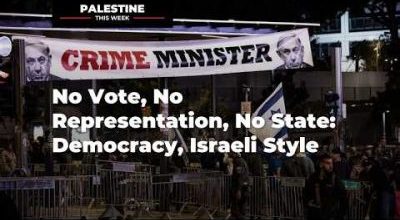
No Vote, No Representation, No State: Democracy, Israeli Style
or go to
Aletho News Archives – Video-Images
From the Archives
Sanctions, War and the Policy of Dual Containment
By SASAN FAYAZMANESH | March 17, 2008
It is now nearly three decades since the Unites States adopted the policy of dual containment of Iran and Iraq. While much has been written about the containment of Iraq, there has been very little in-depth analysis of this policy when it comes to Iran. In a book that is going to be released on March 31, 2008, entitled The United States and Iran: Sanctions, Wars and the Policy of Dual Containment (Routledge), I attempt to address this shortcoming by investigating when and why the US policy of containment of Iran came about, how it evolved, and where it stands today.[1] To the extent that Israel has been involved in US policy making, the study will also include the role that Israel has played in the containment of Iran. Also, since the fate of Iran has been inextricably linked to that of Iraq, occasionally the investigation will overlap with the containment of Iraq.
The policy of dual containment of Iran and Iraq originated during the Carter Administration, but it was not until the Clinton Administration that the expression “dual containment” became popular. … continue
Blog Roll
 Aletho News
- Americans are paying the price to preserve Israel’s nuclear hegemony
- Resistance factions are necessary to ensure a permanent US Iraq withdrawal
- How Israel destabilizes the Middle East: Denying sovereignty and the right to exist
- Europe’s Establishment Is Embracing War – and Losing Voters
- NATO chief advocates war of aggression
- No Vote, No Representation, No State: Democracy, Israeli Style
- Zionist Bought Senate Blocks Information About American Citizens Killed By Israel
- While Gaza dominates the UN, these are the people keeping it alive
- New Report: “Scholasticide and Genocide in Gaza: Assessment, Testimonies and Legal Analysis”
- ‘THAAD Delusion’: Iran war exposes US missile shield limits – The Atlantic
- If Americans Knew
- Eight Palestinians Killed in Israeli Attacks on Gaza
- Israeli former leaders and security chiefs threaten legal action over ‘Jewish terrorism’
- Israel map in LA Times ad includes all land from the river to the sea
- Inside Lebanon’s 200-page dossier on Israeli war crimes
- Flydubai, genocide, settler violence, Trump abuse of power to deport – Daily Update
- Counting Antisemitic Incidents: What the ADL Audit Reveals — and Obscures
- Mamdani releases plan to combat antisemitism and hate crimes in New York City
- Iran’s Revolutionary Guards Publish Letter to the American People
- DMFI launches $1 million ad campaign supporting Virginia’s Elaine Luria
- US Senate blocks resolution seeking report on Americans killed by Israel
- No Tricks Zone
- Green Energy Debacle: German Expert Professor Fritz Vahrenholt Warns Of Severe Economic And Social Consequences
- Two More Paleo Reconstructions Affirm Meters-Higher Sea Levels Across Ireland, Brazil 7000-6000 Years Ago
- New Study: Earth And Venus Surface Warmth Largely Explained By Convection And Lapse Rate, Not CO2 Or Radiation
- 2025 Nature Paper Claiming Worsening Global Drought Gets RETRACTED …Heavily Flawed
- New Study: ‘Global Drought Shows No Detectable Recent Acceleration Under Climate Warming’
- Economic Masterminds: German Socialists Suggest Taxing Productivity Gains Stemming From Using AI
- The South China Sea Has Not Been Cooperating With The Climate Change Narrative
- Energy Crisis: Germany Enters Heating Season With Historically Low Gas Reserve Fill Levels
- New Study: The Antarctic Ice Sheet Gained Mass From 2020-2024 Due To Staggering Snow And Ice Accumulation
- Study: Ocean Heating Rates From Thousands Of Years Ago ‘Dwarf’ Modern Ocean Heating Rates

