Is the EU thanking Israel for stealing Palestinian gas to sell to its members?
By Motasem A Dalloul | MEMO | February 17, 2023
Early this week the European Commissioner for Energy Kadri Simson delivered the opening speech at the Egypt Petroleum Show 2023 Strategic Conference, the largest oil, gas and energy conference and exhibition across Egypt, North Africa and the Mediterranean.
Simson highlighted the EU’s need to diversify its energy sources, pointing out that this became a necessity after the Russian-Ukrainian war. In an attempt to decrease the bloc’s energy imports from Russia, Simson said, it had started to look for new energy sources. Fortunately, the EU found Israel and Egypt.
“The EU is serious about investing in trusted, reliable energy partnerships,” Simson told attendants. “That describes Egypt perfectly.” Referring to the base of their partnership, she said: “In the immediate wake of the crisis a year ago, the very first energy agreement the EU concluded was the Memorandum of Understanding with Egypt and Israel on trade, transport and natural gas cooperation.”
Simson referred to that MoU as a “remarkable political milestone for energy,” stressing that it was “something we are very proud of,” reiterating “how grateful” she is “to both Egypt and Israel, for their cooperation to turn the political vision of mutual cooperation into a reality.”
The European commissioner for energy also made it very clear that “the EU could count on the partnership” with Israel and Egypt due to the “landmark” agreement, which came “at the height of the energy crisis,” stressing “it was central to our efforts to diversify and stabilise the supplies for our citizens.”
But has Simson thought about the source of this energy? How much blood was shed, how many people were forced out of their homes, or how many villages and cities were destroyed in order to get this energy? Has she questioned the human rights situation of the countries which are selling this energy?
The energy which comes from Israel is stolen from Palestinians from whom the Zionists stole land with the help of many countries, mainly the United States and the United Kingdom. Israel was created on bodies of thousands of Palestinians, the ruins of their homes, mosques, schools, villages and cities. Israel has been stealing Palestinian land, resources, history and culture.
Has Simson not seen reports of the daily killing of Palestinians, their detention, the demolition of their homes, stealing of their land, suppression of their freedoms, the night raids, desecration of their holy sites, restriction of their movement, the apartheid policies imposed on them and the deadly blockade hindering life for those living in Gaza over the past 16 years?
Numerous international rights groups, even Israeli rights groups, have investigated Israeli aggression on the Palestinians and found that the Israeli occupation state has committed war crimes against the Palestinians. In February last year, Human Rights Watch issued a report that proved Israeli war crimes against Palestinians.
Gerry Simpson, associated crisis and conflict director at HRW, said: “Israeli forces carried out attacks in Gaza in May [2021] that devastated entire families without any apparent military target nearby.” The UN and many other official bodies have condemned the Israeli occupation and its continuous aggression against Palestinians.
In a statement issued in 2020, the UN Special Rapporteur on the Human Rights Situation in the Palestinian Territory Occupied since 1967 said: “The Israeli occupation continues to deepen. The number of announced new Israeli settlement units has risen dramatically. Gaza remains besieged and beleaguered.”
Throughout its occupation, Israel has prevented Palestinians from accessing their natural resources, water, land and the offshore gas fields.
The UN Special Rapporteur said in his statement: “Israel has maintained a comprehensive land, air and sea blockade on Gaza … and it controls virtually everything and everybody that enters or leaves the Strip. The blockade has contributed mightily to the civilian suffering in Gaza, which has a collapsed health care system, an aquifer with almost completely undrinkable water, enormous rates of unemployment and poverty, intermittent electrical power and densely packed housing.”
While Simson is praising Israel for selling stolen Palestinian gas to the EU to help it through its energy crisis, Palestinians are languishing under a brutal occupation and suffering in the cold without access to electricity and gas.
There is so much I could highlight about the brutality of the occupation and how deals with it are emboldening it and encouraging the oppression of Palestinians. But here I lay down only the foundations for what Simon has to learn about the deal she is praising.
It is very clear the EU deals with the Russian occupation of Ukraine differently from the Zionist occupation of Palestine; ending trade deals with Moscow while strengthening ties to Tel Aviv. Proof of apartheid practices have done little to change the ‘moral’ EU’s stance on the occupation state because its needs are greater than its will to protect the lives and rights of others.
Israeli soldier filmed assaulting Palestinian activist in occupied West Bank

This screengrab shows an Israeli soldier assaulting Palestinian activist Issa Amro on February 13, 2023.
Press TV – February 14, 2023
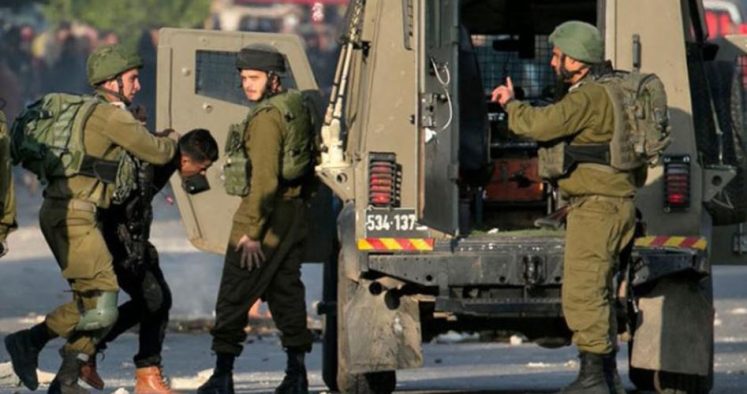
An Israeli soldier has been filmed assaulting a prominent Palestinian human rights activist in front of a famous American journalist in the occupied West Bank city of al-Khalil.
In a video posted on Twitter by Lawrence Wright of the New Yorker on Monday, the Israeli soldier is seen grabbing Issa Amro by his jacket and neck and throwing him to the ground. He then kicks Amro before being pulled away by another soldier.
“I never had a source assaulted in front of me until today when an Israeli soldier who stopped my interview did this … I can’t stop thinking how dehumanizing the occupation is on the young soldiers charged with enforcing it,” Wright, the author of The Looming Tower, wrote in a post on his Twitter account.
The Israeli military claimed in a statement that the incident occurred after the soldier, who was guarding a military post, asked the Palestinian activist who approached the post, to step away.
It further claimed that in response, the Palestinian began recording and cursing at the soldier, and that a verbal confrontation followed, which soon became a physical confrontation, during which the soldier hit the Palestinian.
However, Wright tweeted that Amro had done nothing to justify the “violent assault,” adding that the Israeli military is “misrepresenting” the build-up to the assault on the Palestinian peace activist.
“The soldier initiated the encounter, Amro did not curse him, [he] only asked to call his commander. Nothing to justify the violent assault that followed,” he said.
“Before the assault the other soldiers were afraid to intervene although I warned them it was getting out of hand,” he added.
Amro also posted several videos of the run-up to the incident on Twitter, saying the Israeli military has lied about what happened.
“I was detained outside the military post, I started shouting to bring the commander out, the soldiers refused to tell him, it was a trap for me by them. The commander came out only after I was beaten and grabbed by the throat and kicked and pushed on the ground,” he wrote n another post.
He said that the video is not just about the activist as it tells the story of every Palestinian in Palestine.
“It is not about Issa Amro, it is about the Palestinian women and children who are attacked frequently by Israeli soldiers and settlers. All Palestinians are living under Israeli occupation and apartheid. The video of the attack tells the story of each Palestinian in Palestine,” he added.
The Israeli military said the soldier was jailed for 10 days in a military prison following the incident.
Far-right Israeli minister Itamar Ben-Gvir has defended the soldier’s actions, describing the decision to put him in a military prison as a “disgrace.”
Amro, an engineer by profession, is a well-known human rights defender in his hometown of al-Khalil. He is the founder of Youth Against Settlements (YAS), which aims to empower the Palestinian community in the face of Israeli settlers in the Old City of al-Khalil.
He was detained in November days after filming a soldier assaulting an Israeli activist during a visit by Israeli anti-occupation activists to meet Palestinian residents near the Old City of al-Khalil.
Israeli occupation soldiers and Israeli settlers have noticeably been escalating their attacks against Palestinian civilians in the West Bank and other areas, in an attempt to forcibly expel Palestinians from their lands and make way for expanding illegal Jewish-only settlements.
More than 600,000 Israelis live in over 230 settlements built since the 1967 Israeli occupation of Palestinian territories of the West Bank and East al-Quds.
All the settlements are illegal under international law. The UN Security Council has condemned Israel’s settlement activities in the occupied territories in several resolutions. – View videos
Does Israel Seek a “Final Solution for Palestinians?”
Diaspora Jews choose to look the other way as the carnage increases
BY PHILIP GIRALDI • UNZ REVIEW • FEBRUARY 14, 2023
There is what passes for a sick joke among those who watch the Israeli slaughter of Palestinians with increasing shock over what Prime Minister Benjamin Netanyahu and his thugs have been allowed to get away with. It goes something like this: Israel has succeeded in killing or driving out the remaining three million or so Palestinians in the West Bank and Gaza, describing them as “terrorists.” President Joe Biden, his cabinet and virtually all of Congress respond afterwards by saying how the move was unfortunate but “Israel has a right to defend itself.”
Such is the power of Israel as manifested through its Lobby in the US, and the saddest part of the joke is that it reflects quite likely exactly what would happen. The Palestinians have no constituency in the United States, where Israel and its friends rule the roost. But one of the real ironies of watching a genocide being carried out now in the twenty-first century is that the killers come from a group that constantly flaunts its claimed status as history’s perpetual victims. This duality is a convenience, to be sure, providing as it does immunity from its own crimes as it also escalates the criminal policies that might lead to the genocide of a whole category of potential “enemies.”
Israel’s new government, again headed by the monstrous Benjamin Netanyahu, has shifted hard to the right, incorporating as it does the extremist settlers’ movement as well as parties that have spoken casually of forcing the Palestinians out and even of extermination if it comes to that. Half of Israelis are comfortable with the Arabs having minimal civil rights even if they are Israeli citizens and many accept the desirability of forced expatriation of the Palestinians to neighboring states like Jordan or Lebanon. Arab residents of Israel have only limited legal rights and, contrary to the US domestic Israel Lobby’s constant assertion that the Zionist entity is a “democracy,” Israel in reality became an apartheid state by law when it in 2018 declared itself to be legally the nation state of the Jews with “exclusive right of self-determination.”
More recently Netanyahu has made clear exactly what his government stands for. In late December, he stated that “the Jewish people have an exclusive and inalienable right to all parts of the Land of Israel. The government will promote and develop the settlement of all parts of the Land of Israel.” He was explicit that “all parts” was intended to include the West Bank and even Gaza, which have long been presumed to be the basis of a future Palestinian state. With Washington’s support, they presumably will become part of Eretz Israel, which will stretch from the Jordan River to the Mediterranean Sea.
To be sure, Israel and its powerful US lobby know very well that the constant claim of victimhood combined with labeling its perceived enemies as antisemites and holocaust deniers to discredit them is little more than a tool employed in part to excuse war crimes and human rights violations committed by the Israelis. In 2002 a former Israeli government minister Shulamit Aloni revealed in an interview how labeling a critic as an antisemite to discredit what is being is little more than “a trick.” She said “Well, it’s a trick, we always use it. When from Europe somebody is criticizing Israel, then we bring up the Holocaust. When in this country [the US] people are criticizing Israel, then they are antisemitic.” She added that there was an “Israel, my country right or wrong” attitude and “they’re not ready to hear criticism”. Antisemitism, the holocaust and “the suffering of the Jewish people” are used to “justify everything we do to the Palestinians.”
Indeed, there is every indication that Prime Minister Netanyahu will be taking a much harder line not only with the Palestinians, but as well with its foreign “enemies” the Syrians, Iranians and Lebanese. And there is every sign that he has drawn the United States into his web. President Joe Biden, a self-declared Catholic “Zionist”, is politically too weak to take on the Israel Lobby even if he wanted to, and he has in any event surrounded himself with Zionist Jews as a foreign policy and national security team that would consider any weakening of ties with Israel to be unimaginable. Quite the contrary. Jewish power in the US demands unconditional military, financial and diplomatic support for Israel, even as its government moves to the right and becomes more dangerous regionally, threatening to involve the United States in new wars. Seemingly blind to what is developing, the US last month proceeded with the largest wargames ever involving the Jewish state. The games simulated an attack on Iran and could be a model for a series of pointless conflicts initiated by the more hawkish Israeli government.
And there is almost certainly much more to come, including a bill in the Knesset that will make it nearly impossible for Arab citizens to organize political parties. The new government in Israel has also placed police under the control of ultra-nationalist Jewish Power party head Itamar Ben-Gvir as National Security Minister. He is exploiting his position to already call for a war to destroy Hamas in Gaza. Meanwhile, the shoot to kill policy vis-à-vis Palestinians has increased the number of deaths already in 2023, totaling twelve on January 25th and 26th alone when a refugee camp at Jenin on the West Bank was raided by the army and two teenagers elsewhere were shot dead. Another shooting a week later took 5 Palestinian lives. Many more Palestinians were wounded in all the army attacks and the Israelis, as is their practice, routinely deny them any access to medical help. The army’s Chief of Staff has declared that its policy on using firearms will not be changed in spite of the large number of civilian deaths. Israeli soldiers and policemen who kill Palestinians, who are routinely described as “terrorists,” are almost never investigated or prosecuted and have been, in some cases, praised in the media and promoted.
And Ben-Gvir is not the only fanatic who has surfaced as a worrisome character in the new government. Another is Bezalel Smotrich, the leader of the Religious Zionism party and now finance minister, who has called for Israel’s annexation of the entire West Bank and the imposition of citizenship requirements that would make Jewishness a prerequisite for inclusion.
Smotrich’s party aspires to make Israel a theocracy governed by the racist Talmud, and both he and Ben-Gvir have supported the expulsion of Arabs who fail to agree that “the land of Israel belongs to the Jewish people.” Smotrich has stated that his immediate plans include authorizing dozens of new and completely illegal West Bank outposts to include continuing the demolition of what he claims are unauthorized Palestinian homes there. Smotrich is also enthusiastically racist when it comes to the Palestinians, asserting that new Jewish mothers in hospitals should be separated from new Palestinian mothers. “[My wife] would not want to sleep next to someone who just gave birth to a baby who might want to murder her baby in twenty years.”
Zvika Fogel, another prominent right wing Israeli member of parliament, has called for genocide in his promotion of a “final war” against the Palestinians to “subdue them once and for all,” saying in an interview that Israel’s policy of going to war with Palestinians “every two or three years” was no longer good enough and that there should be one last war to “subdue them once and for all. It would be worth it because this will be the final war…”
Home demolitions, property seizures, checkpoints and other round the clock harassment of Palestinians also are increasing in frequency as the Israelis accelerate their expansion into areas that are nominally Palestinian. Palestinians who marry foreigners are not allowed to enter the country with their spouses while the Palestinian flag has now been declared illegal. The possibility that the Arabs will stage a general uprising increases daily, leading to more demands from some Israelis that remaining Palestinian centers of resistance be utterly destroyed.
To be sure, many young Jewish Israelis have recently been demonstrating against their own government’s shift rightwards. And in the United States many liberal Jews are concerned at developments, though they are critical of what is happening for all the wrong reasons. An increasing number of American Jews believe that Israel is indeed an apartheid state and that its treatment of the Palestinians is inhumane to say the least. But they, at the same time, oppose doing anything to punish the Israeli government to make it draw back from its most brutal and dangerous policies. They argue that the Netanyahu government is risking a confrontation with the US government, and the Jewish community will splinter over Israeli human rights abuses, weakening political support in Washington for a strong and enduring relationship with the Jewish state. In a sense the power of the Jewish diaspora both in the US and elsewhere thereby becomes the enabler of Israeli bad behavior even as it disapproves of what is taking place.
Philip M. Giraldi, Ph.D., is Executive Director of the Council for the National Interest, a 501(c)3 tax deductible educational foundation (Federal ID Number #52-1739023) that seeks a more interests-based U.S. foreign policy in the Middle East. Website is councilforthenationalinterest.org, address is P.O. Box 2157, Purcellville VA 20134 and its email is inform@cnionline.org.
The new US plan for calming Palestine-Israel tensions is already failing
By Robert Inlakesh | RT | February 11, 2023
The US Biden administration has reportedly presented a plan to cool tensions between Palestinians and Israelis, which have dramatically escalated since the formation of Israel’s new right-wing government.
As reported by Axios, following up on a request made by US secretary of State Antony Blinken, during his visit to the Middle East late last month, his Assistant Secretary of State for Near Eastern Affairs, Barbara Leaf, stayed behind and worked on presenting a roadmap towards preventing a violent escalation in the region. Antony Blinken had urged both Israeli Prime Minister Benjamin Netanyahu and Palestinian President Mahmoud Abbas to “pause” provocative steps in order to avoid further hostilities.
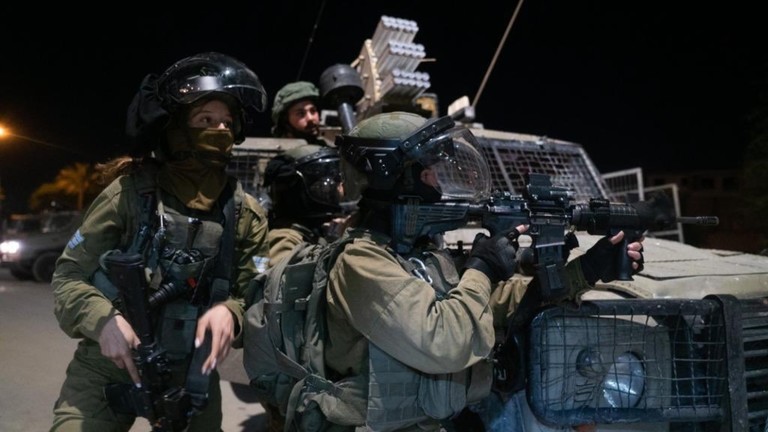
The requests made by the Biden administration were originally geared towards the Palestinian Authority (PA) taking significant steps, whilst minimal requirements were put on the Netanyahu government. Antony Blinken urged Mahmoud Abbas to implement a “security plan” presented by US security coordinator Lt. Gen. Michael Fenzel, who proposed creating a special PA Security Force wing that would be trained by the US to fight Palestinian militias that have formed over the past two years in the Jenin and Nablus areas. Later on, the US also requested that Israel reduce the number of raids on Palestinian towns and refugee camps, in addition to halting their plans for significant settlement expansion; both of which Israel refuses to follow through on.
Rogue militias
In September of 2021, the Jenin Brigades armed group announced its formation out of the Jenin refugee camp, later growing and expanding its areas of operations to the wider Jenin area. The armed group does not have any traceable command-and-control structure. It consists primarily of men between the ages of 18 and 25, mostly formed of members of the Palestinian Islamic Jihad (PIJ) movement and Fatah Party members who are no longer loyal to the ruling clique in the party that commands the Ramallah-based Palestinian Authority. Later, in September of 2022, the Lions’ Den armed movement also announced its formation in the old city of Nablus, claiming to belong to no political party. Due to the rise of newly formed armed groups, which hasn’t happened in the West Bank since the early 2000s, the Palestinian Authority’s security forces have lost control of much of the northern West Bank.
The US proposal for the Palestinian Authority to form a special force to fight against the armed militias is an extremely dangerous intervention in the affairs of the region. It is reminiscent of the UK-backed “peace bands” formed under the British Mandate in the late 1930s, when the British took the initiative to use Palestinians to fight each other. However, unlike then, there is no support for anti-militia activities from the Palestinian public today. In fact, the overwhelming majority support the Jenin Brigades, Lions’ Den and other armed groups, according to all available polling data. The PA has been significantly weakened over the past three years due to a financial crisis, corruption, the lack of any diplomatic breakthroughs, the postponement of national elections, and the killing and detention of Palestinians for the sake of Israeli security.
Third Intifada coming?
The Palestinian Authority has even been engaged in limited armed exchanges with the newly formed militias in the West Bank over the past year, triggering mass protests from angry West Bank residents. The number one issue that Palestinians in the West Bank have with the PA is its ‘security coordination’ with Israel, which essentially means that the PA’s security forces work with the Israeli military, intelligence and border police, in order to combat Palestinian threats against Israelis, but not the other way around. When Israel raided the Jenin refugee camp last month, killing 10 Palestinians, including three civilians, one of whom was an elderly woman, the PA announced the suspension of security coordination in response.
The US assistant secretary of state for Near Eastern affairs met last week with Israel’s National Security Advisor Tzachi Hanegbi, and President Abbas’ senior advisor, Hussein al-Sheikh, to propose that the Palestinian Authority return to security coordination with Israel, in exchange for Israel slowing down settlement expansion. The US also sought for the PA to pause its attempts to take Israel before the International Court of Justice and the UN for alleged war crimes – a move for which the PA has been punished with Israeli sanctions.
Last Thursday, CIA director Bill Burns expressed his concern over the possibility of a ‘third intifada’ [Palestinian uprising] erupting inside the West Bank, stating that “a lot of what we’re seeing today has a very unhappy resemblance to some of those realities that we saw then [during the Second Intifada] too”. His concern is congruent with the reality on the ground, where last year was the deadliest for West Bank Palestinians since the end of the Second Intifada in 2005, according to the United Nations. Palestinian attacks against Israeli settlers and soldiers are also a daily occurrence now.
Two-state solution blocked
Despite the US government clearly identifying the nature of the escalation, it shows complete ignorance of its own role in creating the current hostilities. The bulk of the US secretary of state’s visit to Palestine-Israel was tailored to forwarding Arab-Israeli normalization efforts and to expanding the ‘Negev Forum’, which Morocco, the UAE, Bahrain and Egypt form with Israel, in order to advance their own ties. At the same time, Antony Blinken spoke of reaching a “two-state solution” between Palestinians and Israelis as being the only path to any lasting peace.
Under the Arab Peace Initiative of 2002 (also known as the Saudi Initiative), a “two-state solution” (meaning the recognition by Israel of a Palestinian state and the end of occupation of Palestinian territories) is a precondition for the normalization of ties between Israel and Arab states. By pushing for normalization without that precondition, Blinken effectively seeks to deprive the Palestinian Authority of its best bargaining chip and leaves it powerless to extract any concessions from the Israeli government, whose officials will not even consider sitting down for meetings with their Palestinian counterparts.
Israeli Prime Minister Benjamin Netanyahu has already stated that he is not willing to halt settlement expansion, as proposed by the US government, with Israel’s Finance Minister, Bezalel Smotrich, openly announcing that there will be no freeze on settlement construction, which is considered illegal by the UN and most world powers. Israel has also announced its intention to increase raids and further military activities in the West Bank, in what it deems to be a preparation for likely hostilities during the Muslim Holy month of Ramadan.
Hope for Palestinians is the only way to peace
Despite the PA having announced the end of its security coordination with Israel, it is clear that some coordination is still occurring and that the announcement was more of a public relations move for President Abbas, who is feeling the pressure from a disgruntled Palestinian population. This in itself is a key indicator that the PA is feeling the pressure from Palestinian society at large and a sign that any US-trained PA force to combat the militia groups could lead to a disaster, whereby the Ramallah-based authority could even be overthrown due to the outrage such a step would cause. When the CIA worked to create the “new PA security force” during the latter years of the Second Intifada, it only worked after the PA itself had participated in the fight against the Israeli military and still maintained some degree of popular support. In addition to this, the Israeli army had conducted ‘Operation Defensive Shield,’ which led to the assassinations or arrests of the most prominent militia leaders inside the West Bank.
The only way the PA could possibly regain control of Jenin and Nablus is by proving to the Palestinian people that it is on their side, and not fighting for the US and Israel. It is also the reality that many of the leading fighters in the militia groups, especially in Jenin, are actually members of the PA’s security forces that have gone rogue. Armed militias also seem to be forming in areas like Bethlehem, al-Khalil and even Jericho, which proves that the re-emergence of the armed struggle in the West Bank is not only limited to the north of the territory.
The only way to properly combat the escalation and to stop this from growing into a much larger confrontation, is to provide hope for the Palestinian people inside the West Bank, something that the US will not even consider. Instead of the US working as an objective mediator, it works solely for Israel’s immediate interests and accepts the political restraints of each Israeli government as an excuse for repeatedly violating its own red lines. The US considers every single Palestinian political party as a terrorist organization, other than the mainstream branch of the Fatah Party, meaning that they will not even talk to any Palestinian representatives other than those that adhere to their own demands. The obsessive pursuit of Saudi Arabia normalizing ties with Israel, seemingly for political gain on behalf of the Biden administration, also contributes to robbing Palestinians of any hope for peace.
The situation inside the West Bank cannot be resolved using bombs and bullets. Even if every single member of all the armed groups were to be killed, the same problem would again emerge for Israel in the future. Despite this, Washington will never look critically at what is going on and realize that there are two sides to this conflict. At this time the US government is dealing with the escalation as if Israel has a termite problem and not that there are people who are rising up in an ongoing struggle for statehood.
Robert Inlakesh is a political analyst, journalist and documentary filmmaker currently based in London, UK. He has reported from and lived in the Palestinian territories and currently works with Quds News.
Washington’s Hypocrisy on its “Rules Based International Order”
A Tale of Three Cities

BY PHILIP GIRALDI • UNZ REVIEW • FEBRUARY 7, 2023
One might actually be willing to consider that there might be some value in the “rules based international order” being promoted by the Joe Biden Administration if such a thing actually existed and was applied equally to all transgressors. Of course, in reality, the “rules” being referred to are neither agreed upon nor driven by any broad international consensus and are merely a trick that is exploited to further the interests of the United States and its closest allies. In fact, the “rules”, such as they are, are most frequently ignored to give a pass to the bad behavior being exhibited by the US and its friends.
If the “rules” were actually intended to place limits on violent interactions among nations, consider for a moment the actual record of the United States in that regard. Recent opinion polls demonstrate that the US by a large margin is considered by other nations to be the most dangerous country in the world. That judgement is based not only on historic memories of Hiroshima and Nagasaki but also the Vietnam War and the overthrowing of alleged “leftist” regimes in places like Iran, Chile and Guatemala. Armed interventions on a greater or lesser scale have been a regular feature of US initiatives throughout the Caribbean and Latin America ever since the Spanish-American War.
More recently there has been the global war on terror, unleashed on the entire world based on US condemnation of countries that were not perceived to be toeing Washington’s red line on what constitutes terrorism. This has led to pointless and ultimately failed interventions in Afghanistan, Iraq, Libya and Somalia in which, by some estimates millions of civilians have died directly or indirectly, and the US itself has sustained the war-making through the printing of trillions of dollars in essentially fiat currency and running up enormous debts, a chicken that will come home to roost before too long. In Afghanistan, and also in Yemen and Iraq, the US has engaged in targeted assassinations as well as profile killings of civilians using drones.
The most troublesome aspect of all the violence that the US has initiated is that there are no actual rules in sight, apart from the Blinken-Biden-Austin clowns in Washington citing unsubstantiated threats coming from countries incapable of actually doing any harm like Iran or countries like Russia and China that had previously no intention of confronting the American military colossus.
So Washington is the beating heart of policies that have created turmoil worldwide while also moving the Doomsday clock closer to the finality that might well come with a nuclear war. And all the posturing is literally for nothing, for a bad cause supporting a corrupt, autocratic regime in a country that is no democracy with no visible off ramp. The hypocrisy of those in the White House and in Congress, as well as in the media, who are so reckless with the lives and fortunes of their fellow citizens literally defies belief.
If Washington is the first of the three cities that I am considering, Moscow must certainly be number two as it is on the receiving end of the US hypocrisy, being accused of having deviated from the “rules based” international order by invading Ukraine one year ago. Russia, however, sees things differently. The Kremlin has argued that it has repeatedly sought to negotiate a settlement with Ukraine based on two fundamental issues that it plausibly claims threaten its own national security and identity. First is the failure of Ukraine to comply with the Minsk Accords of 2014-5 which conceded a large measure of autonomy to the Donbas region, an area indisputably inhabited by ethnic Russians, as is Crimea.
Recently former German Chancellor Angela Merkel has let slip that there was never any intention to comply with the Minsk Agreement, implying that it was all a charade to enable strengthening Ukraine to join NATO and, if necessary, fight Russia. In fact, the Accords were ignored right from the beginning, with Ukrainian militias and other armed elements using artillery to shell the Donbas, killing an estimated 15,000 mostly ethnic Russian residents, a number which appears to be confirmed by independent sources.
The second vital national security issue for Moscow was over plans to offer NATO membership to Ukraine, which would place a possibly superior hostile military alliance at its doorstep. Russian President Vladimir Putin has repeatedly observed that the issues were both negotiable and that Zelensky only had to agree to maintain his country as “neutral,” i.e. not linked to any military alliance, and to honor some reasonable autonomy for Donbas. Reportedly it was the United States and Britain that pushed Ukraine into rejecting any and all of the Russian demands in a bid to initiate a war of attrition using Ukrainian lives to destabilize Putin’s government and reduce its ability to oppose US and Western dominance.
And there is of course the back story, that the United States had long been meddling in Eastern Europe in spite of a pledge not to take advantage of the break-up of the Soviet Union to expand NATO eastwards. The US had brought about “regime change” in Ukraine in 2014 to remove a government friendly to Moscow. But in this case, the increasing involvement of the US and NATO in the fighting has been an extremely dangerous development because it has escalated the conflict and turned it into what might become a devastating nuclear exchange. One would like to see an immediate truce initiated to stop the fighting followed by serious negotiations to come to a settlement of the territorial dispute. But, of course, the United States, which has provided Zelensky with more than $100 billion in aid, has made it clear that it is not interested in a negotiated settlement unless Putin is willing as a confidence building first step to withdraw from all occupied Ukrainian territory, including Crimea. In other words, he must surrender.
So whether Moscow has broken with the “rules based international order” depends very much on how one defines threats. Certainly, at a minimum, Washington has behaved far worse than Russia over the past twenty years, which rather confirms that the “rules” are essentially a convenient fiction. And finally, my third city to consider is Jerusalem, the claimed capital of the state of Israel. As the Jewish state is arguably either Washington’s closest ally or, as many believe, the tail that actually wags the White House dog, it is instructive to look at its behavior to examine whether the US applies a uniform standard to friend and foe alike when it doles out punishment to accused rule breakers.
If the United States is considered by the world community to be the most dangerous “superpower” country, Israel has to be considered the leading pariah among smaller, more regionally focused nations. And its control over the White House, the Congress and the national media in the US is such that it is never held to account for anything. Most recently, there was an attack by Israeli soldiers on a Palestinian refugee camp in Jenin on the West Bank in which ten Arabs were killed. In retaliation, a Palestinian gunman subsequently shot dead seven Israelis in Jerusalem before being killed himself. Speaking from the Oval Office, President Biden only saw fit to mention the Palestinian counter-attack, saying merely that “This was an attack against the civilized world.” The initial Israeli attack which killed ten was not even cited, suggesting that Israeli atrocities killing Palestinians do not bother the civilized world that the Bidens live in.
In another White House demonstration of where its priorities lie, last year’s shooting dead by an Israeli soldier of Palestinian American journalist Shireen Abu Akleh led eventually to a milk-toast call for an inquiry by the White House, even though Biden and company openly bought into the Israeli government lie that it was an accident, likely triggered by a lot of Palestinian terrorist shooting in the area, which was not true. And don’t expect any real pushback against Israel’s policy of shoot-first from Congress, which only last week removed Congresswoman Ilhan Omar from the Foreign Affairs Committee because she was “antisemitic” due to her criticism of Israel’s behavior.
The Israeli Defense ministry indicated that it would not cooperate with any inquiry into its behavior and the Abu Akleh story has since disappeared. Israel has also killed other American citizens without any consequences, including Rachel Corrie and 34 sailors on board the USS Liberty naval vessel in 1967. Never before has a government killed Americans only to be rewarded with a $3.8 billion gift from the US taxpayers every year. The Jewish state’s government has also recently indicated that its free-fire policy against Palestinian civilians and their foreign supporters will not be modified. Israeli soldiers and policemen who kill Palestinians, who are routinely described as “terrorists,” are almost never investigated or prosecuted and have been, in some cases, praised in the media and promoted.
And Israeli control over major parts of the US federal government appears to be tightening. In a press conference last week, the United States State Department refused to confirm that Israel is in illegal occupation of large parts of Palestine, nor will it acknowledge that Israel has a nuclear arsenal.
Israel’s track record vis-à-vis its neighbors is somewhat similar to the American pattern of rules enforcement, though it rarely even bothers to excuse its behavior. It even started a major war, having attacked all its neighbors, after complaining falsely that they were “threatening,” in 1967, after which it illegally seized and occupied their territory. It is currently bombing Syria on a regular basis and has also attacked Iran, Lebanon and the Palestinians in Gaza. It has assassinated Iranian scientists and technicians.
Israel has invaded and occupied southern Lebanon and facilitated a massacre of Palestinians settled in camps there. Neither Syria nor Iran has ever attacked Israel or even threatened to do so, but Israel persists in claiming that it is threatened and is trying to convince Biden to join it in attacking the Iranians. The new, extreme racist right-wing government of Prime Minister Benajmin Netanyahu is in particular stepping up the pressure on Palestinians through actions that are illegal under international law without a squeak coming out of the White House. Home demolitions, property seizures, checkpoints and other round the clock harassment of Palestinians also are increasing in frequency as the Israelis expand their occupation of the West Bank. And Israel even sponsors actual terrorists in the form of the weaponized settlers who beat and destroy Palestinians at will with no consequences even when they kill an unarmed Arab or a child.
And some Israelis are also thinking of something grander, in the form of genocide, when it comes to their Palestinian neighbors. A prominent right wing Israeli member of parliament has perhaps suggested what he and many of his colleagues would like to see done to the remaining Palestinians. Zvika Fogel, a member of the governing coalition has called for a “final war” against the Palestinians to “subdue them once and for all”, following international condemnation of security minister Itamar Ben-Gvir’s incursion into Al-Aqsa Mosque in occupied East Jerusalem, an additional illegal move intended to assert total control over access to Muslim holy sites. Fogel responded to the criticism, saying in an interview that Israel’s policy of going to war with Palestinians “every two or three years” was no longer good enough and that there should be one last war to “subdue them once and for all. It would be worth it because this will be the final war…”
So, it is a tale of three cities. Moscow is engaged in a war that at least has a rationale, even as one should and must oppose armed interventions between two neighboring countries. The Russian operation has been opposed by the United States, which has heedlessly escalated the war and produced a situation that can be devastating for all life on the planet. Washington is also the grand hypocrite in the game in that it has behaved far worse than Moscow over the past twenty years. And then there is Jerusalem, or if one prefers, Tel Aviv. A monstrous Israel is preeminent in how it wins the prize for being the absolute worst in its inhumanity and war crimes, without a rebuke from Washington or Joe Biden ever about “rules based international order” violations.
Philip M. Giraldi, Ph.D., is Executive Director of the Council for the National Interest, a 501(c)3 tax deductible educational foundation (Federal ID Number #52-1739023) that seeks a more interests-based U.S. foreign policy in the Middle East. Website is councilforthenationalinterest.org, address is P.O. Box 2157, Purcellville VA 20134 and its email is inform@cnionline.org.
Report: Israel commits 3,532 violations in West Bank, Jerusalem in January

MEMO | February 4, 2023
Israeli occupation settlers and forces have committed 3,532 violations against Palestinians in the occupied West Bank and Jerusalem in January, the Palestine National Information Centre revealed.
The Information Centre disclosed in a report that January was the bloodiest month in the occupied West Bank since 2015, citing the Israeli killings of 35 Palestinians, including eight children and a 61-year-old woman – with 20 killed in Jenin alone.
In addition, the report also pointed out that the Israeli occupation settlers and forces wounded 342 Palestinians.
According to the Information Centre, the occupation settlers committed 17 settlement activities, including stealing land, razing farms, paving new settlement roads and approving new settlement units, in addition to 319 aggressions.
Meanwhile, the occupation forces and settlers demolished 290 commercial and agricultural facilities and confiscated 40 others.
The Information Centre also documented the Israeli demolition of 40 Palestinian homes and issued 154 demolition notices.
It documented 29 aggressions on holy sites, road closures in 38 areas and 511 temporary and permanent Israeli military checkpoints across the occupied West Bank and Jerusalem.
US refuses to call West Bank Israeli occupied territory
MEMO | January 30, 2023
The US State Department refused to describe Palestinians in the West Bank as living under a military occupation during a heated exchange between journalists last week. State Department spokesperson Vedant Patel brushed aside questions about Washington’s view on the status of the occupied West Bank in the wake of an Israeli military raid that killed ten Palestinians in Jenin.
“What is the status of the Palestinian people in the West Bank, including Jenin… and everywhere else in the West Bank?” Said Arikat of Al-Quds newspaper asked Vedant. “It’s a simple question. Are they under occupation?”
Patel refused to answer the question despite being asked repeatedly to clarify the position of the US regarding the status of the West Bank. At one point Patel shockingly said that the status of the Palestinians is that “they reside on those territories.”
Frustrated at not getting an answer, Arikat asked if the West Bank is considered a “different planet” and if the US “subscribes to the fact that they are under military occupation?” Patel refused to answer the question.
“Vedant, are they occupied or are they not occupied? What is the status that you give the Palestinians right at this moment? What kind of status do they have?” Arikat insisted.
Patel again refused to answer, deflecting the question by focusing on the escalation of violence and calling for peace and calm in the region. “I’m not talking about a recent period. I am saying about legally, how do you designate the Palestinians in the West Bank? What is their status?” Arikat asked to know for a fourth time.
“I understand the question you’re asking, and I – as we’ve said previously, it is vital for both sides to take action to prevent even greater loss, and we condemn any violence, escalation, or provocation,” said Patel.
Under International law the West Bank and Gaza is Israeli occupied territory. Experts in international law say that given the length of the occupation and given that Israel has no intention to ever withdraw, the correct designation is that it is an illegal occupation. The International Court of Justice has been asked to issue an opinion on that very matter.
Israeli troops commit massacre in latest raids on Jenin
Raids focused on Jenin but targeted many other areas across the occupied West Bank

The Cradle – January 26 2023
Israeli occupation forces killed ten Palestinians and injured at least twenty on 26 January during violent raids in the occupied city of Jenin and its refugee camp.
The raids began on the evening of 25 January and persisted into 26 January, in what is being described as “one of the deadliest days” in the West Bank since the start of last year.
According to the Palestinian Prisoners Club (PPC), several have been detained throughout the raids and transferred for interrogation by Israel’s security service. As a result of the incursions, intense clashes broke out between Israeli troops and resistance fighters, several of whom sustained bullet wounds.
An elderly woman has also been reported among the dead, according to security officials. Eyewitnesses have referred to the situation as a “massacre.”
Those killed are Majeda Abdel Fattah Obeid (Umm Ziad), brothers Mohammad Ghneim, Nour Ghneim, and Ahmad Ghneim, Mohammad Mahmoud Sobh, Wassim Amjad Jaes, Mutasim Mahmoud Abou Hassan, Ezzedine Yasin Salahat, Abdallah Marwan al-Ghoul, Saeb Issam Azraqi.
 The Israeli army cut off the power supply to the Jenin camp, while also blocking journalists and ambulance teams from entering. Health officials have said that injuries are continuing to accumulate.
“There is an invasion that is unprecedented in the past period, in terms of how large it is and the number of injuries … The ambulance driver tried to get to one of the martyrs who was on the floor, but the Israeli forces shot directly at the ambulance and prevented them from approaching him,” Wissam Baker, head of Jenin’s public hospital, told media.
Despite centering around Jenin and its camp, the Israeli raids also targeted several homes and refugee camps across the West Bank, including Ramallah’s Al-Amari camp and Jerusalem’s Shuafat camp, as well as the towns of Silwan, Sur Baher, Al-Tur, and Al-Isawiya.
In response to the Israeli aggression, the Palestinian resistance managed to down a drone as it was flying over the Jenin refugee camp.
According to reports, an Israeli soldier was killed and another injured in the confrontations. Another report says that the Jenin Brigade of the Palestinian Islamic Jihad (PIJ) resistance movement detonated an explosive device inside an Israeli military jeep, resulting in “casualties in their ranks.”
“The military operation in Jenin was launched after intelligence from the Shin Bet about the Palestinian Islamic Jihad movement’s intention to carry out a major operation against Israeli targets … the operation aimed to arrest a prominent member of the movement,” Israeli media reported.
The military ended up withdrawing from Jenin, however, the injury toll is expected to rise.
A State for some of its citizens: Captured black soldier’s saga highlights racism in Israel

By Ramzy Baroud | MEMO | January 24, 2023
“For how long will I be in captivity? After so many years, where are the state and the people of Israel?” These were the words, uttered in Hebrew, of a person believed to be Avera Mengistu, an Israeli soldier of Ethiopian origin, who was captured and held in Gaza in 2014.
Footage of Mengistu, looking nervous but also somewhat defiant, calling on his countrymen to end his 9-year incarceration, mostly ended speculation in Israel on whether the soldier was alive or dead.
The timing of the release of the footage by Hamas was obvious, and is directly linked to the Palestinian group’s efforts aimed at conducting a prisoner exchange similar to the one carried out in 2011, which saw the release of captured Israeli soldier Gilad Shalit, in exchange for the release of over 1,000 Palestinian prisoners.
The main target audience of Hamas’ message is the new government and, specifically, the new military leadership. Israel now has a new army chief, Lt. Gen. Herzi Halevi, who has replaced the departing chief, Aviv Kochavi. The latter seemed disinterested in Mengistu’s cause, while the new chief arrives with lofty promises about uniting the country behind its military and opening a new page where the army is no longer involved in everyday politics.
It may appear that Hamas and other Gaza groups are in a stronger position than the one they enjoyed during Shalit’s captivity, between 2006 and 2011. Not only are they militarily stronger but, instead of capturing one Israeli, they have four: aside from Mengistu, they also have Hisham Al-Sayed, and what is believed to be the remains of two other soldiers, Hadar Goldin and Oron Shaul.
But this is when the story gets particularly complicated. Unlike Shalit, who is white and holds dual Israeli-French citizenship, Mengistu and Al-Sayed are Ethiopian Jew and Bedouin, respectively.
Racism based on colour and ethnicity is rife in Israel. Although no Israeli officials will admit to this openly, Israel is in no rush to rescue two men who are not members of the dominant Ashkenazi group, or even of the socially less privileged Sephardic or Mizrahi Jews.
Black Jews and Bedouins have always been placed at the bottom of Israel’s socio-economic indicators. In 2011, the Israeli newspaper The Jerusalem Post shared numbers from a disturbing report, which placed poverty among children of Ethiopian immigrants at a whopping 65 per cent. The number is particularly staggering when compared to the average poverty rate in Israel, of 21 per cent.
Things have not improved much since then. The Israeli Justice Ministry’s annual report on racism complaints shows that 24 per cent of all complaints are filed by Ethiopians. This racism covers most aspects of public life, from education to services to police mistreatment.
Not even enlisting in the military – Israel’s most revered institution – is enough to change Ethiopians’ position in Israeli society.
The famous story of Demas Fikadey in 2015 is a case in point. Then only 21, the Ethiopian soldier was beaten up severely by two Israeli police officers in a Tel Aviv suburb for no reason at all. The whole episode was caught on camera, leading to mass protests and even violent clashes. For Ethiopian Jews, the humiliation and violence carried out against Fikadey was a representation of years of suffering, racism and discrimination.
Many believe that the government’s lacklustre response to Mengistu’s prolonged capture is directly linked to the fact that he is black.
Israel’s discriminatory behaviour against African asylum seekers, which often leads to forceful deportation following humiliating treatment, is well known. Amnesty International described this in a report in 2018 as “a cruel and misguided abandonment of responsibility”.
But discriminating against a black soldier, who, by Israel’s own estimation, is believed to suffer from mental illness, is a whole different kind of ‘abandonment’.
A former Israeli army official, Col. Moshe Tal, did not mince words in a recent national radio interview when he said that Mengistu and Al-Sayed are a low priority for the public “on the account of their race”, Haaretz reported.
“If we were speaking about two other citizens from other backgrounds and socio-economic statuses … the amount of interest would be different,” Tal said. In contrast to Shalit’s story, the government’s “attention to the affair (and) the media pulse, is close to zero.”
Israel’s Ethiopian Jews number around 170,000, hardly an important political constituency in a remarkably divided and polarised society. Most of them are immigrants or descendants of immigrants who arrived in Israel between 1980 and 1992. Though they are still known as the Falasha, they are sometimes referred to by the more dignified name of ‘Beta Israel’, or ‘House of Israel’.
Superficial language alterations aside, their struggle is evident in everyday Israel. The plight of Mengistu, as expressed in his own question, “where are the State and the people of Israel?” sums up the sense of collective loss and alienation this community has felt for nearly two generations.
When Mengistu arrived with his family at the age of 5 in Israel, escaping a bloody civil war in Ethiopia and historic discrimination there, the family, like most Ethiopians, hardly knew that discrimination would follow them, even in the supposed land of ‘milk and honey’.
READ: Hamas will not release Israel captives without ‘honourable swap’
And, most likely, they also knew little about the plight of Palestinians, the native inhabitants of that historic land, who are victims of terrible violence, racism and much more.
Palestinians know well why Israel has done little to free the black soldier; Mengistu and his Ethiopian community also understand how race is an important factor in Israeli politics. Although a prisoner exchange could potentially free Mengistu and an unspecified number of Palestinian prisoners held in Israel, the suffering of the Palestinians at the hands of Israel and discrimination against Ethiopian Jews will carry on for much longer.
While Palestinians are resisting Israel’s military Occupation and apartheid, Ethiopian Jews should mount their own resistance for greater rights. Their resistance must be predicated on the understanding that Palestinians and Arabs are not the enemy but potential allies in a joint fight against racism, apartheid and socio-economic marginalisation.
Calls for Khan Al-Ahmar’s demolition speak of colonial violence and privilege
By Ramona Wadi | MEMO | January 24, 2023
The former Israeli ambassador to the UN, Danny Danon, has told a Likud faction meeting that “illegal Palestinian construction” in the occupied West Bank is “rampant”. He wasn’t being honest.
“Last Friday we made it clear that supporting settlements does not contradict upholding the law,” he claimed. “The defence minister received our backing. We expect the defence minister to act with the same determination in the face of rampant Palestinian illegal construction in the West Bank. We will no longer tolerate discrimination against the settlers.”
Israeli settlements and settlers are, of course, illegal under international law, something that Danon is adept at overlooking when he makes such outrageous claims.
As the Israeli government prepares to submit its response to the High Court over the impending demolition of the Palestinian Bedouin village of Khan Al-Ahmar, Danon and Likud MK Yuli Edelstein visited the village, calling for its demolition and accusing the government of selective enforcement over the evacuation of the Or Chaim illegal settler outpost in the occupied West Bank.
In an op-ed, Danon described the EU’s funding of infrastructure in Khan Al-Ahmar as “subversive involvement of international entities in Israel’s domestic affairs” and accused the bloc of violating Israel’s sovereignty and international law. “It is part of an ulterior agenda that seeks to delegitimise Israel’s historical claim to its own land,” Danon wrote.
Completely eliminating Israel’s colonial context and the fact that Khan Al-Ahmar is built on Israeli-occupied Palestinian land, Danon referred to the evacuation of Or Chaim and said, “The law is the law and must be applied to all citizens and communities, Jews and Arabs alike.” However, there is no equivalence between the coloniser and the colonised, as Danon knows well.
Khan al-Ahmar has attracted enough international attention to become newsworthy periodically, and the related activism has ensured that Israel’s violations are fully exposed. The village, though, is also part of a long colonial process that seeks to dispossess Palestinians of their land. Its demolition is not an isolated incident. Earlier expulsions and destruction of properties, including the ethnic cleansing from the 1948 Nakba onwards, need to be kept in mind.
Israel benefits from the international community’s differentiation of colonial settlement expansion. It has gained a veneer of legitimacy for the earlier colonial settlements despite the atrocities committed by Zionist paramilitary terror gangs to establish control over Palestinian territory. Israeli law is justifiable only unto itself and the violence it created. In terms of equality and rights, there is no justification for Israel’s colonial expansion. Likewise, there is no equivalence in calling for the demolition of Khan Al-Ahmar because an illegal (even under Israeli law) settlement outpost was dismantled. Palestinians are rarely issued building permits on what remains of their land. Danon’s use of the word “rampant” is totally dishonest. Indeed, his words only reflect his country’s colonial violence and privilege when calling for Khan Al-Ahmar’s destruction, not to mention targeting an integral part of Palestinian resilience in the face of impending demolition orders.
Lest Danon forgets, Khan Al-Ahmar’s residents relocated to the area after being displaced by Israel in 1950, laying bare the lie of delegitimising “Israel’s historical claim to its own land”. Israel wants territorial contiguity to Jerusalem, not demolitions based on equal rights. Erasing the Palestinian landscape through colonial settlement expansion does not erase the fact that Israel’s settler-colonial population cannot lay legitimate claims to Palestinian land, and neither can the Israeli government. The only claim that Israel can make with any degree of accuracy and honesty is that it colonised Palestine and intends to finalise its colonial enterprise. Khan Al-Ahmar stands in the way of its plans, just as other Palestinian towns and villages did decades ago. More than 500 paid the price and were totally destroyed and wiped off the map.
Featured Video
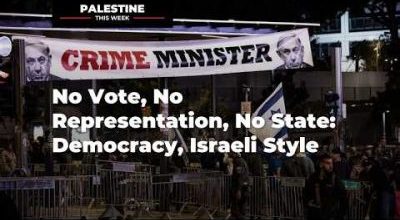
No Vote, No Representation, No State: Democracy, Israeli Style
or go to
Aletho News Archives – Video-Images
From the Archives
Sanctions, War and the Policy of Dual Containment
By SASAN FAYAZMANESH | March 17, 2008
It is now nearly three decades since the Unites States adopted the policy of dual containment of Iran and Iraq. While much has been written about the containment of Iraq, there has been very little in-depth analysis of this policy when it comes to Iran. In a book that is going to be released on March 31, 2008, entitled The United States and Iran: Sanctions, Wars and the Policy of Dual Containment (Routledge), I attempt to address this shortcoming by investigating when and why the US policy of containment of Iran came about, how it evolved, and where it stands today.[1] To the extent that Israel has been involved in US policy making, the study will also include the role that Israel has played in the containment of Iran. Also, since the fate of Iran has been inextricably linked to that of Iraq, occasionally the investigation will overlap with the containment of Iraq.
The policy of dual containment of Iran and Iraq originated during the Carter Administration, but it was not until the Clinton Administration that the expression “dual containment” became popular. … continue
Blog Roll
 Aletho News
- Americans are paying the price to preserve Israel’s nuclear hegemony
- Resistance factions are necessary to ensure a permanent US Iraq withdrawal
- How Israel destabilizes the Middle East: Denying sovereignty and the right to exist
- Europe’s Establishment Is Embracing War – and Losing Voters
- NATO chief advocates war of aggression
- No Vote, No Representation, No State: Democracy, Israeli Style
- Zionist Bought Senate Blocks Information About American Citizens Killed By Israel
- While Gaza dominates the UN, these are the people keeping it alive
- New Report: “Scholasticide and Genocide in Gaza: Assessment, Testimonies and Legal Analysis”
- ‘THAAD Delusion’: Iran war exposes US missile shield limits – The Atlantic
- If Americans Knew
- Israeli former leaders and security chiefs threaten legal action over ‘Jewish terrorism’
- Israel map in LA Times ad includes all land from the river to the sea
- Inside Lebanon’s 200-page dossier on Israeli war crimes
- Flydubai, genocide, settler violence, Trump abuse of power to deport – Daily Update
- Counting Antisemitic Incidents: What the ADL Audit Reveals — and Obscures
- Mamdani releases plan to combat antisemitism and hate crimes in New York City
- Iran’s Revolutionary Guards Publish Letter to the American People
- DMFI launches $1 million ad campaign supporting Virginia’s Elaine Luria
- US Senate blocks resolution seeking report on Americans killed by Israel
- Israeli Attacks Kill Ten Palestinians in Gaza
- No Tricks Zone
- Green Energy Debacle: German Expert Professor Fritz Vahrenholt Warns Of Severe Economic And Social Consequences
- Two More Paleo Reconstructions Affirm Meters-Higher Sea Levels Across Ireland, Brazil 7000-6000 Years Ago
- New Study: Earth And Venus Surface Warmth Largely Explained By Convection And Lapse Rate, Not CO2 Or Radiation
- 2025 Nature Paper Claiming Worsening Global Drought Gets RETRACTED …Heavily Flawed
- New Study: ‘Global Drought Shows No Detectable Recent Acceleration Under Climate Warming’
- Economic Masterminds: German Socialists Suggest Taxing Productivity Gains Stemming From Using AI
- The South China Sea Has Not Been Cooperating With The Climate Change Narrative
- Energy Crisis: Germany Enters Heating Season With Historically Low Gas Reserve Fill Levels
- New Study: The Antarctic Ice Sheet Gained Mass From 2020-2024 Due To Staggering Snow And Ice Accumulation
- Study: Ocean Heating Rates From Thousands Of Years Ago ‘Dwarf’ Modern Ocean Heating Rates

