UN Officials Call on Israel to Halt Khan Al-Ahmar Demolition
IMEMC | June 1, 2018
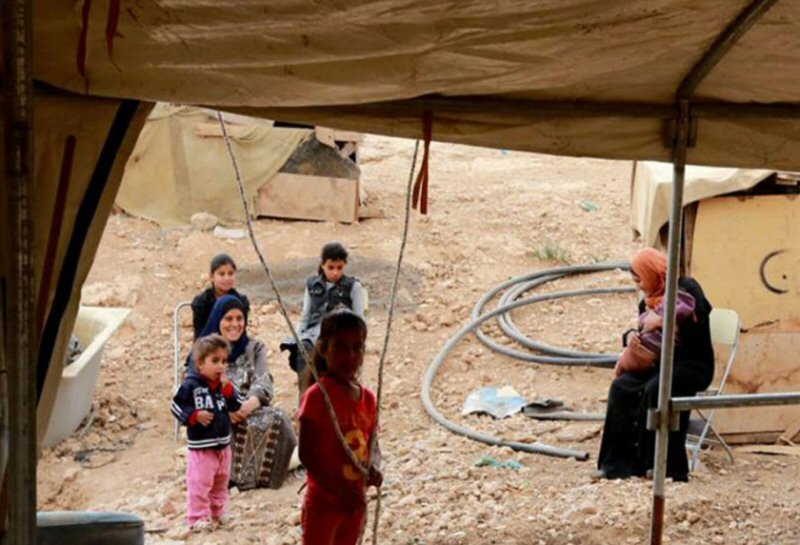
United Nations officials, on Friday, called on Israel to abandon plans to demolish the Palestinian community of Khan al-Ahmar, east of Jerusalem.
Humanitarian Coordinator, Jamie McGoldrick, and United Nations Relief and Works Agency for Palestine Refugees (UNRWA) Director of Operations in the West Bank, Scott Anderson, joined others in the international community in calling on the government of Israel to cease its plans to carry out the mass demolition and transfer of the Palestinian Bedouin community of Khan al Ahmar – Abu al Helu, located on the outskirts of East Jerusalem in the occupied West Bank.
“Like many Palestinians in Area C, the residents of Khan al Ahmar – Abu al Helu have fought for years to live with dignity, to protect their children, their homes, and their community,” said McGoldrick. “They have struggled in the face of tremendous daily pressure and are asking for the continued support of the international community to prevent the demolition of their homes.”
Following the Israeli Supreme Court’s May 24 rejection of the community’s petition to prevent the demolitions, marking an end to years-long legal efforts and leaving virtually no legal options to protect the community, nearly all of Khan al Ahmar – Abu al Helu’s structures are now at immediate risk of demolition by the Israeli authorities, including the school, initially built with donor support. The school serves some 170 students from the community and four surrounding ones. The proposed transfer seeks to move the rural livestock-dependent community to an urban site unsuitable for Bedouin livelihood, culture and traditions and is likely to increase their level of humanitarian need.
“After nine years of legal battle, this refugee community now faces the demolition of their homes, the loss of traditional livelihoods and the imminent risk of forcible transfer should the demolitions be conducted and the community be compelled to relocate, which would be a grave breach of the Geneva Convention,” said Anderson. “Many already displaced from the [Naqab] as a result of the 1948 conflict; they now face being displaced for a second time. As we have seen in similar circumstances in the past, the transfer of rural Bedouin to the urban setting of Jabal West, proposed by the Israeli state, will likely prove socially and economically devastating,” he concluded, according to WAFA.
Khan al Ahmar – Abu al Helu is one of 18 communities located in or next to an area slated in part for the E1 settlement plan, aimed at creating a continuous built-up area between the Maale Adumim settlement and East Jerusalem. This week, the Israeli authorities approved a planning scheme providing for the construction of 92 new housing units and an educational institution in the Kfar Adumim settlement, immediately adjacent to Khan al Ahmar; this settlement has also petitioned the High Court for the implementation of the outstanding demolition orders against the community.
“Israel’s obligations as an occupying power to protect the residents of Khan al Ahmar are clear,” said McGoldrick. “Should the Israeli authorities choose to implement the outstanding demolition orders in the community and force the people to leave, they would not only generate significant humanitarian hardship but also commit one of the grave breaches of international humanitarian law,” he concluded.
Palestinian ‘Medical Volunteer’ Killed by Israeli Fire in Gaza

Paramedic Razan al-Najjar was shot dead by an Israeli sniper on the Gaza border on June 1. (Photo: via Twitter)
Palestine Chronicle – June 1, 2018
A Palestinian woman – reportedly a medical volunteer – was shot dead by Israeli soldiers on Friday, Gaza’s health ministry has reported, as protests continued on the border with Israel.
Razan al-Najjar – a 21-year old volunteer with the ministry of health – was shot by Israeli forces on the eastern border of Khan Younis in the southern Gaza Strip.
There is little information yet on how Najjar was killed.
Friday’s death marks weeks of demonstrations on the Gaza border, beginning 30 March, which has seen at least 123 Palestinian protesters killed by Israeli gunfire.
The protests – dubbed “the Great Return March” – called for the right of return of refugees, and peaked on 14 May when the US moved its embassy in Israel from Tel Aviv to the contested city of Jerusalem.
Over 61 Palestinians were killed and 2,400 injured on that day, while tens of thousands protested along the besieged strip’s border.
Israeli snipers fired live rounds and tear gas at the protesters, with condemnation from the UN and human rights groups.
#Watch || Palestinians are marching to the eastrern border of #Gaza Strip to participate in #GreatReturnMarch.
Video from the middle area camp in the east of Al-Buraij Refugee Camp
Video by: @pallive_en pic.twitter.com/gAR3hvXCW2— Great Return March (@GreatReturnMa) June 1, 2018
Gaza Palestinians call for supporters around the world to mobilize in solidarity
Plan for mass protests to end the blockade and occupation

Participants in Gaza’s Great March of Return on the eighth Friday of the demonstration.
Contact:
U.S.: Pam Bailey | founder/director, We Are Not Numbers | +1 301-518-0199 | pam@wearenotnumbers.org
Gaza: Ahmed Alnaouq |+972 567676219 | ahmed@wearenotnumbers.org
Protests marking two historic dates are planned along Israel’s massive “security fence” in Gaza June 5 and 8. June 5 is the 51st commemoration of the Israeli invasion and occupation of Gaza, the West Bank and East Jerusalem and on June 7 of the same year, Israel seized control over Jerusalem’s Old City. The committee of Palestinians coordinating the ongoing, mass protests in the Gaza Strip are calling on human rights advocates around the world to mobilize June 5 and 8 in solidarity.
The largest protest in Gaza (as well as in the West Bank) is planned for June 8, since that is a Friday. It also marks the 51st anniversary of the Israeli attack on the USS Liberty in international waters off the Gaza Strip. The intelligence ship was well-marked as an American vessel and only lightly armed. This particular anniversary is ironic, since the Israeli navy just attacked and seized a Palestinian vessel called the Liberty when it attempted to sail out of the Gaza harbor May 29.
“We urge all free people everywhere to join the Palestinians by organizing solidarity events to demand that their governments exert pressure on Israel to end its oppression and occupation of the Palestinian people,” said a statement from the Legal Committee of the National Commission for the Return and Breaking-the-Siege Marches. Specifically, the committee calls on activists to push for a ban on the supply of weapons to Israel and support the public boycott of Israeli products.
“As a nation under occupation, siege and apartheid rule, we need your help to end this oppression, including the blockade of Gaza imposed 12 years ago,” the statement concluded. “We need you to scream out against injustice and double standards and urge your governments to carry out their moral and legal duties to protect the civilians of Palestine.”
Ahmed Alnaouq, project manager for We Are Not Numbers, a youth project in Gaza, notes, “The media and agencies are publishing charts and graphics showing the number of dead and wounded, but it is critical to remember that each one of those numbers represents an unarmed human who had a story to which most of us—even those in the West—could relate. Our team has been busy trying to write those stories so the world cannot hide behind the anonymity of ‘collateral damage’.”
——————————————
WeAreNotNumbers.org—a group of young adults in Gaza whose lives have been forced into a state of limbo by the world’s highest unemployment rate (60 percent among youth), a constant threat of war, a ban on most travel and shortages of electricity averaging 20 hours a day—has worked for the past three years to document the stories of the “silenced voices” in Gaza. Since March 30, when the massive, nonviolent protests began in Gaza, the team has produced regular stories and videos about the “human faces behind the numbers in the news”—including the 128 killed and 13,375 injured by Israeli snipers.
Working for Peace and Justice: Hebron Freedom Fund is a U.S. based 501c3 organization that supports the resiliency and nonviolent efforts of Palestinians living under the most difficult circumstances of Israel’s occupation.
The West & Gulf Couldn’t Sway These Lebanese Elections
By As`ad AbuKhalil | Consortium News | May 31, 2018
The recent Lebanese parliamentary election generated a lot of publicity in Western media. To be sure, free elections are rare in the Middle East, and Western media get excited over the prospects of success for what they dub as “pro-Western” candidates or coalitions anywhere. Also because foes of Israel and the U.S. were in the running, Western media become automatically invested in the outcome. This time, Western media decided that Hizbullah won “a majority of seats” in the election—as the headline of The Financial Times had it. The results were certainly a blow to Western and Gulf regimes who invest—politically and financially–heavily in Lebanese elections.
We can’t really talk about free elections in the Middle East—or anywhere else in the developing world for that matter. Not because people there don’t want them but essentially because Western governments and Gulf regimes won’t allow it. To be fair, the U.S. is clearly in favor of free elections, but only when the results guarantee a victory for its puppets. Thus, when Hamas won the legislative elections of 2006 (which the U.S. had been insisting on), the U.S. not only refused to recognize the free expressions of the Palestinian people but the U.S. worked on a covert operation to undermine the results and to overthrow Hamas in Gaza.
Historically, the U.S. (among other outside parties, chiefly Gulf regimes) intervened heavily in Lebanese elections through the provision of cash payments to its favored right-wing, anti-communist candidates. For instance, the 1947 election lives on as one of the most corrupt in Lebanese history, and former CIA agent, Wilbur Eveland, wrote about his adventures of driving to the residence of then president, Kamil Sham`un, with a load of cash to ensure that the right-candidates win. But the cash wasn’t really necessary because Sham`un forged the election anyway and arranged for the defeat of his opponents.
In 1968, the U.S. was most likely behind the rise of the far-right coalition of “the tripartite alliance,” which included the Phalanges, who swept through the election and, in few years, would—with U.S. help—trigger the Lebanese civil war. (New U.S. archival materials show the extremely close relations between those parties and U.S. and Israel).
But the U.S. and Saudi Arabia surpassed all previous foreign intervention in Lebanon in the 2009 election, when they threw close to a $1 billion to sway the vote on the side of the March 14 coalition, which included the Muslim Brotherhood and right-wing groups—all dubbed “pro-Western” by U.S. media. The victor was arranged although the election was very close: no one side was able to rule without veto power by the other side.
In this election, the Saudis didn’t spend as much as previously probably because they thought it wouldn’t make much difference since a new electoral system had changed the rules. But Western and Gulf governments convened a special economic conference in Paris to prop up the leadership of Sa`d Hariri, who claimed in the wake of the conference that he would be create no less than 900,000 jobs.
Elections in ‘Democracies’
Elections in democratic political systems are merely some of the people selecting representatives who speak on behalf of “all the people.” The propaganda about the virtue of elections is highly exaggerated in order to provide the political system with much more political legitimacy than warranted.
In the U.S., there is still a clear agenda to suppress wide political participation. The U.S. is one of the few countries in the world which holds the vote on a working day—and in the winter where much of the East coast is buried under rain and snow. Furthermore, the U.S. requires voter registration, when most democracies don’t. The low voter turnout in the U.S. is by design, and not by default. If the U.S. were to adopt a proportional representation system—which both parties won’t allow because they enjoy holding the exclusive monopoly over political representation—voter turnout would increase. Most world democracies have—at least partially or at some level—adopted proportional representation.
The leftist coalition during the Lebanese civil war years, the Lebanese National Movement, proposed political reforms in 1975. They included—among other things—the adoption of proportional representation at the national level, with Lebanon designated as one electoral district. The political class rejected that because they preferred the single-member district (at a small local level) since it facilitates the utilization of cash in swaying voters. Also, Lebanese national proportional representation wouldn’t fit well with regional sectarian leaderships.
The May 6 Lebanese election took place nine years after the previous one. Regional conflicts and Lebanese internal turmoil gave sectarian leaders the excuse to postpone the elections repeatedly. Sectarian leaders also had a hard time agreeing on a new electoral law. But the election of Gen. Michel Aoun to the presidency in 2016 expedited the process of finally holding a ballot. His parliamentary bloc had been vociferous in calling for new elections. After long months of acrimonious negotiations, the sectarian leaders agreed on a new electoral law.

Aoun: Pressed hard for a vote.
Hizbullah and the progressives in Lebanon called for a proportional representation system, while Hariri and his allies fought against it. Hizbullah was willing to risk losing a few seats in return for the election of some of its allies from different sects, while Hariri knew that his broad coalition in parliament would lose substantially because most of his Christian MPs were elected in specially-designed districts where the majority Muslims vote for Christian and Muslim MPs.
The design of electoral districts is not a simple matter in Lebanon because the system has to balance different political interests with a sectarian arithmetic formulae (which is incorporated into the political system of the country). For example, the top posts of government (presidency, speakership, and prime ministership) are distributed among Maronites, Shi`ites, and Sunnis respectively.
Elections to the 128-seat Lebanese parliament must split seats evenly between Christians and Muslims though Muslims surpassed Christians demographically long before the 1975 civil war. It is estimated that Christians are now no more than a third of the population. There is a quota for Christians in the Lebanese parliament that keeps up the pretense that they are half the population no matter how different the demographic reality. In fact, the Lebanese state refuses to conduct a census for fear of upsetting Christians. The last census was conducted in 1932.
So Lebanese leaders agreed on a new electoral law that would mix the proportional representation system with the single-member district. They arrived at a law which divided Lebanese governorates as electoral districts but then gave the voter the choice to rank one candidate on the electoral list as his/her “favored” candidate, which basically prioritized sectarian preferences of voters. The whole purpose of proportional representation was defeated.
The law was quite complicated and the low voter turnout (around 49 %, less than the 2009 election) seems to confirm that many voters and even Interior Ministry experts did not fully understand the rules. The low turnout can also be explained by the low level of enthusiasm among voters and the diminished sense of expectations for change. Furthermore, sectarian leaders in Lebanon suppress the vote by not allowing 18-year-olds to vote. If they did it’s estimated that it would substantially increase the Muslim voters—especially Shi`ites.
Part Two will look closely at the election’s winners and losers and what it means.
As’ad AbuKhalil is a Lebanese-American professor of political science at California State University, Stanislaus. He is the author of the Historical Dictionary of Lebanon (1998), Bin Laden, Islam & America’s New ‘War on Terrorism’ (2002), and The Battle for Saudi Arabia (2004). He also runs the popular blog The Angry Arab News Service.
‘Summary executions & unacceptable brutality’: The Gaza flotilla massacre 8 years on
RT | May 31, 2018
On May 31, 2010, Israeli forces ambushed an aid flotilla heading to Gaza, killing 10 activists in a siege that drew international condemnation and sparked damning investigations, despite Israel’s efforts to control the narrative.
Six ships – three carrying international aid – were on their way to Gaza to break the blockade imposed by Israel in 2007 when Israeli forces raided the vessels in international waters, about 64 nautical miles from the blockade zone.
The flotilla was organized by the Free Gaza Movement umbrella organization and the Foundation for Human Rights and Freedoms and Humanitarian Aid (IHH). Nine Turkish people were killed during the ambush, while a 10th died in 2014, after spending four years in a coma as a result of his injuries.
A UN Human Rights Council report said at least six of the killings were “consistent with an extra-legal, arbitrary and summary execution.” At least 50 other people were injured and Israel arrested more than 600, including 60 journalists, politicians and other passengers.
‘No satisfactory explanation for deaths’
On May 30, the flotilla gathered off the coast of Cyprus to make its way to Gaza. The Israel Defense Forces and Navy told the ships to go to the Israeli port of Ashdod, which the flotilla ignored and Israel claimed the move was a “provocation.” At 4am, Israel signal-jammed communications, and half an hour later, launched its attack.
When Israeli forces attempted to board the largest boat, Mavi Marmara, they were met with resistance. Passengers sprayed water hoses and threw things, including chairs. The first of three helicopters arrived and stun grenades were thrown at the boat, while at the same time, forces took over the other, smaller boats in the flotilla.
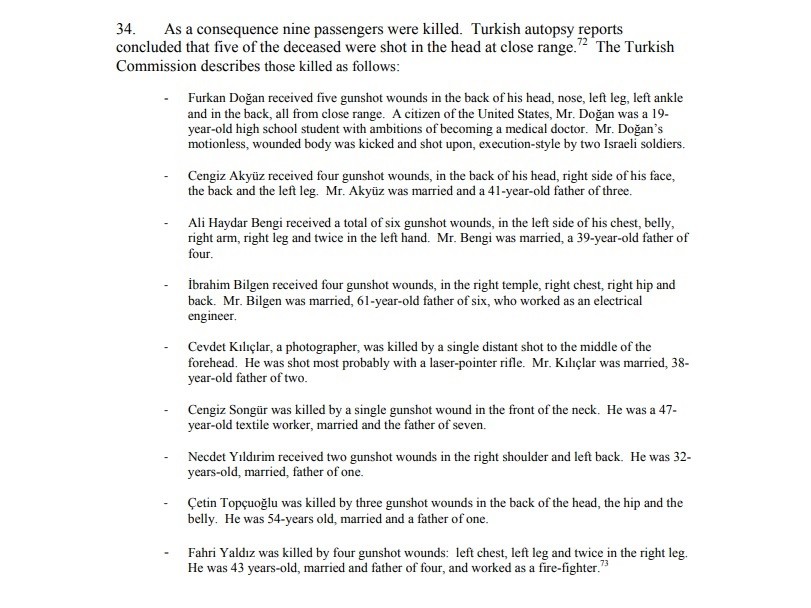
The Turkish-owned boat experienced the harshest response in the raid. Nine men were killed on board after being shot some 30 times between them, with five receiving gunshots to the head, Turkey’s autopsies revealed. A 19 year old, who also had US citizenship, was shot five times at close range.
According to Israel’s account, a number of the Mavi Marmara passengers were “hardcore” and bore bars and knives. Activists, however, claim the soldiers began shooting as soon as they entered. “After 20 minutes, maybe 15 minutes, there were three dead bodies,” Knesset Member Hanin Zoabi recounted.
A 2011 Report of the UN Secretary-General’s Panel of Inquiry found Israel gave “no satisfactory explanation” for any of the deaths. It also said that “such substantial force at a great distance from the blockade zone and with no final warning immediately prior to the boarding was excessive and unreasonable.”
While there were no fatalities on the other boats, those on board say they too suffered violence from the raiding Israeli forces. “They treated all of the boats on the flotilla with violence, they didn’t treat any of us peacefully and when they say that, it’s an absolute lie,” Alex Harrison, who was on board another of the vessels, told a Palestine Solidarity Campaign meeting in June, 2010. “Two of the women were hooded, Guantanamo-style.”
Suppressing footage
The flotilla raid drew international outrage, despite Israel getting ahead of the story whilst the activists were detained. Protests over the incident erupted around the world and tensions between Israel and Turkey deteriorated. Israeli Prime Minister Benjamin Netanyahu said the raid was to “prevent the infiltration of thousands of rockets, missiles and other arms that could hit our cities, communities or people.”
Israel sought to play down the events of the raid, releasing radio recordings it claimed showed the boat’s passengers were anti-Semitic and threatening but which it later had to admit had been edited and couldn’t be confirmed as from the Mavi Marmara, as originally claimed.
Officials also released select footage, allegedly showing the activists being violent. This included clips from the footage they had seized, which was condemned by the Foreign Press Association and the Committee to Protect Journalists (CPJ). Efforts were also made to frame the IHH as a terrorist organization and some of the passengers as members of Al-Qaeda.
A UN Human Rights Council panel accused Israel of suppressing footage of the raid. The IDF attempted to confiscate images and footage, taking phones and laptops from them, including those belonging to journalists on board. Despite this, an hour of footage from Mari Marmara was released by filmmaker Iara Lee, who was on board.
Israel’s inquiry into the events found its actions were legal under international law and noted the “regrettable consequences of the loss of human life.” The UN General Assembly’s 2010 fact-finding mission found Israeli forces were guilty of a series of violations of international law, and its disproportionate response “betrayed an unacceptable level of brutality.” Israel said this was biased.
In November 2017, the International Criminal Court’s prosecutor Fatou Bensouda said it would not prosecute Israel, but that there is “reasonable basis to believe that war crimes were committed by some members of the Israel Defence Forces.”
Eight years on from the flotilla deaths, Gaza remains under blockade and with two wars waged on Gaza since then, the situation on the ground is more bleak than before. A new flotilla is currently making its way to Gaza, due to arrive in July.
Palestinian Youth injured by Israeli gunfire in blockaded Gaza
Palestine Information Center – May 31, 2018
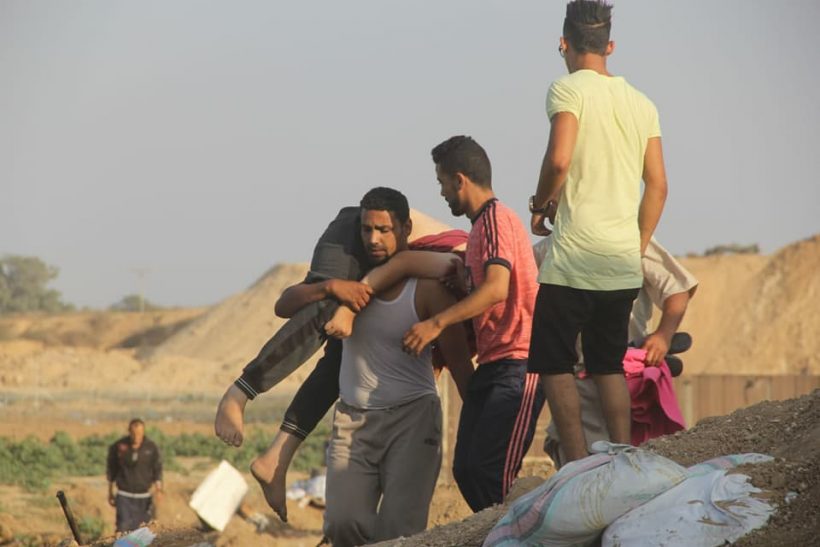
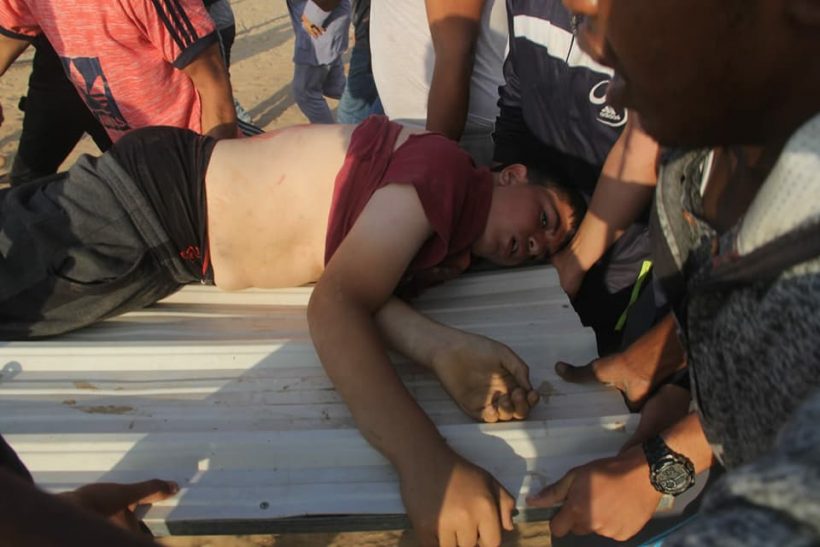
GAZA – A Palestinian youth was shot and injured by the Israeli military east of the Bureij refugee camp, in central Gaza Strip on Wednesday evening.
A PIC news correspondent said a bullet fire by Israeli soldiers penetrated a 15-year-old child’s back. He was rushed to the Shuhadaa al-Aqsa Hospital, in Deir Balah, so as to be treated for his wounds, reported critical.
According to the Gaza-based Palestinian Health Ministry, 118 Palestinians were killed and 13,300 others injured by Israeli gunfire unleashed toward Palestinian protesters as they joined the Great March of Return, launched on March 30.
Labour Friends of Israel slammed for visiting country after recent killings of Palestinians
RT | May 30, 2018
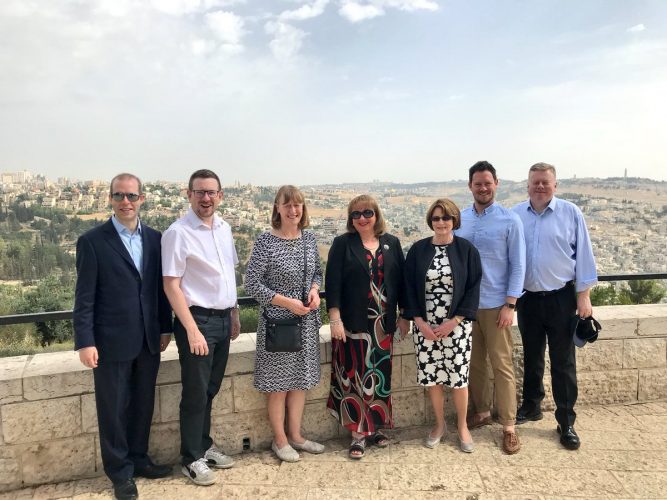
Labour Friends of Israel (LFI) have been heavily criticized for promoting their latest trip to Israel with a series of pictures on social media, just weeks after the ‘massacre’ of Palestinian protesters by Israeli Defense Forces.
LFI are currently in Israel to “promote bilateral ties and meet politicians”, according to Britain’s Jewish News. They’ve been marking their trip with a series of smiley photos and meetings with Israel’s Labor party, much to the dismay of many of those on Twitter who are outraged at Israeli military action against civilians.
Their first tweet said: “We’re in Israel this week for a parliamentary delegation – here’s the group in Jerusalem this morning.”
One LFI tweet pictured a meeting with Israeli Labor leader Avi Gabbay. He recently wrote to Jeremy Corbyn to notify him of his party’s severing of ties with the Labour leader in response to the “crisis” of anti-Semitism in the UK party. It would appear these LFI members are in Gabbay’s good books.
From just under 100 supporters and select officers, only 7 Labour members of LFI made the trip to Israel. They include MPs Andrew Gwynne, Labour’s National Co-ordinator, LFI chair Joan Ryan, who was the subject of an Al-Jazeera undercover investigation into links between Israeli diplomats and the LFI, as well as MPs Sharon Hodgson, Louise Ellman and Jonathan Reynolds.
The LFI came under fire for declaring that “Hamas must accept responsibility” for scores of Palestinians being killed in mid May, during demonstrations to mark 70 years since Nakba “the catastrophe”.
In a tweet that was subsequently deleted, LFI responded to the killing of more than 60, including 6 children and the injuring of some 2,500 Palestinians by stating: “Tragic events on the Gazan border; all civilian deaths are regrettable. Hamas must accept responsibility for these events. Their successful attempt to hijack peaceful protest as cover to attack Israeli border communities must be condemned by all who seek peace in the Middle East.”
The widely-condemned statement has reportedly led to a number of Labour MPs disassociating themselves from the group, including Tulip Siddiq and Catherine West, who requested being removed from LFI’s supporters list, according to media outlet, Skwawkbox.
‘Israel’s detention of freedom flotilla is a crime’
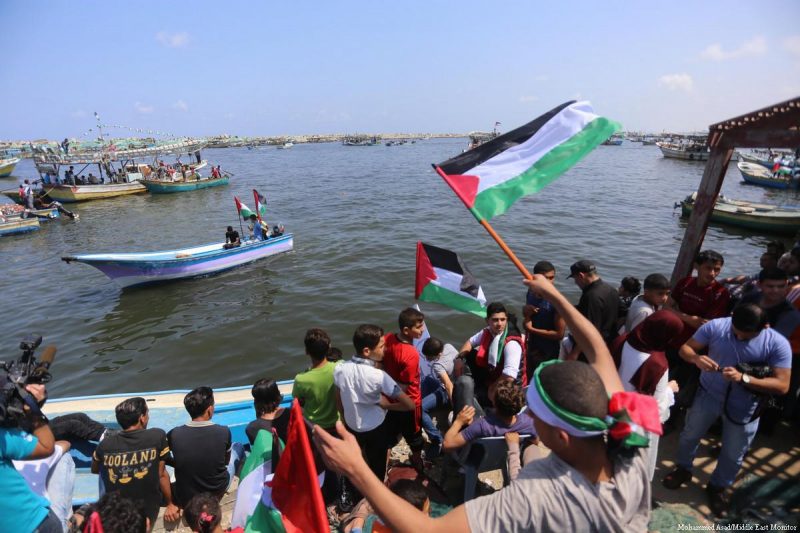
A ship carrying 20 Palestinians set out from the Port of Gaza in the hopes of breaking Israel’s decade-long maritime embargo of the Gaza Strip [Mohammed Asad/Middle East Monitor]
MEMO | May 30, 2018
Head of the Popular International Committee to Support Gaza, Dr Essam Yousef, called on the international community to pressure Israel to immediately release the passengers of a ship that set sail yesterday from Gaza heading to Cyprus in an effort to break the 12 year siege of the enclave.
Israeli occupation forces flanked the ship as it reached nine nautical miles from Gaza’s shores only for them to force it on to the Israeli port of Ashdod to the north of Gaza.
In a press statement today, Yousef condemned “the latest crime which is to be added to the occupation’s criminal record against the Palestinian people and the people of Gaza, who have been besieged for 12 years. This is a violation of all international conventions, laws, and legislations.”
Yousef held the Israeli authorities completely responsible for the safety of the ship’s passengers, who are “ill, students and unarmed civilians”.
“How can a state with an arsenal of deadly weapons as big as Israel and which considers itself a regional force superior to the rest of the region’s countries on a military level, pursue a ship carrying the ill and students who’s only aspiration is to leave the besieged Gaza Strip for treatment and education?” Yousef asked.
“Isn’t this state ashamed of itself, as it acts like a rogue state above the law, building its strength and force on the remains of innocent, starving and oppressed Palestinian people,” he added.
Yousef called on the governments of the free world and humanitarian and human rights organisations, as well as all international institutions to continue to pressure the occupation to lift the illegal and immoral siege imposed on two million people in Gaza, posing a blatant violation of all international charters related to human rights.
He also stressed the “Palestinian people’s right to move in and out of their country for treatment, education, work and any other activity, like the rest of the peoples of the world. No force on earth can continue to imprison and suffocate an entire nation who aspires for freedom and a dignified life.”
Exposing the dynamics of UNSC draft resolutions on Palestine
MEMO | May 29, 2018
Last week, the UN Security Council discussed a draft resolution on providing international protection for Palestinians, upon request by Kuwait’s permanent representative to the UN, Mansour Al-Otaibi. By the end of this week, the UNSC will be voting on the resolution, with Wafa news agency reporting that if the US uses its veto, Palestinians will call upon the UN General Assembly for “an extraordinary meeting under the title ‘Uniting for Peace’”.
It is safe to say that Palestinians are ensnared politically, and every gesture that is ostensibly for their protection is but another manacle that consolidates their isolation. Lest anyone jump on the bandwagon of “protection”, it is best that one takes into account that the international community has repeatedly confirmed its loyalties lie with Israel. Its credibility as regards protection, therefore, should be immediately denounced. Asking two fundamental questions juxtaposed against each other would clarify international intentions once and for all.
What does Palestine mean for Palestinians? What does Palestine mean to the international community?
For the first question, it is imperative that one draws upon Palestinian narratives of their land and follow the trajectory of how the entire territory that is their right was colonised by Israel’s existence. From that departure point, it is also important to include two rights that the international community wilfully ignores: the right of return and the right of struggle, by all means, against colonialism.
The second question deals more with disregard rather than concern. Even before Israel’s inception, Palestine was treated as a commodity and its people fodder for collateral damage. The Partition Plan of 29 Novermber 1947 is now hypocritically marked as the International Day of Solidarity with the Palestinian People. Let us be clear upon what this alleged solidarity has entailed: supporting colonial Israel and its so-called “right to defend itself” against the population that it has colonised and ostracised. UN solidarity has condoned massacres of Palestinians and forced displacement. In return, it has dedicated one specific day for remembrance which has yet to cause revulsion internationally, rather than acquiescence to commemoration.
The juxtaposition between both questions occurs now, in terms of the Palestinian right of return and their right to struggle for liberation from colonialism. On paper, the UN has not denied these rights. However, it has forced Palestinians into a vacuum where knowledge of rights is not tantamount to accessibility. The UN has created slogans for Palestinians while aiding Israel diplomatically, to the point that is has become a duty to separate the authentic, internationalist, solidarity with Palestinians from the exploitative, symbolic, corrupted remembrance which the UN has bequeathed to Palestinians.
As the UN derives impunity from its own existence, with what conscience can we declare approval for protection emanating from the institution? We must remember that “international protection” is concocted from the exterior, with Palestinians having little to no say in how such protection would be provided, what form would it take and what parameters would be imposed by the UN. Is it too late to remember that during other massacres, UN rhetoric was primarily concerned with Israel’s “right to defend itself”? Does memory fade with the passing of years to the point that the Nakba and subsequent massacres are forgotten? I believe not. A memory that emanates from within has the power to transcend time.
Palestinians do not deserve repetitive attempts at manipulating their rights and having the UN establish its collaborative dominion at their expense. This is not to say that Palestinians do not need protection. However, they are not in need of protection from Israel’s accomplices to degrade their options further by increasing their risks of being politically targeted. Two rights and the means to achieve them are what Palestinians need – the right of return and the right to struggle by all means for liberation. A unifying, internationalist force that is ready to stand by Palestinians to help them achieve their rights. Anything less than that is calling Palestinians to play a part in their betrayal.
Israel bill to limit Palestinians’ access to High Court passes first reading
MEMO | May 29, 2018
Israeli politicians waved through a bill that would limit Palestinians’ access to the High Court last night, according to the Jerusalem Post.
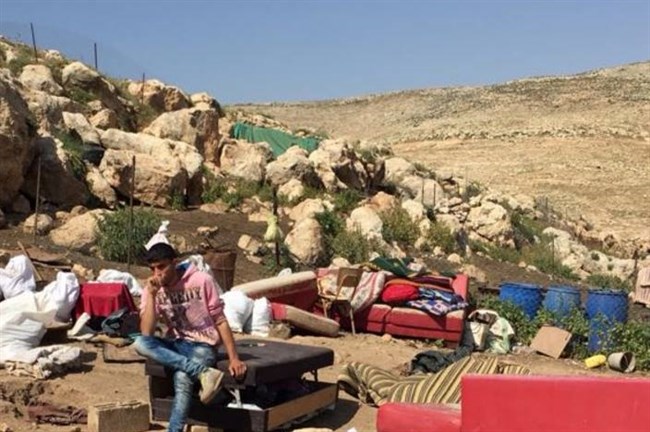
The bill would prevent many cases, including those of housing demolitions and Israeli land grabbing offences, from reaching the High Court, instead redirecting them to district courts in the occupied West Bank.
Right-wing politicians stated that the bill would reduce the number of complaints pertaining to land ownership that are often filed by Palestinians and left-wing organisations in the aftermath of settler occupation.
Justice Minister Ayelet Shaked, a supporter of the bill, rejoiced in its passing of the first reading.
“The move will also reduce the heavy burden imposed on the High Court of Justice,” she said adding that the High Court “handles more than 2,000 petitions each year, and should reject many of them outright.”
Critics however argued that the bill was a step towards annexation of the West Bank, by expanding the power of district courts outside of Israeli sovereignty.
Zionist Union MK Tzipi Livni expressed concern that the move would strengthen the argument that Palestinians should have the right to vote in Israel, as has been suggested as part of the one-state solution.
Shaked defended the bill, stating that in the case of land ownership claims, it would place the burden of proof on the Palestinians filing the case, not the Israeli settlers.
The bill will also refer other issues to the lower court, such as restraining orders and Israel entry permits.
Israel has long sought to annex the occupied West Bank to preserve the illegal settlements in the area, but has struggled with what the fate of Palestinians would be.
Earlier this month, Israel’s deputy defence minister, MK Rabbi Eli Ben-Dahan, claimed that Israel could annex the entirety of the occupied West Bank, without giving its Palestinian residents the right to vote.
“The clear and absolute thing is that we are here in the Land of Israel and we are not afraid of any attempts to frighten us,” he said. “They want to scare us that maybe soon we will not be a majority and therefore we have to abandon Judea and Samaria [the West Bank]. This is a grave mistake.”
Read also:
Palestinians call to save their homes from Israeli demolition orders
8 things I learned about Palestine while touring 8 Western nations
By Ramzy Baroud | MEMO | May 29, 2018
On 20 February, I embarked on a global book tour that has, thus far, taken me to eight nations. The main theme of all my talks in various cultural, academic and media platforms was the pressing need to refocus the discussion on Palestine on the struggle, aspirations and history of the Palestinian people.
But, interacting with hundreds of people and being exposed to multiple media environments in both mainstream and alternative media, I also learned much about the changing political mood on Palestine in the western world.
While the nations I have visited – the US, Canada, the UK (England and Scotland), the Netherlands, Austria, Australia and New Zealand – do not in any way represent all western countries, the diverse platforms that were available to me allowed me to gain a reasonably good perspective on the ideas, perceptions and attitudes of people in government, media, academia and civil society:
First, the civil society support base for Palestine is growing exponentially, not only in the number of people who are concerned with – or interested in – learning about Palestine, but also in the nature of that engagement as well. The detachment or sense of despair of the past, has all but completely vanished, being replaced with a proactive approach – as in people wanted to be agents of change at local and national levels.
Second, the consensus regarding the support of the Boycott, Divestment and Sanctions (BDS) movement is constantly increasing among unions, churches, university campuses, etc. The old view that BDS was divisive and counter-productive hardly has much traction these days, and most of the remaining debates concerning BDS are not concerned with the ethics of the boycott strategy, but the nature and extent of the boycott.
Third, the degree of decisiveness in supporting Palestinians has also been heightened. The wishy-washy stances that wagered on the Israeli “peace movement’ or Labour Party “doves”, while condemning “extremists on both sides”, has diminishing appeal.
Indeed, the successive Israeli wars on Gaza and the continued siege on the Strip have all gradually, but irreversibly, pushed the narrative on Palestine towards a whole new direction, one that has little room to wait for an Israeli awakening. The recent lethal Israeli response to Gaza’s peaceful Great March of Return protests has further galvanised support for Palestinians, even among relatively apolitical audiences.
Fourth, unable to push back against growing pro-Palestine movements, Israeli and pro-Israel supporters are pushing, like never before, the accusation of anti-Semitism against those who question the Israeli occupation, use the term “Israeli Apartheid” or support BDS.
While the tactic is no longer silencing the discussion on Palestine, it is creating the necessary distraction to divert attention, energy and resources to less urgent issues. A case in point is the British media’s obsession with the, supposedly, rampant anti-Semitism within the Labour Party at a time when thousands of Gazans were injured and scores killed while peacefully protesting in Gaza.
Fifth, young people are less likely to be intimidated by long-standing Israeli tactics. While the older generation of civil society leaders and activists are unwittingly beholden to the many smearing tactics used by Israel and its supporters, the younger generation is not as easily intimidated. Part of the reason is that digital media – social media, in particular – has helped younger people achieve a degree of global connectivity that has heightened their sense of unity and resolve.
The new generation of Palestinian university students and young intellectuals are also reclaiming their role in this trajectory. Their ability to connect with western societies as insiders and outsiders has helped bridge cultural and political gaps.
Sixth, while “One Democratic State Solution” ideas are yet to achieve the critical mass that could, and will, eventually push for a change in policies amongst various governments, the so-called “Two-State Solution” no longer commands a dedicated following. It is almost a complete reversal from the views that permeated during my earlier world tours, nearly 20 years ago.
Seventh, some intellectual, and even civil society circles, are still obstructed by the erroneous thinking that the best way to convey the Palestinian viewpoint is through non-Palestinians. This belief is even championed by some Palestinians themselves (especially members of previous generations who suffered political and cultural marginalisation and discrimination).
Although many anti-Zionist Jewish and Western intellectuals have been placed at the centre stage to articulate a Palestinian message, the alienation of the Palestinians from their own discourse has proven costly. Despite strong and growing support for Palestine, there is still a serious deficiency in an authentic understanding of Palestine and the aspirations of the Palestinian people – their history, culture, everyday realities and viewpoints.
Needless to say, what is needed is an urgent and complete reclamation of the narrative over Palestine and the decolonisation of the Palestinian discourse.
Eighth, the connection between the Palestinian struggle for freedom and that of other indigenous groups is often highlighted, but much more can be done. Israeli supporters are actively pushing the misleading notion that Israelis are the “natives” of the land and are, thus, reaching out to indigenous communities around the world in search for common ground. While the reality is to the contrary, pro-Palestine groups can do much more to link the struggle of the indigenous native Palestinians with that of other indigenous and other oppressed and historically marginalised groups around the world.
A general, but equally important realisation I have experienced throughout my three-month journey has been the numerous personal and group initiatives carried out by thousands of people all over the world in solidarity with the Palestinian people: from 11-year-old Salma, who convinced all of her classmates in Perth, Australia, to write Palestine on the map in her geography class, despite knowing that they would all have been marked down for their action, to the elderly couple in Auckland, New Zealand, who, well into their 80s and walking with much difficulty, continue to hand Palestine flyers to passers-by at a busy street corner, every week, for the last 20 years.
It is these people, and millions like them, who represent the real constituency for Palestine. They are fighters in the trenches of human solidarity that neither Israel, nor anyone else, can possibly defeat.
Featured Video
or go to
Aletho News Archives – Video-Images
Book Review
The Maidan Killings and the False-Flag Case
By Freddie Ponton | 21st Century Wire | September 5, 2026
Before the killings that helped bring down Ukraine’s president in February 2014, American diplomats were discussing who should enter its government. In a leaked telephone call, senior State Department official Victoria Nuland told US ambassador Geoffrey Pyatt, “I think Yats is the guy,” referring to opposition leader Arseniy Yatseniuk. Washington had clear preferences and was working to advance them. Later that month, Yatseniuk became prime minister.
Ivan Katchanovski’s The Maidan Massacre in Ukraine examines the violence that preceded that transfer of power. Drawing on television footage, witness testimony, forensic examinations and Ukrainian court proceedings, he argues that elements of the opposition shot protesters and police in a false-flag operation. His case centres on evidence of protesters being shot from opposition-controlled locations, including Hotel Ukraina, overlooking the killing ground. … continue
Blog Roll
 Aletho News
- US Senator Murphy says Pentagon denied him entry to US base in Qatar
- Israel expands “incitement” charge to target Palestinian education and memory
- How Israel seeks to reshape Arab classrooms
- Paris bans pro-Palestinian demonstration planned for Oct. 7 over ‘risks of public disorder’
- In August Hanning Treason Case – All Signs Point To Tel Aviv.
- France cleared dozens of military sales to Israel between May and September: Report
- France projects nuclear power as Macron pushes arsenal expansion
- The fallacy of US delusions about Iran’s economic collapse
- What changes with Lula or Flávio?
- Britain leads Western media’s demise through ‘fear porn’ narrative
- If Americans Knew
- Soldier testimony sheds light on how Israel wages information war
- CIA Report Warns Israel Could Head Toward Civil War, Total Collapse
- Banker Who Exposed Howard Lutnick’s Ties to Epstein Warned of ‘Retaliation’ and ‘Personal Consequences’ in Last Post Before Suicide
- Israeli Attacks Kill Two Palestinians in Gaza
- Gaza genocide at 3: Israeli-U.S. cruelty and the smart, deep resistance to it are changing the world
- As genocide is about to enter 3rd year, little of Gaza remains– Daily Update
- “We See Our Homes Now From A Satellite, Like Strangers”
- Watch “Gaza: Doctors Under Attack”, originally censored by BBC
- NAZA: Israeli embassies in UK and US promote rival documentary to challenge Gaza genocide allegations
- David Ellison appoints Israeli to lead merged Paramount-Warner studios
- No Tricks Zone
- Latest European Green Energy Debacle; Portugal’s Largest Flagship Solar Park Insolvent!
- Green Energy Debacle: German Expert Professor Fritz Vahrenholt Warns Of Severe Economic And Social Consequences
- Two More Paleo Reconstructions Affirm Meters-Higher Sea Levels Across Ireland, Brazil 7000-6000 Years Ago
- New Study: Earth And Venus Surface Warmth Largely Explained By Convection And Lapse Rate, Not CO2 Or Radiation
- 2025 Nature Paper Claiming Worsening Global Drought Gets RETRACTED …Heavily Flawed
- New Study: ‘Global Drought Shows No Detectable Recent Acceleration Under Climate Warming’
- Economic Masterminds: German Socialists Suggest Taxing Productivity Gains Stemming From Using AI
- The South China Sea Has Not Been Cooperating With The Climate Change Narrative
- Energy Crisis: Germany Enters Heating Season With Historically Low Gas Reserve Fill Levels
- New Study: The Antarctic Ice Sheet Gained Mass From 2020-2024 Due To Staggering Snow And Ice Accumulation

