Synagogue killings on the site of an Israeli massacre of Palestinians
On the Contrary | November 21, 2014
The moral lesson of the “Nazi Holocaust” is supposed to be that humanity must not forget what happened. Yet many of the beneficiaries of “Holocaust” sympathy and reparations have worked to make certain that the world does not remember the mass murder of Arabs by Israelis. The 2100 Palestinians killed by the Israelis last summer are now all but forgotten in the US media; and the cruel irony of having this week’s synagogue attack in west Jerusalem occur on the site of the village of Deir Yassin, where the massacre of Palestinians by Israeli terrorists occurred, and where the village once stood, is completely lost on the oblivious US media. For this writer, as a student of the religion of Orthodox Judaism, the media’s indifference would appear to be the result of having drank too often at the trough of Talmudic mentality, in which the lives of Judaic persons are more valued and highly prized than those of their enemies and victims. Prof. McGowan elaborates in a note to Mr. Avnery:
In the wake of the recent events in the synagogue at Har Nof, Uri Avnery has written an article which you can read here. Like all his work, Avnery’s article is informative, original and beautifully written. But it has a glaring omission.
11/21/14
Dear Uri:
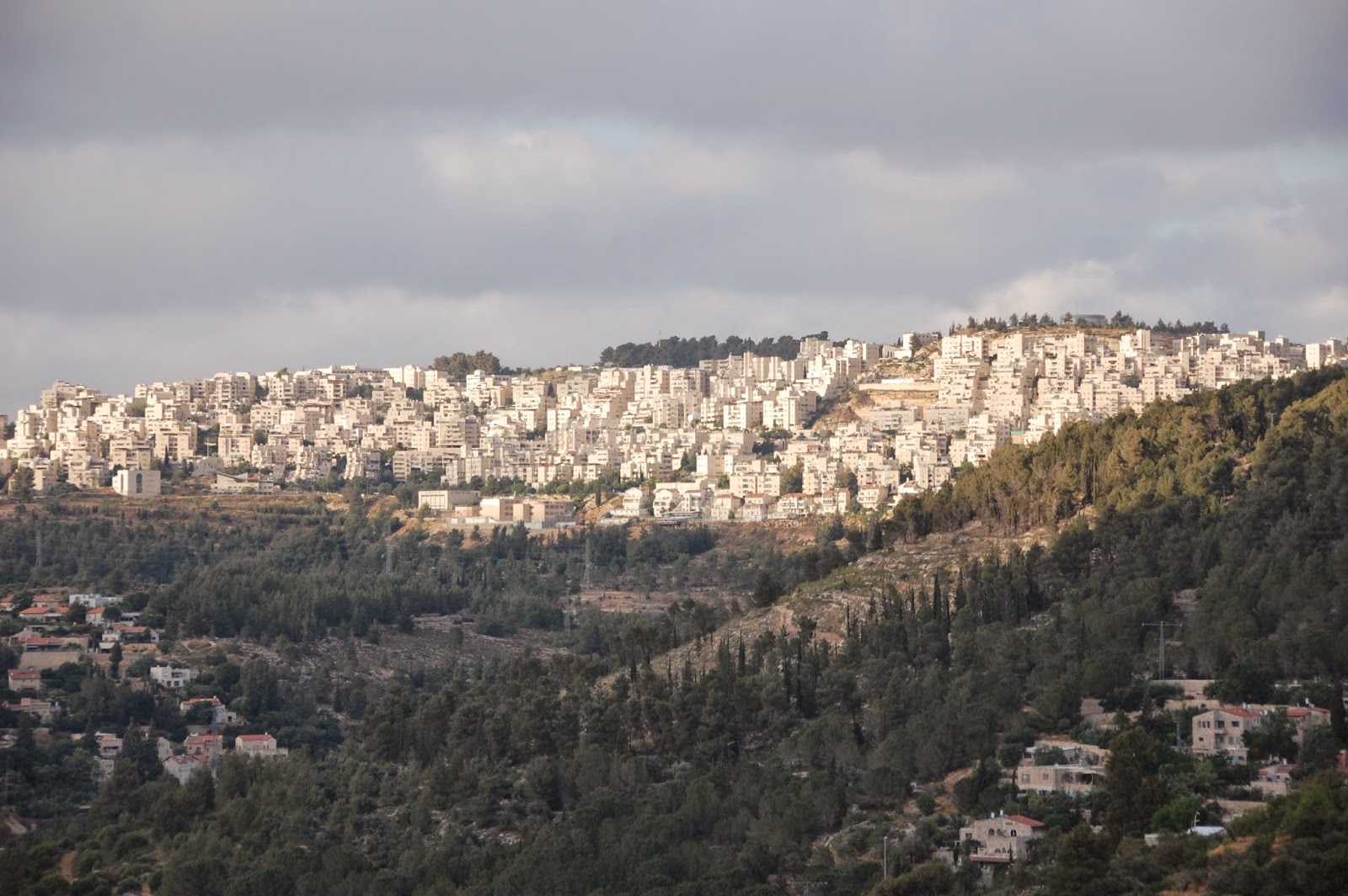
I know that you realize that the Har Nof neighborhood in West Jerusalem, where four rabbis and a police officer were recently murdered, is built on the lands of Deir Yassin, the Arab village which no longer exists, that was the site of the 1948 massacre, which according to Menachem Begin, was pivotal to the founding of the Jewish state. This was an early massacre in the Nakba (“catastrophe” i.e. the Israeli conquest of Palestine); there were many more to follow, but it struck fear among Palestinians, causing many to flee, also giving the Jews an angle for campaigns of terror, which they visited on other Palestinian villages, basically “Get out or we’ll do to you what we did in Deir Yassin.”
It is interesting to ask why the media, which has been all over this synagogue massacre, mentions nothing about what happened on this site on April 9, 1948?Why does Wikipedia fail to even cite Deir Yassin in its history of Har Nof?
The picture (above) of Har Nof is taken from Yad Vashem, the most prestigous Holocaust memorial. The water tower at the top right is next to the main buildings of Deir Yassin, which today serves as a mental hospital, mostly for those suffering with too much religion, an affliction also known as “The Jerusalem Syndrome.”
At Yad Vashem all visitors, and especially American politicians, are repeatedly told to “Never forget.” At Deir Yassin the message is “Never mind.”
There is not even a signpost among the old Arab buildings to indicate that it was once a prosperous Arab village of about 750 people.
In building the Har Nof settlement much of the Deir Yassin cemetery was destroyed. The rest is now littered with trash and condoms. Har Nof children have been seen digging up Arab graves. (Imagine the outcry had they been desecrating Jewish graves.) Apartment buildings of Har Nof are built on the old quarry where villagers were executed and their bodies dumped and burned on April 10, 1948.
The ironies are breathtaking. But some of us still remember.
Daniel McGowan
Professor Emeritus, Hobart and William Smith Colleges
Three shot with live ammunition during Nabi Saleh protest
International Solidarity Movement | November 22, 2014
Nabi Saleh, Occupied Palestine – Israeli forces shot and injured three Palestinians participating in a weekly Friday demonstration in the village of Nabi Saleh. Soldiers fired .22 caliber bullets, a form of live ammunition which has maimed and killed many Palestinians, even as Israel continues to claim it as a “less lethal” way of assaulting demonstrators.
Yesterday at noon between forty and fifty Palestinians, Israelis, international activists and journalists marched down from the center of Nabi Saleh towards a water spring stolen by a nearby illegal settlement. The Israeli forces awaited them down the road with two military jeeps and a police jeep. Some youths threw stones towards the military vehicles. Soldiers and police fired tear gas canisters and rubber-coated steel bullets at demonstrators as the group walked down the road.
 After a brief period of calm, a police jeep equipped with a tear gas dispenser drove up and down the road, firing tear gas at protesters. A few suffered from excessive tear gas inhalation, including a boy under the age of ten.
In addition to continuing to fire rubber coated steel bullets and tear gas, soldiers also began to shoot .22 live ammunition. Two seventeen-year-old boys were shot while throwing stones, one in the thigh and one in both the hand and foot. One Israeli soldier fired at a child under the age of twelve as the boy was running away up the hill beside the road.
Nariman Tamimi, a thirty-eight-year-old woman from the village, was shot in the thigh at close range with a .22 bullet. Israeli soldiers shot her in front of her children and family, driving away and leaving her in the road. She was taken away for medical treatment, where she underwent surgery, and currently remains in hospital.
Life sentences restored for two Palestinian prisoners released in Shalit deal

MEMO | November 21, 2014
The Israeli authorities restored the previous life sentences issued against two Palestinian prisoners who had been released as a part of the Shalit deal, Felesteen Online news reported on Friday.
One prisoner is from Tulkarem and the other Nablus, in the occupied West Bank.
According to Felesteen Online, the director of the Ahrar Centre for Prisoners Studies and Human Rights, Fuad Al-Khafsh, announced that the Israeli authorities had re-issued the life sentences on the two released prisoners, Ashraf Al-Wawi from Tulkarem and Hamza Abu Arkoub from Nablus.
Since tensions started escalating in the occupied Palestinian territories last summer, the occupation authorities have detained thousands of Palestinians, including re-arresting dozens of former prisoners released as part of the Shalit exchange deal in 2011.
Support for justice in Palestine soaring on US campuses
ALRAY | November 20, 2014
New York – A student-led movement taking shape on U.S. college campuses have seen a growing number of young activists organizing around solidarity with Palestine.
The Students for Justice in Palestine organization, one of the major solidarity coalitions, now has more than 110 active chapters in the U.S. and the number is growing.
The movement enjoys the backing from those with a wide array of political thought and a support base that significantly grew after Israel’s “Operation Cast Lead” and “Operation Protective Edge” assaults on Gaza in 2008-09 and this summer respectively.
According to Aman Muqeet of the organization’s National Steering Committee, Israel’s summer offensive affected all of those who are in solidarity with the Palestinian people. “It has strengthened our resolve and commitment to the work we do.”
Operation Protective Edge began July 7 and lasted for 51 days; it killed more than 2,000 Palestinians, mostly civilians, according to Palestinian health officials. More than 10,000 others were reported injured.
“Also, it has empowered us because we have seen an unprecedented amount of support from the international community,” Muqeet said. “Musicians, actors, and public figures voicing support for Gaza, corporations distancing themselves from Israeli crimes; consumers joining the Palestinian-led call for a boycott of Israeli goods and corporations that support Israel; millions of people around the world taking to the streets to demand justice.”
He says public opinion in the U.S. and the West shifted significantly after Israel’s summer assault.
“The Protective Edge massacre has brought the realities of a brutal colonial empire to the fore … On campuses, students are more informed than they were in the past and are keeping up with the developments.”
An Oct. 24 report by the New York-based Jewish organization Anti-Defamation League reported a dramatic increase in the number of pro-Palestine events scheduled on U.S. campuses since the massacre.
There were 75 events scheduled since the beginning of the 2014-2015 academic year, which started in late August or early September at most American universities, the report said. That number marks a 114 percent increase compared with the same period last year.
“Israel has done an excellent job of demonstrating to the international community the lack of regard it has for civilians, justice, and human rights,” according to Muqeet.
Brooklyn College has a Students for Justice in Palestine chapter. Organizers there say their aim is to raise awareness about the human rights violations being committed by Israel against the Palestinians and to build solidarity with the Palestinian struggle for justice, freedom, self-determination and the right of return.
The group’s president, Sarah A. Aly, says the chapter has received more requests during the current academic year from students who want to join the chapter when compared to last year.
“Our membership is very diverse and we work with non-Muslim groups on a regular basis on campus, such as the Latino and black clubs as well as DreamTeam and LGBT club,” she said.
The group finds connections between Israeli actions in Gaza and the shooting of unarmed black teenager Michael Brown by a white police officer in Ferguson, Missouri.
“We do draw the parallels because the struggles that communities of colors face in the U.S. are connected to the Palestinian struggle in many ways. We fully support the people in Ferguson and all those fighting for justice and liberation. One of our members was in Ferguson to show support for them and the support for Palestine she received while she was there was very evident.”
Brown’s death set off mass protests, which have since continued at various levels around the country.
Muqeet says the Students for Justice in Palestine stands in solidarity with not just Mike Brown and Trayvon Martin, but all victims of racial violence.
Their fourth annual national conference’s opening keynote featured author Rev. Osagyefo Uhuru Sekou speaking on “From Ferguson to Palestine: Resisting State Violence and Racism.”
Israel has traditionally been a close ally of the U.S., and has been assisted since its founding with substantial amounts of American financial and military aid.
What young activists believe to be a “lack of objectivity” from the U.S. government toward Israel’s massacres is also adding to the rise in the number of students who support for the Palestinian cause.
“When students see this, they ask questions and they want to learn more, and effect positive change which will bring an end to the human rights violations and occupation of Palestine, and end U.S. military support for Israel’s occupation and human rights abuses,” Muqeet said.
“So, I anticipate a steady growth of students that support justice in Palestine.”
Shock and horror at killings, but not when victims are Palestinians
By Yvonne Ridley | MEMO | November 19, 2014
I wonder how many people have heard of Mohammed Siyam? While the Western media went into overdrive over the tragedy of the synagogue killings in Jerusalem, little Mohammed lay gasping, fighting for his life on an operating table in Turkey.
As two crazed men, armed with knives, unleashed a brutal, indiscriminate attack on the unsuspecting Jewish congregation, the 14-year-old was just one of many Palestinian children who had already had his limbs sheared off in a brutal, indiscriminate attack.
That the 14-year-old had survived this long was a miracle in itself. He lost both of his legs during Israel’s war against the civilians of Gaza in the summer; the Israeli airstrike also blew 12 members of his family to pieces with bombs deliberately designed to kill and maim human beings. The courageous youngster, an innocent child who had already survived three wars in his short life, finally gave up his struggle and was pronounced dead on Tuesday during yet another operation; this one was on his lungs and respiratory tract.
There was no media present at his burial, no headlines as his body was lowered into the grave. In that he was no different to the 570 other Palestinian children from Gaza who were killed by Israel’s summer blitz; his passing went unnoticed.
The Western media, it seems, is not interested when the dead come from the Gaza Strip where 2,140 Palestinians paid the ultimate price this summer alone for having the misfortune to live in the world’s largest open air prison. While death and destruction destroyed the sanctity of one place of worship in Jerusalem there was little outrage vented in the West when even worse rained down in Gaza just months earlier. That the Israeli onslaught destroyed 73 mosques in 51 days, while 205 others were partially destroyed, barely registered in the Western media.
Other statistics brushed aside by the media routinely during Israel’s war included the 11,000 who were injured, many of them women and children. According to the UN, Israel’s bombs destroyed or damaged thousands of civilian buildings, including the only power plant and more than 220 schools, many run by the international body. The much fewer Israeli casualties, almost all of them soldiers, received far more media exposure.
Probably one of the worst offenders of the “Ostrich approach” to Palestinian casualties is the BBC, which has a global reputation for gold standard reporting, except when it comes to the Middle East. BBC News online headlines screamed, “Bloody attack at Jerusalem synagogue” with breaking news being updated in a live blog every few minutes followed by detailed analysis and the ubiquitous Israel spokesmen. Sky News also went into overdrive and before long most TV and online media were relaying images of bloodied prayer shawls and ambulances and the general chaos associated with such an atrocity.
Interviews at the scene followed and blurred video footage taken by a passer-by was also shown. As a journalist with more than 35 years in the business it was, I would say, a job well done. What makes me despair at the standard of journalism, though, is the lack of coverage of similar atrocities carried out by Israelis against Palestinians; they barely make it into the mainstream.
Look at the following observations compiled by the excellent NGO Friends of Al-Aqsa, of which I’m a member:
- Palestinian bus driver Hassan Yousef Al-Ramouni, believed to have been lynched by Israeli settlers, was not mentioned at all by the BBC until the attack on the synagogue, when his death was mentioned only in reference to a Hamas statement about events at the synagogue. AFP and major Israeli outlets reported Hassan’s death.
- On November 11th, the BBC reported the killing of 22-year-old Imad Jawabreh using quotation marks around “shot dead by the Israeli army” as if there was any conflicting report over who had killed the young man. By the fourth paragraph of the BBC report, there was mention of attacks against an Israeli soldier and civilians in an attempt to contextualise the killing. By contrast, the article on the synagogue attack contains no reference to killings of Palestinians by Israelis, which might have added some context to the attack. Unlike the story about the synagogue, there was no live blog and no use of evocative imagery; instead, a generic image of an Israeli jeep was the backdrop.
- The BBC only reported once on the killing of Khayr Al-Din Hamdan, shot dead by Israeli police while his back was turned. The incident was caught on camera, but the BBC has not followed up on this clear example of police brutality against Palestinians.
Long ago as it was, I still recall as a trainee being told that every life is precious and there is no room for discrimination when covering an atrocity. It was drummed into us aspiring young journalists that not only must we be impartial but we must also be fair and just. It appears that those standards are no longer applicable in the BBC when it comes to Palestine.
If you needed proof, tell me in all honesty if you had heard Mohammed Siyam’s name before you read this article; or even that a little Palestinian boy who had lost both his legs and 12 members of his family in the summer war had now lost his life? If you had, it is almost certain that it was no thanks to the BBC and other mainstream media.
Israeli soldiers protect Jewish settlers attacking Palestinian village
Yesh Din | November 20, 2014
Israeli occupation forces did nothing to stop Jewish settlers from attacking Palestinian villagers, according to videos released by the Yesh Din rights group, showing soldiers pointing guns at Palestinians while Israelis are throwing stones from behind the soldiers.
The soldiers appear to be protecting the masked and armed Jewish settlers from Yitzhar during their attack on Palestinians in the village of Urif in the West Bank on Tuesday.
“IDF soldiers have the obligation, based on international law and High Court of Justice rulings, to protect Palestinian residents from violence, and IDF soldiers have the authority to detain suspects, including Israeli suspects, until the police arrive,” Yesh Din said in a statement.
“The disturbing video footage demands vigorous investigation and the immediate prosecution of the soldiers involved. An examination must also be carried out of whether the soldiers’ commanders bear liability for the conduct of their subordinates,” attorney Emily Schaeffer Omer-Man, legal advisor to Yesh Din’s said.
Violence and Resistance in Palestine
An African American Perspective on Israel/Palestine
By Ajamu Baraka | November 19, 2014
For the many thousands of tourists who fly into Israel/Palestine every year, landing in the modern Ben-Gurion airport in Tel Aviv marks the beginning of a great adventure in the “holy land.” But for members of the “African Heritage” delegation, flying into Ben-Gurion was fraught with tension and foreboding. Before departing the U.S. on October 27, our delegation rehearsed how we would move and act, role-playing what to say and what to avoid when we would face Israel’s first line of defense – its custom officials at the airport.
The normally simple act of landing, showing that prized blue book that is the U.S. passport and passing effortlessly through customs and into the country, was something that we understood might not be automatic for us. And indeed it wasn’t – within an hour of our landing our delegation’s co-leader, a young Palestinian woman, was detained. We later found out that she was interrogated, held overnight, and deported the next day.
As our delegation slowly made its way through Israel’s entry process those first couple of hours at the airport, we did not quite grasp that our experience at the airport would not be the first of the strange dualities that we would experience and witness of life in Israel/Palestine. The gaggle of wide-eyed excited tourists that were happy to be in the country greatly contrasted with our already lived experience of Israel as a police state on guard against all threats, real and imagined.
The delegation and program:
The African Heritage delegation was made up of activists, educators, journalists, clergy, students and folks representing the full spectrum of African American life in all of its diversity. Sponsored by the Interfaith Peace Builders, an organization of dedicated young activists experienced in organizing delegations to Israel/Palestine, the individual members of our delegation had various positions and motivations for being a part of the delegation. But a genuine feeling of solidarity with the plight of the Palestinian people and a desire to better understand the situation in order to share what we observed with our constituencies where we lived and worked emerged as the common denominator that united most of us.
Our ambitious agenda included meetings and visits that took us across the country. From East Jerusalem to “Israel proper” through to the West Bank and down to the Negev desert, we met with peace activists, political activists, clergy, the settler community of Hebron, Palestinian-Arab Bedouin women, and lived with Palestinian families in Bil’in and the Deheisheh refugee camp. It was an exhilarating and emotionally exhausting experience that touched us all in very personal ways.
The never ending conflict?
The deeply troubling impression that I came away with was that a negotiated, relatively “peaceful” resolution of the conflict is impossible and that those individuals who believe that the Israeli state would grant sovereignty and respect the human rights of Palestinians within the context of either a one or two state solution are either naive regarding the nature of Israel’s settler project or fundamentally dishonest.
The obscene level of investment in the infrastructure of repression in the occupied territories along with the most aggressive settlement policies since the 67 war clearly demonstrates that the Israeli state has no interest in a negotiated settlement with Palestinians.
Indeed the “facts on the ground” all point toward policies of permanent control of Palestinian life and land. Those facts include the over six hundred thousand Israeli settlers in the West Bank and settlement expansion into Palestinian East Jerusalem, the so-called security wall that is more an enclosure wall to expropriate Palestinian land, and the emergence over the last 15 years of a right- wing, militarized Israeli civil society symbolized by the popular support given to the governing coalition anchored by the right-wing Lukid party. These facts coupled with the complete collapse of what is referred to as liberalism within Israel, suggest that the current political alignments and power relations shatter any illusions that a domestic constituency strong enough to counter the hegemony of the Zionist positions exist anywhere in Israel.
On the Palestinian side, there are deep divisions among the leadership of Hamas and Fatah, the two main Palestinian organizations, despite the so-called unity government that was established in June of this year. I was struck by the number of people who have lost all faith in the Palestinian authority created out of the Oslo process. Yet at the level of the “people,” Palestinians living in the occupied territories are still united in their steadfast commitment to resist the occupation.
Unity on the issue of Palestinian resistance stems primarily from the daily indignities of life under military occupation and the repressive brutality that is a permanent feature of Palestinian life. Our delegation observed and experienced, if only briefly, life under military occupation as we moved through military checkpoints throughout the country but especially in the West Bank.
In the village of Bil’in, a community in resistance that was documented in the Academy Award nominated film Five Broken Cameras, our delegation was hosted by the village’s popular resistance committee. As part of our visit we were taken down to the separation wall or what many of us call the apartheid wall. Without provocation or warnings of any kind, the delegation suddenly found itself on the receiving end of a barrage of Israeli gas grenades. After having to run back to our cars through gas, we were informed by our hosts that since the authorities were aware that internationals were in the town for the night we should be aware that there was a possibility that soldiers might raid houses that night to arrest us, something that has happened before.
Two days later, we once again experienced the duality of experiences reflected in the lives and positions of Palestinians. In the morning we met with the Holy Land Trust, an organization that is committed to developing what it calls a spiritual, pragmatic and strategic approach to the ongoing conflict. It sees its work of reconciliation between Palestinians and Jews as a viable model for realizing a joint community that respected each other and was committed to justice, political equality and peaceful coexistence. That evening, however, we stayed in the Deheisheh refugee camp, a camp located near Bethlehem that was established after the expulsion of the more than 750,000 Palestinians in the war of 1948 that resulted in the creation of the state of Israel. Our hosts at Deheisheh were clear that for them, peaceful coexistence was impossible in a settler-colonial context that did not allow them to recoup all of the land that they argue was stolen by the Israeli state.
A week after returning from the super-charged, repressive environment that is Israel/Palestine, it is not surprising that Jerusalem is now being consumed by an intensification of violence. From what I observed, the allegations that Israeli settlers lynched Yousuf al-Ramouni, a Palestinian bus driver in Jerusalem that then sparked the retaliatory killing of four Israeli’s, is not surprising nor beyond the realm of possibility. Settler and state violence are central components of the colonial project. And violence as part of Israel’s colonial project has always been strategically deployed. It is used as a means of social control but by manipulating issues to evoke Palestinian resistance it is used to support Israel’s narrative as victim. Israeli Prime Minister Ariel Sharon adroitly used this device to provide the pretext for destroying the last vestiges of the Oslo process and the functionality of the Palestinian Authority. In the aftermath of the disastrous assault on Gaza that resulted in a public relations defeat for Israel and has even led some European governments to recognize a Palestinian state, it appears that the government of Benjamin Netanyahu has gone back to the Sharon playbook. The closure of the A-Aqsa Mosque a few weeks ago had the predictable results of Palestinian Muslim resistance that Israel is attempting to use to its advantage.
The consciously provoked violence in Jerusalem also has another effect. It diverts attention away from political and material basis of the “conflict” – Israel’s brutal occupation and illegal theft of Palestinian land.
As one activist framed the political conundrum: “if a two state solution in which Palestinians were offered the 28% [of the] land mass of historic Palestine with borders between this state and Israel that approximated the 67 green line and a just solution to Palestinian refugees as part of the Oslo process in the 90s, it would have been hard to accept but it might have been viable.” But for this activist and many others in Palestine, it is now clear that the Israeli state never intended to seriously consider establishing a viable Palestinian state or resolving the issue of Palestinian refugees in a just manner.
Difficult as it was, traveling to Palestine and seeing first hand the realities on the ground was a political necessity and an eye opener. One can read about the repression, the growing expressions of racism, and see images from time to time of Israeli brutality, but nothing really prepares you for being thrust into that oppressive reality. And for those of us who reside in oppressive communities where our lives and dignity are also under constant attack, we can feel the humiliation and degradation experienced by Palestinians which after a few days becomes emotionally overwhelming.
During my activist life I have traveled to many of the counties that Western colonial/capitalist leaders characterized as despotic totalitarian states – the old Soviet Union, North Korea, Cuba before 1989 – but in none of those states did I witness the systematic mechanism of population control and scientific repression that I witness in “democratic” Israel. The security walls, towers, checkpoints, and armed settlers created an aura of insecurity and impending assault on one’s dignity at any time. I left that space wondering how anyone with a modicum of humanity and any sense of morality could reconcile living in that environment from the spoils of Palestinian dispossession and degradation and how any nation could support the Israeli political project.
Ajamu Baraka is a long-time human rights activist and veteran of the Black Liberation, anti-war, anti-apartheid and Central American solidarity Movements in the United States.
Israel to Admit 6,000 Ukrainian Jewish Refugees
ALRAY | November 17, 2014
The Israeli government plans to provide shelter to 6,000 Jews who were internally displaced by the conflict in Ukraine, Israeli newspaper Maariv reported on Sunday.
The Israeli plan comes in light of the domestic infighting taking place in Ukraine, which is leading to the displacement of hundreds of the country’s Jews, according to Maariv.
Israeli authorities have secretly begun the construction of refugee camps to receive displaced Ukrainian Jews under the supervision of Israeli Minister of Economy Naftali Bennett, said the newspaper.
Maariv, however, did not specify the location of these camps.
The newspaper noted that about 6,000 Jews are currently homeless in eastern Ukraine, and that Israeli authorities paid to ensure their settlement in temporary camps before they’re transferred to Israel.
It was not possible to get official comment from the Israel authorities regarding the report.
Last month, a source close to the project told Israeli newspaper The Jerusalem Post that considerable resources have been allocated to provide Ukraine’s Jews who have been affected by the fighting there with food, clothing and shelter.
US Police Visit Israel to Learn New Strategies
teleSUR | November 17, 2014
Police officers from Chicago, Illinois, in the United States, which is one of the countries with the most militarized police corps, visited Israel, which has one of the most repressive security agencies, to learn “cutting-edge policing strategies and technologies.”
The public security officials attended the Third International Homeland Security Conference held last week in Tel Aviv.
The U.S. delegation was led by the Chicago Police Superintendent Garry McCarthy, who spoke at the conference, according to the Jewish United Fund (JUF), which sent the officials to Israel.
Several areas were addressed during the conference, including cybersecurity, emergency preparedness, counterterrorism and critical infrastructure, such as ports, airports, trains and pipelines.
Both countries have recently been under the radar for the repressive and violent methods that their police corps use against their population.
As an example, United States security agencies have been condemned over the incidents in Ferguson, Missouri, where heavily armed policemen dispersed huge protests and riots that erupted in August after officer Darren Wilson shot and killed Michael Brown, an unarmed teenage African-American boy.
Witnesses assert that Brown had his arms raised before being shot, six times. But Wilson claims he feared for his life after Brown resisted arrest.
Policemen that attended Ferguson to “control” the riots were seen using automatic rifles, camouflage uniforms and tactical equipment. Veterans from the Iraq and Afghanistan wars condemned authorities for that and asserted that the policemen were better equipped and armed than they were when at war in the aforementioned countries.
“Lets remind the officers were facing unarmed angry civilians and that the U.S. soldiers were fighting a regular army and insurgent groups, all of them using heavy weapons,” the veterans said in a joint statement.
On the other hand, Israeli security corps, who are always questioned over their lack of respect toward human and civil rights, have always been criticized for the repressive methods they use against Palestinians.
They use tear gas, rubber bullets and even real bullets to disperse demonstrations, while Palestinians throw rocks. Dozens of videos demonstrate how Israeli policemen and soldiers hit children and unarmed Palestinians.
And most recently, Israeli security agencies have staged several clashes with dozens of Palestinians after agents blocked access to the Al-Aqsa mosque, one of the most holiest sites in the world for Muslims.
However, United States is not the only country that is learning Israeli methods. Agencies from over 60 nations sent representatives to the security conference in the Israeli capital, according to the JUF.
“We will now bring the lessons home; our community should feel secure knowing that the relationships in Chicago and Cook County between homeland security, law enforcement, emergency management and JUF is a testament to the strong relationships, common interests and shared concerns of everyone,” said McCarthy.
LIVING WITH INSANITY
Harper, Abbott, and Cameron at the Brisbane G-20
By John Chuckman | Aletho News | November 18, 2014
Canada’s Prime Minister, Stephen Harper, is reported by a spokesman, to have had the following exchange with Russia’s President Vladimir Putin during the Brisbane G-20 summit: “Well, I guess I’ll shake your hand, but I only have one thing to say to you: you need to get out of Ukraine.” Putin is said to have replied, “Impossible. Since we are not there.”
A graceless bit of diplomatic crudity from a truly graceless man, Stephen Harper, someone Canadians know has a history of underhanded practices at home, from introducing ugly personal-attack campaign advertising, using secretive and bullying tactics in parliament, failing to deal with corrupt practices by subordinates especially an American-style election scandal of robo-calls which sent some voters to the wrong polls, to having appointed several unbelievably incompetent and corrupt ministers. He is known for a ferocious temper in private, a very controlling man who grants his political associates absolutely no freedom of expression, and is reported by insiders as having on at least one occasion thrown a chair in a meeting. His silencing of Canadian government scientists from offering their opinions on issues in areas of expertise has been a simmering international scandal, as has his complete suppression of environmental issues.
Before Harper, Canada enjoyed for many decades a reputation for fairness and decency and intelligence in international affairs with statesmanship and openness exhibited by figures like Lester Pearson or Jean Chretien or Paul Martin. Harper has destroyed a great deal of that as he pursues a single-minded role as American junior partner in almost all things.
He completely abandoned Canada’s traditional policies of fairness and balance in the Middle East, literally shocking many Canadians at times with fervent outbursts about Israel, including suggestions that Canadian critics of Israel are anti-Semitic. He does this, as any astute political observer recognizes, to solicit increased campaign funds from Canada’s financially successful Jewish community, taking his cue from Republicans in the United States such as Newt Gingrich who alone received $18 million dollars from one wealthy supporter of Israel for his last nomination campaign in exchange for inserting into his speeches that there was no such thing as a Palestinian, an utterly insincere and ridiculous statement. Since Israel is no admirer of President Putin’s, he being too independent-minded and opposed to the American exceptionalism Israel tightly embraces and by which it prospers, this activity of Harper’s puts him in an anti-Russian frame of mind from the start.
Harper has made an annual photo-op journey to Canada’s North, always trying to appear to voters as the man most concerned with a future there of melting ice creating free access through the Northwest Passage. Ironically, he periodically mentions Russia as the nation he is most concerned about, but Canada’s recent history couldn’t make it clearer that it is the United States which represents the great threat to our Northern waters and shore. Everything from unauthorized American atomic submarine prowling to a giant American oil tanker passing to published American charts showing this future open water as international tells a pretty harsh story. But in every detail, Harper only pretends America is a great and non-threatening friend.
Harper is the single most obsessed leader in Canada’s history with pleasing, almost fawning over, the United States. Had the history of Canada, which included a great deal of disagreement and contention with the United States over its many imperialistic behaviors, included many leaders of Harper’s character, there quite likely would not be a county called Canada today.
So here are the demonstrated qualities of the man performing as Canada’s diplomatic ass at the G-20 in Brisbane. He demonstrates a genuinely anal-retentive temperament, is intolerant of differences of opinion, and embraces a willful blindness to the world’s greatest threat to peace, the United States in its self-appointed role as imperial arbiter among nations.
In case you wonder why a man like Harper even holds office in Canada, it is because the effective opposition was split with internal battles and because the last leader they selected in desperation following those battles was a man of no political intelligence or even experience and a totally unattractive personality to the public, Michael Ignatieff, someone who managed to do almost everything wrong. It also reflects a democratic deficit in our parliamentary structure where a party with just over 39% of the vote can be a parliamentary majority. So despite Canadians consistently being about 60% or higher inclined to somewhat progressive parties, Harper has had a free run at pole-axing the country’s traditional international reputation. Every day we come to be seen as a bit more like the deceptive and brutal American colony in the Middle East he embraces so closely.
We unfortunately live in a time utterly lacking statesmen in the West. I don’t know the detailed backgrounds of those other aggressive fools at the G-20, Abbott of Australia and Cameron of Britain, but I know they are both men who have lied exceedingly and been intimately involved with such nasty business as favors for the unsavory Rupert Murdoch empire. I can think of nothing which recommends either of them as statesmen. Indeed, they both, quite literally, kowtow to America.
Putin is head and shoulders above these men in intellect and focus, readiness to communicate clear views to the world, someone demonstrating considerable patience, and, from all evidence, someone notably free of the blowhard ideology which virtually characterizes Harper, Abbott, and Cameron.
Putin’s moves in Ukraine seem to me appropriate for dealing with a deliberately-induced crisis in an important neighboring country, and one with a long history of connections and associations. He has not invaded Ukraine, something which he could easily do were he so inclined. I suspect he has supplied weapons to East Ukraine, but that is something the United States does all the time, including supplying weapons to some of the most brutal groups and governments on earth, as it is right now doing in Syria, with secret night cargo flights out of Turkey to terrorist cutthroats. Just ask yourself what America would do about a comparable situation in Mexico: patience simply would not exist, and Mexico City would be quickly overrun by tanks.
The people of East Ukraine, Russian in background and sympathies, deserve protection as much as they deserve the huge amounts of emergency supplies Russia has supplied in a conflict owing its origin entirely to the covert acts of America. Had the coup-established government of Ukraine originally offered protection of Eastern interests, including language rights they openly tried suppressing, the story might have been different, but they did precisely the opposite, passing unfair laws, making threat after threat, and attacking their own citizens. Who wouldn’t rebel in that environment, including any of the states of the United States? How easily people forget past rebellions in the United States, the greatest of which was the Civil War, still the bloodiest war Americans ever experienced.
It is quite clear that the United States is responsible for destabilizing Ukraine. Its CIA funds have been invested into many unsavoury projects, perhaps most disturbing is its paying support to a collection of neo-Nazi groups ranging from extremist parties to violent militia forces, some of the very groups who have committed atrocities such as murdering many hundreds of civilians and some of whom actually march under swastika-like flags. It does seem more than a bit strange that men like Harper, Abbott, and Cameron implicitly support that kind of filthy work while charging Putin with dark acts, dark acts which are stated ambiguously and certainly never proved.
It is also clear that the United States has pressured all authorities involved to delay and obscure the investigation into the destruction of Flight MH17, and the only explanation for that can be America’s preventing, for as long as possible while the new coup-created government of Ukraine consolidates its position, the highly embarrassing finding that Ukraine in fact shot it down. The United States has said over and over it has evidence about the crash, yet it has never produced a scrap of it. Just as it never produced evidence for so many past claims from what actually happened on 9/11 to the assassination of a President.
The great irony of the G-20 summit in Brisbane is that its only substantial agreement concerned doing everything possible to promote growth in a world whose economy is dangerously stagnating, yet it wasted time and energy on America’s fantasy stories about Russia and Ukraine, insulted Russia’s President, and threatened in some cases further growth-suppressing sanctions. Nothing could be more contradictory and unproductive or, frankly, just plain stupid.
Palestinians repair thoroughfare in nonviolent action
CPTnet | November 15, 2014
 SOUTH HEBRON HILLS — On Saturday, 15 November 2014 the South Hebron Hills Popular Committee (a nonviolent Palestinian organisation resisting occupation in the South Hebron Hills region), coordinated an action to develop the road that connects the city of Yatta to At-Tuwani and surrounding villages located in the area Israel has designated Firing Zone 918. Under the watchful eyes of the Israeli military and police, the action was attended by members of the South Hebron Hills Popular Committee, residents of At-Tuwani, Israeli peace activists from Ta’ayush, and internationals from Christian Peacemaker Teams (CPT), International Solidarity Movement (ISM) and EAPPI.
The unpaved road that runs between villages and the town of Yatta is the access route that Palestinians travel for employment, education, water, healthcare, and other necessities of life. Surrounded by the tarmacked roads developed by the Israeli state for the settlers living illegally in the area, the rubble and holes in the Palestinian roads illustrate the stark inequalities of power that characterise the Israeli occupation, and the specific context of the South Hebron Hills and Firing Zone 918.
Because Israel bans Palestinian construction with tractors and other machines in the area without rarely-given Israeli permits, busy hands set about with buckets and hoes attempting to remove rubble and stones and fill in the many potholes on the road.
A member of the South Hebron Hills Popular committee from At-Tuwani explained, “This road serves all the people from Yatta and around… This is a very bad road – the school bus can’t [travel on it] and when people need to bring something by tractor, it is very difficult. This road is also not good if you need to use an ambulance to take people to the hospital. Ten years ago it was an asphalt road, but at the start of the Al Aqsa intifada (in 2002), Israel demolished the road.”
He also said, “we need to build a channel for rain water… Last year with the snow, all this is closed with water…You need a machine to fix this road but the DCO asks us for a permit, but will not give one to us to use a machine to work here… Now every week we try to fix it with small things, with our hands, before the rain comes.”
The racial politics of occupation are clear in his statement that “if a Palestinian comes alone to work here, the army and the police would arrest him quickly and stop him working, but it helps having international people and cameras to film everything.”
Despite the slow progress made with hands, buckets and hoes, six Israeli police and military jeeps arrived. They told the Palestinians they could not carry the work out without a permit, and a soldier declared such work a supposed ‘health and safety’ hazard, an ironic statement given the ‘health and safety’ hazards of the current state of the road, not to mention the myriad physical and psychological effects of occupation.
Legal issues surrounding the firing zone and the South Hebron Hills are complex, with numerous bureaucratic intricacies through which it is nigh impossible for Palestinians to gain a permit for construction. Members of the South Hebron Hills Popular Committee asserted the unlikelihood of gaining such a permit demanded by the military, and managed to converse with soldiers until the action ended at the time initially planned by the committee.
Israeli letter to Security Council repeats canard of victimhood
By Ramona Wadi | MEMO | November 18, 2014
Israel’s Ambassador to the United Nations, Ron Prosor, has once again utilised the platform offered by the imperialist organisation to incite against Palestinian resistance. His brief letter addressed to UN Secretary General Ban Ki-moon and the president of the Security Council obliterated the entire context of current violence initiated by Israel, while claiming incitement to violence was authored by Palestinian Authority President Mahmoud Abbas. The initiative is not surprising, considering Israel’s past exploitation of the international arena to garner support for perpetrating further massacres against Palestinians.
Resistance against settlement expansion in East Jerusalem and Israeli violations committed at Al-Aqsa Mosque were, predictably, manipulated into premeditated violence, projecting the recurring actions of colonial violence upon the colonised and exaggerating in his rhetoric through the language used. “In the past two and a half weeks,” wrote Prosor, “the Israeli people have seen a severe escalation in terrorist attacks.” His use of now mainstream, albeit misleading, terminology appeals to the UN Security Council and its misplaced use of “terror” which encourages further violence or, in the case of Israel, affirms institutional support for its atrocious colonial activities. Prosor also urged the letter to be “distributed as a document of the Security Council.”
Meanwhile, Maan News Agency has reported the murder of Palestinian bus driver Yusuf Hasan Al-Ramouni, aged 32, who was found hanged inside his vehicle; according to relatives, he had signs of torture on his body. Israeli police have, predictably, ruled out criminal activity and allege that the death was suicide. This is a convenient way out that has been claimed in other cases where Palestinians have died in suspicious circumstances. Nevertheless, Al-Ramouni’s family insists that Israeli settlers lynched him. The illegal settlers’ persecution of Palestinian civilians, including children, is documented as an ongoing phenomenon of Israeli colonisation, a fact that the UN acknowledges only as isolated incidents unrelated to the historical process of violence sustaining Israel’s establishment.
While Prosor cites “Palestinian incitement” in his letter to the UN Security Council, a reversal of the statement would prove to be more accurate. Palestinian resistance is the legitimate defence against the incitement inherent in the settler-colonial state, evidenced as a phenomenon endorsed and encouraged by the state through its institutions, notably education, in order to sustain its illegal existence and occupation. Suggesting Palestinian incitement through the leadership of the Palestinian Authority contradicts the foundations upon which the PA is based and recognised; namely complicity and collaboration with Israel in maintaining the conditions for colonial expansion and hence contributing to the escalation in settler violence against the Palestinian population through its frequent concessions to the occupation authorities.
Despite obvious bias towards Israel by the international community, Prosor’s concluding remarks attempt to convey otherwise. “Complacency breeds catastrophe and the international community has been nothing but complacent as Israelis are targeted by terrorists day after day,” he bleats. Complacency towards Israel is a fabrication conjured-up countless times by Israeli representatives and leaders as part of a propaganda campaign aimed at consolidating the old canard of poor, defenceless Israel threatened by the Palestinians. However, repeated assertions of Israel’s illusory victimhood, in particular within the international community and given credence thereby, continue to divert attention away from the Israeli occupation and the oppression suffered by Palestinians in terms of loss of land and memory, displacement and death.
Featured Video
Seyed M. Marandi: US-Iran War Inevitable: Kuwait and Bahrain May Fall
or go to
Aletho News Archives – Video-Images
From the Archives
Oil and the Israel Lobby
Reknowned economist M. Shahid Alam offers this excellent critique of Noam Chomsky’s defective analysis of the relative influence of Oil versus the Israel lobby over US foreign policy: … continue
Blog Roll
 Aletho News
- ICC ignored ‘very well-documented’ NATO crimes – ex-Libyan minister
- SNSC secretary dismisses US response to Iran’s conditions as ‘inadequate’
- Sanaa says Taiz roads open, secure for residents, warns Saudi forces
- Iraqi resistance group urges Saudi leadership to admit defeat, lift Yemen siege
- Trump’s Retreat: How Al-Aqsa Flood Took Down the US Empire
- Israel’s Military Actions in Lebanon Grossly Violate International Law — Lavrov
- Seyed M. Marandi: US-Iran War Inevitable: Kuwait and Bahrain May Fall
- Leaders Condemn Ansarallah Attack on Saudi Arabia While Ignoring Illegal War Against Yemen
- Leaked: Britain’s Covert Iraqi Psyops Network
- Yemeni Armed Forces Warn Airlines Against Using Saudi Airports, Exempt Mecca and Medina
- If Americans Knew
- Testimonies about Gaza’s civilian death toll expose Israel’s atrocities – Daily Update
- How Israel Conquered the Latin American Right
- Agents search Rep. Omar’s Washington home in criminal probe as she vows she won’t ‘be silenced’
- “The Rule Was: ‘Shoot Everyone You See'”
- Israel goes ballistic over Nobel Laureate Navi Pillay
- U.S. May Join Yet Another Middle Eastern War — TCN
- Yellow Line moves again as Israel closes in on trapped Gazans – Daily Update
- Israeli Attacks Kill Seven Palestinians in Gaza Including Six-year-old Girl
- Gaza: Ceasefire Anniversary Marks Year of Failed Promises
- The American Conservative: Mike Huckabee Should Resign
- No Tricks Zone
- Germany’s Green Energy Debacle: High Energy Costs Force Kahla Porzellan to Close After 182 Years!
- New Study: 50 Years Of The Most Aggressive ‘Net Zero’ Policies Can Only Affect The Global Climate By 0.03°C
- US September “Heat” Was No Record…Many Records Set Decades Ago
- Latest European Green Energy Debacle; Portugal’s Largest Flagship Solar Park Insolvent!
- Green Energy Debacle: German Expert Professor Fritz Vahrenholt Warns Of Severe Economic And Social Consequences
- Two More Paleo Reconstructions Affirm Meters-Higher Sea Levels Across Ireland, Brazil 7000-6000 Years Ago
- New Study: Earth And Venus Surface Warmth Largely Explained By Convection And Lapse Rate, Not CO2 Or Radiation
- 2025 Nature Paper Claiming Worsening Global Drought Gets RETRACTED …Heavily Flawed
- New Study: ‘Global Drought Shows No Detectable Recent Acceleration Under Climate Warming’
- Economic Masterminds: German Socialists Suggest Taxing Productivity Gains Stemming From Using AI

